
Japan · Yamanashi · Oshino village · Oshino Hakkai
Oshino Hakkai (忍野八海) is a group of eight spring-fed ponds in Oshino village. The tourism association lists no entrance or opening hours for the pond area; the exception is Sokonuke-ike, inside the Hannoki-bayashi museum. When I went round on the morning of Wednesday 11 November 2026, hardly anyone was about and the colour was at its best. I photographed Hakkai Teien Hikobei Yashiki, a thatched garden with a water wheel, from outside without entering.
I’m Nobu, and I live in Yamanakako village, Oshino’s neighbour to the south-east. On the morning of 11 November 2026 I visited several autumn spots around the north foot of Mt Fuji by car, and Oshino Hakkai was the second. I stopped by during a Tesla charging stop nearby.
My early-morning visit on 11 November 2026
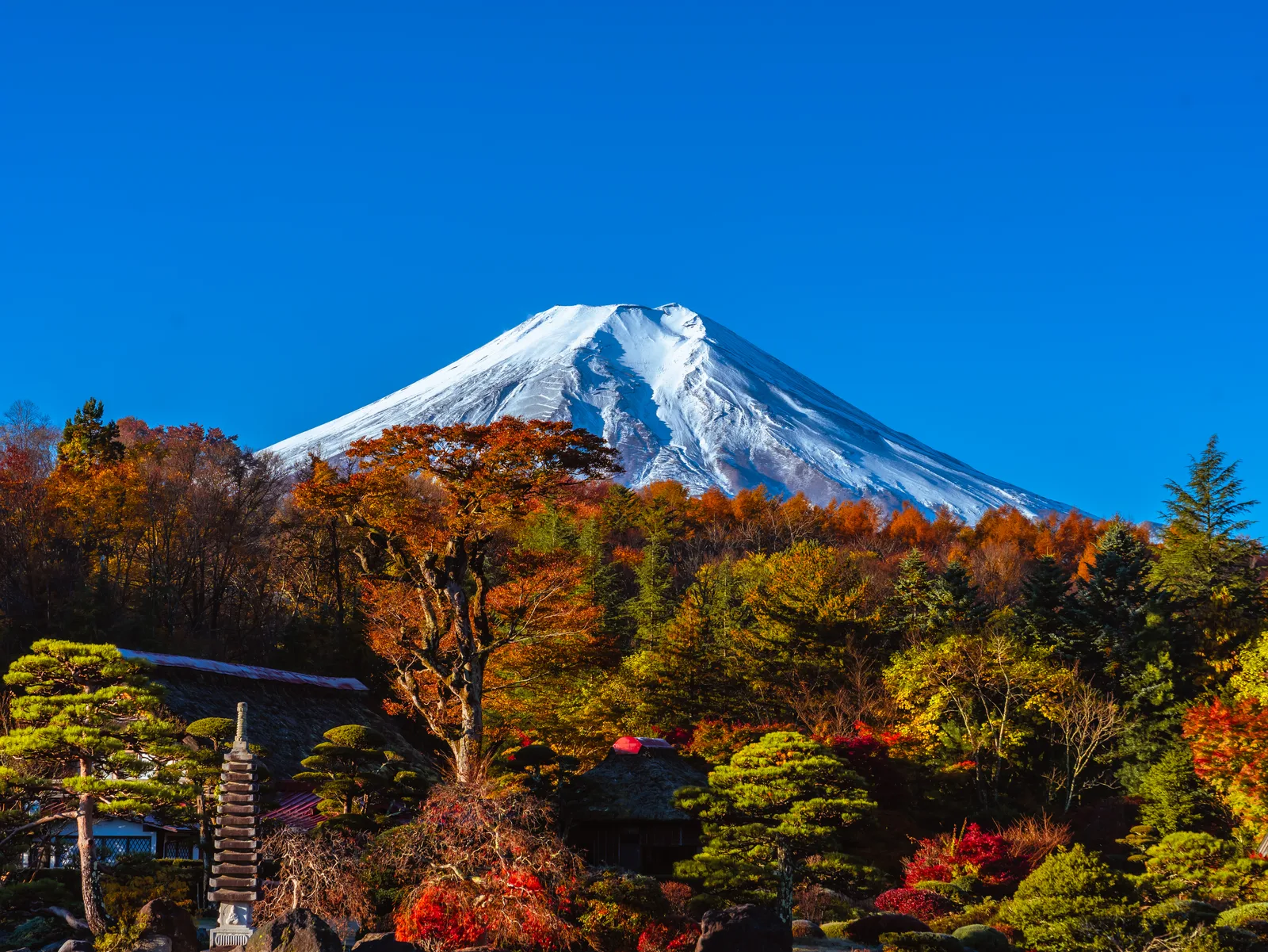
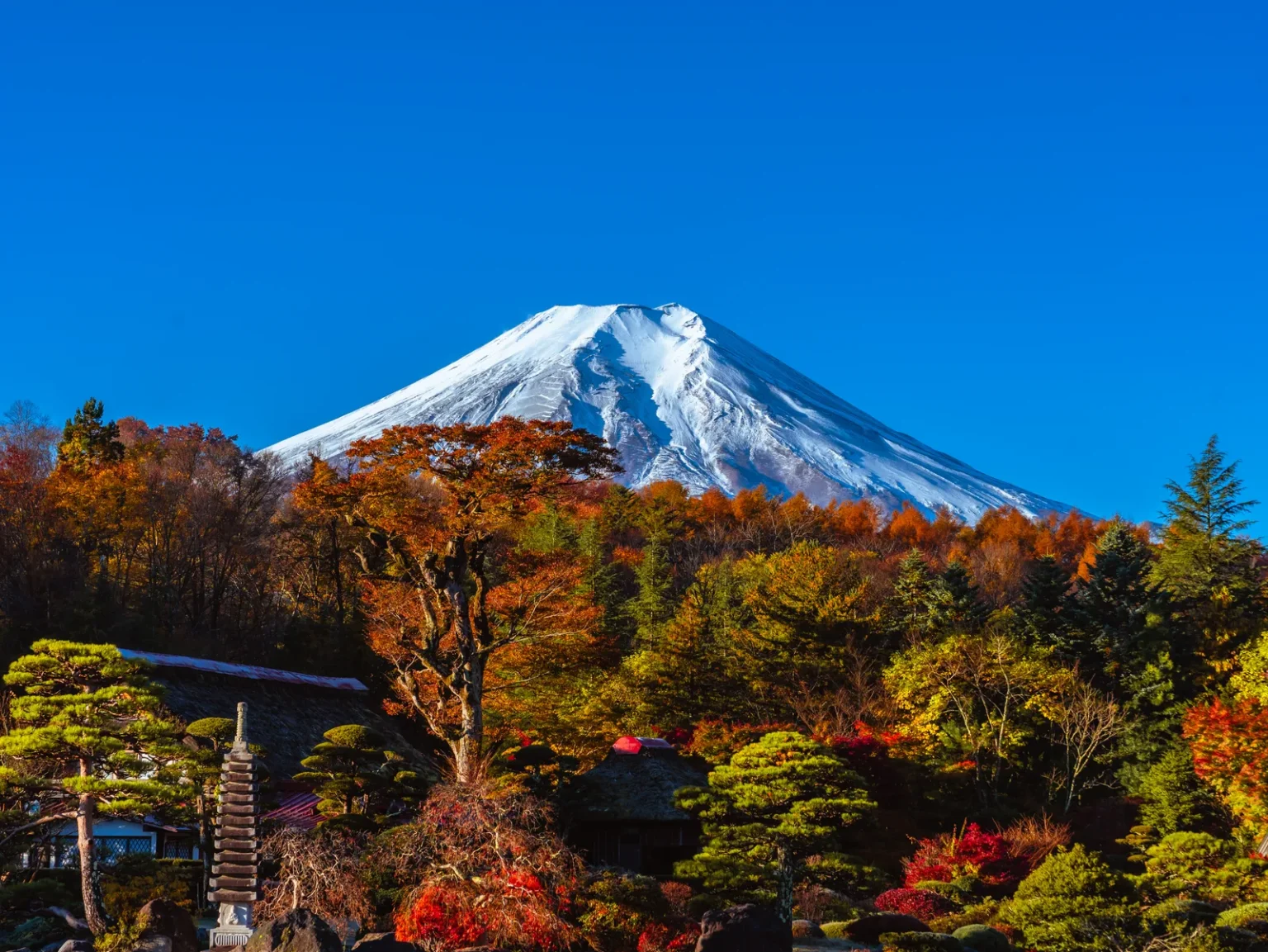
There were hardly any people about when I went round the ponds, and the colour was at its best. The only place I photographed was the thatched garden. In the photos that show the sky, it was clear and deep blue, and the top of Mt Fuji was white with snow. The Oshino Village Tourism Association’s post that day said the previous day’s rain seemed to have fallen as snow on Mt Fuji, adding to the snow near the summit.
Oshino was the second stop on my route that morning. The times below are when my photos at each place were taken, from my camera.
| Photo times, 11 November 2026 | Where |
|---|---|
| 6:33–6:51 | Nijumagari Pass |
| 7:08–7:11 | Oshino Hakkai: Hakkai Teien Hikobei Yashiki (this page) |
| 7:34–7:38 | Mt Fuji Radar Dome Museum, Michi-no-Eki Fujiyoshida |
| 7:39–7:46 | Kaneyama Falls |
| 7:49–7:50 | Back near the Radar Dome |
| 7:57–8:09 | Birch-and-maple path near Michi-no-Eki Fujiyoshida |
| 8:16–8:21 | Suwa-no-Mori Nature Park |
The association’s FAQ says Oshino Hakkai has no opening hours and no entrance, so it can be visited at any time, and that because there are few street lights around the ponds, walking round after sunset is not recommended. The same FAQ makes one exception: Sokonuke-ike is inside the Hannoki-bayashi museum and can’t be seen when the museum is closed. The museum’s own page lists 9:00–17:00.
The thatched garden with the water wheel
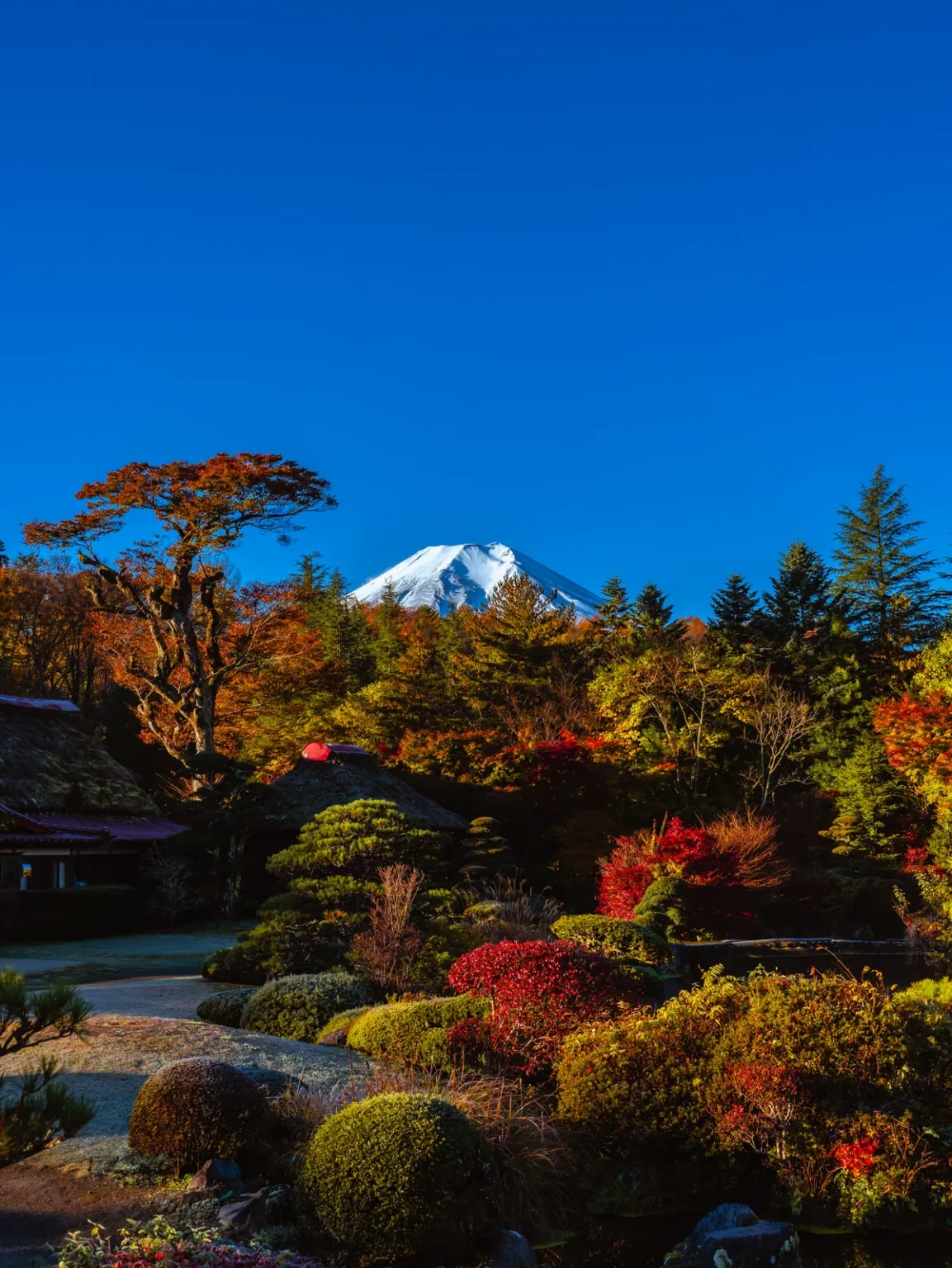
For me, the Japanese garden was superb. Behind a wooden gate with a dark roof is a garden of clipped pines, rounded shrubs, a pond edged with rocks, and thatched roofs, several of them with a red cap along the ridge. The sign at the gate reads 八海庭園 彦兵衛屋敷 (Hakkai Teien Hikobei Yashiki), and on 11 November 2026 a smaller sign beside it gave the entry fee as ¥200 per person. I didn’t pay, and photographed the garden from outside without entering.
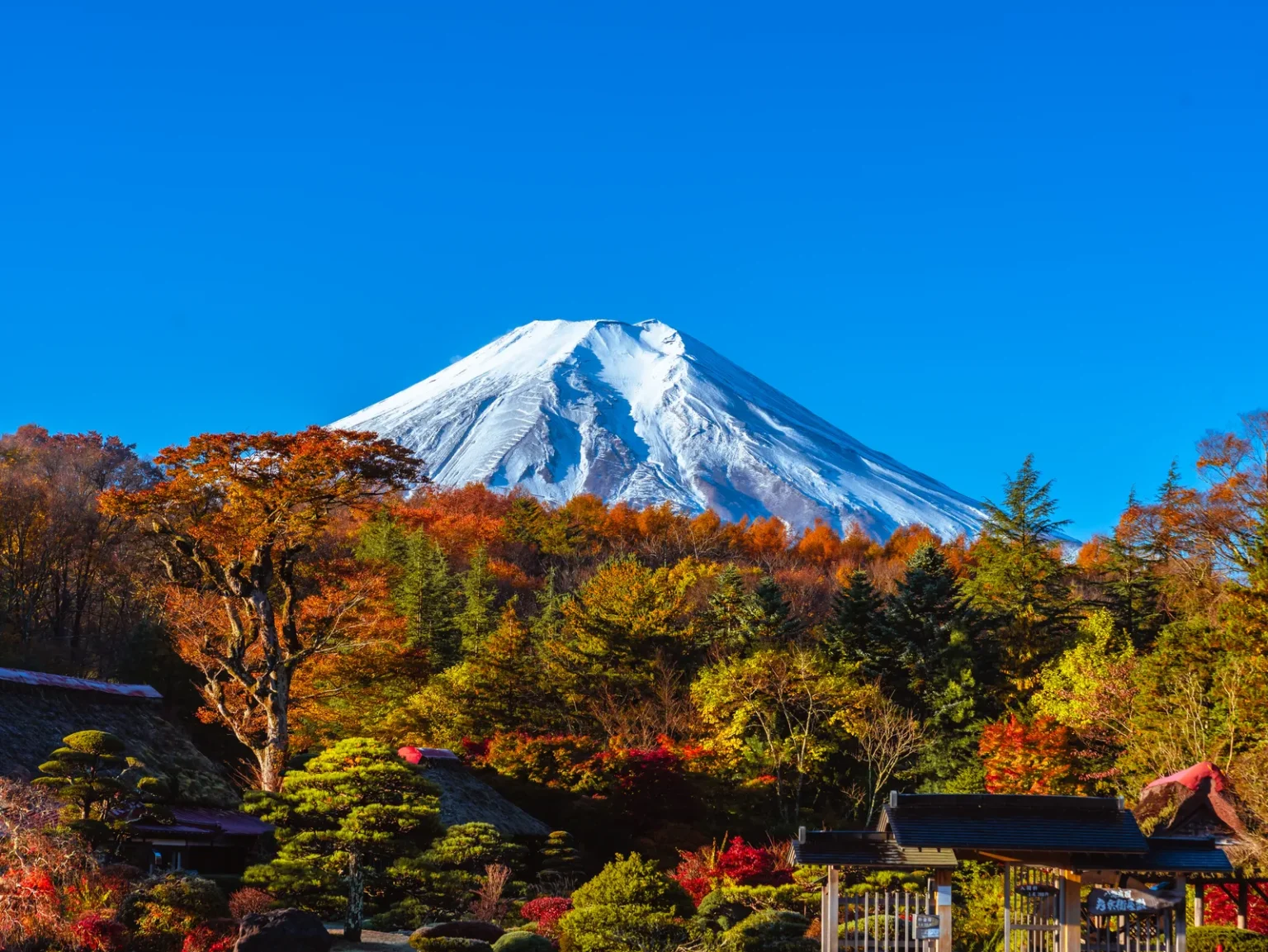
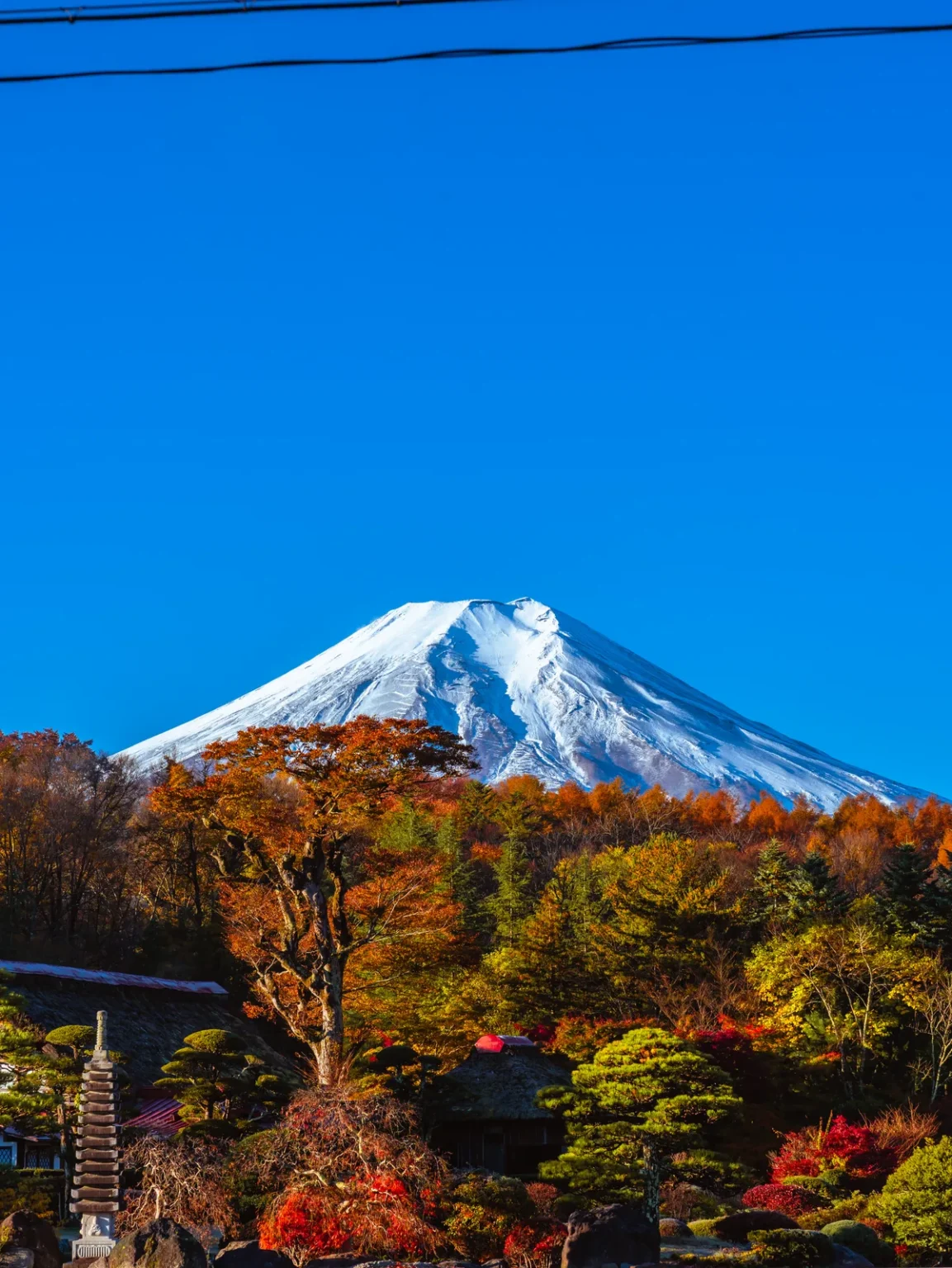
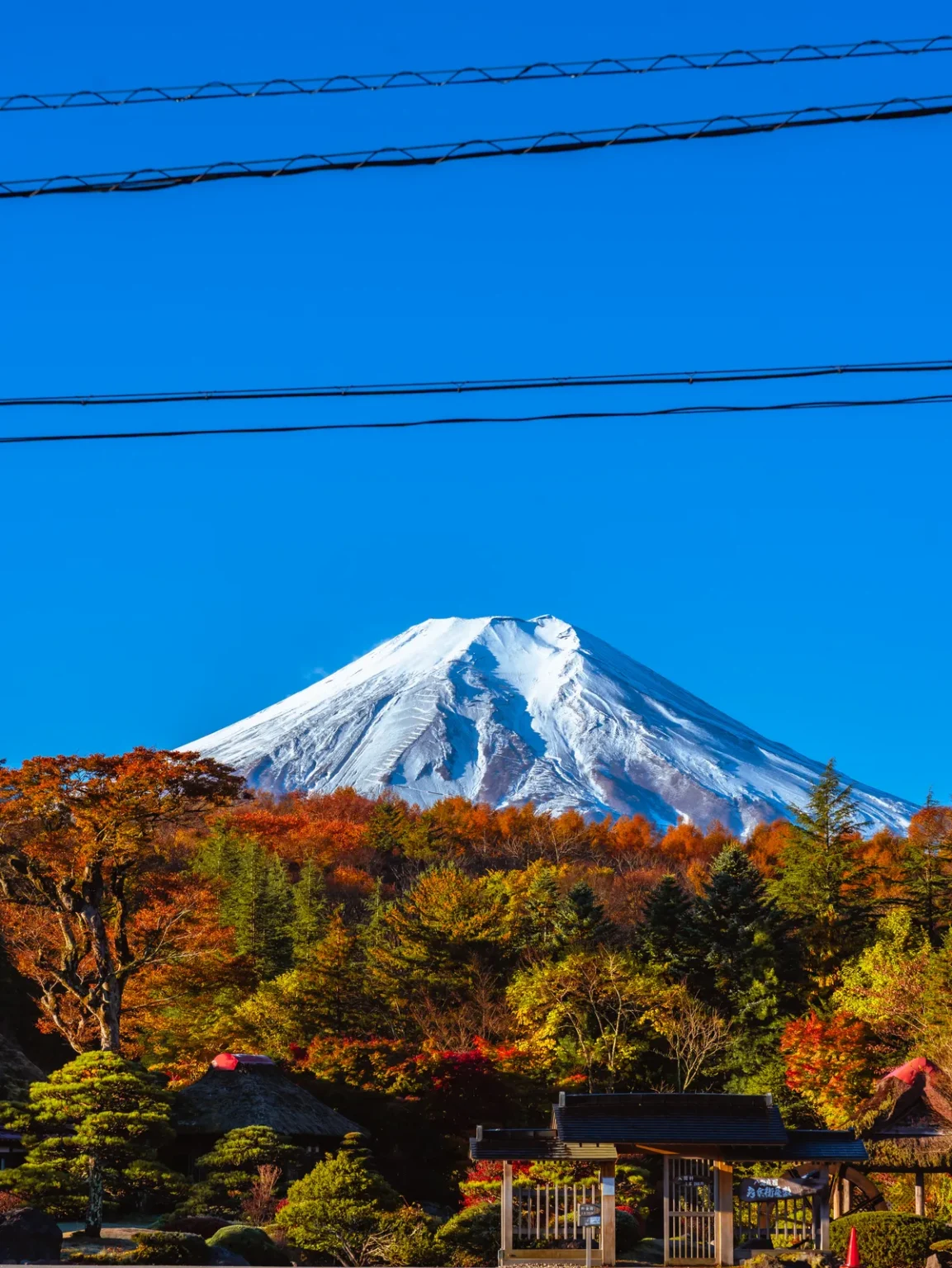
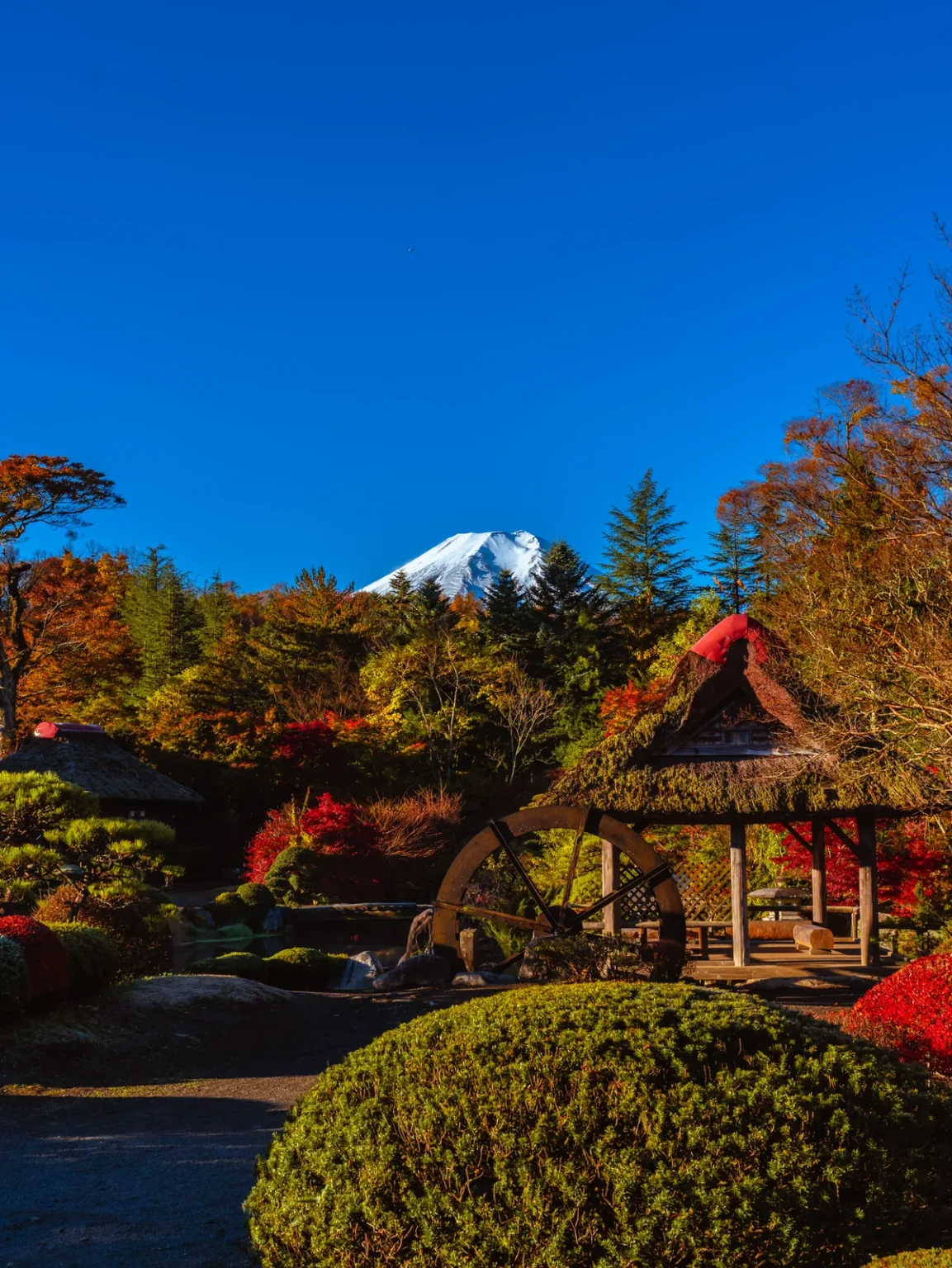
The water wheel stands at the side of a small open-sided hut with a thick, mossy thatched roof and a red ridge cap. In my 7:10 photo, the tall trees behind it are orange and the trees to the right are red.
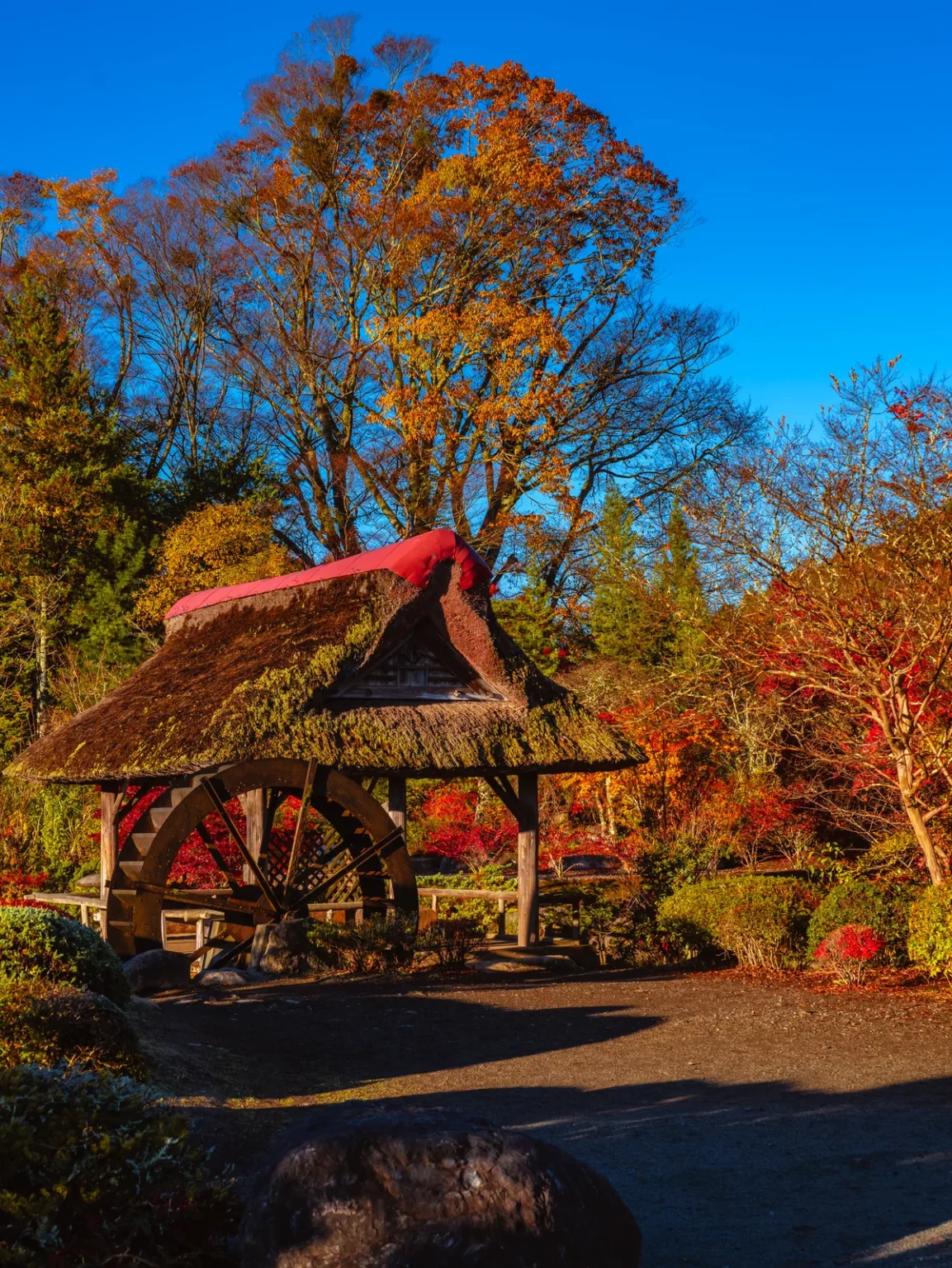
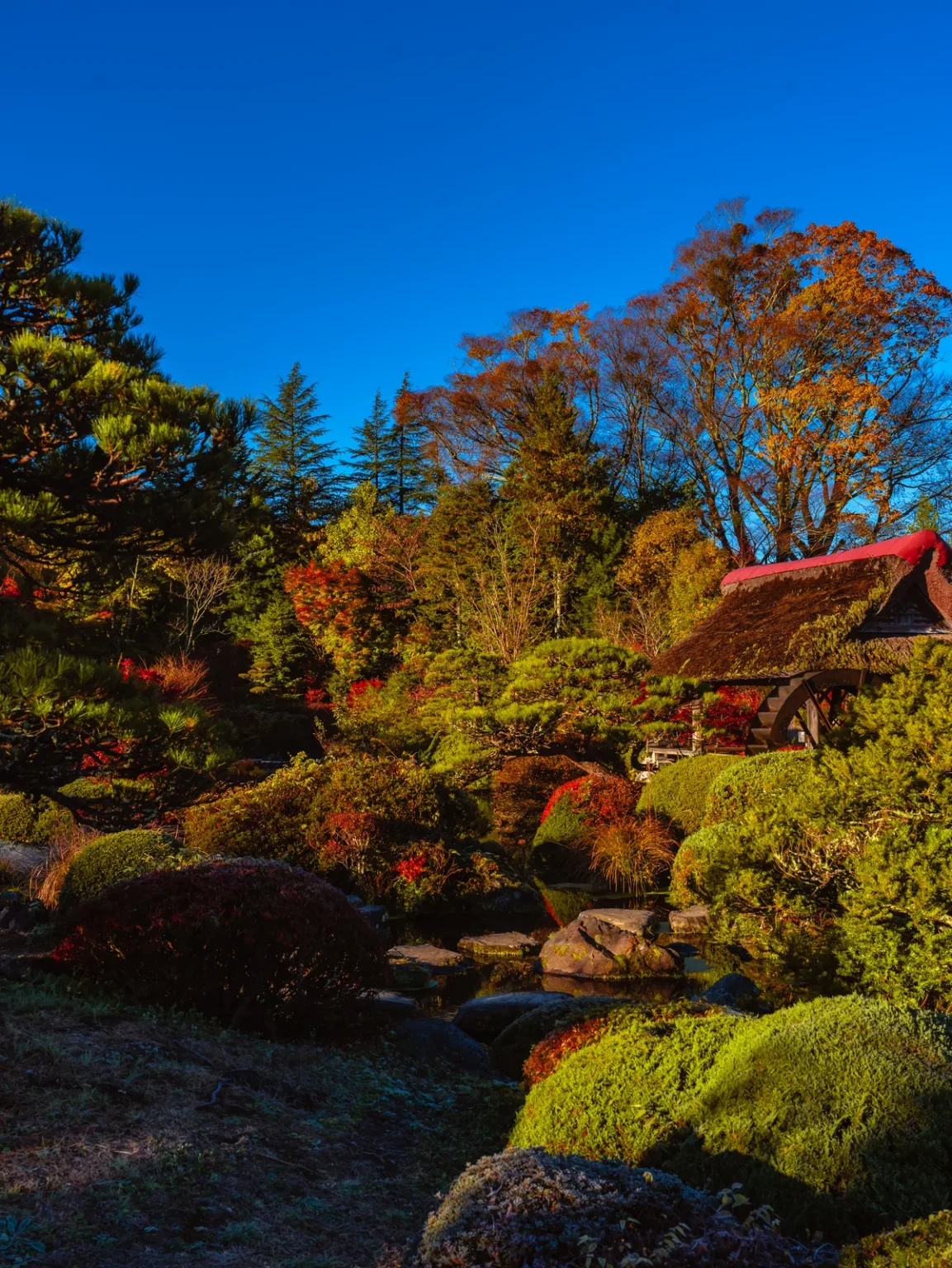
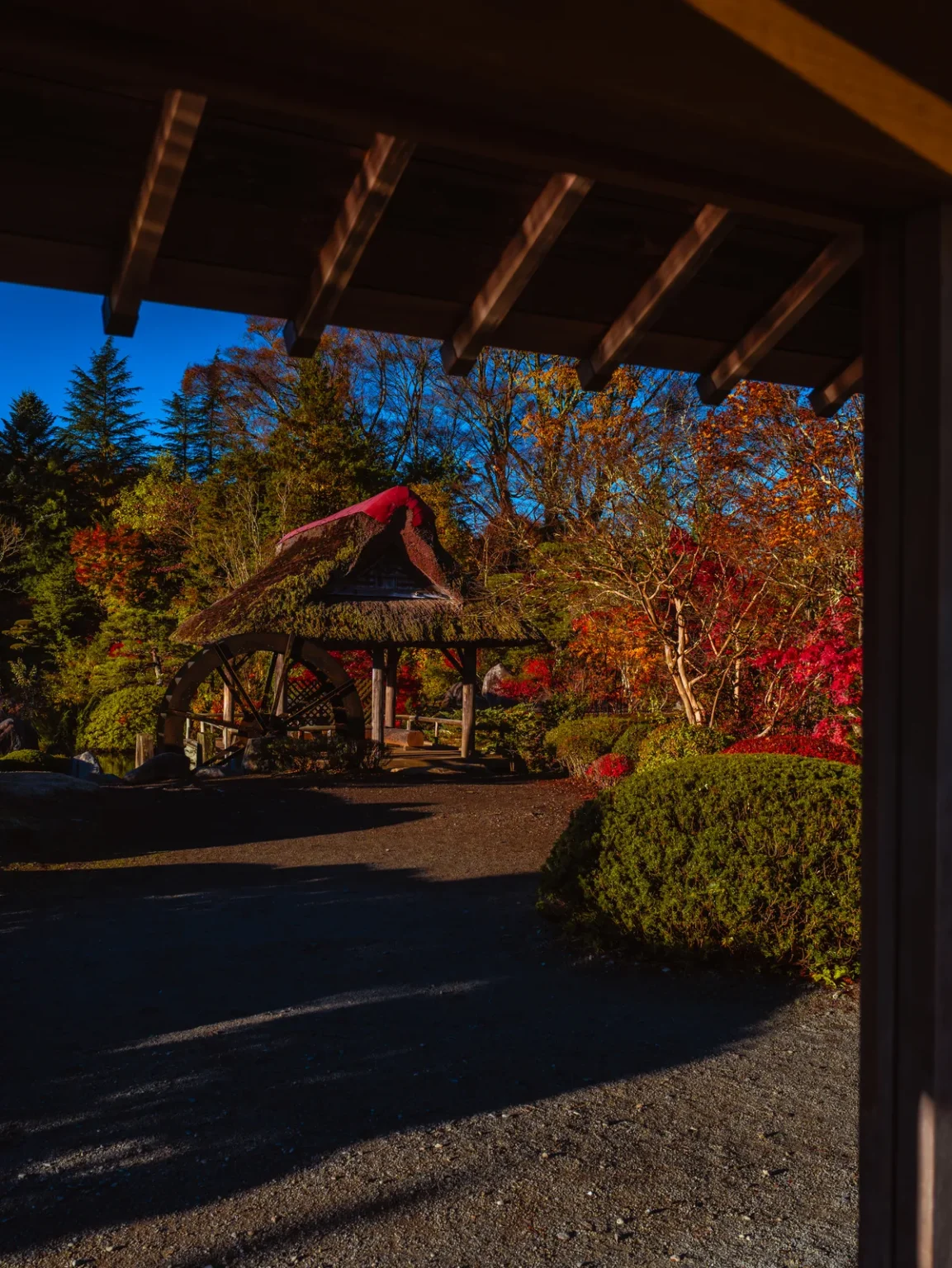
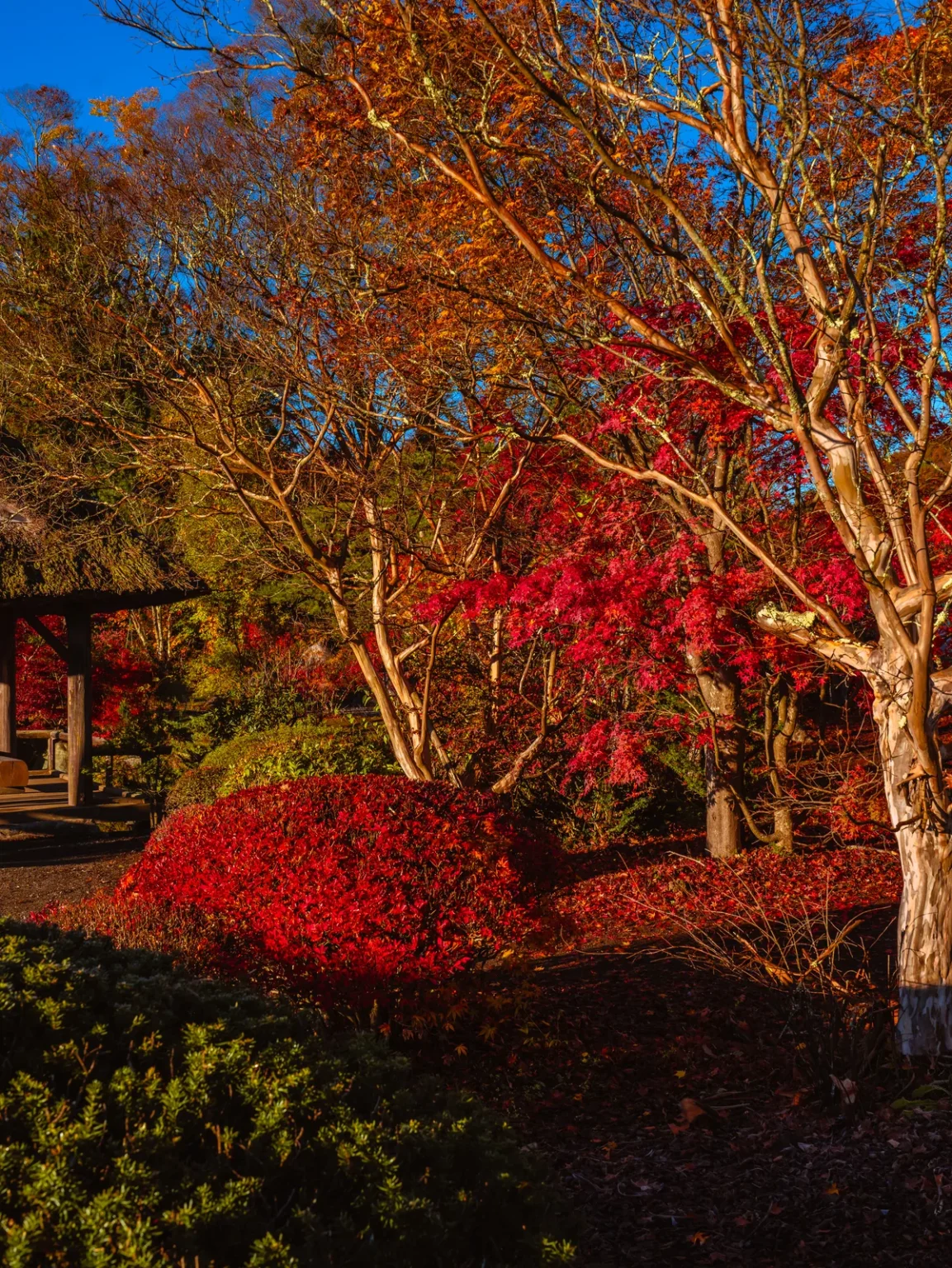
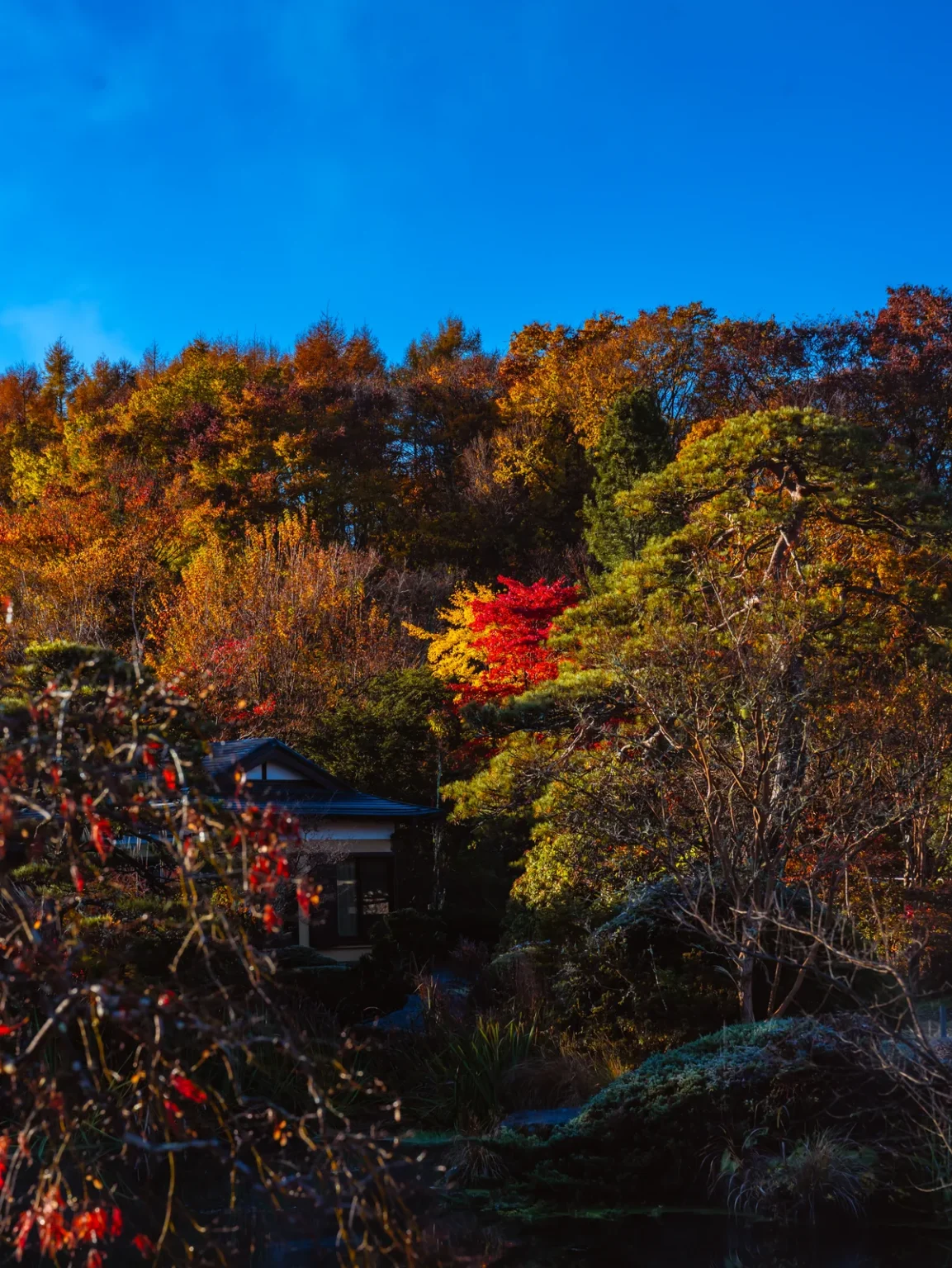
No page confirming the opening hours of Hakkai Teien Hikobei Yashiki was found in the Oshino Village and tourism association pages checked on 15 November 2026, so its hours are not given here; the fee is only what the sign at the gate said on 11 November. The name on its gate is not that of the Hannoki-bayashi museum, which holds one of the eight ponds.
How much of Mt Fuji could I see from the garden?
The top of it, not the whole mountain. From where I photographed the garden, the lower slopes were hidden behind the trees, but the snow-covered upper part stood right above the thatched roofs. I still found it a very beautiful place. At the long end of my lens (70 mm) the mountain looms large over the roofs; at the wide end (24 mm) it becomes a small white peak above the garden.
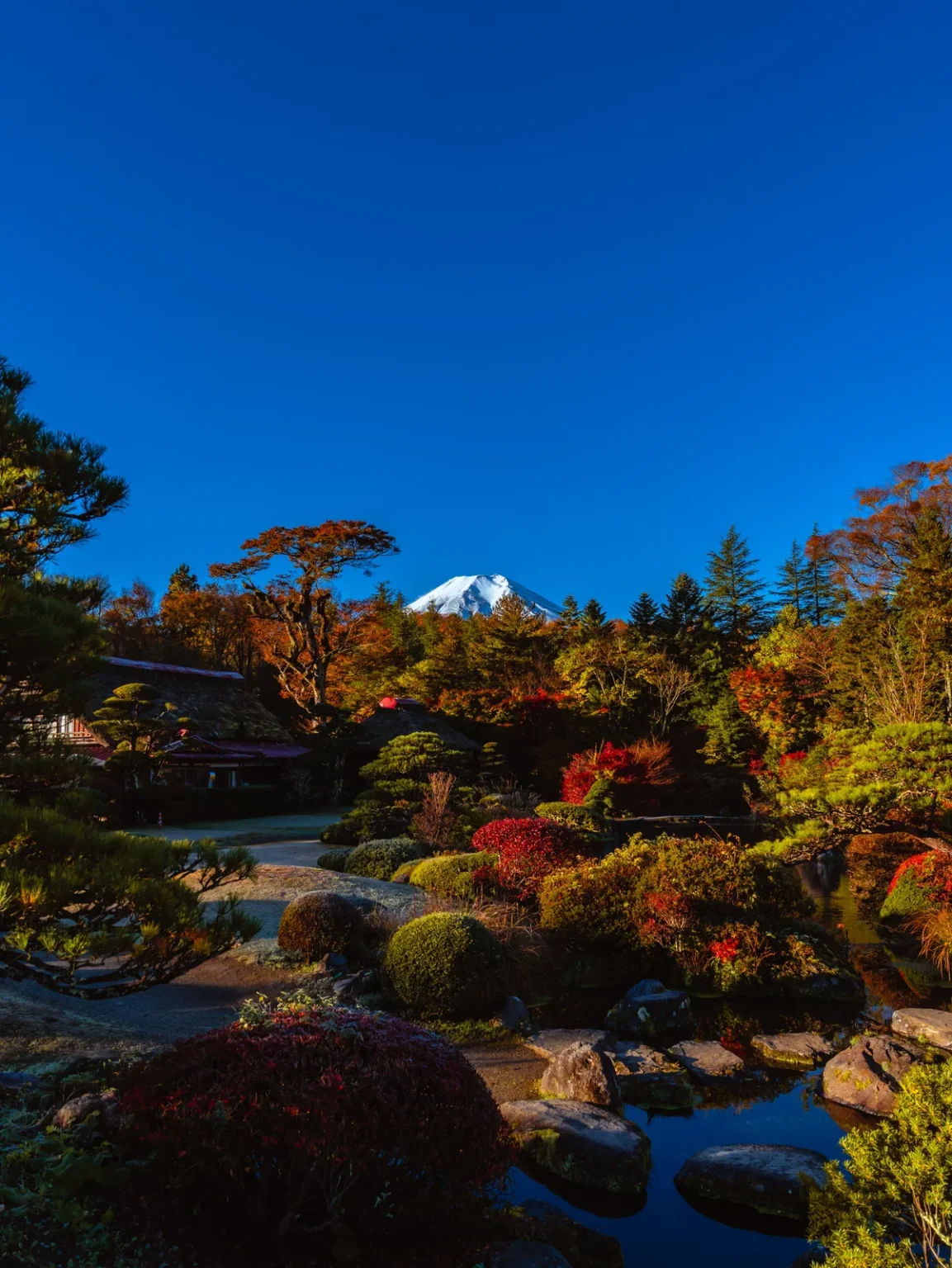
Whether the mountain shows at all depends on the weather; my Mt Fuji visibility forecast page covers how to check before an early start.
What are the eight ponds of Oshino Hakkai, and why is the water here?
They are spring ponds fed by water from Mt Fuji. Oshino Village says Oshino Hakkai is a natural monument, the springs rise from Mt Fuji’s underground water, and the ponds were recognised as a component part of the Mt Fuji World Heritage property, for their history as a place of Fuji worship and purification and for their water scenery with Mt Fuji behind.
The tourism association tells the story of the water. Rain and snow falling on Mt Fuji take more than 20 years to seep through the ground before they come out here. The whole of Oshino was once part of a large lake called Utsu-ko; the association says the great eruption of 800 split it with lava into Lake Oshino and Lake Yamanaka, and Lake Oshino slowly dried out, leaving the basin where the village is now. The ponds are what remains. In the Edo period they were sacred sites for the Fuji-ko pilgrims. The association adds that Oshino Hakkai was made a national natural monument in 1934 and named one of Japan’s 100 famous waters by the Environment Agency in 1985.
The village lists the eight ponds as numbered sacred sites. The wheelchair-access notes come from the association’s FAQ.
| No. | Pond | Wheelchair access (tourism association) |
|---|---|---|
| 1 | Deguchi-ike (出口池) | Yes; travel by car is recommended because it is farther from the other seven |
| 2 | Okama-ike (お釜池) | Not wheelchair-accessible according to the tourism association; steps lead down to the pond |
| 3 | Sokonuke-ike (底抜池) | Yes; inside the Hannoki-bayashi museum, unpaved around the pond |
| 4 | Choshi-ike (銚子池) | Yes, as far as you can; narrow, unpaved entrance |
| 5 | Waku-ike (湧池) | Yes |
| 6 | Nigori-ike (濁池) | Yes |
| 7 | Kagami-ike (鏡池) | Yes |
| 8 | Shobu-ike (菖蒲池) | Not wheelchair-accessible according to the tourism association; rough approach path |
The association says Sokonuke-ike can’t be seen when the Hannoki-bayashi museum is closed, and suggests asking the museum about its closed days; the museum’s page lists 9:00–17:00, adults ¥300, and closes irregularly (for bad weather and family occasions). The tourism association also says completing a full circuit of any pond is difficult in a wheelchair. The tourist information office lends three wheelchairs free of charge, and booking ahead is recommended.
How do I get to Oshino Hakkai, and where do I park?
By bus from Fujisan Station takes about 25 minutes, Oshino Village says. By car, the tourism association gives about 5 minutes from Yamanakako IC. The car parks around the ponds are privately run.
By bus from Fujisan Station
The village’s access guide says to take the local bus bound for Uchino, or the Fujikko bus, from Fujisan Station on the Fujikyu Line and get off at the Oshino Hakkai stop, about 25 minutes.
The Fujikko bus
Fujikyu Bus says the Fujikko starts from Kawaguchiko Station and runs 11 times a day, every day, round Fujiyoshida, Oshino Hakkai and Lake Yamanaka. From the Oshino Hakkai stop it is about 3 minutes on foot. Single rides are priced by distance; a one-day pass is ¥1,800 for adults and a two-day pass ¥2,200 (Fujikyu Bus, November 2026).
From Tokyo
The village lists a direct highway bus from Shinjuku bound for the Fuji Five Lakes that stops at Oshino Hakkai, about 140 minutes. By train, the JR Chuo Line to Otsuki and the Fujikyu Line to Fujisan Station, then the bus.
By car
The tourism association gives about 5 minutes from Yamanakako IC on the Higashi-Fujigoko Road. The village gives about 20 minutes from Kawaguchiko IC on the Chuo Expressway to Oshino, and about 45 minutes from Gotemba IC on the Tomei Expressway via Route 138.
Parking
The association’s FAQ says the car parks round the ponds are run privately and fees vary, and links to a directory of privately operated car parks. One in that directory, the Osada car park, lists ¥300 for a car, open from early morning to evening. The association’s FAQ also suggests putting a car park’s address into your sat-nav, not the information office’s. I stopped by during a Tesla charging stop nearby.
Oshino fits a morning drive like mine, together with Nijumagari Pass and Fujiyoshida.
Compare rental cars near Mt FujiJapanese rental companies on RakutenWhat else is near Oshino Hakkai?
Tofu, for one. Oshino’s spring water goes into the tofu at two family tofu makers in Oshino: see my pages on Hakkai Tofu and Kadoya Tofu. My stop before Oshino that morning was Nijumagari Pass, where the tourism association’s same-day post said the leaves at the SORAnoIRO viewing terrace were at their best; my next was the Mt Fuji Radar Dome Museum in Fujiyoshida. For the whole area, start at my Mt Fuji guide, and for the lakeside leaves next door, my Yamanakako autumn leaves festival guide.
Where to stay for an early start
Oshino village borders Fujiyoshida to the west and Yamanakako to the south-east, and either side is a possible base. My Lake Yamanakako access guide covers getting there; if you would rather be on the Kawaguchiko side, my Kawaguchiko vs Fujiyoshida comparison sets out the trade-offs.
If you want a base on the Lake Yamanaka side for an early start, compare stays there.
See Lake Yamanaka stays on Booking.comCompare Lake Yamanaka hotels on AgodaWhen comparing Mt Fuji day tours, check whether Oshino Hakkai is included: browse Mt Fuji day tours on Klook.
More from my November 2026 autumn visits around Mt Fuji
Ginkgo trees beside Dallas Village (6 Nov) · Lake Yamanaka autumn leaves festival (6 Nov photos) · Nijumagari Pass (11 Nov) · Mt Fuji Radar Dome Museum (11 Nov) · Kaneyama Falls (11 Nov) · Birch-and-maple path near Michi-no-Eki Fujiyoshida (11 Nov) · Suwa-no-Mori Nature Park (11 Nov) · Ubuyagasaki (13 Nov) · Tenka-chaya, Misaka Pass (13 Nov) · When the leaves were reported at their best (calendar) · All ten spots compared (summary)
Oshino Hakkai: FAQ
What time does Oshino Hakkai open?
The area round the ponds has no entrance and no opening hours: the tourism association says you can visit any time, though it advises against walking round after dark. The exception is Sokonuke-ike, inside the Hannoki-bayashi museum, which lists 9:00–17:00 and adults ¥300, and can’t be seen when the museum is closed.
Is Oshino Hakkai crowded early in the morning?
Not when I went, on the morning of Wednesday 11 November 2026 (my garden photos are from 7:08–7:11 a.m.): hardly anyone was about.
How much of Mt Fuji can you see from the thatched garden?
On my clear morning, from where I photographed the garden, I could see the snow-covered top of the mountain above the trees, not the whole of it.
How much is the thatched garden with the water wheel?
The sign at the gate of Hakkai Teien Hikobei Yashiki gave entry as ¥200 per person on 11 November 2026. I photographed it from outside without entering. Its opening hours could not be confirmed for this guide.
Were the autumn leaves at their best on 11 November?
Yes, at Oshino Hakkai on the morning of 11 November 2026 the colour was at its best: orange larches behind the garden, and red maples and shrubs in it. The timing changes from year to year.
How do I get to Oshino Hakkai without a car?
Take the bus bound for Uchino, or the Fujikko bus, from Fujisan Station to the Oshino Hakkai stop, about 25 minutes. The Fujikko also starts from Kawaguchiko Station.
Sources
My own visit and the official pages behind the facts above (checked 15 November 2026)
- My own visit. Visited: morning of 11 November 2026. Garden photos: 7:08–7:11 a.m., times from my camera. The garden’s name and fee are from the signs at its gate, in my photo.
- Oshino Village: Oshino Hakkai; Access guide; Coins in Waku-ike (village crowdfunding page, 2026)
- Oshino Village Tourism Association: Oshino Hakkai; FAQ; Car parks; Access; Autumn leaves, 11 November 2026; Autumn leaves, 23 October 2026
- Fujikyu Bus: Fujikko bus
- Hannoki-bayashi museum: Sokonuke-ike, hours and fees
Some links above are affiliate links — they cost you nothing extra and help keep this site going.
Join travelers discovering Japan's hidden side
Weekly dispatches from off-the-beaten-path Japan — spots and stories you won't find in guidebooks.
No spam. Unsubscribe anytime.
Welcome aboard!
You're in. See you in your inbox soon.