
Japan · Yamanashi · Fujiyoshida · Michi-no-Eki Fujiyoshida
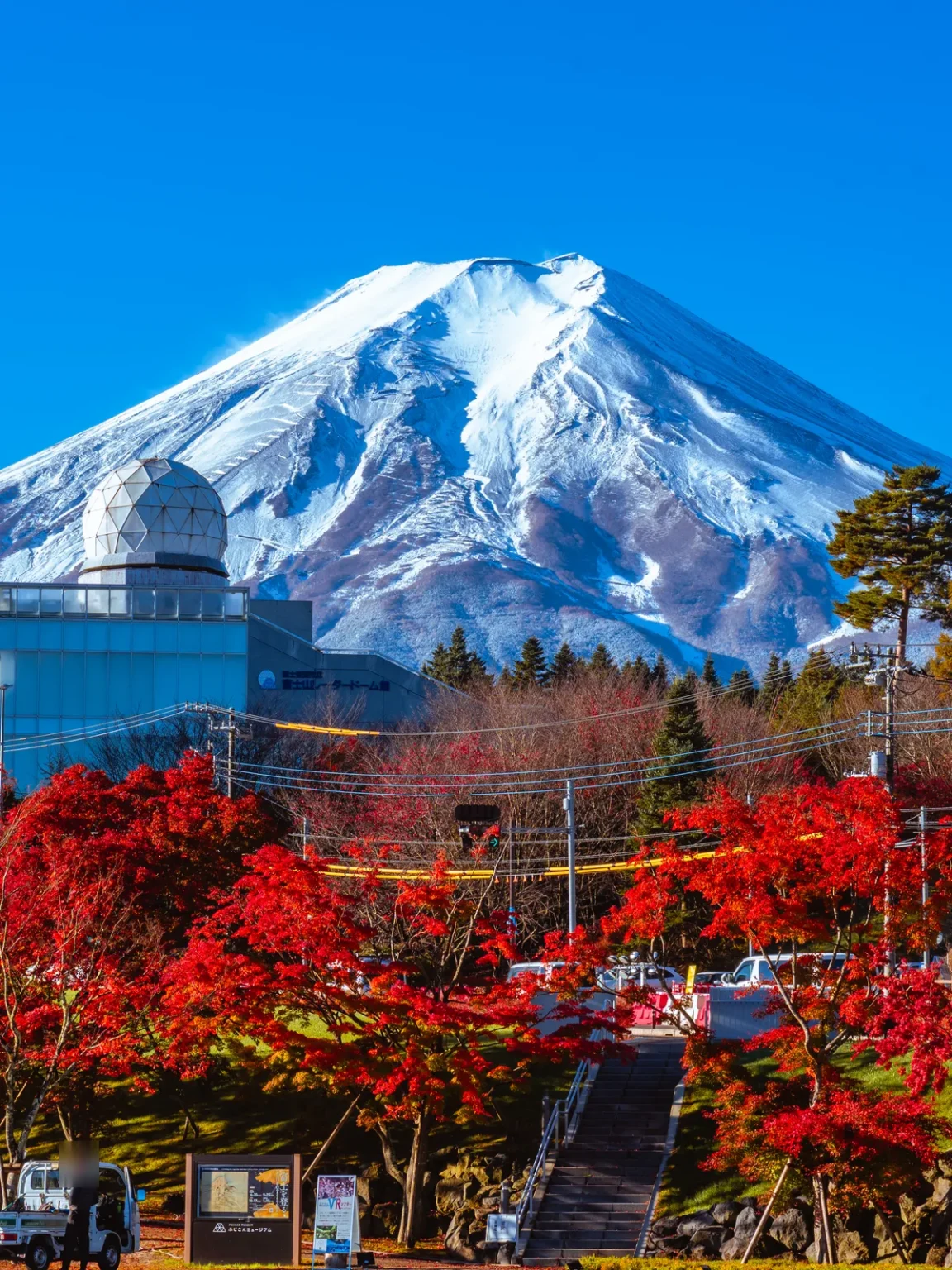
The Mt Fuji Radar Dome Museum (富士山レーダードーム館) at Michi-no-Eki Fujiyoshida displays the original dome from Mt Fuji’s summit weather radar; the city’s guide says the dome was installed on the summit in 1964 and observed weather across Japan until 1999. My photos of it with red maples and Mt Fuji start at 7:34 a.m. on 11 November 2026: the colour was at its best and the car park was not crowded. Museum: 9:00–17:00, adults ¥630; the spring-water tap is free.
I’m Nobu, and I live in Yamanakako village. On 11 November 2026 I visited several autumn spots around the northern foot of Mt Fuji by car, and the Radar Dome was the third stop. I only saw it from outside: the maple paths around the dome, a pedestrian tunnel I photographed from inside, and a thatched farmhouse nearby. The museum opens at 9:00. The michi-no-eki next door is also where I fill up on Mt Fuji spring water, about once a week. This page covers the photo spots, the water tap and its rules, what is inside the museum, and parking and buses.
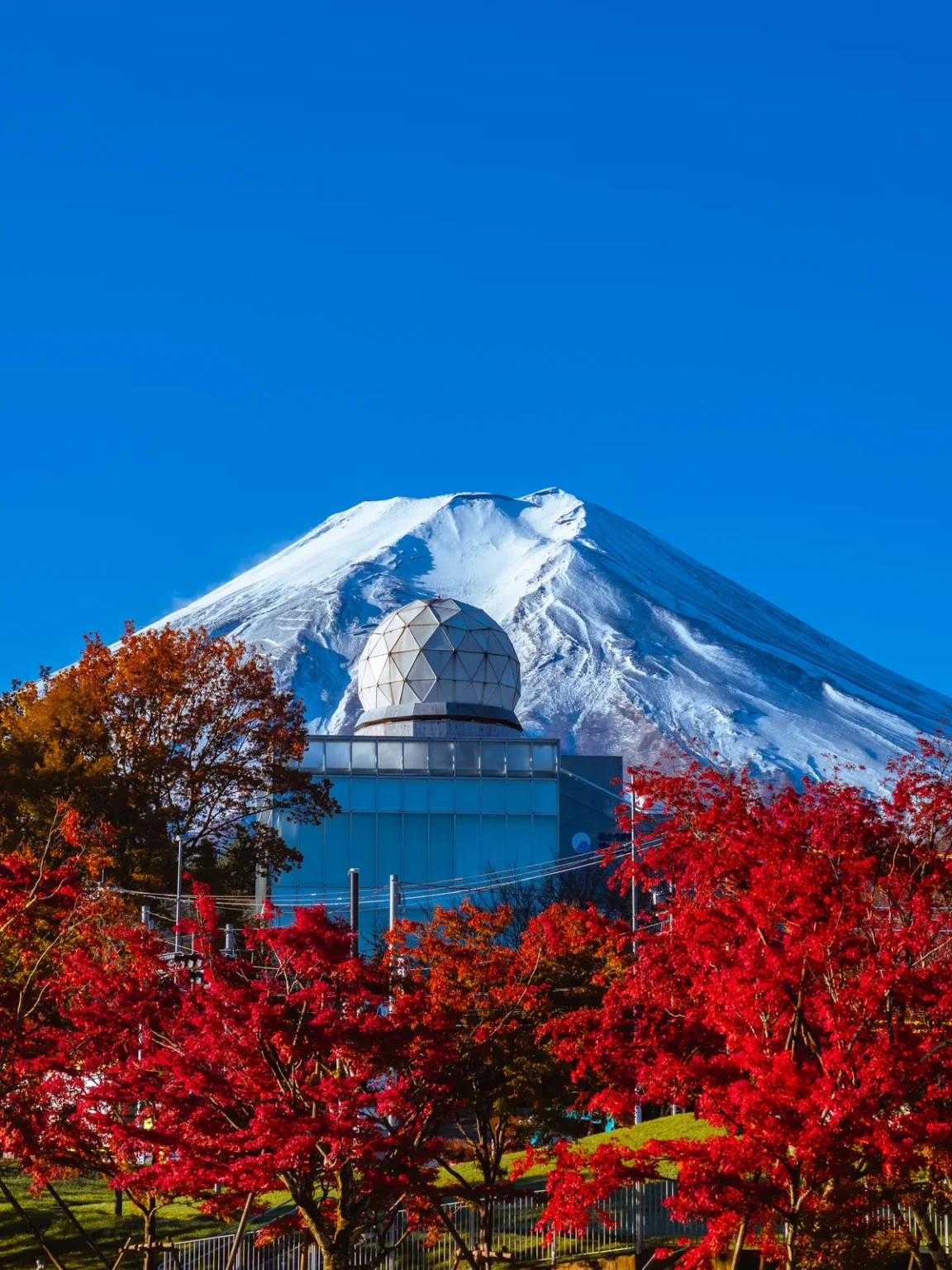
What does the Radar Dome look like in autumn?
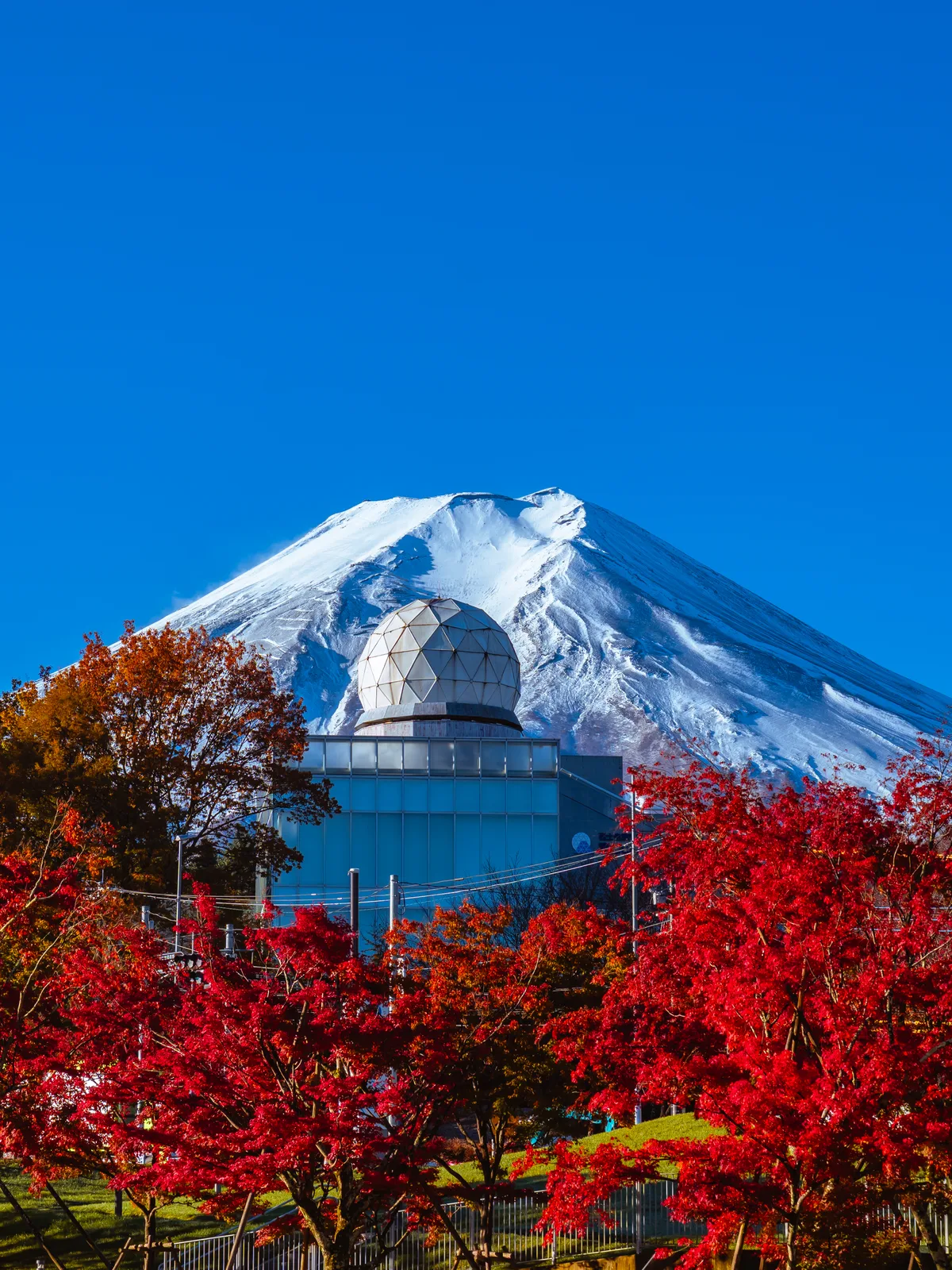
Red maples in front, a white dome on a pale blue glass building in the middle, and the snow-covered top of Mt Fuji right behind it. The zoomed-in photographs looked striking. At 7:34 I photographed the dome from across the car park; a frame from the same minute has a small white truck in front of the maples. That morning I visited, in this order, Nijumagari Pass, Oshino Hakkai, the Radar Dome, Kaneyama Falls, the birch-and-maple path and Suwa-no-Mori Nature Park.
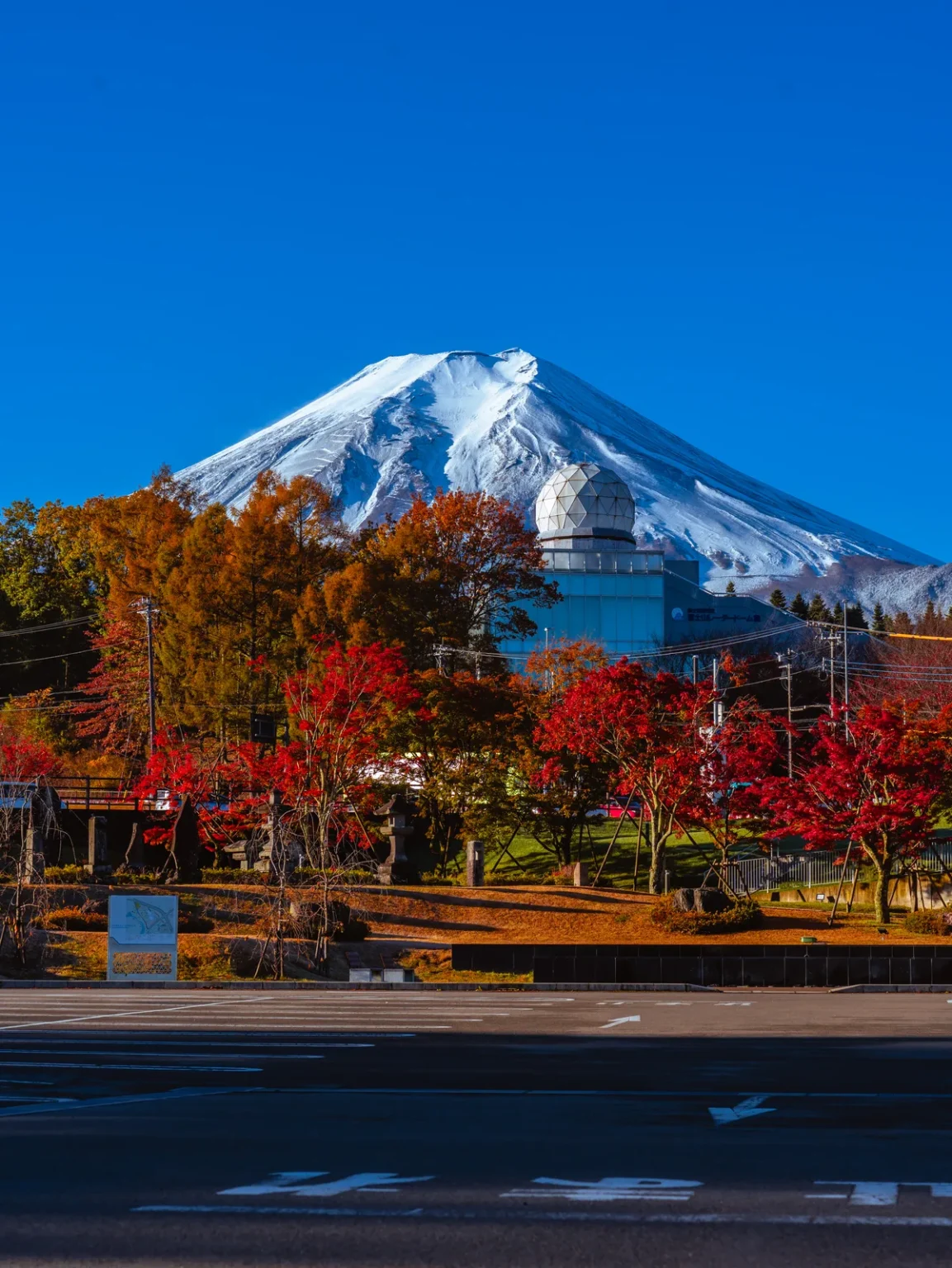
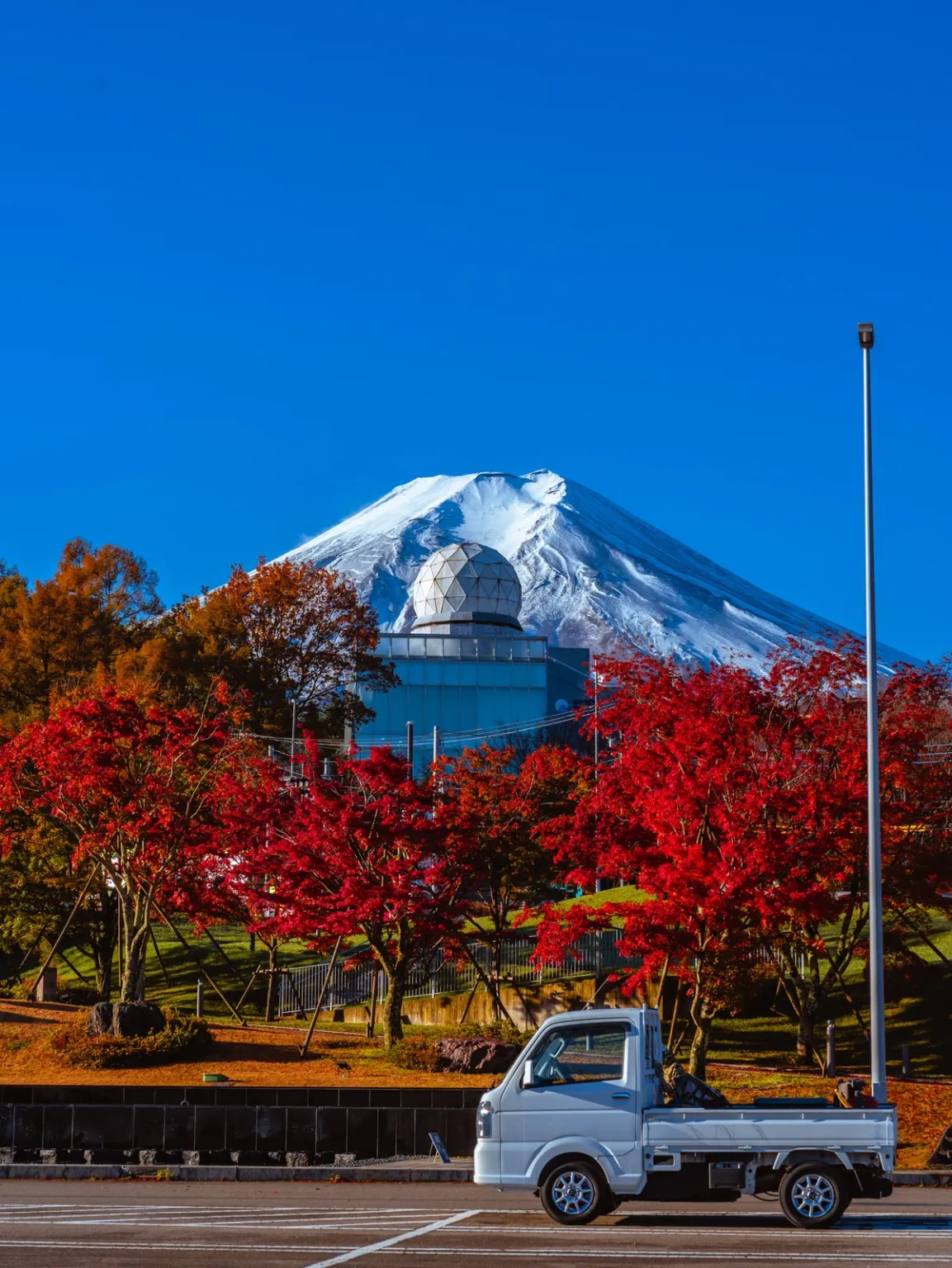
The maple paths around the dome
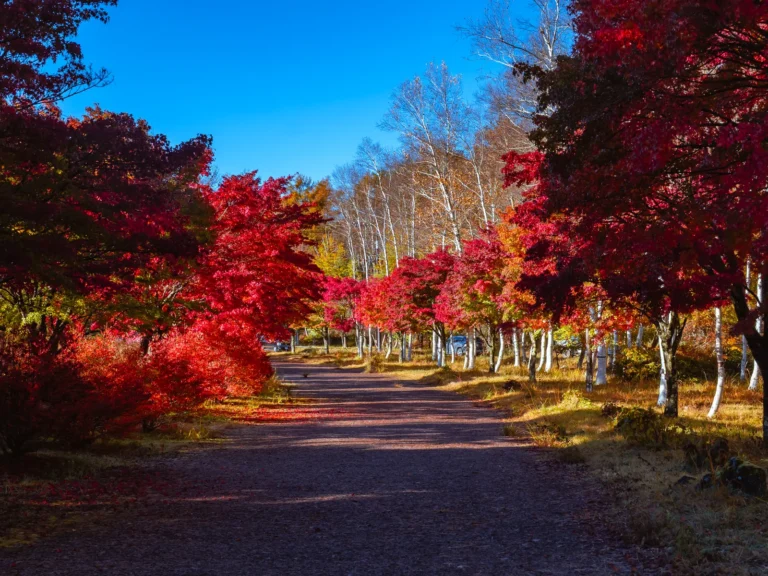
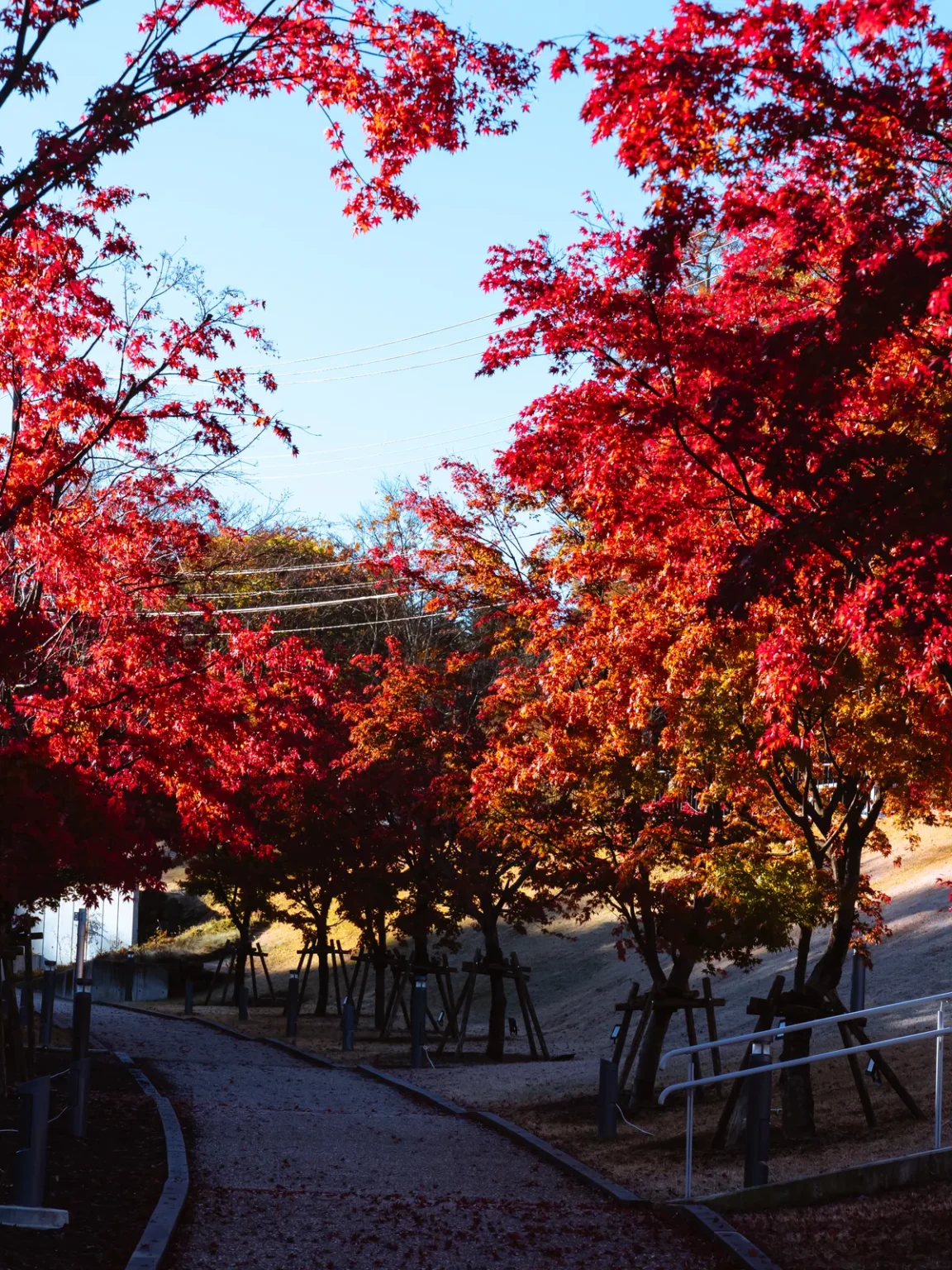
In the grounds, paths run between rows of young maples on wooden supports, and at 7:35 the fallen leaves on the paths were red too. My frames here run from 7:35 to 7:37.
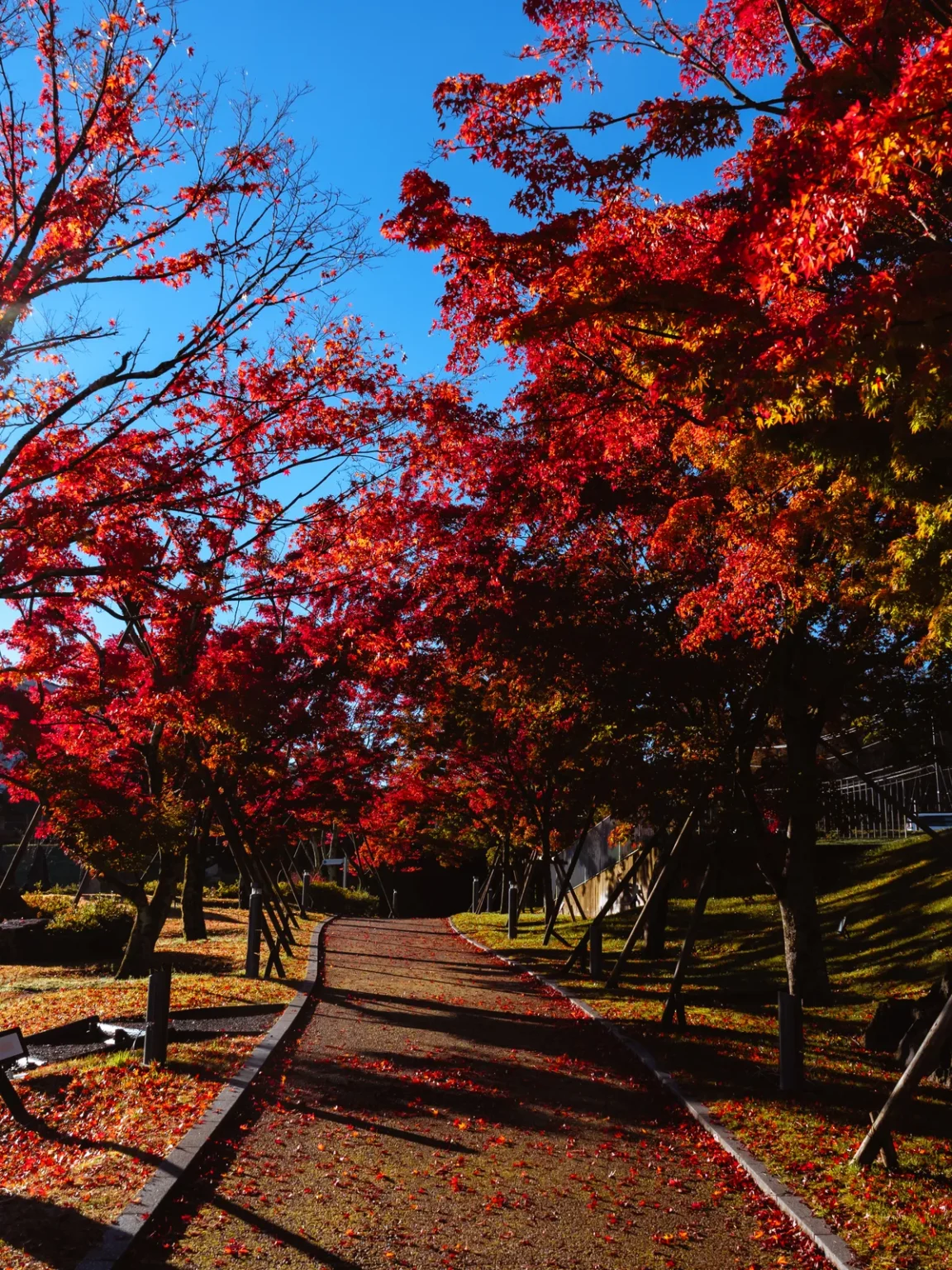
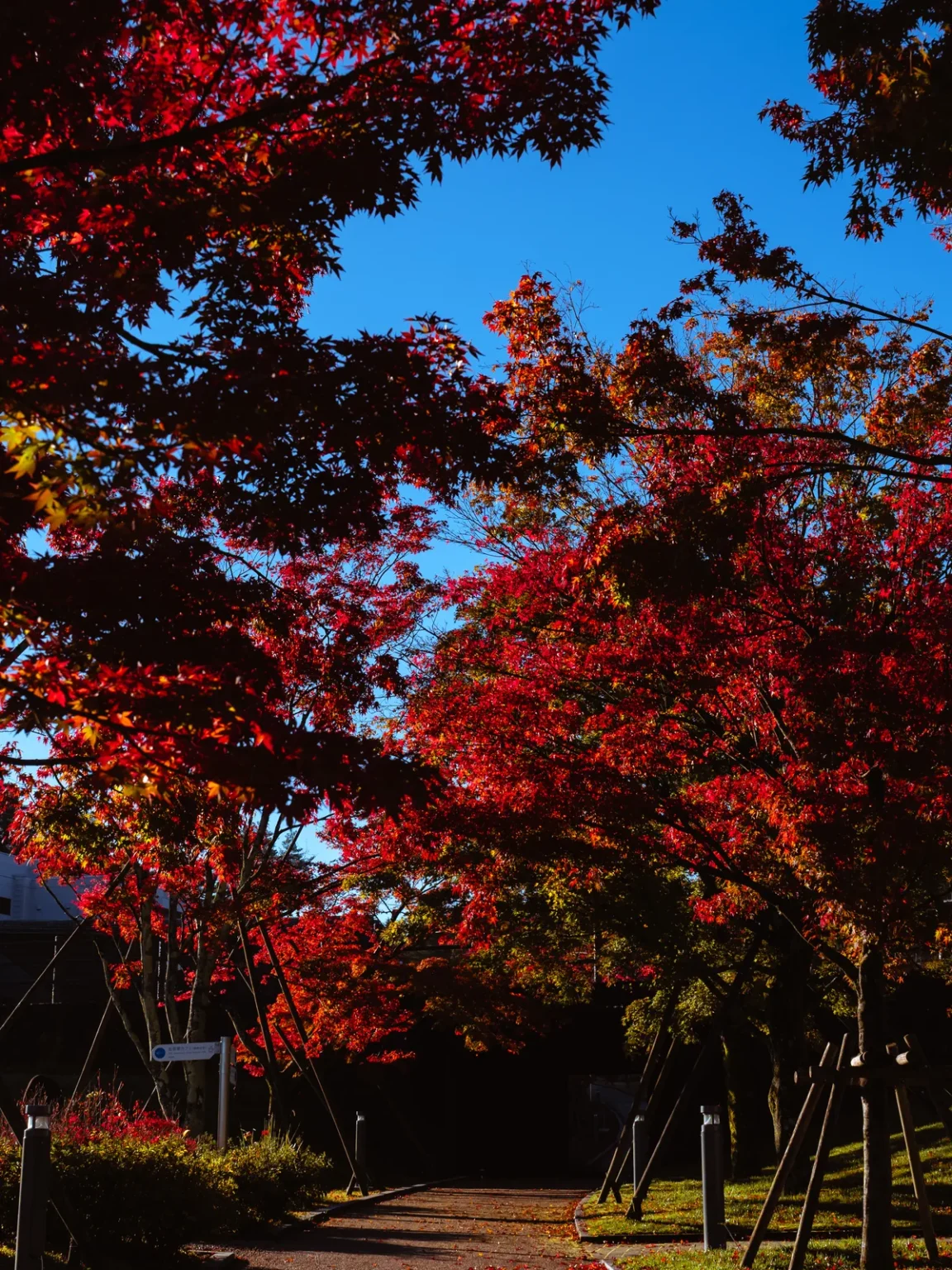
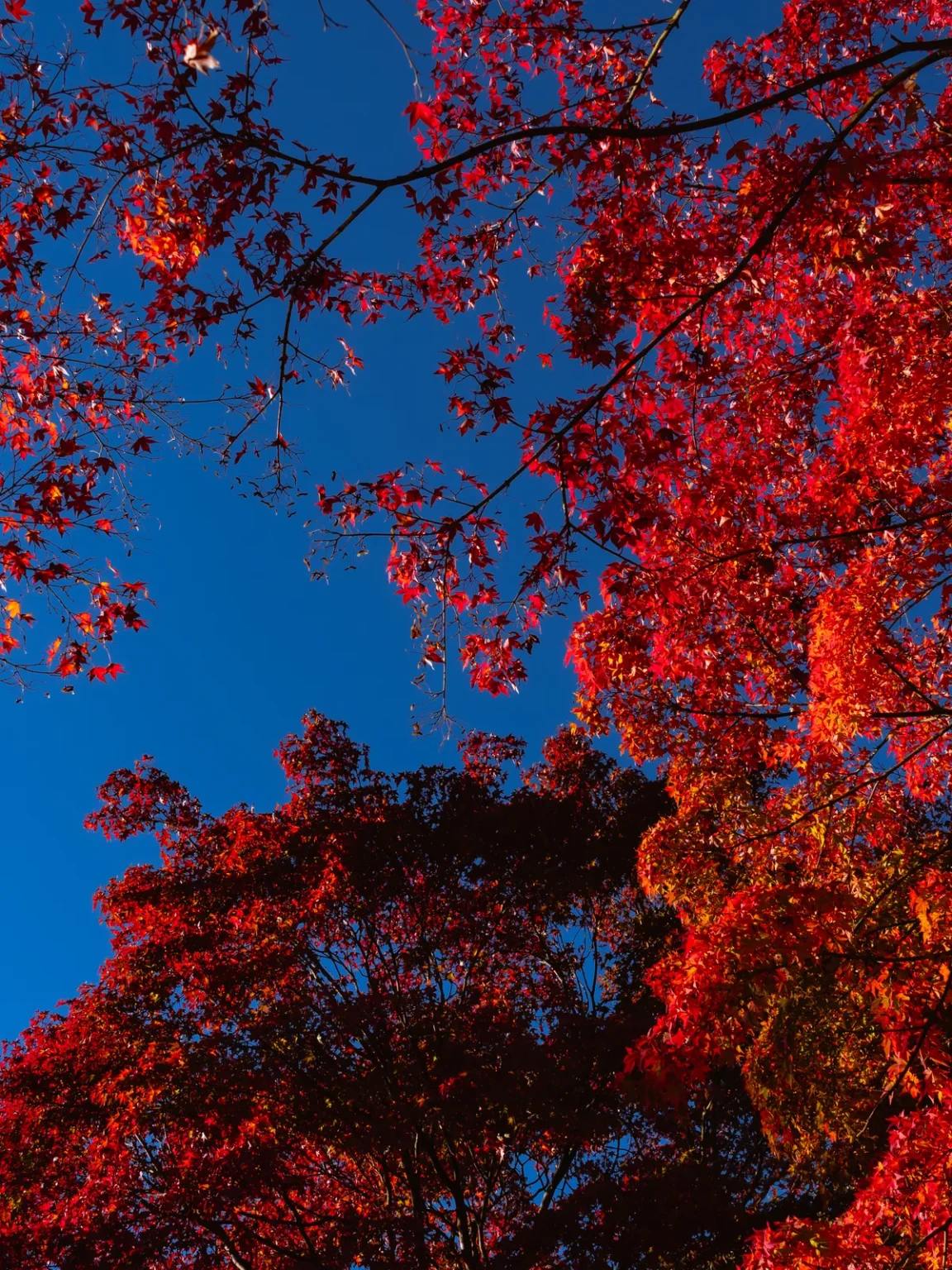
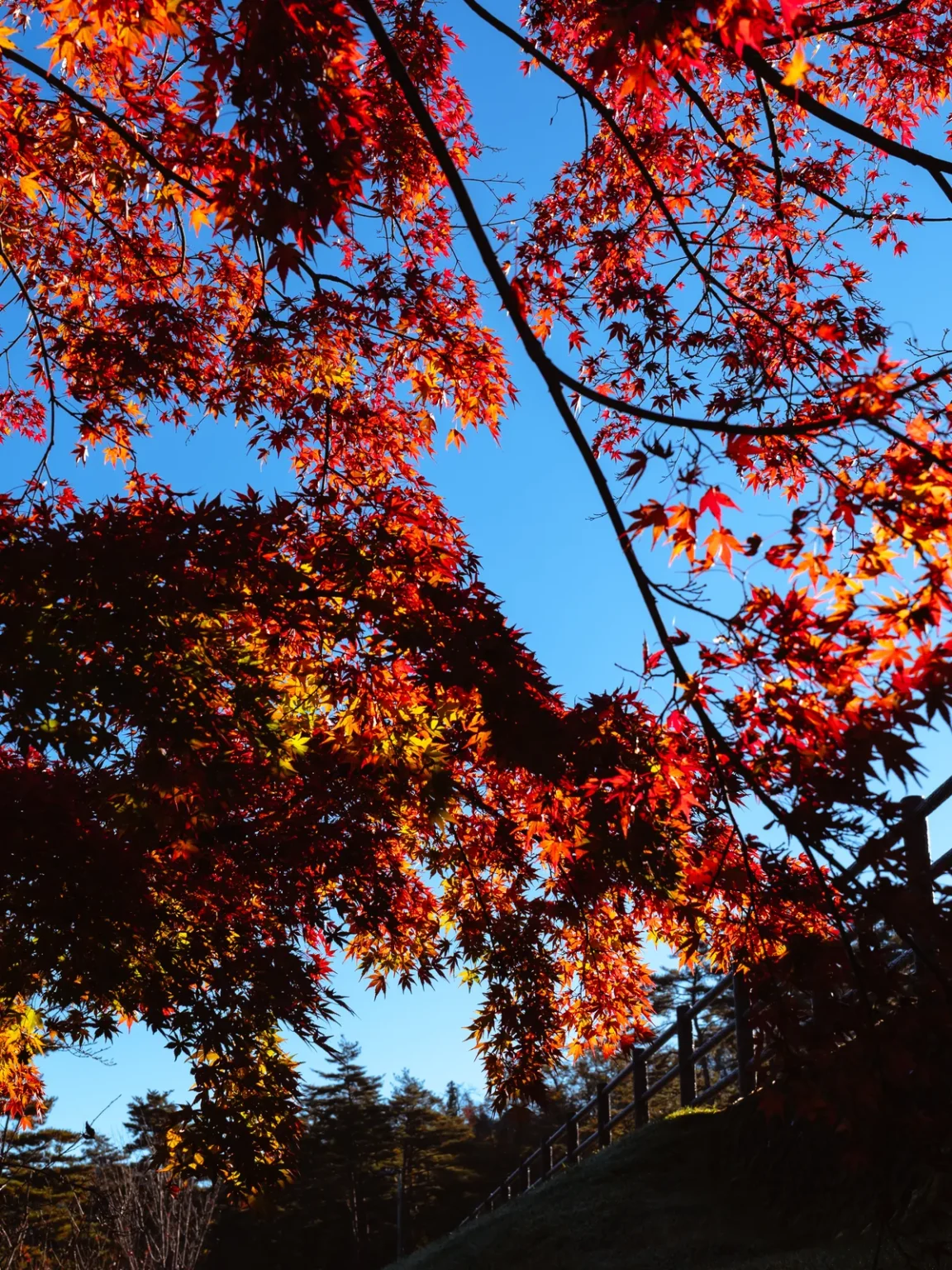
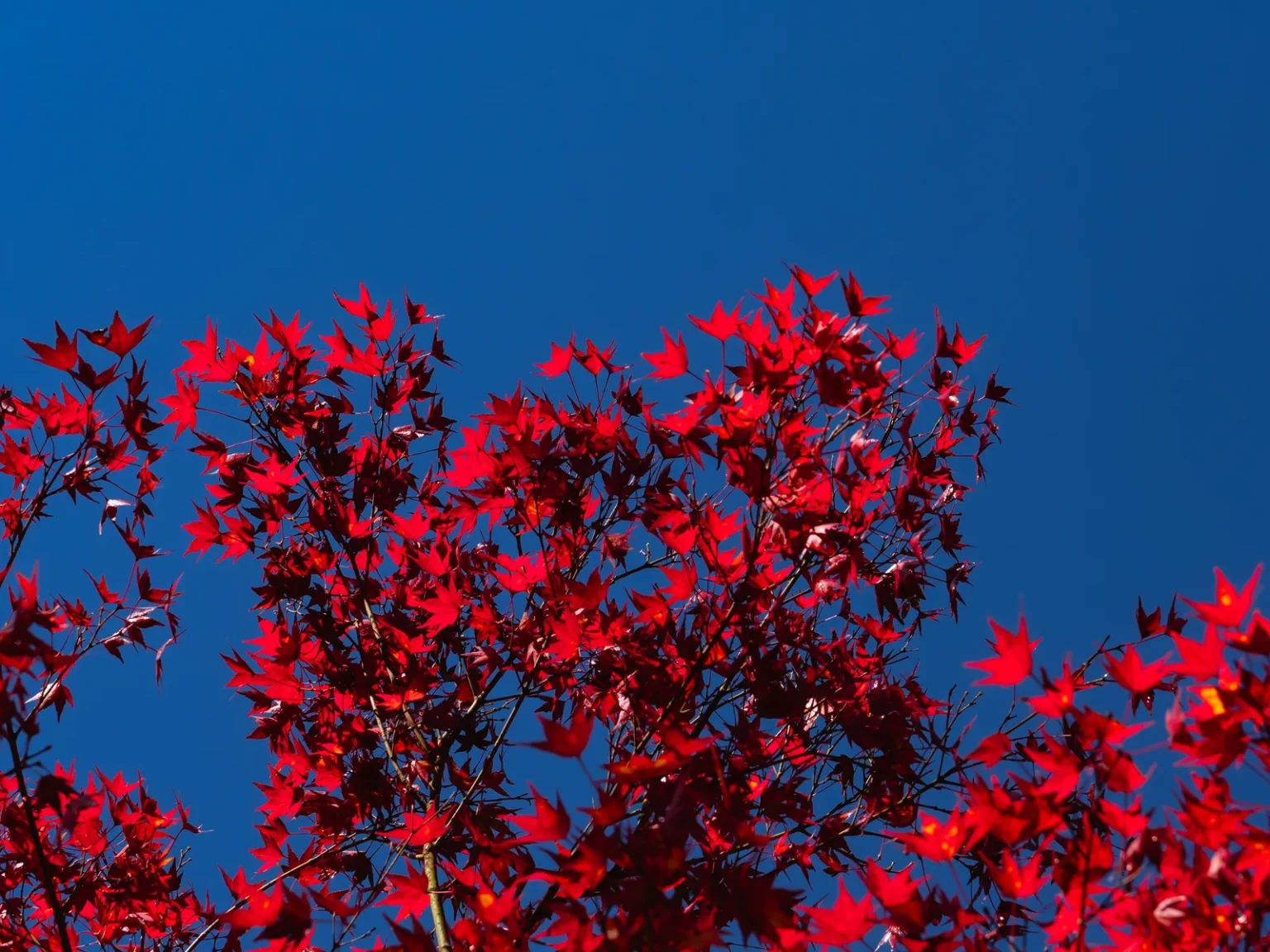
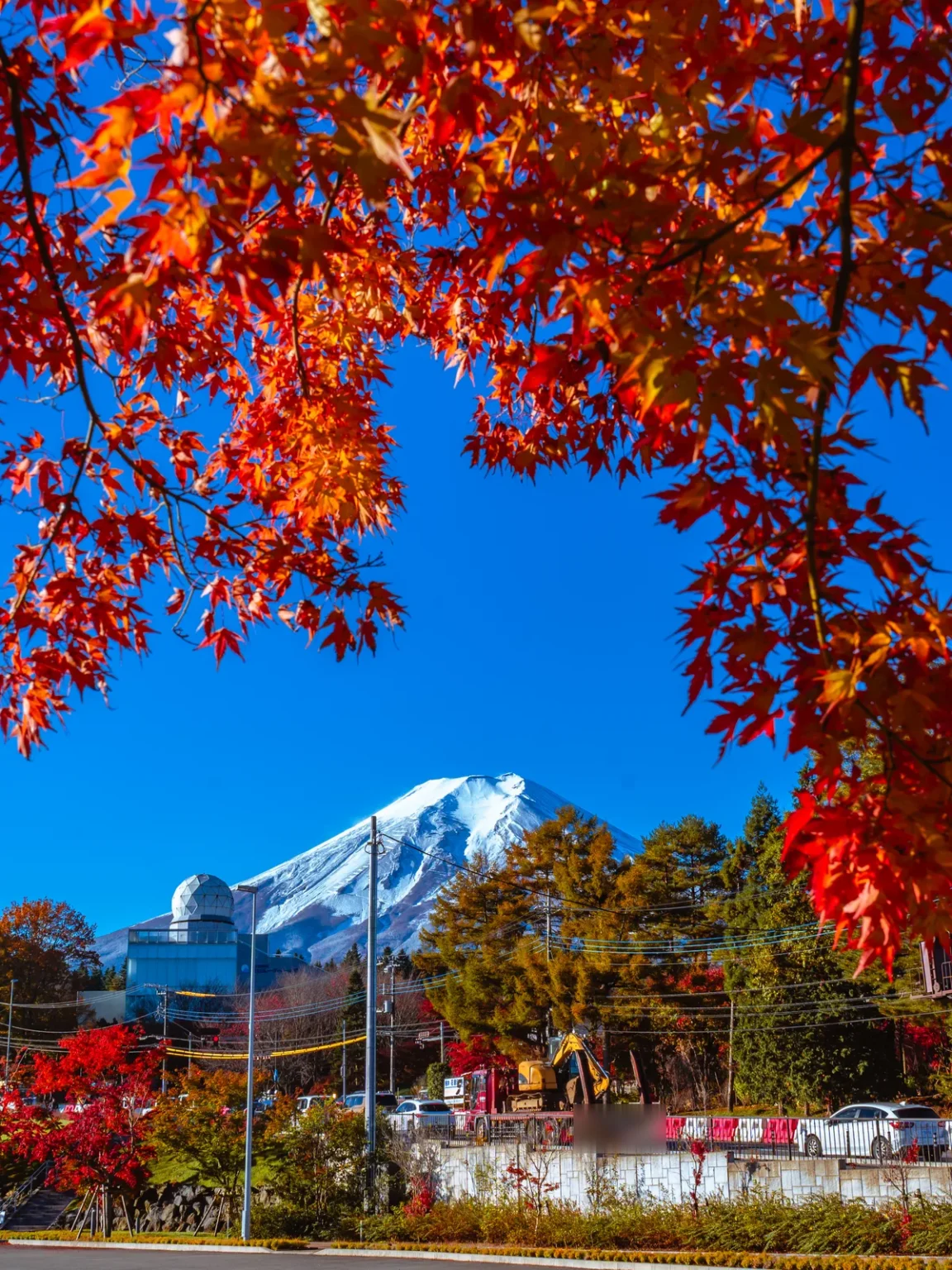
The sky was clear and blue in these frames. At 70 mm I framed a branch of red leaves against it.
Through the tunnel by the old Muto house
Next to the former Muto family house, one of two thatched farmhouses in the Fujisan Museum’s park, there is a tunnel for pedestrians only. Two of the photos on this page were taken from inside it, where the dark walls frame the maples outside.
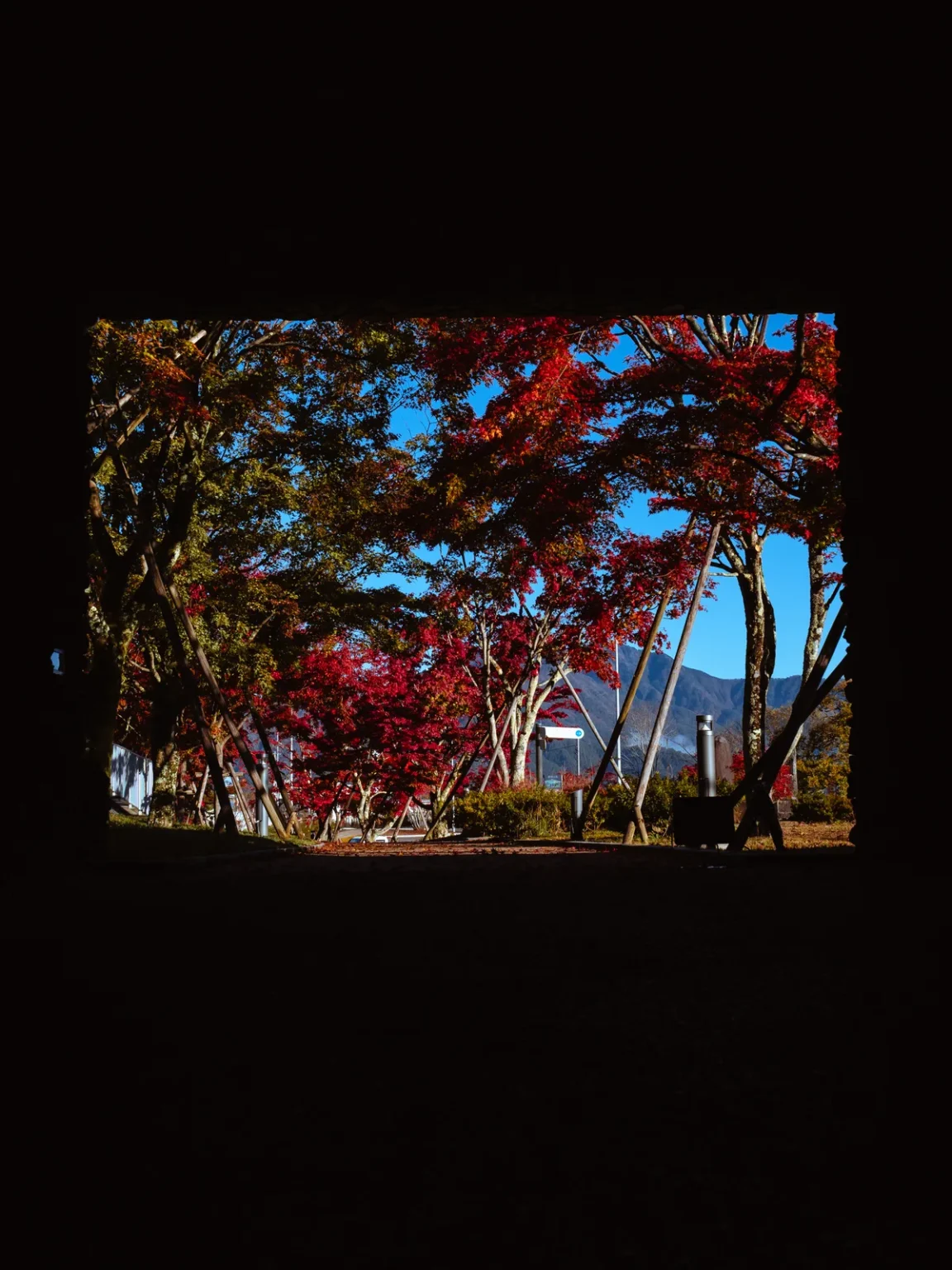
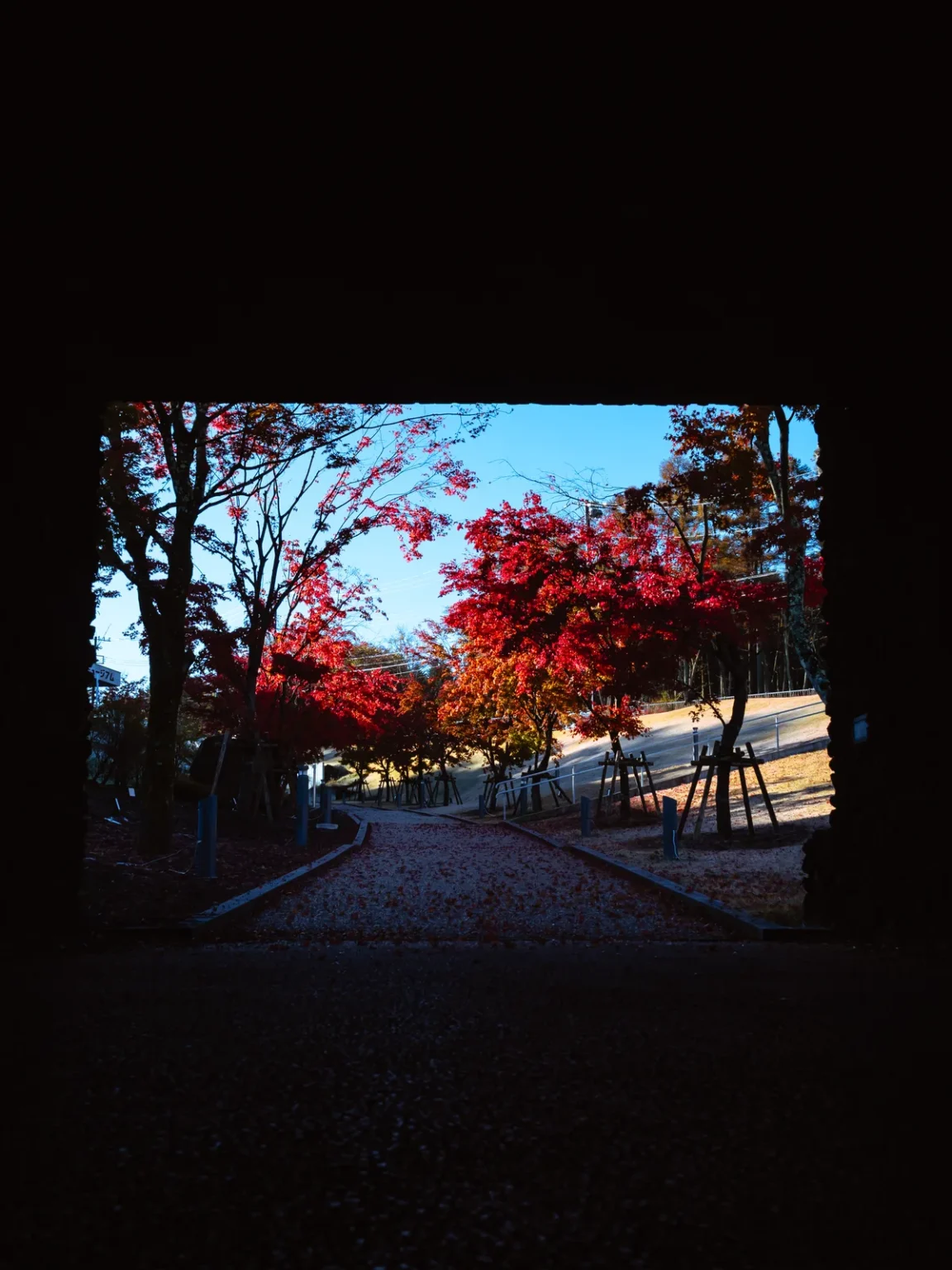
At 7:38 I photographed the tunnel entrance from the path. A person holding a white board is standing at it; their face is blurred.
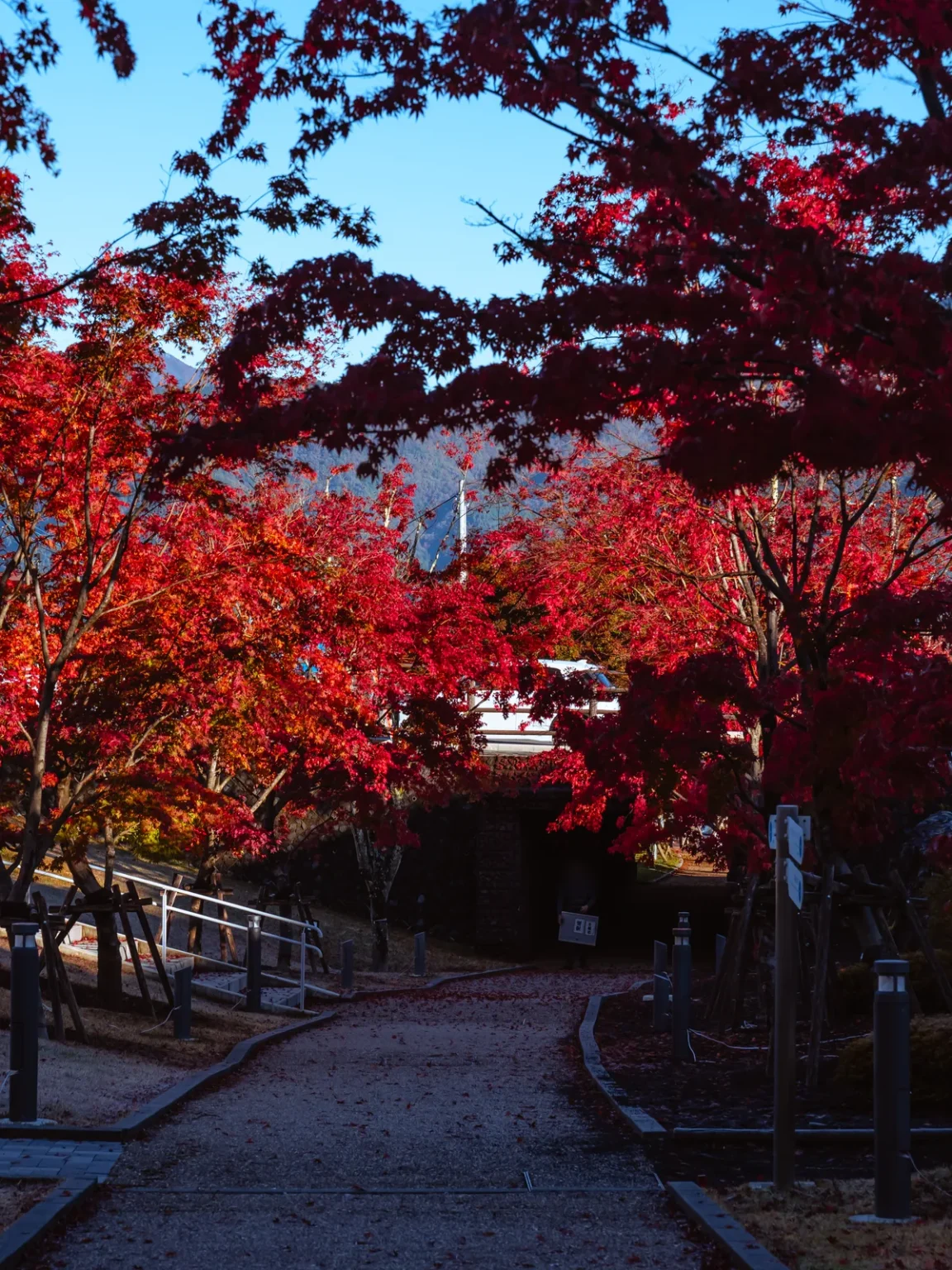
A thatched roof stood among the maples, with mountains behind. The Fujisan Museum says the former Muto house came from Shimoyoshida in the city and was rebuilt here in 1983, in the local kabuto-zukuri style; the wide openings in the gable let light and air into the attic, where silkworms were raised. It is a city cultural property.
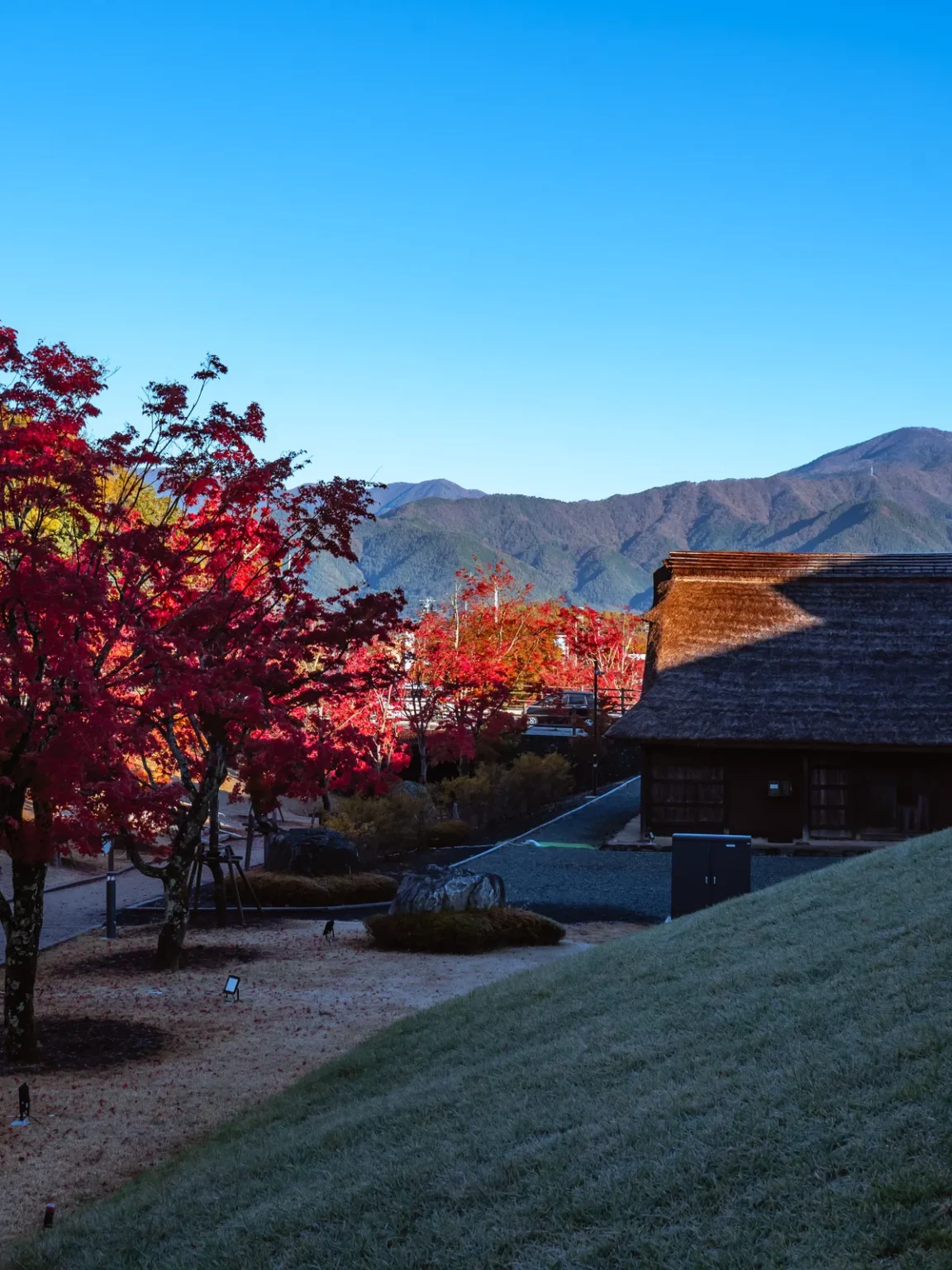
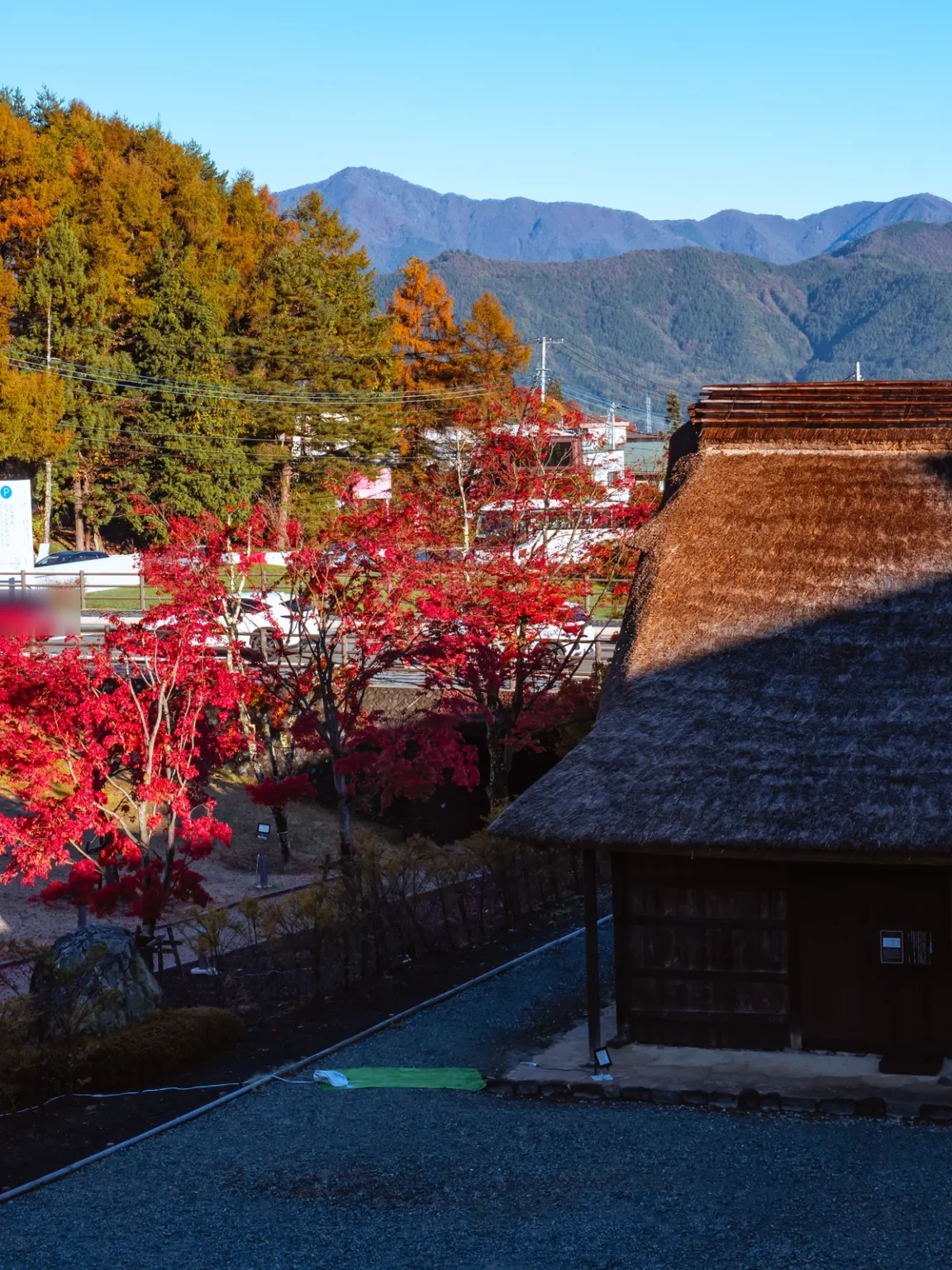
At 7:39 and 7:40 I photographed a path through woods of maples and tall trees.
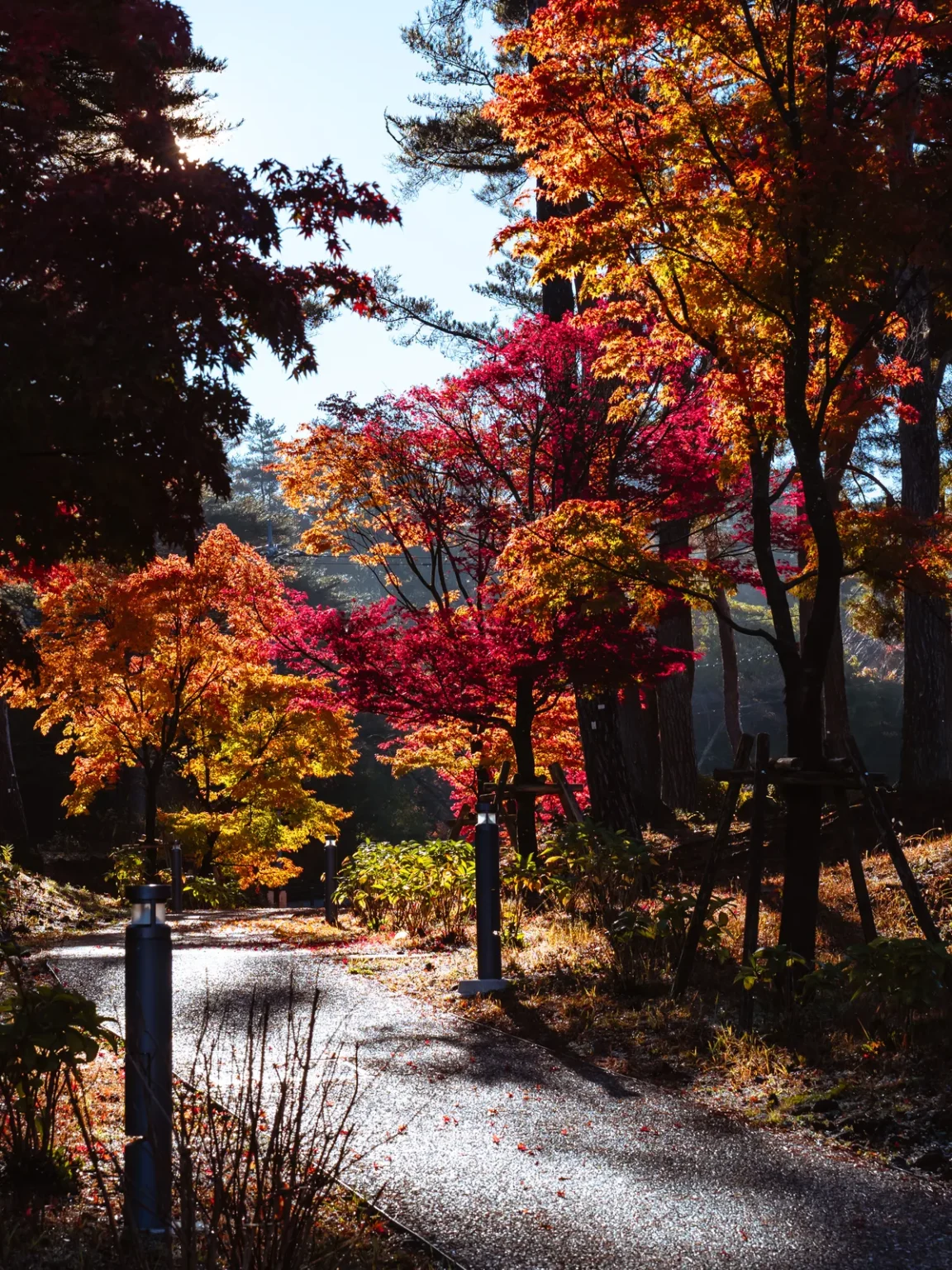
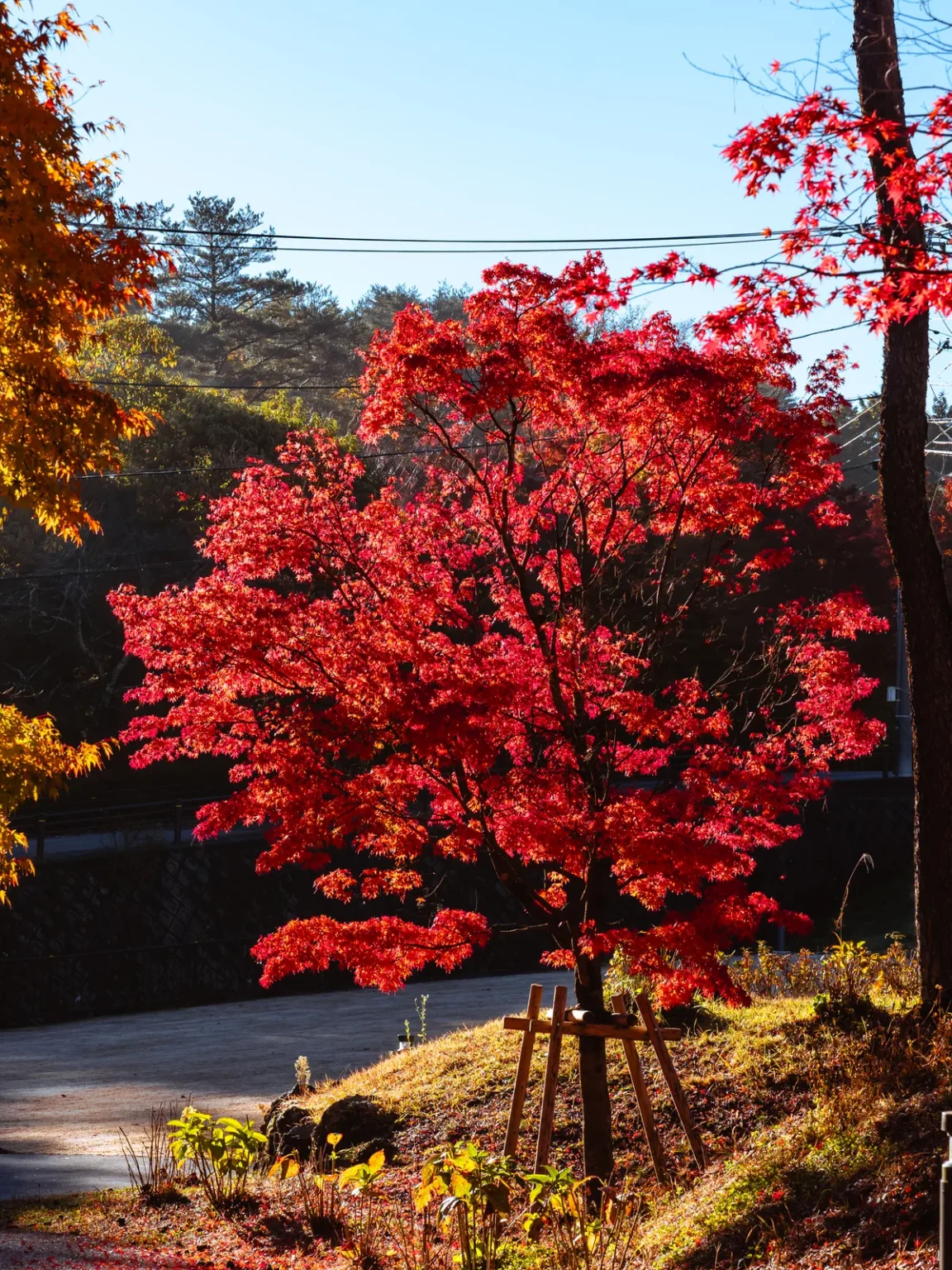
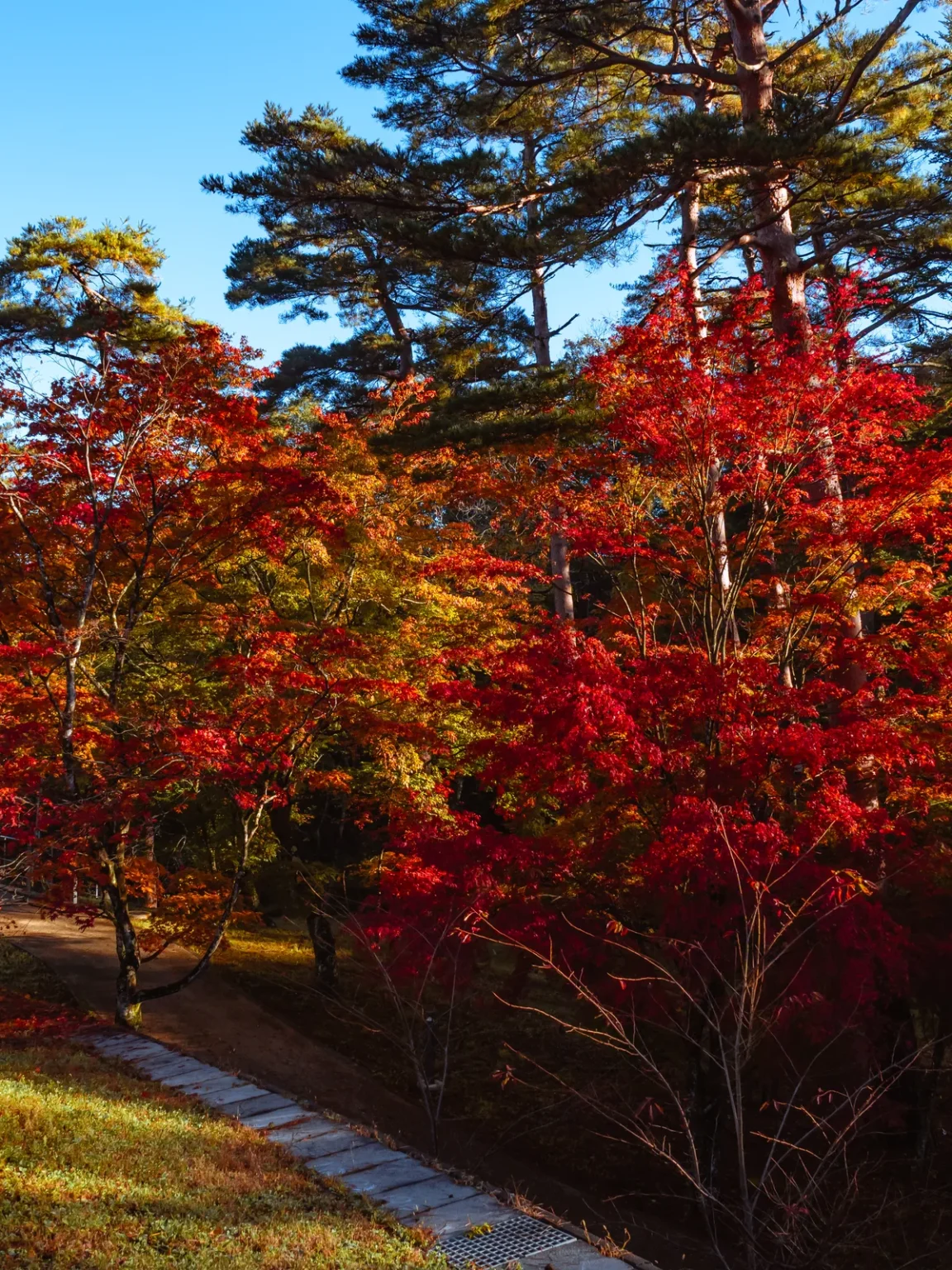
On Fujiyoshida’s autumn leaves, the city’s festival page describes a corridor of Japanese maples near the Fujisan Museum Park, colouring the way to Kaneyama Falls, and says that each year from late October to early November Fujiyoshida, being high, colours earlier than the area around it.
The dome again at 7:50
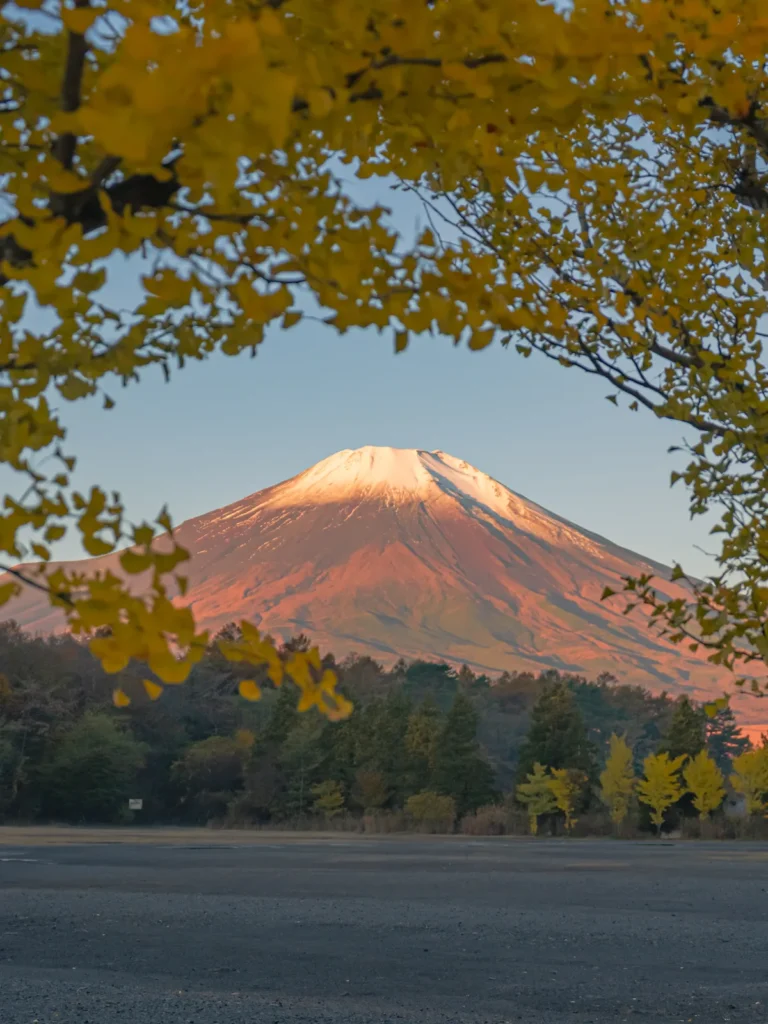
I photographed the dome again at 7:50 a.m. At 70 mm the mountain fills the sky behind the dome; in a frame 24 seconds later, at 29 mm, maple leaves frame the dome and Fuji.
Can you take Mt Fuji spring water at Michi-no-Eki Fujiyoshida?
Yes, and it’s free. I fill up here about once a week, and the water is really delicious. The prefecture’s page says anyone can use the tap for free and that bottles are sold to carry the water home; the same page notes there is always a long queue.
The rules are set out in the leaflet on the city’s guide:
| Rule | What the leaflet says |
|---|---|
| Small and medium containers (500 ml to 4 litres) | Up to 10 per visit |
| Large containers (18 or 20 litres, for example) | Up to 3 per visit |
| Not allowed | Washing dishes, washing clothes, brushing teeth, connecting a hose |
| Treatment | Chlorinated for drinking, but not treated for storage: use it soon after you take it home |
| Where it comes from | Rain and snowmelt from about 2,000 m up Mt Fuji, coming out after 25–40 years |
The leaflet also asks people to be considerate of others in the queue. The city’s page, checked on 15 November 2026, says the tap is open but gives no hours for it.
What is inside the Mt Fuji Radar Dome Museum?
I didn’t go in on this visit, so this part is from the official pages. The museum opened in 2004 to show the history of the Mt Fuji radar and weather observation, and the real dome is on display. In 2022 the exhibits were fully renewed and a disaster-prevention section was added. The “summit cold experience” uses wind, video and sound: you choose a one-minute sunrise course (summit cold around July) or a blizzard course (around March). No warm clothing is lent.
| Ticket (individual) | Adults | School children (elementary to high school) |
|---|---|---|
| Radar Dome Museum only | ¥630 | ¥420 |
| Combined with the Fujisan Museum | ¥800 | ¥450 |
Preschool children go free. The theatre shows a 50-minute documentary on building the radar at 10:00, 13:00 and 15:00, and a 6-minute introduction every 10 minutes in between. The prefecture’s page adds a third-floor deck for photos with Mt Fuji behind, and lists a wheelchair-accessible toilet, a lift and wheelchairs to borrow.
What was the Mt Fuji radar?
Fujiyoshida’s guide says the dome was set on the summit of Mt Fuji in 1964 and observed weather across Japan until 1999. The Government of Japan’s Highlighting Japan magazine (January 2018) explains why it mattered: the Mount Fuji Radar System could see across a radius of 800 km, and typhoon forecasting in Japan took a big step forward. Once weather satellites came in from the 1970s, the summit station’s role shrank; the radar stopped in 1999, and in 2004 it was decided to leave the station unmanned. Fujiyoshida’s guide gives 2004 as the year the Radar Dome Museum opened.
Where do you park, and is there a bus?
The city lists free car parks here. I parked in the Fujisan Museum / Michi-no-Eki Fujiyoshida No. 2 car park, and it was not crowded. By bus, get off at Fujisan Museum Park-mae (ふじさんミュージアムパーク前), about 15 minutes from Fujisan Station, and walk about 5 minutes.
Parking
The city’s guide lists two free car parks: in front of the michi-no-eki (207 cars, 3 accessible) and in front of the Radar Dome park (40 cars, 4 accessible, plus spaces for medium and large vehicles, which must use this one). The Fujisan Museum has its own free car park for 90 cars. Which of these official names matches the No. 2 car park I used was not verified for this guide.
By bus
From Fujisan Station on the Fujikyu Line, the city gives about 15 minutes by local bus to Fujisan Museum Park-mae, then about 5 minutes on foot. The museum says buses bound for Yamanakako stop there. Bus times were not checked for this guide; check them before you go.
By car
The city’s guide gives about 10 minutes from Kawaguchiko IC on the Chuo Expressway, about 10 minutes from Yamanakako IC, and 1–2 minutes from Fujiyoshida-Oshino Smart IC on the Higashi-Fujigoko Road.
Michi-no-Eki hours
Open every day. The shop and tourist information are open 9:00–17:00 on weekdays and 9:00–18:00 on weekends and holidays; the snack corner serving Yoshida udon, 10:00–16:00. The city’s guide lists toilets. The official Michi-no-Eki page, checked on 15 November 2026, carries a notice dated 3 December 2023 stating that no EV fast charger is installed.
I reached the dome by car, between Oshino Hakkai and Kaneyama Falls that morning.
Compare rental cars near Mt FujiJapanese rental companies on RakutenWhere to stay for an early start
Fujiyoshida and Kawaguchiko sit side by side; my Kawaguchiko vs Fujiyoshida comparison sets out the differences. Coming from Tokyo, the Tokyo to Kawaguchiko guide covers trains and buses.
If you want to base yourself in Kawaguchiko, compare stays there.
See Kawaguchiko stays on Booking.comCompare Kawaguchiko hotels on AgodaWhen comparing Mt Fuji day tours, check whether the Radar Dome Museum is included: browse Mt Fuji day tours on Klook. For more quiet colour, see my three quiet fall foliage spots; for the lakeside festivals, the Kawaguchiko Momiji Corridor; and for the whole area, my Mt Fuji guide.
More from my November 2026 autumn visits around Mt Fuji
Ginkgo trees beside Dallas Village (6 Nov) · Lake Yamanaka autumn leaves festival (6 Nov photos) · Nijumagari Pass (11 Nov) · Oshino Hakkai (11 Nov) · Kaneyama Falls (11 Nov) · Birch-and-maple path near Michi-no-Eki Fujiyoshida (11 Nov) · Suwa-no-Mori Nature Park (11 Nov) · Ubuyagasaki (13 Nov) · Tenka-chaya, Misaka Pass (13 Nov) · When the leaves were reported at their best (calendar) · All ten spots compared (summary)
Mt Fuji Radar Dome Museum: FAQ
How much is the Mt Fuji Radar Dome Museum?
¥630 for adults and ¥420 for school-age children, with preschool children free. A combined ticket with the Fujisan Museum is ¥800 for adults. The prefecture’s page says the spring water tap at the michi-no-eki is free for anyone to use.
What are the opening hours, and when is it closed?
9:00–17:00, with last entry at 16:30. The usual closing days in the city’s guide are Tuesdays (not public holidays) and 29 December to 1 January, with no closing days in August. For exceptions, check the museum’s 2026 calendar.
Is the Mt Fuji spring water at Michi-no-Eki Fujiyoshida free?
Yes. For each visit, the leaflet on the city’s guide sets a limit of up to 10 small or medium containers (500 ml to 4 litres). For large containers (18 or 20 litres, for example), it sets a limit of up to 3. I take water there about once a week, and it is really delicious.
When are the maples at their best?
On my visit, 11 November 2026, they were at their best. The city says Fujiyoshida, being high, colours from late October to early November, earlier than the area around it; the timing varies by year.
Is the Radar Dome the same as the Fujisan Museum?
No. They are separate museums in the same area. A combined ticket covers both.
How do I get there without a car?
Take a local bus from Fujisan Station to Fujisan Museum Park-mae, about 15 minutes, then walk about 5 minutes.
Sources
My own visit and the official pages behind the facts above (checked 15 November 2026)
- My own visit on the morning of 11 November 2026; photos taken 7:34–7:50 a.m. (camera times).
- Fujiyoshida official tourist guide (Fujiyoshida Tourism Promotion Service): Mt Fuji Radar Dome Museum; Radar Dome Museum calendar, April 2026 – March 2027 (PDF); Michi-no-Eki Fujiyoshida; Water tap leaflet (PDF); Yoshida autumn leaves festival 2026
- Fujisan Museum: The thatched farmhouses and the works notice; Temporary closure, 24 November – 1 December 2026; Fees and facilities
- Yamanashi Tourism Organization: Mt Fuji Radar Dome Museum; Michi-no-Eki Fujiyoshida
- Government of Japan, Highlighting Japan, January 2018: Research at the Top of Mount Fuji
Some links above are affiliate links — they cost you nothing extra and help keep this site going.
Join travelers discovering Japan's hidden side
Weekly dispatches from off-the-beaten-path Japan — spots and stories you won't find in guidebooks.
No spam. Unsubscribe anytime.
Welcome aboard!
You're in. See you in your inbox soon.