
Yamanashi · Fujiyoshida · Fuji heritage series, part 2
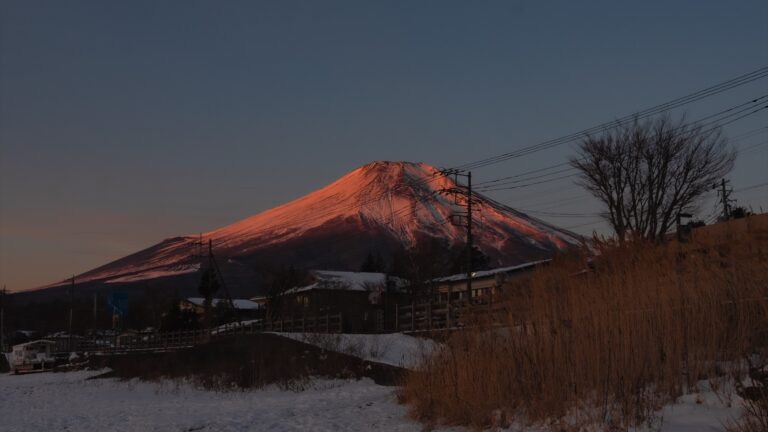
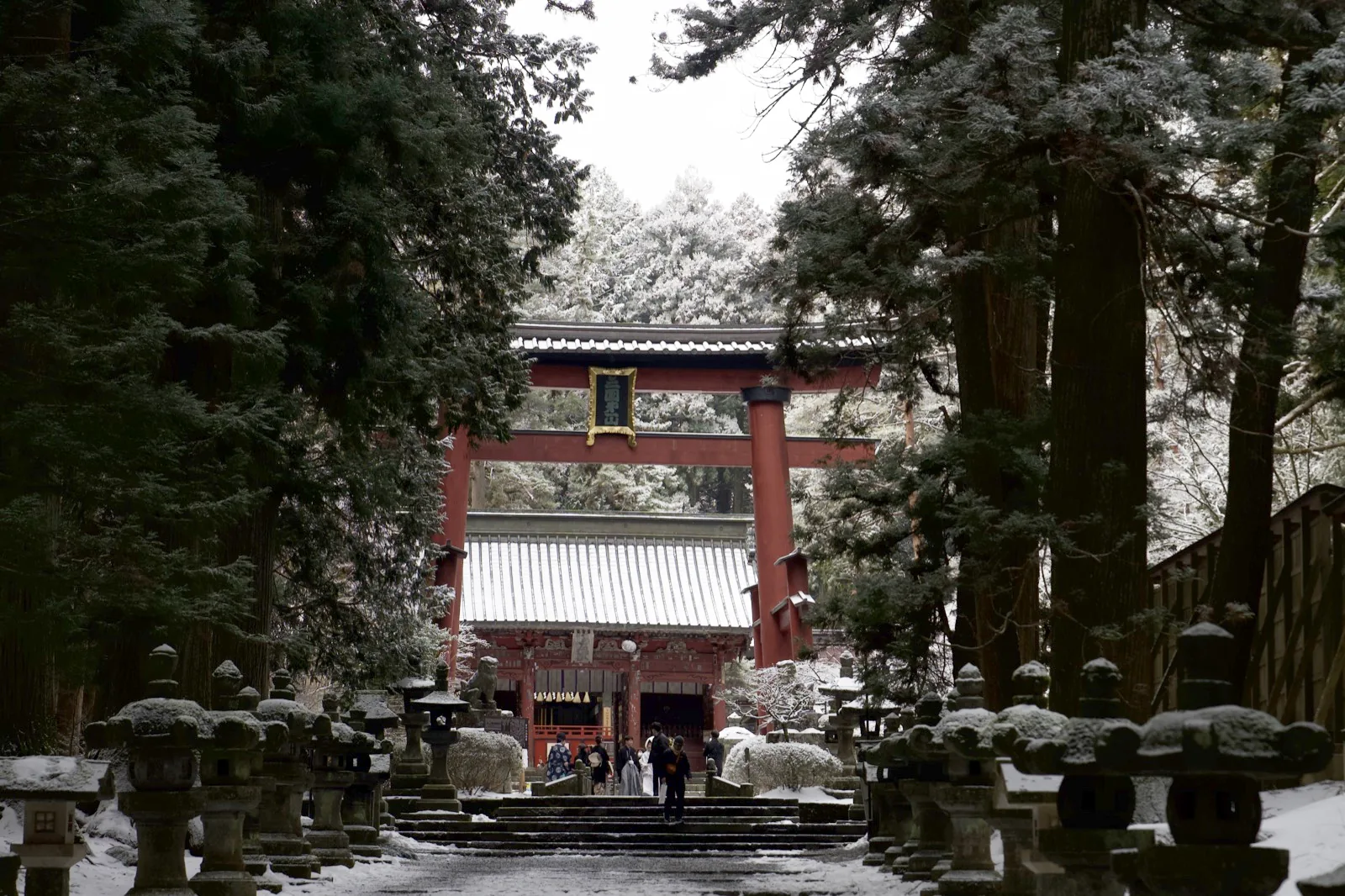
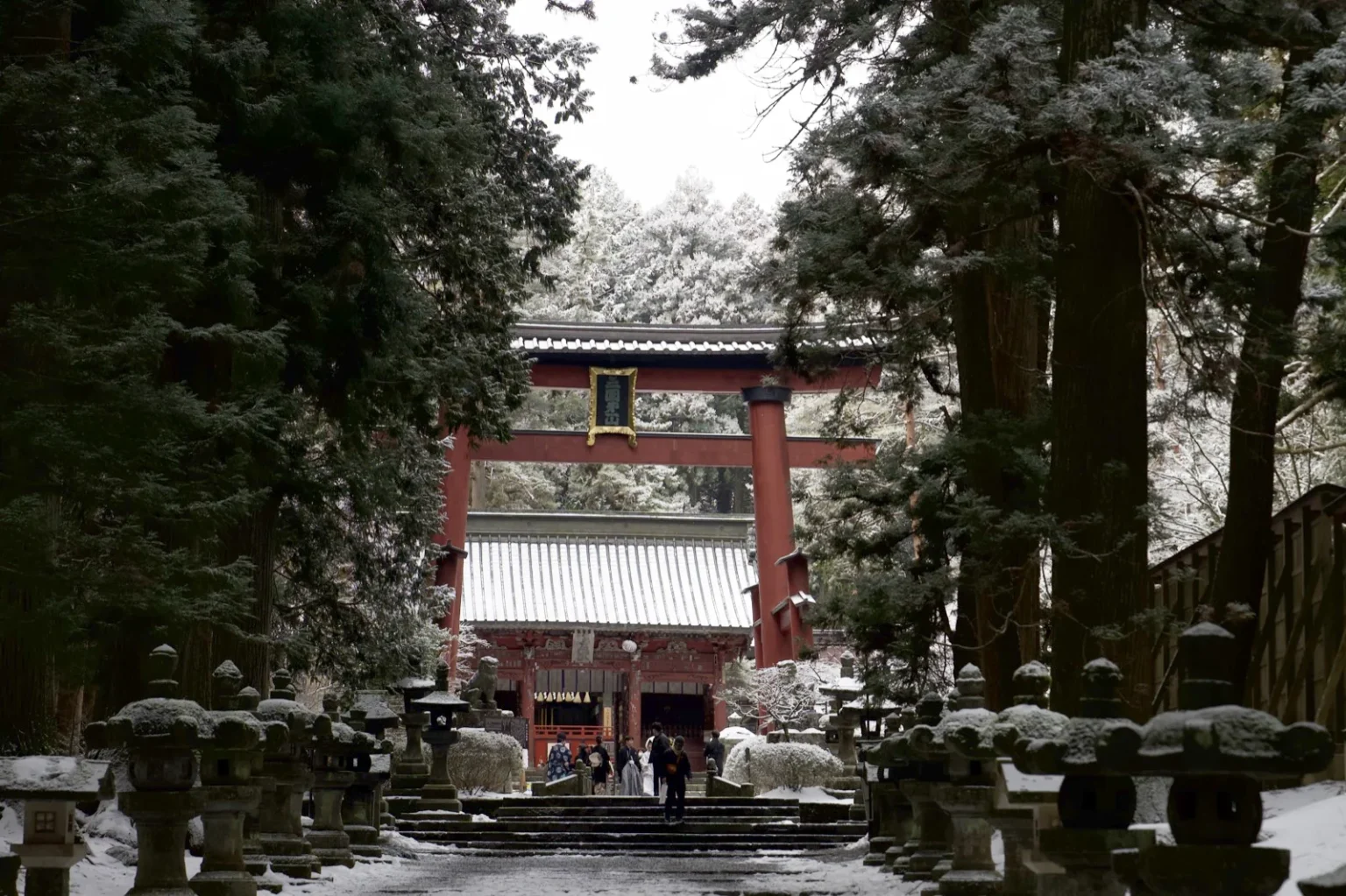
Kitaguchi Hongu Fuji Sengen Shrine (北口本宮冨士浅間神社) in Fujiyoshida is where the Yoshida Trail up Mt Fuji begins, and it is part of the Fuji World Heritage property as element 1-6 of the Fujisan Mountain Area. The Fujisan World Cultural Heritage Council describes the Yoshida route as the only one that still lets you walk all the way from the foothills to the summit. Most of the buildings you pass on the way in, from the gate to the worship hall, date from 1736 to 1745, and the Agency for Cultural Affairs says they were restored with donations from the Fuji-kō, the pilgrim confraternities of Edo. I live a few minutes away in Fujiyoshida. The photos here are from a single snowy morning, 7:54 to 8:19 a.m. on 9 March 2025.
This is part two of my Fuji heritage series. Part one, why Mt Fuji is a cultural World Heritage Site, covers all 25 component parts. This one stays at the shrine where the climb begins. The oshi lodging houses of Kamiyoshida, where the pilgrims slept, are next in the series.
What is Kitaguchi Hongu Fuji Sengen Shrine?
Kitaguchi, the “north entrance”, is another name for the Yoshida route, and the shrine’s FAQ says Hongu here means the shrine at the base of that route: the starting point of the Kitaguchi trail, and a place where rites have been held at the foot of the mountain since ancient times. Sengen, which the shrine’s English page gives the old reading Asama, is tied to the ancient worship of the volcano, and Sengen shrines circle the mountain; the main deity here is Konohanasakuya-hime. Look at the first character on the signs: 冨, written without the dot that the usual 富 has. The FAQ gives several explanations for the missing dot, one being that no person stands above the mountain. The shrine says each reading is a warning against stepping into sacred ground carelessly, and that the explanations probably date from the Edo and Meiji periods.
The shrine tells its own beginning as tradition. In 110 CE, it says, Prince Yamato Takeru stopped at a small hill called Ōtsukayama and declared that Fuji should be worshipped from this land, and a torii was raised there. After an eruption in 781, the provincial governor built a hall in 788 on the site north of the hill where the shrine stands now. In early times, the shrine adds, a mountain as high and beautiful as Fuji was the home of a god and off-limits to people, so this was a place to worship it from a distance; the great trees around the worship hall mark out that sacred ground. Because it began as a place of distant worship, the shrine says, it never built a hall on the summit; its FAQ names the summit shrines as the okumiya of Fujisan Hongu Sengen Taisha in Fujinomiya and Kusushi Shrine.
The Fujisan World Cultural Heritage Council’s English text puts the rest in one sentence: the shrine “originated as a place to worship Asama no Okami from afar. With the expansion of the Fuji-ko faith, it subsequently grew as the starting point for the Yoshida Ascending Route.” The shrine is listed as element 1-6 inside component 1, the Fujisan Mountain Area, next to the Yoshida Ascending Route itself (1-5). The shrine’s 2023 leaflet adds that the grounds are a national Historic Site and that the Yoshida Fire Festival is an Important Intangible Folk Cultural Property.
Walking in: the approach, the great torii and the gate
My frames from that morning run backwards. I started at the worship hall at 7:54 and reached the road at 8:19, so here they are in walking order. The shrine’s English page counts the gates for you: the first is the Kanadorii near Fujisan Station, the second stands at the entrance to the approach, the third is the great torii, and one more, on the west side of the grounds, opens onto the Yoshida Trail.
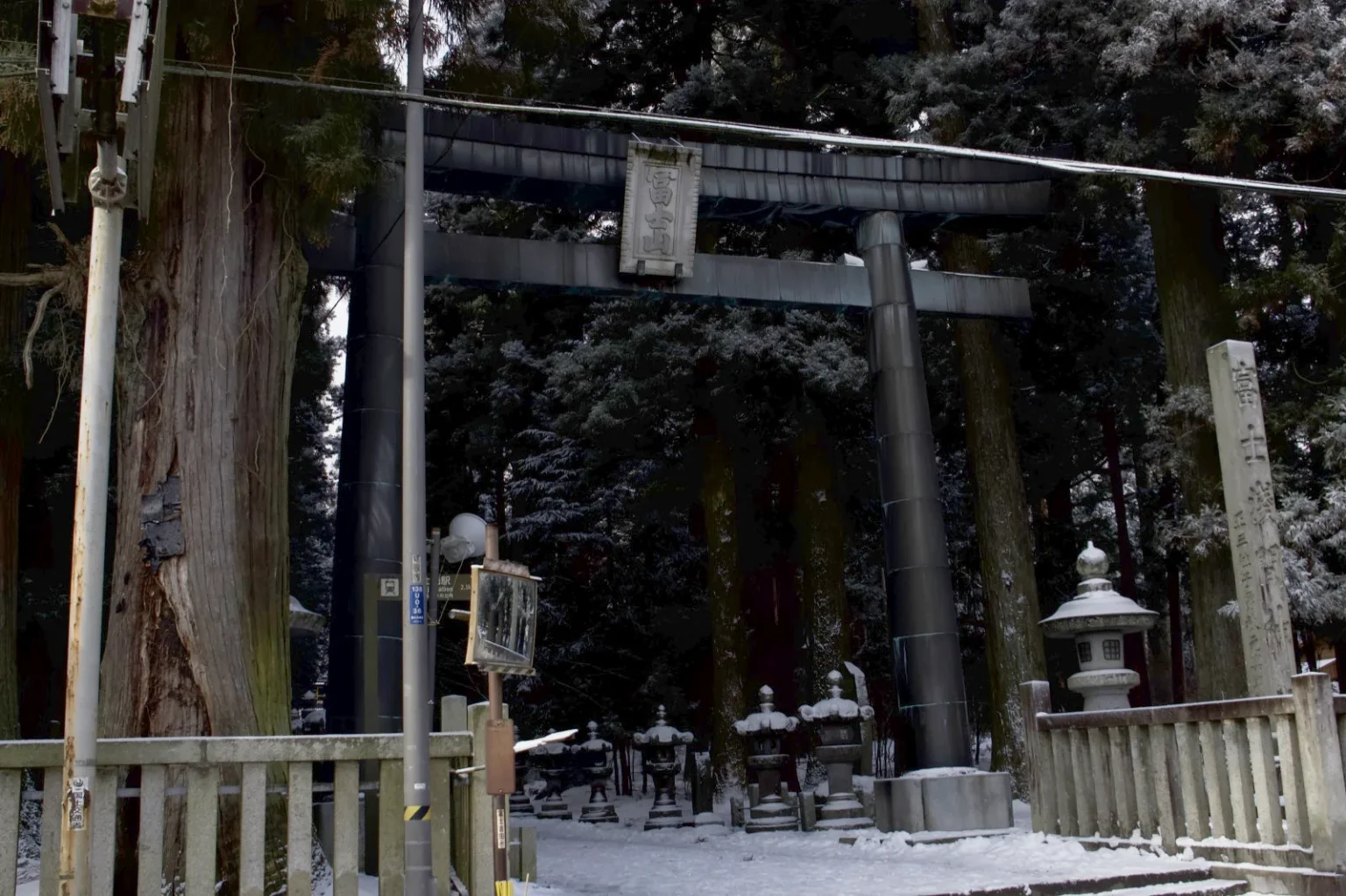
Past it, the approach runs between moss-covered stone lanterns under cedars and Japanese cypress that the city’s tourism guide says are over 300 years old. Somewhere along it is the Tachigyō-ishi, a stone where the city guide says Hasegawa Kakugyō, honoured as the founder of the Fuji-kō, stood naked on tiptoe for 30 days in the depth of winter; the shrine names it as one of his training places. I didn’t photograph it that morning.
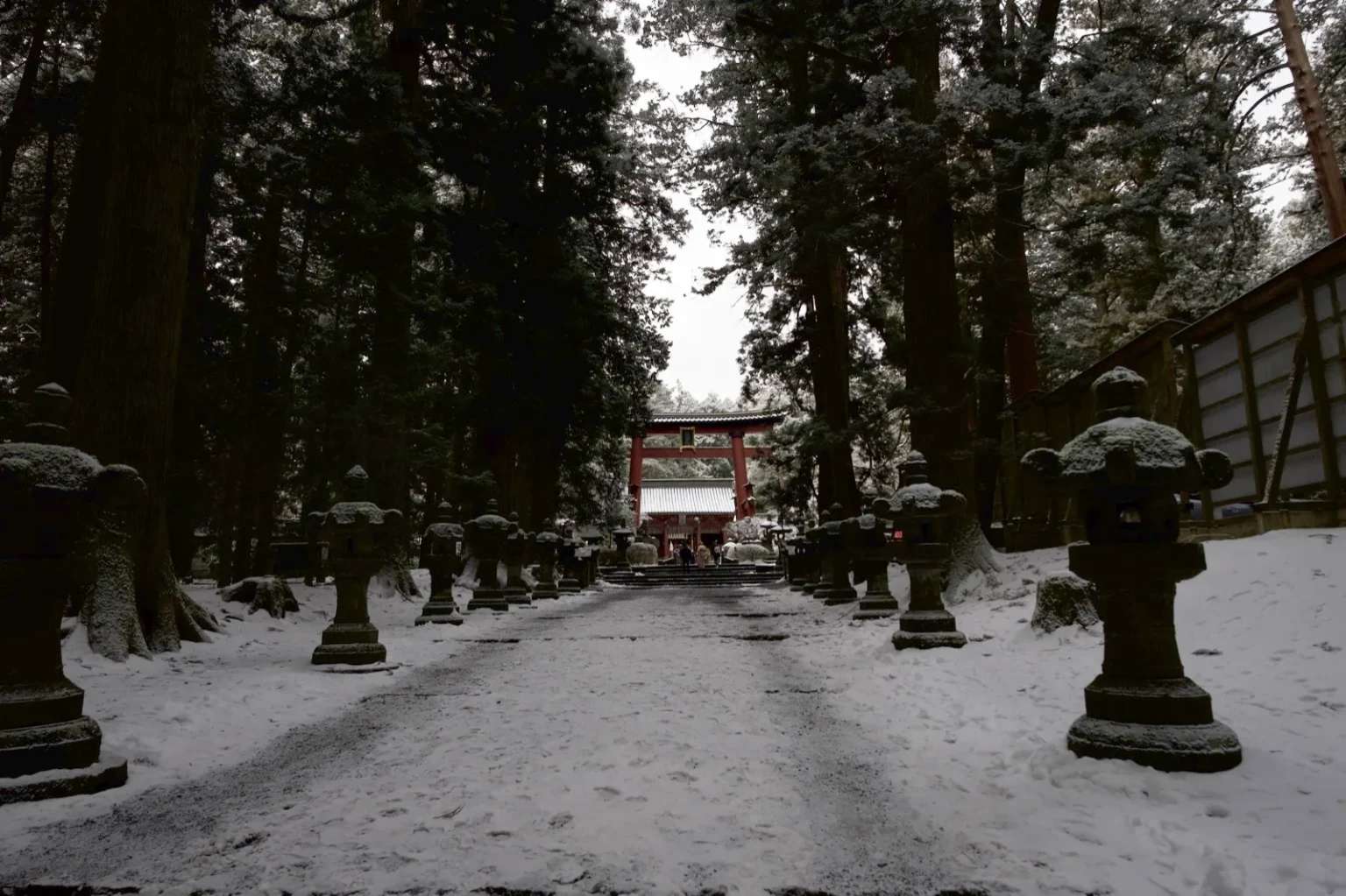
The great torii at the end is the one in the top photo. The shrine’s leaflet calls it Japan’s largest wooden torii, and the city’s tourism guide gives its height as 18 m. The plaque on the crossbeam reads 三国第一山 in my frames: roughly “the foremost mountain of the three countries”. In old Japan the three countries meant Japan, China and India, which together stood for the whole known world, according to the Nipponica encyclopedia.
What you are looking at: the halls the Fuji-kō rebuilt
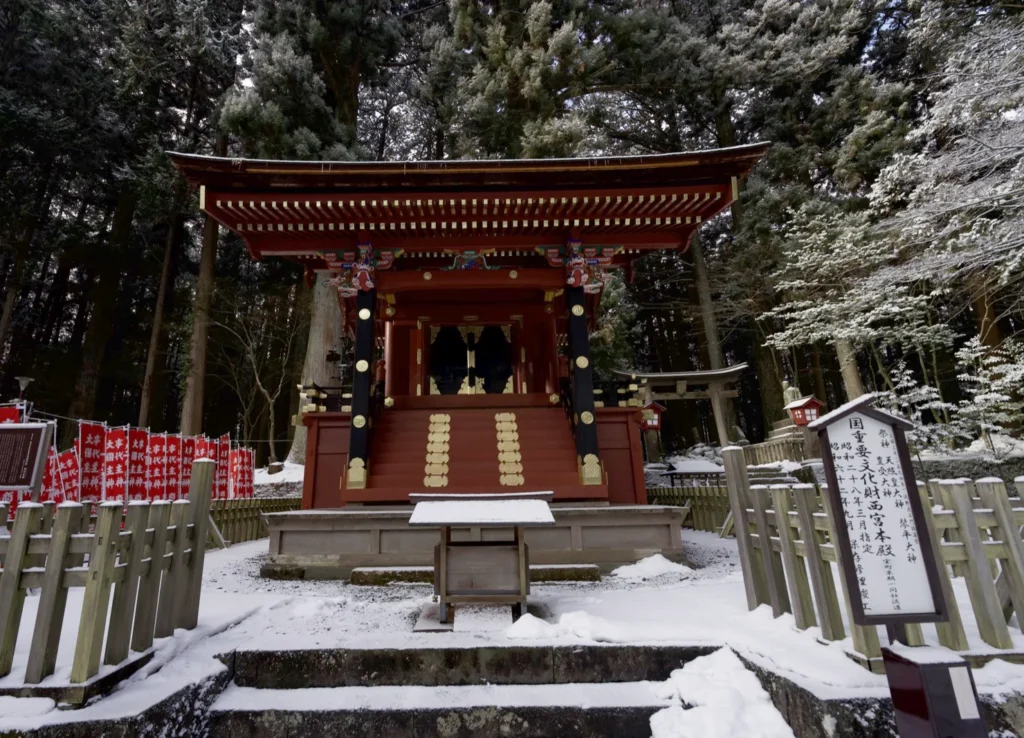
Eleven buildings here are national Important Cultural Properties. Three were designated long ago: the Higashimiya Honden in 1907 and the main Honden and the Nishimiya Honden in 1953. The other eight were added on 28 November 2017. The Agency for Cultural Affairs’ commentary on the 2017 designation explains why they belong together. In the mid-18th century Murakami Kōsei, sixth in the line of Fuji-kō leaders in Edo, raised donations from many places and rebuilt the run-down halls; the carpentry was done by local Gunnai craftsmen, and their school’s features show throughout.
“These buildings were restored with donations from the Fuji-kō, creating within the solemn grounds a richly decorated space for worship, typical of the Edo period.” The Agency for Cultural Affairs’ designation commentary, in my translation.
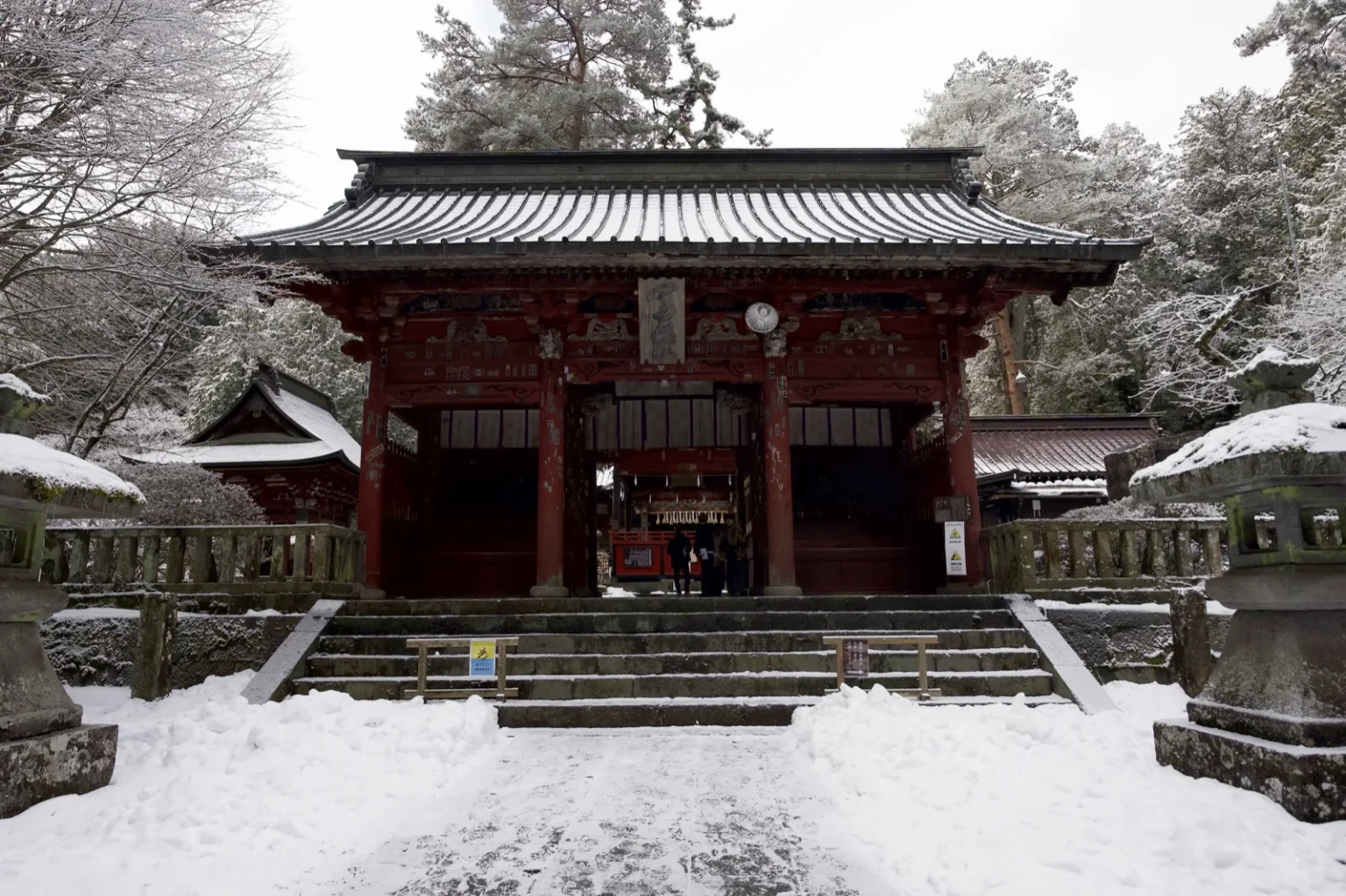
Zuishinmon gate (隨神門)
1736. The gate behind the great torii, where the open grounds begin. One of the eight buildings designated in 2017.
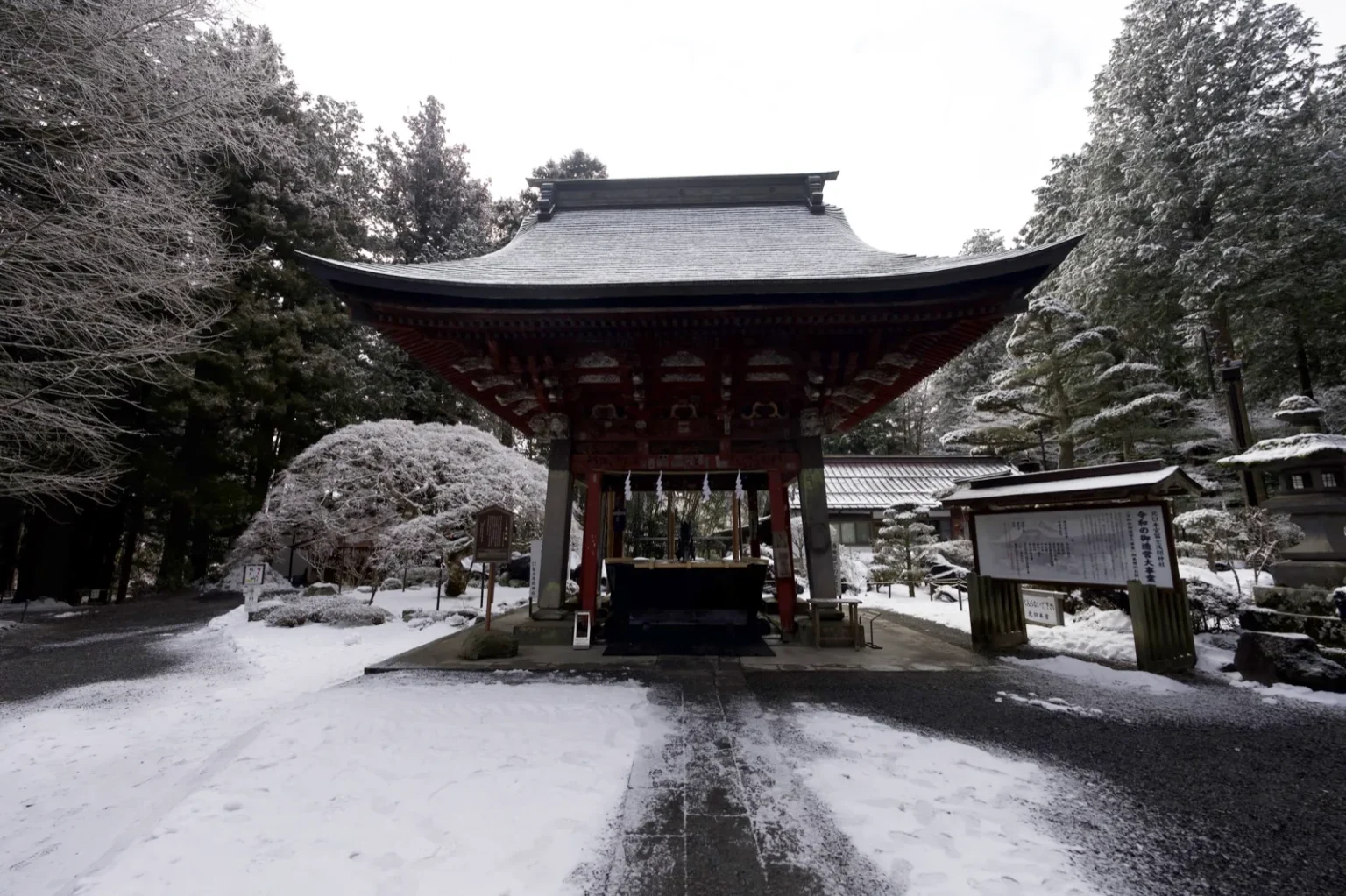
Temizuya (手水舎)
1745. The water pavilion for rinsing your hands; the Agency notes its rich decoration. The city’s guide says the water runs from a dragon’s mouth and was reportedly once drawn from Sensui, a sacred spring up the trail.
Kagura-den (神楽殿)
About 1737. The open stage for sacred dance, between the gate and the worship hall.
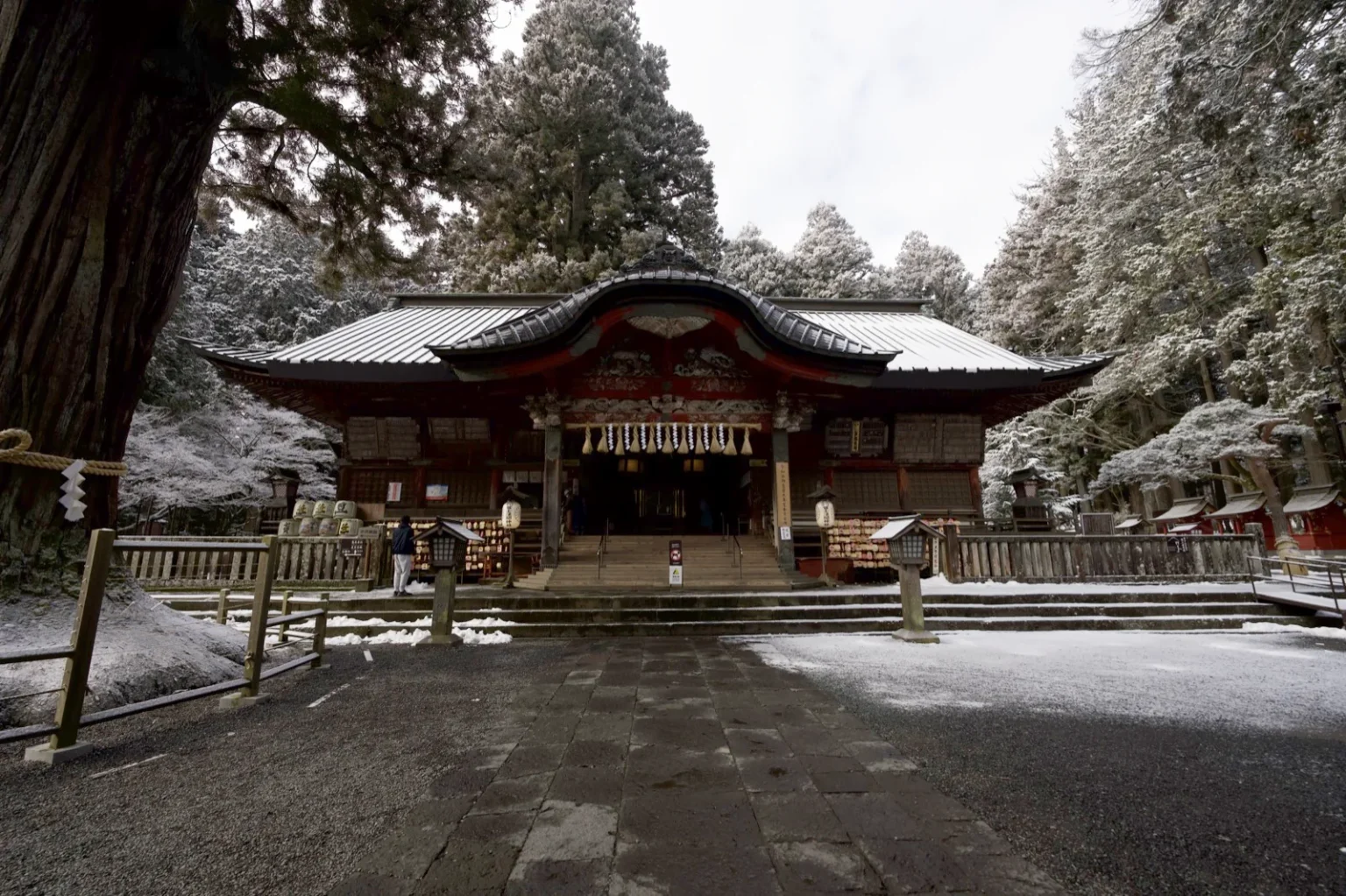
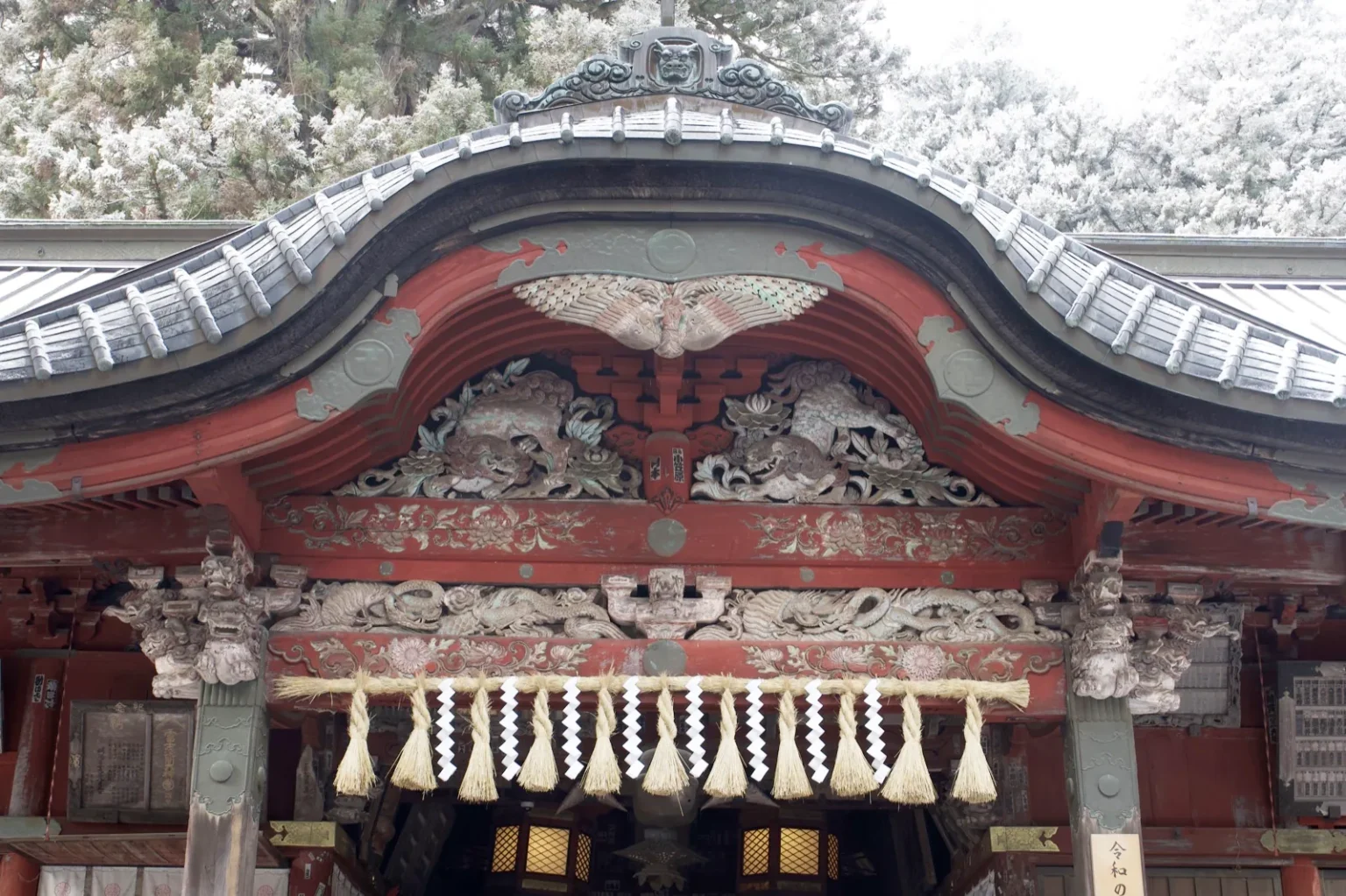
Haiden and heiden (拝殿及び幣殿)
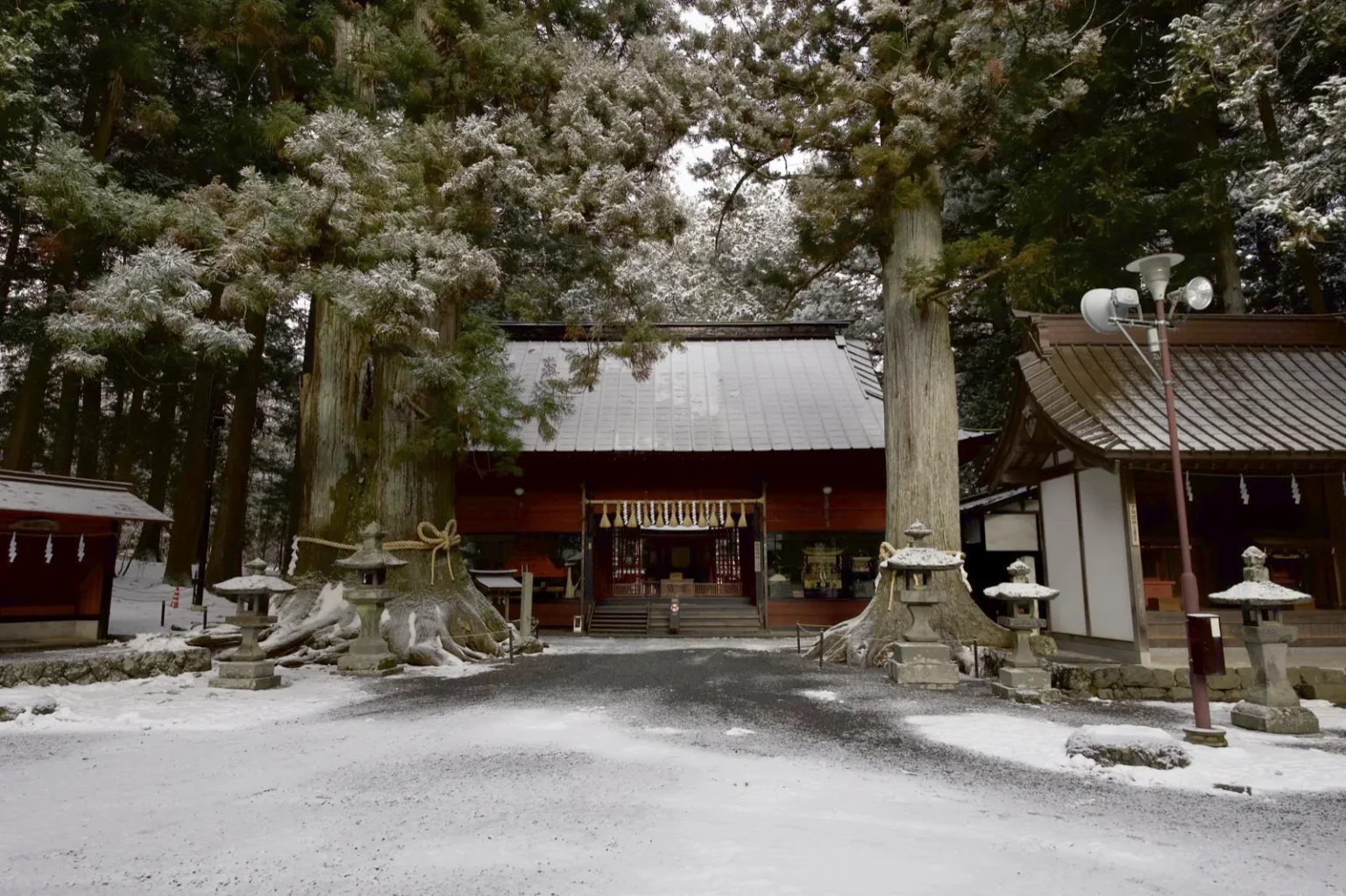
About 1739; the shrine credits the worship hall to Murakami Kōsei. The Agency singles out the big curved kara-hafu porch at the front, decorated with carving, colour and metal fittings.
Honden (本殿)
1615, the main sanctuary behind the worship hall, built by Torii Naritsugu, according to the shrine. Designated in 1953.
Higashimiya and Nishimiya (東宮・西宮)
Two older sanctuaries moved to either side of the Honden: the Higashimiya, rebuilt by Takeda Shingen in 1561 and the oldest hall here, and the Nishimiya of 1594.
Suwa Shrine haiden (諏訪神社拝殿)
The Agency dates it to about 1737; the shrine’s history page gives 1649 for the building of its worship hall. The shrine says Suwa’s founding date is unknown and that it is traditionally the guardian deity of this land. The Yoshida Fire Festival is now the festival of both shrines, and the shrine says it is thought to have begun as Suwa’s own.
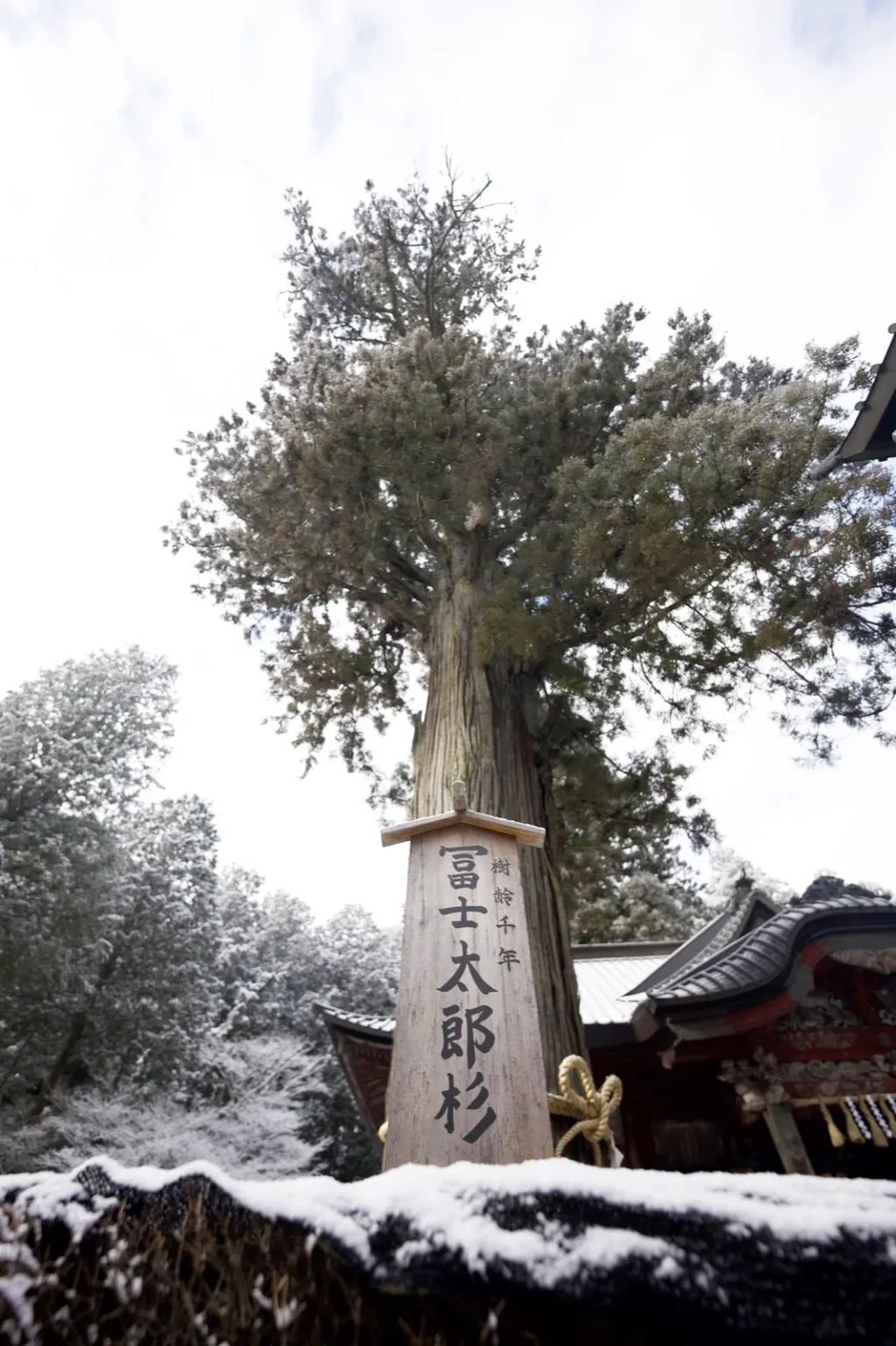
Fuji Taro-sugi and Fufu-hinoki
The two sacred trees on either side of the worship hall, each about 1,000 years old by the city’s count. The leaflet lists the cedar as a prefectural and the paired cypress as a city natural monument.
The trail gate (登山門)
The shrine’s leaflet places the start of the Yoshida Trail at the plain wooden torii to the right of the Nishimiya. The prefecture’s heritage centre calls it the climbing gate.
Even the office
The shrine office (社務所), dated 1741, is on the 2017 list too, along with the Ebisu-sha of 1753 and the Fukuchi Hachiman-sha of 1740.
Who were the Fuji-kō, and why does this shrine matter to them?
A kō is a religious confraternity. The shrine’s page on the Fuji-kō spells out why they were needed: walking from Edo to Yoshida took three days one way even for strong walkers, and Yoshida to the summit and back took at least two more, so the whole pilgrimage ran to about eight days if the weather held. The shrine reasons that this is why people turned to the kō: members pooled money and chose representatives to carry everyone’s prayers up the mountain. The shrine quotes the old saying that Edo had “808 kō for its 808 neighbourhoods”. Pilgrims from the Kanto region came by the Kōshū Kaidō road and then the Fuji-michi road to Yoshida, to start the climb here.
At the foot of the trail, oshi took them in: hosts who, the shrine says, did not just lodge pilgrims but also taught the doctrine, performed prayers and handled their arrangements. The oshi town in Kamiyoshida, entered through the Kanadorii, numbered 86 houses at its peak, by the count of the shrine and the prefecture’s heritage centre; the Agency for Cultural Affairs puts Yoshida-guchi’s oshi at 80 to nearly 100 in the late Edo period. The shrine’s page, which is not dated, says about 40 households still belong to the oshi association and only five still receive kō as oshi. The next part of this series goes inside one of their houses.
The pilgrims slept in the oshi town below the shrine. To be on the approach early today, stay in Fujiyoshida or by Lake Kawaguchiko the night before: how the two bases compare, or hotels around Kawaguchiko on Booking.com.
| Year | What happened |
|---|---|
| 110 CE (tradition) | Yamato Takeru worships Fuji from Ōtsukayama; the shrine counts this as its founding |
| 788 (tradition) | After the 781 eruption, a hall is built on the present site |
| 1541–1646 | Hasegawa Kakugyō, traditionally the founder of the Fuji-kō; the shrine says he trained at the Hitoana cave and on the stone along this approach |
| 1561 | Takeda Shingen rebuilds the hall now called the Higashimiya Honden |
| 1615 | The present Honden is built |
| 1733 | Jikigyō Miroku fasts for 31 days at Eboshi-iwa, a rock at the old 7.5 station of the Yoshida Trail (counted as the 8th today), and dies there; the prefecture’s heritage centre says he named the Yoshida route the main road up the mountain |
| 1733–1740 | Murakami Kōsei’s rebuilding of the shrine, by the shrine’s dates |
| 1736–1753 | The dated buildings: Zuishinmon 1736, Kagura-den and Suwa haiden about 1737, worship hall about 1739, temizuya 1745, Ebisu-sha 1753 (Agency for Cultural Affairs) |
| 2012 | The Yoshida Fire Festival becomes an Important Intangible Folk Cultural Property |
| 2013 | Fujisan is inscribed on the World Heritage List, with this shrine as element 1-6 |
| 2017 | Eight more entries are designated, bringing the total to 11 Important Cultural Properties |
The two best-known Fuji-kō leaders of the 1730s led rival branches. Murakami Kōsei was a wealthy Edo merchant (Kotobank’s biographical dictionary says he dealt in wicker trunks), and he led the established line of Kakugyō’s followers. Jikigyō Miroku, an Edo oil merchant according to the same dictionary, gave his fortune away at 60, the shrine says, and taught equality and plain living. People called them “Daimyō Kōsei” and “Beggar Miroku”. Miroku’s teachings, dictated during his fast on the mountain, became the core text of the later Fuji-kō, and the shrine quotes the saying that grew up afterwards: if it isn’t Miroku’s kō, it isn’t a Fuji-kō. In 1733 Miroku named the Yoshida route the main road up the mountain, and over the years that followed, the donations Kōsei gathered from Fuji-kō members rebuilt the shrine at its foot.
Can you still start a Fuji climb from the shrine?
Yes. The shrine itself recommends it: “Ideally, you would begin at the foot of the mountain, pay your respects at the shrine that stands at the start of the trail, and then start the climb.” (my translation from its page on Mt Fuji). The trail leaves the grounds through the plain wooden torii beside the Nishimiya, then passes Ōtsukayama, about 150 m outside the grounds, where the founding story is set.
The walk up from the shrine to Umagaeshi takes about 2 hours 50 minutes without rests, going by Fujiyoshida City’s English climbing table: 11 hours 10 minutes to the summit from the shrine against 8 hours 20 minutes from Umagaeshi. The city’s tourism guide also publishes the section as a model course of about six hours, which takes in side trips such as Suwa-no-mori park and the Sensui spring. Its leg times:
| Leg | City guide’s time |
|---|---|
| Shrine to Ōtsukayama | 5 min |
| Ōtsukayama to the start of the Yoshida-guchi footpath | 3 min |
| Footpath entrance to Suwa-no-mori Nature Park | 5 min |
| Suwa-no-mori to the Sensui turn-off | 30 min |
| Turn-off to Sensui, the old purification spring (its pond is now filled in) | 10 min |
| On to Nakanochaya (1,100 m) | No time given |
| Nakanochaya to the Ōishi-chaya ruins | About 1 hour |
| Ōishi-chaya ruins to Umagaeshi (1,450 m) | 30 min |
For the walk to Umagaeshi
Much of the historic route below Umagaeshi is now a paved road with narrow pavements in places, so the guide recommends, for safety, the unpaved Yoshida-guchi footpath that runs alongside it via Nakanochaya to Umagaeshi. Past Nakanochaya, it says, the way narrows into woodland. The Agency for Cultural Affairs singles out the stretch from Nakanochaya past Umagaeshi to the summit as especially well preserved.
Nakanochaya (中ノ茶屋)
A teahouse with over 300 years of history, named for being halfway between the shrine’s trail gate and Umagaeshi. In 2026 it is open from 17 April to the end of October, 9:00–16:00 in autumn, closed on Thursdays this season, and closed for winter from 1 November. Udon is paused for now. Across from it stand kō stones, many marking a guide’s 33rd ascent, and the city’s guide says believers saw this spot as the border between this world and the next, with the sacred mountain beyond.
Umagaeshi (馬返)
At 1,450 m, the name means “send the horse back”: the city’s guide says riders left their horses here as the trail steepened, and that four-legged animals were not taken onto the sacred mountain. A stone torii stands here, flanked by statues of monkeys with their hands together.
To go the other way, Fujikyu’s Umagaeshi bus runs on Saturdays, Sundays and holidays until 3 November 2026 (daily in July and August). It leaves Fujisan Station at 9:30 and 15:00, stops at the shrine 10 minutes later and reaches Umagaeshi 30 minutes after leaving the station; buses back leave Umagaeshi at 10:10 and 15:35, passing Nakanochaya 10 minutes later. Fares start at ¥150, Nakanochaya to Umagaeshi is ¥280, and a two-day pass for this bus is ¥1,000. Bad weather can cancel it, so riding up and walking back down means you don’t depend on the return bus.
The full climb from here is a different undertaking. Fujiyoshida City’s English climbing table gives 11 hours 10 minutes up from the shrine, not counting rests; the same table gives 6 hours 40 minutes from the Fuji Subaru Line 5th Station. The 2026 season ran from 1 July to 10 September, with a ¥4,000 entrance fee, and climbers starting from the base are asked to show the fee receipt at the 6th-station checkpoint. My Yoshida Trail permit and reservation guide walks through the booking, and Climbing Mt Fuji 2026 covers the rest.
Getting there, opening hours and when to go
From Fujisan Station on the Fujikyu line, you can walk or take the bus. The walk is about 2 km (the signpost at the approach entrance says 2.1 km to the station), roughly 25 minutes on OpenStreetMap’s walking route, and it follows the pilgrims’ way: through the Kanadorii, which the shrine places just east of the station, and up the street of the old oshi town. By bus, the city’s guide says to get off at Sengen-jinja-mae, a minute’s walk away. By car, the shrine gives about 3 km from the Kawaguchiko interchange on the Chuo Expressway, and the city’s guide lists 140 free spaces.
The city’s guide lists the hours as 8:30–17:00. Prayers are taken without booking from about 9:00 to 16:00, the shrine says, though a festival or wedding can mean a long wait. I was in the grounds from 7:54 that morning. I found no admission fee on the shrine’s pages or the city’s listing. If you bring a dog, the shrine asks owners to clean up after it, and animals are not taken into the worship hall for prayers, even if carried. The shrine office offers three goshuin seals: the shrine itself, Suwa Shrine and Ōtsukayama.
26–27 August
The Yoshida Fire Festival, the festival of this shrine and Suwa Shrine together (the shrine says it is thought to have begun as Suwa’s), with around 80 giant torches lit along Kamiyoshida’s main street on the 26th; the shrine counted 120 in 2024. The national designation and the shrine’s English page describe it as the o-yama-jimai that closes the mountain. The shrine’s 2024 report adds that it is sometimes mistaken for the closing rite, which the shrine holds separately on 10 September.
1 July
The mountain opening (o-yamabiraki) is held here every year, according to the city’s guide, at the start of the climbing season.
September, across town
The Fujiyoshida yabusame is at a different shrine, Omuro Sengen in Shimoyoshida. Visit the two shrines on separate days.
A snowy morning
Snow on the cedars made my March visit; I can’t promise it on a given day. For seeing the mountain itself the same day, check my Mt Fuji visibility forecast first.
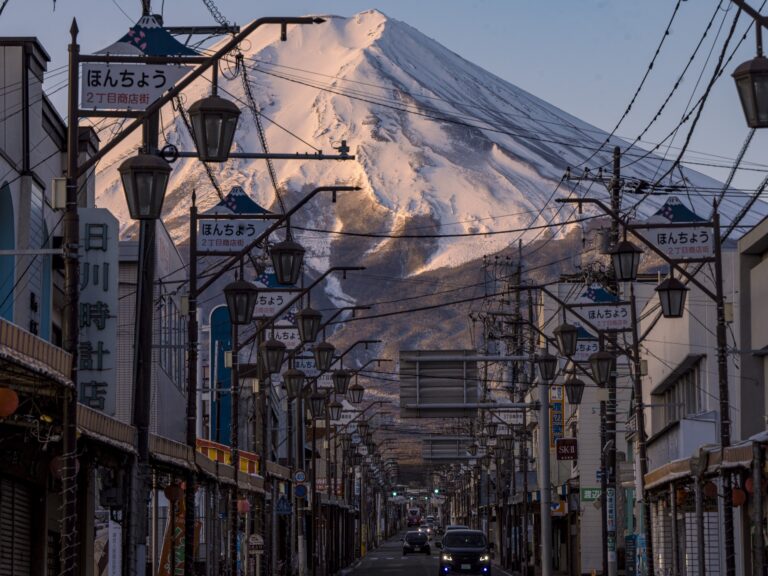
The Fuji-michi runs back down through the town. The city’s tourism guide uses the same name for Honcho-dori, the shopping street in the famous photo of Fuji rising at the end of the street, and the Nishiura bar streets sit just behind it, which makes a good evening after a morning at the shrine.
For the 9:30 bus to Umagaeshi or an early walk up the approach, sleep nearby the night before.
Search Kawaguchiko hotels on Booking.comComing from Tokyo for the day
FAQ
Is Kitaguchi Hongu Fuji Sengen Shrine a World Heritage Site?
Yes, as part of one. Since 2013 it has been element 1-6 of the Fujisan Mountain Area, component 1 of the World Heritage property “Fujisan, sacred place and source of artistic inspiration”. Its grounds are also a national Historic Site, and 11 of its buildings are Important Cultural Properties.
How do I get to the shrine from Fujisan Station?
Take a bus to Sengen-jinja-mae, a minute’s walk from the shrine, or walk about 2 km (roughly 25 minutes; the signpost at the approach says 2.1 km) through the Kanadorii and up the old oshi street. On weekends and holidays until 3 November 2026, Fujikyu’s Umagaeshi bus leaves Fujisan Station at 9:30 and 15:00 and stops at the shrine 10 minutes later.
What are the opening hours, and is there an entry fee?
Fujiyoshida’s tourism guide lists 8:30–17:00, and the shrine takes prayers from about 9:00 to 16:00 without booking. I found no admission fee on the shrine’s pages or the city’s listing.
Can I climb Mt Fuji from the shrine?
Yes. The Yoshida Trail starts at the shrine, and the city gives 11 hours 10 minutes up from here without rests. In the 2026 season (1 July to 10 September) the entrance fee was ¥4,000, and climbers starting from the base were asked to show the receipt at the 6th-station checkpoint. Out of season, going above the 5th station is prohibited, but the lower trail to Sato-goya is open all year.
What was the Fuji-kō?
Confraternities of Fuji believers, centred on Edo, that pooled money and sent representatives on the pilgrimage, which took about eight days from Edo. They traced their faith to Hasegawa Kakugyō (1541–1646) and grew rapidly after Jikigyō Miroku’s fast on the mountain in 1733. Oshi hosts in Kamiyoshida lodged and guided them.
How long is the walk from the shrine to Umagaeshi?
About 2 hours 50 minutes of walking without rests, going by the city’s climbing table, or about six hours on the city’s model course with its side trips and stops, via Nakanochaya (1,100 m) to Umagaeshi (1,450 m). In 2026 Nakanochaya is open until the end of October, closed on Thursdays, and the bus back from Umagaeshi leaves at 10:10 and 15:35 on weekends and holidays until 3 November.
When is the Yoshida Fire Festival?
Every year on 26 and 27 August, as the festival of this shrine and its Suwa Shrine. The Agency for Cultural Affairs’ designation and the shrine’s English page call it the o-yama-jimai that closes the mountain; the shrine’s 2024 report says it is sometimes mistaken for the closing rite, which the shrine holds separately on 10 September.
Sources
The primary sources behind the facts above, checked on 6 October 2026
- Kitaguchi Hongu Fuji Sengen Shrine: history; Fuji-kō and oshi; FAQ; English page; about Mt Fuji (climbing advice); access and parking; goshuin; precinct leaflet (PDF, 2023); fire festival; 2024 fire festival report; notices on prayer hours and pets
- Agency for Cultural Affairs, national heritage database: Higashimiya Honden; Honden; Nishimiya Honden; haiden and heiden (with the 2017 commentary); kagura-den; temizuya; Zuishinmon; Suwa Shrine haiden; Historic Site Fujisan; Yoshida Fire Festival; Yoshida-guchi Fuji faith objects
- Fujisan World Cultural Heritage Council: list and map of the 25 component parts (PDF)
- Yamanashi Prefectural Fujisan World Heritage Center: component parts and elements
- Fujiyoshida City: Yoshida Trail access and general information 2026; Mt Fuji off-season (updated 16 September 2026)
- Fujiyoshida City tourism guide: Kitaguchi Hongu Fuji Sengen Shrine; Yoshida Trail model course, shrine to Umagaeshi; Nakanochaya; Fuji-michi (Honcho-dori)
- Fujikyu: 2026 Umagaeshi bus days and times (Fujikyu Yamanashi Hire); Umagaeshi bus fares
- Kotobank (Nihon Jinmei Daijiten and Nipponica): Hasegawa Kakugyō; Jikigyō Miroku; Murakami Kōsei; sangoku (the three countries)
- Walking distance from Fujisan Station: OpenStreetMap data with the OSRM foot profile at routing.openstreetmap.de
Join travelers discovering Japan's hidden side
Weekly dispatches from off-the-beaten-path Japan — spots and stories you won't find in guidebooks.
No spam. Unsubscribe anytime.
Welcome aboard!
You're in. See you in your inbox soon.