Fukuoka · Oita · Kumamoto · Kagoshima · 7 days by train and bus
The Ruby Route is a seven-day Kyushu itinerary that starts and ends at Hakata Station and never needs a car: Beppu’s steaming “hells”, a night in Yufuin under its twin-peaked mountain, the Kyushu Odan Bus over the highlands into the Aso caldera, Kumamoto Castle, and Sakurajima smoking across the bay from Kagoshima. Its trains, buses and ferry run all year, the intercity fares come to about ¥36,000 per adult (local transport, entry fees and hotels extra), and the two seats to book early are the bus from Yufuin to Aso and the Aso Boy train down to Kumamoto.
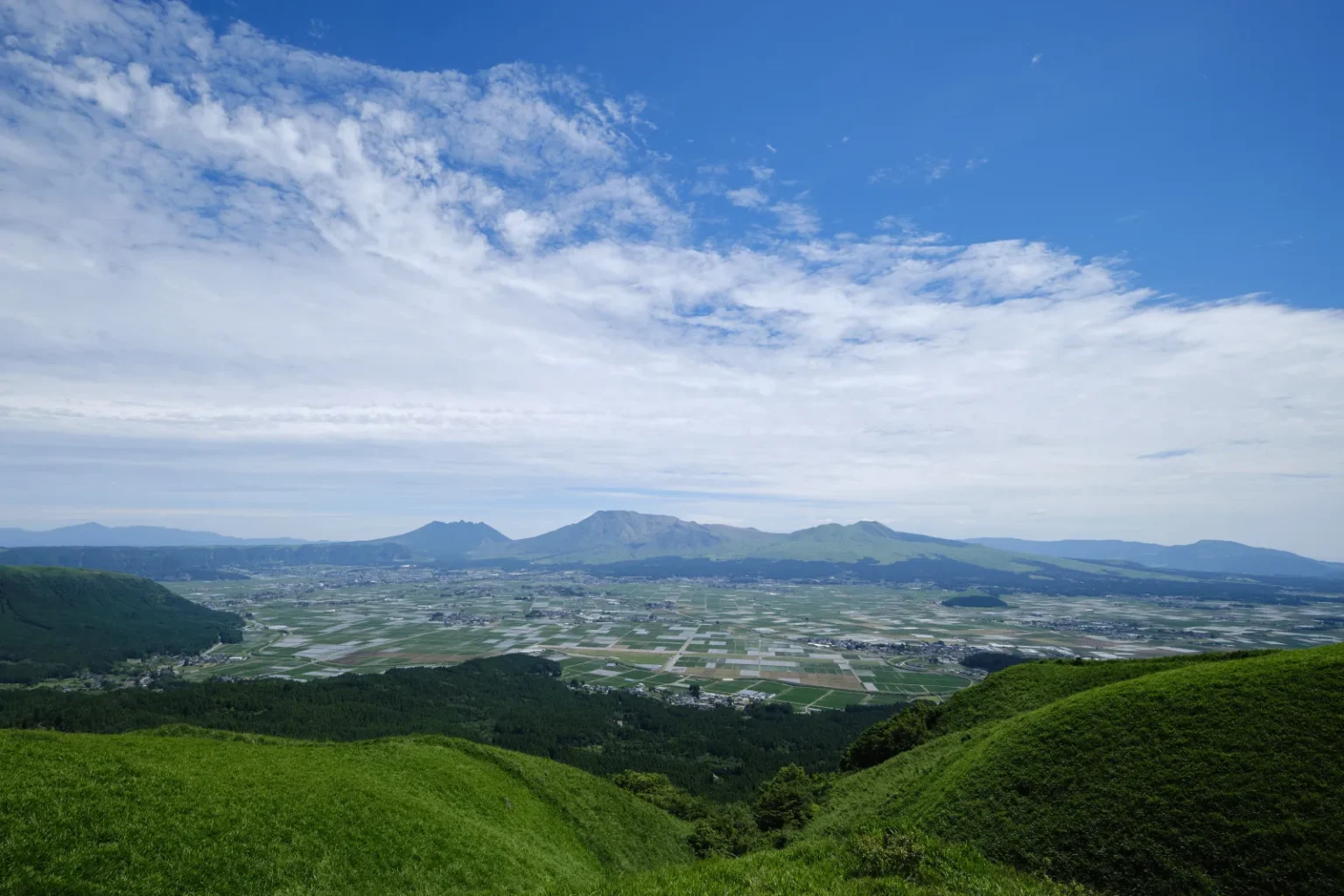
Kyushu is often squeezed into two days around Fukuoka. I think it deserves a week, and this is the week I would give it, without a car. Every night is in a different kind of place: a city, a seaside bath town, a valley onsen, the edge of a volcano, a castle town and a bay with an active cone in it. The longest single ride is the 2 h 23 min bus from Yufuin to Aso.
The order matters. Going east first and south last puts the onsen nights early, while your legs are fresh for walking between the hells, and leaves the shinkansen for the end, when you want the fastest way back to Hakata. If you can only do five days, cut Kagoshima and take the shinkansen back to Hakata from Kumamoto.
The week at a glance
| Day | Move | Sleep in |
|---|---|---|
| 1 | Arrive in Fukuoka; yatai stalls at night | Hakata |
| 2 | Limited express Sonic to Beppu, 1 h 55 min; the seven hells | Beppu |
| 3 | Kyushu Odan Bus to Yufuin, about 1 h | Yufuin |
| 4 | Kyushu Odan Bus to Aso, 2 h 23 min; bus up to Kusasenri | Aso, near the station |
| 5 | Aso Shrine, then the Aso Boy to Kumamoto, about 1 h 10 min | Kumamoto |
| 6 | Shinkansen to Kagoshima, about 50 min; ferry to Sakurajima | Kagoshima |
| 7 | Sengan-en garden, shinkansen back to Hakata, about 1 h 42 min | — |
Who it suits: a second trip that skips Kyoto, anyone who wants several nights in hot-spring towns, or a week flying in and out of Fukuoka without driving. Who it doesn’t: people set on looking into an active crater (Aso’s may be closed the day you come), and anyone who would rather not spend two and a half hours on a highland bus.
Day 1: Fukuoka
| Arrive | Fukuoka Airport is two subway stops from Hakata Station |
|---|---|
| Evening | Yatai food stalls by the river in Nakasu and in Tenjin |
| Sleep | Near Hakata Station: Day 2’s train leaves from there |
Yatai: Fukuoka’s street-side counters
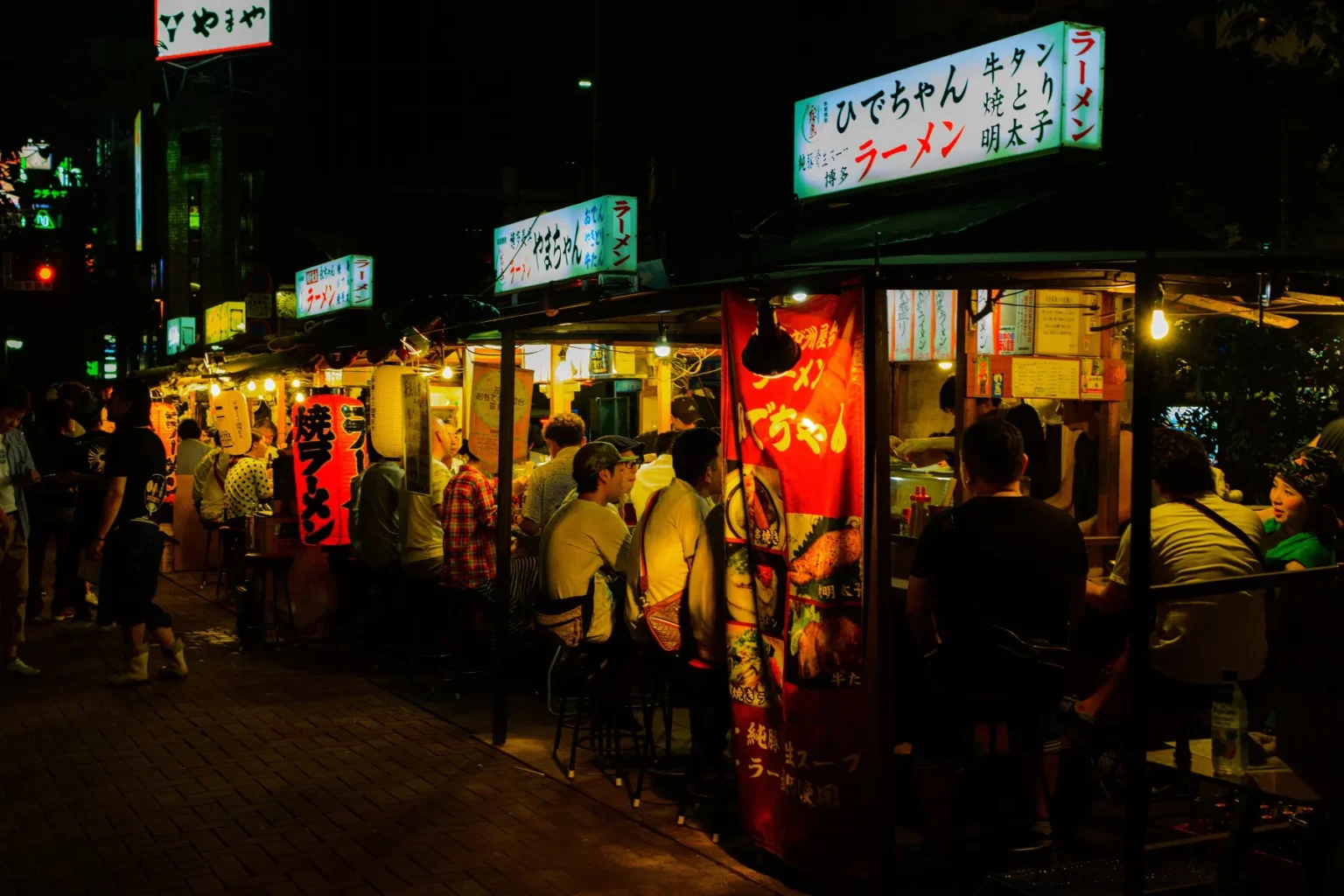
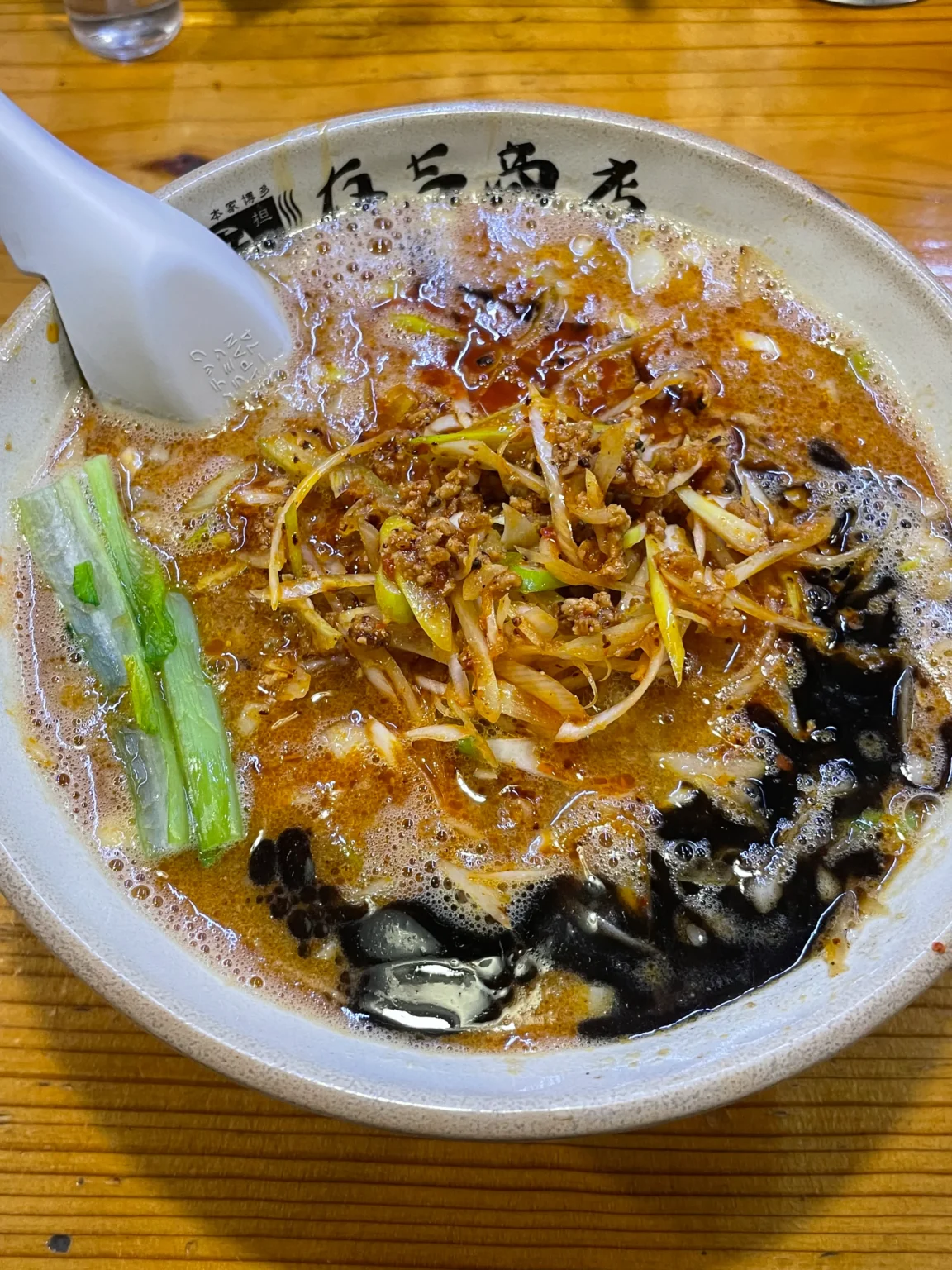
Yatai are open-air stalls that set up on the pavement in the evening, each with a counter for a handful of people. Fukuoka City’s rules give them a window from 17:00 to 4:00 the next morning, including setting up and packing away; each stall keeps its own serving hours within that. Ramen is the classic order, along with yakitori and oden. Go early, choose a stall with a free stool, and move on after a dish or two so others can sit. My Fukuoka food guide covers how ordering works and where else to eat at night.
Day 2: Beppu and the seven hells
| Train | Limited express Sonic, Hakata → Beppu, no change, 1 h 55 min · ¥6,380 unreserved |
|---|---|
| Afternoon | The seven hells: common ticket ¥2,400, 8:00–17:00, valid that day and the next |
| Evening | Takegawara Onsen: sand bath ¥1,500, plain bath ¥300 |
| Sleep | Beppu (see Where to stay) |
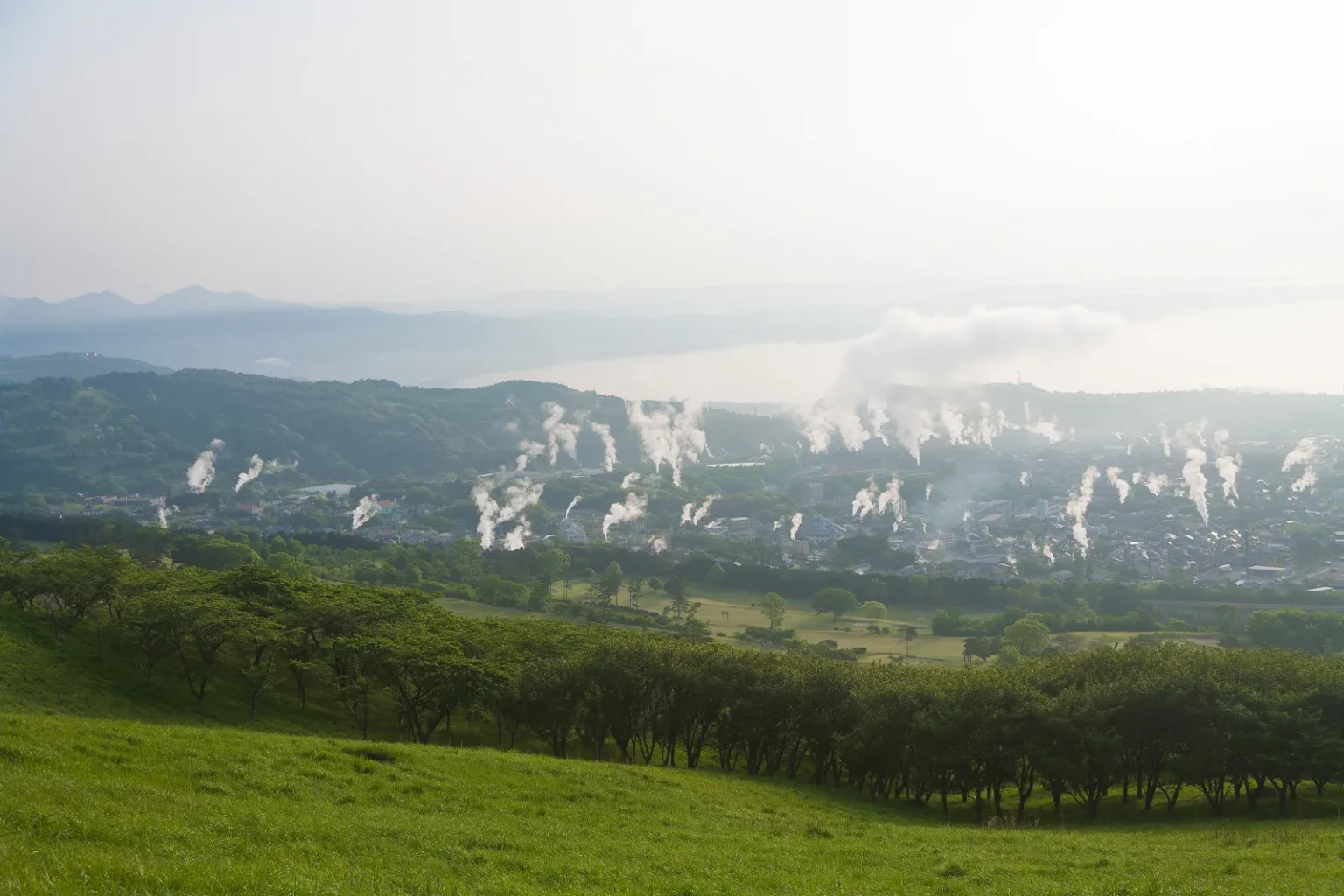
The Sonic runs along the coast from Hakata to Beppu without a change. Leave your bag at the hotel and go up to Kannawa, the steaming district in the hills where most of the hells are.
The jigoku: seven hot springs to look at, not bathe in
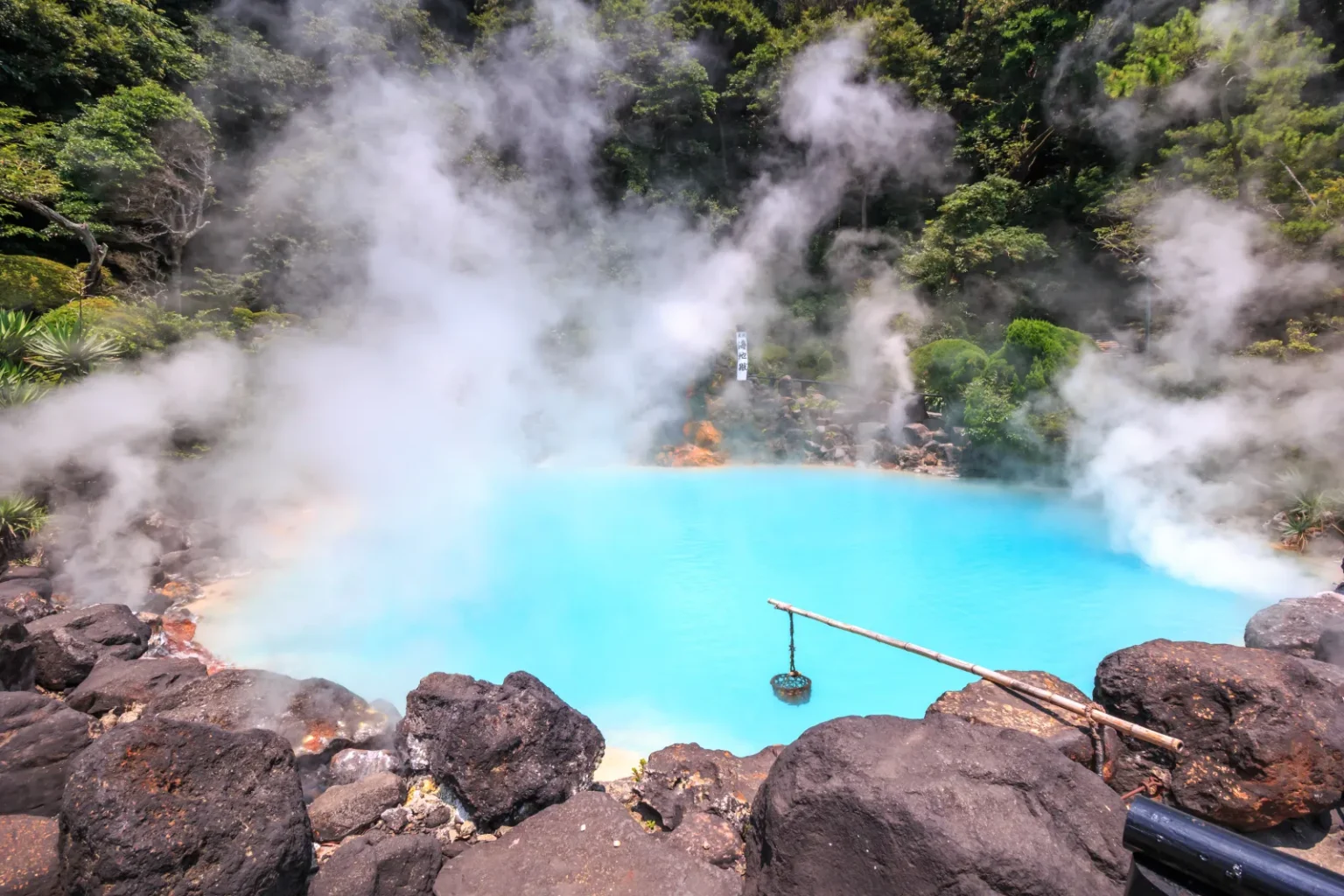
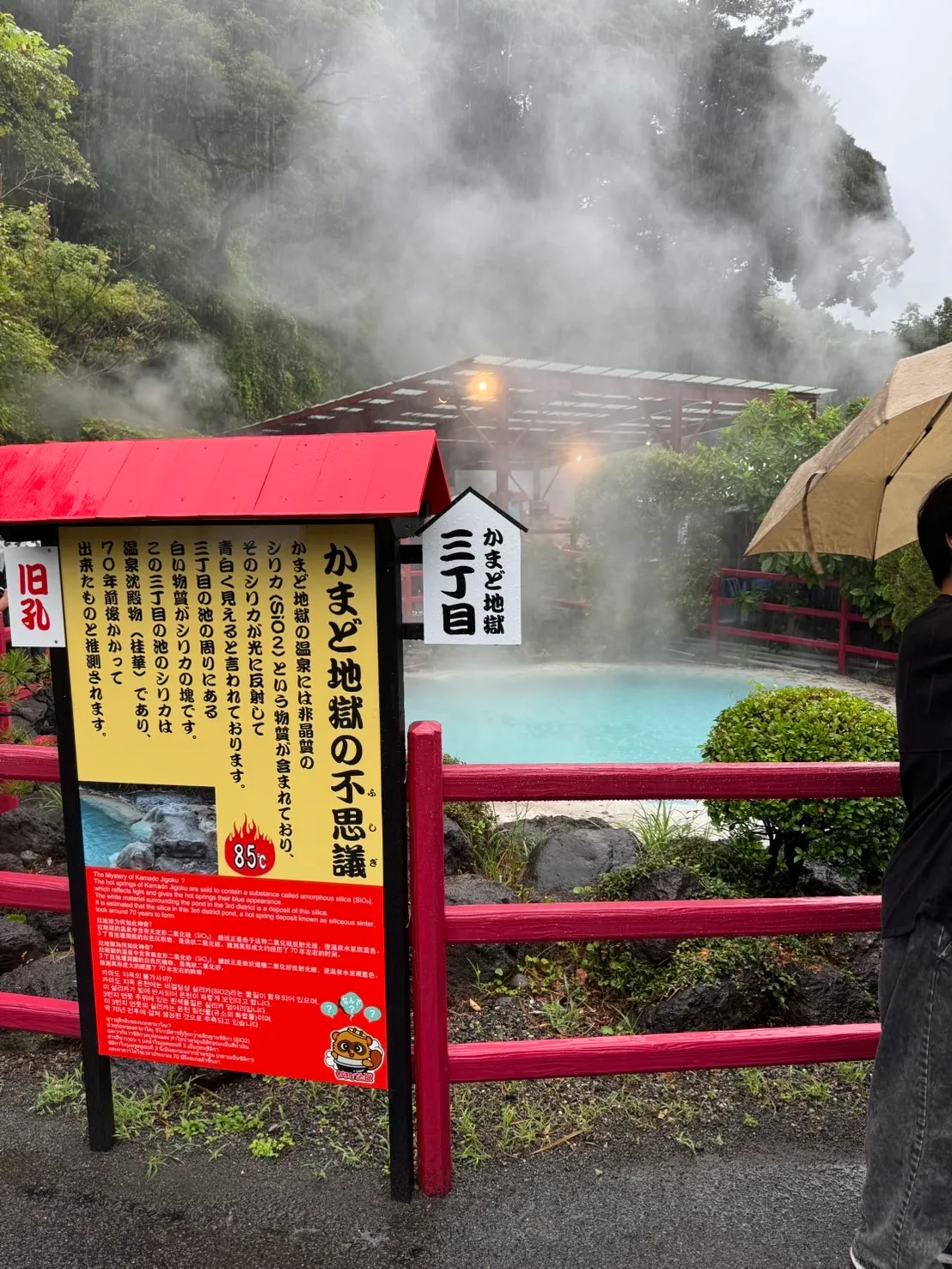
The jigoku, or hells, are seven hot springs for looking at rather than bathing in: cobalt-blue Umi Jigoku, red Chinoike Jigoku, bubbling grey mud at Oniishibozu, a geyser at Tatsumaki. Five are close together in Kannawa; the other two, Chinoike and Tatsumaki, are a short bus ride away. One ¥2,400 ticket covers all seven, and the Beppu Jigoku Association lists them as open 8:00–17:00 every day of the year. The ticket also stays valid the next day, but the Day 3 bus leaves at 8:10, so plan to see all seven on the afternoon of Day 2.
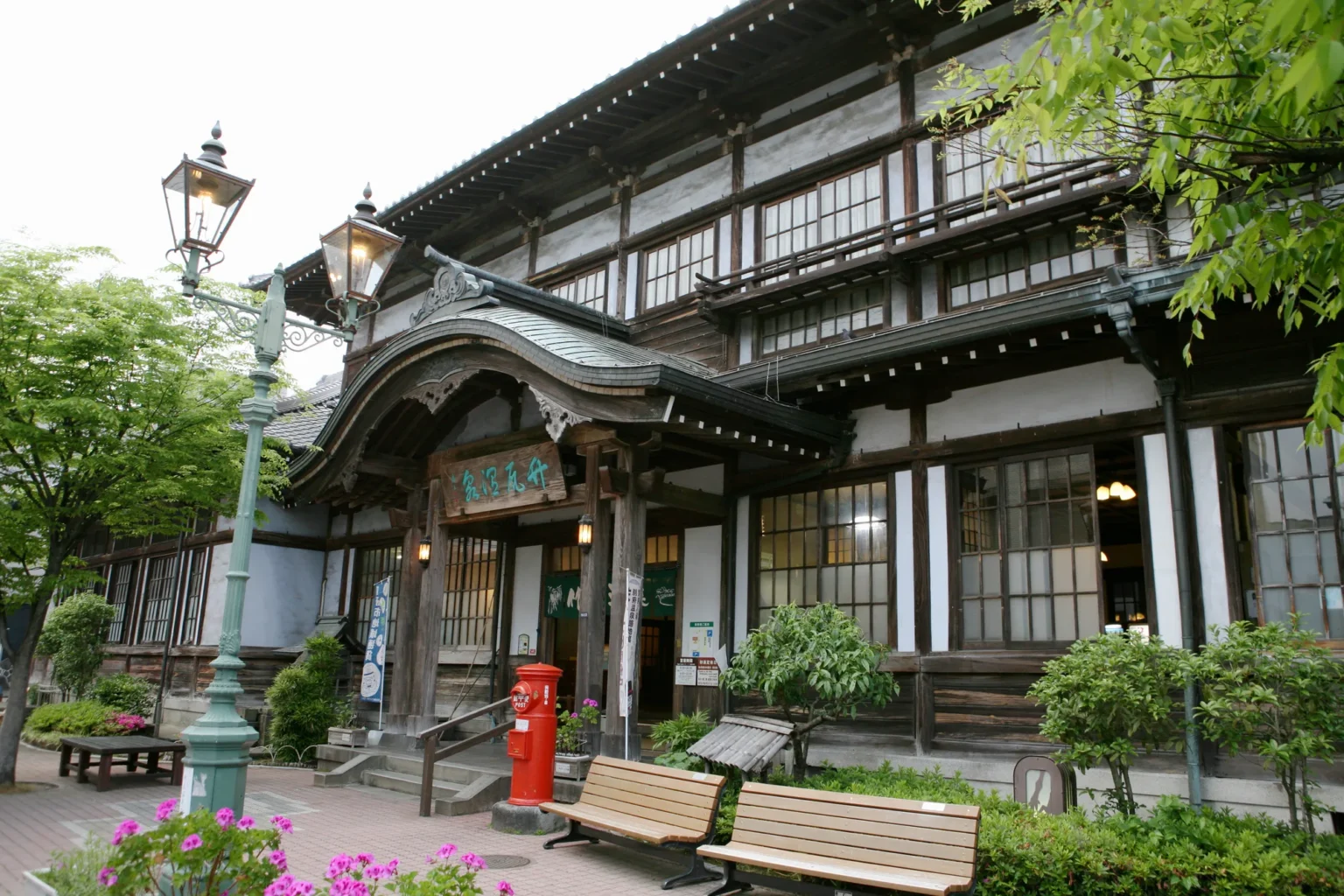
Takegawara Onsen: a sand bath near the station
In the evening, walk to Takegawara Onsen near the station, a city-run bathhouse in a large old wooden building. In the sand bath an attendant shovels hot, spring-heated sand over you as you lie in a cotton robe. Beppu City lists it at ¥1,500, 8:00–22:30 with last entry at 21:30, and warns that last entry can come earlier when it is busy; the plain bath is ¥300. It closes on the third Wednesday of each month (the next day if that is a holiday). New to public baths? Read my onsen etiquette guide.
Day 3: Yufuin
| Bus | Kyushu Odan Bus, Beppu 8:10 → Yufuin 9:10 · ¥1,300 (or JR via Oita later in the day) |
|---|---|
| Day | Yunotsubo street, galleries, Lake Kinrinko |
| Sleep | Yufuin, within walking distance of the station |
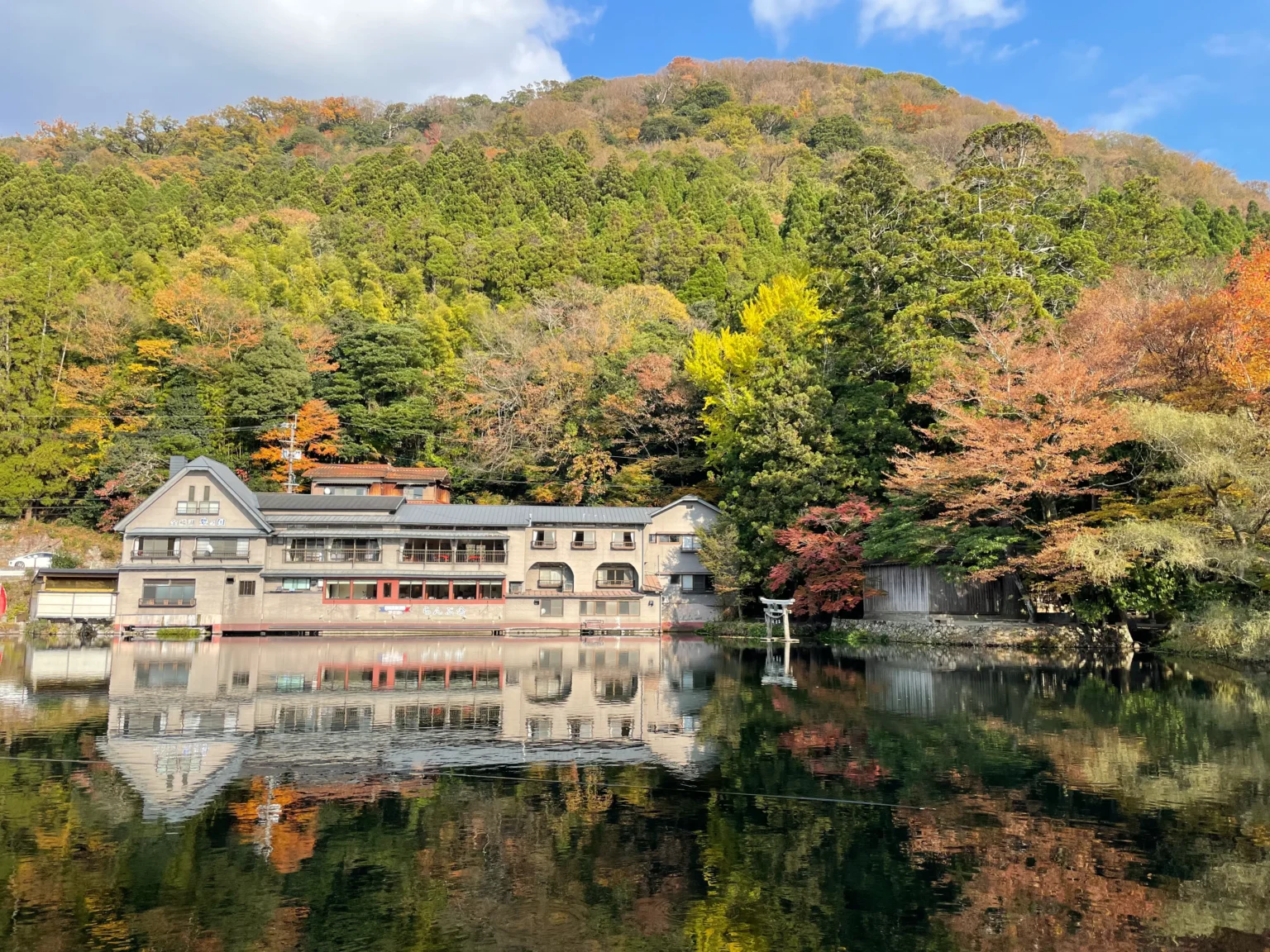
Yufuin is a smaller, quieter onsen town than Beppu, in a valley under the double peak of Mt Yufu. There is only one Kyushu Odan Bus a day from Beppu, at 8:10 from Beppu Ekimae Honmachi, and it reaches Yufuin Station’s bus centre at 9:10. If you would rather sleep in, JR trains via Oita take about 1 h 30 min and, on an October 2026 fare search, cost the same ¥1,300. Either way you arrive long before check-in, so leave your bag at the inn.
Lake Kinrinko and Yunotsubo street
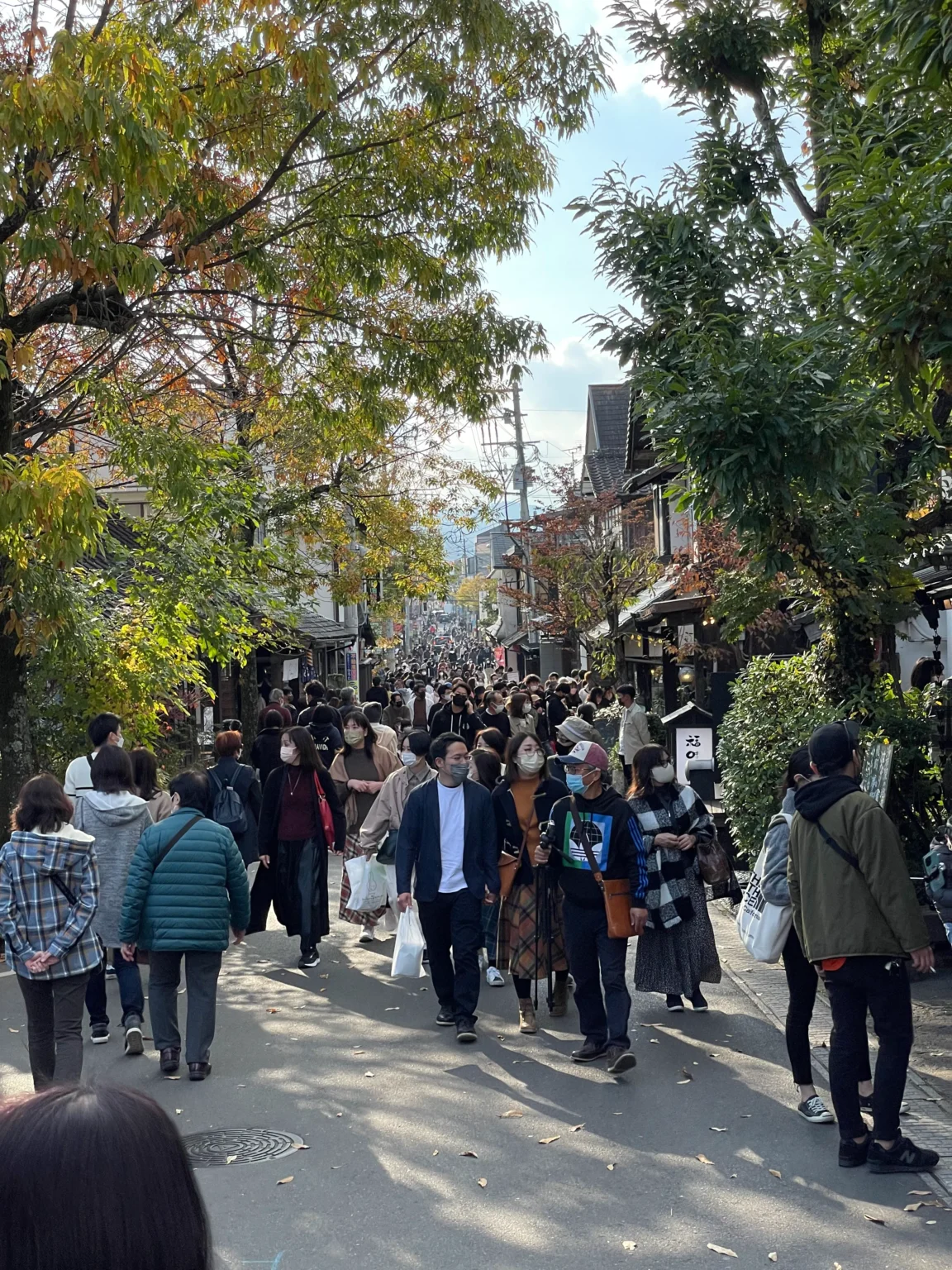
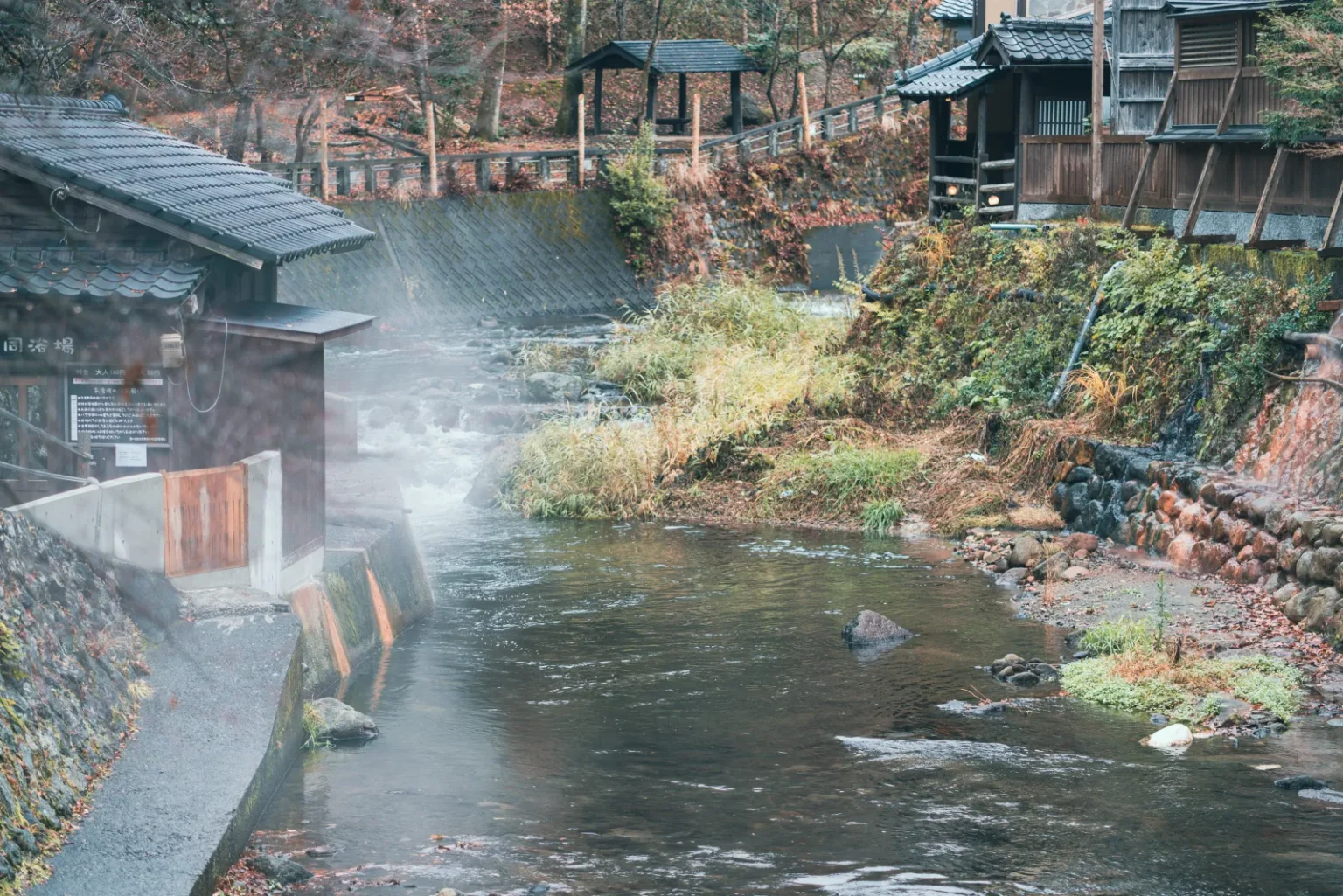
From the station, walk towards Lake Kinrinko by way of Yunotsubo, the main shopping street, which gets crowded by midday. The town’s official guide describes the lake wrapped in morning mist on cold early mornings in autumn and winter, which is the reason to go back the next morning before your bus. My Yufuin walk covers the town on foot; for lunch, Murata Fushoan makes soba with a view of the mountain.
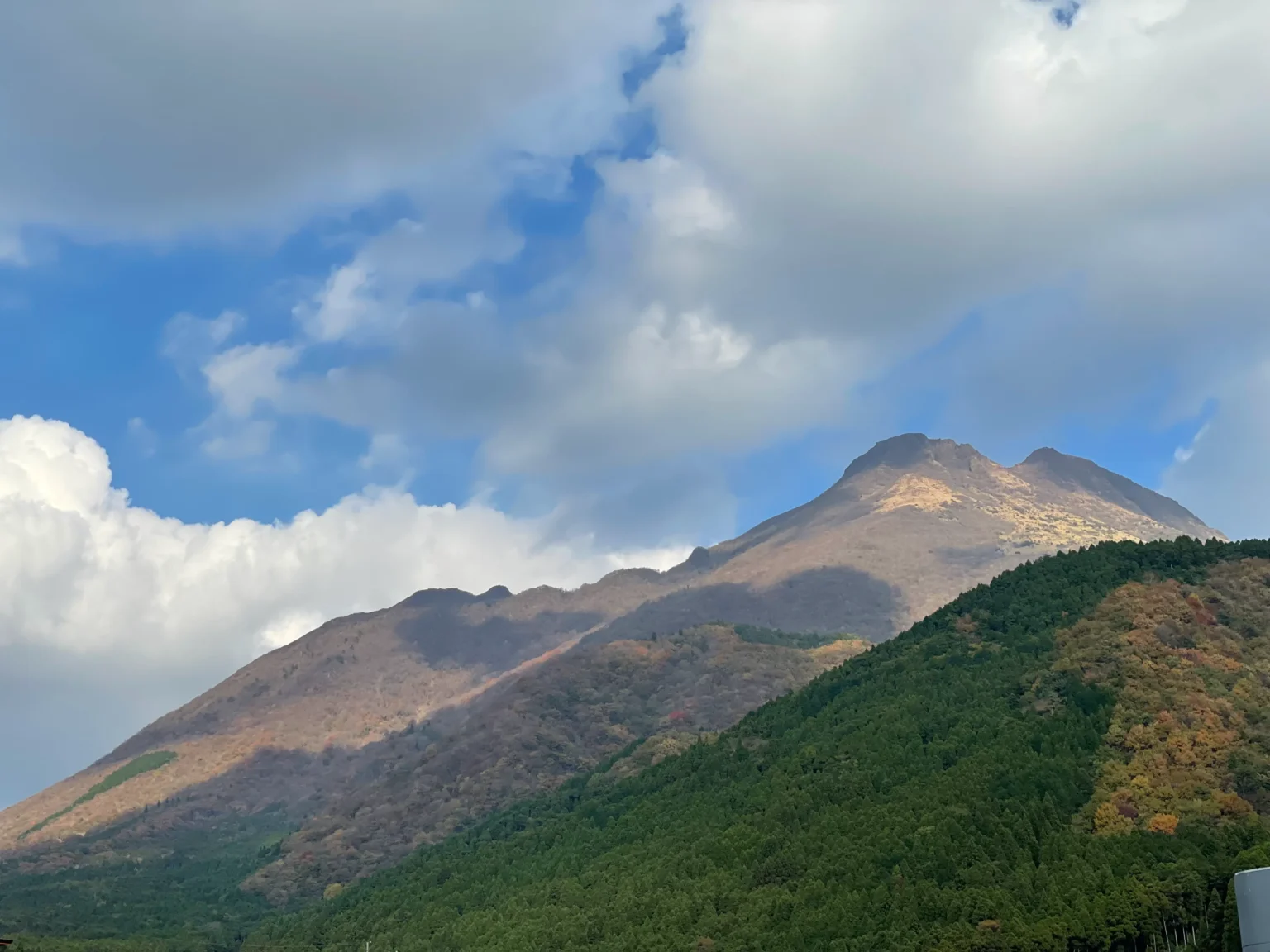
Where to sleep is the main decision here. Yufuin’s inns are spread across the valley, and the Day 4 bus leaves the station bus centre at 9:10, so either stay within walking distance of the station or book a taxi for the morning. Two Yufuin places are written up on this site: Ikkoten, a ryokan with private baths, and COMOREBI Yufuin, glass-walled glamping villas in the woods outside town, whose published station-transfer plan is weekday-only and not timed for the 9:10 bus.
Coming straight from Hakata? JR Kyushu’s Yufuin no Mori sightseeing train runs from Hakata to Yufuin on its operating days, all seats reserved. It suits a shorter version of this route that skips Beppu. JR Kyushu says it will publish its services from March 2027 around mid-January. See my guide to JR sightseeing trains.
Day 4: Over the Kuju highlands to Aso
| Bus | Kyushu Odan Bus No. 2, Yufuin 9:10 → Aso Station 11:33 · ¥4,000, reserve ahead |
|---|---|
| Afternoon | Sanko Aso Mountain Line bus, Aso Station 11:50 → Kusasenri 12:16 · ¥1,000; back 14:55 → Aso Station 15:23 |
| Sleep | Near Aso Station (see Where to stay) |
The Kyushu Odan Bus: the link no train makes
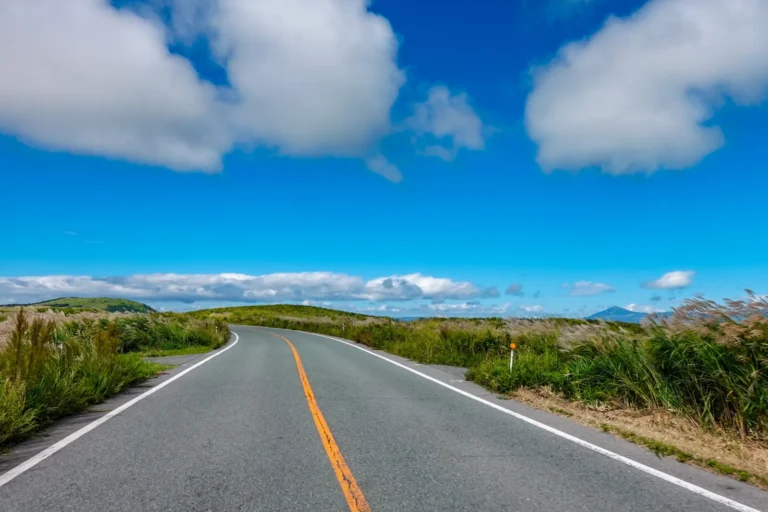
The bus climbs from Yufuin over the Kuju highlands, through Iida Kogen, the Kuju trailhead at Chojabaru and the Makinoto Pass, stops for a 10-minute break at Senomoto, passes Kurokawa Onsen and drops into the Aso caldera. Sanko Bus’s timetable (current since 1 October 2025) shows three buses a day from Yufuin towards Aso: 9:10, 13:50 and 14:50. Take the 9:10, which gives you the afternoon on the mountain. Seats are booked from two months before the day until the day before, on the Hassha Orai Net site or by phone; Sanko notes that some sections can’t be reserved, so book the whole Yufuin–Aso journey.
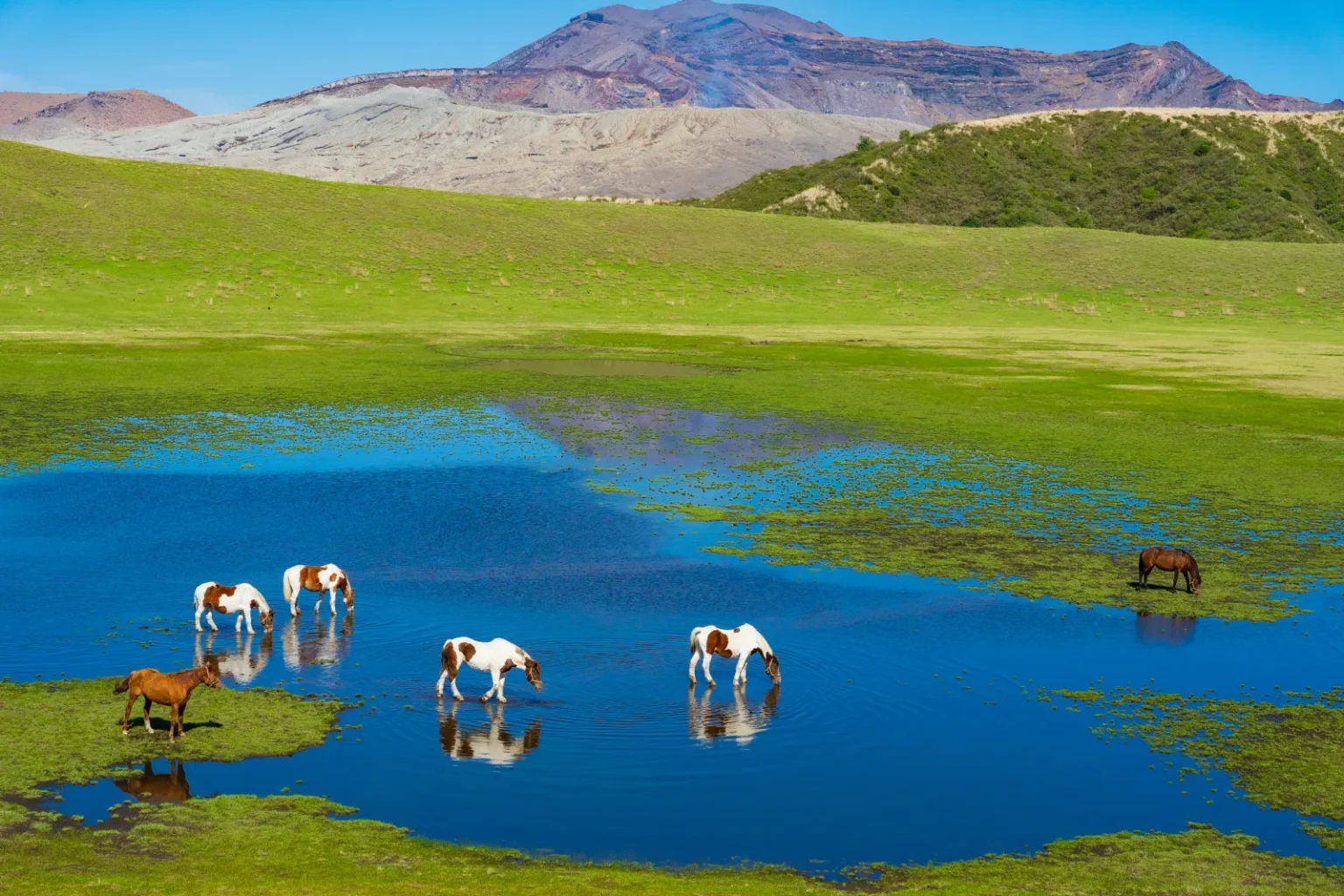
Kusasenri: grassland on the old crater floor
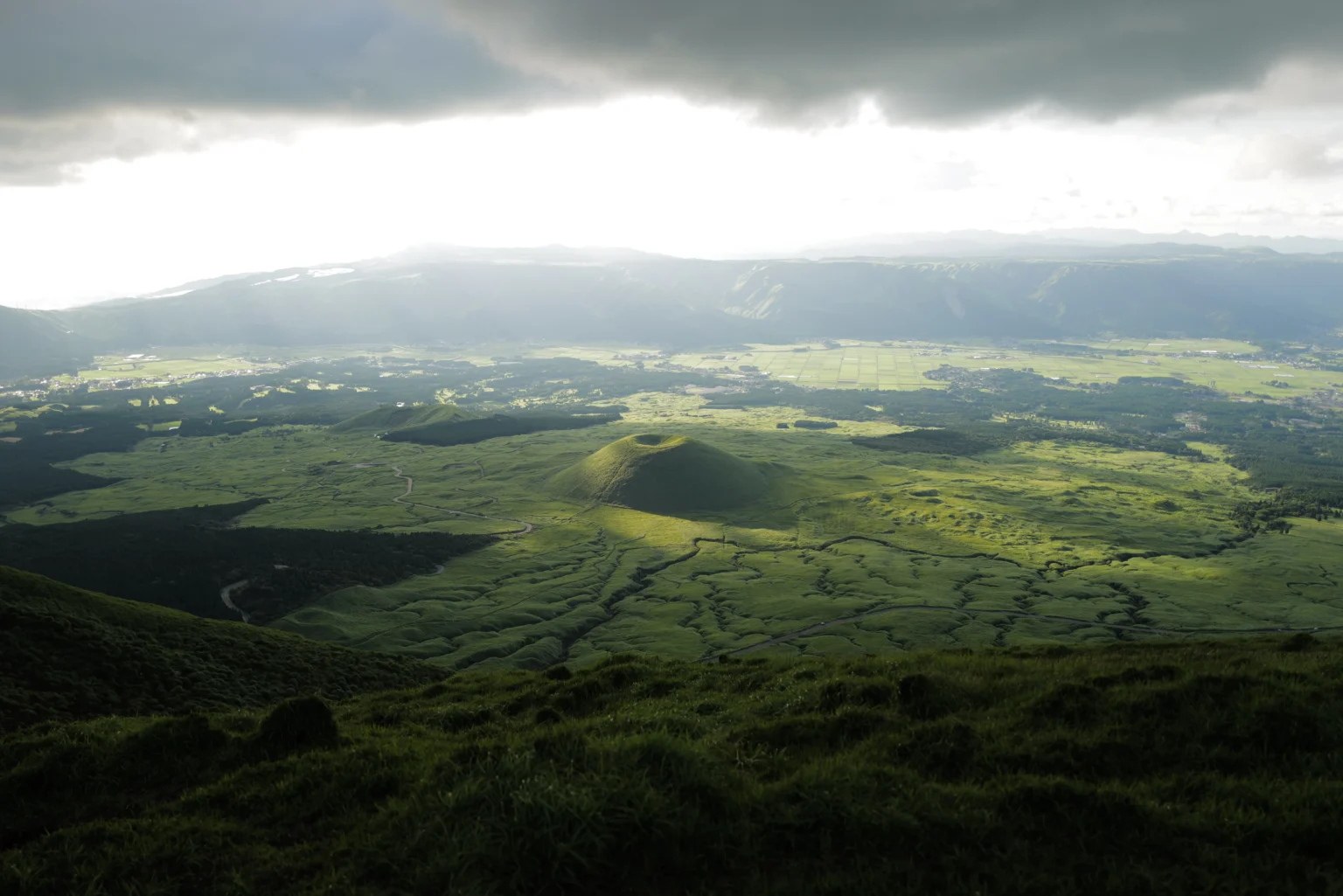
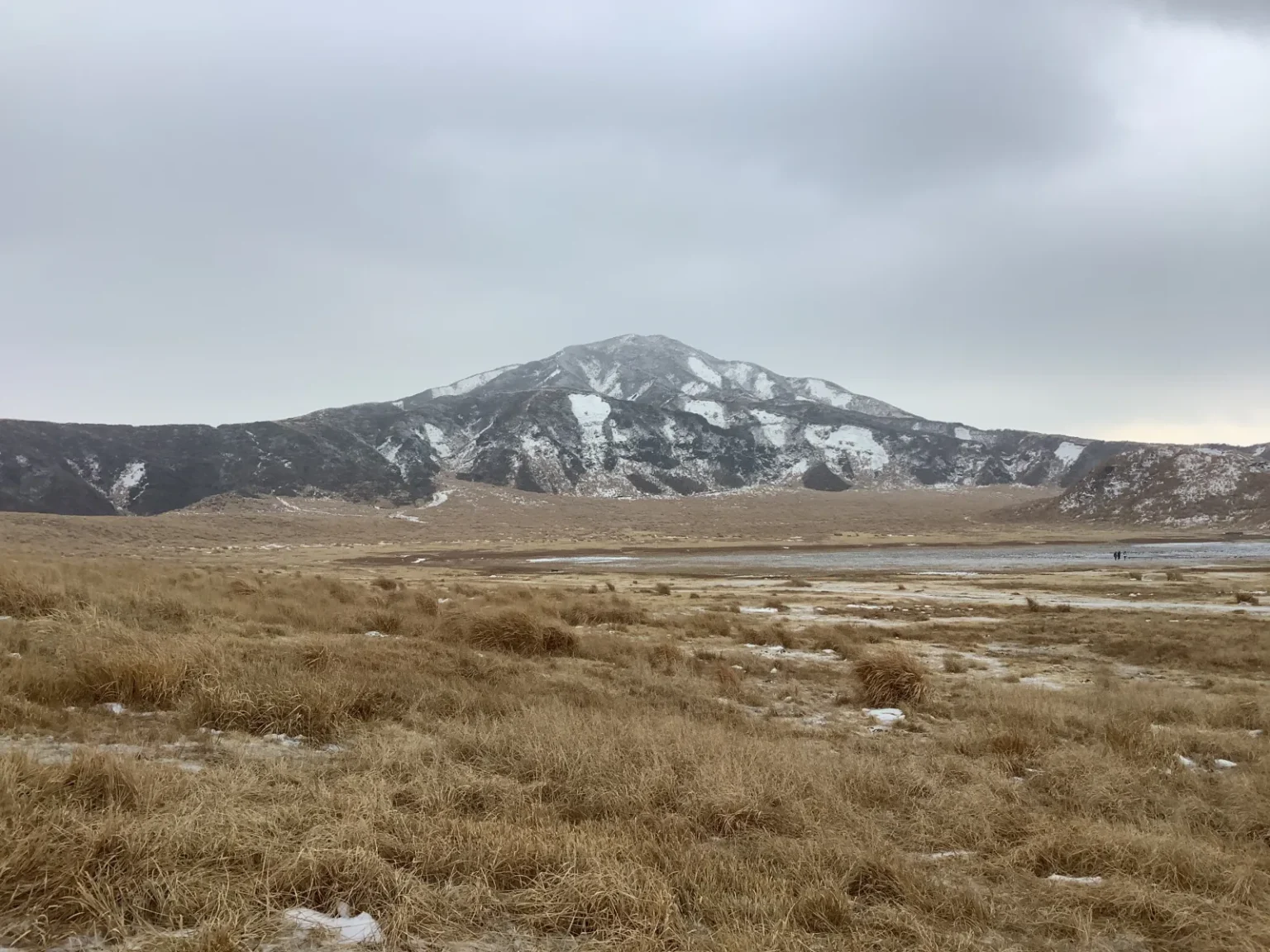
From Aso Station, Sanko’s Aso Mountain Line bus climbs to Kusasenri, a wide grassy meadow with a pond on an old crater floor, where horses graze below the steaming Nakadake. On the timetable dated 11 May 2026, the 11:50 from the station reaches Kusasenri at 12:16. That is a 17-minute connection from the Odan Bus; if it runs late, the next bus up is 12:45 (Kusasenri 13:11), which still leaves plenty of time. Buses come down at 14:55, 15:45 and, last, 16:35; take the 14:55 if you are meeting the hotel shuttle below. No booking: it’s first come, first served. The Aso Volcano Museum at Kusasenri is open 9:00–17:00 (last entry 16:30) and costs ¥1,300. My guide to Aso without a car has the full bus timetable, and Kusasenri has its own page.
The crater. On 1 September 2026 the Japan Meteorological Agency lowered Aso to Volcanic Alert Level 2, and that was still its latest Aso warning on 4 November. At Level 2 the area within about 1 km of Nakadake’s crater is closed, and the park road to it can’t be used; Kusasenri and the museum are outside that line. Levels change, so check the Aso volcano disaster prevention council’s site the morning you go. Even when the crater is open, the operators turn away visitors with asthma, bronchial or heart conditions, or who are feeling unwell. Everything is in my Mount Aso guide.
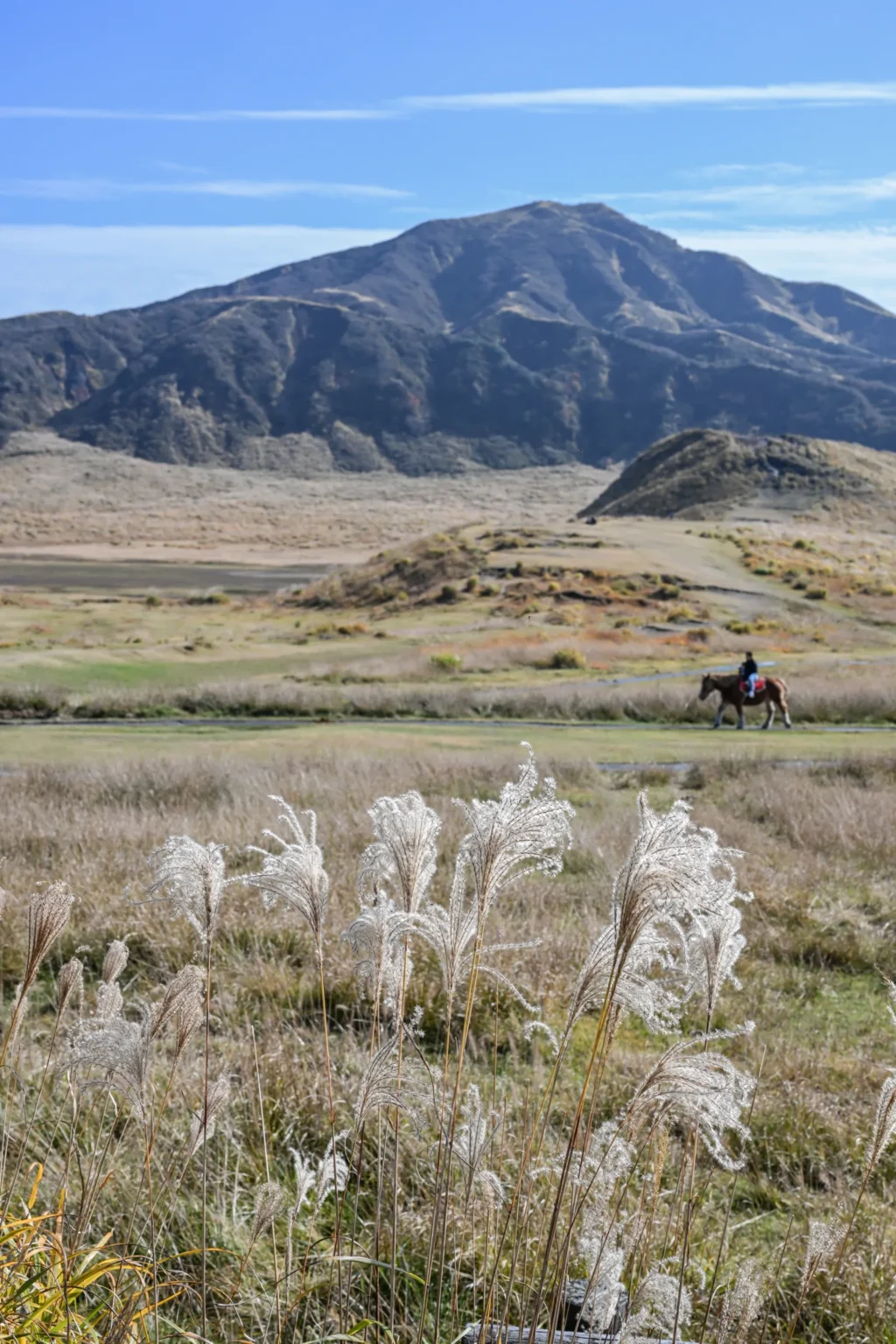
Day 5: Aso to Kumamoto
| Morning | Aso Shrine, one stop east of Aso at JR Miyaji |
|---|---|
| Train | Limited express Aso Boy No. 2, Miyaji 12:02 (Aso 12:12) → Kumamoto 13:20 on its operating days · ¥3,080, all seats reserved |
| Afternoon | Kumamoto Castle, ¥800 · September–June 9:00–17:00, last entry 16:00 |
| Sleep | Kumamoto (see Where to stay) |
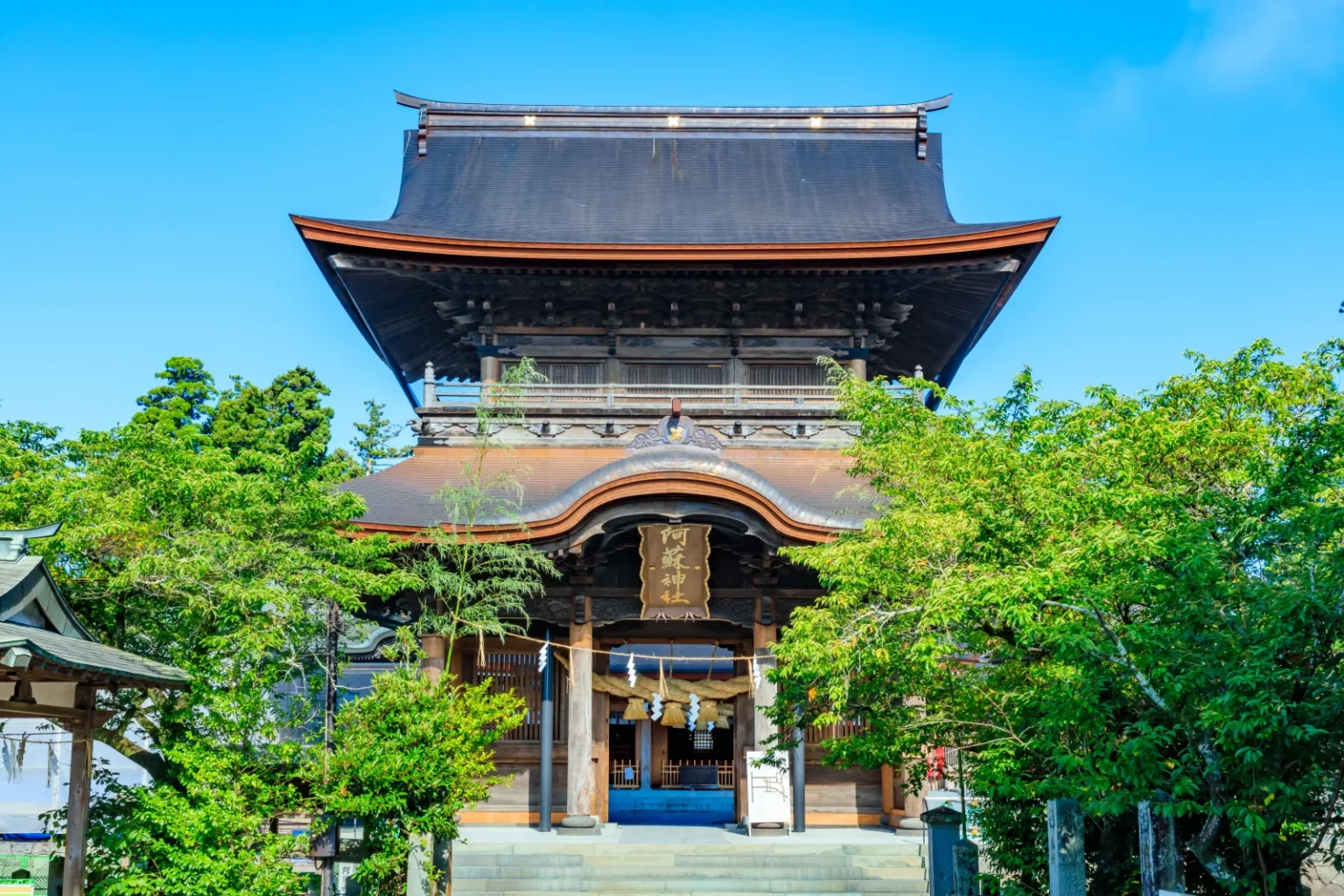
Aso Shrine and its rebuilt gate
Aso Shrine is in Miyaji, the next station east of Aso on the Hohi Line. Go there by an early local train or taxi, and you don’t need to come back to Aso: the Aso Boy No. 2 calls at Miyaji at 12:02, then at Aso at 12:12. Local trains are infrequent, so look up the morning one to Miyaji the evening before; send big bags ahead or keep them light. Its great two-storey gate, the Romon, was badly damaged in the 2016 Kumamoto earthquake; Aso City says the restoration was finished in December 2023.
The Aso Boy down to Kumamoto
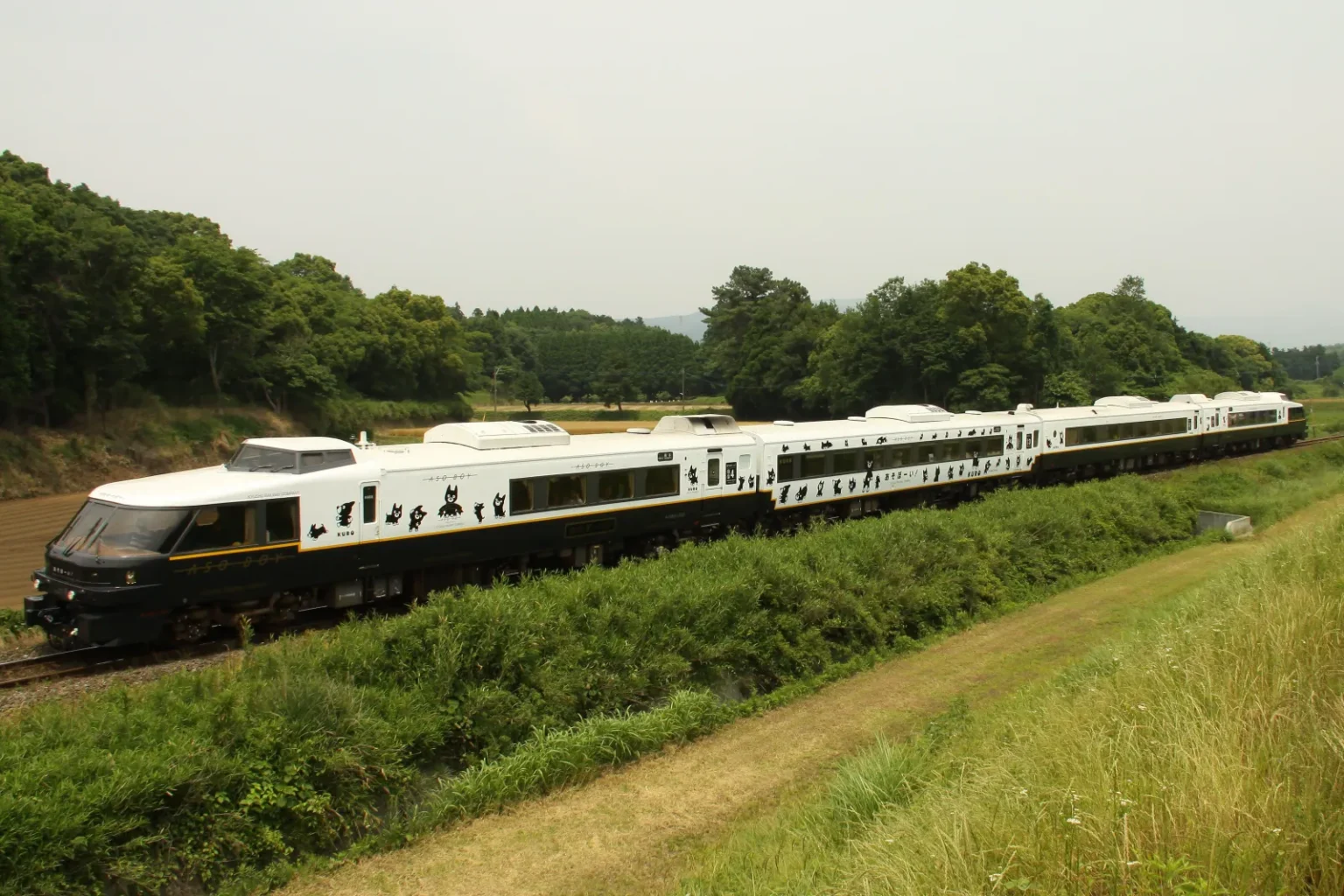
The Aso Boy is JR Kyushu’s sightseeing limited express between Kumamoto and Aso, all seats reserved; ¥3,080 is the standard-season adult price including the seat. JR Kyushu’s calendar has it running every day from November 2026 to February 2027, except on 24–27 November, 25–28 January and 15–19 February, when the Kawasemi Yamasemi runs instead at the same stops. On other days, or if it’s full, the Kyushu Odan limited express runs three times a day each way between Aso and Kumamoto. From September to June, take a midday train if you want the castle the same afternoon: the later Aso Boy (15:56 from Aso) reaches Kumamoto at 17:08, after the castle’s last entry.
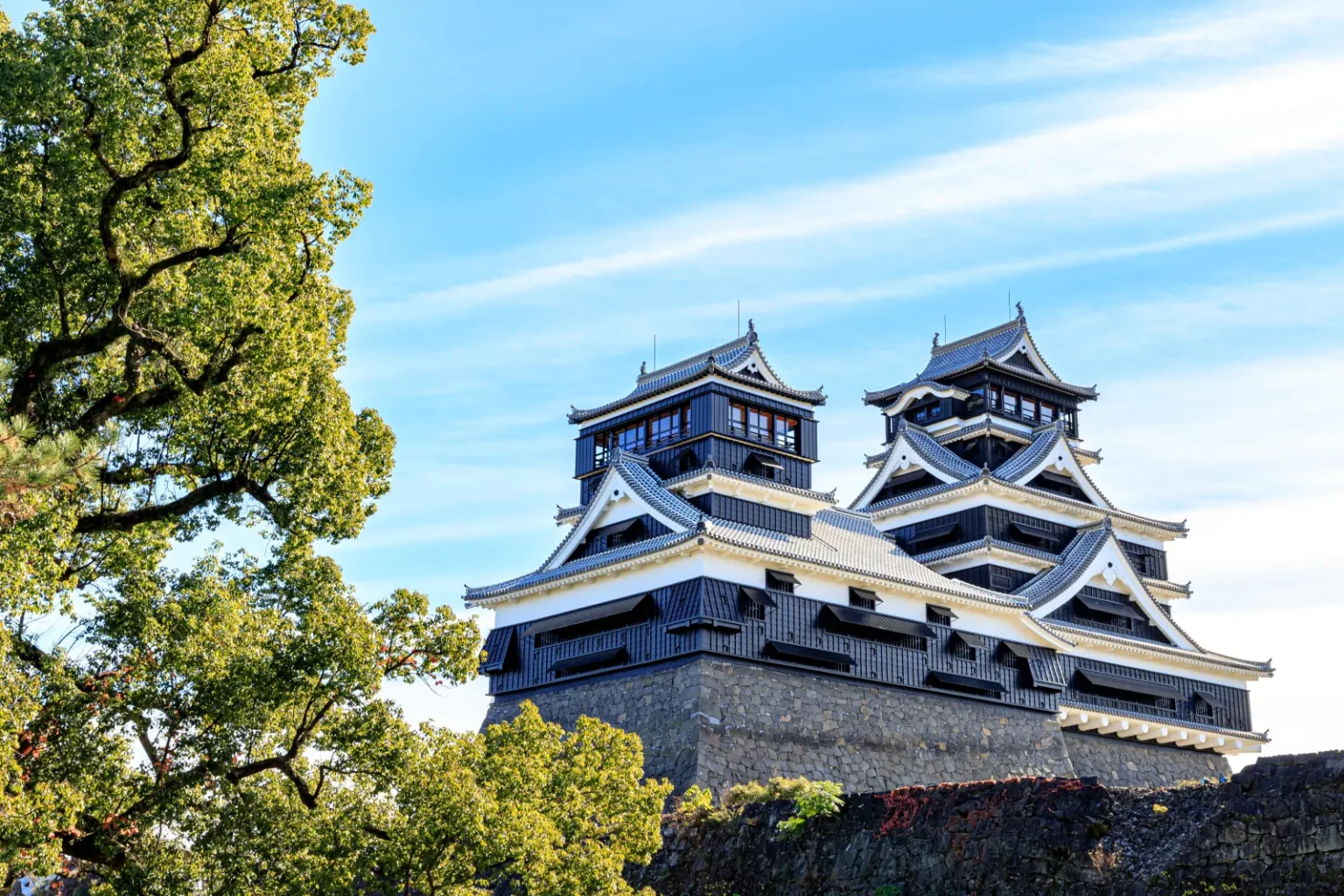
Kumamoto Castle: a castle being rebuilt
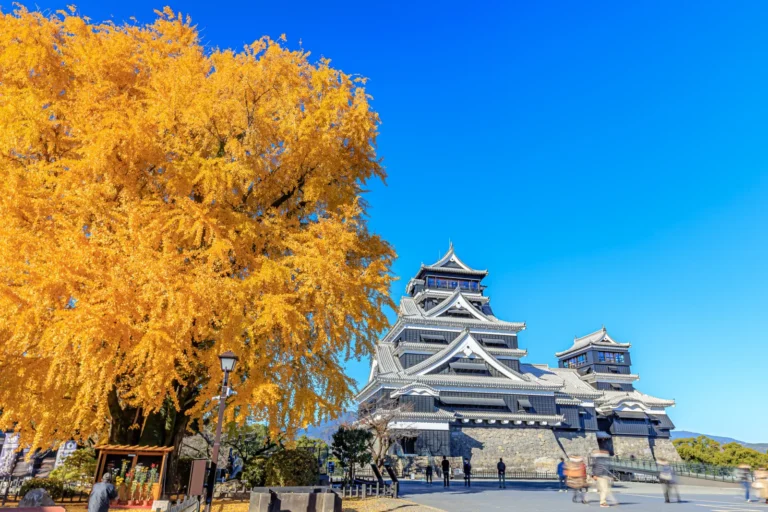
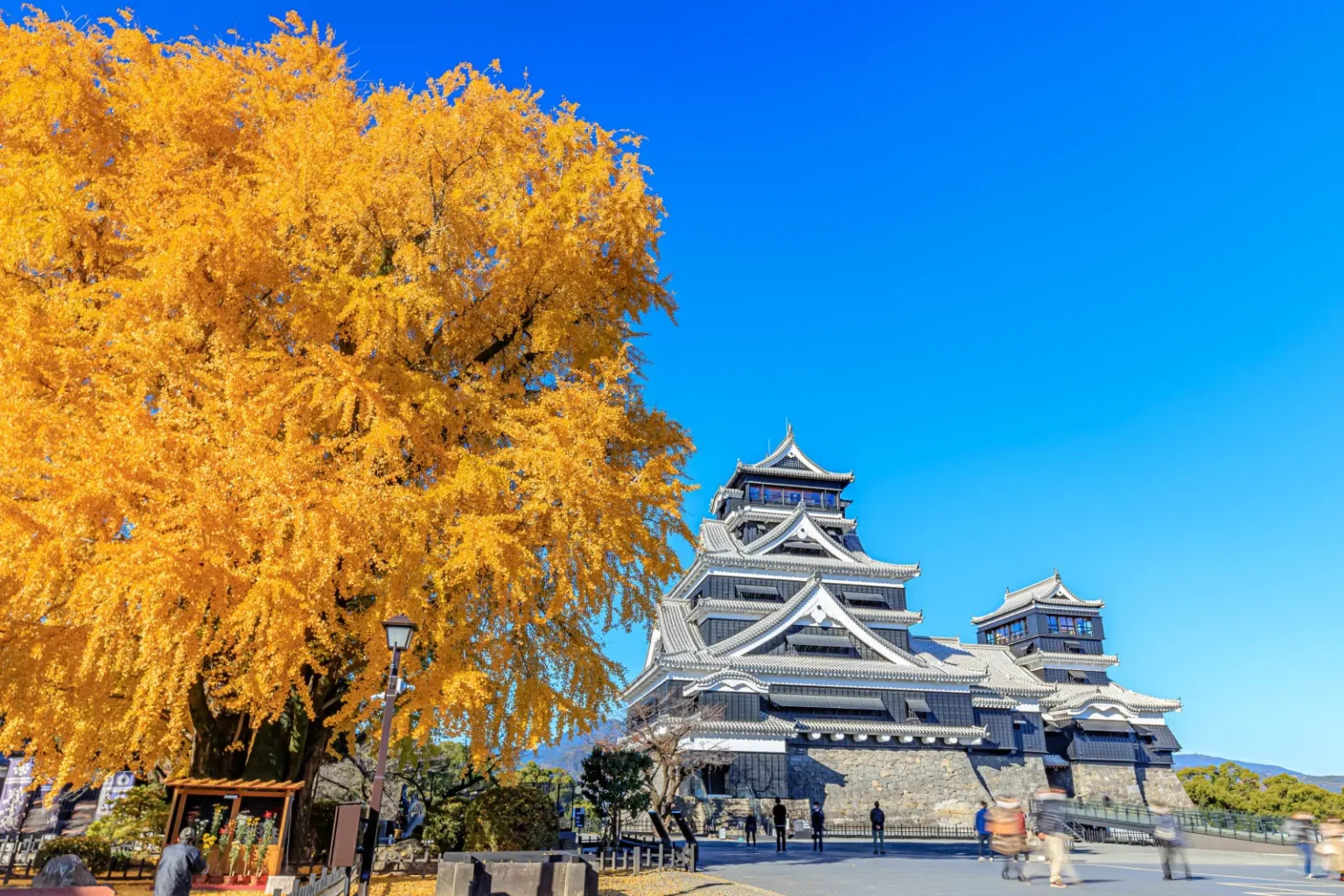
The castle was badly damaged in the 2016 Kumamoto earthquake and reopened in stages, with an elevated walkway over the repair work. On 28 July 2026 a magnitude 7.1 earthquake struck the Kumamoto region, with the strongest shaking (intensity 7) in Uki and Hikawa, south of the city; the castle closed and has since reopened normally. Its official site gives ¥800 for adults, 9:00–17:00 from September to June (last entry 16:00) and 9:00–19:00 in July and August (last entry 18:00), and it closes on 29 December. What you see is a castle being rebuilt, which is the reason to go.
Day 6: Kagoshima and Sakurajima
| Shinkansen | Kumamoto → Kagoshima-Chuo, about 50 min · ¥7,440 unreserved |
|---|---|
| Ferry | Sakurajima Ferry, about 15 min · ¥250 each way · runs 4:00–23:30 |
| On the island | Lava trail and foot bath by the port; Yunohira observatory, 373 m up |
| Sleep | Kagoshima city |
The whole Kyushu Shinkansen has been running again since 18 September 2026, after the July earthquake; JR Kyushu still describes it as running to a changed timetable, so check the time of your train on the day. The Kagoshima Main Line south of Kumamoto went back to its normal timetable on 10 October.
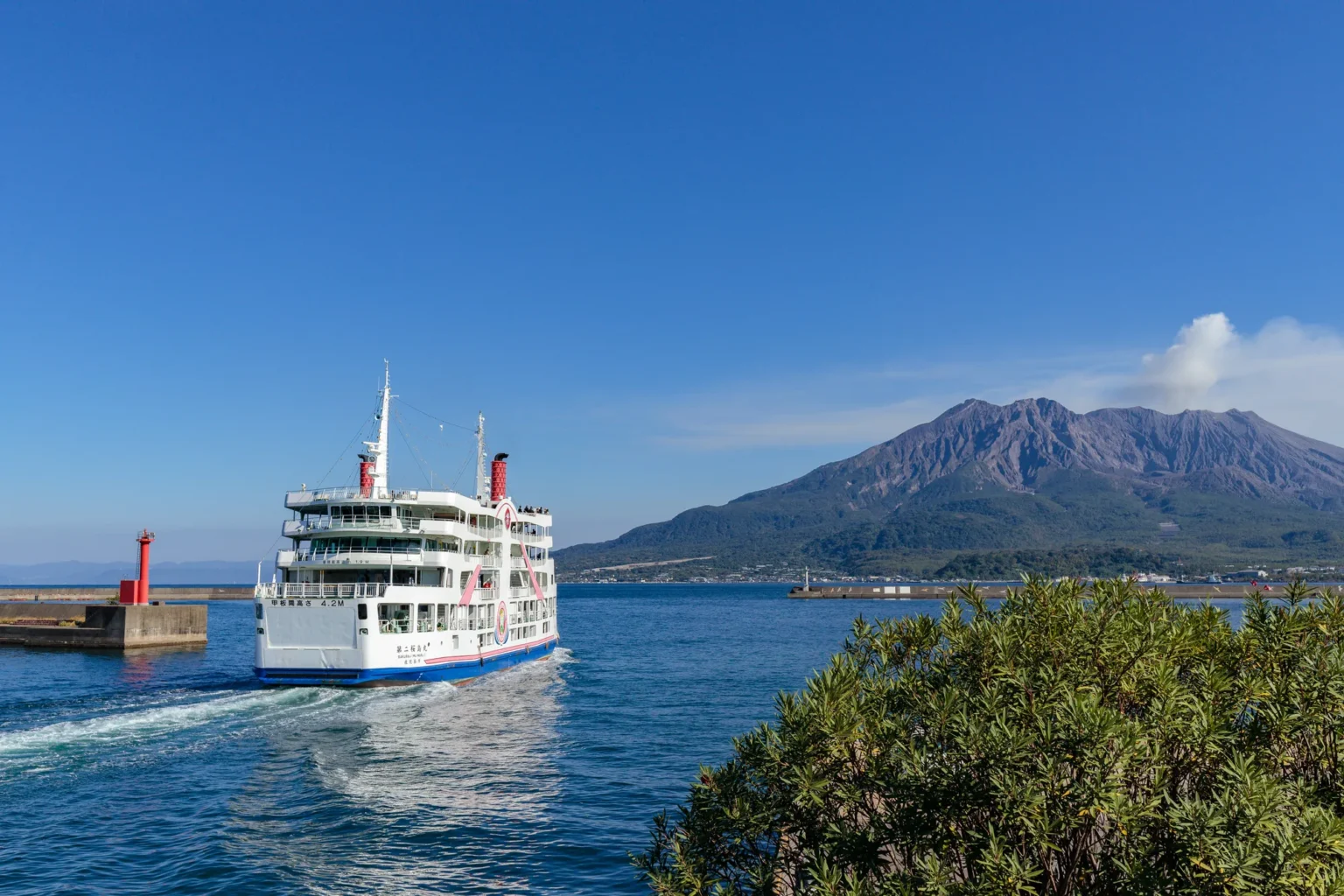
Across the bay to the volcano
Sakurajima is an active volcano across the bay from Kagoshima, and the city-run ferry crosses in about 15 minutes for ¥250. Kagoshima City gives its hours as 4:00 to 23:30, all year. On the island, walk the lava trail by the port, soak your feet in the long foot bath, and, if you have the afternoon, go up to Yunohira observatory, at 373 m the highest viewpoint visitors can reach on the mountain; ask at the ferry terminal about the island bus times before you set out.
Day 7: Sengan-en, then back to Hakata
| Morning | Sengan-en, ¥1,600 including the residence and the Shoko Shuseikan museum · 9:00–17:00, last entry 16:30 |
|---|---|
| Shinkansen | Kagoshima-Chuo → Hakata, about 1 h 42 min · ¥11,420 unreserved |
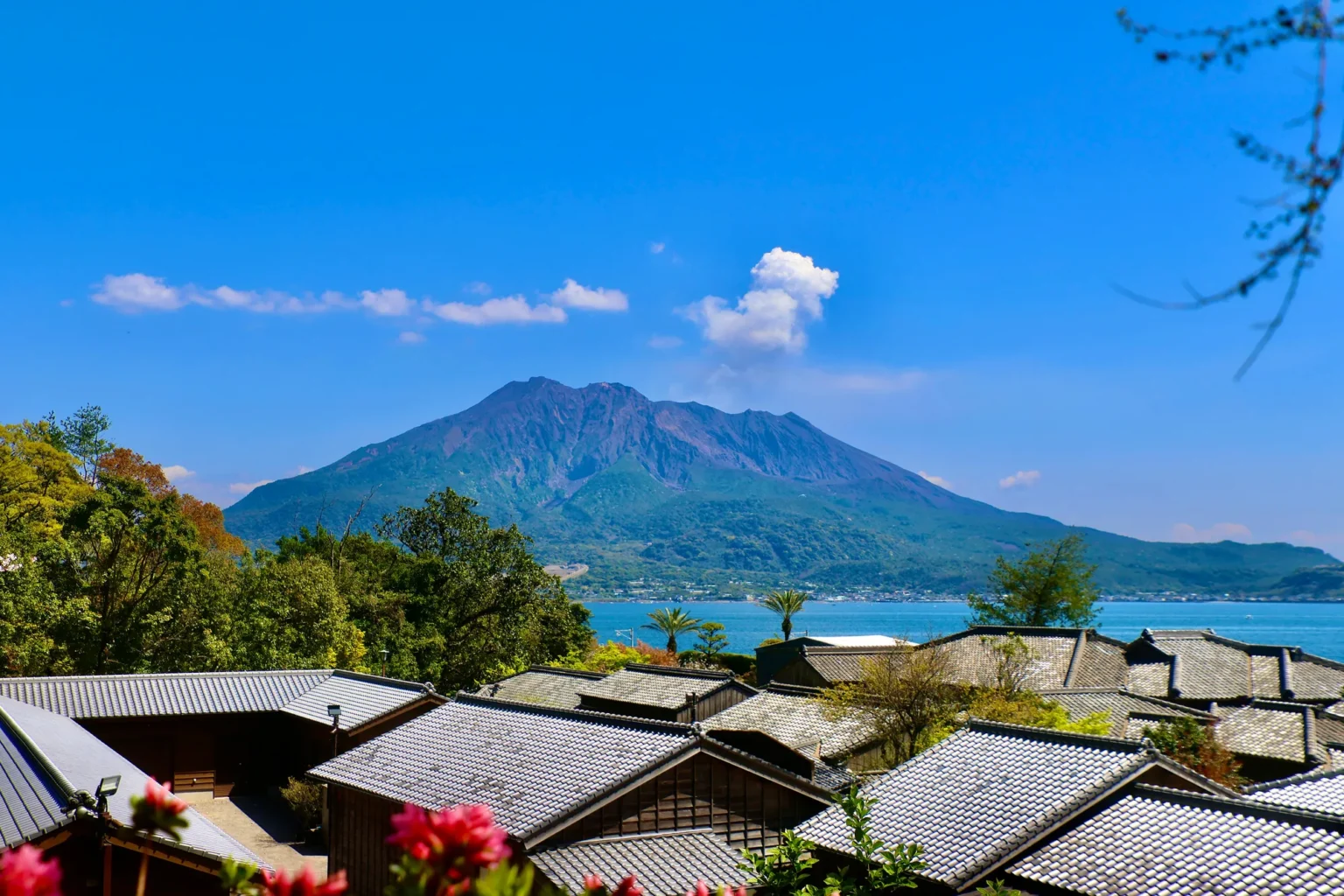
Sengan-en is the Shimazu lords’ seaside garden, laid out with Sakurajima as its borrowed view. One ticket covers the garden, the former residence and the Shoko Shuseikan museum next door. Give it two hours, plus time to get back to Kagoshima-Chuo by city bus or taxi, then take the shinkansen to Hakata. If you are flying home from Kagoshima Airport instead, the airport bus leaves from Kagoshima-Chuo. Sengan-en closes once a year, on the first Sunday of March: if your Day 7 is 7 March 2027, spend the morning in the city instead.
The route in winter (December–March)
Unlike the other two routes in this series, the Ruby Route needs no winter rewrite: the same trains, buses and ferry run in winter. A few things change on set dates.
| What | Winter detail |
|---|---|
| Aso crater | If the alert level allows it, the crater area is open 9:00–17:00 from 1 December to 19 March, gate closing 16:30 (Aso City Tourism Association). Gas or weather can close it on the day. |
| Kyushu Odan Bus | It crosses the Makinoto Pass between Yufuin and Aso. Check Sanko Bus’s operating-status page the day before. |
| Aso Boy | Replaced by the Kawasemi Yamasemi on 25–28 January and 15–19 February. |
| Kumamoto Castle | Closed 29 December. |
| Sengan-en | Closed 7 March 2027 (first Sunday of March). |
| Timetables | The Aso Boy and Yufuin no Mori calendars run to the end of February 2027; JR Kyushu says it will announce their dates from March around mid-January. |
What it costs
| Leg | Fare (adult) |
|---|---|
| Hakata → Beppu (Sonic, unreserved) | ¥6,380 |
| Beppu → Yufuin (Kyushu Odan Bus) | ¥1,300 |
| Yufuin → Aso Station (Kyushu Odan Bus) | ¥4,000 |
| Aso Station ⇄ Kusasenri (bus) | ¥2,000 |
| Aso → Kumamoto (Aso Boy) | ¥3,080 |
| Kumamoto → Kagoshima-Chuo (unreserved) | ¥7,440 |
| Sakurajima Ferry, both ways | ¥500 |
| Kagoshima-Chuo → Hakata (unreserved) | ¥11,420 |
| Total | About ¥36,000 |
Regular-season fares bought leg by leg, from fare searches in October 2026 and Sanko Bus’s fare table of 1 August 2026. They leave out city buses and trams, the local train to Miyaji, and entry fees. The Sonic and both shinkansen fares are for unreserved seats; a reserved seat costs a little more. The Aso Boy is all reserved, and its price already includes the seat.
Does a rail pass pay?
The four train legs come to ¥28,320 in single tickets and run from Hakata to Kagoshima, so you would need the All Kyushu version of the JR Kyushu Rail Pass, which JR Kyushu sells to visitors from abroad on a temporary-visitor stay. JR Kyushu lists the 7-day All Kyushu pass at ¥26,000, so on this route it saves a little, and more if you add side trips by train. The buses and the ferry (¥7,800 together) are paid separately either way.
The 7-day All Kyushu pass (¥26,000) covers every train on this route.
JR Kyushu Rail Pass on KlookWhere to stay on the Ruby Route
Four nights on this route are in places where the right hotel saves you a taxi: Beppu, Yufuin, Aso and Kumamoto. One for each, picked for how it fits a trip without a car. Details are from each property’s own pages, checked on 4 November 2026; check rates and room types on the booking page. In Hakata and Kagoshima, any hotel near the station works; in Kagoshima, JR Kyushu Hotel Kagoshima is directly connected to Kagoshima-Chuo Station.
Beppu: Suginoi Hotel, with a free shuttle from the station
A large hotel on the hill above the city. Its access page lists a free shuttle bus between JR Beppu Station and the hotel, and its Tanayu view bath is open to all staying guests, subject to its bathing rules. Its terms give rooms from 15:00 to 11:00 the next morning.
- Who it suits: families, and anyone who wants a large hotel with a view bath and a station shuttle.
- Catch: the hotel refuses people with tattoos in its bathing facilities.
Paid link: I may earn a commission if you book. Check Suginoi Hotel on Booking.com
Yufuin: Iyotomi, seven minutes from the bus
The inn gives a 7-minute walk, or 2 minutes by taxi, from JR Yufuin Station and the bus centre the Day 4 bus leaves from. Its baths are taken privately: guests take turns, as often as they like. Check-in is 15:00 and check-out 10:00; ask at the front desk if you want to leave bags before check-in.
- Who it suits: couples and families who want a private soak and an easy walk to the 9:10 bus.
- Catch: the inn says it does not usually run a station pickup, and the pages I checked don’t state a tattoo policy, so ask before you book.
Paid link: I may earn a commission if you book. Check Yufuin Iyotomi on Booking.com
Aso: Kamenoi Hotel Aso Park Resort, shuttle from Aso Station
The hotel’s site describes a free shuttle of about 5 minutes from JR Aso Station, first run 16:15, and its FAQ says the shuttle must be booked by the day before; otherwise it is about 15 minutes on foot. It has hot-spring baths, indoor and outdoor, including a view bath facing the five peaks of Aso, and three private baths at ¥2,000 for 50 minutes, by reservation. Check-in is 15:00 and check-out 10:00.
- Who it suits: anyone who wants an onsen soak after Kusasenri without a car.
- Catch: book the shuttle by the day before; on a plan with dinner and breakfast, the latest check-in is 19:30.
Paid link: I may earn a commission if you book. Check Kamenoi Hotel Aso Park Resort on Booking.com
Kumamoto: Hotel Nikko Kumamoto, a walk from the castle
The hotel says it is a 10-minute walk to the castle and about 20 minutes by tram from Kumamoto Station, beside the shopping streets.
- Who it suits: anyone who wants the castle, the shopping streets and dinner on foot.
- Catch: it’s farther from the station than the station hotels; take the tram with luggage on Day 6.
Paid link: I may earn a commission if you book. Check Hotel Nikko Kumamoto on Agoda
If you’d rather drive
A car is not needed for this route, but it helps in one place: the Aso caldera, where the Milk Road along the northern rim, Daikanbo lookout and the grassland roads are easiest by car. A sensible split is trains and buses to Aso, a one- or two-day rental there, and trains again from Kumamoto. If you want to drive more of it, I compare rental rates across companies before I book.
Paid link: I may earn a commission if you book. Compare rental cars on DiscoverCars
When to go, and what to book ahead
| When | What to expect |
|---|---|
| October–November | Silver grass across the Aso grasslands, autumn colour around Yufuin. Book Yufuin early for autumn weekends. See Kyushu’s quieter autumn spots. |
| December–February | Beppu’s steam and Kinrinko’s morning mist at their best. See the winter notes above. |
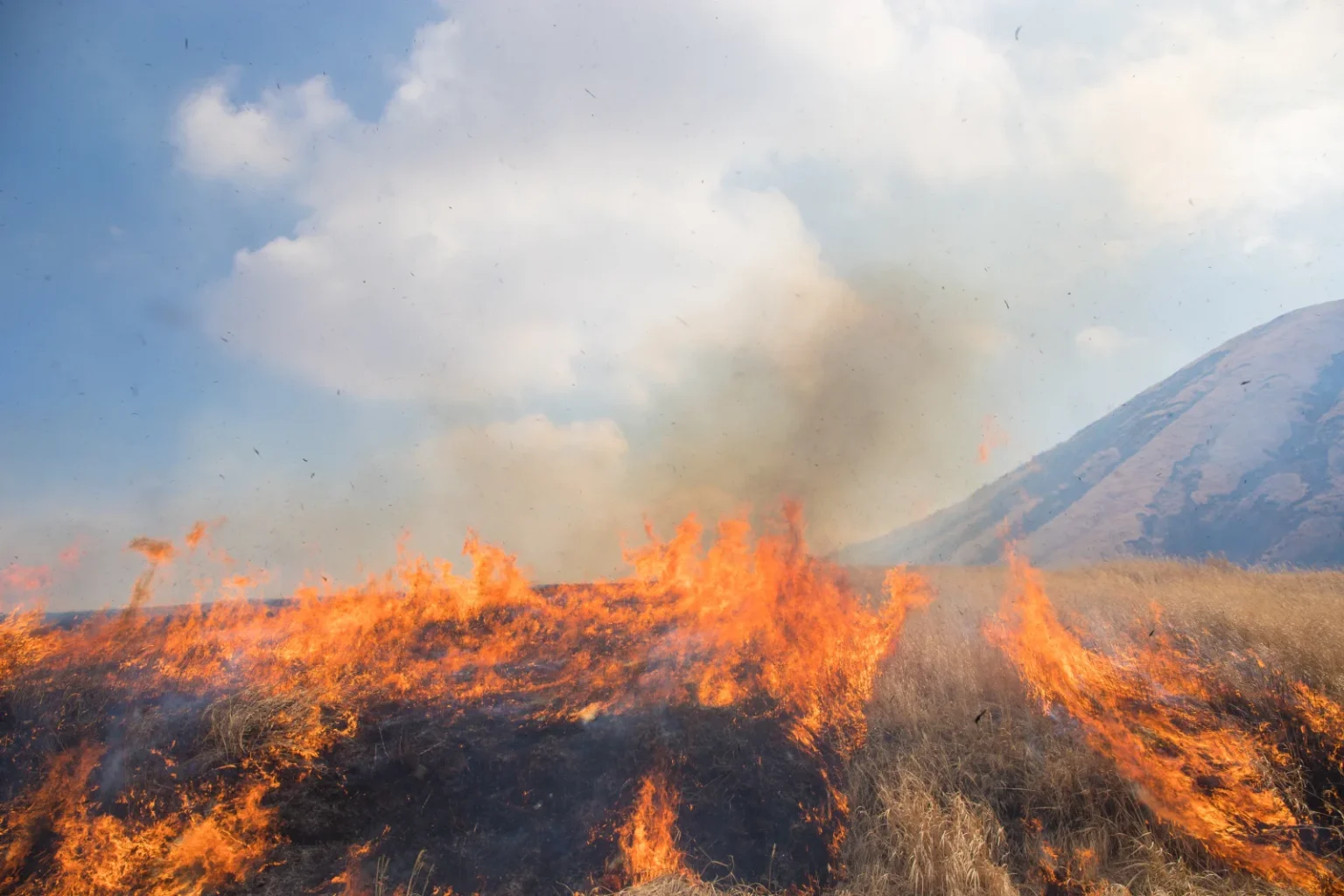
| Late February–March | The Aso grassland is burned black for the year’s regrowth, which some find striking and some don’t. |
| April–May | Mild and green; the grassland comes back. |
| June–September | Hot and humid, with the rainy season and typhoons. Bath towns are fine; check the bus on stormy days. |
Book ahead: the Yufuin → Aso Kyushu Odan Bus (from two months before), the Aso Boy seat, a Yufuin inn for autumn weekends, and the Aso hotel’s station shuttle.
Questions
Do I need a car for this Kyushu itinerary?
No. Every leg is a train, a scheduled bus or a ferry. A car helps only around the Aso caldera, where you could rent for a day or two between Aso and Kumamoto.
Can I see Mount Aso’s crater?
Only when the volcanic alert level and the gas readings allow it. On 4 November 2026 Aso was at Level 2, with the area within about 1 km of the crater closed. Kusasenri, the museum and the caldera views are outside that line, so the day still works; check the access notices the morning you go.
Is it safe to travel to Kumamoto after the July 2026 earthquake?
Kumamoto Castle has reopened normally, the whole Kyushu Shinkansen has run again since 18 September 2026 (on a changed timetable), and the Kagoshima Main Line went back to its normal timetable on 10 October. Check JR Kyushu’s service page close to your trip.
How far ahead should I book the Kyushu Odan Bus?
Reservations open two months before the day and close the day before. There are only three buses a day from Yufuin towards Aso, and the morning one is the one this route needs, so book it as soon as your dates are fixed.
Does the JR Kyushu Rail Pass cover this route?
Only the trains. The four train legs come to ¥28,320 in single tickets and reach Kagoshima, so you need the 7-day All Kyushu pass, listed at ¥26,000. The Kyushu Odan Bus, the Kusasenri bus and the Sakurajima Ferry (¥7,800 together) are paid separately.
Can I do it in five days?
Yes. Drop Kagoshima and take the shinkansen from Kumamoto back to Hakata on Day 5 evening or Day 6 morning. You lose Sakurajima and Sengan-en but keep every onsen night.
Can I add Takachiho?
Yes, with an extra day. Takachiho Gorge is in Miyazaki Prefecture, reached by bus from Aso; it doesn’t fit as a day trip inside this week.
Sources
JR Kyushu: Aso Boy (timetable, calendar, price), service information, JR Kyushu Rail Pass; rail fares from ekitan searches for October 2026. Sanko Bus: Kyushu Odan Bus (timetable of 1 October 2025, fare table of 1 August 2026, reservations), Aso Mountain Line (timetable of 11 May 2026, as listed in my Aso without a car guide). Beppu Jigoku Association; Beppu City (Takegawara Onsen); Yufuin tourist association (Kinrinko); Japan Meteorological Agency: Aso volcano and the 28 July 2026 earthquake report; Fukuoka City yatai rules; JR Kyushu Yufuin no Mori; Aso City Tourism Association (crater hours); Kumamoto Castle; Kagoshima City (Sakurajima Ferry); Sengan-en; each hotel’s own site. Checked 4 November 2026.
Plan the rest of your trip
Beyond the Golden Route
The three week-long routes side by side: Hokkaido–Tohoku, the Japan Alps and Kyushu.
Aso, Japan
Fitting the crater, Kusasenri and Kurokawa Onsen into one trip.
Northern Kyushu in 4 days
Dazaifu, Arita, Imari and Karatsu by rail, if you have more time around Fukuoka.
Emerald Route
A week across the Japan Alps by train: Nagano, the Alpine Route, Kanazawa and Takayama.
Sapphire Route
Sapporo to Tokyo in seven days, via Hakodate, Oirase and Matsushima.
Kumamoto side of the Ariake Ferry
Day trips from Nagasu Port, if you continue towards Nagasaki.
Ad · We earn a commission on qualifying bookings made through this link.
Book your Fukuoka stay
If this trip includes a night in Fukuoka, the Booking.com search below opens on Fukuoka — add your dates to see what is free.
Join travelers discovering Japan's hidden side
Weekly dispatches from off-the-beaten-path Japan — spots and stories you won't find in guidebooks.
No spam. Unsubscribe anytime.
Welcome aboard!
You're in. See you in your inbox soon.