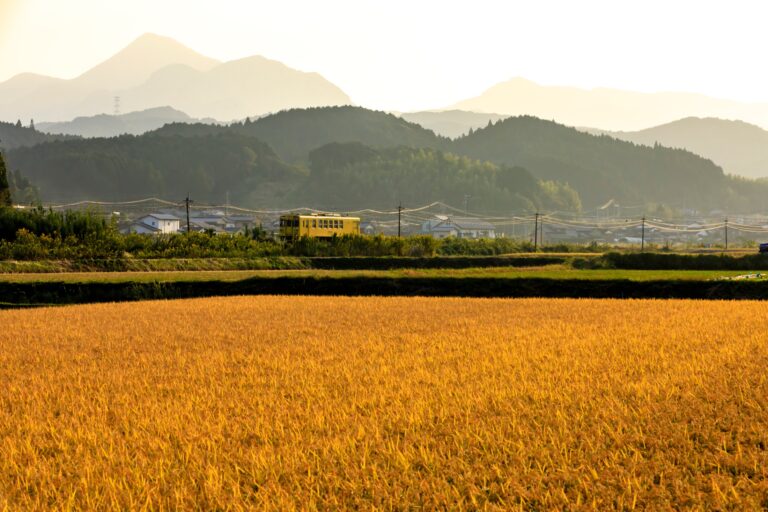
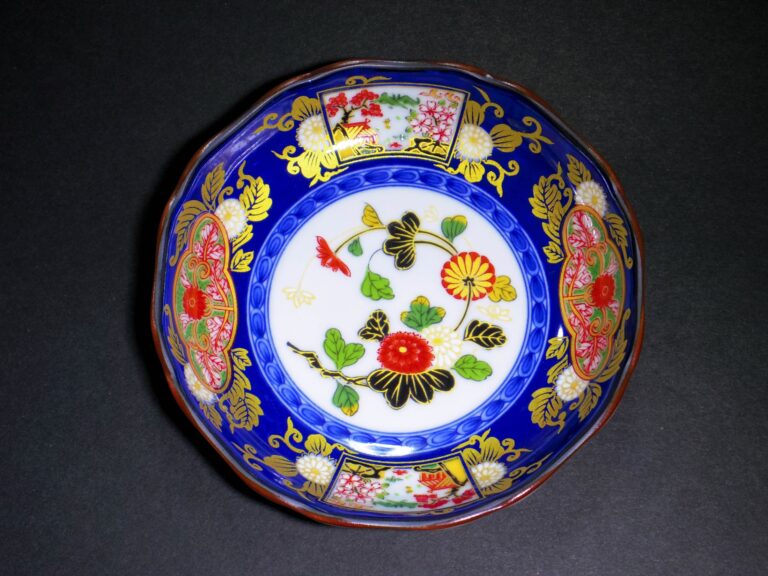
Fukuoka · Saga · Dazaifu · Yoshinogari · Arita · Imari · Karatsu
Northern Kyushu works as a four-day loop from Fukuoka: Dazaifu’s shrine, the Yayoi-era settlement at Yoshinogari, a night in Takeo Onsen, the porcelain towns of Arita and Imari, and Karatsu, where the JR line continues into Fukuoka’s subway (some trains run through to the airport; many need a change). You need no rental car, but a couple of stops are a taxi ride from the station. The one leg to plan around is the stretch from Imari to Karatsu: on JR Kyushu’s October 2026 timetable, only nine trains a day make the 50-minute run, with nothing between 7:40 and 11:03.
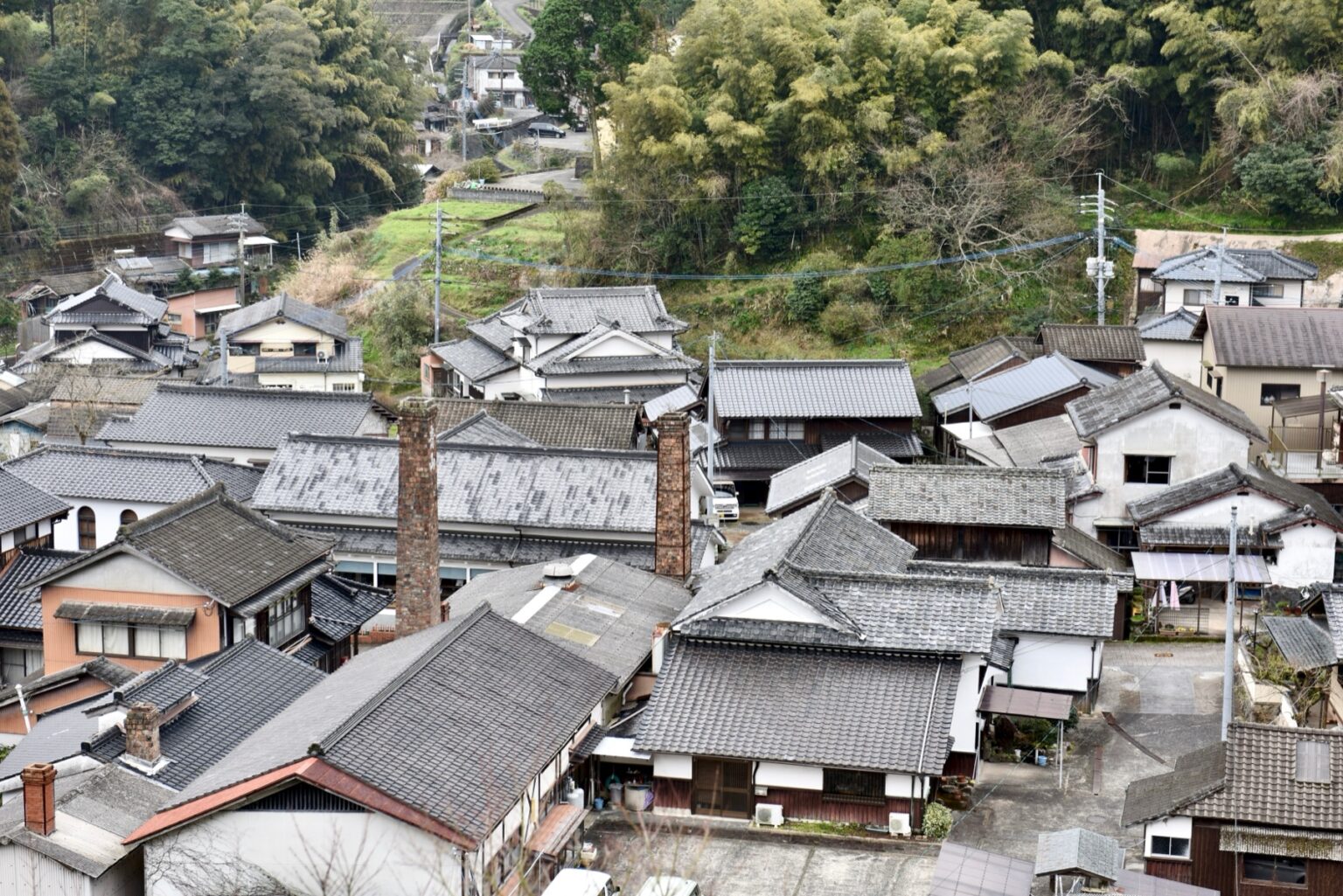
Saga is easy to pass straight through on the way from Fukuoka to Nagasaki, and I think that is a mistake. In four days you get the shrine of the god of learning, a Yayoi-era village of moats and watchtowers, a hot-spring town with a gate by the architect of Tokyo Station, the towns where Japan’s porcelain began, and a castle town on the Genkai Sea. None of it is far apart, but the trains and a few taxi connections need planning, and Day 3 needs watching the clock; that is what most of this guide is about.
Book the nights in Takeo Onsen and Karatsu first. Both are small towns, and they are what make the loop work without a car.
What does a 4-day northern Kyushu itinerary look like?
A clockwise loop out of Fukuoka through Saga Prefecture, ending back at Fukuoka Airport. Train times below are from JR Kyushu’s station timetables for October 2026; check them for your own dates.
| Day | Plan |
|---|---|
| Day 1 | Fukuoka; afternoon at Dazaifu Tenmangu (about 35 minutes by Nishitetsu train). Sleep in Fukuoka |
| Day 2 | JR to Yoshinogari Historical Park (about an hour); on through Saga to Takeo Onsen. Sleep in Takeo Onsen |
| Day 3 | Arita (about 15–20 minutes from Takeo-Onsen) for one morning porcelain stop, by taxi; Matsuura Railway to Imari and a taxi to the kiln village of Okawachiyama; the 16:19 train to Karatsu (17:13), with later trains as a fallback. Sleep in Karatsu |
| Day 4 | Karatsu in the morning; Chikuhi Line back to Fukuoka (change at Chikuzen-Maebaru on many trains) |
Day 1: Fukuoka and Dazaifu
| The day at a glance | |
|---|---|
| Getting there | Nishitetsu from Tenjin, about 35 minutes, changing at Futsukaichi; or the Tabito bus from Hakata Bus Terminal, about 45 minutes |
| Main stop | Dazaifu Tenmangu; grounds free, treasure hall ¥500 |
| Evening | Dinner in Hakata |
| Sleep | Fukuoka, near Hakata Station for the morning train |
Dazaifu Tenmangu
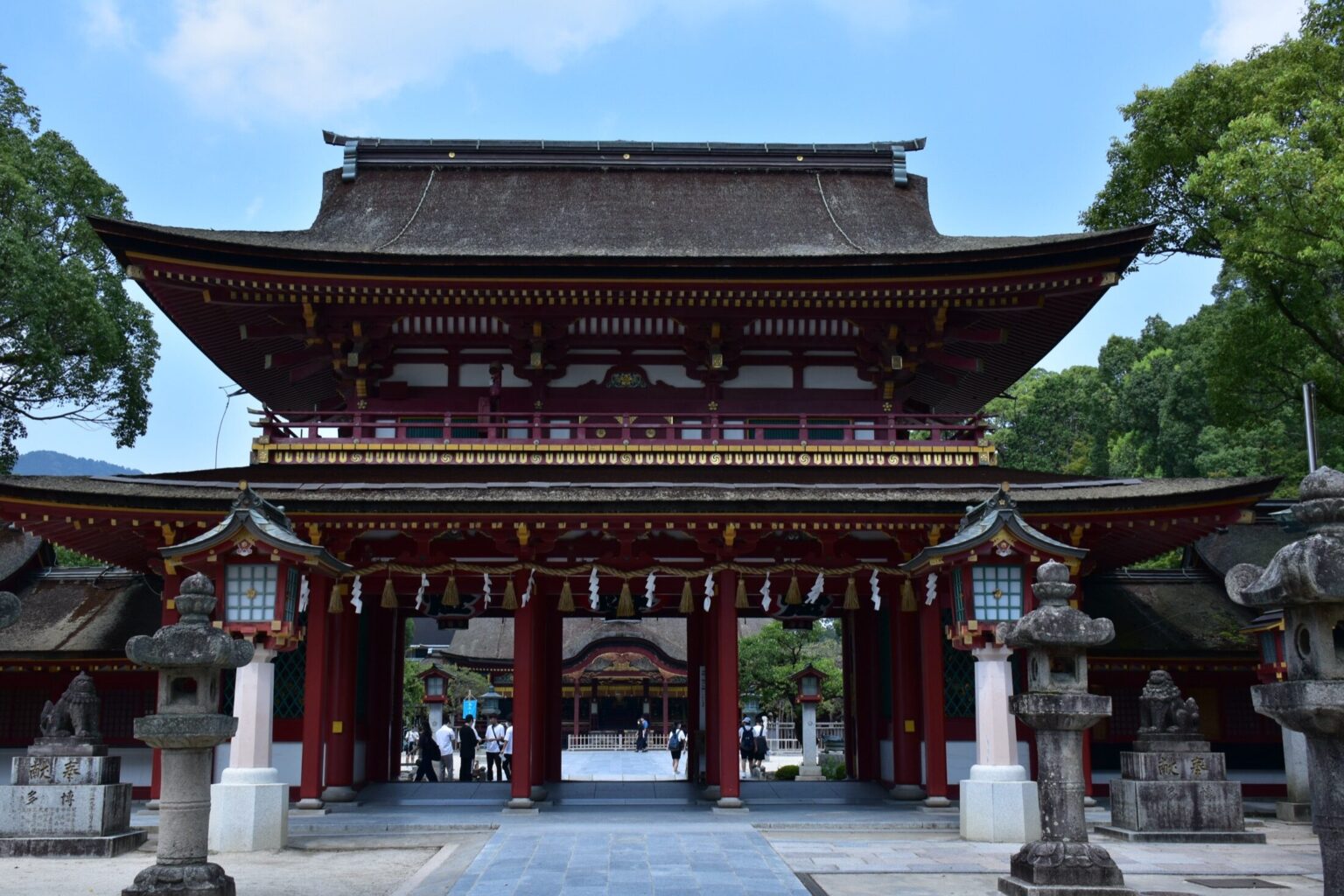
Spend the afternoon at Dazaifu Tenmangu, the head shrine of Sugawara no Michizane, the scholar and statesman who died in exile here in 903 and came to be worshipped as the god of learning. Students come from across Japan to pray for exam success, and leave wishes on wooden ema plaques. From Nishitetsu Fukuoka (Tenjin) Station it is about 35 minutes by Nishitetsu train, changing at Nishitetsu-Futsukaichi, and the shrine is a five-minute walk up the approach; the Tabito bus also runs from Hakata Bus Terminal in about 45 minutes. The grounds are free and the treasure hall is ¥500.
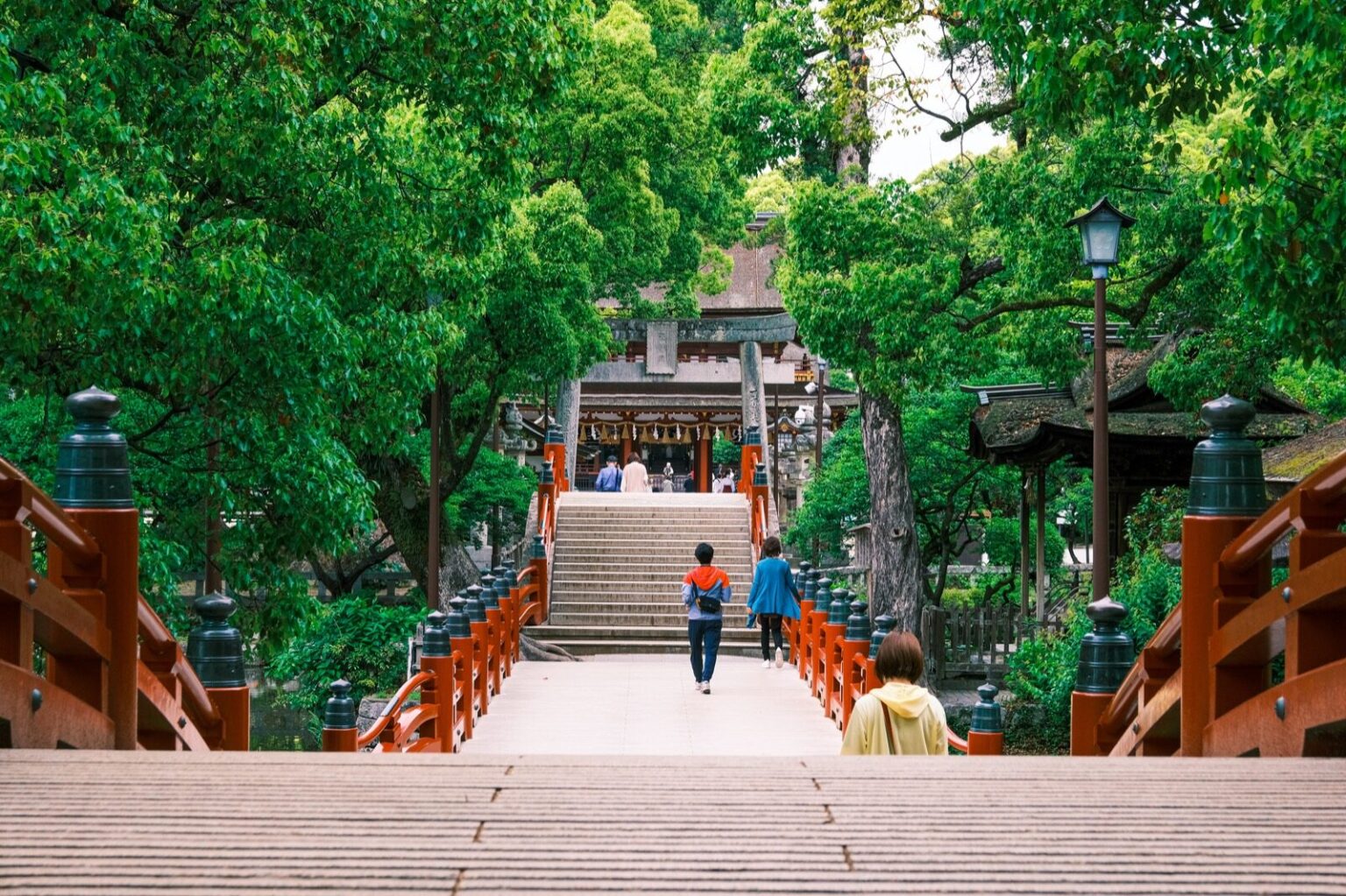
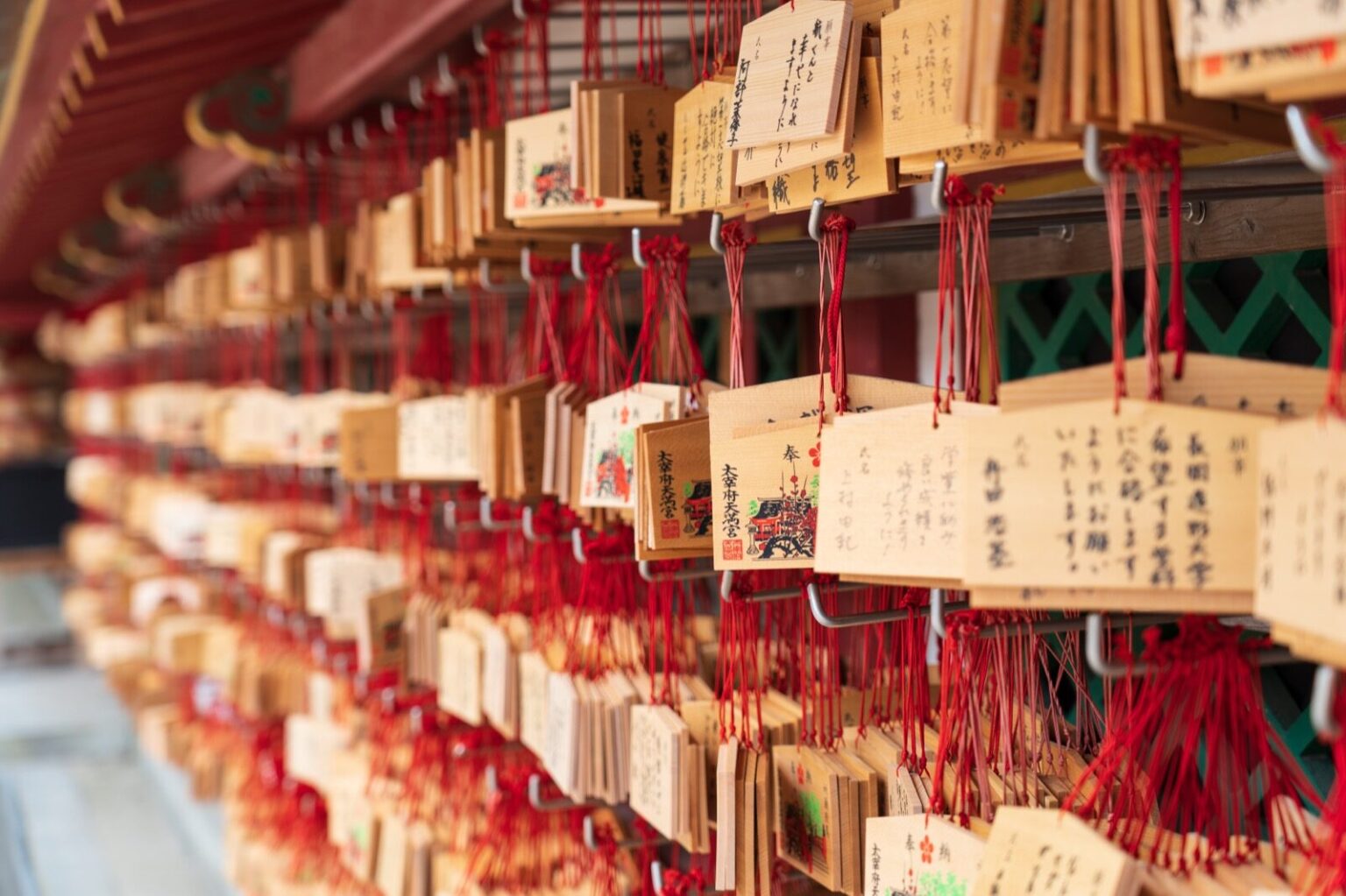
After a major renovation, worship in front of the main hall resumed on 19 September 2026, for the first time in about three and a half years, according to the shrine’s notice. The shrine posts temporary changes to its gate hours on its site (it changed them on several days in late September 2026), so check before you go. Our Dazaifu guide has the details.
The approach and its Starbucks
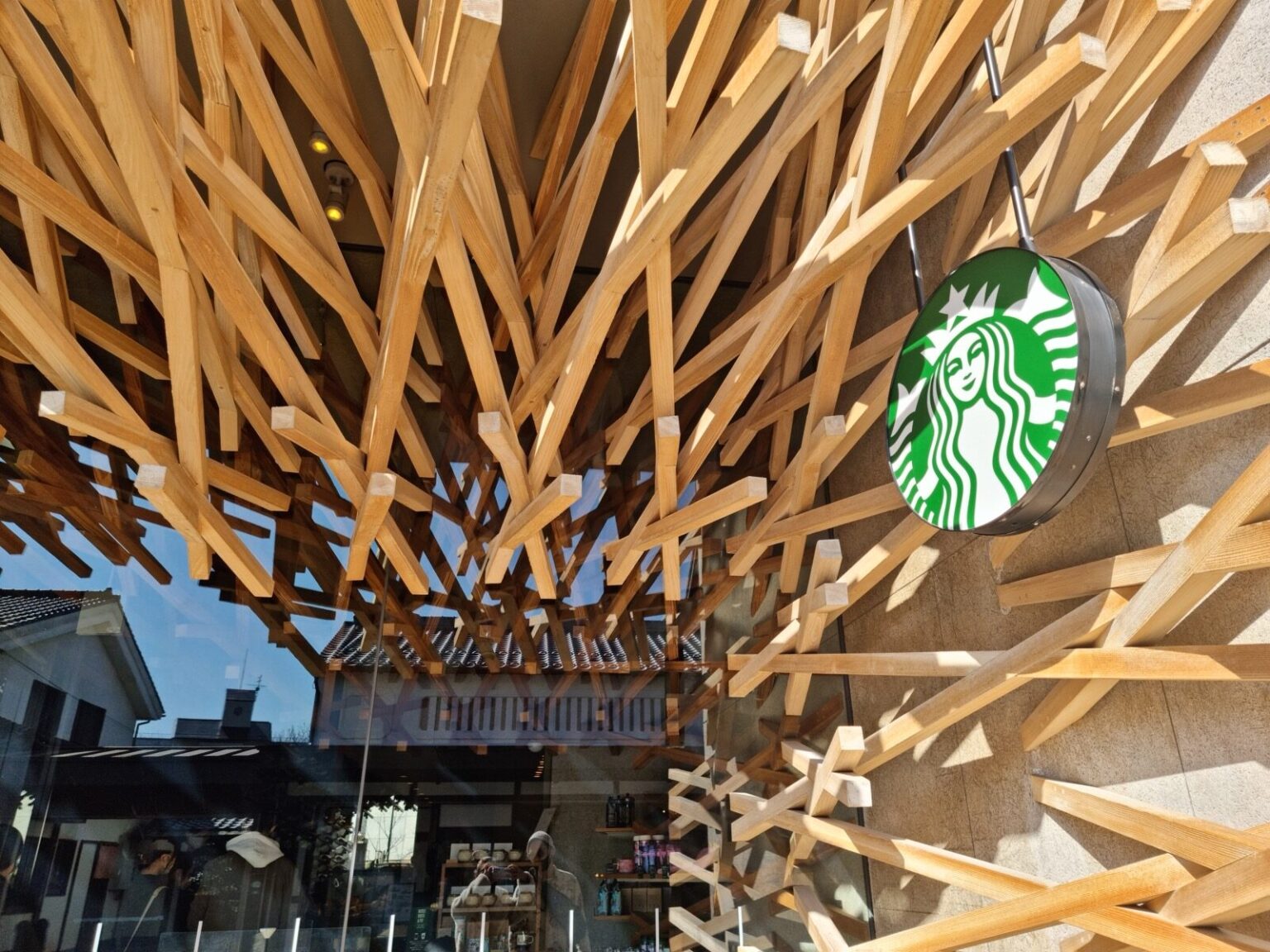
The street up to the shrine is lined with shops selling umegae-mochi, a grilled rice cake filled with sweet bean paste. Halfway up is the Starbucks designed by Kengo Kuma, its front a tunnel of diagonal cedar battens; our Dazaifu Starbucks guide covers it.
If you have a spare morning, and where to eat
Nanzoin’s reclining Buddha
A huge bronze reclining Buddha at Sasaguri, about 25 minutes from Hakata on the JR Sasaguri Line and three minutes’ walk from Kido-Nanzoin-mae Station.
Dinner in Hakata
Our guides cover Ichiran’s headquarters and a yakitori counter, among others.
Where to sleep tonight
Stay near Hakata Station: the JR line south for Day 2 starts there.
One night in Fukuoka: Hakata Station puts you on the JR line south for day two.
See Fukuoka stays on Booking.comDay 2: Yoshinogari, then Takeo Onsen
| The day at a glance | |
|---|---|
| Morning | JR from Hakata to Yoshinogari-koen, about an hour, then a 15-minute walk |
| Main stop | Yoshinogari Historical Park, ¥460, 9:00–17:00; allow two to three hours |
| Afternoon | JR via Saga to Takeo-Onsen |
| Sleep | Takeo Onsen |
Yoshinogari Historical Park
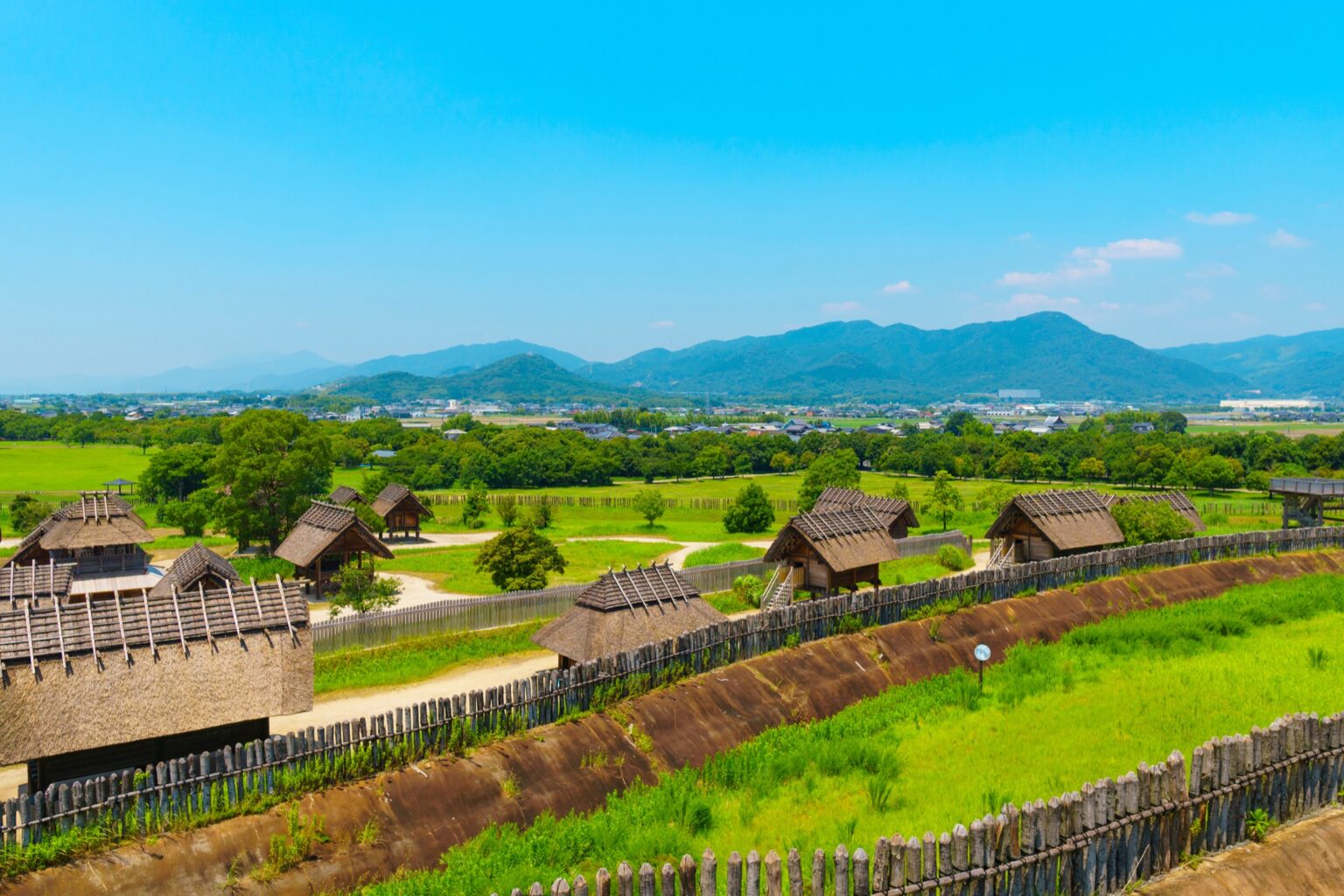
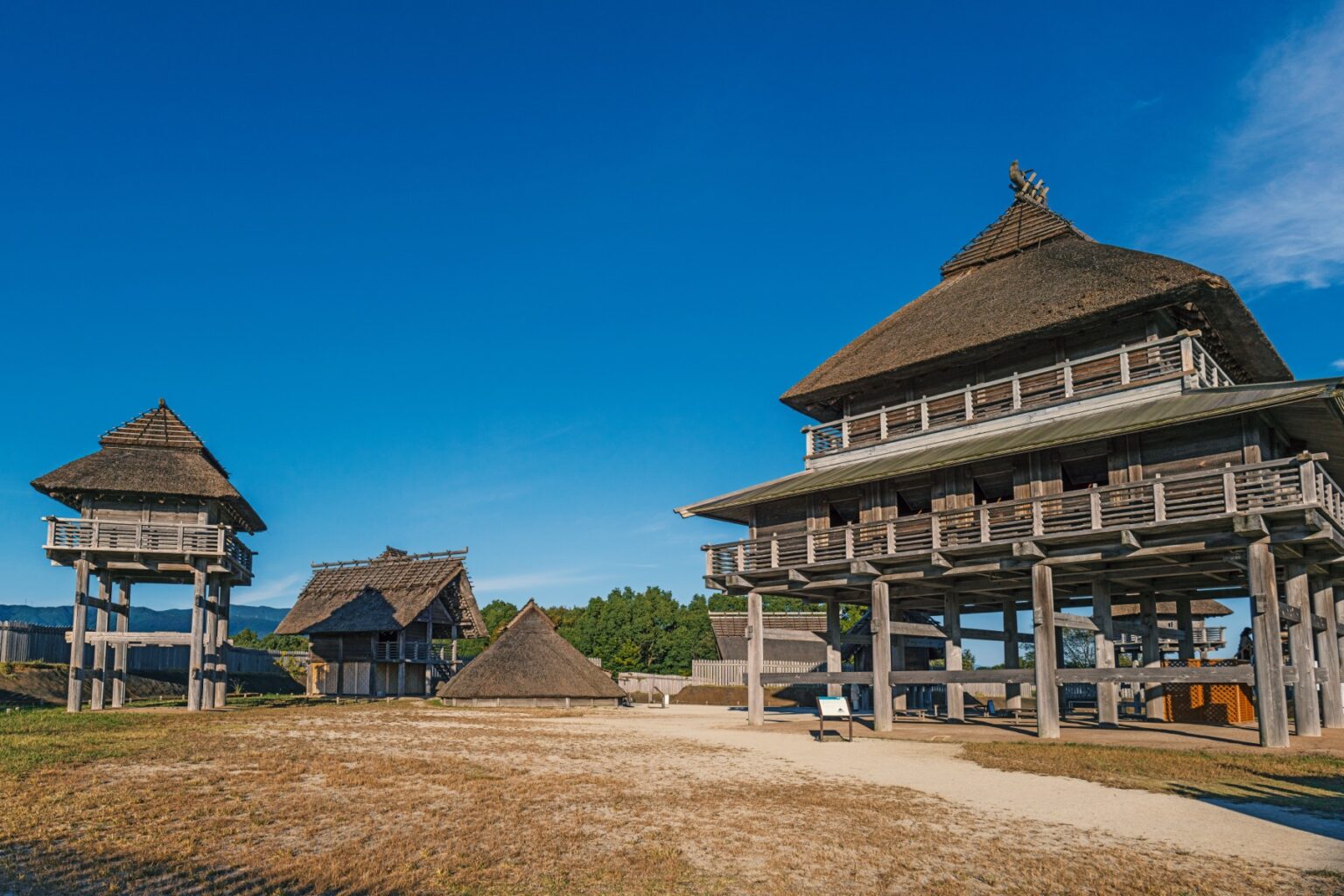
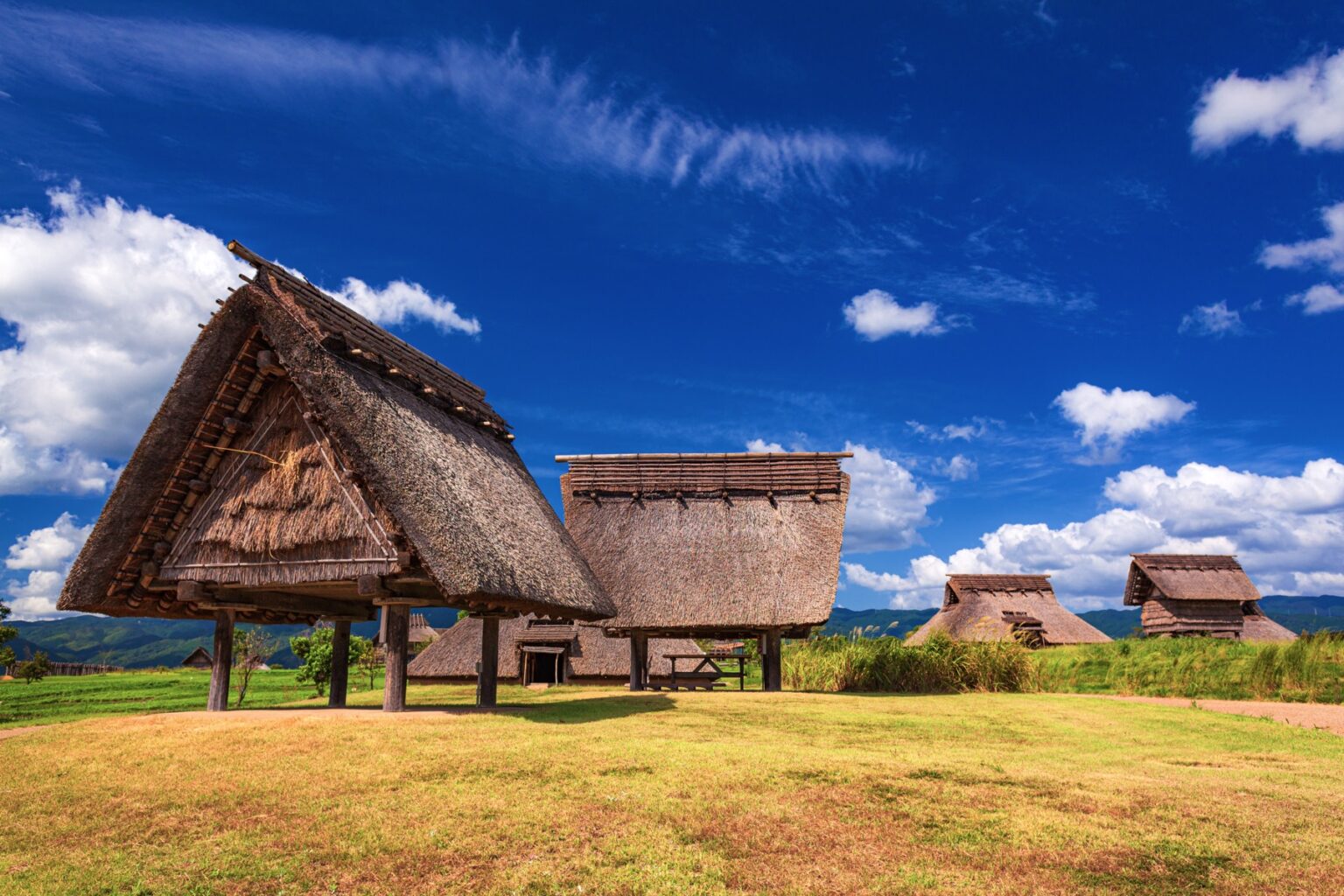
Yoshinogari Historical Park preserves one of Japan’s largest Yayoi-period moated settlements, with watchtowers, pit dwellings and a great hall rebuilt over the excavated site. The ruins were designated a Special Historic Site in 1991, and about 106.9 hectares of the park were open as of July 2024. It is about an hour from Hakata by JR to Yoshinogari-koen Station, then about 15 minutes on foot to the east entrance. Adult entry is ¥460 (¥200 over 65, free under 15), and it opens 9:00–17:00 (to 18:00 from June to August); it is closed on 31 December and on the third Monday of January and the day after. Allow two to three hours; our Yoshinogari guide explains what you are looking at.
On to Takeo Onsen
Local trains leave Yoshinogari-koen for Saga roughly every 25 to 55 minutes in the daytime, and from Saga the Relay Kamome and Midori limited expresses reach Takeo-Onsen in about 20 to 25 minutes (a limited-express charge applies); local trains take about 45 minutes.
Takeo Onsen
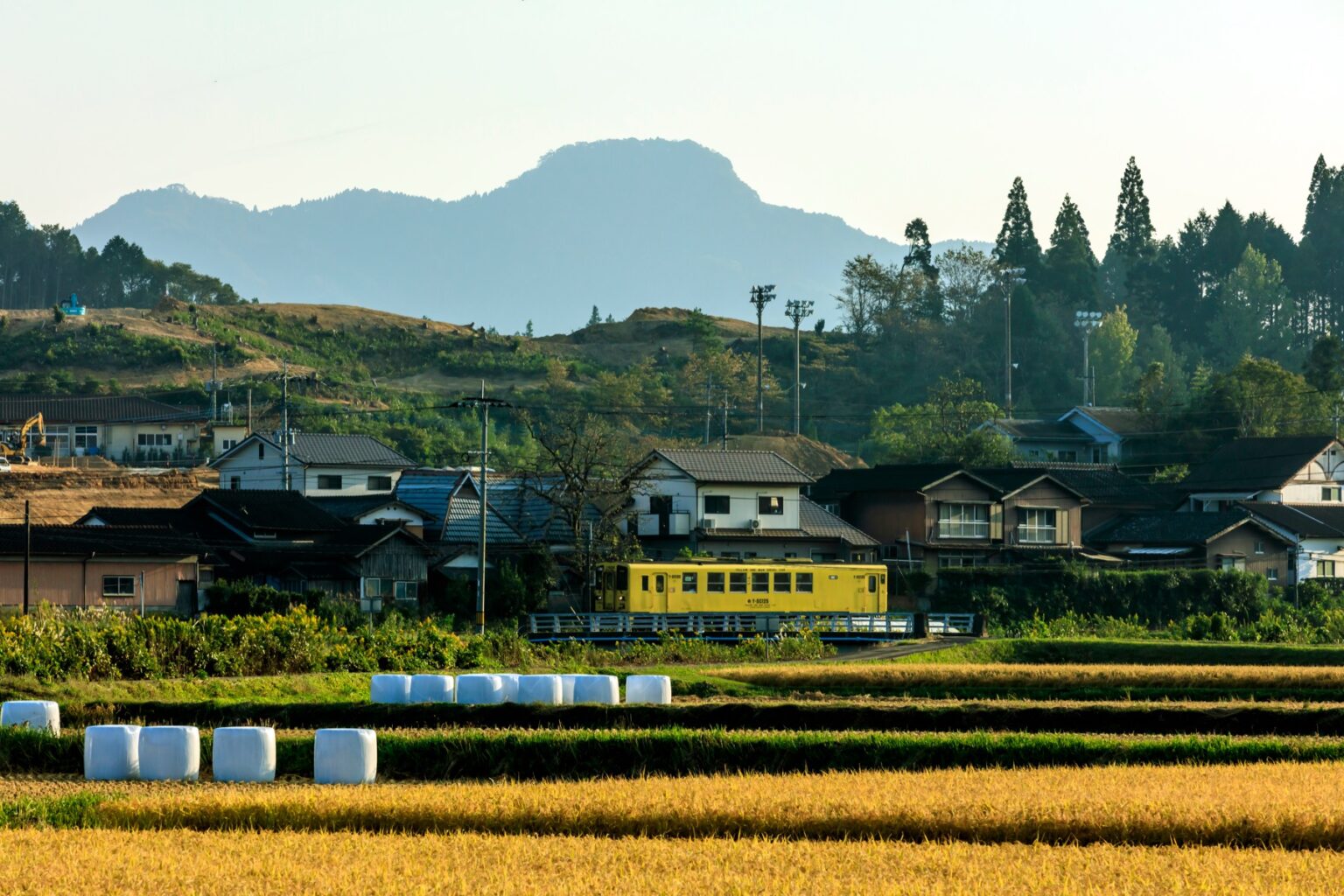
Takeo Onsen is a hot-spring town on the JR Sasebo Line that the local tourism association dates back some 1,300 years. Its landmark is the vermilion Romon gate at the bathhouse complex, designed by the office of Tatsuno Kingo, the architect of Tokyo Station, and completed in 1915; the Romon and the historic Shinkan building beside it are designated Important Cultural Properties. Elsewhere in the complex, the Moto-yu public bath is, in the tourism association’s words, the oldest hot-spring building in Japan still in use, built in 1876. It opens 6:30–23:45 (last entry 23:00), and adults pay ¥500, according to the tourism association. If you reach Takeo early, see the camphor tree or the library while it is light, then bathe at Moto-yu after dinner.
Takeo Shrine’s camphor tree
If you arrive in daylight: a giant camphor said to be 3,000 years old, with a trunk 20 m round and a hollow inside the size of a 12-mat room, according to Takeo City. Keep to the marked area.
Takeo City Library
A library, bookshop and café under one roof that won a Good Design Gold Award in 2013. Open 9:00–21:00, every day.
Ide Chanpon
Our pick for lunch or dinner in Takeo: a vegetable-heavy chanpon noodle soup.
Where to sleep tonight
Choose an inn with its own baths if you can, and walk to Moto-yu as well.
One night in Takeo Onsen: search the town on Booking.com, or open Rakuten Travel for ryokan with their own baths.
Open Booking.com Open Rakuten TravelDay 3: Arita, Imari and Okawachiyama
| The day at a glance | |
|---|---|
| Morning | JR to Arita, about 15–20 minutes; one porcelain stop by taxi (Kouraku-gama’s 10:00 slot, or the porcelain park at opening) |
| Midday | Matsuura Railway to Imari, about 25 minutes; taxi to Okawachiyama |
| Late afternoon | The 16:19 train from Imari to Karatsu (17:13) |
| Sleep | Karatsu |
Arita is about 15 to 20 minutes from Takeo-Onsen by train. The porcelain towns here are where Japan’s first true porcelain was fired in the early 1600s; in the Edo period it was shipped from the port of Imari, which is why Europe knew it as Imari ware. Our Imari ware guide tells that story.
Arita: where Japanese porcelain began
Arita’s tourism association says that in the early 17th century the Korean potter Yi Sam-pyeong (Ri Sampei) and others found good porcelain stone at Izumiyama, and Japan’s first mass-produced porcelain followed; the year usually given, 1616, is told as tradition rather than fixed by records. The quarry is still there on the edge of town. At Tozan Shrine, the torii gate itself is porcelain, painted with blue scrolls and offered in 1888.
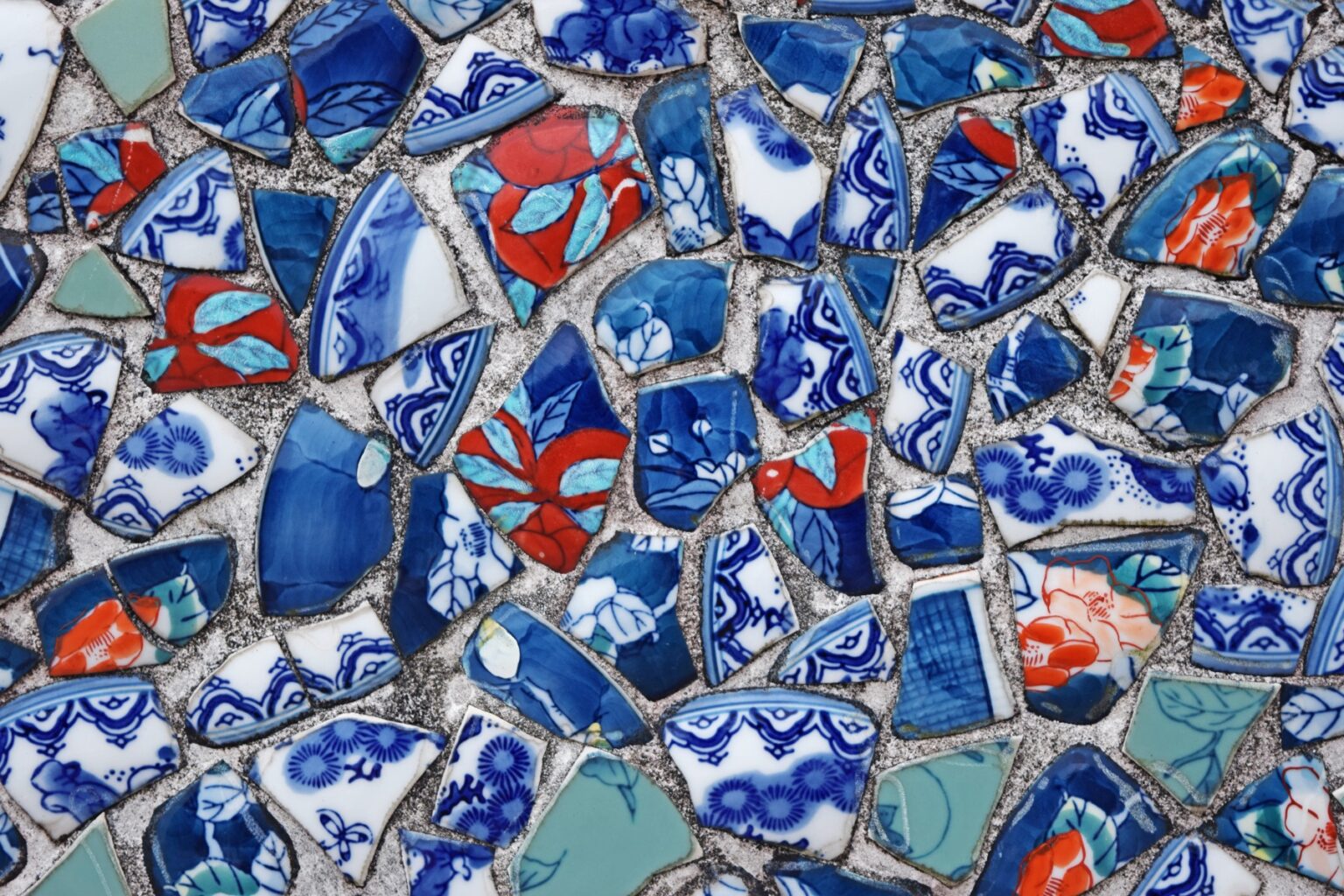
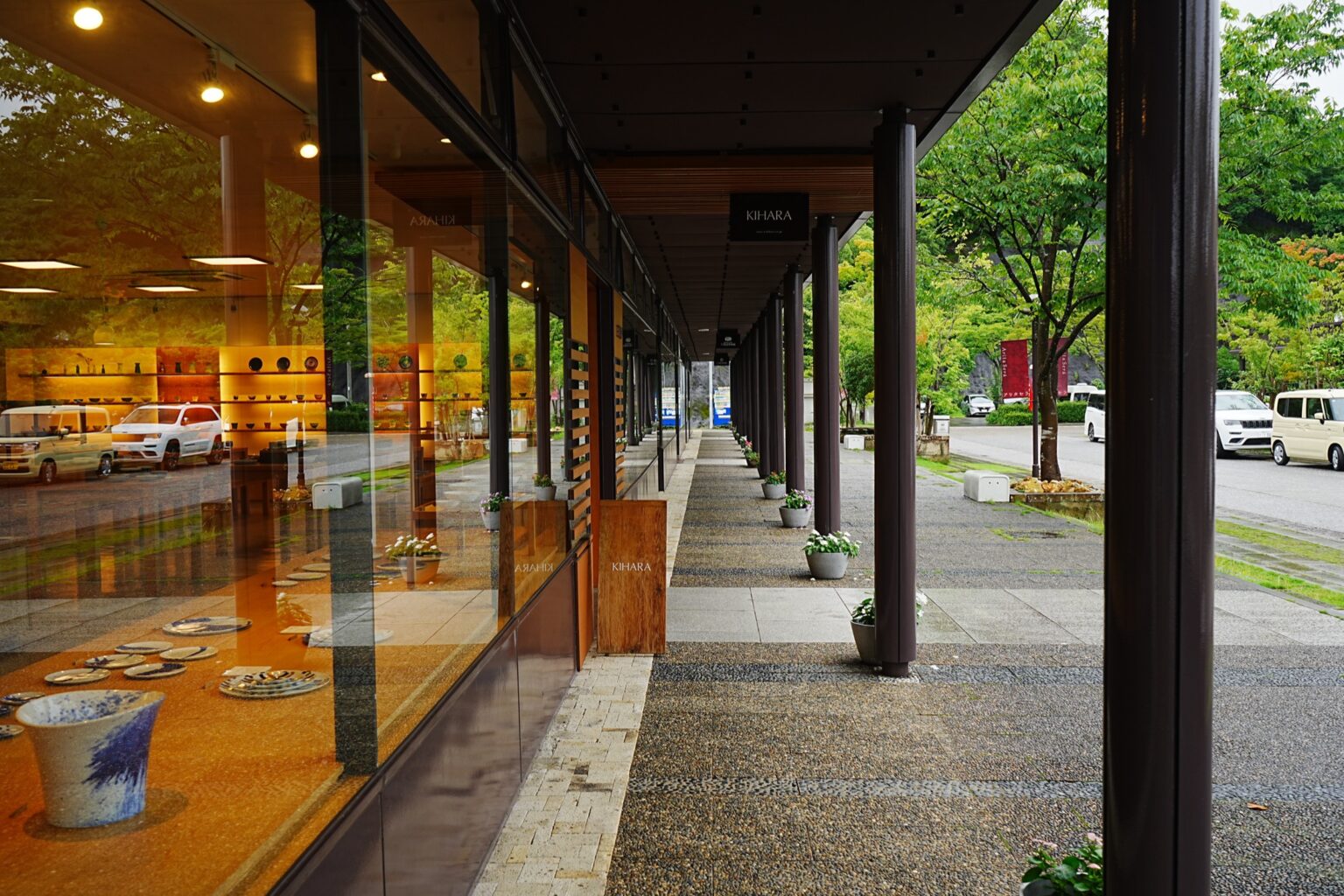
In Arita, pick one stop, because both are a taxi ride from the station.
Arita Porcelain Park
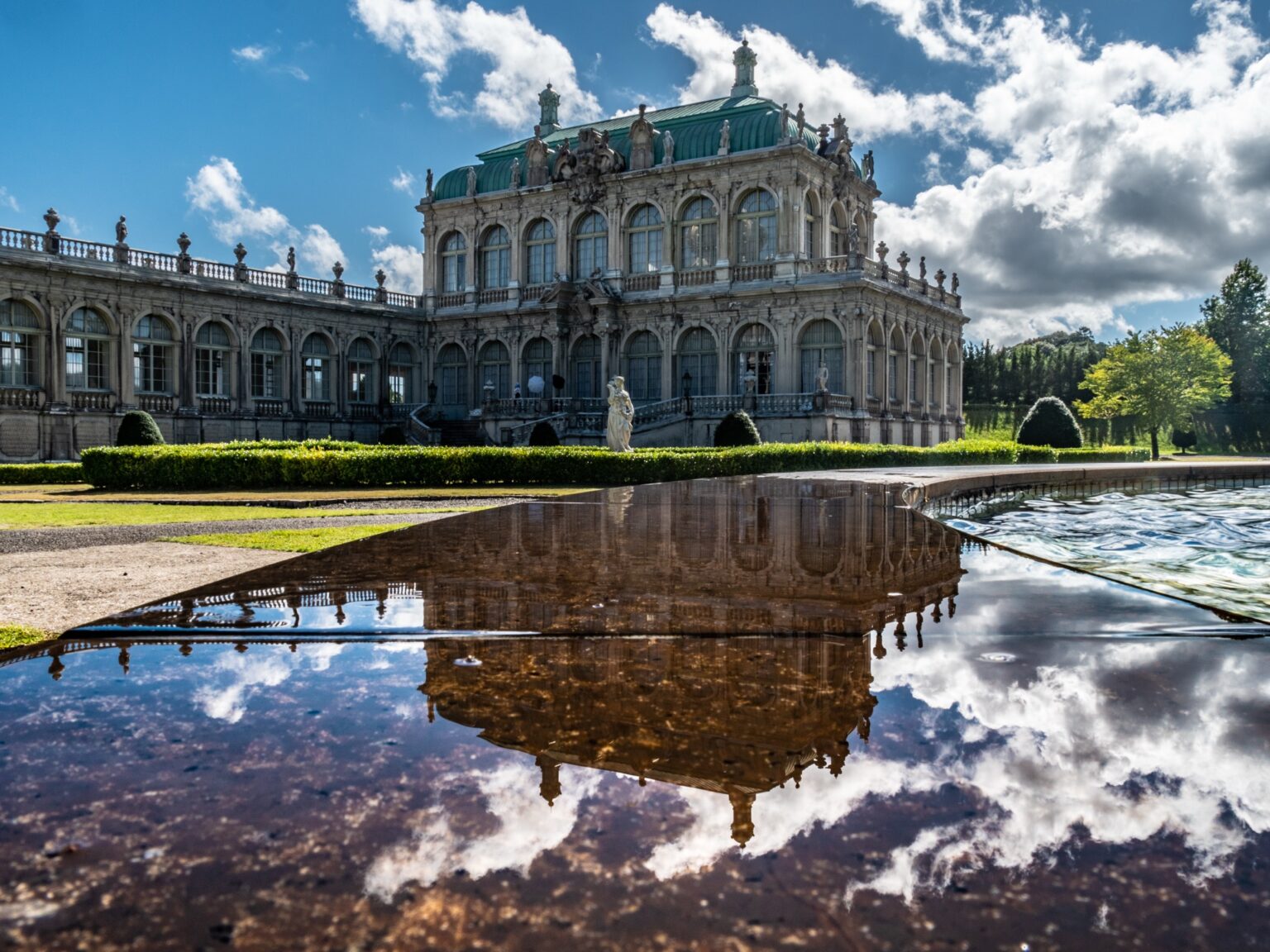
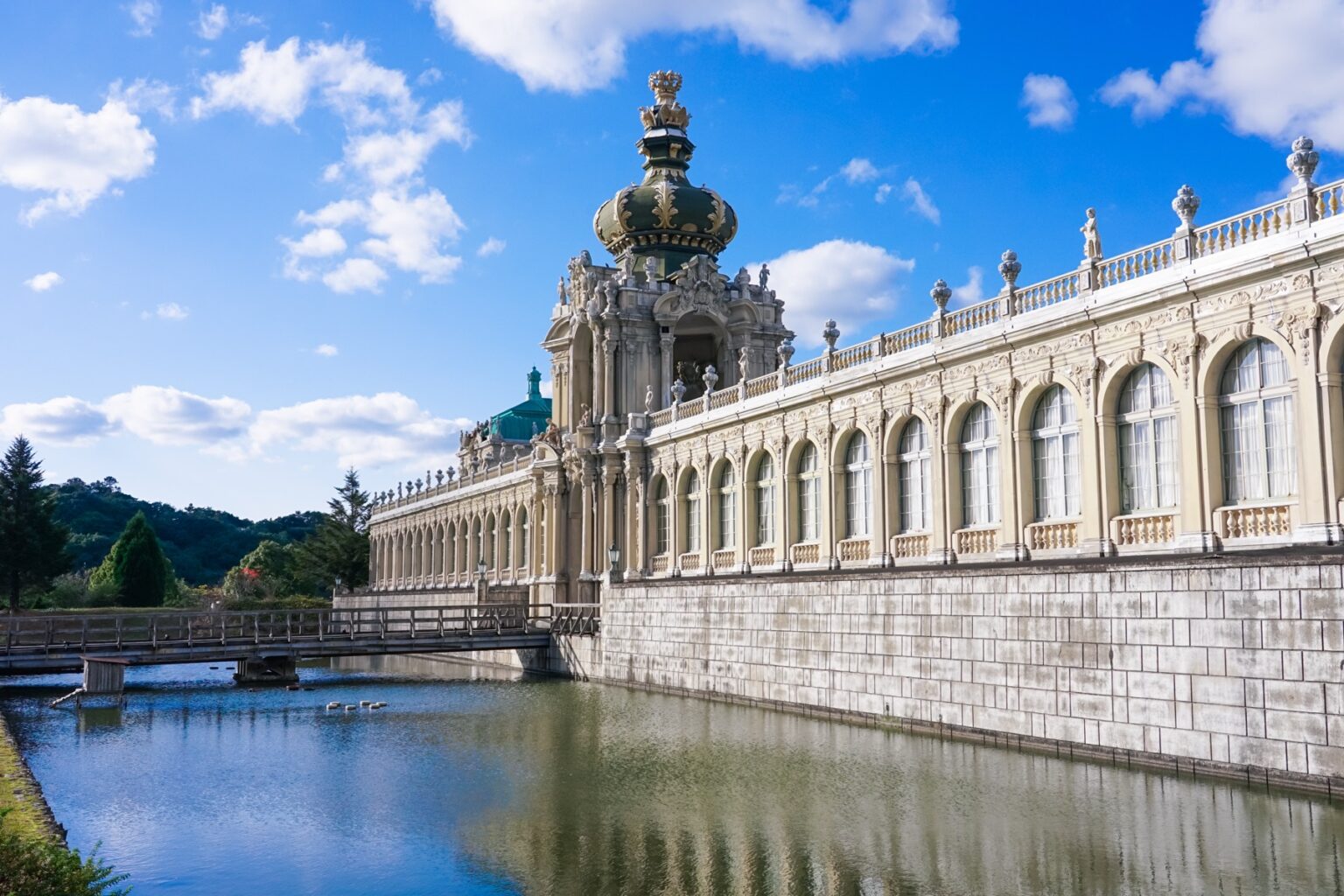
Arita Porcelain Park is about 8 minutes from JR Arita by taxi. Its centrepiece is a replica of the Zwinger palace in Dresden, whose rulers were among Europe’s keenest collectors of Arita and Imari porcelain. Entry is free, it opens 9:00–17:00 and it closes on scattered days (in 2026 including 30–31 December), so check before you go. When we checked on 12 October 2026 the exhibition building inside the palace was closed, with no reopening date, so you see the palace from outside. The baroque garden is open as usual, but since January 2026 a fenced area on the garden side of the palace has been open only to paid photo bookings.
Kouraku-gama’s treasure hunt
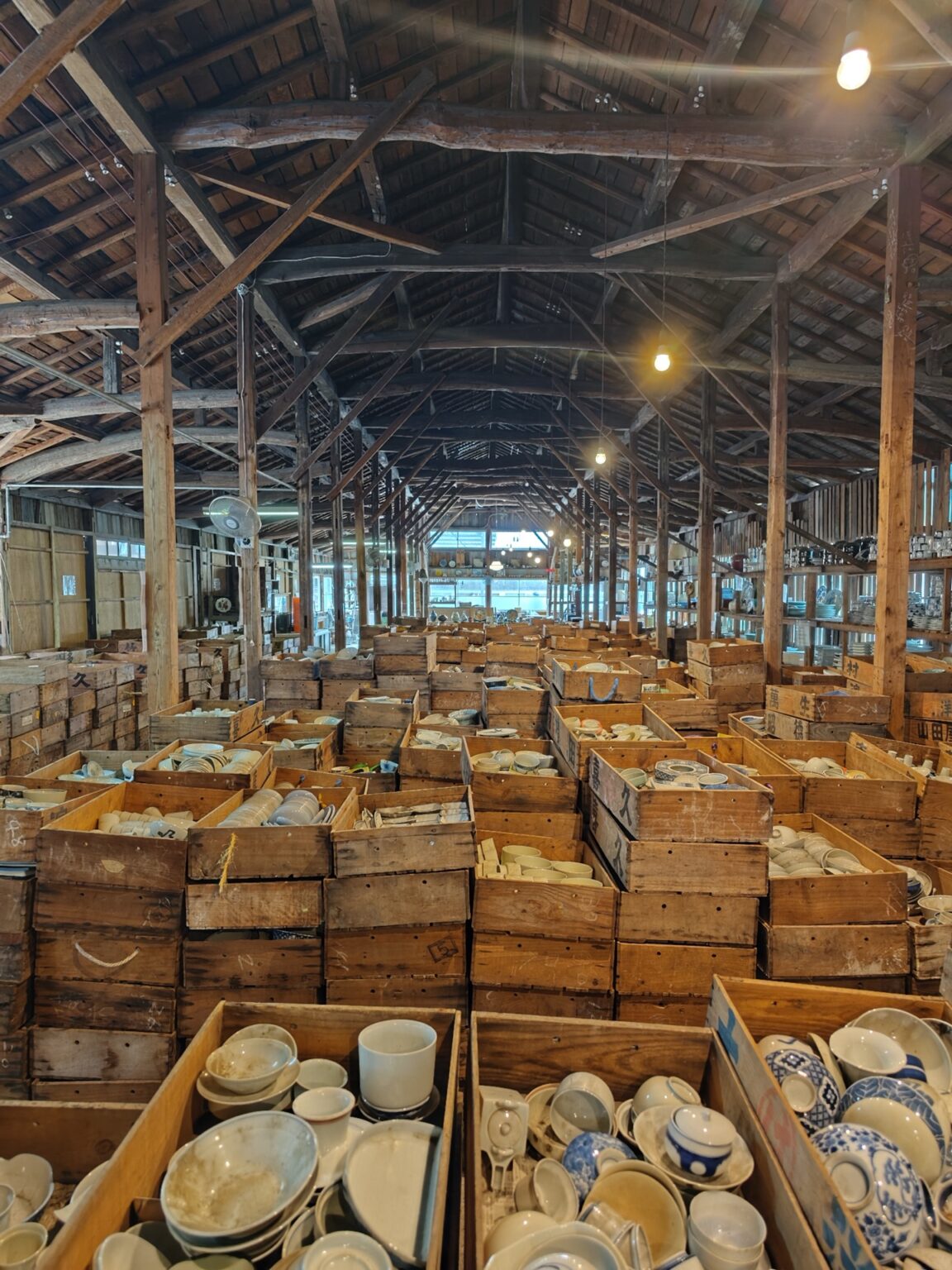
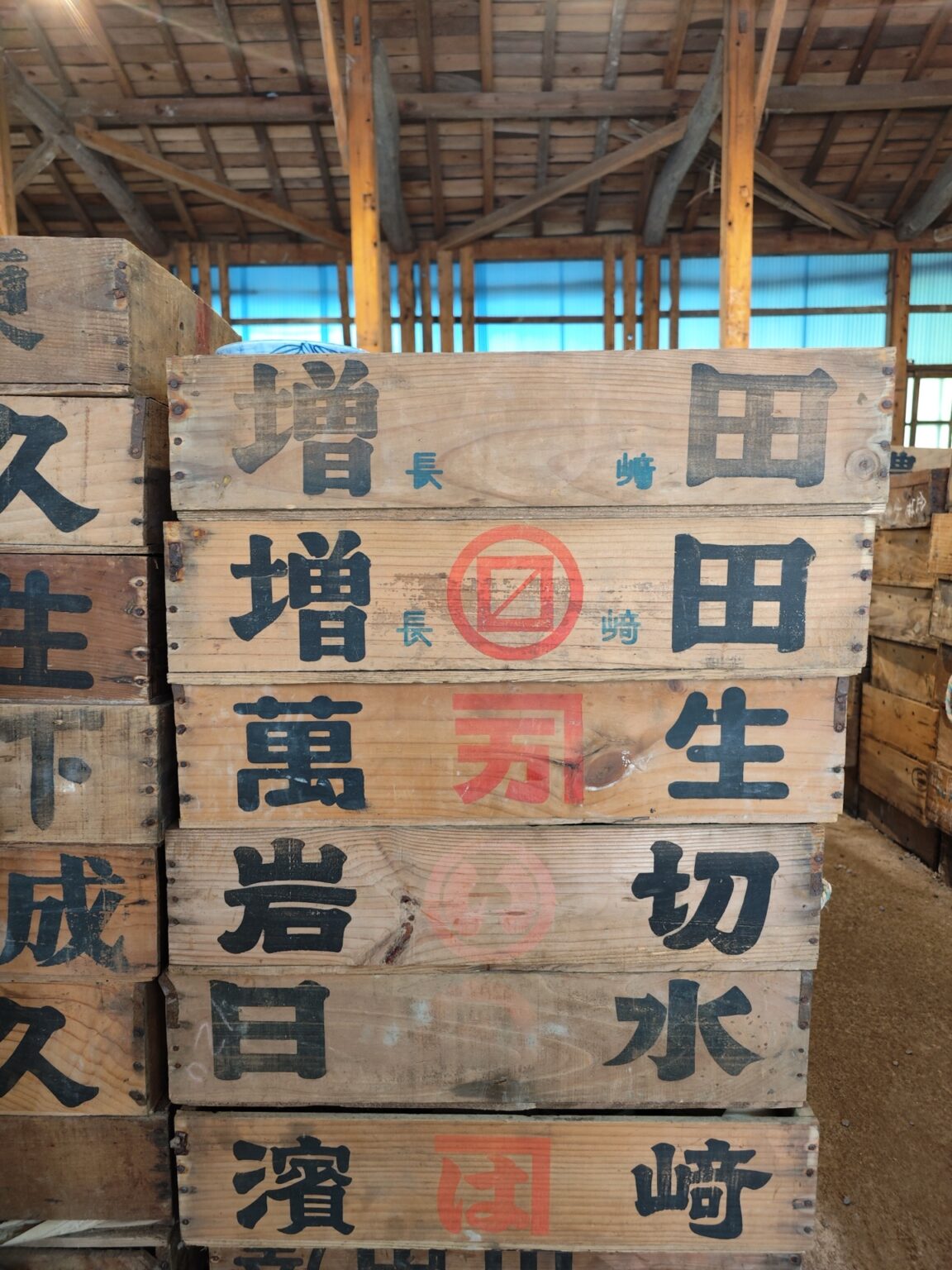
At Kouraku-gama’s treasure hunt you fill a basket with porcelain in 90 minutes from a warehouse of old wooden crates; our guide lists entry from 10:00 to 11:00 and 13:00 to 14:00 only. On this day, take the morning slot: an afternoon session leaves no time for Okawachiyama before the 16:19 train, so if only the afternoon is available, skip Okawachiyama or plan on a later train.
Imari and Okawachiyama
From Arita, the Matsuura Railway reaches Imari in about 25 minutes (about ¥550, per our access guide). We could not reach the Matsuura Railway’s own site; Yahoo! Transit’s October 2026 timetable (a secondary source) shows Imari-bound trains leaving Oki, on the line from Arita towards Imari, at 11:11, 12:11 and 13:11, about once an hour in the middle of the day. On the same timetable, Imari-bound trains leave Arita itself on the hour from 10:00 to 15:00 (Yahoo! Transit, October 2026). A workable shape for the day: enter Kouraku-gama at 10:00 (or the porcelain park at opening), finish around 11:40, take a pre-booked taxi to Arita Station (Kouraku-gama is about five minutes away by taxi, per our guide) for the 12:00 train, which passes Oki at 12:11, to Imari, then a taxi to Okawachiyama and back, which leaves the afternoon for the village before the 16:19. Treat this as an illustration: it depends on that train and on taxis booked in advance at both ends, so check the railway’s times and the taxi times for your date before you set off.
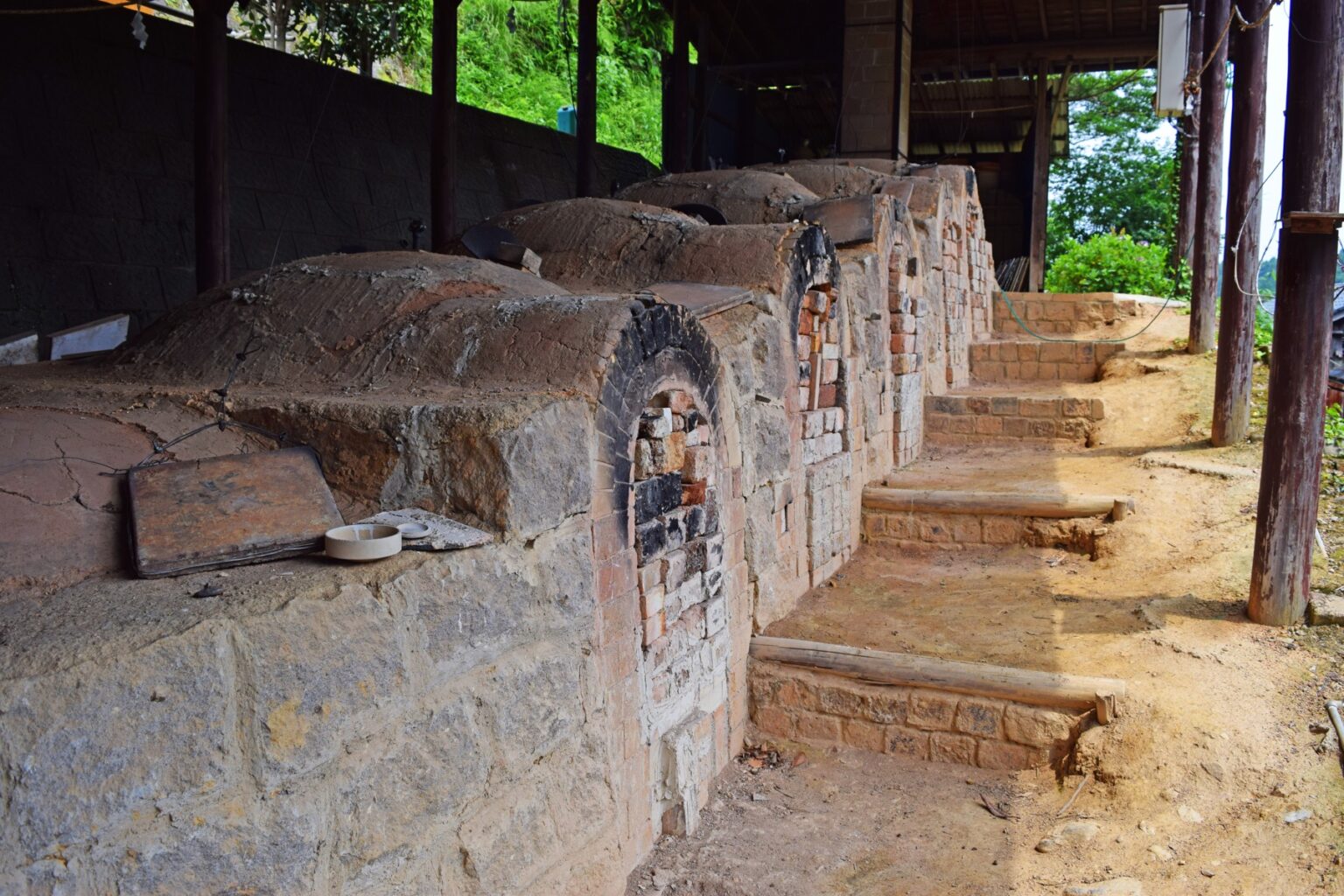
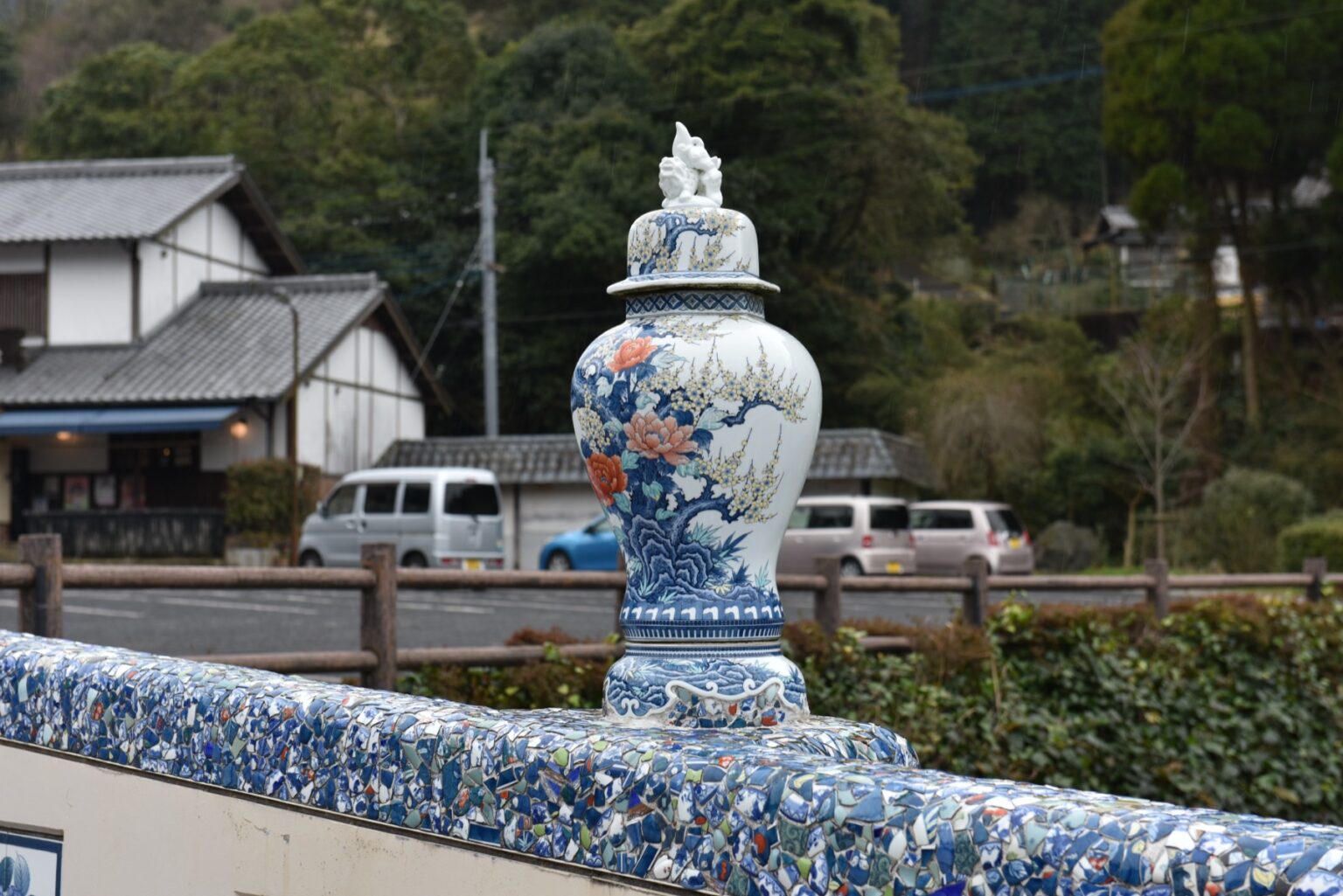
Okawachiyama, the village of the Nabeshima clan’s official kiln, has about 30 kilns today. Its kiln association dates the move of the domain’s official kiln into this narrow valley to 1675 and says a checkpoint was set up to keep its techniques and craftsmen in; Imari City says the kiln was set up chiefly to make pieces for presentation to the shogun. Today you walk in along the route the checkpoint once guarded, over the Toko bridge decorated with porcelain, and up lanes of kiln shops under brick chimneys. Its official site says to take a bus or a taxi from Imari Station and that buses are limited, so plan on a taxi both ways unless the bus times fit.
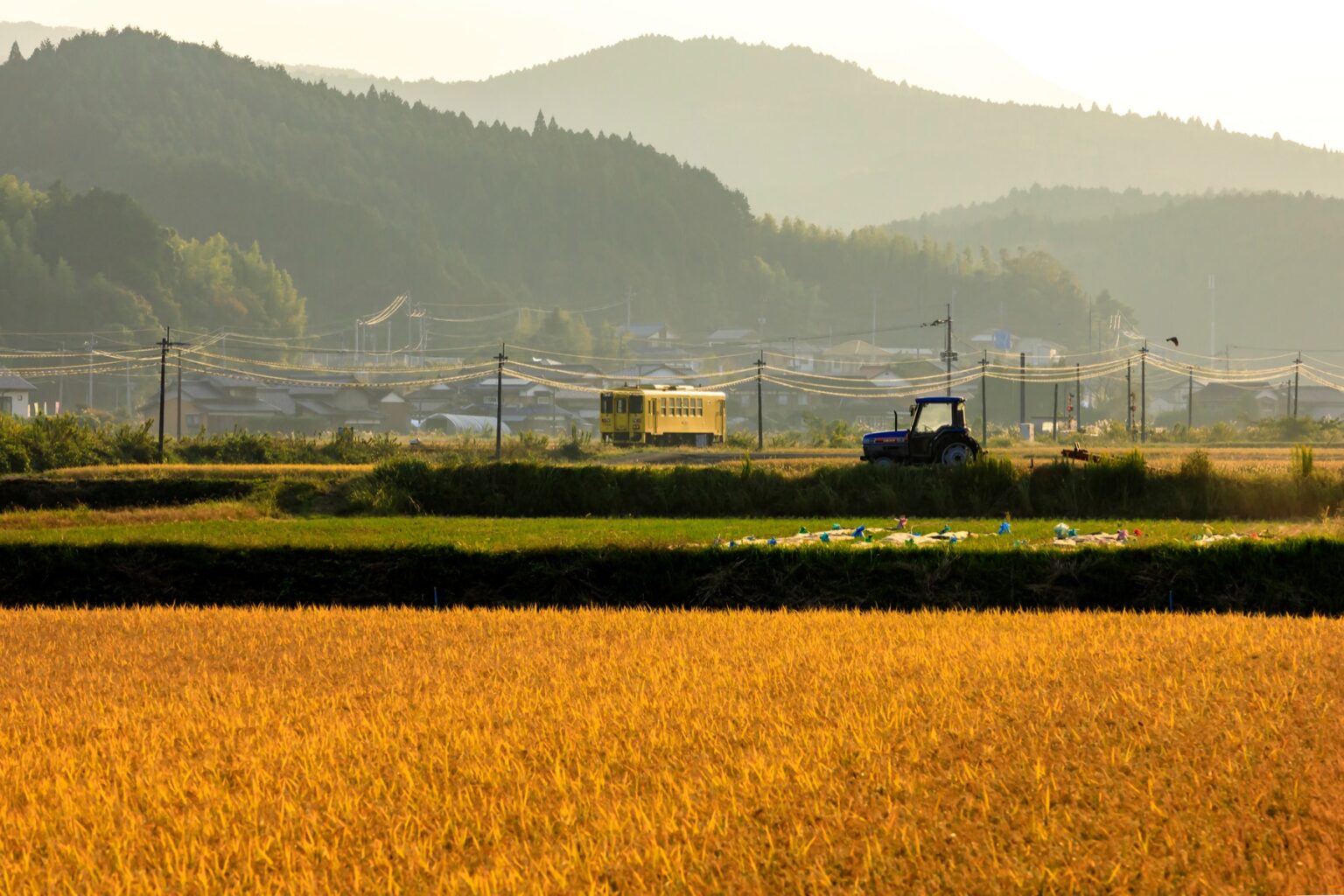
Aim for the 16:19 train to Karatsu, which arrives at 17:13. If the day runs long, later trains leave at 17:42, 18:55 and 20:33 on the October timetable; book the return taxi to the station, and check your Karatsu hotel’s latest check-in time. This is the Chikuhi Line’s separate western section, a diesel line from Imari to Yamamoto whose trains continue to Karatsu; it has far fewer trains than the eastern section into Fukuoka.
Where to sleep tonight
Stay near Karatsu Station: the castle is a walk away, and the morning train back to Fukuoka leaves from there.
One night in Karatsu: somewhere near the station suits the morning train.
Open Booking.com Open AgodaDay 4: Karatsu and back to Fukuoka
| The day at a glance | |
|---|---|
| Morning | Karatsu Castle (¥500, 9:00–17:00) and a short walk at Niji-no-Matsubara; add one of the extra stops below only if you have time |
| Afternoon | Chikuhi Line back to Hakata, about 1 h 10 min to 1 h 40 min |
| Fly home | Fukuoka Airport is about six minutes beyond Hakata on the subway |
Karatsu Castle
Karatsu is a castle town on the Genkai Sea. Its castle was built from 1602 over seven years by Terasawa Hirotaka, a retainer of Toyotomi Hideyoshi, on a hill above Karatsu Bay. There was no keep at first; the keep you see was built in 1966 as a museum and viewpoint, and it turns 60 on 28 October 2026, with a free celebration in front of it on the evening of 31 October. The keep opens 9:00–17:00 (last entry 16:40) and costs ¥500 for adults; there are 222 steps up from the castle entrance, or a lift for ¥100 one way.
Niji-no-Matsubara
East of the castle, a belt of black pines runs along Karatsu Bay for several kilometres: Niji-no-Matsubara, the “rainbow pine grove”, a Special Place of Scenic Beauty since 1955. Niji-no-Matsubara Station on the Chikuhi Line is in the grove, though only local trains stop there; walk a short stretch on the beach side and come back. If you fly home in the afternoon, keep the morning to the castle and the grove.
Karatsu Kunchi (2–4 November)
The autumn festival of Karatsu Shrine, every year from 2 to 4 November, with 14 giant hikiyama floats hauled through town; the float procession was inscribed by UNESCO in 2016 as one of Japan’s Yama, Hoko, Yatai float festivals. Rooms go fast for those dates.
Hikiyama exhibition hall
The floats are shown most of the year in a temporary hall about five minutes’ walk from Karatsu Station while a new one is built. ¥310; closed 3–4 November for the festival and 29–31 December.
Former Takatori residence
A coal magnate’s mansion with a noh stage in its great hall, an Important Cultural Property. ¥520, 9:30–17:00; closed Mondays (Tuesday after a Monday holiday), so not on Monday 2 November 2026, the first day of Kunchi.
Nanatsugama
Sea caves visited by sightseeing boat from Yobuko, a bus ride away, when the sea allows. Better with a car or an extra day.
Back to Fukuoka
From Karatsu the Chikuhi Line runs east and into the Fukuoka City Subway. On the October 2026 timetable, Karatsu to Hakata takes about 1 hour 10 minutes to 1 hour 40 minutes depending on the train, and Fukuoka Airport is about six minutes beyond Hakata. On weekdays most trains from Karatsu end at Chikuzen-Maebaru, where you change; only some run through to the airport, for example the 10:50 (airport 12:18) and the 16:29 (airport 17:50). Check the timetable for your day and leave time for your flight.
Which trains does this itinerary use?
JR Kyushu tickets (with a limited-express charge if you take the Relay Kamome or Midori), the Nishitetsu line to Dazaifu, and the Matsuura Railway, which is not JR. Sources are marked on each row.
| Leg | Time |
|---|---|
| Tenjin → Dazaifu, Nishitetsu | About 35 min, change at Futsukaichi (our Dazaifu guide) |
| Hakata → Yoshinogari-koen, JR | About 1 h (our Yoshinogari guide) |
| Saga → Takeo-Onsen, JR | About 20–25 min by limited express, about 45 min by local train (JR Kyushu, October 2026) |
| Takeo-Onsen → Arita, JR | About 15–20 min (JR Kyushu) |
| Arita → Imari, Matsuura Railway | About 25 min, about ¥550 (our access guide) |
| Imari → Karatsu, JR Chikuhi Line | About 50 min; 9 trains a day (JR Kyushu) |
| Karatsu → Hakata, JR and subway | About 1 h 10 min to 1 h 40 min (JR Kyushu) |
Starting from Hakata instead of Takeo? The limited express to Arita takes about 1 hour 25 minutes, and our Imari and Arita access guide explains why the Chikuhi Line is split in two.
When is the best time for this trip?
Late January to March
Dazaifu’s plum blossom can be seen from late January into March; timing varies by year.
November
The Saga International Balloon Fiesta runs from 30 October to 3 November 2026 by the Kase River, with a temporary JR station (see our balloon fiesta guide). Karatsu Kunchi fills Karatsu on 2–4 November. Okawachiyama’s Nabeshima autumn kiln festival is on 20–24 November 2026, according to its official site.
Summer
Okawachiyama hangs porcelain wind chimes from June to August. Yoshinogari opens until 18:00 from June to August.
What do the admissions cost?
An example subtotal per adult for the admissions listed and the Arita–Imari railway fare. It leaves out the other trains (which depend on your route and whether you take limited expresses), taxis, accommodation, meals, the Kouraku-gama treasure hunt and the optional stops.
| Item | Yen |
|---|---|
| Dazaifu Tenmangu treasure hall | ¥500 (the grounds are free) |
| Yoshinogari Historical Park | ¥460 |
| Moto-yu public bath, Takeo Onsen | ¥500 |
| Arita Porcelain Park | Free |
| Matsuura Railway, Arita to Imari | About ¥550 |
| Karatsu Castle keep | ¥500 |
| Subtotal | About ¥2,510 |
Where Okawachiyama is, a taxi ride from Imari Station:
FAQ
Is Takeo Onsen worth a night?
Yes, for this route: it puts you 15 to 20 minutes from Arita for the morning, and the Moto-yu public bath under the 1915 Romon gate is open until 23:45 (last entry 23:00, ¥500, per the tourism association).
When is Karatsu Kunchi?
Every year from 2 to 4 November, the autumn festival of Karatsu Shrine, with 14 hikiyama floats. If your trip falls then, book Karatsu early; the hikiyama exhibition hall closes on 3 and 4 November.
How do I get from Imari to Karatsu?
By the JR Chikuhi Line, about 50 minutes. On JR Kyushu’s October 2026 timetable there are nine trains a day, at 5:38, 6:49, 7:40, 11:03, 13:35, 16:19, 17:42, 18:55 and 20:33, so plan around them.
How do I get to Okawachiyama?
Its official site says to take a bus or a taxi from JR/MR Imari Station, and that buses are limited, so plan on a taxi unless the times fit. From Fukuoka Airport, the official site also points to the highway bus Imari-go; check its timetable.
Can I get from Karatsu to Fukuoka Airport without changing?
On some trains. The Chikuhi Line runs into the Fukuoka City Subway; on weekdays in October 2026, through trains to the airport include the 10:50 (airport 12:18) and 16:29 (airport 17:50) from Karatsu, while most others end at Chikuzen-Maebaru, where you change.
How long should I spend at Yoshinogari?
Two to three hours for the main reconstructed village. It opens 9:00–17:00 (to 18:00 from June to August), and adult entry is ¥460.
Do I need a car?
No rental car is needed, but plan on taxis from the station in Arita and to Okawachiyama. A car helps for places further out, such as Nanatsugama’s cliffs.
Dazaifu Tenmangu guide
History, how to pray, plum season and access.
Yoshinogari Historical Park
What the reconstructed Yayoi village shows.
Imari and Arita access
Why the Chikuhi Line is split in two, and how to get between the porcelain towns.
Imari ware
Japan’s first porcelain, and how it reached Europe.
Saga balloon fiesta 2026
Hundreds of balloons over the Kase River, 30 October to 3 November.
Kyushu’s hidden autumn leaves
Where to see autumn colour across the island.
Sources
- Checked 12 October 2026 — JR Kyushu: station timetables (Imari, Karatsu, Saga, Takeo-Onsen, Yoshinogari-koen; October 2026 data)
- Checked 12 October 2026 — Yahoo! Transit: Matsuura Railway timetable (Oki Station, Imari-bound) (secondary source; the railway’s site did not respond)
- Checked 11–12 October 2026 — Okawachiyama: access; news (2026 autumn kiln festival, posted 10 September). Dazaifu Tenmangu: worship in front of the main hall (19 September 2026); temporary gate hours and drum bridge closures (late September 2026)
- Taken from our own guides (not primary sources; each lists its sources and check date): Dazaifu Tenmangu (31 July 2026), Yoshinogari (June 2026), Imari and Arita access (June 2026), Arita Porcelain Park, Imari ware, Kouraku-gama, Nanzoin, Saga balloon fiesta (August 2026), Dazaifu Starbucks, Ide Chanpon
- Checked 12 October 2026 — Takeo: Romon gate and Shinkan (Cultural Heritage Online); Takeo tourism association: about Takeo, Moto-yu; Takeo Shrine camphor tree (Takeo City); Takeo City Library
- Checked 12 October 2026 — Yoshinogari Historical Park: hours and fees, overview, access; Yoshinogari site, Special Historic Site (Agency for Cultural Affairs)
- Checked 12 October 2026 — Arita: Izumiyama quarry (Arita tourism association); Tozan Shrine porcelain torii; Arita Porcelain Park: about (free entry; exhibition building closed), garden-side restricted area (20 January 2026). Yahoo! Transit: Matsuura Railway timetable, Arita Station, Imari-bound (secondary source). Okawachiyama: history; Okawachi Nabeshima kiln site (Imari City)
- Checked 12 October 2026 — Karatsu City: Karatsu Castle, castle hours and fees, keep 60th anniversary, Karatsu Kunchi, hikiyama exhibition hall; temporary hall closures (Karatsu tourism association); Niji-no-Matsubara (Agency for Cultural Affairs); Former Takatori residence
Join travelers discovering Japan's hidden side
Weekly dispatches from off-the-beaten-path Japan — spots and stories you won't find in guidebooks.
No spam. Unsubscribe anytime.
Welcome aboard!
You're in. See you in your inbox soon.