
Japan · Kumamoto
Kumamoto Castle is open as usual after the 2026 Kumamoto Earthquake of 28 July. The castle’s update of 18 September lists it as operating normally. The main tower, rebuilt in 1960 and restored after damage in the 2016 earthquake, is open to the top floor. A ticket is ¥800, last entry is 16:00, and on weekdays you can only go in and out by the south gate. Add Suizenji Jojuen Garden, about 22 minutes away by tram and on foot, and you have a half day in Kumamoto City.
This guide is for the half day before or after Aso, Kurokawa or Beppu: what is open at the castle now and what is still under repair, a half-day route by tram, tram fares and the contactless discount that started on 29 October, what to eat, and four hotels picked by what you need. For the onward trip, see Kumamoto to Mount Aso without a car, Kurokawa Onsen and Kumamoto to Beppu by car.
Is Kumamoto Castle open after the 2026 Kumamoto earthquake?
Yes, as of the castle’s latest update on facilities, dated 18 September 2026. After the earthquake on 28 July, the castle closed, cancelled its August events and reopened; that update lists Kumamoto Castle as operating normally. It also listed two things that affect a visit:
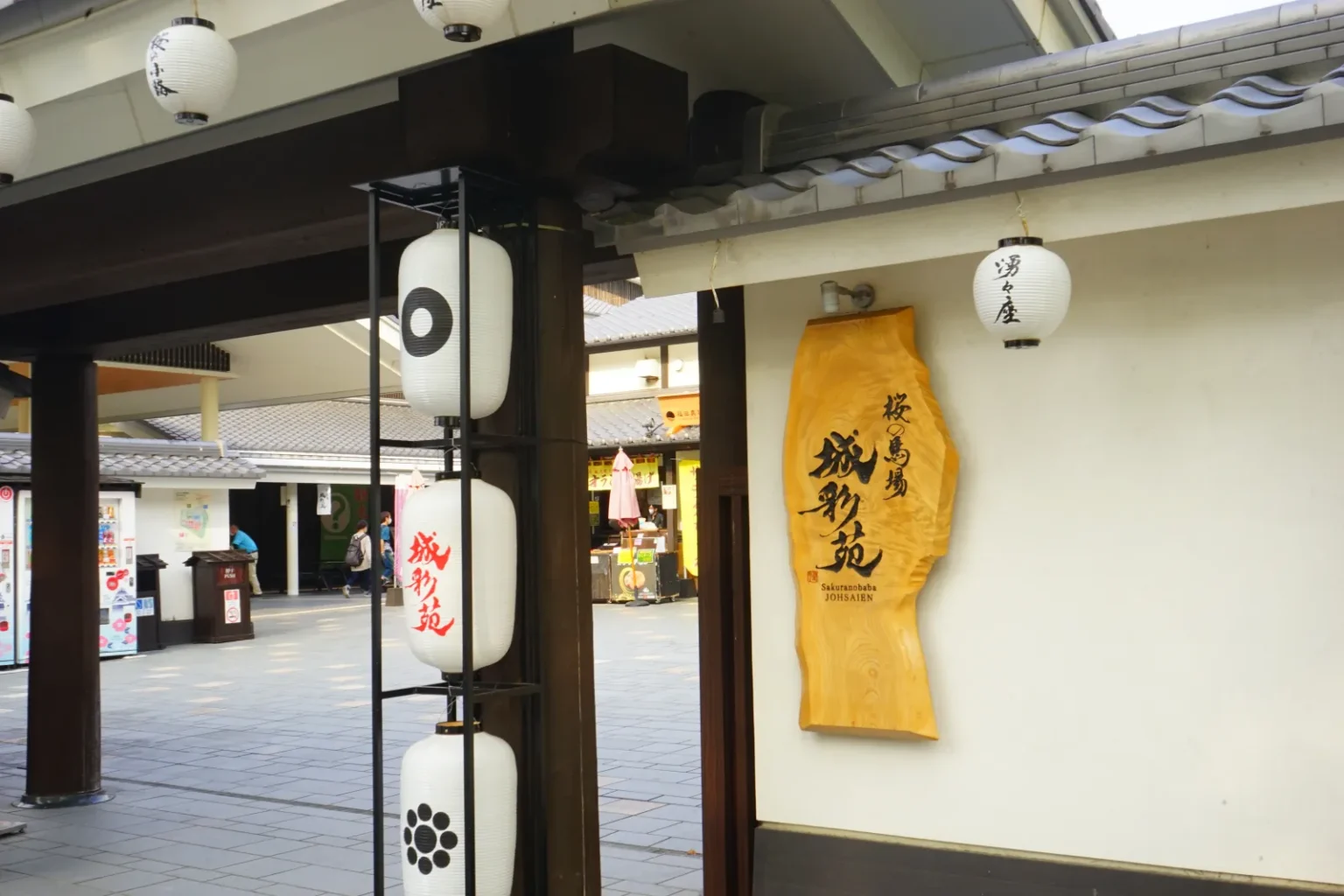
- Wakuwakuza was closed. The Kumamoto Castle Museum Wakuwakuza at Sakuranobaba Josaien was listed as temporarily closed; the castle’s group-booking page says it plans to reopen in December 2026 and will announce the date. Until it has reopened, the combined castle and Wakuwakuza ticket (¥850) is not worth it; the ¥800 castle ticket is the practical choice. The same update lists Josaien’s shops and restaurants and the tourist information centre as open.
- A road near Kato Shrine was still restricted. In its notice of 17 September the castle lifted the traffic restrictions around the Hyakken stone wall and reopened a car park, but said the restrictions towards Kato Shrine would continue.
Suizenji Jojuen Garden closed for one day, 29 July, to check the grounds, found no damage to its facilities and reopened on 30 July. Opening can change with aftershocks and safety checks, the castle says, so look at its news page before you go. For what to do if you feel a quake while travelling, see our earthquake guide.
For the time being the castle is also lit all night, which it says is to bring people energy and hope after the 2026 earthquake.
What can you see at Kumamoto Castle today?
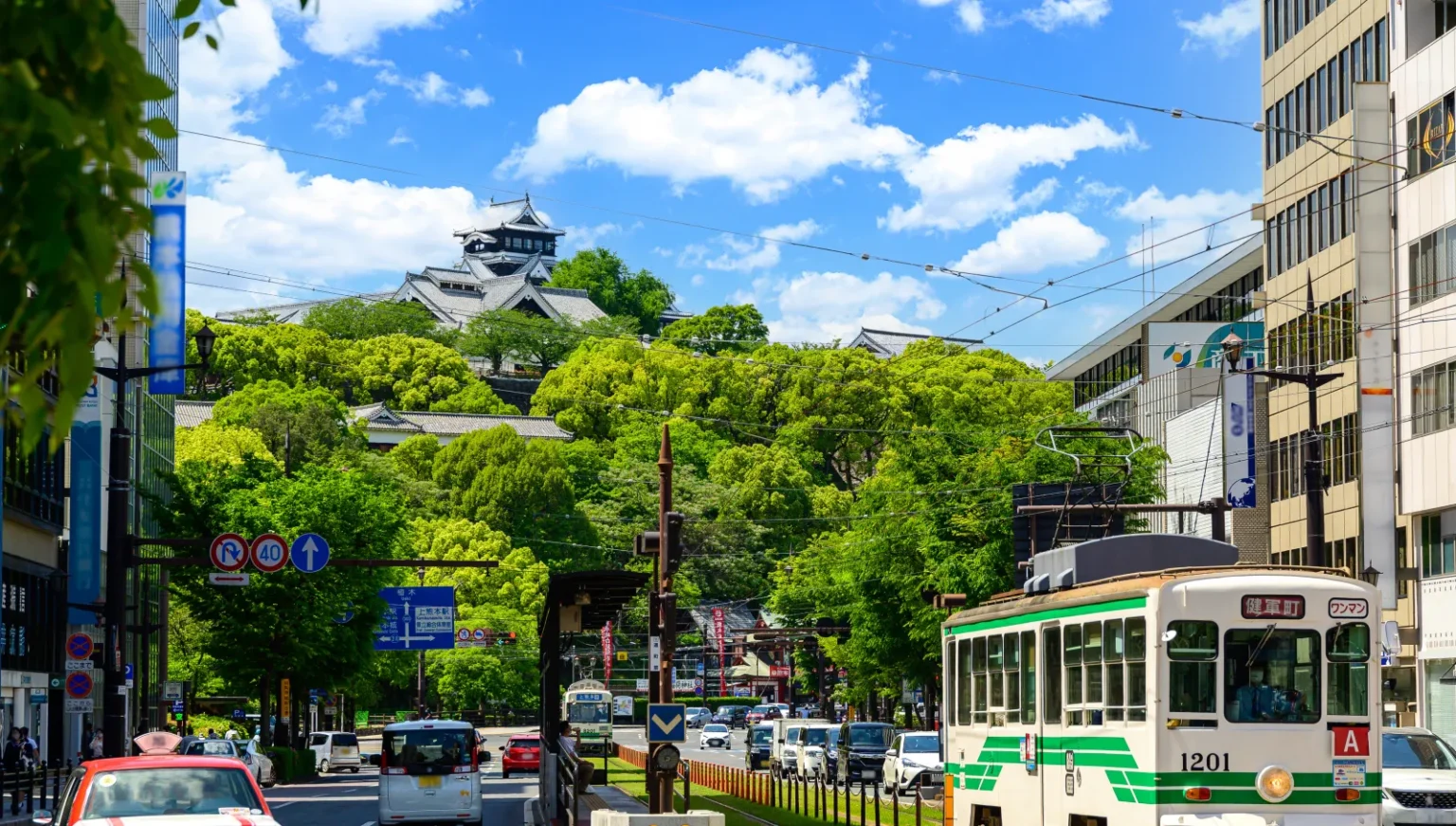
The castle is still being repaired from the April 2016 earthquake, and the way in is built around that. You follow a set route through the paid area, and some buildings are seen from outside only.
The main tower: open to the top floor
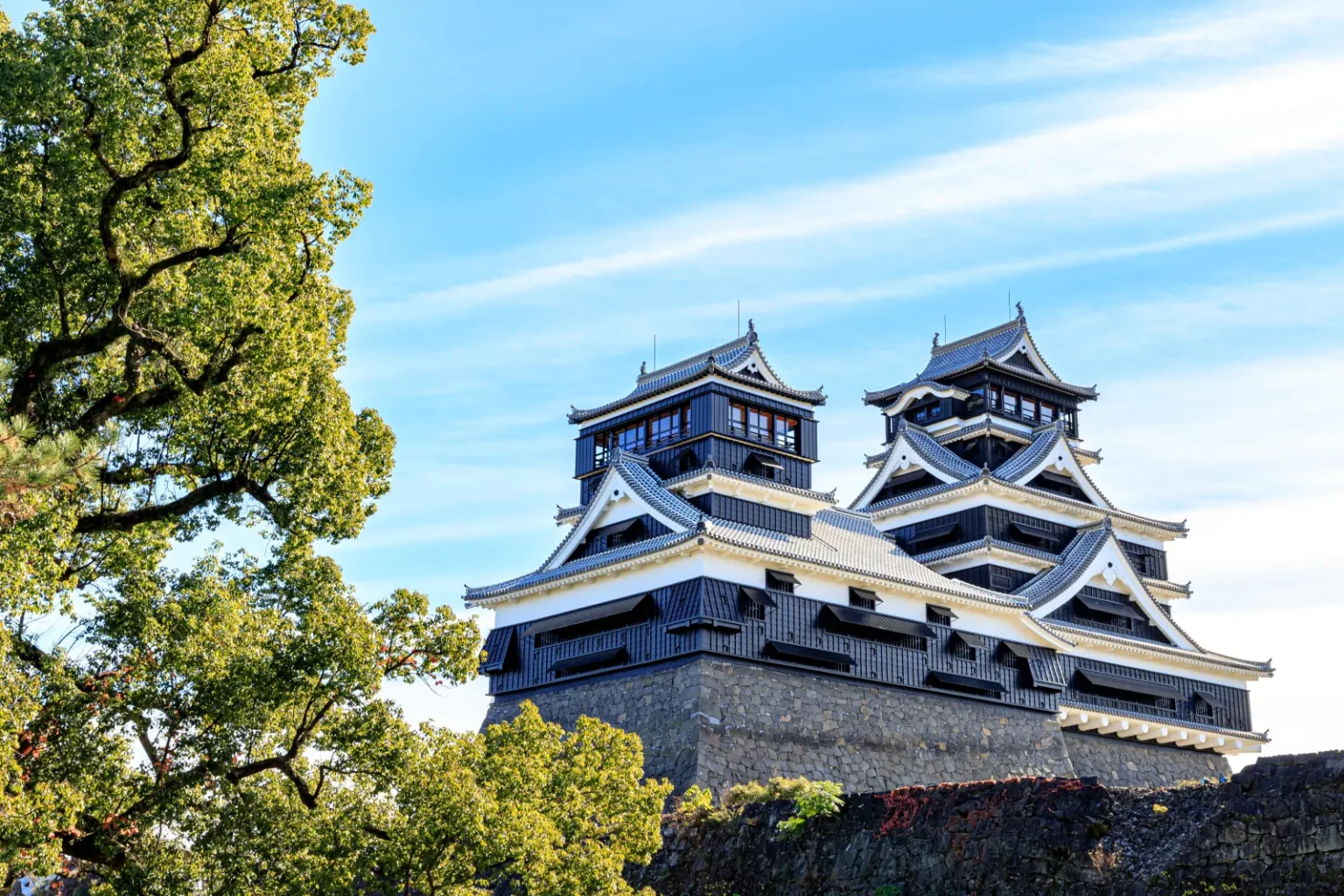
The castle gave the main tower repair priority as a symbol of recovery, and it was fully restored in March 2021. Inside, the exhibitions run by period: the basement evokes the Edo-period kitchen that stood there, the 1st floor on Kato Kiyomasa, who built the castle, the 2nd on the Hosokawa lords who held it after the Kato family, the 3rd on the army years, the Satsuma Rebellion of 1877 and the 1960 rebuild, and the 4th on the 2016 earthquake and the repairs. The 6th floor is an observation deck over the city. The castle’s official app gives the exhibition texts in English by audio or subtitles.
The elevated walkway
Part of the route is a temporary walkway built above the grounds after the earthquake so that visitors can watch the repairs. Kumamoto’s tourism site describes it as about 350 metres long, with two 20-person lifts; the castle says it will be removed when the repairs are finished.
Closed for now: Honmaru Palace and the Uto Turret
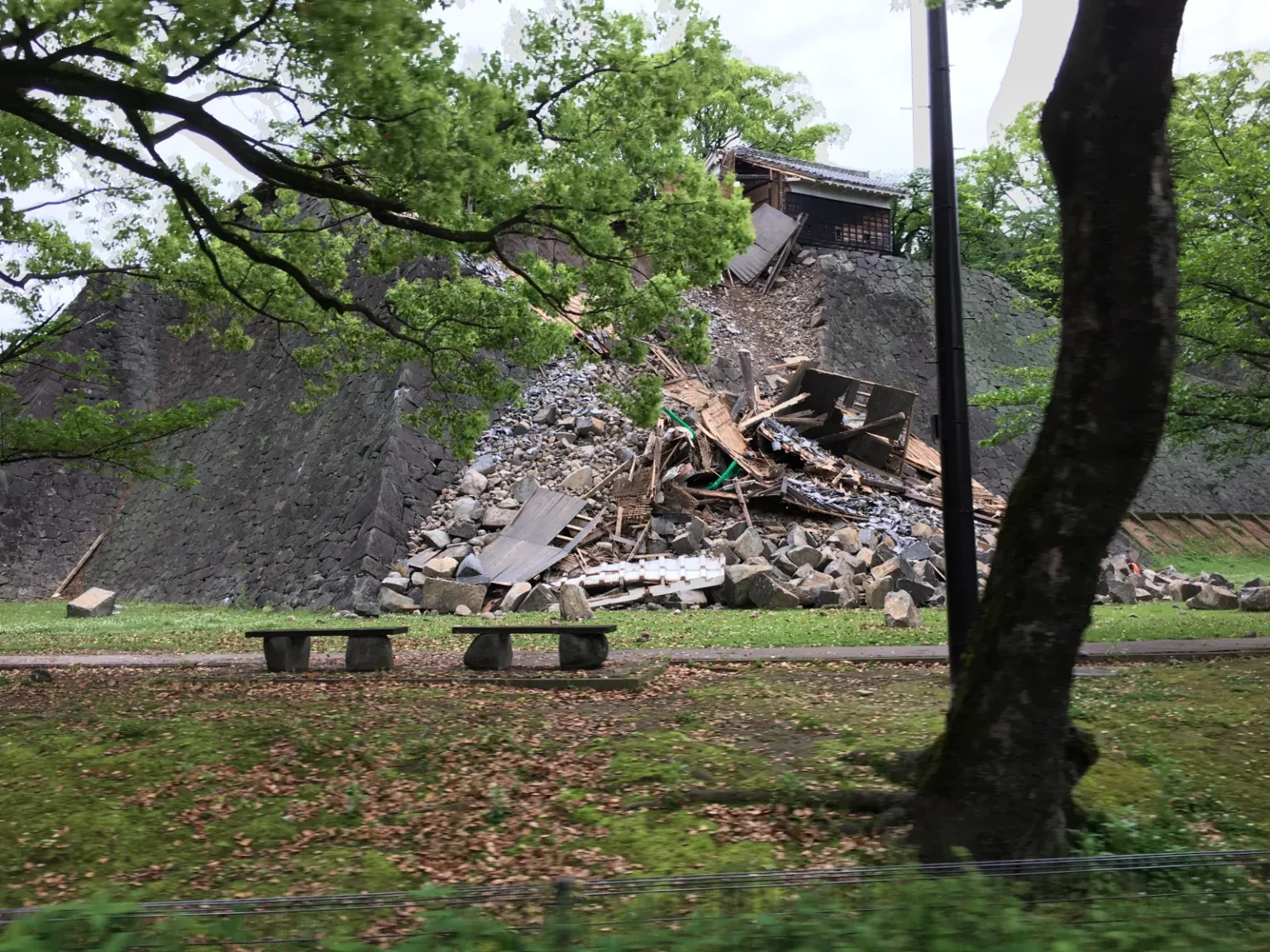
The castle lists the Honmaru Palace, a reconstruction completed in 2008, as closed to visitors pending repair work. The Uto Turret is the only multi-storey turret that has stood since the castle was first built, three roofs and five floors above a basement, and a nationally designated Important Cultural Property. In 2016 the connecting turret on its south side collapsed, and the turret’s full dismantling and restoration started in 2022, with completion planned for 2032. The castle lists it as closed inside, though it says it holds periodic special openings during the work.
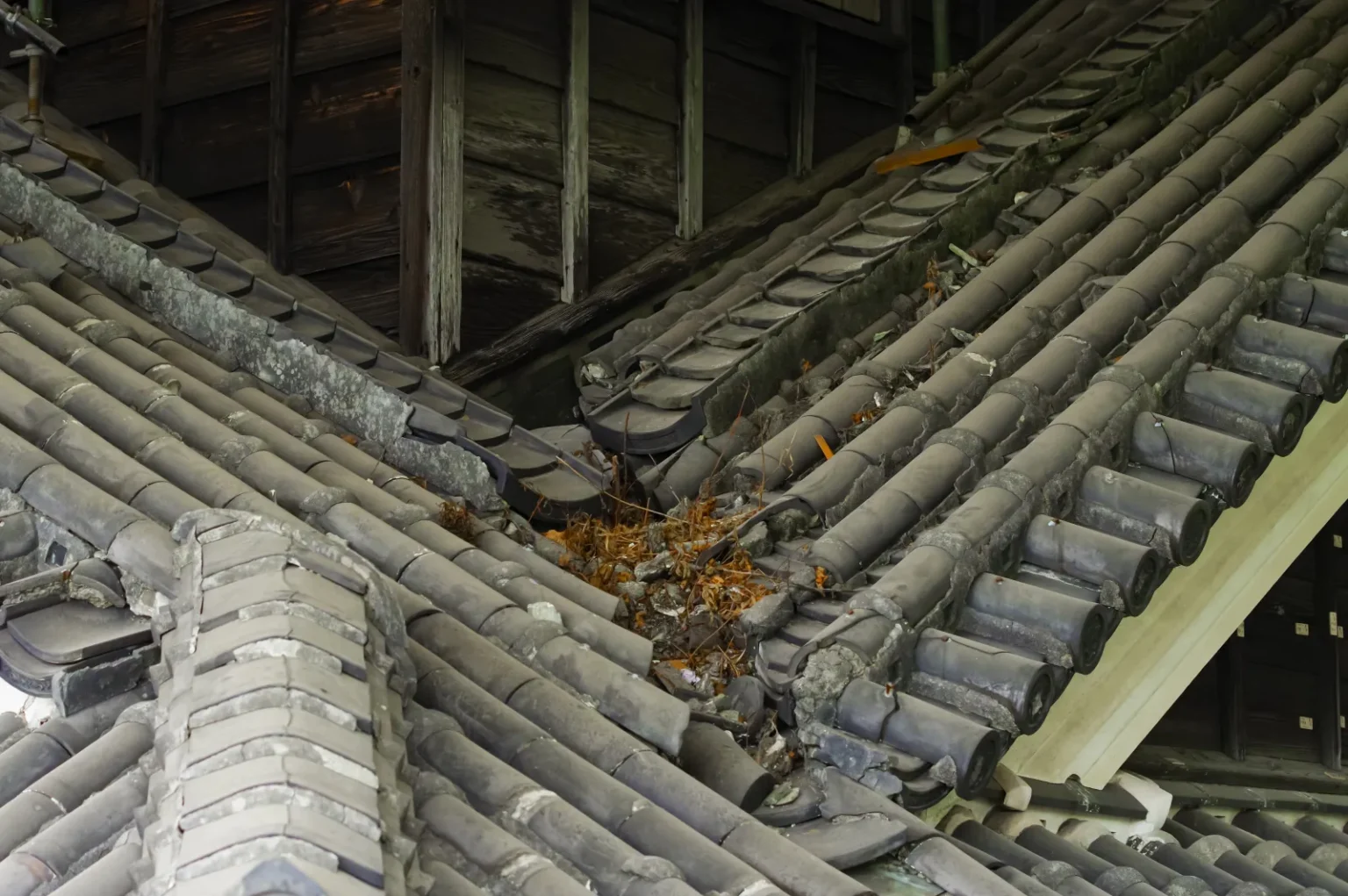
When the whole castle will be repaired is not settled in one figure: the city’s 2023 recovery plan shows completion in fiscal 2033–2037, while a question at the mayor’s April 2026 press conference referred to fiscal 2052.
How long to allow
The castle does not give a time for the castle alone. Its shortest model route, about 2 hours, allows about 90 minutes in the castle and 30 at Wakuwakuza, which is closed for now; its longer routes, which add nearby sights, run to 4–5 hours.
Why the castle is here, and what happened to it
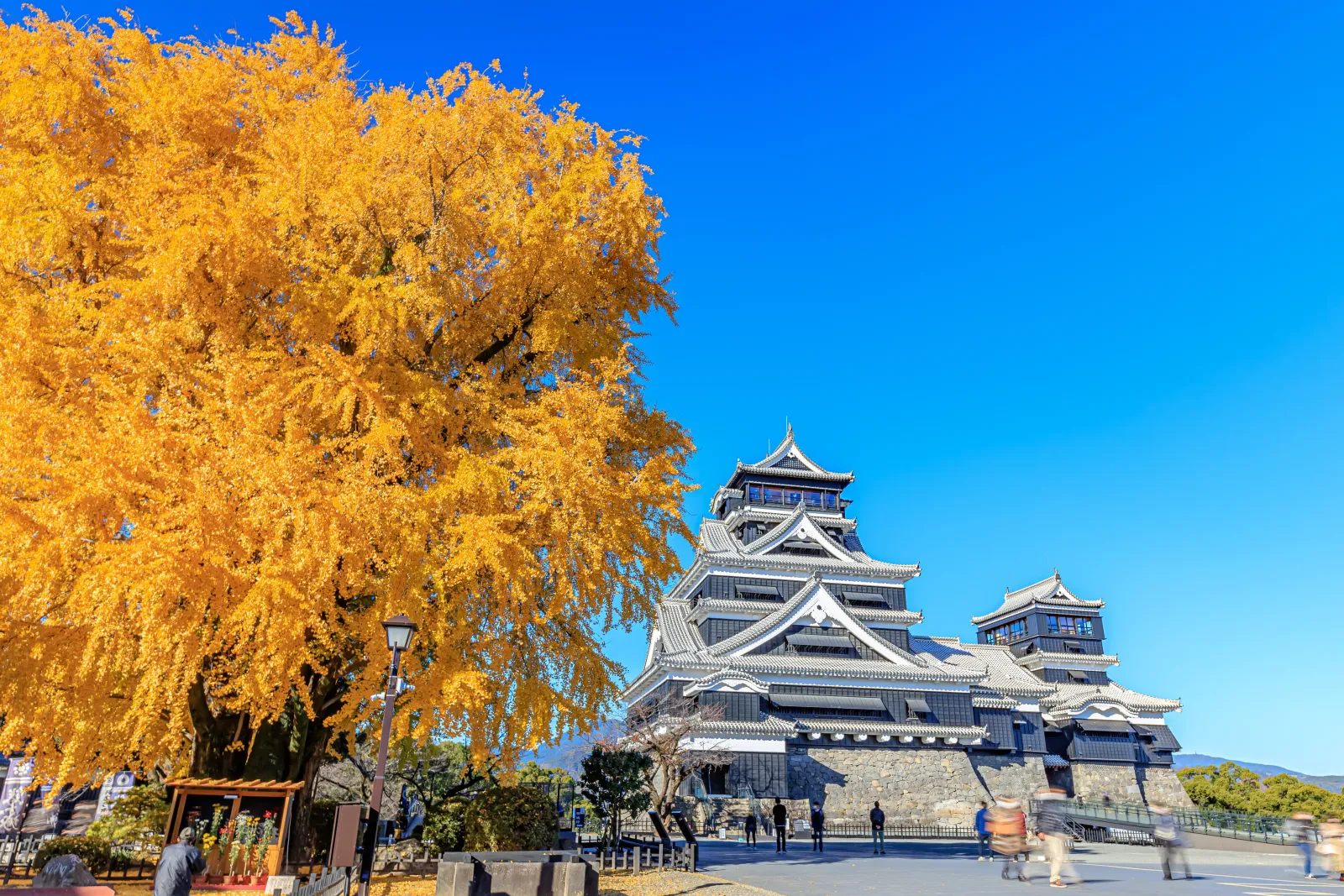
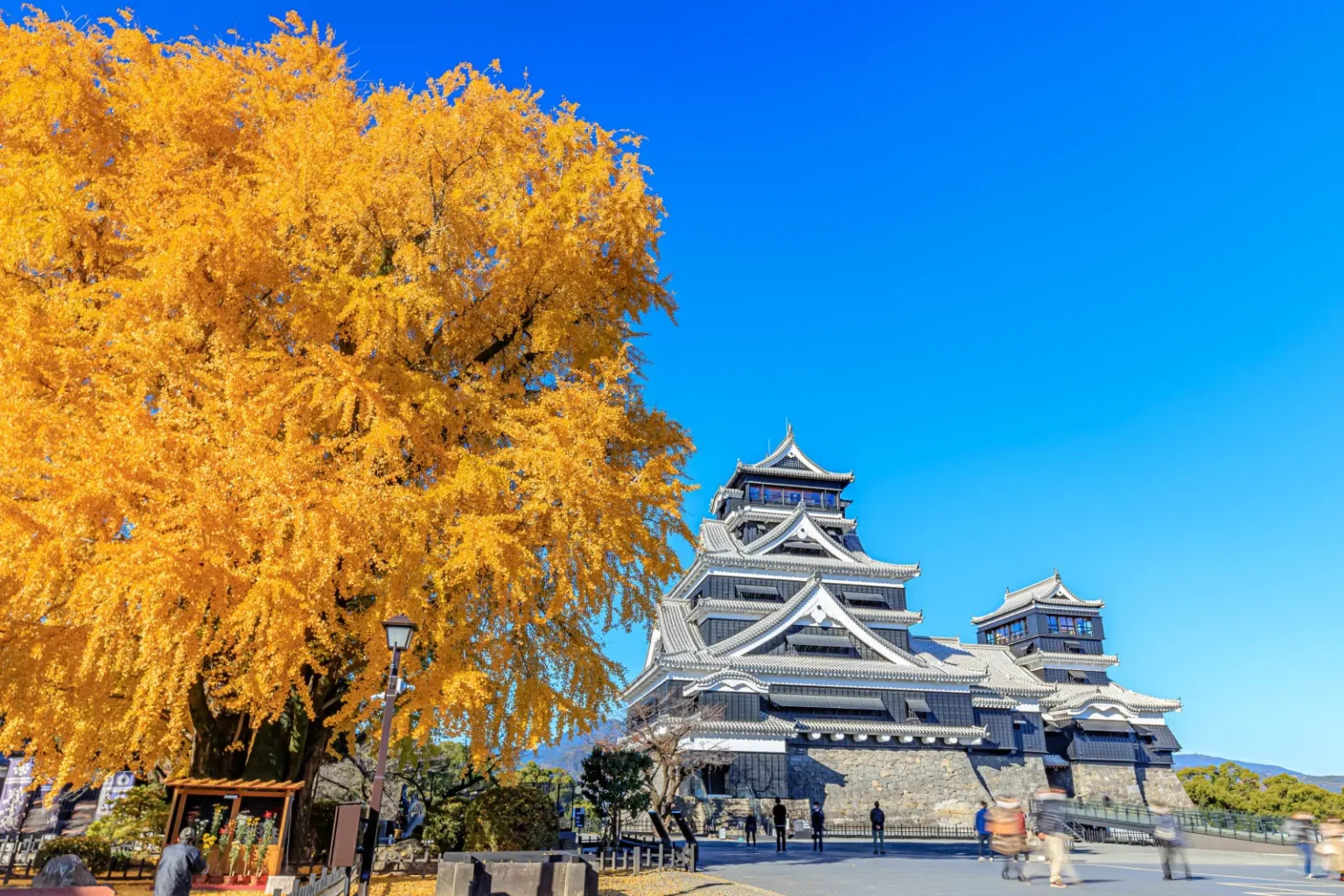
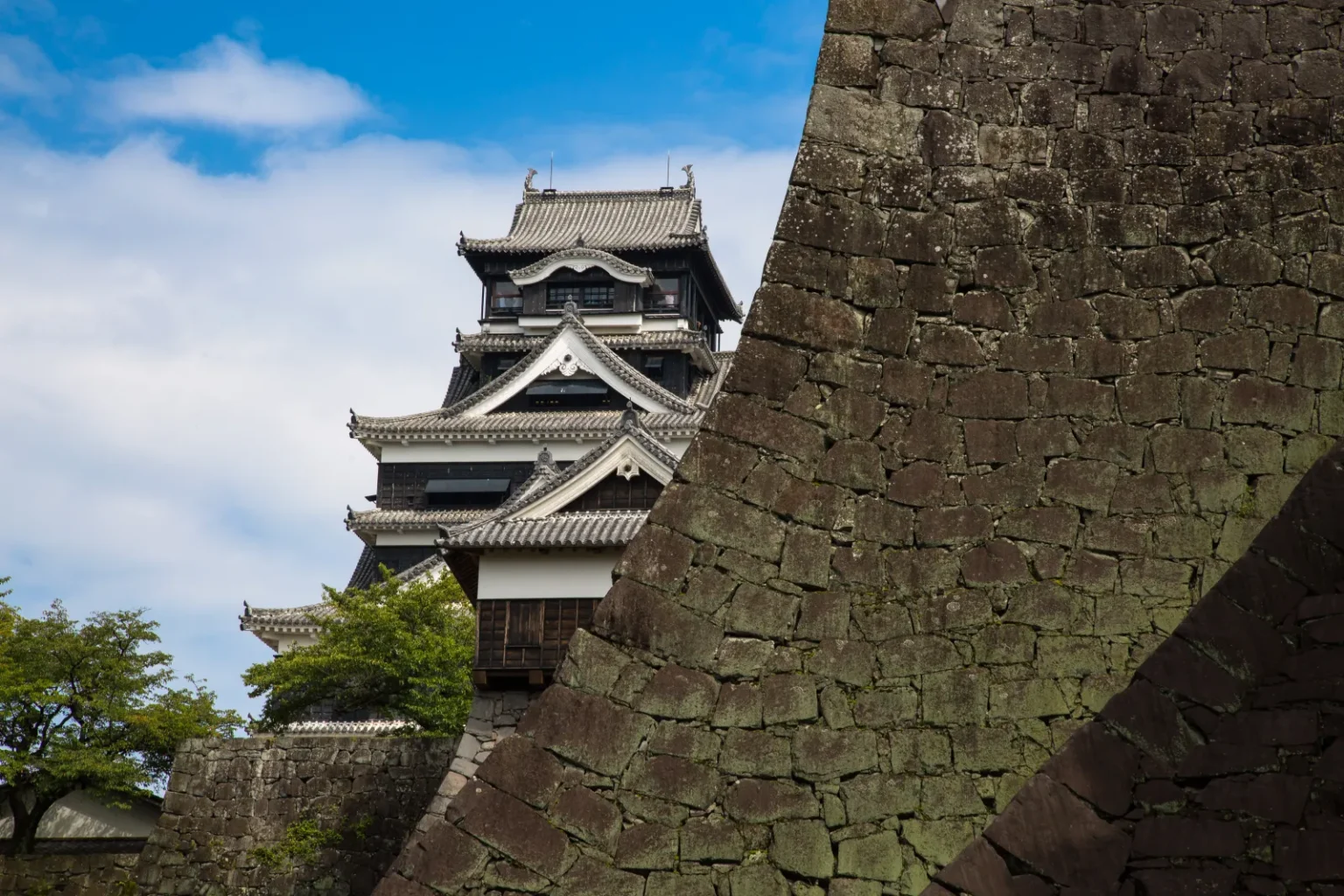
Kato Kiyomasa, lord of the northern half of Higo (today’s Kumamoto Prefecture), finished the castle on Chausuyama, a raised plateau, in 1607, the castle’s history page says; the city’s own research notes that the dating of the building work is still debated. The castle is known for its stone walls that curve upwards towards the top, called musha-gaeshi. In February 1877, just before the fighting of the Satsuma Rebellion began, fire engulfed the towers and the palace; the castle lists arson and a deliberately set fire among several theories and says the cause has never been identified. The garrison of 3,500 then held out against 13,000 Satsuma troops in a siege of more than 50 days. The towers you see now were rebuilt in steel-reinforced concrete in 1960, partly with donations from residents. The castle’s other name, Ginnan-jo (ginkgo castle), comes from the great ginkgo in front of the main tower; it burned in 1877, and the tree there now grew from new shoots after the fire.
Tickets, gates, bags and photos
| Item | Details |
|---|---|
| Hours | September–June 9:00–17:00, last entry 16:00, main tower until 16:30; July–August 9:00–19:00, last entry 18:00, main tower until 18:30 |
| Ticket desks | The Ninomaru desk sells tickets until 16:00 all year |
| Closed | 29 December, and in bad weather |
| Price | Senior high school age and over ¥800; elementary and junior high pupils ¥300; preschool children free |
| Booking | Optional e-ticket (QR code) online; no cancellations or changes |
| Payment | Cash, major credit cards, transport IC cards and QR apps including Alipay and WeChat Pay at the desks |
| Gates | Weekdays: south gate only. Weekends and holidays: north or south |
Before you go in. The castle says there are no lockers for large bags inside the paid area and that wheeled bags cannot go into the main tower. Use the paid lockers in front of the Ninomaru rest area or in front of the tourist information centre at Josaien. The three lifts in the tower are for wheelchair and pushchair users and people who cannot manage stairs; ask the staff at the entrance. No eating in the paid area; drinks with lids are fine. Tripods and selfie sticks are not allowed in the tower. The castle asks visitors not to live-stream from the paid area, and not to post or stream photos and videos taken inside the main tower on social media.
A half day in Kumamoto City by tram
This route links the castle, Sakuranobaba Josaien at its foot and Suizenji Jojuen Garden with one tram ride in between. It is built from official travel times, not clock times; start from Kumamoto Station or your hotel.
| Step | Official figures |
|---|---|
| Kumamoto Station → castle | Tram A (towards Kengun-machi) from Kumamoto-ekimae to Kumamotojo-Shiyakushomae, about 20 min, then about 15 min on foot through Josaien to Ninomaru Plaza |
| Kumamoto Castle | Last entry 16:00; the castle’s shortest model route allows about 90 minutes inside |
| Sakuranobaba Josaien | Shops and restaurants at the castle’s foot; restaurants 11:00–22:00. A free shuttle runs from Josaien to the south gate and Ninomaru car park, 9:00–17:00, every 10–15 min |
| Castle → Suizenji | Tram towards Kengun-machi from Kumamotojo-Shiyakushomae to Suizenji-koen, then 5 min on foot: about 22 min in all, the garden says; add waiting time. Hanabatacho stop is about 4 min on foot from Josaien |
| Suizenji Jojuen Garden | 8:30–17:00, last entry 16:30, open every day; ¥500, ages 6–15 ¥200 |
Do the garden before the castle if you arrive early: it opens at 8:30, the castle at 9:00. If you are leaving on an early train to Aso or a morning bus to Kurokawa, keep the castle for the afternoon you arrive or the day you come back. For Aso itself, including whether the crater area is open, see our Mount Aso guide. If you would rather not plan the buses yourself, Klook lists day tours from Kumamoto to Aso and Kurokawa (paid link: I may earn a commission if you book).
Sakuranobaba Josaien
Josaien was built at the foot of the castle to share Kumamoto’s food, history and traditions. Its Sakura-no-koji lane has 23 food and souvenir shops in the style of an Edo-period castle town. The tourist information centre is at its south end, and it takes requests for volunteer guides from the Kumamoto Yokatoko Annainin no Kai.
Suizenji Jojuen Garden
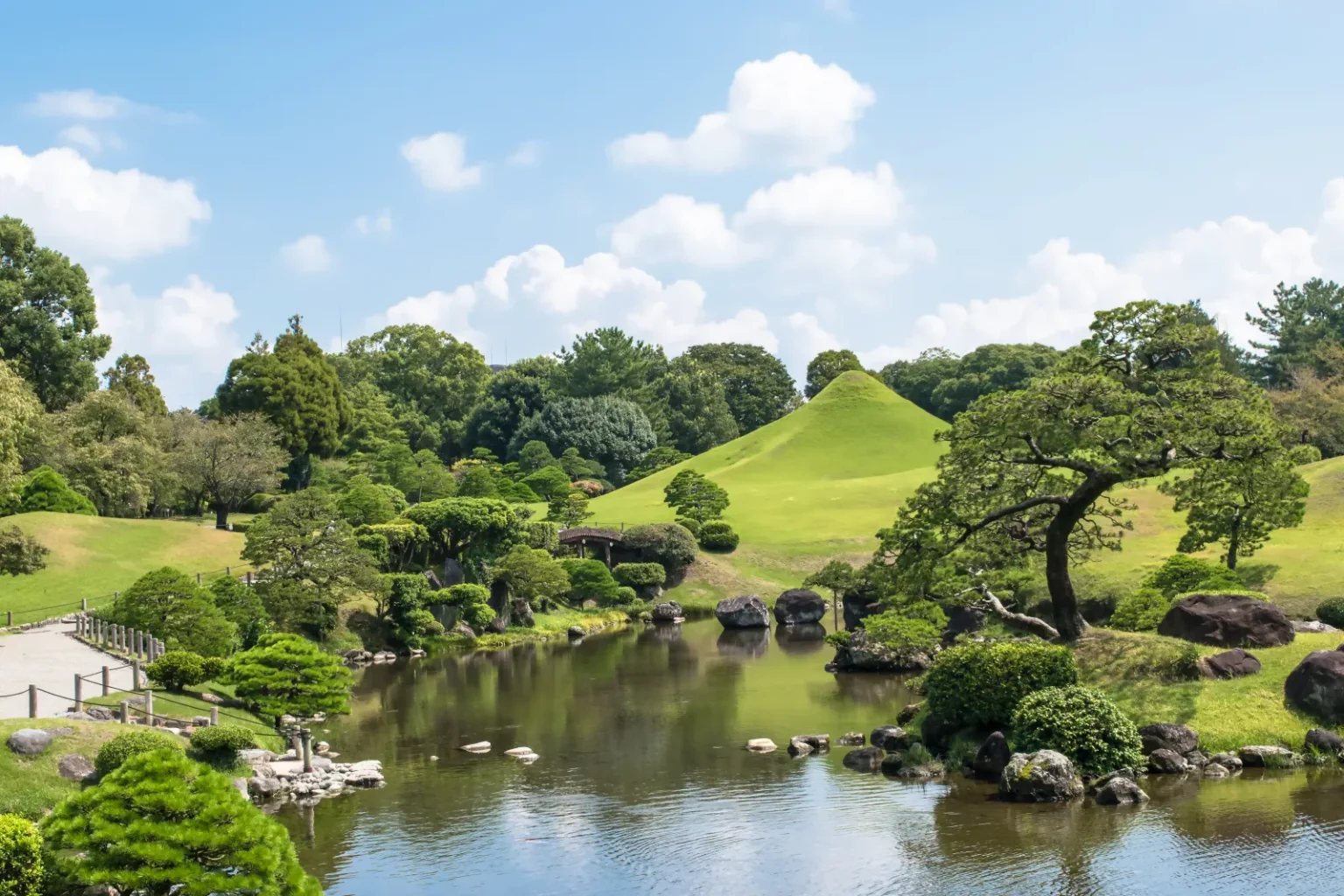
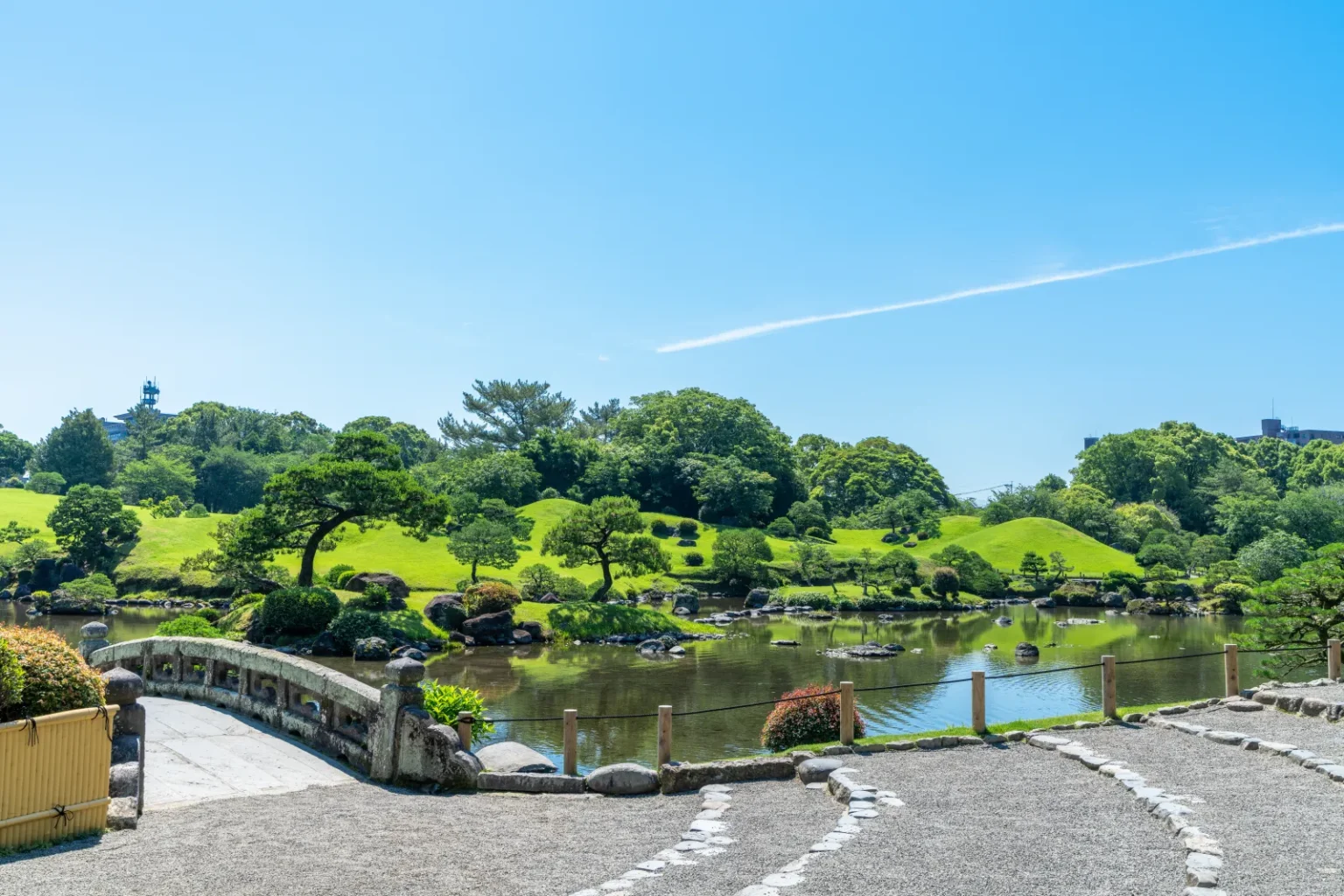
Suizenji began as a tea house that Hosokawa Tadatoshi, the first Hosokawa lord of Kumamoto, set up in 1632, and the garden was completed under the third lord, Tsunatoshi, Kumamoto’s tourism site says; the pond is fed by spring water from Aso’s underground flow. The garden’s English site says its artificial hill and the landscape around it recreate Mount Fuji and the 53 stations of the Tokaido road. The Kokin Denju no Ma, a building moved here in 1912 from the Kyoto Imperial Palace, is said to give the garden’s best view. Izumi Shrine, on the north side, enshrines the Hosokawa lords. The garden takes credit cards, QR payments and transport IC cards, and has coin lockers by the main gate ticket office. A guide in Japanese or English can be booked through the Yusuitei tea house, ¥1,000 per person (¥5,000 for five or more, up to eight people per guide), on Mondays, Tuesdays, Thursdays and Fridays; contact it in advance.
Tram fares and paying on the tram
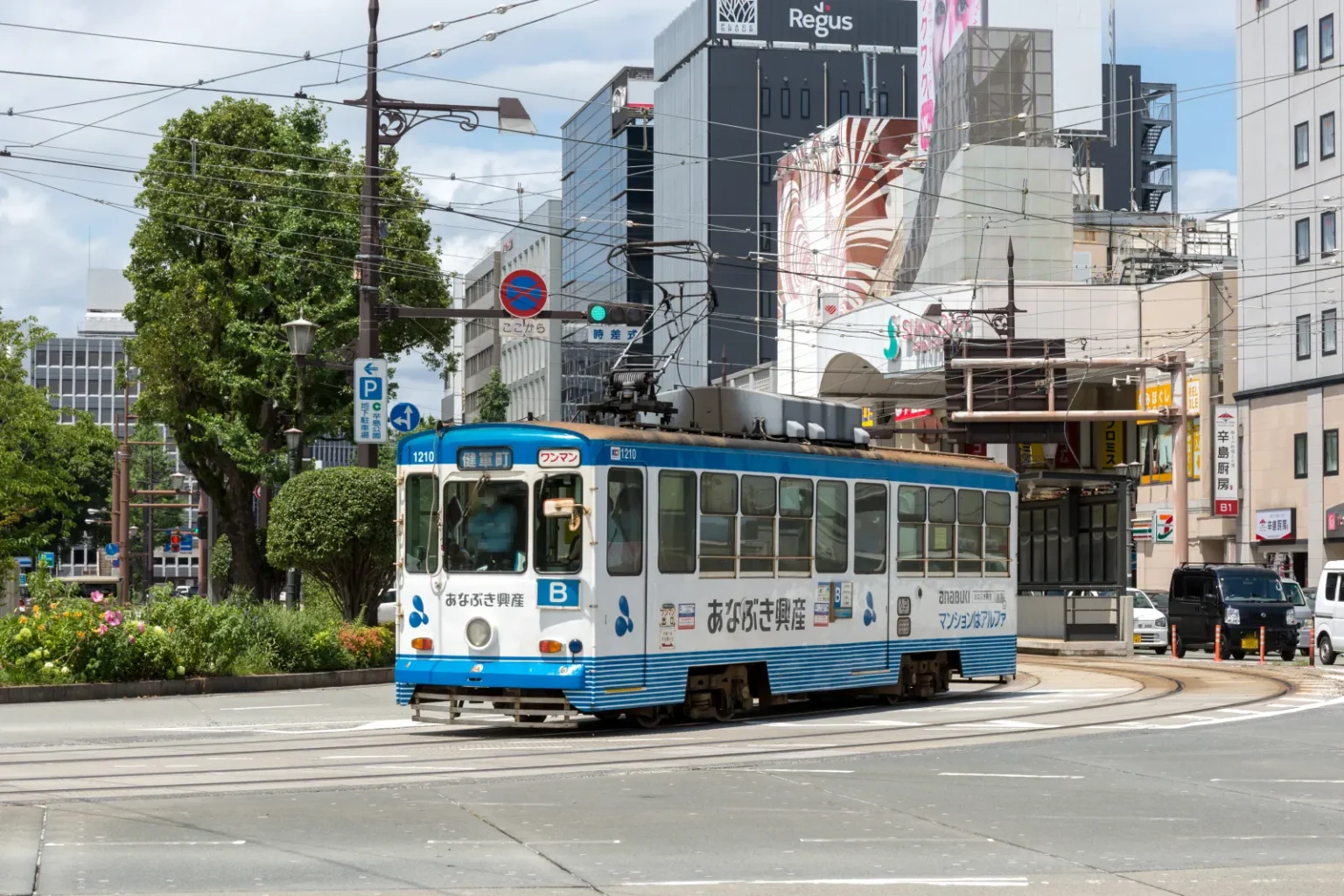
Kumamoto City’s trams charge one fare for any distance, paid when you get off. Board by the middle or rear door; on low-floor trams either door works.
| Item | Details |
|---|---|
| Fare | ¥200 adults (junior high school age and up), ¥100 children |
| Cash | No change from the fare box; the machine on board changes ¥1,000 notes only, while the tram is stopped |
| IC cards | Suica, PASMO, ICOCA, SUGOCA, nimoca and the other national transport cards |
| Contactless cards | Visa, Mastercard, JCB, American Express, Diners Club, Discover and UnionPay; tap the reader by the exit |
| Half price | Announced on 29 October 2026: from that day, rides paid by contactless card are effectively half price; the screen shows the normal fare and the discount is applied when you are charged. It ends when the budget runs out; no end date announced |
| Day passes | Tram 1-day ticket ¥500 on a phone, ¥700 on paper; 24-hour phone ticket ¥600. Holders pay group rates at sights including the castle (¥640) |
While the half-price offer runs (it had no end date when we checked on 29 October), each ride by contactless card costs about ¥100, so a half day with two or three rides costs less than any pass. A pass only pays off if you add more rides or use its sight discounts. You can change between lines A and B at Karashimacho without paying twice if you change within 20 minutes: with an IC card, tap again on the second tram; with cash, a contactless card or a QR app, ask the driver for a transfer ticket when you get off.
The Shiromegurin loop bus between Kumamoto Station and the castle (¥200 a ride, ¥500 for a day) takes contactless cards; its operator says Suica and the other national IC cards cannot be used.
From Aso Kumamoto Airport, the planned rail link has not opened; Kumamoto Prefecture expects it to open at the end of fiscal 2034. The airport’s English page lists the limousine bus to Kumamoto Station at 65 minutes and ¥1,400.
What to eat in Kumamoto
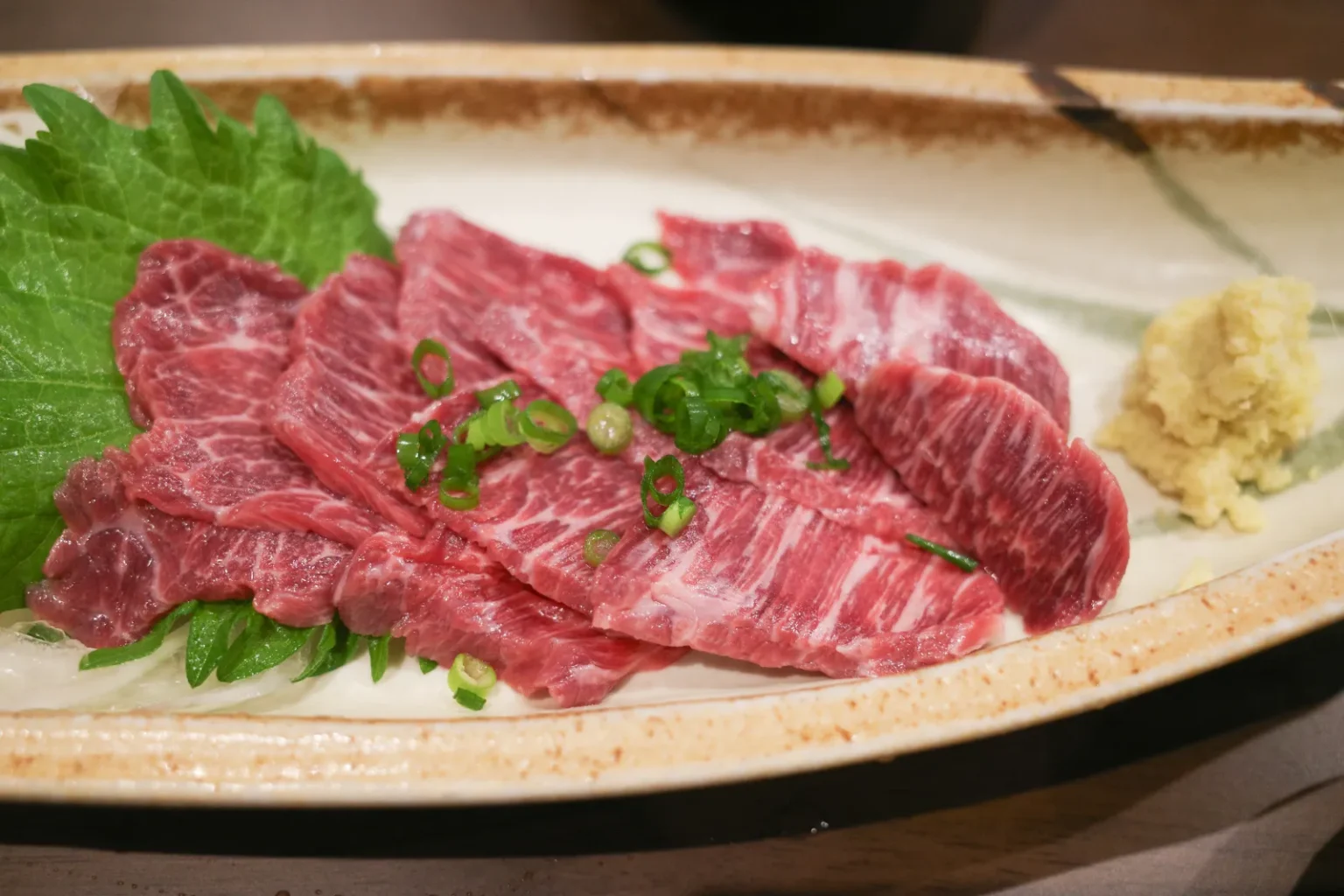
- Basashi (horse sashimi). Kumamoto Prefecture produces more horse meat than any other prefecture, Kumamoto City’s tourism site says.
- Kumamoto ramen. The city describes it as a soup of pork bones or with chicken bones added, and firm, medium-thick straight noodles.
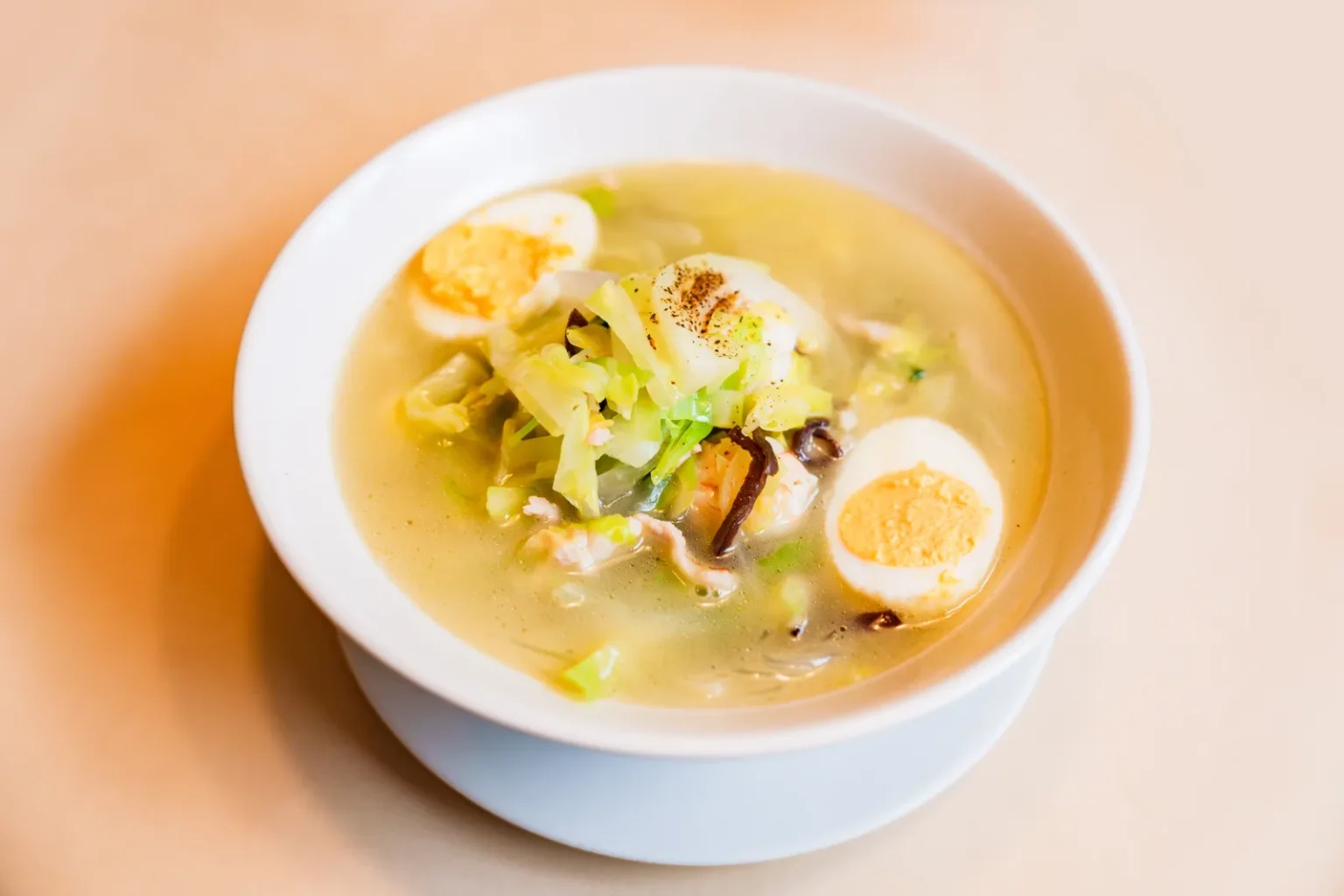
- Taipien. A noodle soup the city says was brought by Chinese residents in the Meiji era, based on a Fujian dish and remade with Japanese ingredients.
- Ikinari dango. Sweet potato and red bean paste in a simple local snack.
Josaien, at the castle’s foot, has restaurants and food shops between the sights.
Kumamoto in the evening
- Lux Night Kumamoto at Suizenji, 6 November–6 December 2026. A light-and-sound walk through the garden on the history of the Hosokawa family, 18:00–21:00 (last entry 20:30), ¥2,000 or ¥1,800 online, high school students ¥1,000 (¥900 online), junior high and under free. It goes ahead in rain and is cancelled in storms; bring the flyer from inside the tram for ¥200 off.
- The castle at night. The castle’s late opening for its autumn festival ended on 1 November 2026, so the paid area now closes at 17:00. The castle is lit from dusk, all night for now, and on some dates the main tower is lit in a colour; see the castle’s lighting schedule.
Where to stay in Kumamoto City
Four hotels, picked by what you need. Details were checked on 29 October 2026 against each hotel’s own pages; check rates and room types on the booking page. For more choice, compare hotels in Kumamoto on Agoda (paid link: I may earn a commission if you book).
THE BLOSSOM KUMAMOTO: next to the station
Next to JR Kumamoto Station, within a minute’s walk of the Shirakawa (east) exit, the hotel says. It has a large shared bath and a sauna. Check-in is 15:00 and check-out 11:00.
- Who it suits: anyone catching an early train to Aso or a shinkansen the next day.
- Catch: the castle is a tram ride away, not a walk.
Paid link: I may earn a commission if you book. Check THE BLOSSOM KUMAMOTO on Booking.com
KKR Hotel Kumamoto: rooms facing the castle
KKR is run by a mutual aid association for national public servants, and the general public can stay too. The hotel describes its twin rooms as having a view over the castle.
- Who it suits: people who want to see the castle from the room, lit up at night.
- Catch: the view is stated for the twin rooms; check that the room you book faces the castle.
Paid link: I may earn a commission if you book. Check KKR Hotel Kumamoto on Booking.com
Dormy Inn Kumamoto: hot spring on the top floor
On the 13th floor, separate men’s and women’s baths draw on the hotel’s own hot spring, with an outdoor bath, a dry sauna and a cold plunge; open 15:00–10:00, with the sauna closed 1:00–5:00. It is about 2 minutes’ walk from Karashimacho tram stop and 1–2 minutes from Sakuramachi Bus Terminal.
- Who it suits: travellers who want a hot-spring soak after a day on foot, or who arrive and leave by bus from Sakuramachi.
- Catch: the hotel says guests with tattoos cannot use the baths, and it is about 10 minutes by car from Kumamoto Station, not walking distance.
Paid link: I may earn a commission if you book. Check Dormy Inn Kumamoto on Booking.com
Hotel Nikko Kumamoto: walk to the castle
The hotel says it is a 10-minute walk to the castle and about 20 minutes by tram from Kumamoto Station, beside the shopping streets and the office district.
- Who it suits: anyone who wants the castle, the shopping streets and dinner on foot.
- Catch: farther from the station than the others; take the tram with luggage.
Paid link: I may earn a commission if you book. Check Hotel Nikko Kumamoto on Agoda
Going on by train to Aso? Our car-free Aso guide sets out the fares, so you can compare them with a rail pass. Paid link: I may earn a commission if you buy. See the JR Kyushu Rail Pass on Klook
Kumamoto Castle: FAQ
Is Kumamoto Castle open after the 2026 earthquake?
Yes, as of its update of 18 September 2026, which lists the castle as operating normally. That update listed the Wakuwakuza museum at Josaien as temporarily closed, and opening can change after aftershocks, so check the castle’s news page before you go.
How much is Kumamoto Castle, and should I buy the combined ticket?
¥800 for senior high school age and over, ¥300 for elementary and junior high pupils, free for preschool children. Unless the castle announces that Wakuwakuza has reopened, buy the castle-only ticket rather than the ¥850 castle and Wakuwakuza ticket.
Which gate can I use?
On weekdays only the south gate is open for entry and exit; on weekends and holidays you can use the north or south gate. The castle says the north gate can close depending on the repair work.
Can I take a suitcase into Kumamoto Castle?
The castle says there are no lockers for large bags inside the paid area and that wheeled bags are not allowed in the main tower. Use the paid lockers in front of the Ninomaru rest area or at Josaien’s tourist information centre.
Can I go inside the Uto Turret or Honmaru Palace?
Not with a normal ticket. The Honmaru Palace is closed pending repair work. The Uto Turret is being dismantled and restored, with completion planned for 2032; the castle holds periodic special openings during the work, so check its notices.
Can I use Suica or a credit card on the Kumamoto tram?
Yes, both. The tram takes the national transport IC cards and contactless credit and debit cards, and from 29 October 2026 contactless rides are effectively half price until the budget runs out, the transportation bureau announced; check it is still running. The Shiromegurin loop bus does not take Suica or other national IC cards.
How do I get from Kumamoto Castle to Suizenji Garden?
By tram towards Kengun-machi from Kumamotojo-Shiyakushomae to Suizenji-koen, then 5 minutes on foot: about 22 minutes in all, the garden says. The garden is open 8:30–17:00, last entry 16:30, every day; ¥500.
Sources (checked 29 October 2026)
- Kumamoto Castle: visitor information; about the castle; history; main tower and Uto Turret; closure in August 2026; facilities after the 2026 earthquake; traffic restrictions; group bookings and Wakuwakuza reopening; repair map; lighting; access
- Kumamoto City: Kumamoto Castle access; Josaien; Suizenji; food; elevated walkway; mayor’s press conference, April 2026
- Kumamoto City Transportation Bureau: fares; payment; contactless half-price offer; 1-day ticket; Shiromegurin
- Suizenji Jojuen Garden: visitor guide; reopening, 30 July 2026; Lux Night Kumamoto 2026
- Japan Meteorological Agency: 2026 Kumamoto Earthquake portal (PDF); Kumamoto Prefecture: airport rail link; Aso Kumamoto Airport: access
- Hotels: THE BLOSSOM KUMAMOTO official site; KKR Hotel Kumamoto twin rooms; Dormy Inn Kumamoto baths, access; Hotel Nikko Kumamoto access
Join travelers discovering Japan's hidden side
Weekly dispatches from off-the-beaten-path Japan — spots and stories you won't find in guidebooks.
No spam. Unsubscribe anytime.
Welcome aboard!
You're in. See you in your inbox soon.