
Japan · Kumamoto · Aso and Kurokawa Onsen
Aso is a cluster of volcanoes within a vast caldera, with Kurokawa Onsen north of the caldera. This page turns our separate Aso guides into three ready-made plans, with the bus times, closures and seasons that shape each one.
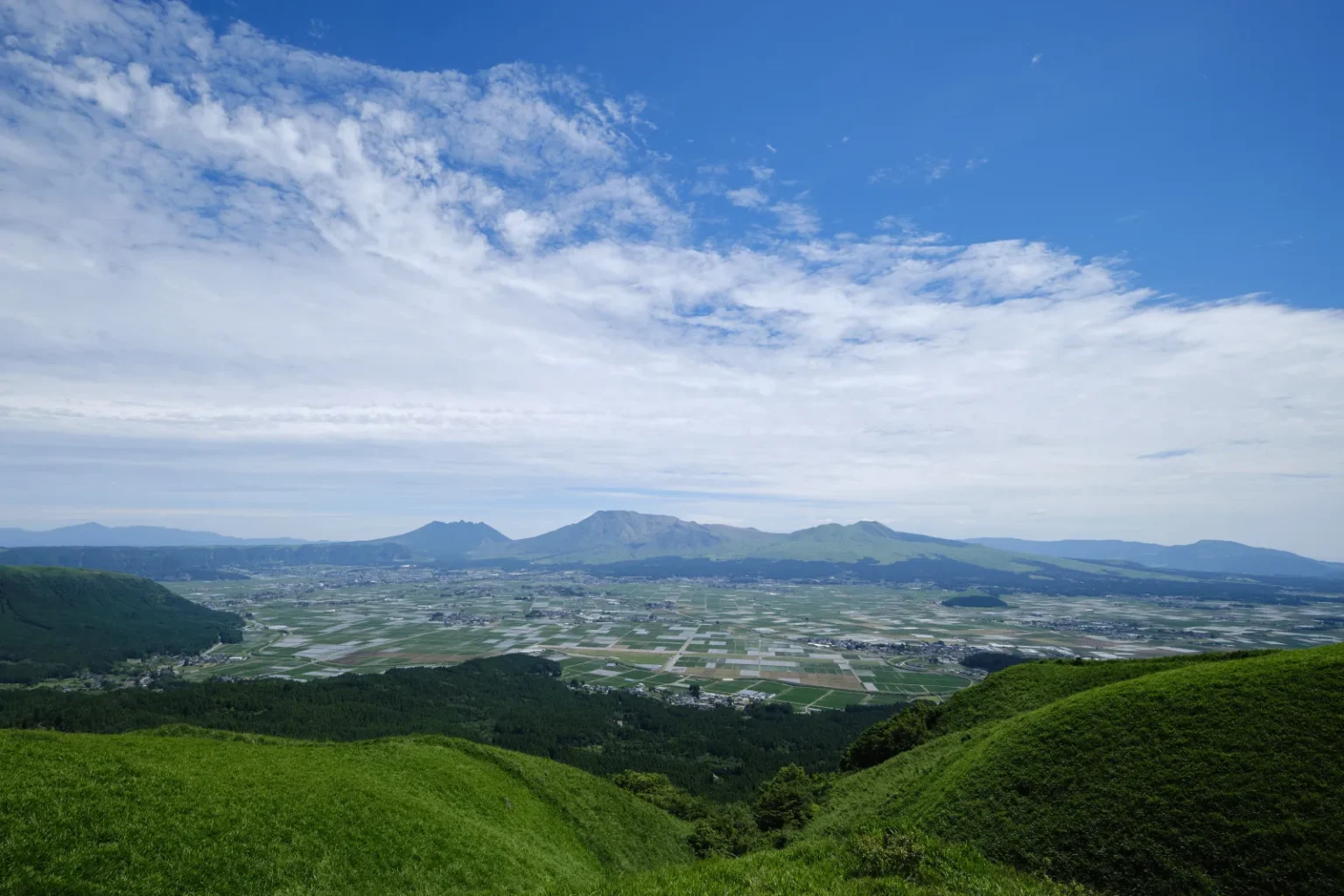
Start here: three ways to do Aso
Pick the plan that matches your transport and your nights. All three use the published times in our guides; check them again before you book anything you cannot cancel. Some links on this page are paid links: I may earn a commission if you book through them.
1. One day, no car
Train from Kumamoto, bus to Kusasenri, back the same evening. A day at Kusasenri below the central peaks.
2. Two days, no car
Day one on the volcano, a night near Aso Station, day two in Kurokawa Onsen.
3. A flexible self-drive route
The northern rim at Daikanbo, Aso Shrine on the caldera floor, Kusasenri, then Kurokawa.
Plan 1: Kusasenri in one day, without a car
| Time | What you do |
|---|---|
| 8:25 → 9:56 | Kyushu Odan limited express, Kumamoto → Aso (runs daily) |
| 10:25 → 10:51 | Aso Mountain Line bus, Aso Station → Kusasenri, ¥1,000 |
| 10:51 → 15:45 | Kusasenri and the Aso Volcano Museum (check food options on the day, or bring lunch) |
| 15:45 → 16:13 | Bus back to Aso Station (the last is 16:35, as a fallback) |
| 17:25 → 18:48 | Kyushu Odan, Aso → Kumamoto |
Train times are from JR Kyushu’s timetable valid from 14 March 2026 to 28 February 2027 and bus times from Sanko Bus’s timetable dated 11 May 2026, which was still the one on its site on 2 November. Sanko Bus does not guarantee connections with trains, which is why this plan comes down on the 15:45 rather than the last bus. All departures, including a later option on the Aso Boy, are in Kumamoto to Mount Aso without a car.
Plan 2: the volcano, a night, then Kurokawa
| When | What you do |
|---|---|
| Day 1 | Plan 1 as far as Aso Station, then stay near the station instead of taking the train back |
| Day 2, 9:24 → 10:15 | Kyushu Odan bus, Aso Station → Kurokawa Onsen, ¥1,600 |
| Day 2, in the village | About six hours for the bath pass, lunch and a walk around the village |
| Day 2, 16:25 | Last bus out towards Aso (17:23) and Kumamoto (19:03); or stay a second night for the village after dark |
Sleeping near Aso Station saves the late train back and puts you on the 9:24 bus without an early start. Hotels within walking distance of the station or reached by hotel shuttle are listed in the no-car guide; to compare more, search Aso on Booking.com. The Kyushu Odan bus has limited seats, and Sanko Bus takes reservations on some sections, so book ahead where you can.
Plan 3: a flexible self-drive route
| Stop | Why it is on the route |
|---|---|
| Daikanbo | The viewpoint on the northern rim, 936 m, with a full view of the caldera |
| The Milk Road | Grassland roads along the northern rim |
| Aso Shrine | On the caldera floor in Ichinomiya; its gate was severely damaged in 2016 and restoration was completed in December 2023 |
| Kusasenri | The grassland below Nakadake. The crater area was off-limits on 2 November; go nearer only if the official status changes |
| Kurokawa Onsen or Nabegataki | North of the rim, to finish the day with a bath or a waterfall (Nabegataki: book online and check the town’s closure notice) |
I have not put driving times on this plan, because they depend on which roads are open: access beyond the summit area changes with the volcanic restrictions, and in winter the rim roads can need chains. Check the crater page and Kumamoto Prefecture’s Aso road information on the morning you drive. To compare cars, see rental cars.
Why Aso is laid out the way it is
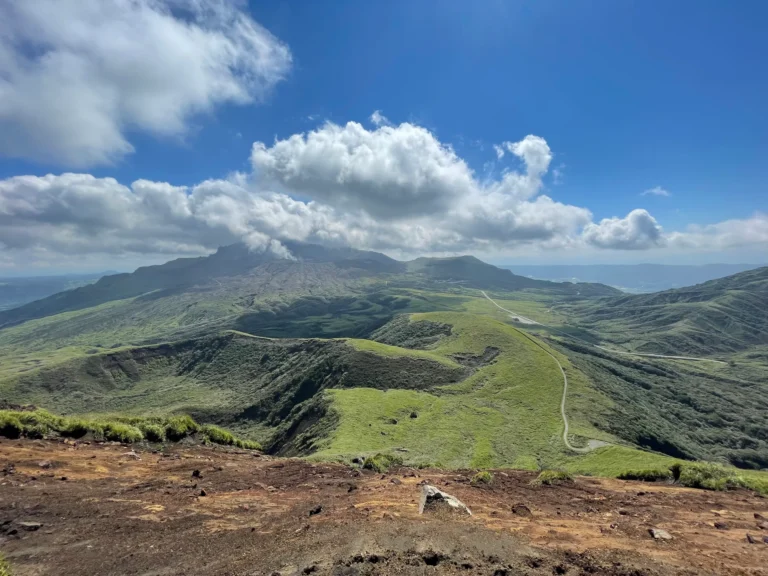
Aso is not one mountain. According to the Aso Geopark, four huge pyroclastic eruptions between about 270,000 and 90,000 years ago left a caldera about 18 km east to west and 25 km north to south. Younger volcanoes then grew up in the middle of it: the central peaks, with Nakadake, the active crater, among them. Around them, the caldera floor holds the towns, the rice fields, Aso Station and Aso Shrine, and the caldera wall rises all the way round as the outer rim.
That shape is the reason this page splits Aso into zones. The volcano and Kusasenri are in the middle and you reach them by the mountain bus. The towns and the railway are on the caldera floor. Daikanbo is on the rim. Kurokawa Onsen and Nabegataki Falls, in the towns of Minamioguni and Oguni, are outside the caldera to the north.
The map links the stops of Plan 3 in order: Daikanbo, Aso Shrine, Kusasenri and Kurokawa Onsen. Check the road and crater notices before you follow it.
| Place (our guide) | Where it is and what it is |
|---|---|
| Nakadake crater | Centre of the caldera. The active crater; at Alert Level 2 the area within about 1 km is closed |
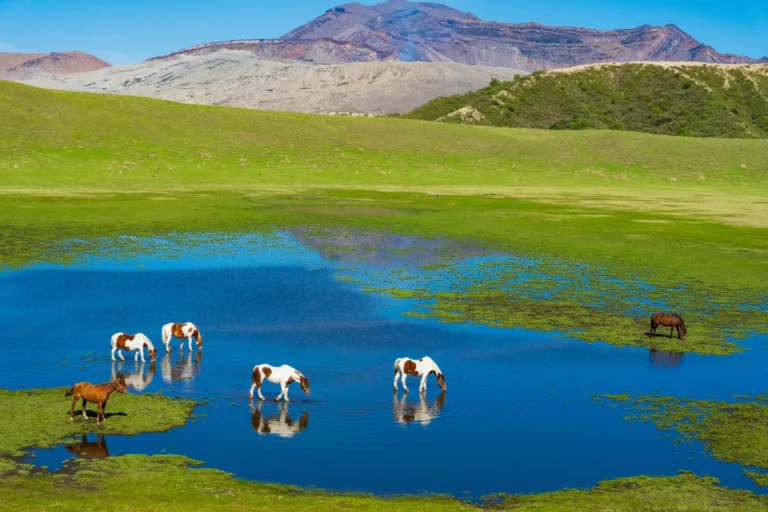
| Kusasenri | On the volcano, below Nakadake. Grassland, a pond, grazing horses and the Aso Volcano Museum |
| Imakin Shokudo | Uchinomaki, Aso City, on the caldera floor. Akaushi beef bowl diner |
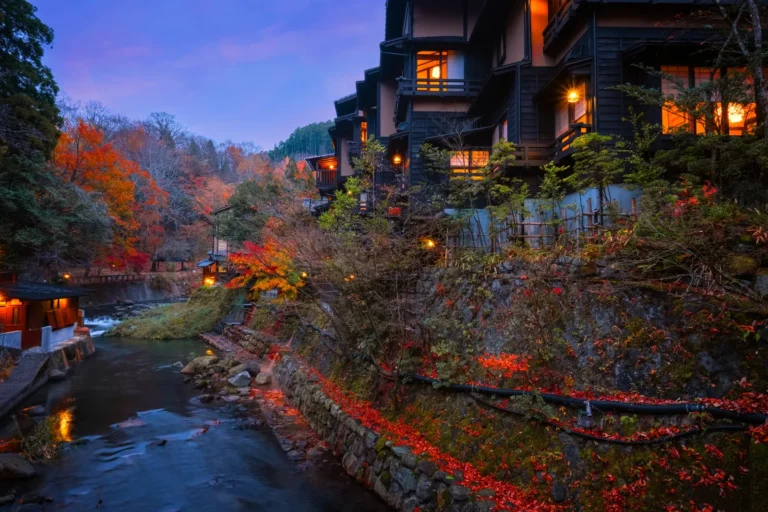
| Kurokawa Onsen | Minamioguni, north of the caldera. A village of about 30 ryokan |
| Pizzeria Tre Passo | Minamioguni, about 10 minutes’ drive from Kurokawa. Pizza with a view of the Aso and Kuju mountains |
| Nabegataki Falls | Oguni, about 25 minutes’ drive from Kurokawa. A waterfall you can walk behind |
Getting there and around
| Leg | Times and fares |
|---|---|
| Kumamoto → Aso Station | About 1 h 30 min. Kyushu Odan limited express three times a day each way, every day; the Aso Boy on its operating days, ¥3,080 in the standard season |
| Aso Station → Kusasenri | Aso Mountain Line, 9:40 to 14:35, ¥1,000. Sanko Bus warns you may not get the bus you want when it is busy |
| Kusasenri → Aso Station | Last Aso Mountain Line bus 16:35, at the station 17:03 |
| Kumamoto → summit terminal | Sanko’s Aso Sanjo Line, Kumamoto Station 9:33 → 11:39; back from the summit terminal at 16:00 |
| Aso Station → Kurokawa | Kyushu Odan bus, 9:24 → 10:15, ¥1,600 |
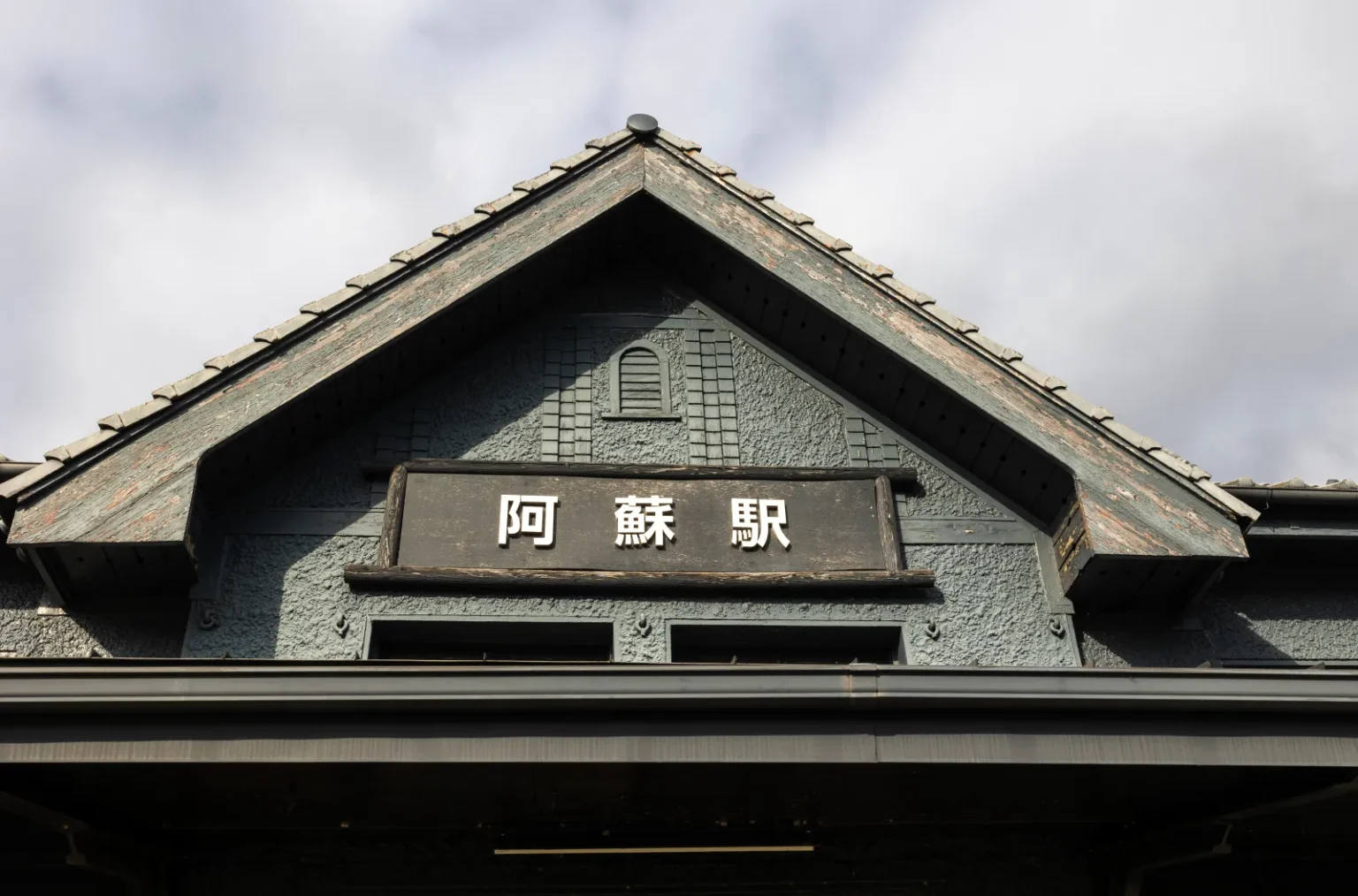
JR’s Hohi Line between Higo-Ozu and Aso was cut by the 2016 Kumamoto earthquake and reopened on 8 August 2020; today the limited expresses run straight through. If you will ride trains around Kyushu for a few days, compare the JR Kyushu Rail Pass with single tickets for your route.
The mountain-bus timetable largely shapes a car-free day. Sanko Bus’s timetable lists seven buses up from Aso Station and nine down from the summit terminal, the same every day. Sanko’s separate Aso–Takachiho bus also stops on the mountain; its times are in our Mount Aso guide.
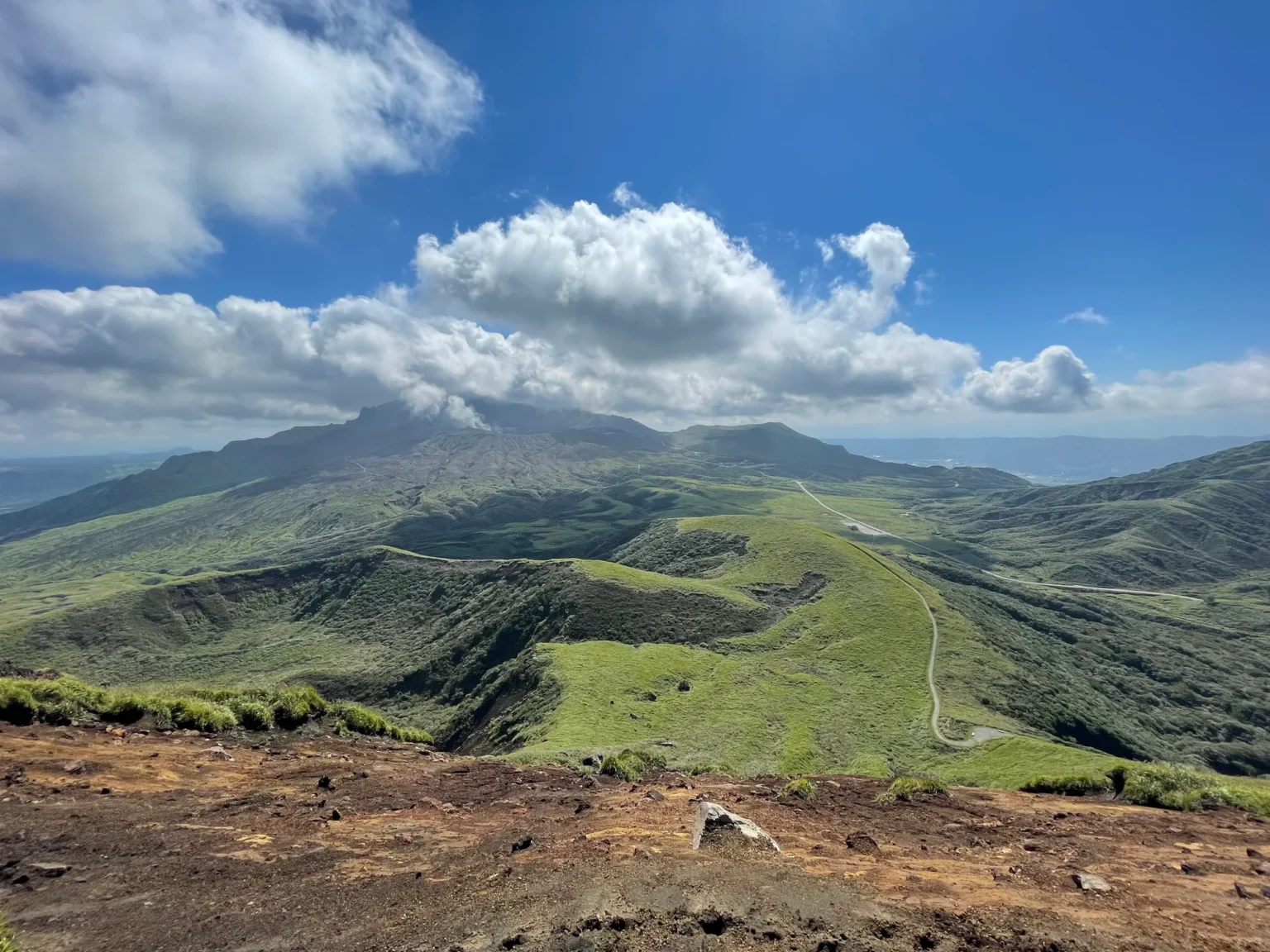
On the volcano: the crater, Kusasenri and Kishimadake
The crater
The Japan Meteorological Agency lowered Aso’s alert level from 3 to 2 on 1 September 2026. On 2 November the Aso volcano disaster prevention council’s site still showed the area within about 1 km of the crater as off-limits. On 30 October Sanko Bus listed its crater shuttle as suspended, while Kusasenri and the summit terminal stayed open. Restrictions are set by zone and can change on the day with gas or weather, so open the council’s crater page before you leave Aso Station. Our Mount Aso guide follows the status and explains how to read it.
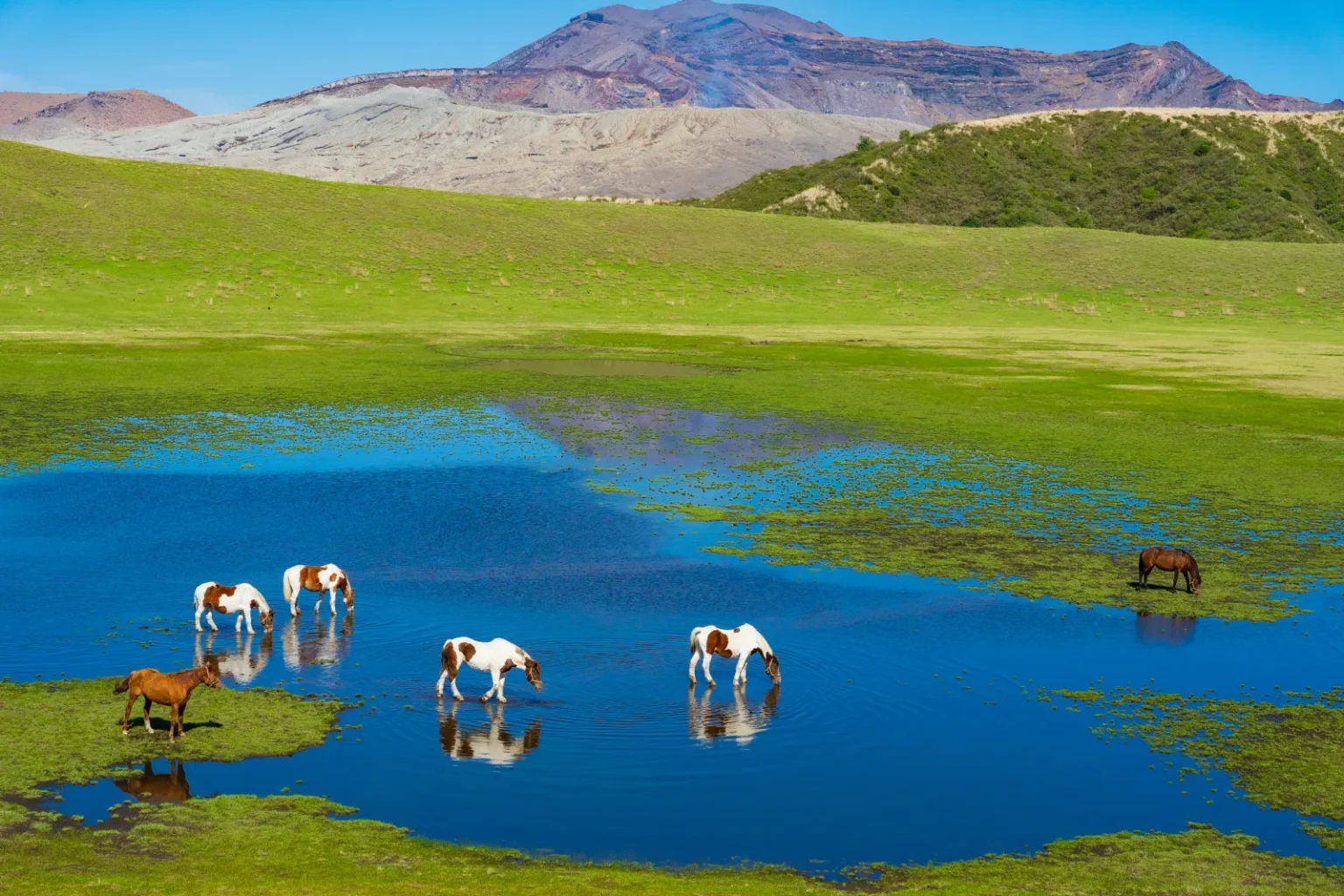
Kusasenri
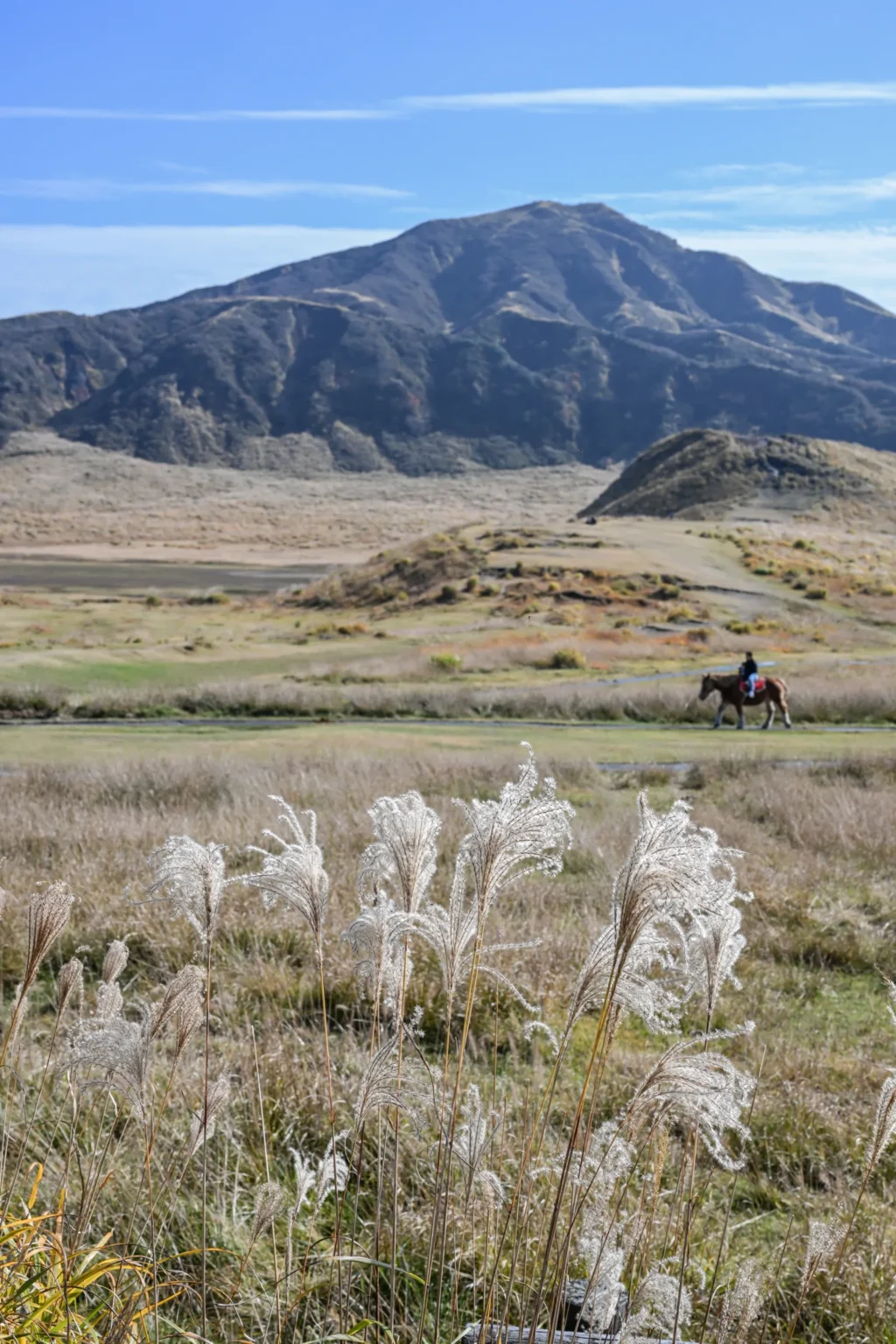
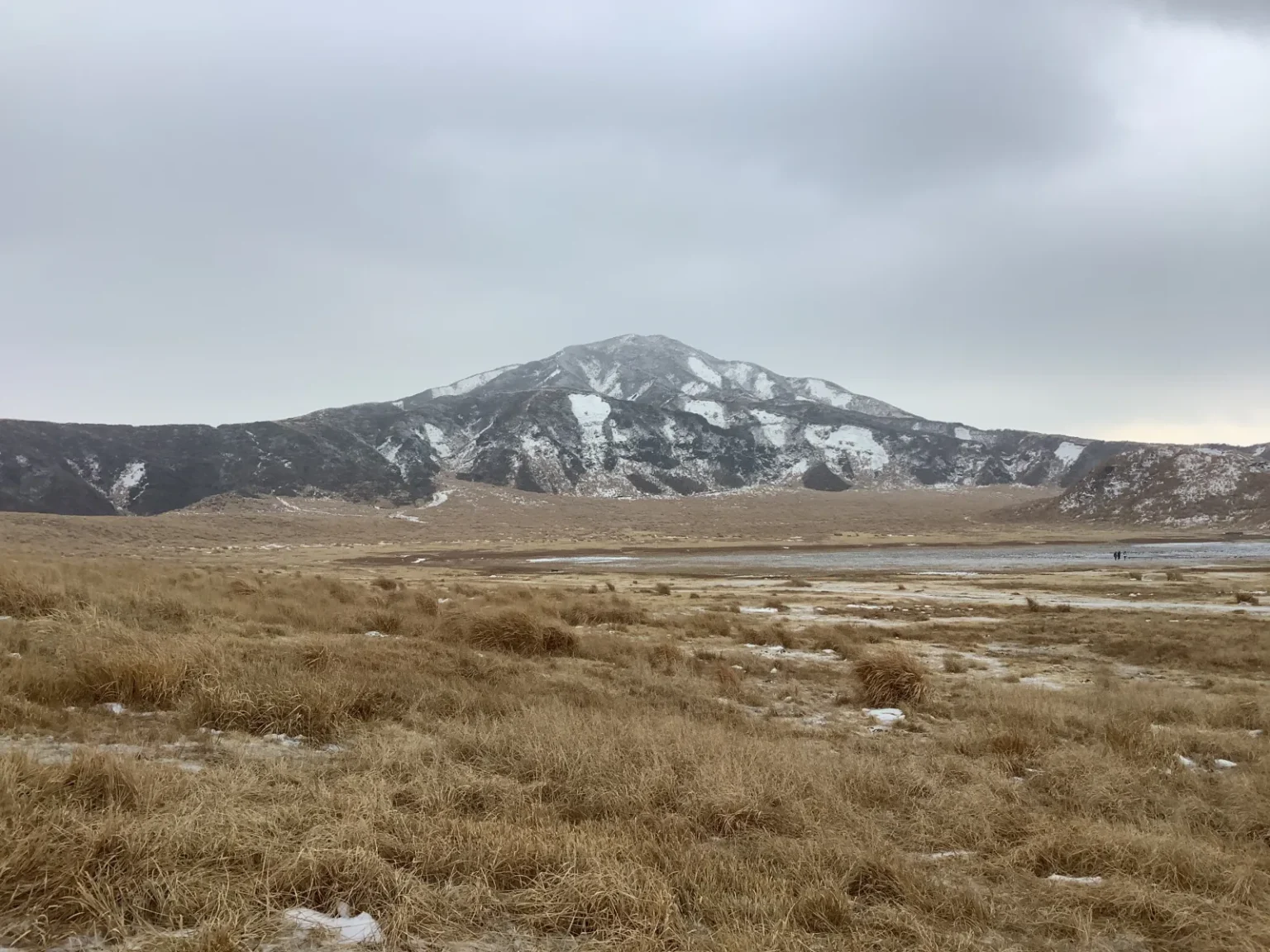
The mountain bus stops here, below Nakadake: a wide grassland with horses and a shallow pond. The Aso Volcano Museum beside the stop is open 9:00–17:00 (last entry 16:30) and charges ¥1,300 for adults; it closes on 14 January and 14 July for maintenance. Our Kusasenri guide has the rest.
Kishimadake
The grassy peak next to Kusasenri is where I stood on 20 September 2021 and watched Nakadake steam, a month before it erupted. A closed crater does not have to end the visit, but I could not find a current official trail notice for Kishimadake. Do not assume the trail is open: check before you start up, as our Mount Aso guide explains.
The rim and the caldera floor: Daikanbo, the Milk Road and Aso Shrine
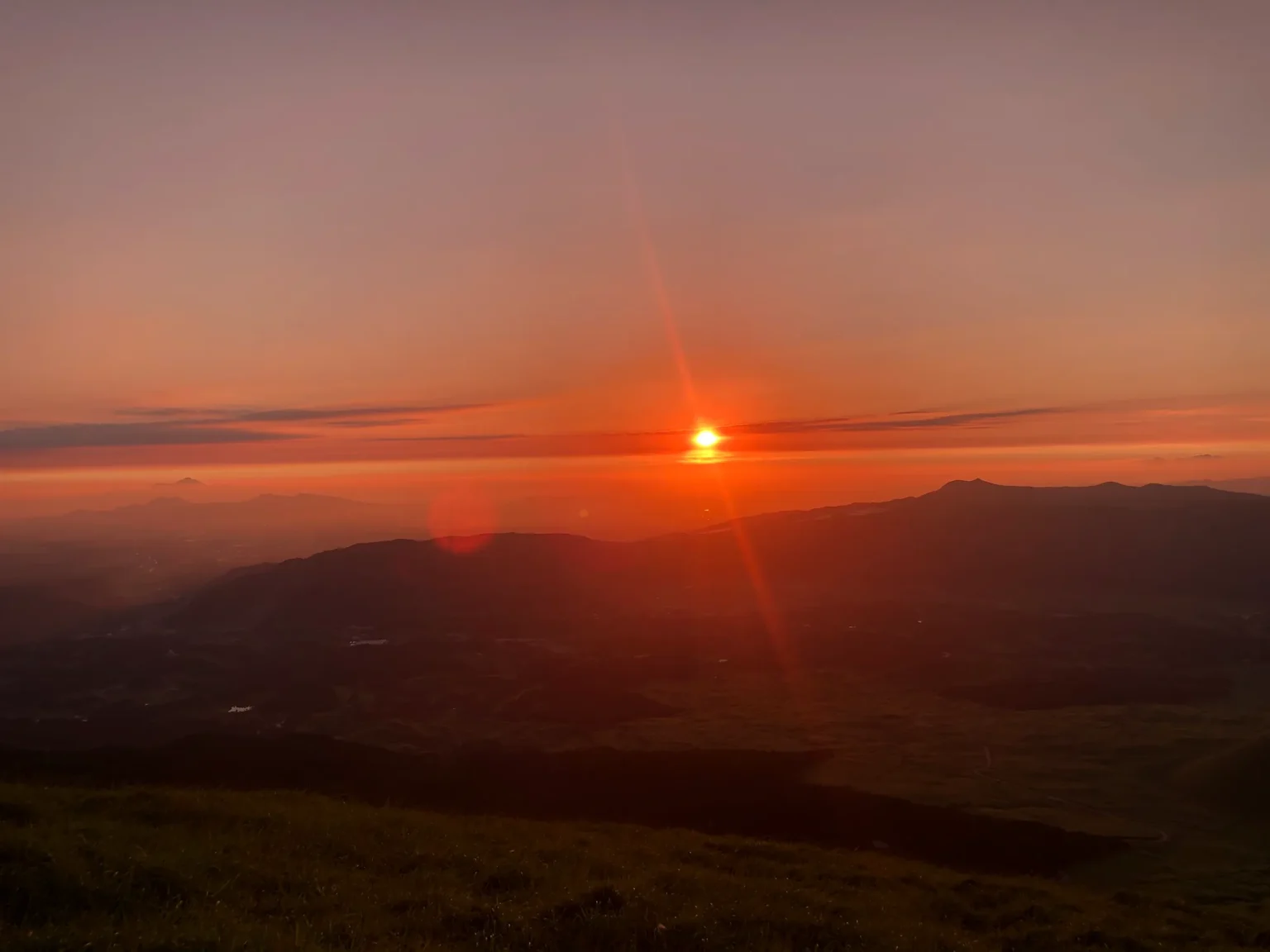
These three places are easiest to reach by car. They do not replace the crater; they show you the caldera it sits in.
Daikanbo
The Aso Geopark lists Daikanbo as its representative site on the northern rim, and Aso City’s tourist pamphlet gives its height as 936 m. From the top you look down on the caldera floor and across to the central peaks. On Aso City’s local bus timetable (revised 14 March 2026), buses run into Daikanbo itself only on weekends and public holidays, twice a day each way; on other days they stop at Daikanbo-iriguchi on the main road.
The Milk Road
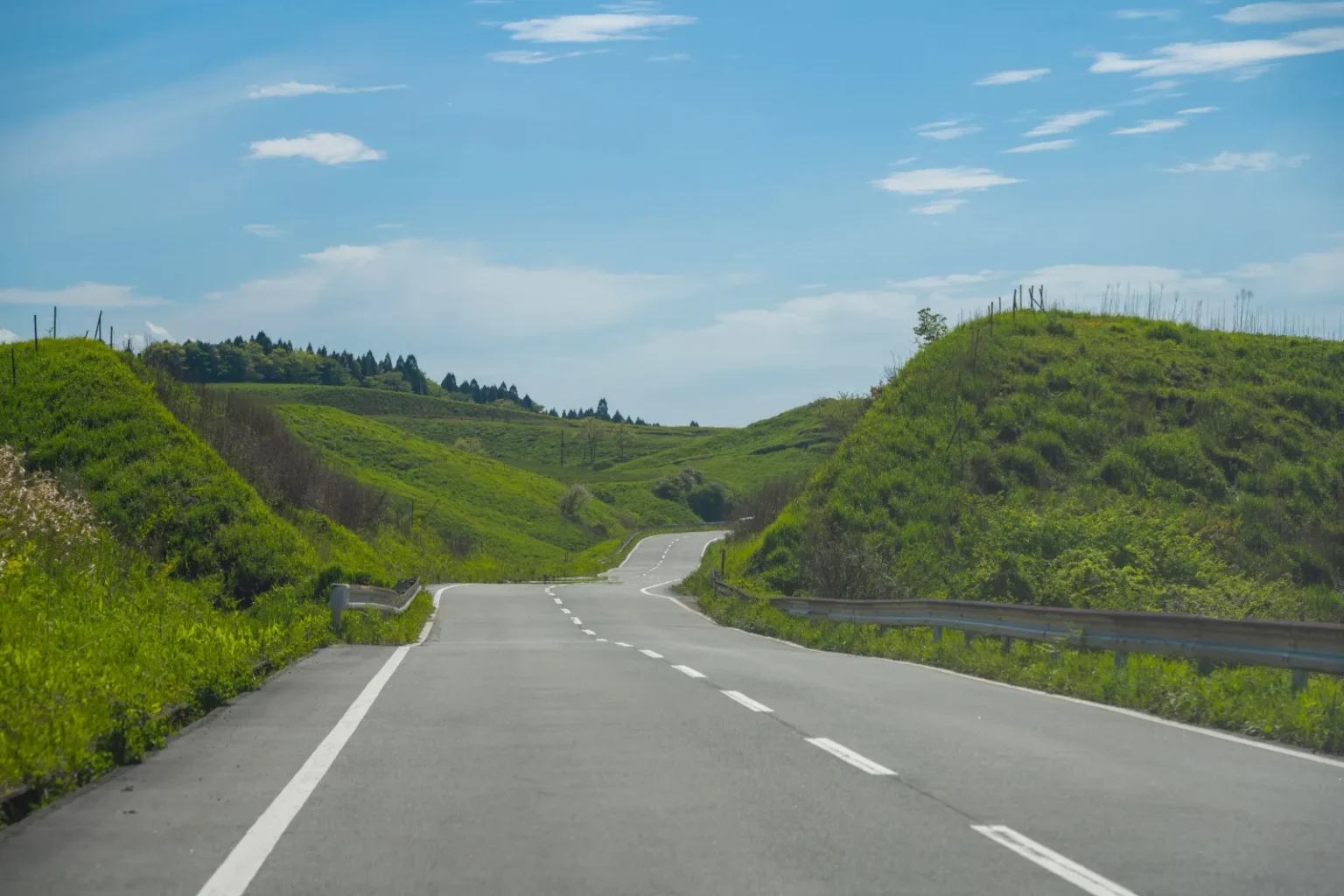
“Milk Road” is the name used for the grassland roads across the northern rim; Aso City’s records use it for Prefectural Road 339, and the Ministry of the Environment’s grassland plan uses it for parts of other roads too. Kumamoto Prefecture’s winter records show chain requirements on Road 339 and Road 45, so in winter check the prefecture’s Aso road information first.
Aso Shrine
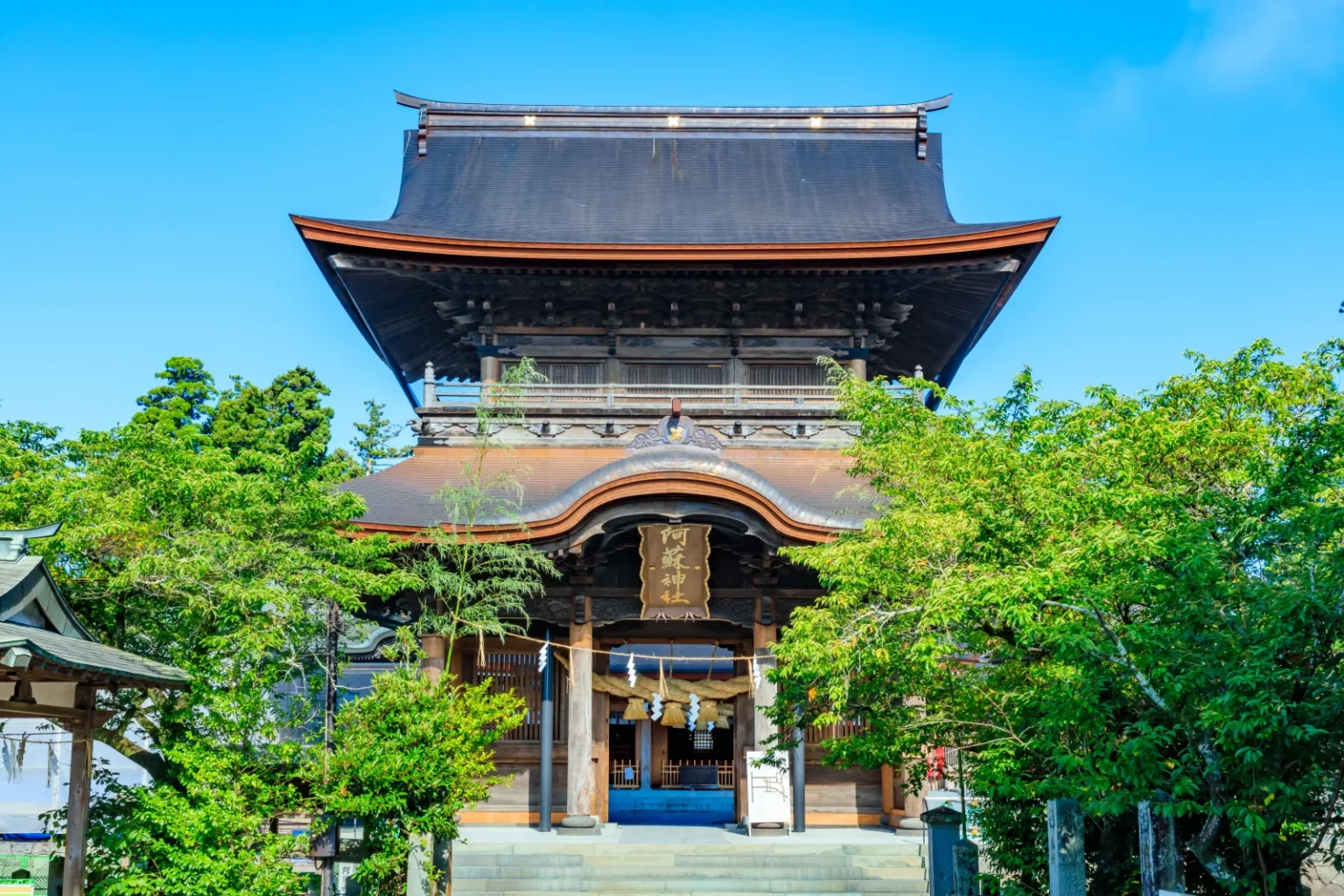
Aso Shrine stands on the caldera floor in Ichinomiya. Six of its buildings, including the three main halls and the two-storey romon gate, were designated Important Cultural Properties of Japan in 2007. Aso City records that all six were damaged in the 2016 Kumamoto earthquake, the gate severely, and that the restoration was completed in December 2023. The shrine’s own access page puts it 15 minutes on foot from Miyaji Station, east of Aso on the Hohi Line towards Oita.
North of the caldera: Kurokawa Onsen and Nabegataki Falls
Both are outside the caldera, over the northern rim. They pair well with Aso, but each is its own leg.
Kurokawa Onsen
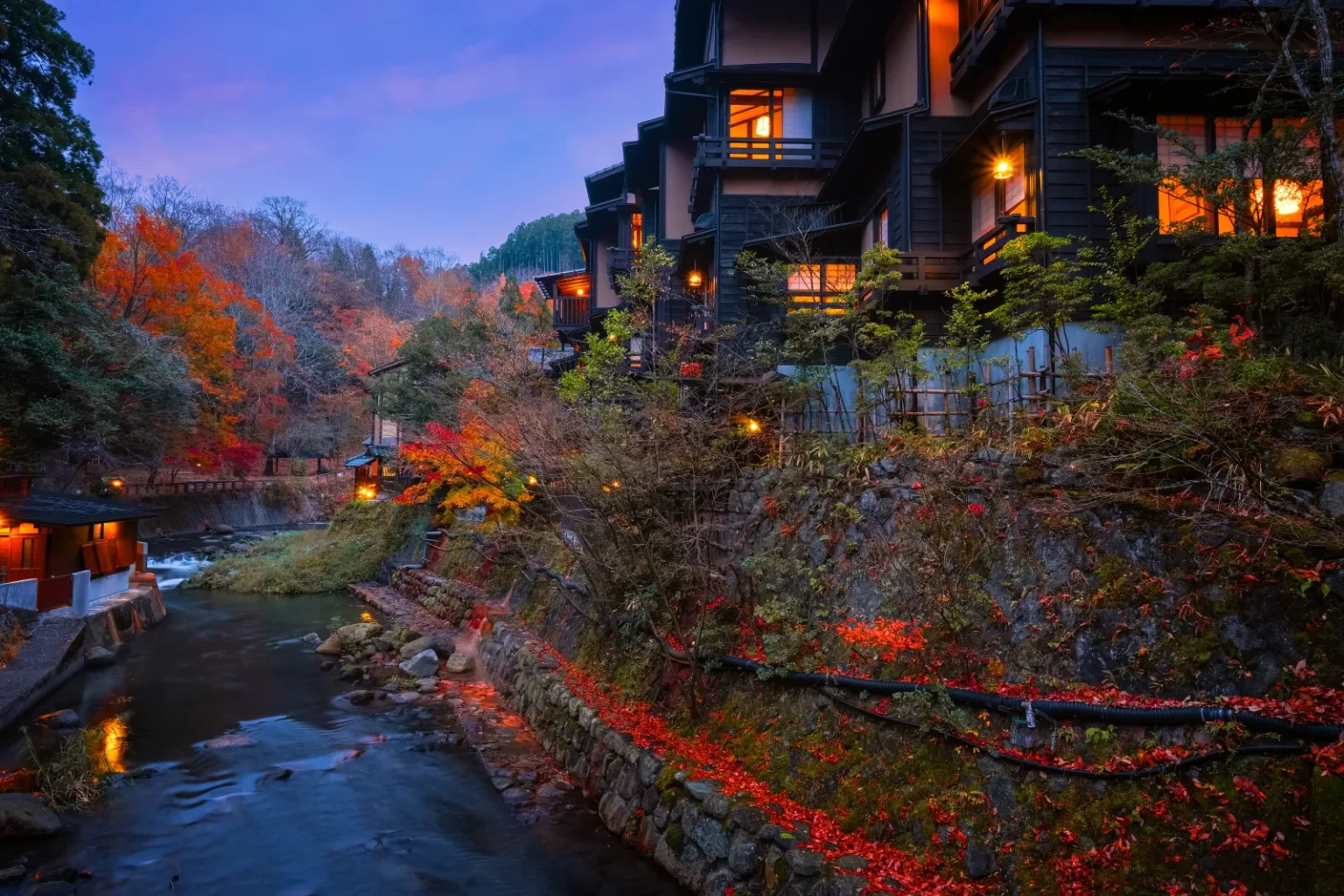
The ryokan association describes Kurokawa as an onsen village of about 30 ryokan in the hills of Minamioguni, at about 700 m. It is known for its wooden bath pass, which takes you into the outdoor baths of several inns. Bring cash: the association says there is no ATM in the onsen area, and the nearest is about 15 minutes away by car. The pass rules, towels and tattoos, and the inns are in our Kurokawa Onsen guide.
Nabegataki Falls
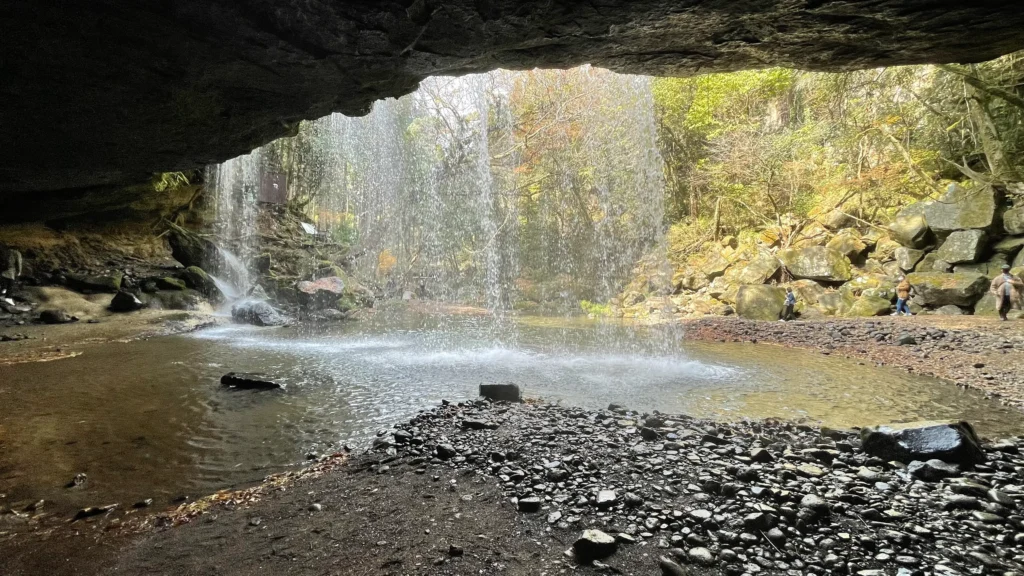
Nabegataki, in Oguni, is a wide curtain of water you can walk behind when the path is open. I went in autumn 2025. Oguni Town lists admission at ¥300 for adults and opening hours of 9:00–17:00 (last entry 16:30).
- Booking: the town asks visitors to book and pay online in advance. If you cannot book online, ask the ASO Oguni tourism association for a same-day ticket (issued 8:30–16:00, while places last). The town’s yearly calendar marks a few dates in May, August and September as reservation-only days, so check it if you go then.
- Closures: the town has announced temporary closures on 13, 14, 17, 24, 25 and 28 November 2026 for tree felling in the park.
- On foot: the walk from the park entrance takes about three minutes, with steps and steep sections, and there is no wheelchair route.
- Getting there: our Nabegataki guide found no bus to the falls themselves; by car it is about 25 minutes from Kurokawa and about 50 from Aso Station. More in our Nabegataki Falls guide.
Fitting Kurokawa into the trip
Where you start decides how long you get. On Kyushu Sanko’s timetables (October 2025, still current on 28 October 2026):
| From | Time in Kurokawa, and the buses |
|---|---|
| Kumamoto Station | 6 h 10 min: in 7:23 → 10:15, out 16:25 → 19:03 |
| Aso Station | 6 h 10 min: in 9:24 → 10:15, out 16:25 → 17:23 |
| Fukuoka (Tenjin) | 1 h 31 min: in 9:30 → 12:29, out 14:00 → 16:52 |
From Kumamoto or Aso, a day trip works. From Fukuoka, a same-day return leaves 1 h 31 min in the village, so if the baths are the point, stay a night. If you want the village after dark, stay: the last buses leave by 16:25. To see what is free on your dates, search Kurokawa Onsen on Booking.com; our Kurokawa guide compares four inns by what you need.
Seasons: burning, grass, snow and lanterns
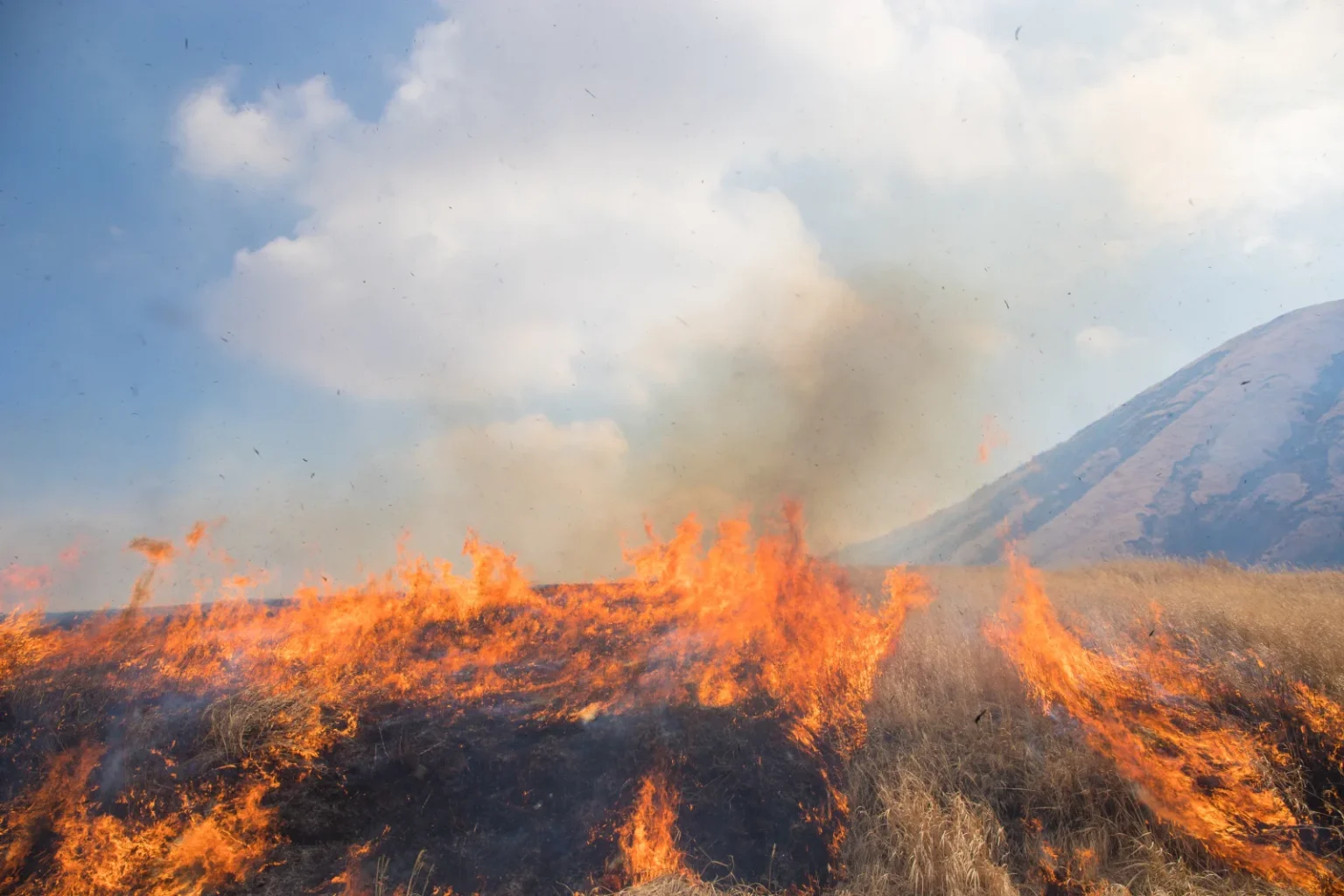
February to March: the grassland burning. The Ministry of the Environment explains that Aso’s grasslands are kept open by burning them each year from February to March, around the spring equinox; without it, the grassland would turn to forest. The 2027 dates had not been announced on 2 November 2026.
Autumn: silver grass. In October 2026 the Aso City tourist association was showing the pampas grass in its autumn notice. Aso City also writes that sea-of-cloud mornings can be seen from its Shiroyama viewpoint in the early morning between spring and autumn; it does not promise them.
Winter: roads and snow. Kumamoto Prefecture publishes snow and ice restrictions for roads in the Aso area and warns that conditions can differ with sudden changes in the weather. If you drive between December and March, check it on the morning and confirm tyre and chain requirements with your rental company.
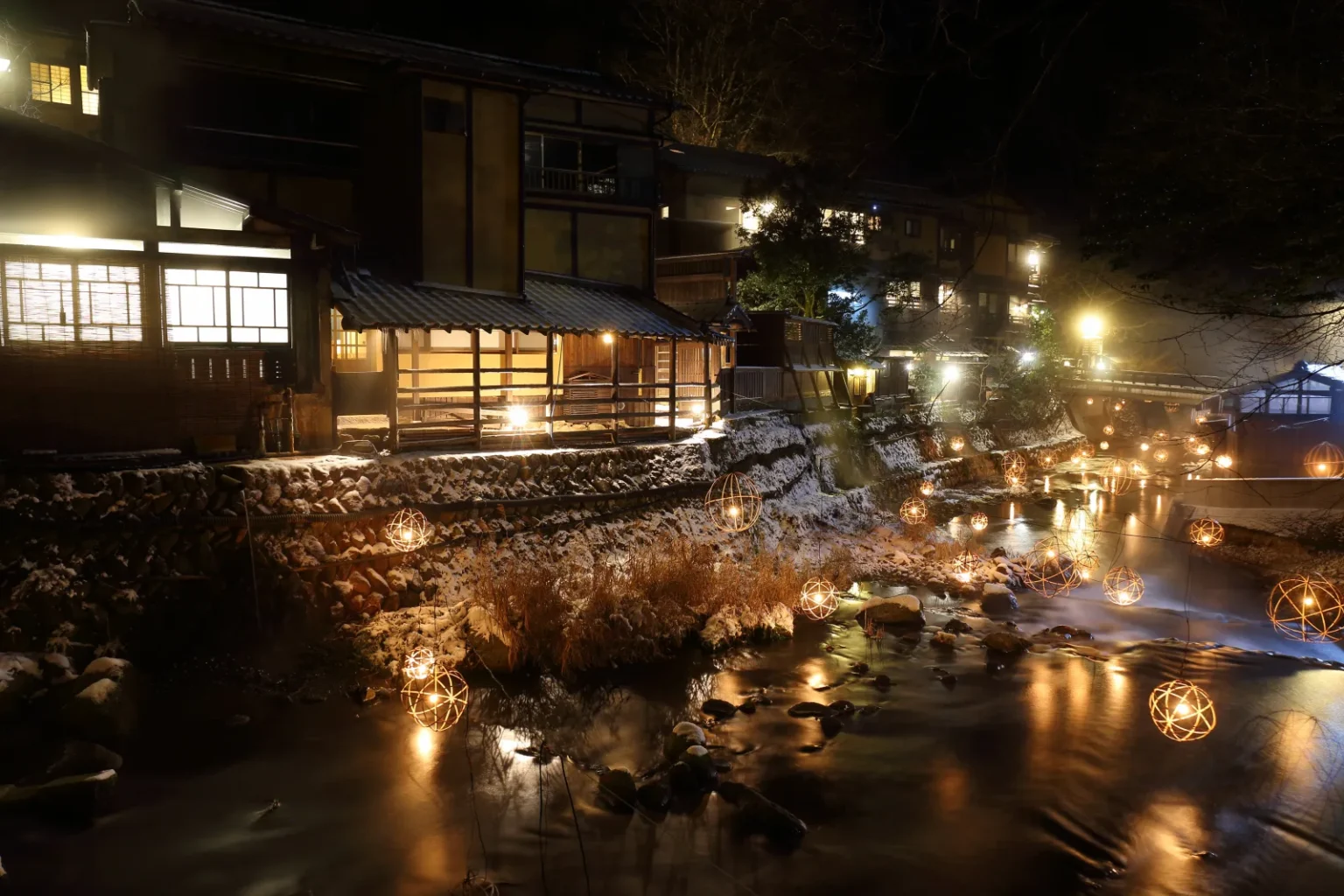
Winter evenings in Kurokawa. The ryokan association lights its Yuakari bamboo lanterns in the village from late December, as our Kurokawa guide explains; it posts each season’s dates on its website. On the bus you would need to stay the night to see them.
What it costs
| Item | Price (adult) |
|---|---|
| Aso Boy sightseeing train (alternative to the Kyushu Odan), Kumamoto → Aso | ¥3,080 in the standard season (fare plus reserved-seat charge) |
| Aso Mountain Line, Aso Station ↔ Kusasenri | ¥1,000 each way |
| Aso Volcano Museum | ¥1,300 |
| Kyushu Odan bus, Aso Station → Kurokawa | ¥1,600 |
| Kurokawa bath pass (3 baths) | ¥1,500 |
| Nabegataki Falls | ¥300 |
| JR Kyushu Rail Pass (Northern Kyushu) | ¥15,000 for 3 days, ¥17,000 for 5 days (JR Kyushu’s own online booking lists different prices) |
Rooms and car hire vary too much by date to put a number on here. If you base yourself in Kumamoto city at either end of the trip, browse Kumamoto hotels on Agoda.
Eating on the way
Imakin Shokudo
Akaushi beef bowl in Uchinomaki, on the caldera floor. Check its hours and your bus back before you build it into a car-free day.
Pizzeria Tre Passo
Pizza on a hilltop in Minamioguni, about 10 minutes’ drive from Kurokawa. Easiest with a car.

Going on to Yufuin and Beppu
If you are travelling between Kumamoto and eastern Kyushu, you can carry on instead of going back. The Kyushu Odan bus continues from Kurokawa to Yufuin: bus 7 is timetabled at Kurokawa at 15:00 and reaches Yufuin at 16:33. By train, the Kyushu Odan limited express runs on from Aso to Oita and Beppu. Yufuin and Beppu are outside this page.
Frequently asked questions
Is Kurokawa Onsen inside the Aso caldera?
No. Kurokawa is in Minamioguni, north of the caldera. From Aso Station the Kyushu Odan bus leaves at 9:24 and reaches Kurokawa at 10:15.
Can I go to the Aso crater?
Not on 2 November 2026: the area within about 1 km of the crater was off-limits at Alert Level 2, and the crater shuttle was listed as suspended on 30 October, while Kusasenri and the summit terminal were open. Restrictions change, so check the Aso volcano disaster prevention council’s crater page on the day.
Can I do Aso and Kurokawa in one day without a car?
Not if you want real time at both. The Kurokawa bus leaves Aso Station at 9:24, before the first Aso Mountain Line bus at 9:40, and the last bus out of Kurokawa to Aso and Kumamoto is at 16:25. Give each its own day, as in Plan 2.
Do I need a car in Aso?
Not for the volcano or Kurokawa: the mountain bus and the Kyushu Odan bus cover both. Nabegataki Falls has no bus to the falls themselves, and buses run into Daikanbo only on weekends and public holidays, so a car makes those two much easier.
Can I drive in Aso in winter?
Yes, but check Kumamoto Prefecture’s Aso road information on the morning. Its records show chains required on rim roads, including Prefectural Roads 339 and 45, during snow and ice.
How long does the bus from Aso Station to Kusasenri take?
About 26 minutes (the 10:25 arrives at 10:51), and about 35 minutes to the summit terminal. The fare is ¥1,000.
Is the JR Kyushu Rail Pass valid to Aso?
The Northern Kyushu pass covers JR limited expresses in its area, which includes Kumamoto Prefecture; the Aso Boy needs a seat reservation. It is a JR pass, so the Sanko Bus mountain bus is paid separately.
Sources
- Japan Meteorological Agency, eruption warning of 20 October 2021: jma.go.jp
- Aso volcano disaster prevention council, crater restrictions: aso-volcano.jp; Japan Meteorological Agency, Asosan: jma.go.jp
- Sanko Bus, Aso Mountain Line timetable of 11 May 2026: PDF; fares of 1 October 2025: PDF; Aso Sanjo Line: sankobus.jp; Kyushu Odan bus: sankobus.jp
- JR Kyushu, Aso Boy fares: jrkyushu.co.jp; English timetable (14 March 2026 – 28 February 2027): PDF
- JR Kyushu Rail Pass prices: jrkyushu.co.jp
- Aso Volcano Museum, opening and admission: asomuse.jp
- Aso Geopark, the caldera and Daikanbo: aso-geopark.jp; Aso City tourist pamphlet: PDF
- Aso City, Aso Shrine cultural properties: city.aso.kumamoto.jp; Aso Shrine access: asojinja.or.jp
- Ministry of the Environment, grassland burning: env.go.jp
- Kumamoto Prefecture, Aso road information: pref.kumamoto.jp
- Aso City local bus timetable (revised 14 March 2026): PDF
- Kurokawa Onsen ryokan association FAQ: kurokawaonsen.or.jp; Oguni Town, Nabegataki: town.kumamoto-oguni.lg.jp
- Aso City, viewpoints: city.aso.kumamoto.jp; Aso City tourist association, autumn 2026: asocity-kanko.jp
- Our guides, each with its own sources: Kumamoto to Mount Aso without a car (JR Kyushu timetable of 28 October 2026), Mount Aso, Kurokawa Onsen (Kyushu Sanko bus fares and times), Nabegataki Falls.
Join travelers discovering Japan's hidden side
Weekly dispatches from off-the-beaten-path Japan — spots and stories you won't find in guidebooks.
No spam. Unsubscribe anytime.
Welcome aboard!
You're in. See you in your inbox soon.