
Nagano · Toyama · Ishikawa · Gifu · 7 days by train and bus
The Emerald Route is a seven-day Japanese Alps itinerary from Tokyo back to Tokyo without a car: Zenkoji and the snow monkeys in Nagano, over the mountains on the Tateyama Kurobe Alpine Route, then Kanazawa, Shirakawa-go and Takayama, and a limited express down to Nagoya for the shinkansen home. The Alpine Route only runs from mid-April to November, and snow can stop it in its last weeks, so this guide gives two versions: the mountain crossing for the green season, and a winter week that takes the Hokuriku Shinkansen instead and is the better one for bathing monkeys and Shirakawa-go in snow.

I would send a second-time visitor here before Osaka. The week runs through old towns on the roads between the mountains and the Sea of Japan: a temple town whose temple, by its own account, dates from the 640s; the Maeda lords’ castle town; a farming village with roofs built for deep snow; and a merchant town the shogun ruled directly. Every intercity leg is a train or a scheduled bus.
The order is set by the mountains. Nagano comes first because the Alpine Route crossing works best with an early bus from Nagano Station; Takayama comes last because the Hida limited express runs straight down to Nagoya, where the shinkansen back to Tokyo leaves several times an hour. Coming from Kyoto or Osaka? Run it in reverse from Nagoya.
The week at a glance
| Day | Green season (mid-April–mid-November) | Winter (December–March) |
|---|---|---|
| 1 | Shinkansen to Nagano, Zenkoji, train to Yudanaka · sleep Yudanaka or Shibu Onsen | Same |
| 2 | Snow monkeys, back to Nagano · Nagano | Same; the best season for bathing monkeys |
| 3 | Tateyama Kurobe Alpine Route to Toyama · Toyama | Zenkoji at dawn, Hokuriku Shinkansen to Kanazawa, 1 h 27 min · Kanazawa |
| 4 | Shinkansen to Kanazawa, 22–23 min · Kanazawa | Kanazawa: Kenrokuen’s snow ropes · Kanazawa |
| 5 | Bus to Shirakawa-go, bus on to Takayama · Takayama | Same, with snow on the roofs |
| 6 | Takayama · Takayama | Same |
| 7 | Hida limited express to Nagoya, shinkansen to Tokyo | Same |
Who it suits: a second trip to Japan, or a first one for people who would rather see old towns and mountains than three big cities. Expect sightseeing on foot every day, a forest trail of about 35 minutes each way to the monkeys, and on the green-season Day 3, a long day of stairs and transfers. Who it doesn’t: anyone who wants nightlife, or who can’t manage an unpaved, icy path in winter.
Day 1: Tokyo to Nagano and Yudanaka
| Shinkansen | Hakutaka or Asama, Tokyo → Nagano, about 90–105 min · ¥7,920 unreserved (the Kagayaki, about 80 min, is reserved seats only) |
|---|---|
| Zenkoji | Bus from stop 1 at the Zenkoji exit, about 10 min · inner sanctum ¥800, combined ticket ¥1,500; inner sanctum to 16:30 (April–October), 16:15 (March, November), 16:00 (December–February) |
| Afternoon | Nagano Electric Railway limited express to Yudanaka, from 38 min · ¥1,760 |
| Sleep | Yudanaka or Shibu Onsen (see Where to stay) |
Zenkoji: the dark passage under the main hall
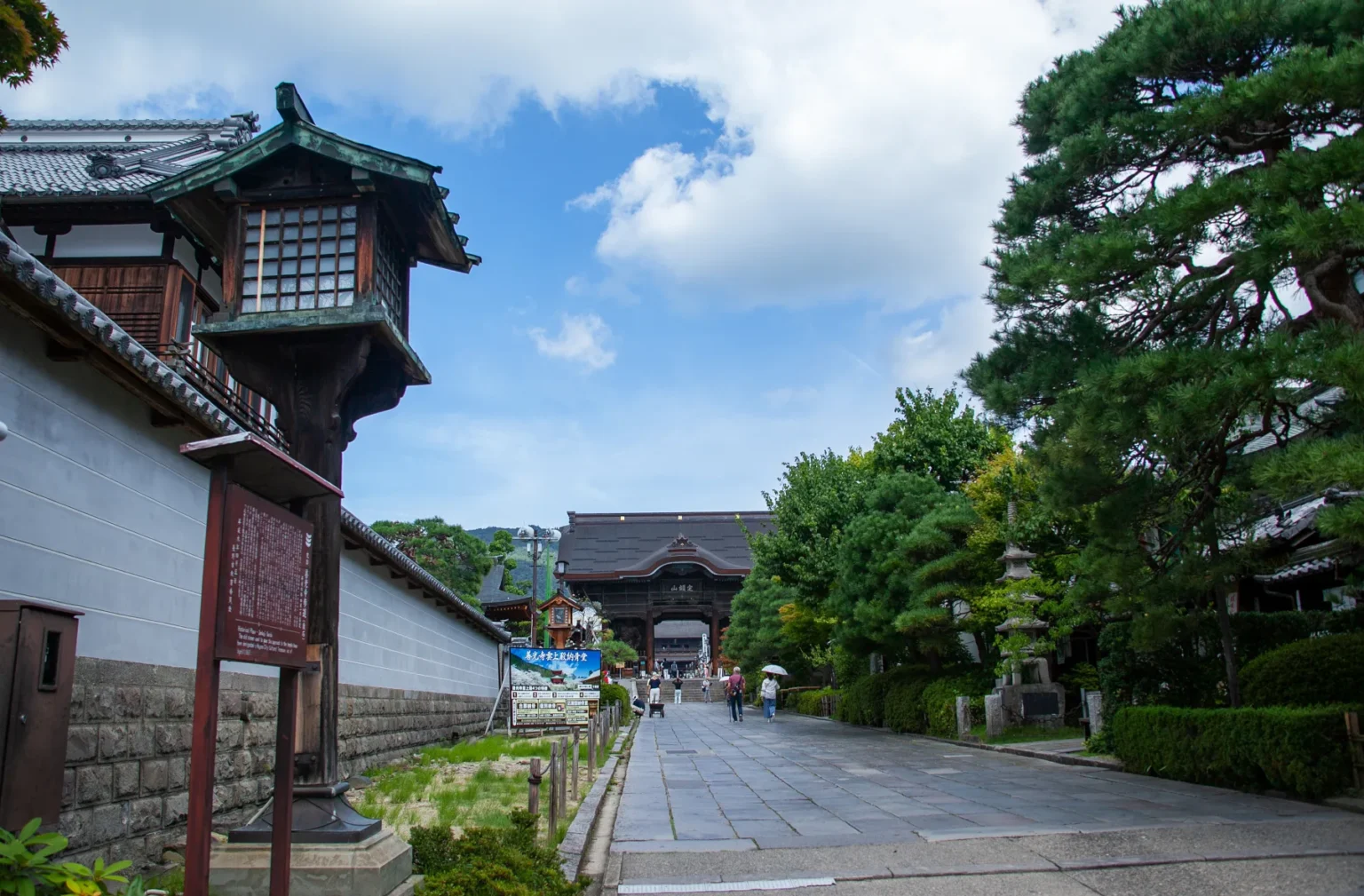
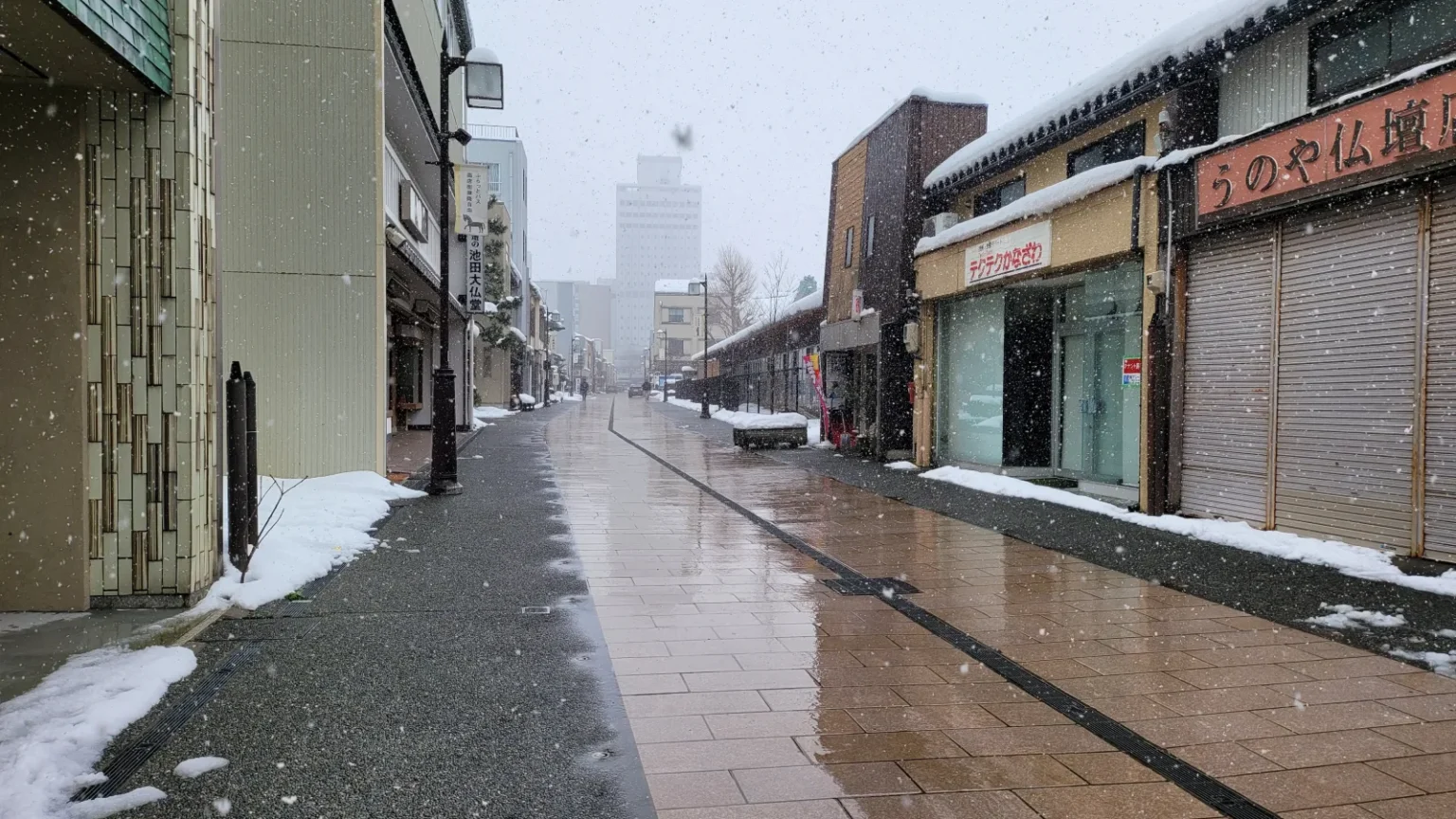
Take the bus up to Zenkoji, or walk up the main street from the station. By the temple’s own account its first halls were built in 644, before Japan’s Buddhist sects took shape, which is why it belongs to none of them and welcomes all. The main hall was rebuilt in 1707 and is a National Treasure. The inner sanctum ticket (¥800, or ¥1,500 for the combined ticket since April 2026) includes the Okaidan-meguri: you walk through a pitch-black corridor under the main hall, feeling along the wall for the “key to paradise”. Leave time for it before the inner sanctum closes.
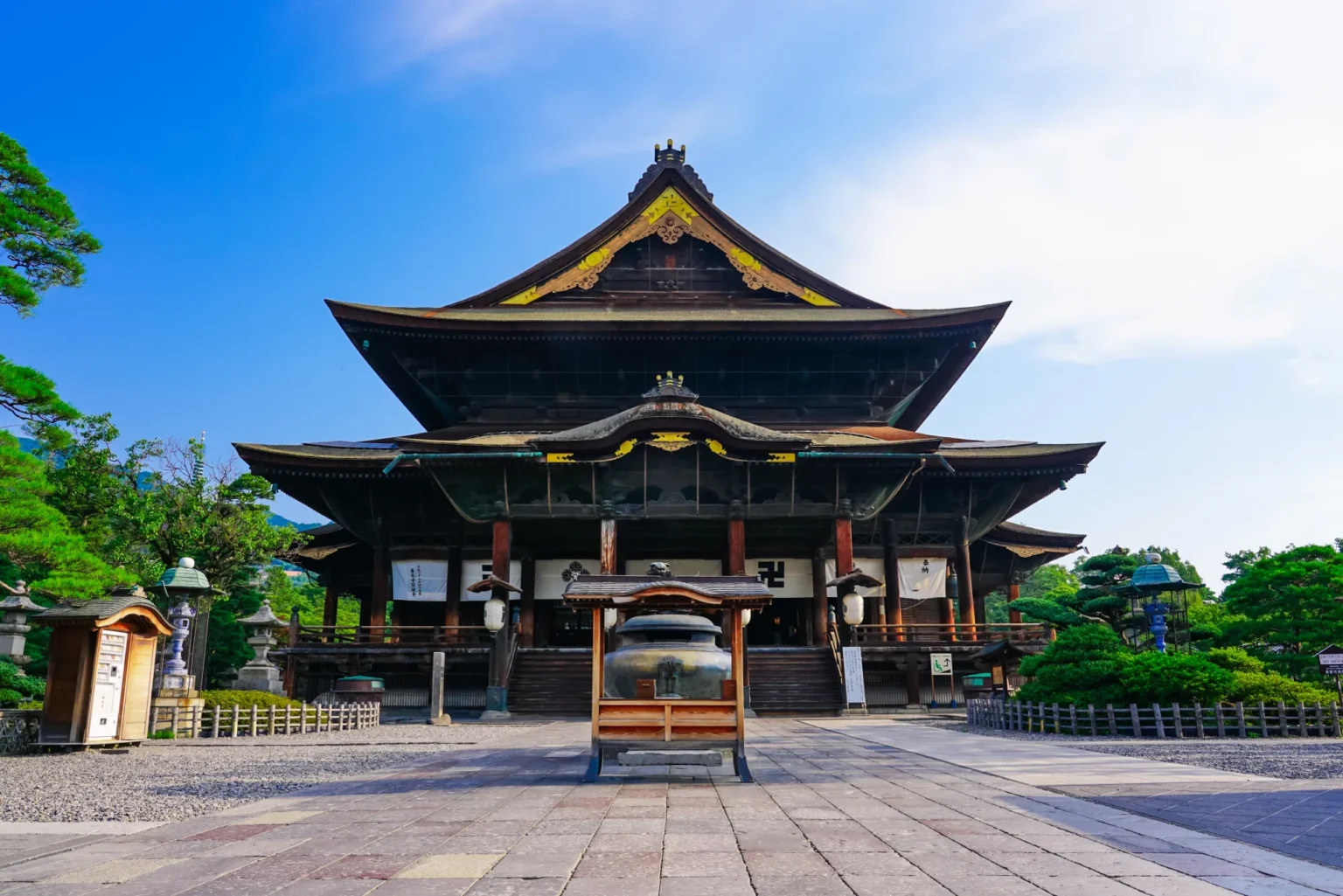
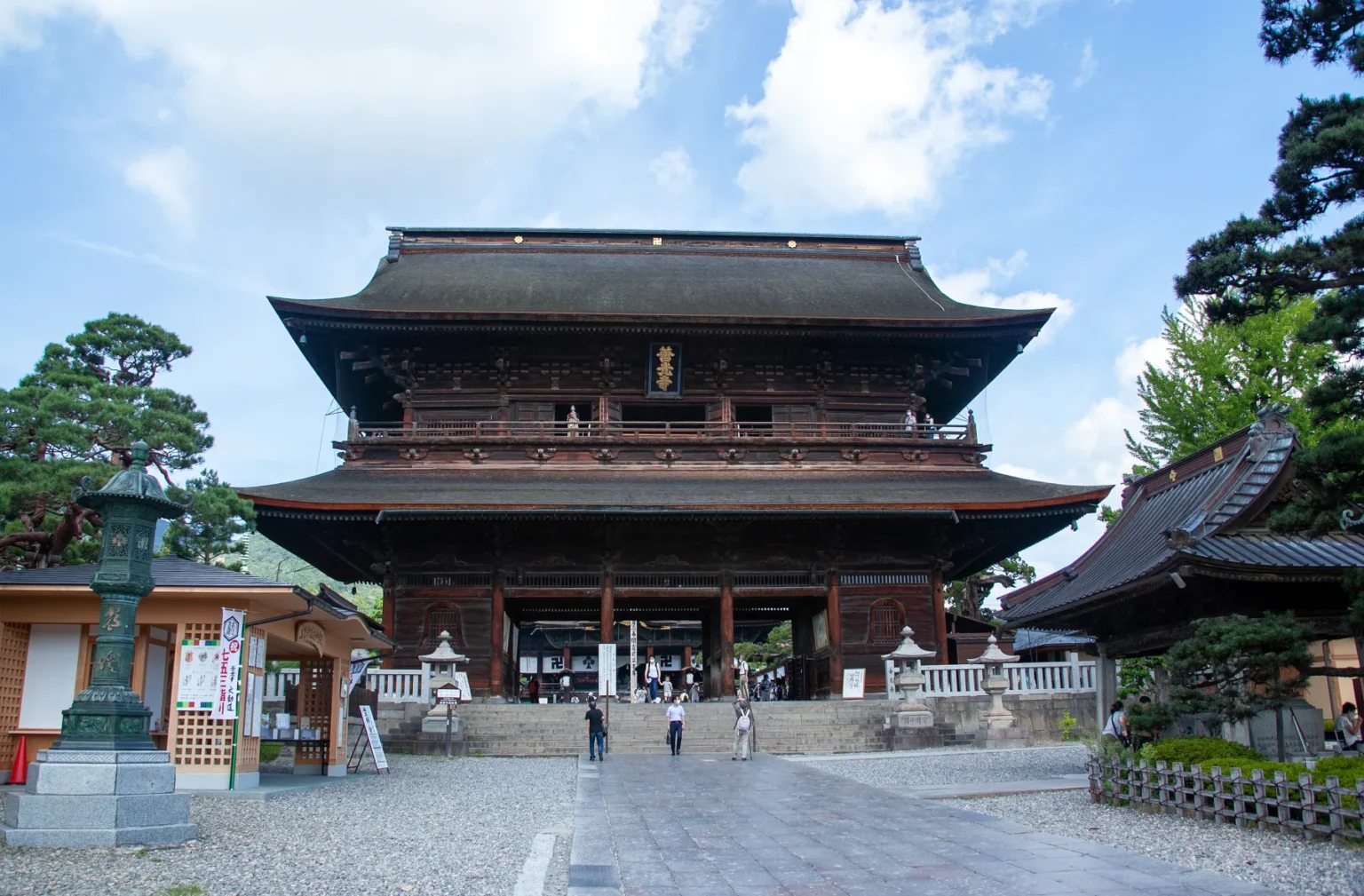
Spring 2027: the Gokaicho. From 4 April to 19 June 2027, Zenkoji holds its Gokaicho, the unveiling of the stand-in for its hidden Buddha that comes round about once every seven years. Expect a much busier Nagano and book rooms early; my Zenkoji guide has the details.
Yudanaka and Shibu Onsen
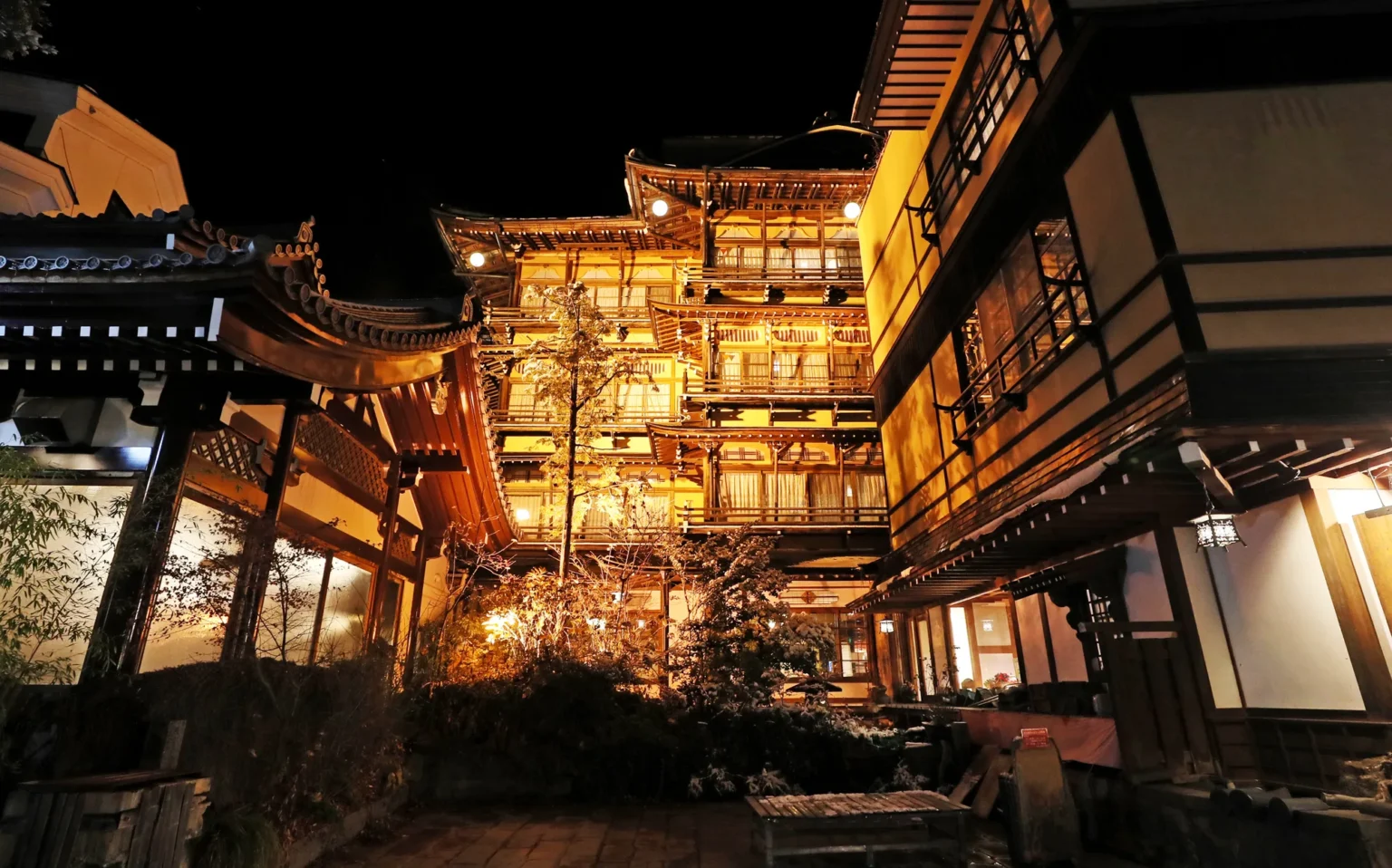
In the afternoon, the Nagano Electric Railway limited express runs from Nagano Station to Yudanaka, from 38 minutes; the fare is ¥1,660 plus a ¥100 limited-express charge. Yudanaka and the neighbouring Shibu Onsen are old hot-spring towns at the foot of the valley the monkeys live in; Shibu’s lane of wooden inns is the nicer place to walk after dark. If you’re new to public baths, read my onsen etiquette guide first.
Day 2: The snow monkeys, then back to Nagano
| Morning | Local bus Yudanaka → Snow Monkey Park stop, about 15 min · ¥390; then about 35 min on foot |
|---|---|
| Park | Jigokudani Yaen-koen · April–October 8:30–17:00, November–March 9:00–16:00 · adults ¥800 until 30 Nov 2026, then ¥1,000 at the gate or ¥880 online |
| Afternoon | Local bus back to Yudanaka (check the return times at the stop), train to Nagano · ¥1,760 |
| Sleep | Near Nagano Station: the green-season Day 3 bus leaves from its east exit at 7:50 |
Jigokudani: wild macaques at a hot-spring pool
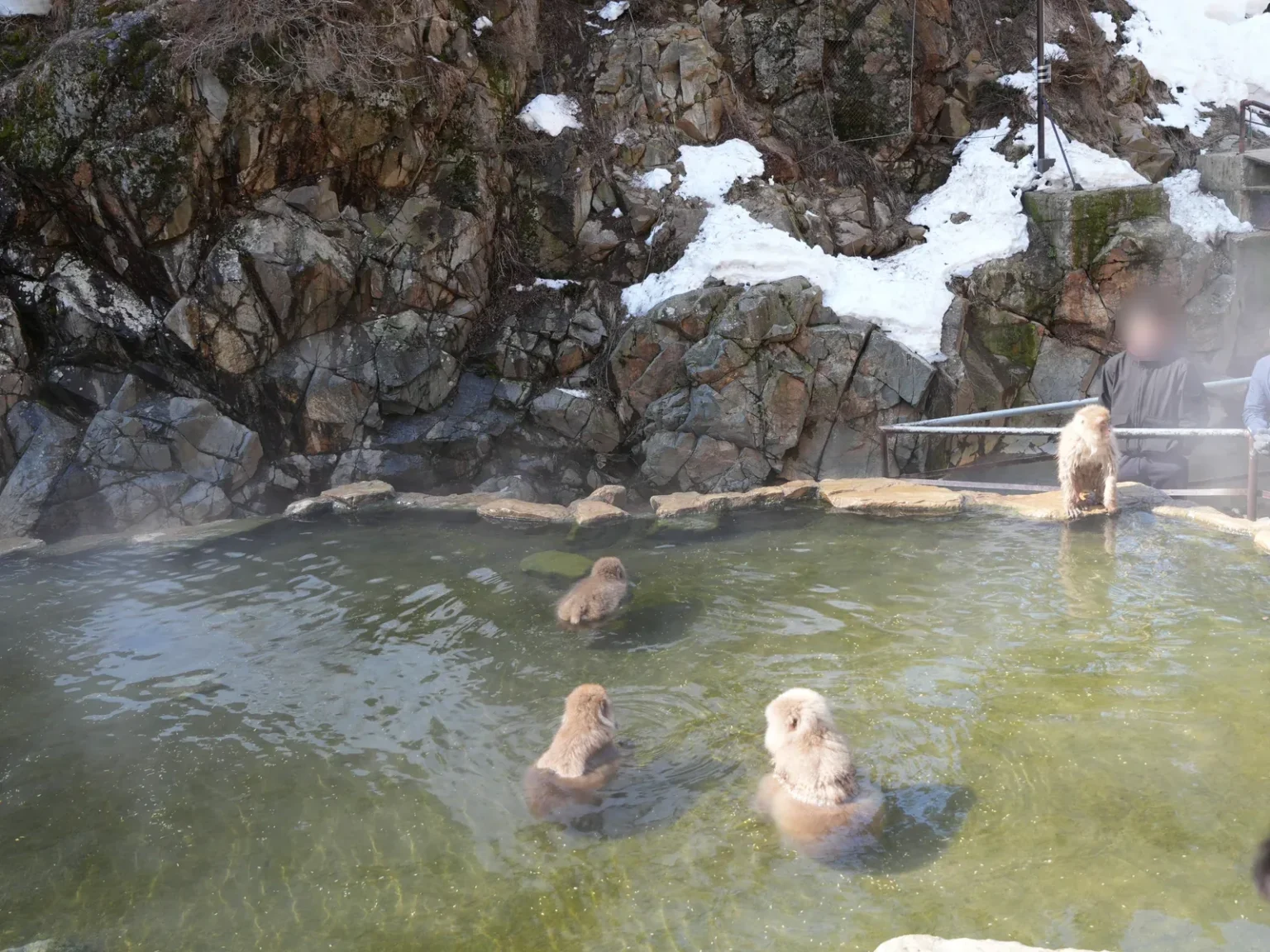
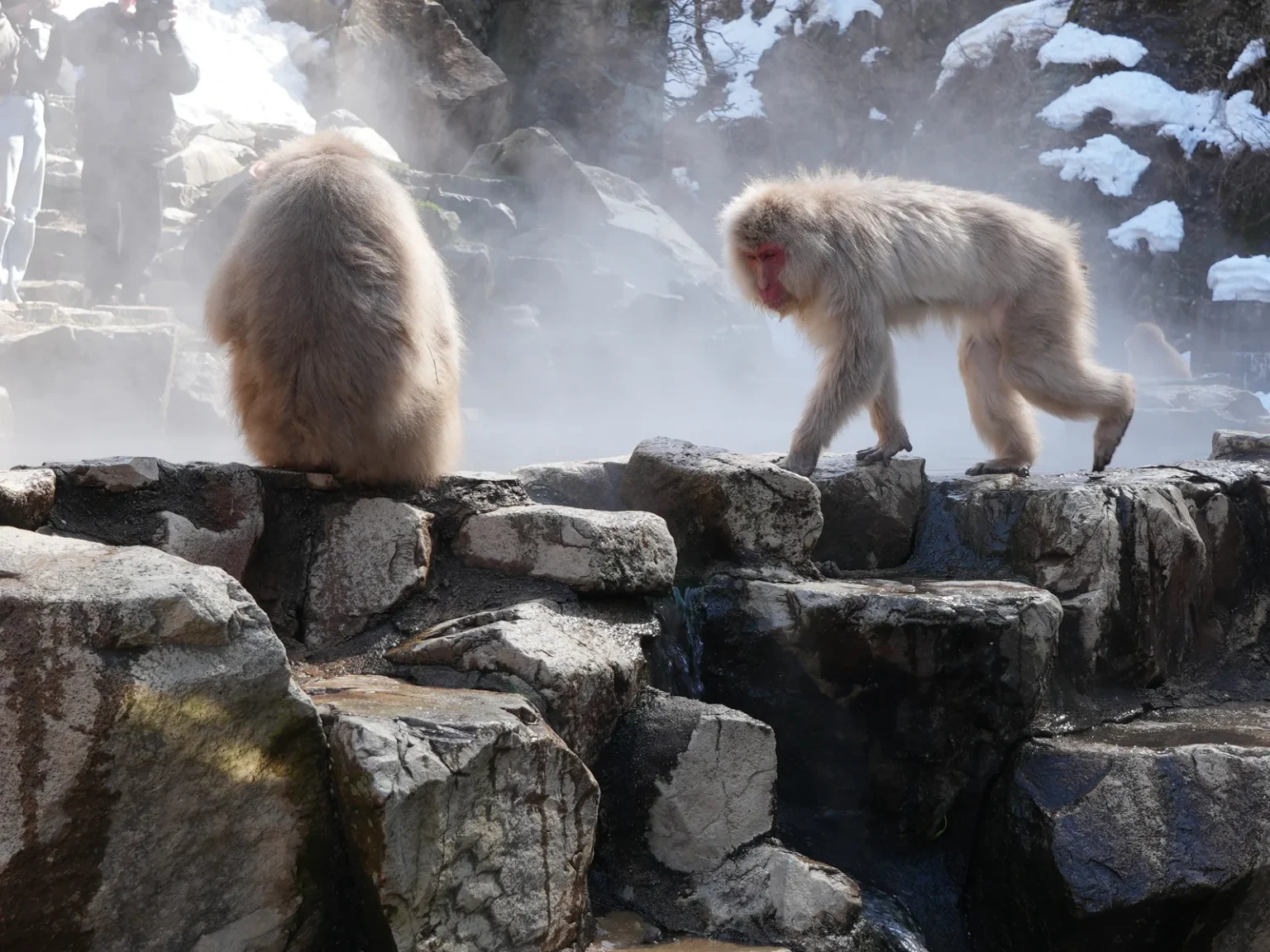
Wild Japanese macaques come down to a hot-spring pool in the valley of the Yokoyu River, at about 850 m. The park says they bathe to keep warm, mostly in the cold months, and never all day or all year; it warns that in autumn they come down irregularly and may not appear at all on some days. I went on 14 March 2025, a clear day with snow still on the slopes, and about five were in the water, with more on the rocks around it. If the bath is what you came for, take the winter version of this route, and check the park’s live camera the morning you go.
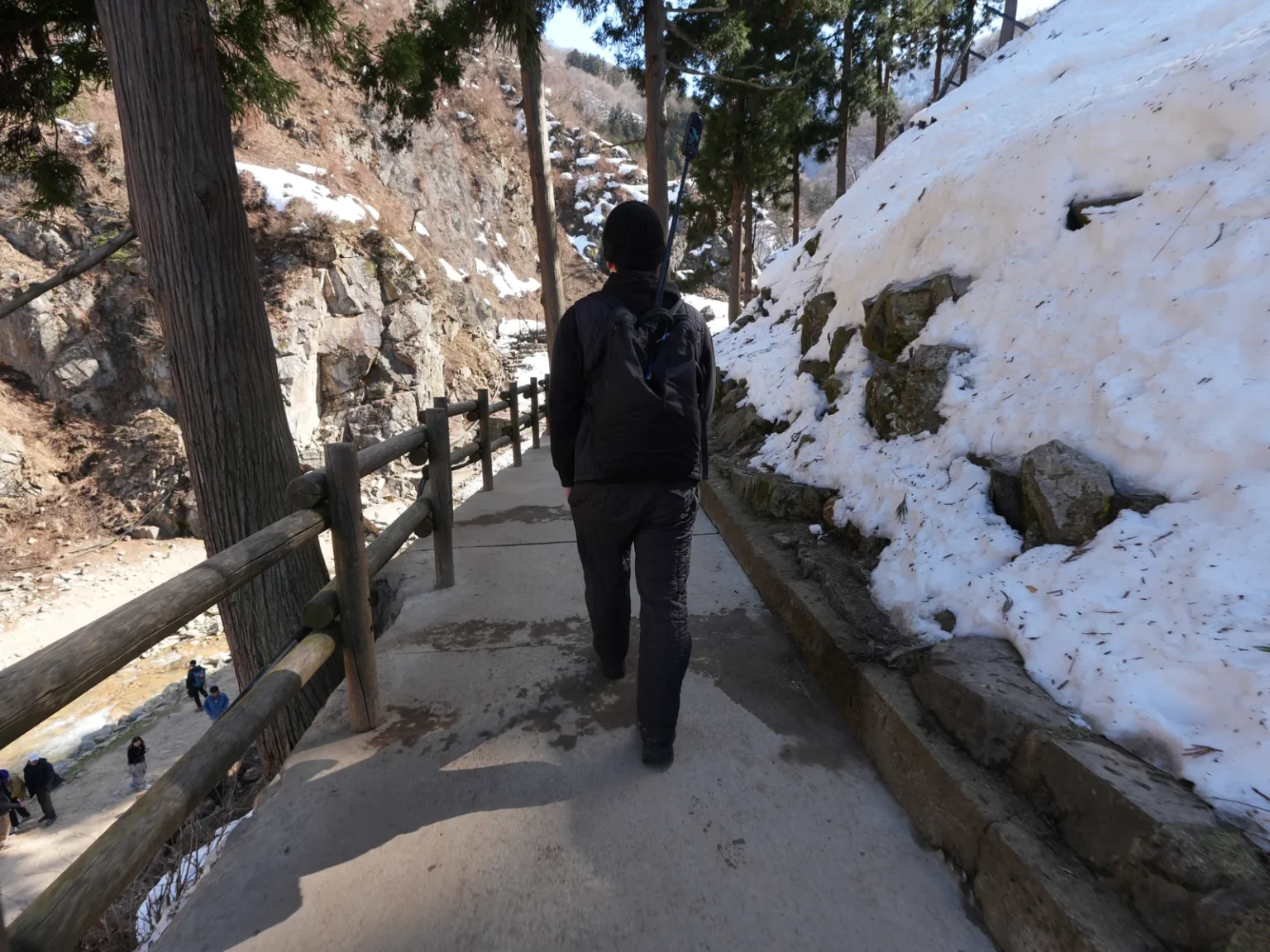
You can’t drive to the pool. From the Snow Monkey Park bus stop it is about 35 minutes on foot, on an unpaved path with steps; in winter the park asks for rubber or snow boots and simple crampons, bought in advance. When I went in March the path was frozen and very slippery, with no guardrail in places. From 1 November to 31 March the park closes at 16:00 and asks you to arrive by 15:30, because there is no lighting in the valley. My Jigokudani guide has the full rules.
Back in Nagano, sleep near the station. That leaves the evening for a second walk up to Zenkoji.
From December to April, the park gives priority entry to visitors with web tickets.
Snow Monkey Park tickets and tours on KlookDay 3 (green season): over the Alps on the Tateyama Kurobe Alpine Route
| Start | Express bus, Nagano Station east exit 7:50 → Ogizawa 9:25 (2026 timetable for 15 April–3 November) |
|---|---|
| Crossing | Kanden Tunnel electric bus to Kurobe Dam, walk across the dam, cable car from Kurobeko, ropeway, electric bus to Murodo (2,450 m) |
| Descent | Highland bus and cable car to Tateyama, train to Dentetsu-Toyama (e.g. Murodo 14:20 → Toyama 16:48 on the 2026 summer timetable) |
| Fare | ¥16,660 Nagano → Dentetsu-Toyama (2026 fare table) |
| Sleep | Toyama, near the station |
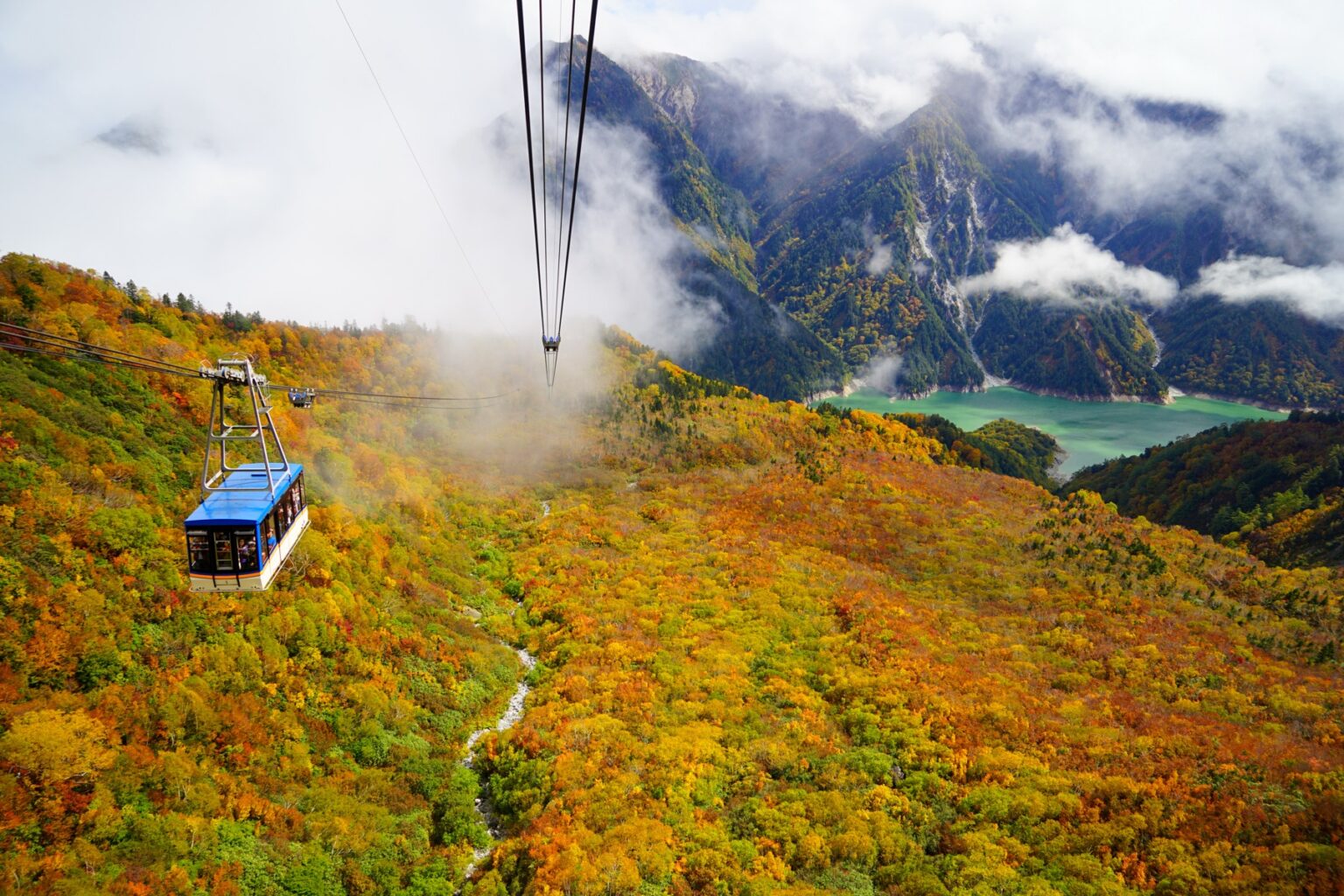
This is the main mountain-crossing day. The Alpine Route chains buses, cable cars and a ropeway over the Tateyama range: an electric bus through the Kanden Tunnel to Kurobe Dam, a cable car, a ropeway, a second electric bus through the mountain, a highland bus and another cable car down to Tateyama Station, then a local train into Toyama. The operator says the crossing from Ogizawa to Tateyama usually takes 6–8 hours including transfers and sightseeing.
Kurobe Dam
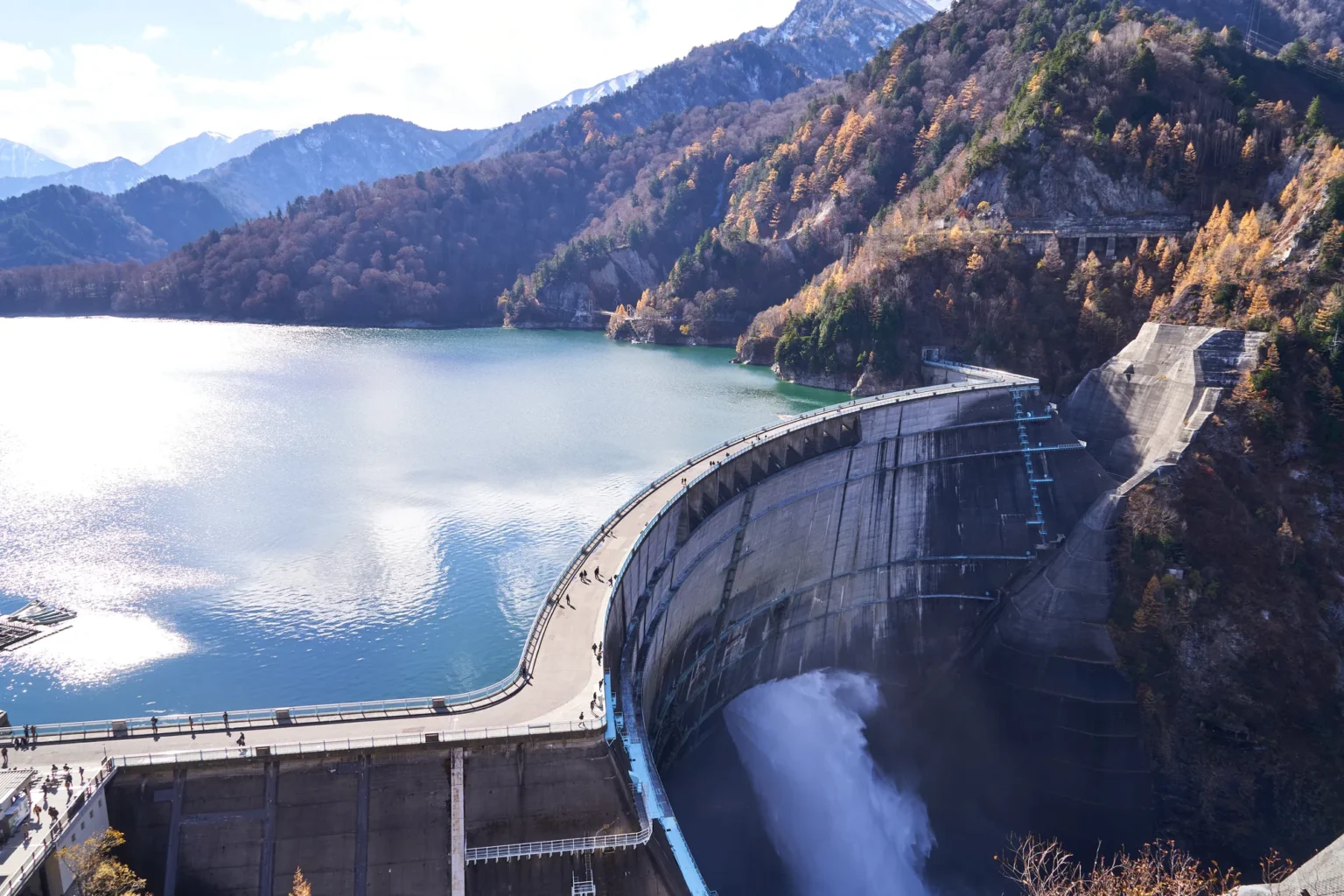
The first stop is the dam itself, 186 m high. You walk across the top of it to the cable car station at Kurobeko.
Murodo, 2,450 m
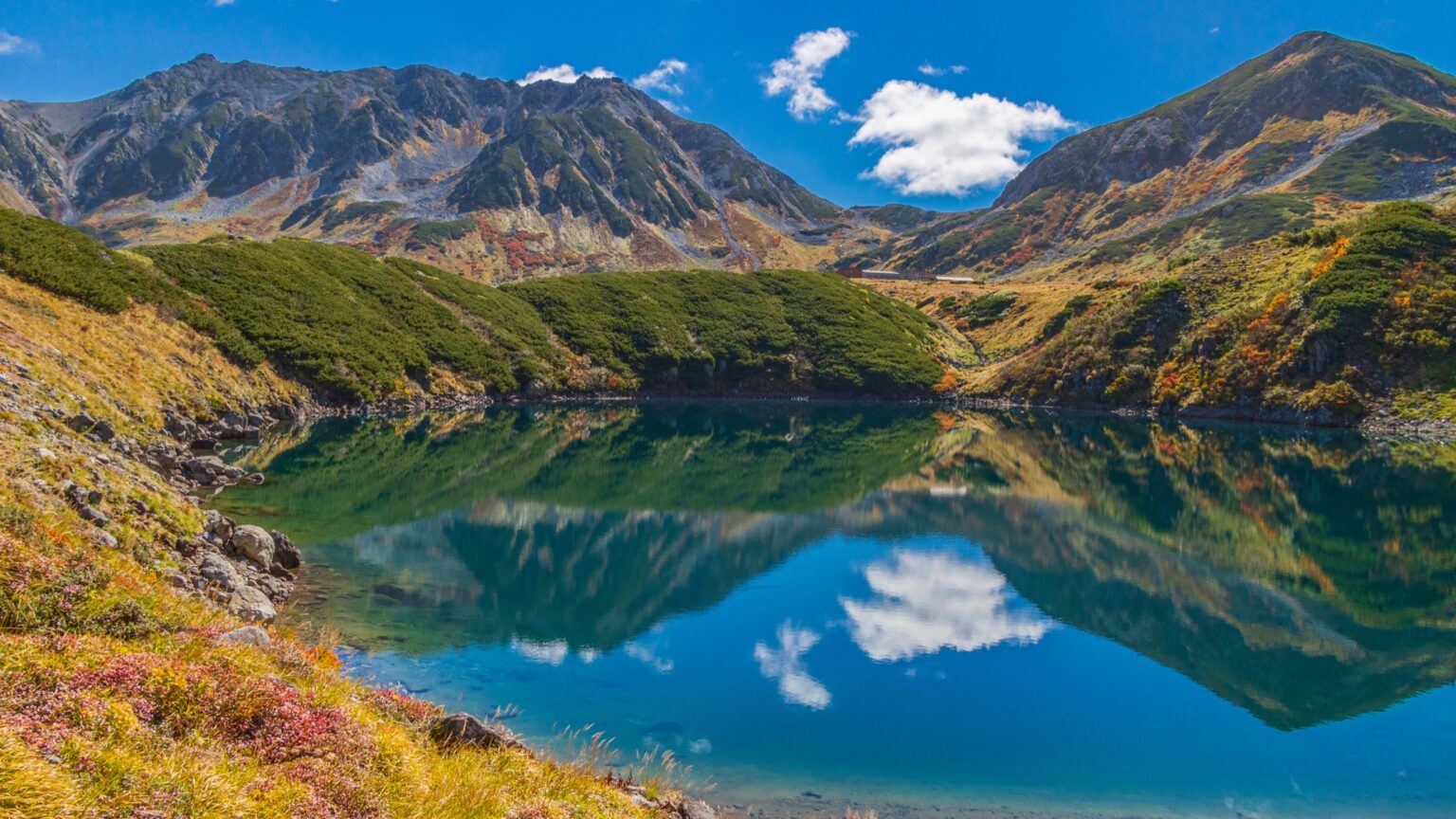
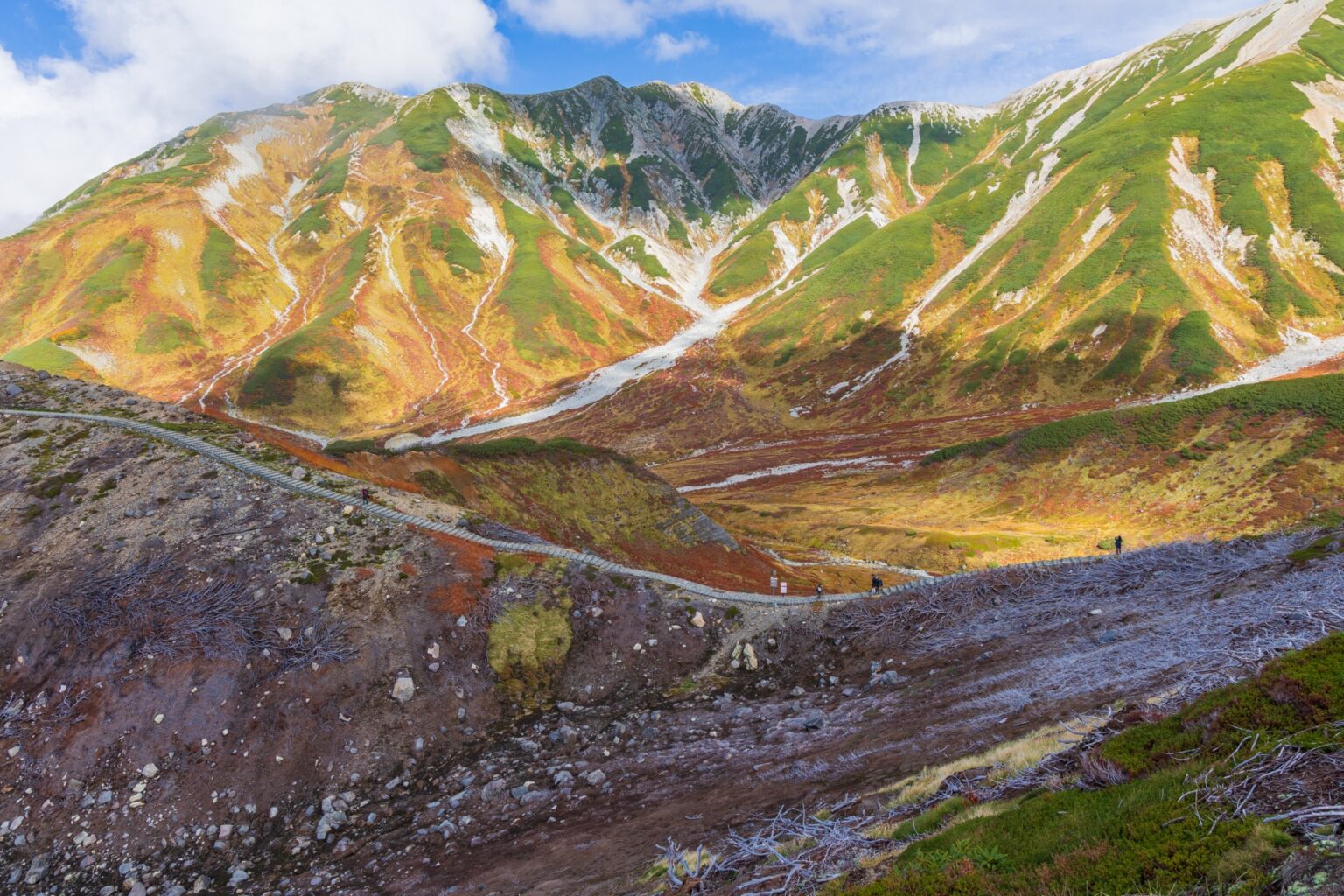
Murodo is the high point. On the 2026 timetable the earliest arrival from Nagano was around 10:55, which leaves about three hours before the 14:20 highland bus down. When the snow has gone, paved paths loop past Mikurigaike pond with the Tateyama ridge behind. It is cold up there even in summer; carry a warm layer. In spring the road at Murodo runs between walls of cleared snow (in 2026 the Snow Wall Walk ran from 15 April to 25 June); in autumn the colour starts at Murodo in mid-September and works down to Bijodaira by late October. My Murodo autumn guide has the timing.
Tickets and bags
Only two legs need a designated boarding time: the Kanden Tunnel electric bus from Ogizawa and the Tateyama cable car from Tateyama. On this route you start at Ogizawa; book that boarding time with the operator’s Web Ticket for busy weekends. Big suitcases are a nuisance on the transfers. Ask your Nagano hotel to send yours by courier to your Kanazawa hotel (two nights later is safer than Toyama the same evening), and carry an overnight bag. The operator’s own same-day forwarding serves specified stations and hotels on the route, not Nagano Station.
2027 season. In 2026 the Alpine Route ran from 15 April to 30 November, but from 4 November it switched to a late-season timetable and the operator warned that the Tateyama highland bus was highly likely to be suspended by snow, especially from mid-November; to be safe, plan a full crossing before mid-November. The operator had not announced its 2027 dates, fares or timetable on 4 November 2026; the times and fare above are from the 2026 season, so check the official site before you book.
Day 4: Kanazawa
| Shinkansen | Toyama → Kanazawa, 22–23 min · ¥2,860 unreserved |
|---|---|
| Morning | Kenrokuen garden, ¥320 · 7:00–18:00 (1 March–15 October), 8:00–17:00 (16 October–end of February) |
| Afternoon | Omicho market, the 21st Century Museum, Higashi Chaya teahouse district |
| Sleep | Near Kanazawa Station: Day 5’s bus leaves from there |
Kenrokuen
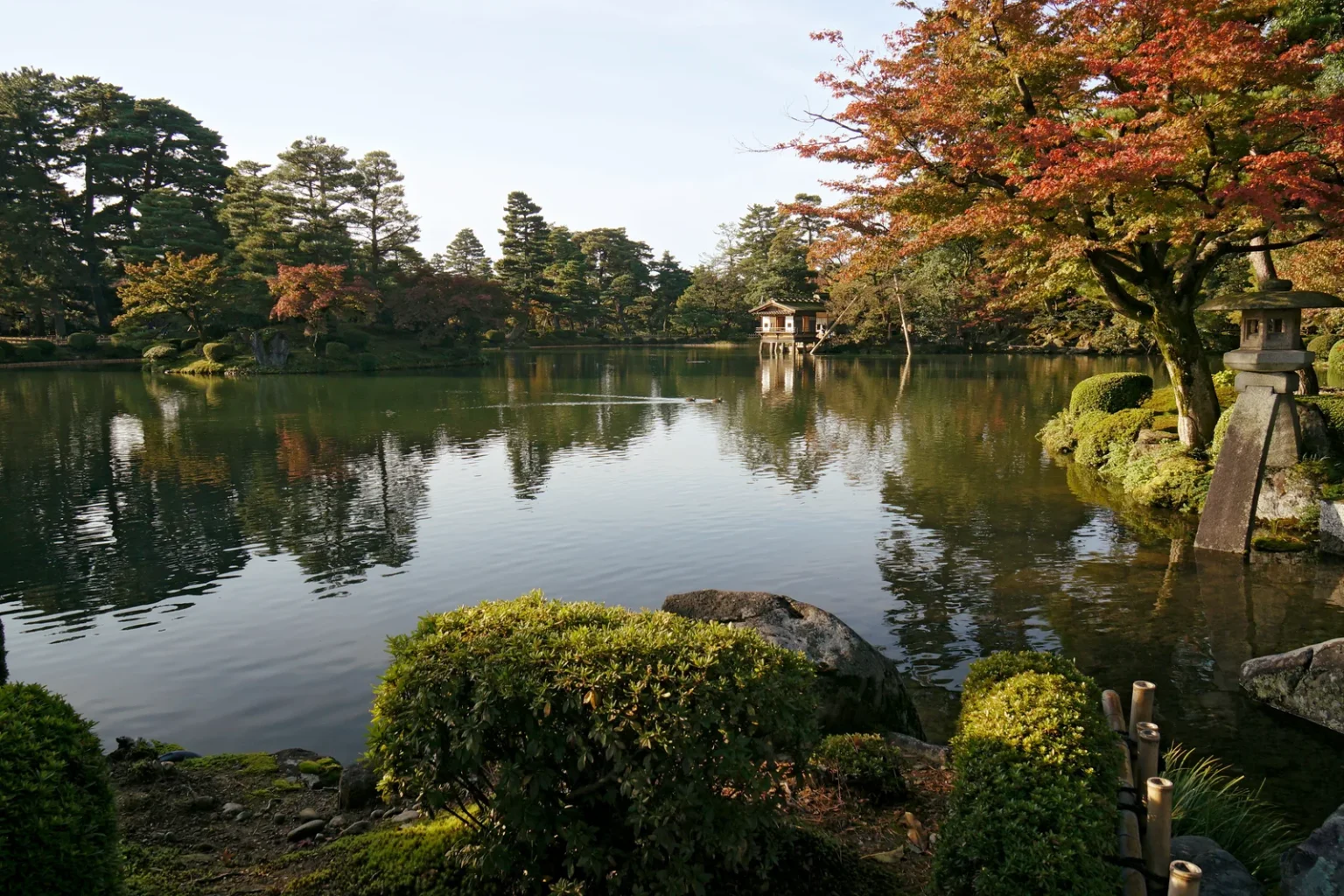
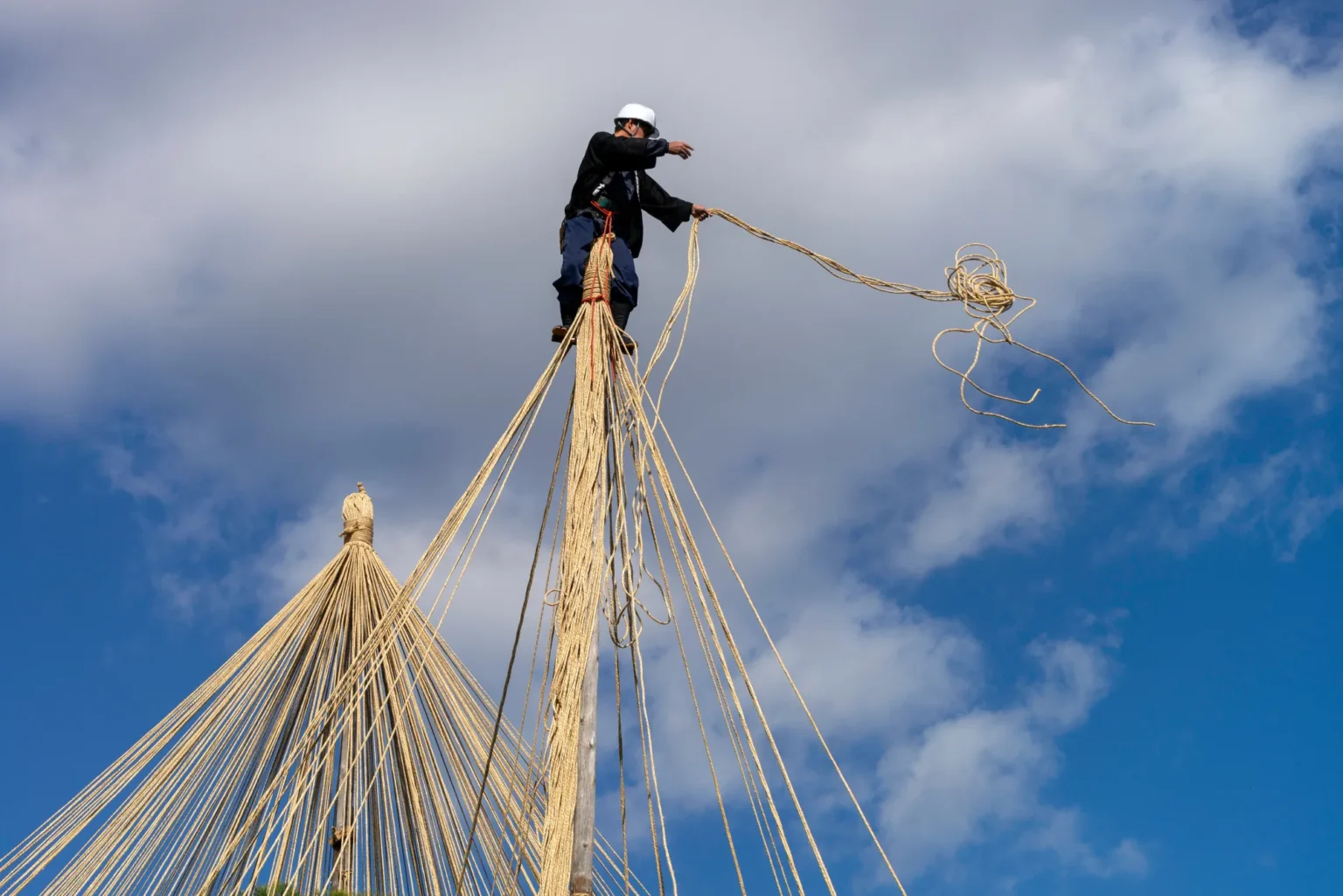
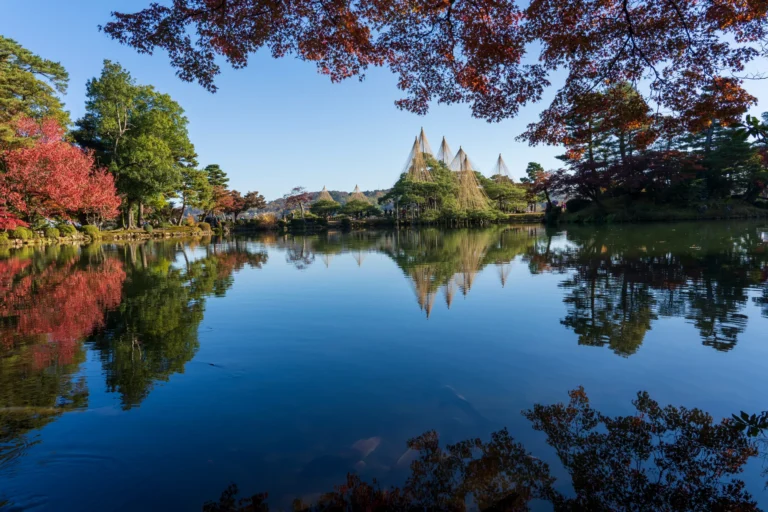
Kenrokuen was the Maeda lords’ garden. Early morning is the quiet time; on many mornings two gates let you in free before the paid hours, and my Kenrokuen guide lists the times by month. From November the gardeners tie the yukitsuri, cones of rope that hold up the pine branches under wet snow, and they stay up through the winter.
Omicho, the 21st Century Museum and Higashi Chaya
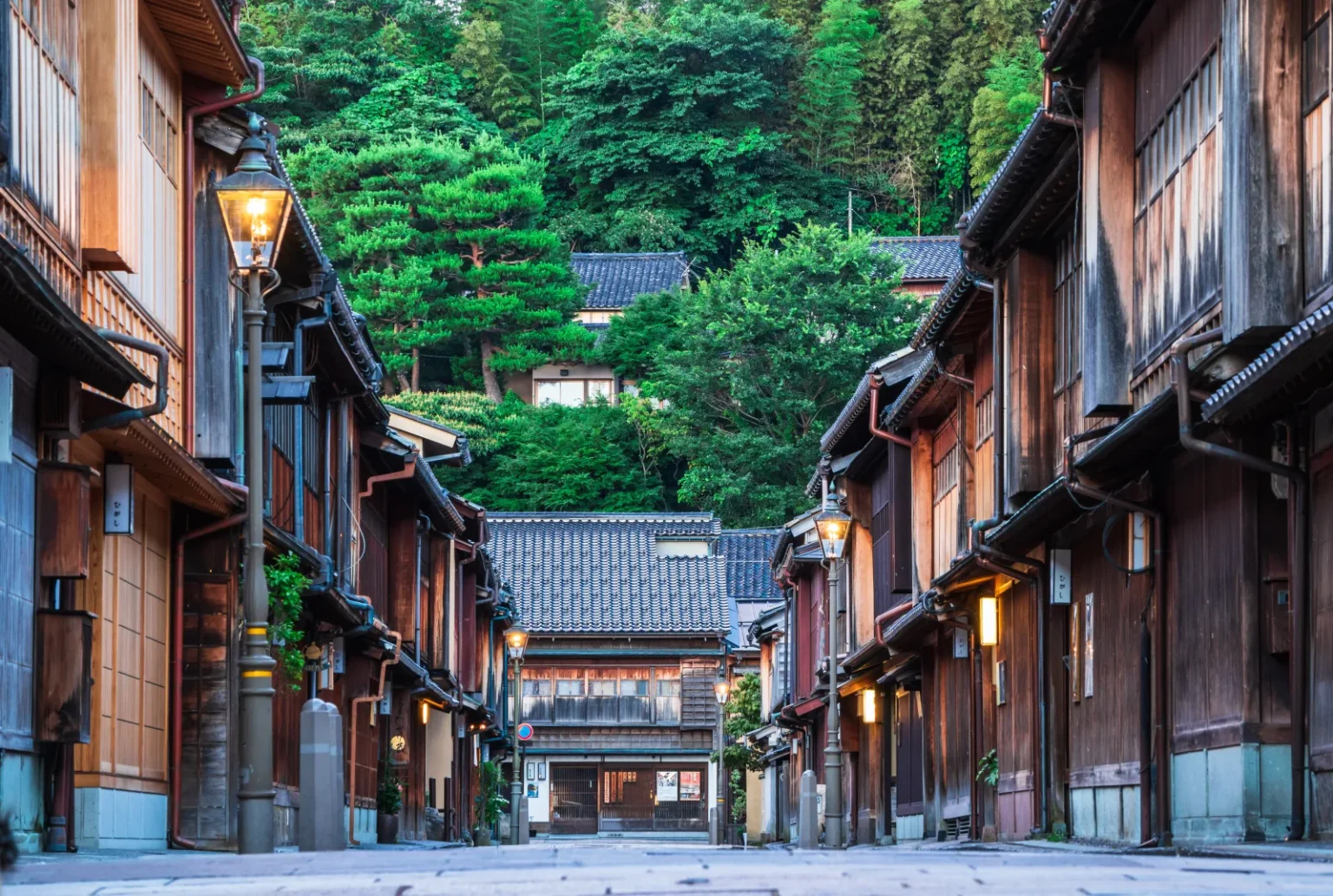
Omicho is the city’s fish and produce market, Kanazawa’s kitchen since the Edo period; check each stall’s hours, which vary. The 21st Century Museum next to Kenrokuen has free public areas, so you can walk through even without an exhibition ticket; note that it closes for a long renovation from 6 May 2027 until March 2028. End the day in Higashi Chaya, the old geisha quarter of wooden teahouses, when the day-trippers thin out.
Day 5: Shirakawa-go, then Takayama
| Bus | Kanazawa Station → Shirakawa-go, about 1 h 15–25 min (e.g. 8:10 → 9:25) · ¥2,900 from 1 December 2026 |
|---|---|
| Village | Ogimachi on foot; Shiroyama viewpoint; Gassho-zukuri Minka-en, ¥800 |
| Bus | Shirakawa-go → Takayama, 50–67 min · ¥2,900; last buses 17:25 and 17:30, but aim for an earlier one |
| Sleep | Takayama (see Where to stay) |
Take an early bus: tour coaches start arriving at Shirakawa-go around 10:00, and the village is far calmer before then. On the timetable from 1 December 2026, buses leave Kanazawa at 8:10, 8:40 and 9:10 among others, and some services are reservation-only; book on Japan Bus Online once your dates are fixed. Nohi Bus warns that traffic and snow can delay buses at Shirakawa-go by two hours or more, so plan to leave on an afternoon bus rather than the last one. From 1 December 2026 both legs cost ¥2,900 (they were ¥2,800).
Ogimachi and the gassho farmhouses
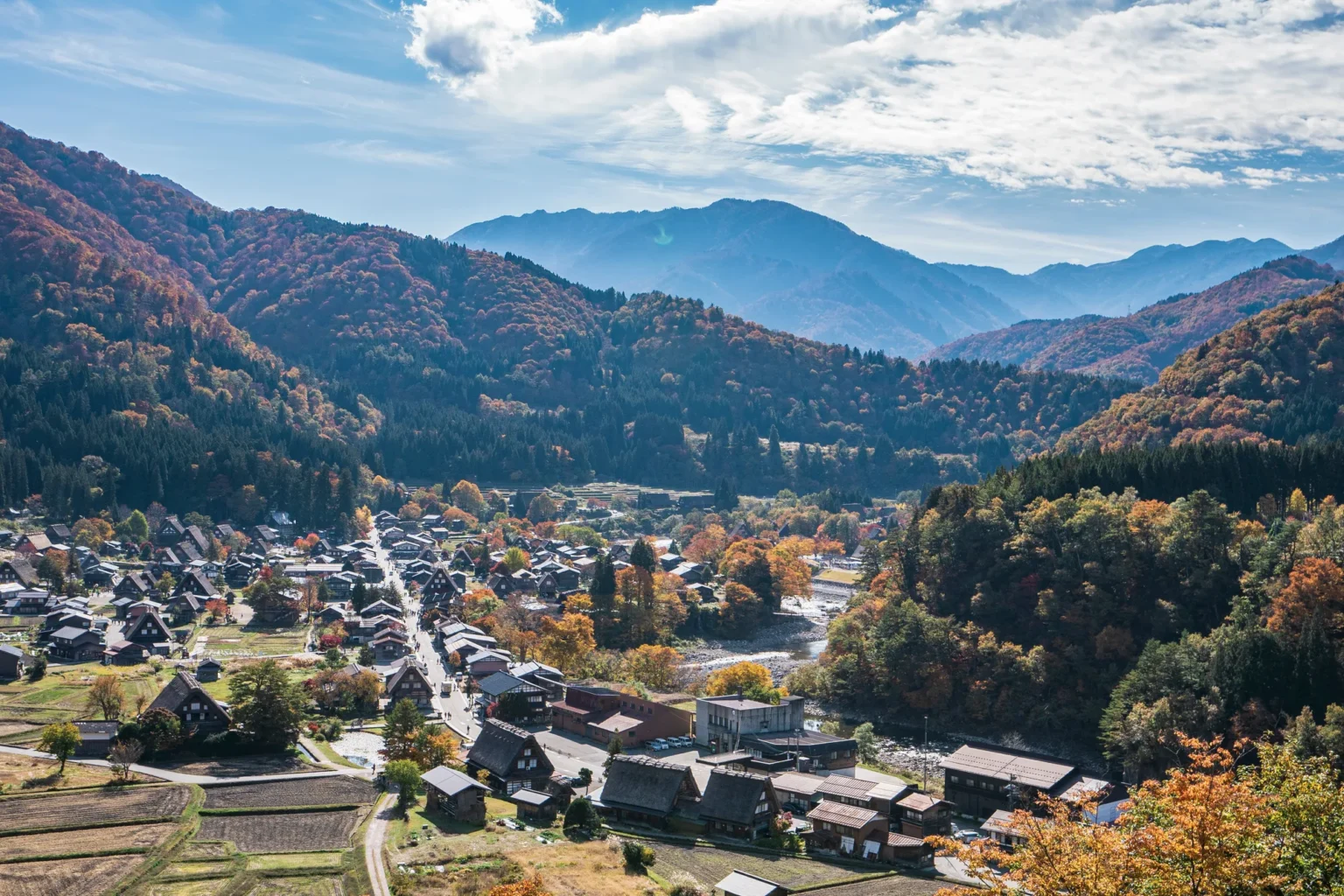
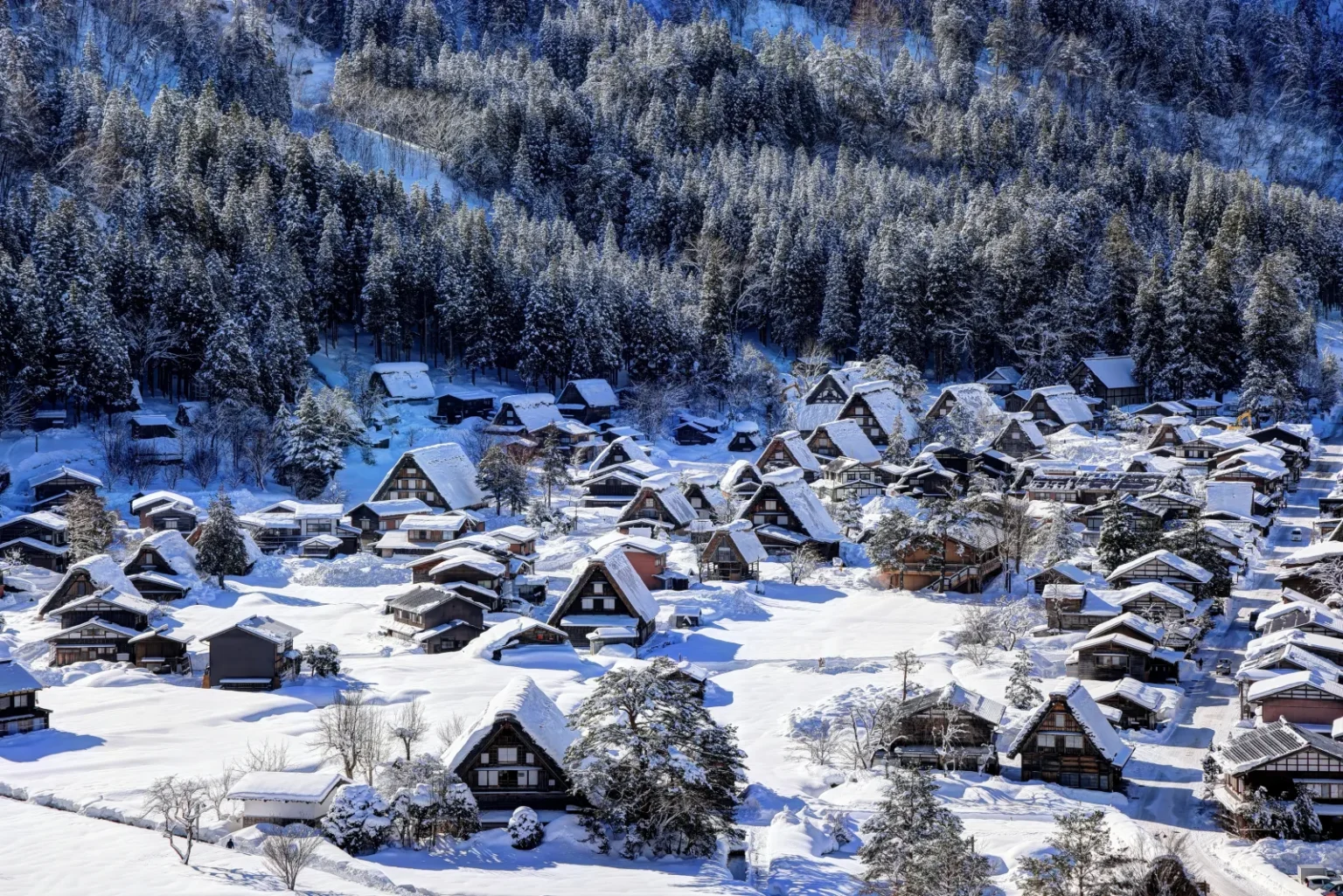
Ogimachi, the main village, has more than a hundred thatched gassho-zukuri farmhouses, their steep roofs built for heavy snow. Walk up to the Shiroyama viewpoint for the view over the village, then through the lanes. The Gassho-zukuri Minka-en, an open-air museum of farmhouses, charges ¥800; from December to February it closes on Thursdays.
Want the village after dark? Swap the Takayama night for a farmhouse inn in Shirakawa-go and take a morning bus on; Day 6 then starts in Takayama a few hours later. My practical guide to Shirakawa-go covers the houses, fees and the winter light-up.
Day 6: Takayama
| Early | Miyagawa morning market: 7:00–12:00 April–November, 8:00–12:00 December–March |
|---|---|
| Morning | Takayama Jinya, ¥500 · 8:45–17:00 (to 16:30 November–March) |
| Afternoon | Sanmachi old merchant streets and sake breweries; or the Hida Folk Village |
Takayama Jinya
The Jinya was the shogunate’s government office for the Hida region, and it is the only one of its kind in Japan that survives with its main buildings. Admission rose to ¥500 in April 2026; allow about 30 minutes. The Miyagawa morning market runs along the river until noon.
Sanmachi and the breweries
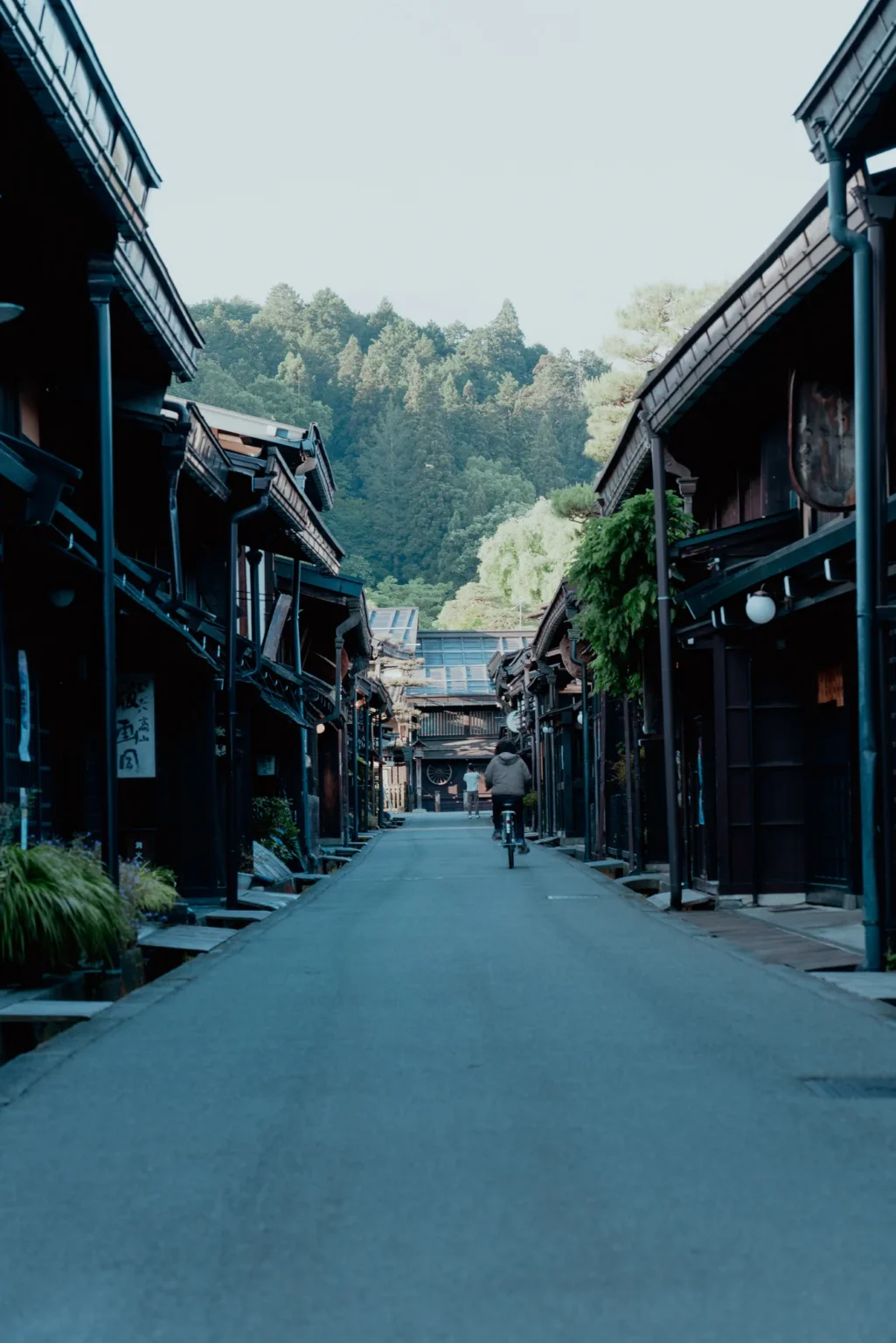
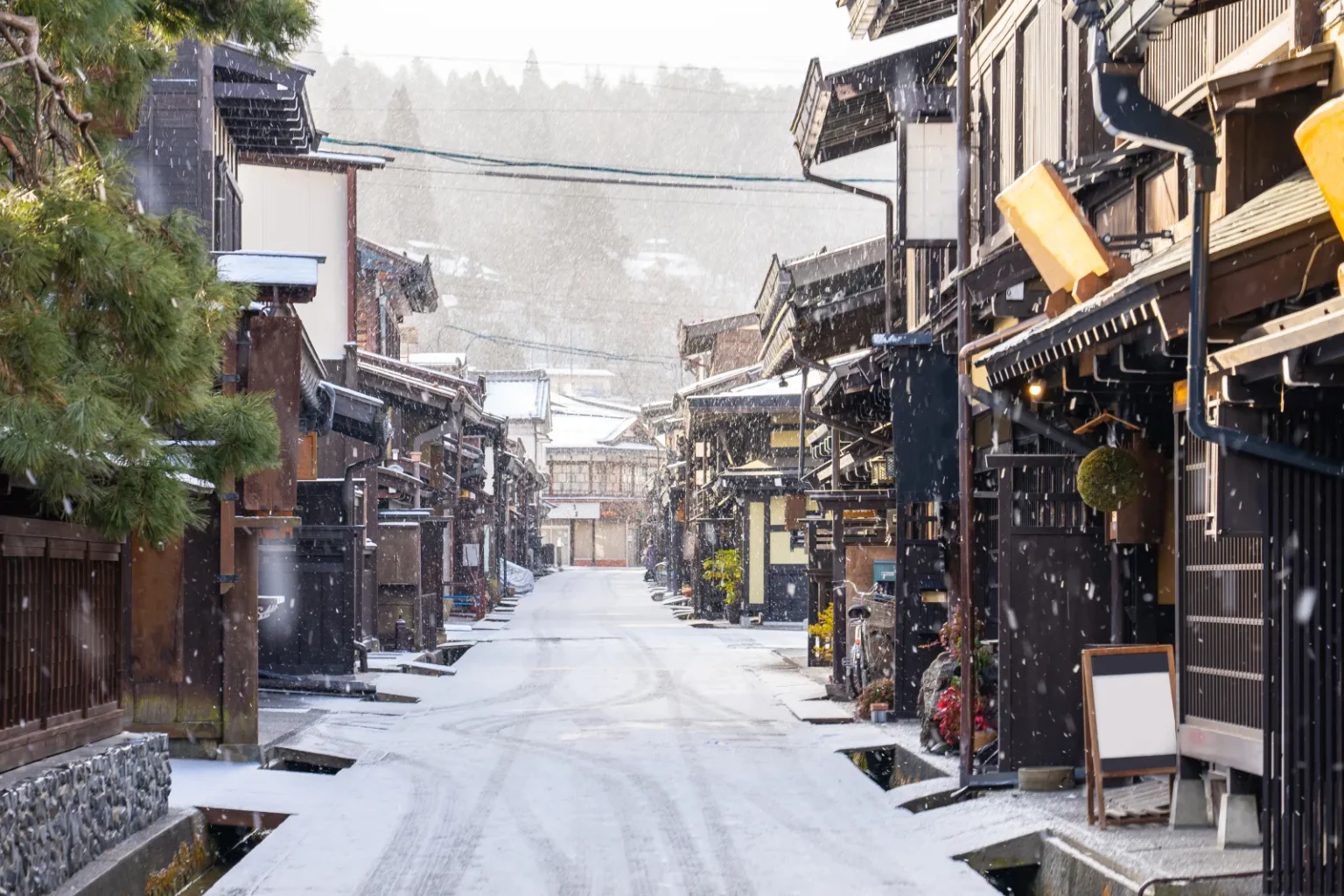
In the Sanmachi streets, a ball of cedar leaves hung over a doorway marks a sake brewery, and several pour tastings. With a spare afternoon, take a short local train ride north to Hida-Furukawa, a smaller and quieter version of the same canal-and-storehouse town, or the bus to the Hida Folk Village, an open-air museum of old farmhouses from around the region.
Day 7: Takayama to Tokyo
| Limited express | Hida, Takayama → Nagoya, about 2 h 30 min · ¥5,610 unreserved (all seats reserved on peak dates, including 25 December 2026–5 January 2027) |
|---|---|
| Shinkansen | Nozomi, Nagoya → Tokyo, about 1 h 40 min · ¥10,560 unreserved (all seats reserved on JR Central’s peak dates, including 21–23 November 2026, 25 December 2026–5 January 2027, 9–11 January and 20–22 March 2027) |
The Hida takes about 2 h 30 min and the Nozomi about 1 h 40 min, so with the change at Nagoya, allow about four and a half hours. On those dates there are no unreserved cars (the Hida from 25 December 2026 to 5 January 2027; the Nozomi on all the dates listed in the table), so book seats ahead.
The winter version (December–March)
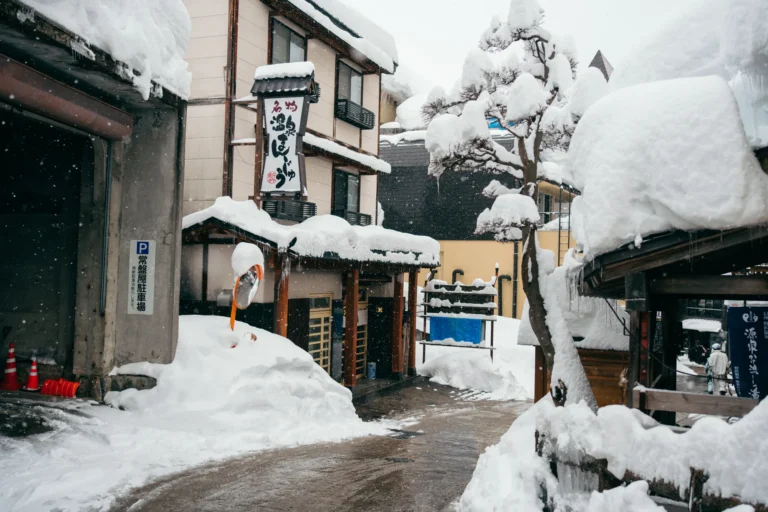
The Alpine Route closes for the winter, so Days 3 and 4 change; everything else stays. Winter is the better season for two of the route’s stops: the monkeys bathe in the cold months, and Shirakawa-go is under snow.
| Day | Winter plan |
|---|---|
| 1 | Tokyo → Nagano, Zenkoji, Nagano Electric Railway to Yudanaka · sleep Yudanaka or Shibu Onsen |
| 2 | Snow monkeys (arrive by 15:30), back to Nagano · sleep Nagano |
| 3 | Zenkoji’s morning service at dawn (about 7:00 in midwinter), then Hokuriku Shinkansen Nagano → Kanazawa, 1 h 27 min, ¥8,640 unreserved · sleep Kanazawa |
| 4 | Kanazawa: Kenrokuen’s yukitsuri ropes, Omicho, Higashi Chaya · sleep Kanazawa |
| 5–7 | As above: Shirakawa-go and Takayama, then the Hida and the shinkansen home |
What changes in winter
- Snow monkeys: open 9:00–16:00; you can’t enter at 16:00. Wear snow boots and simple crampons. From 5 December 2026 to 5 April 2027, Nagaden’s Ex24 express bus also runs from Nagano Station’s east exit to the Snow Monkey Park stop in about 50 minutes, if you would rather base yourself in Nagano; see my Jigokudani guide.
- Zenkoji at dawn: the o-asaji morning service starts at sunrise, about 7:00 in midwinter, and anyone with an inner sanctum ticket can attend.
- Kenrokuen: 8:00–17:00 in winter; the gravel paths can be slippery.
- Shirakawa-go light-up: 11, 17, 24 and 31 January 2027, 17:30–19:30, by advance reservation only; without a booking you are turned away. Bookings for 11 January opened on 13 October 2026. The last buses to Takayama leave before it starts, so on a light-up night either sleep in the village or join an organised light-up tour from Takayama; my Shirakawa-go guide explains the options.
- Buses in snow: Nohi Bus warns of delays of two hours or more in snow or when the expressway closes.
- Hida limited express: all seats reserved from 25 December 2026 to 5 January 2027.
What it costs
| Leg | Green season | Winter |
|---|---|---|
| Tokyo → Nagano (unreserved) | ¥7,920 | ¥7,920 |
| Nagano ⇄ Yudanaka (limited express) | ¥3,520 | ¥3,520 |
| Alpine Route, Nagano → Dentetsu-Toyama (2026 fare) | ¥16,660 | — |
| Toyama → Kanazawa (unreserved) | ¥2,860 | — |
| Nagano → Kanazawa (unreserved) | — | ¥8,640 |
| Kanazawa → Shirakawa-go → Takayama (bus, from 1 Dec 2026) | ¥5,800 | ¥5,800 |
| Takayama → Nagoya (unreserved) | ¥5,610 | ¥5,610 |
| Nagoya → Tokyo (unreserved) | ¥10,560 | ¥10,560 |
| Total | About ¥53,000 | About ¥42,000 |
Regular-season fares bought leg by leg, from fare searches in October and November 2026, the Alpine Route’s 2026 fare table and Hokuriku Railroad’s fare notice for the buses from 1 December 2026. Local buses (including the ¥390 each way to the monkeys), entry fees and hotels are extra. For the JR legs, a reserved seat costs a few hundred yen more than the unreserved fares listed, and on peak dates (the Hida from 25 December 2026 to 5 January 2027; the Nozomi on JR Central’s listed peak dates) only reserved seats are sold. Check the fare for your date before you budget.
Where to stay on the Emerald Route
Three places for the stops where the choice matters most (Takayama covers two nights), picked for how they fit a trip without a car. Details are from each property’s own pages; check rates and room types on the booking page. In Nagano and Toyama, sleep near the station: the green-season Day 3 bus leaves Nagano Station at 7:50.
Yudanaka: Yorozuya, a historic bath
Its official site gives a 7-minute walk from Yudanaka Station. Its Momoyama Bath has been a Registered Tangible Cultural Property since 2003, and the baths are for staying guests only.
- Who it suits: anyone who wants an old bathhouse at the end of Day 1, a short walk from the train.
- Catch: ask the inn about its tattoo policy before you book.
Paid link: I may earn a commission if you book. Check Yorozuya on Booking.com
Kanazawa: Hyatt House Kanazawa, by the station
The hotel says it is right next to Kanazawa Station, which is where the Day 5 bus to Shirakawa-go leaves from; it is also a dry base on wet or snowy days.
- Who it suits: anyone catching the 8:10 bus, and winter travellers.
- Catch: Higashi Chaya and Kenrokuen are a bus ride away, not a walk.
Paid link: I may earn a commission if you book. Check Hyatt House Kanazawa on Booking.com
Takayama: Tokyu Stay Hida-Takayama Musubi no Yu
The hotel says it is a two-minute walk from JR Takayama Station and a short distance from the Nohi Bus Center, where the Shirakawa-go bus arrives and the Day 7 train leaves.
- Who it suits: two nights in Takayama with no luggage hauling.
- Catch: check the bath and tattoo rules with the hotel before you book.
Paid link: I may earn a commission if you book. Check Tokyu Stay Hida-Takayama on Booking.com
When to go, and what to book ahead
| When | What to expect |
|---|---|
| Mid-April–June | The Alpine Route opens with snow still deep at Murodo (in 2026, on 15 April). Green valleys below. In 2027, Zenkoji’s Gokaicho runs 4 April–19 June. |
| July–August | Murodo, at 2,450 m, is far cooler than Kanazawa and the valleys. The monkeys rarely get into the pool. |
| Late September–October | Autumn colour moves down the Alpine Route from Murodo to Bijodaira. Reserve a boarding time for busy weekends. |
| November | Kenrokuen’s colour and yukitsuri ropes. The Alpine Route stayed open to 30 November in 2026, but the operator warned that snow-related suspension of the highland bus was highly likely from mid-November, so the winter version is safer for late November. |
| December–March | The winter version: bathing monkeys, Kanazawa and Shirakawa-go in snow, the January light-up. |
Book ahead: the Kanazawa–Shirakawa-go–Takayama buses, a Yudanaka inn, the Alpine Route boarding time for weekends, the Hida and Nozomi on peak dates, Nagano rooms during the 2027 Gokaicho, and in January, the Shirakawa-go light-up.
Questions
Can I do this Japan Alps itinerary in winter?
Yes. Use the winter version above: the Alpine Route is closed, so Day 3 goes from Nagano to Kanazawa on the Hokuriku Shinkansen.
When does the Alpine Route open in 2027?
Not announced yet. In 2026 it ran from 15 April to 30 November; the operator warned that snow-related suspension of the highland bus was highly likely from mid-November. Check the operator’s official site before you book Day 3.
Do I need a car?
No. The Alpine Route is closed to private cars anyway: drivers park at Ogizawa or Tateyama and continue on the route’s own buses and cable cars. Every other leg is a train or a scheduled bus.
What do I do with my suitcase on the Alpine Route?
Send it ahead by courier from your Nagano hotel to your Toyama or Kanazawa hotel and confirm the delivery date when you send it. The operator’s own same-day forwarding serves specified stations and hotels on the route, not Nagano Station.
Will I see the monkeys in the hot spring?
Most likely in winter. The park says they bathe to keep warm, mostly in the cold months, and that in autumn they come down irregularly and may not appear at all on some days. Check its live camera on the morning you go.
Can I start from Osaka or Kyoto instead?
Yes: run it in reverse from Nagoya, which is a short shinkansen ride from Kyoto, and finish with the shinkansen from Nagano to Tokyo.
Is a rail pass worth it?
For this route, usually not on its own: the Alpine Route and the Shirakawa-go buses are not JR, and they are about ¥22,500 of the green-season total. Compare any pass with the JR legs only.
Sources
Tateyama Kurobe Alpine Route (2026 season, fare table as of 27 February 2026, 2026 timetables, FAQ, baggage service); Zenkoji (fees from April 2026, Gokaicho 2027); Jigokudani Yaen-koen (hours, rules, fee revision of 1 December 2026); Nagano Electric Railway fare table (1 December 2025) and Nagaden Bus (Ex24); Ishikawa Prefecture (Kenrokuen); 21st Century Museum (closure from 6 May 2027); Nohi Bus (timetable from 1 December 2026, delays, Minka-en); Hokuriku Railroad fare notice (1 October 2026); Shirakawa-go Tourist Association (2027 light-up); Takayama Jinya; JR Central (Hida and Nozomi all-reserved periods); rail fares from ekitan searches, October–November 2026; each hotel’s own site. Checked 4 November 2026.
Plan the rest of your trip
Beyond the Golden Route
The three week-long routes side by side: Hokkaido–Tohoku, the Japan Alps and Kyushu.
Nagano in winter, 4 days
The snow monkeys, Zenkoji and Nozawa Onsen, if you want more time in Nagano.
Nagano’s High Country
Seven alpine escapes in Nagano, sorted by altitude.
One day in the Kiso Valley
Narai-juku to Tsumago by train, on the old road between Kyoto and Edo.
Sapphire Route
Sapporo to Tokyo in seven days, via Hakodate, Oirase and Matsushima.
Ruby Route
A week of Kyushu’s hot springs and volcanoes, from Hakata and back.
Join travelers discovering Japan's hidden side
Weekly dispatches from off-the-beaten-path Japan — spots and stories you won't find in guidebooks.
No spam. Unsubscribe anytime.
Welcome aboard!
You're in. See you in your inbox soon.
thank you