
Fukuoka · Food · Yatai · Nights out
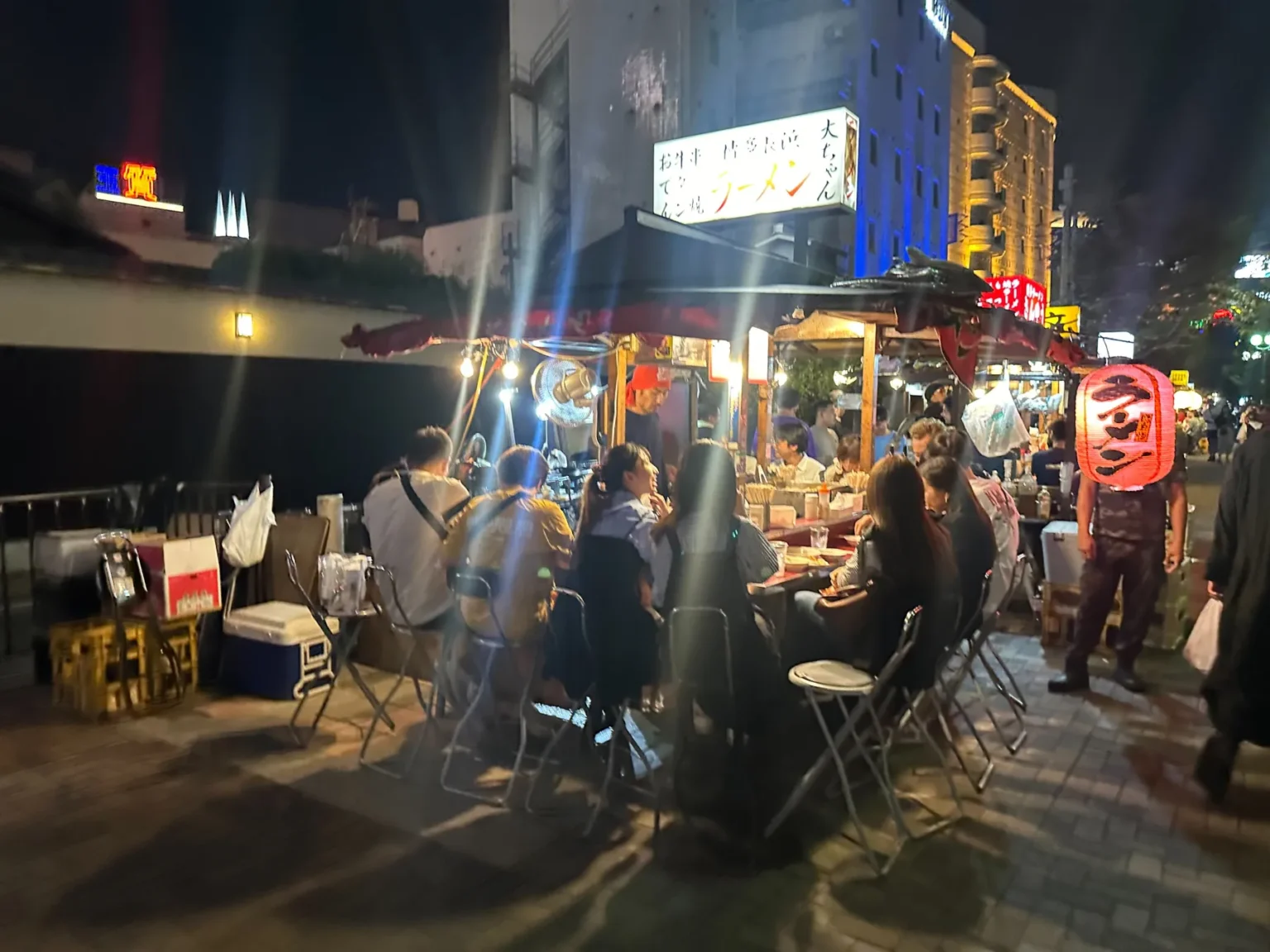
Fukuoka City counts 100 yatai, the street stalls with a counter and a few stools, for the 2026 fiscal year, mostly in Nakasu, Tenjin and Nagahama. Since April 2026 the subway’s extended late trains normally run Monday to Saturday, except public holidays, instead of Fridays only: on the weekday timetable, the last train from Tenjin to Hakata, which terminates there, leaves at 0:39.
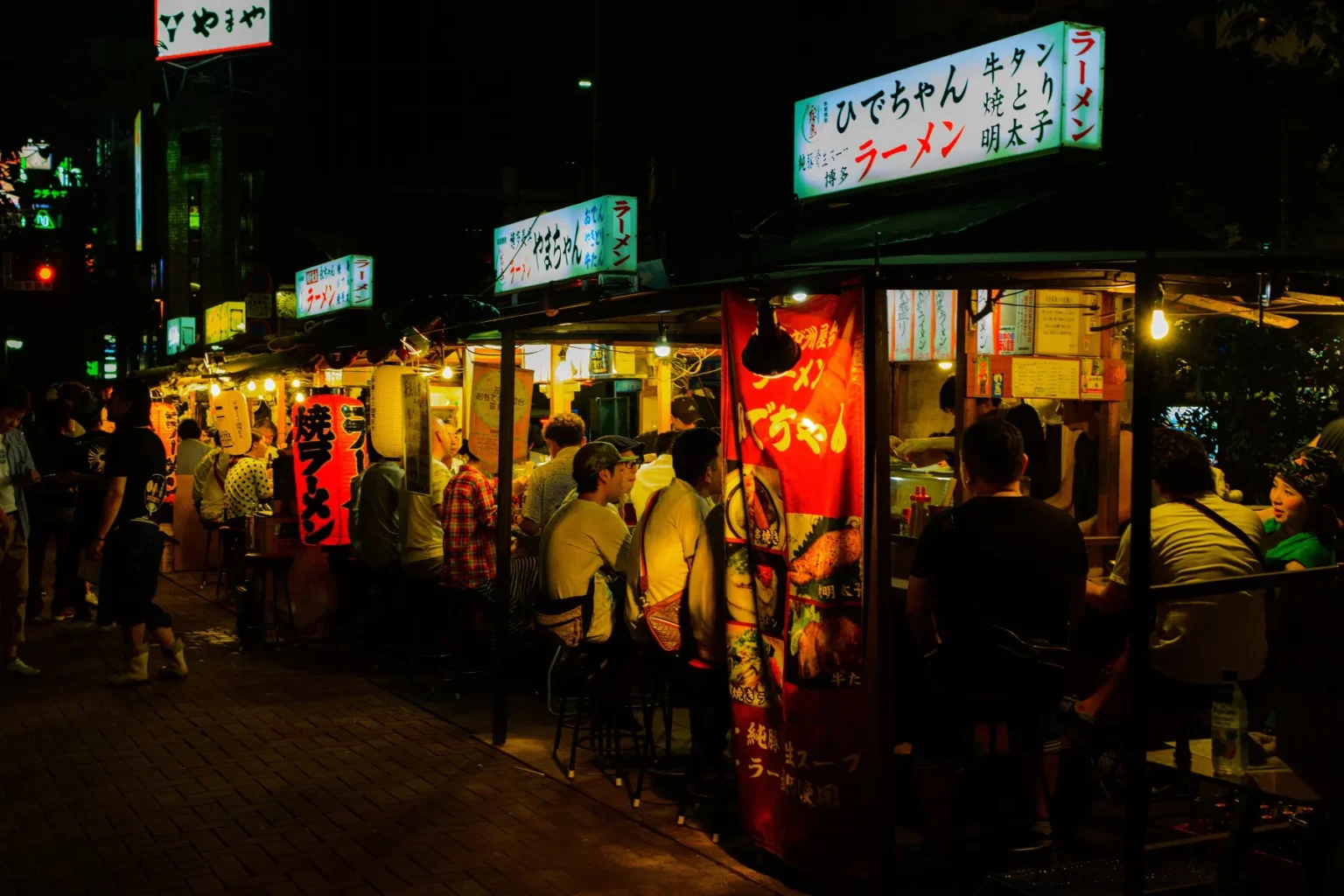
Fukuoka food: what to eat
Tonkotsu ramen is the dish Fukuoka is known for abroad, but the menus are wider than one bowl. These are some Fukuoka specialties and useful menu words.
| Dish | What it is |
|---|---|
| Hakata tonkotsu ramen | Pork-bone broth with thin noodles. Not every bowl in Fukuoka is tonkotsu: the city’s own 2026 food pages also cover soy-sauce and salt ramen. |
| Kaedama | An extra serving of noodles dropped into the soup you still have, not a new bowl. |
| Barikata | “Very firm” noodles. Other common choices are kata (firm), futsu (regular) and yawa (soft). |
| Nagahama ramen | Tonkotsu ramen that grew up around the Nagahama fish market, with very thin noodles that cook fast. |
| Motsunabe | A hotpot of beef offal, cabbage and garlic chives, with garlic and chilli; the soup is soy, miso or another base depending on the shop. Champon noodles often go in at the end. |
| Mizutaki | Chicken and vegetables cooked in chicken stock, served all year. |
| Karashi mentaiko | Seasoned, spicy pollock roe. On menus it turns up on rice, in rolled omelettes and in pasta. |
| Goma-saba | Raw mackerel in a sesame and soy dressing. If you do not eat raw fish, this is the one to skip. |
| Yakitori, Fukuoka style | Pork belly skewers (butabara) are as standard as chicken, often with raw cabbage in a vinegar dressing on the side. |
| Hakata udon and gobo-ten | Udon here is generally soft; gobo-ten is burdock root tempura laid on top. |
One dish you will meet in Fukuoka but which is not a Fukuoka dish: toriten, chicken tempura with ponzu, is an Oita specialty in Japan’s own tourism glossary. Our Taiyoken guide covers a Fukuoka diner known for it.
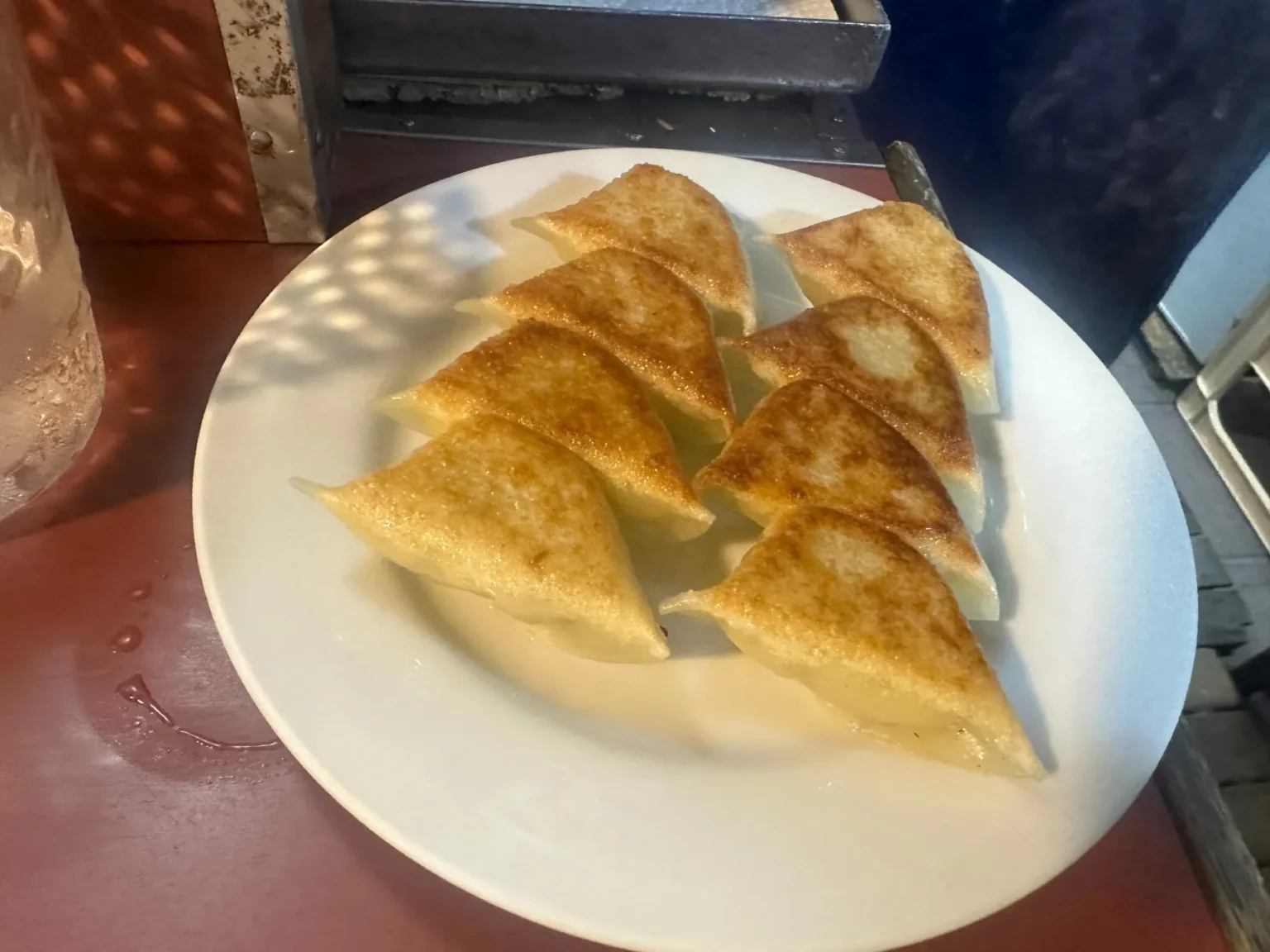
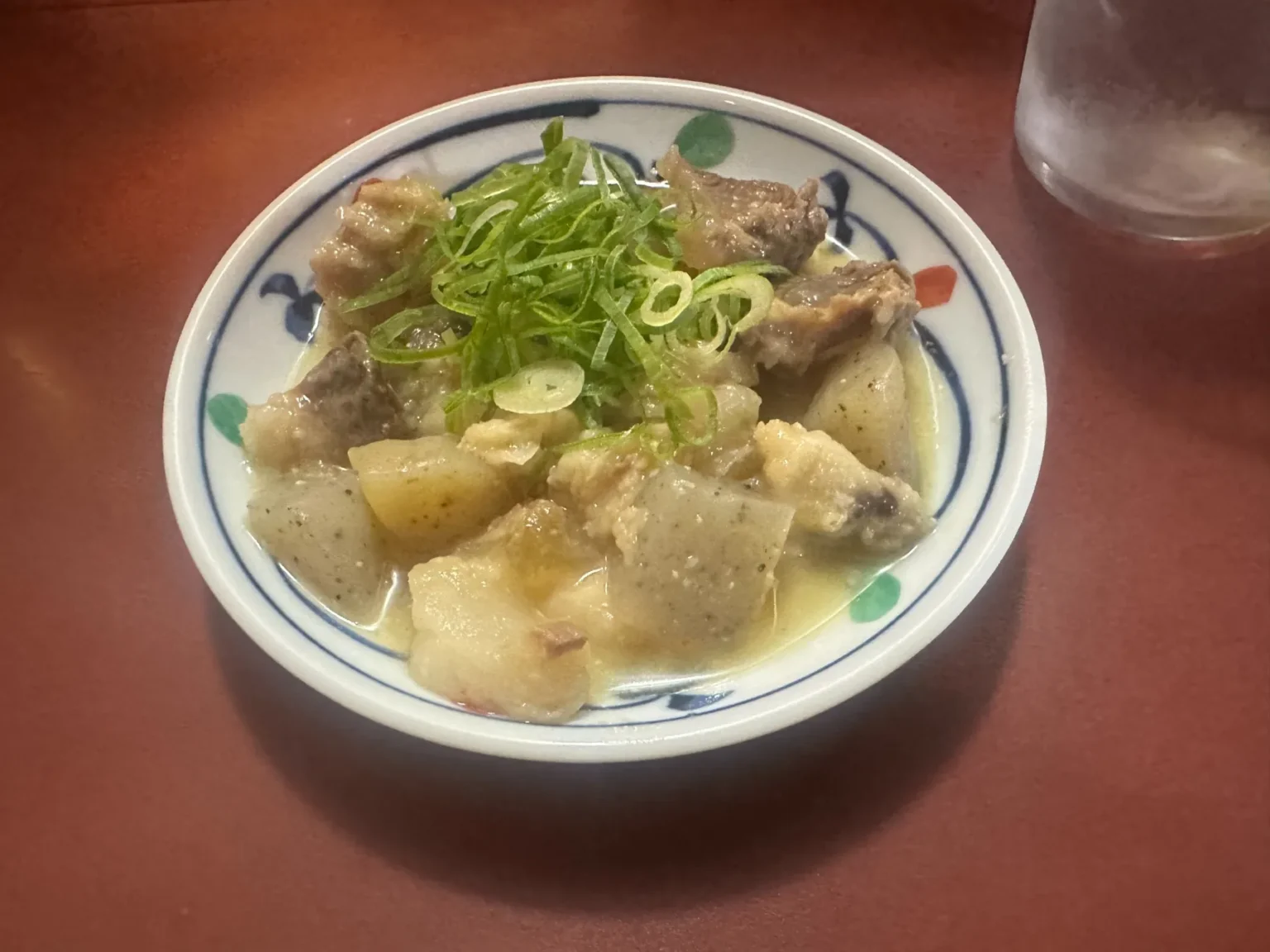
How Fukuoka yatai work
A yatai is a small stall that is wheeled out, set up on a pavement or riverside each evening and taken down again before dawn. You sit at its counter or at a few stools beside it and eat there: under the city’s operating rules a stall may not sell food to take away or deliver it. Fukuoka has had a yatai ordinance since 1 September 2013, which sets out what the city, the stall operators and customers each owe the neighbourhood.
The city’s road permit runs from 17:00 to 4:00, but that window includes setting up and packing away, so it is not the stalls’ opening hours. In practice the earliest stalls open around 18:00 and most by 19:00, and many close around midnight. Each stall picks its own days off, and rain or strong wind can close them at short notice.
Most yatai do not charge a cover, but some bar-style stalls do, so check the menu or ask. The ordinance also requires stalls to show their menu and prices, and they may not serve raw food. For now, ask each stall whether you can smoke. Fukuoka’s no-smoking districts in Tenjin, Daimyo and around Hakata Station currently ban smoking while walking or cycling on the street; an amended ordinance will ban all smoking on roads, in parks and in plazas there, and the city’s page did not yet give a start date when checked.
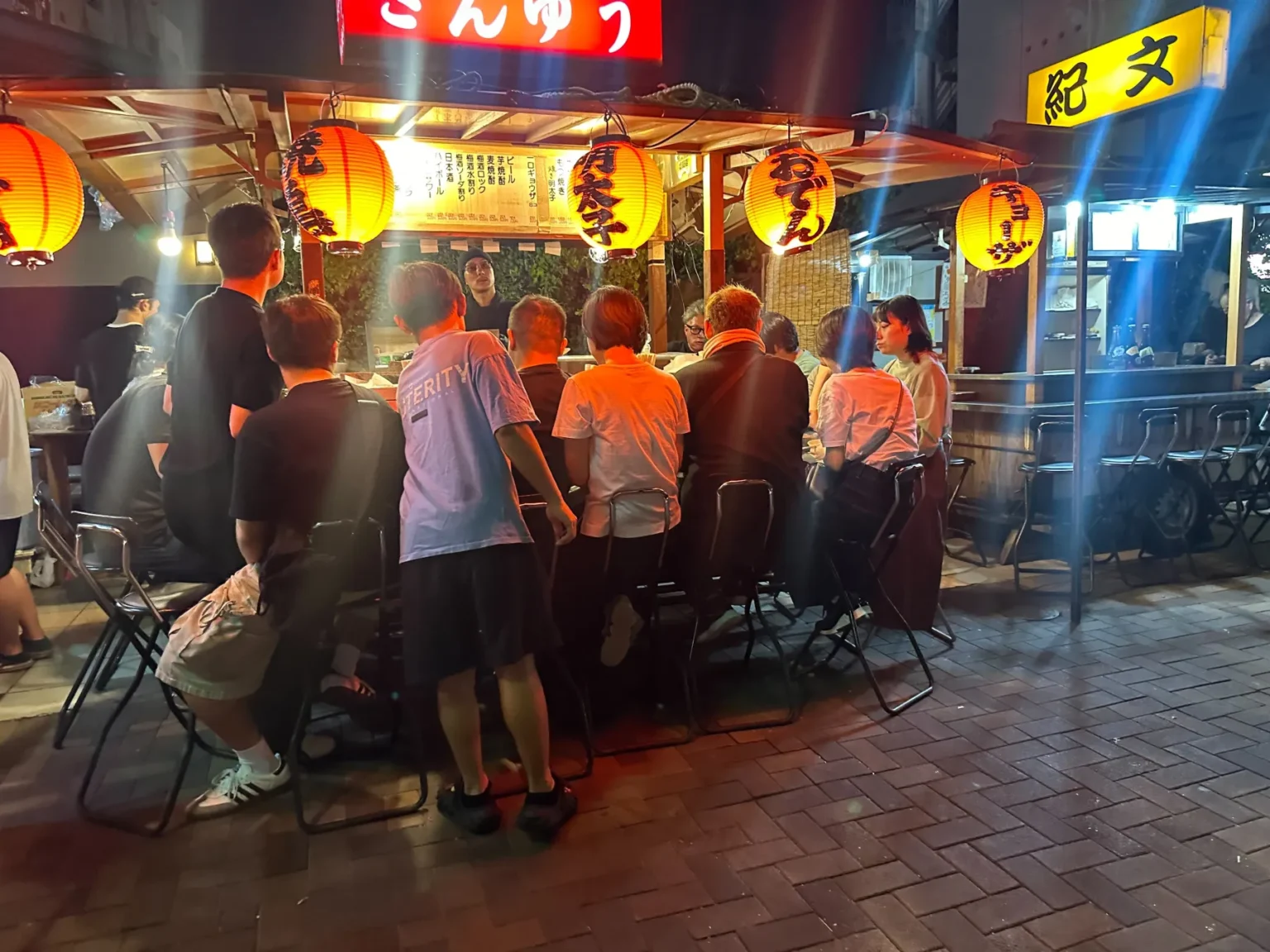
New stalls, and more on the way
The city fills empty yatai pitches by open competition. In 2024 it offered six pitches, three in Watanabe-dori, two in Tenjin-higashi and one in Nagahama, and 61 people applied; the six winners began opening from April 2025. A sixth round in 2026 offered 23 pitches across Tenjin, Nakasu and Nagahama, with permits starting on 1 April 2027. The Nagahama stalls came back in 2023, when seven new yatai opened there.
The 100 stalls are the city’s count for the year. How many open on a given night varies, and I could not find an official nightly count.
Where to eat in Fukuoka at night
Fukuoka nightlife is packed into a few districts around the Naka River, and you can walk between most of them.
Nakasu
The entertainment district on the island between the Naka River to the west and the Hakata River to the east; its tourism association puts it at 0.15 km². The riverside yatai at Seiryu Park are here.
Nishi-Nakasu
Between Tenjin and Nakasu: long-running restaurants, sushi, Japanese, French and Italian, and bars by the river. Its stone-paved street was finished in November 2024. Our Yakitori Mamori guide is here.
Haruyoshi
South of Tenjin along the Naka River, part of the city’s “Riverfront” eating guides: izakaya, skewer bars and wine bars. Two of our partner stories are here: Hayase, a charcoal-chicken izakaya, and Feliz, a rooftop bar on the river.
Tenjin
The shopping and transport centre, with department stores, the subway, Nishitetsu trains and the bus terminal. Our Tenjin Tanka guide covers a beef-tongue restaurant here.
Daimyo and Imaizumi
Lanes of boutiques, cafes and small restaurants next to Tenjin; the city’s 2026 food pages include a standing bar that also serves udon here.
Yakuin
A short walk from Tenjin, where homes mix with shops, cafes and galleries.
If you would rather walk back than catch a last train, pick a hotel within walking distance of the places you plan to eat. Paid link: I may earn a commission if you book.
Compare hotels in Tenjin and Nakasu, then check the walk to the stalls you want.
See Fukuoka hotelsHow late do Fukuoka’s trains run?
Since 1 April 2026 the subway’s extended late trains normally run Monday to Saturday, except public holidays, and special holiday timetables can suspend them (they did not run on 13–15 August 2026). These are the last weekday departures from the stations nearest the yatai; times after midnight belong to the same night out. On Saturdays the same late trains run, listed as Saturday-only services in the Saturday and holiday timetable.
| From | Last train (weekday and Saturday) |
|---|---|
| Tenjin → Meinohama (west) | 0:46, arrives 1:00 |
| Nakasu-Kawabata → Meinohama | 0:44, arrives 1:00 |
| Tenjin → Fukuoka Airport | 0:32, arrives 0:43 |
| Nakasu-Kawabata → Fukuoka Airport | 0:33, arrives 0:43 |
| Tenjin → Hakata (terminates at Hakata) | 0:39 (Nakasu-Kawabata 0:40), arrives 0:44 |
| Tenjin → Kaizuka (Hakozaki Line) | 0:25 (Nakasu-Kawabata 0:26), arrives 0:37 |
| Tenjin-minami → Hakata (Nanakuma Line) | 0:28, arrives 0:32 |
| Tenjin-minami → Hashimoto (Yakuin, Ropponmatsu) | 0:33, arrives 0:58 |
Sundays and public holidays. The late trains do not run and the last departures are earlier: from Tenjin, 0:12 west towards Meinohama, 0:00 to Fukuoka Airport, 0:14 to Hakata (terminating there) and 23:57 to Kaizuka; from Tenjin-minami, 0:12 to Hakata and 0:17 towards Hashimoto. The Nanakuma Line’s weekday timetable changes on 21 November 2026, mainly adding morning trains; its Saturday and holiday times stay the same, but check weekday times again after that date.
Tenjin and Tenjin-minami are separate stations on different lines, and the Nanakuma Line does not stop at Nakasu-Kawabata. These are subway times only: if you are staying out on a JR or Nishitetsu line, look up your connection too. If you would rather walk back, look at hotels around Tenjin and Nakasu (paid link).
Taxis. The Fukuoka City Taxi Association gives an example fare for an ordinary car of ¥600 for the first 1.1 km and ¥100 for every 287 m after that, 20% more between 22:00 and 5:00 (revised 1 July 2026); time charges in slow traffic and pick-up fees vary by company. The driver opens and closes the rear door. Having your hotel’s name and address in Japanese on your phone makes the ride easier, and a data plan helps with maps and translation late at night.
A Japan eSIM, for maps, translation and late-night taxis.
See eSIM plansFrom the airport. The subway reaches Hakata in about 5 minutes and Tenjin in about 11 from Fukuoka Airport station, which is at the domestic terminal. From the international terminal you first need the shuttle bus, so add that time.
Is there a cover charge, and can you smoke?
Cover charge. At many izakaya a small dish arrives before you order, called otoshi, and it may be charged as a kind of table fee. Do not assume it is free; ask if you are unsure. Yatai mostly have no cover, with the exceptions above.
Smoking. Since April 2020 restaurants and bars in Japan are non-smoking indoors as a rule, with exceptions. Some small restaurants and bars that were already open on 1 April 2020 can keep smoking under a transitional exemption, subject to conditions on ownership, floor area, registration, signs and technical standards for smoking areas, so you will still find smoking in some small bars and izakaya. Under-20s may not enter smoking areas, which matters for families. Fukuoka’s no-smoking districts in Tenjin, Daimyo and around Hakata Station currently cover smoking while walking or cycling on the street; an amended ordinance will ban all smoking on roads, in parks and in plazas there, and the city’s page did not yet give a start date when checked.
Tipping. There is no tipping custom in restaurants, bars or taxis. Nobody expects one. A service charge printed on the bill is a different thing and is part of the price.
Beyond the city
If you have a spare day, Yanagawa, south of Fukuoka, is known for boat rides along its canals and is reached by Nishitetsu train from Tenjin. For more of the region, our northern Kyushu by rail in 4 days starts with Dazaifu, and the Ruby Route is a week from Hakata to Beppu, Aso, Kumamoto and Sakurajima without a car. Closer in, the Nanzoin Reclining Buddha is a short train ride from Hakata on the JR Fukuhoku Yutaka Line to Kido-Nanzoin-mae. Paid link: I may earn a commission if you book.
Yanagawa river cruise tickets, bookable before you go.
See Yanagawa cruisesOur Fukuoka food guides
Each has its own page; check the restaurant’s current details before you go.
Ichiran headquarters
The tonkotsu chain’s main shop in Fukuoka.
Menya Sadotomo
Seafood-broth, soy-sauce ramen: the non-tonkotsu side of the city.
NakamuLab
Ramen in a house in Nakagawa, outside central Fukuoka.
Yakitori Mamori
Omakase yakitori in Nishi-Nakasu.
Tenjin Tanka
Grilled beef tongue in Tenjin.
Toichi
Teppan pork steak at Toichi.
A yakiniku dinner
Yakiniku with clay-pot rice.
Taiyoken
A diner known for chicken tempura.
Shirayamasha
European-style curry.
Kaishinmaru
Conveyor sushi downstairs, kappo upstairs, in Nishijin.
TTOAHISU
Innovative French near Ohori Park; one Michelin star in the 2019 Fukuoka guide.
Omame Yoshiko
Reservation-only kakigori. Check the shop’s current hours and address before you book.
Hayase
Charcoal-grilled Koshodori chicken in Haruyoshi. A partner story.
Feliz
A rooftop bar in Haruyoshi with tacos and barbecue over the Naka River. A partner story.
Fukuoka food and yatai: questions
How many yatai are there in Fukuoka?
Fukuoka City counts 100 for fiscal 2026 (101 in 2024, 98 in 2025). That is the city’s figure for the year; it publishes no count for a single night, and the number open varies with each stall’s days off and the weather. The main clusters are Nakasu, Tenjin and Nagahama.
What time do Fukuoka’s yatai open?
The earliest open around 18:00 and most by 19:00; many close around midnight. The city’s 17:00–4:00 road permit includes setting up and packing away, so it is not the opening time.
Do yatai take credit cards?
Some do, and the city’s yatai search can filter for card and cashless payment, but many do not. Bring cash.
Do I have to drink alcohol at a yatai?
No. The city’s official tourist guide says it is polite to order at least one dish and one drink each. Stalls also serve soft drinks such as oolong tea and cola, so you need not drink alcohol.
What is the last subway from Tenjin?
On the weekday timetable from 1 April 2026: 0:46 west to Meinohama, 0:32 to Fukuoka Airport, 0:39 to Hakata (terminating there), and 0:28 from Tenjin-minami to Hakata on the Nanakuma Line. The same times apply on Saturdays. On Sundays and public holidays the last trains leave earlier: 0:12 west, 0:00 to the airport, 0:14 to Hakata and 0:12 from Tenjin-minami to Hakata.
Is goma-saba cooked?
No. Goma-saba is raw mackerel in a sesame and soy dressing.
Should I tip in Fukuoka?
No. Restaurants, bars and taxis do not expect a tip. A service charge on the bill is part of the price.
Cheaper than Kyoto
Fukuoka as a base city, compared with Hiroshima, Okayama and Takamatsu.
Northern Kyushu in 4 days
Dazaifu, Yoshinogari, Arita, Imari and Karatsu by rail.
Sources
- Checked 18 October 2026 — Fukuoka City yatai: number of stalls by year, yatai ordinance, ordinance leaflet, 2026 pitch competition, 2024 applications, 2025 new stalls
- Fukuoka City tourism: How to enjoy yatai, Must do, yatai manners, yatai search, Nagahama yatai, ramen and udon, 2026, noodles and yakitori, hotpots, food, area guide, Riverfront eateries, Yakuin and Haruyoshi, Nishi-Nakasu
- Fukuoka Prefecture tourism: noodles, Hakata udon; Japan Tourism Agency: toriten; Nakasu Tourism Association: history
- Fukuoka City Subway: late-night service from April 2026, Airport and Hakozaki Line timetable, Nanakuma Line timetable, airport access; Fukuoka Airport; Fukuoka City Taxi Association fares
- Rules: Fukuoka City passive smoking, small-venue exception, no-smoking streets, 2026 amendment; National Tax Agency, drinking age; National Consumer Affairs Center, otoshi; JNTO, tipping
Join travelers discovering Japan's hidden side
Weekly dispatches from off-the-beaten-path Japan — spots and stories you won't find in guidebooks.
No spam. Unsubscribe anytime.
Welcome aboard!
You're in. See you in your inbox soon.


