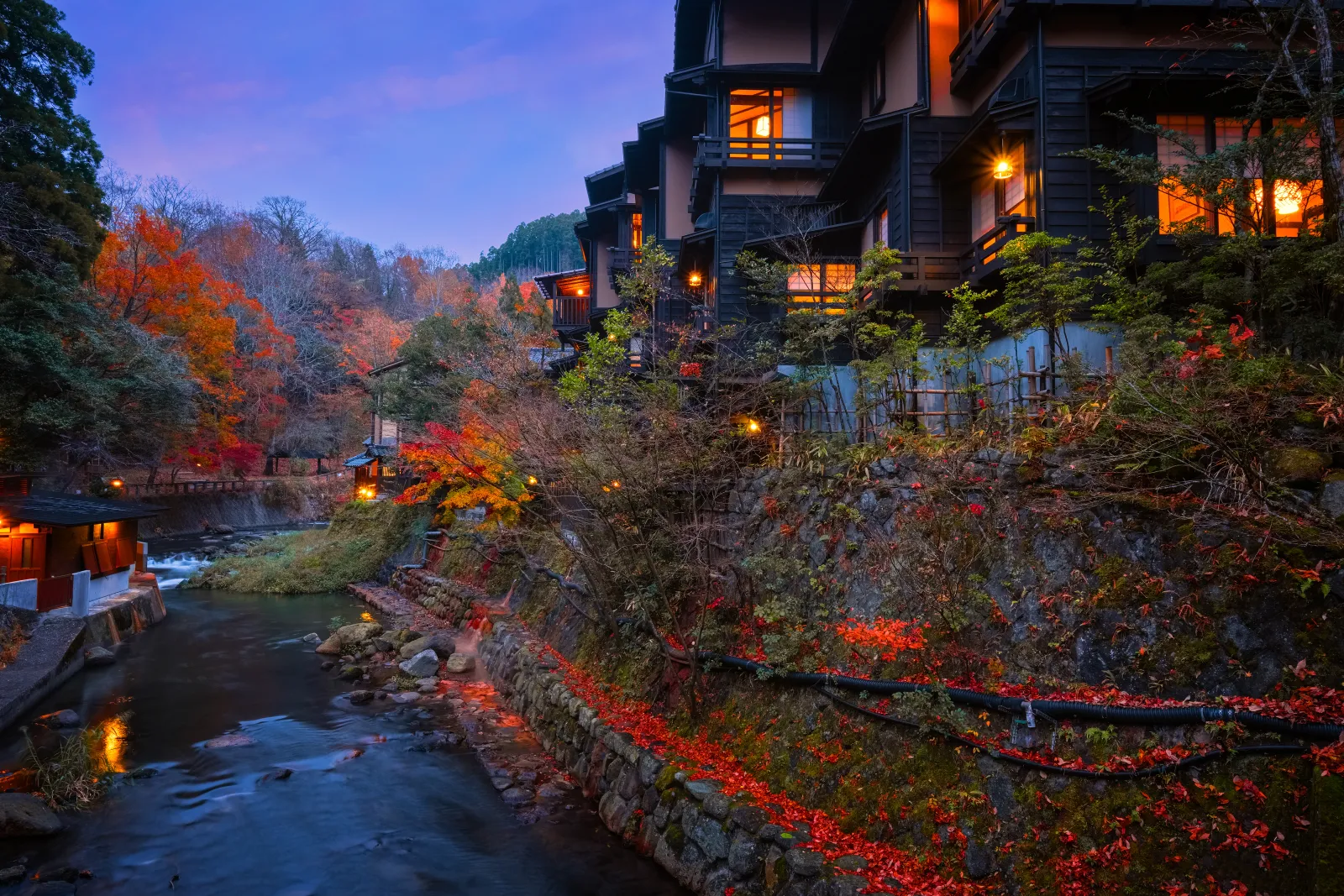

Japan · Kumamoto · Minamioguni
Kurokawa Onsen is a hot spring village of about 30 ryokan in a valley in Minamioguni, Kumamoto, at about 700 metres. Its bath pass, the nyuto tegata, costs ¥1,500 for adults and gets you into three of the 25 outdoor baths on its list. By bus, a day trip works from Kumamoto or Aso. From Fukuoka the timetable leaves you an hour and a half in the village, which is not enough for three baths.
This guide works through that decision: how long three baths take, what the buses actually allow from each direction, what changes if you stay the night, and why the village looks the way it does. If you are coming from Mount Aso, the crater’s current status is in our Mount Aso guide.
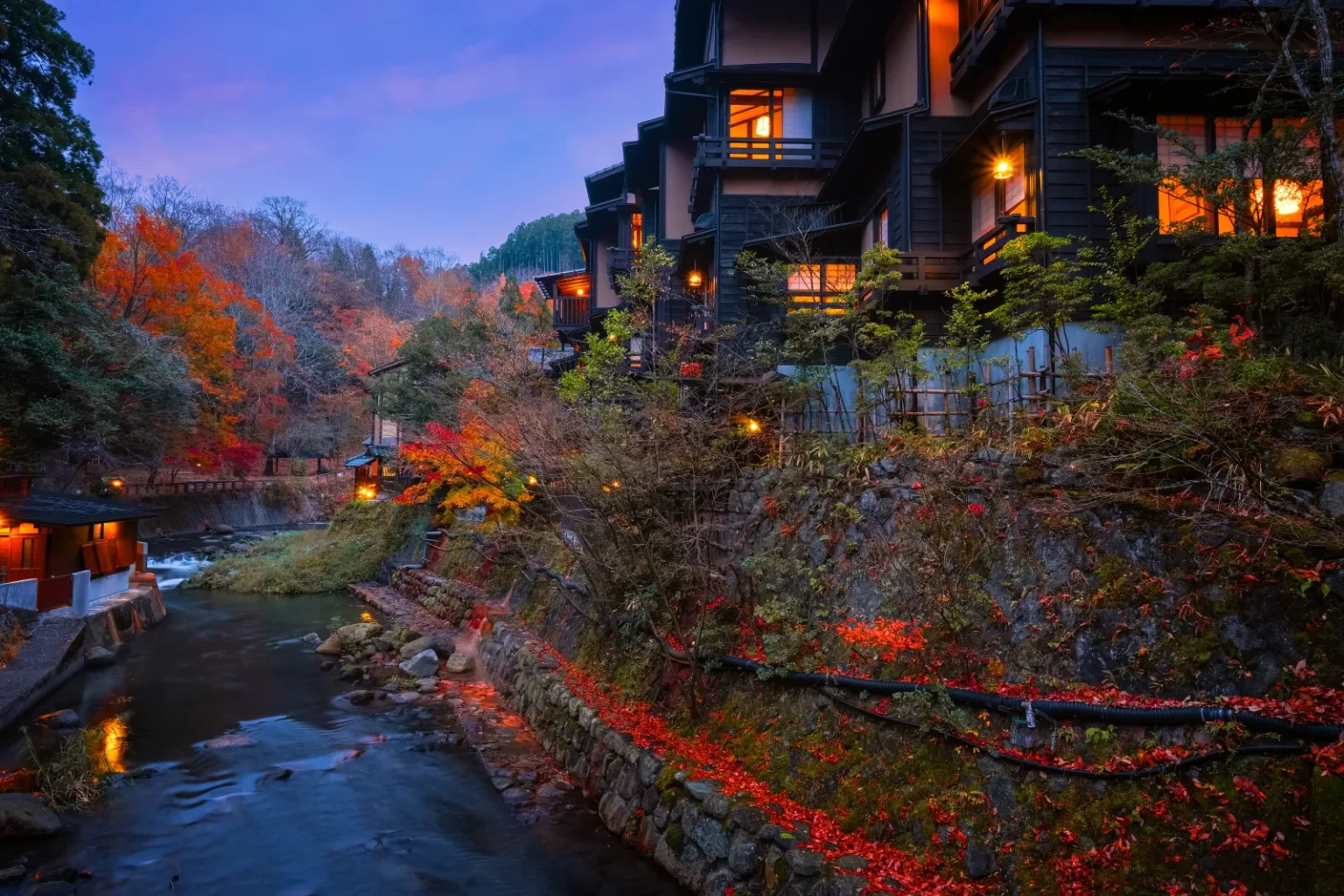
Kurokawa Onsen: day trip or overnight?
The ryokan association puts three baths at about two to three hours, and half a day if you also walk around the village. It suggests about an hour at each inn. That is the time you need on the ground, before you count the bus.
The bus is what decides it. Kyushu Sanko’s Kyushu Odan bus runs three times a day each way between Kumamoto and Yufuin, with one bus in each direction running to or from Beppu, and the Fukuoka bus runs three times a day each way. Lay the timetables (October 2025 timetable, still current on 28 October 2026) side by side and you get this:
| Coming from | Buses and time in Kurokawa |
|---|---|
| Kumamoto Station | 6 h 10 min: three baths and lunch fit. In: 7:23 → 10:15 Out: 16:25 → 19:03 |
| Aso Station | 6 h 10 min In: 9:24 → 10:15 Out: 16:25 → 17:23 |
| Aso, then on to Yufuin | 4 h 45 min In: 9:24 → 10:15 On: bus 7, timetabled at Kurokawa 15:00, Yufuin 16:33 |
| Fukuoka (Tenjin) | 1 h 31 min: not enough for three baths. In: 9:30 → 12:29 Out: 14:00 → 16:52 |
So from Kumamoto or Aso, a day trip works if you take one of the morning buses. From Fukuoka, the bus gives you 1 hour 31 minutes at most, short of the association’s two to three hours for three baths; drive, join a tour, or stay a night.
Stay the night if you want time in the village after dark. The last bus to Fukuoka leaves at 14:00 and the last to Aso and Kumamoto at 16:25, and from late December the Yuakari bamboo lanterns light the village in the evening.
The last buses leave by 16:25. If you travel by bus and want the village after dark, stay the night.
Compare four inns by what you needThe nyuto tegata bath pass
The nyuto tegata (入湯手形) is a wooden pass. The ryokan association sells it for ¥1,500 for adults and ¥700 for children, at the inns and at its information centre, Kaze no Sha, open 9:00–17:00. Inns can run out, so the association suggests Kaze no Sha if you want to be sure of getting one.
- It gets you into three outdoor baths, chosen from the 25 on the association’s list.
- One pass per person: you cannot share one.
- One of the three uses can go on food or a souvenir instead of a bath. The association lists inn towels, soft-serve ice cream and pottery among the exchange items.
- It is valid for six months from the day you buy it, so if you use only one or two baths, you can come back and use the rest.
The price went up from ¥1,300 to ¥1,500 on 1 October 2023. On 28 October 2026, the English page of Japan’s national tourism site still said ¥1,300 and 28 hot springs; go by the association’s figures. If you only want one bath, the association says single entry costs ¥500–800 at the inn.
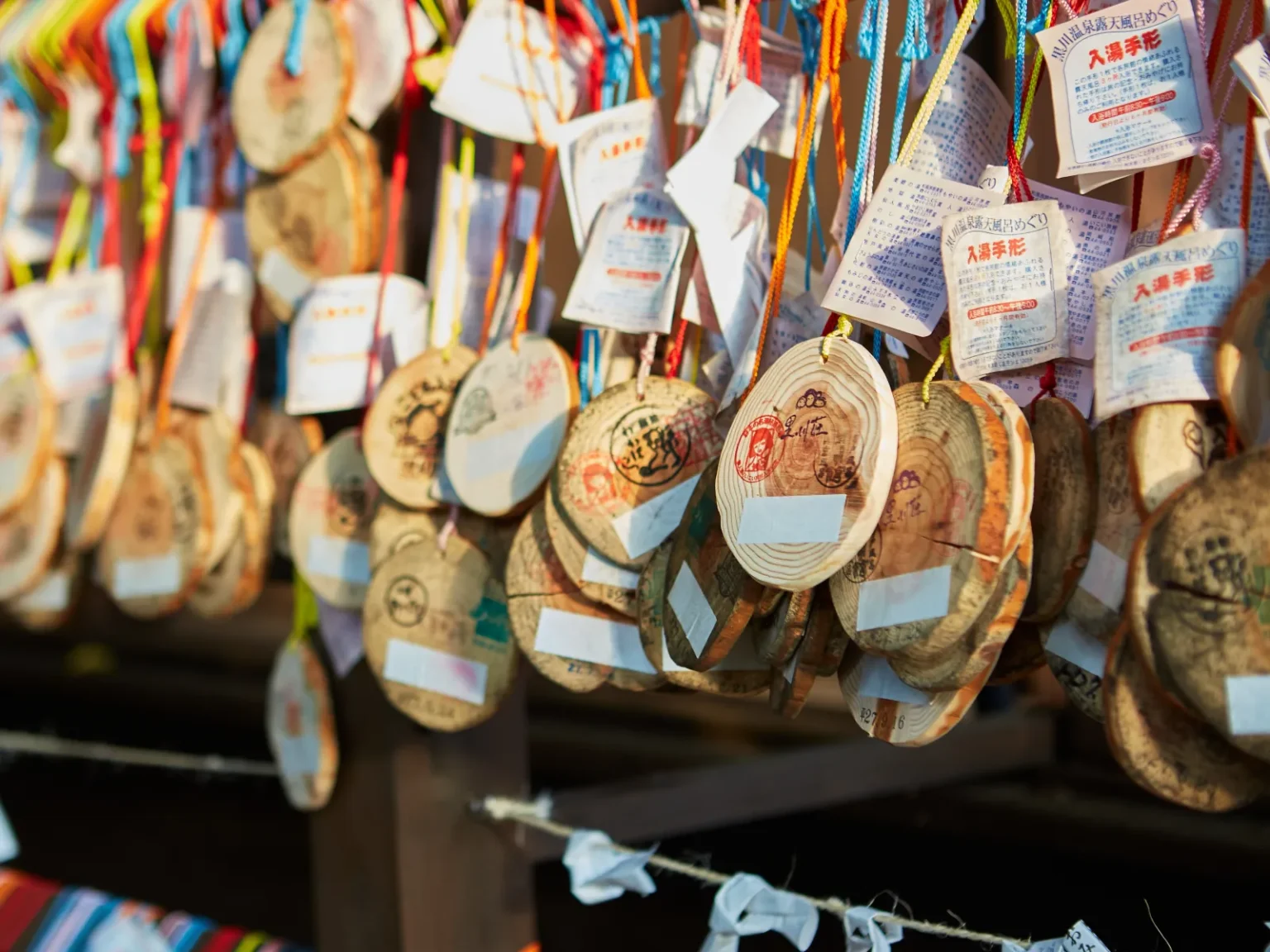
2026 is the pass’s 40th year. From 1 July 2026 to the end of March 2027, the association is selling a special-design pass. It plans to issue 50,000, and sales end when they are gone.
Choosing baths: hours, towels, mixed bathing and tattoos
Hours change every day. The association updates the day-bathing hours daily, and asks you to check around 9 a.m. on the day you visit. Its list for 15 March 2026, for example, shows eight inns open to day visitors from 8:30 to 21:00, while others had shorter or split hours: some only from 15:00, some closing at 14:30 or 15:00, a few closed for part of the late morning. A few inns did not take the pass, and one was closed for building work. Some stop taking people 30 minutes before closing, and inns may limit numbers when busy. Hours vary that much, so check the association’s bathing information page on the morning you go. It shows each inn’s hours for the day and, for most inns, how crowded it is.
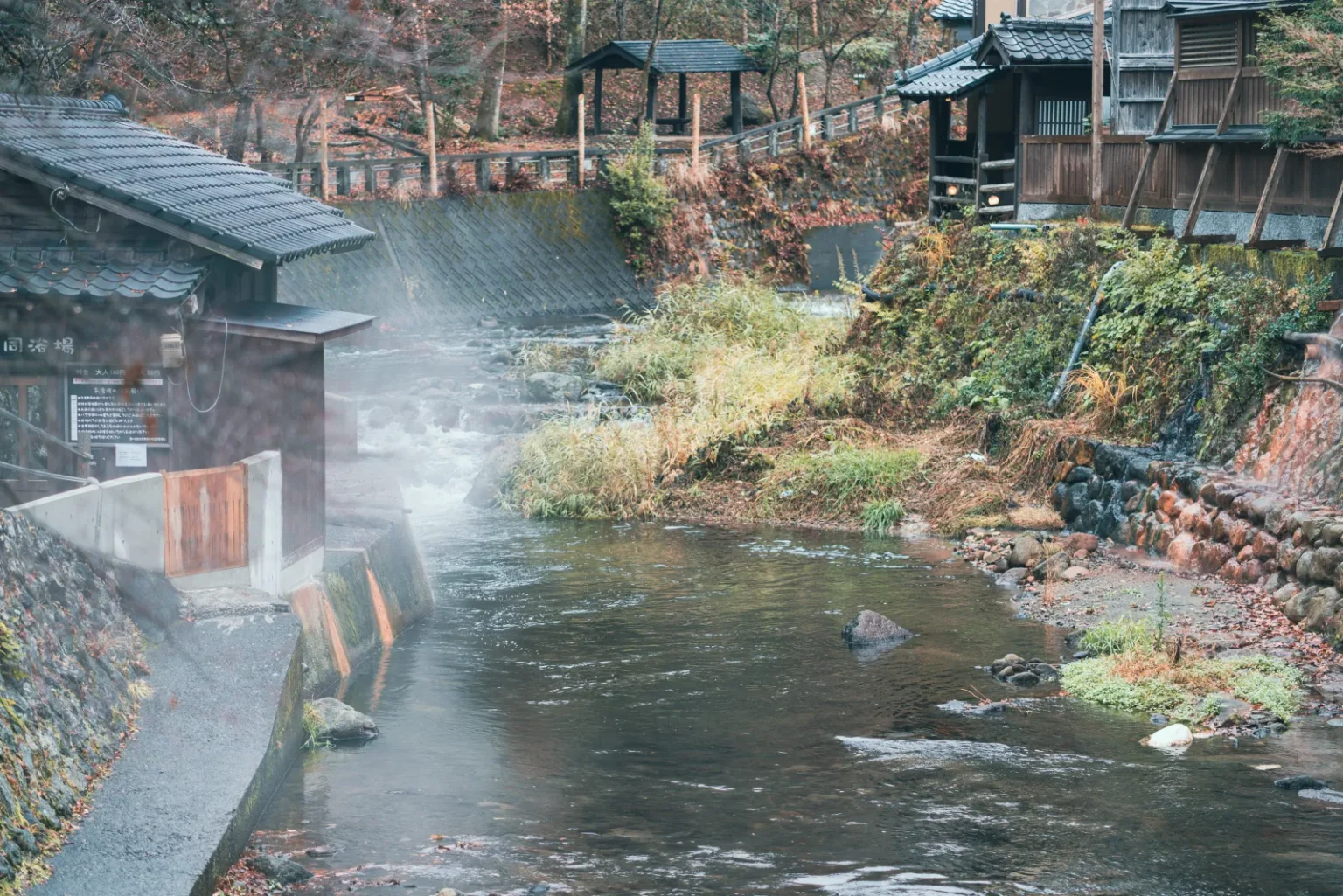
Mixed bathing. The association’s FAQ says that since Kumamoto Prefecture changed its bylaw, mixed bathing is no longer offered in the outdoor baths, and points families and couples who want to bathe together to the private baths. But on 28 October 2026 its day-bathing page listed Ryokan Okunoyu with a mixed outdoor bath and bathing wear for hire (¥500). The two do not match, so if this matters to you, ask the inn directly.
Private baths. Some inns rent private baths to day visitors. The association says you basically cannot book them, though you can ask the inn whether one is free, and that from 15:00 staying guests come first.
Tattoos. There is no village-wide rule. The association says each inn decides, and asks you to write to it through its contact form, saying you have a tattoo, before you come; a private bath is the other option. For bathing manners in general, see our onsen etiquette guide.
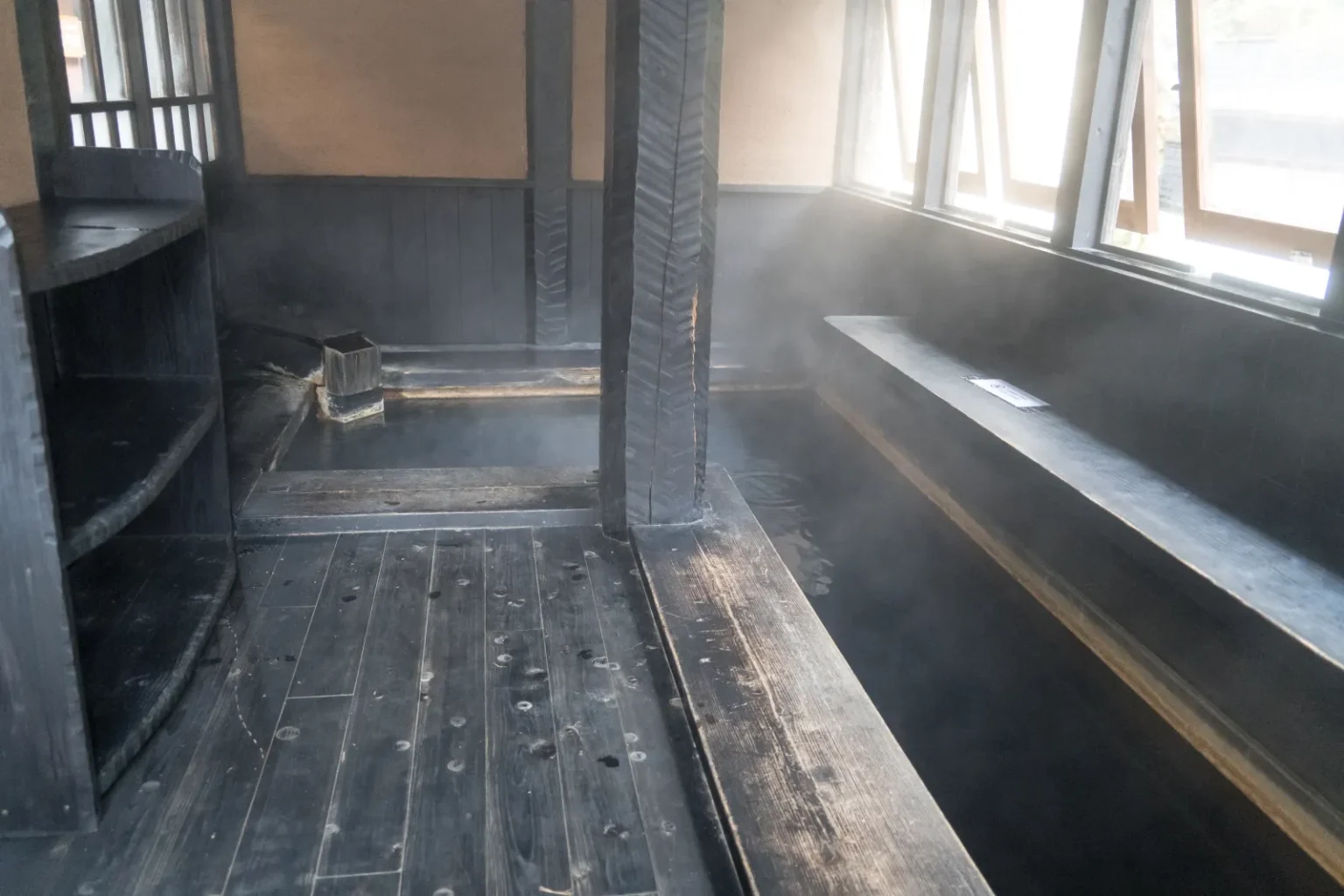
The water. The association says seven of Japan’s ten main types of hot spring water are found in Kurokawa, and that almost every inn uses its water free-flowing from the source, though many add water to bring the hot source water down to a bathing temperature.
Why Kurokawa looks like this
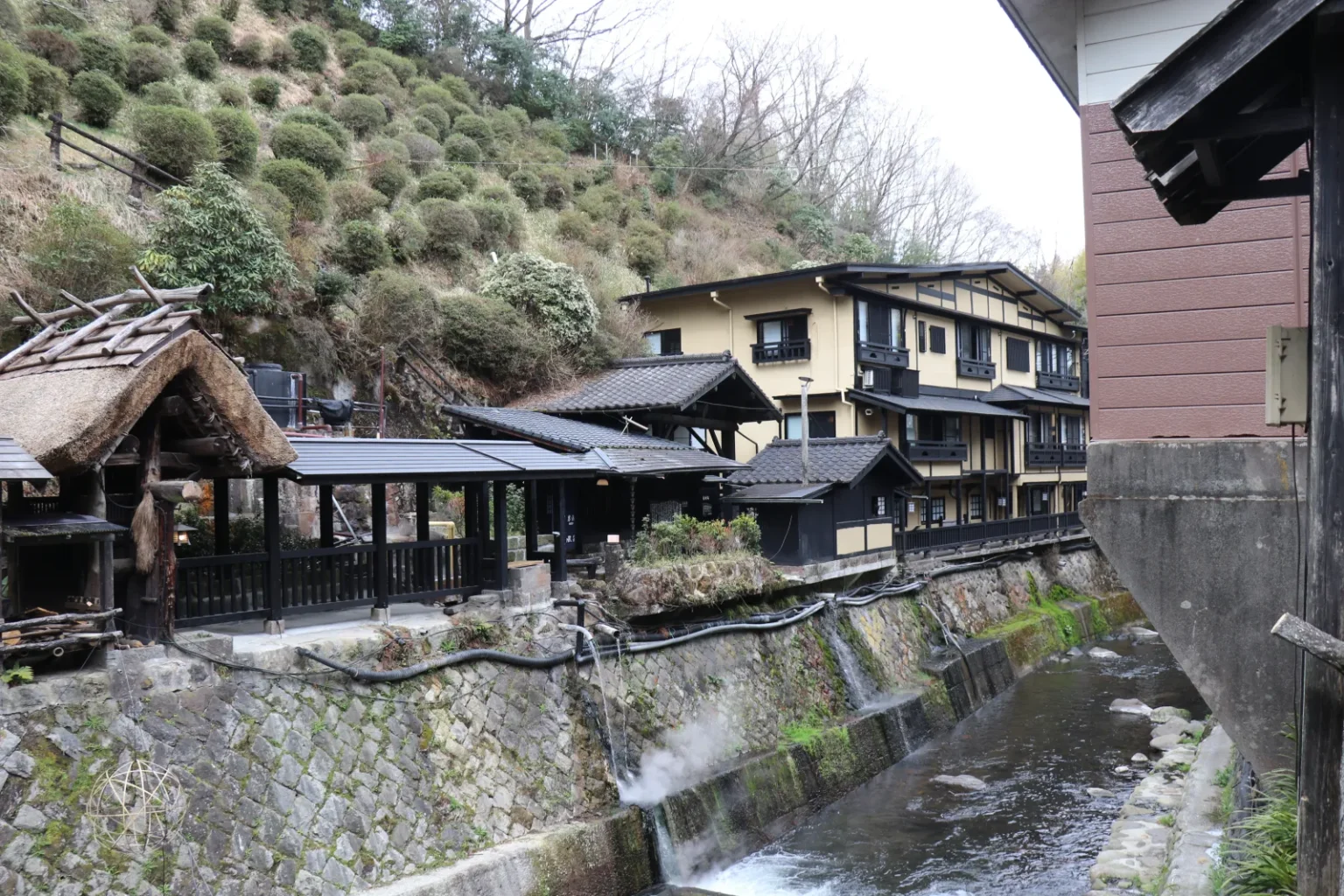
The village’s natural-looking landscaping started at one inn in the 1970s. A report by the Kyushu Regional Development Bureau of Japan’s Ministry of Land, Infrastructure, Transport and Tourism describes Kurokawa in the late 1960s as a hot spring that drew mostly local groups for banquets. In the 1970s one inn, Shinmeikan, changed course: it built an outdoor cave bath and landscaped its grounds to look like natural hillside. It proved popular, and other inns followed.
Shinmeikan’s head, Tetsuya Goto, was named one of Japan’s “tourism charisma” figures. The Kyushu District Transport Bureau’s profile of him cites the outdoor bath dug out of a rocky hill on the inn’s land, and his attention to where trees were placed, and credits him with helping create a unified streetscape and revitalise the whole of Kurokawa Onsen.
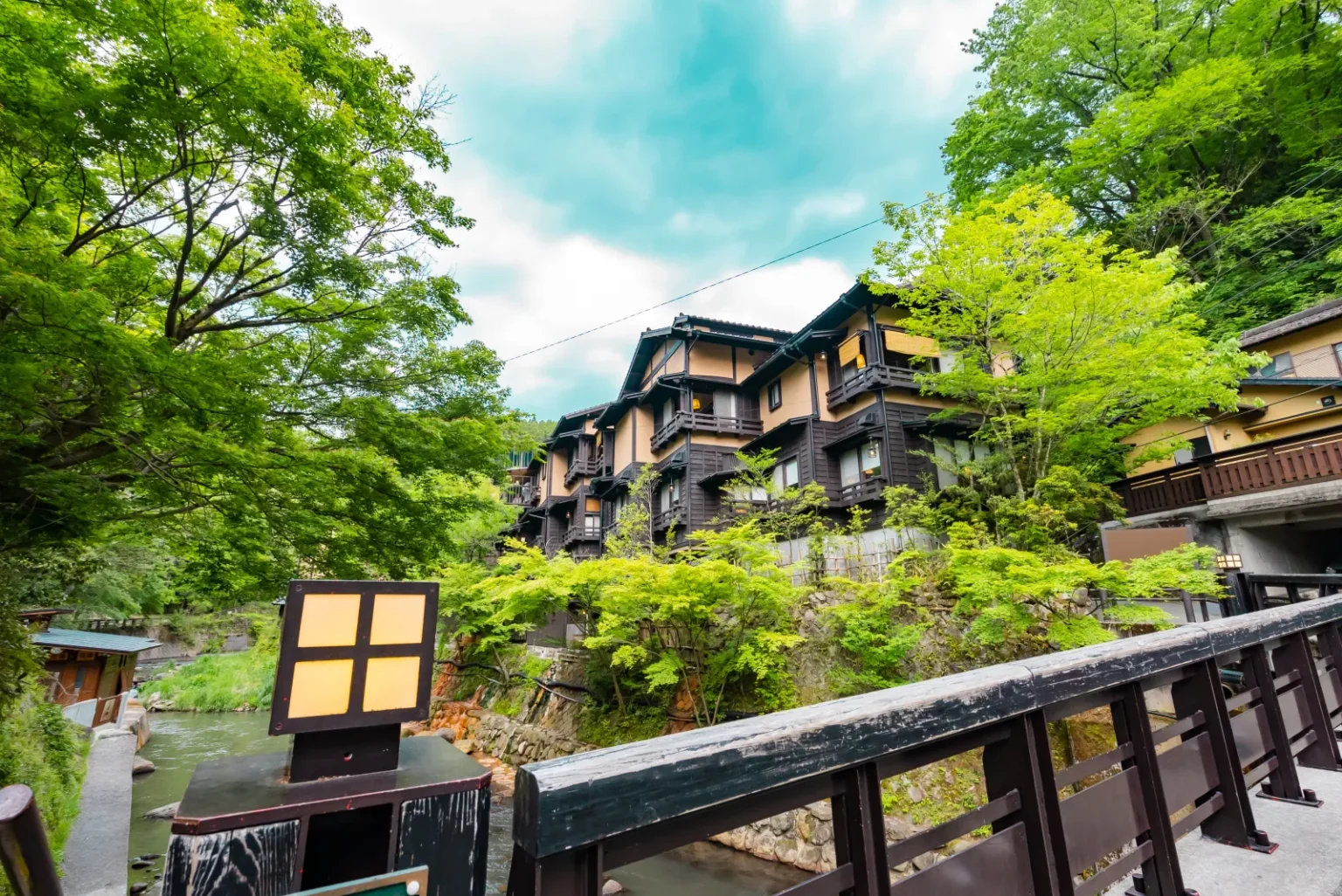
The association tells the story of the bath pass. It says the village began after the war with six inns, working together as a “village of outdoor baths”, and that the pass was created to help two inns that could not build outdoor baths of their own. In its words, the idea was not for one inn to do well but for the whole place to. The ministry report adds that in 1986 the association issued the first passes, good for three inns’ outdoor baths, and that this, with tree planting across the area and the removal of advertising signs, made Kurokawa famous across Japan.
How to get to Kurokawa Onsen by bus
Two bus routes serve Kurokawa Onsen, and the association asks you to book by the day before. (For the Fukuoka bus, Nishitetsu takes bookings towards Kurokawa up to the day of travel, but buses leaving Kurokawa must be booked by the day before.)
Kyushu Odan bus (Kumamoto, airport, Aso, Yufuin, Beppu). Kyushu Sanko Bus runs it three times a day each way between Kumamoto and Yufuin; one bus each way also serves Beppu. Times from the timetable that started on 1 October 2025:
| Towards Yufuin and Beppu | Bus 1 · Bus 3 · Bus 7 |
|---|---|
| Kumamoto Station | 7:23 · 8:23 · 12:08 |
| Aso Kumamoto Airport | 8:19 · 9:19 · 13:04 |
| Aso Station | 9:24 · 10:24 · 14:09 |
| Kurokawa Onsen | 10:15 · 11:15 · 15:00 |
| Yufuin Station | 11:48 · 12:48 · 16:33 |
| Beppu Station | — · — · 17:29 |
| Towards Aso and Kumamoto | Bus 2 · Bus 6 · Bus 8 |
|---|---|
| Beppu Station | 8:10 · — · — |
| Yufuin Station | 9:10 · 13:50 · 14:50 |
| Kurokawa Onsen | 10:45 · 15:25 · 16:25 |
| Aso Station | 11:43 · 16:23 · 17:23 |
| Aso Kumamoto Airport | 12:37 · 17:17 · 18:17 |
| Kumamoto Station | 13:23 · 18:03 · 19:03 |
Note the direction: the 16:25 from Kurokawa goes to Aso and Kumamoto. If you are heading on to Yufuin or Beppu, your last chance is bus 7, timetabled at Kurokawa at 15:00; be at the stop before then. Fares since October 2025 include ¥1,600 from Aso Station, ¥3,400 from Kumamoto’s Sakuramachi Bus Terminal, ¥2,700 to Yufuin and ¥4,000 to Beppu.
From Fukuoka. Kyushu Sanko and Hita Bus run three buses a day each way between Fukuoka and Kurokawa, via Fukuoka Airport and Hita. They leave Tenjin at 9:30, 11:15 and 12:40 and reach Kurokawa at 12:29, 14:14 and 15:39; they leave Kurokawa at 10:00, 11:00 and 14:00. The fare is ¥4,000 from Tenjin, every seat is reserved, and booking opens at 8 a.m. on the same date a month before.
Coming from further away, you can pick these buses up at Kumamoto Station, Aso Kumamoto Airport, Tenjin, Hakata and Fukuoka Airport. If the bus times do not suit you, look at Klook’s tours that include Kurokawa, and check how long each spends in the village and whether bath entry is included (paid link: I may earn a commission if you book).
Driving to Kurokawa Onsen
The association’s directions use three roads as the way in: Route 212 between Hita and Aso, Route 57 between Kumamoto and Aso, and the Yamanami Highway between Yufuin and Aso. From Kumamoto it maps a route over the Milk Road (prefectural road 339), and from Fukuoka one via the expressway to Hita.
The village has several public car parks, open 24 hours and free except car park No. 4, which charges ¥200 an hour after the first 20 minutes, up to ¥1,000 per 24 hours. Many inn car parks are for staying guests, and Ryokan Okunoyu’s day-bathing listing says it has no parking. In winter, the association warns that mornings and evenings get very cold at this height, and Minamioguni town runs road cameras on Route 442 at Kurokawa. With few buses, the association itself says a car is the easier way to come; if you would rather drive, compare rental cars in Kyushu (paid link: I may earn a commission if you book).
Staying the night
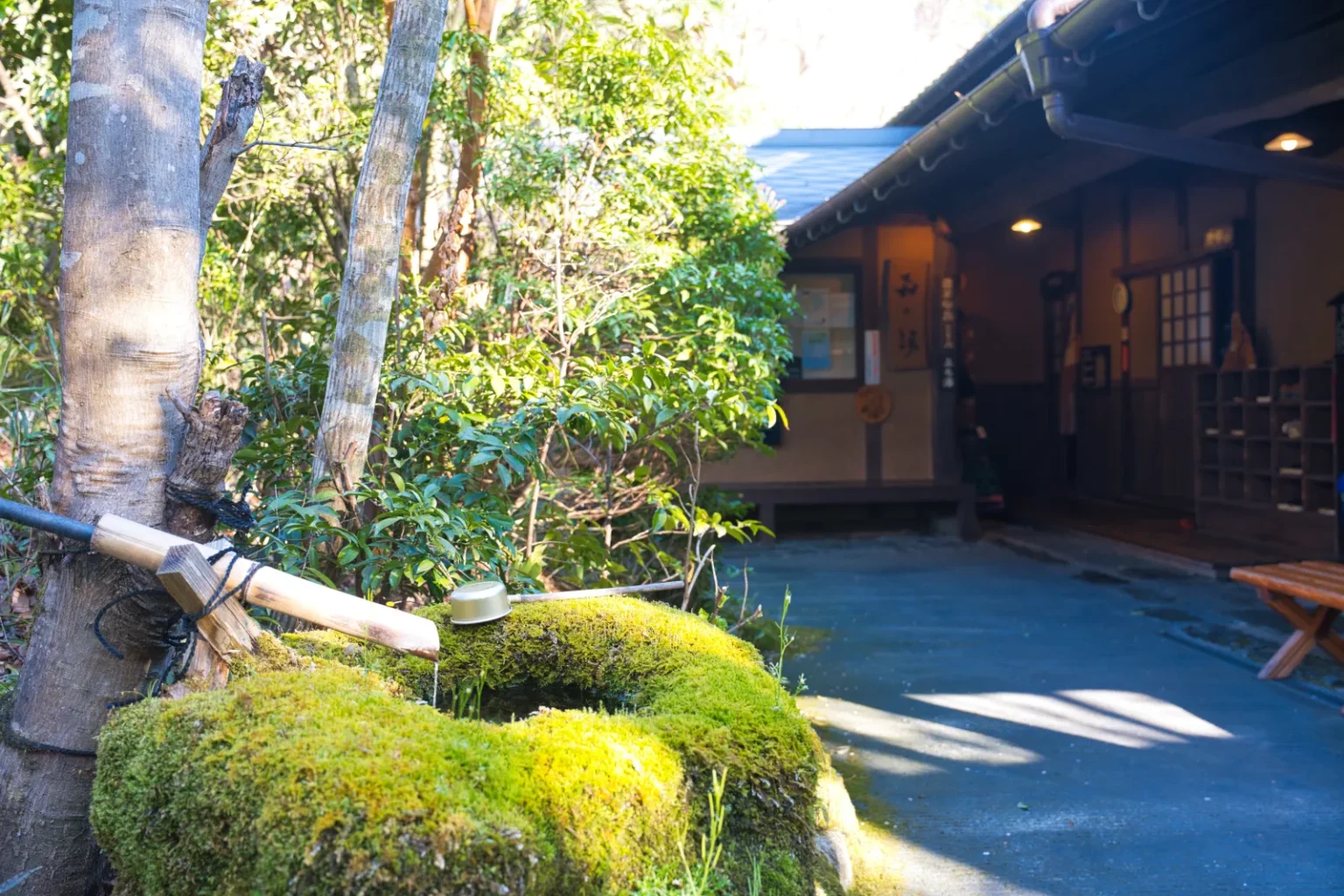
The village has about 30 ryokan, and the association’s website lists them with an availability search. If your plan includes dinner, check its latest check-in time: one inn’s half-board plan on the association site, for example, sets 17:00, and adds a bathing tax of ¥150 per adult on top of the room rate.
A night gives you the village after the last bus has gone, until the first buses out next morning, from 10:00. In winter that is when the Yuakari lanterns are lit. Next morning, some inns open to day visitors at 8:30, so depending on their hours that day, you may fit in another bath before the 10:15 or 11:15 bus to Yufuin, or the 10:45 to Aso and Kumamoto.
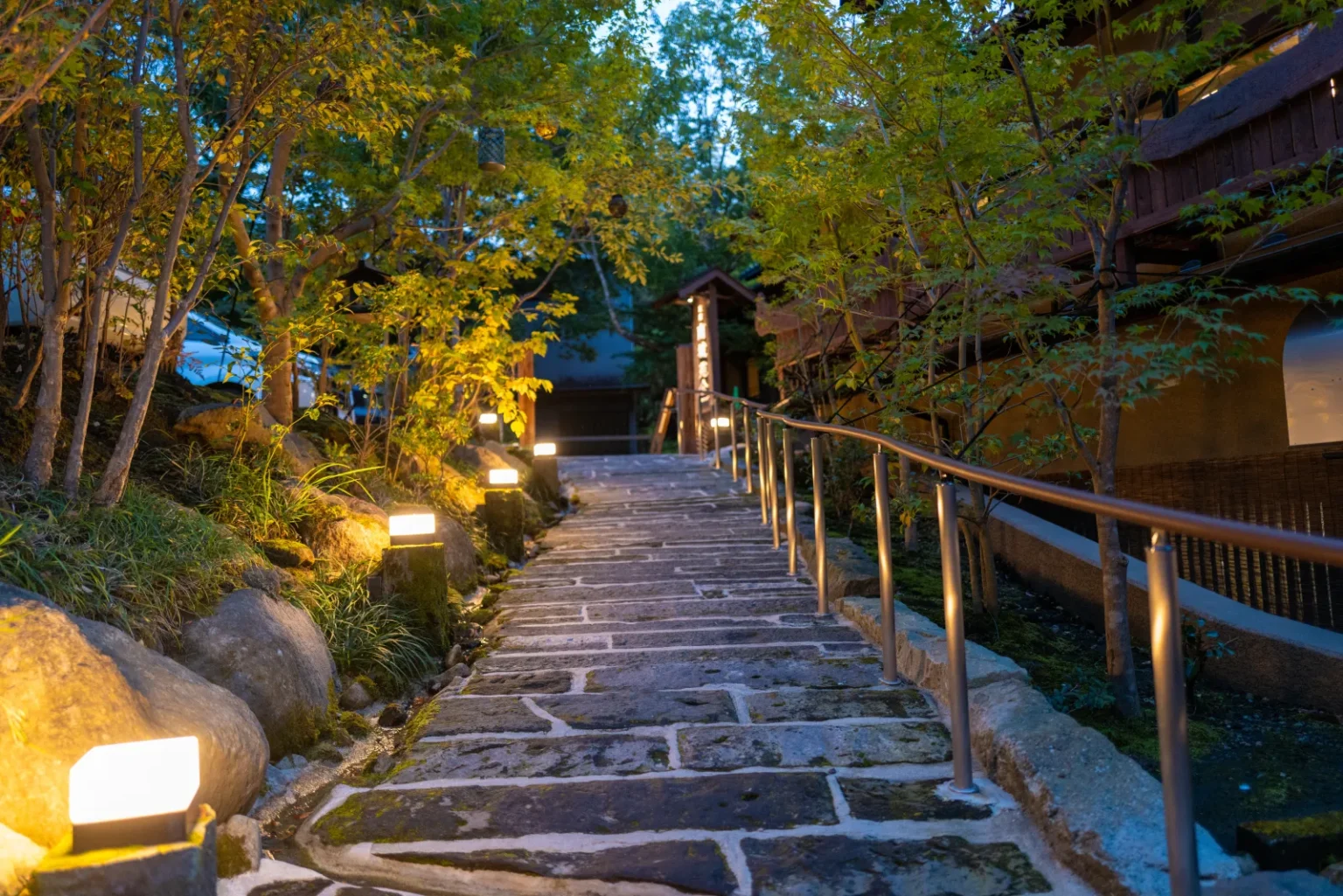
For autumn weekends and the Yuakari season, book early; four inns are compared below. If you are heading on, Yufuin is 1 hour 33 minutes away on the morning bus; see our Yufuin walk.
Where to stay in Kurokawa Onsen
Four inns, picked for different needs: getting there by bus, tattoos, bathing together as a couple or family, and the village’s history. The details below come from each inn’s own site or its page on the ryokan association’s site, checked on 28 October 2026. Rates change by date and plan, so compare them on the booking page.
Ryokan Ichinoi (旅館 壱の井): no tattoo restrictions, pickup from the bus stop
Ichinoi’s FAQ answers the tattoo question directly: 「当館はタトゥーを制限しておりません」 (“we do not restrict tattoos”). It adds that many guests with tattoos have stayed without any trouble. It has one indoor and one outdoor bath each for men and women, and four family baths at ¥1,000 for 45 minutes, booked at the front desk, available 15:00–22:15 (last reception 21:30) and not in the morning. The water is a simple sulphur spring.
The inn lists both bus routes into Kurokawa and offers a pickup from the Kurokawa Onsen bus stop, by reservation. It has 14 rooms, all non-smoking, with check-in from 15:00 (last check-in 19:00) and check-out between 8:00 and 10:00. Dinner and breakfast are served in a dining hall.
- Who it suits: travellers with tattoos, and bus travellers who want a pre-booked pickup from the bus stop.
- Catch: the inn is three storeys with no lift, and it says you have to use a spiral staircase to get between check-in, the baths and the dining hall. The rooms have no bath of their own.
Paid link: I may earn a commission if you book. Check Ryokan Ichinoi on Booking.com
Yumerindo (夢龍胆): a minute from the bus stop, family baths for guests
Yumerindo says it is a one-minute walk from the Kurokawa Onsen bus stop, and also offers a free pickup there if you book it. It has two indoor baths, two outdoor baths and four family baths in a separate annex, in hinoki cypress or cut stone. The family baths are for staying guests, booked on the day: the first use is free, and after that it is ¥1,100 per room. The association page lists check-in at 15:00 and check-out at 10:30, though times can differ by plan, and one dinner plan on that page describes a kaiseki meal served in the dining room.
- Who it suits: couples and families who want to bathe together, and bus travellers who want a one-minute walk from the bus stop.
- Catch: for day bathing, the inn says it turns away guests with tattoos, though it allows a small “point” tattoo if you tell it in advance and are considerate of other bathers; ask it how this applies to staying guests. Family baths are limited, and plans that guarantee one get priority. Its FAQ says the baths close for a thorough clean on Mondays and Fridays from the morning until 15:00; staying guests can still bathe from 6:00 to 9:30 on those days.
Paid link: I may earn a commission if you book. Check Yumerindo on Agoda
Okyakuya (御客屋): founded in 1722, private baths without booking
The ryokan association’s page for Okyakuya gives its founding as 1722 (Kyoho 7), “the inn with the most history in Kurokawa”. It has its own spring, a sodium sulphate and chloride water that flows straight into the baths, and two private baths, one of hinoki and one of cut stone, each big enough for two adults. You do not need to book them or pay a bathing fee: if one is free, you lock the door and use it.
- Who it suits: couples or a parent with a small child who want a private soak without booking or paying extra, and anyone who wants an old inn.
- Catch: the inn stands on the riverbank slope, with no lift. Even from a ground-floor room you climb stairs, steep ones with a handrail, to the baths and the private dining rooms.
Paid link: I may earn a commission if you book. Check Okyakuya on Booking.com
Yama no Yado Shinmeikan (山の宿 新明館): the hand-dug cave bath
This is the inn from the history above. Its own history page says that its third-generation owner, aged 24, dug the cave bath himself with a chisel over three and a half years, and that the cave bath, with an outdoor bath, still unusual in Kyushu then, helped Kurokawa move past the short boom that followed the Yamanami Highway’s opening in 1964 and become a place people kept coming back to. The men’s cave bath, Anaburo, splits into two passages with a tub in each, and there is a separate cave bath for women.
Staying guests can also book Kaze no Yu, an outdoor family bath in the trees, kept for guests only. The association page lists check-in at 15:00 and check-out at 10:00 (times can differ by plan), and says the meals are mainly mountain-vegetable kaiseki.
- Who it suits: travellers interested in the inn’s part in Kurokawa’s history.
- Catch: the inn also opens to day visitors. Its family bath Kajika no Yu takes day visitors from noon to 15:00 (last entry 14:30) at ¥1,500 for 40 minutes, and the inn says it may turn people away when it is busy.
Paid link: I may earn a commission if you book. Check Shinmeikan on Booking.com
When to go
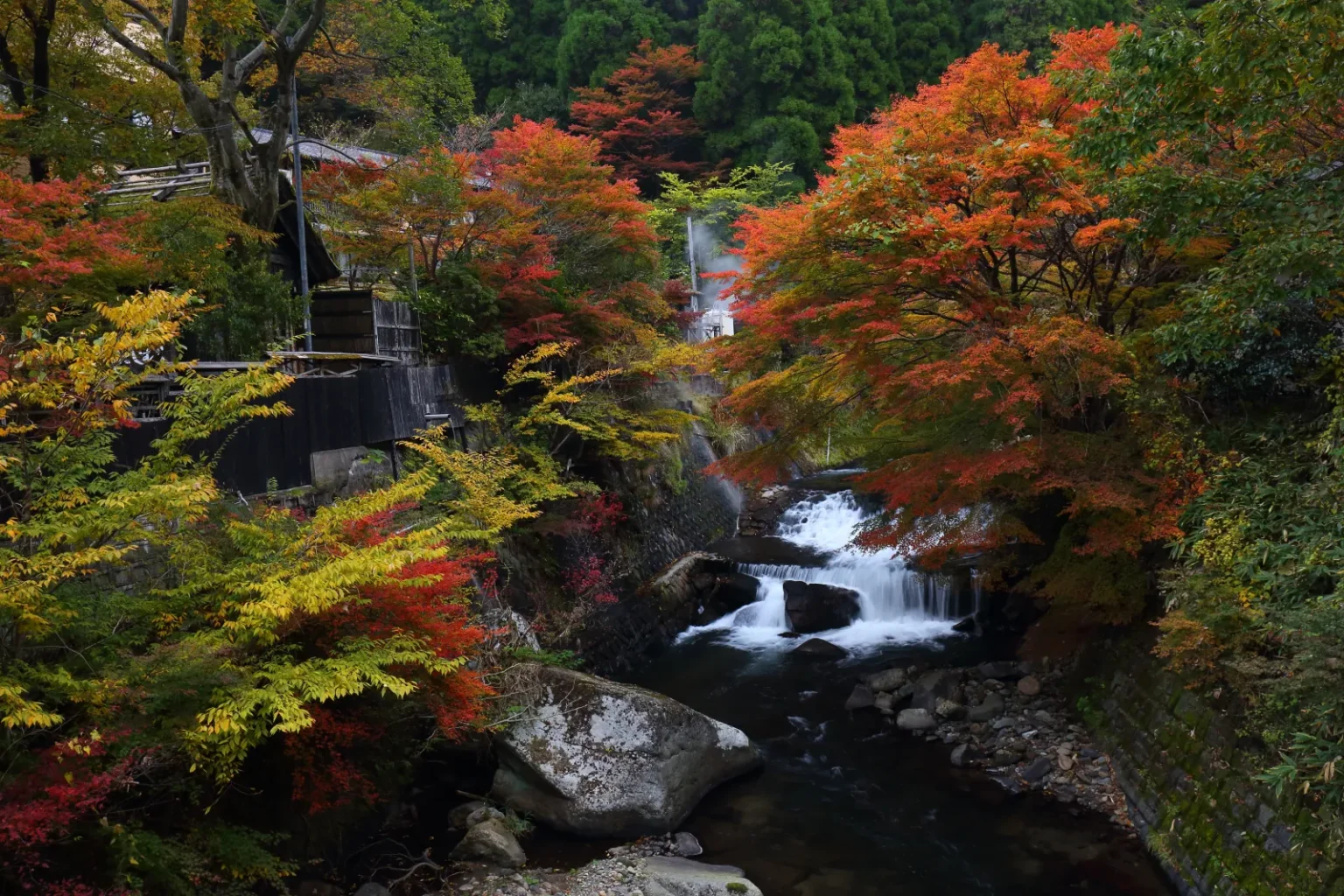
Autumn. The association gives late October to mid November for the autumn colour, and early April for cherry blossom, both later than on the plains because of the height. It also notes the village is about 3–5°C cooler than the lowlands.
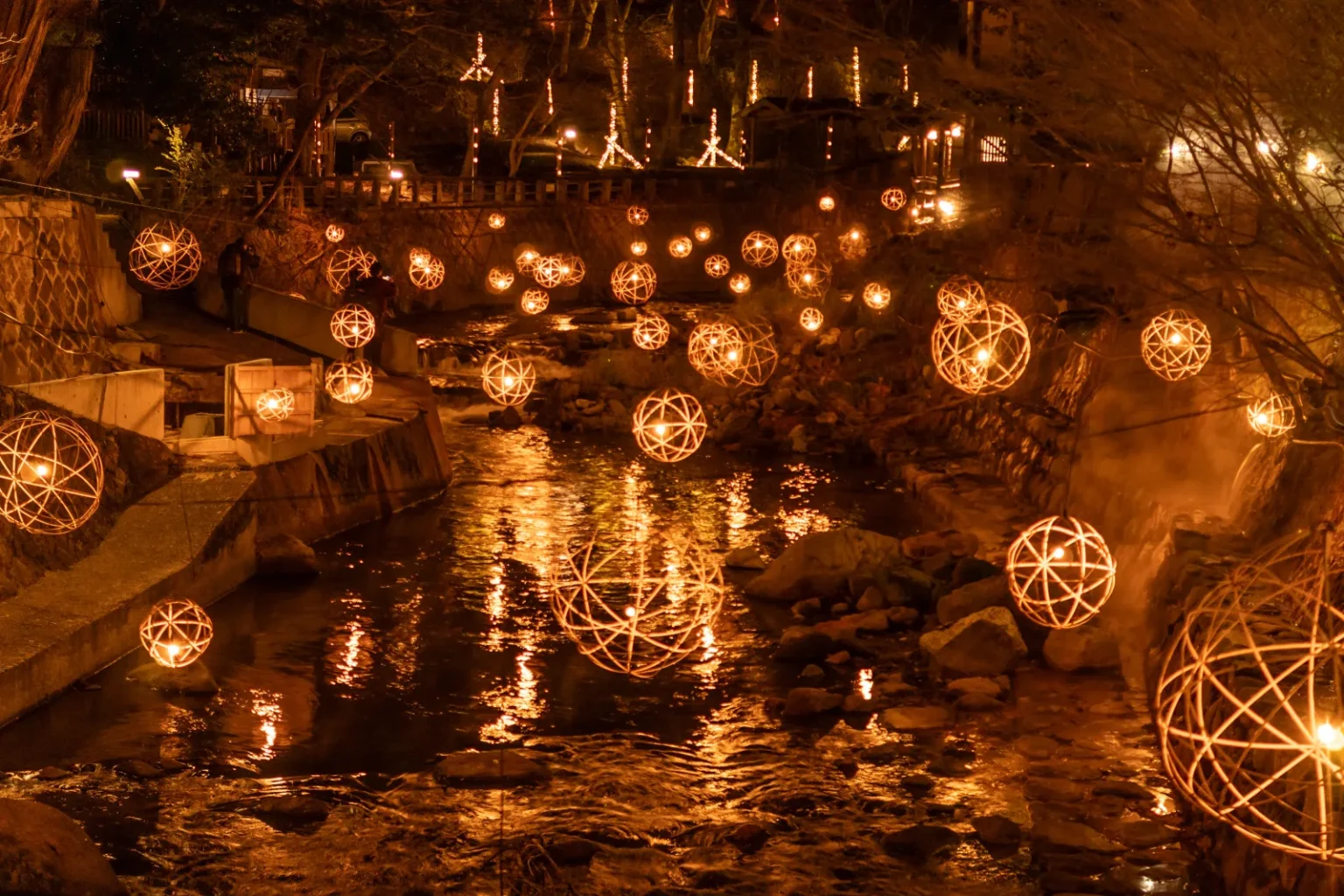
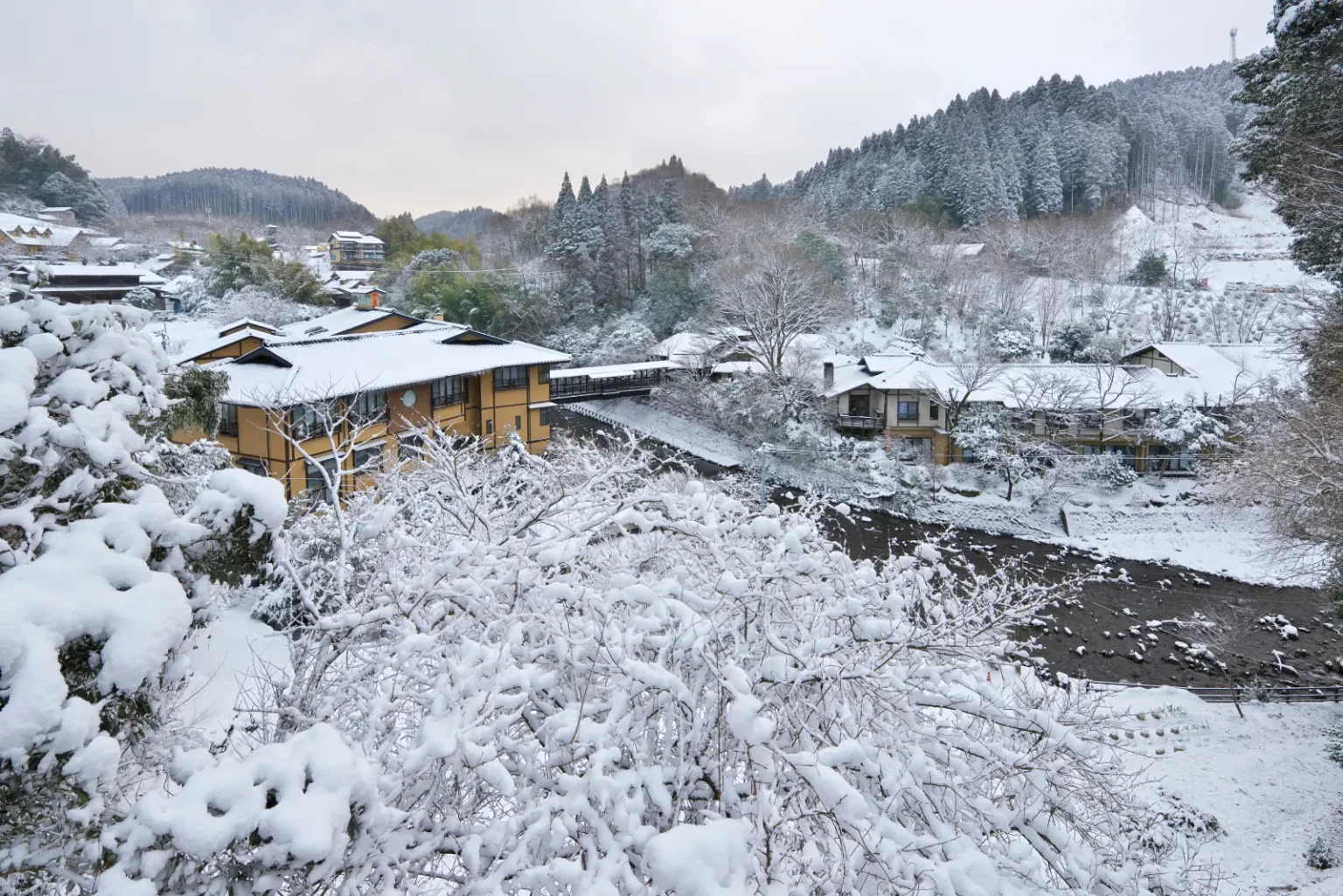
Winter and Yuakari. Yuakari, when round bamboo lanterns light the village after dark, runs from late December to the end of March. The association’s site gave 20 December 2025 to 31 March 2026 for the last season, and the association says it will announce the 2026–27 dates there. In snow or rain, if an outdoor bath cools down, an inn may stop day bathing without notice. The public toilet at the Kurokawa car park closes from December to March.
Nearby: Aso, Nabegataki and Yufuin
- Mount Aso. Aso Station is 58 minutes from Kurokawa on the Kyushu Odan bus (51 minutes the other way). Whether you can reach the crater changes with the volcano; check our Mount Aso guide and, for the grassland below the peaks, Kusasenri. To combine Kusasenri and Kurokawa in one trip, see the three ready-made plans in our Aso trip planner.
- Nabegataki Falls in neighbouring Oguni, the waterfall you can walk behind, now needs a booking: the Oguni tourist association lists ¥300 for adults, 9:00–17:00 (last entry 16:30), and Oguni town announces any temporary closures. See our Nabegataki guide.
- Lunch. For lunch near Kurokawa, see our guide to Pizzeria Tre Passo.
- Yufuin. 1 hour 33 minutes on the bus. Our Yufuin walk covers the town. If you go on from Yufuin by JR, compare the JR Kyushu Rail Pass on Klook with single tickets (paid link: I may earn a commission if you buy).
Kurokawa Onsen: FAQ
How much is the Kurokawa Onsen bath pass?
¥1,500 for adults and ¥700 for children since 1 October 2023. It covers three of the 25 outdoor baths on the association’s list, one pass per person, and is valid for six months.
Is Kurokawa Onsen worth a day trip?
From Kumamoto or Aso, yes: the morning buses give you about six hours, and the association puts three baths at two to three hours. From Fukuoka by bus you get 1 hour 31 minutes, short of that, so stay a night, drive or join a tour.
When is the last bus from Kurokawa Onsen?
16:25 to Aso and Kumamoto, 14:00 to Fukuoka. Towards Yufuin and Beppu, the last is bus 7, timetabled at Kurokawa at 15:00.
Can I bathe in Kurokawa with tattoos?
It depends on the inn. The ryokan association asks you to tell it about your tattoo through its contact form before you visit, or to use a private bath.
Is there mixed bathing in Kurokawa Onsen?
The association says the outdoor baths no longer offer mixed bathing since a prefectural bylaw change, and suggests private baths for couples and families. But its day-bathing page listed Ryokan Okunoyu with a mixed outdoor bath and bathing wear for hire in October 2026, so the two pages conflict; ask Okunoyu directly.
Do I need cash in Kurokawa?
Yes, bring enough. There is no ATM in the village; the nearest is at a convenience store about 15 minutes away by car.
When is Yuakari in 2026–27?
The association runs it from late December to the end of March and will post the 2026–27 dates on its website. The last season ran from 20 December 2025 to 31 March 2026.
Sources (checked 28 October 2026)
- Kurokawa Onsen ryokan association: Home page (Yuakari dates); Nyuto tegata; Price change from 1 October 2023; 40th anniversary; FAQ; Day-bathing status; Day-bathing hours, March 2026 (PDF); Access
- Inns: Ryokan Ichinoi FAQ, details, facilities; Yumerindo access, baths, association page; Okyakuya baths, FAQ, association page; Shinmeikan history, baths, day bathing, association page
- Kyushu Sanko Bus: Kyushu Odan bus timetable and fares from 1 October 2025 (PDF); Fukuoka–Kurokawa timetable and fares from 1 October 2025 (PDF)
- Nishitetsu: Fukuoka–Kurokawa highway bus
- Japan National Tourism Organization: Kurokawa Onsen (English page)
- Ministry of Land, Infrastructure, Transport and Tourism: Kyushu Regional Development Bureau report (PDF); Kyushu District Transport Bureau, tourism charisma (PDF)
- Oguni tourist association: Nabegataki Falls
- Minamioguni town: Road cameras
Join travelers discovering Japan's hidden side
Weekly dispatches from off-the-beaten-path Japan — spots and stories you won't find in guidebooks.
No spam. Unsubscribe anytime.
Welcome aboard!
You're in. See you in your inbox soon.