
2026 Update: The Manda Coal Mine guided tours have been updated with new pricing structures. Ensure you check the latest guided tour fees if you prefer an in-depth historical explanation.
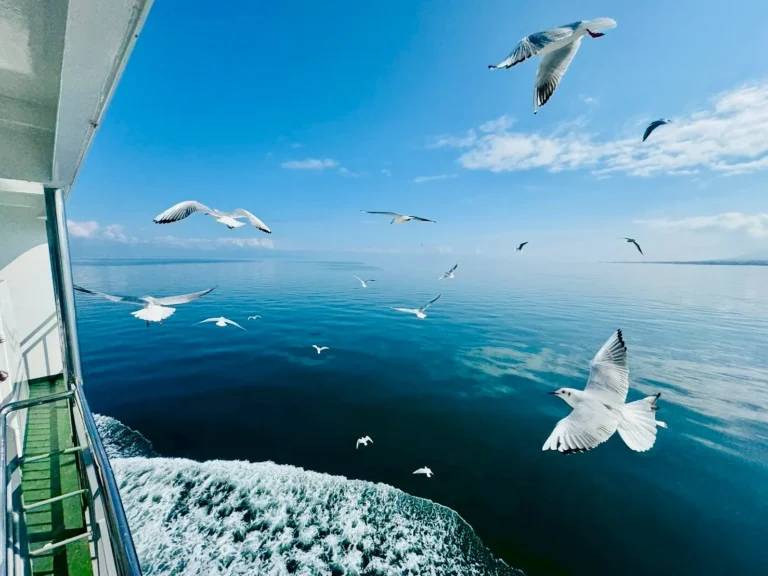
You just stepped off the Ariake Ferry at Nagasu Port — or you’re about to board. Either way, there’s more to this corner of Kumamoto than a ferry terminal. A UNESCO World Heritage coal mine sits 15 minutes away. Kyushu‘s largest amusement park is 20 minutes out. And the town you’re standing in has been breeding goldfish since the Edo period. I’m Nobu from hiddenjapan-gems.com, and this is what to do on the Kumamoto side of the Ariake Sea.
Table of Contents
Quick Facts
| Detail | Info |
| Base port | Nagasu Port (長洲港), Kumamoto Prefecture |
| Ferry connection | Taira Port (Nagasaki) — 45 min, ¥500/adult, ¥2,900/car |
| Top attraction | Manda Coal Mine — UNESCO World Heritage, 15 min from port |
| Family pick | Greenland — Kyushu’s largest amusement park, 20 min |
| Onsen | Tamana Onsen — 1,300-year-old hot spring, 25 min |
| Culture | Yachiyoza Theater — Meiji-era kabuki theater, 40 min |
| Day trip reach | Yanagawa river cruise (Fukuoka), 50 min |
| Best for | Car travelers, families, history + onsen lovers |
1. Nagasu Goldfish Town (長洲 金魚の館) — The Perfect Ferry Stopover
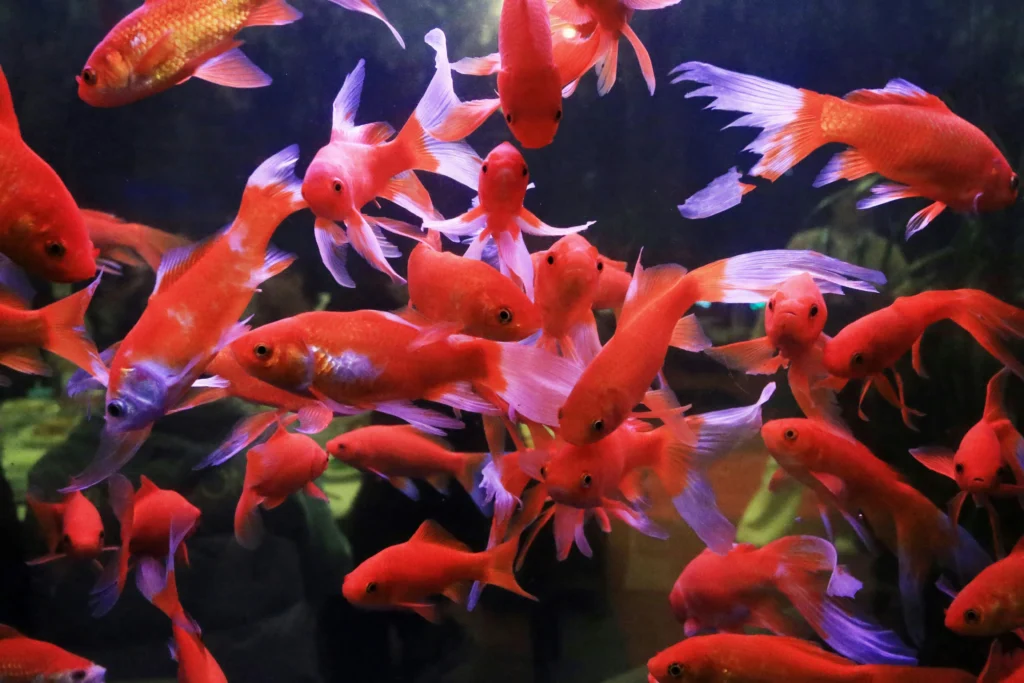
Nagasu has been breeding goldfish since the Edo period, and the “Goldfish House” (金魚の館) sits steps from the ferry terminal. It’s a small museum showcasing dozens of rare goldfish varieties — flowing-tailed ryukin, bubble-eyed ranchu, and deep-red tosakin from Kochi.
This is the ideal activity if you arrive early for your ferry or have 30–60 minutes after disembarking. Kids can try goldfish scooping (金魚すくい) for ¥100, and the 4D theater costs ¥200. The gift shop sells goldfish-themed souvenirs that are genuinely charming — ceramic bowls, tenugui towels, and postcards.
The town itself leans into the goldfish identity: manhole covers feature goldfish designs, and the port area has a small waterfront park (長洲港みなと憩い広場) with walking paths along the Ariake Sea.
| Detail | Info |
| Distance from Nagasu Port | 5 min walk |
| Admission | Free entry to the hall; 4D theater ¥200, goldfish scooping ¥100 |
| Hours | 9:00 AM – 5:00 PM |
| Closed | New Year holidays (Dec 28 – Jan 3) and occasional temporary closures |
| Duration | 20–40 minutes |
| Best for | Families, ferry waiting time |
2. Manda Coal Mine (万田坑) — UNESCO World Heritage Site
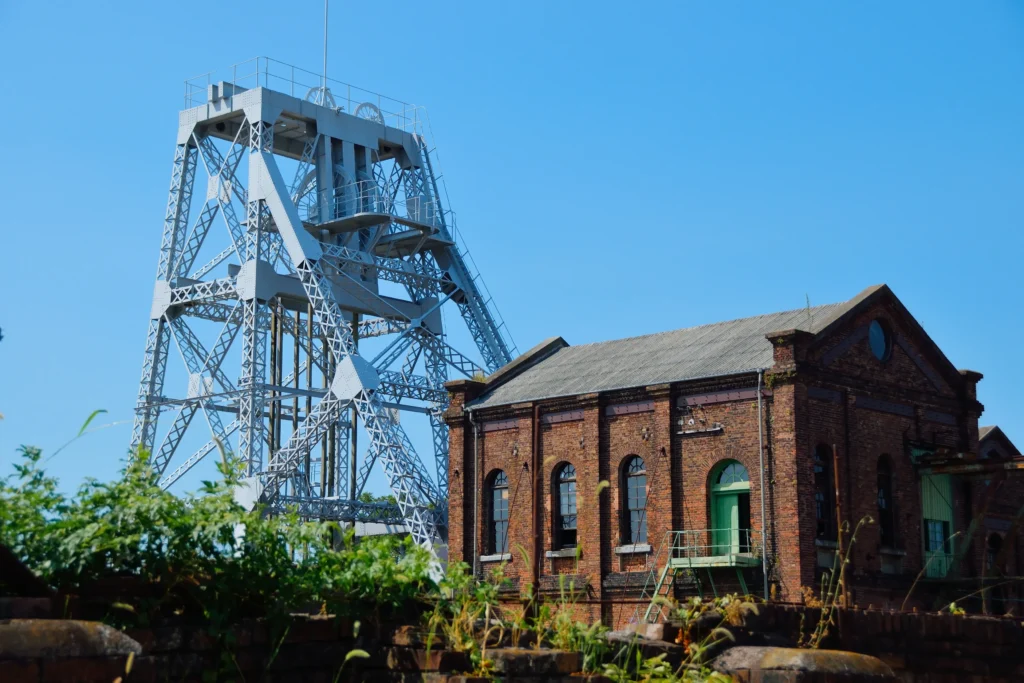
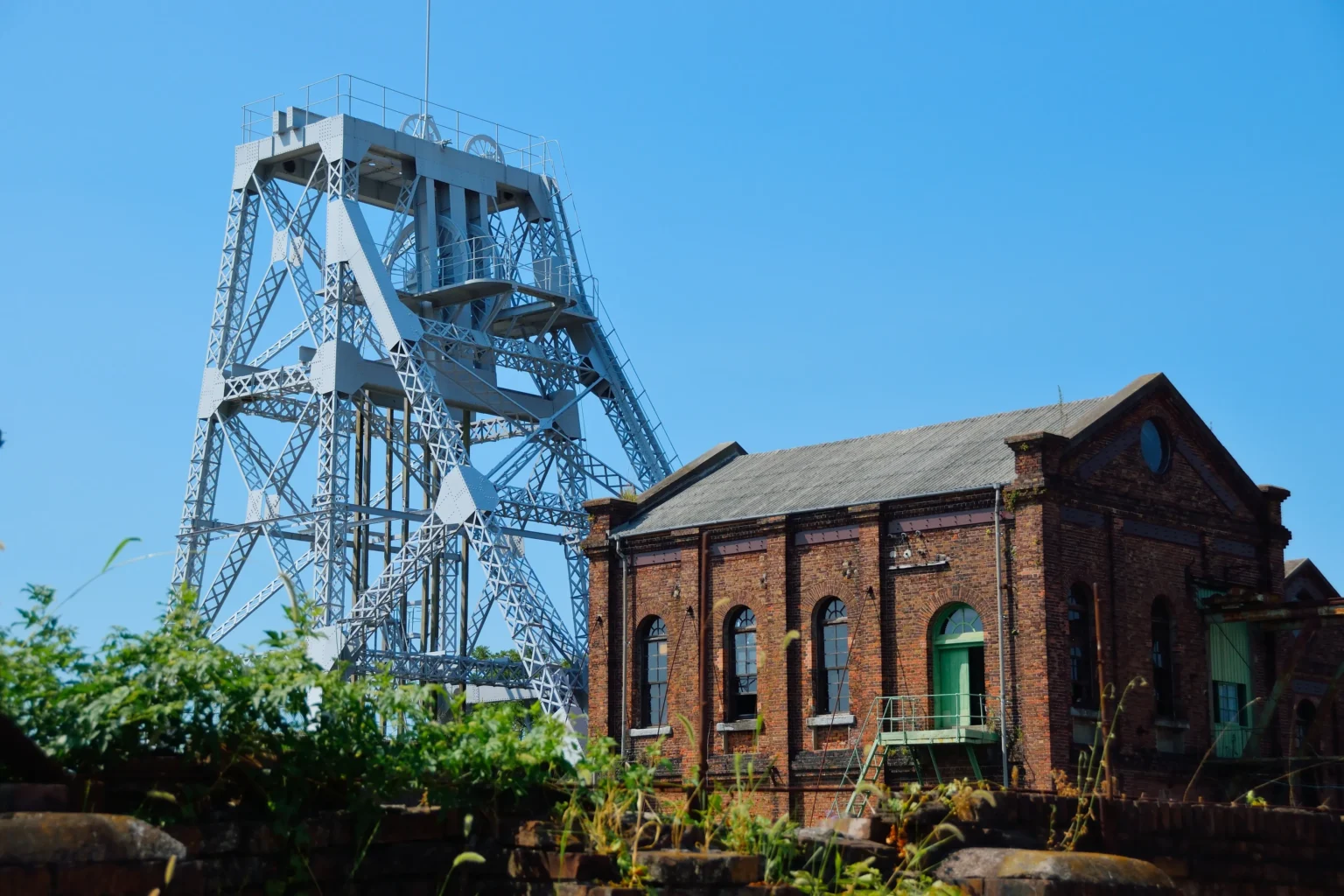
Fifteen minutes from the port sits one of Japan’s most important industrial heritage sites. The Manda Coal Mine — registered as a UNESCO World Heritage Site in 2015 as part of the “Sites of Japan’s Meiji Industrial Revolution” — operated from the late 1800s through 1997, powering Japan’s transformation from a feudal nation to an industrial power.
What makes Manda different from reading about industrial history is the scale. The towering steel headframes — originally used to lower miners into shafts reaching 250+ meters underground — still stand over the red-brick engine houses. The machinery rooms, winding engines, and ventilation systems are preserved exactly as they were when the last miners walked out.
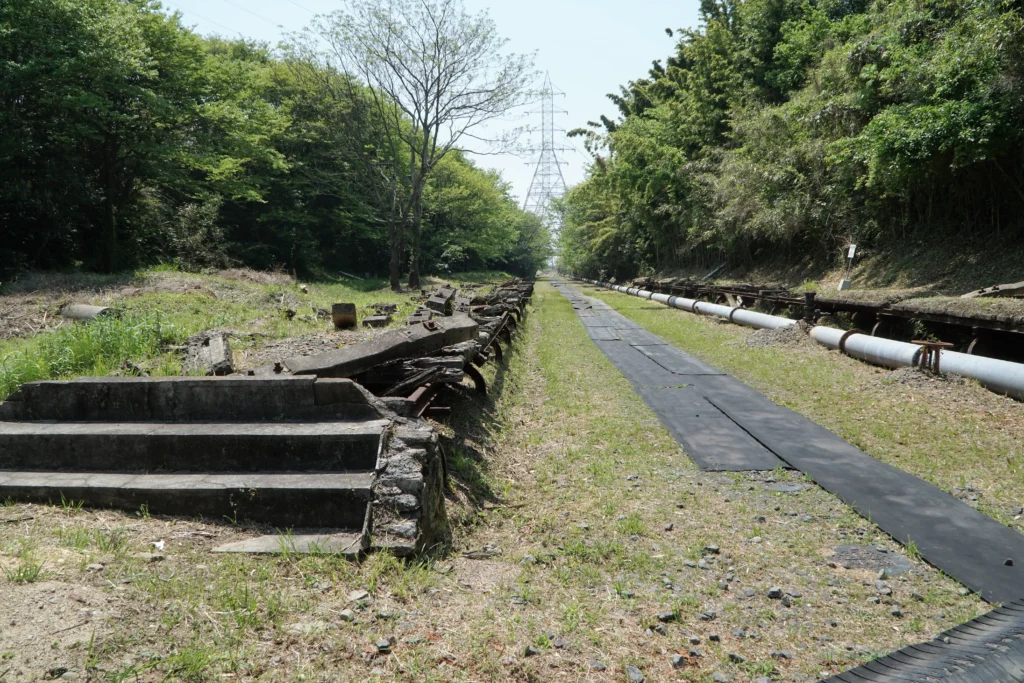
The rail tracks that once carried coal cars now stretch into silence, flanked by creeping vegetation. Walking these tracks gives you a physical sense of the mine’s enormous footprint — this wasn’t a single shaft, but an industrial complex that employed thousands.
Guided tours are available and highly recommended — the guides (mostly in Japanese, with English pamphlets) include former miners and local historians who bring the site to life with stories that the information panels can’t convey.
| Detail | Info |
| Distance from Nagasu Port | 15 min by car |
| Hours | 9:30 AM – 5:00 PM (last entry 4:30 PM) |
| Closed | Mondays (or next day if Monday is a holiday), Dec 29 – Jan 3 |
| Admission | Adults ¥410 / High school ¥310 / Elementary–Junior high ¥210 |
| Duration | 60–90 minutes |
| Parking | Free |
Pro tip from Nobu: The Manda Pit is part of the broader Miike Coal Mine complex, which includes sites in neighboring Omuta City (Fukuoka Prefecture). If you’re a serious industrial heritage fan, the Miike Port and railway ruins are worth a separate visit.
3. Greenland Amusement Park (グリーンランド)
![greenland-amusement-park-arao.jpg — Greenland amusement park in Arao with Ferris wheel and roller coasters]](https://hiddenjapan-gems.com/wp-content/uploads/2026/04/グリーンランド-1024x538.webp)
Kyushu’s largest amusement park — and one of Japan’s biggest with roughly 80 attractions — sits 20 minutes from the port. Greenland isn’t a destination most international travelers know about, which is exactly why it’s worth a stop if you’re traveling with kids.
The park includes roller coasters (the “NIO” with its 66-meter drop is the headliner), a Ferris wheel with views across the Ariake Plain, splash rides, haunted houses, and a dedicated kids’ area for younger children. Unlike the mega-parks near Tokyo and Osaka, crowds are manageable even during summer holidays.
The resort also includes two hotels, an onsen facility, bowling, and a golf course — making it a potential overnight stop if you’re combining it with the ferry trip.
| Detail | Info |
| Distance from Nagasu Port | 20 min by car |
| Hours | Varies by season; typically 9:30 AM – 5:00 PM (extended in summer/holidays) |
| Admission | Adults ~¥1,800 (entry only) / Free pass ~¥5,600 (entry + unlimited rides) |
| Best for | Families with children |
Find Greenland tickets on Klook
4. Tamana Onsen (玉名温泉)
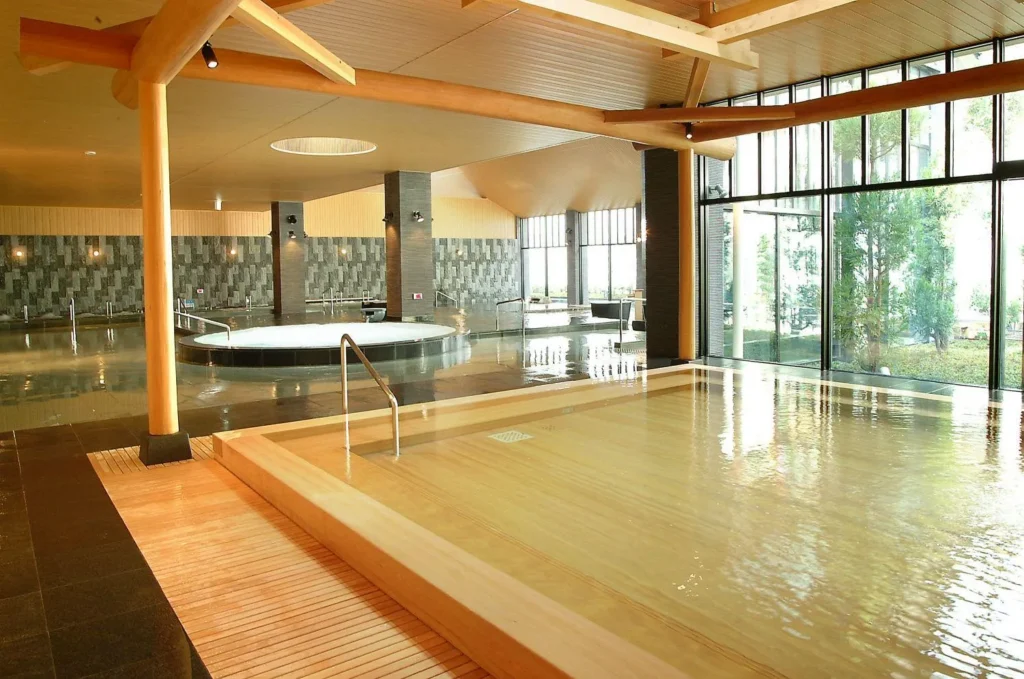
After a day of sightseeing — or before an evening ferry crossing — Tamana Onsen offers 1,300 years of hot spring tradition, 25 minutes from the port. The spring water here is alkaline and silky — the “beauty bath” (美人の湯) type that leaves your skin noticeably smooth.
Several ryokan and day-use facilities welcome walk-in bathers. Tsukasa-no-Yu (つかさの湯) is a popular choice with clean, modern baths, an outdoor rock pool, a sauna, and a restaurant where you can eat after soaking.
The town of Tamana itself is quiet and residential — this isn’t a bustling tourist onsen like Beppu or Kurokawa. That’s part of the appeal. You’re soaking in a local hot spring that most tourists drive past without knowing it exists.
| Detail | Info |
| Distance from Nagasu Port | 25 min by car |
| Day-use bathing | ¥600–1,000 depending on facility |
| Hours | Typically 10:00 AM – 10:00 PM (varies by facility) |
| Best for | Relaxation, couples, end-of-day soak |
Find hotels in Kumamoto on Agoda
5. Yachiyoza Theater (八千代座) — Yamaga
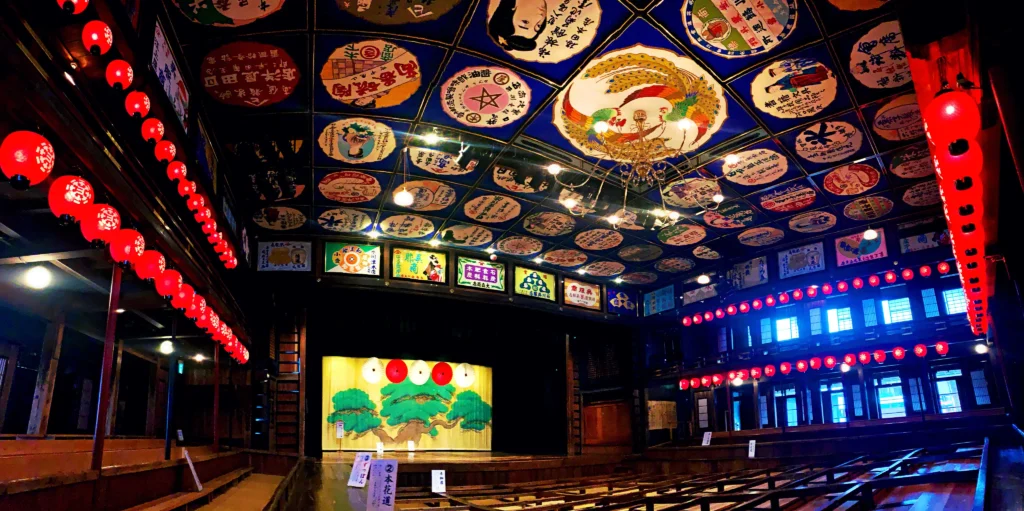
Forty minutes from the port, in the onsen town of Yamaga, stands one of Japan’s most beautiful Meiji-era theaters. Built in 1910 and designated an Important Cultural Property, Yachiyoza is a functioning kabuki theater with a hand-operated revolving stage, trap doors for dramatic entrances, and a ceiling covered in painted advertising panels from over a century ago.
The ceiling is extraordinary — dozens of circular paintings commissioned by local businesses in the early 1900s, each one a small work of commercial art. Sake breweries, kimono shops, pharmacies — their advertisements are frozen in time, painted in vivid color on wooden panels.
On non-performance days, you can tour the interior including the understage mechanisms — the revolving stage and trap doors are operated by hand, the same way they were in 1910. Volunteer guides walk you through the theater’s history and restoration.
Yamaga is also known for its August Lantern Festival (山鹿灯籠まつり), where thousands of women dance through the streets wearing intricate paper lanterns on their heads. If you’re in Kyushu in mid-August, this is one of the region’s most visually stunning festivals.
| Detail | Info |
| Distance from Nagasu Port | 40 min by car |
| Hours | 9:00 AM – 5:00 PM |
| Admission | ¥530 (theater only) / ¥730 (combined with Yumekogura museum) |
| Duration | 30–60 minutes |
| Combine with | Yamaga Onsen (walking distance) |
6. Yanagawa River Cruise (柳川川下り) — Fukuoka Prefecture
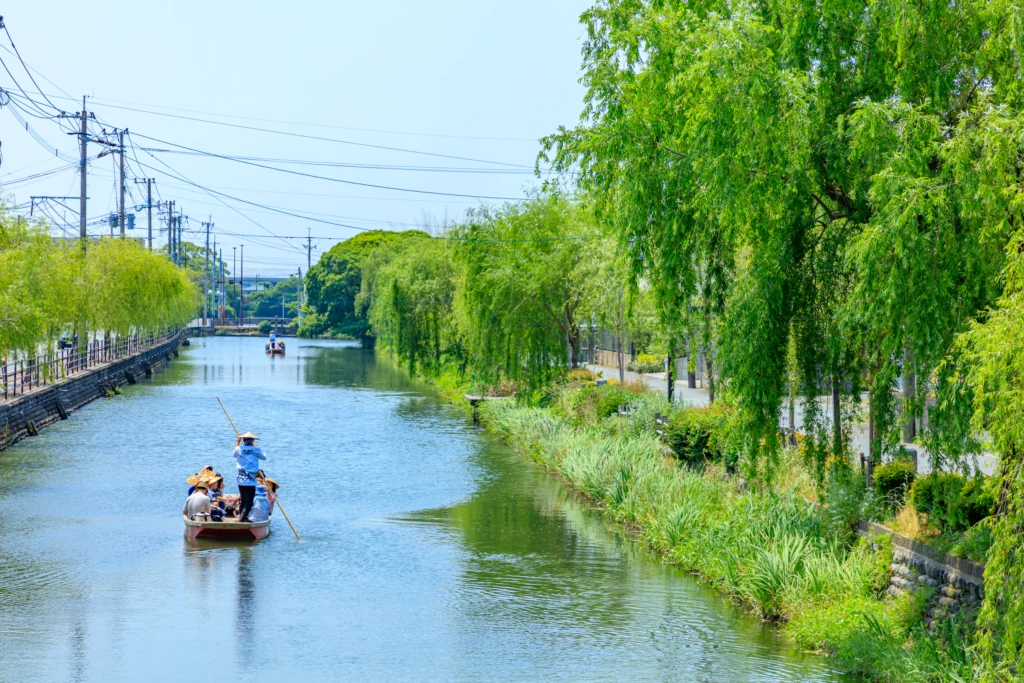
Technically in Fukuoka Prefecture, Yanagawa is 50 minutes from Nagasu Port, and its canal boat ride is one of the best-known outings in Kyushu. A boatman in traditional dress steers a flat-bottomed boat with a long bamboo pole through a network of Edo-period canals, under arched stone bridges and past weeping willows, while singing traditional folk songs.
The 70-minute cruise covers about 4 kilometers through the old castle town’s waterway system — originally built for defense and irrigation, now preserved as a living piece of Japanese history.
Seasonal highlights:
•Spring: Cherry blossoms and wisteria arch over the canals
•Summer: Green willow tunnels
•Autumn: Red and gold foliage reflecting in the water
•Winter: Kotatsu boats — heated blankets covering the boat, with hot sake available
After the cruise, eat Yanagawa’s specialty: seiro-mushi (steamed eel on rice in a lacquered box). Yanagawa-style eel is steamed rather than grilled, creating a softer, more delicate texture. It’s among the best unagi experiences in Japan.
| Detail | Info |
| Distance from Nagasu Port | 50 min by car |
| Cruise cost | Adults ¥1,500–1,650 / Children ¥800–830 |
| Duration | ~70 minutes |
| Departures | Every 30 min, 9:40 AM – 4:10 PM |
| Don’t miss | Seiro-mushi (steamed eel) after the cruise |
Find Yanagawa river cruises on Klook
Where to Eat
| Spot | What to eat | Where | Price |
| Yanagawa eel restaurants | Seiro-mushi (steamed eel on rice) | Yanagawa | ¥2,500–3,500 |
| Ramen shops in Arao/Nagasu | Kumamoto-style tonkotsu ramen | Near port | ¥800–1,000 |
| Tsukasa-no-Yu restaurant | Set meals after bathing | Tamana Onsen | ¥1,000–1,500 |
| Yamaga town restaurants | Yamaga-style tofu, local teishoku | Yamaga | ¥800–1,200 |
Nobutoshi’s pick: If you can only eat one meal, make it Yanagawa’s seiro-mushi. The combination of the river cruise and the eel lunch is one of those perfect travel pairings.
Suggested Half-Day Itinerary
Kumamoto Side: History & Culture Route (4–5 hours)
| Time | Activity | Duration |
| 9:00 AM | Arrive Nagasu Port (from ferry or drive from Kumamoto) | — |
| 9:10 AM | Nagasu Goldfish House | 30 min |
| 9:45 AM | Drive to Manda Coal Mine | 15 min |
| 10:00 AM | Manda Coal Mine guided tour | 90 min |
| 11:30 AM | Drive to Tamana | 20 min |
| 12:00 PM | Lunch + Tamana Onsen soak | 90 min |
| 1:30 PM | Return to port or continue to Yanagawa/Yamaga | — |
Alternative: Family RouteReplace Manda Coal Mine + Tamana with Greenland (arrive 9:30, spend 3–4 hours, lunch in park).
Extended Route (full day):Add Yanagawa in the afternoon — drive from Tamana (30 min), 70-minute cruise, eel lunch, back to Nagasu by 5 PM for the evening ferry to Nagasaki.
Where to Stay
If you want to turn this into an overnight trip:
| Area | Style | Best for | Drive from port |
| Tamana Onsen | Traditional ryokan with onsen | Couples, relaxation | 25 min |
| Greenland Resort Hotels | Hotel + amusement park package | Families | 20 min |
| Yamaga Onsen | Historic onsen town + Yachiyoza | Culture, onsen | 40 min |
Search Kumamoto accommodation on Agoda | Search on Booking.com | Compare flights on Trip.com
Practical Tips
•Cash: The Ariake Ferry is cash only. Some smaller attractions and restaurants on this side also prefer cash. Bring ¥10,000+ in small bills.
•Car rental: A car is essential for this route. Rent from Kumamoto Airport (40 min to port) or Kumamoto Station (50 min to port).
•Ferry timing: If coming from the Nagasaki side, the first morning ferry arrives around 6:00 AM — too early for Manda Coal Mine (opens 9:30). Use the morning for Goldfish House or breakfast in Arao.
•Manda Coal Mine Monday closure: The mine is closed on Mondays. If your trip falls on a Monday, swap in Greenland or extend the Yanagawa visit.
•Yanagawa by train: If you don’t have a car, Yanagawa is accessible by Nishitetsu train from Fukuoka (Tenjin). The boat launch is a 5-minute walk from Nishitetsu Yanagawa Station.
•Southeast Asia Travelers: If you’re visiting in winter (December-February), note that temperatures in Kumamoto can drop to 2-8°C. This is significantly colder than Bangkok or Singapore. Pack layers and consider buying disposable heat packs (kairo) from convenience stores before starting your outdoor tours like the Yanagawa cruise.
•Combining both sides: For the full Ariake Sea experience, pair this article with our Nagasaki-side day trips from Taira Port. A 1-day cross-sea loop hitting both sides is described in our Ariake Ferry Guide.
FAQ
What’s the single best thing to do near Nagasu Port?
The Manda Coal Mine. It’s 15 minutes away and is a UNESCO World Heritage Site. The guided tour brings the industrial history to life in a way that self-guided visits can’t match.
Is Greenland worth it for adults without kids?
Only if you enjoy theme parks. Greenland is primarily a family destination. Adults traveling without children will get more from Manda Coal Mine, Yachiyoza Theater, or Yanagawa.
Can I do this without a car?
It’s very difficult. Manda Coal Mine, Greenland, and Tamana Onsen aren’t on convenient bus routes from Nagasu Port. Yanagawa is the exception — accessible by Nishitetsu train from Fukuoka. If you’re relying on public transport, consider Yanagawa as a standalone trip from Fukuoka rather than a Nagasu Port day trip.
How does Nagasu Port connect to a broader Kyushu road trip?
Nagasu sits between Kumamoto City (50 min south) and Fukuoka (1.5 hours north via expressway). The Ariake Ferry connects to the Shimabara Peninsula (Nagasaki) in 45 minutes. This makes it a natural pivot point for Kumamoto → Nagasaki road trips.
Is there anything to do at Nagasu Port while waiting for the ferry?
Yes — the Goldfish House is a 5-minute walk and the main hall is free. The port also has a small waterfront park (みなと憩い広場) with an Ariake Sea view. The ferry terminal itself has a waiting room but no significant facilities.
What’s the best season for this route?
Spring (April–May) for Yanagawa’s wisteria and comfortable temperatures. Summer for Greenland. Autumn for Yamaga’s lantern festival (mid-August) and pleasant driving weather. Winter is quietest but all indoor attractions (Manda, Yachiyoza, Goldfish House) work year-round.
Most people pass through Nagasu Port without looking up. They’re focused on the ferry — boarding, crossing, arriving. But the Kumamoto side of the Ariake Sea has depth that rewards an extra half-day.
A UNESCO coal mine where you can still feel the weight of Japan’s industrial ambition. A goldfish town that’s been breeding ornamental fish for 200 years. A Meiji-era theater with a hand-cranked revolving stage. A canal town in Fukuoka where boatmen still sing as they pole through Edo-period waterways.
None of these places are crowded. None of them are on the standard Kyushu tourist trail. That’s the point.
Related articles on Hidden Japan Gems:
•Ariake Ferry Guide: Kumamoto to Nagasaki in 45 Minutes
•Day Trips from Taira Port: Nagasaki Side of the Ariake Ferry
•Konagai Oyster Huts: Best Winter Seafood in Nagasaki
•BESS Kumamoto Log House Experience
•How to Travel Around Japan 2026
•Japan Airport & Flight Guide 2026
Join travelers discovering Japan's hidden side
Weekly dispatches from off-the-beaten-path Japan — spots and stories you won't find in guidebooks.
No spam. Unsubscribe anytime.
Welcome aboard!
You're in. See you in your inbox soon.