
Japan Alps · Early Autumn
Murodo is the highest point of the Tateyama Kurobe Alpine Route — a 2,450-metre plateau you reach without any mountain hiking: by cable car and highland bus from the Toyama side, or by electric buses, cable car and ropeway from the Nagano side. That combination is rare in Japan: from mid-September into early October the alpine vegetation here turns red and gold at eye level, and anyone comfortable with stone-paved paths and stairs can stand in the middle of it. The route runs April 15 to November 30 in 2026, and autumn is its second high season — here is the timing, the smart direction of travel, and what the colour does as it moves downhill.
Why elevation decides your whole day
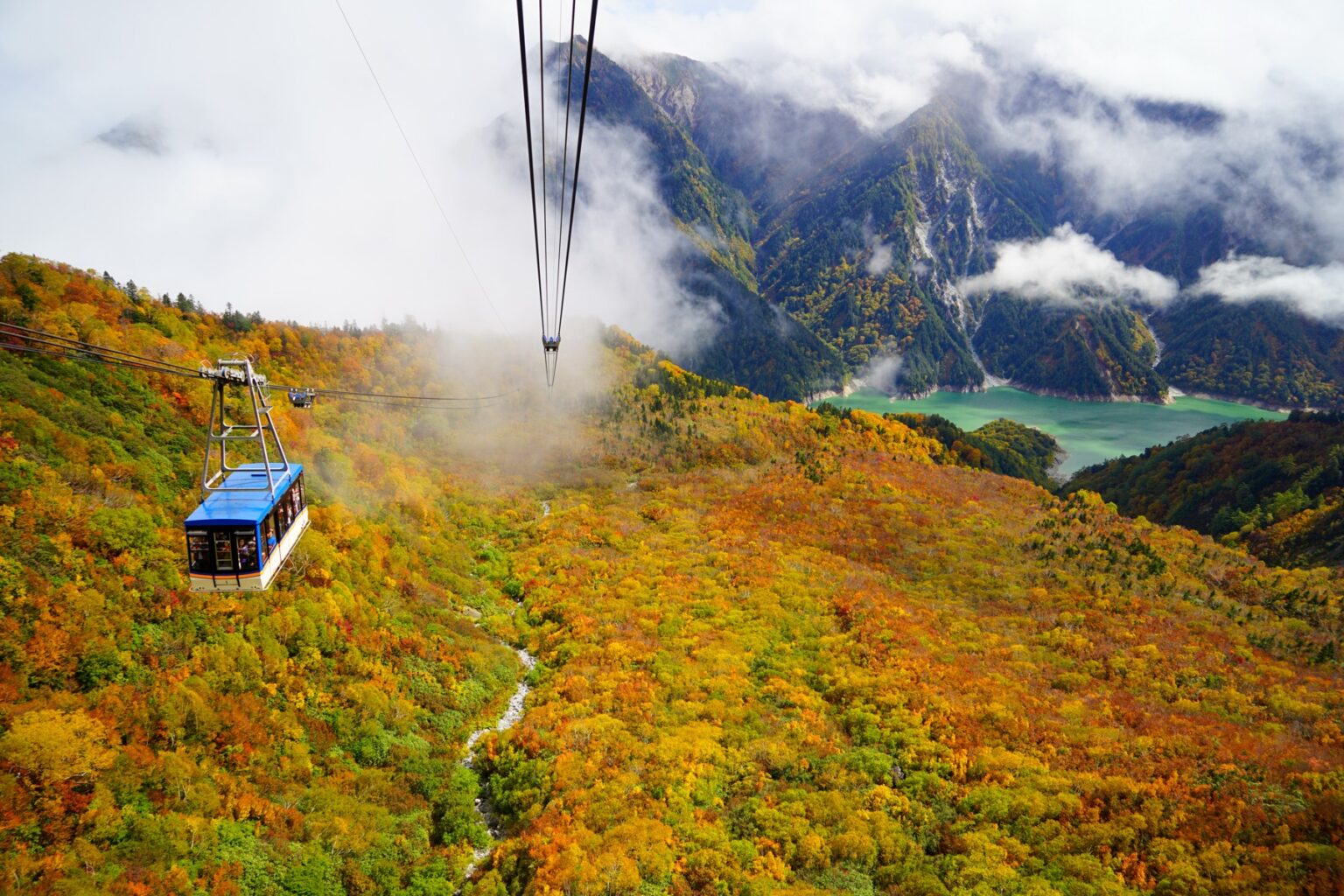
The Alpine Route is a chain of six transport modes — two cable cars, two electric buses, a highland bus and a ropeway — strung over the Tateyama range, with stations at different elevations. In autumn that matters more than anything else: the colour starts at Murodo in mid-September, reaches Daikanbo and Kurobedaira (around 1,800–2,300 m) in early-to-mid October, and finishes at Bijodaira’s beech forests in mid-to-late October. Time it right and you ride through the entire autumn in one day, from finished slopes at the top to green-going-gold forest at the bottom. Arrive “too late” for Murodo and the colour has usually just moved two stations down.
| Station | Elevation | Typical colour window |
|---|---|---|
| Murodo | 2,450 m | Mid-September – early October |
| Daikanbo / Kurobedaira | ~2,300 / 1,800 m | Early – mid October |
| Bijodaira | ~980 m | Mid – late October |
At Murodo itself
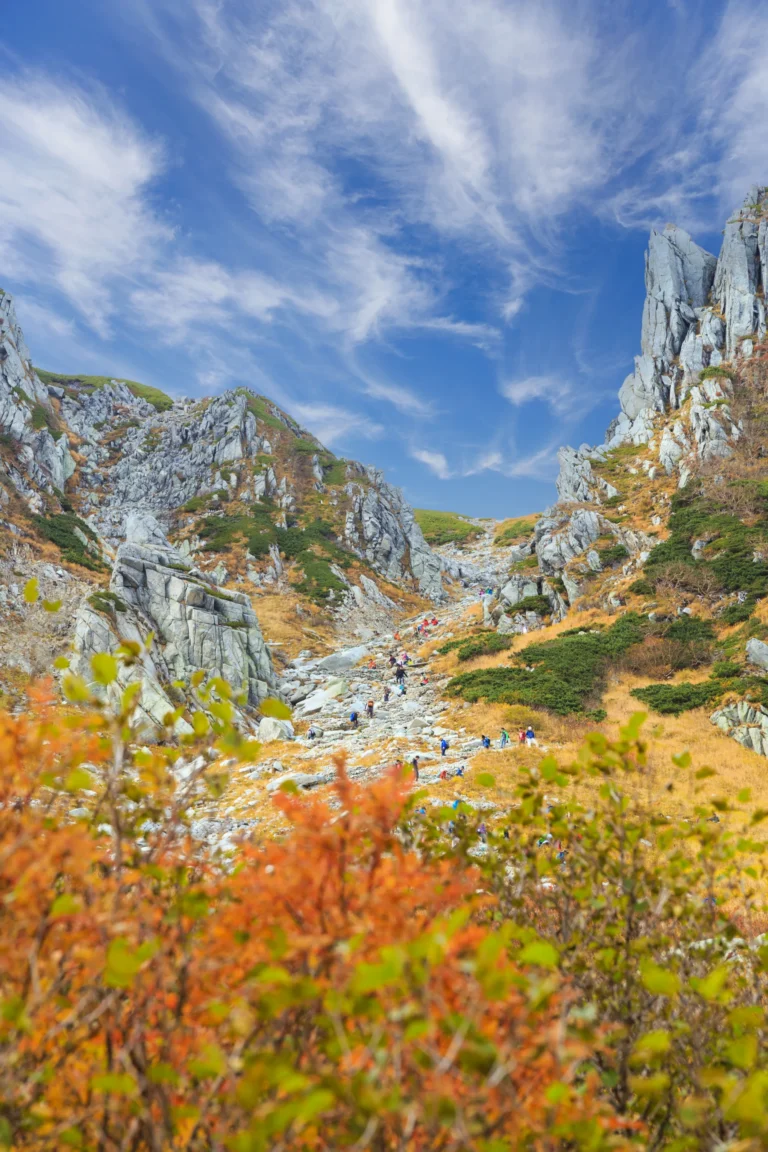
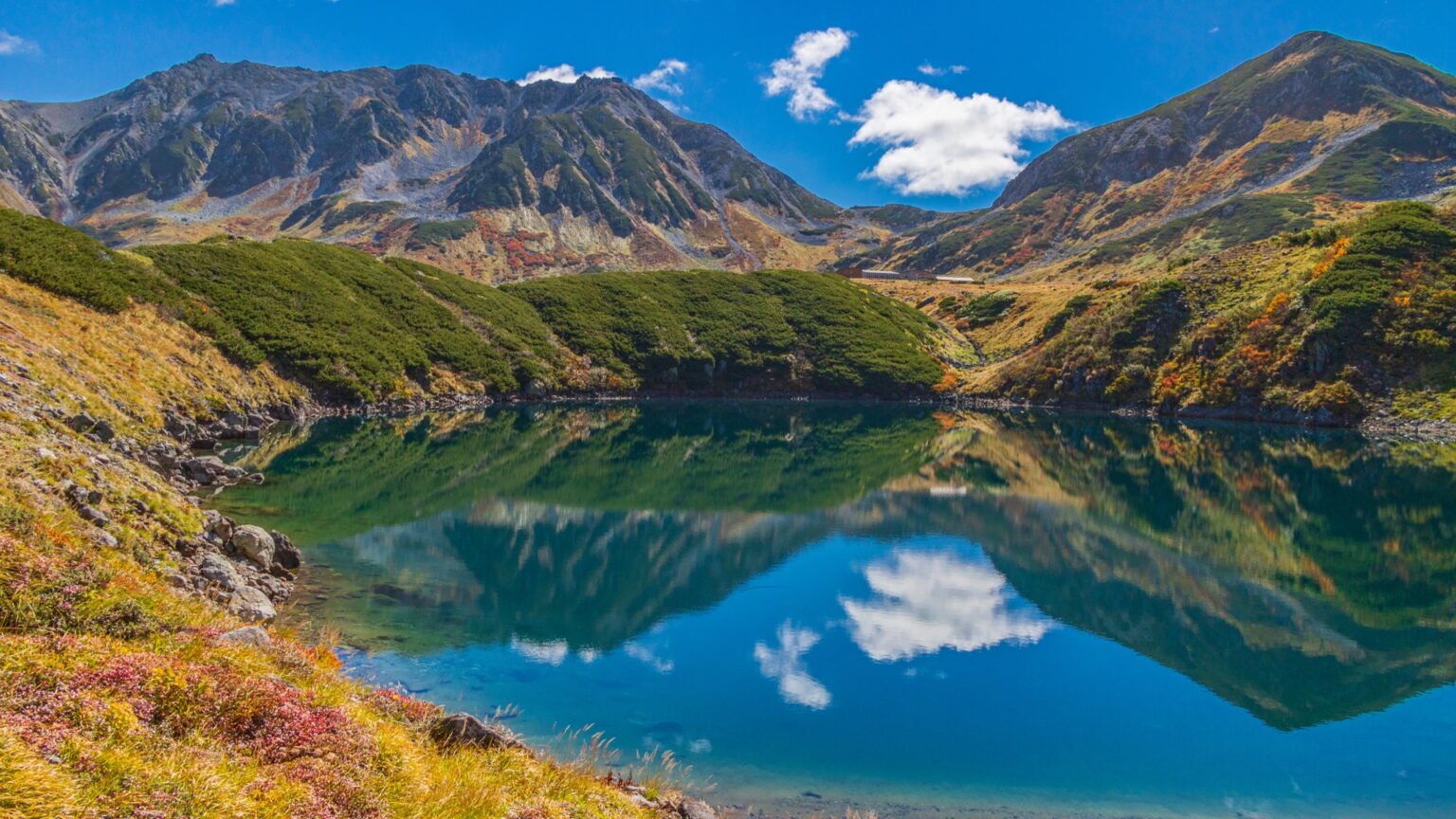
From the terminal, walking paths loop the plateau — stone-paved with steps and uneven stretches, so comfortable shoes matter, and the circuit is not barrier-free. The classic route rounds the Mikurigaike pond, where on a still morning the peaks and coloured slopes can double in the water. You are above the treeline here, so this is not maple foliage: the reds come from alpine shrubs and grasses across the slopes, with the grey Tateyama ridgeline behind. Give it two to three unhurried hours; a handful of high-altitude lodges around the plateau let you stay the night, and they book out far ahead for colour weekends. Two practical notes. First, the official September averages at Murodo are about 15°C by day and 9°C at night, dropping to roughly 10°C / 3°C in October — with wind, that reads far colder, so pack the warm layer even on a sunny forecast. Second, the Jigokudani valley itself is closed because of volcanic gas: stay on open paths and follow terminal and hut notices without exception.
Getting it done in a day
Both entries work: Tateyama Station on the Toyama side, Ogizawa on the Nagano side. The through-trip (Toyama side in, Nagano side out, or reverse) is the famous version, but a same-side return to Murodo is often simpler — and depending on endpoints sometimes cheaper — if your route stays on one coast. September weekends get busy enough that the operator’s web tickets are worth buying: they reserve a designated departure for the Tateyama Cable Car (Toyama side) or the Kanden Tunnel Electric Bus (Ogizawa side) — note you still exchange them at the ticket machines before boarding. Realistic day shape: first cable car up, Murodo by mid-morning, the pond loop while the morning is calm, then descend with stops at Daikanbo for the Kurobe Lake overlook.
Bases: Toyama city works well for the western entry — Trip.com covers its station hotels thoroughly — while the Nagano-side approach pairs naturally with an Omachi or Matsumoto night; compare both on Booking.com or Agoda. A weekday slot beats a weekend one if you have the choice.
FAQ
Is one day enough for the full Alpine Route traverse in autumn?
Yes, if you start on the first services — the through-trip with a proper Murodo stop and a Daikanbo pause fills most of a day, and autumn queues add friction at each link. If you only have an afternoon, do a same-side return to Murodo instead of forcing the traverse.
What happens if the weather turns bad?
Individual links can suspend in strong wind, and the plateau spends whole days inside cloud. Check the operator’s live operation page on the morning itself, and treat Daikanbo’s Kurobe Lake overlook — partly sheltered and lower — as your fallback view. Refundable plans exist for exactly this mountain.
Is Murodo wheelchair or stroller friendly?
The terminals have lifts and facilities, but the Mikurigaike loop involves stone steps and uneven surfaces and is not barrier-free by the local operators’ own guidance. Wheelchair users can still reach the terminal viewpoints; the full pond circuit is the part that does not work.
Can I stay overnight at Murodo?
Yes — a small number of mountain lodges and onsen huts operate around the plateau (note the plateau’s hotel ended its accommodation service in late August 2026, so the huts are the autumn option), and for peak colour weekends they sell out months ahead. An overnight buys you the plateau before the first cable car arrives, which is when the pond is most likely to sit still.
My dates are in early September — will there be colour?
Some, at the top. Weathernews reported on 3 September 2026 that colouring had begun near the summits at Murodo-daira — but that is the leading edge, and the typical window for the plateau opens mid-month. Early-September travellers wanting reliable colour should look at Daisetsuzan in Hokkaido instead — our September colour guide compares the options — or build the trip around the scenery rather than the foliage.
Is baggage forwarding available for the through-trip?
Yes, same-day forwarding runs on specified sections so you can traverse unencumbered — but in 2026 it operates only April 15 to November 8, and counters take cash. Check the sections and cut-off times on the official baggage page before committing to a through-trip plan.
Sources
Tateyama Kurobe Alpine Route official pages (2026 operating season April 15 – November 30, transport modes including the electric buses, autumn viewing-spot elevation windows, web ticketing); Nagano and Toyama tourism information for approach logistics. Live conditions in season: the operator’s status page and our koyo tracker.
Join travelers discovering Japan's hidden side
Weekly dispatches from off-the-beaten-path Japan — spots and stories you won't find in guidebooks.
No spam. Unsubscribe anytime.
Welcome aboard!
You're in. See you in your inbox soon.