Nagano · Yamanouchi · Wild Macaques
At Jigokudani Yaen-kōen in the Nagano mountains, wild Japanese macaques come down to soak in a hot-spring pool — about the only place on earth you can reliably watch monkeys bathe. Admission is ¥800, it’s open year-round, and whether they actually get in the water comes down to the weather, not the date: they soak most through the cold of January to March, and less on mild, sunny days. You reach them on foot — a 1.6 km forest trail that turns to sheet ice in winter.
What you’re actually seeing
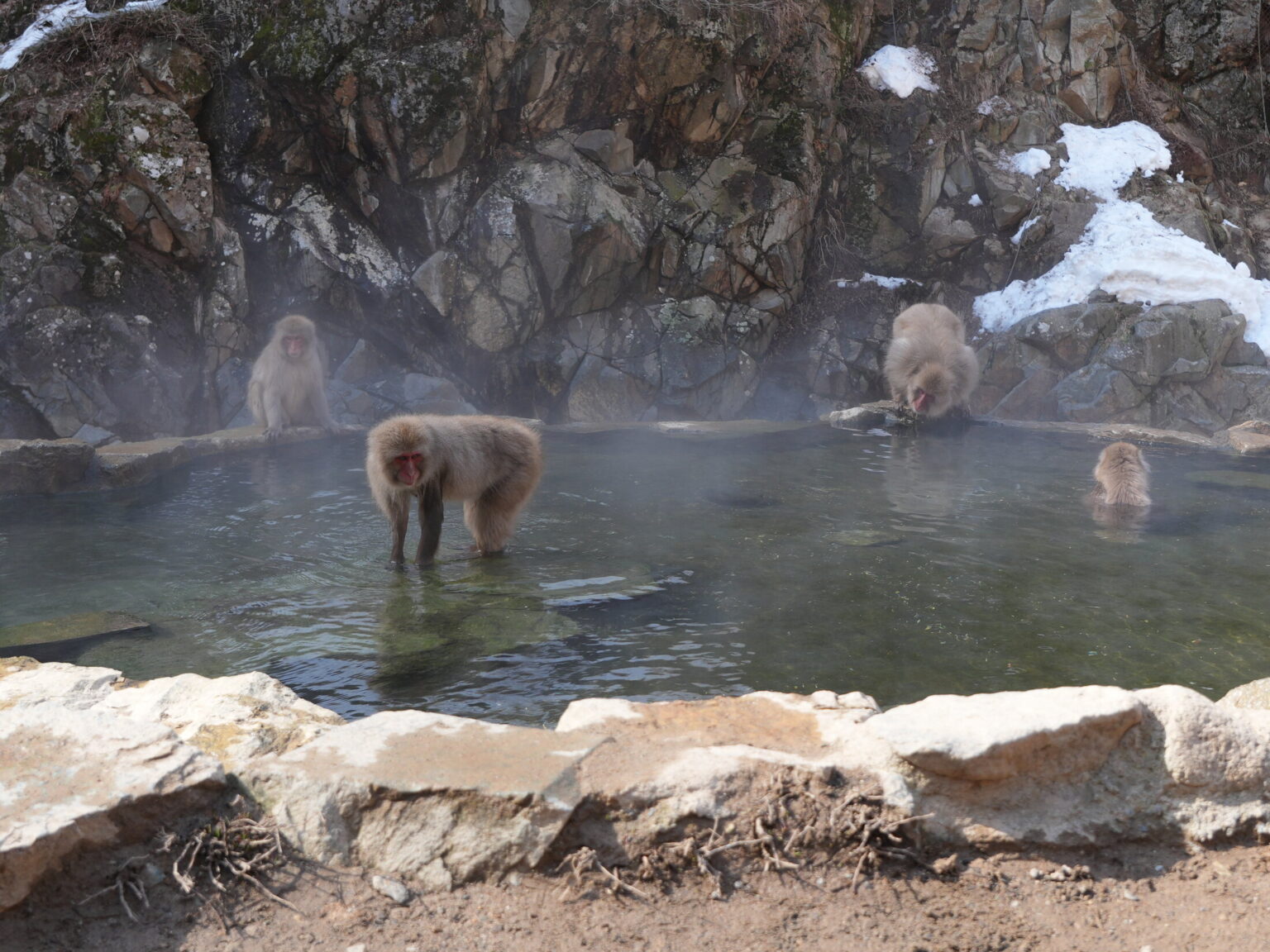
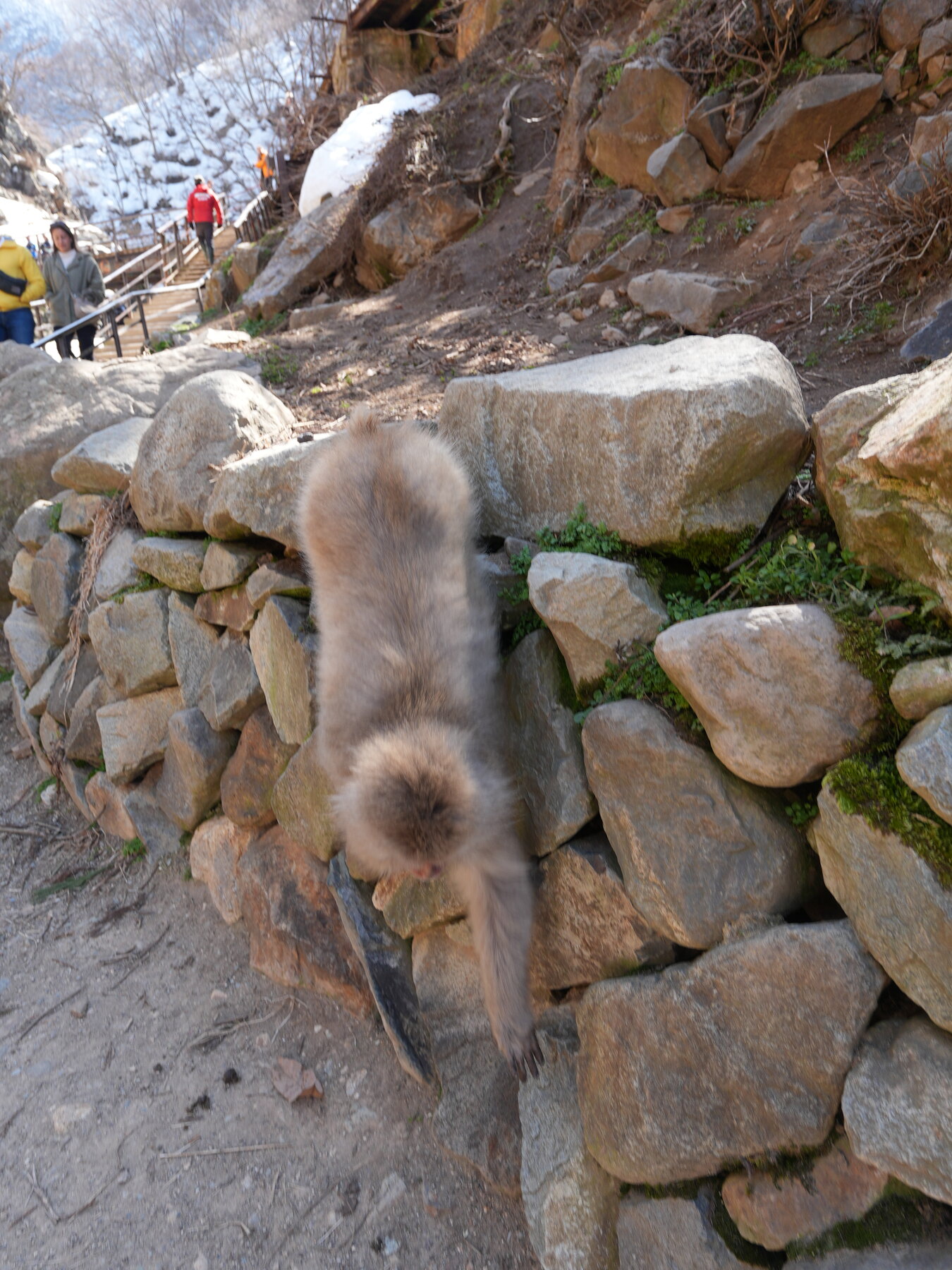
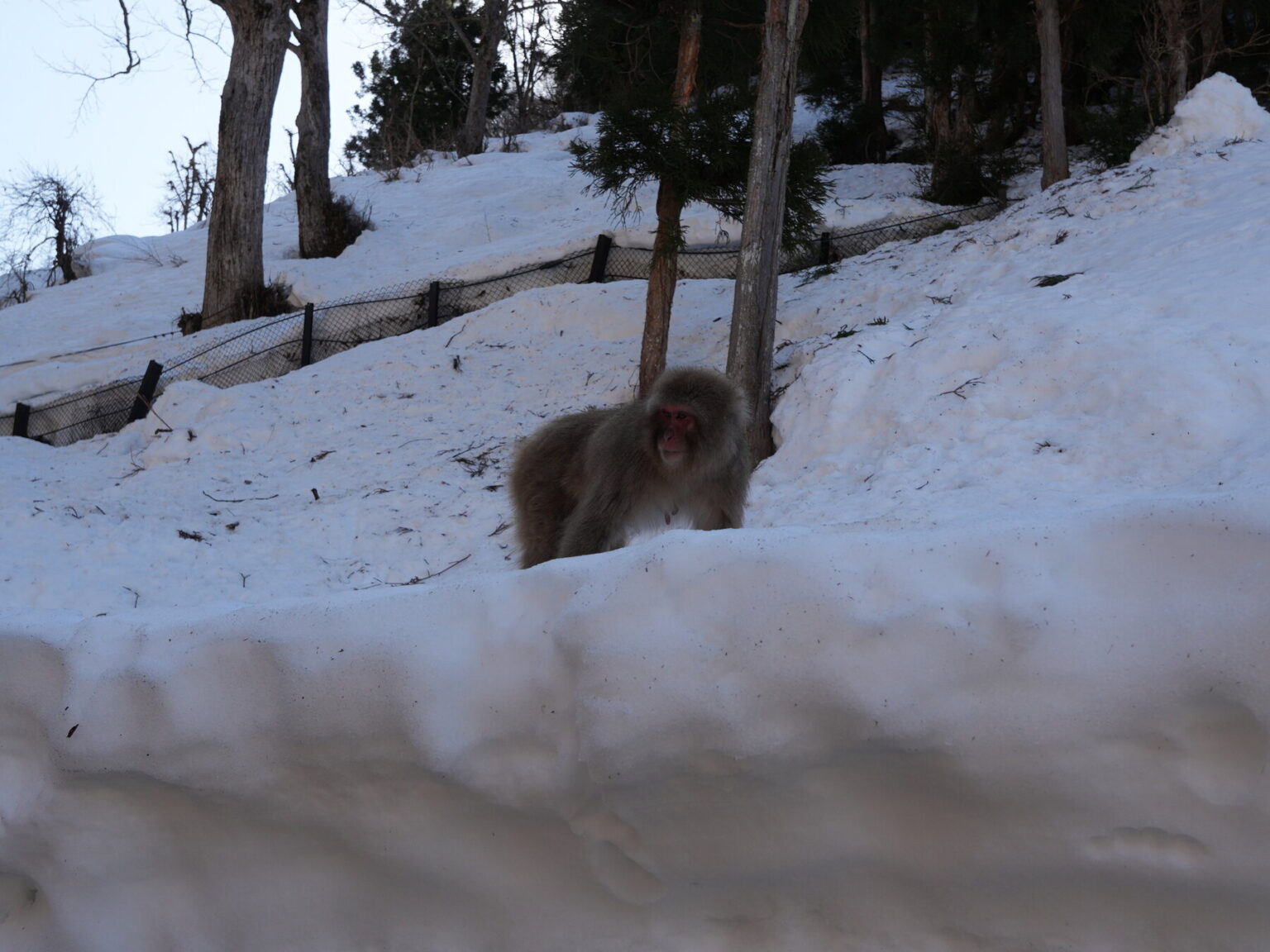
This isn’t a zoo. The park is an observation site on the wild troop’s home ground, with no fences and no cages — the monkeys come and go as they please, and the official line is honest about it: they “may not show up at all on certain days,” and appearances are “particularly sporadic in the autumn.” The rest of the year they’re reliable — the troop turns up the great majority of days, and in winter and into March they tend to arrive around 9:00 and stay until closing. Before you commit to the trip, check the park’s website: it runs a live webcam and posts weekly arrival forecasts, so you can see whether the monkeys are around that morning.
Will they actually be bathing? It’s the weather, not the month
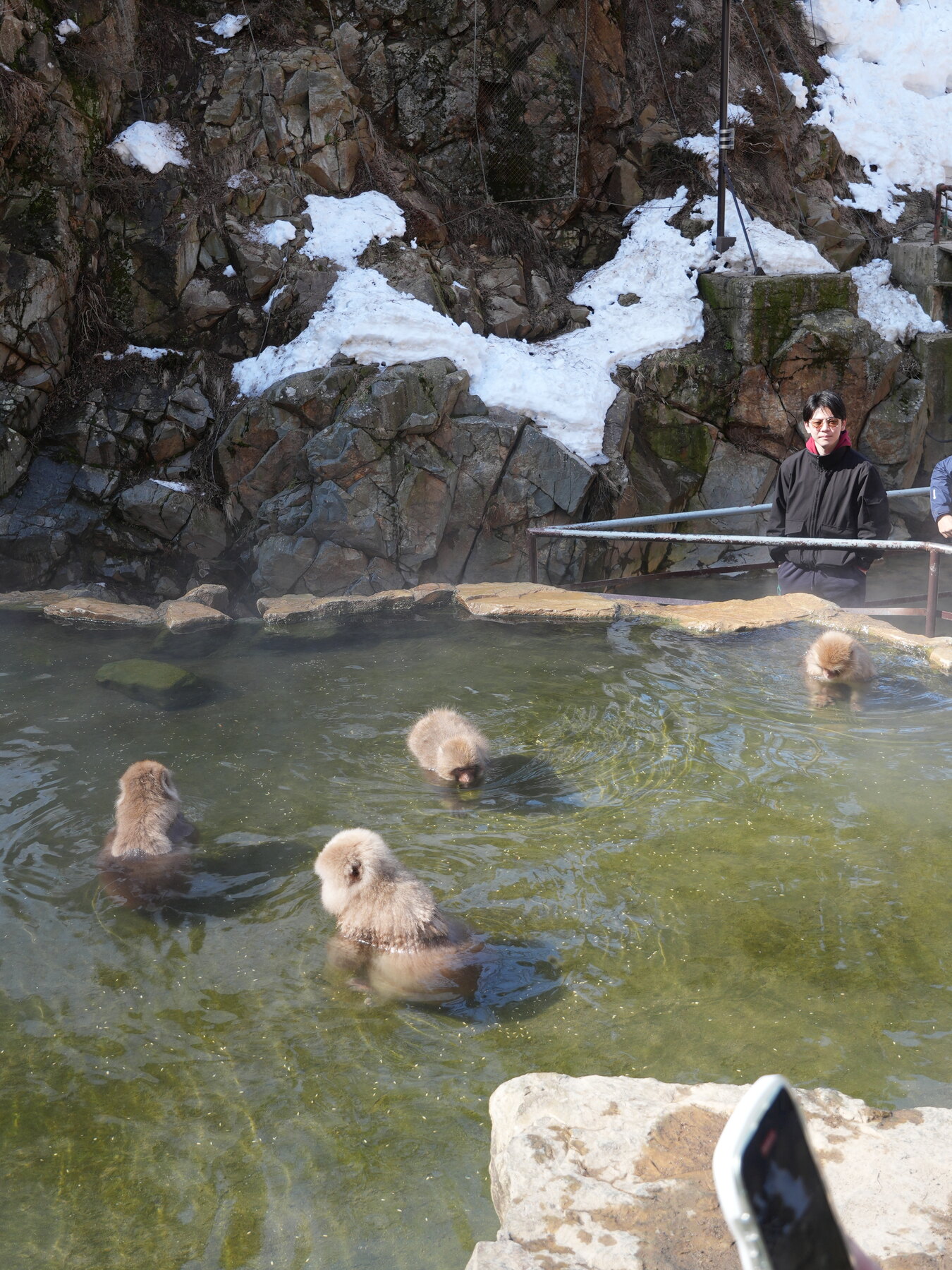
The soaking is what you’re really after, and it’s worth understanding before you go. The monkeys bathe to keep warm, so it tracks the cold rather than the calendar. January and February are the surest bet — deepest snow, longest soaks, the classic photos. The broader window runs roughly December through March; even in March it’s still cold enough that they get in often. What thins it out is a warm, bright day: when I went in late March the troop was all there, but it was mild and sunny, so they spent more time grooming and play-fighting on the rocks than sitting in the water. By April and May they’re more active and only really soak when it’s rainy or chilly (late April into May is also baby season). In high summer there’s essentially no bathing. So even on a good day, “monkeys present” doesn’t guarantee “monkeys in the bath” — go in winter, and go on a cold morning, if the soak is the whole point.
The walk in — and the ice
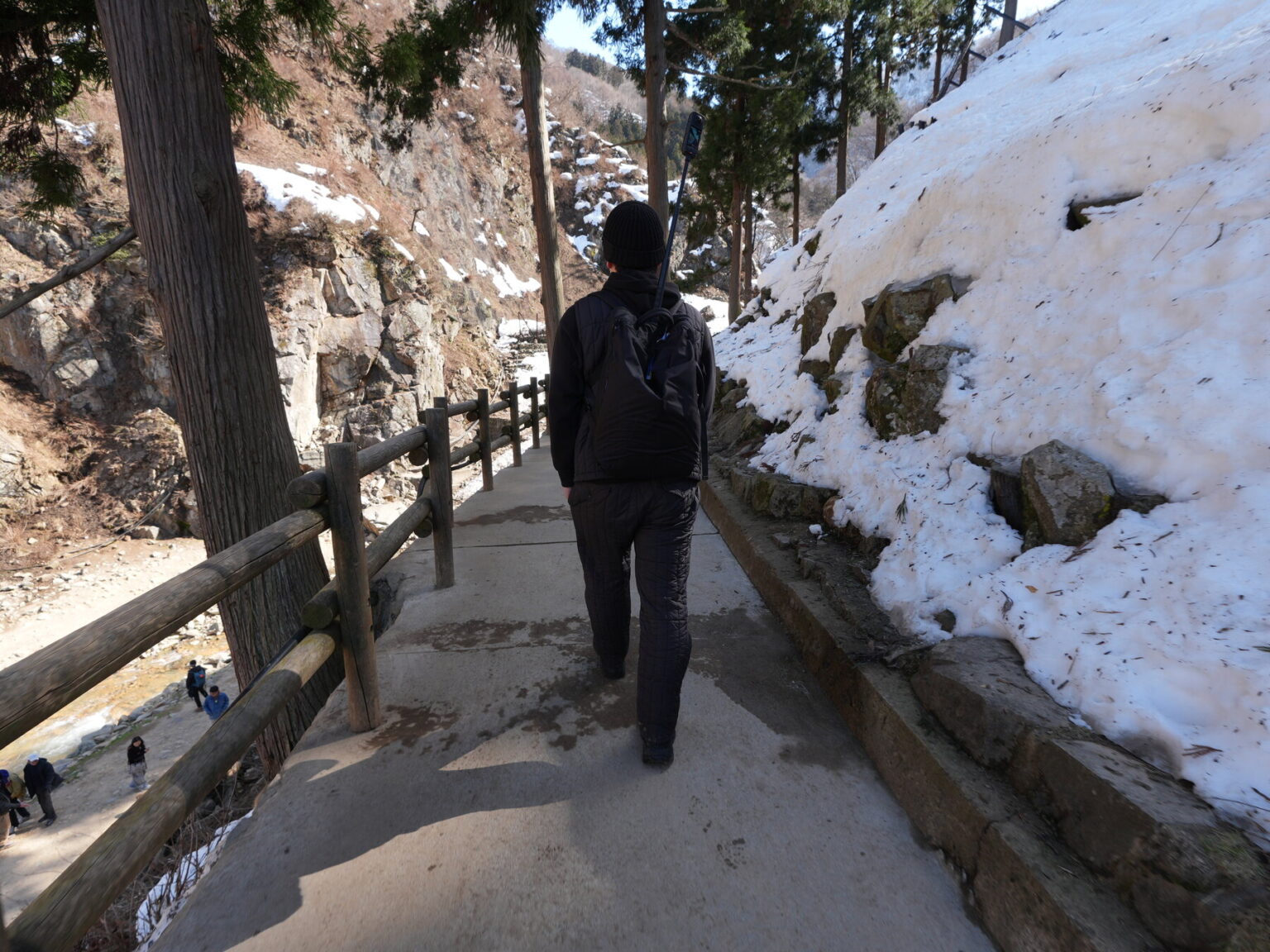
You don’t drive to the monkeys. From the Kanbayashi Onsen bus stop it’s about a 1.6 km forest trail to the park entrance — roughly 30 minutes each way, with the pool a few minutes further in. In summer it’s an easy walk in trainers. In winter it’s a different thing: the path packs down to deep snow and ice and gets genuinely slippery, and in places the ground drops away to the river beside you with no railing. When I went the trail was sheet ice the whole way — the move is to slow right down and watch your feet. The park recommends rubber or snow boots and simple crampons (ice cleats) in winter, and you can rent boots and crampons near the trailhead. Worth every yen. Note there’s no wheelchair or stroller access — the approaches are unpaved, uneven and have steps.
The rules that keep it wild
These are wild animals habituated to people, not pets. The park’s rules are firm, and they’re what keep the experience working:
Never feed them
Don’t show or give them any food — feeding is strictly prohibited. Keep snacks out of sight and zipped away.
Don’t touch, yell or stare
Staring into a monkey’s eyes or opening your mouth at it reads as a threat. Provoked, they can lunge or bite. Watch quietly.
If a baby comes close, step away
Curious young ones may approach you — move away calmly and never touch them, or you’ll have an unhappy mother to deal with.
No bathing, no pets, no drones
You can’t get in the water with them. No pets (even guide dogs — dogs are a natural enemy). Cameras and flash are fine; drones and selfie sticks are not.
Getting there & where to stay
Most people come from Nagano Station: the Nagaden “Snow Monkey” express bus runs from the East Exit straight to the Snow Monkey Park stop in about 40 minutes (roughly ¥2,000 one way — hourly in winter, less often otherwise; reconfirm the current timetable). The alternative is the Nagano Dentetsu railway to Yudanaka Station and a short local bus. If you’d rather stay close, the old onsen towns at the foot of the hill are lovely for a night — Yudanaka Onsen (local bus ~10 min) and historic Shibu Onsen (~5 min). We based ourselves in Nagano City and did it as a half-day out, which works fine too. The park also sits inside the Shiga Kogen side of the valley, so if you are here to ski it pairs naturally with a day on the snow — I have written up whether the seven-resort NAGANO7 season pass is worth buying. There’s also a Snow Monkey Pass (around ¥4,800 adult / ¥2,400 child) bundling round-trip transport with admission — check current prices, as fares change yearly.
| Admission (pay at the gate) | Price |
|---|---|
| Adult (18+) | ¥800 |
| Child (6–17) | ¥400 |
| Under 6 (with a guardian) | Free |
| Annual pass | ¥5,000 / ¥2,500 |
Staying near the monkeys
An onsen night at the foot of the trail beats a rushed day trip. Yudanaka and Shibu are the classic bases; Booking has the spread, and Rakuten Travel is strong for the old ryokan.
Good to know
Are the snow monkeys always there?
Usually, but not guaranteed — they’re wild and roam freely. The troop visits the park the great majority of days outside autumn (when sightings get sporadic), and in winter and March they tend to arrive around 9:00 and stay till closing. Check the park’s live webcam and weekly forecast before you go.
When are they actually in the hot spring?
Bathing tracks the cold, not the calendar. January and February are most reliable; the window runs roughly December through March. On a warm, sunny day — even in winter — they may stay out of the water. Go on a cold morning for the classic scene.
How much is it and can I book online?
¥800 for adults, ¥400 for children 6–17, free under 6. There’s no online or advance ticketing — you pay cash at the gate on the day.
How hard is the walk?
It’s about 1.6 km (~30 min each way) on a forest trail. Easy in warm months; in winter it’s packed snow and ice and can be very slippery, with unfenced drops in places. Wear snow boots and simple crampons (rentable near the trailhead) and take it slowly. No wheelchair or stroller access.
How do I get there from Nagano?
Take the Nagaden “Snow Monkey” express bus from Nagano Station’s East Exit to the Snow Monkey Park stop (about 40 minutes), or the Nagano Dentetsu railway to Yudanaka plus a local bus. A Snow Monkey Pass bundles transport and admission. Reconfirm fares and timetables close to your trip.
What are the main rules?
Don’t feed, touch, yell at or stare at the monkeys; step away from curious babies; no bathing with them; no pets (including guide dogs); cameras and flash are fine but no drones or selfie sticks.
Plan a Snow Monkey Trip
Easiest as a tour or pass from Nagano — here’s how to set it up.
Kamikōchi
The Alps’ most beautiful valley, a couple of hours west.
Matsumoto Castle
Japan’s oldest original keep, on the way in.
Lake Suwa
Onsen, shrines and Fuji views in central Nagano.
Hakuba Village
The big alpine resort valley to the northwest.
Join travelers discovering Japan's hidden side
Weekly dispatches from off-the-beaten-path Japan — spots and stories you won't find in guidebooks.
No spam. Unsubscribe anytime.
Welcome aboard!
You're in. See you in your inbox soon.