Nagano · Snow Monkeys · Zenkoji · Nozawa Onsen · Winter 2026–27
Northern Nagano works as a four-day winter trip without a car: the snow monkeys at Jigokudani, a night in the old onsen lanes of Shibu or Yudanaka, Zenkoji temple in Nagano city, and two nights in Nozawa Onsen, the ski village whose 13 public baths are open to anyone. Two changes for winter 2026–27 matter. From 1 December the park’s gate price rises from ¥800 to ¥1,000 for adults, with a ¥880 web ticket that gets priority entry from December to April. And from 5 December 2026 a dedicated express bus runs from Nagano Station to the snow monkeys, sold as a bus-and-park set online. The plan below goes via Yudanaka instead, so you can leave your bag at your inn before the icy walk.
One thing I tell people about northern Nagano in winter: it is several different kinds of Japan in four days, all reached from Nagano Station by train and bus. A troop of wild macaques sitting in a steaming pool in a snowy gorge; a lane of old wooden inns where you walk between public baths in a yukata; a temple that has drawn pilgrims for some fourteen centuries; and a ski village that still runs its own baths and sets a giant wooden shrine on fire every January.
No car needed, but the snow sets the pace. The monkey park closes at 16:00 in winter and the walk in is on ice, so this plan front-loads the monkeys and keeps the last day loose.
What does a 4-day Nagano winter itinerary look like?
Snow monkeys first, because the park closes at 16:00 in winter and the walk in takes 35 minutes; Zenkoji on the way through Nagano; then Nozawa Onsen for skiing or the public baths. Times below are from the operators’ winter 2026–27 timetables where they exist, and otherwise from the current ones as we read them on 11 October 2026.
| Day | Plan |
|---|---|
| Day 1 | Shinkansen to Nagano; Nagaden limited express to Yudanaka (45 min); leave your bag at your inn; local bus to the Snow Monkey Park stop and a 35-minute walk to the park. Sleep in Shibu or Yudanaka |
| Day 2 | Nagaden limited express back to Nagano; Zenkoji; a Hokuriku Shinkansen that stops at Iiyama, then the Liner bus to Nozawa Onsen. Sleep there |
| Day 3 | Nozawa Onsen: a ski day, or a day of public baths and snowy lanes. Sleep there |
| Day 4 | Liner bus to Iiyama and a Hakutaka back to Tokyo |
Day 1: How do I get to the snow monkeys from Tokyo in winter?
| The day at a glance | Plan |
|---|---|
| Morning | Hokuriku Shinkansen to Nagano; Nagaden limited express to Yudanaka, about 45 minutes |
| Midday | Leave your bag at your inn; local bus to the Snow Monkey Park stop |
| Afternoon | The 35-minute walk in and the park (usually 9:00–16:00 in winter) |
| Sleep | Shibu or Yudanaka Onsen |
Take the Hokuriku Shinkansen to Nagano, then the Nagano Electric Railway (Nagaden) limited express to Yudanaka, about 40 to 45 minutes and ¥1,760 including the express charge. Not every Nagaden train is a limited express, so check the timetable for the next one. Ask your inn in advance whether it will keep your bag before check-in, leave it there, and return to Yudanaka Station for a local Nagaden bus to the Snow Monkey Park stop: the park gives 15 minutes from Yudanaka Station, and Nagaden’s station page lists two routes that serve the stop, the Kanbayashi line and the Shiga Kogen line. We did not find a timetable we could read for winter 2026–27, so check both directions before you set out from Tokyo (your inn or Nagaden can tell you), so that you reach the park well before it closes at 16:00. Counting the bus and the 35-minute walk, plan to leave Yudanaka by early afternoon.
From the bus stop it is a walk of about 35 minutes to the park, on a forest trail that packs down to snow and ice in winter, with drops to the river and no railing in places. The park recommends snow boots and simple crampons, which you can rent near the trailhead. This is why the plan drops your bag in Yudanaka first: the trail is no place for a suitcase. From November to March the park is usually open 9:00–16:00; it can close without notice for weather, and it asks you to arrive 30 minutes before closing.
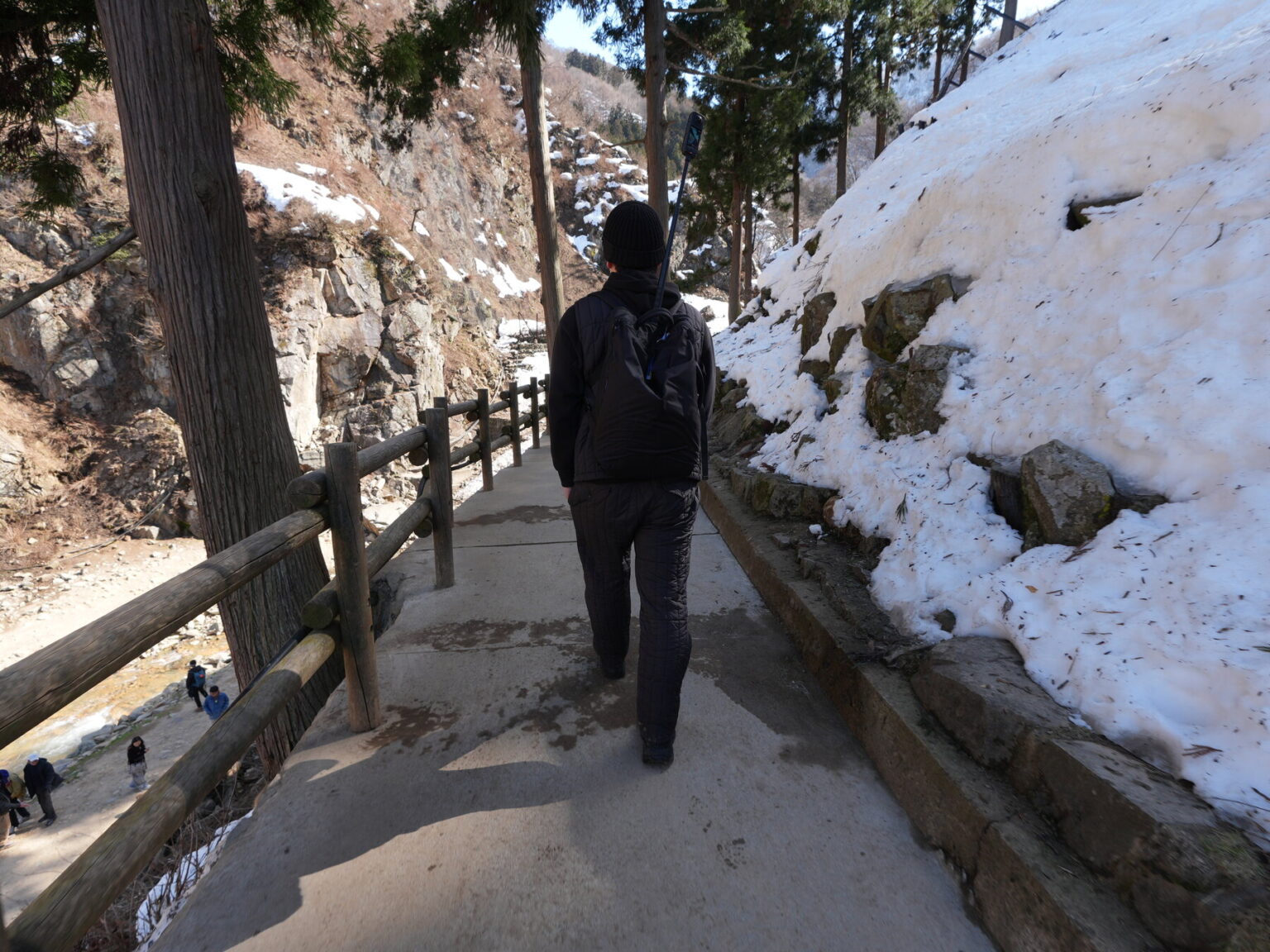
The snow monkeys of Jigokudani
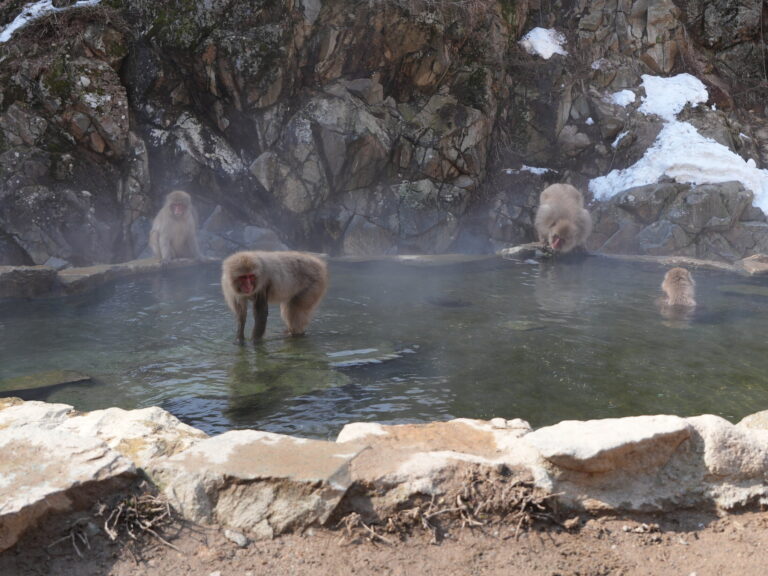
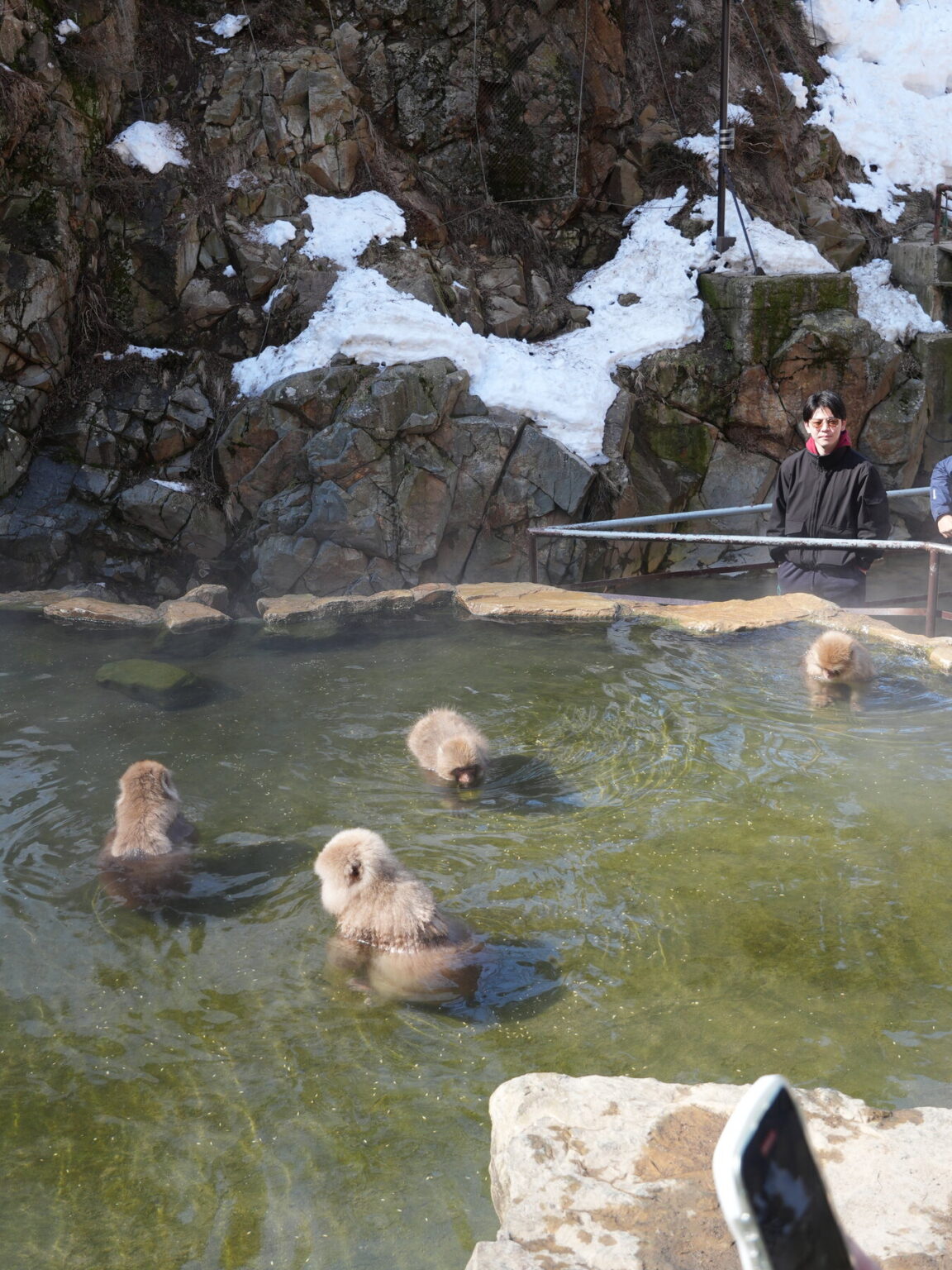
Jigokudani, “hell valley”, is a gorge at about 850 m where a hot spring shoots up steam among sheer cliffs; the park says that is how it got its name. Winters here are hard, with more than a metre of snow and lows below −10°C. The park opened in 1964, and the monkeys’ bathing began, it says, when a young macaque learned to get into the outdoor bath of Korakukan, an inn close by, and others copied it; for hygiene the park built them a pool of their own, and the habit has passed down the generations since. A LIFE magazine cover in 1970 and the Nagano Winter Olympics in 1998 made them famous abroad. There is no fence between you and the troop, visitors may not feed them and the park sells no food, and the monkeys of Jigokudani are a natural monument of Yamanouchi town.
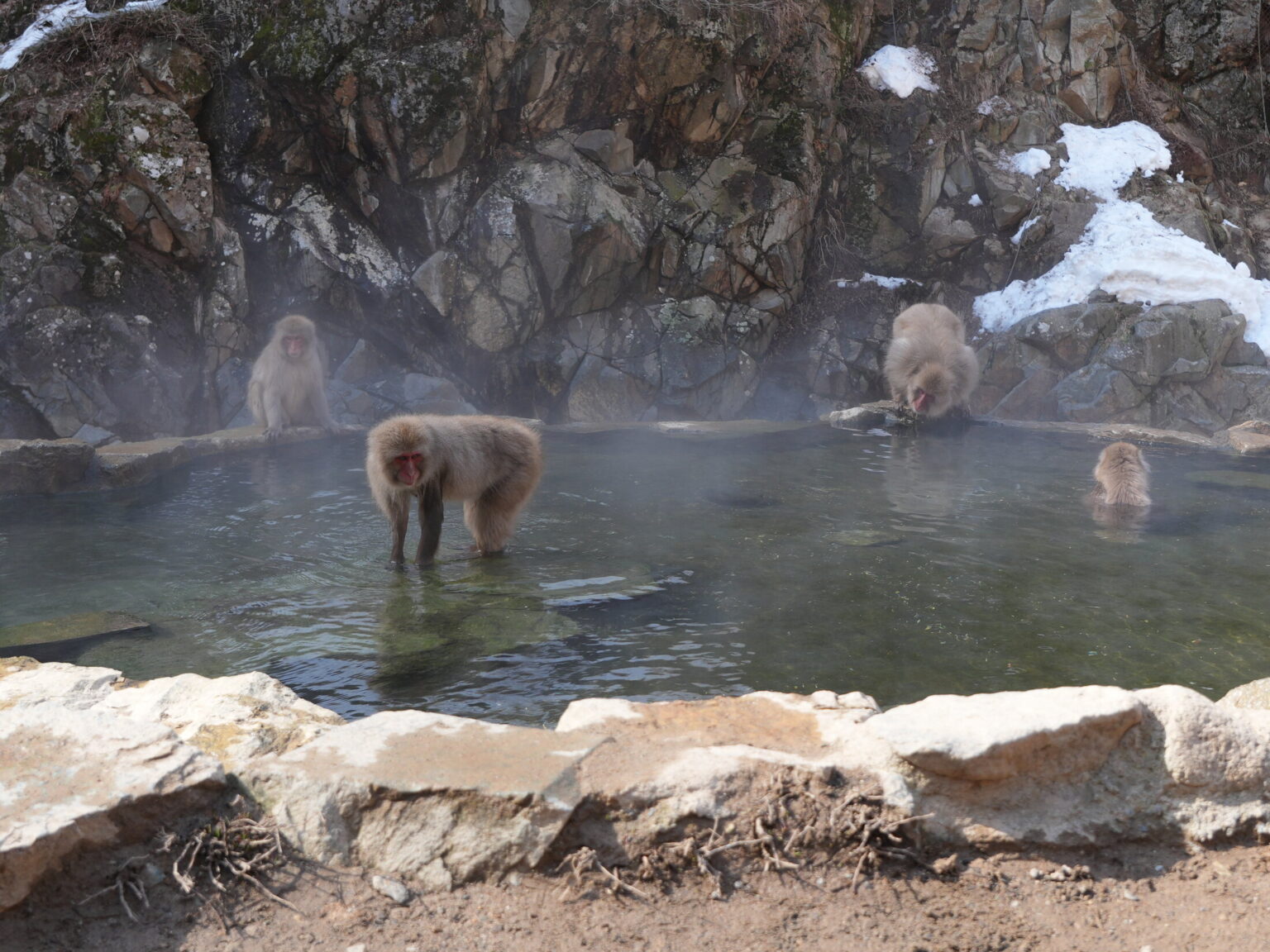
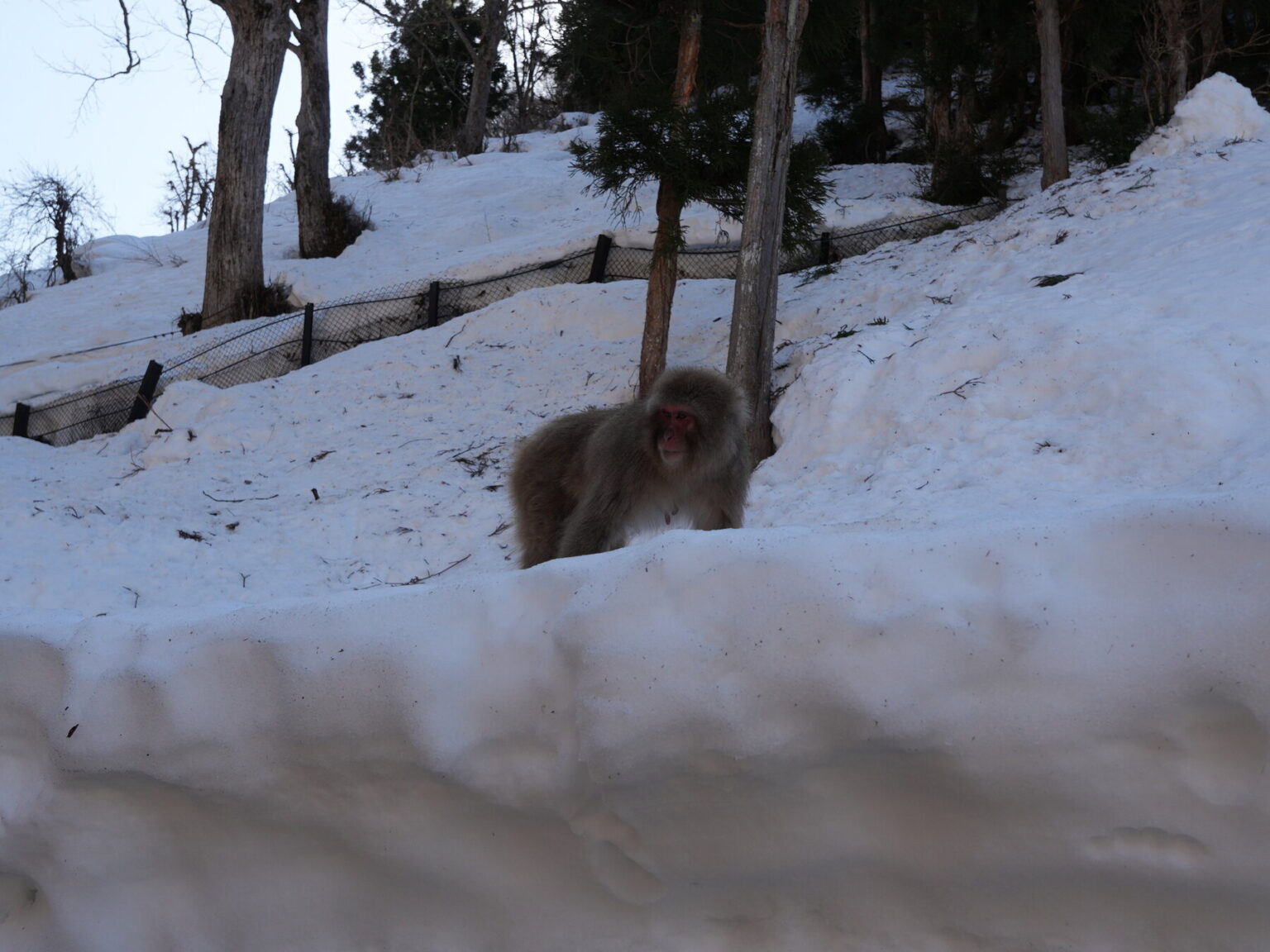
The macaques bathe most in the cold of January to March, and less often on mild, sunny days. In winter the troop tends to arrive around 9:00, so there is no need to be at the gate at opening. Adult entry is ¥800 until 30 November 2026; from 1 December it is ¥1,000 at the gate or ¥880 as a web ticket, children ¥500 or ¥440, and the park gives web-ticket holders priority entry from December to April. Our snow monkey guide covers what to expect at the pool.
Evening: Shibu or Yudanaka Onsen
Take the local bus back down to Yudanaka Station for the night (if you stay in Shibu, ask your inn which stop to use, or how to get there from the station). Shibu Onsen, next to Yudanaka, has a lane of multi-storey wooden inns and nine public baths, the soto-yu. According to the ryokan association, eight of them and the nine-bath round are for guests staying in Shibu, whose inn lends them the key; the ninth, Shibu Oyu, also takes day visitors from 10:00 to 17:00 for ¥800 (it can close on short notice). If you stay in Shibu, ask your inn how to get to Yudanaka Station in the morning.
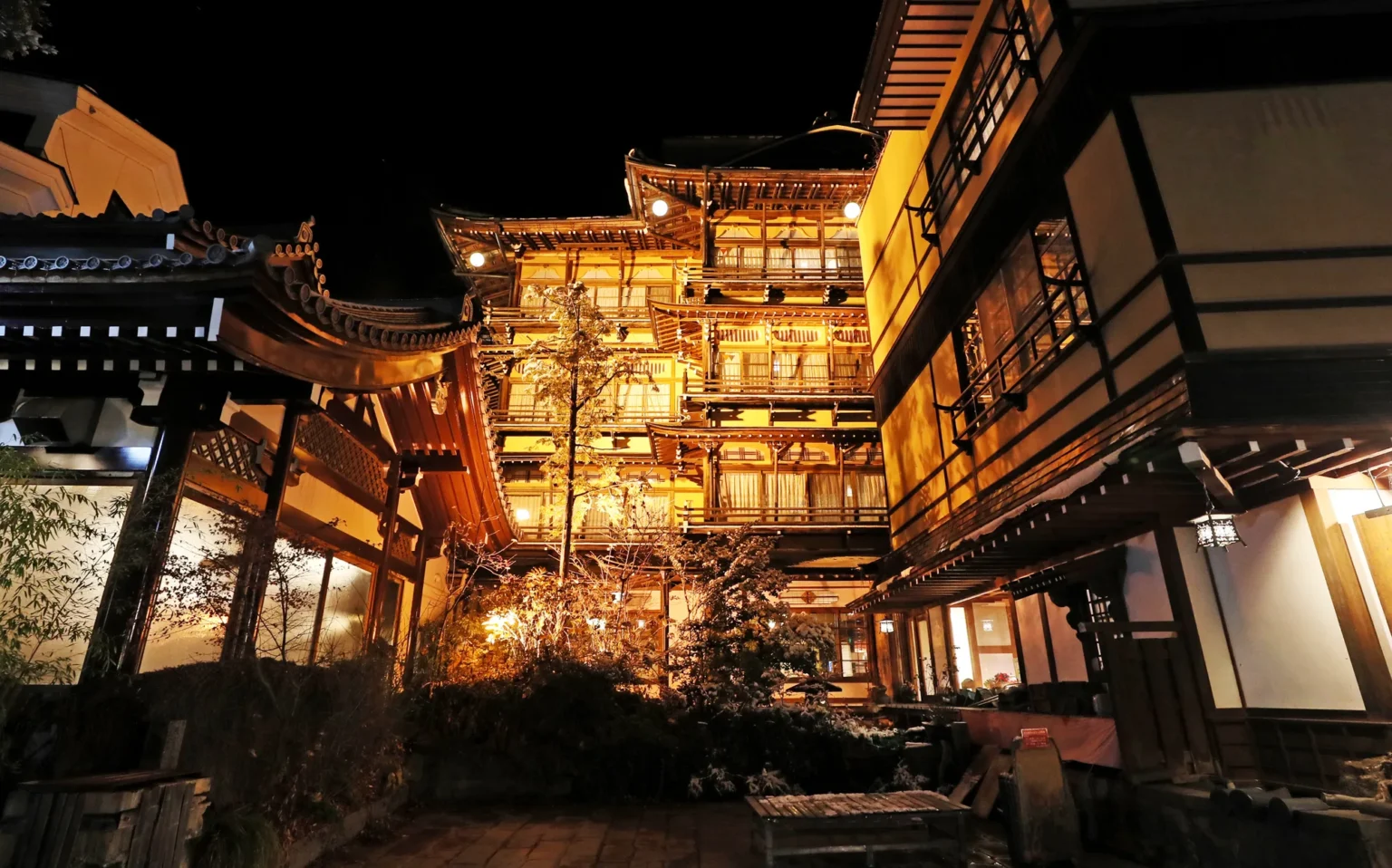
The ryokan association dates Shibu’s springs back 1,300 years, to the monk Gyoki, and says the warlord Takeda Shingen used them to treat wounded soldiers. All its inns and public baths run straight from the source, with no added water or heating, so the baths are very hot. Stay the night and your inn lends you the key to all nine soto-yu (6:00–22:00, free); buy a prayer towel, stamp it at each bath, and receive the last stamp at Shibu Takayakushi above the lane, and the nine baths are said to wash away your ku-ro, a pun on “nine” and “troubles”. After an afternoon with the monkeys you will manage a few tonight; keep time the next morning if you want all nine.
Kanaguya
An inn on the Shibu lane whose four-storey wooden Saigetsuro wing, finished in 1936, and its 170-mat banquet hall are registered tangible cultural properties.
Shibu Oyu
The ninth bath, and the only one open to day visitors: 10:00–17:00, ¥800 for adults; no hair washing. It can close at short notice.
Where to sleep tonight
Shibu if you want the lane and the nine-bath key; Yudanaka if you want to be next to the station for the morning train.
One night in Shibu or Yudanaka. The search covers the area; check the address if you want Shibu’s nine-bath key.
See Yudanaka and Shibu stays on Booking.comDay 2: Zenkoji, then on to Nozawa Onsen
| The day at a glance | Plan |
|---|---|
| Morning | Nagaden limited express back to Nagano, 45 minutes |
| Midday | Zenkoji (inner sanctum ¥800; closes 16:00 from December to February). On 28 December it shuts at 8:30, so a midday visit cannot include the inner sanctum; on 31 December arrive well before its 13:00 close |
| Afternoon | Hokuriku Shinkansen to Iiyama; Liner bus to Nozawa Onsen, about 25 minutes |
| Sleep | Nozawa Onsen |
Take the Nagano Electric Railway limited express from Yudanaka back to Nagano (45 minutes, ¥1,760 with the express charge), see Zenkoji, and move on to Nozawa Onsen in the afternoon. Nagaden’s Yudanaka Station page (11 October 2026) says its luggage storage has been suspended since 12 January 2023, and we did not check lockers at Nagano. Decide before you leave Tokyo how you will handle a big bag: travel with one you can carry round Zenkoji, or arrange with your Nozawa hotel and a courier in advance to send a suitcase ahead, keeping what you need for the night with you.
Zenkoji
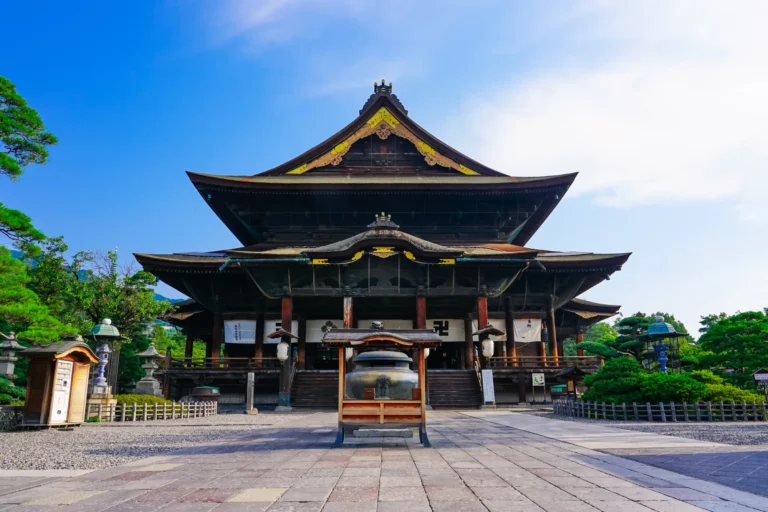
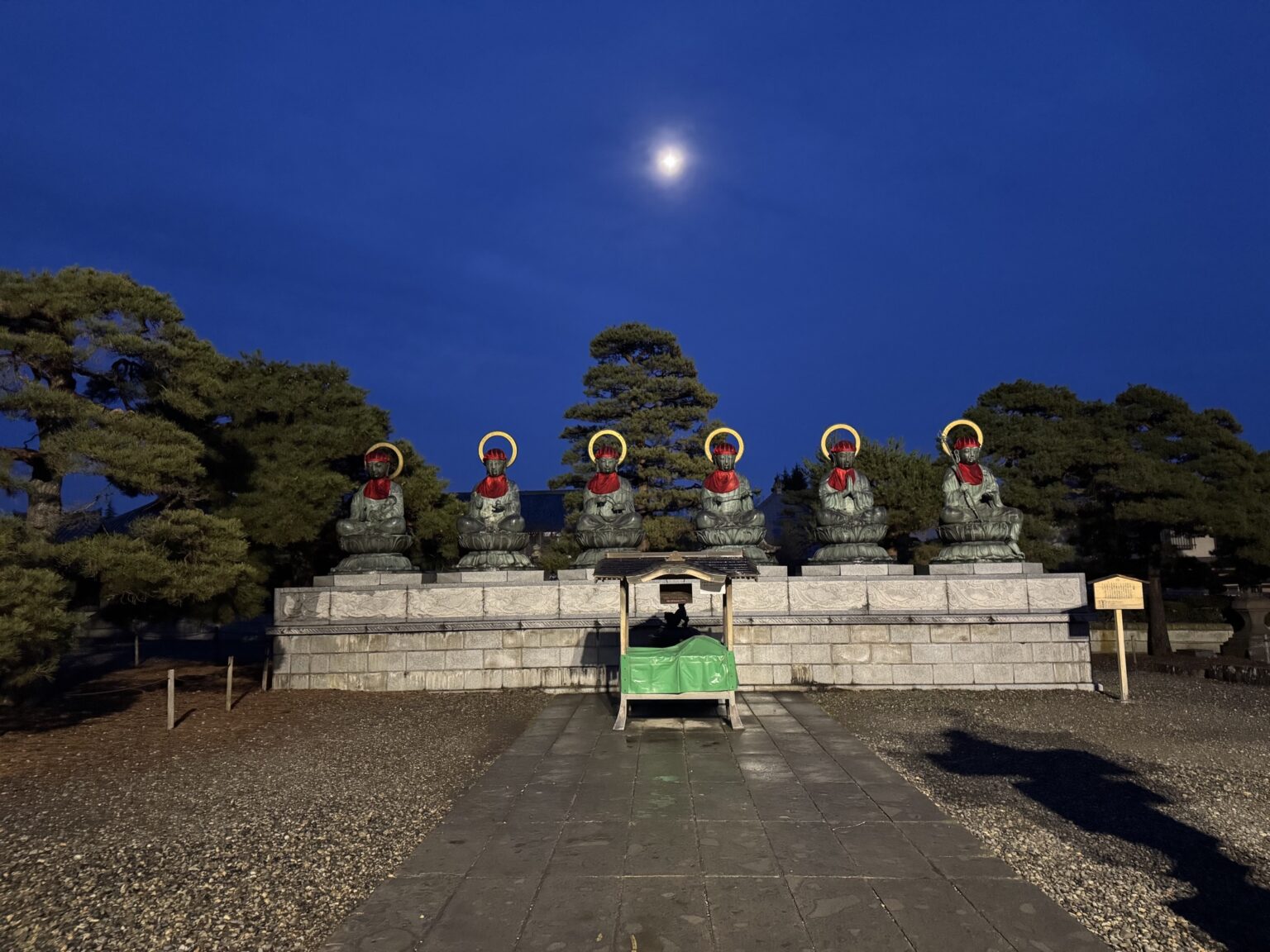
Zenkoji belongs to no single Buddhist school and is known as a temple that welcomes everyone; today it is run jointly by Tendai and Jodo temples. By the temple’s own account its main image arrived from the Korean kingdom of Baekje in 552, the oldest Buddhist image in Japan, and the temple was founded in 644; the image is a hidden Buddha that no one sees. The main hall you visit was rebuilt in 1707 after a fire and is a National Treasure, about 27 m high and 54 m deep, one of the largest wooden National Treasures in eastern Japan. The Sanmon gate in front of it dates from 1750 and is an Important Cultural Property.
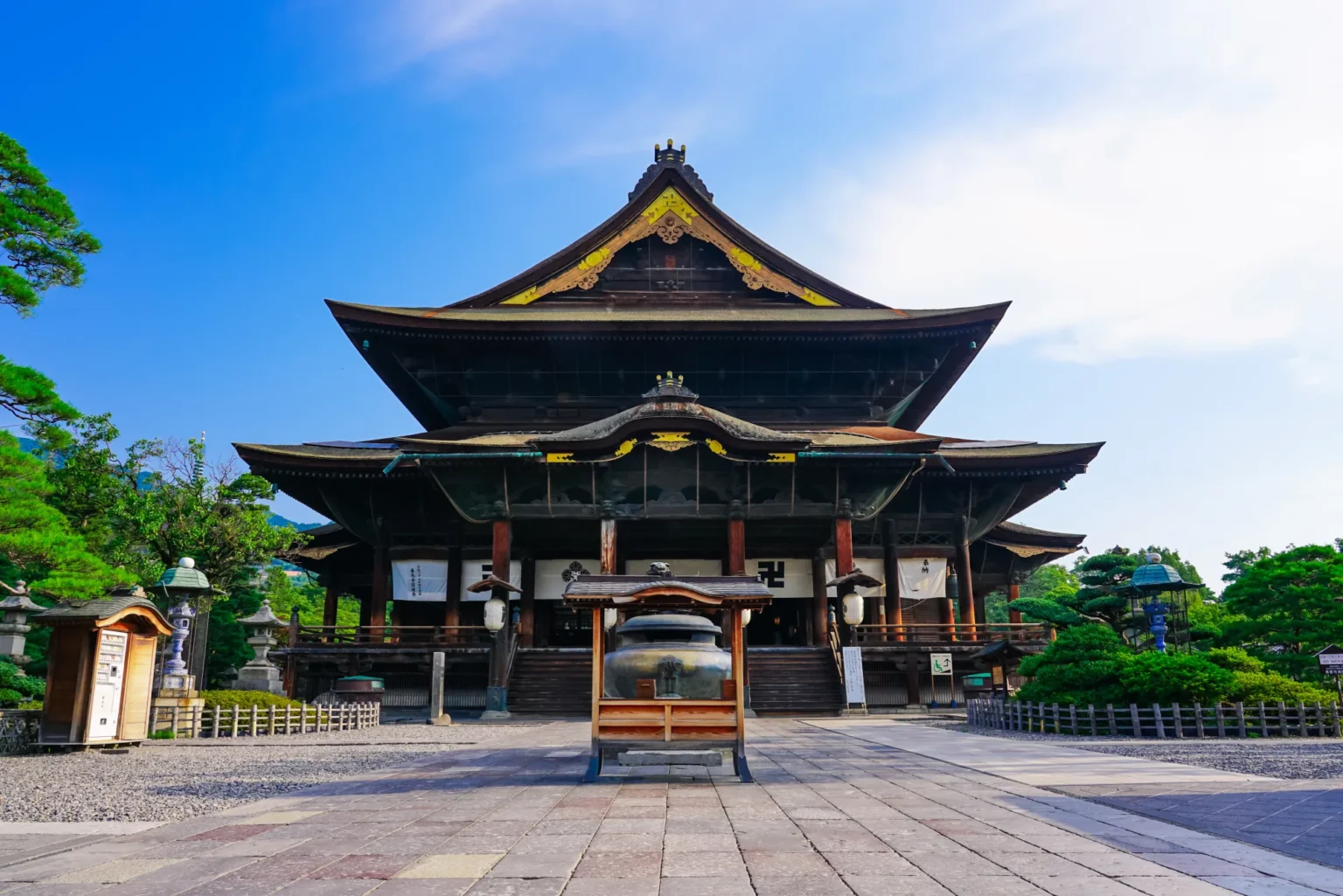
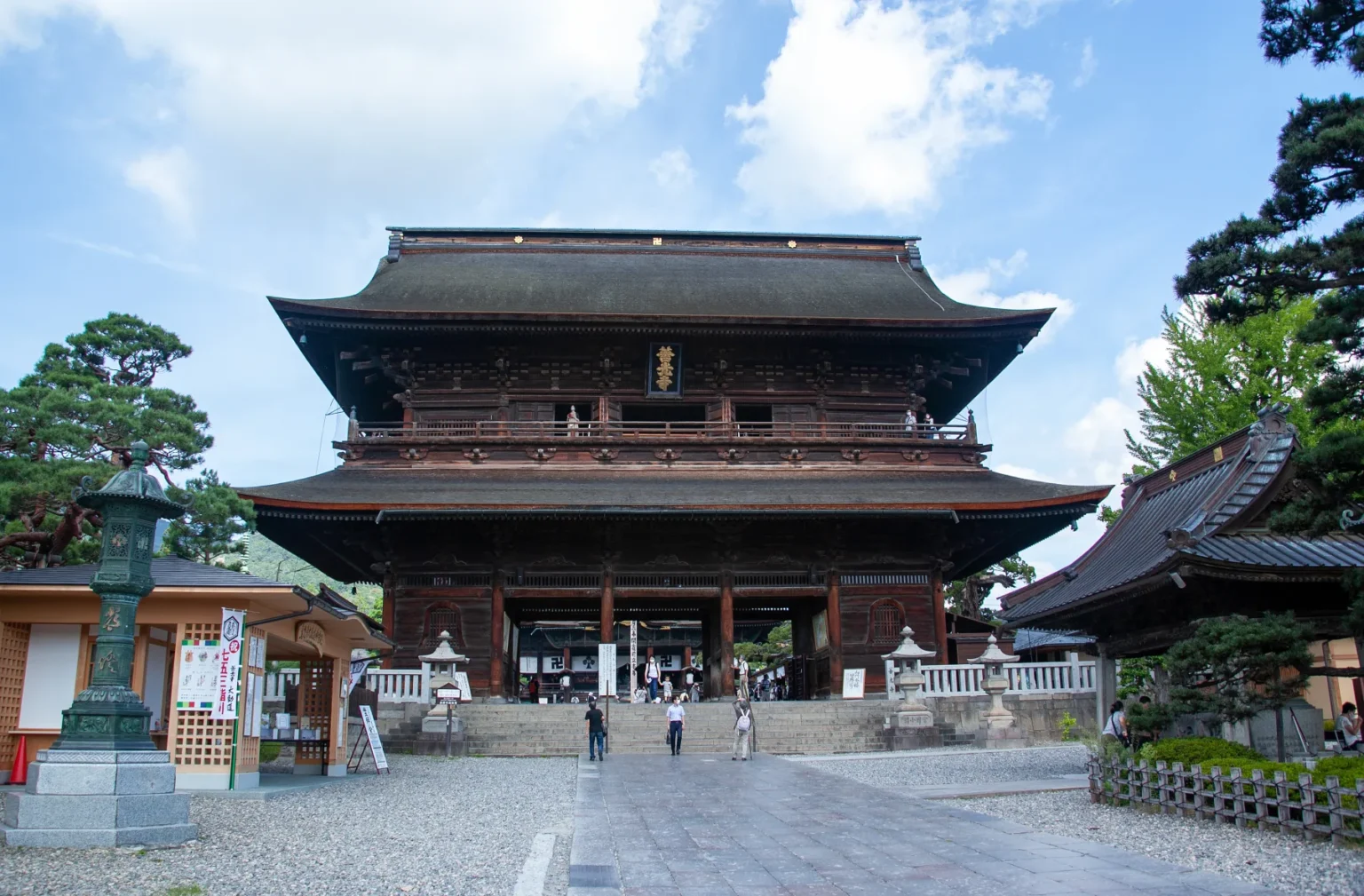
The thing to do inside is the Okaidan-meguri: you walk a pitch-dark corridor under the altar, feeling along the wall for the “lock of paradise” that hangs directly below the hidden Buddha; touching it, the temple says, binds you to it. The O-asaji morning service starts at about 7:00 in December and January, and on the way to and from it the two head priests touch the heads of people kneeling along the approach with their prayer beads, four times each morning. To see it on this trip you would need to sleep in Nagano the night before instead of at Shibu or Yudanaka.
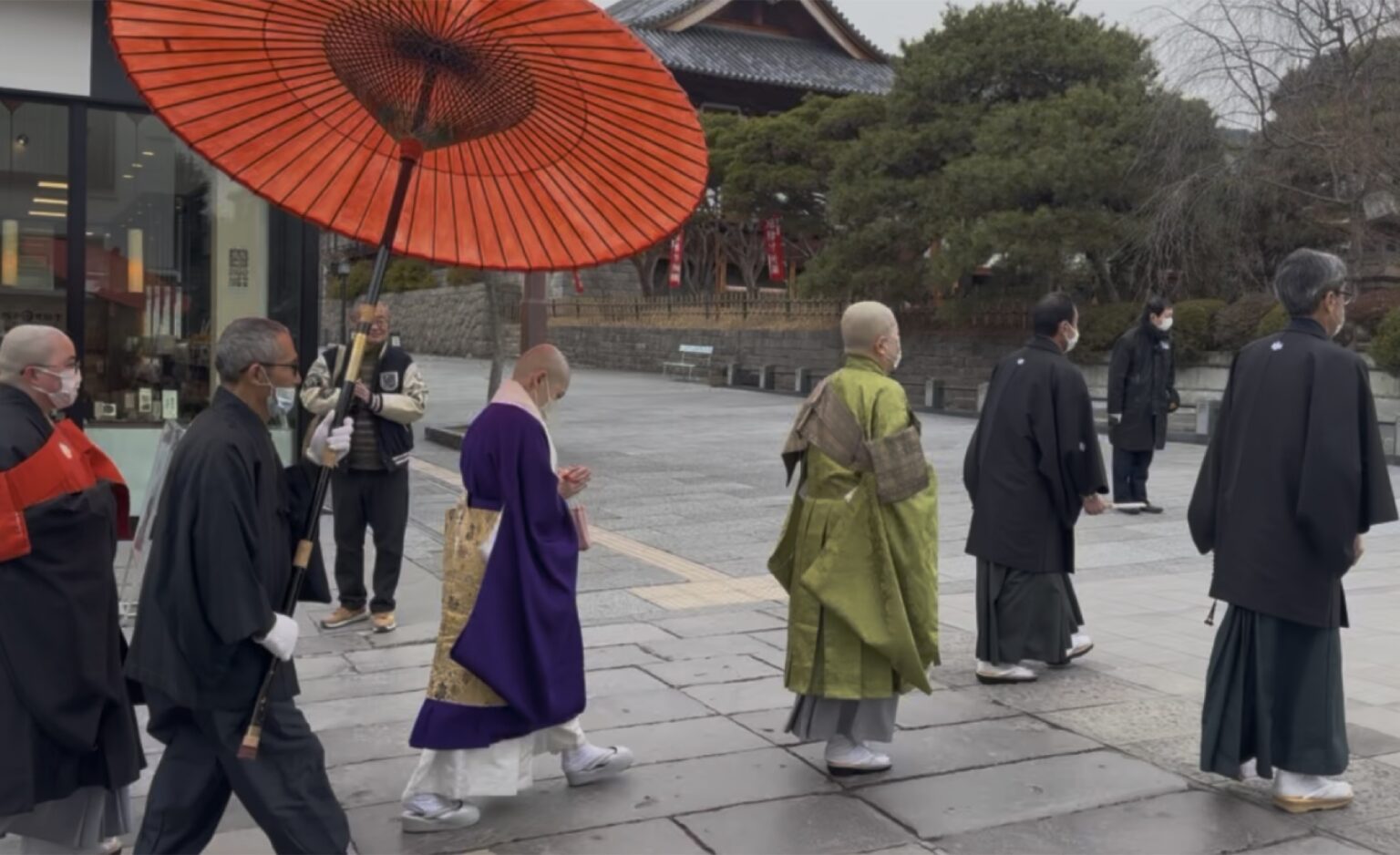
Zenkoji is a 15-minute bus ride from stop 1 at Nagano Station (¥190), or a 1.8 km walk of about 30 minutes. The inner sanctum costs ¥800 and includes the Okaidan-meguri, about five minutes in a pitch-dark corridor under the main hall; a ¥1,500 combined ticket covers more of the temple’s buildings. From December to February the inner sanctum closes at 16:00. Our Zenkoji guide covers the morning service, which in midwinter starts at about 7:00, if you would rather stay in Nagano and see it.
From Nagano, take a Hokuriku Shinkansen that stops at Iiyama (check the stop when you book). At Iiyama, the Nozawa Onsen Liner leaves from the Chikumagawa exit (stop 4) and reaches the village in about 25 minutes for ¥600, with no booking needed. Last winter (13 December 2025 to 30 March 2026) the last bus from Iiyama left at 21:20. That is last year’s timetable: check the 2026–27 Liner and JR times for your dates before you rely on a late train.
Day 3: What can you do in Nozawa Onsen in winter?
| The day at a glance | Plan |
|---|---|
| Morning | Ski, or a first round of the public baths |
| Midday | Ogama, the village’s boiling spring, seen from outside the fence; lunch in the lanes |
| Afternoon | More baths, or more skiing |
| Sleep | Nozawa Onsen |
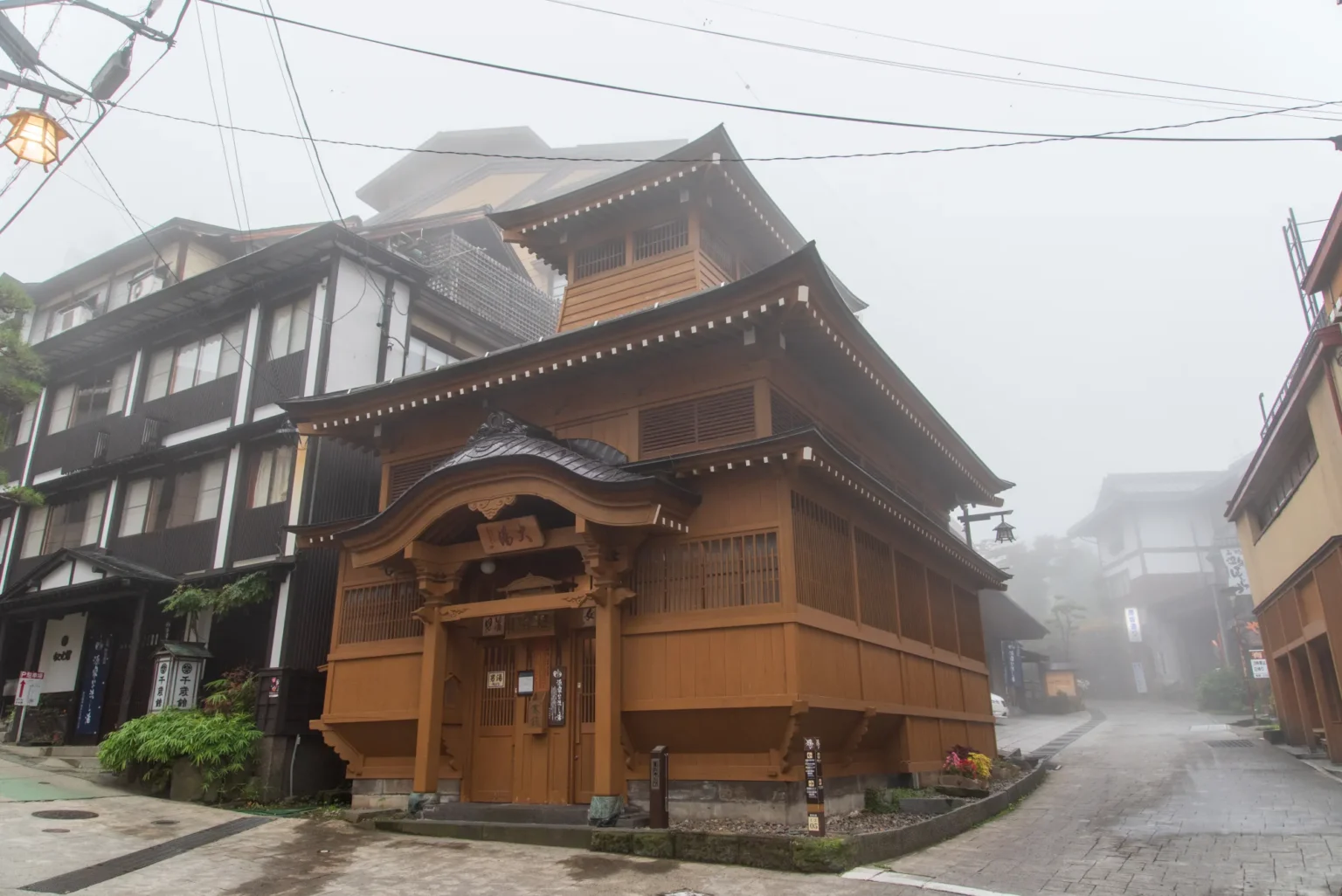
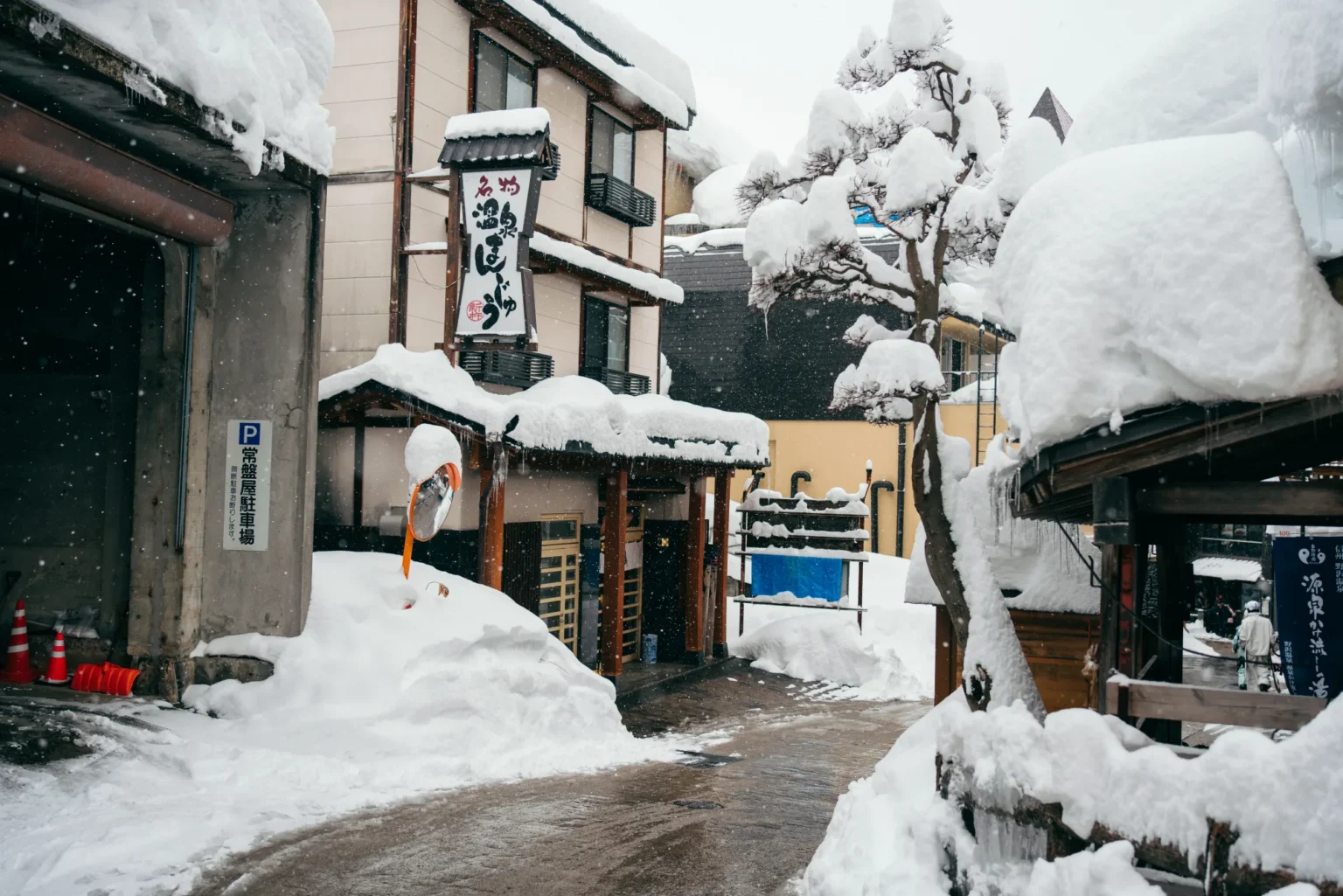
Ski, or walk the village between its public baths. Nozawa Onsen’s 13 public baths, also called soto-yu, are open to anyone, unlike most of Shibu’s; residents’ bath groups look after them, and the tourism bureau asks for a small donation in the offering box. Read our onsen etiquette guide before your first one: wash before you get in, and expect the water to be hot.
If you ski, budget for a lift ticket: Nozawa’s adult one-day ticket is ¥7,800 on the 2026–27 price list in our NAGANO7 pass guide; check the price for your date. Our Shiga Kogen guide covers the ski area above Yudanaka.
The 13 public baths
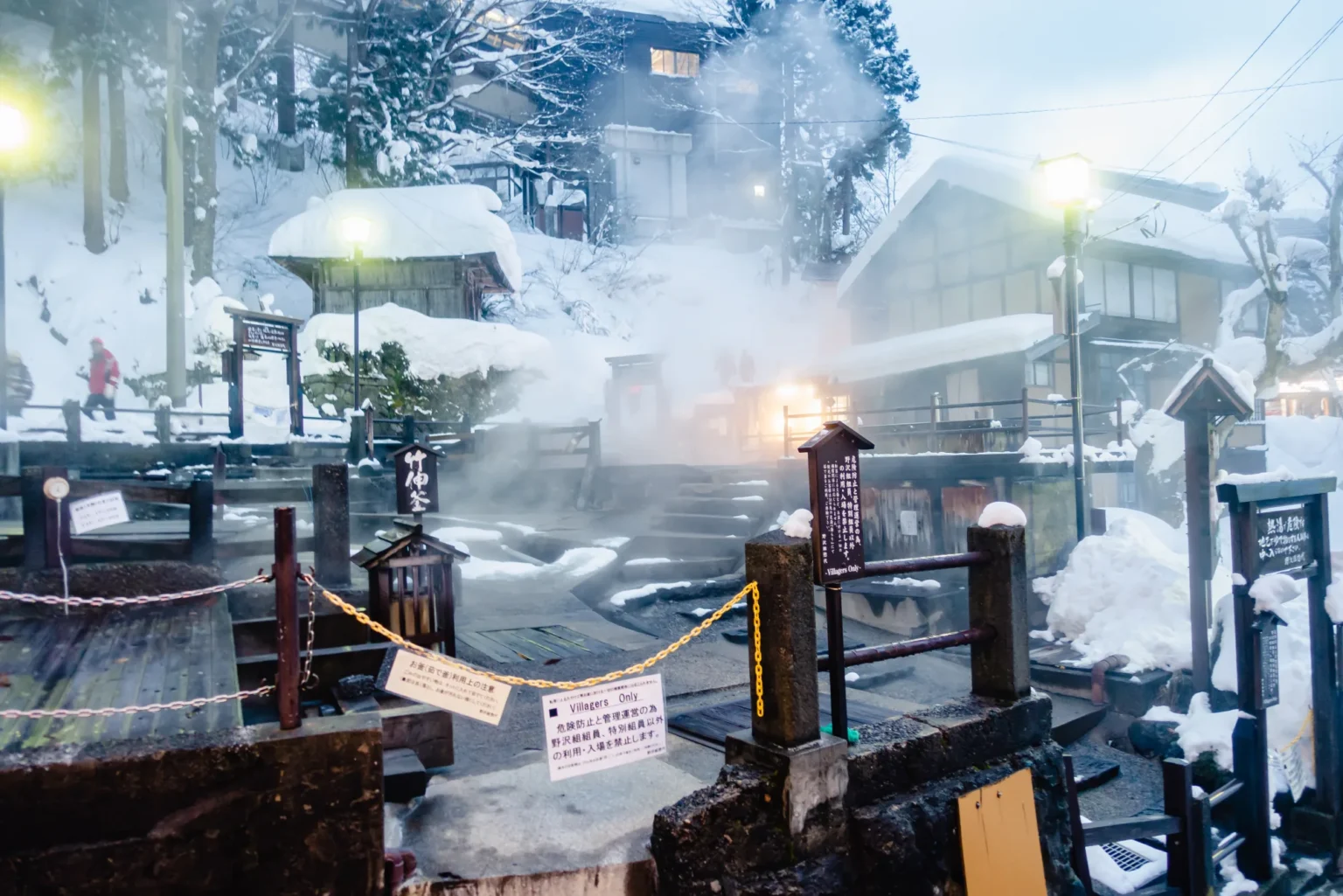
Nozawa says its springs were found by the monk Gyoki in the Nara period, and it is the only village in Japan with “onsen” in its official name. Its 13 soto-yu have been looked after since the Edo period by groups of villagers called yu-nakama, as shared village property. Today they are open to visitors too. There are no showers or hair dryers, the water comes straight from the source without cooling, so it is hot, and each bath has an offering box for a small donation. Most open 6:00–23:00 from December to March; a few close at 22:00. Oyu, in the middle of the village, has a hot tub and a cooler one; Kumanotearai-yu is among the gentlest.
Ogama, the village kitchen
At Ogama, springs at close to 90°C pour out about 500 litres a minute into five natural pools, and villagers boil vegetables and eggs in them; the tourism association calls it the village’s shared kitchen. It is a village natural monument, and only villagers may go in. You can watch from outside the fence, and buy eggs at a nearby shop to boil in the egg pots at some of the public baths.
The Dosojin Fire Festival
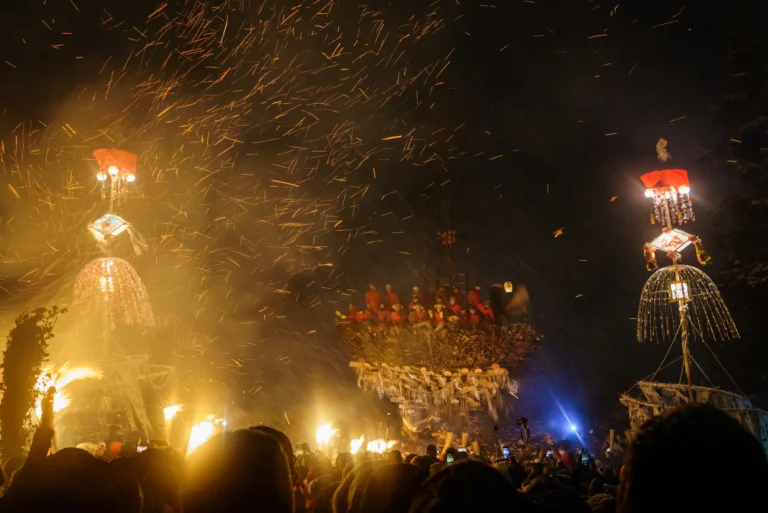
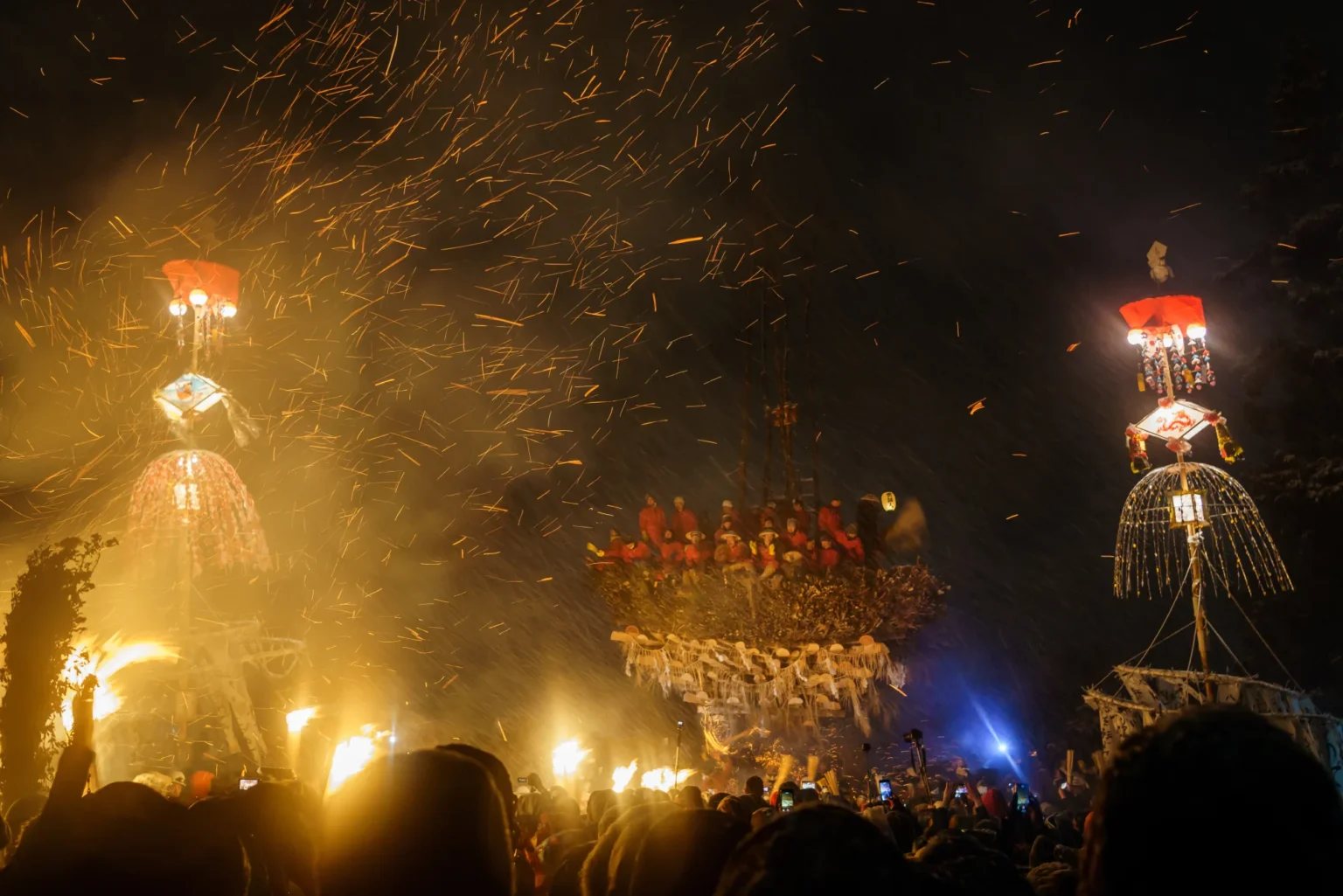
Nozawa’s fire festival, held every 15 January for some 300 years, is a nationally designated Important Intangible Folk Cultural Property (1993). Men in their unlucky years, aged 25 and 42, cut the festival’s sacred beech timber in October, the tallest about 20 m, along with the other wood the shrine needs, and from 14 January build a wooden shrine without nails or wire. On the night the 42-year-olds sit on top and the 25-year-olds guard it, while other village men attack it with torches for about an hour and a half before it is set alight.
Nozawana
The village traces nozawana, the greens pickled all over Nagano, to Tennoji turnip seed brought back by the priest of Kenmeiji temple in the 1750s or early 1760s. In autumn the leaves are washed in the hot spring.
A century of skiing
The ski area dates its history to 1924, when the village invited a university ski club; in 1930 the Austrian Hannes Schneider came to teach and demonstrate. It has produced 16 Olympians, it says.
Two nights in Nozawa Onsen: check that the address is in Nozawaonsen-mura, not Iiyama.
See Nozawa Onsen stays on Booking.comDay 4: Back to Tokyo, or one more stop
| The day at a glance | Plan |
|---|---|
| Morning | A last soak; Liner bus to Iiyama |
| Return | Hakutaka from Iiyama to Tokyo; check the time of your train |
| With a spare night | Matsumoto Castle or Hakuba |
Take the Liner bus back to Iiyama and a Hakutaka to Tokyo. On JR East’s October 2026 weekday timetable, Hakutaka trains from Tokyo to Iiyama took 1 h 38 min to 1 h 57 min; check the time of your train back and that it stops at Iiyama. Last winter the last Liner from the village left at 19:35; check this winter’s times for both the bus and the train.
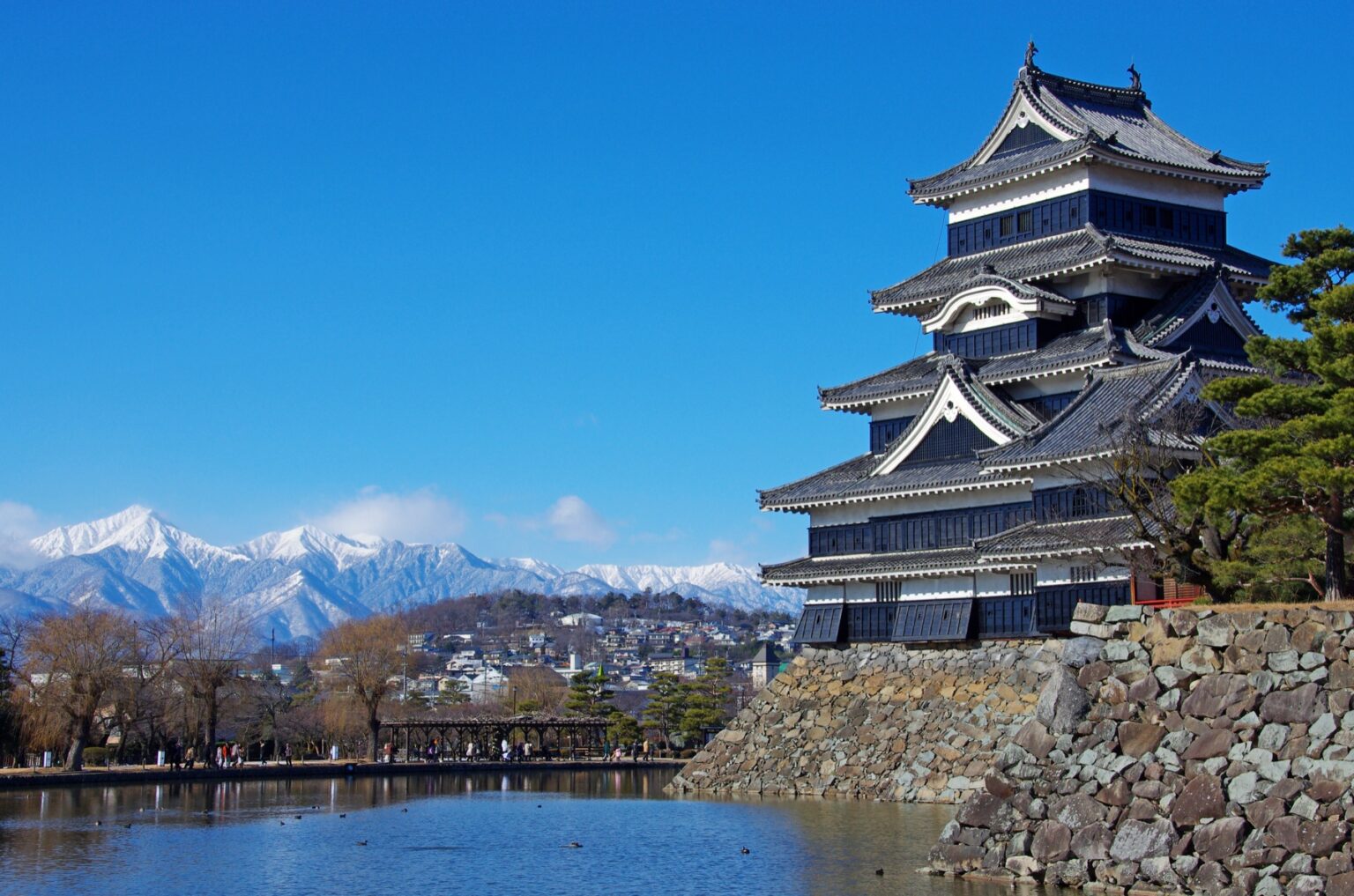
With an extra night, Matsumoto Castle or Hakuba are other winter options in Nagano.
What will the transport cost?
Pay leg by leg. Adult fares as listed when we checked:
| Leg | Fare (adult) |
|---|---|
| Tokyo → Nagano, Hakutaka or Asama | ¥7,920 unreserved; the faster Kagayaki is all reserved, which costs more |
| Yudanaka → Snow Monkey Park, local bus | Pay on board; check the fare at Yudanaka Station |
| Jigokudani park entry | ¥800 to 30 November; from 1 December ¥1,000 at the gate, ¥880 as a web ticket |
| Nagano ⇄ Yudanaka, Nagaden limited express | ¥1,760 each way (¥1,660 fare plus the express charge) |
| Nozawa one-day lift ticket (if you ski) | ¥7,800 on the 2026–27 price list |
| Zenkoji inner sanctum | ¥800, or ¥1,500 for the combined ticket |
| Iiyama → Nozawa Onsen, Liner bus | ¥600 each way |
The Japan Rail Pass covers the Hokuriku Shinkansen in ordinary cars, but not the Nagaden railway, the buses or the Liner, which are private. Our JR Pass maths shows when the pass pays.
Only want to ski? Klook lists a 2–3 day Nozawa Onsen ski package from Shinjuku; check what it includes.
See the Nozawa ski package on KlookWhat if heavy snow stops the trains?
Build in slack. In heavy snow, Shinkansen services on the Hokuriku line can run late or stop, and expressways and local lines close. When the Japan Meteorological Agency issues a heavy-snow advisory or warning for your route, check the operators’ service information and talk to your next hotel, and avoid booking a flight home on day four. Our heavy snow guide explains how to read the warnings.
Where should I stay?
Shibu Onsen for the night after the monkeys if you want the old lane and its nine baths, or Yudanaka, where the railway ends. In Nozawa, stay inside the village, not in Iiyama: the public baths and the ski lifts are on foot, and the Fire Festival ticket in 2026 went to guests staying in the village. Nozawa charges an accommodation tax of 3.5% of the room-only rate from 1 June 2026, with stays under ¥6,000 per person per night exempt.
For the Fire Festival or a ski week, book Nozawa early; rooms inside the village are the ones that matter.
Check Nozawa Onsen availability on Booking.comWhere the Snow Monkey Park is, above Yudanaka and Shibu:
FAQ
When is the best time to see the snow monkeys bathing?
January to March, on cold days. The macaques bathe most in the cold and less often on mild, sunny days, and they tend to arrive at the park around 9:00 in winter. The park is usually open 9:00–16:00 from November to March, and can close for weather.
How do I get from Nagano Station to the snow monkeys in winter 2026–27?
Two ways. The Nagaden limited express to Yudanaka (45 minutes, ¥1,760) and a local bus of about 15 minutes, or, from 5 December 2026 to 5 April 2027, Nagaden Bus’s capacity-limited express from the East Exit (about 50 minutes, bus fare ¥3,000), sold as a bus-and-park set online. Either way, the stop is a 35-minute walk from the park.
How much is the snow monkey park in 2026?
¥800 for adults and ¥400 for children until 30 November 2026. From 1 December 2026 it is ¥1,000 and ¥500 at the gate, or ¥880 and ¥440 as a web ticket. Children under 6 are free. From December to April, web-ticket holders get priority entry.
Can I use the public baths in Shibu Onsen without staying there?
Only one of them. The Shibu Onsen ryokan association says day visitors can use the ninth bath, Shibu Oyu, from 10:00 to 17:00 for ¥800 (children ¥500); the other eight and the nine-bath round are for guests staying in Shibu. In Nozawa Onsen, the 13 public baths are open to anyone, with a donation box.
Do I need a car for this itinerary?
No. Every leg is a train or a bus: the Hokuriku Shinkansen, the Nagaden limited express, local buses around Yudanaka, and the Nozawa Onsen Liner from Iiyama.
Can I see the Nozawa Fire Festival on this trip?
Only if your dates include 15 January; in 2027 that is a Friday. In 2026 the entry ticket went only to villagers and guests staying in the village. The 2027 rules had not been announced when we checked, so a room in the village is no guarantee; ask the property in writing.
Does the Japan Rail Pass cover this route?
Only the JR part: the Hokuriku Shinkansen to Nagano and Iiyama in ordinary cars. The Nagaden railway, the buses and the Nozawa Onsen Liner are private and paid separately.
Sources (checked 11–12 October 2026)
- Jigokudani Yaen-koen: hours and fees; fee revision from 1 December 2026; access
- Nagaden Bus: winter 2026–27 timetable release (4 September 2026)
- Nagano Electric Railway: fare table (from 1 December 2025); Yudanaka Station
- Shibu Onsen Ryokan Association: the nine public baths; day bathing at Shibu Oyu
- Taken from our own guides (not primary sources; each lists its sources and check date): Zenkoji, Nozawa Fire Festival (Nozawa Onsen Liner and JR East timetables), NAGANO7, the Emerald Route (Shinkansen and Nagaden fares, rechecked 11 October 2026)
- Checked 12 October 2026 — Jigokudani Yaen-koen: about the park; Yamanouchi town cultural properties; Shibu Onsen Ryokan Association: history, the baths, the nine-bath round; Kanaguya Saigetsuro (Agency for Cultural Affairs)
- Checked 12 October 2026 — Zenkoji: about, main hall, Okaidan-meguri, hours and fees, morning service, 2027 Gokaicho; Agency for Cultural Affairs: main hall, Sanmon gate
- Checked 12 October 2026 — Nozawa Onsen tourism association: about the village, public baths and Ogama, FAQ; Dosojin Fire Festival (Agency for Cultural Affairs); Nozawa Onsen ski area history
Join travelers discovering Japan's hidden side
Weekly dispatches from off-the-beaten-path Japan — spots and stories you won't find in guidebooks.
No spam. Unsubscribe anytime.
Welcome aboard!
You're in. See you in your inbox soon.