Yamanashi · Fuji Five Lakes · Rail
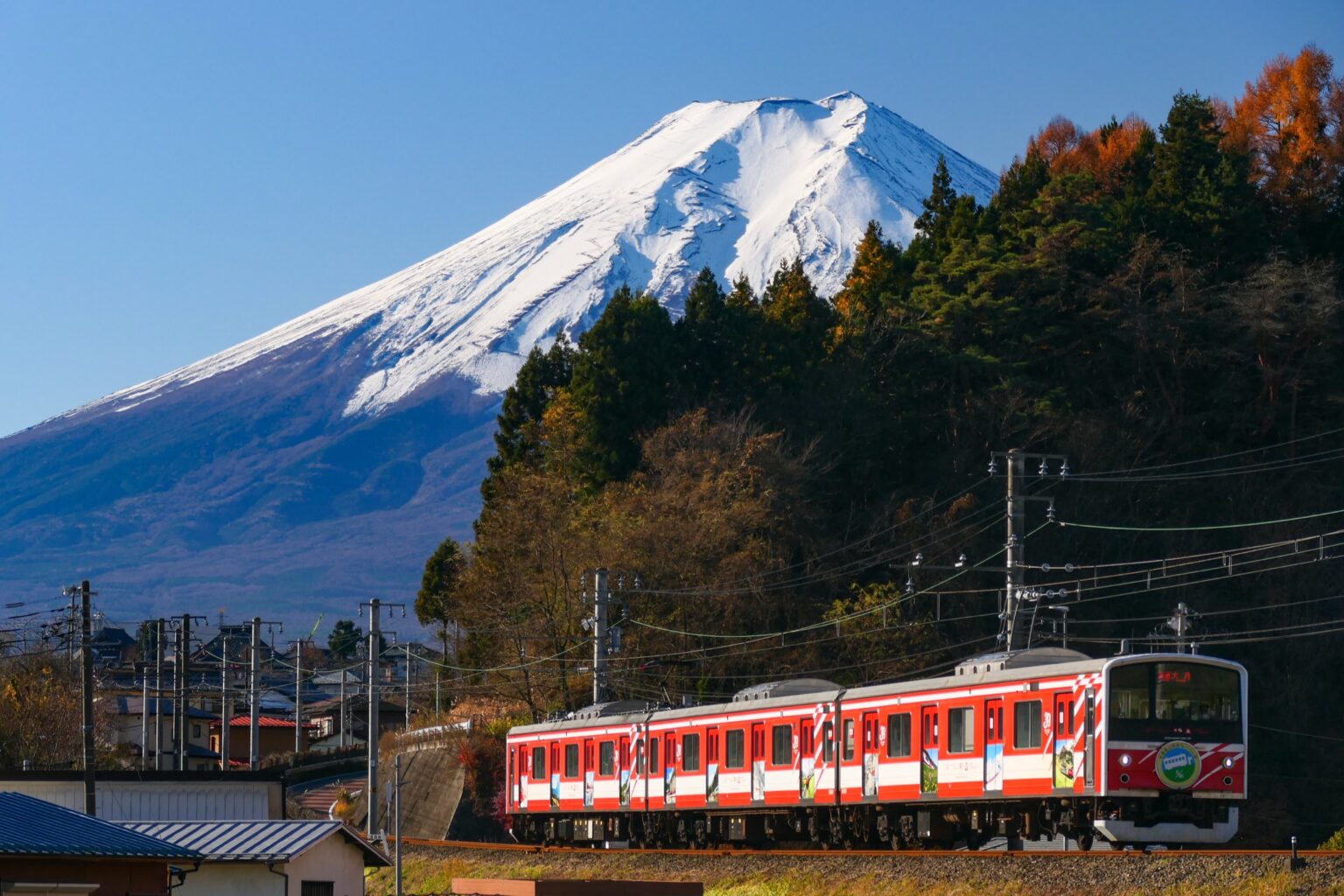
One three-car set on the Fujikyuko Line — the railway that runs from Otsuki to Kawaguchiko at the foot of Mt Fuji — was set to enter service on September 19, 2026 in a new red-and-white livery marking 35 years of a sister-railway agreement with the Matterhorn Gotthard Bahn in Switzerland. It is not a tourist train, and there is no surcharge for the paint: the “Matterhorn-gō” runs mainly as an ordinary local service, so when it is working one, a normal fare or IC card is all you need.
I live in Fujiyoshida, on this line, and I ride it the way other people ride a bus. (Trains here are run by Fuji Sanroku Electric Railway, the Fuji Kyuko group company that took over operations in 2022; almost everyone still just says Fujikyu.) So let me be straight with you about what this is and is not. It is a nice thing to catch, not a thing to build a day around — and the more useful question, the one this page mostly answers, is how to use the Fujikyuko Line well at all: which seats see the mountain, what the tickets actually cost, and where the passes trip people up.
The honest verdict first
If you are visiting Mt Fuji
Do not rearrange anything. If your trip already uses this line to reach Kawaguchiko or the Chureito Pagoda and the red-and-white set rolls in, that is a good day. Treat it as a bonus, not an itinerary.
If you are a railway enthusiast
Worth targeting. It is one specific three-car set in a one-off livery on a mountain line with Fuji as the backdrop, and Fujikyu now posts the times it runs on weekends and public holidays.
If you love Switzerland
This is the hook. A Japanese mountain railway and the line that climbs to Zermatt have been formal sisters since 1991, and the new paint is modelled on MGB’s newest trains. It is a genuinely odd, genuinely warm piece of railway diplomacy.
If you want a scenic train
Look elsewhere on the same line. The Fujisan View Express and the Fuji Excursion limited express are the comfortable options with reserved seats (on the Fuji Excursion, seats can be reserved only for journeys that include JR). The Matterhorn-gō is a commuter train in a nice coat.
What it is, and what the 35 years are about
Fuji Kyuko signed a sister-railway agreement with Switzerland’s Brig-Visp-Zermatt Railway in 1991 — the year Fuji Kyuko turned 65 and the Swiss line turned 100. The two companies had the obvious thing in common: both are mountain railways carrying visitors toward a mountain the whole world recognises. The Swiss side is now part of the Matterhorn Gotthard Bahn, the metre-gauge network that reaches Zermatt and, with the Rhaetian Railway, jointly runs the Glacier Express through a company the two set up in 2017.
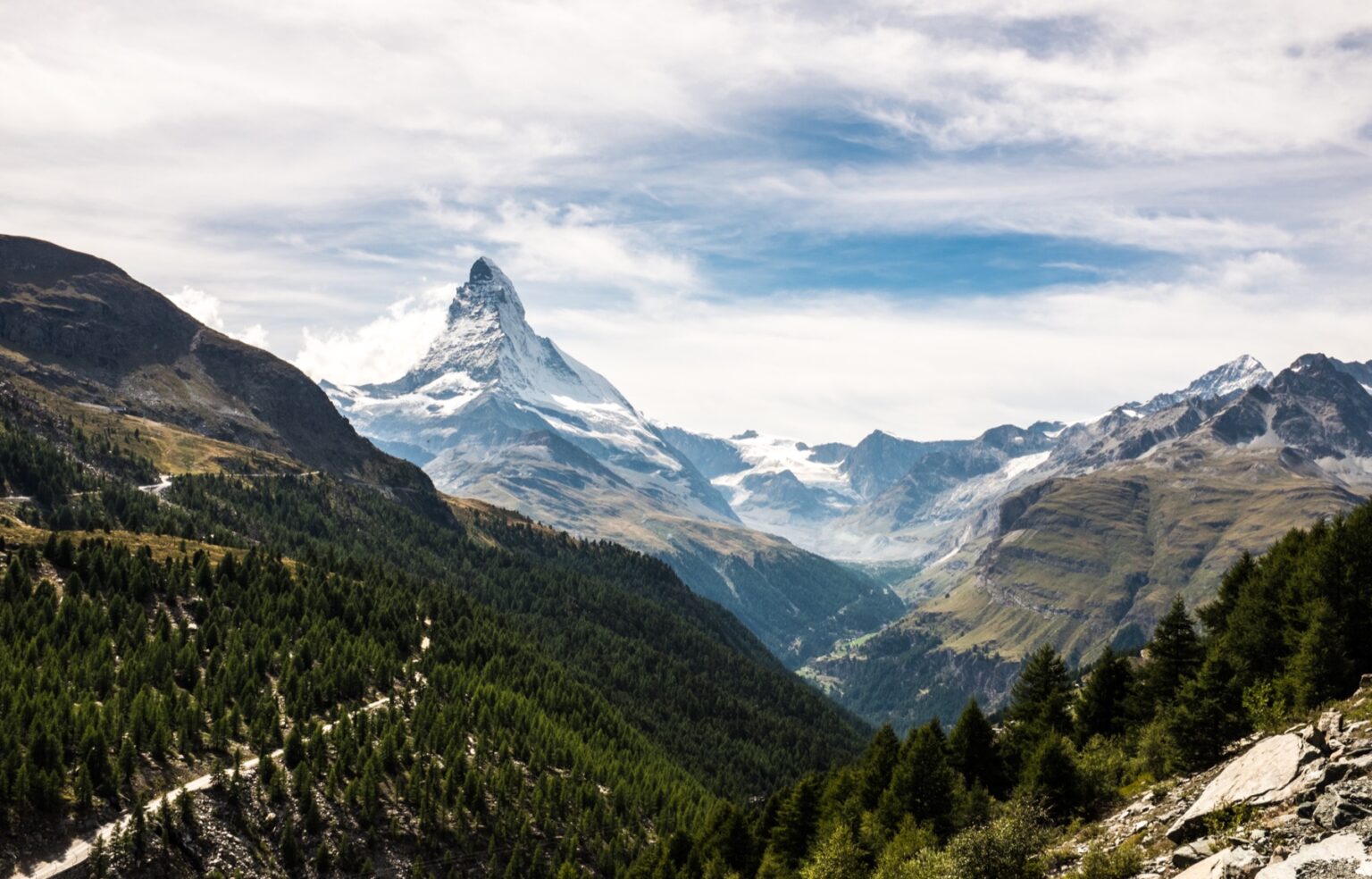
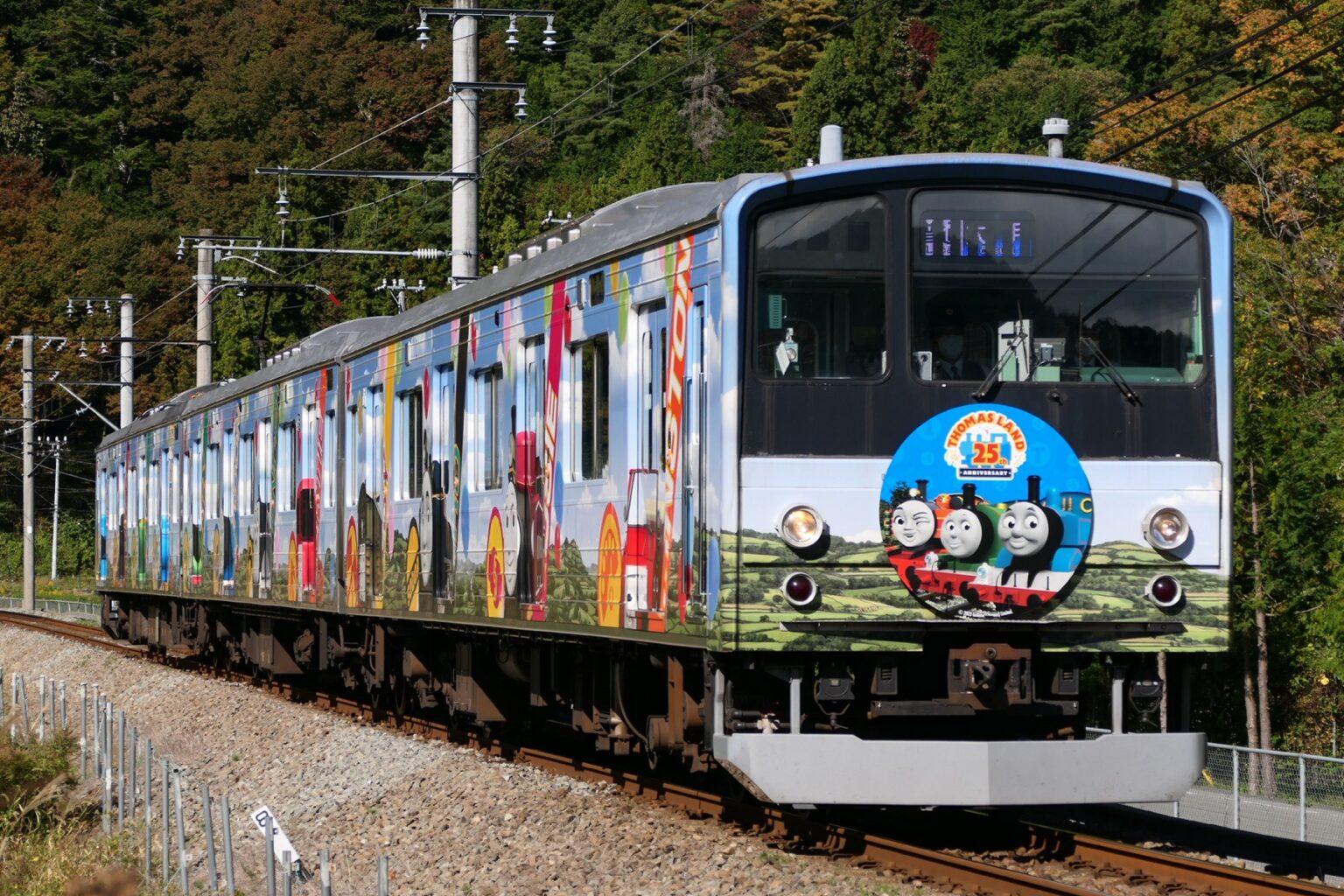
The partnership reached 35 years on September 18, 2026, and the train’s announced debut was the next day. The livery keeps the white-and-red that previous Matterhorn-gō versions wore but restyles it after ORION, MGB’s newest trains — twelve ABeh 8/12 multiple units delivered from autumn 2022, low-floor, Wi-Fi equipped, and geared to climb the 181‰ rack section between Göschenen and Andermatt. Fujikyu says the Japanese train displays photographs of ORION running through the Swiss seasons inside the car. A new logo puts the Matterhorn and Mt Fuji together, with the number 35 drawn in the colours of the mountainsides.
This is not the first one. The same three-car set, 6501, wore a 25th-anniversary version and then a 30th-anniversary version that began running on September 18, 2021. The set has been the designated Matterhorn train for years; what changes in 2026 is the exterior design, the logo and the interior display — not the train itself. If you rode a red-and-white Fujikyu local in the last few years, you have already met it.
How to actually ride it
The announced debut service was the 15:56 from Kawaguchiko to Otsuki on Saturday, September 19. Since then, the operator says the set runs “mainly as an ordinary local train,” and it now posts the set’s running times for weekends and public holidays on its Matterhorn-gō announcement page (in Japanese). Weekday duties are not published, and posted times can still change with operating conditions. There is one of it. The line has plenty of other trains.
| Question | Answer |
|---|---|
| Do I need a reservation? | Not when it is working an ordinary local — normal fare or IC card, no seat reservation, no limited-express surcharge. There is never a charge for the livery itself |
| What does it cost? | Whatever your journey costs. Otsuki to Kawaguchiko end to end is ¥1,170; Fujisan Station to Kawaguchiko is a few stops of small change |
| Can I plan to catch it? | On weekends and public holidays, yes — Fujikyu posts that day’s Matterhorn-gō departures on its announcement page. On weekdays, not reliably: ask at a staffed station on the day |
| Where will I see it? | Anywhere between Otsuki and Kawaguchiko. Fujisan Station is the practical place to wait — it is the operational heart of the line and trains sit there |
| Is it the Fuji Excursion? | No. That is the JR limited express from Shinjuku. Different train, different ticket: a limited-express ticket on top of the fare, either with a reserved seat or seat-unspecified |
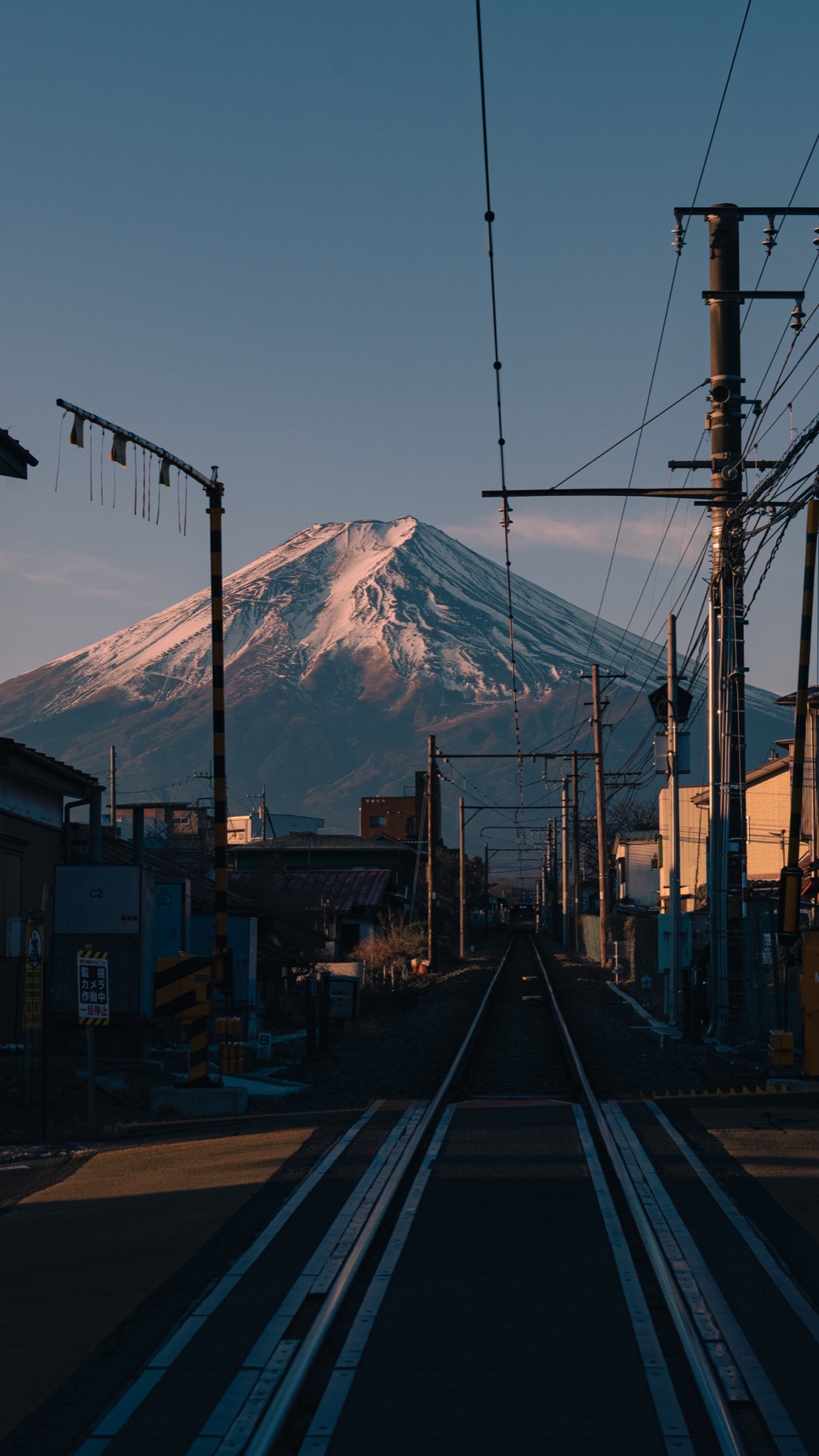
The part that matters more: seeing Fuji from this line
Whatever train you end up on, the reason to ride the Fujikyuko Line is the mountain, and there are a few things worth knowing that no timetable tells you.
Left side — then swap
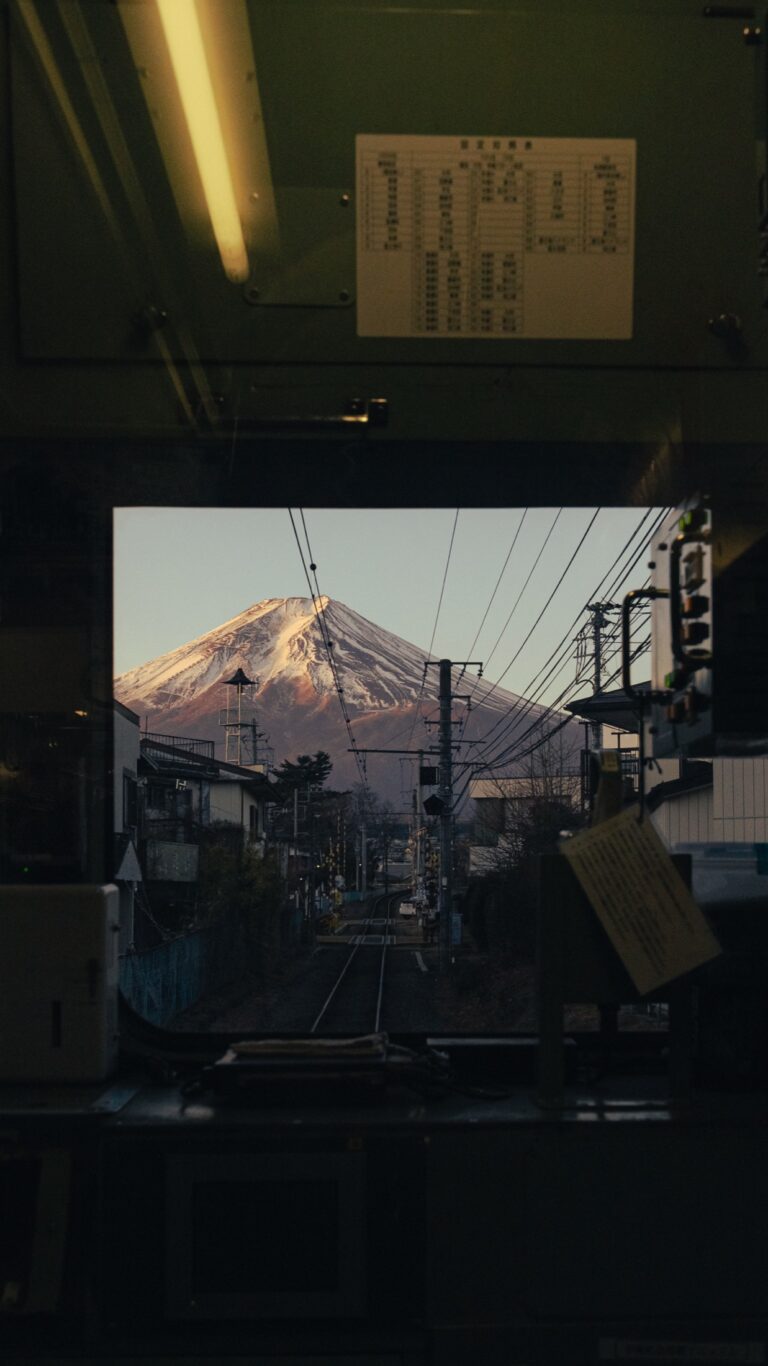
Climbing from Otsuki, Fuji sits ahead and to the left through the Mitsutoge, Kotobuki and Shimoyoshida stretch. But the train reverses direction at Fujisan Station, so what was the left side becomes the right for the last run into Kawaguchiko. On a bench-seat local like the Matterhorn-gō, just cross to the other side.
The best window is early
Fuji hides behind cloud through most middle-of-the-day hours, especially in summer. The first trains of the morning are the ones that see it — I have written up the actual odds by season if you want to plan properly.
Get off at Shimoyoshida
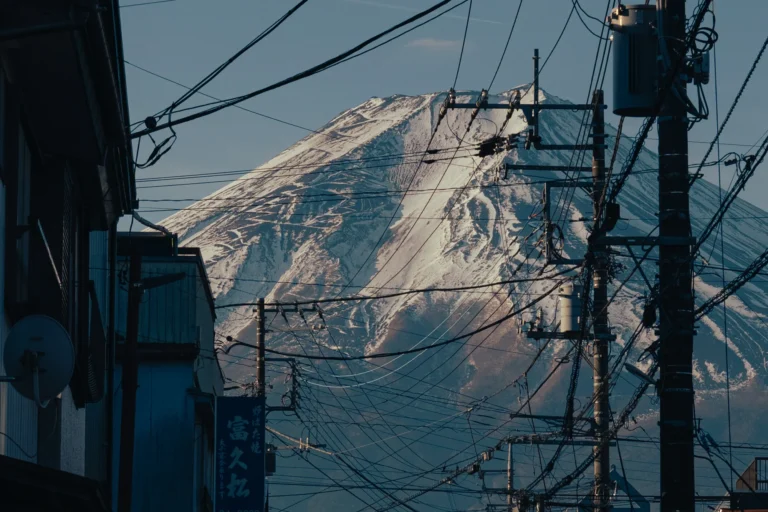
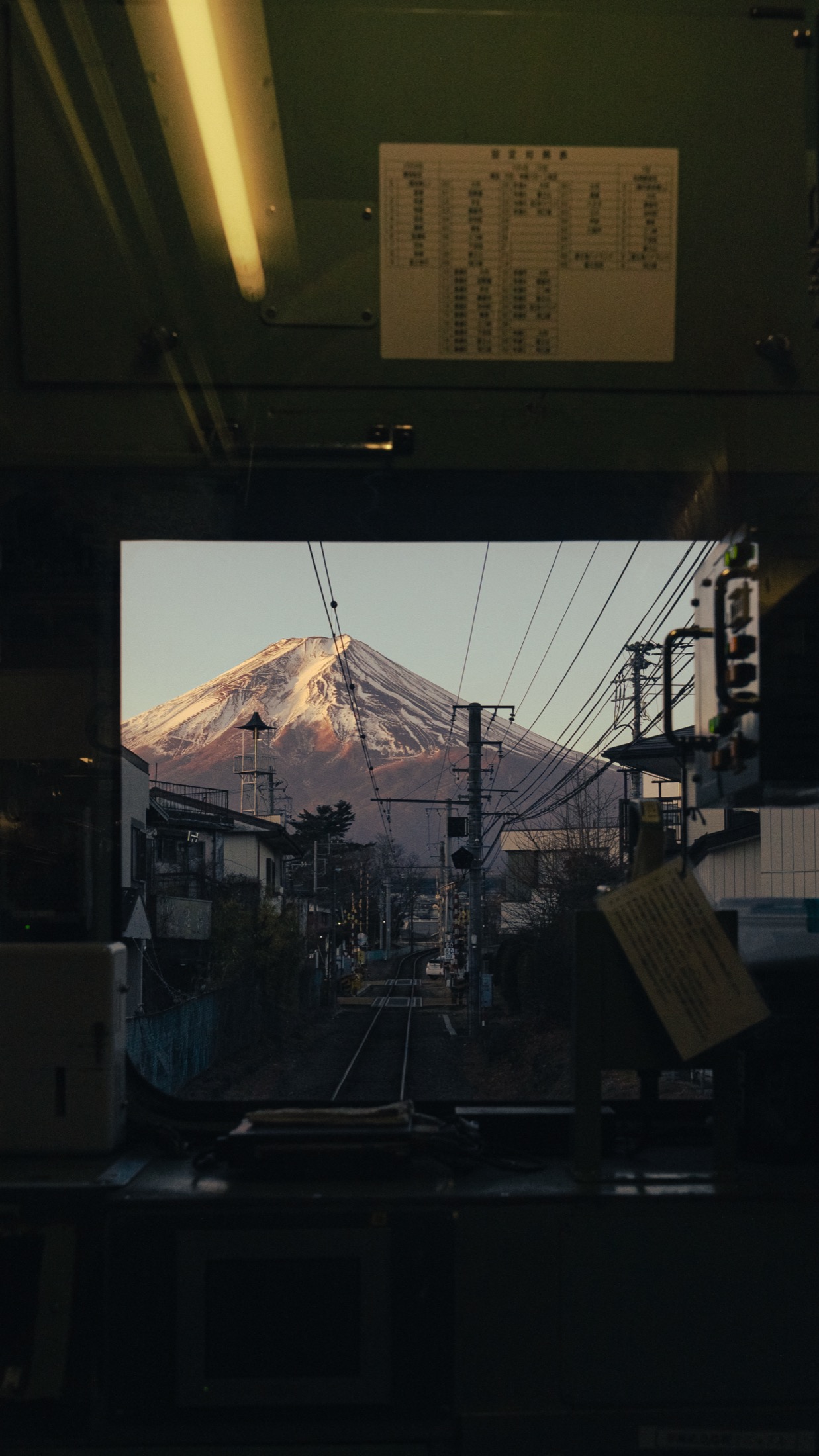
This is the station for the Chureito Pagoda — the five-storey pagoda with Fuji behind it. It is also where the track alignment points straight at the mountain, which is why photographers stand around here.
The line is short
Otsuki to Kawaguchiko is 26.6 km and 18 stations including both ends — a short ride however you cut it. Hopping off for a shot works, but check the next departure before you get off, as gaps between trains can be long — and an ordinary single or return ticket ends when you leave the station mid-journey, so pay each leg by IC card or use a free pass.
Plan the Trip
Tickets, and the mistake visitors keep making
The Fujikyuko Line is a private railway, not JR. That single fact causes most of the confusion at Otsuki.
| What you have | What happens on this line |
|---|---|
| Japan Rail Pass | Not valid. It covers you as far as Otsuki on JR, then you buy a separate Fujikyu ticket for the rest |
| IC card (Suica, Pasmo …) | Fine for the ordinary fare — tap as normal |
| Fuji Excursion through-service | A JR limited express that runs through onto Fujikyu metals from Shinjuku. It has no non-reserved cars, and a Rail Pass still does not cover the Fujikyu section — you need the fare and the limited-express ticket for that stretch too. For journeys entirely within the Fujikyu line, seats cannot be reserved: seat-unspecified limited-express tickets are sold instead, and between Fujisan and Kawaguchiko a fare ticket alone lets you use a vacant seat |
| Fujikyu one-day passes | The 1-Day and 2-Day Free Passes are sold online only, as e-tickets through Fujiyama Connect. Whether they save you money depends on your journeys; our Fujikyu pass guide explains the prices and when each pass is worth buying. |
The practical version: if you change at Otsuki, treat the JR coverage and the Fujikyu fare as two separate things and you will never be caught out. If you are coming from Shinjuku and want it simple, the Fuji Excursion runs through to Kawaguchiko without a change — you stay on one train, but you still need Fujikyu fare and a limited-express ticket for the private section, and there are no non-reserved cars, so book ahead. Everything about which base to pick is in my guide to Kawaguchiko versus Fujiyoshida.
Debut day: the depot session and the ticket set
Two things were tied to September 19 — the photo session was held on the day itself and booking has closed, while the ticket set went on sale that day and is still sold while stocks last.
| Photo session & test ride | 35th-anniversary ticket set | |
|---|---|---|
| When | Sep 19, three sittings: 10:00, 11:00, 12:50 | On sale from Sep 19 |
| Where | The line’s electric-car works, five minutes’ walk from Fujisan Station | Fujisan Station, and the operator’s online shop |
| Price | ¥9,000, junior-high age and up | ¥1,300 |
| What you get | About 40 minutes photographing the train inside the works before it entered service, then a one-way ride on the 15:05 from Fujisan Station to Kawaguchiko. A Fujikyu limited-express free pass is included | A replica of an old Brig-Visp-Zermatt Railway ticket paired with a Fujikyuko Line platform ticket, on a folder showing ORION, past Matterhorn-gō liveries and both companies’ route maps |
| The catch | 20 people per sitting — 60 places in total, sold first-come from 18:00 JST on August 27. The session is over and booking has closed | Buy it at Fujisan Station rather than online and you also get an MGB-logo neck pillow, while stocks last |
Up to sixty people got to photograph this train indoors before its first ordinary service. Everyone else meets it the way you meet any local train — by looking up when one arrives.
The trainspotter’s footnote
For anyone who cares about the metal: the 6000 series is not native to this line. The sets are rebuilt JR East 205 series commuter cars, brought over between 2012 and 2025, converted into three-car sets and reworked for a mountain railway. Eight sets have come across, the most recent entering service in October 2025. It is a nice irony that a train built to move people across the Tokyo suburbs now spends its days wearing Swiss colours in front of Mt Fuji.
Sleeping on the line
If catching a specific local train matters to you, stay somewhere you can walk to a station. Fujiyoshida puts you at Fujisan Station, the operational centre of the line and the best place to simply wait and watch. Kawaguchiko is the terminus and has the deeper choice of hotels and the Fuji-view onsen. Booking has the mainstream inventory for both; Rakuten Travel is stronger for small local inns.
Building a day around the line
The Matterhorn-gō is a reason to look up, not a reason to travel. What makes the day is everything the line connects: the Mt Fuji region at one end, the Chureito Pagoda at Shimoyoshida, and the lakes beyond Kawaguchiko. If you are deciding how much time the area deserves at all, I have written the day trip versus overnight argument out in full — and for the bigger rail picture across Japan, the sightseeing trains guide covers the ones you actually reserve. (The biggest thing it connects, for most riders, is Fuji-Q Highland — if a coaster day is the plan, ride passes are on Klook; entry to the park itself is free.)
Fujikyu Matterhorn train: FAQ
When does the new Matterhorn train start running?
Its announced first service was the 15:56 from Kawaguchiko to Otsuki on September 19, 2026, and Fujikyu now posts the set’s weekend and holiday departures.
Do I need a special ticket to ride it?
No. It runs mainly as an ordinary local train, so a normal fare or IC card is all you need — no reservation and no surcharge. Otsuki to Kawaguchiko end to end is ¥1,170.
Can I find out when it will run on a given day?
For weekends and public holidays, yes: Fujikyu posts the set’s departures for those days on its Matterhorn-gō announcement page (in Japanese). Weekday duties are not published, so on a weekday ask at Fujisan Station on the day rather than planning around it.
Is my Japan Rail Pass valid on this line?
No. The Fujikyuko Line is a private railway. A Japan Rail Pass takes you to Otsuki on JR; from there you buy a Fujikyu ticket or tap an IC card. The Fuji Excursion limited express from Shinjuku runs through onto this line but is a surcharged limited express with no unreserved cars: you need a reserved-seat or seat-unspecified limited-express ticket.
What is the connection with Switzerland?
Fuji Kyuko and the Brig-Visp-Zermatt Railway signed a sister-railway agreement in 1991, when one turned 65 and the other 100. The Swiss line is now part of the Matterhorn Gotthard Bahn, which reaches Zermatt and co-runs the Glacier Express. The 2026 livery is styled after MGB’s newest trains, the ORION units.
Can I still book the debut photo session?
No. The session was on September 19, 2026, and booking has closed. It had 20 places in each of three sittings — 60 in total — at ¥9,000 each, sold first-come from 18:00 JST on August 27 through the operator’s online shop.
Where is the best place to photograph it?
Fujisan Station is the practical answer for the train itself, since services stand there. For the train with the mountain, the stretch around Shimoyoshida, Kotobuki and Mitsutoge is where the line and Fuji line up — and that is worth doing early, before cloud builds.
Join travelers discovering Japan's hidden side
Weekly dispatches from off-the-beaten-path Japan — spots and stories you won't find in guidebooks.
No spam. Unsubscribe anytime.
Welcome aboard!
You're in. See you in your inbox soon.