
Japan · September 2026 · Festival & Travel Calendar
September 2026 carries three things at once: the year’s peak month for typhoon landfalls, a rare five-day Silver Week holiday from the 19th to the 23rd, and the country’s earliest autumn colour, which begins on Hokkaido’s Daisetsuzan range in the middle of the month. Early September still feels like summer; by the last week the mornings turn comfortable. Get the timing right and you catch Kishiwada’s danjiri, a run of local fireworks, and the harvest moon — all before the mainland crowds arrive for October foliage. Below is the calendar I use to plan it. September follows August and hands off to October, when the colour spreads south.
Weather
26°C avg Tokyo
Hot, humid start · autumn by late month · 22°C Sapporo · 30°C Naha
Crowds
Mixed
Quiet weekdays; Silver Week Sep 19–23 is the peak
Costs
Rising
Silver Week + Asian Games lift Osaka/Nagoya rates
Best for
Danjiri & first koyo
Kishiwada floats + Daisetsuzan autumn colour begins
Typhoon reality check first
Before the calendar: September is the peak month for typhoon landfalls in JMA’s long-term averages, even though typhoon formation peaks earlier in summer. That does not mean a storm is guaranteed on any given day — it means the odds of one crossing the main islands are higher this month than any other, and the traditional storm-day marker nihyaku-toka falls on September 1. In practice this changes how you book, not whether you go: keep refundable train and hotel reservations, leave a spare day in the itinerary, and check the forecast two to three days out.
Approximate typhoon-approach risk, September (planning reference — not a forecast)
Shaped from JMA long-term typhoon approach and landfall normals, which peak in early-to-mid September and stay elevated all month. This is a planning reference, not a day-specific forecast — check JMA or Yahoo! Weather Japan two to three days before any date. For the full picture see our Japan typhoon season 2026 guide, which auto-updates from JMA when a storm is active.
Read the gauge as planning information, not a forecast. Most typhoons pass south or east of the country; a direct hit on your specific travel day is uncommon, but the risk is real enough that flexible bookings are worth the small premium in September. Okinawa and Kyushu see storms earliest; the Kanto and Tohoku coasts are most exposed in the second half of the month.
The September 2026 calendar at a glance
Confirmed festival and event slots, plus the days that simply matter (the public holidays, the harvest moon, danjiri). Region codes: TOK=Tokyo, OSK=Osaka, AIC=Aichi, KMK=Kamakura, NGT=Niigata, AKI=Akita, TOY=Toyama, FUK=Fukuoka, HOK=Hokkaido.
The month in five weeks
September changes character more than any other month. It opens as high summer with the year’s highest storm odds, runs through a dense stretch of festivals and local fireworks, peaks over the Silver Week holidays, and ends with the first real hint of autumn in the far north.
Week 1
Sep 1 – 6
Storm-watch & Owara
Nihyaku-toka on the 1st marks the storm season. Owara Kaze-no-Bon fills Yatsuo in Toyama Sep 1–3. Still hot and humid.
Week 2
Sep 7 – 13
Festivals & first fireworks
Kakunodate’s float festival in Akita, Katakai’s giant shells in Niigata, Chofu fireworks in Tokyo, and Hojoya opens in Fukuoka.
Week 3
Sep 14 – 20
The biggest week
Tsurugaoka yabusame in Kamakura on the 16th, Kishiwada Danjiri on the 19–20, the Asian Games open in Aichi, and Silver Week begins.
Week 4
Sep 21 – 25
Holidays & the moon
Respect for the Aged (21), a Citizens’ Holiday (22), the Autumn Equinox (23), then the harvest moon on the 25th.
Week 5
Sep 26 – 30
Autumn settles in
Crowds ease after the holidays. Koyo spreads across Tateyama and Tohoku’s high peaks; spider lilies hit peak on the plains.
Six events worth flying in for
Building a trip around a September festival? Book your base city early
If you are planning a trip around a single event, these are the ones that reward the effort. Kishiwada is the headline, but read it as a spectator-safety event first — the floats are heavy and fast, and distance matters.
Kishiwada Danjiri Festival
岸和田だんじり祭 — the September float festival
Teams pull large carved wooden floats of around four tonnes at speed and turn them sharply at corners such as the Kankan-ba, under the control of the front and rear steering crews. It is one of Japan’s best-known high-speed float festivals — and it carries real risk: serious accidents, including fatalities, have occurred in past years. Watch from managed viewing areas, keep well back from corners, and follow police and staff instructions. Full detail in our Kishiwada Danjiri guide.
Owara Kaze-no-Bon
おわら風の盆 — the wind-calming dance
In the old streets of Yatsuo, dancers in straw hats move slowly to the haunting kokyu fiddle from dusk into the night for three days around nihyaku-toka, the traditional storm day. It is one of Japan’s most atmospheric autumn festivals, and one of its hardest to reach — the town is small, so plan transport and lodging well ahead.
Kakunodate Festival
角館祭りのやま行事 — the float-clashing festival
A UNESCO-listed float event where teams haul tall yama floats through the samurai town’s streets, and rival floats meet in a ritual pushing contest (yamabukkake). Pair it with Kakunodate’s preserved samurai district, which is quiet and beautiful in early autumn.
Katakai Grand Fireworks
片貝まつり奉納大煙火 — home of the yonshakudama
The Katakai festival is famous for the yonshakudama, one of the largest fireworks shells launched anywhere in the world, roughly 90 cm across. The shells are dedicated offerings, so the show has a devotional feel the big city displays lack. Paid seating sells ahead; the town is small, so arrive early.
Tsurugaoka Hachimangu Reitaisai
鶴岡八幡宮 例大祭 — the grand annual festival
Kamakura’s most important shrine holds its grand festival in mid-September, ending with yabusame horseback archery on the 16th — mounted archers in Kamakura-period dress firing at targets along a straight track. Arrive early for a spot along the course; it draws a crowd but stays free.
Tsukimi (harvest moon)
十五夜 — the mid-autumn moon
The jugoya harvest moon falls on September 25 in 2026 (the true full moon is two days later, on the 27th). Temples and gardens hold moon-viewing evenings; shops sell tsukimi dango and pampas grass. A quiet, low-cost way to mark the turn of the season — look for a garden or temple with a pond for the reflection.
Where to see the first autumn colour and spider lilies
Where the colour has actually reached is tracked on our live koyo tracker, and the alpine end of the month is covered in where Japan’s autumn colour starts.
September is when two very different kinds of colour arrive. High in the north, Japan’s earliest koyo (autumn leaves) begins on the Daisetsuzan range while the rest of the country is still in summer. On the plains, red spider lilies (higanbana) flare along paddy edges and riverbanks around the autumn equinox.
Hokkaido · Koyo
Daisetsuzan (Kurodake)
Peak: mid-Sep – early Oct
Among the earliest autumn colour in Japan. The ropeway up Kurodake puts you into red-and-gold slopes weeks before the mainland turns. Cold at altitude — pack a layer. Full guide.
Hokkaido · Koyo
Daisetsuzan (Asahidake)
Peak: mid-Sep
Hokkaido’s highest peak, reached by ropeway from Asahidake Onsen. The alpine basin colours first; combine with the hot spring at the base for the classic early-koyo trip.
Toyama · Koyo
Tateyama Murodo
Peak: mid – late Sep
The alpine plateau on the Tateyama Kurobe route turns in late September, well ahead of the valleys. High elevation means an early, intense colour season with mountain air.
Tohoku · Koyo
Kurikoma-san
Peak: late Sep – early Oct
Straddling Miyagi, Iwate and Akita, Kurikoma is one of the first Tohoku peaks to colour. A day hike from the trailhead reaches the best slopes.
Aomori · Koyo
Hakkoda
Peak: late Sep – mid Oct
The Hakkoda ropeway near Aomori catches colour from late September. Pair it with the Sukayu hot spring and the Oirase gorge as they begin to turn.
Saitama · Spider lily
Kinchakuda
Peak: mid-Sep – early Oct
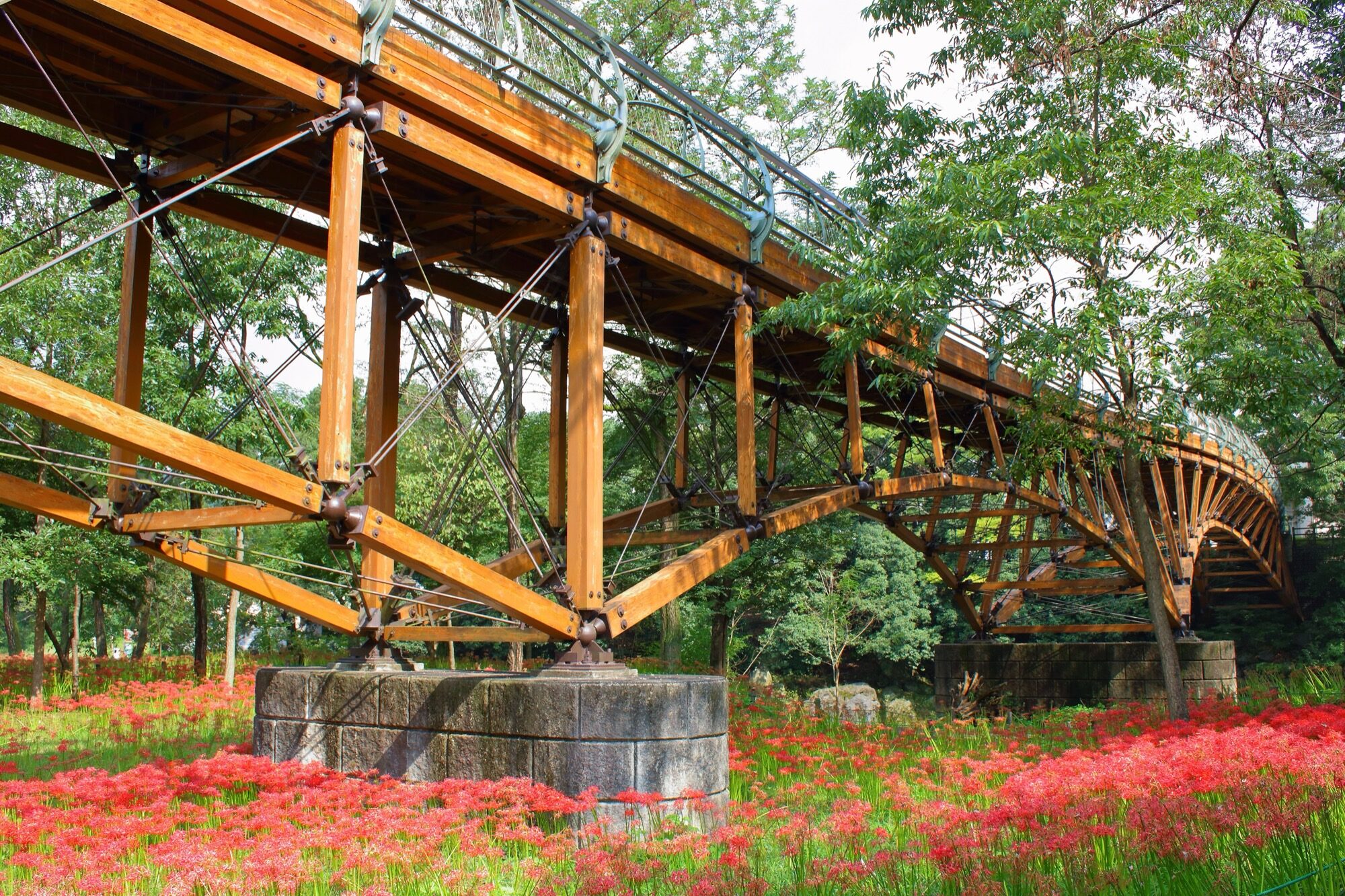
A famous carpet of millions of red manjushage under the trees in Hidaka, an easy day trip from Tokyo. Timing shifts with the weather — check the city’s bloom report before you go. Full guide.
Saitama · Spider lily
Gongendo (Satte)
Peak: mid-Sep – early Oct
Spider lilies line the embankment that runs red in autumn and pink with cherry blossom in spring. Quieter than Kinchakuda, and reachable from Tokyo in under an hour.
Yamanashi · Zinnia fields
Fuji Motosuko Resort
All month (Aug 29 – Oct 12)
The shibazakura grounds replanted for autumn — 80,000 zinnias striped under Mt Fuji, ¥1,000 in (¥700 advance), free parking. Quiet on weekdays, packed in Silver Week. Full guide.
Aichi · Spider lily
Yakachi River (Handa)
Peak: late Sep – early Oct
About three million spider lilies run for kilometres along the Yakachi in Handa — one of the largest displays in the country, and handy for anyone in the Nagoya area for the Games.
Tokyo · Flowers
Showa Kinen Park
Peak: mid-Sep – mid Oct
Spider lilies, cosmos fields and the first fragrant osmanthus, all in one large park in Tachikawa. The most reliable single stop for September flowers inside greater Tokyo.
For where the colour goes next as it spreads south through October, see the October autumn guide, and for beating the late-summer heat before the leaves turn, our coolcation guide covers the high, cool places that shine in early September.
Where to be, region by region
Kansai (Osaka & Kyoto)
The strongest September region for events. Kishiwada Danjiri runs Sep 19–20 south of Osaka, the Seimei-sai lantern festival lights Kyoto around the equinox, and Silver Week fills both cities. Book early — the danjiri weekend, the holidays and the nearby Asian Games all land at once. Kyoto’s temples are still green but far quieter than in autumn peak.
Tokyo & Kanto
A steady month rather than a headline one. Chofu fireworks in mid-September, the Tsurugaoka yabusame down in Kamakura on the 16th, spider lilies at Kinchakuda and Gongendo within a day trip, and cosmos at Showa Kinen Park. Weekday hotel rates stay reasonable outside the Silver Week peak.
Hokkaido & Tohoku
Where autumn actually starts. Daisetsuzan colours from mid-month — the earliest koyo in the country — and Hakkoda and Kurikoma follow late in September. Kakunodate’s float festival brings Akita alive in the second week. Nights are cold at altitude; this is layer-and-hot-spring season in the north.
Chubu (Toyama & Niigata)
Two of the month’s most distinctive events sit here: Owara Kaze-no-Bon in Toyama’s Yatsuo (Sep 1–3) and the Katakai giant fireworks in Niigata (Sep 11–12). Add the Tateyama alpine route, which colours in late September well before the valleys. Nagoya, the Asian Games host, also makes a good base — see our day trips from Nagoya during the Games.
Kyushu & the south
Fukuoka’s Hakozaki-gu Hojoya, a two-week harvest festival with hundreds of stalls, runs mid-September. The south sees typhoons earliest, so keep bookings flexible; between storms, early autumn in Kyushu is warm, green and much less crowded than the Golden Route.
Why the shoulder days around Silver Week are the smart play
The pattern most travellers miss: the crowds and prices in September are concentrated in one five-day block. The first two weeks — especially weekdays — are among the easier times of the year to book central hotels, and the shrines and gardens are quiet. Silver Week (Sep 19–23) then spikes demand around Osaka, Nagoya and the famous routes, before the country settles again in the final week. If your dates are flexible, land in early September for value, or in the last week for the first cool air and the start of autumn colour — and treat Silver Week itself as a block to plan around, not into.
Practical: weather, packing, payment
Weather
Tokyo September average: around 27°C high, 21°C low, with high humidity early in the month easing by late September. Sapporo runs cooler at about 23/15°C and turns properly autumnal by month’s end. Naha stays summer-warm near 30°C. Expect at least one rainy or stormy spell somewhere in a two-week trip.
Packing
- A genuinely waterproof jacket with a hood — more useful than an umbrella in a typhoon wind
- Breathable, quick-dry clothing for the humid first half of the month
- A warm layer for the mountains — Daisetsuzan and Tateyama are cold at altitude
- A small folding umbrella; konbini sell ¥600 transparent ones if you forget
- Sun protection — early-September sun is still strong between the clouds
- A dry bag or Ziploc for phone and passport during sudden downpours
Payment & budget
Budget around the Silver Week spike: rooms in Osaka, Kyoto and the Nagoya area climb for Sep 19–23 and sell out early, while early-September weekdays are noticeably cheaper. Reserved shinkansen seats for the holiday go fast once they open, so book as soon as your plans are fixed. For payment mechanics, see our Japan Cash vs Card guide.
What I pack for September in Japan
September is the overlap month — typhoon rain and humid heat early, cool mountain mornings late. You want to be ready for both, and you can have it delivered to your hotel before you land.
Compact folding umbrella
You will use it most days early in the month. A sturdy auto-open one beats the disposable konbini kind.
Packable rain poncho
For a downpour at a festival or fireworks night when an umbrella is not enough in the wind.
Cooling neck ring
For the humid first two weeks. Freeze it overnight or set it at room temperature; it takes the edge off.
Electrolyte tablets
You sweat more than you expect in early-September humidity. These head off the headache and fatigue.
Sunscreen
The sun is strong between the clouds. Japanese gel sunscreens are light and worth packing.
FAQ
Is September a good time to visit Japan?
Yes, with one caveat. Outside the five-day Silver Week (Sep 19–23), early-September weekdays are among the cheaper, quieter times of the year to visit the big cities, and the festival calendar is dense. The trade-off is the weather: September is the peak month for typhoon landfalls, and the first two weeks are still hot and humid. Keep bookings flexible and it is a strong month.
When is Silver Week 2026, exactly?
September 19–23, 2026 — a five-day run. Saturday the 19th and Sunday the 20th are the weekend, Monday the 21st is Respect for the Aged Day, Wednesday the 23rd is the Autumn Equinox, and Tuesday the 22nd becomes a Citizens’ Holiday because it falls between two public holidays. See our Silver Week 2026 guide for how to plan around it.
How bad are typhoons in September?
September has the most typhoon landfalls of any month in JMA’s long-term averages, though most storms still pass south or east of the country. A direct hit on your specific travel day is uncommon, but the odds are higher than any other month. The practical response is to keep refundable bookings, hold a spare day, and check JMA two to three days before travel — not to avoid September.
When does autumn colour start in September?
Only in the far north and the high mountains. Daisetsuzan in Hokkaido begins around mid-September — the earliest koyo in Japan — followed by Hakkoda, Kurikoma and the Tateyama alpine route late in the month. The mainland cities and famous temple gardens do not turn until late October and November. On the plains, September’s colour comes from red spider lilies around the equinox.
Which part of September is best for fewer crowds?
Early-September weekdays (roughly Sep 1–11) are the quietest and cheapest, before Silver Week demand builds. Avoid Sep 19–23 if you want space and lower rates, especially around Osaka and Nagoya, where the danjiri and the Asian Games add to the holiday crowds. The final week (Sep 26–30) settles down again and brings the first cool air.
The value window in September is the first two weeks — before Silver Week.
Quiet cities, lower hotel rates, and a festival almost every weekend. Plan the famous sights for early September, treat Silver Week as a block to work around, and finish in the last week as the first autumn air arrives from the north.
Silver Week 2026 guide Typhoon season guide All 12 months comparedJoin travelers discovering Japan's hidden side
Weekly dispatches from off-the-beaten-path Japan — spots and stories you won't find in guidebooks.
No spam. Unsubscribe anytime.
Welcome aboard!
You're in. See you in your inbox soon.