Travel logistics · Shopping in Japan
Yes — you can have an Amazon.co.jp order delivered to your hotel, a convenience store, an airport locker, or a parcel locker almost anywhere in Japan, usually within one to two days and free on orders over ¥3,500 — and you can place the order from home before you even land. All it takes is a free Amazon.co.jp account (separate from Amazon.com) and a Japanese delivery address.
I get this question a lot, usually the night before someone flies in: “I forgot my trekking poles / my plug adapter / a power bank — can I just order it on Amazon and pick it up over there?” The short answer is yes, and it is genuinely easy once you know the four delivery targets and the one account quirk that trips most visitors up. I have shipped gear to climbers heading up Fuji, sent a forgotten charger to a friend’s business hotel in Shinjuku, and grabbed a parcel from an airport locker on the way in. Here is exactly how each method works, what it costs, and where people get stuck.
The 4 delivery methods, compared · 1) Your hotel · 2) A convenience store · 3) An Amazon Hub locker · 4) An airport locker · Account, payment & the address trick · What’s actually worth ordering · Practical tips · For readers flying from Southeast Asia · FAQ
Open Amazon Japan in EnglishAmazon.co.jp affiliate link. As an Amazon Associate I earn from qualifying purchases.
The four ways, side by side
If you need something delivered for your first night
For a traveler, four delivery targets cover almost every situation. They cost the same (delivery is free over ¥3,500, or always free with Prime); they differ in how flexible the timing is and whether anyone needs to be there to receive it. One caveat up front: not every item qualifies for every method — size, weight and seller all matter, and Amazon’s checkout only offers the pickup points that actually work for that parcel. Pick by where you’ll be when it lands.
| Method | How you collect it | Best for | Watch out for |
|---|---|---|---|
| Hotel front desk | Staff sign for it and hold it; you collect at check-in | Anyone with a confirmed booking | Email the hotel first; address it in their name + yours |
| Convenience store | Show the barcode at the register (Lawson, FamilyMart), or enter your two pickup numbers at the in-store kiosk (MiniStop) | Hostels, Airbnb, no fixed address | Held 4 days, counting the delivery day, at FamilyMart, Lawson and MiniStop; those three chains only |
| Amazon Hub locker | Type the 6-digit key from the pickup email (or use the app); the door pops open | 24-hour, no-contact pickup | Parcel size limits; held ~3 days then refunded |
| Airport locker | Same 6-digit key / app at a locker inside the terminal | “Buy it before I land, grab it on arrival” | Only lockers shown in Amazon’s checkout search exist — verify there first |
1) Have it sent to your hotel
This is the method most travelers want, and most Japanese hotels will hold a prepaid parcel for a confirmed guest — but policies vary, which is why the heads-up email below isn’t just politeness, it’s what makes the whole thing work. Hotels here handle guest parcels all the time; the big chains (APA, Toyoko Inn, Hilton, Marriott) do it every day, and even small business hotels and hostels usually will if you ask. Not booked yet? Both Agoda and Booking list Tokyo hotels that will hold a prepaid parcel for an arriving guest.
Email the hotel first
One line is enough: give your reservation number and check-in date, and ask how many days before check-in they can accept and hold an Amazon parcel for you. Policies differ by property, so get the answer in writing.
Copy the hotel’s Japanese address
Find the hotel on Google Maps and copy its address in Japanese, including the 〒 postcode. The Japanese address is what the delivery driver reads — don’t translate it.
Put your name on it
In the recipient field, use the hotel name and add your own name plus your check-in date. The Japanese word 気付 (kizuke, “care of”) signals it’s a guest parcel.
Time it to the hotel’s window
Once the hotel tells you how early it can take a parcel, pick a delivery date inside that window. Check the delivery estimate at checkout, or choose a scheduled delivery date (お届け日時指定便: ¥510 on Honshu/Shikoku, ¥550 on Hokkaido/Kyushu, payable even on orders of ¥3,500 or more and free with Prime; not offered in some places, such as Okinawa and remote islands — if checkout doesn’t offer it, it isn’t available for that order). If the hotel agrees to hold it but doesn’t say how early, aim for your check-in day; if it hasn’t confirmed at all, send it to a convenience store or locker instead.
Collect at the desk
Tell reception your name and that you’re expecting a package. Show your booking confirmation if asked. Done.
Here is the address format that actually works, laid out the way Amazon’s checkout fields are ordered:
◯◯ホテル フロント気付
チェックイン 6/12 [YOUR NAME] Phone — 電話番号 03-xxxx-xxxx (the hotel’s number, from Google Maps)
2) Pick it up at a convenience store
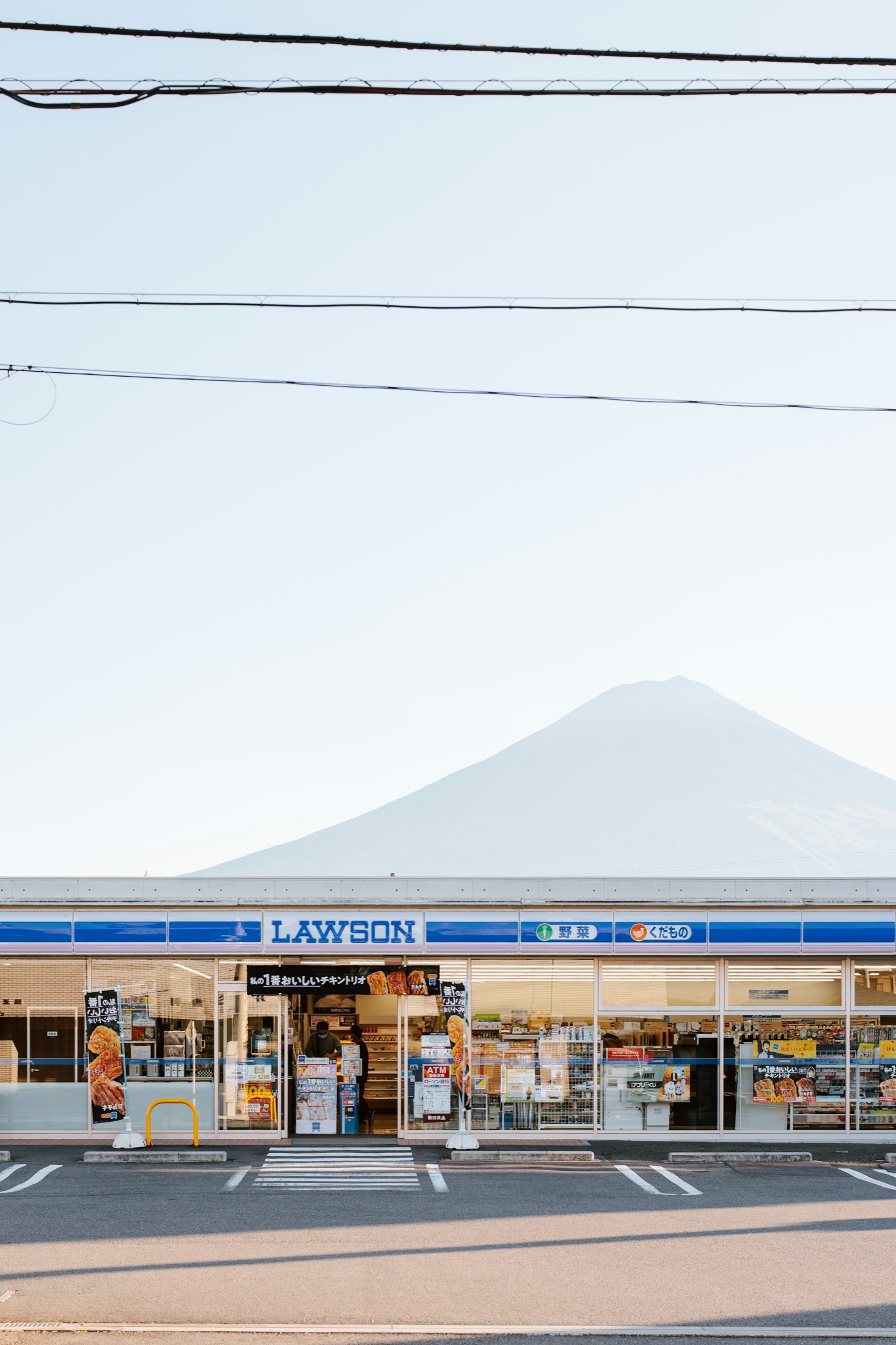
If you don’t have a fixed address — hostel-hopping, an Airbnb with no daytime staff, a capsule hotel — a convenience store is the most flexible option in Japan, and there’s one on practically every corner. At checkout you choose a store as the pickup point. When the parcel arrives, Amazon emails you a barcode plus two pickup numbers (an inquiry number and an authentication number). At Lawson and FamilyMart you can usually just show the barcode at the register; at MiniStop — or any store that can’t scan it — you type the two numbers into the in-store kiosk, which prints a slip for the register. Either way, very little Japanese is needed.
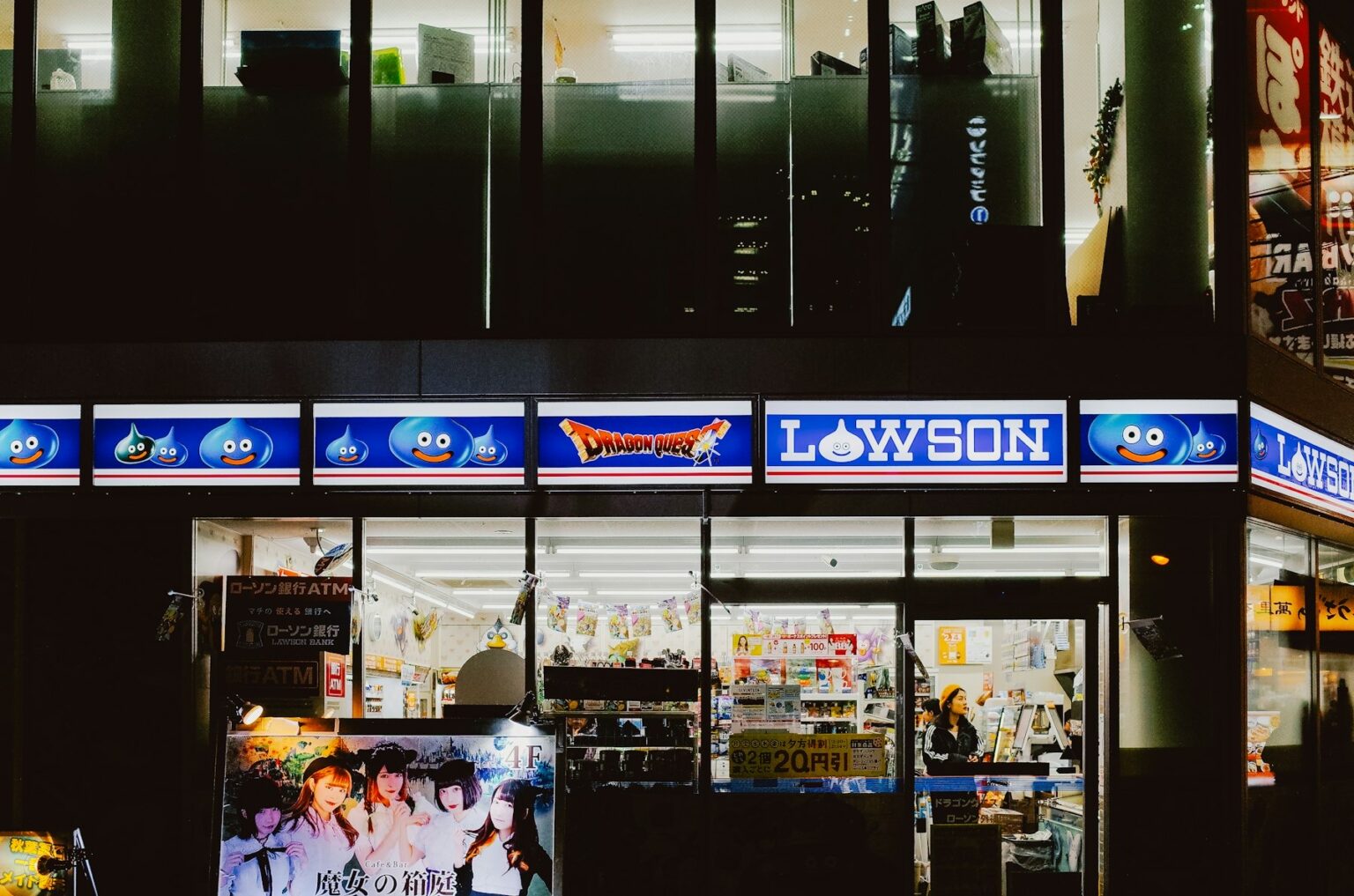
Choose a store at checkout
On the address step, pick “Convenience store / Amazon Hub Counter” and search for a branch near where you’ll be. Only FamilyMart, Lawson and MiniStop take Amazon counter pickups — not 7-Eleven (7-Eleven is used only for cash payment, never for collecting a parcel).
Wait for the pickup email
When the parcel reaches the store, Amazon emails you a barcode link plus two pickup numbers — an inquiry number and an authentication number (they’re also in Your Orders). Open the barcode when you’re at the counter rather than screenshotting it early: FamilyMart’s on-screen barcode expires 30 minutes after you display it. Carry your passport too — stores can ask for ID, so put your full name exactly as it appears on your ID in the recipient field.
Use the in-store kiosk if needed
If the store can’t scan your barcode (and always at MiniStop), use the kiosk — Loppi at Lawson and MiniStop, the multi-copy machine at FamilyMart. Enter the 12-digit inquiry number and the authentication number, print the slip and hand it to the register.
Collect within 4 days
FamilyMart, Lawson and MiniStop all hold the parcel for 4 days, counting the day it reaches the store as day one (Amazon Lockers give you three). Miss the window and the order is returned and refunded — so don’t pick a store you won’t pass.
3) Use an Amazon Hub locker or counter
Amazon Hub is Amazon’s own self-service network — automated lockers (Amazon Hub Locker) and staffed counter points (Amazon Hub Counter) at stations, shopping centers, drugstores and convenience stores. Amazon puts its pickup network at more than 35,000 spots across Japan — convenience stores, lockers and counters — with Amazon Lockers now reaching all 47 prefectures, so there’s usually one near a station you’ll use. It’s the closest thing to the Amazon Lockers travelers know from home.
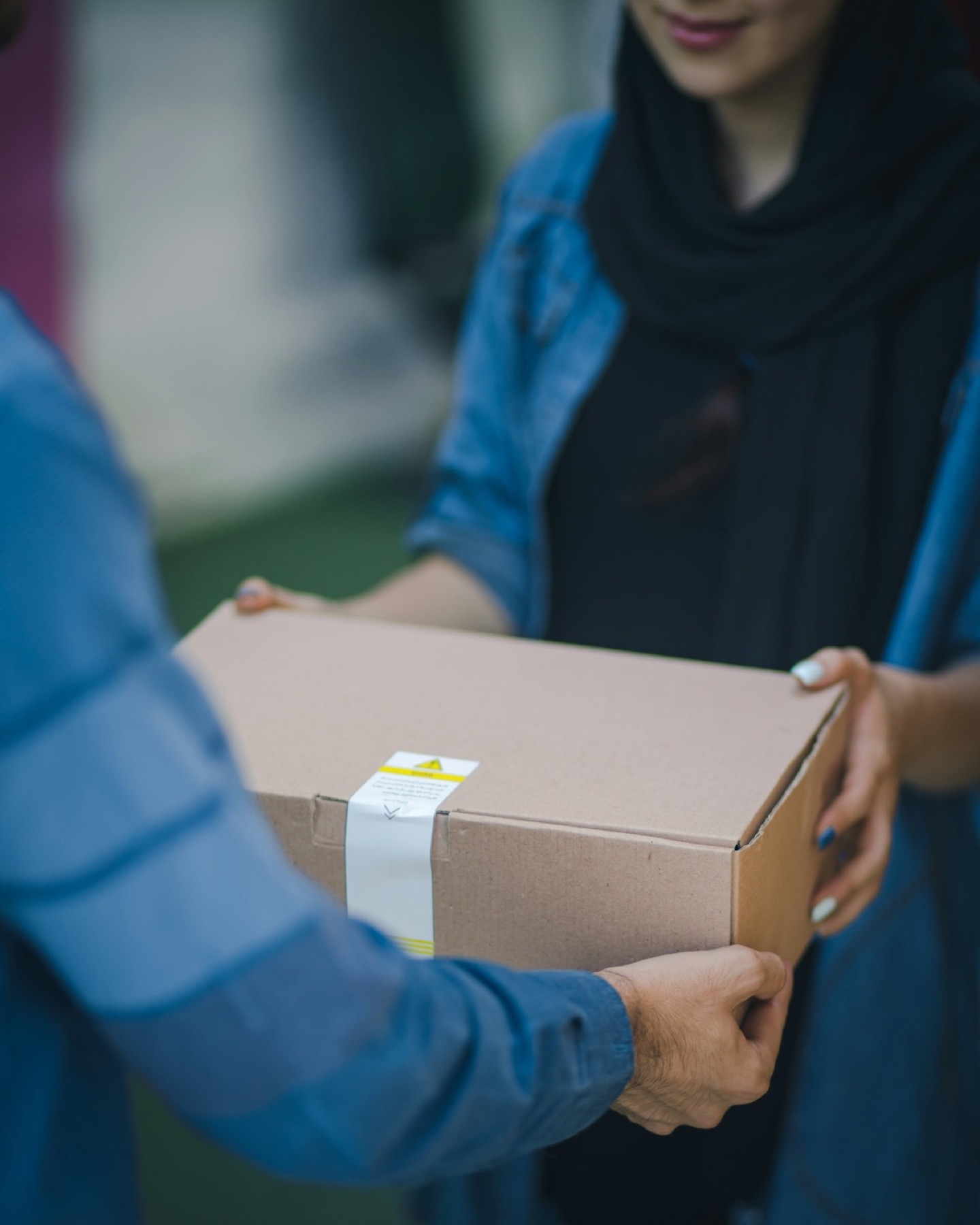
Pickup is contactless. For a locker, Amazon emails a barcode and a six-digit authentication key; type it at the locker’s touch panel (some newer lockers are driven from the Amazon app instead) and the right door pops open. At an Amazon Counter, show staff the pickup code from your delivery email. Lockers hold a parcel for about three days before it’s returned and refunded, and there are size limits — a locker is great for a charger, a SIM card or a pair of socks, less so for a suitcase-sized box (send those to a hotel or counter).
4) Grab it from a locker at the airport
This one comes with a caveat I’d rather give you than bury: Amazon first set up airport lockers around 2022 — originally at Haneda and Narita, for passengers waiting out arrival quarantine at the time — and locker placements change, so some may no longer be in place. So treat the airport pickup as a bonus, not a promise — and let Amazon’s own checkout be the referee. Search the airport as a pickup point when you order: if a locker appears there, it exists and takes your parcel; if it doesn’t appear, it isn’t available for that item or date, whatever any blog list (including this one) says.
Search the airport at checkout
On the address step, open the pickup-point search and type the airport name (“Narita airport”, “Haneda”, “Kansai airport”). What it shows is the live, current list — the only one that matters.
Match the terminal to your arrival
At Haneda, international flights arrive at Terminal 3 — except ANA-operated ones, which can use Terminal 2 (codeshares on other airlines stay at T3). Check your arrival terminal in your booking or the airline’s flight status before choosing a locker, so you don’t end up hauling luggage between terminals.
Aim the delivery at your landing day
Order 2–3 days ahead; the locker holds a parcel for about three days, so time it to arrive the day you do, not a week early.
Plan B: skip the airport
A convenience store near your first hotel does the same job with a longer hold and no terminal hunting — often the calmer choice after a long flight.
Setting it up: account, payment, and the address trick
The only real hurdle is the account — and it’s a five-minute fix. Everything else (English checkout, free shipping, no customs) works in your favor because the order ships within Japan.
You need an Amazon.co.jp account
Your Amazon.com (or .co.uk, .sg, .com.au) login does not work on Amazon.co.jp — Japan is a separate store. Create a free amazon.co.jp account; you can use the same email address and an international phone number. Switch the site to English with the globe / language icon at the top, and most of the store and checkout — including the address fields — runs in English. A few corners stay Japanese (some product pages, pickup emails, in-store kiosks), so keep the Amazon app handy; the codes work regardless of language.
Will your foreign card work?
Usually yes. Most overseas Visa and Mastercard credit cards are accepted on Amazon.co.jp. Occasionally a foreign card is declined at checkout for fraud-screening reasons, and that’s the one thing worth a backup plan.
Free shipping and timing
Standard delivery is free on orders of ¥3,500 or more for non-Prime accounts — Amazon Japan raised that threshold from ¥2,000 in 2024, so don’t rely on the old figure. Below ¥3,500 it’s a flat fee of ¥460 (¥500 for Hokkaido, Kyushu, Okinawa and remote islands — the fees edged up again in late 2024), and Amazon Prime members get free delivery with no minimum. Those figures are for items shipped by Amazon itself; marketplace sellers set their own shipping. In Tokyo and Osaka, most things arrive in one to two days; allow two to four days for rural areas. There is no customs and no import duty, because the item is already in Japan — that’s the whole advantage over shipping from home.
What’s actually worth ordering to your accommodation
The things people order in Japan fall into a few clear buckets: stuff you forgot, stuff that’s bulky or awkward to fly with, and seasonal kit you only need for this trip. Here’s what I’d send to a hotel or locker, grouped so you can jump to your situation.
A note on the links below: they go to Amazon.co.jp through our affiliate tag. If you buy through them, Hidden Japan Gems may earn a commission at no extra cost to you — and these are the categories I actually point travelers to.
Winter packing (November to March)
For cold-weather travel, compare hand warmers (kairo), thermal base layers and touchscreen gloves. Check the product details and the delivery date for your hotel, and confirm that the hotel accepts guest parcels.
Disposable hand warmers (kairo) · thermal base layer · touchscreen gloves
Forgot a charger or adapter
The most-forgotten items, full stop. Cheaper and faster than hunting an electronics shop after a long flight. Not sure your plug fits Japanese sockets, or whether your charger takes Japan’s 100V? See Japan plug type and voltage by country.
Japan plug adapter · power bank · multi-port USB charger · charging cables · travel power strip
Staying connected
A data SIM delivered to your first hotel or an airport locker means you’re online the minute you land.
Japan data SIM card · or compare an eSIM if your phone supports one.
Climbing Mount Fuji
The reason a lot of people land on this page. The official climbing season runs from early July to September 10 — the 2026 season has closed, so treat this as kit for next summer. Bulky, single-use-feeling gear you don’t want to fly with — see our Mount Fuji mountain-huts guide for the full kit list.
Trekking poles · headlamp · oxygen can · rain jacket & pants · hiking socks
Rainy season & sudden showers
The tsuyu rains hit roughly June into July, and mountain weather turns on a coin year-round.
Sleep & comfort on the move
Small things that make trains, ryokan floors and early starts easier.
Neck pillow · eye mask + earplugs · foldable slippers · packing cubes
Pharmacy basics
Have them in hand before the long bus ride or the trail, rather than reading labels you can’t decode at 11pm.
Motion-sickness tablets · blister plasters · insect repellent · anti-itch stick
Beating the summer heat (Jun–Sep)
Japanese summers are brutal and humid. Locals carry these, and you can have them waiting for you.
Cooling neck ring · handheld fan · electrolyte tablets · cooling body wipes · sunscreen
One category worth buying in a shop rather than ordering: cup noodles. A supermarket beats both Amazon and the konbini on price, and the choice on a Japanese shelf is far wider than any listing shows — I went through Japan’s ten best-rated cup noodles, with verified prices and which ones contain pork.
Practical tips before you order
Match the delivery date to the hotel
Ask the hotel how early it accepts parcels, then set the delivery date to match — where checkout offers scheduled delivery, you can pick the day.
Cross ¥3,500 for free shipping
The non-Prime free-shipping line is ¥3,500. If you’re just under, add a cheap consumable you’ll use anyway rather than pay the flat delivery fee.
Don’t ship perishables or huge boxes to a locker
Lockers have size limits and short hold times. Food, fragile or oversized? Use a hotel or counter.
Track it in the Amazon app
Switch the app to English too. You’ll see the pickup code, the store, and the collect-by date in one place.
Returns are possible but fiddly as a visitor
You can return items, but it’s awkward on a short trip — buy carefully, especially clothing sizes.
Airbnb? Ask the host, or use a locker
Many hosts accept parcels, but a convenience store or Hub locker is safer if check-in is self-service.
For readers flying from Southeast Asia
If you’re coming from Singapore, Bangkok, Kuala Lumpur or Jakarta — a big share of our readers — this is even more useful than it is for long-haul visitors, because you’re often travelling lighter and on low-cost carriers with tight baggage limits.
Pack light, buy on arrival
With a 7–10 kg cabin allowance on budget flights from Changi, Suvarnabhumi, KLIA or Soekarno-Hatta, it makes sense to leave bulky gear at home and have a power bank, SIM or cooling kit waiting at your first hotel or an airport locker. For the ride in from the airport, Klook lists Welcome Suica cards and airport-transfer deals.
Cash still helps
If your regional card is declined at checkout, the convenience-store gift-card trick is your friend — and konbini are everywhere you’ll land.
Direct flights are short
Singapore, Bangkok, KL and Jakarta all have direct routes to Tokyo and Osaka in roughly 6–7 hours, so you can order a few days before you fly and, where checkout offers a delivery date, set it to your check-in day (or whatever day the hotel agreed to).
Frequently asked questions
Can tourists really order from Amazon Japan?
Yes. You just need a free Amazon.co.jp account, which is separate from your Amazon.com account but can use the same email and an international phone number. Switch the site to English with the language icon and you can shop and check out entirely in English.
Will my foreign credit card work on Amazon.co.jp?
Usually yes — most overseas Visa and Mastercard credit cards are accepted. If yours is declined, buy an Amazon gift card with cash at any convenience store, load the code into your Amazon.co.jp balance, and pay from that instead.
How fast is delivery, and is it free?
Standard shipping is free on orders of ¥3,500 or more for non-Prime accounts (Prime members always ship free); below that it’s a flat fee of ¥460, a little more (¥500) for Hokkaido, Kyushu, Okinawa and remote islands. In Tokyo and Osaka most orders arrive in one to two days; allow two to four days for rural areas.
Do I have to pay customs or import duty?
No. The item ships within Japan, so there is no customs and no duty — that’s the main advantage over ordering from a store back home and having it forwarded.
Which convenience stores can I pick up from?
FamilyMart, Lawson and MiniStop accept Amazon counter pickups; 7-Eleven does not (it’s used only for cash payment, not parcel collection). You collect by showing the barcode at the register (Lawson, FamilyMart) or by entering the two pickup numbers at the in-store kiosk (MiniStop), and you have 4 days, counting the day it reaches the store, before it’s returned.
What if I won’t be at the hotel when the parcel arrives?
Once the hotel has agreed to take it, the front desk signs for and holds it, so you don’t need to be there — just collect it at check-in. If the hotel hasn’t confirmed, or you have no fixed check-in, send it to a convenience store or an Amazon Hub locker instead, both of which let you collect on your own schedule.
Can I pick up an order at the airport when I land?
Sometimes — but verify at checkout, not on blogs. Amazon installed lockers at Haneda and Narita around 2022 (originally for quarantine-era arrivals), and placements change — some may no longer be there; the pickup-point search in Amazon’s checkout is the only live list. Note that at Haneda, international flights arrive at Terminal 3 except some ANA-operated flights, which use Terminal 2 — check your arrival terminal first. If no airport locker appears when you order, send it to a convenience store near your first hotel instead.
Can I have it delivered to an Airbnb or hostel?
Often yes, if the host or front desk agrees to receive it — always ask first. For self-check-in stays with no daytime staff, a convenience store or Amazon Hub locker is safer because you don’t depend on anyone being there.
Can Amazon Japan ship to the US, the Philippines or other countries?
Sometimes. Amazon.co.jp ships some items overseas through AmazonGlobal — add your home address and the checkout will tell you if the item qualifies (many don’t, and you pay international shipping plus any import duties). Everything else in this article is about the much easier case: delivery inside Japan while you’re here.
What if the hotel refuses the parcel, or it arrives before my stay?
Policies vary, which is why you email first. If a hotel declines, switch the order to a convenience store or Amazon Hub locker before it ships — after shipment it can’t realistically be redirected, and an unclaimed parcel is returned and refunded. Never send cash-on-delivery, perishables or oversized boxes to a hotel.
Is the Amazon Prime free trial worth it for a trip?
Amazon.co.jp offers its own Prime trial (separate from US/UK Prime, which gives you nothing on the Japanese store). It makes every delivery free with no minimum — just set a reminder to cancel before it converts to a paid plan after 30 days. For a single order, simply crossing the ¥3,500 free-shipping line is less hassle.
For most visitors, that’s the whole picture: pick the target that matches where you’ll be, address it in Japanese, give yourself a few days, and your gear is waiting when you arrive. It’s the kind of small thing that quietly makes a Japan trip smoother — fewer things to carry across the world, and a charger or a pair of poles ready at the front desk.
Join travelers discovering Japan's hidden side
Weekly dispatches from off-the-beaten-path Japan — spots and stories you won't find in guidebooks.
No spam. Unsubscribe anytime.
Welcome aboard!
You're in. See you in your inbox soon.