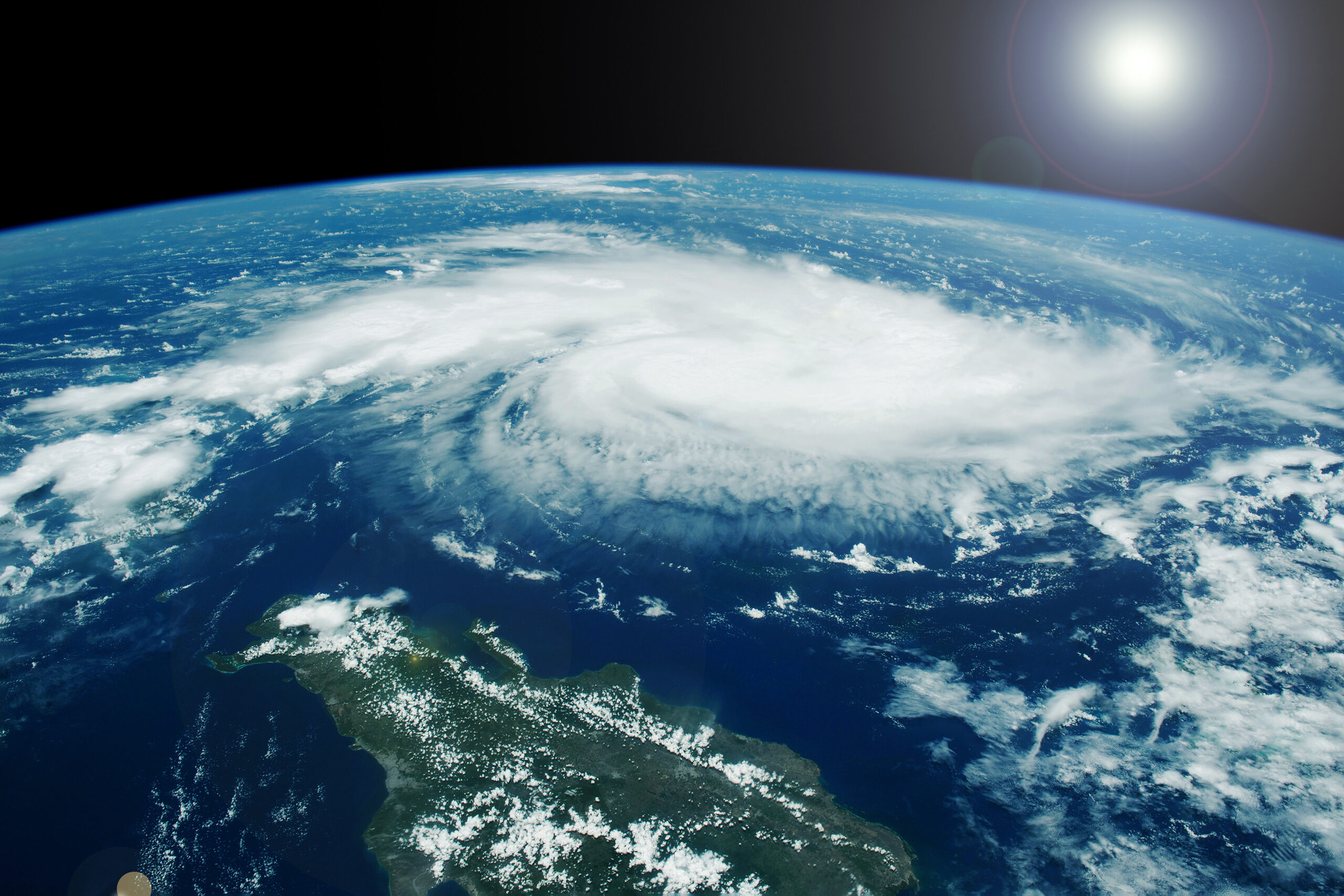

(No. a) is a tropical depression at 1002 hPa, centred about 1,340 km south of Minamitorishima, moving west at 10 km/h. Sustained winds near the centre are 15 m/s, gusting to 23 m/s. On the forecast track the centre passes about 320 km from Chichijima around Fri Sep 18, 09:00 JST, and JMA's forecast circle at that point has a radius of about 330 km, so it could pass closer. JMA expects it to be a tropical storm by Tue Sep 15, 12:00 JST.
No storm is affecting Japan at the moment — this is a watch note, and the forecast track can still change.
Travel weather · 2026 edition
Japan averages around 25 tropical cyclones forming in the Northwest Pacific each year, of which roughly 12 approach the country and 3 make landfall. The damage rarely lines up with the headline count — September storms cause more disruption than August storms, and Okinawa absorbs more than the rest of the country combined. Here is the climatology, the live data sources Japanese forecasters watch, and what realistically gets cancelled when a typhoon is incoming.
Season log — updated September 8, 2026
For the current status, the automatic box at the top of this page reads the JMA feed and updates the moment a new system is listed. The season to date: Typhoon Bavi passed close to the Sakishima Islands (Miyako and Ishigaki) around July 10–11 before curving toward Taiwan; Tropical Storm Krovanh approached Minami-Daito in early September before weakening to a tropical depression. Japan is now in the August–September peak of the season, so this list can grow at short notice — and rain, rough seas and transport disruption can outlast a weakening storm. Planning a Fuji leg around a storm? Our Mt. Fuji visibility forecast tracks the clear-vs-cloud odds.
The 30-second summary
Plan around August and September if your itinerary is flexible. Okinawa is the high-risk zone (eight approaches a year on average); main-island Japan sees three to four. Trains usually run until the last hour, flights cancel earlier, ferries cancel earliest. Bookmark the official JMA typhoon page and a flight-status feed before you fly — the cancellation calls happen fast.
Should I worry about my dates?
If your trip is between late October and early June, statistically no — the calm window. July to mid-October is the active window: build a one-day buffer when crossing between regions, lock in refundable hotels around the changeover days, and travel insurance with weather/trip-disruption coverage stops being optional. The single highest-risk geography is Okinawa and the Yaeyama islands; the lowest is the Sea of Japan side north of Niigata. Mainland trips that include Tokyo / Kyoto / Osaka almost always finish on time even in September.
Sister reads: Japan rainy season 2026 · Japan in June: hydrangea + firefly calendar · Golden Week 2026 survival guide
Quick Facts
| Annual cyclones formed (NW Pacific, 1991–2020 normal) | 25.1 |
|---|---|
| Annual approaches to Japan (1991–2020 normal) | 11.7 |
| Annual landfalls on Japan (1991–2020 normal) | 3.0 |
| Peak month for formation | August (5.7 cyclones on average) |
| Peak month for damage in Japan | September (autumn rain front amplifies rainfall) |
| Most-affected prefecture | Okinawa and Amami, with around 7.9 approaches per year |
| Naming authority | Japan Meteorological Agency, RSMC Tokyo — Typhoon Center |
| Threshold for naming | 10-minute sustained winds of at least 65 km/h (tropical storm strength) |
The 30-year baseline: when typhoons actually form
The most useful question is not “is there a typhoon coming,” but “is this the part of the calendar where one is likely.” JMA publishes the 1991–2020 normal — the average count of tropical cyclones forming in the Northwest Pacific each month over a 30-year window. The pattern is heavily skewed toward late summer.
Cyclones formed per month (NW Pacific, 1991–2020 normal)
Source: Japan Meteorological Agency, normal statistics for tropical cyclones, 1991–2020.
July through October account for roughly 18 of the 25 cyclones formed in a typical year. Winter and early spring are quiet enough that most travel guides simply ignore typhoons as a January-through-April risk; the average for those four months combined is 1.5 cyclones, and very few of them ever turn toward Japan.
Formation peaks in August, but damage peaks in September
August produces more storms (5.7 on average) than September (5.0), but the damage record looks almost the opposite. JMA’s list of typhoons that caused major damage in Japan is dominated by September strikes. The reason is meteorological: by September, the autumn rain front (akisame zensen) is hovering over the Japanese archipelago, and an incoming typhoon’s outer rainbands ride along the front. The result is heavy, prolonged rainfall — often well inland, well away from the storm centre — and the worst flooding events tend to be September events. If your trip is flexible and you want the lowest weather risk, August is usually the busier-but-shorter-event month and September is when the bigger systems hit.
Where the storms hit hardest
Typhoon risk is not distributed evenly across Japan. Okinawa and the Amami Islands take the brunt of approaches every year, while the main island regions see roughly equal exposure to one another but at much lower frequency.
Average approaches per year, 1991–2020. Source: JMA.
Two practical takeaways. First: a Tokyo or Kyoto trip in August or September faces three to four typhoon approaches across the whole season — a real but manageable risk, not the constant threat it sometimes sounds like. Second: an Okinawa trip in the same window is meaningfully riskier, with about one approach every six weeks on average. If you are travel-insurance-minded, that’s where to focus the hedging.
What 2025 looked like, and what 2026 has shown so far
Recent seasons help calibrate expectations. The 2025 Pacific typhoon season produced 27 named storms, 13 of which reached typhoon strength. By accumulated cyclone energy (a standard measure that combines storm count, intensity and duration), 2025 was below average, and only one storm — Typhoon Ragasa — reached super typhoon strength. The first named storm did not form until June 11, the fifth-latest start to a season on record.
2026 has done the opposite. The first named storm, Nokaen, formed on January 15 — the first January named storm in the Pacific basin since Pabuk in 2019 — and the season’s first typhoon, Sinlaku, reached typhoon status on April 10 and then super typhoon strength on April 12. An early start does not mechanically mean a busier total season; the relationship between early-season activity and late-season activity in the Northwest Pacific is weak. But it is a season worth watching attentively.
By early July the 2026 season had produced ten named storms, three of them typhoons; by mid-August that count had climbed to about 17 — and June was the first month to bring cyclones to Japan itself. Severe Tropical Storm Jangmi made landfall in Wakayama on June 3; Typhoon Mekkhala, briefly a Category-4-equivalent and one of the strongest June typhoons in years, brushed the country in the last week of the month; and Tropical Storm Higos crossed the Izu Peninsula on June 27. As always, the count matters less than the timing: the disruption that reaches your trip comes down to whether a single system lines up with your dates.
Reading season forecasts honestly
Pre-season outlooks issued in May or June by JMA, JTWC and academic groups typically estimate total named-storm counts within a wide range — for example “22 to 30.” Use them as a rough orientation. Actual disruption to your trip depends on a single storm hitting your specific dates and route, which no seasonal forecast can predict more than about a week ahead.
Live tracking: the sources Japanese forecasters watch
If you have a trip in the August–October window, the question is not “what does the climatology say” but “is anything moving right now.” Four sources give you 90% of what a domestic Japanese forecaster watches:
Authoritative
JMA RSMC Tokyo — Typhoon Center
The official designating authority for the Northwest Pacific. Numbered tracks, intensity, forecast cones, English available.
jma.go.jp/bosai/typhoon/Cross-check
JTWC (US Navy)
Independent forecast track from the Joint Typhoon Warning Center. Useful when you want a second opinion on the cone.
metoc.navy.mil/jtwc/Visual
Windy.com
Real-time wind and pressure visualisation across multiple model runs (ECMWF, GFS). Helpful for seeing how forecast tracks differ.
windy.comOperational
Airline + JR status pages
Once a typhoon is within 48 hours, the carrier-issued status pages are the only ones that matter. Keep your booking number ready.
ANA · JAL · JR CentralWhat actually cancels (and when)
One of the most useful things to know in advance: Japan’s transportation operators are conservative on flights, less conservative on shinkansen, and most conservative on ferries. The cancellation order is fairly consistent storm to storm.
| Mode | Typical timing of disruption |
|---|---|
| Inter-island ferries | Earliest Often cancelled 24–48 hours ahead, even on the windward side of the storm only. Okinawa-mainland ferries pause first, then domestic ferries between Honshu and Shikoku/Kyushu. |
| Domestic flights (ANA/JAL/Skymark/Peach) | Pre-emptive Carriers usually announce cancellations and waive change fees 12–24 hours before the storm reaches the airport. Naha (Okinawa) cancels earlier than Haneda or Itami. |
| International flights | Pre-emptive Same rough window as domestic. Long-haul flights from US and Europe to Tokyo are sometimes pre-emptively cancelled or rerouted to Kansai. |
| Tokaido / Sanyo Shinkansen | Runs longest JR Central typically reduces frequency first, then suspends specific sections (most commonly the Shin-Yokohama↔Nagoya stretch) when sustained winds along the line exceed safety limits. Suspensions are announced about 12 hours ahead. |
| Local trains | Runs longest Tokyo Metro, JR East commuter lines and private railways usually keep running through moderate typhoons. Heavy rainfall above-ground can trigger short suspensions on coastal or river-side lines (Tokaido, Yokosuka). |
| Highway buses | Pre-emptive Suspended a few hours ahead of the front edge of the storm; refunds are normally offered. |
Two recurring patterns are worth flagging because they trip up first-time visitors. First: a typhoon with its centre well offshore can still suspend the Tokaido Shinkansen if the wind sensors along the track exceed thresholds. The trains stop because of the side wind on the embankment, not because the storm is overhead. Second: ferry cancellations cascade. If the Naha–Ishigaki run cancels on Tuesday, the Wednesday and Thursday departures are often also cancelled or sold out, because passengers are bumped forward. If your itinerary depends on a Yaeyama or Ogasawara ferry, build in a one-day buffer at minimum.
An exact cancellation threshold in km/h does not exist as a single published figure. Each carrier publishes its own internal criteria — wind speed at the relevant airport or track segment, sustained vs gust, plus precipitation thresholds. The public-facing decision arrives as “this flight is cancelled” rather than “wind exceeded X” — which is why the carrier status page is the only authoritative source within 48 hours of a storm.
A typhoon does not cancel your trip. A non-refundable booking made in the wrong order does. Send me the plan and I will tell you which of your dates to keep flexible and which are safe to lock now: written booking audit, US$69, back within 48 hours.
See how the audit worksLock in flexible bookings before you go
The biggest single thing you can do for typhoon-season travel is book the right way. Refundable rates and free-cancellation hotels eliminate 90% of the cancellation pain even before a storm forms. Specifically:
Typhoon-Season Booking Stack
Pre-trip checklist if your dates fall in typhoon season
Before you book
- Travel insurance with weather/typhoon trip-disruption coverage, not just medical
- Refundable or low-fee-change air ticket where the price gap is small
- Refundable hotel rates around days when you cross between regions
- If Okinawa or Yaeyama is on the itinerary, build a one-day buffer before any onward flight
A week before travel
- Bookmark JMA typhoon page in your phone browser
- Save your airline app with booking reference loaded
- Note your hotel’s address in Japanese (taxi drivers may not read English during disruption)
- Confirm your travel insurance still covers a trip starting after a named system has formed
During an active approach (within 72 hours)
- Check the carrier status page morning and evening — not just JMA
- Stock convenience-store snacks and a 2-litre water bottle the night before; konbini sell out fast in Tokyo when a storm warning is issued
- Know your hotel’s check-out flexibility — many waive late check-out fees during a typhoon advisory
- Charge phone, power bank, and laptop the night before in case of brief power outages
FAQ
What month is the worst for typhoons in Japan?
August has the most storms forming (5.7 on average), but September has the worst damage record. Both because more typhoons take tracks toward Japan in September and because the autumn rain front amplifies rainfall when a storm arrives. If you are picking between the two and your trip is on the main islands, August tends to be the safer call by a small margin.
Will my trip get cancelled?
Most likely no. The 1991–2020 average for landfall is three storms a year, and each storm only affects a portion of the country for about 24–48 hours. A two-week trip in September has, very roughly, a 30–40% chance of overlap with at least one approach somewhere in the country, and a much smaller chance of overlap with a direct hit on your specific city. Buy travel insurance, plan refundable rates around regional crossings, and travel as you would otherwise.
Do shinkansen run during typhoons?
Often yes, with reduced frequency and occasional segment suspensions. JR Central’s Tokaido Shinkansen — the busiest line — typically runs partially through a typhoon and only fully suspends the most exposed segment (commonly Shin-Yokohama to Nagoya) for the few hours of peak winds. Local commuter trains keep going through almost everything except heavy flooding.
Should I avoid Okinawa in typhoon season?
It depends on your tolerance for trip disruption. Okinawa averages eight typhoon approaches a year, mostly between July and October. The islands are well-prepared, hotels are typhoon-resistant, and life resumes fast — but your specific flight and ferry plans will be more vulnerable than they would be on the main islands. If your only window is summer or early autumn, build buffer days and refundable bookings; if you have flexibility, late October through early June is materially calmer.
Is Visit Japan’s tax-free system affected by typhoons?
No. The tax-free shopping system, airport refund counters and immigration procedures all keep running unless an entire airport is closed. Typhoon disruption is almost always at the transportation layer, not the immigration or retail layer.
When is peak typhoon season in Japan, and is August or September worse?
The active window runs roughly July through mid-October, and it peaks in late summer. August produces the most storms (5.7 forming on average), but September is the more damaging month: more storms track toward Japan, and the autumn rain front amplifies rainfall when one arrives. October and June are shoulder months; late October through early June is the calm window. Figures are JMA 1991–2020 normals.
Plan Around the Storms
Three ways to make typhoon season travel low-stress: book flexibly, stay connected, and have a refundable backup plan.
Tone River Grand Fireworks 2026
A mid-September fireworks night with no rain date – watch the forecast and plan.
Earthquake in Japan: what to do
Drop, cover, hold on – and the coastal rule that saves lives. A safety guide with a live recent-quake box.
Join travelers discovering Japan's hidden side
Weekly dispatches from off-the-beaten-path Japan — spots and stories you won't find in guidebooks.
No spam. Unsubscribe anytime.
Welcome aboard!
You're in. See you in your inbox soon.