
Seasonal Guide · Early Autumn
Japan’s autumn colour does not wait for October. On the high slopes of Daisetsuzan in Hokkaido, the first leaves start turning in late August — the earliest in the country, by the national park’s own reckoning — and by mid-September there is genuine autumn colour at half a dozen places while Tokyo is still in 30°C summer heat. The catch: September colour is alpine slopes, golden marshland and mountain cirques, not Kyoto’s temple maples. This guide maps where the colour actually is, week by week, with the 2026 access rules that most English sources skip.
September colour comes in three kinds
If you search “autumn leaves Japan” you will mostly see crimson maples against temple walls. September is not the season for Kyoto-style temple maples — so it pays to know what it offers instead.
High-latitude alpine
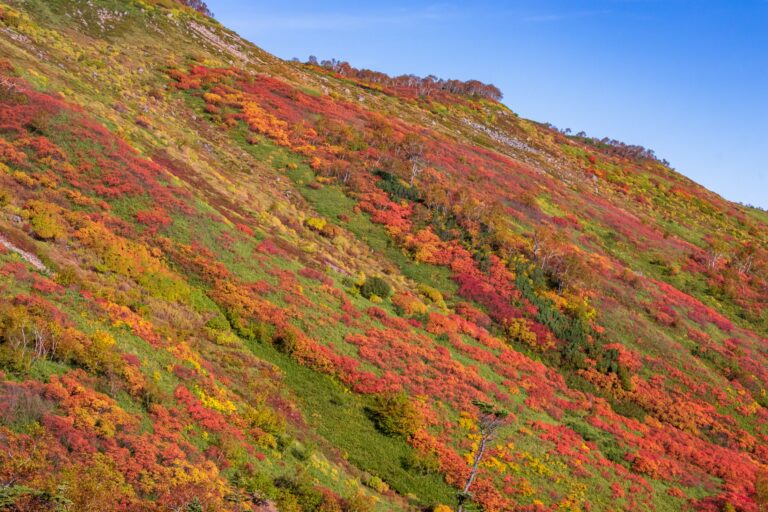
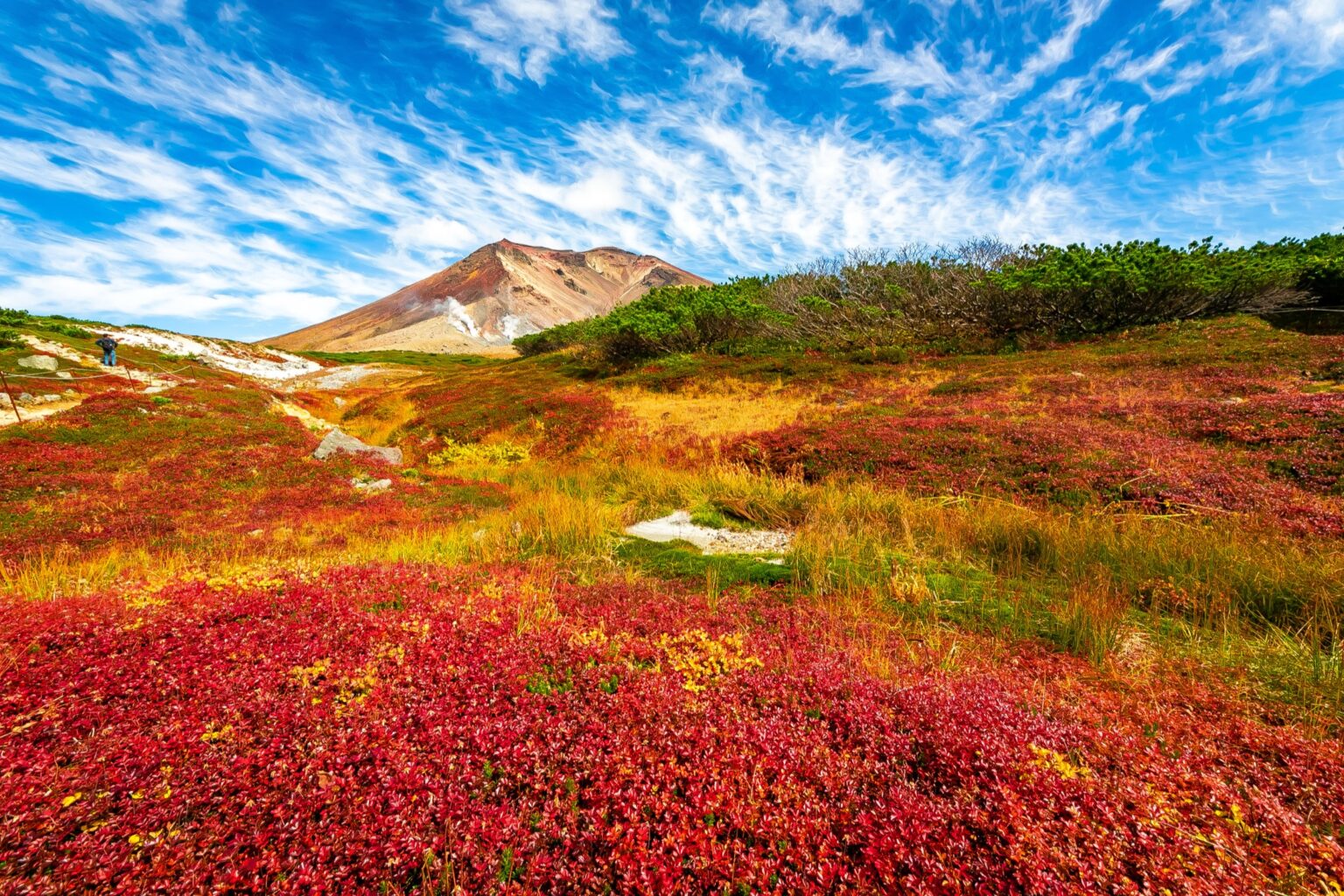
Hokkaido’s Daisetsuzan range: rowan and alpine shrubs turning red across volcanic slopes from late August, watched from ropeways and trails. One of the clearest places in the country to watch autumn arrive first.
High-altitude alpine
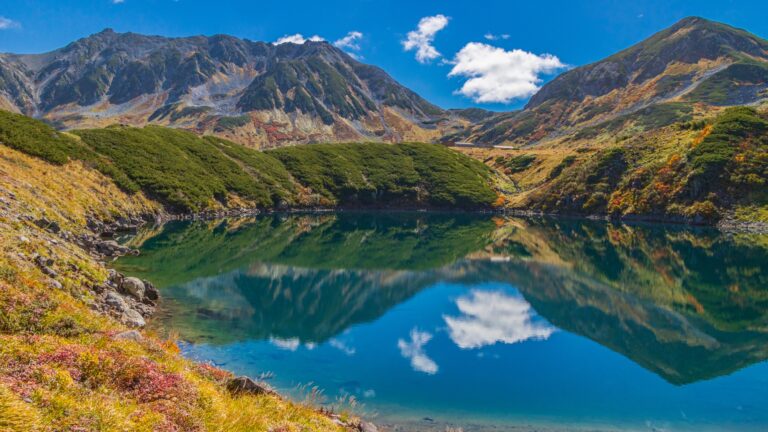
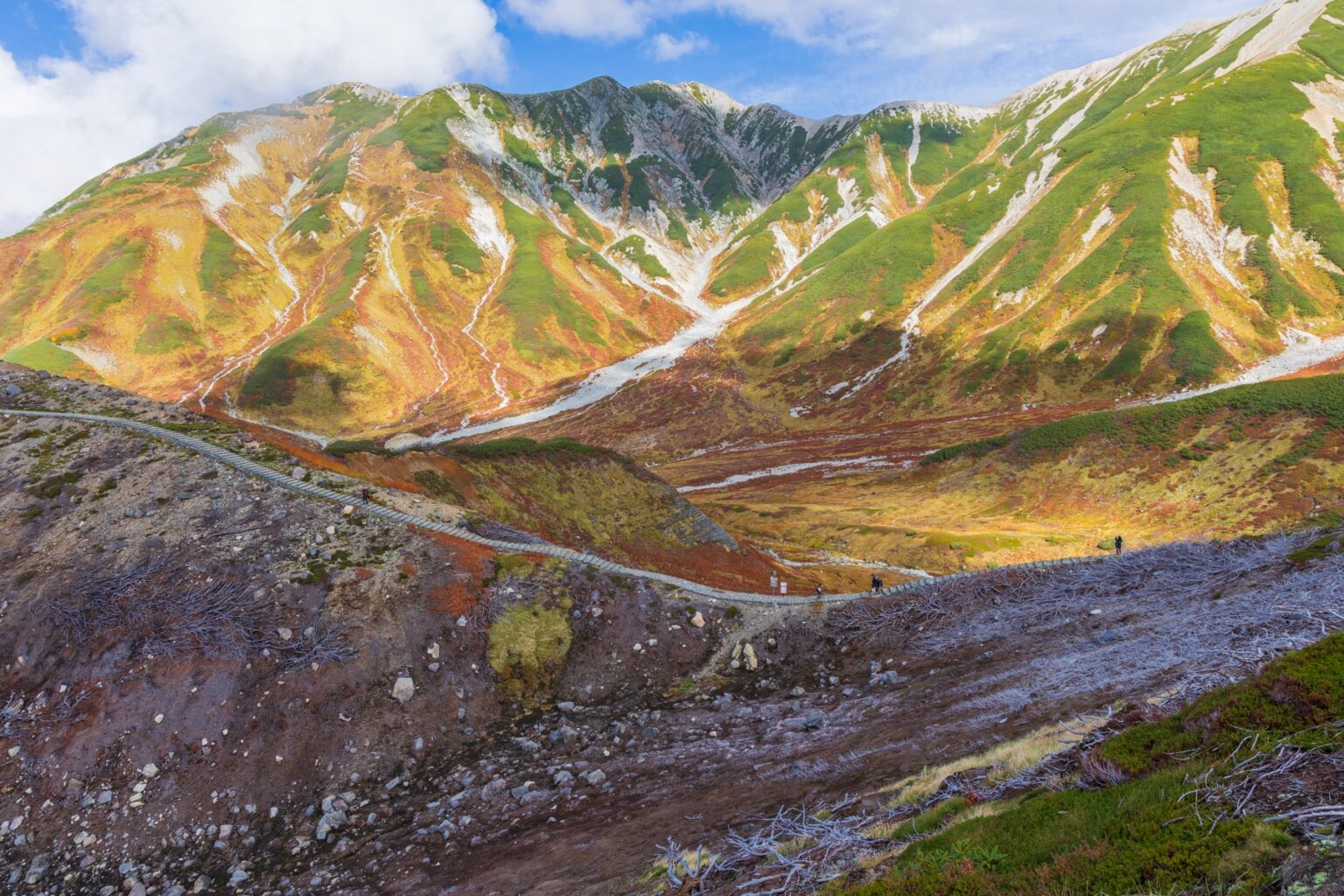
The Japan Alps — Karasawa Cirque, Tateyama’s Murodo plateau, Norikura’s bus-served summit zone. Elevation does what latitude does up north: nights already dip toward single digits in September. The full ladder of Nagano’s high plateaus is in the highlands guide.
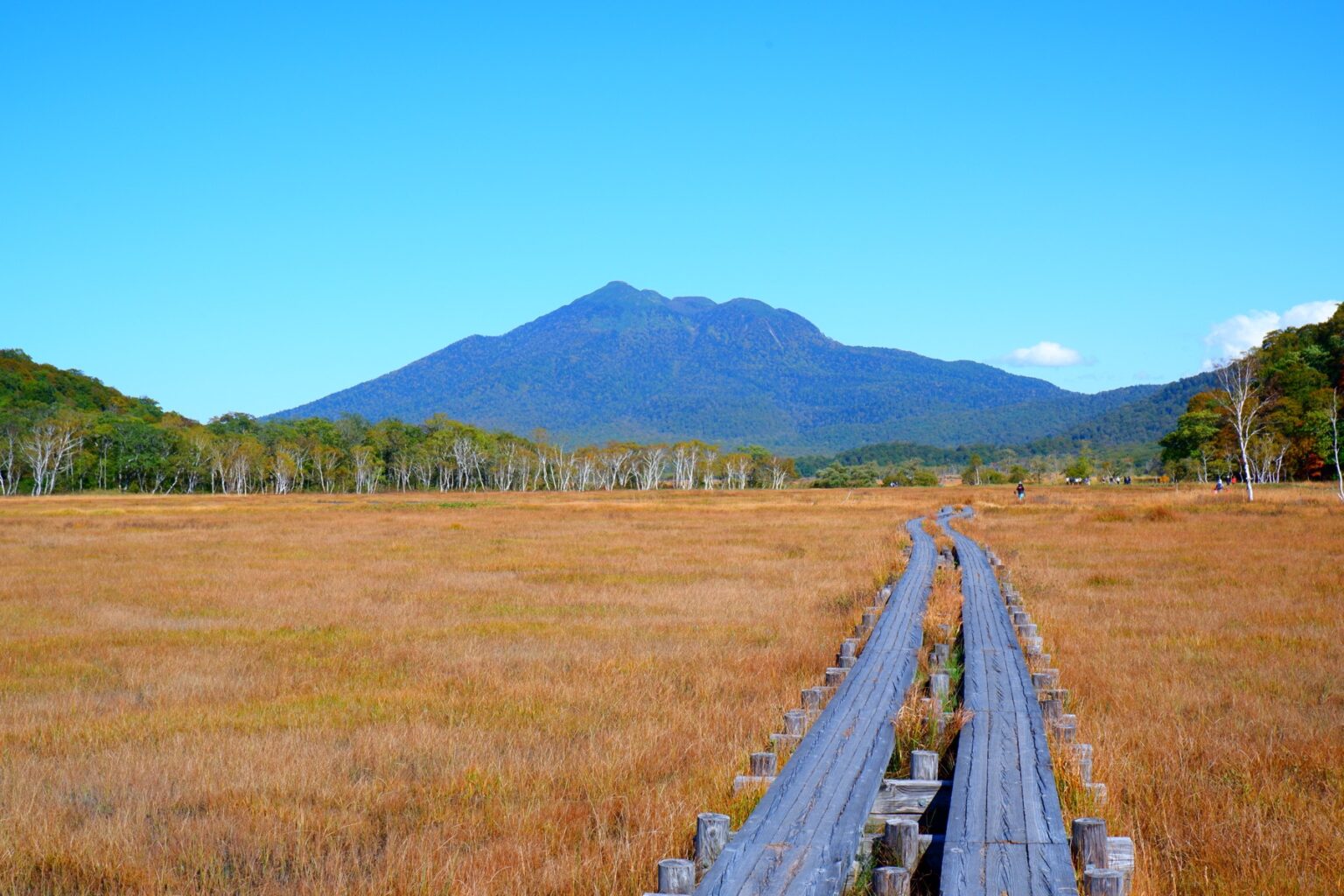
Kusamomiji — grass autumn
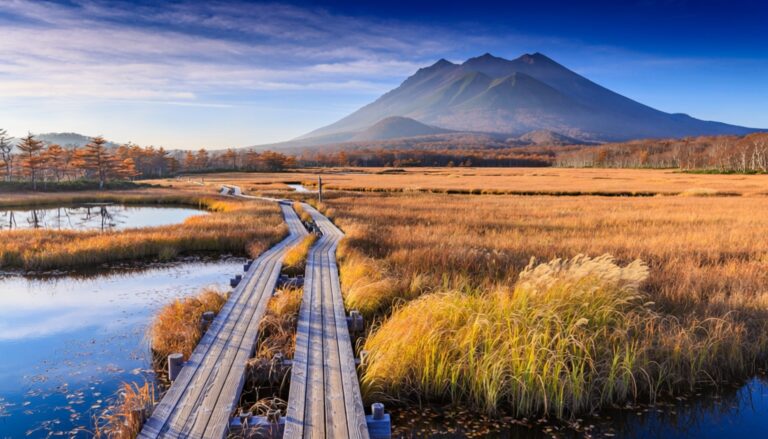
Wetland grasses and sedges turning gold and copper across marshes like Oze and Nikko’s Senjogahara. Instead of maple canopies, the whole plain itself changes colour. Most first-time visitors have never heard of it.
Where the colour is, week by week
| Spot | Typical window | What you get | Base |
|---|---|---|---|
| Daisetsuzan — Kurodake / Asahidake (Hokkaido) | High slopes late Aug → peak mid–late Sep | Japan’s first colour; ropeway access to the alpine zone | Sounkyo or Asahidake Onsen |
| Daisetsuzan — Ginsendai / Mt. Akadake | Mid–late Sep | The famous crimson slope; good colour starts near the trailhead | Sounkyo |
| Oze marshland (Gunma/Fukushima) | Builds mid-Sep → best late Sep–early Oct | Kusamomiji across Honshu’s largest high moor | Hatomachi Pass side lodges |
| Tateyama — Murodo (Toyama) | Mid-Sep → early Oct | Alpine colour at 2,450 m without a long hike | Alpine Route hotels / Toyama |
| Karasawa Cirque (Nagano) | Turns mid-Sep → peak late Sep–early Oct | Japan’s best-known alpine cirque — hikers only | Kamikochi, then mountain huts |
| Norikura — Tatamidaira (Nagano/Gifu) | Summit zone from mid-Sep | Alpine colour by bus, at Japan’s highest bus stop (2,716 m) | Norikura Kogen |
| Senjogahara (Tochigi) | Grass colour from late Sep | Kusamomiji on a long Tokyo day trip: ~2 h to Nikko, then a 65–70 min bus | Nikko / Chuzenji |
Every row above runs on typical windows from the sources at the end — individual years swing a week or more. The first 2026 forecast has landed: Weathernews published on 3 September and calls for peak colour later than average, or somewhat later, across most of Japan — so lean toward the back half of every window above. The spot-level release from the Japan Weather Association is due around late September. Our live koyo tracker carries the current status for all eleven regions.
Why Japan’s autumn starts in August
Leaves begin turning when overnight lows dip below about 8°C. Air cools roughly 0.6°C for every 100 m you climb, so a 2,000-metre slope sits about 12°C colder than the coast — which is how Hokkaido’s high country reaches leaf-turning temperatures while the rest of Japan is still in summer. The same logic then plays out in reverse all autumn: colour walks downhill at roughly two to three days per 100 m of descent, by the Nagano Local Meteorological Office’s rule of thumb, until it reaches Kyoto’s gardens in late November.
The 2026 access rules that matter
The three most popular September spots all run traffic controls, and this is where most English-language guides go stale. Verified as of mid-August 2026:
| Spot | 2026 rule (announced) | What it means for you |
|---|---|---|
| Ginsendai (Daisetsuzan) | Access controlled Sep 12–23: reserved charter buses from Sounkyo (¥2,500 one way / ¥5,000 return) plus advance-reservation private-car slots (¥2,000 per vehicle, 50 a day), booked and paid by 15:00 the day before | You cannot simply drive up unreserved in peak weeks — book a bus seat or a timed car slot, or go before Sep 12 |
| Kogen Onsen pond loop (Daisetsuzan) | Access road controlled Sep 19–30, advance-reservation alternating traffic; mandatory brown-bear lecture at the information centre; entry 7:00–13:00, everyone back by 15:00 | A reservation plus a bear briefing before you walk — plan this one, don’t wing it |
| Oze — Hatomachi Pass | Private cars restricted Apr 17 (10:00) – Nov 5 (14:00); shared buses and taxis from Tokura run Apr 18 – Nov 3 | Standard for Oze: park at Tokura, ride up, walk the boardwalks |
| Norikura — Tatamidaira | Own cars banned year-round on the summit roads; shuttle from Norikura Kogen runs Jul 1–Oct 31, reservation-priority in 2026 | Book the shuttle window you want; it fills up on clear autumn weekends |
Match the trip you’re actually taking
| Your situation | Best September call | Why |
|---|---|---|
| Flying into Sapporo / New Chitose | Daisetsuzan via Sounkyo | Ropeway to the earliest colour in Japan; pair with the Ginsendai bus in peak weeks |
| Based in Tokyo, one spare day | Senjogahara or Oze | Flat boardwalks on the marsh itself — Oze adds about an hour’s pass trail down (and back up) |
| Comfortable hiker with two spare days | Karasawa Cirque | The classic — but it is a six-hour-plus walk in from Kamikochi with a hut or tent night |
| Want alpine colour without hiking | Tateyama Murodo or Norikura Tatamidaira | Both put you above 2,400 m by cable car, electric bus or shuttle |
| Set on temple maples | Wait for November | September will not give you Kyoto’s maples — the colour front reaches the old capital about two months later |
Where to sleep: Sounkyo and Asahidake Onsen for Daisetsuzan, Kamikochi’s valley lodges before a Karasawa walk-in — compare Kamikochi and Matsumoto stays — and for Oze or Senjogahara, a Nikko or Katashina-side base the night before puts you there for the morning light. For everywhere else, Booking.com and Agoda both cover the mountain onsen towns well; hold one refundable room once your week firms up — and for Sapporo, Asahikawa or Toyama city nights before the mountain leg, Trip.com tends to carry the business hotels well.
What September colour is not
It is not maple season. The famous images — Tofukuji’s valley of red, Arashiyama, the Nikko temples — happen from late October in the mountains to late November in the cities. If those are the pictures in your head, September will disappoint you at ground level, and our October highland guide, the full Japan in October guide or the November rows of the tracker are your actual target. September is best treated as alpine and wetland colour: rowan on volcanic slopes, golden marshes, cold clear mornings — autumn weeks before the main season crowds arrive. If you are staying in Tokyo and want September red without heading to the mountains, look to flowers rather than leaves: Kinchakuda’s red spider lilies in Saitama usually peak around the autumn equinox.
For Daisetsuzan specifically — which gateway to choose, where to stay, how hard each option is — start with my Daisetsuzan September guide. The spot deep-dives publish across this week: Ginsendai’s reserved bus and trail, Murodo without a hike, and Oze’s kusamomiji and Hatomachi access.
FAQ
Can you actually see autumn leaves in Japan in September?
Yes — at altitude and up north. Daisetsuzan’s high slopes start turning in late August and peak from mid-September; the Japan Alps (Karasawa, Murodo, Norikura) follow from mid-September; and marshes like Oze build gold from mid-September. City and temple foliage comes one to two months later.
Is September too early for Kyoto’s autumn colours?
Far too early. Kyoto’s temple gardens typically colour from mid-November to early December. In September, Kyoto is still summer-warm. If your trip is fixed in September and you want autumn, go up a mountain, not to Kyoto.
What is kusamomiji?
Literally “grass autumn leaves” — the seasonal colouring of marsh grasses and sedges, which turn gold, copper and russet weeks before the trees. Oze’s marshland is the classic stage for it in late September, with Senjogahara near Nikko a more accessible second. It is a distinct, quieter beauty from maple season — flat golden plains rather than red canopies.
Do I need to book anything in advance for September koyo?
Three things commonly: the Ginsendai reserved shuttle if you’re visiting Sep 12–23 (bookings open around mid-August), mountain huts if you’re walking into Karasawa (they take reservations and fill on peak weekends), and the Norikura shuttle’s reservation-priority seats. Beyond those: driving to Kogen Onsen during Sep 19–30 also needs a reserved slot, and Tateyama web tickets are worth booking for September weekends.
How cold is it at these spots in September?
Plan for near-freezing mornings at altitude. These are 1,500–2,700 m environments where overnight lows reach single digits — that’s precisely why the leaves turn. A fleece, a shell and gloves belong in the daypack even when the lowland forecast says 28°C.
Have the 2026 autumn forecasts come out?
Weathernews published the first 2026 forecast on 3 September 2026: peak colour is expected later than average, or somewhat later, across most of the country, because temperatures are running above normal. The Japan Weather Association forecasts spot by spot and states that its 2026 information begins around late September. Our koyo tracker switches from typical windows to forecast data as each release arrives.
Sources
Daisetsuzan National Park liaison council and Kurodake ropeway (late-August colouring onset, safety guidance); Kamikawa Town announcements for the 2026 Ginsendai (Sep 12–23) and Kogen Onsen (Sep 19–30) traffic controls, shuttle pricing and reservation windows; Hokkaido Prefecture and Ministry of the Environment pages for the Kogen Onsen pond course and brown-bear protocol; Kamikochi official site and Karasawa Hutte (typical windows, 2026 operating season to Nov 3); Tateyama Kurobe Alpine Route official (2026 season Apr 15–Nov 30, elevation-staged foliage); Norikura tourism association and Nagano Prefecture (Tatamidaira shuttle Jul 1–Oct 31, 2,716 m bus stop); Oze Preservation Foundation and Katashina Village (kusamomiji season, Hatomachi Pass 2026 controls); tenki.jp spot pages (Oze, Senjogahara typical windows); Nagano Local Meteorological Office (foliage descent rate, temperature thresholds). Key official pages: kamikawa town traffic controls (town.hokkaido-kamikawa.lg.jp), Higuma Information Center (higuma-center.com), Katashina Village Oze access (vill.katashina.gunma.jp), Tateyama Kurobe Alpine Route (alpen-route.com), Norikura shuttle (norikura.gr.jp), Kamikochi official (kamikochi.or.jp). Statuses in season: see the live koyo tracker.
Join travelers discovering Japan's hidden side
Weekly dispatches from off-the-beaten-path Japan — spots and stories you won't find in guidebooks.
No spam. Unsubscribe anytime.
Welcome aboard!
You're in. See you in your inbox soon.