
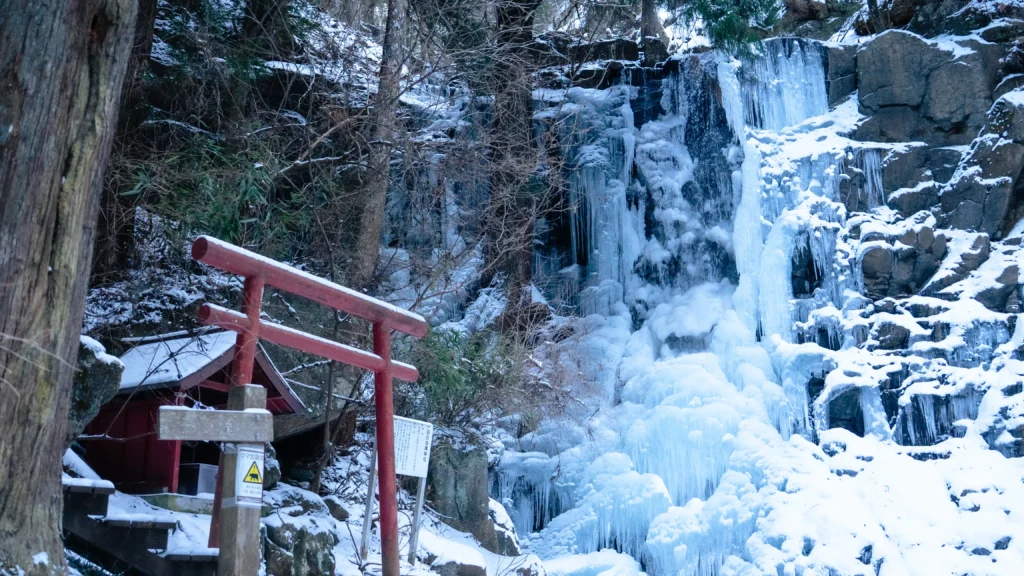
In the mountains north of Lake Kawaguchiko sits Haha no Shirataki (母の白滝), the Mother’s White Waterfall. It is worth a visit in any season, but in the coldest part of winter the 15-meter falls freeze over completely, and that is when most photographers come. It is also a sacred site tied to Mt. Fuji worship. For centuries, pilgrims washed themselves in its water before praying for a safe climb at the nearby Kawaguchi Asama Shrine. This page covers the waterfall, how to reach it, and what it looks like once it freezes.
Table of Contents
Part of the full Mt. Fuji travel guide.
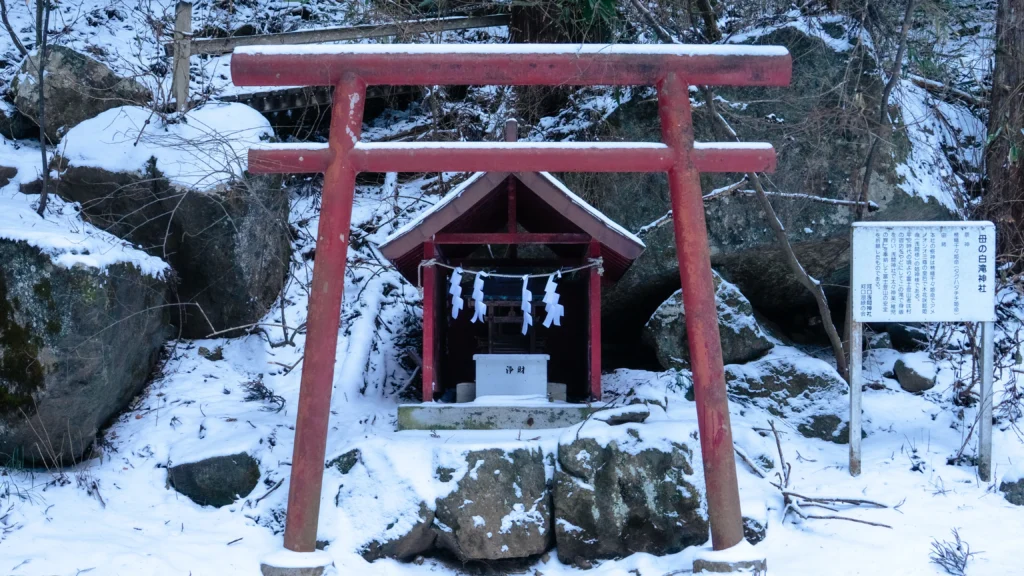
Earthquake damage, current as of 23 September 2026. The earthquake of 26 June 2026 damaged this waterfall and the trail around it. Kawaguchi Asama Shrine reported on 29 June that the small shrine at Haha no Shirataki was damaged by a collapse of the trail, that the one at Chichi no Shirataki could not be inspected because its approach had given way, and that the path above Haha no Shirataki is impassable. Yamanashi Prefecture has closed about 1.8 km of the Mitsutoge footpath from the waterfall upwards since 17:00 on 29 June 2026, until further notice. Stone lanterns on the shrine’s approach path are also at risk of falling and should not be approached. Check current conditions before setting out, and follow every closure sign on the ground. The Tenku no Torii viewpoint, lower down the same trail, is not named in any closure.
Quick Facts
| Feature | Details |
| Best Time to Visit | Late January to early February for the frozen waterfall |
| Time Needed | 30-60 minutes |
| Nearest Station | Kawaguchiko Station (then bus + walk) |
| Price | Free |
| Payment Methods | N/A |
| Crowd Level | Low |
| Accessibility | Requires a short walk on an unpaved path. The road to the site is narrow and steep. |
The Legend and History of the Waterfall
Haha no Shirataki is not just a waterfall; it’s a historical and spiritual landmark. The small shrine standing beside the falls, Haha no Shirataki Shrine, is an auxiliary shrine of the ancient Kawaguchi Asama Shrine, which was founded over 1,200 years ago to appease the fire goddess of Mt. Fuji, Konohanasakuya-hime .
In olden days, pilgrims purified themselves in this waterfall before climbing Mt. Fuji.
This act of purification, known as misogi (禊), was an essential ritual for those undertaking the arduous journey to the summit. The waterfall served as a natural ablution site, cleansing the body and spirit before approaching the sacred mountain. This deep connection makes Haha no Shirataki a true “power spot” (pawā supotto), a place believed to be filled with spiritual energy.
The Main Attraction: The Frozen Waterfall in Winter
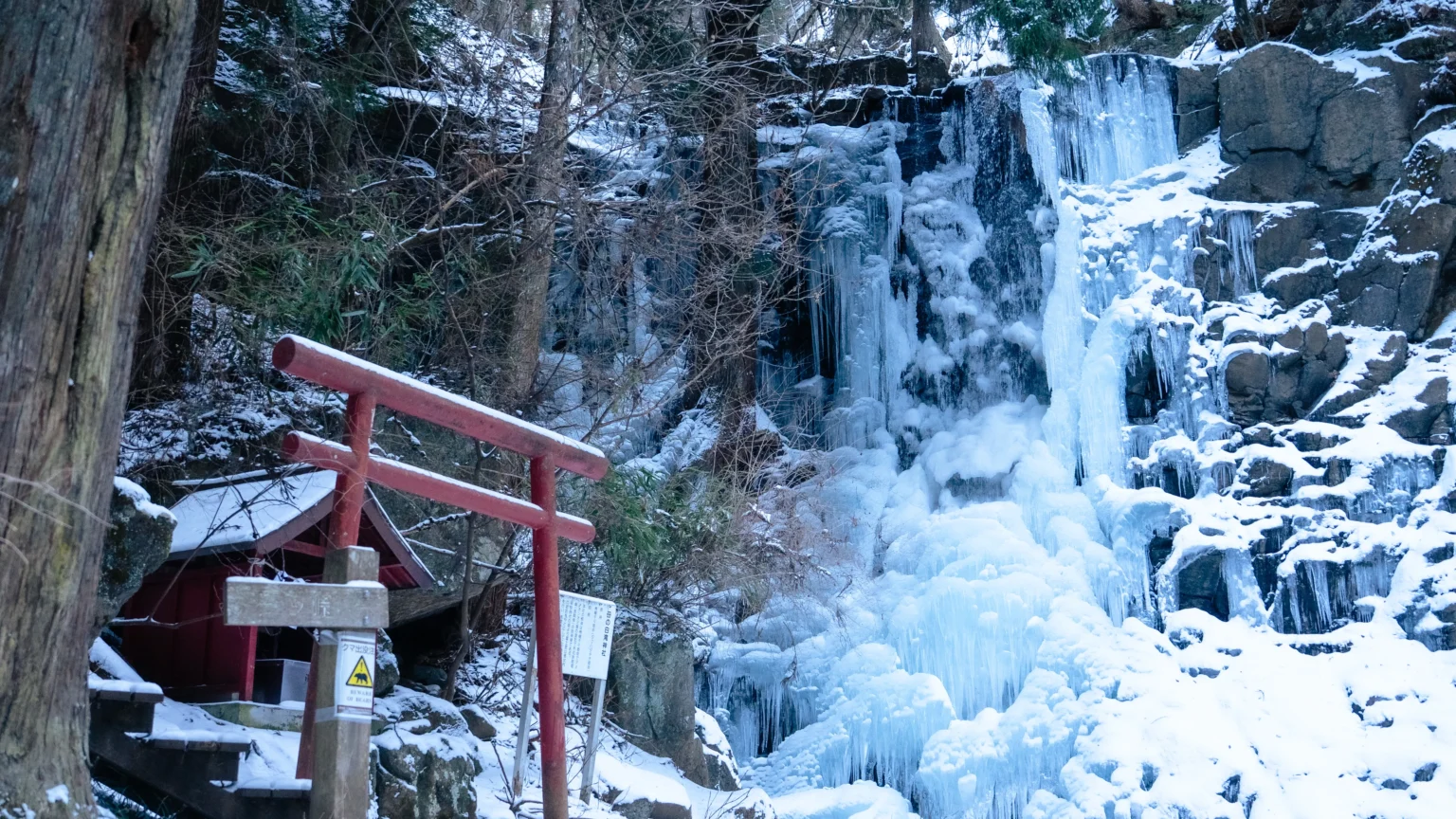
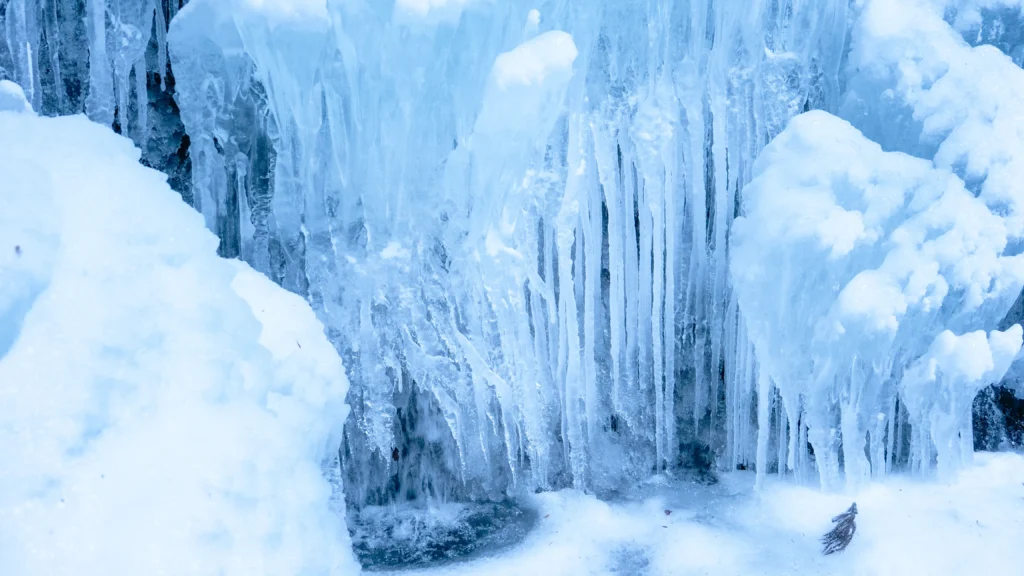
While beautiful in every season—with fresh green in spring, cool mists in summer, and vibrant foliage in autumn—the waterfall’s most dramatic form appears in winter. From late January to early February, when temperatures in Fujikawaguchiko can plummet to -10°C (14°F) or lower, the entire cascade freezes solid .
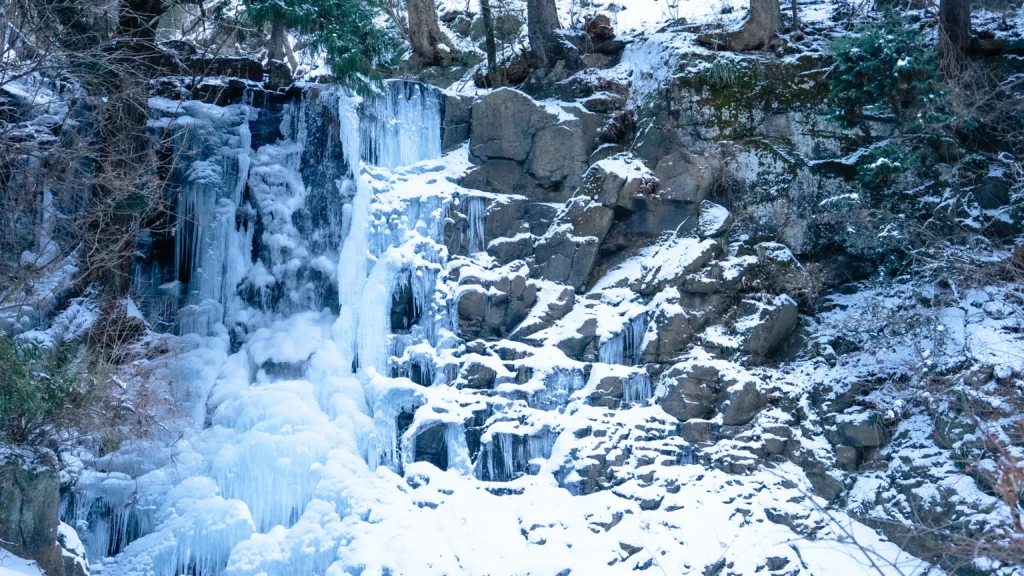
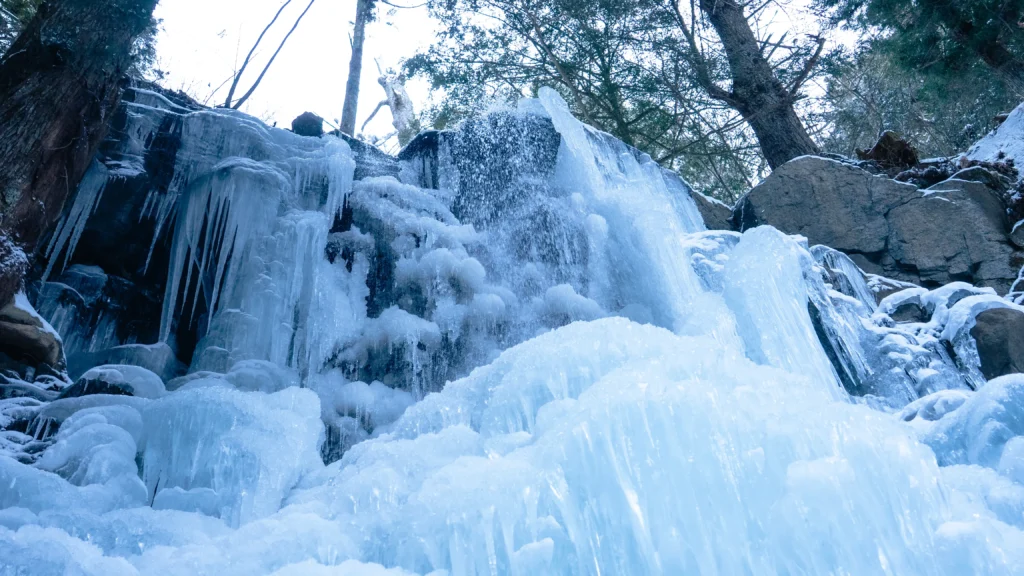
The flowing stream turns into a wall of ice, with thick icicles and frozen cascades hanging off the rock. The sound of running water is gone, and the only thing you hear is snow crunching underfoot. Even the roots of the big trees near the falls end up coated in thick, blue-tinged ice.
How to Get to Haha no Shirataki
Getting here takes a bit of effort, which is part of why it stays quiet.
By Public Transport:
From Kawaguchiko Station, take the Kofu-bound Fujikyu bus from stop 5 — about 10 minutes, ¥350 — and get off at the “Kawaguchi Kyoku-mae” (河口局前) bus stop. From there it is a few minutes on foot to Kawaguchi Asama Shrine, then roughly 40 minutes uphill to the waterfall, passing the Tenku no Torii on the way.
By Car:
The waterfall is about a 20-30 minute drive from the Kawaguchiko IC on the Chuo Expressway. If you’re not already driving, renting a car makes a spot this remote far easier, and a base around Kawaguchiko keeps you close. There is a small, free parking lot for about 5-10 cars.
Important Note: The road leading from Kawaguchi Asama Shrine to the waterfall is very narrow, steep, and has sharp curves, making it difficult for two cars to pass. Drive with extreme caution. In winter, studless (snow) tires are absolutely essential.
From the parking lot, it is a 5-minute walk along a gravel path to the waterfall.
What to See Nearby
•Chichi no Shirataki (Father’s White Waterfall):
A short climb up the stairs from Haha no Shirataki leads you to this smaller, 5-meter waterfall. The path continues on to become the Mitsutoge mountain hiking trail.
•Kawaguchi Asama Shrine:
The parent shrine of Haha no Shirataki, and worth the short stop. It is one of the constituent assets of the Mt. Fuji UNESCO World Heritage site and has a history spanning over a millennium.
•Tenku no Torii (Torii in the Sky):
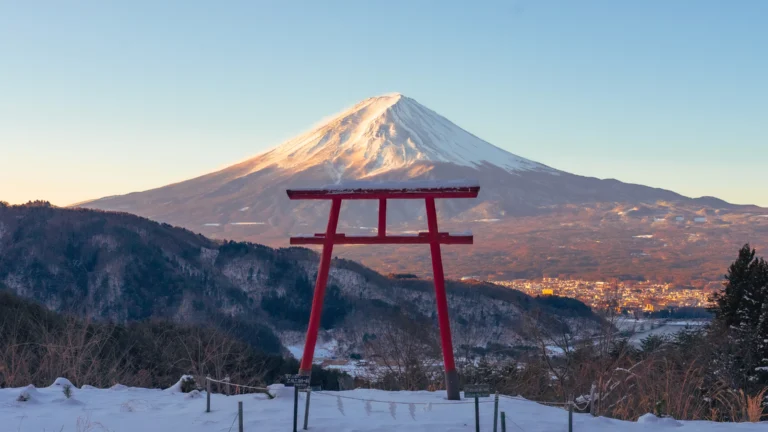
About a minute’s drive from the shrine. It is a well-known viewpoint where Mt. Fuji sits framed by a large red torii gate.
Practical Tips for Your Visit
•Wear appropriate footwear:
The path is unpaved and can be slippery, especially in winter. Sturdy, waterproof, non-slip boots are highly recommended.
•Dress warmly:
Located at an altitude of about 1,000 meters, it is significantly colder than the town center. In winter, wear a heavy down jacket, thermal layers, a hat, and gloves.
•Be cautious of bears:
A sign near the shrine warns of bears. While encounters are rare, it’s wise to be aware of your surroundings.
•Respect the site:
This is a sacred place. Do not climb on the rocks or disturb the shrine.
Frequently Asked Questions
Is the waterfall always frozen in winter?
It depends on the temperature. The waterfall typically freezes from late January to early February when temperatures consistently stay well below freezing. However, it’s best to check recent local reports or social media before visiting.
Is it difficult to get to?
The final approach road is challenging to drive. If you are not confident driving on narrow, steep, and potentially icy mountain roads, taking a taxi or walking from the bus stop might be a better option.
Can I see Mt. Fuji from the waterfall?
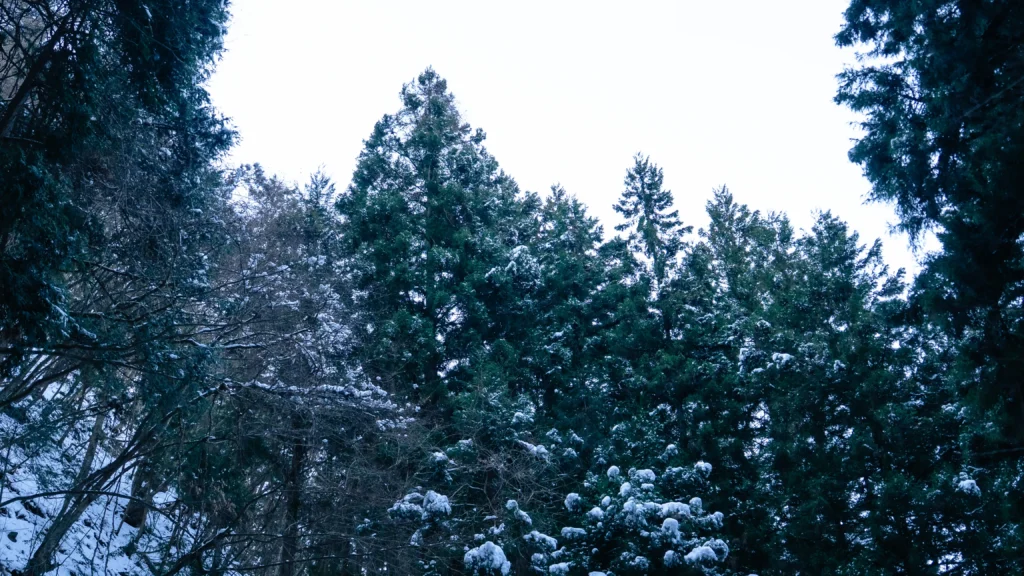
No, the waterfall is located in a forested ravine. However, you can get excellent views of Mt. Fuji and Lake Kawaguchiko from the area near the parking lot.
Join travelers discovering Japan's hidden side
Weekly dispatches from off-the-beaten-path Japan — spots and stories you won't find in guidebooks.
No spam. Unsubscribe anytime.
Welcome aboard!
You're in. See you in your inbox soon.