
Mt Fuji · Culture
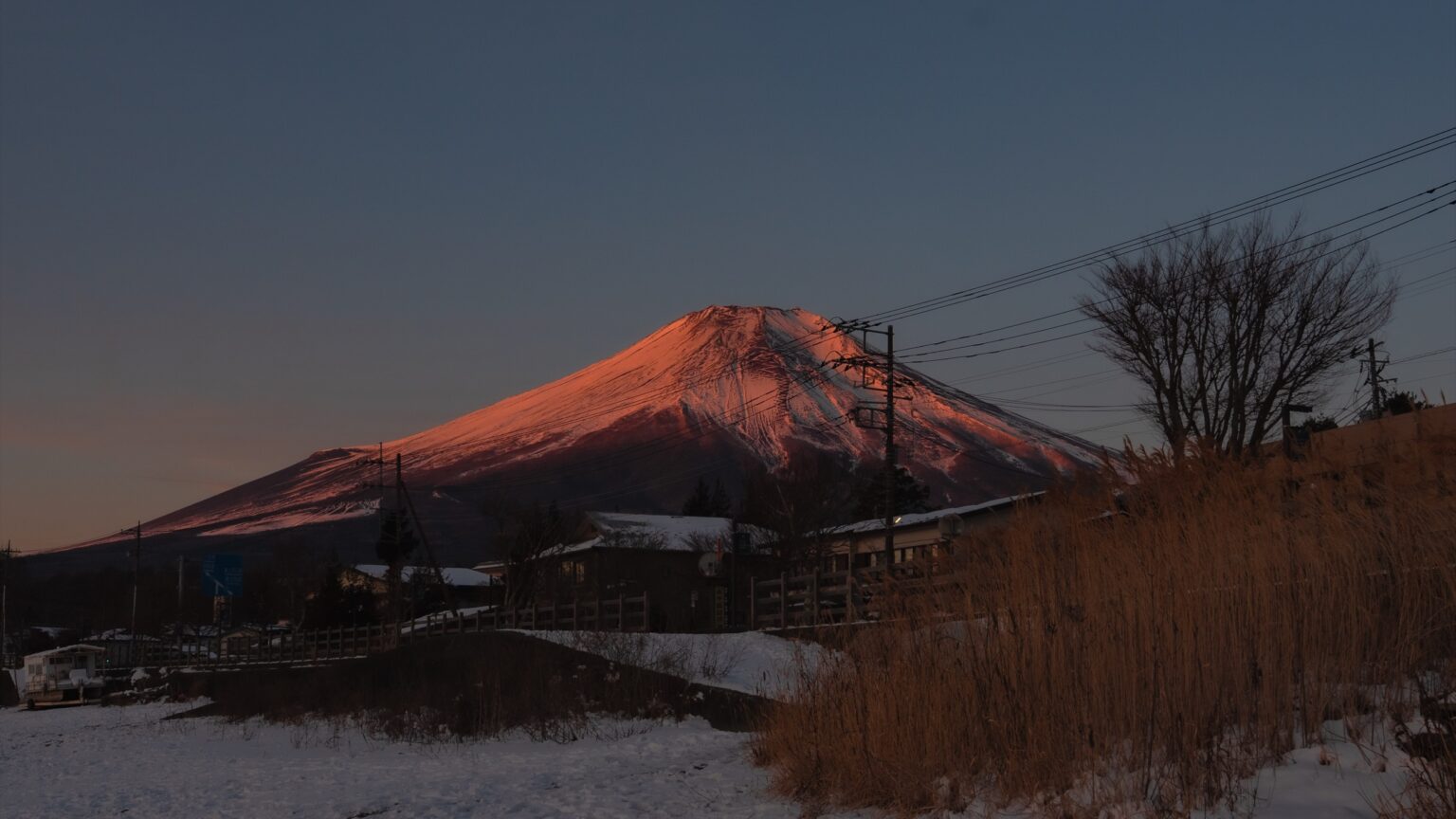
Mount Fuji was inscribed on the UNESCO World Heritage List on 22 June 2013 — not as a natural wonder, but as a cultural site. The official name is “Fujisan, sacred place and source of artistic inspiration,” and the listing covers 25 component parts spread across Yamanashi and Shizuoka prefectures: shrines, pilgrim trails, lakes, springs, lava tree molds, a waterfall, two pilgrim lodging houses, the Fuji-kō remains at Hitoana (a sacred lava cave and more than 200 pilgrim monuments), and a pine grove 45 km from the summit. I live in Fujiyoshida, at the mountain’s northern foot, and this is the story of why one of the world’s most photographed mountains is, on paper, a work of culture.
Why is Mt Fuji a cultural World Heritage Site, not a natural one?
Because what UNESCO recognised was never the rock — it was the relationship. Fujisan is listed under two cultural criteria: as testimony to a living tradition of mountain worship (criterion iii), and for its outsized influence on art and literature (criterion vi). Geologically, Fuji isn’t unusual enough on its own to carry an inscription; conical stratovolcanoes exist all over the Pacific rim. UNESCO’s case rests on the human meanings attached to this one.
Japan did explore the natural route first. In the 1990s a domestic campaign pushed for Fuji to become a natural-heritage candidate, but it never reached a formal nomination: in Japan’s own 2003 screening of potential natural sites, Fuji was passed over, with doubts about whether it offered outstanding natural value in world terms — and the mountain’s then-notorious litter problem didn’t help the case. The turning point came in 2005, when a national council formed to pursue cultural listing instead — reframing the question from “is this mountain rare?” to “what has this mountain meant to people?” That question turned out to have a very good answer. The tentative-list entry followed in January 2007, the nomination in January 2012, and inscription in June 2013.
What does “sacred place and source of artistic inspiration” actually mean?
The official name is a two-part claim, and both parts are specific.
Sacred place
For centuries people worshipped Fuji from a distance — it erupted repeatedly, and you don’t climb an angry god. When the eruptions quieted, ascetics of Shugendō (a blend of mountain worship and Buddhism) began climbing it as practice. By the Edo period, ordinary townspeople were making the pilgrimage in organised groups called Fuji-kō, guided and housed by hereditary hosts called oshi. The shrine where the northern pilgrims set out, and the Fuji-kō money that rebuilt it, are covered in our Kitaguchi Hongū Fuji Sengen Shrine guide. The trails, shrines, lakes and springs they used are the component parts.
Source of artistic inspiration
Fuji appears in the Man’yōshū, Japan’s oldest poetry anthology, compiled in the 8th century. A thousand years later, Hokusai’s Thirty-six Views of Mount Fuji and Hiroshige’s Tōkaidō prints carried the mountain to Europe, where ukiyo-e reshaped how Van Gogh and Monet saw the world. UNESCO’s criterion (vi) is essentially about that chain of images. Hokusai titled five of his Fuji views after Kai, today’s Yamanashi, and this print-by-print guide matches them to places you can still visit.
What are the 25 component parts of Fujisan?
The property is a network, not a single boundary. Twenty-five sites across two prefectures were judged to carry the evidence of Fuji as a sacred and artistic mountain. The largest single component, the “Fujisan Mountain Area,” bundles nine elements of its own — the summit worship sites, four historic ascending routes, Kitaguchi Hongū Fuji Sengen Shrine, and lakes Saiko, Shōjiko and Motosuko — which is why you’ll sometimes see different counts in casual articles.
| Group | Component parts | Where |
|---|---|---|
| The mountain & its trails | Fujisan Mountain Area — summit worship sites, the Yoshida, Ōmiya-Murayama (now Fujinomiya), Suyama (now Gotemba) and Subashiri ascending routes, Kitaguchi Hongū Fuji Sengen Shrine, Lake Saiko, Lake Shōjiko, Lake Motosuko | Both prefectures |
| Shrines | Fujisan Hongū Sengen Taisha, Yamamiya Sengen, Murayama Sengen, Suyama Sengen, Fuji Sengen (Subashiri), Kawaguchi Asama, Fuji Omuro Sengen | Shizuoka / Yamanashi |
| Pilgrim lodgings | Oshi lodging houses: the former Togawa family house and the Osano family house | Fujiyoshida |
| Lakes & springs | Lake Yamanakako, Lake Kawaguchiko, and the eight Oshino Hakkai spring ponds (each counted as its own component) | Yamanashi |
| Volcanic & sacred sites | Funatsu and Yoshida lava tree molds, Hitoana Fuji-kō remains, Shiraito no Taki waterfall | Yamanashi / Shizuoka |
| The distant view | Mihonomatsubara pine grove, 45 km from the summit | Shizuoka |
Local note: the Fuji Five Lakes are not all listed the same way. Yamanakako and Kawaguchiko stand as their own components; Saiko, Shōjiko and Motosuko are elements inside the Fujisan Mountain Area. Nobody will quiz you on this at the lakeshore, but official documents keep the distinction.
Fuji as an object of worship: fear first, beauty later
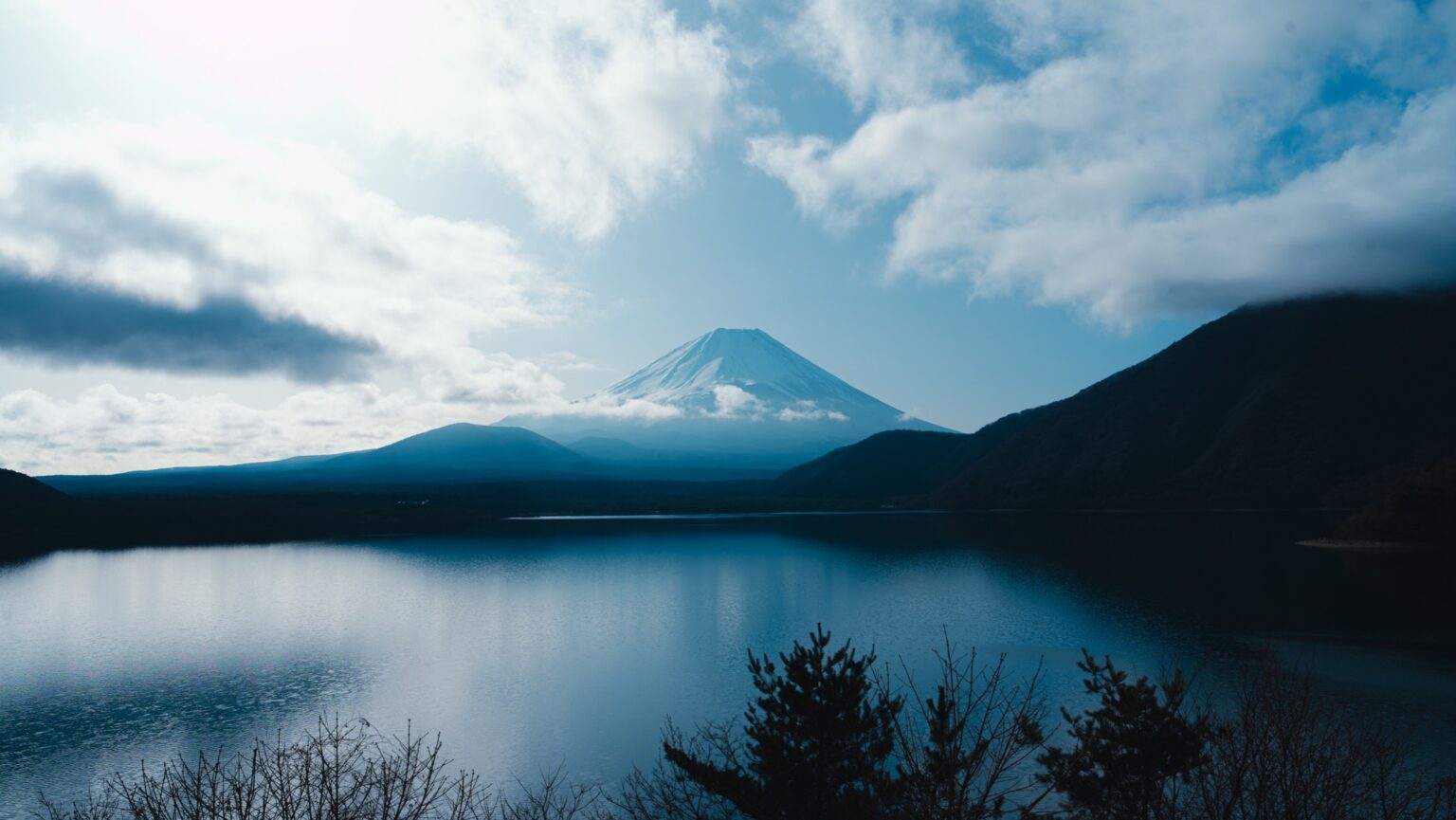
The oldest layer of Fuji faith is volcanic. The mountain erupted repeatedly through recorded history, and the Asama (or Sengen) deity was enshrined to pacify it — Sengen shrines at the foot of the mountain functioned as places to worship, and appease, the volcano from a safe distance. The summit was treated as the boundary of the sacred realm.
Pilgrimage didn’t wait for the volcano’s permission — ascetics had been climbing for centuries — but it was the Edo period, and especially the long quiet that followed the last eruption in 1707 (the Hōei eruption), that turned Fuji worship into genuinely popular culture. Fuji-kō confraternities — neighbourhood savings groups that pooled money to send members on the pilgrimage — grew so widespread in Edo (Tokyo) that the saying went there were as many Fuji-kō as there were neighbourhoods. Members who couldn’t travel climbed fujizuka, miniature Fuji mounds built in city shrines, some of which you can still climb in Tokyo today.
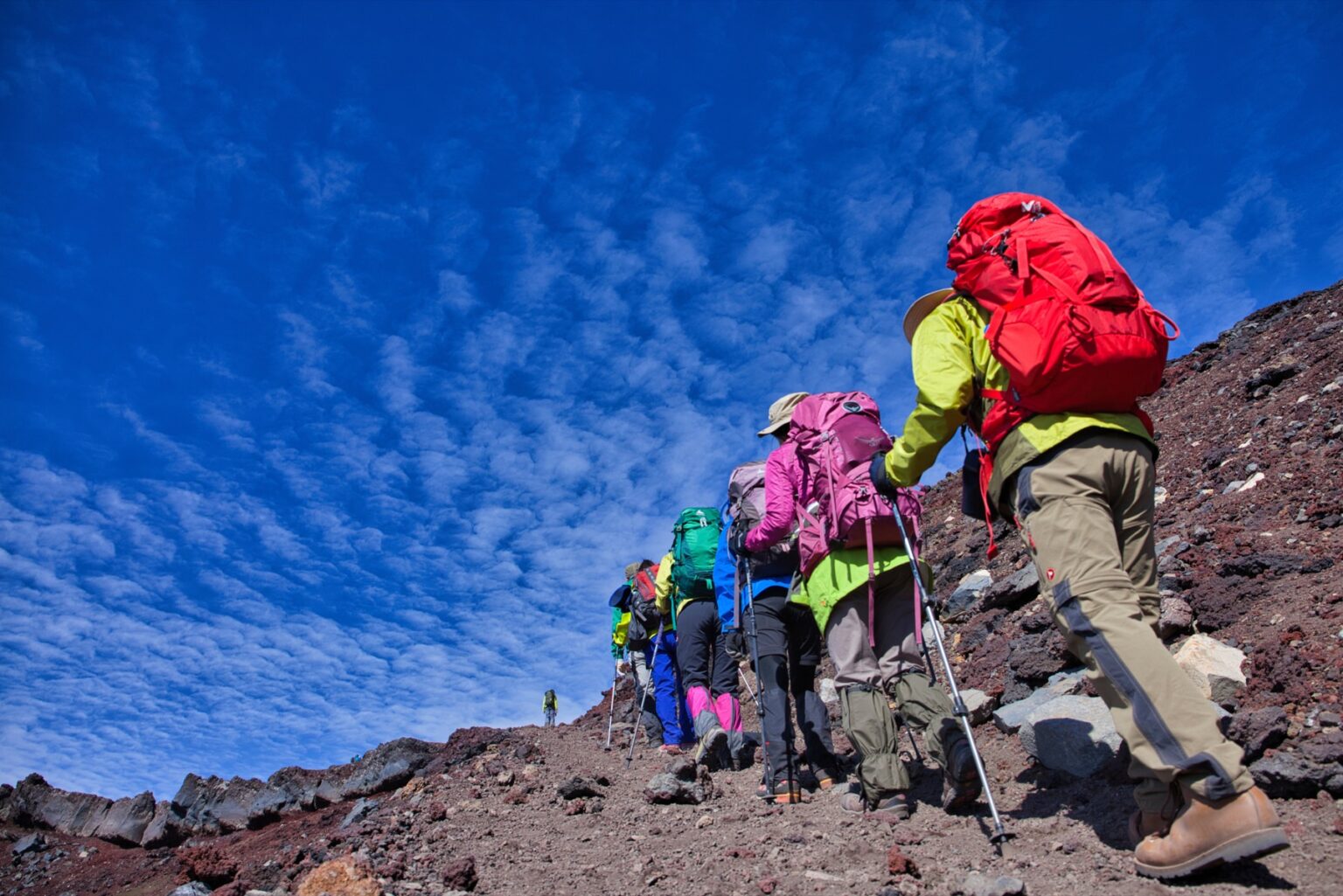
That pilgrimage never really stopped; it changed clothes. The Environment Ministry’s eighth-station counters recorded about 240,000 climbers in the 2026 season (about 205,000 in 2025), on the same four historic routes. If you’re planning to join them, the practical side lives in my Climbing Mt Fuji 2026 guide and the step-by-step permit reservation walkthrough — the ¥4,000 climbing fee and the Yoshida Trail’s daily cap are, in a sense, the newest chapter of managing a sacred mountain.
Worship from afar: why seeing Fuji was itself a religious act
Long before climbing became common, people prayed to Fuji from a distance — yōhai, worship from afar. The purest surviving example is Yamamiya Sengen Shrine in Fujinomiya, one of the 25 components: it has no main hall at all, only a stone-bordered worship space aligned directly at the mountain. The shrine building was never the point; the mountain was the object of worship.
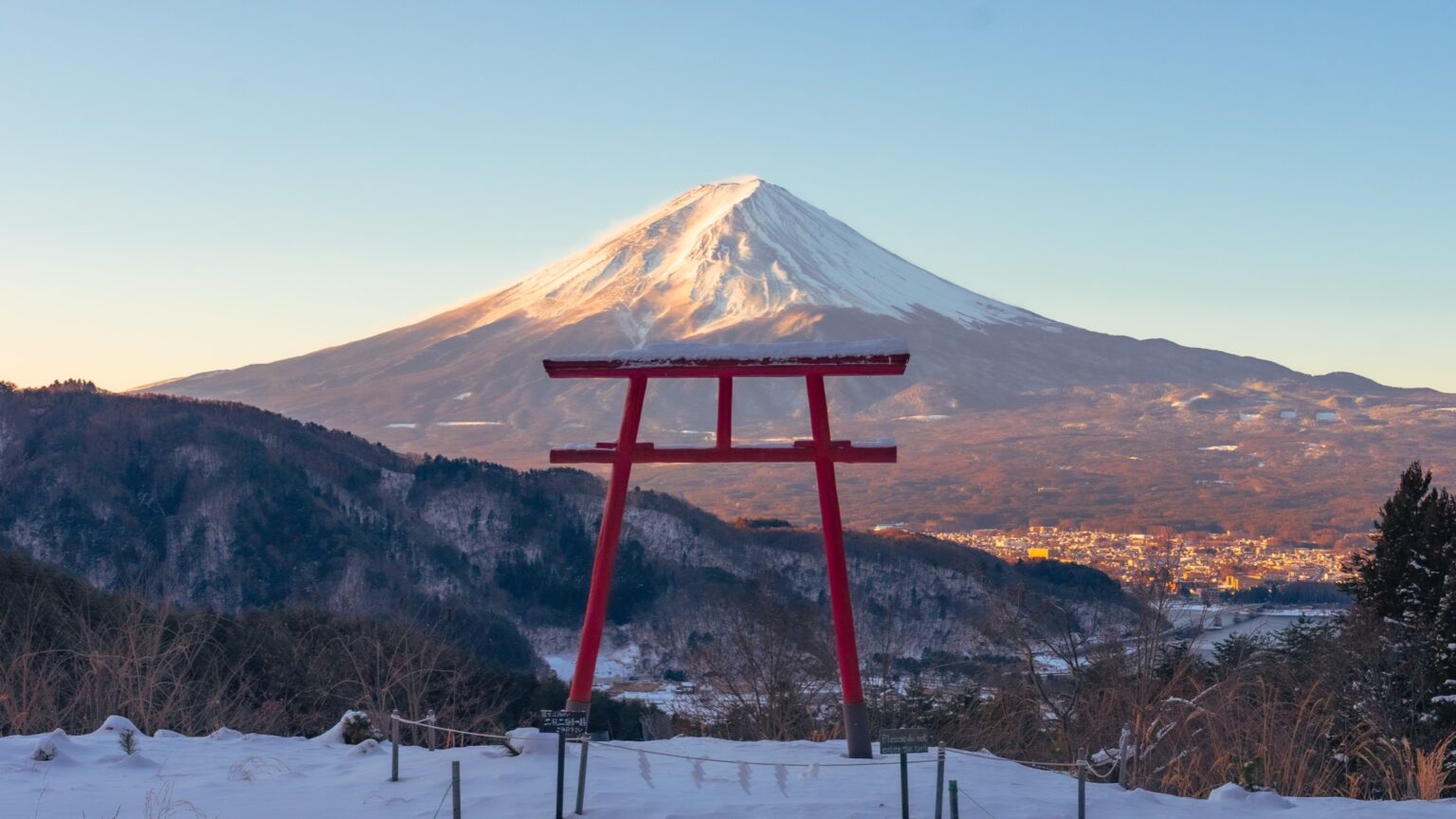
That instinct survives in odd, modern forms. The much-photographed “sky torii” above Kawaguchiko (pictured at the top of this article) was set up in 2019 on the path above Kawaguchi Asama Shrine as a contemporary worship point, privately run and separate from the shrine — it is not itself a World Heritage component, but stand there on a clear morning and you understand yōhai faster than any museum panel can explain it. The same goes for every commuter in Fujiyoshida who glances up the main street at the mountain before starting the day. I do it too.
Sacred water: the springs, lakes and waterfall
Meltwater from Fuji filters through volcanic rock for decades before surfacing at the mountain’s foot, and pilgrims treated that water as the mountain’s blessing in liquid form. The eight spring ponds of Oshino Hakkai were a circuit of ritual purification for climbers preparing to ascend; Shiraito no Taki in Fujinomiya — a 150-metre-wide curtain of spring water — was a site of ascetic water practice tied to the Fuji-kō founder Hasegawa Kakugyō; and the lakes ringing the north side served as places of ritual bathing and circuit pilgrimage.
How Fuji became a global art icon
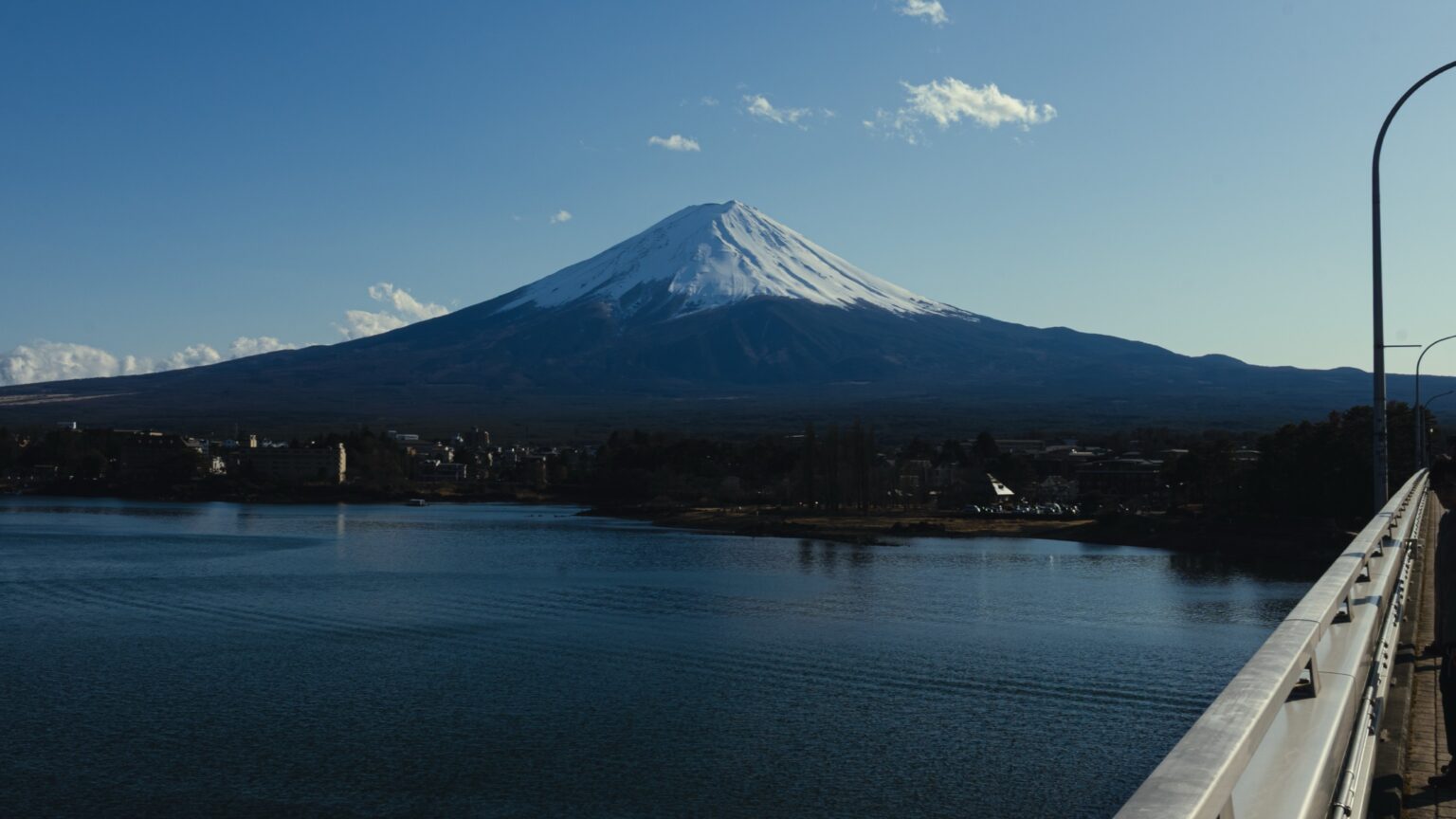
The art half of the inscription is a chain that runs roughly: 8th-century poems → medieval pilgrimage mandalas (painted maps of the route from sea to summit, used by oshi to recruit pilgrims) → Edo woodblock prints → European modernism. Hokusai’s Thirty-six Views of Mount Fuji (c. 1830–32) is the hinge. When Japan opened to trade, those prints flooded into Europe and set off Japonisme: Van Gogh copied ukiyo-e directly, and Monet hung his large collection of Japanese prints through the rooms of his house at Giverny.
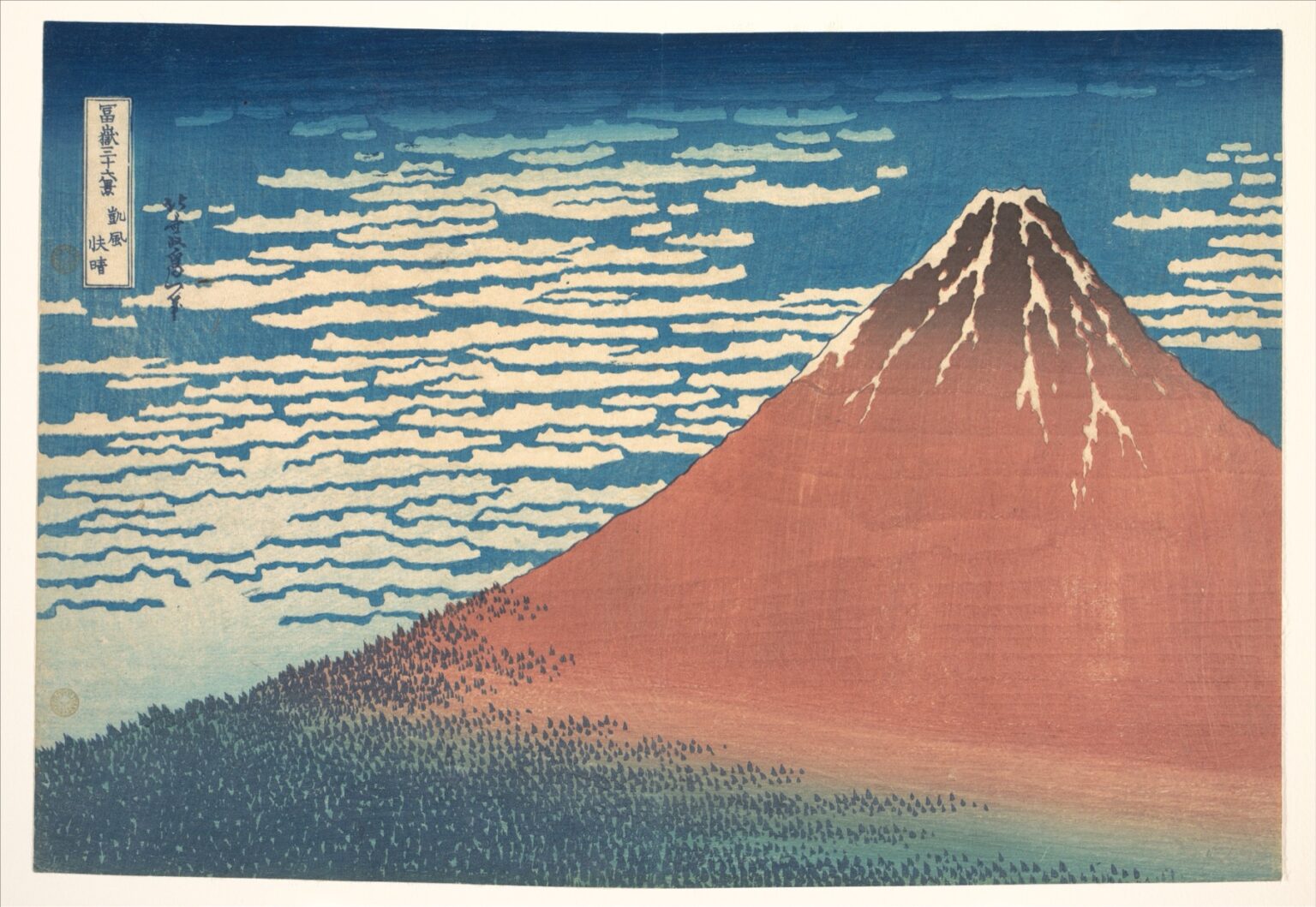
The imagery never left Japanese daily life either. The back of the current ¥1,000 note carries Hokusai’s Great Wave with Fuji behind it, and the note it replaced carried a Fuji design based on a photograph taken at Lake Motosuko. You have almost certainly handled the World Heritage property’s artistic legacy as pocket change.
Why is Mihonomatsubara included when it’s 45 km away?
Short answer: because the view is the heritage. The pine grove on Suruga Bay is where the Hagoromo legend — an angel’s feathered robe hung on a pine — is set, and the composition of black pines, sea and distant Fuji became one of the canonical images of the mountain in painting and poetry.
Its inclusion was genuinely contested. In April 2013, ICOMOS — UNESCO’s advisory body — recommended inscribing Fujisan without Mihonomatsubara, reasoning it was too far from the mountain. At the committee session in June, the World Heritage Committee overruled that advice and decided to include the pine grove. If you’ve ever stood there and watched Fuji float above the bay, the committee’s logic is easy to follow: cut the distant view, and you cut the “source of artistic inspiration” out of the inscription.
How I’d experience the cultural side from Fujiyoshida
Most visitors photograph Fuji and leave. The cultural layer is walkable in a day on the north side, and almost none of it is crowded.
Kitaguchi Hongū Fuji Sengen Shrine
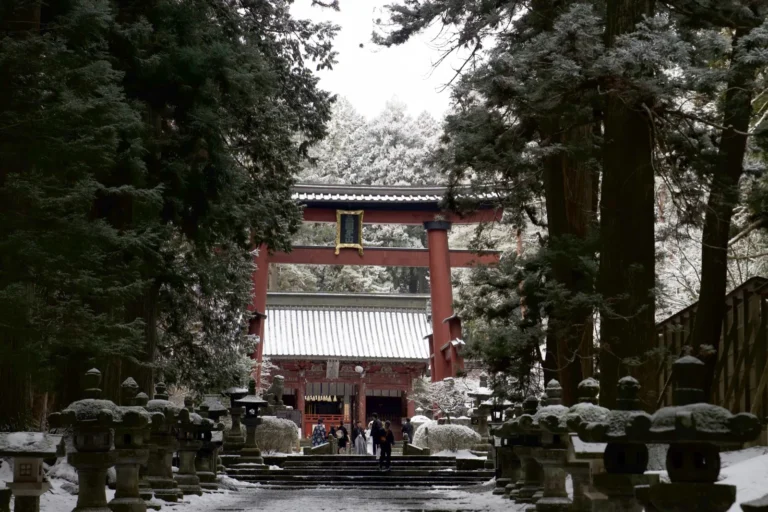
The great cedar-lined shrine where the Yoshida ascending route formally begins. Edo pilgrims passed its gate on foot from here to the summit; the climbing trail still starts behind the main hall. Every August 26–27 the shrine and its Suwa sessha stage the Yoshida Fire Festival, when the town below burns two kilometres of giant torches. Three weeks later, Shimoyoshida’s Omuro Sengen Shrine answers with its September yabusame, where hoofprints are read to divine the months of the god’s absence on the mountain.
The oshi town
Fujiyoshida’s Kamiyoshida district was once lined with oshi pilgrim lodgings. The former Togawa family house — one of the 25 components — is open to visitors, a long, narrow lodging with a shrine room where pilgrims purified themselves before the climb.
Kawaguchi Asama Shrine
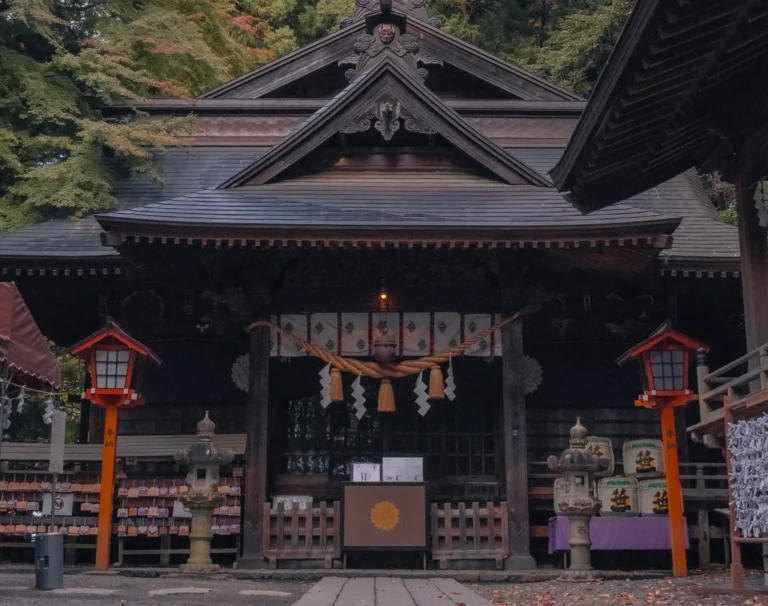
Founded after a 9th-century eruption, its avenue of giant cedars is one of the quietest places on the north shore. The walk up to the 2019 worship-point torii and the Haha-no-Shirataki waterfall — both outside the World Heritage listing — takes about 30 minutes.
Fujisan World Heritage Centres
Two interpretation centres — one in Fujikawaguchiko (Yamanashi), one in Fujinomiya (Shizuoka) — unpack the faith-and-art story through pilgrimage-mandala displays, historical materials and pilgrim gear. Good rainy-day anchors on either side of the mountain.
Getting here is simple: the highway bus from Shinjuku reaches Kawaguchiko in under two hours, and the classic viewpoints connect by local train and bus. My Mt Fuji hub maps the practical side — visibility odds by month, viewpoints, and every guide on this site.
Common misunderstandings, quickly corrected
“It’s a natural World Heritage Site”
No — cultural, under criteria (iii) and (vi). The natural bid of the 1990s was abandoned.
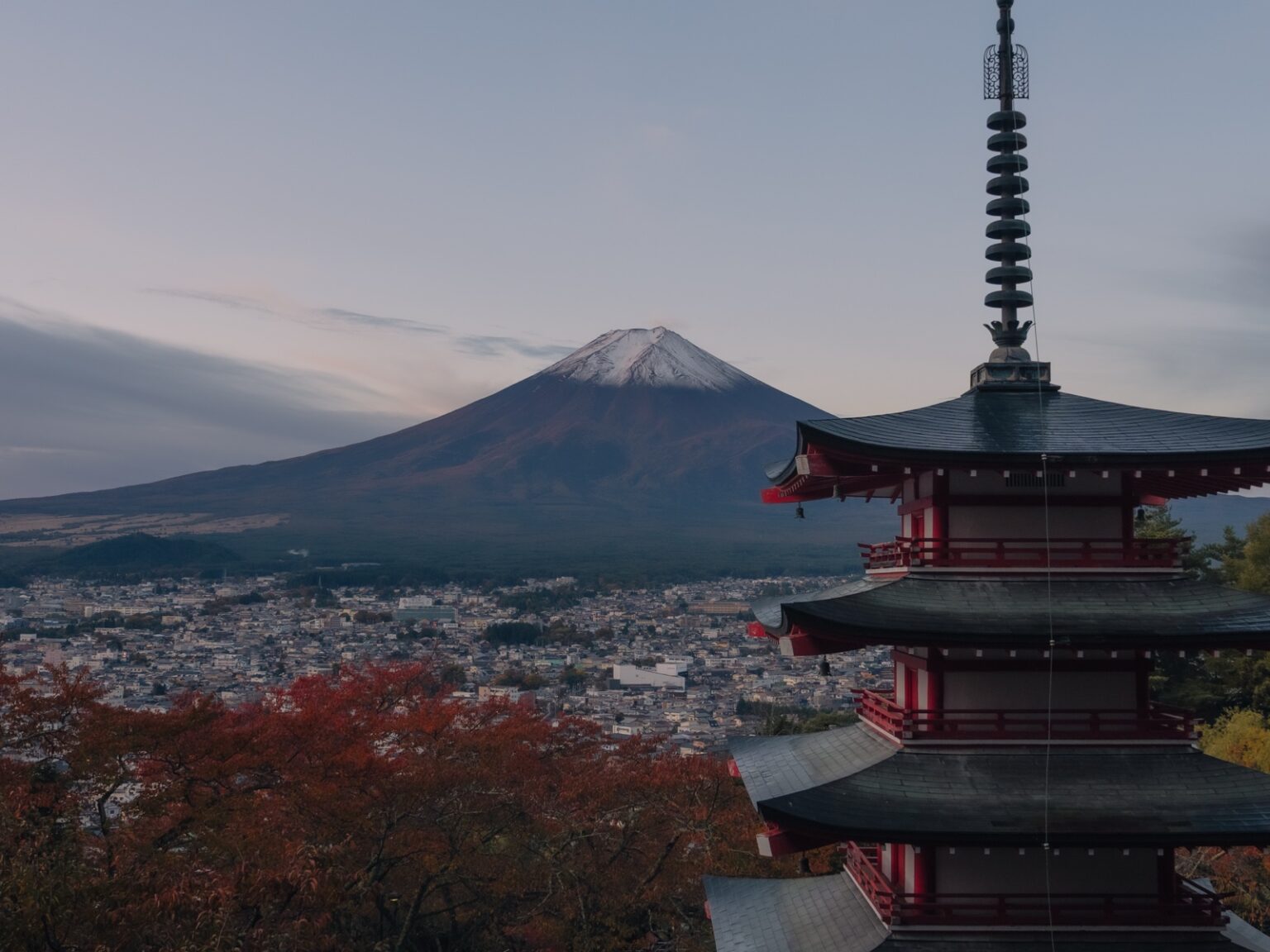
“The pagoda in all the photos is part of it”
The Chūreitō pagoda above Fujiyoshida is a 20th-century war memorial and not a component part — a spectacular viewpoint, not a heritage site.
“Only the mountain is listed”
The property is 25 sites, from summit shrines to a seaside pine grove 45 km away.
“Fuji-kō was a hiking club”
It was a religious confraternity — savings pool, faith community and travel agency in one, guided by hereditary oshi hosts.
Mt Fuji World Heritage FAQ
When did Mt Fuji become a World Heritage Site?
On 22 June 2013, at the 37th session of the World Heritage Committee in Phnom Penh. The official listed name is “Fujisan, sacred place and source of artistic inspiration.”
Why is Mt Fuji a cultural site and not a natural one?
The inscription recognises Fuji’s role in religious tradition and art (criteria iii and vi), not its geology. Japan never advanced a formal natural-heritage nomination: a 1990s campaign stalled, and in the 2003 domestic screening of natural candidates Fuji was passed over, with doubts about its natural value in world terms and concerns about litter at the time. Japan pursued cultural listing instead — successfully.
How many component parts does the World Heritage property have?
Twenty-five, across Yamanashi and Shizuoka: the Fujisan Mountain Area (which itself contains the summit worship sites, four ascending routes, one shrine and three lakes), seven more shrines, two oshi lodging houses, lakes Yamanakako and Kawaguchiko, the eight Oshino Hakkai spring ponds counted individually, two lava tree mold sites, the Hitoana Fuji-kō remains, Shiraito no Taki waterfall, and the Mihonomatsubara pine grove.
Is the Chureito Pagoda part of the World Heritage Site?
No. The five-storied pagoda at Arakurayama Sengen Park is a war memorial completed in the 20th century. It is one of the best viewpoints of Fuji, but it is not among the 25 component parts.
Why is Miho no Matsubara part of the listing when it’s 45 km from the mountain?
Because it represents Fuji as seen — the pine-grove-and-sea composition that shaped centuries of painting and poetry, plus the Hagoromo legend. ICOMOS recommended excluding it in 2013; the World Heritage Committee overruled that advice and included it.
Can I visit the component sites without climbing Mt Fuji?
Yes, and for most of the year you have to — the climbing season is only early July to early September. The shrines, Oshino Hakkai, the lakes and the former Togawa oshi house can be visited year-round, and the two World Heritage Centres (not components themselves, but the best interpretation stops) are open most days. Winter offers the clearest views of the mountain itself.
Do I need a permit to visit the World Heritage sites around Mt Fuji?
Not for most of them. In 2026 every trail charged a ¥4,000 climbing fee in season, and the Yoshida Trail capped climbers without a hut booking at 4,000 a day (advance booking was recommended, but same-day entry was possible). Most shrines, lakes and springs need no reservation, but a few components have rules of their own: entering the Hitoana cave needs a guided visit booked by phone in advance (weekends and holidays only, and not from November to February); the Yoshida lava tree molds open to the public only on 29 April; the Osano family house is a private home that is not open (a replica stands at the Fujisan Museum); and the former Togawa oshi house charges ¥100.
Are all Fuji Five Lakes World Heritage components in the same way?
No. Lake Yamanakako and Lake Kawaguchiko are separate component parts, while Lake Saiko, Lake Shōjiko and Lake Motosuko are protected as elements within the Fujisan Mountain Area component. All five are equally real lakes; only the paperwork differs.
Planning a Fuji trip around the culture?
Base yourself at Kawaguchiko for the northern components — lakeside hotels here put Lake Kawaguchiko on your doorstep and the Fujiyoshida shrine and oshi town a short train or bus ride away; the western lakes take longer by bus. Day-tripping from Tokyo instead? Fuji day tours cover Oshino Hakkai and the lakes without the bus-timetable homework, and an eSIM saves you hunting for Wi-Fi at rural shrines. (Some links above are affiliate links, at no extra cost to you.)
Join travelers discovering Japan's hidden side
Weekly dispatches from off-the-beaten-path Japan — spots and stories you won't find in guidebooks.
No spam. Unsubscribe anytime.
Welcome aboard!
You're in. See you in your inbox soon.