
Fujiyoshida · Festivals · Textiles · October 2026
On Sunday 18 October 2026, the second and last day of Fujiyoshida’s Hataori-Machi Festival, stalls of tufted mats, clothes and tableware were set up along the old shopping streets around Gekkoji in Shimoyoshida, and Mt Fuji was out. I spent the afternoon going round the stalls and shops, with a South Indian lunch along the way.
I’m Nobu. I live in Yamanakako village, and I went to the festival on its Sunday, driving to the area near Shimoyoshida Station. This is a record of one Sunday afternoon at its weaving festival: where I went, what was on the tables, where I ate, and what a visitor from abroad should know before going. It covers the 2026 festival only, from my own visit and photos, plus what the official 2026 page says.
What the Hataori-Machi Festival is
Hataori (機織り) means weaving on a loom, and machi means town. Fujiyoshida and the neighbouring town of Nishikatsura call their weaving district the “Hataori-Machi”, and Yamanashi Prefecture describes the area as a textile region that has worked as an industry for more than 1,000 years.
The weaving here goes back a long way. Yamanashi Prefecture’s kaiki silk museum points to the Engishiki, enforced in 967, as the oldest written record of Kai Province as a cloth-producing area, though the cloth of that time is thought to have been hemp rather than silk. Kaiki silk developed in the Edo period and peaked in the Meiji era, and the prefecture says today’s Gunnai textiles go into clothing and lining fabrics, interiors and necktie cloth, as well as umbrellas, stoles and bags. The 2026 festival’s own fabric exhibition summed up the local technique as yarn-dyed, fine-count and high-density weaving, in many varieties and small lots.
The festival itself is much younger. Fujiyoshida City says it began in fiscal 2016 to bring textiles and tourism together and draw people into the town centre. The 2026 page lists the city and the Hataori-Machi Festival committee as organisers and calls 2026 the eleventh year. It was spread over 17 areas, the most so far according to the organisers, with a paper pamphlet and a Google Map to find them.
If you want to spend a weekend in the area, compare places to stay by Lake Kawaguchi on Booking.com and check transport to Fujiyoshida.
In 2026 it ran over two days with different closing times, and Fujiyoshida City closed several streets to traffic:
| Day (2026) | Hours | Listed on the official page |
|---|---|---|
| Saturday 17 October | 10:00–17:00 | Festival day one |
| Sunday 18 October | 10:00–16:00 | Festival day two |
Traffic and parking in 2026, from Fujiyoshida City and the organisers:
| What | When | Details |
|---|---|---|
| Honcho-dori and Gekkoji Daimon street | 18 Oct, 9:30–16:30 | Pedestrian zone (city notice) |
| Nenokami-dori | 17 Oct 9:30–17:30; 18 Oct 9:30–16:30 | Pedestrian zone (city notice) |
| Festival car park | Both days | Shimoyoshida Daini Elementary School ground, with a free shuttle bus |
My Sunday afternoon on the streets
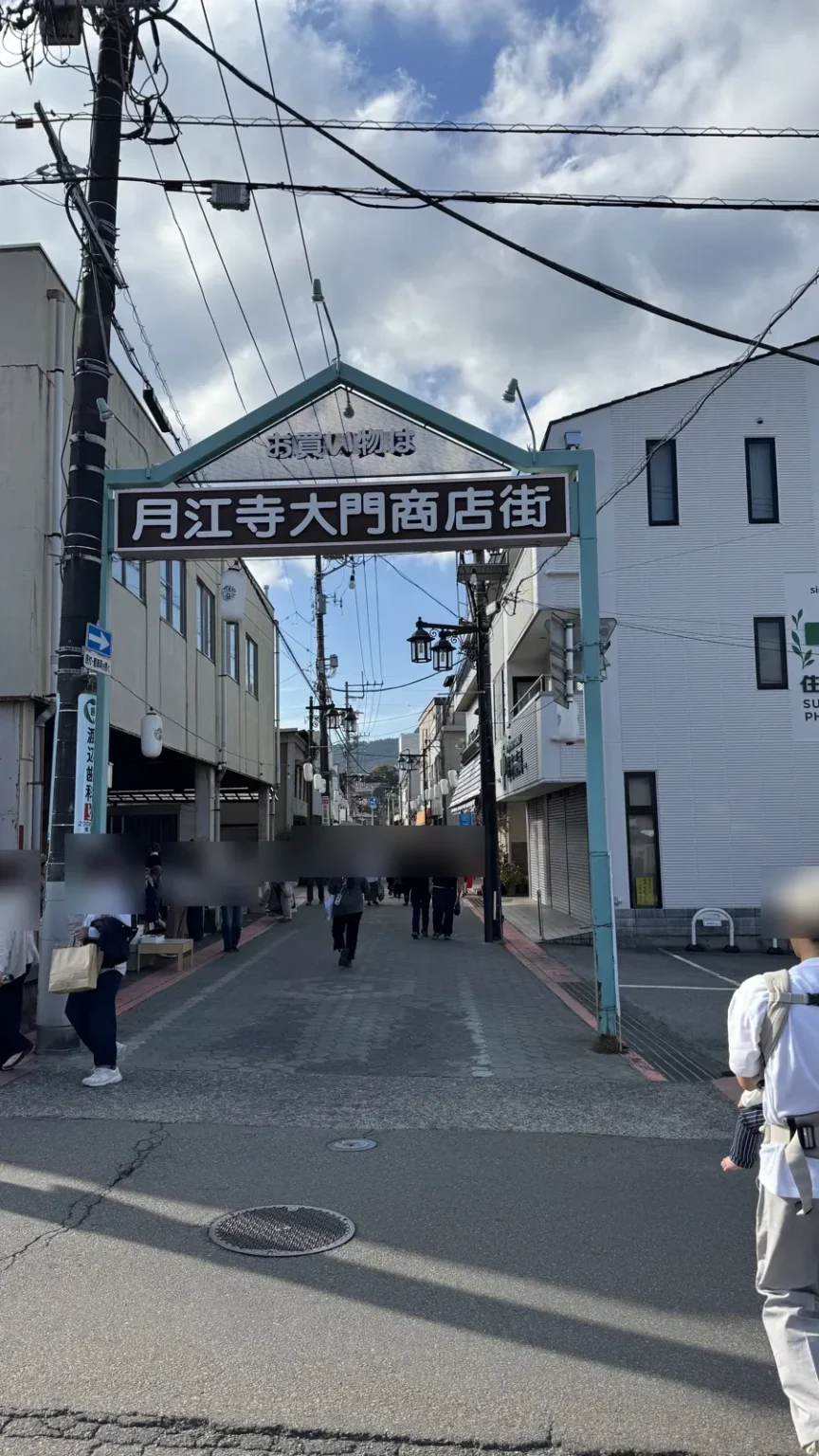
I went round Gekkoji (月江寺) and the retro shopping streets near it. All my photos here were taken on my iPhone within a few minutes’ walk of each other, between about 1:30 and 3:00 p.m.
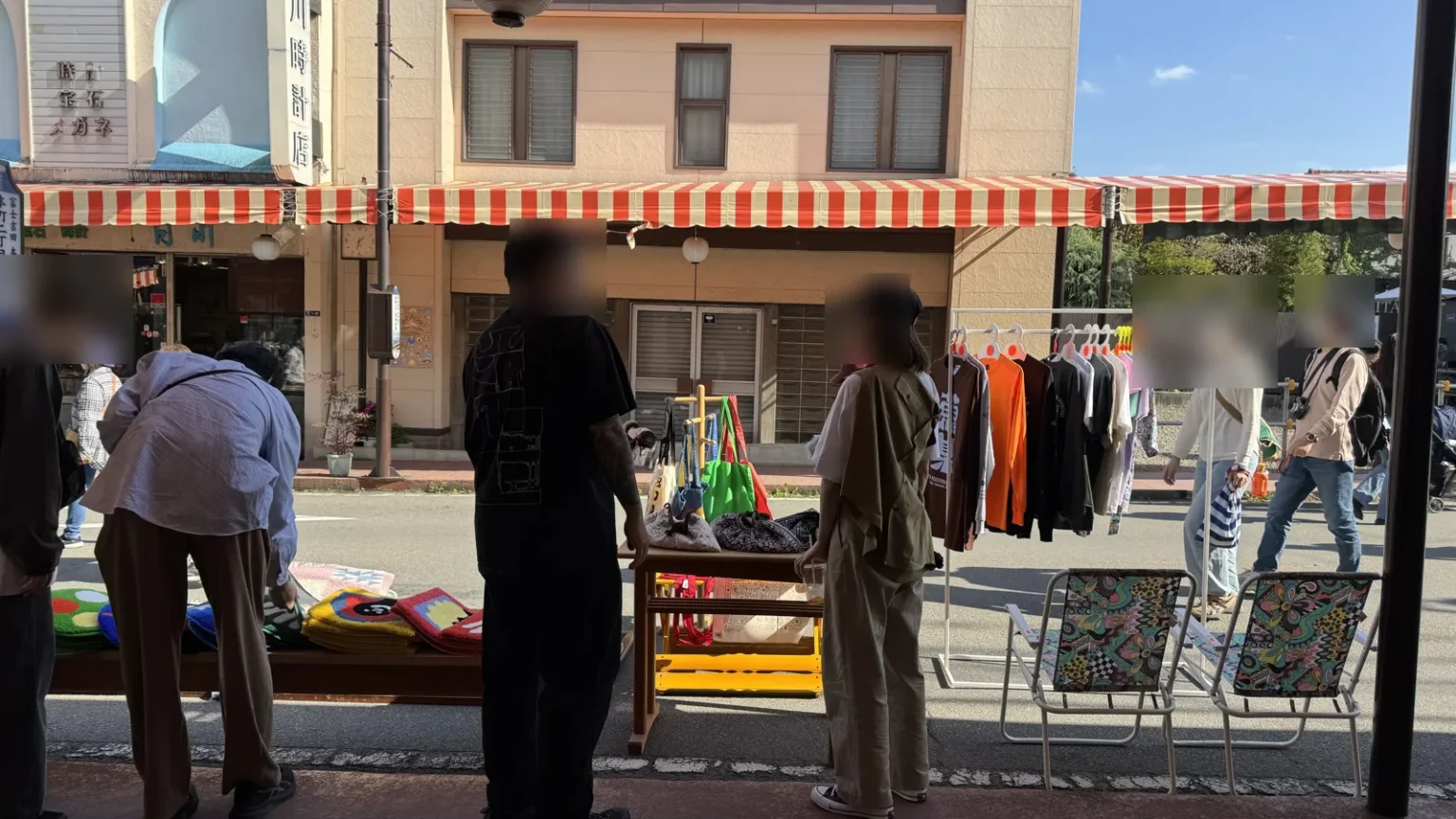
The stalls stood on the road in front of older shopfronts with red-and-white striped awnings. Some had folding tables, some had racks of clothes, and one had a pair of patterned folding chairs set out beside it.
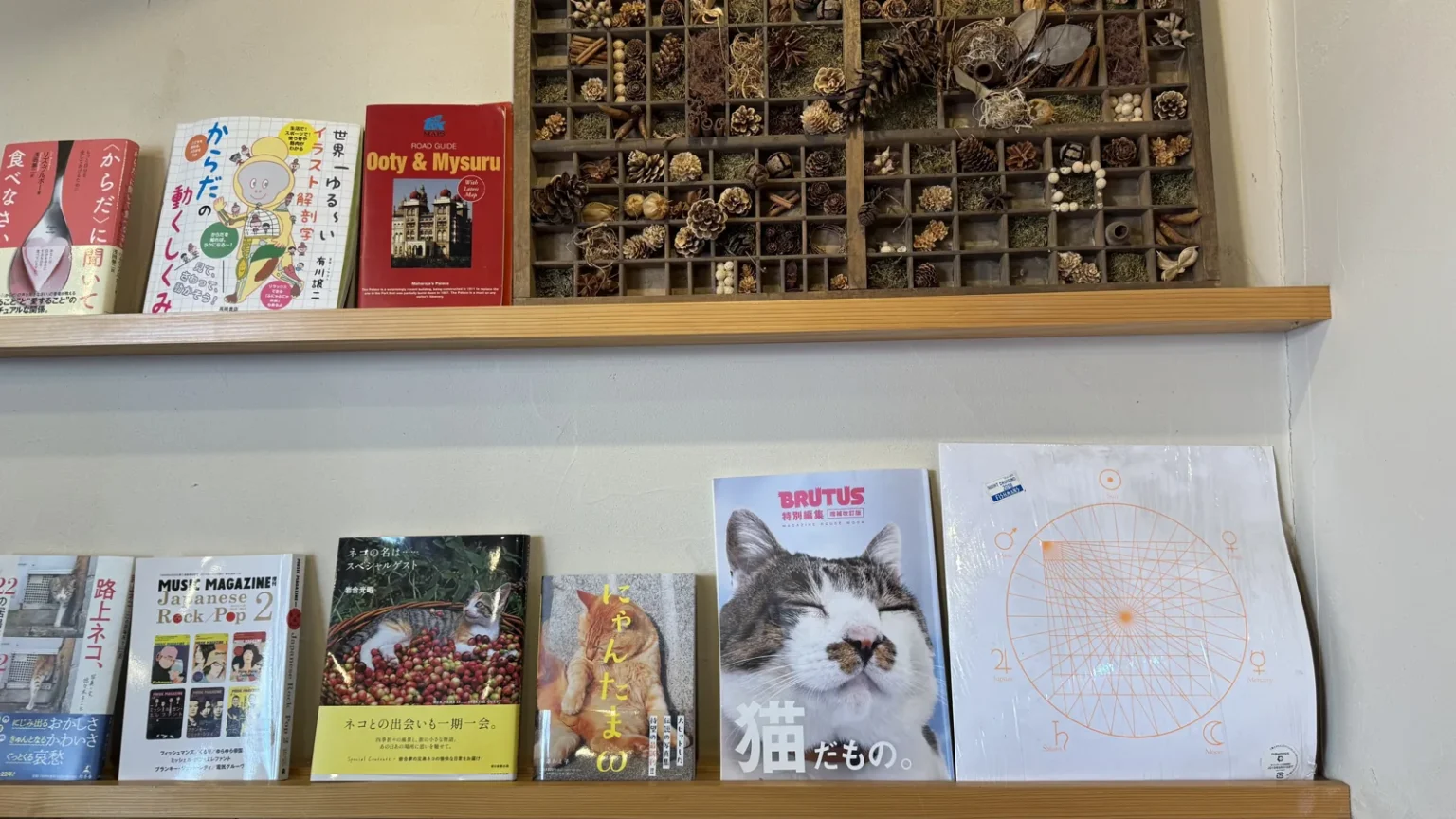
By the timestamps on my iPhone photos, the afternoon went like this:
| Time (photo timestamp) | Where I was |
|---|---|
| About 1:28 p.m. | A daruma and folk-toy display in a shop, then a street stall with tufted mats, clothes and tote bags |
| About 1:43 p.m. | Lunch at Kariamudhu, a South Indian restaurant |
| About 2:21 p.m. | Stalls in a car park, the Gekkoji Daimon street gate, the crowd at the Honcho 3-chome sign |
| About 2:58 p.m. | A tableware stall on the street |
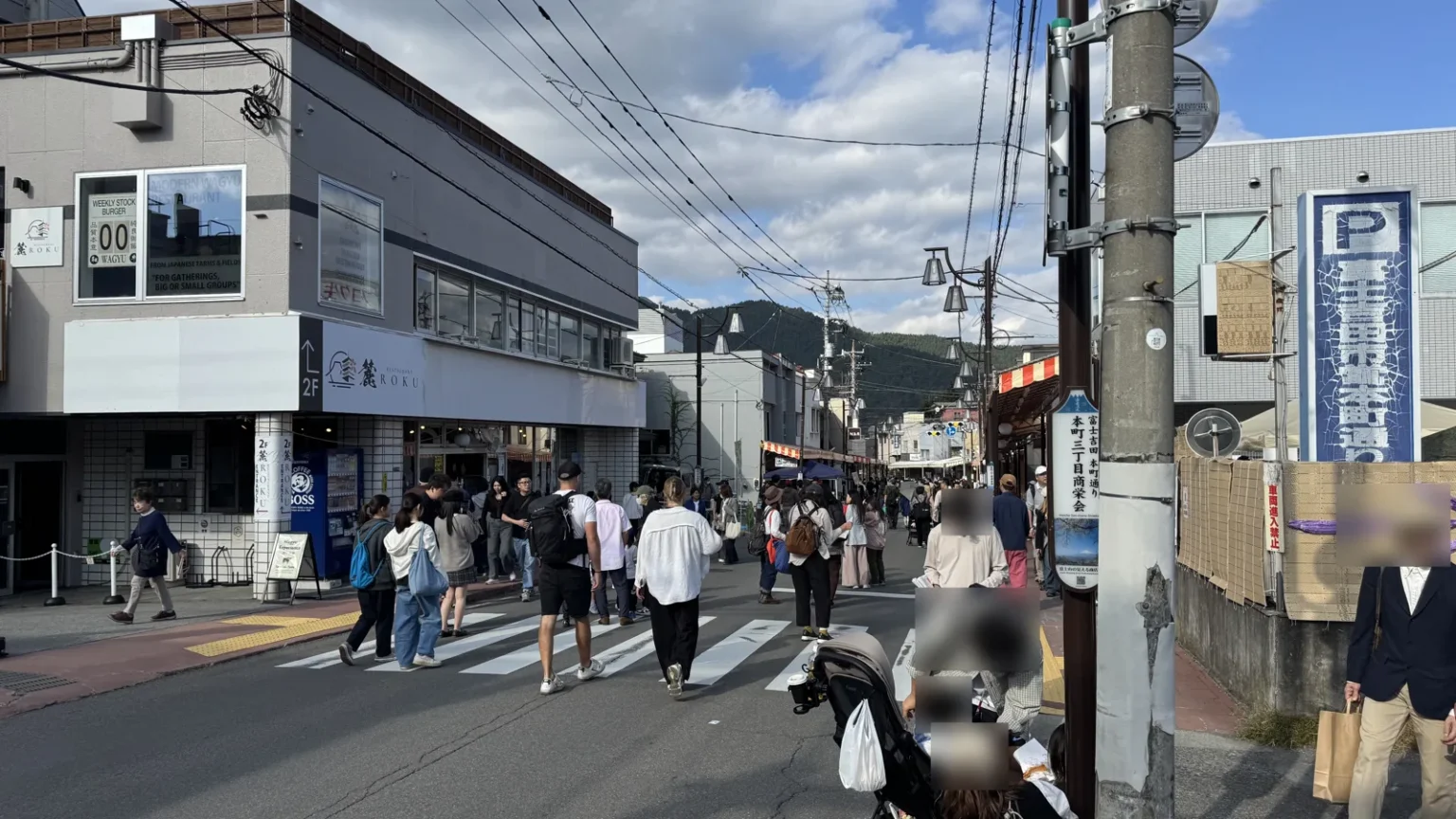
The crowds came and went with the time of day. Around 2:20 p.m., by the 本町三丁目商栄会 (Honcho 3-chome shopping association) sign, people were filling the crossing and the pavement on both sides, with wooded hills showing at the end of the street. I saw overseas visitors among them, but very little English-language guidance.
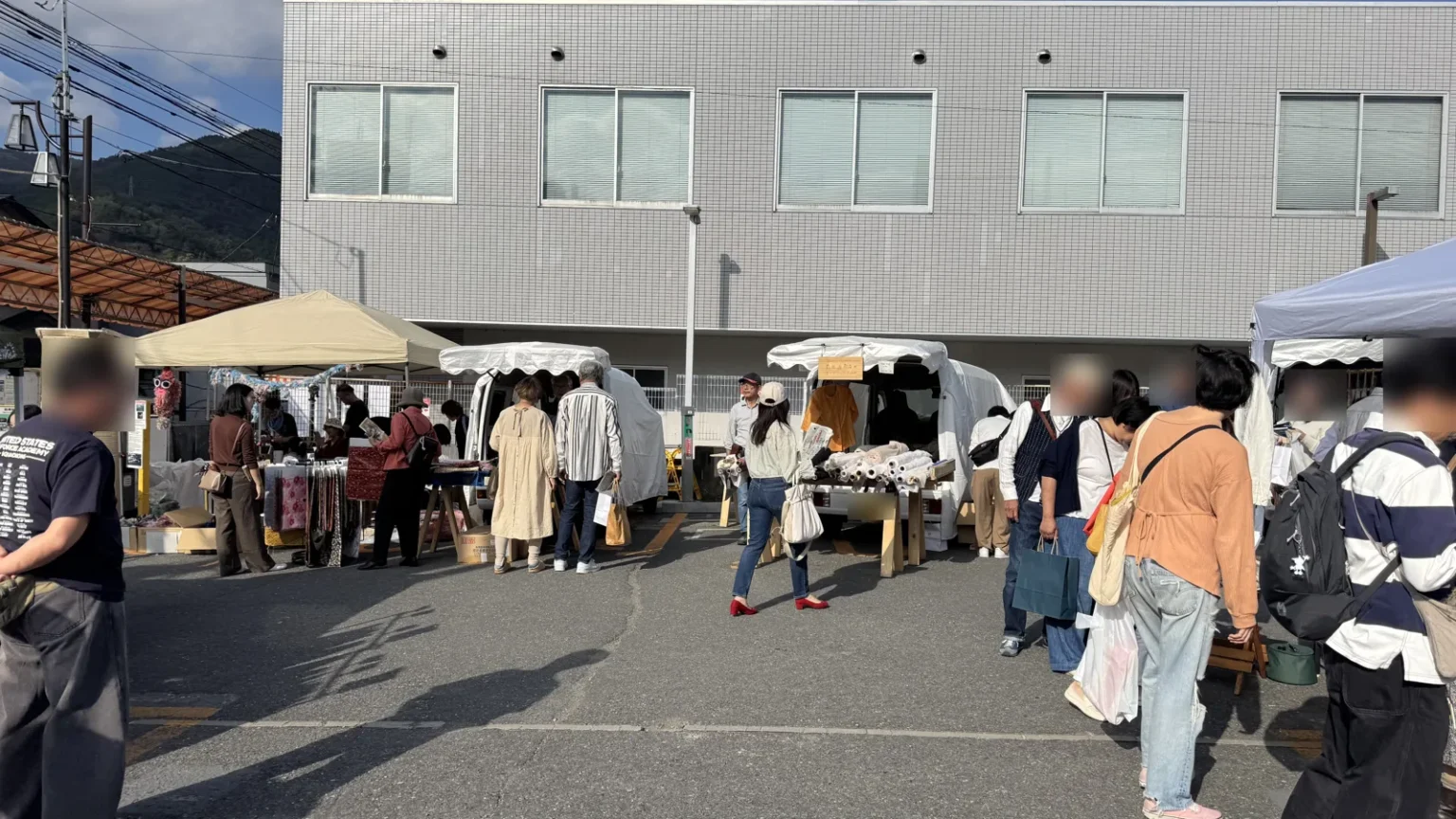
Not everything was on the street. A car park had been turned over to stalls, some under white and beige tents and some run off the back of small trucks, with rolls of pale cloth on the back of one light truck. Faces of people close to the camera are blurred in these photos; people further away are left as they were.
Tufted mats, clothes, tableware and folk toys
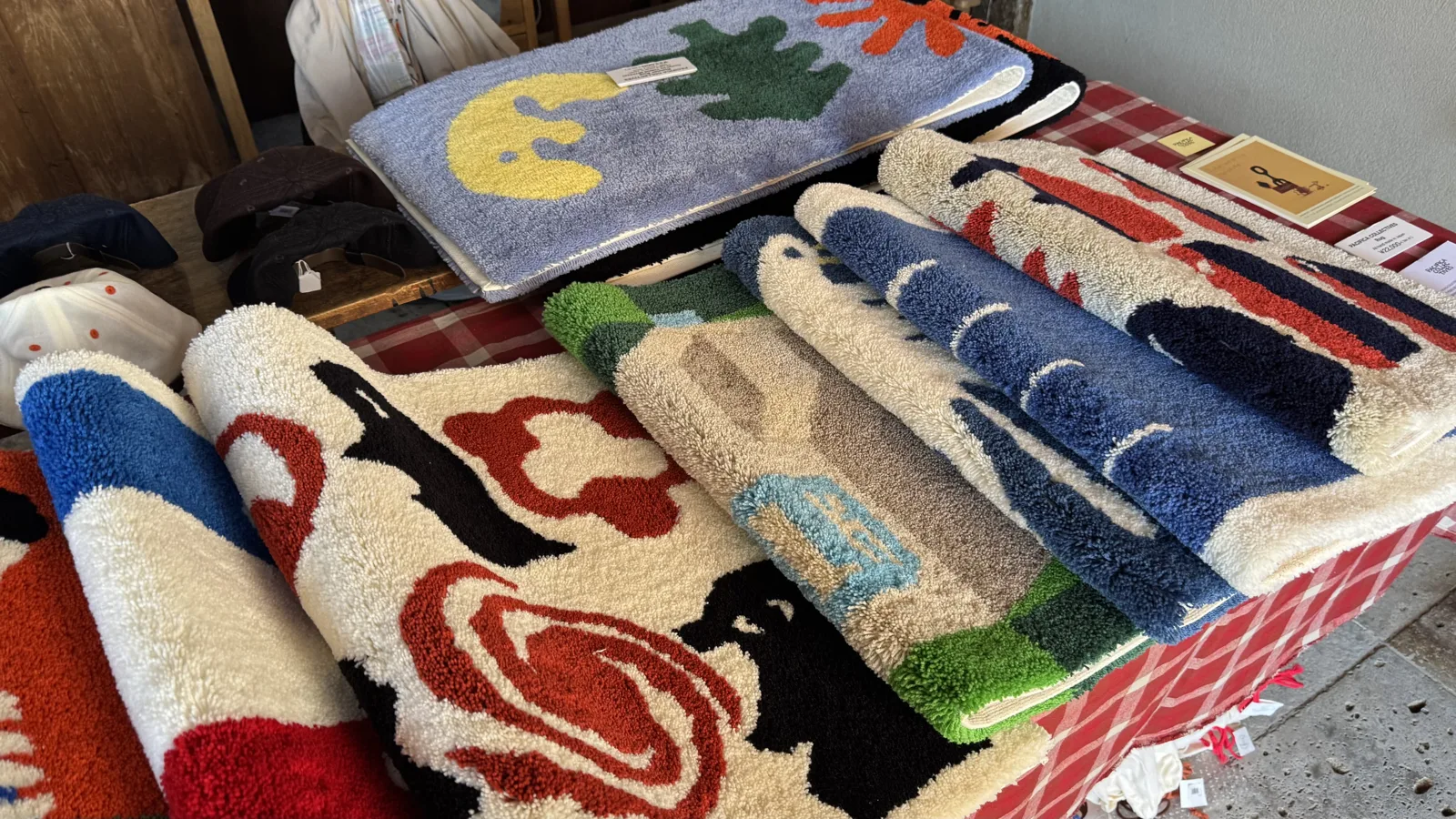
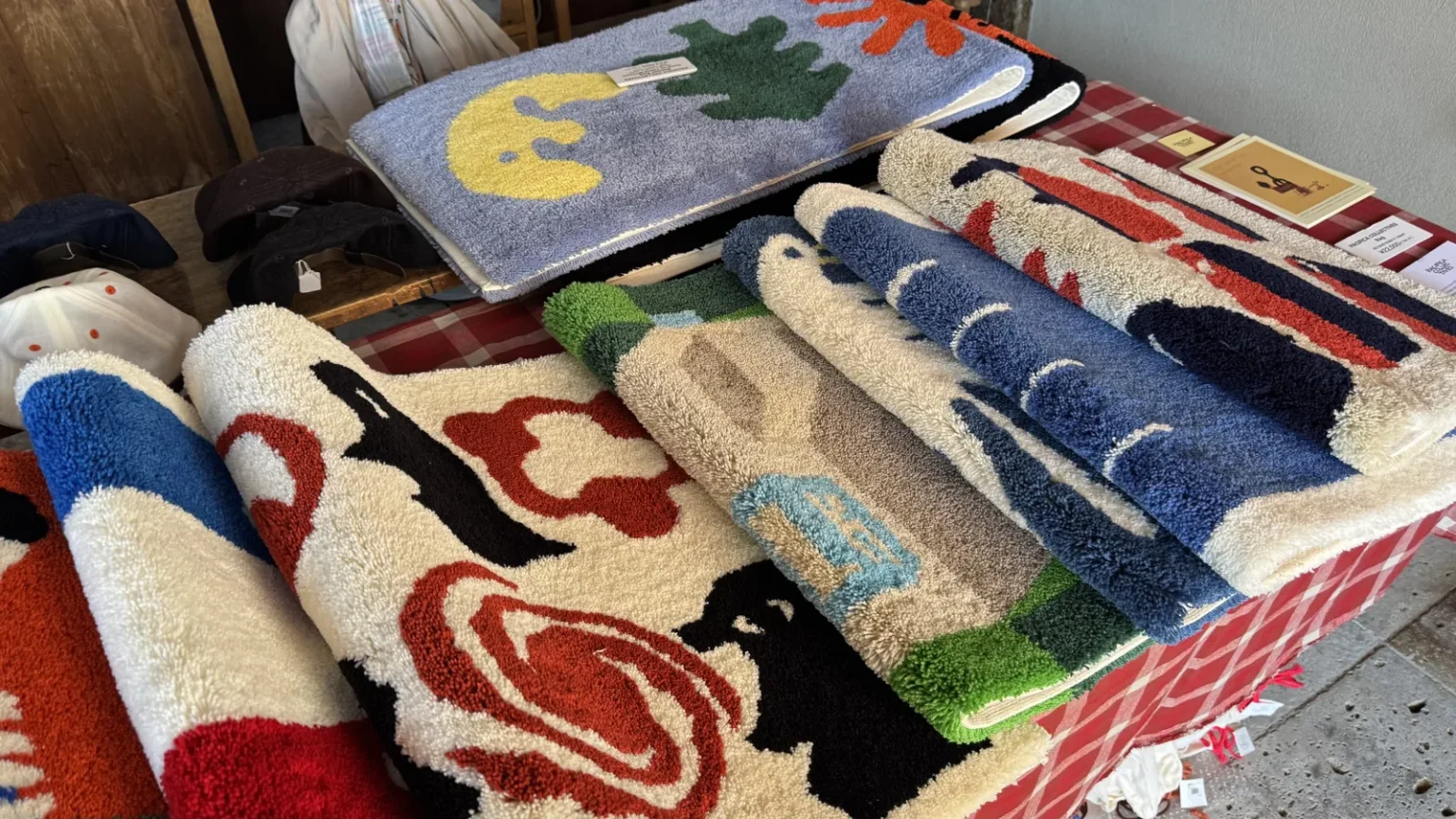
Early on, I stopped at a stall with a clothing rack, where the table was piled with thick tufted mats in bold reds, blues and whites, with big graphic shapes worked into the pile. Next to them were a rack of shirts and a stand of tote bags.
I did not try any weaving. I mostly went round the shops, and along the way I was given things like fabric and knit hats for free.
If you want hands-on textile activities: I didn’t try any, so I can only pass on what the organisers listed, and I can’t say whether loom weaving itself was offered. In 2026 one factory, Fujisan Kiji Kako, ran a needle-punch muffler workshop on the Saturday only (17 October, 10:00–16:30, about 30–60 minutes, from ¥7,000, for elementary-school age and up, with younger children joining alongside a guardian because scissors were used), with booking recommended. A fabric exhibition at KURA HOUSE let you handle swatches from local mills. Check the following year’s programme rather than assuming these return.
In an earlier photo, at about 1:28 p.m., one shop had a display of daruma dolls, figurines, folk toys and small baskets on a blue table, under a white wall with dark wooden beams. In my last photo, taken at about 2:58 p.m., a stall on the street had cups, plates, glasses and bowls spread over a low table, with shoppers around it.
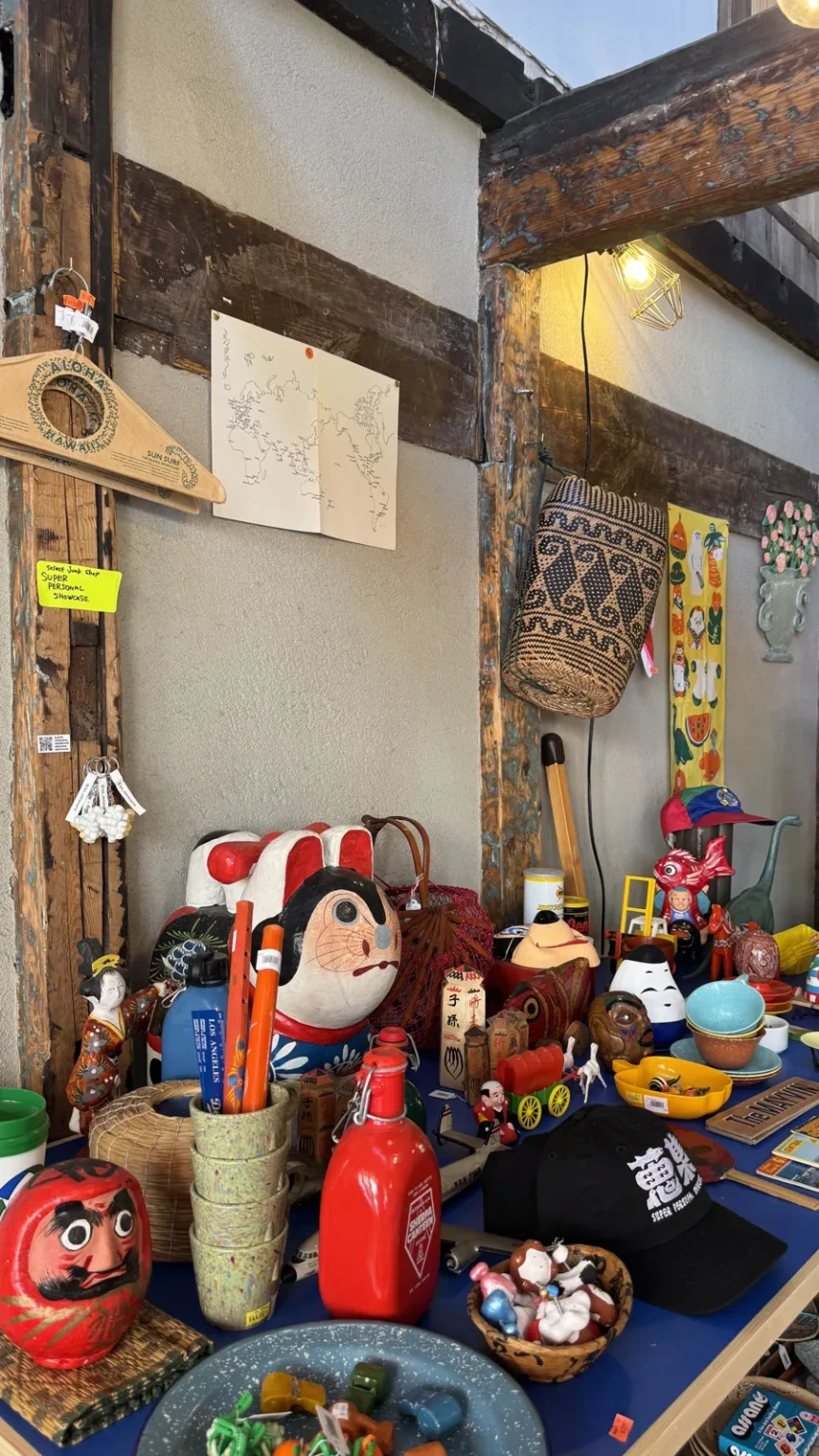
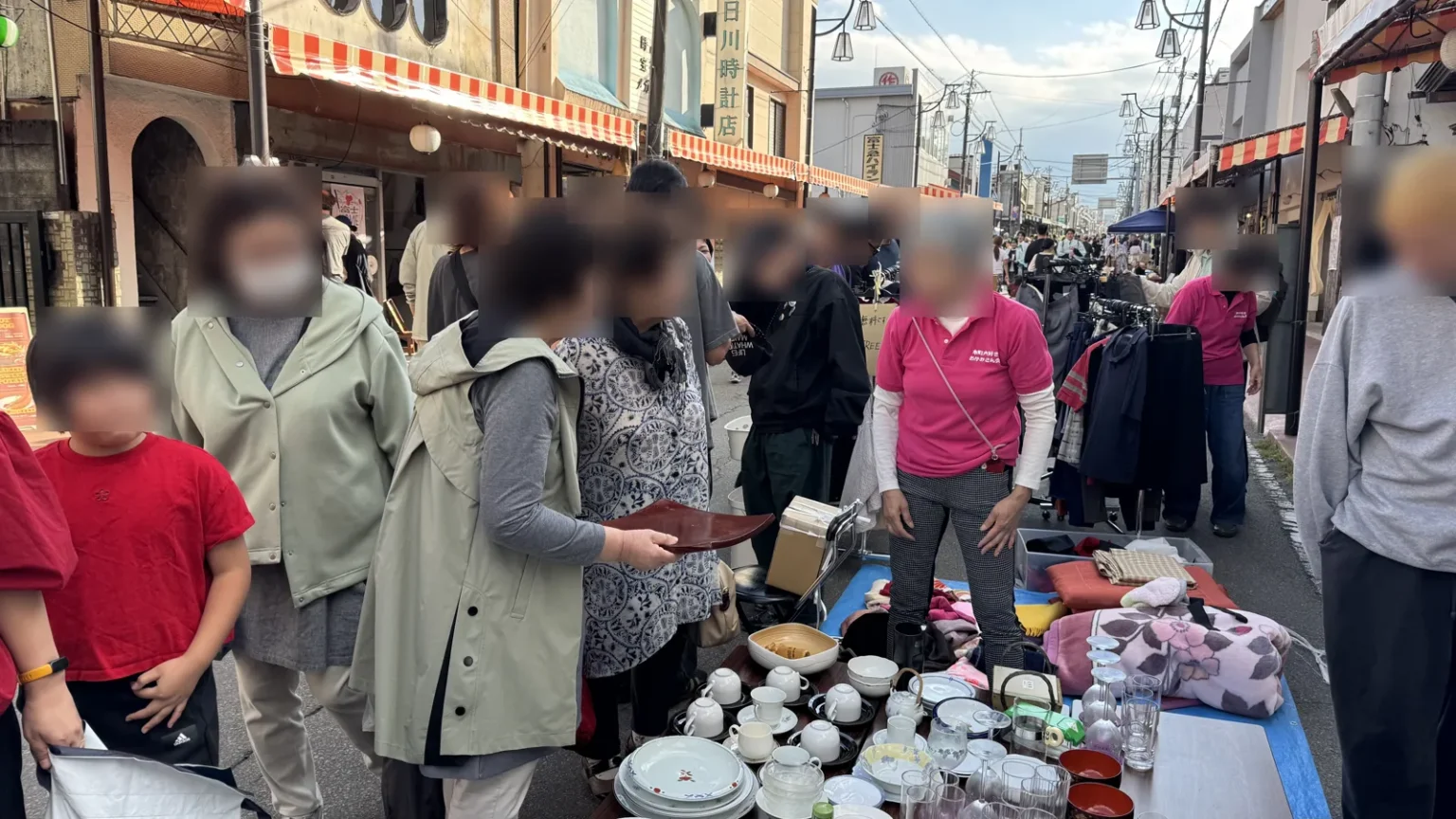
Here is what I actually saw on the tables that Sunday, so you know the range. It is not a full stall list: for that, the organisers publish their own exhibitor list and area map.
Tufted mats
Thick mats in bold colours and big graphic patterns, stacked on a street-stall table.
Clothes and bags
Racks of long-sleeve shirts and tees, and tote bags on a stand, at a street stall.
Cloth
Rolls of pale cloth on a stand at the back of a small canopied truck in the car park. Fabric was also one of the things I was given for free.
Tableware and folk toys
Cups, plates, glasses and bowls on a street table, and daruma and folk toys on display inside a shop.
Lunch: South Indian meals at Kariamudhu
Lunch was at Kariamudhu (カリアムドゥ), a South Indian restaurant at 3-6-28 Shimoyoshida. I had the non-vegetarian meals: rice and several curries served together on a steel tray with sectioned compartments. The rice came topped with herbs and slices of red onion, with small steel bowls of curry along the top of the tray and a pale side in its own cup.
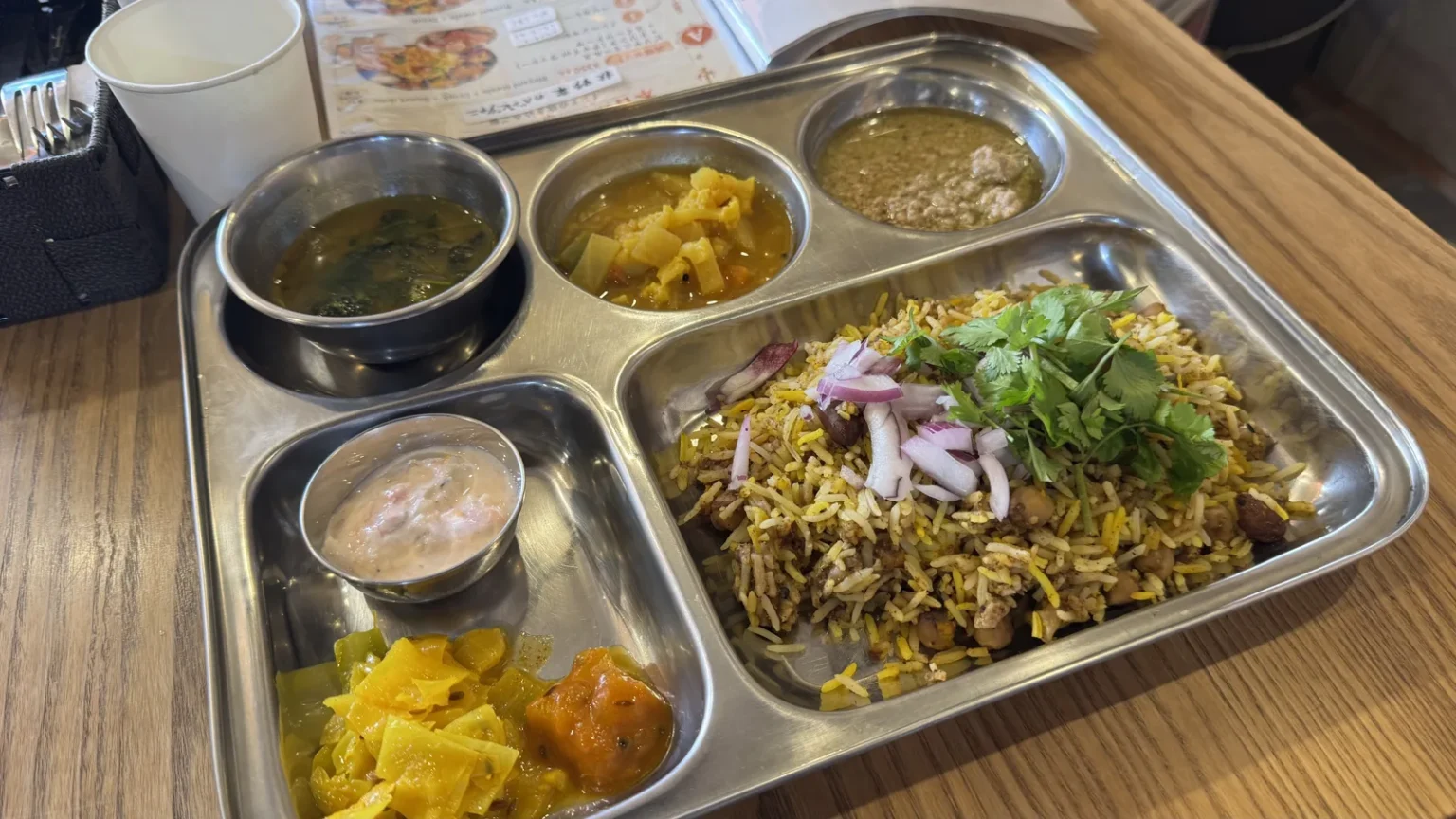
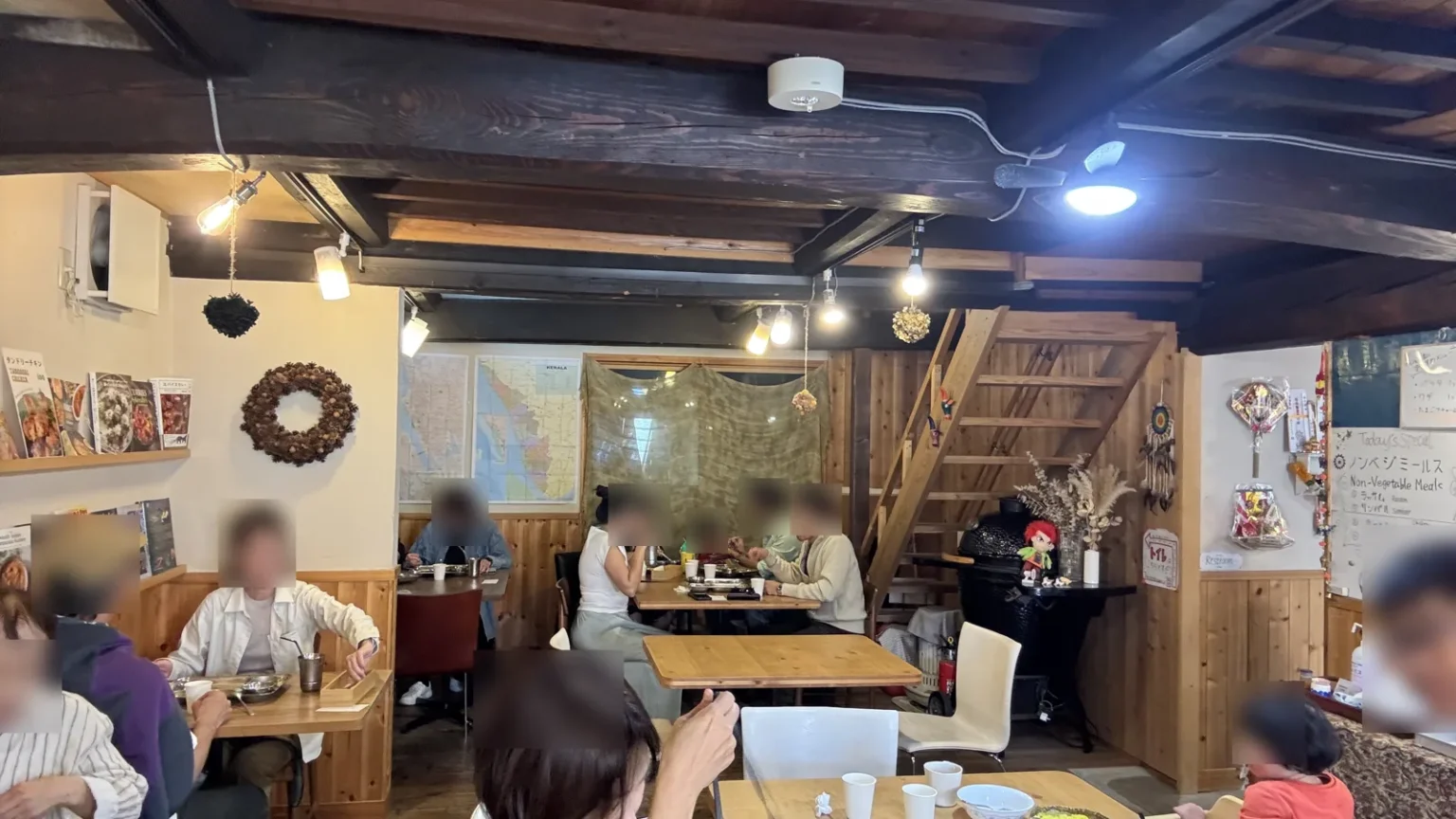
The dining room is small, with wooden tables, dark exposed beams, a wooden staircase at the back and a map of Kerala on the wall. A board by the stairs read ノンベジミールス, “Non-Vegetable Meals”. In my photo, several tables are taken.
Before you go to Kariamudhu: it is inside a building called Little Robot, and two listings say there is no parking. Opening days and hours differ between listings, so check before you plan lunch around it. One local listing (PORTA, 2026) alone mentions an English and Chinese food menu and gives the non-vegetarian meals at ¥1,650; I can’t confirm either from my own visit.
Mt Fuji in view
Mt Fuji was out that afternoon, and for me that was the moment that felt most like Fujiyoshida. It isn’t in any of the photos on this page.
For where to photograph Mt Fuji in the area, see the Honmachi 2-chome photo spot guide. To check the chances of seeing the mountain on your own date, there is the Mt Fuji visibility forecast.
For Fujiyoshida’s retro Showa streets on an ordinary day, see Nishiura, Fujiyoshida’s retro Showa district. The town’s big shrine is in the Kitaguchi Hongu Fuji Sengen Shrine guide, and more guides to the mountain and the towns around it are on the Mt Fuji hub.
Getting there
I drove to the area near Shimoyoshida Station. For 2026, the festival’s access page listed a general car park at the Shimoyoshida Daini Elementary School ground (2-8-2 Midorigaoka), with a free shuttle bus to the Furaji community centre: three buses, first at 9:40 from the school, last back at 17:10 on the Saturday and 16:25 on the Sunday. Honcho-dori and the Gekkoji Daimon street were closed to cars on the Sunday, so plan to walk the centre.
Without a car: Gekkoji Station on the Fujikyu Railway is about 500 m from where these photos were taken, in a straight line. Shimoyoshida is the next station, 0.8 km along the line (¥180 between the two), and Otsuki to Shimoyoshida is ¥980 on the Fujikyu fare table. For trains and buses in the area, see the Chureito Pagoda access guide, and for the trip out from the capital, Tokyo to Kawaguchiko by bus, train or car.
I came by car. If you would like to drive too, these are two places to compare rental cars.
Compare rental cars around Mt Fuji on Discover CarsSearch Japanese rental car companies on Rakuten TravelWhat to know, from the 2026 Sunday
Crowds change through the day
On the 2026 Sunday the crowds varied with the time of day. Around 2:20 p.m. the crossing by the Honcho 3-chome sign was full of people.
Little English
In 2026 there was very little English-language guidance, even though overseas visitors were there.
Coming back on an ordinary day
The festival is one weekend a year, but the weaving town is there all year. Fujiyoshida’s tourism guide lists FACTORY SHOPS OPEN on the third Saturday of each month, when some mills open their doors; small crafts such as coaster making there cost about ¥500 and take around 15 minutes, while many factory visits need booking. The Hataori-Machi information centre by Fujisan Station sells fabric and handles questions about factory visits, with listed hours of 10:00–16:30 and irregular closing days.
Honcho-dori is also the street people photograph with Mt Fuji at the end of it. The city’s guide asks visitors not to step into the road for photos and to be considerate of the homes around it, which is worth remembering on a normal day when cars are running.
To fit Fujiyoshida into a longer visit, our two-day Fuji Five Lakes itinerary starts its second morning at the Chureito Pagoda above these streets.
Where to stay in the area
The Kawaguchiko vs Fujiyoshida guide compares the two bases.
If you would rather stay the night than head back the same day, compare places to sleep by Lake Kawaguchi.
Compare Lake Kawaguchiko hotels on Booking.comThe 2026 festival was a single weekend. For a guided day around Mt Fuji on another date:
Browse Mt Fuji tours on KlookSee guided Mt Fuji tours on MagicalTripAnother Fujiyoshida festival: see the Yoshida Fire Festival 2026 article.
FAQ
When was the Hataori-Machi Festival in 2026?
On Saturday 17 October 2026 from 10:00 to 17:00 and Sunday 18 October 2026 from 10:00 to 16:00, in Fujiyoshida. Honcho-dori was listed as a pedestrian zone on the Sunday.
What was on the stalls in 2026?
On 18 October 2026 the stalls I saw had tufted mats, clothes, tote bags, cloth and tableware. Daruma dolls and folk toys were on display inside a shop. I was given things like fabric and knit hats for free.
What textile activities were listed in 2026?
I didn’t try any, and I can’t say whether loom weaving itself was offered. The organisers listed a factory needle-punch muffler workshop on Saturday 17 October 2026 (from ¥7,000) and a fabric swatch exhibition. Outside the festival, FACTORY SHOPS OPEN on the third Saturday of the month has small crafts from about ¥500.
Where do you park for the festival?
In 2026 the festival car park was the Shimoyoshida Daini Elementary School ground, with a free shuttle bus. The centre streets were pedestrian-only on the Sunday.
Is there English information?
On Sunday 18 October 2026 there was very little English-language guidance, though overseas visitors were there.
Where can I eat near the festival streets?
I had South Indian non-vegetarian meals at Kariamudhu, 3-6-28 Shimoyoshida. Listings disagree on opening days and hours, so check the latest information before you go.
Can you see Mt Fuji from the festival?
It was visible on the afternoon of 18 October 2026.
Sources
- Hataori-Machi Festival 2026, official page (dates, Honcho-dori pedestrian zone, organisers, 11th year, the town and its textile culture): hatafes.jp
- Yamanashi Prefecture, textile region and “Hataori-Machi” (more than 1,000 years as an industry; the name used by Fujiyoshida and Nishikatsura): pref.yamanashi.jp
- Hataori-Machi Festival 2026: areas and map (hatafes.jp), access and car park (hatafes.jp), shuttle bus (hatafes.jp), factory workshop (hatafes.jp), fabric exhibition (hatafes.jp)
- Fujiyoshida City, 2026 festival and traffic restrictions, updated 8 October 2026: city.fujiyoshida.yamanashi.jp
- Yamanashi Prefecture kaiki silk museum guide (Engishiki, 967) and Gunnai textiles: pref.yamanashi.jp, pref.yamanashi.jp
- Fujiyoshida tourism guide: Hataori-Machi information centre (fujiyoshida.net), FACTORY SHOPS OPEN (fujiyoshida.net), Honcho-dori (fujiyoshida.net)
- Fujikyu Railway fare table: fujikyu-railway.jp
- Kariamudhu address and no parking: two restaurant listings (PORTA, Tabelog); English/Chinese menu and ¥1,650 price: PORTA only (2026 listing). Read on 22 October 2026
- Visit, photos and times: my own visit, Sunday 18 October 2026 (times from my iPhone photo timestamps)
This page records the 2026 festival only. Check the official festival site before making travel plans.
Some links above are affiliate links — they cost you nothing extra and help keep this site going.
Join travelers discovering Japan's hidden side
Weekly dispatches from off-the-beaten-path Japan — spots and stories you won't find in guidebooks.
No spam. Unsubscribe anytime.
Welcome aboard!
You're in. See you in your inbox soon.