
Fujiyoshida · Sports & a quiet autumn
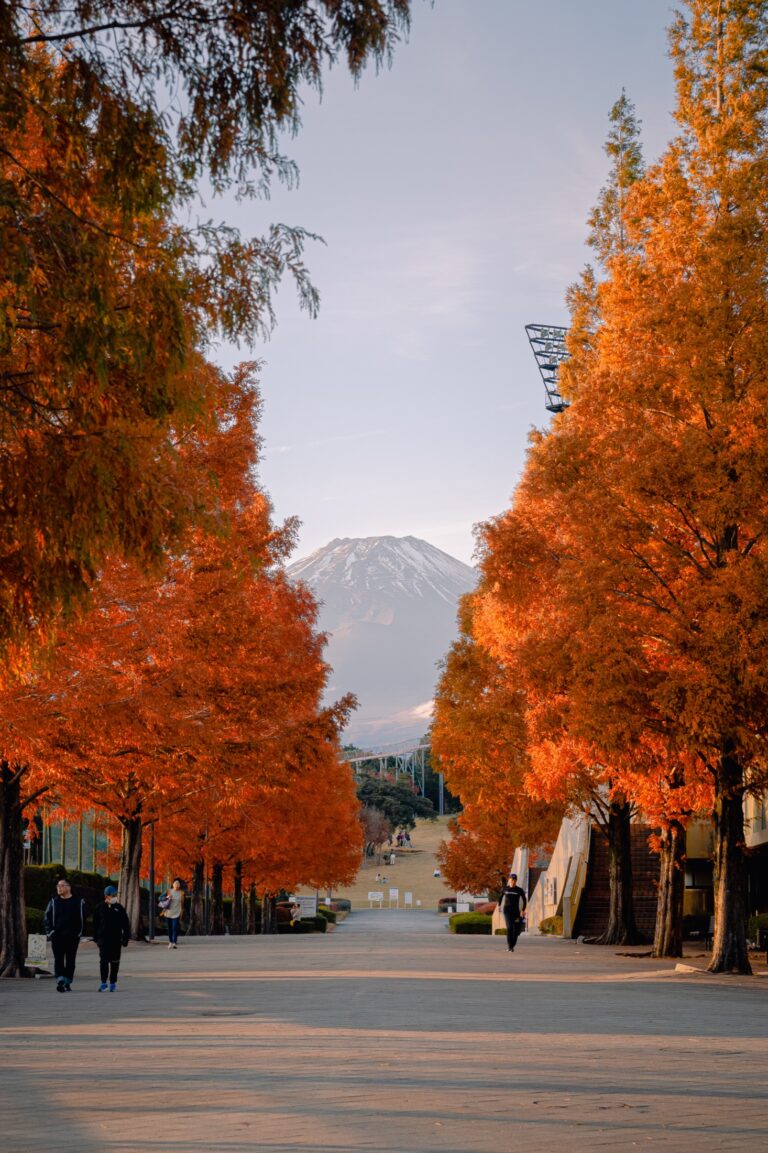
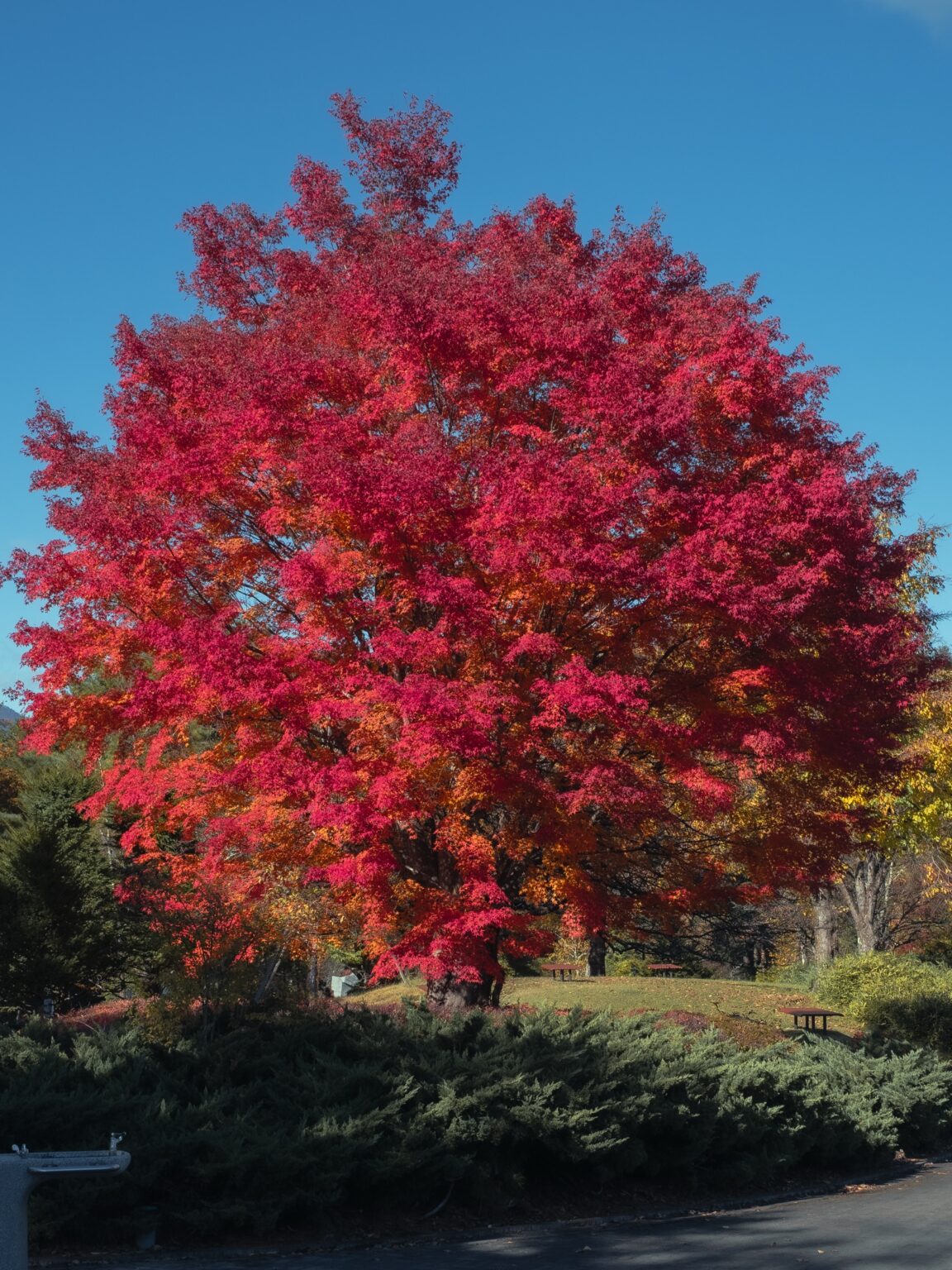
Fuji Hokuroku Park is a sports complex at 1,035 metres on the northern foot of Mt. Fuji, with a national-team pedigree: Japan’s sprinters held preparation camps here for a dozen years, the men’s sprint relay squad tuned up here before the 2018 Asian Games, and France based its 2019 Rugby World Cup training camp in the park. It is not a tourist sight. I walked the perimeter with my dogs on the afternoon of 3 November 2025, stayed outside the stadium, and found the strongest maple colour of the day standing around the baseball field — with almost nobody under it.
Why athletes train here
The park sits at what Japanese coaches call semi-highland: at 1,035 metres the summers stay cool and the air is a shade thinner, without the costs of real altitude — a practical combination for speed work. Published accounts document Japan’s men’s national sprint team holding preparation camps here, after team selection, from 2001 to 2012. Ahead of the 2018 Asian Games, the men’s sprint relay squad — including Ryota Yamagata, Yoshihide Kiryu and Shuhei Tada — came for final baton work, per the JAAF’s own report.
The centrepiece is the Fujisan GX Stadium, a JAAF-certified Class 2 athletics stadium (the park’s own English materials use that term), backed by an indoor 130-metre straight for winter and bad-weather work. Rugby has used the park too: France based its training camp here for the 2019 Rugby World Cup, as Fujiyoshida’s city report records.
The 2026 calendar says the rest: the Challenge Fuji Five Lakes ultramarathon started and finished here on 19 April, Mt.FUJI100 used the park for reception and its finish on 24–26 April, the Fuji Hill Climb made it the main venue on 7 June, and the Fire Festival Road Race ran from the GX Stadium on 23 August.
What a non-athlete actually gets
The sports facilities have their own fees and access arrangements. For everyone else there are the perimeter paths, the lawns with picnic tables, and a 700-metre jogging loop the park itself advertises with a Mt. Fuji view — free, subject to whatever events are on.
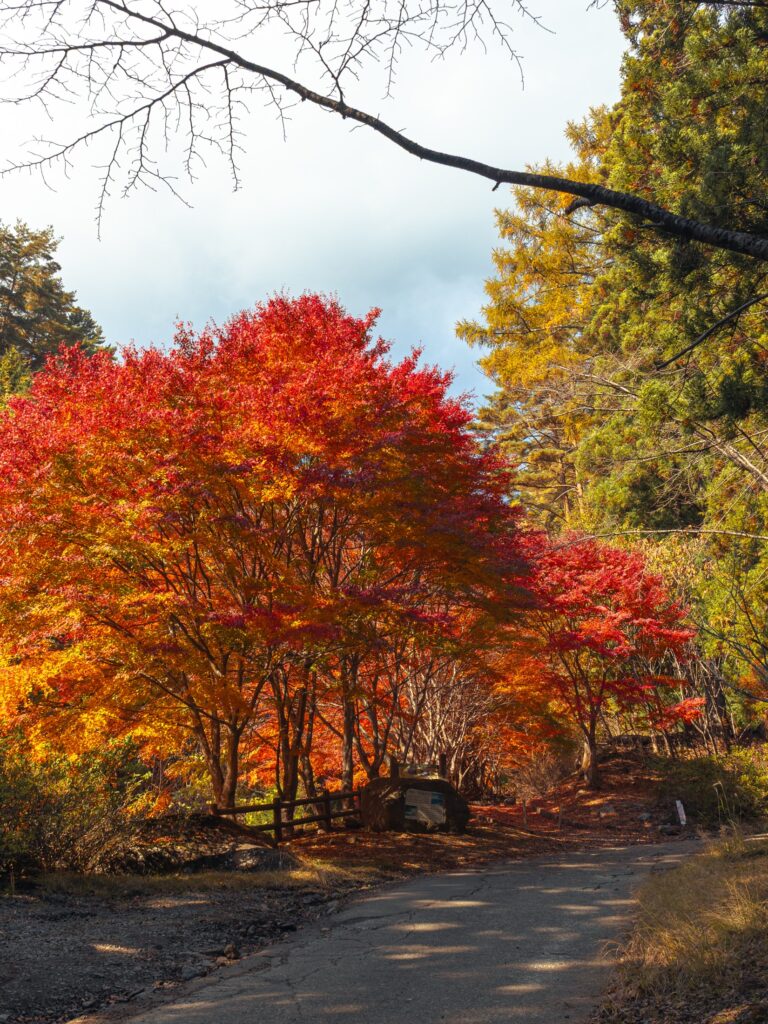
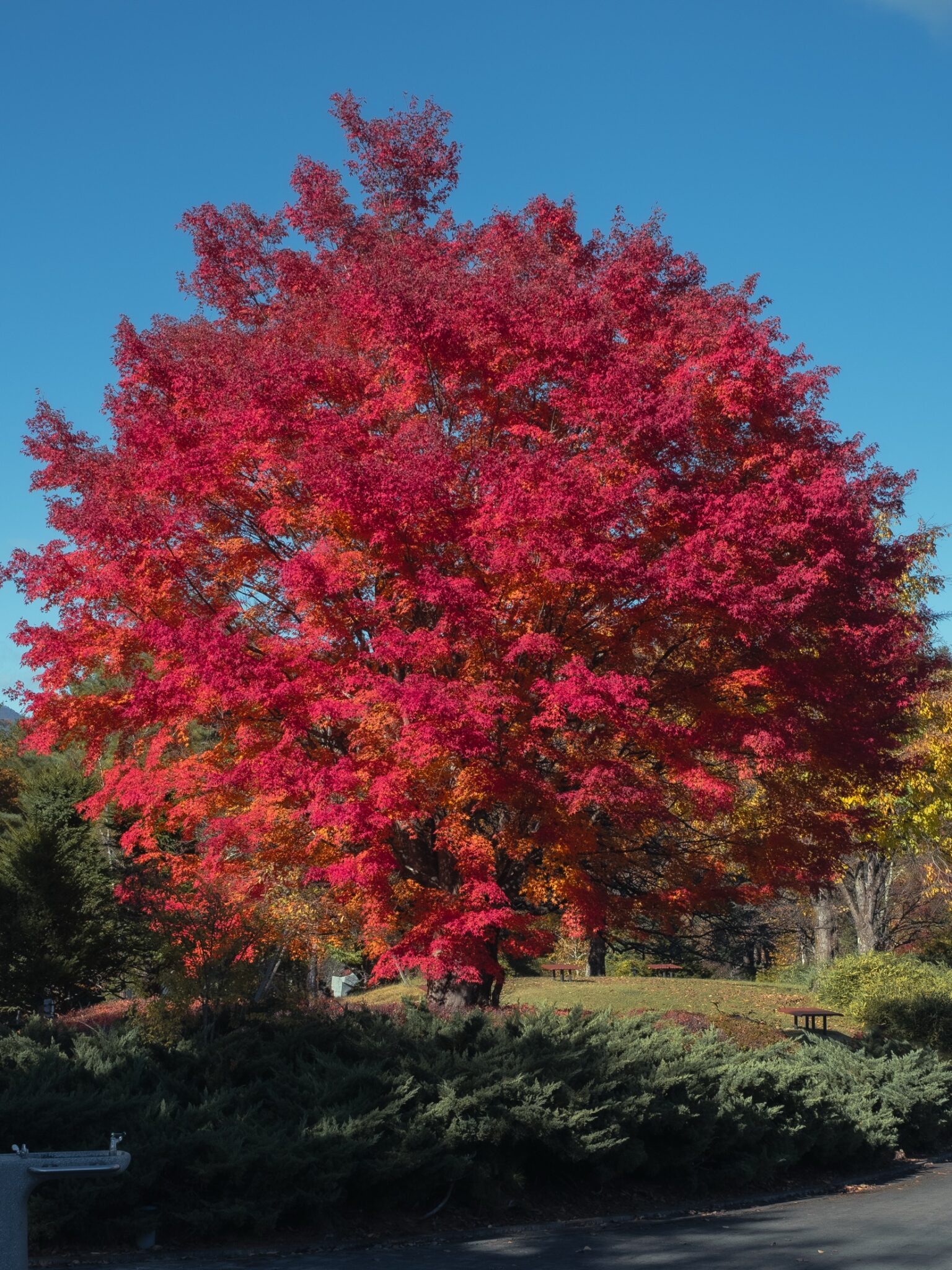
On my visit, local middle and high schoolers were practising in an athletics class while I walked the perimeter with the dogs. Around them the maples stood in full colour, and the paths I walked were quiet. The best of it was around the baseball field, in walls of red and gold.
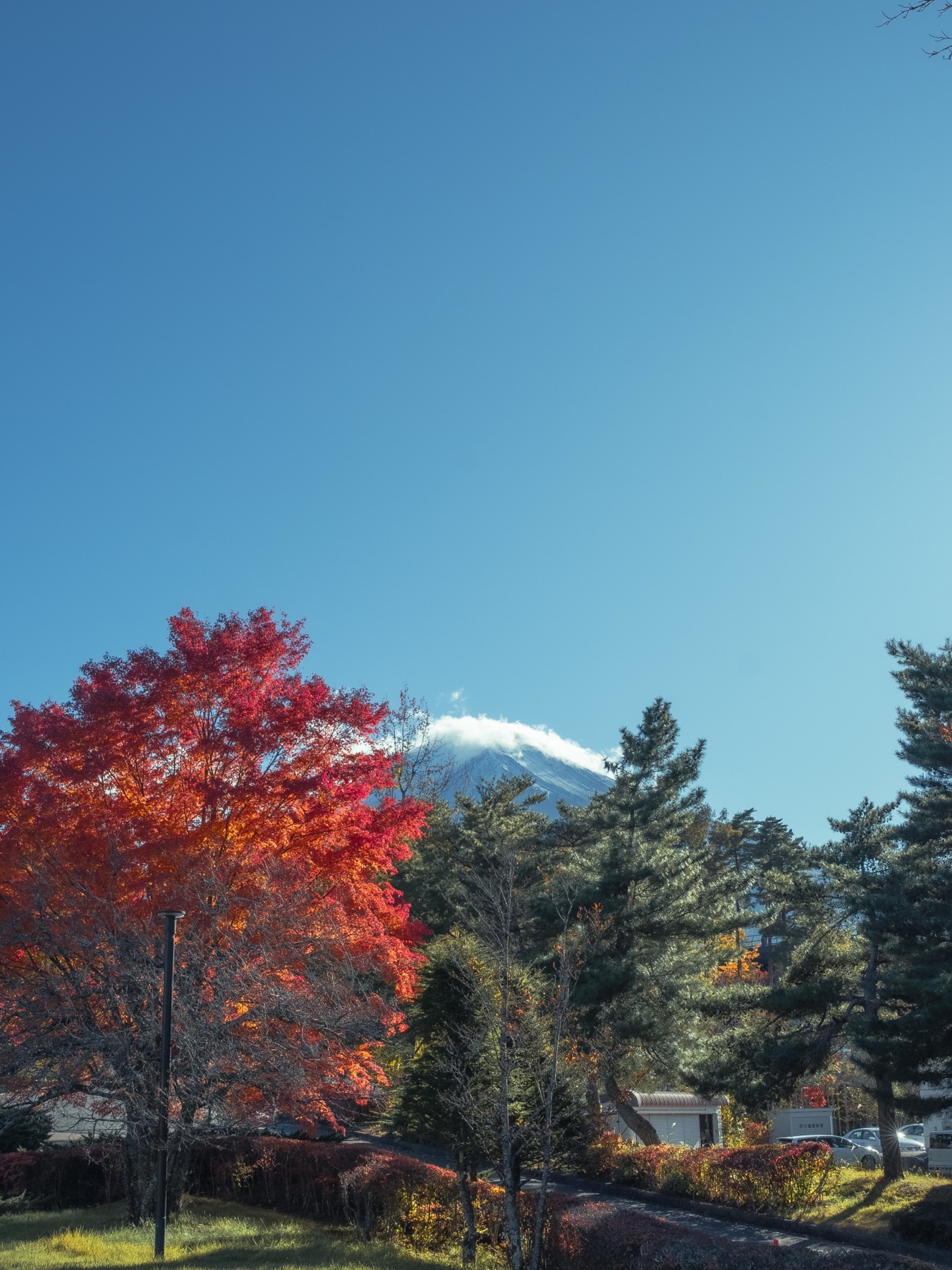
A national training ground at 1,035 metres, ringed by full-colour maples — and on the Culture Day holiday, the picnic tables I passed were empty.
The quiet-autumn case, honestly
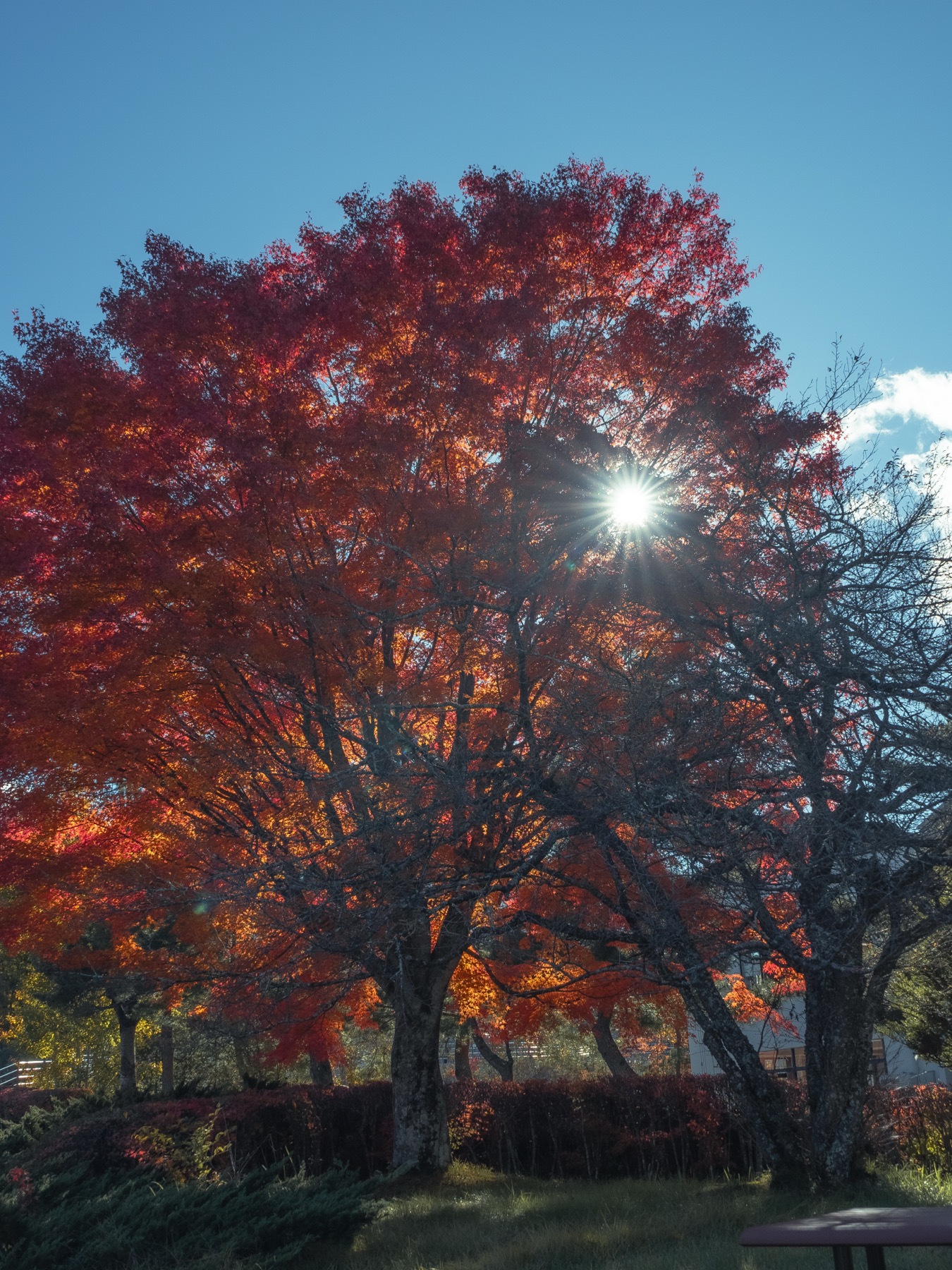
This is a sports facility rather than a garden, and the autumn crowd reflects it. What it offers is scale and room — big mature maples, lawns to stand back on, Fuji over the treeline — and on 3 November 2025, a clean parking lot with plenty of empty spaces.
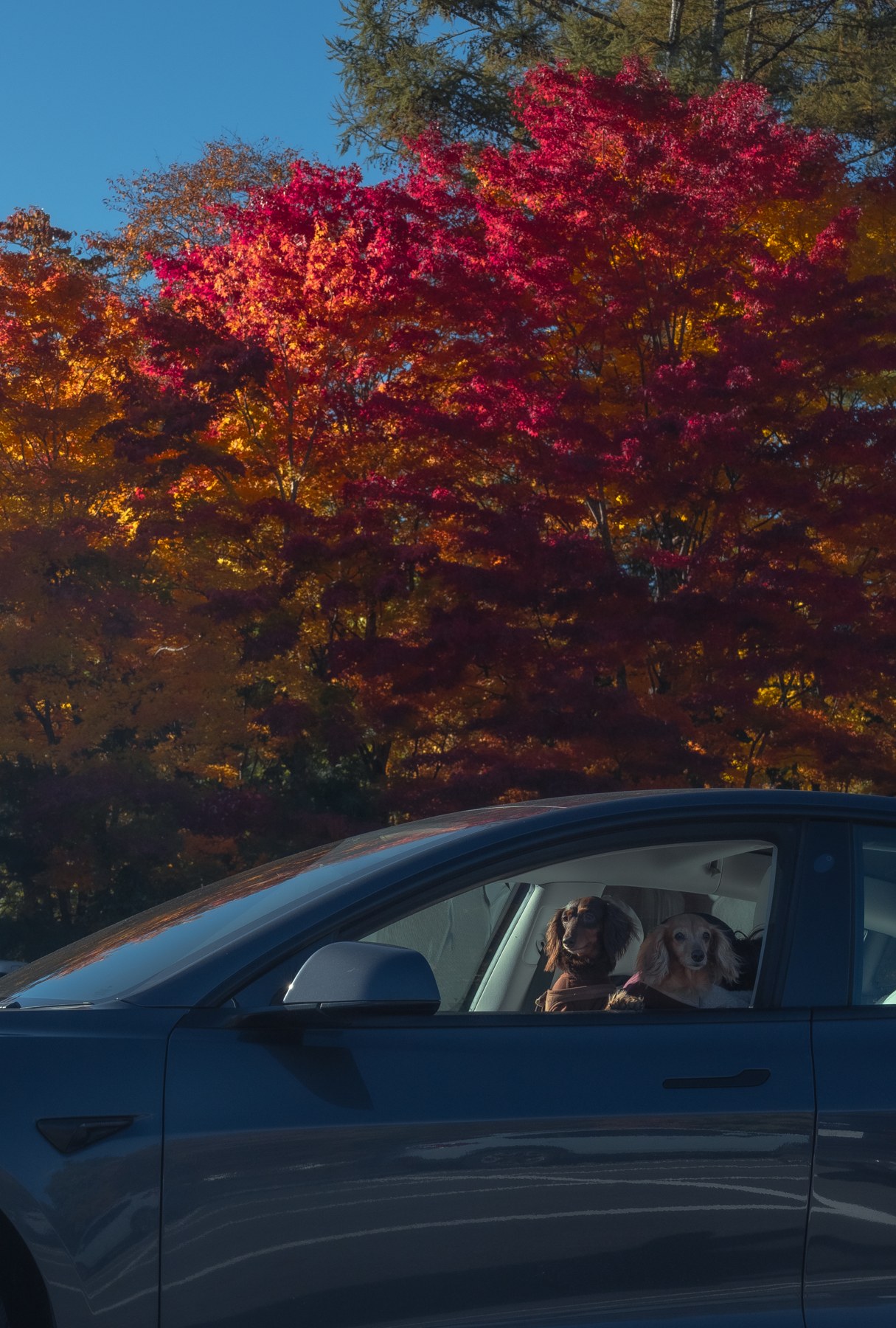
Treat my date as one reference point: strong maple colour on 3 November 2025. My notes from that autumn put the park roughly alongside Chureito’s turn and ahead of the valley floors — but check current reports before choosing a date.
Getting there
The park is a short drive up from central Fujiyoshida, with free parking on site; the gates are normally locked between 21:00 and 8:30, and overnighting in vehicles is barred. There is no regular bus service to the park: from Fujisan Station the park’s own guidance is a taxi, about 10–15 minutes. Some major events run dedicated shuttles — check the organiser’s access page.
Make it a Fujiyoshida day
Same town, same season
Down in town
In my 2025 notes, Kaneyama Falls was at peak nine days after this park (12 versus 3 November), down at town level — park in the morning, falls after sunset works if the year cooperates.
The classic
Chureito Pagoda is the same city’s famous face; its autumn dawn and this park’s empty afternoon make a balanced double.
Going higher
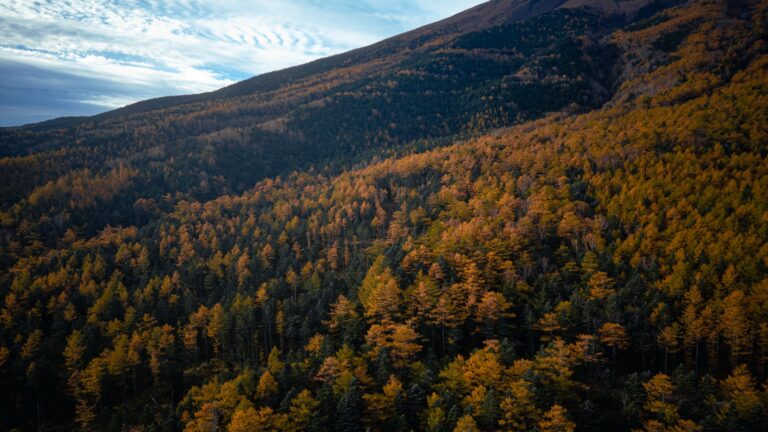
The Subaru Line’s larch belt turns before everything here — if you are early in the season, look up instead.
The rest of the mountain’s season lives in the Mt. Fuji hub; for planning around colour country-wide, see how Japan’s autumn moves, and for the lakes’ festivals, Yamanaka and Kawaguchiko.
Frequently asked questions
Can tourists use Fuji Hokuroku Park?
Yes — the grounds, perimeter paths, lawns and the 700 m jogging loop are free to walk, subject to event-day restrictions. The sports facilities have their own fees and procedures; adult individual track use is ¥280 for a half-day when the calendar allows.
Is it really a national training site?
Yes. Published accounts document national sprint camps here from 2001 to 2012, the JAAF reports the men’s relay squad training here ahead of the 2018 Asian Games, and Fujiyoshida’s city records cover France’s 2019 Rugby World Cup camp. The semi-highland setting — 1,035 m, cool summers — is the draw.
When is the autumn colour best?
I can only vouch for 2025: full colour on 3 November, with the best walls of maple around the baseball field. At this altitude the turn runs earlier than the lakeshores — aim for late October to mid-November and check current reports.
Is the park crowded?
Not on my visit — the paths were quiet even on a national holiday at full colour. Major events are different: they can restrict access and parking entirely, so check both the park’s notices and the organiser’s information.
Can I park overnight or car-camp there?
No. Parking is free but the gates are normally locked from 21:00 to 8:30, and the park explicitly bars overnight stays in vehicles.
Is the bear warning serious?
Treat it as real: the park reported a sighting near the entrance area on 17 September 2026. Check current notices on arrival, stay on open paths, and keep dogs leashed.
Sources
Official sources for the training history, facility details and safety note, checked 20 September 2026
- Fuji Hokuroku Park (official, hokuroku.jp) — park overview (1,035 m), Fujisan GX Stadium and individual fees, indoor 130 m straight, 700 m jogging course, parking (with the hours notice), the 17 September 2026 bear-sighting notice and the access map (taxi 10–15 min from Fujisan Station)
- Susumu Takano — published account of national sprint camps at the park, 2001–2012 (semi-highland training)
- JAAF — 2018 Asian Games relay-squad open practice at the park
- Fujiyoshida City — record of France’s 2019 Rugby World Cup camp
- 2026 events — Challenge Fuji Five Lakes, Mt.FUJI100 access, Fuji Hill Climb, Fire Festival Road Race
- All photographs: taken by the author in the park on 3 November 2025 (Culture Day).
Join travelers discovering Japan's hidden side
Weekly dispatches from off-the-beaten-path Japan — spots and stories you won't find in guidebooks.
No spam. Unsubscribe anytime.
Welcome aboard!
You're in. See you in your inbox soon.