
Mt. Fuji · Monthly Visibility
On paper, August is one of the worst months to see Mt. Fuji: the 35-year record has the mountain fully visible at the morning check on barely 15% of August days (fully or partly: 36%). But that number hides the one thing that actually matters to a traveler — the time of day. I live in Fujiyoshida, at the foot of the mountain, and photograph it every morning. Across the first 13 mornings of August 2026, checking in the early-morning window from the Fuji Five Lakes and the Fujiyoshida side, the summit was out on 8 of them (62%). It is a small, single-summer sample — but it matches what I see year after year: August rewards early risers and punishes anyone who waits until lunch. Here is what one local’s morning log shows, why the mountain behaves this way in summer, and how to stack the odds.
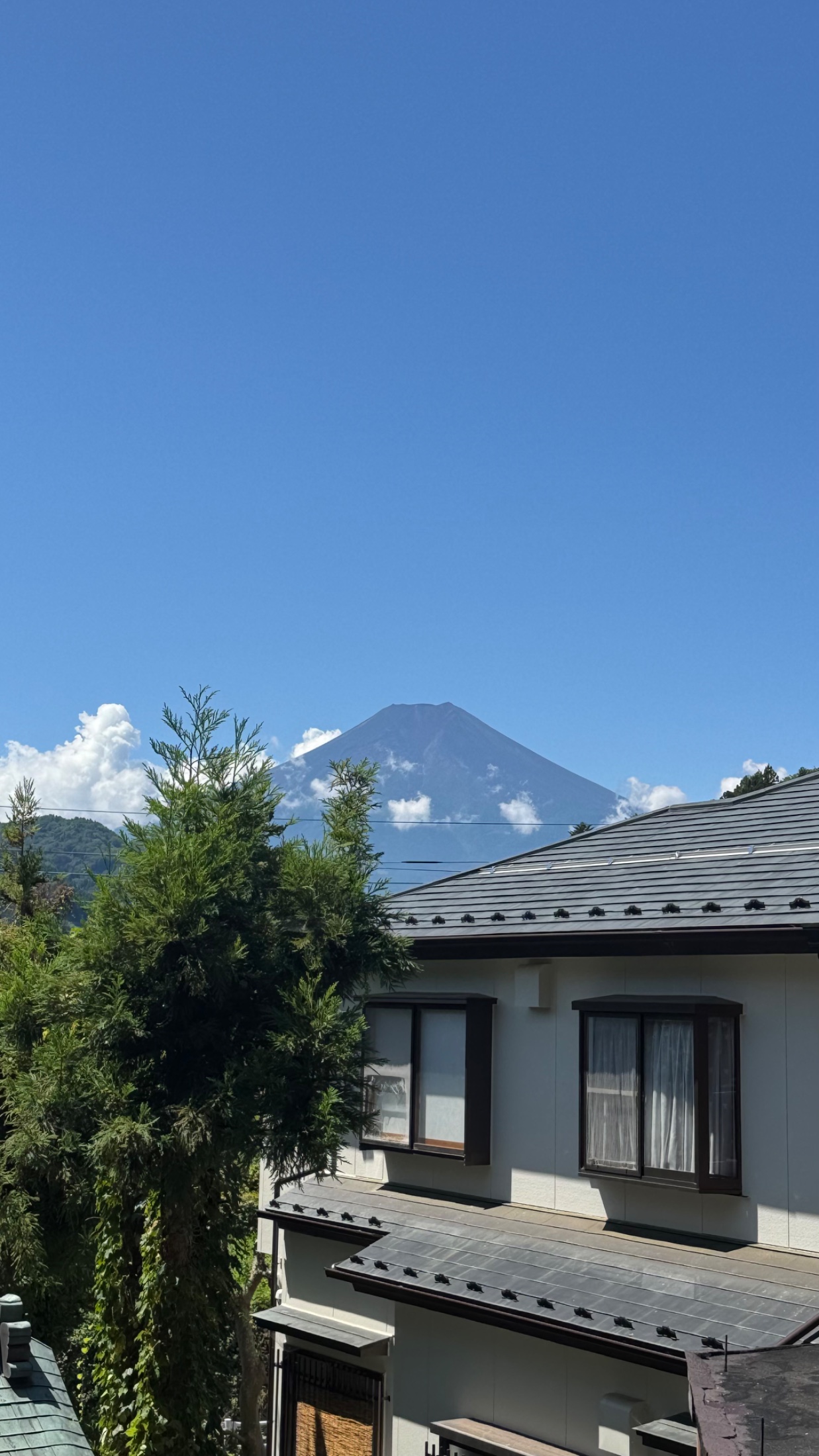
Can you see Mt. Fuji in August? What one local’s morning log shows
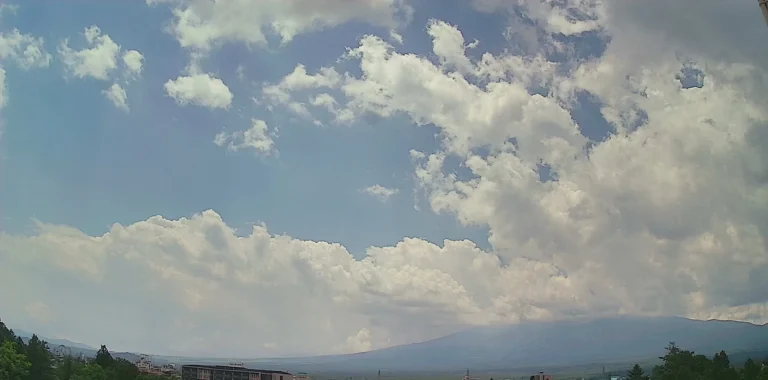
Between 1 and 13 August 2026 I logged Mt. Fuji every morning from the Fuji Five Lakes area and photographed whether the summit was out. The result: fully visible on 6 mornings, partly visible on 2, and hidden on 5 — the summit showed itself, fully or in part, on 8 of 13 mornings (62%). That is a small, single-summer sample, so treat it as one August on the ground rather than a law of nature. But it lines up with what I see year after year: summer mornings are far kinder than the all-day weather stats suggest.
| August 2026 (mornings 1–13) | Mornings | Share |
|---|---|---|
| Summit fully visible | 6 | 46% |
| Partly visible | 2 | 15% |
| Hidden | 5 | 38% |
| Summit out (full or partial) | 8 | 62% |
Two numbers, two questions. The August 36% figure comes from the City of Fuji’s long-term record — a fixed 8:00 a.m. check from the mountain’s Shizuoka (south) side, averaged over 35 years (1991–2025); fully-visible-only is just 14.6%. It answers “how often is Fuji out at eight in the morning, across decades?” My 62% answers a narrower, more useful question for a traveler watching from the north: “if I get up early this August, will I see it?” They are different measurements. Part of the gap is time of day — the cloud that hides Fuji in summer mostly builds after sunrise — and part is simply that 13 mornings in one summer is a small sample. Both point the same way: look early.
Why August is the cloudiest month — and why mornings beat afternoons
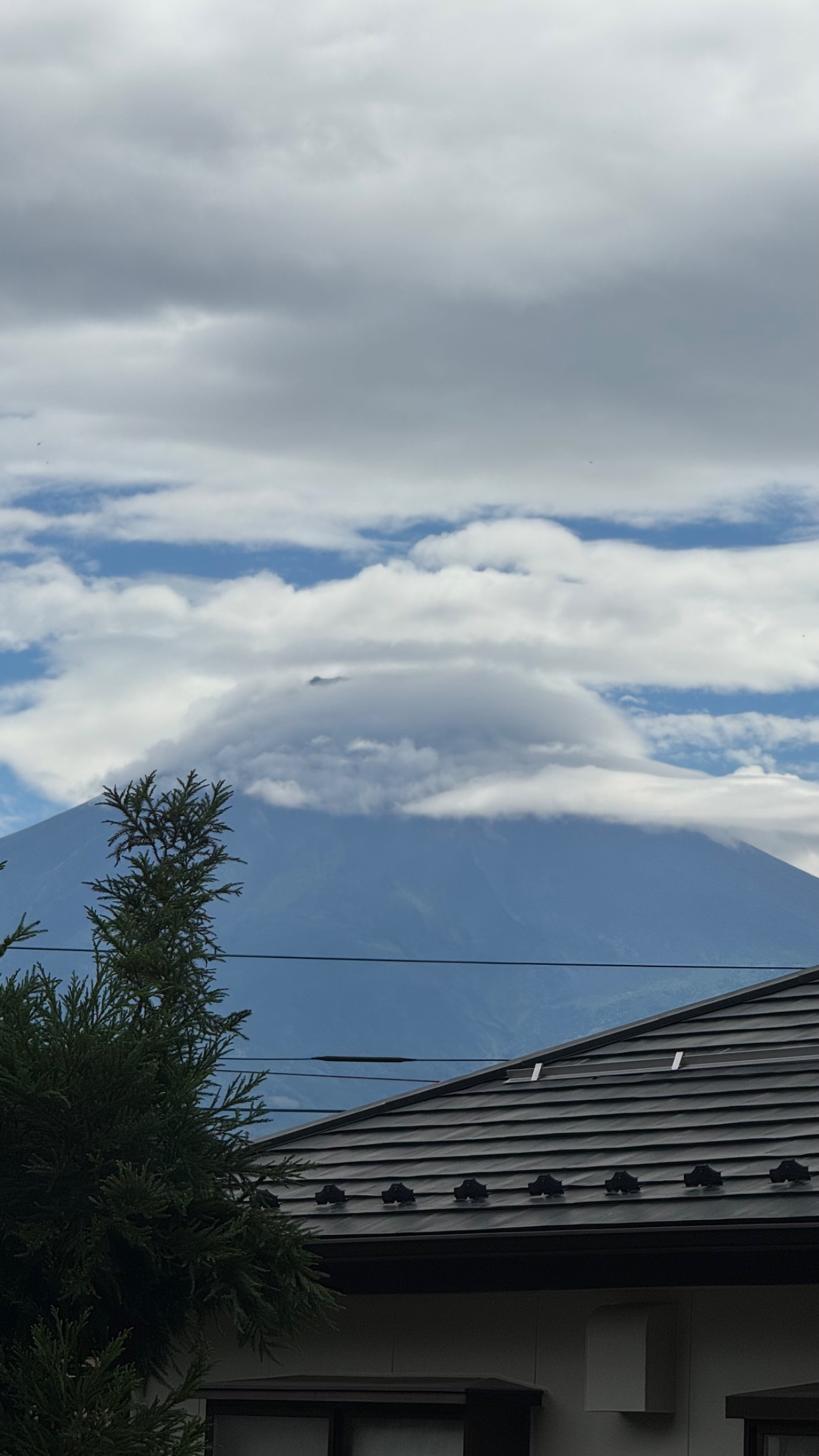
Summer around Mt. Fuji is dominated by warm, moist air flowing up from the Pacific, and two different things happen through the day. First, as the ground and slopes warm, convection strengthens and cloud and mist build over the mountain, thickening toward midday and afternoon — a daily thermal cycle. Separately, a lens-shaped “cap cloud” (kasagumo) can settle over the summit when moist wind is forced up and over the peak; that forms by a different, orographic process and is often read as a sign of weather on the way. Between them, they are why the long-term daytime visibility looks so poor in June, July and August.
The corollary is the opening: before the sun has done its work, the air is calmer and clearer. Again and again in my log, a summit that is sharp and photographable at 5:30 a.m. is gone by 11. If you are in the area in August, the single most important decision is not where to stand — it is when. Set an alarm.
Key monthly benchmarks from the 35-year baseline
For context, here is the City of Fuji’s 35-year monthly baseline — the share of mornings the mountain was fully or partially visible at the city’s 8:00 a.m. observation (kept on the Shizuoka, south side since 1990; figures use 1991–2025). It is a different viewpoint and a slightly later hour than my dawn, north-side log, but it shows the shape of the year clearly: summer is the trough, winter the peak.
| Month | Mornings visible (35-yr avg) | Season |
|---|---|---|
| June | 34% | Rainy season — hardest |
| July | 25% | Peak cloud |
| August | 36% | Still cloudy, slowly improving |
| September | 54% | Transitional |
| October | 69% | The turning point |
| December | 85% | Clearest of the year |
August sits near the bottom, just above July, but it is the point where the curve starts to turn: the worst of the rainy-season cloud is behind you, and the clear, dry mornings of autumn are still weeks away. In practice that makes August a timing month rather than a lost cause.
How to actually see it in August — five tactics
- Go at first light. Aim to be at your viewpoint before or right at sunrise — roughly 4:50–5:05 a.m. in early-to-mid August, moving toward about 5:10 by late August. The clear window often closes within a couple of hours.
- Sleep nearby. The dawn window is hard to catch on a day trip from Tokyo. Staying at the lakes the night before is the difference between a photo and a missed alarm — lakeside places to stay put you a short walk from the water at 5 a.m. (affiliate link).
- Have a backup plan for each day. If the summit is capped, the lower slopes, the lakes and the shrines are still worth the morning. Don’t write the whole day off.
- Check before you commit. Cloud around Fuji is local and fast-moving. A data eSIM lets you check the live cameras and this morning’s verdict from bed before deciding whether to drive out (affiliate link).
- Pack for the shot. A dawn summit over a still lake is the classic August image; a light travel tripod makes the low-light reflection sharp (affiliate).
Where the summit clears first
My observations are made from the Fujiyoshida side and the Fuji Five Lakes, so I can’t promise the same conditions from Hakone or the Shizuoka coast on any given morning — Fuji’s microclimate is that local. But within the lakes, the open northern shores of Lake Kawaguchi and Lake Yamanaka give you a wide, low horizon and a reflection when the water is still, which is exactly what an August dawn is best for. For a full breakdown of viewpoints and the live daily verdict, the Mt. Fuji visibility page is updated every morning from the base of the mountain.
Making a trip of it
August is the heart of Japan’s festival season, and the lakes are busy with fireworks and summer events — my Japan in August calendar lays out what’s on. Pair an early Fuji morning with a lazy lakeside afternoon and you get the best of both: the mountain before the crowds and the cloud, then shade, water and food once the summit has gone into hiding.
And one more August date from this town: on the 26th, Fujiyoshida closes its main street for the Yoshida Fire Festival — about 2 km of giant torches under the mountain, the traditional goodnight to the climbing season.
Mt. Fuji in August — FAQ
Is Mt. Fuji visible in August?
Yes, but usually only early. The long-term record has Fuji fully or partly out on about 36% of August mornings at the 8:00 a.m. check (only ~15% fully visible), but in the early-morning window the odds are much better — across the first 13 mornings of August 2026 the summit was out on 8 of them (62%) from the Fuji Five Lakes and Fujiyoshida side. The cloud that hides Fuji in summer typically builds after sunrise, so the earlier you look, the better your chances (this is a single-summer sample, so treat it as a guide, not a guarantee).
What time of day is best to see Mt. Fuji in August?
First light to about 8 a.m. In mid-August sunrise is around 5:00 a.m. The summit is most often clear before the day warms up and cloud builds against the slopes; by late morning and afternoon it is frequently wrapped in cloud.
Why is Mt. Fuji so often hidden in summer?
Warm, moist Pacific air rises against the mountain and condenses into cloud as the day warms — a daily thermal cycle. A lens-shaped “cap cloud” (kasagumo) can also form when moist wind is forced over the summit. Either way, summer daytime visibility is low while summer mornings are much better.
Can I see Mt. Fuji from Hakone or Tokyo in August?
My log is from Fujiyoshida and the Fuji Five Lakes, on the north side, so I can’t speak to Hakone or the Shizuoka coast on any given morning — Fuji’s cloud is that local. The general summer pattern (clearer at dawn, cloudier by midday) tends to hold across viewpoints, but conditions can differ from one side of the mountain to the other. From central Tokyo, Fuji is only visible on genuinely clear days and is best in the cooler, drier months.
Is August a bad month to plan a Mt. Fuji trip?
Not if you plan around the mornings. August is near the bottom of the year for all-day visibility, though it is also the official climbing season. For the daily forecast, temperature and what to wear, see the Mt Fuji weather page. Climbing and viewing are separate decisions, though — if you plan to climb, check the current trail rules, weather and hut bookings first. For the clearest skies overall, autumn and winter are far better — see the best time to see Mt. Fuji guide.
Join travelers discovering Japan's hidden side
Weekly dispatches from off-the-beaten-path Japan — spots and stories you won't find in guidebooks.
No spam. Unsubscribe anytime.
Welcome aboard!
You're in. See you in your inbox soon.