
Fujiyoshida · Mt Fuji World Heritage · Oshi houses
Long before Fujiyoshida was a place to photograph Mt Fuji, people who climbed the mountain as an act of faith stayed here in the homes of oshi, who lodged them, prayed on their behalf and spread Fuji worship. The Former Togawa Residence (御師 旧外川家住宅) is one of those houses, built in 1768, and it reopened on 8 April 2026 after two years of earthquake-proofing. I went round it on a summer morning in 30 to 40 minutes.
I’m Nobu, and I live in Yamanakako village, not far from Fujiyoshida. Fujiyoshida once had dozens of these pilgrim houses, and the Togawa house is one you can walk into today. This is what I saw inside, how the visit works without a guide, and how to fit in the Kanadorii gate and the old pilgrim street around it.
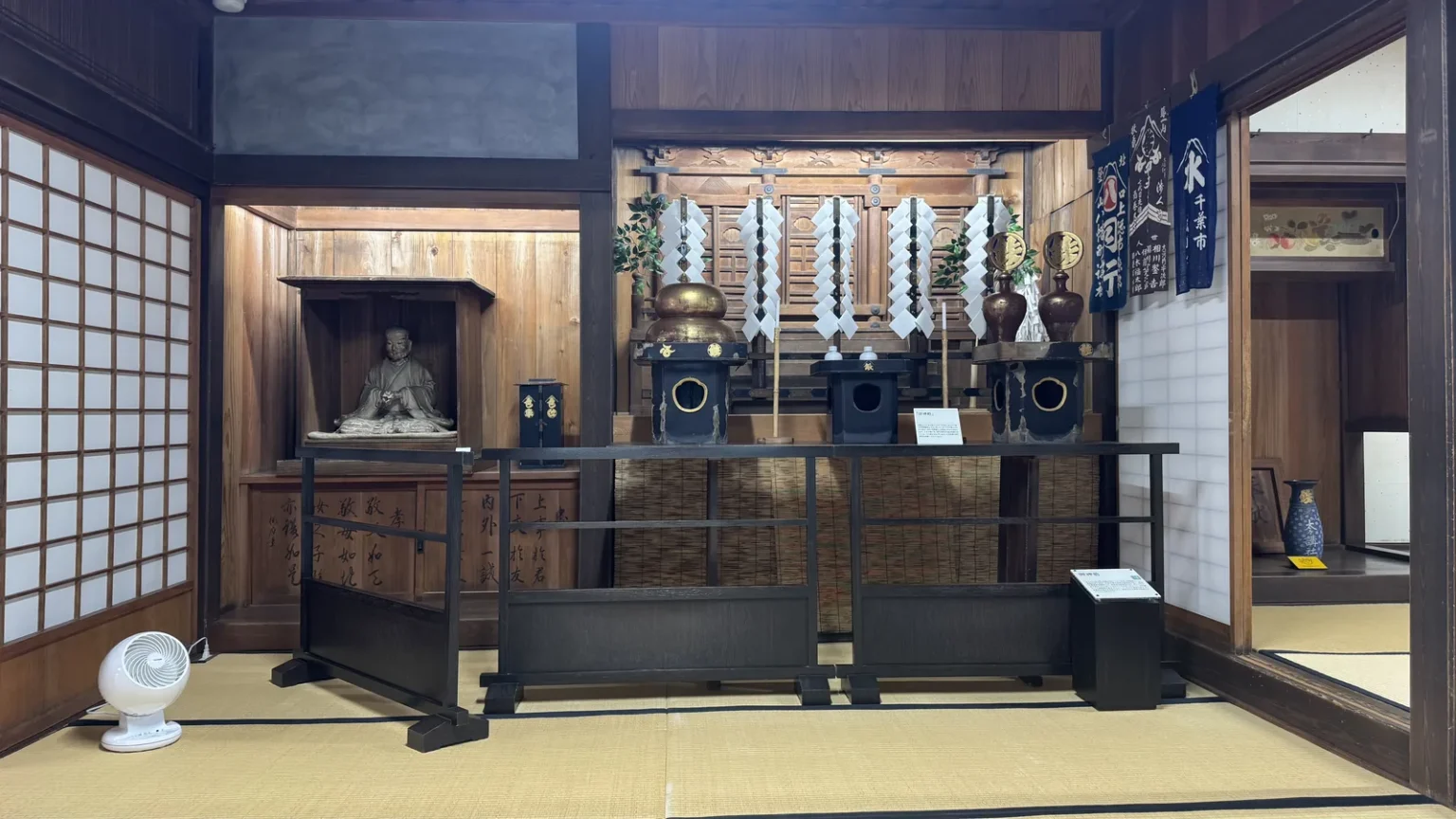
What an oshi house is
The Fujisan Museum, which lists the house as one of its annex facilities, describes an oshi (御師) as someone who looked after people climbing Mt Fuji in faith. They offered their own home as lodging, prayed on the pilgrims’ behalf and spread Fuji worship. Their homes are called oshi houses. At the height of the Edo period, the museum says, there were 86 of them in Kamiyoshida, the district of Fujiyoshida where this one stands.
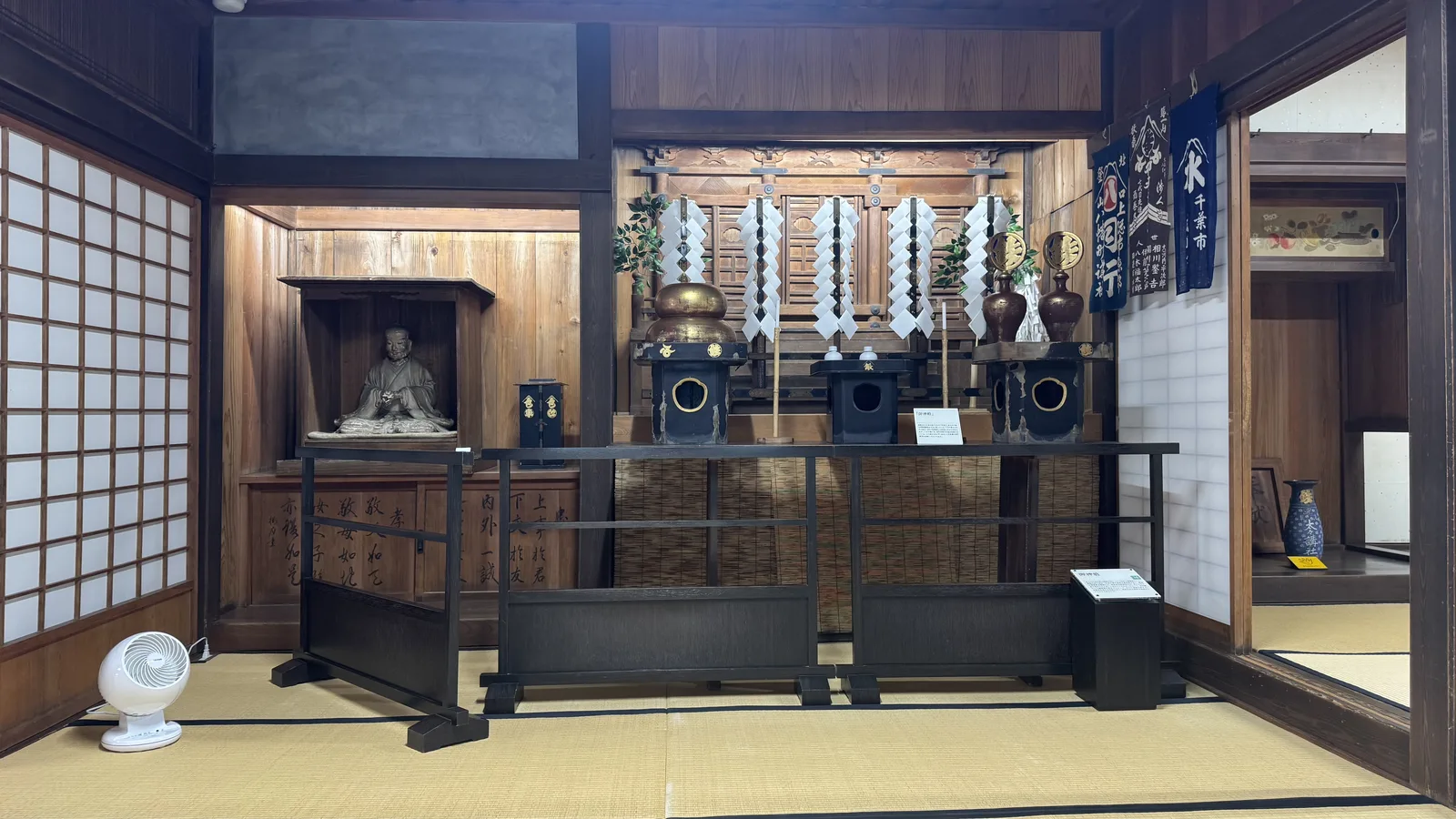
The main house of the Former Togawa Residence was built in 1768, and rear rooms (裏座敷) were added at the end of the Edo period. It is an Important Cultural Property and one of the component sites of the Mt Fuji World Heritage listing. The museum’s page names a shrine room, large guest rooms and displays of old documents inside. For the bigger picture of why a house like this sits inside a World Heritage Site, see why Mt Fuji is a World Heritage Site.
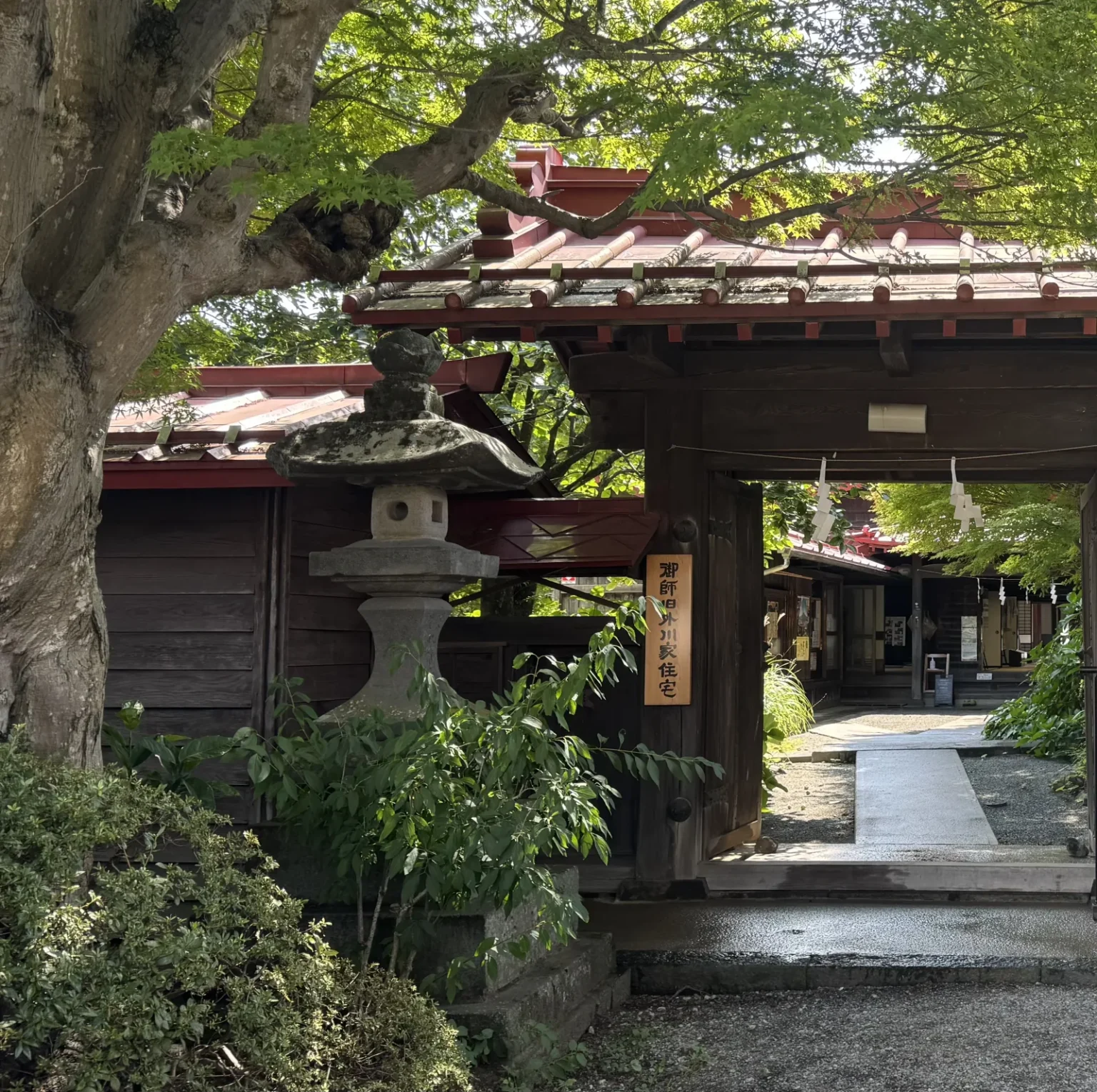
The shape of the street is part of the story. Yamanashi Prefecture’s archaeology centre says the settlement moved to Kamiyoshida in 1572, with plots laid out for about 70 households of oshi, priests, merchants and craftsmen in long, narrow strips running back from the road. The prefecture’s World Heritage management plan describes how a pilgrim group used a house like this: they washed their hands and feet in the water channel on the plot, the group’s leader entered by the formal entrance while the others came in from the veranda, and the guest rooms lay towards the back with the shrine at the very back. At the Togawa house, the rear wing was added around 1860, the plan says, to cope with the growing number of Fuji-ko pilgrims, and a shrine was built into it.
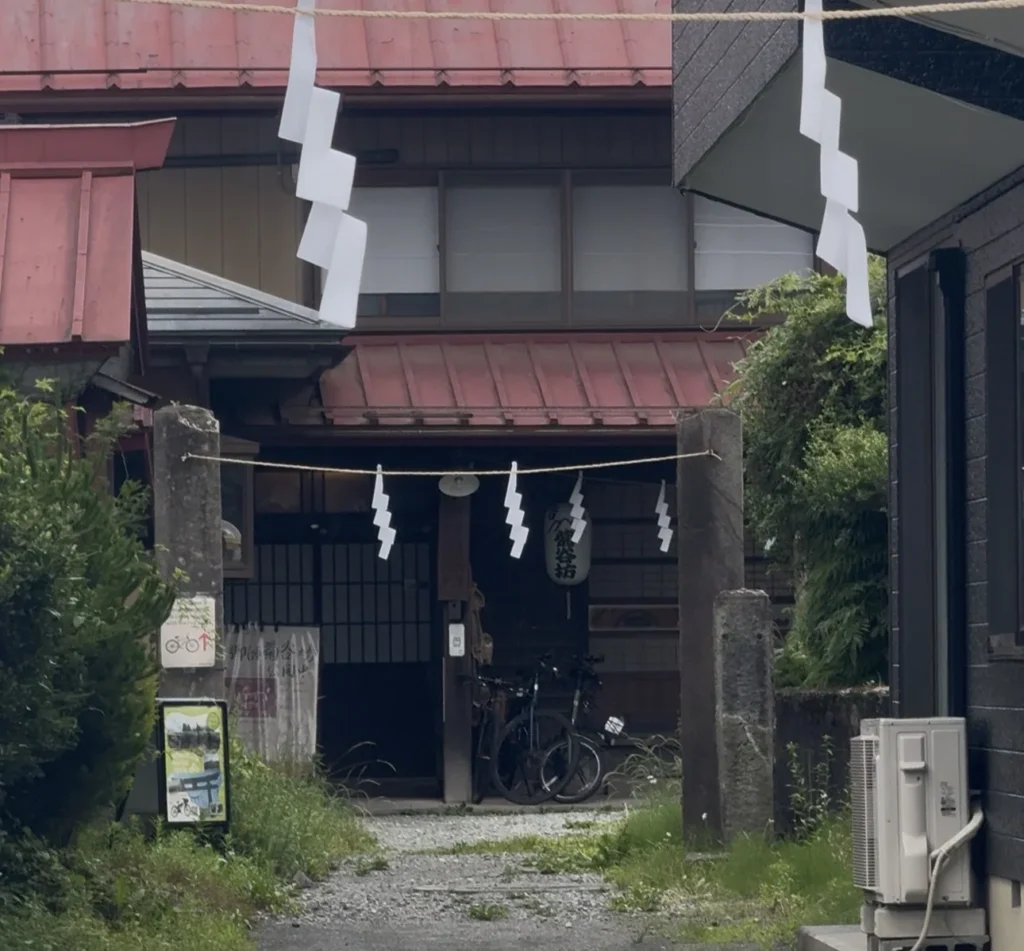
From the street you go through a roofed wooden gate and then down a long gravel path between buildings with red roofs. The house itself sits well back from the road.
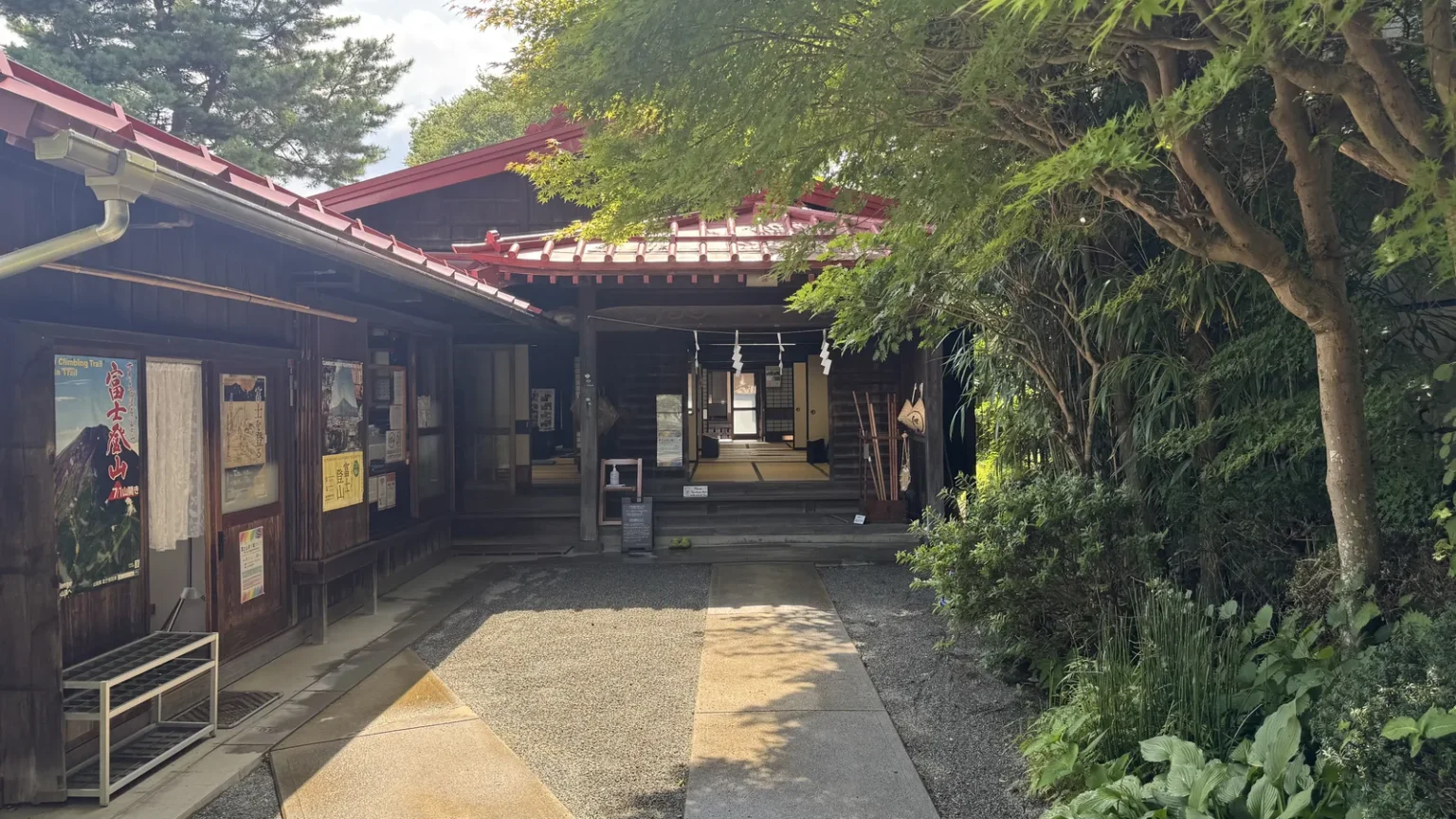
Inside: rooms, displays and an oshi’s travel case
I went on Wednesday 19 August 2026. My house photos are from just before 10:00 to about 10:20 in the morning. The entrance, the reception and the place to take off your shoes were all easy to find, and I didn’t come across any area where photos were banned.
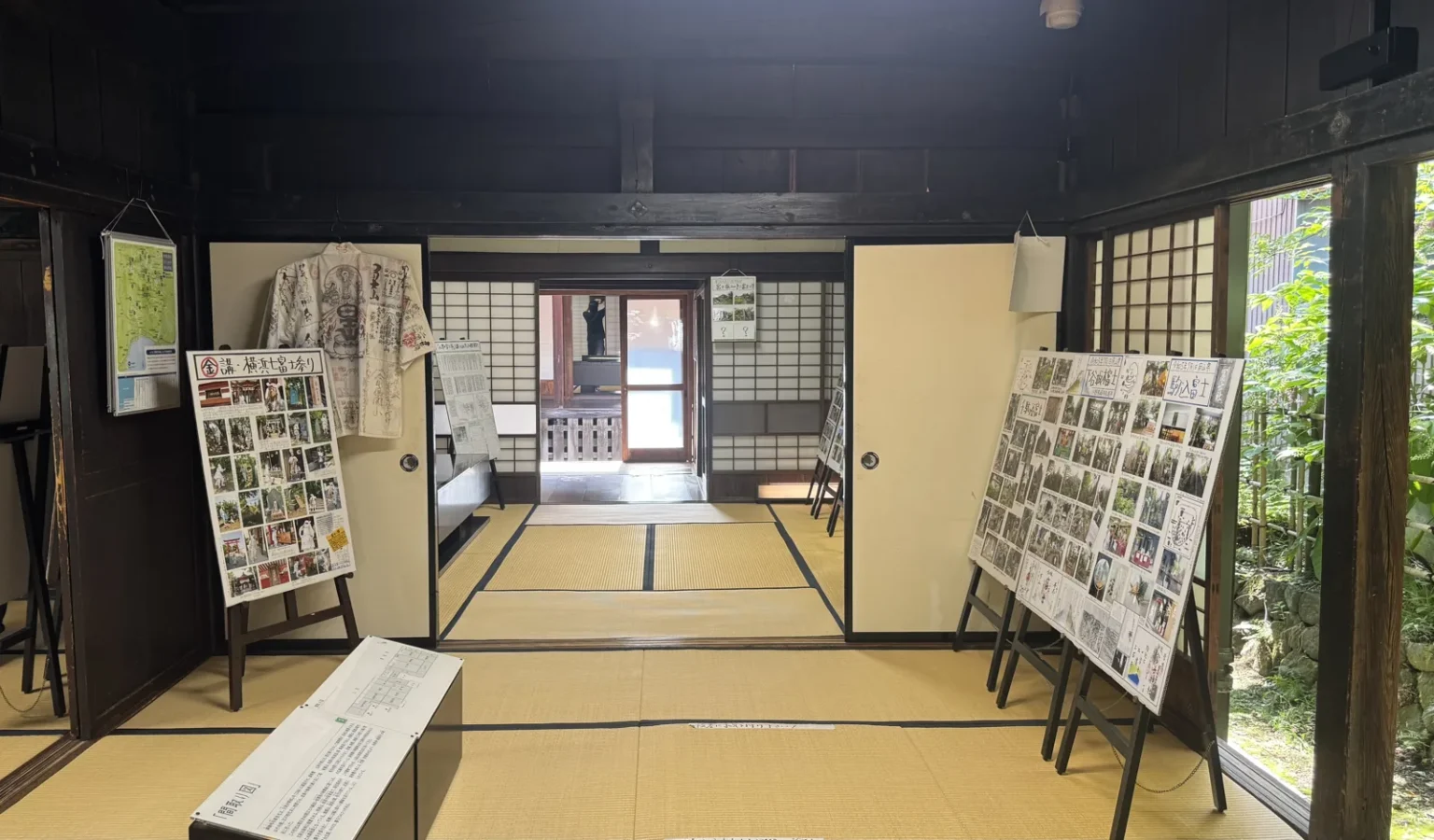
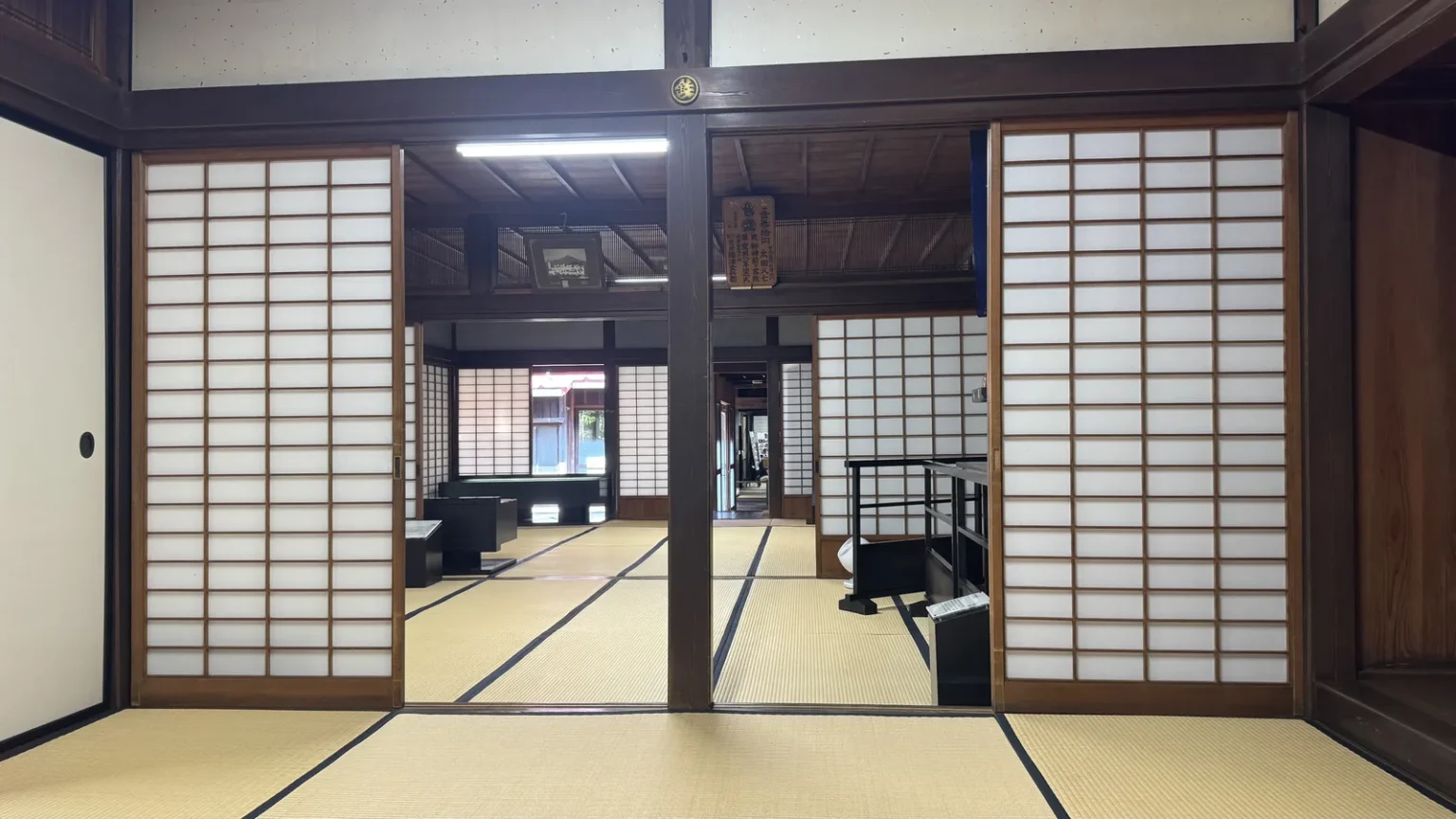
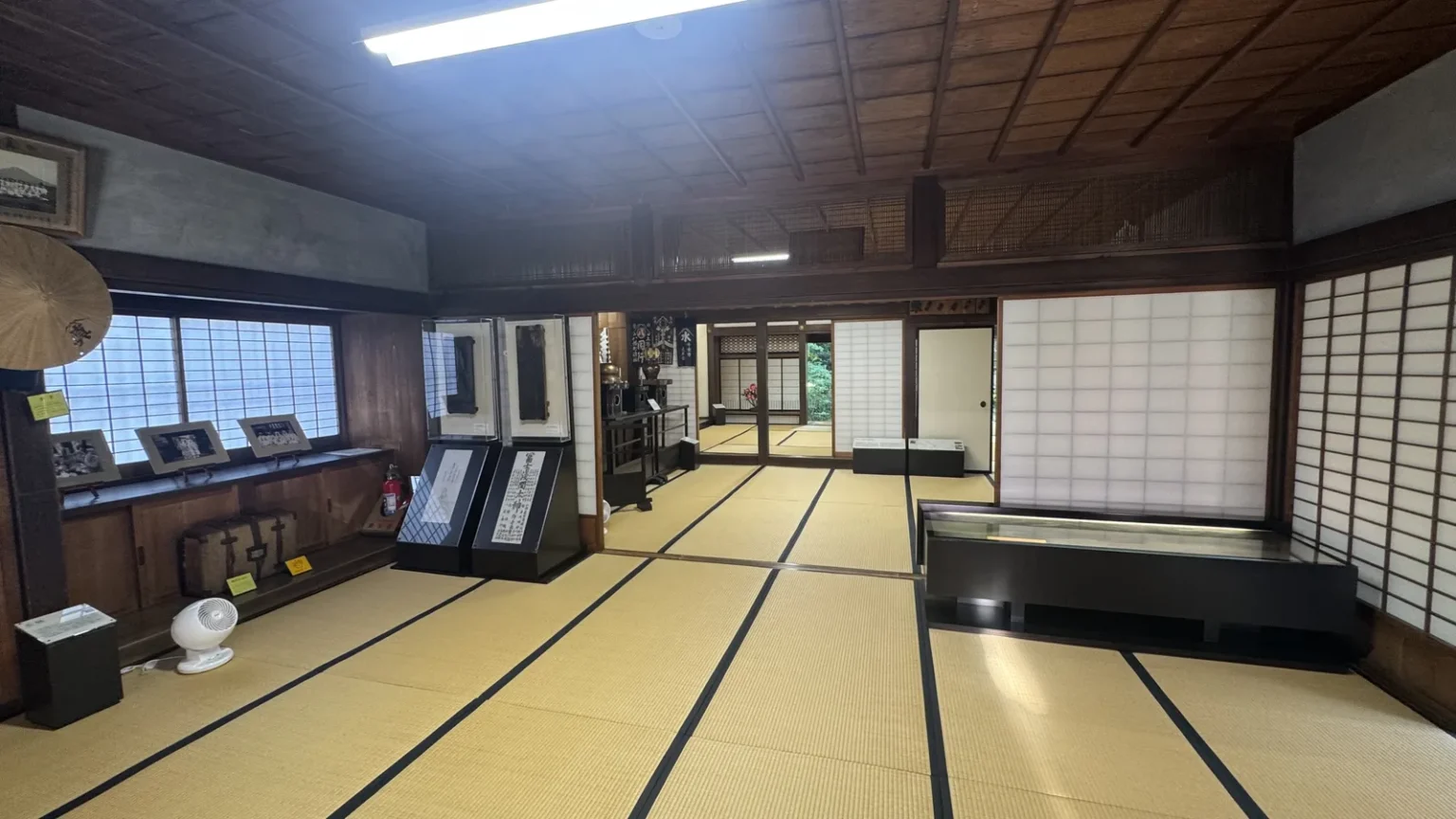
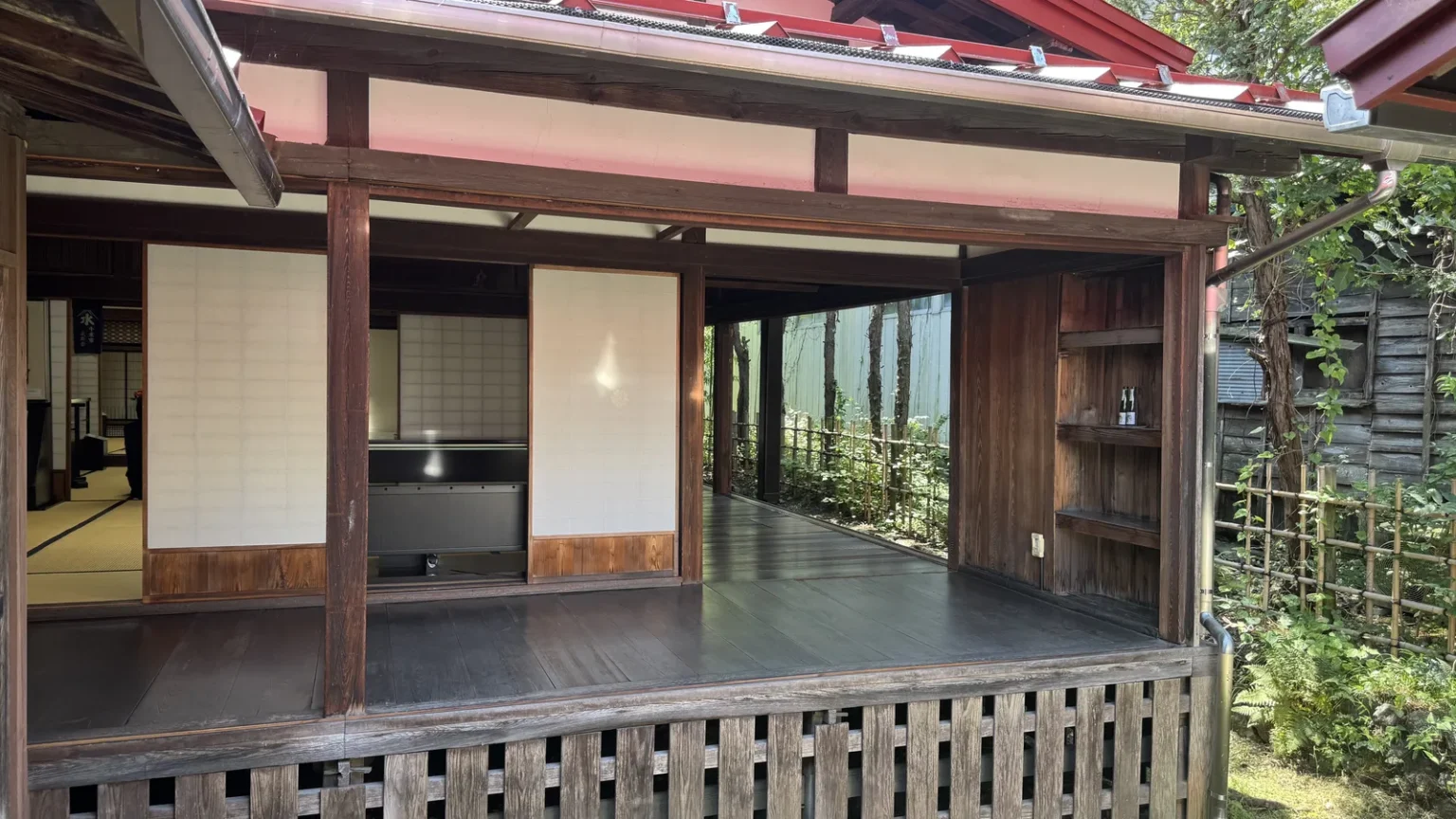
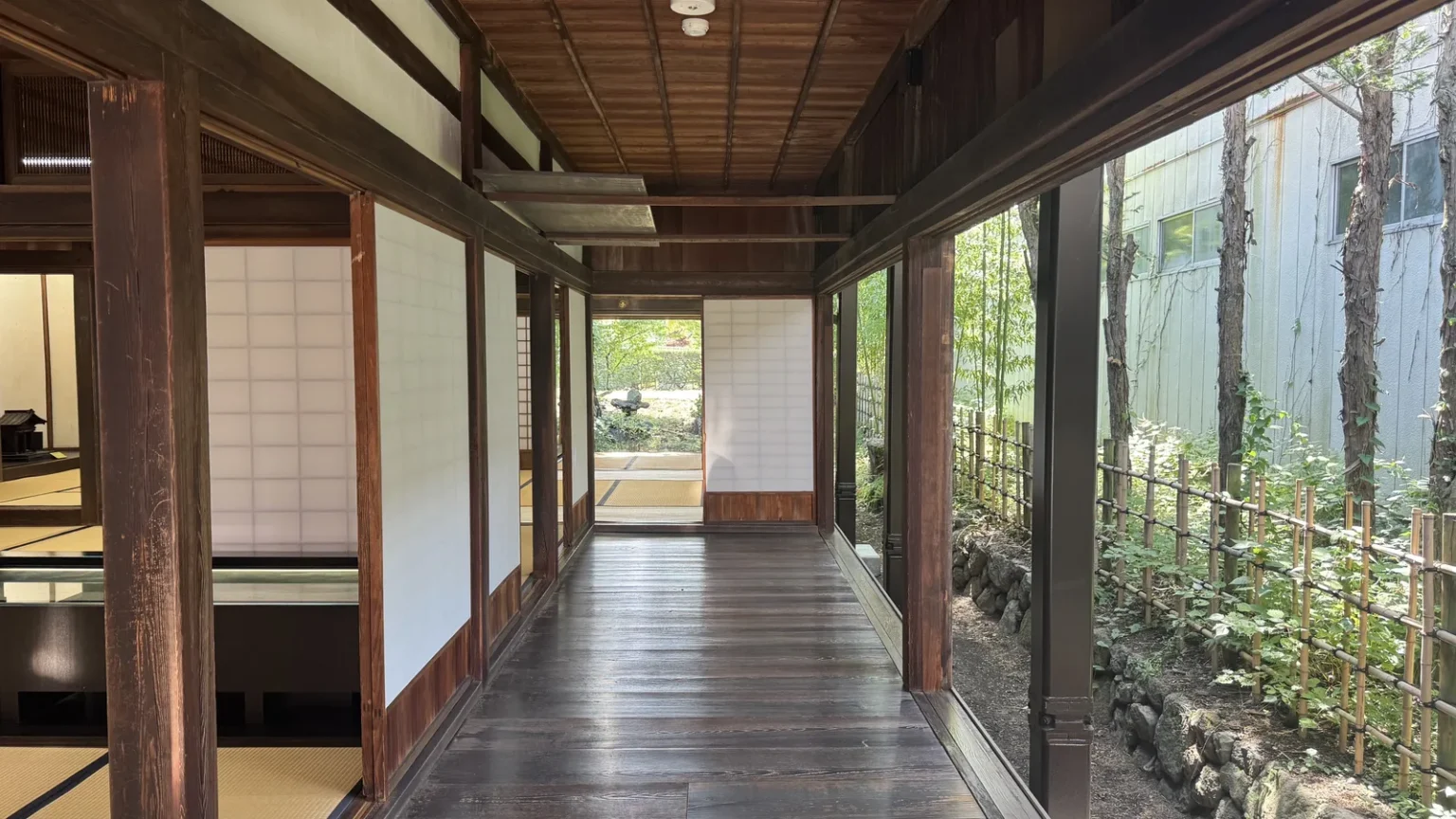
Inside, it is mostly tatami. One room has display boards of photos and text on stands, and from there the sliding doors open onto more rooms, one after another. A long hall under a dark wooden ceiling has display cases along one wall.
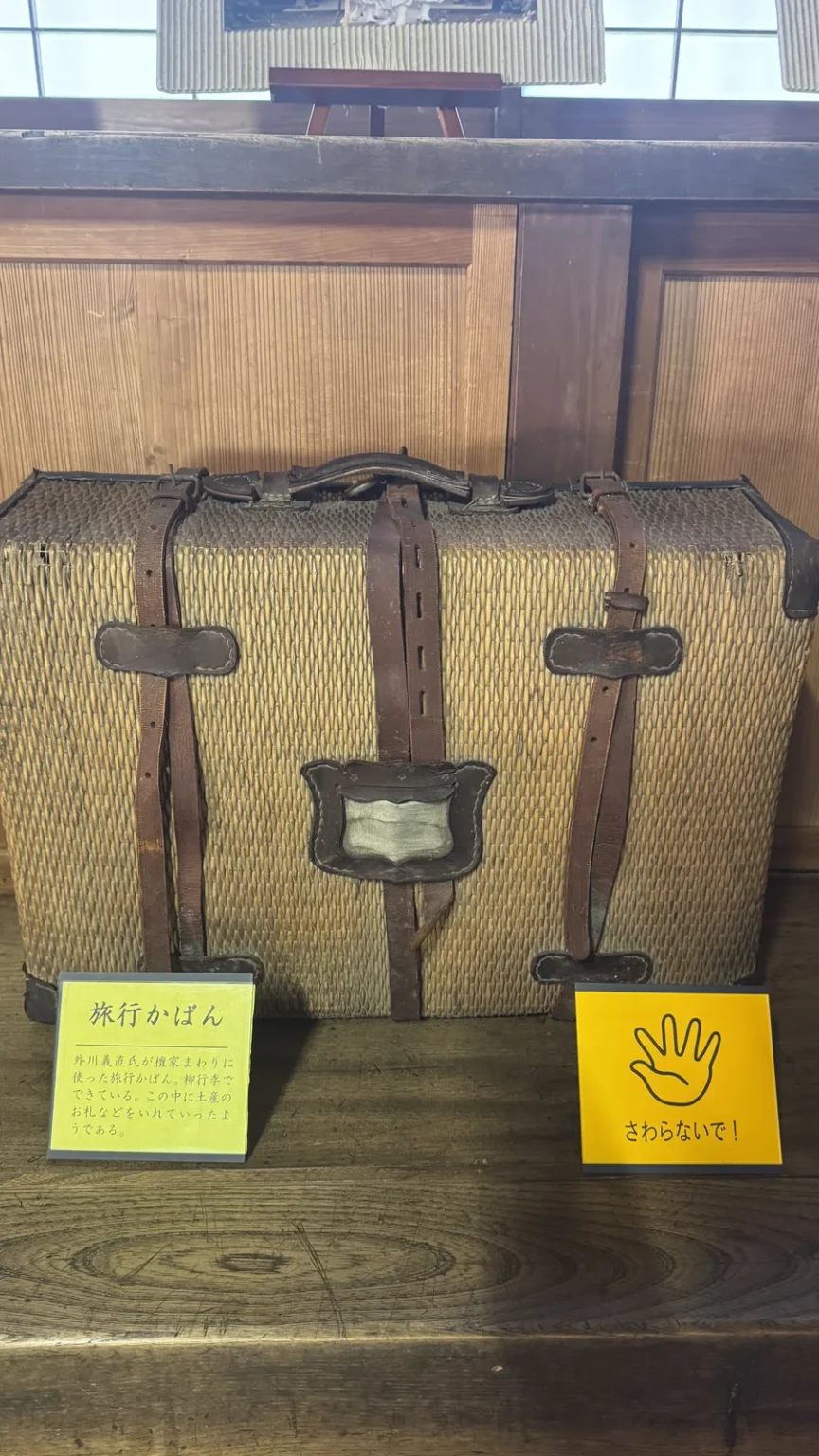
Two things on display are worth slowing down for, and both come with labels that tell you more than the objects do on their own. One is a woven wicker travel case with straps. Its label says 外川義直, of the Togawa family, used it when visiting the family’s patrons, and that talismans and other gifts seem to have been carried in it. So the oshi’s work also took them out on the road, to the households that supported them.
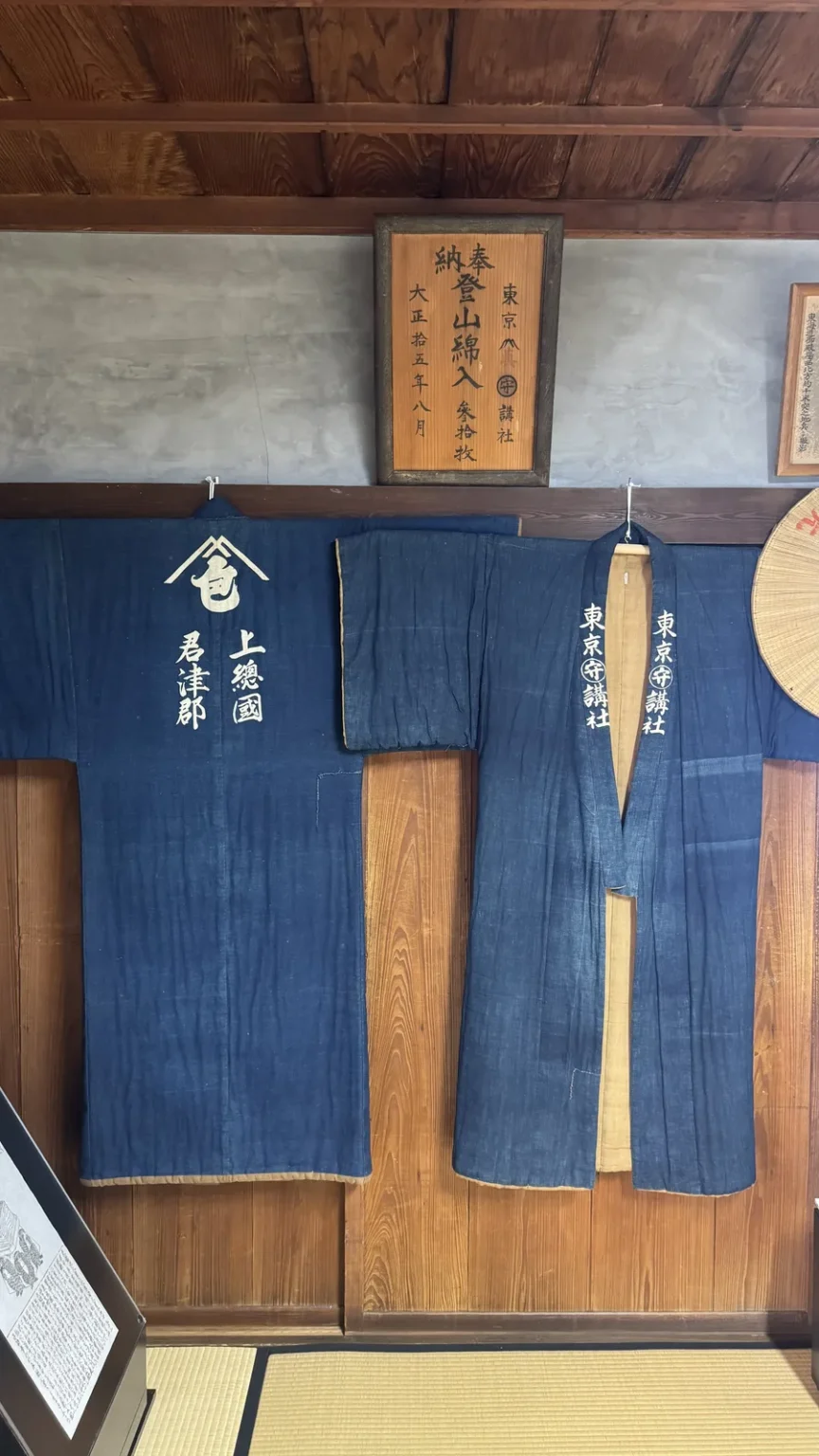
The other is a pair of indigo coats with white lettering, hanging below a wooden plaque. The plaque records a dedication of thirty padded climbing coats (登山綿入) by a pilgrim group from Tokyo in August 1926.
What stayed with me
What stayed with me most was the old clothing on display. It looked well-worn and carried a real sense of history. Walking from room to room, I could picture how people lived in this house, and how they looked after the climbers who stayed here.
The other thing I noticed was the care. It is an old-style house, but I could see it had been strengthened over the years. The most recent work closed it until March 2026 before it reopened on 8 April: Fujiyoshida City’s reopening notice describes steel frames around the main house and the rear wing, bracing above the ceilings and work to strengthen the ground. I could feel how much the people looking after it now want to keep its history going.
No guide on hand: use the app
No one was giving explanations when I went, and I didn’t find any English-language explanations or materials during my visit. Instead I downloaded an app and went round on my own, reading its notes as I went.
The museum’s page says the house uses an audio guide system called Pocket Curator (ポケット学芸員): you install it on your own smartphone and it gives text and audio guides to the displays. The page also offers instructions for the app in Japanese and English and a pamphlet in both languages, and suggests downloading the app before you arrive. Groups who want someone to explain the displays are asked to book in advance, so that staff can be arranged.
If you’d rather see the Fuji area with a guide than piece it together with an app, these are general Mt Fuji tours to browse; check each itinerary for stops.
Browse Mt Fuji tours on KlookSee guided Mt Fuji tours on MagicalTripHours, fees and practical notes
These are from the Fujisan Museum’s page for the house, read on 22 October 2026. Check it before you go, as hours can change.
| Item | Details |
|---|---|
| Open | 9:30–17:00, last entry 16:30 |
| Closed | Tuesdays, and over the year-end and New Year holidays |
| Adults | ¥100 (¥80 each in a group of 20 or more) |
| Elementary, junior high and high school students | ¥50 (¥40 each in a group of 20 or more) |
| Parking | Free car park next door (12 cars, per the city tourism guide) |
| Phone | 0555-22-1101 |
| Reopened | 8 April 2026, after closure from April 2024 to March 2026 for earthquake-proofing |
Shoes off
You take your shoes off to go in. The entrance, reception and shoe area were easy to find on my visit.
Photos
I didn’t see any areas where photos were banned. Some objects, like the travel case, have do-not-touch signs beside them.
Combined ticket
The museum’s page says that on the same day, if you show the individual adult ticket (個人一般) you bought here at the Fujisan Museum’s reception, you can buy the museum’s combined ticket by paying the difference.
Time
My visit took 30 to 40 minutes. Leave extra time if you want to walk the Kanadorii street as well.
The Kanadorii and the old pilgrim street
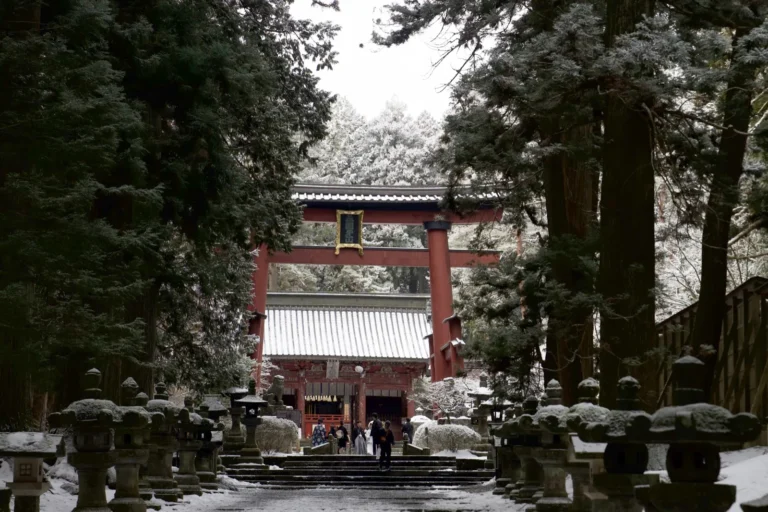
Around the visit I walked the street by the Kanadorii (金鳥居) and past other oshi houses. The two photos in this section are my photos from a different day, not from the morning of my visit.
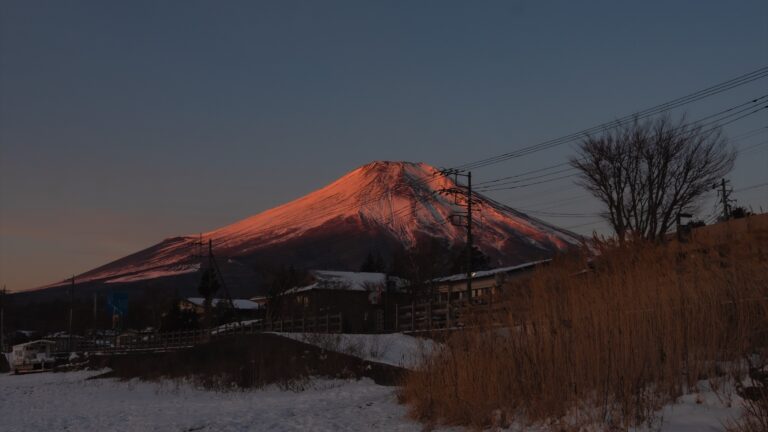
The multilingual text published by Japan’s tourism authorities explains why this gate matters. The Kanadorii stands a few minutes from Fujisan Station and marks a boundary: it was the first of eight torii that pilgrims from Edo passed on the way up the mountain, and Mt Fuji can be seen between its pillars. The first one was put up in 1788 by Fuji pilgrim groups (Fuji-ko), with wooden pillars wrapped in copper. Storms brought it down twice, and it was rebuilt in 1831 and 1878. It was taken down in 1942, when its materials were requisitioned in the war, and the present copper-clad concrete gate was completed in 1957, about 30 m closer to Fuji than the old site.
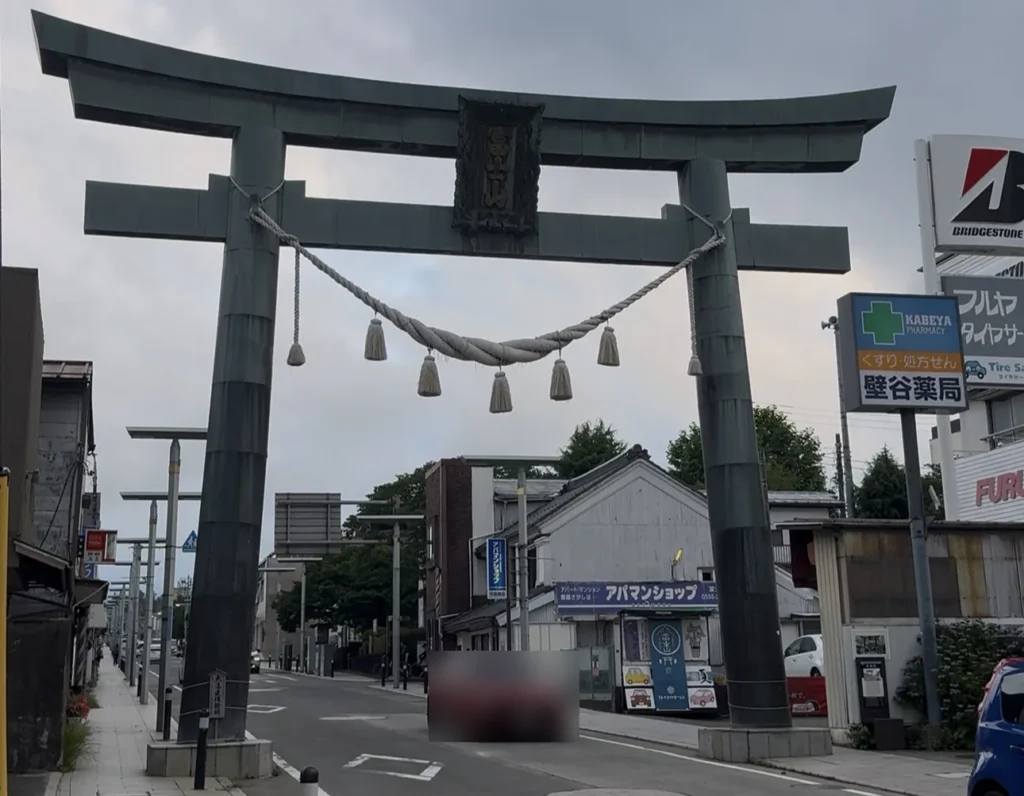
Beyond the gate, the same text says, dozens of oshi houses once lined the road, and it counts five that still receive visitors; that doesn’t mean all of them are open for walk-in sightseeing.
Two more Fujiyoshida guides that go with this one: Kitaguchi Hongu Fuji Sengen Shrine and the Yoshida Fire Festival. For a completely different side of Fujiyoshida, there are the Showa-era backstreets of Nishiura, and the weaving town at its Hataori-machi Festival. For how to behave at the shrines on the pilgrim route, see shrine and temple etiquette.
Other oshi houses in Fujiyoshida
Don’t expect to walk into other oshi houses the way you can at the Togawa house. From Fujiyoshida City’s cultural-property pages and the houses’ own sites:
| House | What the city says |
|---|---|
| Osano house (小佐野家住宅) | Important Cultural Property and World Heritage component, rebuilt around 1861. A private home, not open to the public; there is a replica inside the Fujisan Museum. |
| Tsutsuya (筒屋) | Registered Tangible Cultural Property (March 2025); still receives Fuji-ko groups. Public day-visit information was not found. |
| Ogan-maru (大鴈丸) | Registered Tangible Cultural Property (March 2024); now used as a guesthouse and cafe (city tourism guide). |
| Kikuyabo (菊谷坊) | Registered Tangible Cultural Property (February 2026); takes overnight guests (its own booking site). |
The city’s own half-day walking course strings the pilgrim town together: Fujisan Station, the Kanadorii, the Togawa house, the Oshi-machi rest house next door, then on along the old street to Kitaguchi Hongu Fuji Sengen Shrine, where the Yoshida climbing trail begins. The city says the Fuji-ko leader Jikigyo Miroku made the Yoshida route the main pilgrims’ way up in 1733.
Beyond the mountain itself
It is easy to look only at Mt Fuji. But the faith, history and culture that grew up around the mountain are still here, in houses like this one and on the street outside, and I’d love more visitors to experience that side of it as well. If the mountain is hidden in cloud on the day you come, this is also an indoor stop that doesn’t depend on the view. My Mt Fuji visibility forecast can help you decide which part of the day to give to the mountain and which to the town.
Getting there
The house is at 3-14-8 Kamiyoshida, Fujiyoshida. The city’s tourism guide gives about 10 minutes on foot from Fujisan Station, and its international page about 5 minutes from the Kanadorii towards the mountain. By car it lists about 10 minutes from Kawaguchiko IC or Fujiyoshida IC. If you are coming from Tokyo, my Tokyo to Kawaguchiko access guide covers the routes into the Fuji Five Lakes area. The free car park next door has 12 spaces for cars, according to the tourism guide. The Fujisan Museum itself is in a different direction, about 15 minutes from Fujisan Station by bus towards Lake Yamanaka, per its access page.
With a car you can park next door for free and link the house with the lakes the same day.
Compare rental cars around Mt Fuji on Discover CarsSearch Japanese rental car companies on Rakuten TravelWhere to stay
Fujiyoshida or Lake Kawaguchi both work as a base for this. My Kawaguchiko vs Fujiyoshida guide compares the two, and the Mt Fuji hub gathers the rest of what I’ve written about the area.
Staying a night lets you visit at opening time at 9:30 and still have the afternoon for the lakes.
Compare Lake Kawaguchiko hotels on Booking.comIs the Former Togawa Residence open again?
Yes. The Fujisan Museum says it reopened on 8 April 2026 after earthquake-proofing work that closed it from April 2024 to March 2026. Hours are 9:30 to 17:00, with last entry at 16:30, and it closes on Tuesdays and over the year-end and New Year holidays.
How much does it cost?
Adults ¥100, and elementary, junior high and high school students ¥50. Groups of 20 or more pay ¥80 and ¥40.
Is there an English guide?
When I went on 19 August 2026, no one was giving explanations, and I didn’t find English explanations or materials. I used an app on my phone instead. The museum’s page lists the Pocket Curator app for text and audio guides, and offers instructions for the app and a pamphlet in English.
How long does a visit take?
It took me about 30 to 40 minutes.
Can you take photos inside?
I didn’t see any areas where photos were banned on my visit.
Is there parking?
The museum’s page says visitors can use the free Togawa-ke car park next door.
Sources
- Fujisan Museum, Former Togawa Residence page (reopening, history, hours, fees, parking, Pocket Curator app, combined ticket): fy-museum.jp
- Japan Tourism Agency multilingual text, Kanadorii: mlit.go.jp
- Visit and house photos: my own visit, 19 August 2026. Kanadorii and street photos: mine, from a different day. Pages read on 22 October 2026.
- Fujiyoshida City reopening notice (retrofit details): city.fujiyoshida.yamanashi.jp
- Fujiyoshida tourism guide (walking time, car, parking 12 cars): fujiyoshida.net; half-day course: fujiyoshida.net
- Yamanashi Prefecture archaeology centre (1572 town layout): pref.yamanashi.jp; World Heritage management plan (pilgrim use, rear wing c.1860): pref.yamanashi.jp
- Fujiyoshida City cultural properties (other oshi houses): page 1096, page 1097; World Heritage components and Kitaguchi Hongu: page 1095
- Fujisan Museum access (bus about 15 minutes): fy-museum.jp
- Ogan-maru guesthouse: fujiyoshida.net; Kikuyabo: oshi-kikuya.com
- Fujiyoshida City international page (5 minutes from the Kanadorii): city.fujiyoshida.yamanashi.jp; Fujisan Museum visitor information (closed Tuesdays except July and August): fy-museum.jp
Some links above are affiliate links — they cost you nothing extra and help keep this site going.
Join travelers discovering Japan's hidden side
Weekly dispatches from off-the-beaten-path Japan — spots and stories you won't find in guidebooks.
No spam. Unsubscribe anytime.
Welcome aboard!
You're in. See you in your inbox soon.