
Culture · Etiquette · Shrines and temples
At a shrine, it is polite to bow once at the torii; rinse your hands and mouth if there is a water basin, make an offering, then bow twice, clap twice and bow once. At a temple, bow at the gate and pray with your hands pressed together: no clapping. A few shrines clap four times, some halls ask you to take off your shoes, and photo rules vary by site, so check its notices.
Shrine or temple? Clues to tell them apart
Shrines (jinja) are Shinto and enshrine kami. Temples (tera) are Buddhist. The rows below are clues, not a test: when in doubt, read the signs at the hall and follow them.
| Look at | Shrine vs temple |
|---|---|
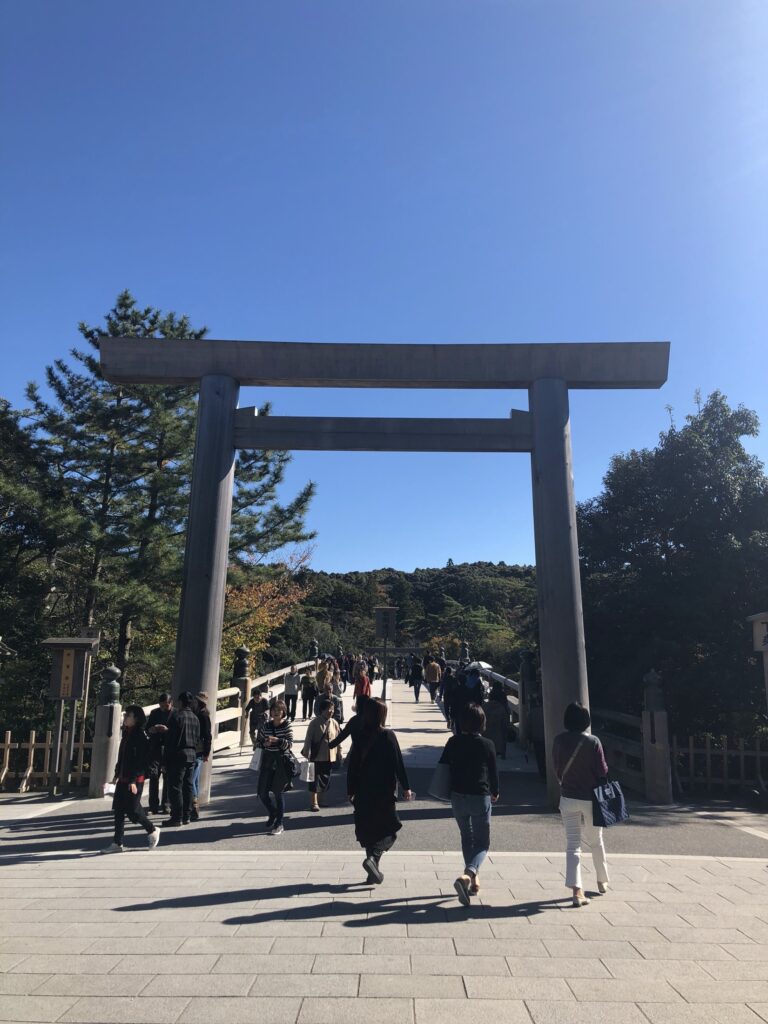
| The gate | Shrine: a torii, the boundary of the sacred ground (Jinja Honcho). Temple: often a roofed main gate, the sanmon |
| The name | Shrine: titles such as -jinja, -jingu, -gu or -taisha (Jinja Honcho). Temple: often -ji, -dera or -in, as in Sensoji, Kiyomizu-dera, Kotoku-in |
| Who is worshipped | Shrine: kami, Japan’s gods. Temple: Buddhas and bodhisattvas, such as Kannon at Sensoji |
| How you pray | Shrine: bows and two claps. Temple: hands pressed together, no clapping (Yamanashi guide) |
| Over the offering box | Shrine: at many shrines, a large bell on a rope (Jinja Honcho). Temple: where there is one, a flat gong, the waniguchi (Yamanashi guide) |
| Who looks after it | Shrine: Shinto priests. Temple: Buddhist clergy |
A torii or a name alone is not decisive. Shitennoji, a temple in Osaka, has a stone torii in front of its west gate, built in 1294 (JAANUS, the Japanese architecture dictionary). Some temple names end in -do, “hall”, as at Sanjusangendo. Sensoji adds a note on names: it is read Sensoji, not Asakusa-dera, because temple names are often read the Chinese-derived way.
At a shrine, step by step
This is the sequence Jinja Honcho, the national Association of Shinto Shrines, publishes as the basic form. Jinja Honcho says some shrines have their own way, and to follow it there.
1. At the torii: it is polite to bow
Jinja Honcho calls it polite to bow once before passing under the torii, “as if visiting the home of someone senior”, and to turn back towards the hall and bow again when you leave. Yahiko Jinja asks visitors to stop and bow lightly at each torii and at its inner gate too.
2. On the approach: off-centre if you can
Some people avoid the middle of the approach, the seichu, treated as the path of the kami, and bow slightly if they have to cross it. Jinja Honcho’s page on the approach says there is no strict rule, and asks you not to break a shrine’s own rules or bump into other visitors for the sake of it.
3. If there is a water basin: hands, then mouth
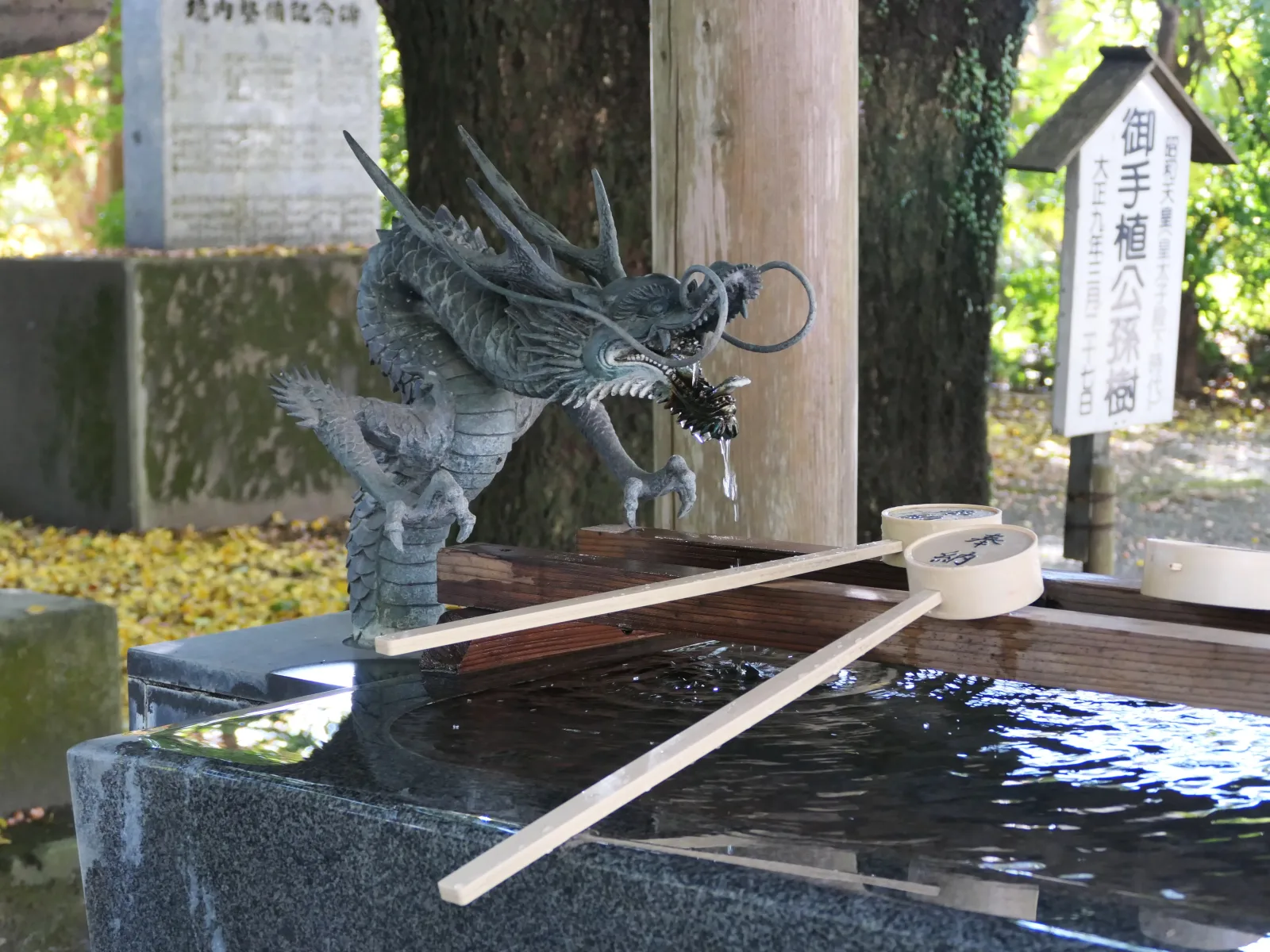
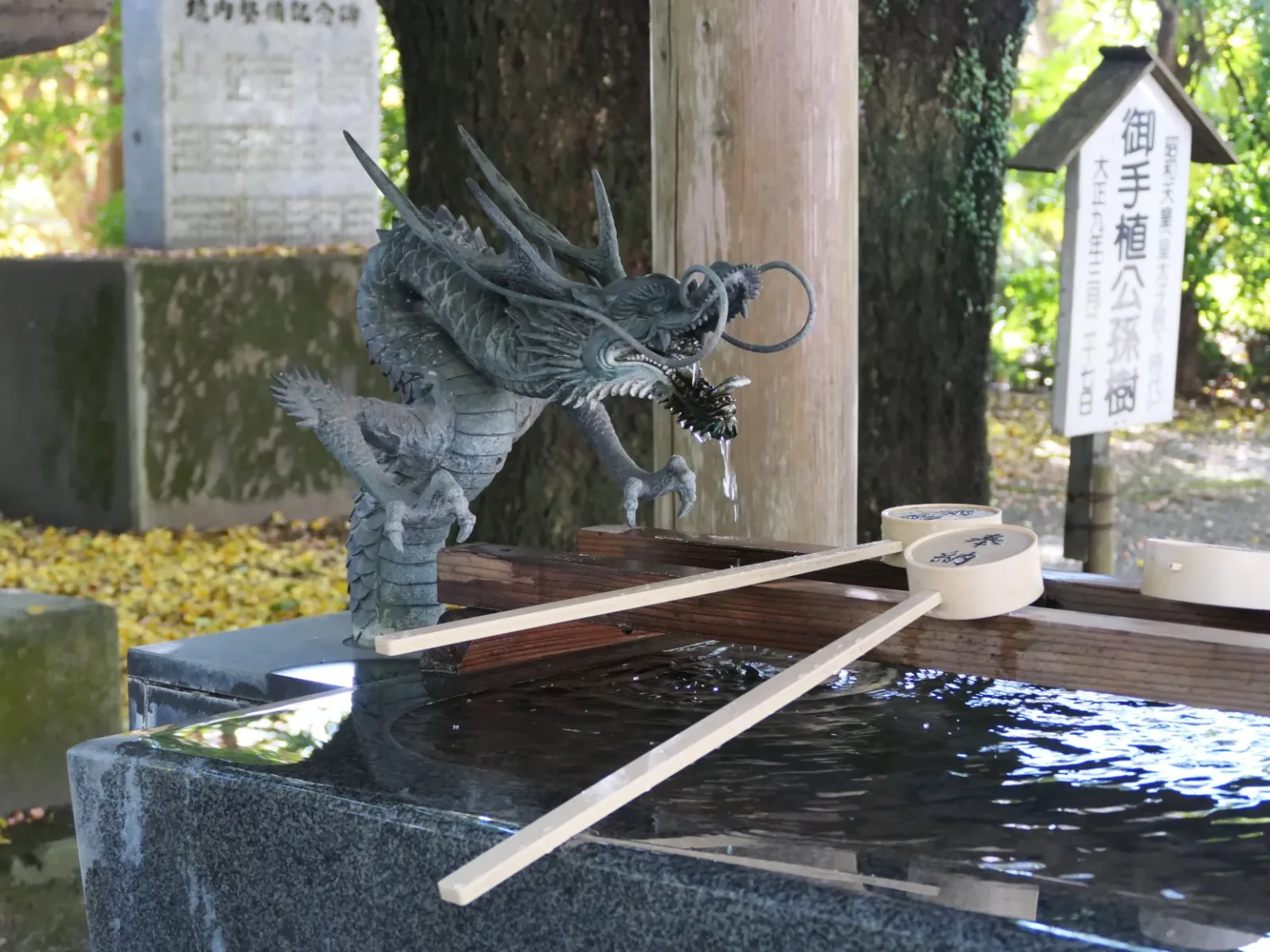
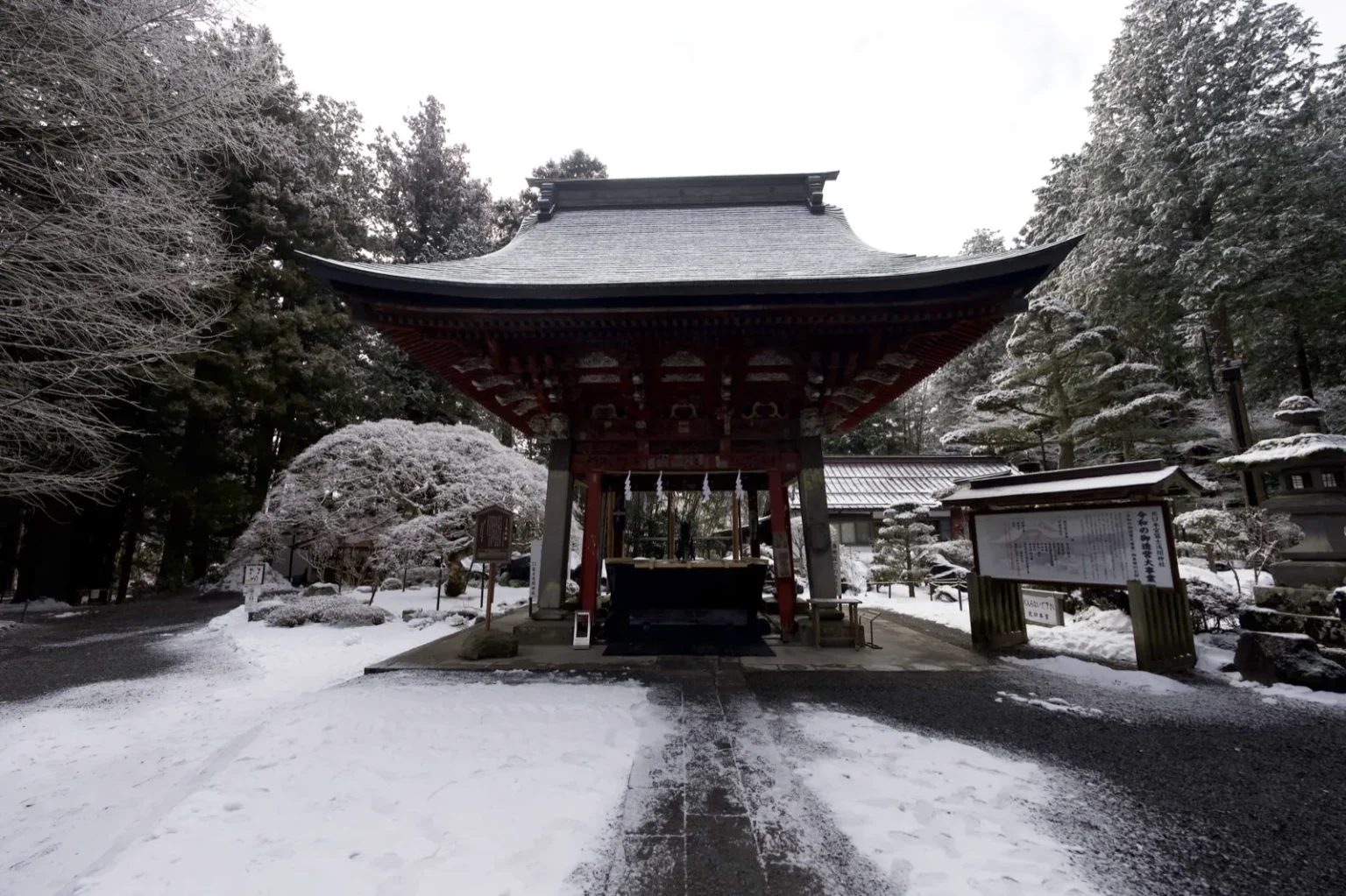
Jinja Honcho’s order: take the ladle in your right hand and pour water over your left. Switch hands and wash your right. Switch back, pour water into your cupped left palm and rinse your mouth; do not put the ladle to your lips. Finish by pouring water over your left hand again. Ise Jingu adds a fifth step: tip the ladle upright so the last water runs down the handle, then put it back. Keep the water out of the basin.
4. The offering, and the bell if there is one
Jinja Honcho says there is no prescribed amount for a shrine offering; the 5-yen pun on goen (a bond) is not an official amount. Tossing it into the box is common, and is even said to carry a sense of purification, but because it is an offering of thanks, Jinja Honcho asks for a careful, respectful motion. If there is a bell for visitors, shake its rope: Jinja Honcho says the sound purifies the worshipper. The Yamanashi guide says bell or offering can come first. Carry some coins for the box; our cash vs card guide covers where else cash is still needed.
5. Two bows, two claps, one bow
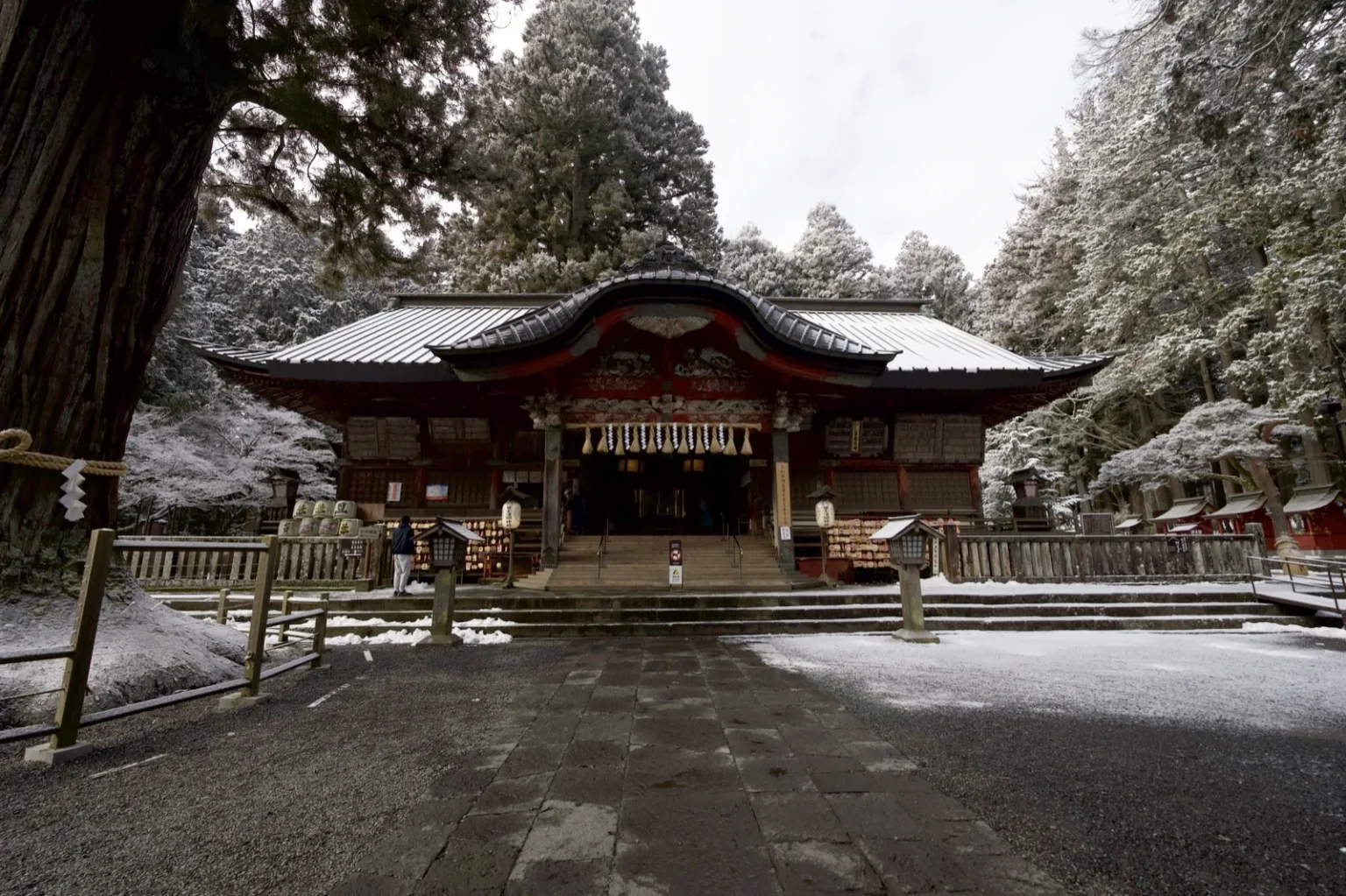
Stand straight. Bow twice, back flat, from the waist to about 90 degrees. Bring your hands together at chest height, slide the right hand down to about the first joint of the fingers, open them to shoulder width and clap twice. Line your fingers up again (this is where people make their prayer). Bow once more.
6. Step aside and leave
Yahiko Jinja says there is no rule that you pray in the centre, or one person or one family at a time; when it is crowded, line up side by side. On the way out, Jinja Honcho suggests turning towards the hall and bowing at the torii.
“There is no strict rule for how to walk the approach.” Jinja Honcho on the centre of the path, in my translation.
At a temple, step by step
The Yamanashi guide says procedures can differ from temple to temple. The outline below is its version.
1. Bow at the gate
Stop in front of the main gate and bow once.
2. Rinse, if there is a water basin
The same order as at a shrine. Sensoji’s own page asks you to do every step with a single ladle of water from its dragon spout, then rinse the handle.
3. If offered: candles and incense
Where a temple sets out candles or incense, follow that temple’s instructions. One published example is below.
4. Pray with your hands together
Make your offering, ring the gong if there is one, bow, press your palms together at chest height and pray, then bow again. No clapping. At Sensoji the temple asks you to say “Namu Kanzeon Bosatsu”, “I place my trust in Kannon”.
The exceptions: four claps, keep left, shoes off
Each of these comes from the shrine’s or temple’s own page, checked on 12 October 2026.
| Place | What is different |
|---|---|
| Izumo Taisha, Shimane | 2 bows, 4 claps, 1 bow at every hall. Eight claps are used once a year, at the festival on 14 May; four is half that for ordinary days. After praying at the Yatsuashi gate, go round the fence of the main sanctuary anticlockwise to the other halls |
| Usa Jingu, Oita | 2 bows, 4 claps, 1 bow, an old practice its priests use too. Pray at the three halls left, centre, right, and at both the upper and lower shrines |
| Yahiko Jinja, Niigata | 2 bows, 4 claps, 1 bow. The shrine says the origin is unknown, and that two claps are fine too |
| Ise Jingu, Mie | Two claps. Ise asks visitors to keep left in the Outer Shrine (Geku) and right in the Inner Shrine (Naiku), and not to eat or drink in the sacred area (water at the rest areas), smoke, or bring pets. Open from 5 a.m.; the closing time changes with the season, and is 5 p.m. from October to December |
| Sanjusangendo, Kyoto | Shoes off in the main hall; there are shoe lockers at the entrance. Open 8:30 a.m.–5 p.m. from 1 April to 15 November and 9 a.m.–4 p.m. from 16 November to 31 March; last entry 30 minutes before closing |
Rules these sites post
Summarised from each site’s own page, checked on 12 October 2026; Kiyomizu-dera’s notice is dated June 2024.
Food and drink
Kiyomizu-dera bans food and drink in the grounds except capped bottles, and eating while walking. It counts the plaza before the Niomon gate and the outer road as grounds. Kotoku-in, the Great Buddha of Kamakura, accepts only sealed bottles (no cups) and turns away anyone carrying street food. Ise asks for no eating in the sacred area.
Tripods, selfie sticks, drones
Kiyomizu-dera: no drones, tripods or monopods. Kasuga Taisha in Nara bans in principle tripods, monopods, selfie sticks, stepladders or lights where they disturb rituals or visitors, and drones. Ise and Usa Jingu also ban drones, stepladders and live streaming; Izumo Taisha bans drones over its grounds.
Photos where they are not allowed
Usa Jingu bans photos at its main sanctuary, inside its prayer hall and at the charm counter. Higashi Honganji in Kyoto lets you photograph its halls for personal use, but not during services, and not with flash. Kyoto’s Code of Conduct for Sustainable Tourism asks visitors to “check notices such as ‘No Photography’ sign”.
Blocking the way
Kiyomizu-dera asks visitors not to sit down in the grounds or shoot from one spot for a long time. Ise bans long tripod sessions in one place.
Costume and wedding shoots
Kiyomizu-dera bans wedding, cosplay and model shoots. Kasuga Taisha bans in principle cosplay shoots, and wedding-dress shoots unless you married there. Commercial shooting is banned or needs advance permission at Kiyomizu-dera, Kasuga, Ise and Usa.
Coins and pets
Izumo Taisha calls throwing coins into its giant straw rope disrespectful. Pets: Ise does not allow them (leave them at the guard post); Kiyomizu-dera allows only assistance dogs; Izumo allows them in the grounds but not inside the sanctuary fence or the halls.
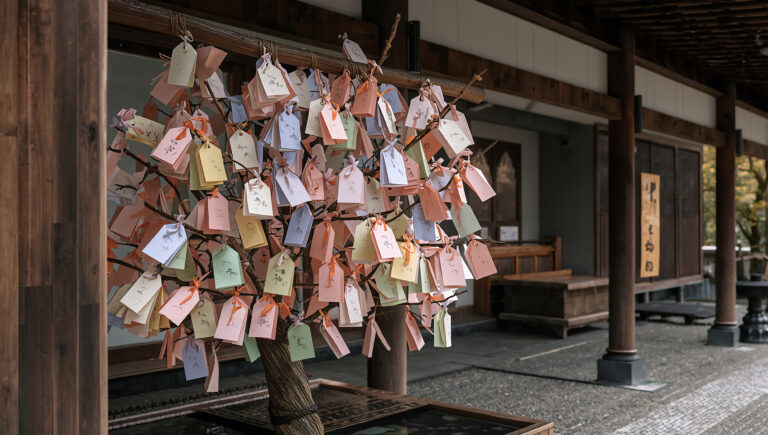
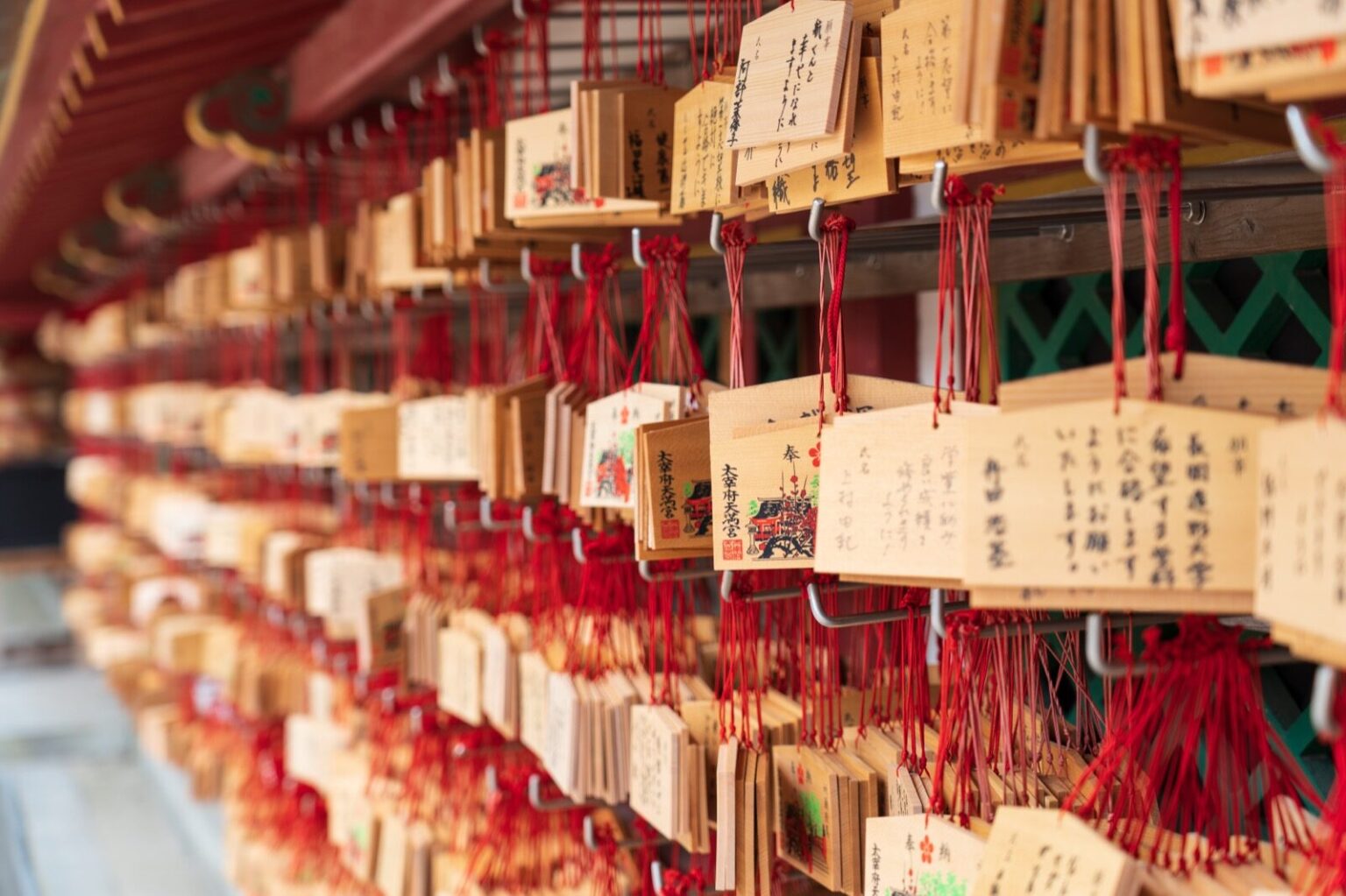
Kasuga also asks people photographing ema to mind the names and wishes written on them. Our photography etiquette guide covers streets and people as well.
Why Fushimi Inari posted a notice in September 2026
From 2 September 2026, videos of people dancing under the torii at Fushimi Inari were picked up one after another on X, J-CAST News reported on 10 September. J-CAST said many appeared to have been posted by the dancers themselves, on apps such as TikTok, and described clips in which other worshippers waited for a dance to end or squeezed past. It described most of the comments it discussed as critical and cited examples saying the site is not a performance venue and is a sacred place of prayer; there were also comments that dancing when nobody else was around would be acceptable.
On 7 September the shrine put a notice on its website in Japanese and English. The English version says it has seen behaviour that disrupts worship or inconveniences others, “including obstructing pathways for photography, dancing, and other performances”, and that staff “will approach and caution anyone engaging in such behavior”. The notice was still on the shrine’s news page when we checked on 18 October 2026.
The shrine told J-CAST it had received complaints asking why it allowed the dancing. It said nothing on its grounds had been broken in these incidents, but that it was a pity Japanese culture had not been understood. Its notice asks all visitors to behave respectfully in this place of worship, so that everyone can pray and visit in peace.
Omamori, ofuda, omikuji, ema and goshuin
The guidance below is mostly Jinja Honcho’s, so it covers shrines. For anything from a temple, ask the temple that issued it. Not every temple offers omamori or goshuin: Higashi Honganji in Kyoto (Shinshū Ōtani-ha) says on its FAQ that it has no omamori and does not give goshuin.
| Item | What it is and what to do with it |
|---|---|
| Omamori お守り | A charm you carry. For shrine charms, Jinja Honcho says return it at the year’s end to be burned and get a new one, though you may keep it until your wish comes true |
| Ofuda お神札 | A shrine talisman kept on the household altar (kamidana). Returned at the year’s end the same way |
| Omikuji おみくじ | A paper fortune. Jinja Honcho, for shrines: tying it in the grounds is a custom, but taking it home is fine too. Sensoji: put the stick back in the box; if you draw “bad luck”, tie it at the place provided |
| Ema 絵馬 | A wooden plaque you write a wish on and hang at the shrine. Jinja Honcho traces it to offerings of real horses |
| Goshuin 御朱印 | A seal from a temple or shrine marking a visit, often with brush-written calligraphy; formats and fees vary by site (below) |
Returning shrine charms
For charms and talismans received at a shrine, Jinja Honcho says to thank them and return them to the shrine they came from, at its box for old talismans (古神札納所). If that shrine is too far, ask a nearby shrine whether it will burn them before you take them there. Many shrines burn old charms and New Year decorations between 31 December and 15 January, it adds. Izumo Taisha accepts old charms by post if you cannot visit. Ise takes back only talismans and charms at its return boxes (opposite the water basin on the Outer Shrine’s main approach, and before the Hiyoke Bridge at the Inner Shrine), not ropes or ornaments.
Goshuin, briefly
Jinja Honcho describes goshuin as proof of a shrine visit, probably descended from receipts given for copied sutras offered at shrines and temples. The Yamanashi guide says it is not a souvenir stamp, that there is a fee which differs by site, and that you should avoid times when staff are away or busy, and get in touch before you go. We suggest praying first. At Ise, the counters at both main shrines are open 6 a.m.–6 p.m. (to 5 p.m., October to December); Sensoji’s is at the Yogodo hall, on the west side of the grounds.
Before you go: mourning, inner areas, hours
For the first visit of the year, see our hatsumode guide. For hands-on rituals, try Kawagoe Kumano Shrine or the money-washing spring in Kamakura’s power spots. Shrine guides: Yasaka, Suwa Taisha and Nikko Toshogu.
FAQ
Do you clap at a temple in Japan?
No. At a temple you bow, press your hands together and pray, then bow again. Clapping belongs to shrines: two claps is the basic form, four at Izumo Taisha, Usa Jingu and Yahiko Jinja.
What if I get the order wrong at a shrine?
If the shrine shows its own method, follow that. Jinja Honcho calls 2 bows, 2 claps, 1 bow the basic form and says to follow a shrine’s own method where it has one. Yahiko Jinja, which claps four times, says two claps are fine too.
How much should I offer at a shrine?
Jinja Honcho says there is no prescribed amount for a shrine offering. It asks for a careful, respectful motion when you put it in the box.
What do I do with a bad omikuji?
Follow the site’s own instructions. Jinja Honcho’s general guidance for shrines is that tying it in the grounds or taking it home are both fine. Sensoji asks people who draw “bad luck” to tie it at its designated place. Our omikuji guide explains how to read the slip itself.
Can I take photos at shrines and temples?
Each site sets its own rules. Usa Jingu bans photos at its main sanctuary and charm counter; Higashi Honganji allows personal photos in its halls except during services and with flash; every site we checked that mentions drones bans them or requires permission. Look for signs.
Can I visit a shrine if someone in my family has died?
Jinja Honcho’s guidance is to follow local custom, or else refrain for 50 days, receiving purification first if a visit cannot wait. Yahiko Jinja asks people not to enter for 49 days (50 in Shinto).
Sources (checked 12 October 2026; Fushimi Inari’s news page rechecked 18 October 2026)
- Jinja Honcho (Association of Shinto Shrines): how to worship (temizu, bows and claps); shrine grounds; torii; the approach; shrine titles; offerings; the bell; ofuda and omamori; returning ofuda; omikuji; ema; goshuin; FAQ (mourning)
- Ise Jingu: worship and manners; FAQ (hours, photography, charms)
- Izumo Taisha: FAQ; drone notice
- Usa Jingu: how to worship; FAQ
- Yahiko Jinja: visiting the shrine
- Kasuga Taisha: photography in the grounds (PDF)
- Yamanashi Tourism Organization: how to visit shrines and temples
- Japan Tourism Agency multilingual database (Shikoku 88 temple association, 2020): praying at a temple
- Sensoji: FAQ; the water basin; English page
- Kiyomizu-dera: etiquette in the grounds (June 2024)
- Kotoku-in: FAQ
- Sanjusangendo: visiting
- Toji: FAQ
- Higashi Honganji: photography guidelines (PDF); FAQ (goshuin, omamori)
- JAANUS (Japanese Architecture and Art Net Users System): Shitennoji torii
- City of Kyoto and Kyoto City Tourism Association: Code of Conduct for Sustainable Tourism in Kyoto, for tourists
- Fushimi Inari Taisha: news page, “A Request to All Visitors”, 7 September 2026 (still listed on 18 October 2026)
- J-CAST News: dancing under the torii at Fushimi Inari, and the shrine’s comment, 10 September 2026 (Japanese)
Join travelers discovering Japan's hidden side
Weekly dispatches from off-the-beaten-path Japan — spots and stories you won't find in guidebooks.
No spam. Unsubscribe anytime.
Welcome aboard!
You're in. See you in your inbox soon.