
| Prefecture | Representative school |
|---|---|
| Hokkaido (North) | Shirakaba Gakuen |
| Hokkaido (South) | Sapporo Nichidai |
| Aomori | Aomori Yamada |
| Iwate | Hanamaki Higashi |
| Akita | Yokote |
| Yamagata | Tsuruoka Higashi |
| Miyagi | Sendai Ikuei |
| Fukushima | Higashi Nihon Kokusai Univ. Shohei |
| Ibaraki | Kasumigaura |
| Tochigi | Sano Nichidai |
| Gunma | Kendai Takasaki |
| Saitama | Hanasaki Tokuharu |
| Chiba | Takudai Koryo |
| Tokyo (East) | Kanto Daiichi |
| Tokyo (West) | Hachioji Jissen |
| Kanagawa | Yokohama |
| Yamanashi | Tokai University Kofu |
| Niigata | Nihon Bunri |
| Nagano | Matsusho Gakuen |
| Toyama | Takaoka Commercial |
| Ishikawa | Yugakkan |
| Fukui | Tsuruga Kehi |
| Shizuoka | Seirei Christopher |
| Aichi | Kyoei |
| Gifu | Chukyo |
| Mie | Mie |
| Shiga | Hachiman Commercial |
| Kyoto | Ritsumeikan Uji |
| Osaka | Riseisha |
| Hyogo | Yashiro |
| Nara | Tenri |
| Wakayama | Chiben Wakayama |
| Tottori | Tottori Johoku |
| Shimane | Rissho Daishonan |
| Okayama | Okayama Gakugeikan |
| Hiroshima | Fukuyama |
| Yamaguchi | Takagawa Gakuen |
| Tokushima | Naruto Uzushio |
| Kagawa | Eimei |
| Ehime | Nitta |
| Kochi | Meitoku Gijuku |
| Fukuoka | Tochiku |
| Saga | Saga Commercial |
| Nagasaki | Nagasaki Nichidai |
| Kumamoto | Ariake |
| Oita | Oita Commercial |
| Miyazaki | Nichinan Gakuen |
| Kagoshima | Kamimura Gakuen |
| Okinawa | Okinawa Shogaku |
The final delivered the tournament in miniature: Chiben Wakayama scored twice in the second, lost the lead mid-game, then took it back with two runs in the eighth – a squeeze bunt among them – to win 4-3. Kendai Takasaki, chasing the school's first summer title after two straight 1-0 wins, led into the late innings but couldn't close it. Chiben Wakayama's fourth summer crown, their first since 2021. With the closing ceremony done, the 2026 stadium information on this page – tickets, session times, day-of logistics – now describes a finished tournament and stays up as a planning reference for next summer. Selection for spring's Senbatsu and the 109th summer tournament dates will be announced by the JHBF in the months ahead.
Official schedule · Live scores & results (Virtual Koshien) · Last checked Aug 22, 21:50 JST
At Koshien, the first thing I notice is never the baseball. It’s the sound — brass bands cutting through the summer heat, towels spinning above a packed stand, a whole section of a school moving in rhythm for a team of teenagers who carry the name of their home prefecture. This is not professional baseball. It is one of Japan’s great summer rituals, and in 2026 it enters a new era: for the first time, the tournament adds a designated hitter rule and video review.
The 108th tournament ended on August 22, 2026 — Chiben Wakayama beat Kendai Takasaki 4-3 in the final for a fourth summer title, the first since 2021 (their fifth Koshien title, counting the 1994 spring Senbatsu). This page serves as the 2026 record and a guide to how Summer Koshien works; 2027 dates and ticket rules will be added when the organizers announce them.
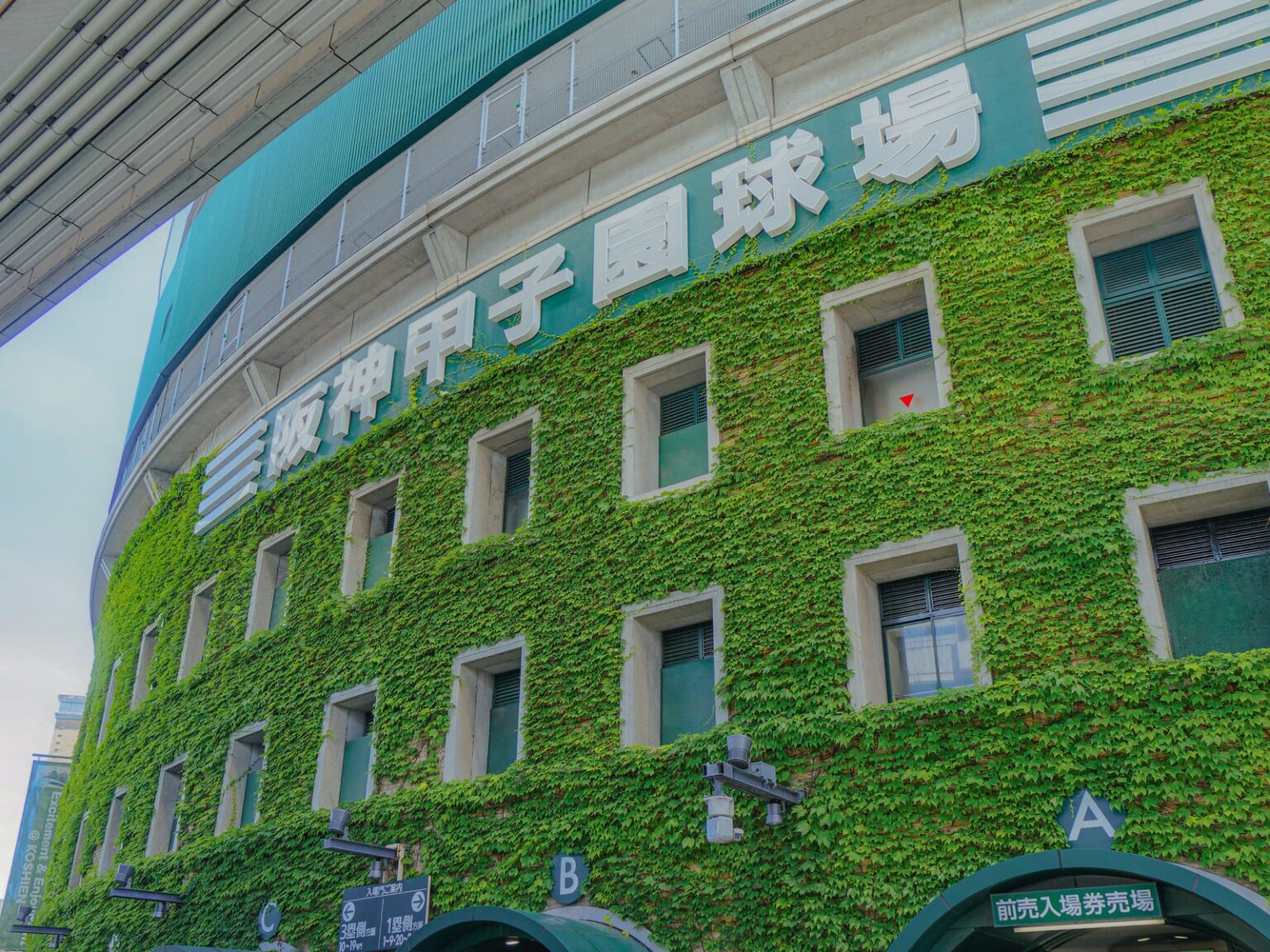
Every August, the 108th summer high school baseball championship — everyone just calls it “Koshien” — turns a single stadium near Osaka into the emotional center of the country. Foreign travelers rarely put it on the itinerary, which is exactly why it’s one of the most rewarding things you can do in Japan in August — and the later the round, the bigger the stakes. Here’s how to experience the 2026 tournament: what it is, why it hits so hard, the dates, the new rules, how to actually get a ticket, how to get there, and how to survive the heat.
| Event | The 108th National High School Baseball Championship (夏の甲子園) |
|---|---|
| Dates | August 5–22, 2026 — 18 days, including rest days |
| Opening day | Ceremony from 4:00 p.m.; first game 5:30 p.m. (August 5) |
| Venue | Hanshin Koshien Stadium, Nishinomiya, Hyogo (near Osaka — not in Osaka city) |
| Teams | 49 schools, one for every prefecture (Hokkaido and Tokyo send two each) |
| New in 2026 | Designated hitter rule and video review, both introduced for the first time |
| Tickets | All reserved seats; roughly ¥300–¥4,800 for adults depending on seat and day |
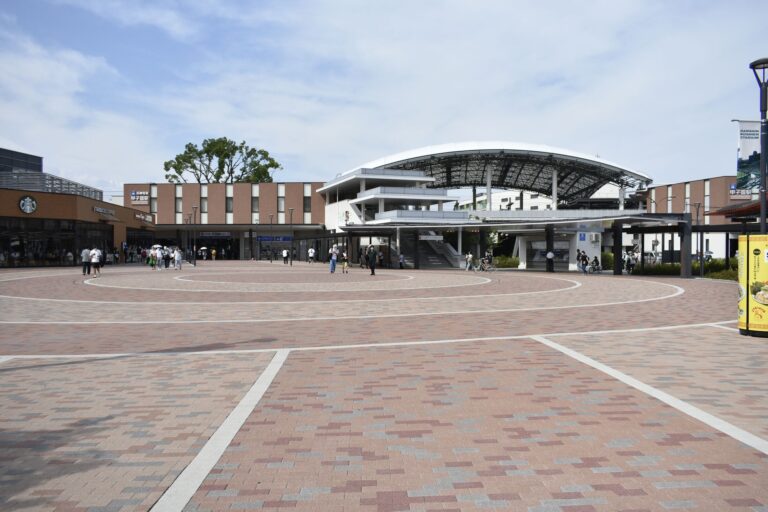
| Nearest station | Hanshin “Koshien” Station — about a 3-minute walk |
What is summer Koshien?
Summer Koshien is the national tournament of Japanese high school baseball clubs. Through July, every prefecture runs its own knockout tournament; the 49 winners travel to Hanshin Koshien Stadium in August for a single-elimination bracket that ends with one champion school. It is run by the Japan High School Baseball Federation and the Asahi Shimbun newspaper, and it has been held since 1915.
One thing to get straight early, because it confuses everyone: “Koshien” means two things — the stadium (Hanshin Koshien Stadium) and the national high-school tournaments played there. There are two of them a year: the spring invitational (“Senbatsu”) and this one, the bigger summer championship (“Senshuken”). This guide is about the summer one.
Why the tournament is at Koshien, and where the name comes from
The summer championship did not start here. The Japan High School Baseball Federation says the first tournament, in 1915, was played at Toyonaka. So many people came that Toyonaka could not hold them, and from the third tournament in 1917 it moved to Naruo in Nishinomiya, a ground prepared by the Hanshin railway.
Naruo could not hold the crowds either, so Hanshin went ahead with building a new ground. Its centenary history explains where the land came from: Hyogo Prefecture reworked and closed two channels of the lower Muko River that kept flooding, and Hanshin bought the land this freed up as the stadium site. A completion ceremony was held on 1 August 1924, when the ground was named the Koshien Great Sports Ground, and the 10th national middle-school championship opened there on 13 August.
The name comes from the calendar. In 1924, kō (甲), the first of the ten stems, and shi (子), the first of the twelve branches, came together, a lucky combination, so the whole area was named Koshien and the ground the Koshien Great Sports Ground. Sources: Japan High School Baseball Federation, tournament history and why the stadium was built; Hanshin Koshien Stadium, 100-year history and Koshien trivia (Japanese).
Why Koshien feels different from pro baseball
A national tournament built on local pride
Each team isn’t just a school club — for that summer, it’s the representative of an entire prefecture. People who never went to the school will still watch, because the team is carrying the name of their hometown. Win, and a small-town school of a few hundred students is suddenly on national television; that stake is what gives every play its weight.
The sound of the Alps Stands
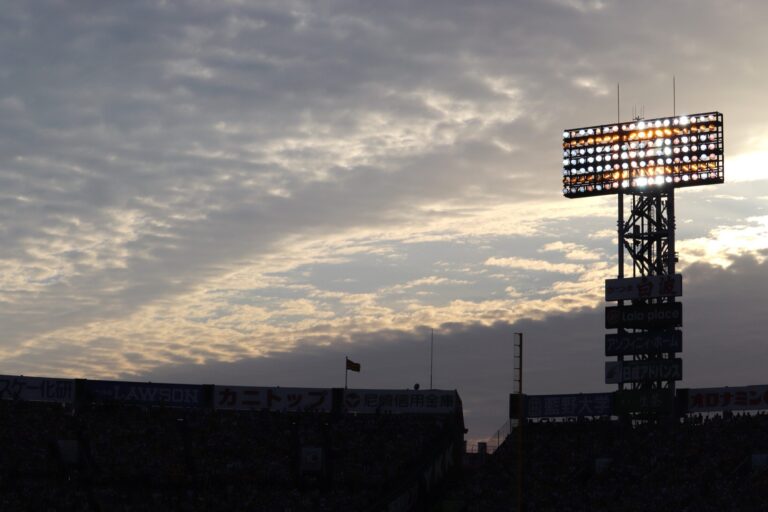
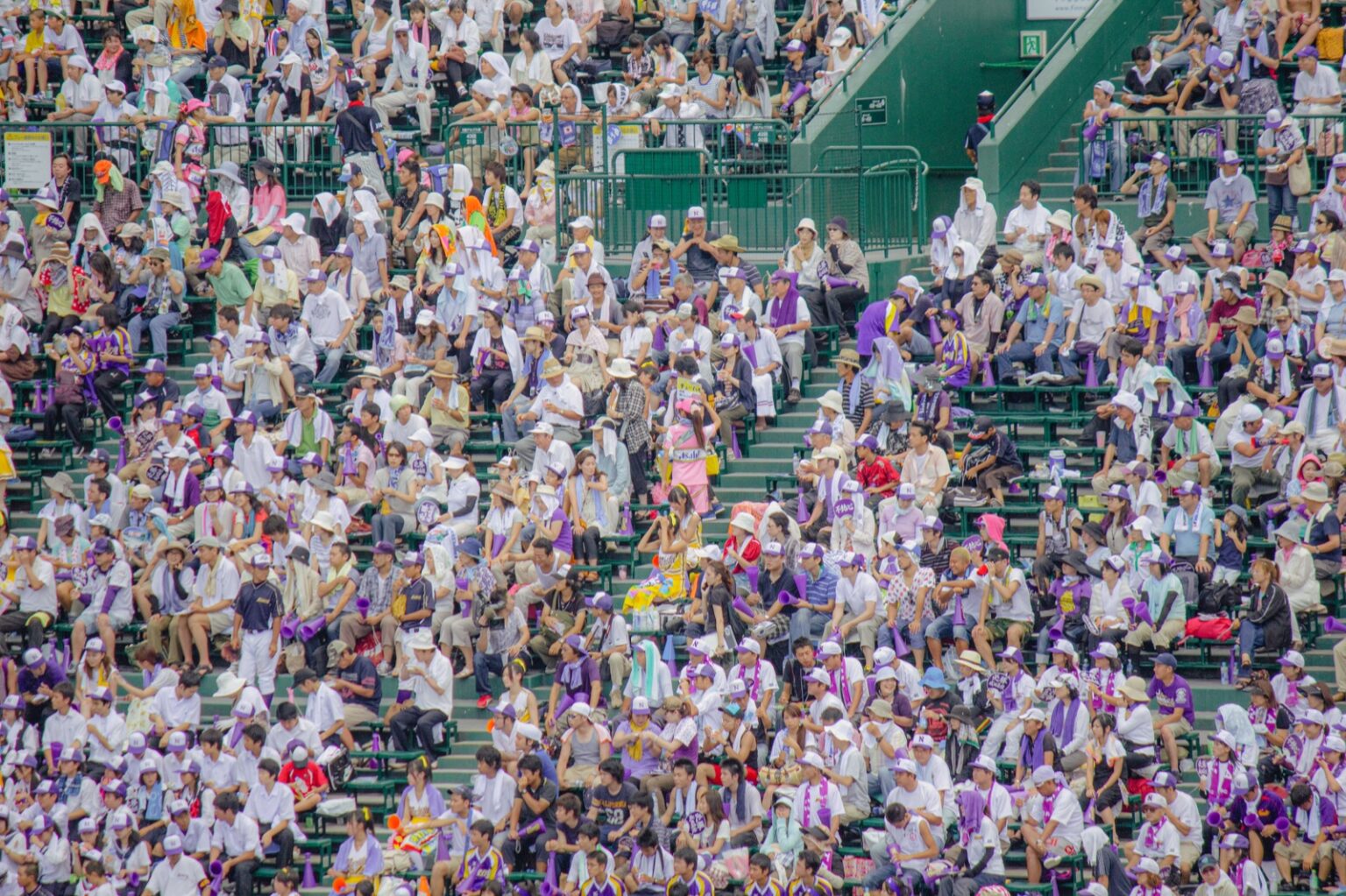
The steep first- and third-base sections are called the “Alps Stands,” and they are where each school packs its students, brass band and cheer squad. Every school has its own fight songs, its own chants, its own color. When a batter comes up, the band starts, the section claps in sync, and if a rally builds the whole thing swells into a wall of sound. You do not need to understand a word of it to feel it — this is as much a music event as a sports event. Here’s a taste of that brass-band sound at Koshien:
Rituals of respect — and of defeat
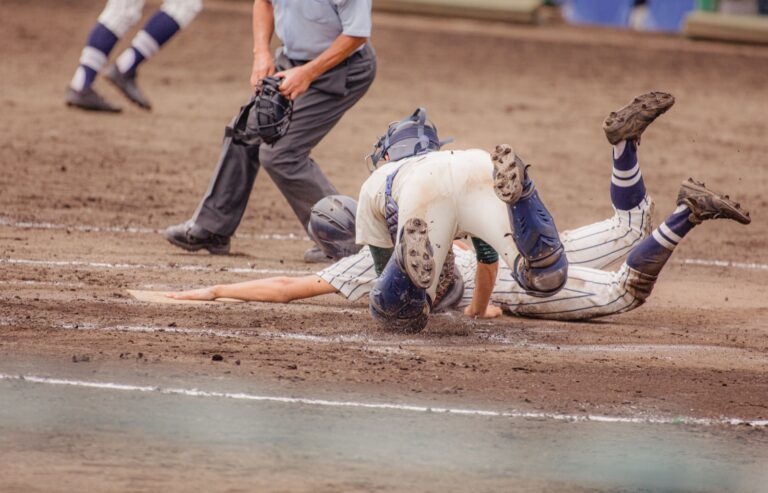
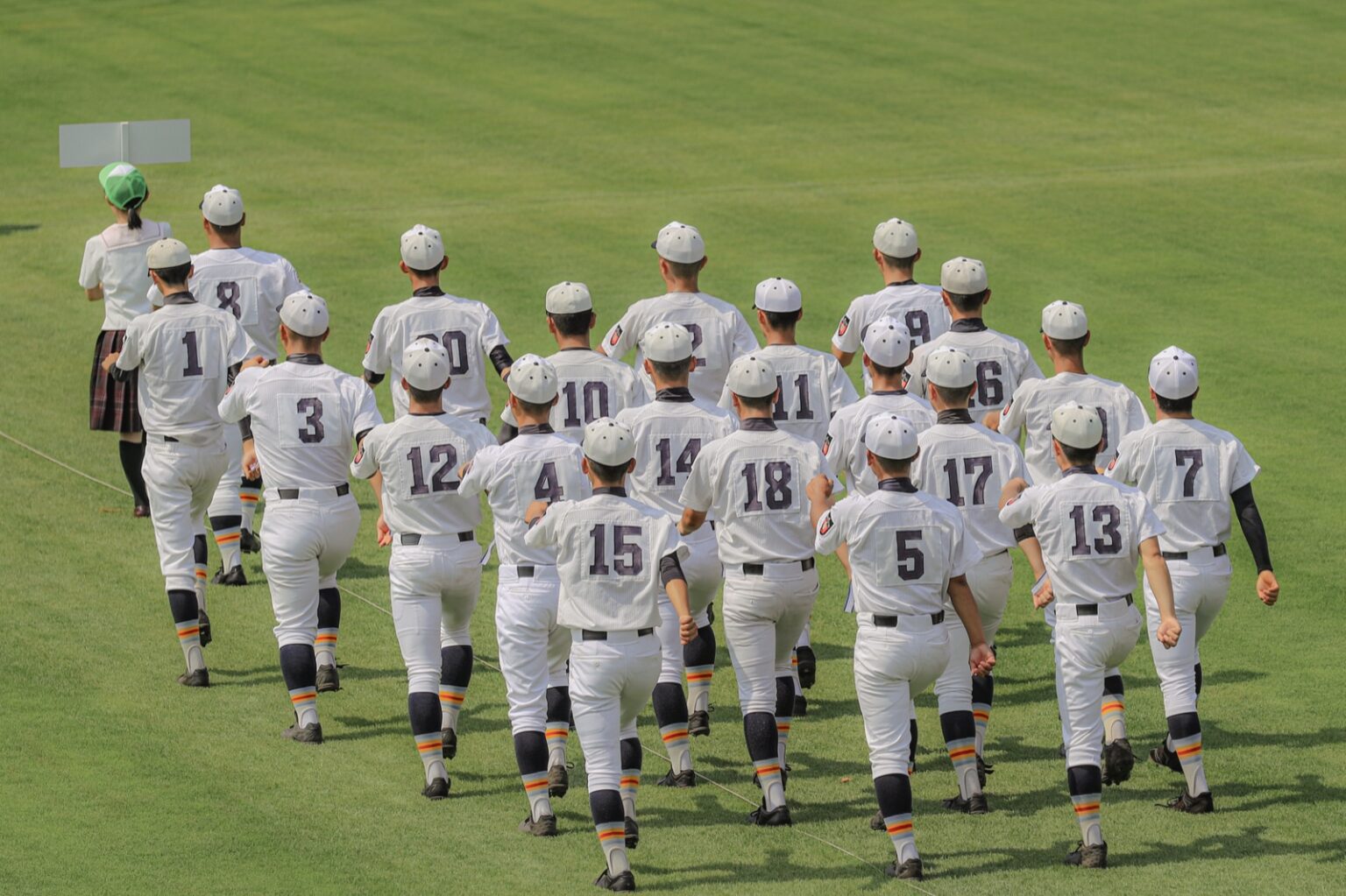
Teams line up and bow to each other before and after the game. Winning schools have their school song played while the flag is raised. And there’s the moment people find most moving: after losing, some players crouch and scrape a handful of the infield dirt into a bag to take home — a quiet, physical memory of the place they spent years trying to reach. It isn’t a formal rule and not everyone does it, but when it happens, the cameras stay on the team that lost, which tells you a lot about what this tournament is really about.
Tradition, without the stereotype
You’ll read that every player has a shaved head and endures the heat as some test of spirit. Reality is more mixed: the buzz cut is a common look but not a universal rule, and modern high school baseball keeps changing — which is exactly what makes 2026 interesting.
Koshien 2026: dates and venue
The 2026 tournament has ended. If you are planning a future Koshien visit, compare places to stay around the stadium on Booking.com or across Osaka on Agoda, and check current rail routes and fares before travelling from Kansai Airport.
The 108th tournament ran August 5–22, 2026 across 18 days (rest days built in). The opening ceremony started at 4:00 p.m. on August 5 and the first game at 5:30 p.m. — a later start than a normal tournament day. The venue is Hanshin Koshien Stadium, at 1-82 Koshien-cho, Nishinomiya, Hyogo. Note the prefecture: it’s near Osaka but sits in Hyogo, not Osaka city.
| When | What happens | Visitor note |
|---|---|---|
| Aug 1, 5:00 p.m. | Online draw for the bracket through the third round | Matchups become clear — the in-person draw ceremony is gone |
| Aug 5, 4:00 p.m. | Opening ceremony (first game 5:30 p.m.) | Later start than other days |
| Aug 7–12 | Morning / afternoon sessions with an audience turnover | Session split on these dates only — from the quarterfinals, one ticket covers the whole day |
| Aug 17 / 19 / 21 | Scheduled rest days — no games | Stadium tours run on these days; the museum stays open |
| Aug 18, from 8:00 a.m. | Quarterfinals — four games in one day | Gates open at 7:00 a.m. |
| Aug 20, from 8:00 a.m. | Semifinals (two games) | Winners advance to the final, scheduled for Saturday |
| From the quarterfinals | Winning captains draw for the next round right after their game | The late bracket isn’t fixed in advance |
| Aug 22, 10:00 a.m. | Final (weather permitting; gates 8:30) | The date can move if games are rained out |
What’s new in 2026: the DH and video review
Koshien gets sold as a place of unchanging tradition, so the 2026 changes are genuinely historic. Two firsts arrive together.
The designated hitter
From the 2026 season, Japanese high school baseball allows the designated hitter — a batter who hits in place of the pitcher. It’s a rule change aimed partly at protecting pitchers’ workloads, and it widens how teams build a lineup. (The federation sets the exact conditions; don’t assume it works identically to Major League Baseball.)
Video review
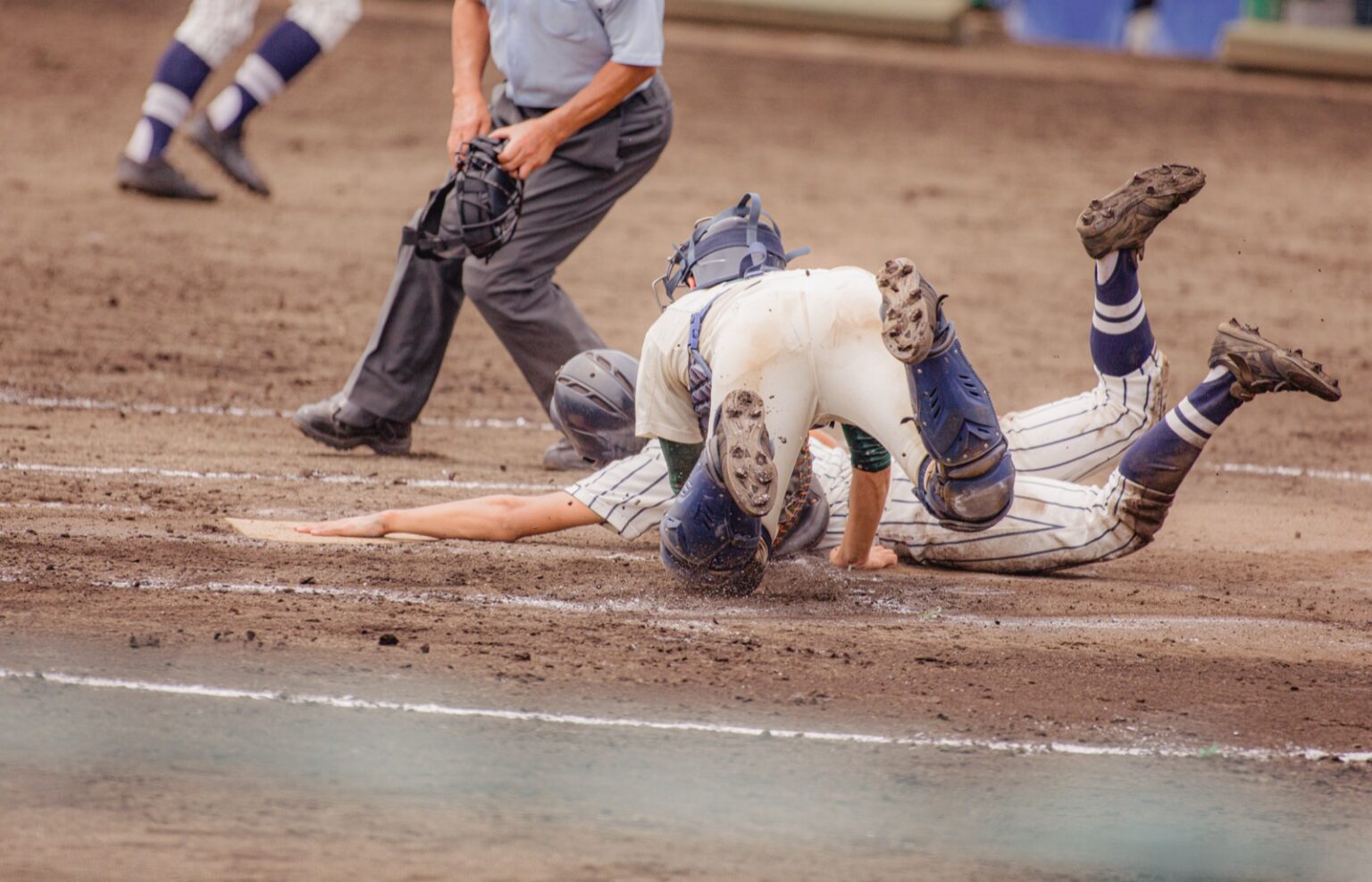
The federation decided in April 2026 to bring in video review, starting with this 108th tournament — the first time replay has been used at any national high-school tournament. If a review overturns the call, the team keeps its request — though it can gain at most one extra request this way within nine innings. Under the special rule, each team can request one review per nine innings (with an extra one available in extra innings), for calls like home runs, force plays, tag plays, catch/no-catch and fair/foul. It is not the manager-challenge system you might know from the US majors, so watch how it actually plays out on the field.
What endures
- Prefectural pride
- Brass-band cheering & the Alps Stands
- School songs and pre-game bows
- Losing players gathering the dirt
What changes in 2026
- Designated hitter rule
- Video review
- Online draw through round three
- Morning/afternoon turnover on Aug 7–12
How the tournament works
It’s single elimination: lose once and you’re out. That’s why a single error or one pitch can end a school’s summer, and why the crowd reacts to every count. The 49 schools are drawn into the bracket; the draw for the first three rounds is done online on August 1, and from the quarterfinals the winning captains draw for their next opponent right after the game — so the late bracket genuinely isn’t known in advance.
How the bracket opened (Round 1, drawn August 1)
The bracket was drawn online on August 1. The 108th tournament opened on August 5 (opening ceremony 4:00 p.m., first pitch 5:30 p.m., with Sendai Ikuei beating Sapporo Nichidai 3-1 in the opener) and ran to the final on August 22. The knockout is complete: the quarterfinals were played on August 18, the semifinals on August 20, and in the final on Saturday, August 22 Chiben Wakayama came from behind to beat Kendai Takasaki 4-3 — a fourth summer championship for the Wakayama school and its first since 2021, while Kendai Takasaki fell one win short in the program’s first summer final. Sunday’s last round-of-16 games drew announced crowds of up to 32,000. Full day-by-day results are on the official schedule page. The draw’s headline was a first-round heavyweight: Yokohama (Kanagawa) vs defending champion Okinawa Shogaku on August 10, a pairing pundits called a de facto final. Yokohama won it 7-2 — the title defence ended in the opening round — and has since battled through to the semifinals. Fifteen teams drew byes straight into the second round.
The final week, in results
| Aug 18 · QF | Tenri 7-0 Mie · Chiben Wakayama 11-3 Sendai Ikuei · Yokohama 6-0 Hanamaki Higashi · Kendai Takasaki 1-0 Ariake (10 innings) |
| Aug 20 · SF | Chiben Wakayama 7-1 Yokohama · Kendai Takasaki 1-0 Tenri |
| Aug 22 · Final | Chiben Wakayama 4-3 Kendai Takasaki — summer champions for the fourth time, first since 2021 |
| Date | Start | Round 1 matchup |
|---|---|---|
| Aug 5 | 17:30 | Sapporo Nichidai (S. Hokkaido) vs Sendai Ikuei (Miyagi) ★ Opening game |
| Aug 6 | 16:00 | Tochiku (Fukuoka) vs Kamimura Gakuen (Kagoshima) |
| Aug 6 | 18:30 | Seirei Christopher (Shizuoka) vs Sano Nichidai (Tochigi) |
| Aug 7 | 08:00 | Tokai Univ. Kofu (Yamanashi) vs Tsuruoka Higashi (Yamagata) |
| Aug 7 | 13:30 | Hachiman Commercial (Shiga) vs Kendai Takasaki (Gunma) |
| Aug 7 | 16:00 | Ritsumeikan Uji (Kyoto) vs Ariake (Kumamoto) |
| Aug 7 | 18:30 | Rissho Daishonan (Shimane) vs Nagasaki Nichidai (Nagasaki) |
| Aug 8 | 08:00 | Yugakkan (Ishikawa) vs Aomori Yamada (Aomori) |
| Aug 8 | 13:30 | Shirakaba Gakuen (N. Hokkaido) vs Higashi Nihon Kokusai Univ. Shohei (Fukushima) |
| Aug 8 | 16:00 | Nihon Bunri (Niigata) vs Oita Commercial (Oita) |
| Aug 8 | 18:30 | Eimei (Kagawa) vs Kanto Daiichi (East Tokyo) |
| Aug 9 | 08:00 | Nitta (Ehime) vs Hanamaki Higashi (Iwate) |
| Aug 9 | 13:30 | Okayama Gakugeikan (Okayama) vs Tottori Johoku (Tottori) |
| Aug 9 | 16:00 | Naruto Uzushio (Tokushima) vs Hachioji Jissen (West Tokyo) |
| Aug 9 | 18:30 | Chukyo (Gifu) vs Kasumigaura (Ibaraki) |
| Aug 10 | 08:00 | Meitoku Gijuku (Kochi) vs Nichinan Gakuen (Miyazaki) |
| Aug 10 | 13:30 | Yokohama (Kanagawa) vs Okinawa Shogaku (Okinawa) ★ Marquee: favourite vs defending champion |
Start times on Aug 7–12 used the heat-countermeasure morning/afternoon split; the remaining rounds ran as a single card, and rain could push games back. The table is kept as a record of how the bracket opened — check the official schedule for the latest, and see the ticket guide below.
Plan your visit: the full guides
This page is the overview. For the practical legwork, I’ve broken the planning into four dedicated guides:
How Koshien tickets worked in 2026
The 2026 tournament is over — every allocation from the quarterfinals onward sold out in advance, including the final. The mechanics below are kept as a planning reference for 2027; details will follow the official announcements.
Update, late July: I’ve now written a full ticket-buying manual — seat map, Category A/B price days, the Aug 7–12 two-session trap, rain-refund rules, and the honest route for overseas buyers. The short version follows.
In 2026, every seat was reserved and the tournament ran almost entirely on advance sales — every day from the quarterfinals onward sold out before game day. Tickets are sold through the official channels — Ticket Pia, Lawson Ticket, and the tournament’s own “Asa-Chike” and “Ko-Chike” sites — plus convenience-store machines (note: convenience-store sales stop once the quarterfinals begin). Same-day tickets are only sold at the stadium if seats are left; if a day sells out in advance, there are no day-of tickets.
From the quarterfinals on, the mechanics tighten. Tickets for each remaining day go on sale at 10:00 a.m. the day before, sales move online-only with immediate credit-card payment (convenience-store counters stop selling), and “Ko-Chike” keeps selling on the day itself until the last game ends, stock permitting. On days that aren’t sold out, the stadium’s same-day window also sells tickets from gate opening, cash only. There is no official resale system — a sold-out day is simply gone, and for-profit resale is prohibited, so skip the tout sites. Rain refunds are narrow: you get one only if every game scheduled for your day (or session) is cancelled — once any game that day reaches a decision, there is no refund.
| Seat | Category A (adult) | Category B (adult) | Good for |
|---|---|---|---|
| Central infield | ¥4,800 | ¥1,500 | Best sightlines, behind the plate |
| 1st / 3rd base | ¥3,900 | ¥1,200 | Close to a team’s bench |
| Alps Stand | ¥2,000 | ¥700 | Inside the cheering & brass bands |
| Outfield | ¥1,000 | ¥300 | Cheapest way in; big-picture view |
Category A and B are fixed by date and session on the official price calendar (not by the matchup). Every visitor aged 4 and up needs a ticket, and the child rate (age 4 through junior high) applies only to 1st/3rd-base reserved (¥1,000 on late-round days) and outfield (¥200) seats — central infield and Alps seats charge children full price. Prices are the official 2026 figures — confirm the current category and price on the official ticket page before you buy.
Which seat should a first-timer pick?
If you want the experience — the sound, the color, the choreography — the Alps Stand is unbeatable value, but you’ll be inside one school’s cheering section, so match their energy and mind the people around you. Want to actually follow the baseball and stay a little cooler? The central infield or a base-side seat is calmer. The outfield is the budget pick and gives you the whole panorama (and, often, the most shade to chase).
How to get to Hanshin Koshien Stadium
| From | Route | Approx. time |
|---|---|---|
| Osaka-Umeda | Hanshin Main Line (limited express / direct) → Koshien | ~13 min |
| Kobe-Sannomiya | Hanshin Main Line → Koshien | ~18 min |
| Shin-Osaka (shinkansen) | Metro or JR to Umeda, transfer to Hanshin Osaka-Umeda → Koshien | ~30–40 min |
| Koshien Station → stadium | On foot, follow the crowd | ~3 min |
There’s no visitor parking at the stadium, so trains are the only sensible way in. On game days the station and gates get busy — build in a buffer, and expect crowds again the moment the last game ends.
From the airport to the gates
Surviving a summer game
Let’s be honest about August in Kansai: it is hot, often over 35°C with brutal humidity, and you’ll be sitting in it for hours. Treat the heat as a logistics problem, not a test of willpower.
- Hat & sunscreen
- Cooling towel
- A hand fan or small battery fan
- Cash + a charged phone / power bank
- Light, breathable clothes
- Small towel
- Rain poncho (not just for rain — sun too)
- Any personal medication
- A small bag (big ones slow you down)
- Bottles & cans are restricted
- Re-entry is generally not allowed
- There’s no luggage storage — travel light
- Late-round days run as one long card — pace your sun exposure
Practical rules of thumb: keep drinking before you’re thirsty, aim for a seat that isn’t in full mid-day sun, and if you feel a headache, nausea or dizziness, stop and cool down — heatstroke is the real risk here. Don’t plan to sit through every game of the day; pick a session and enjoy it. My game-day guide covers the full routine — the supermarket run before the gates, what survives a bag check, and what to eat inside.
Around Koshien (and where to base yourself)
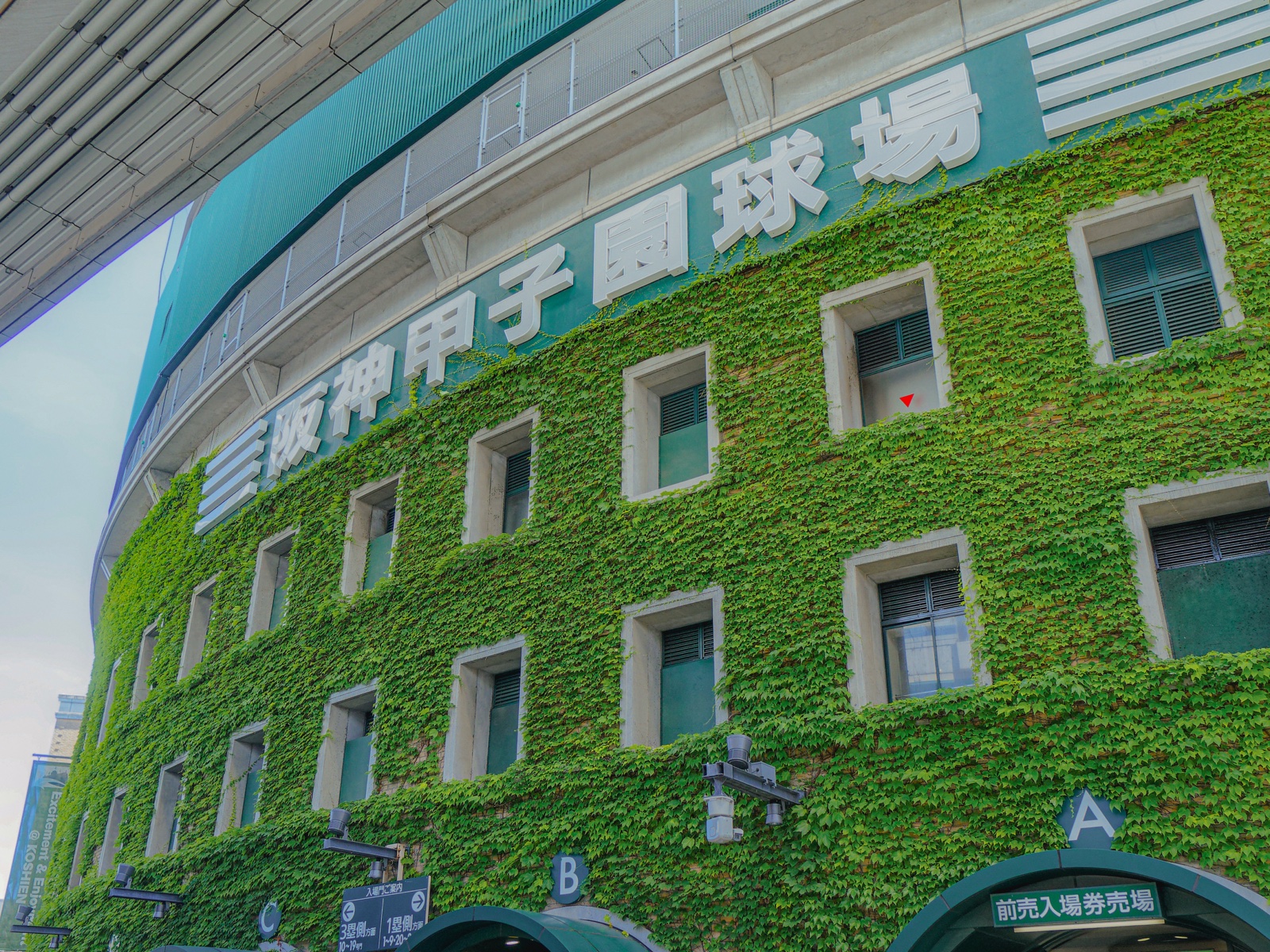
Even outside game time, the ivy-covered stadium is a photo stop, and two things sit right beside it: the Koshien History Museum, which tells the tournament’s story (with the tournament over, opening hours and guided stadium tours follow the regular calendar — check the official site for hours, tour dates and booking deadlines, as tours do not run every day; you can book museum entry or a stadium tour), and Koshien Plus, a mall that’s a good place to eat and escape the heat. Because the stadium is between Osaka and Kobe, most travelers make it a day trip — though for morning sessions a closer bed pays off; I compare the options area by area in where to stay for Koshien:
- Base in Osaka — the easiest hub, ~13 minutes away by Hanshin line. Find Osaka hotels.
- Base in Kobe — ~18 minutes, and a great dinner city on the way home. Find Kobe-Sannomiya hotels.
- Add Nishinomiya — this is sake country; the Nada/Nishinomiya breweries are nearby if you want to pair the day with something local.
Games can run long or get pushed by rain, so don’t over-pack the day. And since you’ll want maps, train times and translation working all afternoon, a local eSIM or pocket Wi-Fi is worth sorting before you go.
Watching from afar
Can’t get to Nishinomiya? The tournament is broadcast on NHK and ABC, and streamed through official partners including SPORTS BULL’s “Virtual Koshien,” Yahoo! JAPAN and Abema. The official Virtual Koshien YouTube channel is the safest place to find real highlights during the tournament.
Frequently asked questions
Can foreign tourists go to Summer Koshien?
Yes. There’s no rule against tourists attending or buying tickets. The main hurdle is that the official ticket sites are in Japanese; if you can complete a Japanese checkout (or get help), you can buy in advance, and cheaper outfield/Alps seats were sometimes available same-day on quieter opening-round days. From the quarterfinals through the final, treat every day as advance-purchase only — convenience-store sales end, and there is no official resale route.
Do I need to understand Japanese — or baseball — to enjoy it?
No. The atmosphere, the brass bands and the crowd carry the experience, and the scoreboard and game flow are easy to follow even if you don’t know baseball’s finer points.
How much are tickets?
For adults, roughly ¥300 for an outfield seat on a Category B day up to ¥4,800 for the central infield on a Category A day; children (age 4 through junior high) pay less only in the 1st/3rd-base and outfield sections. Confirm the day’s category and price on the official ticket site.
Is Koshien Stadium in Osaka?
No — it’s in Nishinomiya, Hyogo, between Osaka and Kobe. The nearest station is Hanshin “Koshien” Station, about a 3-minute walk, and it’s around 13 minutes from Osaka-Umeda.
Is one ticket good for the whole day?
From the quarterfinals through the final, yes — one ticket covers the whole day. Earlier, on August 7–12, the tournament split into morning and afternoon sessions with a full audience turnover and separate tickets per session. Re-entry is generally not allowed either way.
What’s new about Koshien in 2026?
Two firsts: a designated hitter rule (from the 2026 season) and video review (from this 108th tournament, decided in April 2026), which lets each team request replays on certain calls. Both are historic changes for a tournament known for tradition.
What if it rains?
Games can be postponed, which pushes the schedule back — the final date can move. Rest days are built into the 18-day span. Check the official schedule during the tournament.
Do all the players really shave their heads?
No. The buzz cut is a common look but not a universal requirement, and it’s becoming less uniform.
Related reads
Between games: make Kansai the trip
Most Koshien days are decided by early evening, and the tournament builds in scheduled rest days — in 2026, they were August 17, 19 and 21 — and rain can add more. Here is where that spare time goes.
August is fireworks season
Two of the Big Three fireworks festivals are in August — Nagaoka (August 2–3) and Omagari (August 29 in 2026), just before and just after the 2026 tournament. The third, Tsuchiura, is on November 7 in 2026.
Kansai beyond Kyoto
Osaka is your base anyway — these cheaper, quieter Kansai bases and day trips soak up the rest days and the free half-days around the baseball, without Kyoto’s crowds or prices.
Coming back in September?
Kishiwada’s September danjiri float festival is held on the weekend before Respect for the Aged Day (September 19–20 in 2026), forty minutes south of Osaka — the loudest possible excuse for a return leg.
Planning around the weather: our typhoon tracker updates live from JMA whenever a storm is active — August rain is what reshuffles the Koshien card. Staying longer? The September calendar maps what comes after the final, and if the trains here won you over, Japan’s JR sightseeing trains are the scenic way out of Kansai.
Join travelers discovering Japan's hidden side
Weekly dispatches from off-the-beaten-path Japan — spots and stories you won't find in guidebooks.
No spam. Unsubscribe anytime.
Welcome aboard!
You're in. See you in your inbox soon.