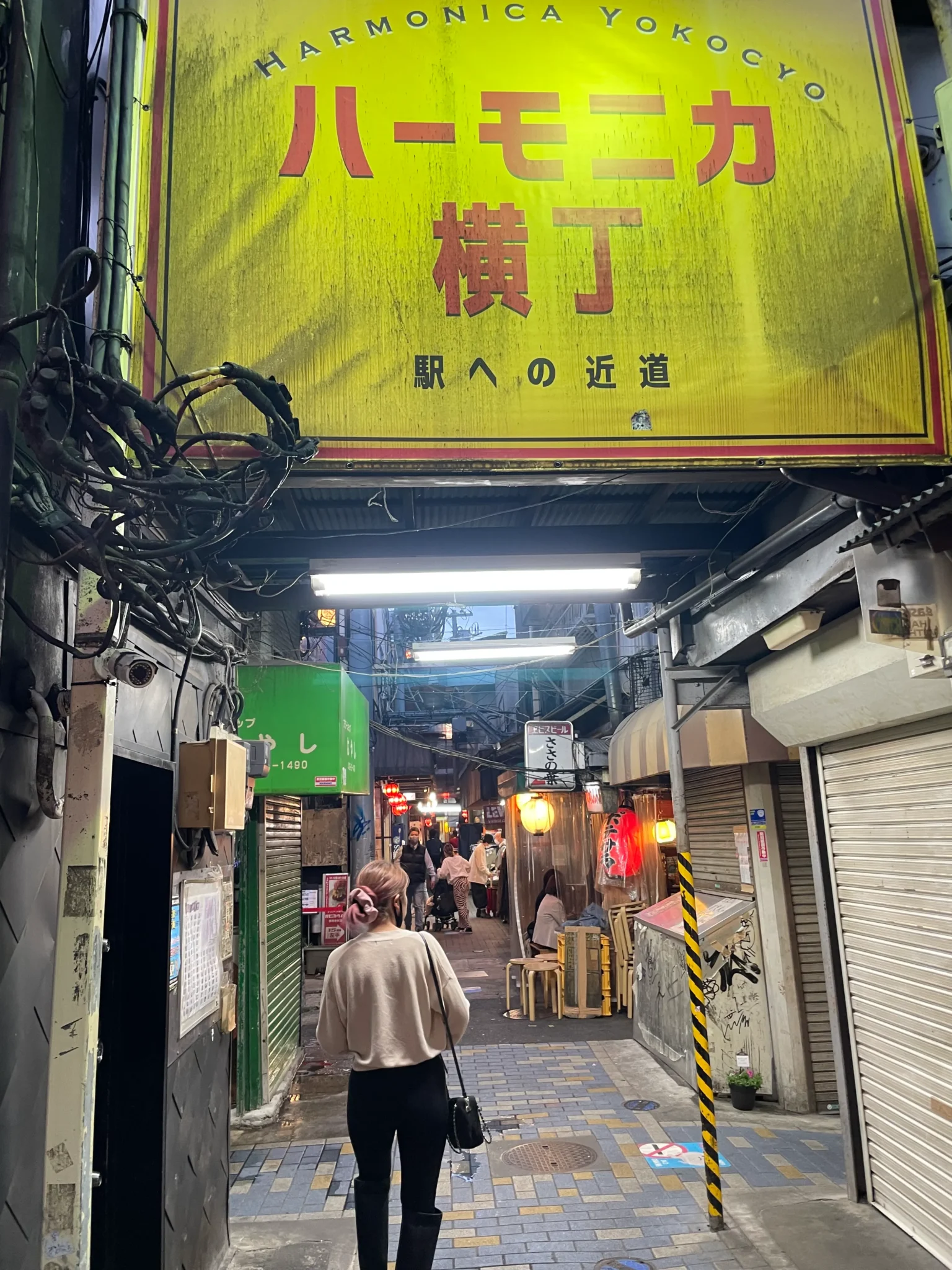

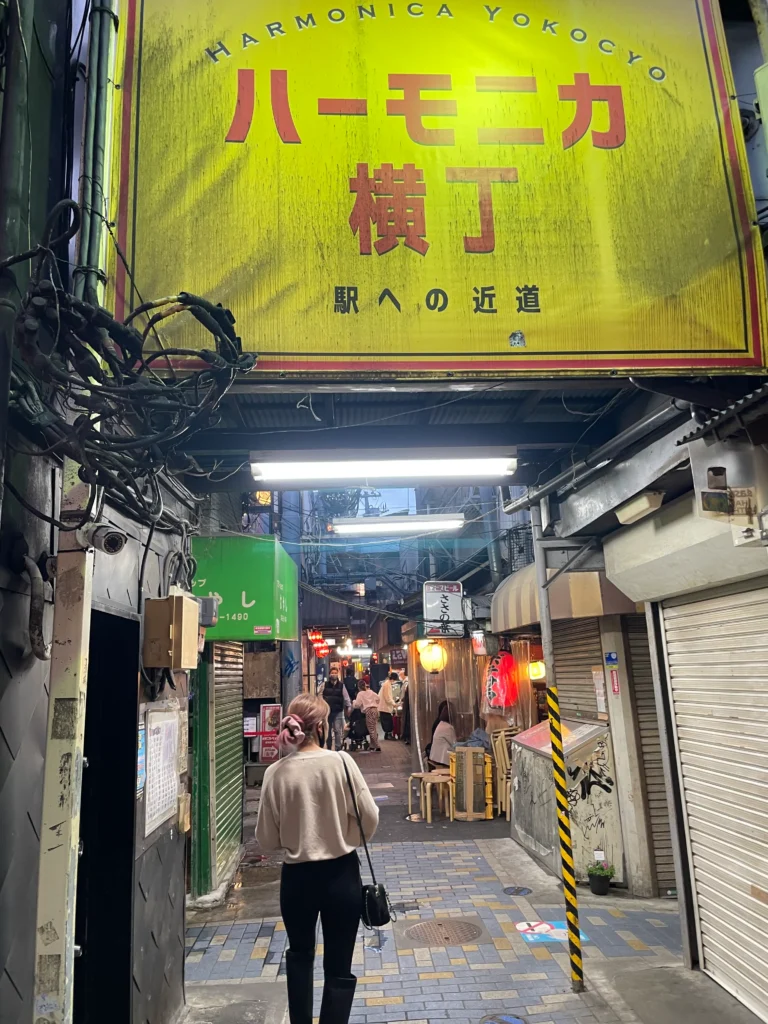
Just steps from the north exit of Kichijoji Station lies Harmonica Yokocho, a maze of narrow alleyways that feels like a step back in time. For travelers in Tokyo looking for an authentic, slightly gritty, and incredibly lively local experience, this is your destination. This guide is for those deciding where to spend an evening, offering a look into the sights, sounds, and tastes of one of Tokyo’s most beloved drinking alleys.
Contents
- Quick Facts
- A Labyrinth with a Post-War Soul
- When to Visit: Day vs. Night
- How to Get to Harmonica Yokocho
- Exploring the Alleys: What to Eat and Drink
- Practical Tips for a Smooth Visit
- Where to Stay in Kichijoji
- Suggested Evening Itinerary
- Frequently Asked Questions
- Sources
Quick Facts
| Feature | Details |
| Best Time to Visit | Evenings after 6 PM for the full izakaya experience |
| Time Needed | 2-3 hours to explore and have a meal/drinks |
| Nearest Station | Kichijoji Station (JR Chuo/Sobu Line, Keio Inokashira Line), North Exit |
| Cost Range | ¥2,000 – ¥5,000 per person for drinks and food |
| Payment | Varies by shop; many are cash-only, especially smaller bars |
| Crowd Level | High, especially on Friday and Saturday nights |
| Accessibility | Narrow, crowded alleys; may be difficult for wheelchair users |
A Labyrinth with a Post-War Soul
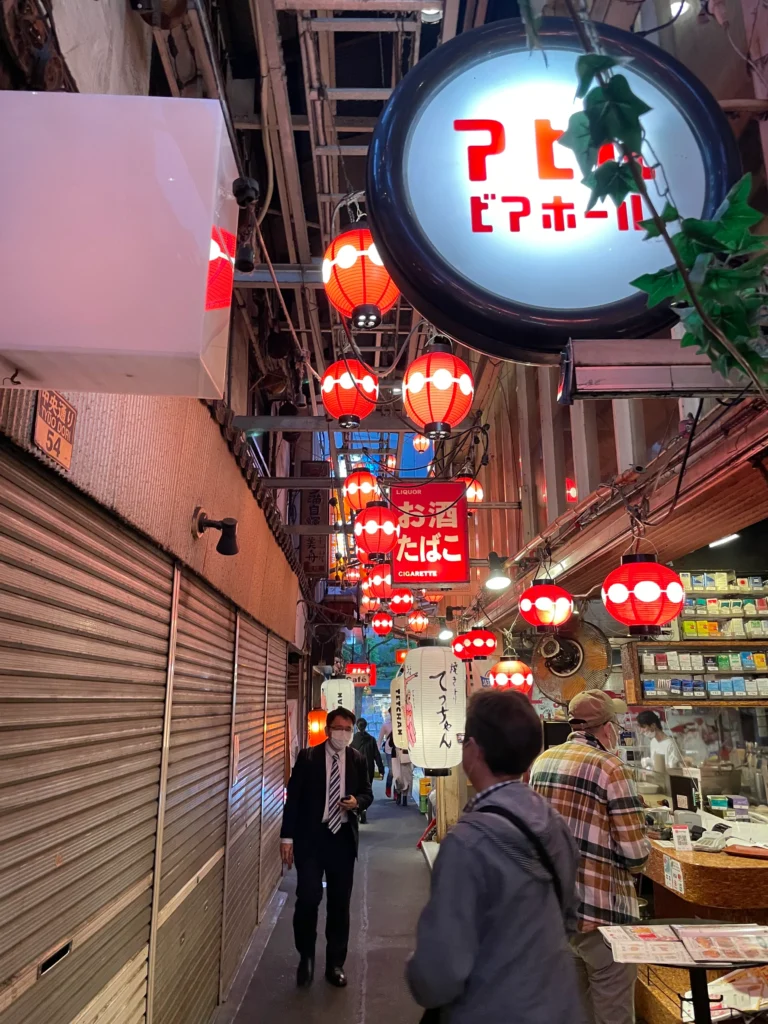
Harmonica Yokocho, or “Harmonica Alley,” gets its name from the way its dozens of tiny shops line up like the reeds of a harmonica. Born from the black market that emerged after World War II, the area retains a distinctly Showa-era atmosphere . During the day, it’s a bustling market where locals shop for fish, flowers, and traditional sweets. But as dusk falls, red lanterns begin to glow, and the yokocho transforms into a vibrant hub of tiny bars and eateries, with the delicious smell of grilled food filling the air.
When to Visit: Day vs. Night
The character of Harmonica Yokocho changes dramatically with the time of day.
•Daytime (approx. 11:00 AM – 5:00 PM): The alleys function as a local market. It’s a great time for a casual stroll, to grab a famous taiyaki from Amene, or to see a different, more relaxed side of the area.
•Nighttime (approx. 6:00 PM onwards): This is when the yokocho truly comes alive. The standing bars and small izakayas open their doors, welcoming a lively crowd of locals and visitors. The atmosphere is energetic, loud, and friendly. For the classic drinking alley experience, nighttime is a must.
How to Get to Harmonica Yokocho
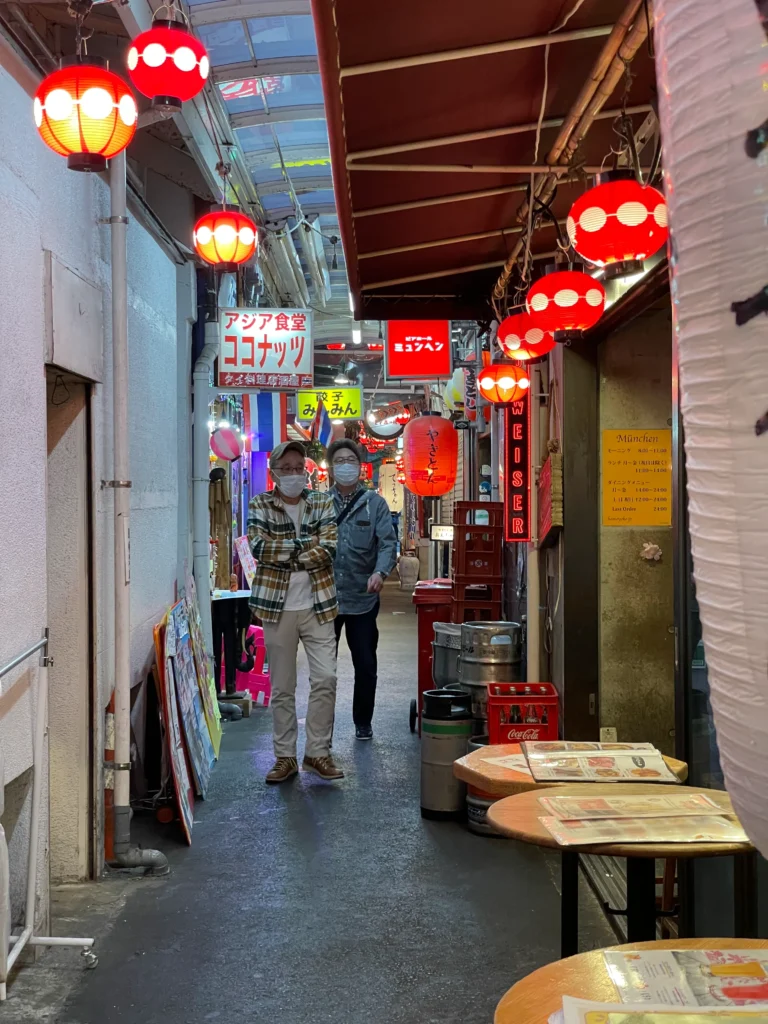
Getting to Harmonica Yokocho is incredibly simple. It is located directly in front of the North Exit of Kichijoji Station. Once you exit the station, you will see the entrance to the covered shopping arcades (Sunroad and Daiyagai). Harmonica Yokocho’s entrances are tucked between these larger arcades. Just look for the narrow, lantern-lit passageways.
Exploring the Alleys: What to Eat and Drink
The joy of Harmonica Yokocho is in the discovery. With nearly 100 small shops packed into five narrow streets, it’s best to wander and see what catches your eye. Here are a few well-regarded spots to get you started .
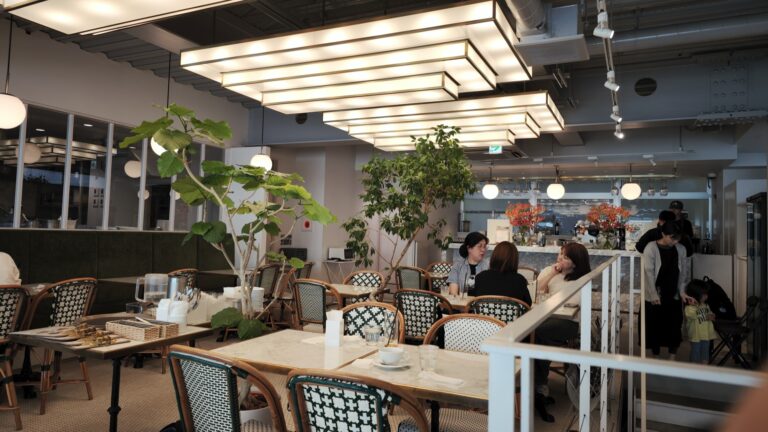
The alleys only wake up in the evening, so the hours before are worth filling. Liberté, a French bakery with an upstairs café on the same side of the station, closes at seven and makes a good place to sit until the yokocho opens.
•Yakitori Tecchan: A classic yakitori (grilled chicken skewer) joint with an open storefront that spills out into the alley. The smoky aroma is irresistible. It’s a great place for a casual beer and some delicious skewers. They also serve a popular motsu-nabe (offal hotpot).
•Epuron (Apron): A cozy oden restaurant that offers both traditional and Western-style oden, such as tomato and roll cabbage. It’s a comforting and delicious option, especially on a cool evening.
•Amane Taiyaki: Famous for its crispy, winged taiyaki (fish-shaped cake filled with red bean paste). It’s a perfect snack to enjoy while exploring the alleys during the day. There’s often a line, but it moves quickly.
Where to actually go inside the alley
Around a hundred tiny places pack these lanes, but a first visit only needs a shortlist. Six to point yourself at first — hours shift constantly in a place this small, so check before making a special trip:
Hamonica Kitchen
The landmark of the alley: a two-floor izakaya-bar that works early in the evening or late.
Katakuchi
Sushi, sashimi and good sake at a tiny counter — an easy first stop of the evening.
Minmin
Long-running gyoza spot — dumplings and beer. Hours are informal here; treat it as a walk-up, not a plan.
Ahiru Beer Hall
Run by a liquor shop, so the drinks run from Belgian bottles to sake; most tables order the dice-cut steak.
Yakitori Tetchan
Yakitori smoke and elbow-to-elbow seats — as dense as the yokocho gets.
Hamonica Quina
Okinawan taco rice and soki soba — the option when someone wants a meal rather than a bar.
Rhythm matters here: by day the lanes belong to fishmongers, sweet shops and browsers; after dark they flip to standing bars and six-seat counters. There is also a small morning market on the central lane on the second Sunday of each month, 8:00–11:00 — the quietest way to see the alley in daylight.
Practical Tips for a Smooth Visit
•Bring Cash: While some larger places accept cards, many of the smaller, more traditional bars and eateries are cash-only. It’s wise to have yen on hand.
•Embrace the Crowds: The alleys are narrow and can get very crowded. This is part of the experience. Be prepared to stand, and don’t be shy about squeezing into a small space.
•Go with the Flow: Don’t over-plan. The best way to experience Harmonica Yokocho is to wander from one spot to another, a practice known as hashigo-zake (bar hopping).
•Check Opening Hours: Hours vary significantly from shop to shop. Most drinking establishments open in the late afternoon or early evening.
Where to Stay in Kichijoji
While many visit Harmonica Yokocho as an evening trip from central Tokyo areas like Shinjuku or Shibuya, staying in Kichijoji offers a more relaxed, local vibe.
Kichijōji has its own small hotels and is an easy, relaxed base on the Inokashira and Chūo lines, with Shinjuku and Shibuya 10—15 minutes away. Use the Kichijoji hotel search below.
Top-rated, well-reviewed stays via Agoda. We may earn a commission, at no extra cost to you.
The area is known for the beautiful Inokashira Park and the Ghibli Museum (tickets must be booked far in advance). There are several comfortable hotels within walking distance of the station.
Find Hotels in Kichijoji→
Suggested Evening Itinerary
•6:00 PM: Arrive at Kichijoji Station. Take a brief stroll through the main shopping arcades as they begin to light up.
•6:30 PM: Dive into Harmonica Yokocho. Start with a beer and some yakitori at a lively spot like Tecchan.
•7:30 PM: Wander deeper into the alleys. Try a different spot, perhaps the oden at Epuron or some fresh sashimi at Mishima.
•8:30 PM: If you’re still hungry or thirsty, find one more bar for a final drink. Or, for a sweet finish, see if Amane is still open.
•9:30 PM: Head back to the station or to your local hotel, having experienced a true slice of Tokyo nightlife.
Klook.comFrequently Asked Questions
What is Harmonica Yokocho?
It’s a dense maze of around 100 tiny bars, eateries and shops packed into narrow alleys just outside the north exit of Kichijōji Station in Tokyo. It began as a post-war black market and has grown into one of the city’s most atmospheric places to eat and drink.
Where is Harmonica Yokocho, and how do I get there?
It’s right by the north exit of Kichijōji Station. From Shinjuku, take the JR Chūō Line (about 15 minutes); from Shibuya, the Keiō Inokashira Line. The alleys begin within a minute or two of the ticket gates.
Is Harmonica Yokocho better by day or night?
Both, but they feel completely different. By day it’s quieter, with cafés, coffee stands and small shops. After dark the alleys fill up and the izakaya and standing bars come alive — that’s the version most people picture.
Is it good for a full dinner?
It’s better for grazing — hopping between a few places for small plates and drinks — than for one large sit-down meal. Order a few things at one counter, then move on.
Is it safe to visit at night?
Yes. The alleys are busy and Japan’s crime rate is very low; just keep an eye on your belongings in the tight, crowded spaces.
Is it foreigner-friendly?
Yes. English menus aren’t everywhere, but staff are used to visitors and you can often order by pointing. A friendly attitude goes a long way at the small counters.
What’s the best day to visit?
Weeknights (Monday–Thursday) are lively but a little calmer; Friday and Saturday nights are the most energetic and the most crowded.
Craving a proper sit-down break after the alley? A few minutes away inside Kirarina Keio Kichijoji, Tsubakiya Café serves Taishō-era siphon coffee and beef curry in a stained-glass parlor.
Sources
[1] Harmonica Yokocho – Musashino City Tourism Organization
Last updated: January 9, 2026. Sources checked.
Keep reading on Hidden Japan Gems
Nankintei, Kunitachi
Still hungry? A 24-hour machi-chuka with hand-wrapped jumbo gyoza on Tokyo’s west side.
Japanese Sentō Guide
Round off a Tokyo night the local way — at a neighbourhood sentō.
Tokyo City Flea Market
Another Tokyo rummage: 700 stalls at the Oi Racecourse flea market.
Hard Off & Off House Hachioji Owada
The indoor rummage, further west in Hachioji: old kimono, ceramics and a basement Showa-retro corner.
Skip the Crowds in Japan (2026)
Trade the Shibuya scrum for Kichijoji’s back alleys.
Takinoya, Mitaka (soba)
Down the Inokashira Line: an old tatami-room soba shop in Mitaka.
Onigiri Bongo, Ōtsuka
A legendary rice-ball counter — handmade onigiri worth the queue.
Imahana, Setagaya
A Shōwa-era set-meal diner with a wall of hand-brushed menus.
Linde, Kichijoji
Authentic German rye bread and pretzels, baked in Kichijoji since 1997.
Spaghetti Pancho, Kichijoji
Showōa-era napolitan where the large size costs the same as the small.
Princess Tart, Kichijoji
A fruit-tart and tea specialist with a rotating, seasonal case.
Shimokitazawa vintage streets
Twelve minutes down the same Inokashira Line — 32 timestamped photos of the vintage streets, and the fares to get there.
Join travelers discovering Japan's hidden side
Weekly dispatches from off-the-beaten-path Japan — spots and stories you won't find in guidebooks.
No spam. Unsubscribe anytime.
Welcome aboard!
You're in. See you in your inbox soon.