Tokyo · Kichijoji · Bakery & Café
Liberté Pâtisserie Boulangerie opened in Kichijoji on 24 March 2018 as the first shop the Paris boulangerie had ever put outside France, and it arrived with something Paris did not have: a café on the floor above. The company billed it as 世界初, a world first, and a pleasure available only in Japan. You buy at the counter downstairs, carry it up the stairs, and order at least one thing from the café menu to sit.
The café that started here
Liberté started in Paris in 2013, in the 10th arrondissement, founded by Mickaël Benichou. The Kichijoji shop is where that business first left France. Its own announcement at the time highlighted the café as a world first and a Japan-only pleasure. Kyoto came second, in October 2018, six months after Kichijoji, and a takeaway-only shop followed near Kiyomizu-dera in 2023. The order is sometimes reported the other way round online.
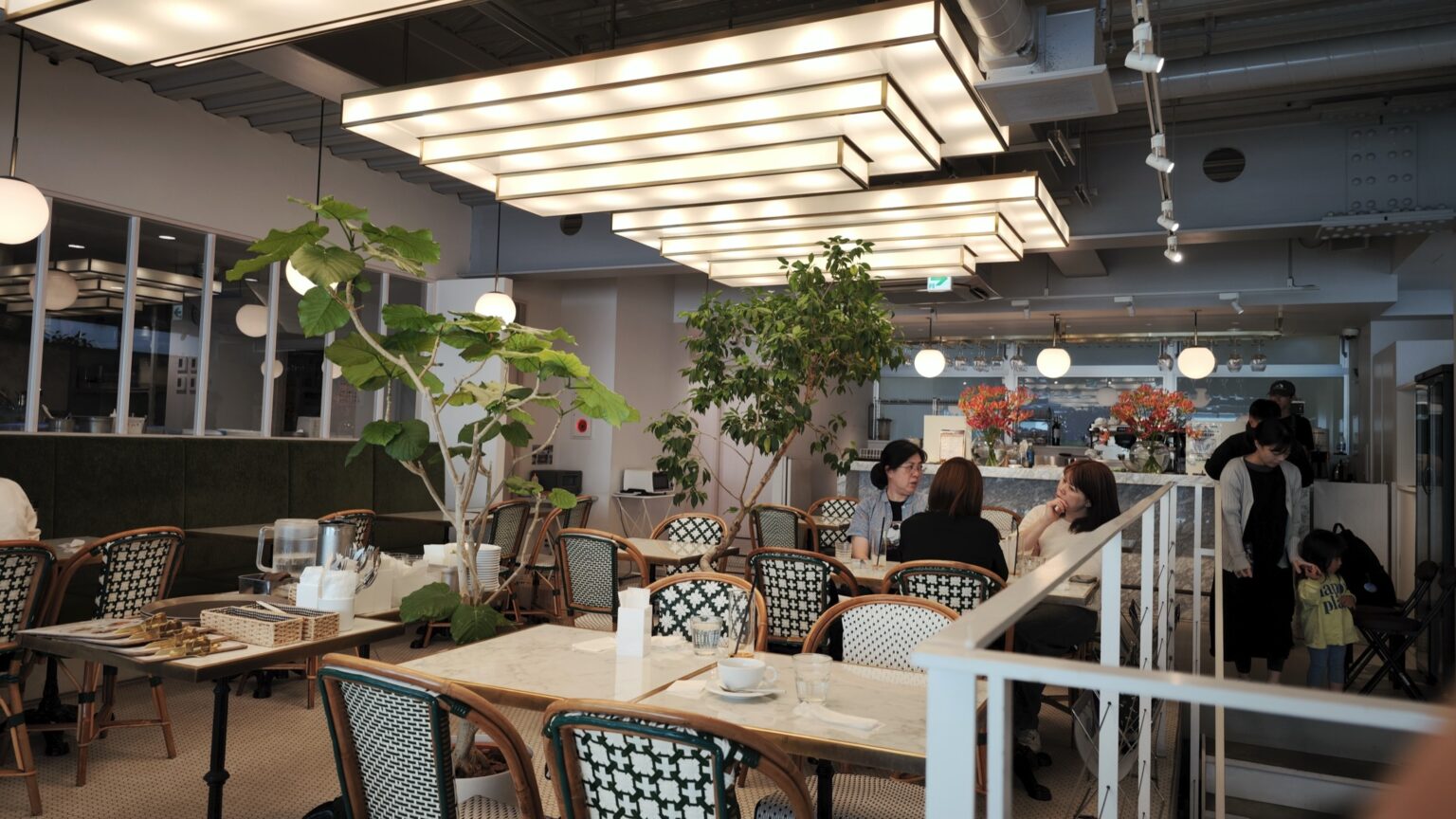
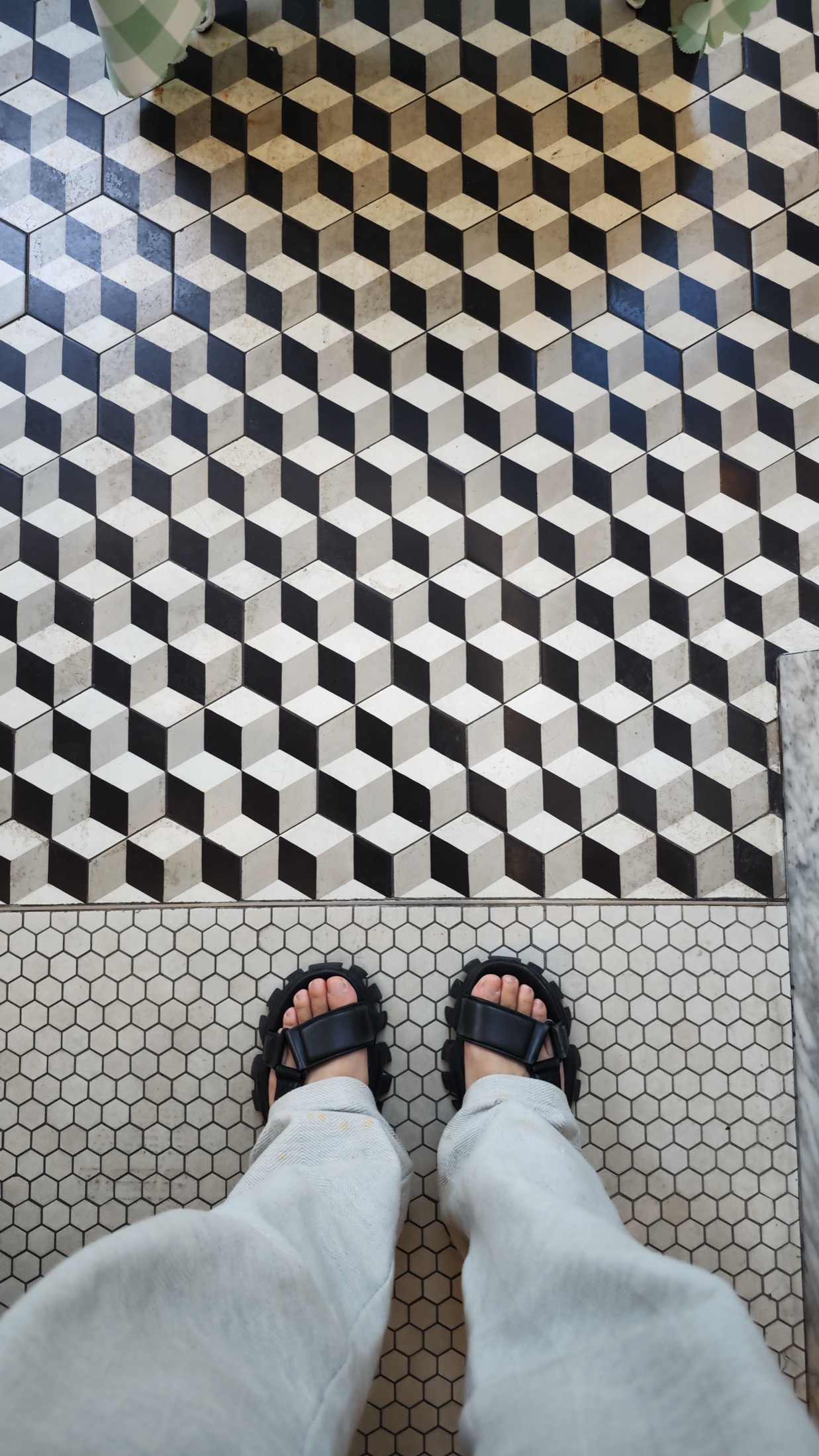
The room is built to look French and largely is. The marble counter downstairs was reproduced from the Paris shop, the chairs were hand-woven by French artisans, and the floor tiles are the same ones used in Paris. I photographed the floor on the way in.
Downstairs first
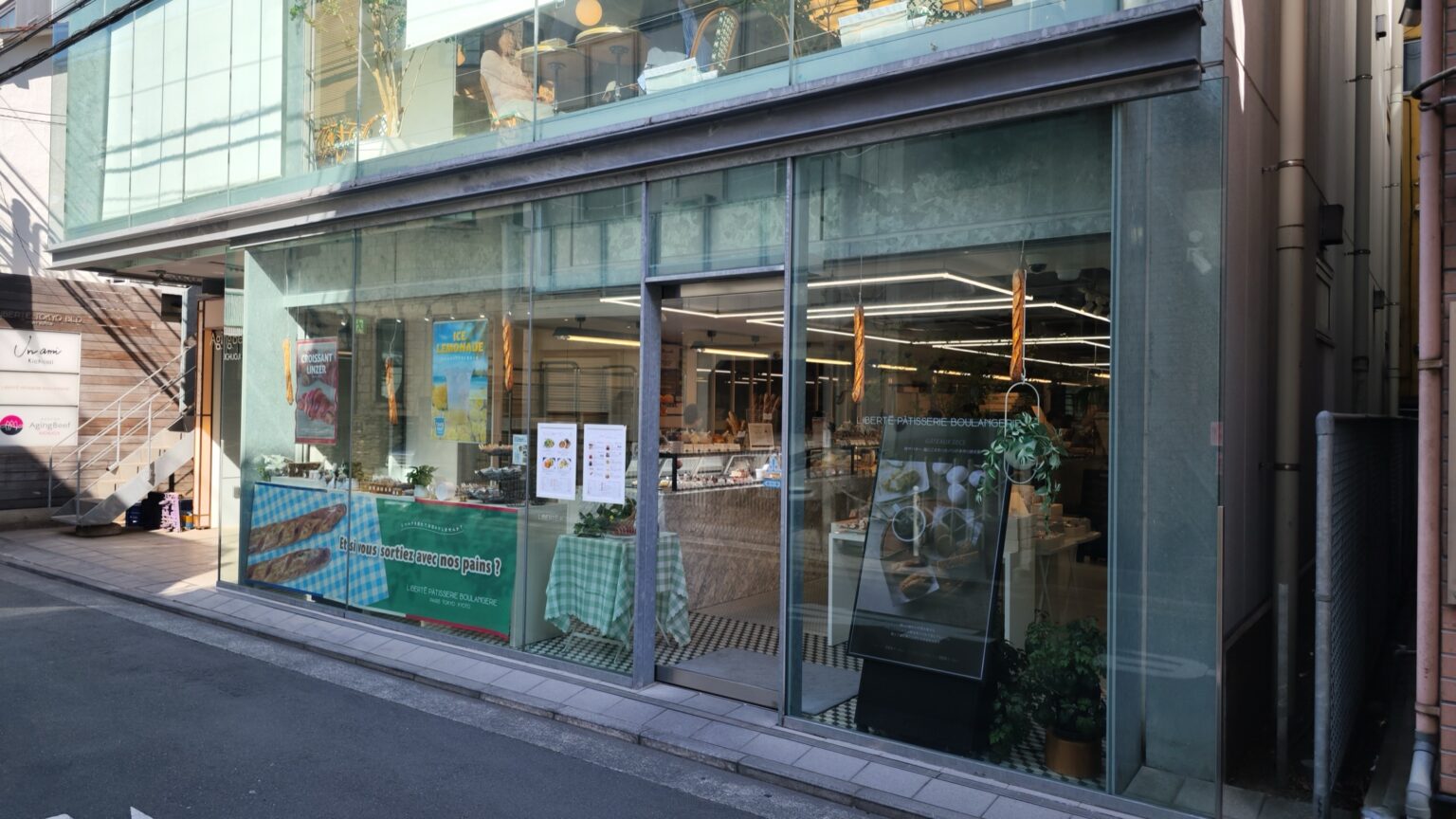
The building is modern and fully glazed, two storeys on a narrow side street off the main shopping run. Baguettes hang in the window. On the day I went the glass carried a poster for the Croissant Linzer and another for iced lemonade, and a green banner asking Et si vous sortiez avec nos pains ?, the shop glosses it itself in Japanese underneath, along the lines of “why not take Liberté out with you?”
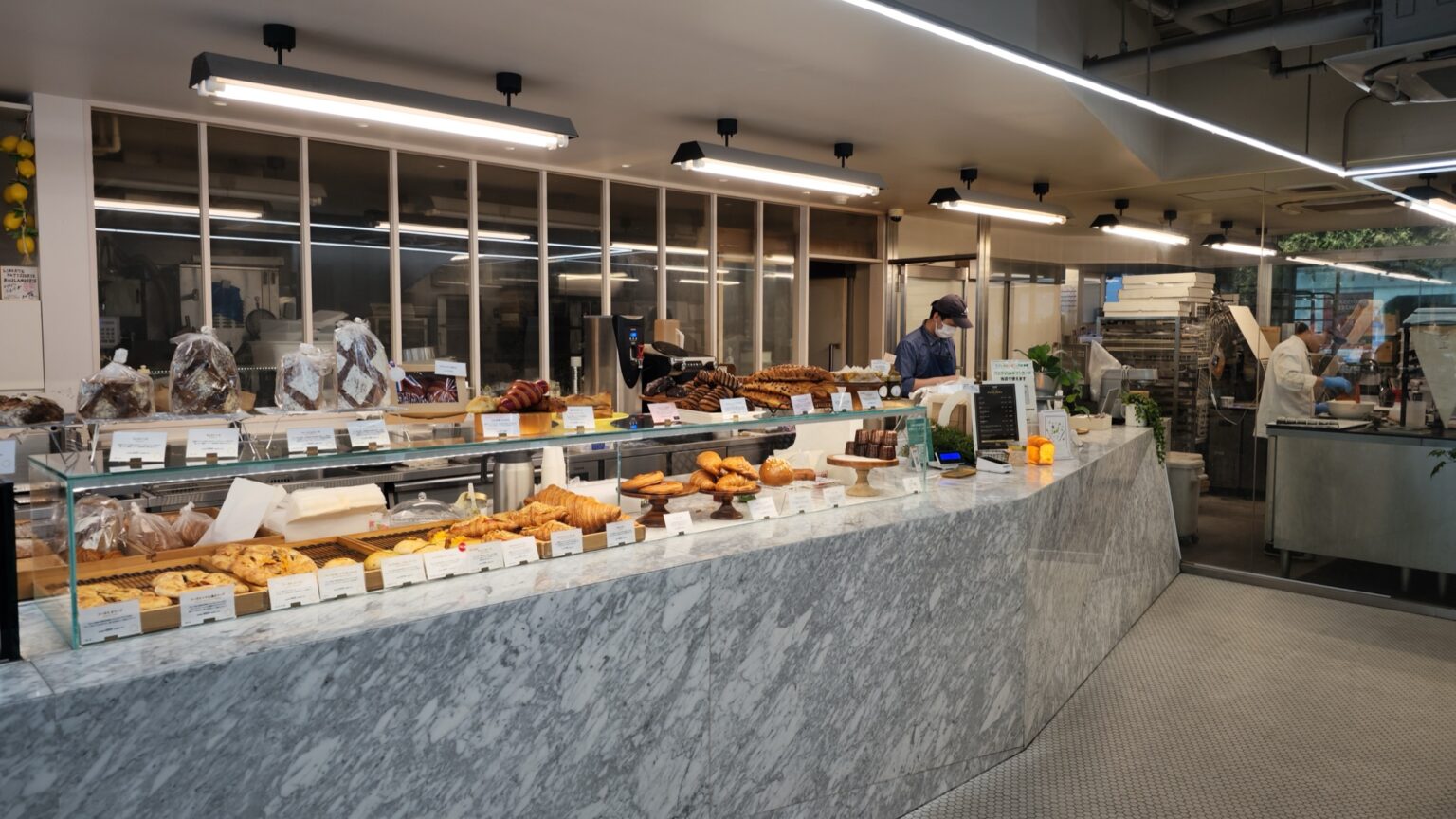
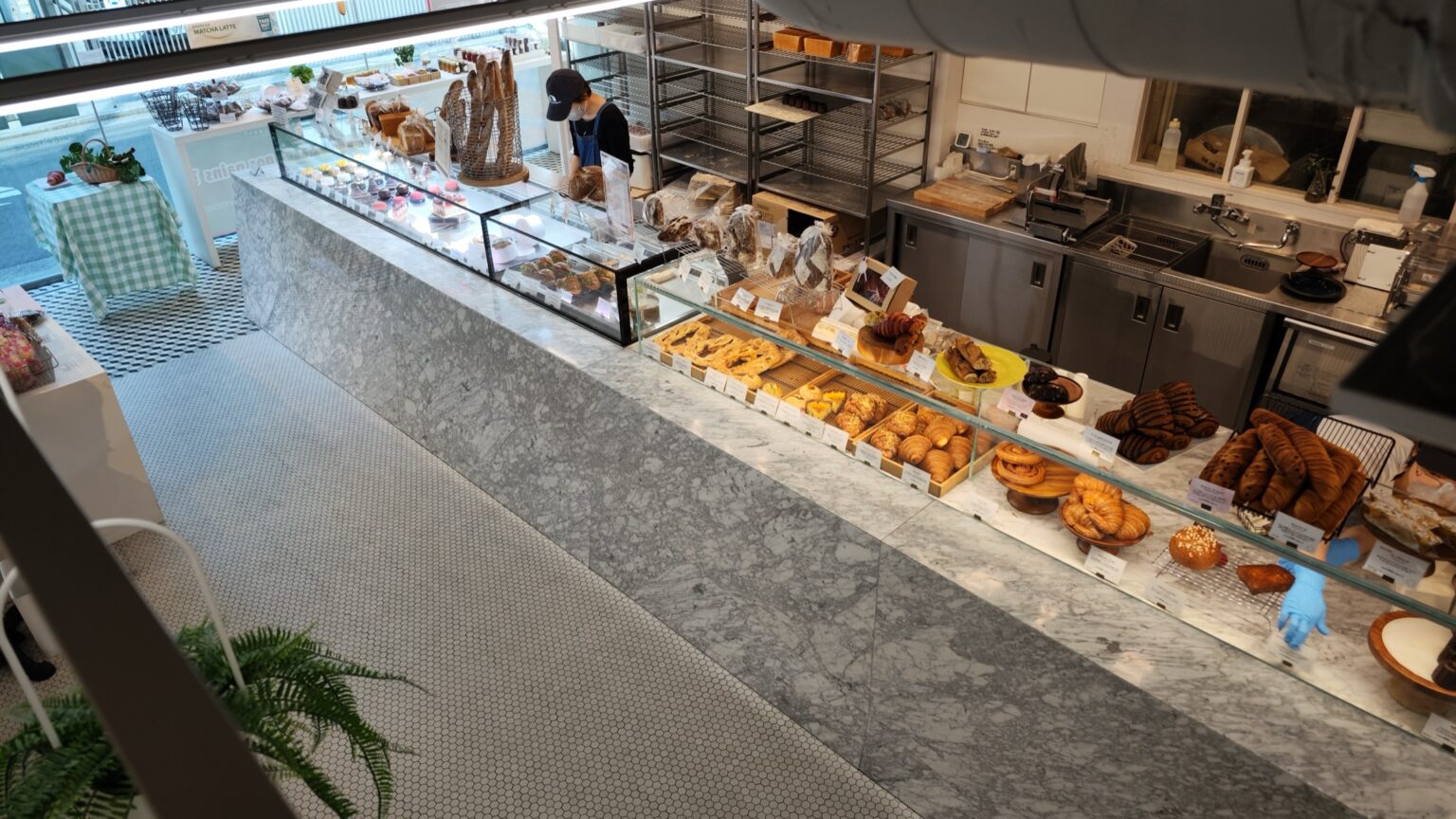
Inside, the ground floor is one long marble counter with the cases running along it and the workshop open behind glass, so there is something to watch while you queue. Cakes at one end, viennoiserie and loaves along the rest of it.
How the upstairs café actually works
The mechanism is simple, and nowhere obvious in English, so here it is from my own visit. You choose and pay for everything on the ground floor, then carry it upstairs yourself. Once you are sitting, you can order again at the café, a second coffee, another drink, without going back down.
The one rule that catches people out. You may bring bread and cakes bought downstairs up to the café, but every person at the table has to order at least one thing from the café menu. Walking up with a paper bag and ordering nothing is the mistake to avoid. The shop states this on its own café page.
Seats cannot be booked, and the shop says so three separate times. There are around sixty of them, per the company’s own 2023 announcement. I arrived at about half past two on a Monday in May and sat down straight away, but that is one afternoon, not a rule. Lunch is served from 11:00 until it runs out, and the lunch plates come with as much of the shop’s bread as you want, which the shop advertises plainly. There is a lift, which the shop says is there for pushchairs, large luggage and anyone who would rather not take the stairs.
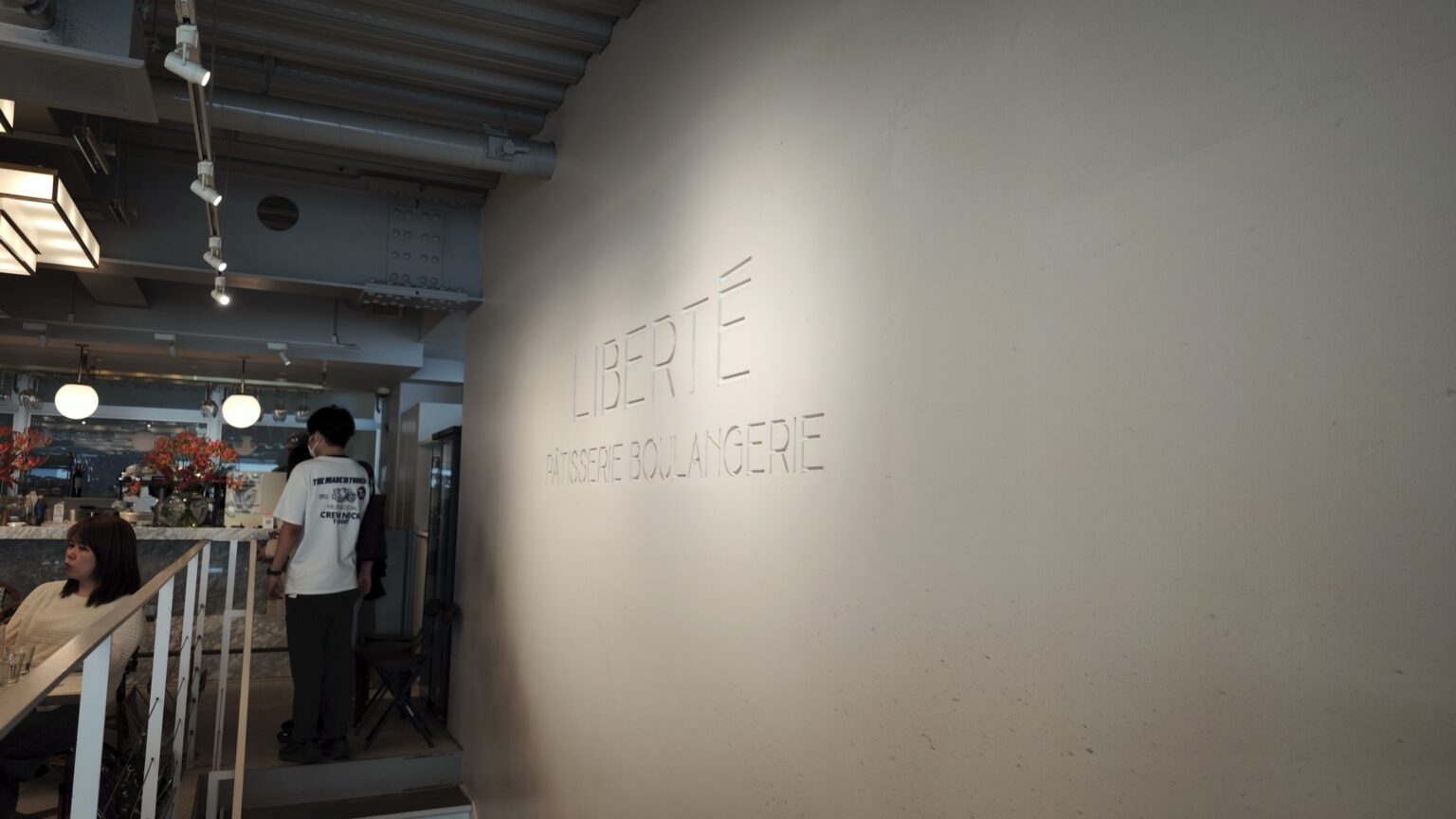
What I ordered
If you are building a Kichijoji afternoon
The cake set, Formule gâteau on the menu, is one cake of your choice plus a drink, from ¥1,485 including tax, with the price moving depending on which cake you take. I had the tarte citron with a dark-roast coffee.
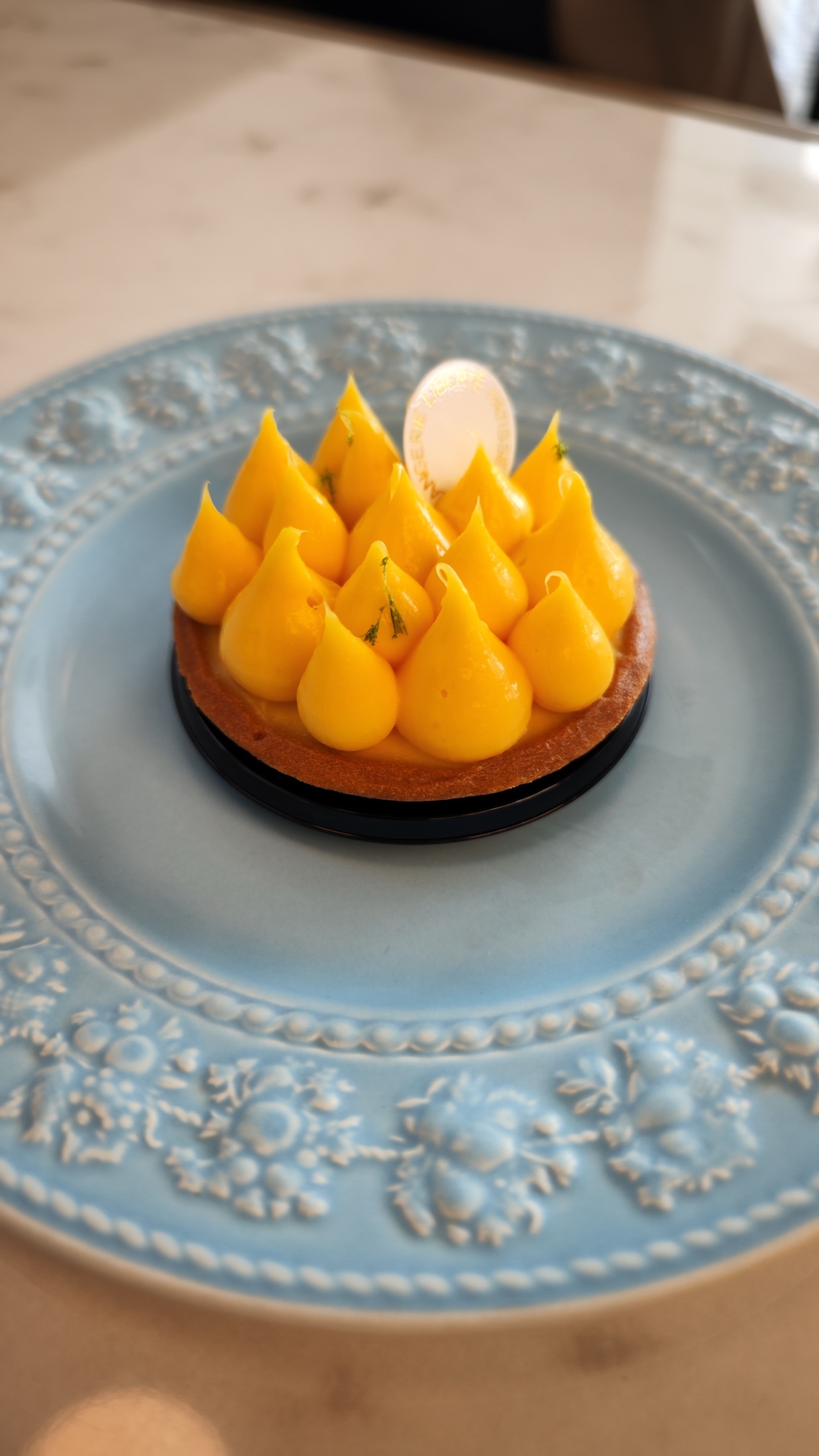
The tart is the shop’s own spécialité, and the description is short: French cultured butter, lemon used whole with the peel, finished with lime zest. Those are the fine green shreds on top. The acidity is real, and it stayed balanced rather than running ahead of everything else. I drank a dark roast with it. The white oval on the summit is a brand plaque with the shop’s name running round the rim, not a macaron; what it is made of, the shop does not say.
Taken away it is ¥713. Eaten at the table it falls under a different tax rate, and the cake set puts it inside a different price altogether.
I also took bread home. Rather than the plain croissant I picked the striped one, the Croissant Linzer, laminated with raspberry confiture running through it, which the brand calls its most popular bread. In the case it reads bright red; in my photograph it looks closer to burgundy. And a salt roll, which the company described at a Kyoto department-store France fair as one of Liberté’s representative breads. It is not on the Kichijoji shop’s published list, so treat it as something to look for rather than to count on.
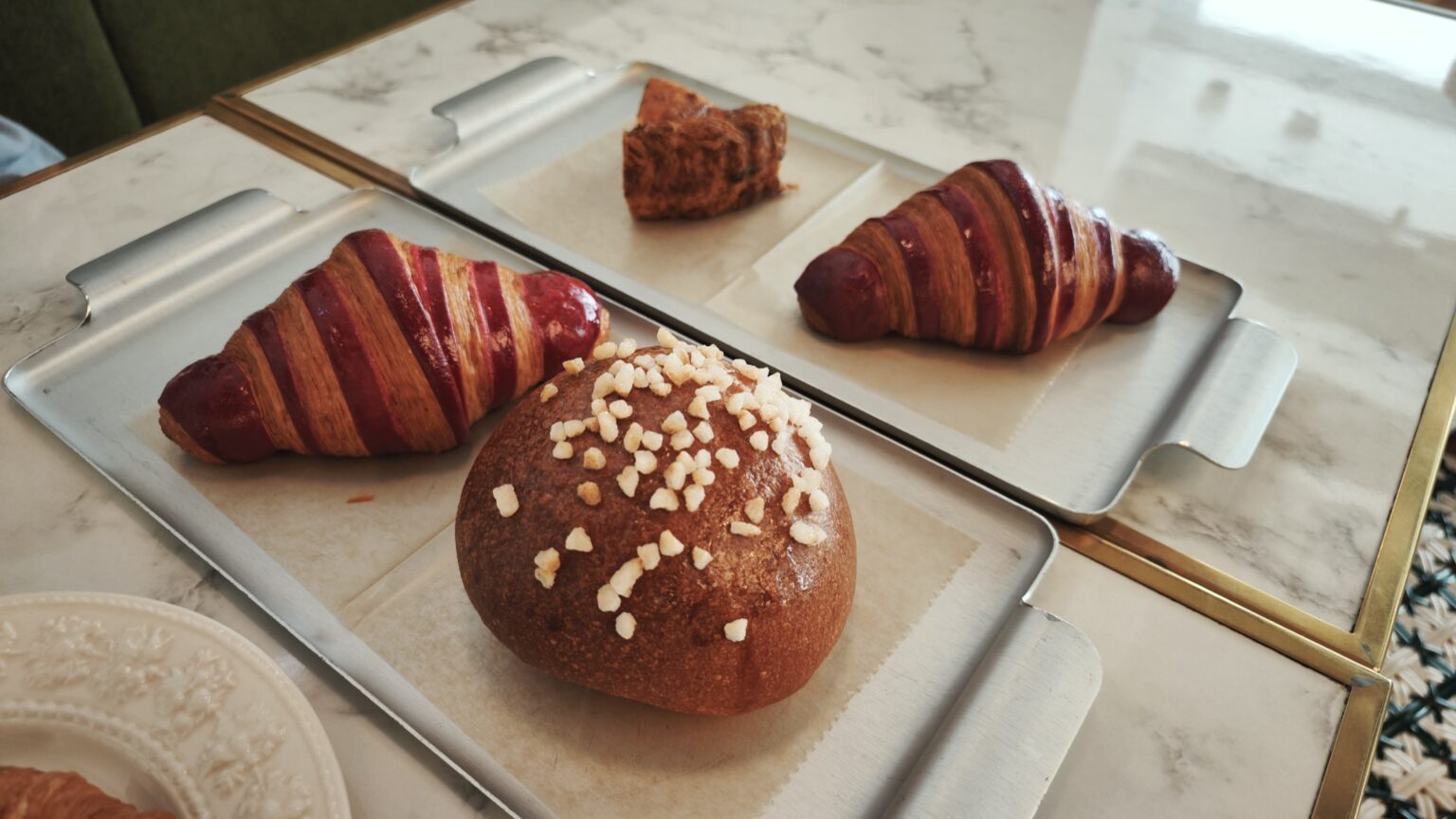
Why the same croissant costs more upstairs
Japan runs two consumption tax rates, and which one you pay depends on where you eat rather than what you buy. Food to take away is taxed at 8 per cent; eating in is treated as a restaurant service and taxed at 10 per cent. Liberté demonstrates it on its own café page with a worked example: a Croissant Linzer is ¥551 to carry out and ¥561 to eat at the table.
The amount is small. The point is that you will be asked at the till whether you are taking it away or staying, and your answer changes the tax category. Know which one you mean.
| Item | Price shown | Where that price applies |
|---|---|---|
| Tarte citron | ¥713 | Taking it away. The shop’s own spécialité, and not tagged as seasonal |
| Croissant Linzer | ¥551 / ¥561 | Take away / eat in. The shop’s own worked example of the two rates |
| Croissant | ¥529 | Taking it away. Described as its steady seller since arriving in Japan |
| Baguette | ¥432 | Taking it away. Moulins Bourgeois flour blended with Hokkaidō flour, house levain |
| Cake set (Formule gâteau) | from ¥1,485 | In the café. One cake plus a drink, and it moves with the cake you pick |
If you avoid pork. The shop publishes an allergen list for each item, and the tarte citron’s ends with gelatine, pork-derived. That matters for Muslim, Jewish, Hindu and vegetarian visitors, and I have not found it stated on any English page about this shop. Gelatine appears on several of the other cakes as well. The lists are printed by each item and on the shop’s own menu pages, so check the one you want rather than assuming.
Getting there
Kichijoji is on the JR Chūō line and the Keiō Inokashira line. One thing worth knowing before you stand on a platform: the Chūō Special Rapid does not stop at Kichijoji. Neither does the Ōme Special Rapid. In the timetable I checked on 2 September 2026, thirty-five trains a day run straight through the station. Take a Rapid or a Commuter Rapid instead, and check the board rather than the line colour.
From the north exit it is a seven-minute walk by the shop’s own reckoning. Note that JR East revised its fares in March 2026, so any fare figure you find cached in an older blog post is out of date; check on the day.
Building a Kichijoji afternoon around it
Kichijoji has more bakeries and cafés per street than anywhere else in west Tokyo, so the question is rarely whether to stop but which one. Liberté Kichijoji is the polished end of that range, and it is not a reason to cross Tokyo on its own.
It is a good first or last stop on a Kichijoji day, and the neighbourhood carries the rest.
The German one, three minutes away
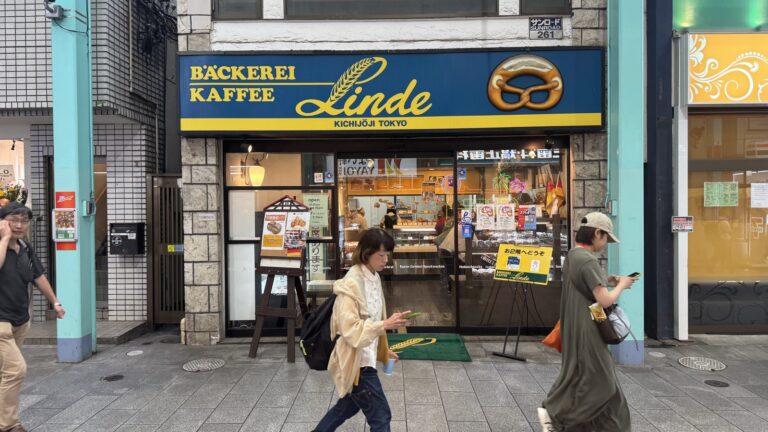
Linde has been baking rye and pretzels in Kichijoji since 1997 and also has a café upstairs. German and French, three minutes apart, same afternoon. Pick by whether you want butter or sourdough.
Fruit tarts, not lemon
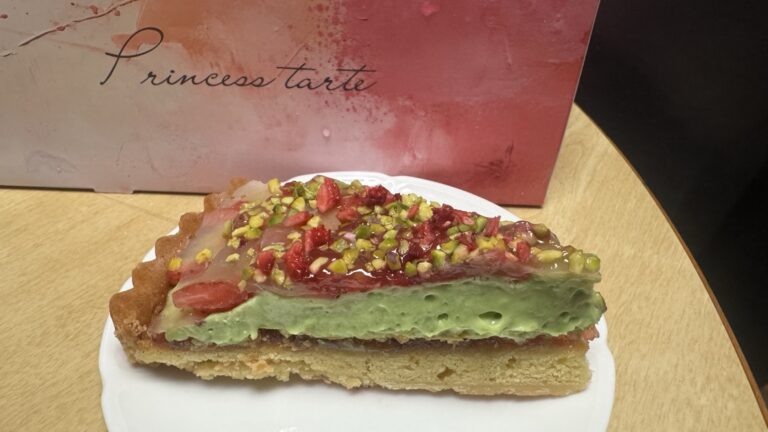
Princess Tart is the other tart shop in the neighbourhood, and a completely different proposition: seasonal fruit piled high rather than one sharp citrus note.
Coffee with a longer history
Tsubakiya pours coffee in a Taishō-era room and does curry alongside. If Liberté feels too polished, this is the counterweight.
When the sun goes down
Harmonica Yokocho is on the same side of the station, and it wakes up as the bakeries close. A dozen tiny bars in a lane you could miss entirely.
Across the tracks, Inokashira Park is a ten-minute walk south and the obvious place to eat what you carried out of the shop. If you want a full meal rather than pastry, Spaghetti Pancho upsizes for free, and Yue He Cha changes its menu at three in the afternoon.
Two things to plan around. Liberté has no regular closing day, which makes it a tempting Monday anchor, but Inokashira Park Zoo closes on Mondays. The park itself stays open. Separately, the Ghibli Museum in neighbouring Mitaka sells no tickets at the door on any day: they go on sale at 10:00 Japan time on the 10th of each month for the following month. Book the museum first and fit the bread around it.
A few practical notes. The shop’s website has no English version, and in the case the item names are French with Japanese descriptions and the prices shown, so do not count on English. I paid by card, though I would carry cash as well rather than assume. Carrying pastry around all afternoon is easier with something packable than with a paper bag, and if you want to read the shop’s own news feed for closures before you set out, a data eSIM and a translation app will do it. Kichijoji makes a comfortable base for west Tokyo if you would rather not sleep in Shinjuku, hotels across the city are worth comparing on price before you commit to the centre.
Common questions
Do I need to book a table?
No, and you cannot. The shop states three times on its café page that seats are not reservable. Turn up and see. There are around sixty seats according to the company’s 2023 announcement, and I had no wait at half past two on a Monday in May, but that is one visit, and nobody publishes crowding data for this shop.
Can I eat bread from the bakery in the upstairs café?
Yes. Buy it on the ground floor, carry it up, and order at least one thing from the café menu, one order per person is the shop’s stated rule. You can order again upstairs once you are seated.
Where do I pay?
On the ground floor, for everything you have chosen there. Anything you add after you sit down is handled at the café.
What is the tarte citron?
The shop’s own spécialité: a tart filled with a cream made from French cultured butter and whole lemons used with the peel, finished with lime zest. It is covered in piped yellow teardrops with a small oval brand plaque on top. ¥713 to take away as of September 2026. Its published allergen list includes pork-derived gelatine.
Why is eating in more expensive than taking away?
Japan taxes food to take away at 8 per cent and eating in at 10 per cent, because sitting down counts as a restaurant service. The shop’s own example is a Croissant Linzer at ¥551 to carry out and ¥561 to eat at the table. You will be asked which you want when you pay.
Which train stops at Kichijoji?
Rapid and Commuter Rapid services on the JR Chūō line, plus the Keiō Inokashira line. The Chūō Special Rapid and the Ōme Special Rapid run through without stopping, thirty-five trains a day in the current timetable. Read the board, not the line colour.
Is the café accessible without stairs?
Yes. The shop provides a lift and names pushchairs, large luggage and limited mobility as the reasons for it.
Sources
- LIBERTÉ PÂTISSERIE BOULANGERIE official site, shop information, café rules, and the patisserie and boulangerie menus with prices and allergens. Checked 2 September 2026.
- LIBERTE JAPON press releases via PR TIMES, 2017–2023, the opening date, the first store outside France, the world-first café, interior details and seat count.
- National Tax Agency, the 8 and 10 per cent consumption tax rates and the treatment of eating in.
- JR East, the Chūō line timetable for Kichijoji, and the March 2026 fare revision.
- Ghibli Museum and Inokashira Park Zoo, ticketing and closing days.
- Photographs taken at the shop on 11 May 2026.
Join travelers discovering Japan's hidden side
Weekly dispatches from off-the-beaten-path Japan — spots and stories you won't find in guidebooks.
No spam. Unsubscribe anytime.
Welcome aboard!
You're in. See you in your inbox soon.