Tokyo · Mitaka · Neighbourhood Soba
Takinoya (瀧乃家 / 滝乃家) is an old-school neighbourhood soba shop in Shinkawa, on the quiet southern edge of Mitaka in west Tokyo, where I had the duck soba — ¥1,100, chilled noodles with a hot bowl of duck-and-leek broth to dip them in — in a tatami room that feels unchanged in decades. It’s a local’s place in the truest sense: closed Wednesdays, a long way from any station, and cash-or-QR only.
What a “machi soba-ya” is
Takinoya isn’t a destination soba restaurant where a chef stone-grinds his own buckwheat for a queue of foodies. It’s a machi soba-ya — the everyday neighbourhood noodle shop that used to sit on every Japanese high street, serving soba and udon alongside rice bowls like katsudon and curry-don, feeding locals a quick, cheap, satisfying lunch. They’re slowly disappearing, squeezed by chains, which is exactly why a survivor like this one — tucked into a residential corner of Mitaka, well off any tourist map — is worth knowing about.
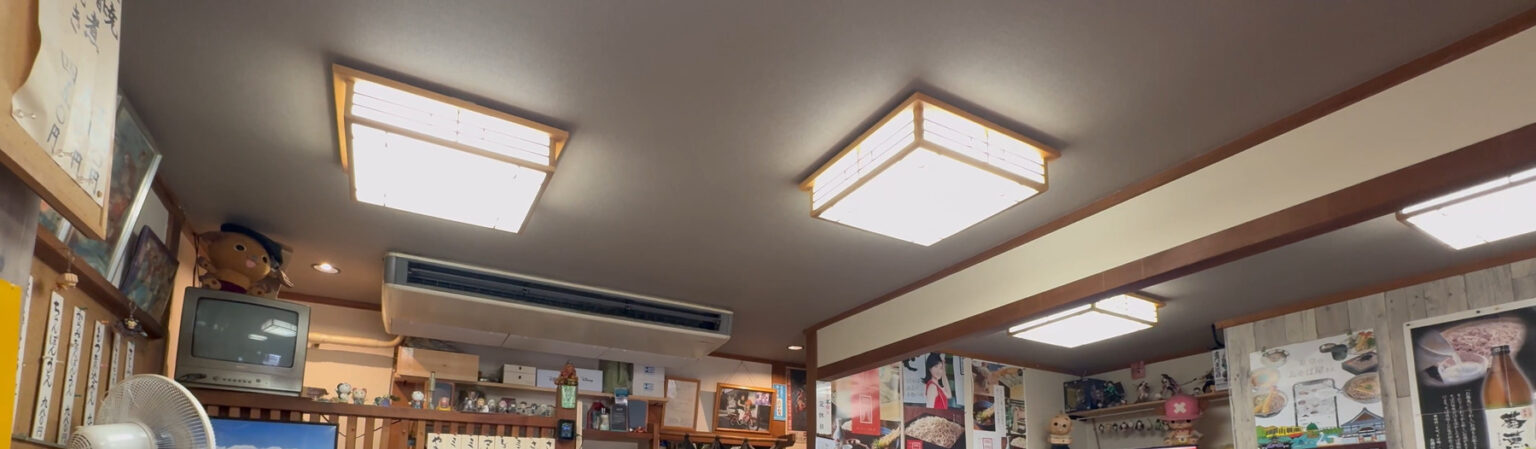
The room is the other half of the appeal. There are a couple of low tables in tatami rooms (zashiki) where regulars sit cross-legged, plus a few ordinary tables — about 20 seats in all. An old TV murmurs in the corner, the menu is brushed onto strips of paper on the wall, and the soft washi ceiling lamps give it the warm, slightly faded feel reviewers call shinise no fuzei — the air of a long-established shop.
The duck soba
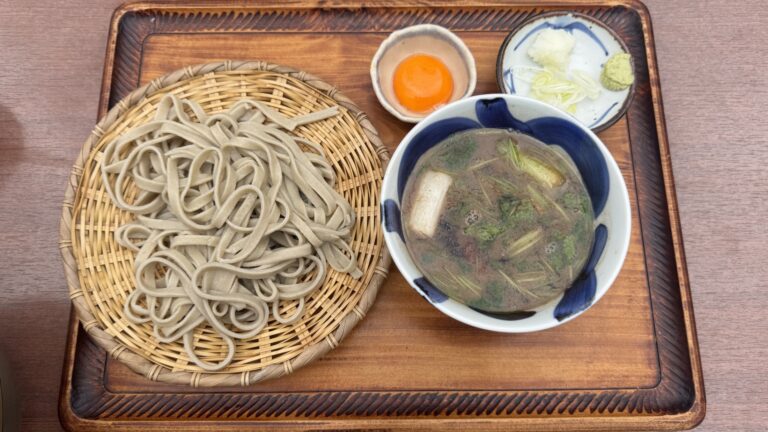
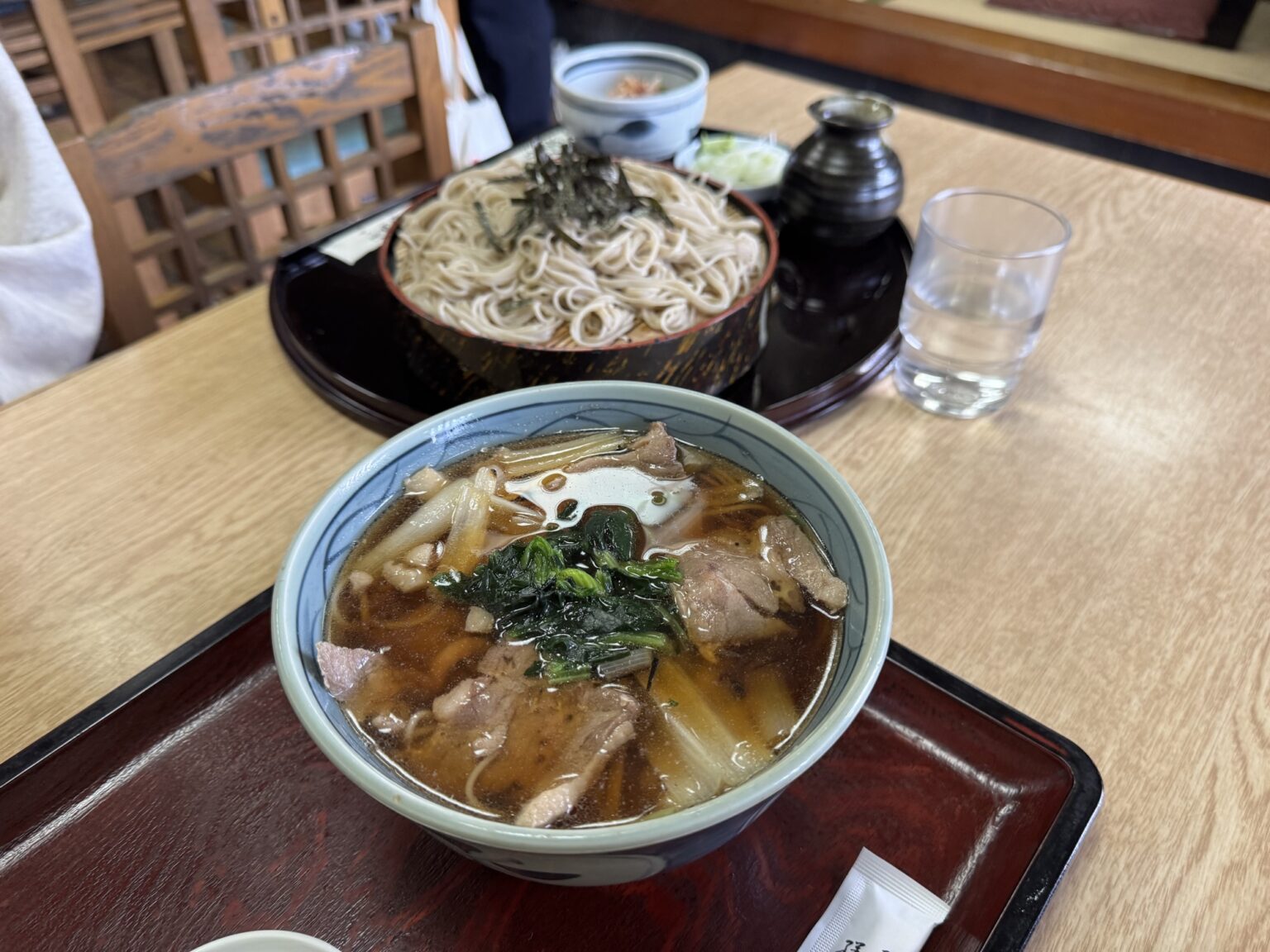
I came for the duck soba (¥1,100), and it arrived seiro-style — the shop bills it as kamo-seiro on a poster by the counter. A tray of chilled, firm soba noodles comes with a separate bowl of hot, glistening broth full of sliced duck and lightly charred leek; you dip the cold noodles into the warm, fatty, faintly sweet broth a few strands at a time. It’s a soba lover’s order — the cold noodles keep their bite while the duck broth does the heavy lifting — and at the end you pour in the soba-yu (the starchy water the noodles were boiled in) to drink what’s left as a soup.
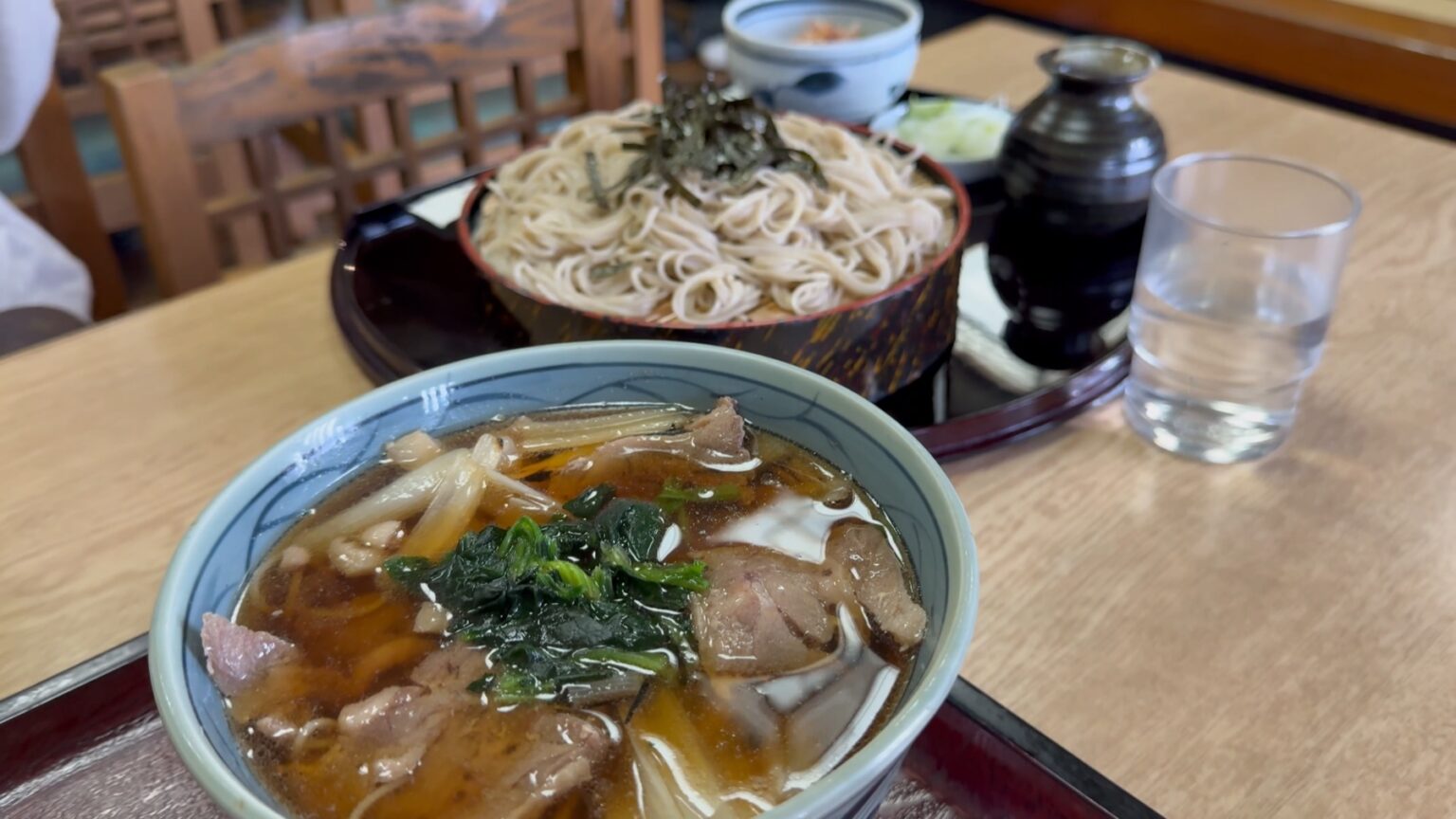
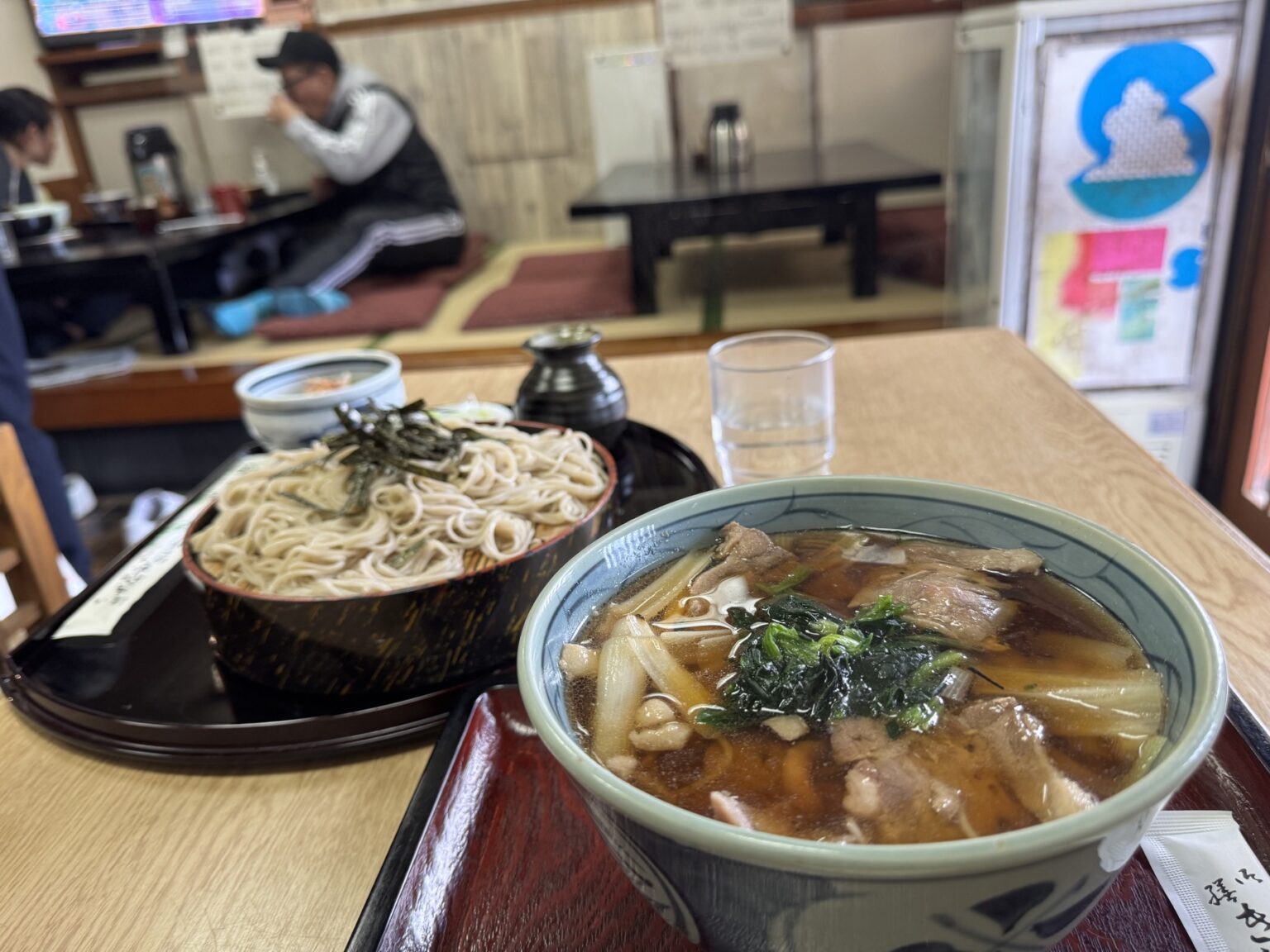
← swipe / scroll →
The menu
It’s a classic machi-soba line-up — soba and udon plus rice bowls and sets. These prices are from Tabelog’s posted menu and my own visit; the shop’s full menu isn’t published online, and prices change, so treat them as a guide.
| Dish | Price |
|---|---|
| Duck soba (kamo-seiro) — what I had | ¥1,100 (as of my visit; confirm on the day) |
| Oroshi seiro (cold soba, grated radish) | ¥770 |
| Cold tanuki soba | ¥770 |
| Curry rice bowl | ¥800 |
| “Ume” set — katsudon + mori soba | ¥1,000 |
Payment is cash or QR-code pay — no credit cards or e-money. No reservations.
Southeast Asia traveler tip: this is a detour, not a destination — go because you want a genuine, un-touristed local soba lunch, not because it’s near anything. The menu is Japanese-only and hand-written; save these photos or point. It’s closed Wednesdays, and the hours aren’t reliably listed, so aim for lunchtime and ideally call first (0422-48-7201).
Getting there
Be honest with yourself about the access: Takinoya is not a quick walk from a station. The nearest is Mitakadai (三鷹台) on the Keiō Inokashira Line, but it’s about 1.7 km away — a 25-minute walk. Most people arrive by Odakyū bus (the Tenjin-mae or Rokuchū-mae stops are closest) or by car, where there are two parking spaces in front. From central Tokyo, the Inokashira Line runs from Shibuya to Mitakadai in around 25 minutes; pair the shop with a wider Mitaka or Kichijōji plan rather than making a special trip.
Takinoya isn’t worth a special trip, so most people fold it into a wider Tokyo stay. Kichijōji (a few stops up the Inokashira Line) and Shinjuku (about 15 minutes from Mitaka on the Chūō line) make the easiest nearby bases — browse what’s open on Agoda:
Or search all Tokyo hotels on Agoda →
We may earn a commission from Agoda bookings, at no extra cost to you.
More local Tokyo eating
Jindaiji soba, Chōfu
More handmade soba in a temple town nearby in west Tokyo.
Imahana, Setagaya
A Shōwa-era set-meal diner one neighbourhood over.
Harmonica Yokocho, Kichijōji
Tiny bars and counters two stops up the Inokashira Line.
Nankintei, Kunitachi
A 24-hour roadside machi-chūka on Tokyo’s west side.
FAQ
Where is Takinoya, and how do I get there?
It’s at Shinkawa 2-12-8 in Mitaka City, west Tokyo. The nearest station is Mitakadai on the Keiō Inokashira Line, but it’s about 1.7 km (a 25-minute walk) away — most people come by Odakyū bus (Tenjin-mae / Rokuchū-mae stops) or by car (two parking spaces).
What’s the duck soba like?
It’s served seiro-style (kamo-seiro): chilled soba on a tray with a separate bowl of hot duck-and-leek broth to dip the noodles into, for ¥1,100. Finish by pouring in the soba-yu to drink the broth as a soup.
What are the opening hours and closing day?
It’s closed on Wednesdays. The opening hours aren’t reliably published online, so aim for lunchtime and ideally call ahead on 0422-48-7201 before a special trip.
Can I pay by card?
No credit cards or e-money — it’s cash or QR-code payment only. There are no reservations.
Is there an English menu?
There’s no English menu; it’s a hand-written Japanese menu on the wall. Point, or use the dish names in this guide — soba, udon and the rice bowls are all understood.
Is it worth a special trip?
Only if you specifically want an authentic, un-touristed neighbourhood soba experience. It’s far from any station, so it’s best folded into a wider Mitaka or Kichijōji day rather than visited on its own.
Sources: Tabelog and Gnavi listings for 滝乃家 (Mitaka, Shinkawa 2-12-8). Address, closed day, seating, payment and several menu prices verified June 2026; the duck soba and its ¥1,100 price are from my own visit (the shop’s full menu isn’t published online). Hours are not reliably listed — confirm by phone before you go. Note: several unrelated soba shops share the name Takinoya; this guide is only about the Mitaka / Shinkawa one.
Join travelers discovering Japan's hidden side
Weekly dispatches from off-the-beaten-path Japan — spots and stories you won't find in guidebooks.
No spam. Unsubscribe anytime.
Welcome aboard!
You're in. See you in your inbox soon.