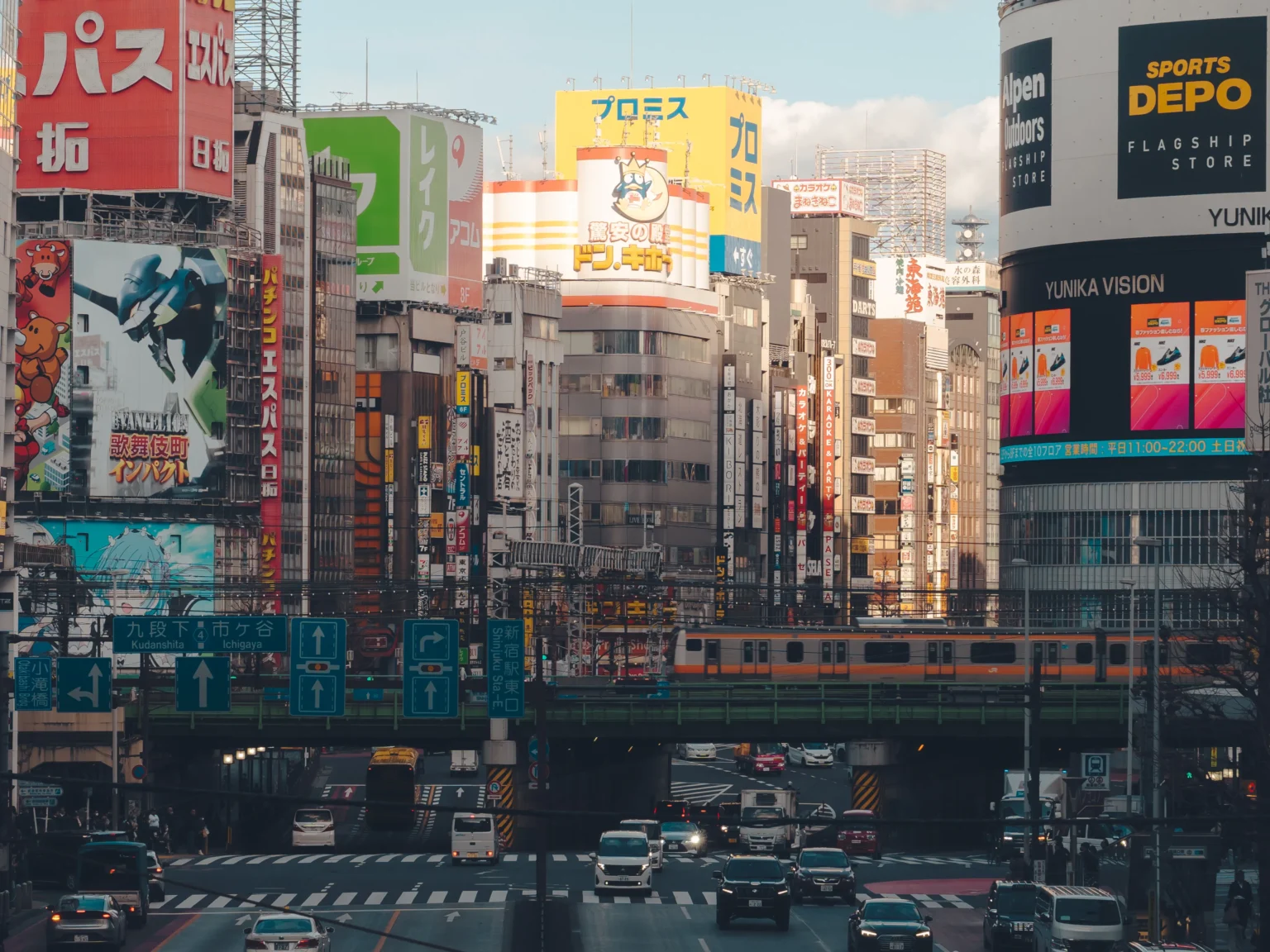

Kabukicho is the part of Tokyo most travel guides describe with one paragraph and a warning. I’ve walked it at every hour for years — for street photography, for late-night ramen runs after the last train, for the occasional batting cage at 2am — and I think the warnings are mostly right but the framing is mostly wrong. Walked correctly, this is one of the most photogenic 90 minutes you can spend in Tokyo. Walked carelessly, this is where you end up with an ¥80,000 bar tab.
Updated for 2026 with the post-2024 Tokyu Kabukicho Tower, the new tout enforcement zones, and a route that keeps you on the well-lit streets.
Prefer not to navigate Kabukicho’s touts on your own? You can join a small-group Tokyo bar-hopping tour led by an English-speaking local who knows which doors are safe.
What Is Physically Here
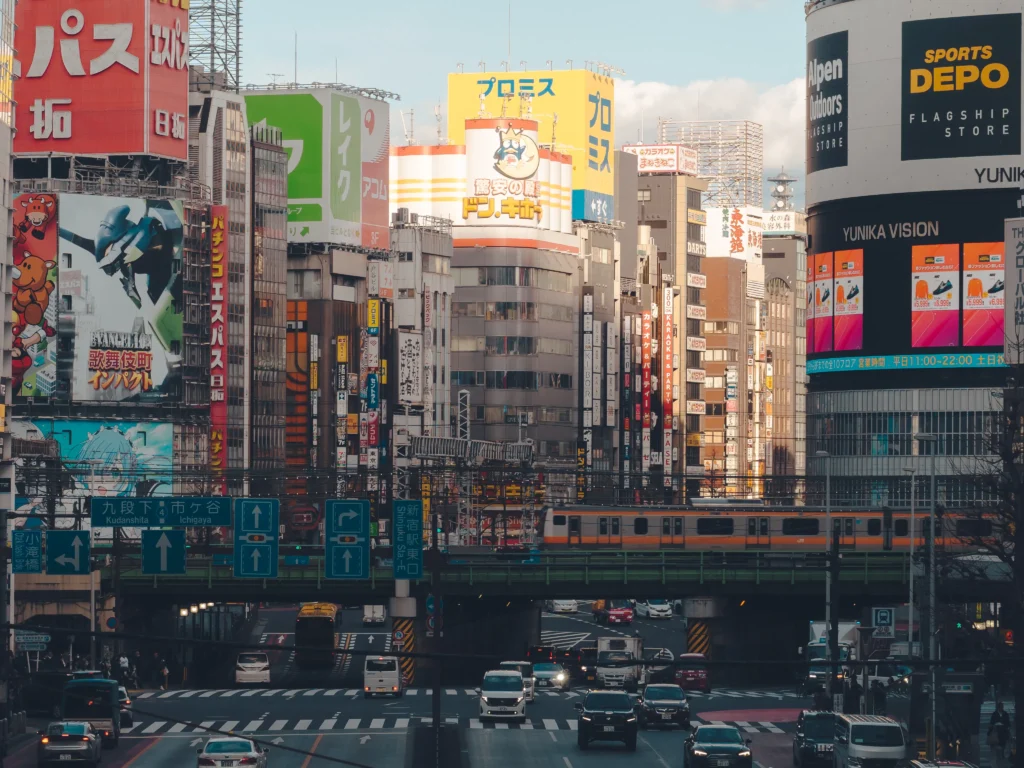
Kabukicho is a dense, compact district northeast of Shinjuku Station in Tokyo. It consists of two main sections, 1-chome and 2-chome. The area is a grid of streets filled with multi-story buildings. These buildings house thousands of restaurants, bars, karaoke rooms, pachinko parlors, and adult-oriented businesses. At night, the entire district is illuminated by an overwhelming number of large neon signs, video screens, and storefront lights, making it bright even after midnight. The streets are crowded with people, and sound is a constant presence—a mix of music from shops, pachinko machine noise, and the voices of crowds and touts.
Who This Walk Is For (And Who It Isn’t)
This walk is for travelers who want to observe the energy of a major urban entertainment district. It is suitable for those interested in street photography, modern cityscapes, and understanding the full spectrum of Tokyo’s nightlife. The experience is primarily observational. It is not for visitors seeking a quiet, family-friendly, or relaxing evening. People who are uncomfortable with crowds, loud noises, and adult-themed environments should avoid this area at night. The presence of touts and the adult nature of many businesses can be intimidating.
How to Get There
Access to Kabukicho is straightforward, as it is adjacent to one of Tokyo’s largest transport hubs.
| Station | Line(s) | Exit | Walk Time to Kabukicho | Notes |
| JR Shinjuku Station | JR Yamanote, Chuo, etc. | East Exit | 5-8 minutes | The most common and direct route. |
| Seibu-Shinjuku Station | Seibu-Shinjuku Line | Main Exit | 1-2 minutes | This station is located at the northern edge of Kabukicho. |
| Shinjuku-sanchome Station | Tokyo Metro, Toei Subway | B9/B10 | 5-7 minutes | Good for accessing the eastern side of the district. |
From major hubs like Tokyo Station or Shibuya Station, take the JR Yamanote or JR Chuo Line directly to Shinjuku Station. The travel time is typically 15-20 minutes. The walk from the station exit is flat and on paved sidewalks, but it becomes extremely crowded as you approach the district’s main entrance.
A Practical Walking Route
A walk through the main points can take 1 to 2 hours, depending on your pace and how often you stop.
1.Start at the Main Gate: Begin at the intersection with Yasukuni-dori, where the iconic red archway sign for “Kabukicho Ichibangai” stands. This is the primary photo spot.
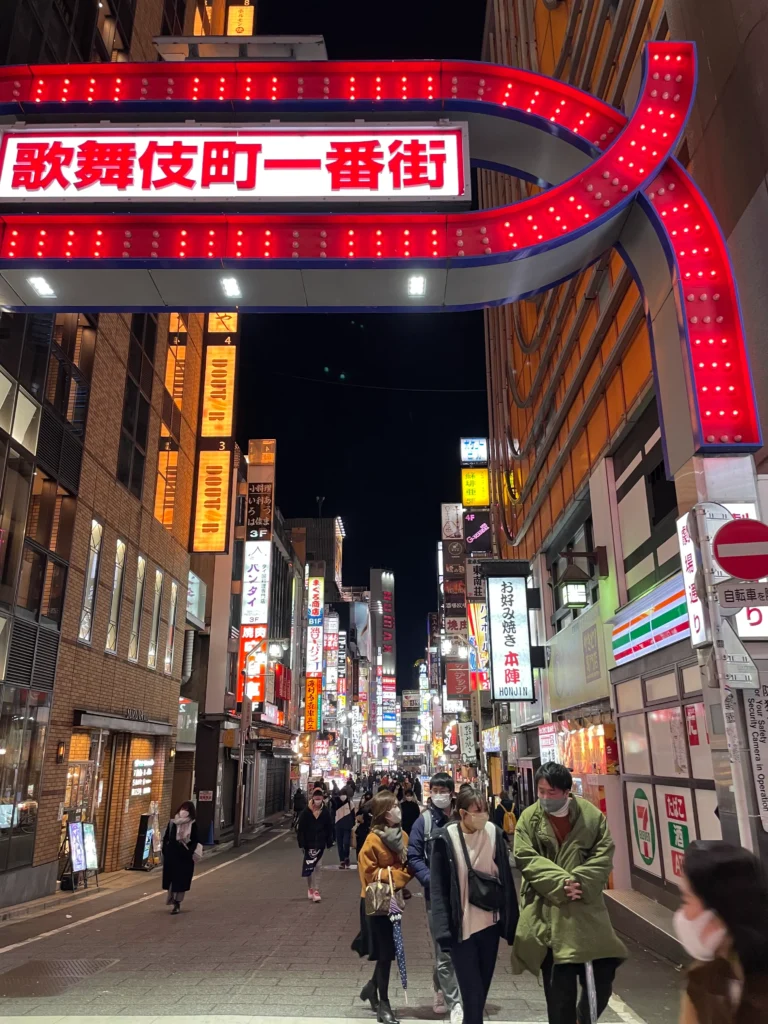
2.Walk Central Road: Proceed north up the main street, Central Road. This is the densest area for restaurants and entertainment.
3.See the Godzilla Head: Look for the Shinjuku Toho Building. The life-size Godzilla head is visible from the street, appearing to look down from the 8th-floor terrace. The street it is on is often called “Godzilla Road.”
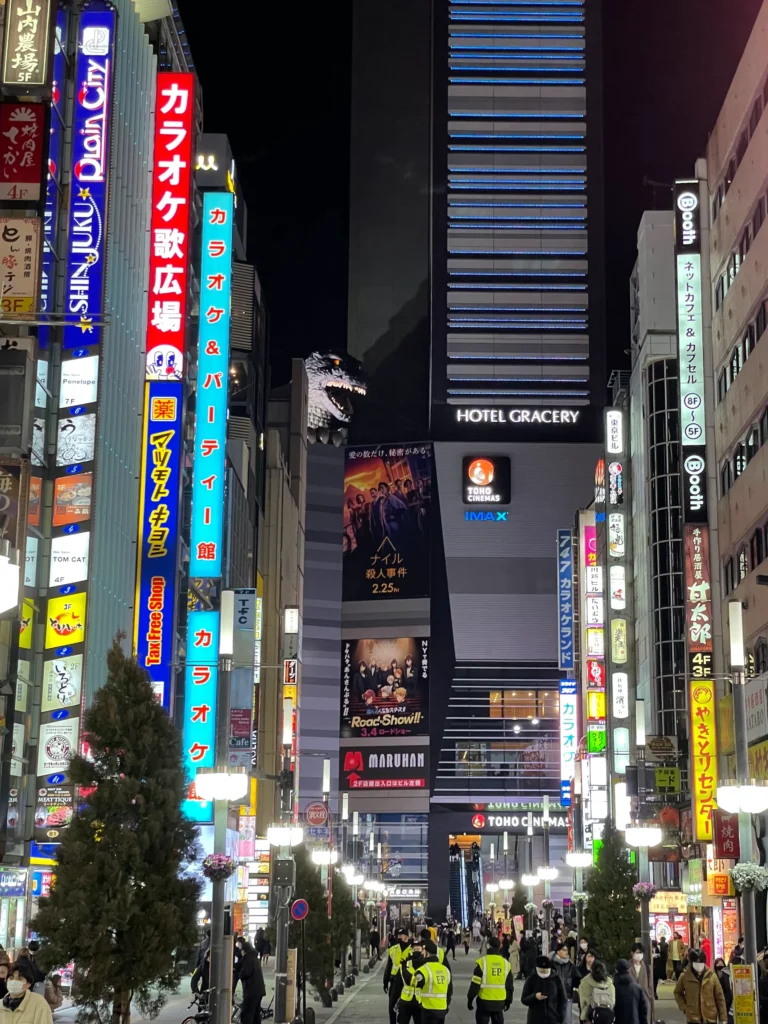
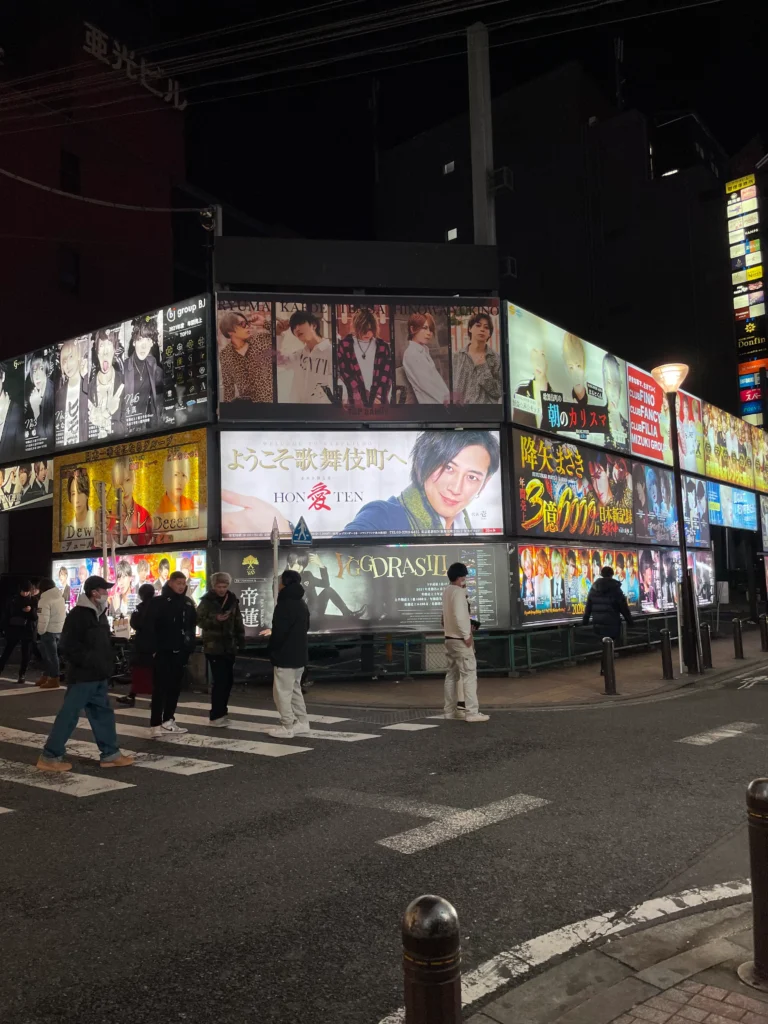
4.Observe the Host Clubs: As you move further north and east into the 2-chome area, you will notice large, stylized photos of male hosts outside buildings. This is the main host club district. Observation is from the street only.
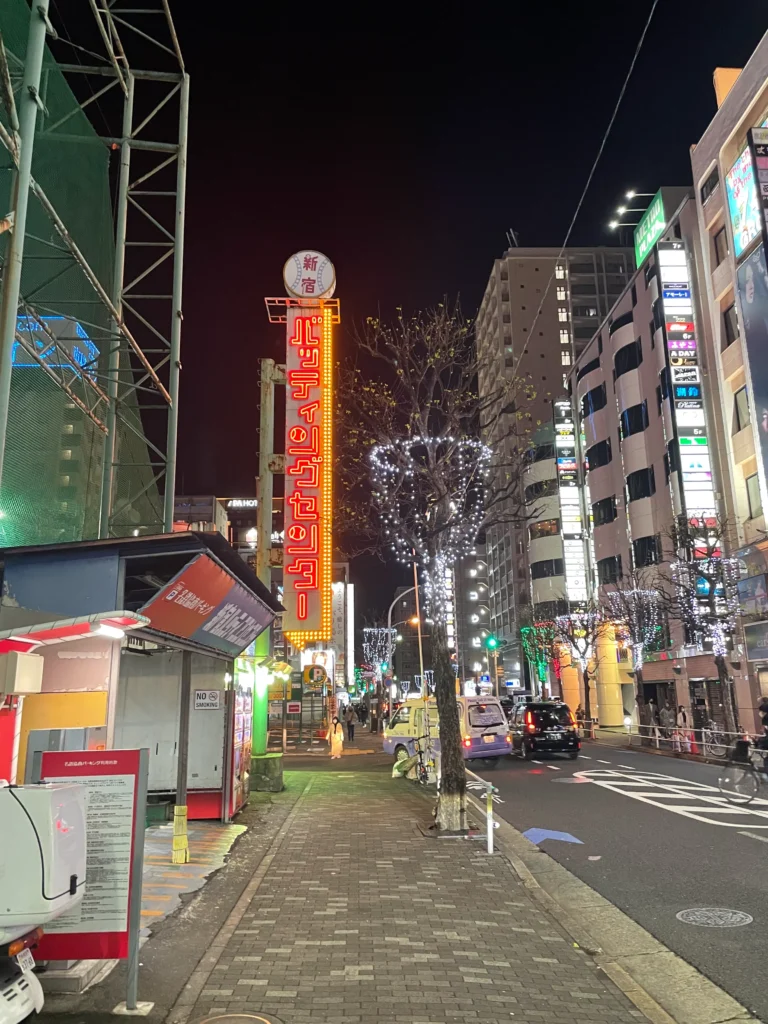
5.Visit the Batting Center: Located at 2-21-13 Kabukicho, the Shinjuku Batting Center is a well-known spot. It is open until 4 AM and offers a unique activity amid the nightlife.
Costs & Fees
•Walking: Free. There is no entrance fee to the district itself.
•Shinjuku Batting Center: Approximately ¥300 – ¥400 for one round of batting.
•Food & Drink: Varies widely. A simple meal can be found for ¥1,000-¥2,000, but prices at many bars and clubs can be extremely high. Be cautious of cover charges.
Many smaller establishments are cash-only. While larger chains accept cards, carrying cash is advisable.
Best Time to Visit
•Time of Day: The district’s character emerges after 7:00 PM. The peak energy is between 9:00 PM and 1:00 AM, when the lights are brightest and crowds are largest.
•Day of the Week: Friday and Saturday nights are the most crowded. Weeknights are slightly less intense but still very active.
•Weather Impact: Rain does not stop activity, but crowds may be slightly thinner. The reflections of neon lights on wet pavement are a distinct visual.
Things to Know Before You Go
•Safety is a Real Concern: Kabukicho has a high crime rate compared to other parts of Tokyo. While violent crime against tourists is rare, scams, theft, and drink spiking are known risks.
•Do not engage with touts. If anyone in a suit or short-skirt outfit calls out to you on the street, keep walking. The infamous “bottakuri” (rip-off bar) cases that show up in Tokyo Metropolitan Police reports cluster here — a 30-minute sit-down at a flagged spot can end in a ¥60,000–¥150,000 bill, sometimes enforced with menacing escorts. The 2024-2025 tout-enforcement zones along Yasukuni-dori and Central Road have reduced incidents but not eliminated them. The rule is simple: any bar you actually want to be in does not need a man on the street pulling people inside.
•Photography Rules: Be respectful. Do not take close-up photos of people without permission. Taking photos of the general street scene is common, but avoid focusing on specific individuals, especially touts or host club staff.
•Accessibility: The main streets are paved but are often extremely crowded, making wheelchair access difficult. The Shinjuku Batting Center is on a rooftop and may not be fully accessible.
Nearby Places Worth Adding
1.Shinjuku Golden Gai: A small network of narrow alleys with tiny, atmospheric bars. It is adjacent to Kabukicho but has a different, more historical feel. (5-minute walk)
2.Omoide Yokocho (“Piss Alley”): Another collection of narrow lanes on the west side of Shinjuku Station, filled with small yakitori and ramen stalls. (10-minute walk)
3.Shinjuku Gyoen National Garden: A large, beautiful park. It closes at 4:30 PM, so it is a place to visit before your night walk, not during. (15-minute walk)
Where to Stay
Staying directly in Kabukicho is not recommended for most travelers due to noise and the intense environment. Hotels located just outside the district offer convenient access without the overnight disruption.
•Hotel Gracery Shinjuku: This is the hotel located in the same building as the Godzilla head. It offers the most direct access and is a modern, reputable option. It is a good choice if you want to be in the middle of the action.
•APA Hotel Shinjuku-Kabukicho Tower: A large, modern business hotel right at the edge of the district. It is clean, reliable, and provides a buffer from the deepest parts of Kabukicho.
For more options, it is best to search for hotels in the wider Shinjuku area. There are over 160 properties available, offering a range of prices and styles.
Resol Poshtel Tokyo Asakusa
Agoda 9.6/10 · 2★ · 2,668 reviews
MIMARU Tokyo Asakusa Station
Agoda 9.5/10 · 3.5★ · 1,240 reviews
Palace Hotel Tokyo
Agoda 9.5/10 · 5★ · 918 reviews
Top-rated, well-reviewed stays via Agoda. We may earn a commission, at no extra cost to you.
→ Search for hotels in Shinjuku on Agoda
Summary
My short version: enter via the red Ichibangai gate, walk Central Road north, find Godzilla, glance at the host club photos in 2-chome, and loop back through Golden Gai. Stay on lit streets, ignore anyone who calls you over, eat where the menu has prices in writing. The walk is best done between 9:00 PM and 1:00 AM.
I keep coming back to Kabukicho because it’s the most honest 0.34 km² in Tokyo — nothing here is pretending to be anything else. Walk the loop, take the photos, get out before the touts learn your face. Then either head west to Omoide Yokocho for a single-stool yakitori plate, or back to your hotel. The trick is to arrive curious and leave on your own terms, not on someone else’s tab.
•[2] https://www.gotokyo.org/en/spot/1864/index.html
•[3] https://www.timeout.com/tokyo/things-to-do/shinjuku-batting-centre
Notes & Exceptions
•Information is current as of late 2025. The district is constantly changing, and specific shops or clubs may close.
•The safety warnings are based on official reports and common travel advice. Personal experiences can vary, but caution is always advised.
•This guide does not endorse or recommend entering any adult-oriented establishments.
Certainty Level
High. The information is based on official city data, reputable travel guides, and the well-documented nature of the district.
Keep reading on Hidden Japan Gems
Join travelers discovering Japan's hidden side
Weekly dispatches from off-the-beaten-path Japan — spots and stories you won't find in guidebooks.
No spam. Unsubscribe anytime.
Welcome aboard!
You're in. See you in your inbox soon.