Tokyo · Hachioji · Secondhand
In a single building in Hachioji, out at the western edge of Tokyo, one reuse complex stacks Hard Off, Off House and Hobby Off under one roof — with a 302-car lot, a basement Showa-retro corner, a large secondhand kimono department, and, on the Hard Off side, an official “600-plus guitars” always in stock. It is the closest thing I know to a treasure hunt through vintage Japan on a thrift-shop budget.
I’m Nobu, and I have a weakness for Japan’s rīsaikuru shoppu — the big secondhand chains where an entire household’s worth of objects gets a second life. Abroad, Hard Off is mostly known – if at all – as a used-electronics name. But the Hachioji Owada branch is something bigger: a multi-brand complex where the used-gear floor sits next to old kimono, carved Buddhas, kokeshi dolls, Showa-era fans and a full-size barber’s pole. On my visit it felt like a kind of “reuse theme park” — a whole world of old objects getting a second life. Here is what’s actually inside, and how to make the trip worth it.
What this place actually is
The “Off” reuse brands are part of the Hard Off group, and this branch brings several of them together in one place. At Hachioji Owada, the official store pages list four sharing the same address: Hard Off (used audio, cameras, musical instruments, PCs, games, tools), Off House (furniture, clothing, brand goods, kimono and antiques), Hobby Off (toys, figures, trading cards) and Liquor Off (a reuse liquor section). You walk between them without leaving the building.
Is it the single biggest reuse store in Tokyo? I honestly can’t prove that, so I won’t claim it — but the scale is real: a 302-space car park, multiple floors, and a basement corner given over to retro goods. It is easily one of the more overwhelming ones I’ve wandered, and you can lose a couple of hours without noticing. If this kind of secondhand treasure hunt is your thing, Kyoto has its own version — see my walk through Kyoto’s local recycle shops.
One thing to get straight: there is a Book Off in the same Owada neighbourhood, run by the same local operator, and people often lump it in with this complex. It’s actually a separate building a short walk away (a different address and its own hours), not part of the Hard Off block. If books, manga and CDs are what you’re after, plan it as a second, short stop.
The antiques and vintage floor
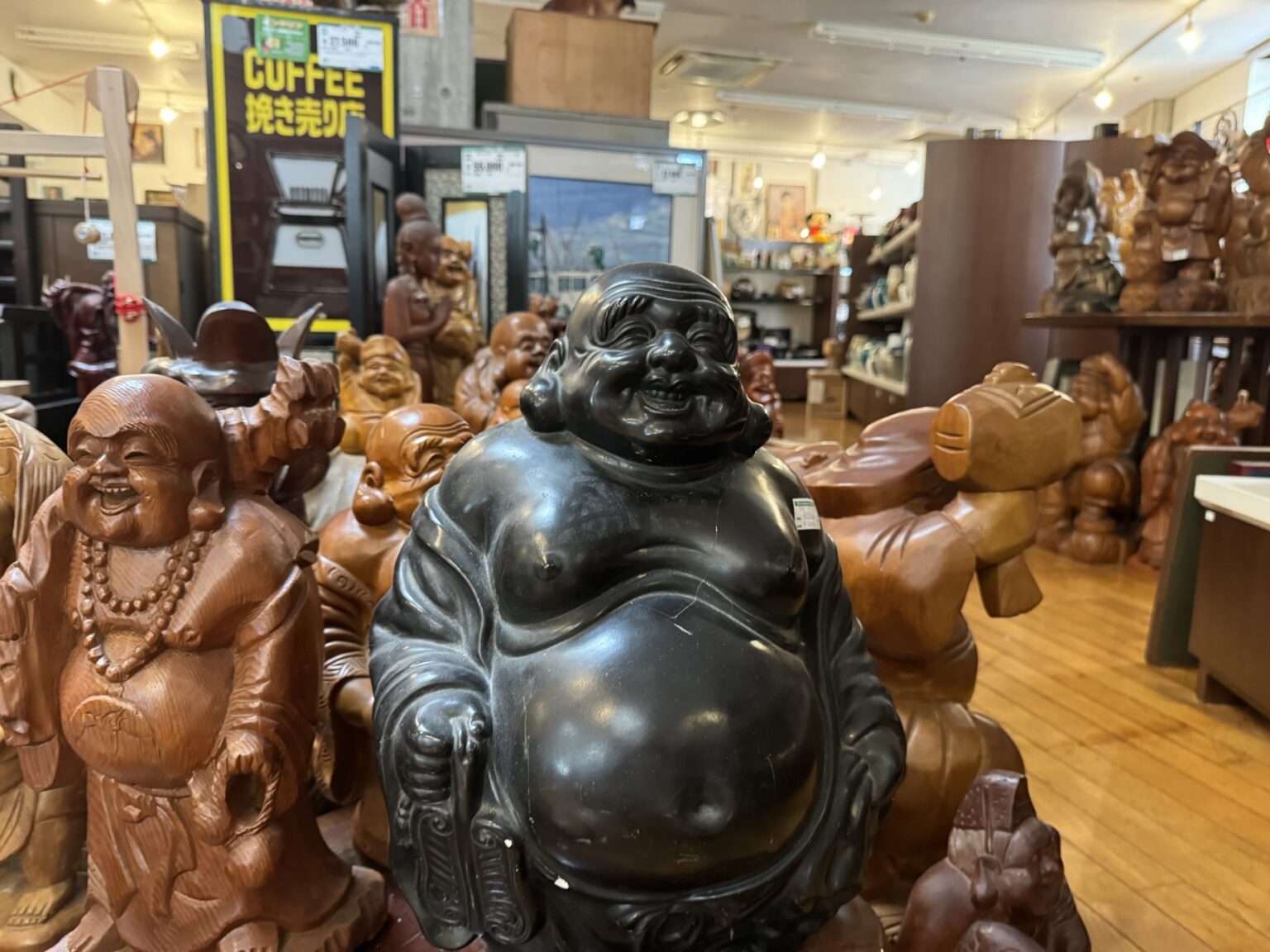
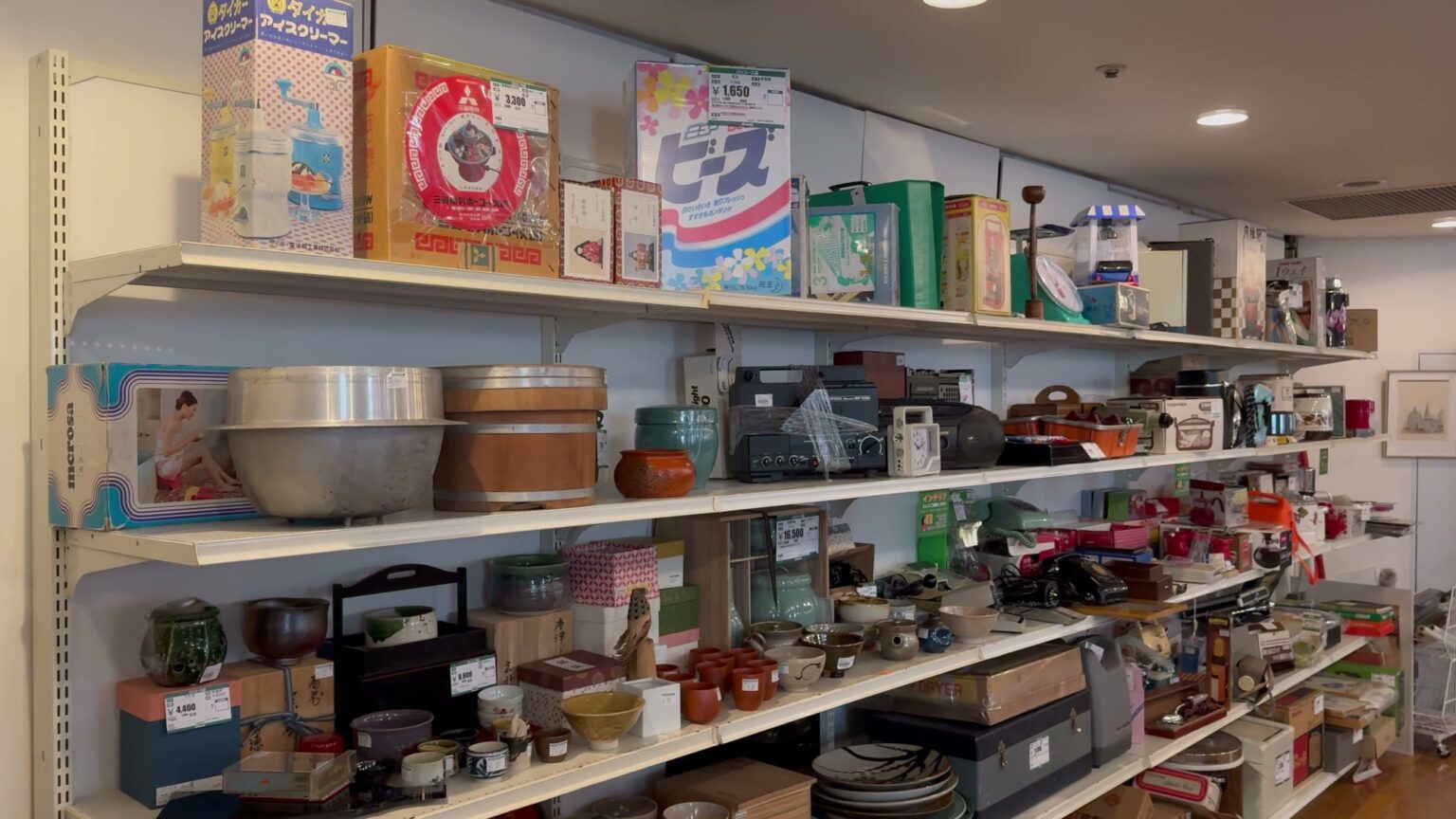
This is the part that surprised me most, because it’s so far from the “used electronics” image. On my June 2026 visit, a whole section was given over to Japanese antiques and old household objects — the kind of thing you’d expect at a flea market, not a chain store.
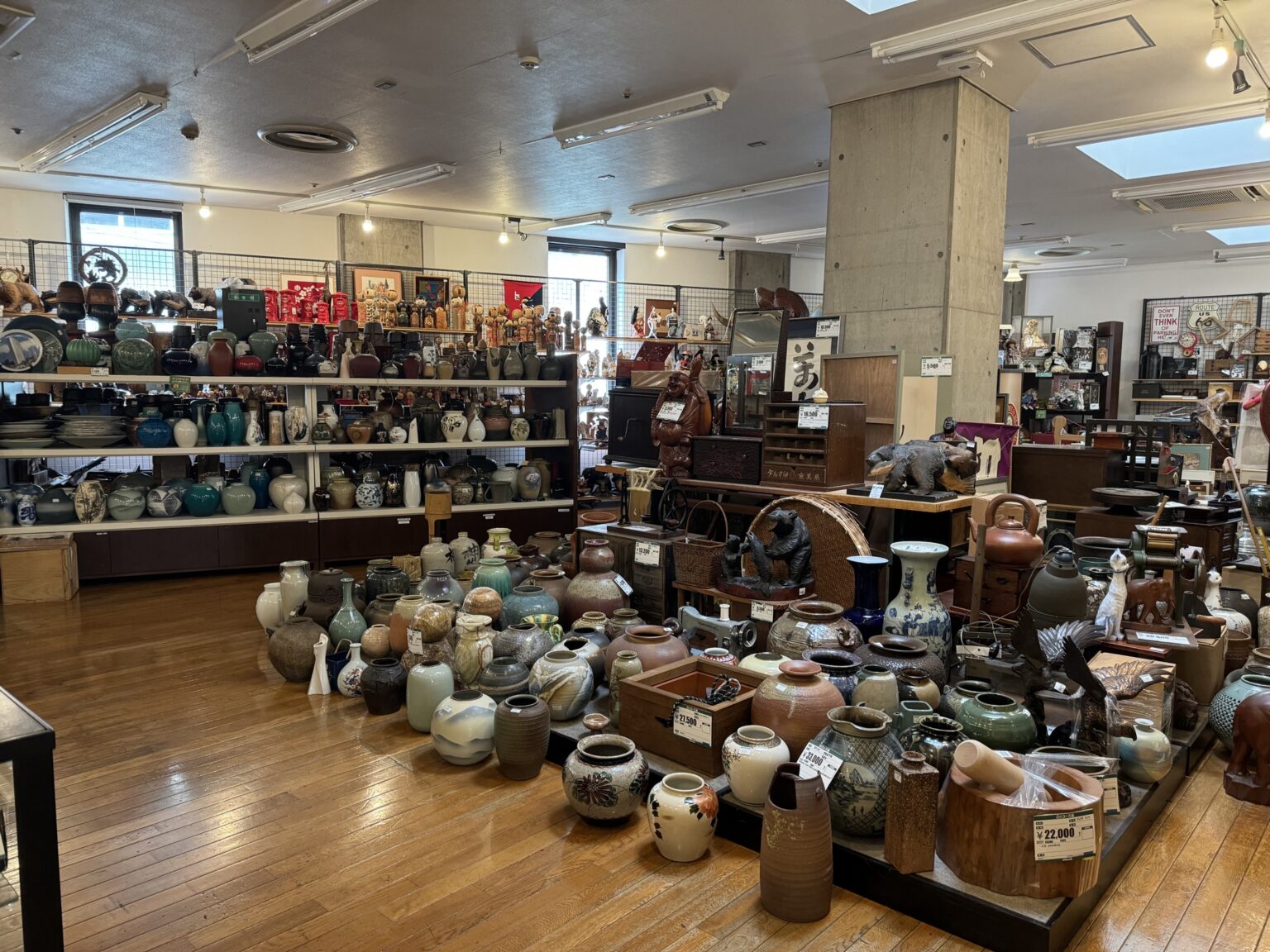
Ceramics and pottery
Tables and shelves crowded with vases, tsubo jars, tea bowls and plates — everything from rough folk stoneware to fancier pieces. I saw one large glazed jar tagged around ¥22,000, with plenty of smaller pieces far cheaper. If fine ceramics pull you in, these are the folk cousins of the porcelain of Arita.
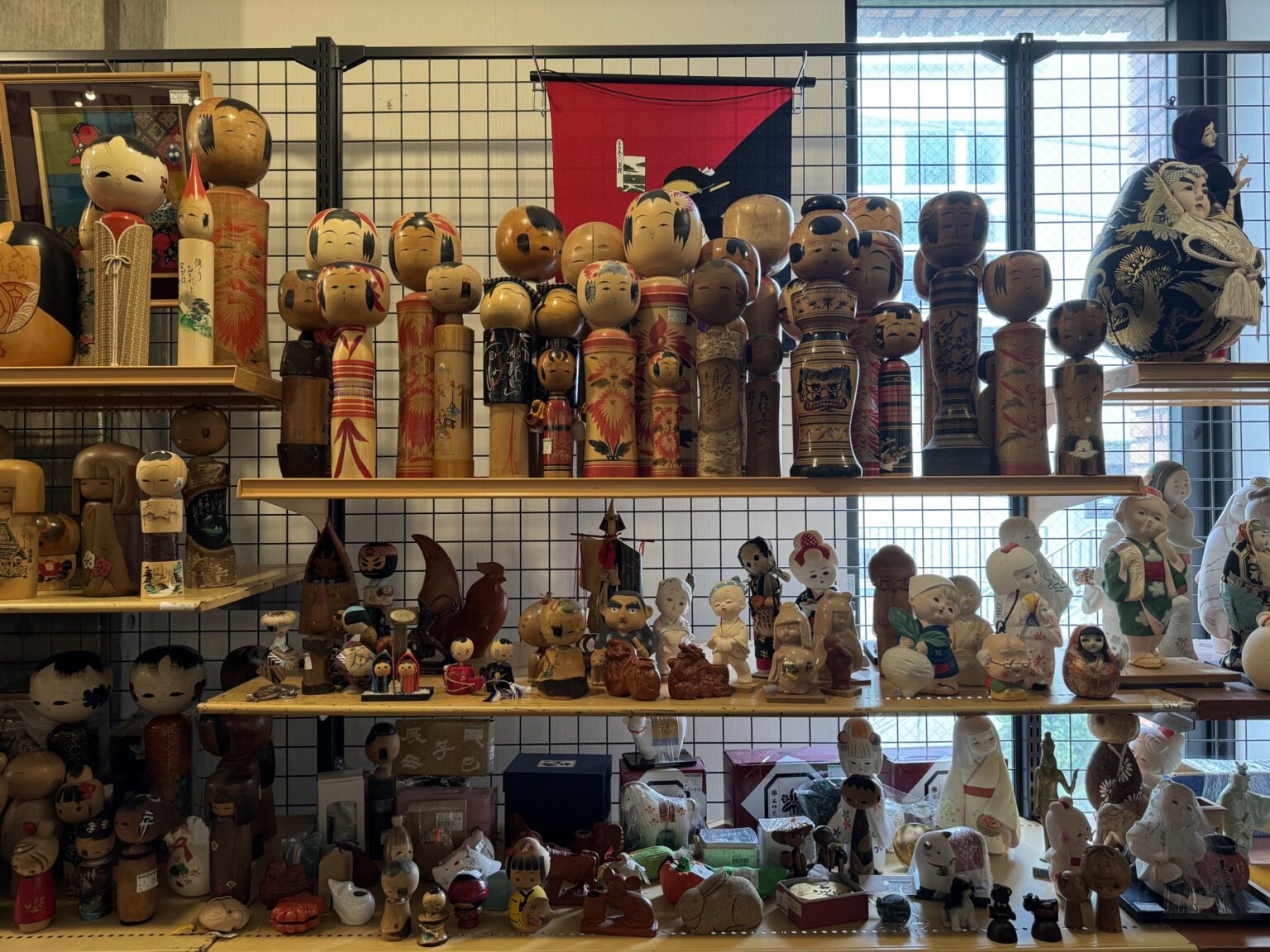
Kokeshi and folk dolls
A full wall of traditional wooden kokeshi dolls and little folk figurines. If you want a small, light, unmistakably-Japanese souvenir with some age to it, this is a good hunting ground.
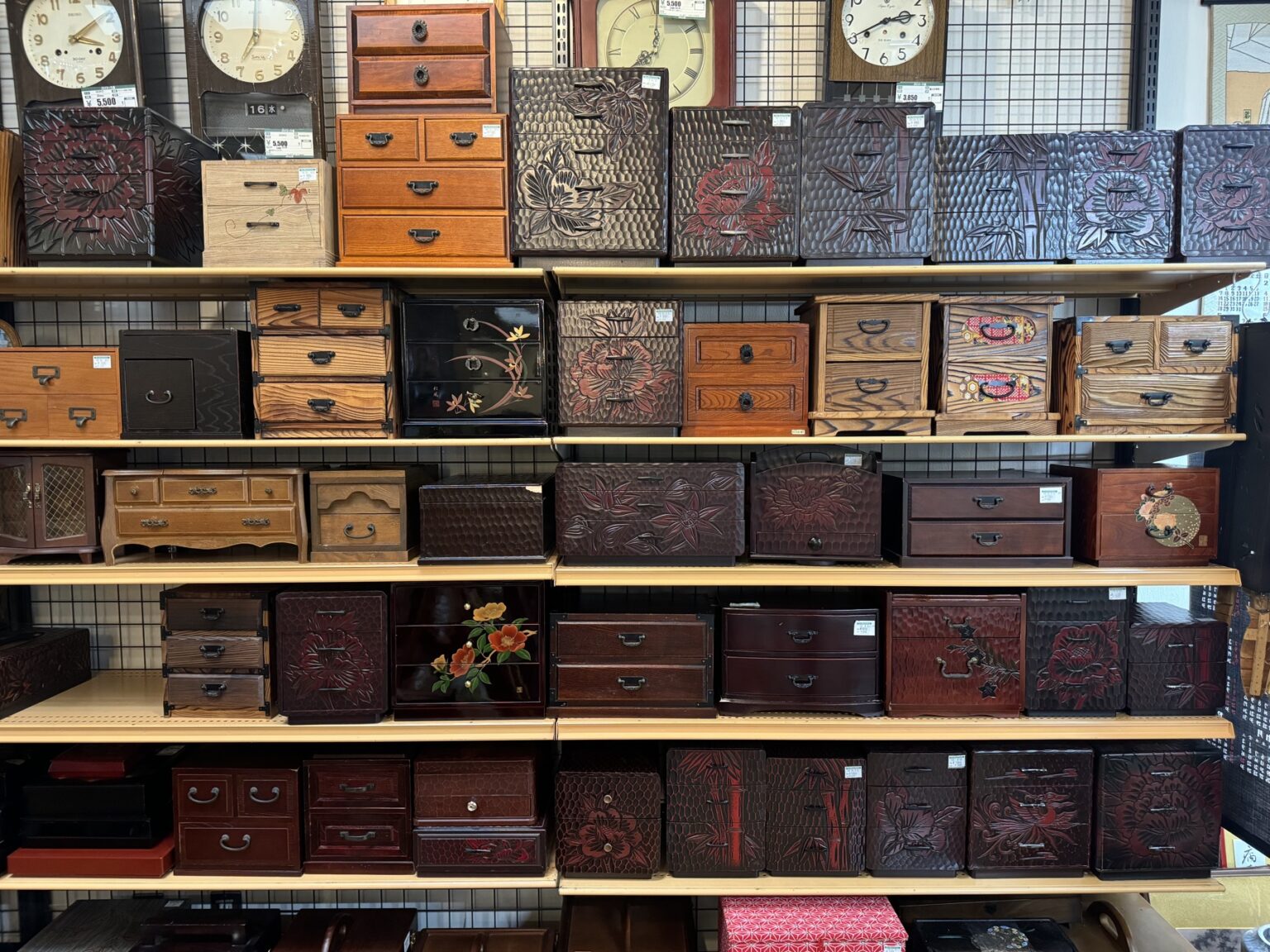
Tansu and carved boxes
Rows of wooden tansu chests, sewing boxes and small drawers — some with beautiful carved fronts — under a wall of vintage clocks. Lovely to look at; think hard about shipping before you buy the big ones.
The Showa-retro corner
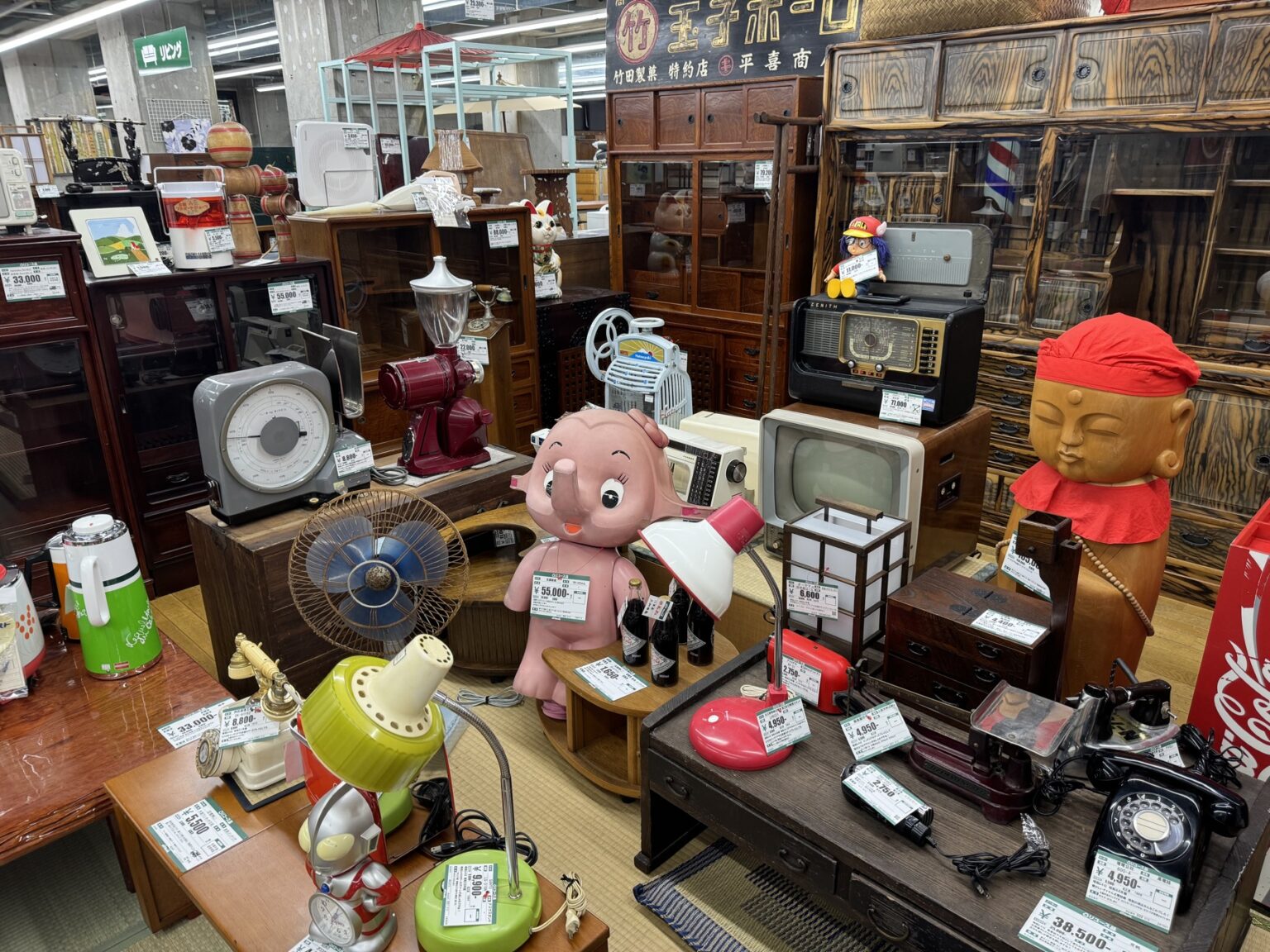
Down in the basement is a corner devoted to Showa-era nostalgia — Japan’s mid-20th-century pop culture. On my visit it held boxy old televisions, old electric fans, black rotary telephones, enamel shop signs, a pink elephant lamp and stacks of period packaging. Even if you buy nothing, it’s like a small, free museum of Showa-era Japan.
If that mood is your thing, it rhymes with the Taisho-and-Showa styling of Tsubakiya, the old-fashioned coffee house in Kichijoji, or the retro-Showa backstreets of Nishiura in Fujiyoshida — good pairings on a “retro Japan” day.
A serious secondhand kimono department
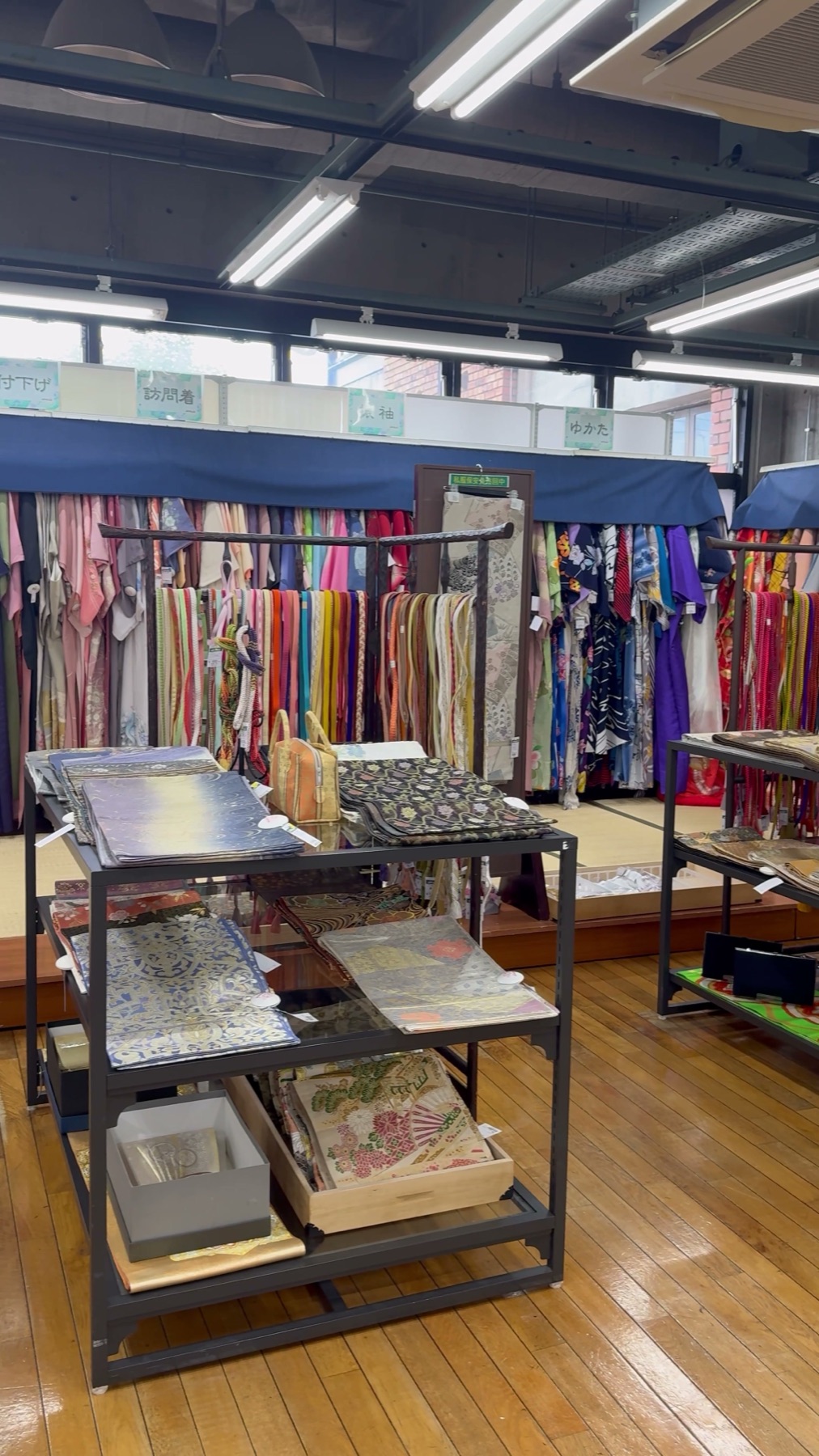
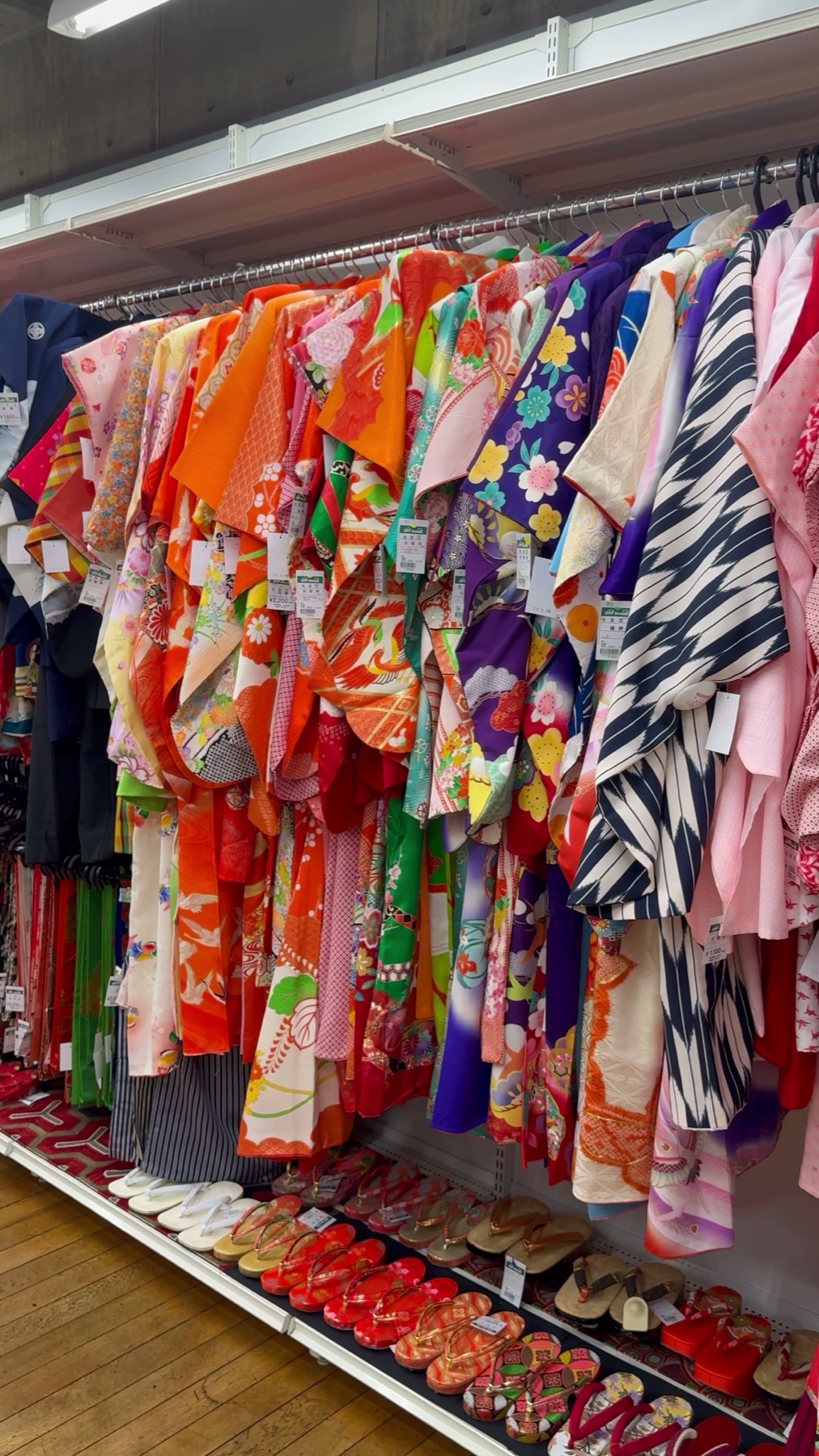
The other reason I’d send a visitor here is the used-kimono section, which on my visit was large and properly organised — racks labelled by garment type (komon, hōmongi, tsukesage, yukata), glass cases of obi, and rows of zōri and geta sandals lined up beneath. There was even a daily deal on rolled kimono cloth (marumaki) starting around ¥330 a roll while I was there.
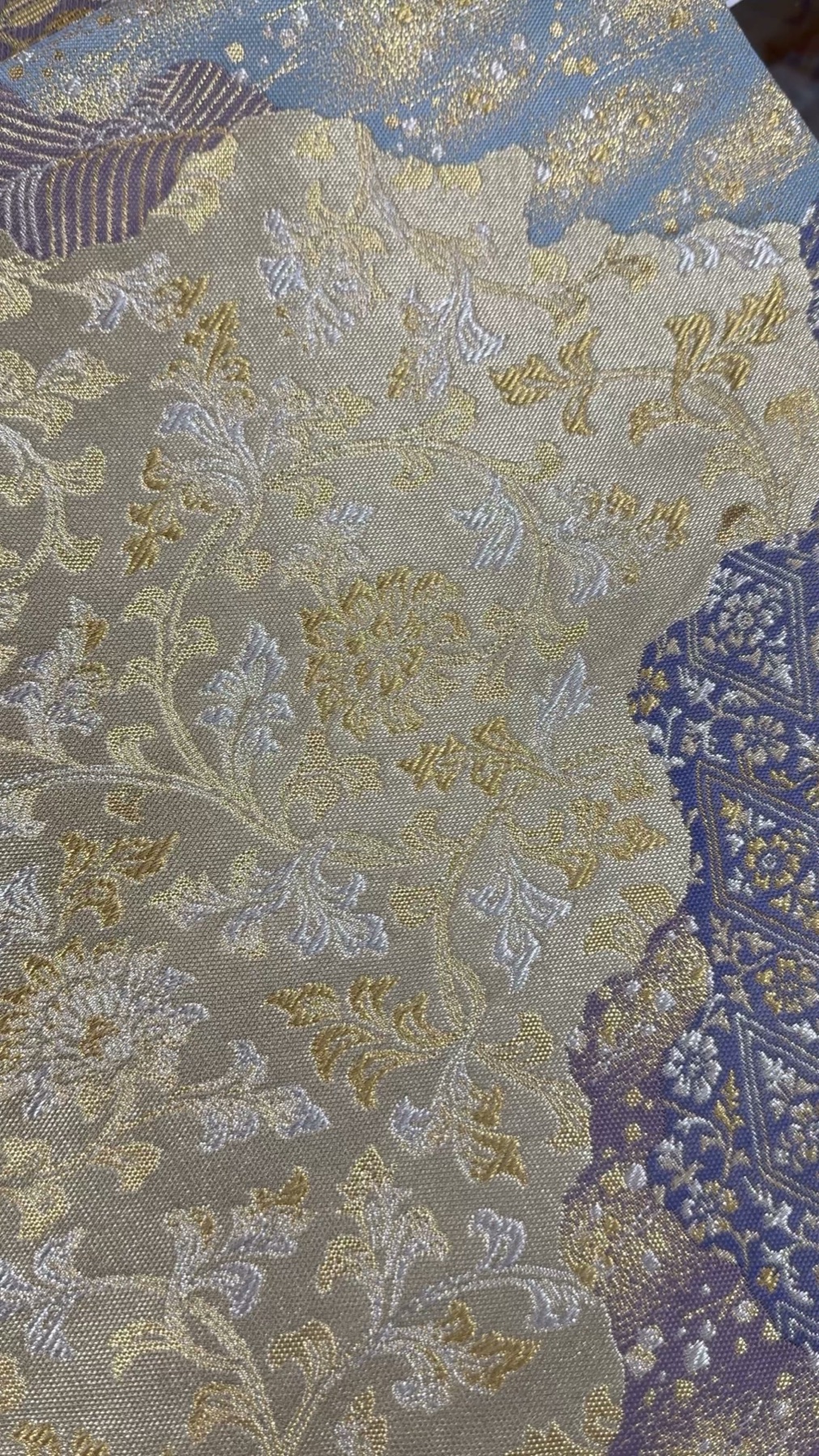
Buying a used kimono is one of the best-value souvenirs in Japan: garments that cost a small fortune new often sell secondhand for a fraction of the price, though condition and price vary a lot, so check each tag. Even if you never wear it, a single obi or a length of gold brocade makes a gorgeous textile to frame or gift. And if you do want to wear one, there’s no better backdrop than the old streets of Kurazukuri Street in Kawagoe.
Where to start
Komon and yukata are the casual, wearable, forgiving pieces — the easiest first buy. Hōmongi and tomesode are the more formal, dressier pieces.
Check before you pay
Secondhand kimono can have stains or shortened hems. Hold it to the light, check the collar and cuffs, and ask staff about returns before you pay.
Obi and offcuts
If a full kimono feels like too much, an obi or a roll of brocade is lighter, cheaper and just as beautiful.
The Hard Off side: guitars, audio and cameras
I spend most of my time on the antiques and kimono side, but the Hard Off half is a genuine destination for used gear. Its official page advertises an inventory of 600-plus guitars and 500-plus effects processors on hand, plus used audio, vintage cameras, PCs, games and tools — and two rental music studios on the second floor, listed at ¥440 an hour. Stock naturally changes day to day, so treat those numbers as the scale of the place rather than a promise about any single visit.
For camera and hi-fi people especially, the draw is the bargain-bin end: as-is gear sold cheap with no warranty (see junk, below), where the fun is in the gamble.
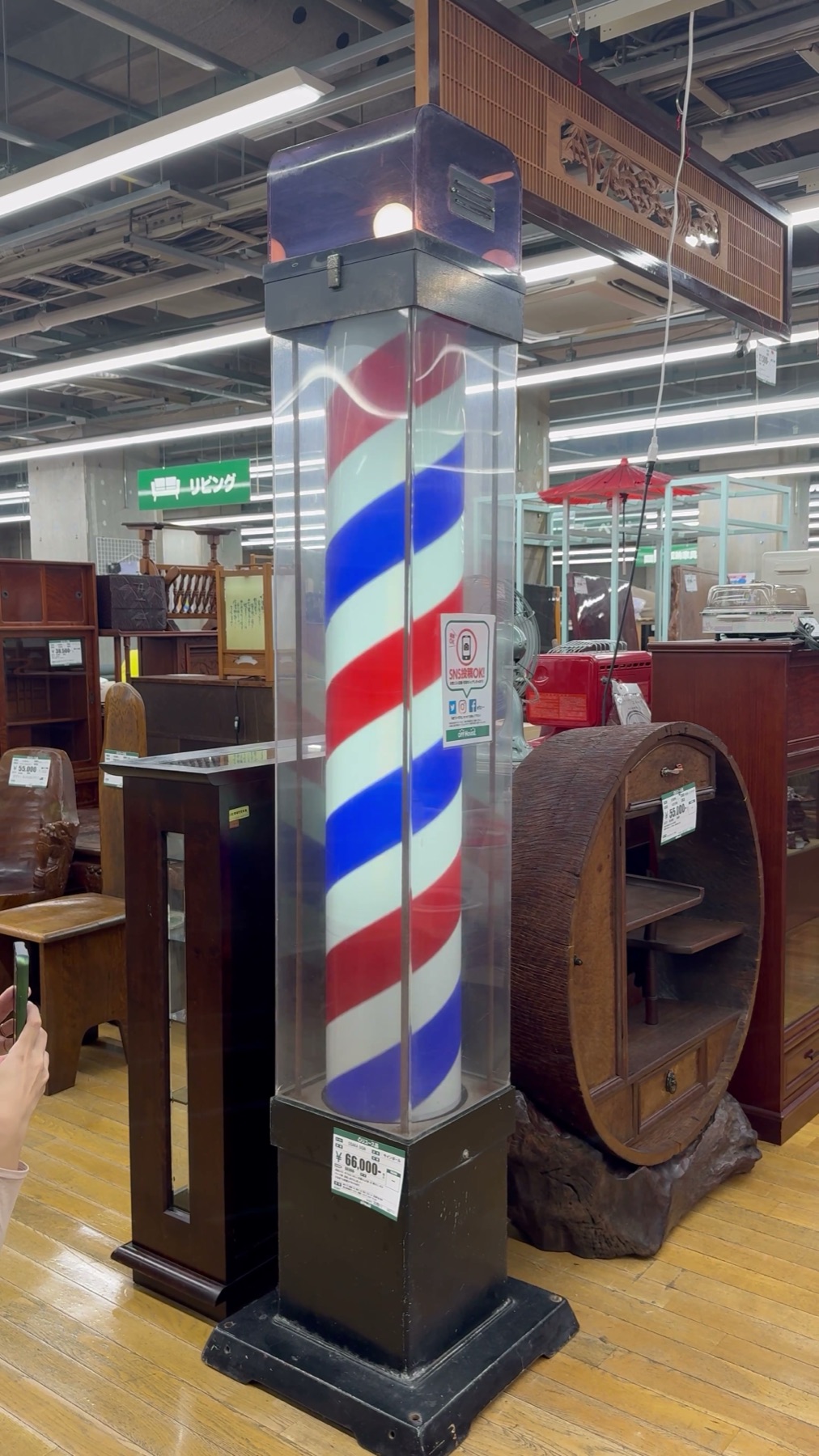
Part of the appeal is that you never know what a reuse floor this big will be holding. On my visit it was a full-size barber’s pole priced at ¥66,000, parked in the used-furniture aisle. Next time it’ll be something else entirely — that unpredictability is the whole game.
How buying works
| Section | What you’ll find | Roughly where |
|---|---|---|
| Hard Off | Audio, cameras, 600+ guitars, effects, PCs, tools; rental studios | Instrument/audio floors (studios on 2F) |
| Off House | Brand goods, clothing, kimono, antique furniture | Main reuse floors |
| Showa-retro corner | Retro appliances, phones and enamel signage | Basement |
| Hobby Off | Toys, figures, model kits, trading cards | Within the complex |
| Liquor Off | Reuse / resale liquor | Within the complex |
| Book Off | Books, manga, CDs, DVDs, games | Separate building nearby |
Layouts at reuse stores get rearranged often — treat the “where” column as a rough guide, not a map.
“Junk” (ジャンク) means sold as-is
A junk tag means the item is sold as-is for repair, parts or tinkering, so assume it may not work. Some tags carry a note from when staff checked it, but that is not a guarantee. Hard Off states that junk items have no warranty and cannot be returned or exchanged, so inspect before you pay (some stores have a self-check corner). Great for tinkerers and gamblers; risky if you need it to just work.
Bring some cash
This is a cash-friendly kind of store with a lot of small-ticket items, so I’d carry cash to be safe and not assume card or IC payment until you see it at the till.
Tax-free: bring your passport
The operator, Zero Emission, lists its Owada store as a tax-free shop. Its list (checked on 27 September 2026) names Hard Off, Off House and Hobby Off, plus the nearby Book Off and Mode Off, but not Liquor Off. It’s for short-term visitors who entered Japan within the last six months: show your passport, and spend ¥5,000 or more before tax. That minimum is normally counted per store and per day, so ask staff before assuming buys from different shops here add up. From 1 November 2026 Japan switches to a refund system: you pay the tax in store, customs checks the goods when you leave Japan (within 90 days of purchase), and the store or its refund agent then pays the tax back. Confirm at the counter, and read up on how tax-free shopping works in Japan.
Southeast Asia traveler tip: This is a suburban, mostly Japanese-language store with little English signage — bring a translation app and some patience, and it becomes a playground. If you fall for a big piece of furniture, a ceramic, or a wooden antique, sort out shipping and think about your airline’s baggage rules and your own country’s customs on old wood and antiques before you buy. Kimono, obi, kokeshi and small retro items travel home far more easily.
How to get there
By train + bus
From central Tokyo, take a JR line to Hachioji Station (very roughly 40-50 minutes from central Tokyo). From the North Exit, a Nishi-Tokyo bus (route “大03”) runs toward Owada; get off near Owada and walk a few minutes. Check the current timetable and the last bus back before you set out.
By car
The 302-space lot makes this an easy driving stop — handy if you’re already exploring western Tokyo or the Takao area. It’s listed as about 5 minutes from the Hachioji interchange on the Chuo Expressway via Route 16, traffic permitting.
Make a day of it
Pair it with a secondhand run at the Oi Racecourse flea market on the Tokyo side, or, for brand-new Japan-made goods instead, BEAMS Japan in Shinjuku.
Where to stay and get around
It works well as a half-day trip from central Tokyo, but Hachioji can also be a base if you’re heading for Mt. Takao or the mountains west of the city.
Hachioji & Tokyo stays on Booking
Business hotels around Hachioji Station, or a central Tokyo base for a day trip out.
Compare on Agoda
A second price check across the same Tokyo / Tama area.
Passes & transport via Klook
IC cards and rail passes if you’re building a wider Tokyo route.
Some links above are affiliate links — they cost you nothing extra and help keep this site going.
Where is Hard Off / Off House Hachioji Owada, and when is it open?
It’s at Owada-cho 5-1-21, Hachioji, in western Tokyo. The official pages list hours of 10:30–19:30, open year-round, with a 302-space car park. Hours can change, so check the store page before a special trip.
What’s the difference between Hard Off, Off House and Hobby Off?
Hard Off handles used electronics, audio, cameras and musical instruments; Off House does furniture, clothing, kitchenware, kimono and antiques; Hobby Off is toys, figures and trading cards. At Owada they share one building, along with a Liquor Off reuse-liquor section.
Is there a Book Off there too?
There’s a Book Off in the same Owada neighbourhood under the same local operator, but it’s a separate building a short walk away with its own address and hours — not inside the Hard Off complex. Visit it as a short second stop if you want books, manga or CDs.
Can foreign tourists shop there, and is it tax-free?
Anyone can shop — it’s a normal retail store. I’d bring cash to be safe – it’s handy for lots of small buys, and I wouldn’t assume card or IC payment until you see it at the register. The operator lists this store as tax-free for short-term visitors within six months of entering Japan (passport required, ¥5,000+ before tax, normally counted per store and per day). Liquor Off isn’t on that list (checked 27 September 2026). From 1 November 2026 Japan switches to a refund system: you pay the tax in store, customs checks your goods when you leave Japan within 90 days of purchase, and the store or its refund agent pays the tax back, so check at the counter.
What does “junk” (ジャンク) mean on the tags?
It means the item is sold as-is, for repair, parts or tinkering. It may not work, and any “checked” note on the tag is only a reference, not a guarantee. That’s why some cameras, audio and electronics are so cheap. Hard Off’s policy is that junk items have no warranty and can’t be returned or exchanged.
How do I get there from central Tokyo?
Take a JR line to Hachioji Station (very roughly 40-50 minutes from central Tokyo), then a Nishi-Tokyo bus from the North Exit toward Owada, getting off near Owada and walking a few minutes. Driving is easy thanks to the large car park. Check the last bus back if you don’t drive.
Is it actually worth the trip?
If you enjoy treasure-hunting, yes. It’s especially good for secondhand kimono and obi, Showa-era retro, ceramics and folk crafts, and used cameras and guitars — at secondhand prices. If you only want polished, brand-new souvenirs, a central Tokyo store will suit you better.
Hard Off is the warehouse end of Japan’s secondhand trade. For the street end, see our 23-minute photo walk through Shimokitazawa’s vintage streets, where the stock is on rails out on the pavement.
Join travelers discovering Japan's hidden side
Weekly dispatches from off-the-beaten-path Japan — spots and stories you won't find in guidebooks.
No spam. Unsubscribe anytime.
Welcome aboard!
You're in. See you in your inbox soon.