Tokyo · Shinagawa · Flea Market
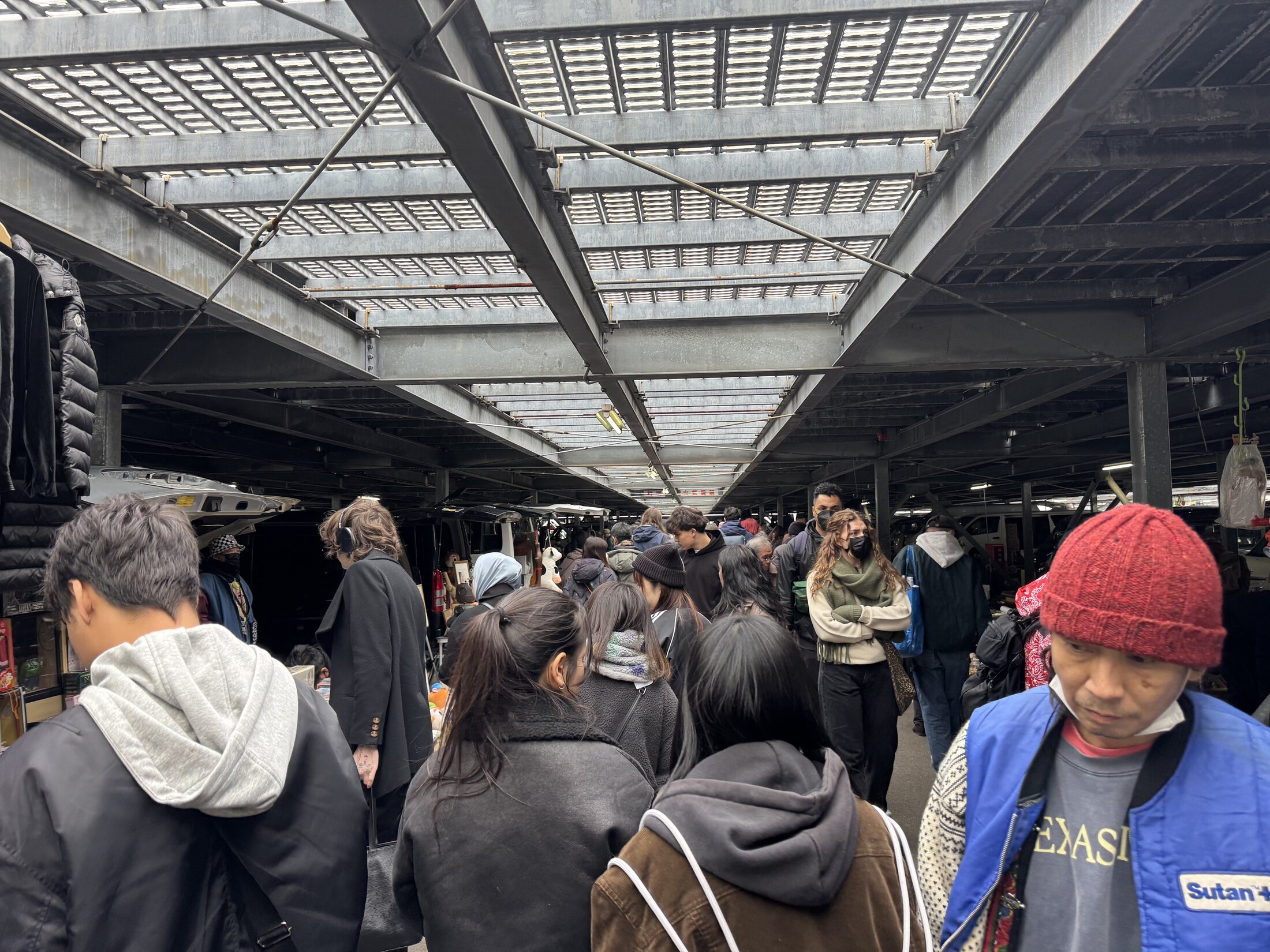
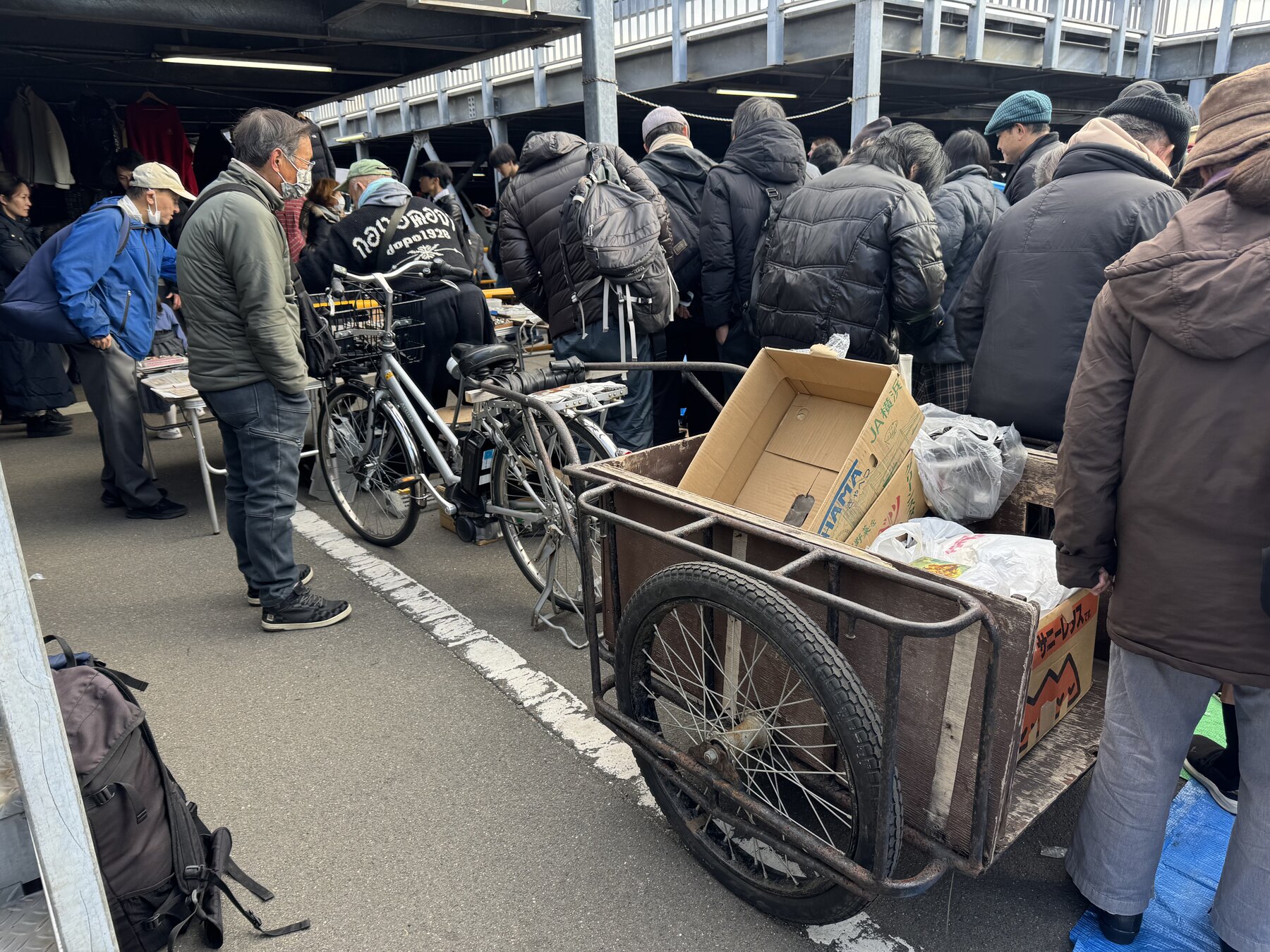
On most weekends, the first parking lot at Ōi Racecourse fills with around 700 stalls, and the organisers call it Japan’s largest-scale flea market. Vintage clothing, antiques, cameras and household oddments change hands for very little between 9:00 and 14:30, and entry is free. It is run by the Tokyo Recycle Movement Citizens’ Association, who say more than half the visitors now come from overseas. One thing to know before you plan a weekend around it: there is no market at all between 4 and 23 October 2026.
Next market days
Then a long gap: no market from Sun 4 October to Fri 23 October (20 days). Full calendar below.
Dates checked against the organiser’s month-by-month schedule on 7 September 2026. It runs in light rain and is called off in bad weather — the decision goes up on the organiser’s home page that morning.
What it is
Ōi Racecourse — the night-racing track in Shinagawa, also known as Tokyo City Keiba, rents out its first parking lot on non-race weekends, and the Tokyo Recycle Movement Citizens’ Association fills it with rows of stalls across the open lot. With about 700 stalls it is one of the larger regular flea markets in Tokyo, and it’s a mix of households clearing out their homes, vintage sellers and specialist dealers, which is why prices stay low and what turns up is never the same twice. Food trucks and stalls come and go, so don’t count on a full food court. It’s an open-air lot: it runs in light rain but is called off in bad weather, so check the top of the organiser’s home page the morning you go. The social accounts can lag behind it.
2026 dates & hours
It runs on most Saturdays and Sundays, 9:00–14:30, and the gates open to shoppers at 9:00. The organiser publishes a fixed block of dates rather than a rolling calendar, and the last one currently posted is 27 December 2026. The dates below were reconfirmed against the organiser’s own month-by-month schedule on 1 September 2026.
Dates do get withdrawn without an announcement. Two October dates that were on the calendar in August, the 17th and 18th, have since been deleted. Check your date on the organiser’s site before you travel, and use its month view rather than the combined listing, which is serving an out-of-date copy that still shows those two days.
| Month (2026–27) | Dates |
|---|---|
| September 2026 | 5, 6, 12, 13, 19, 20, 21, 27 Mon 21 is a public holiday and the market runs. It does not run on Tue 22 or Wed 23, the rest of that holiday week, and there is no market on Sat 26. |
| October 2026 | 3, 24, 25, 31 The thin month. Nothing at all between 4 and 23 October. |
| November 2026 | 1, 7, 8, 14, 15, 21, 22, 23, 28, 29 Mon 23 is a public holiday. |
| December 2026 | 5, 6, 12, 13, 19, 20, 26, 27 27 December is the last date the organiser has published. |
| 2027 | Not published yet No 2027 dates had been posted as of 1 September 2026. Check back rather than assuming a January reopening. |
The market keeps going through winter. The racecourse’s Tokyo Mega Illumination occupies the site on non-racing evenings from roughly early November to mid-January (the 2025–26 season ran 1 November to 11 January), and the flea market’s hours are sometimes trimmed while it is on. The organiser does not print clock times on its schedule page, so check the listing for your own date on the organiser’s site rather than assuming 9:00–14:30.
Is the Oi Racecourse flea market on every weekend?
Most weekends, but not all. The racecourse’s own calendar comes first, and there are gaps: nothing on Saturday 26 September, and a three-week hole from 4 to 23 October. The table above is the published plan, and the organiser has withdrawn a date after publishing it before, so confirm yours.
What happens if it rains?
It runs in light rain and is called off in heavy weather. The organiser makes the call by 7:30 on the morning and posts it at the top of its own home page first, with the social accounts following. Rain also thins the field badly: the organiser has reported roughly 330 stalls on a wet day against about 690 on a dry one.
What you’ll find
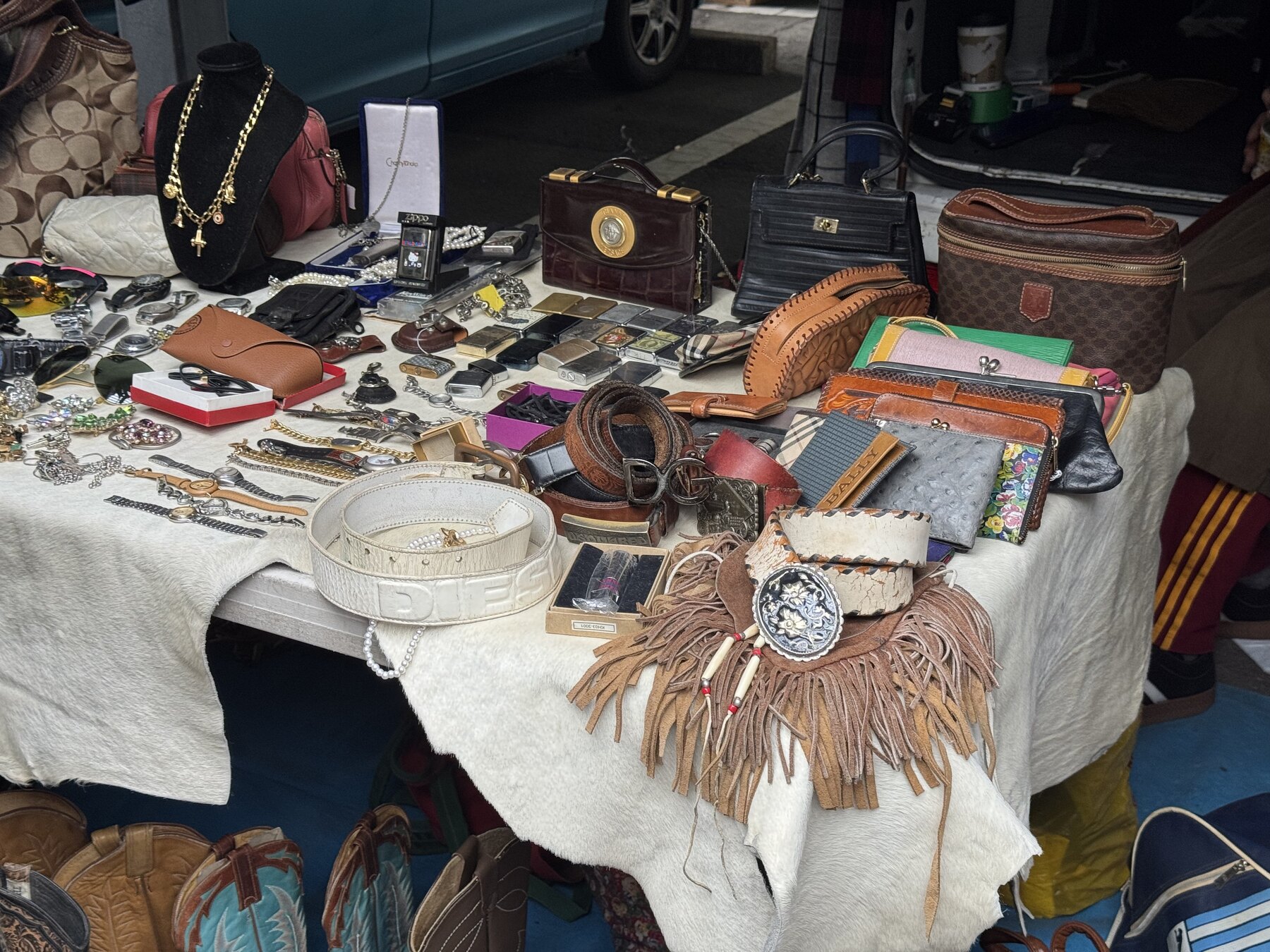
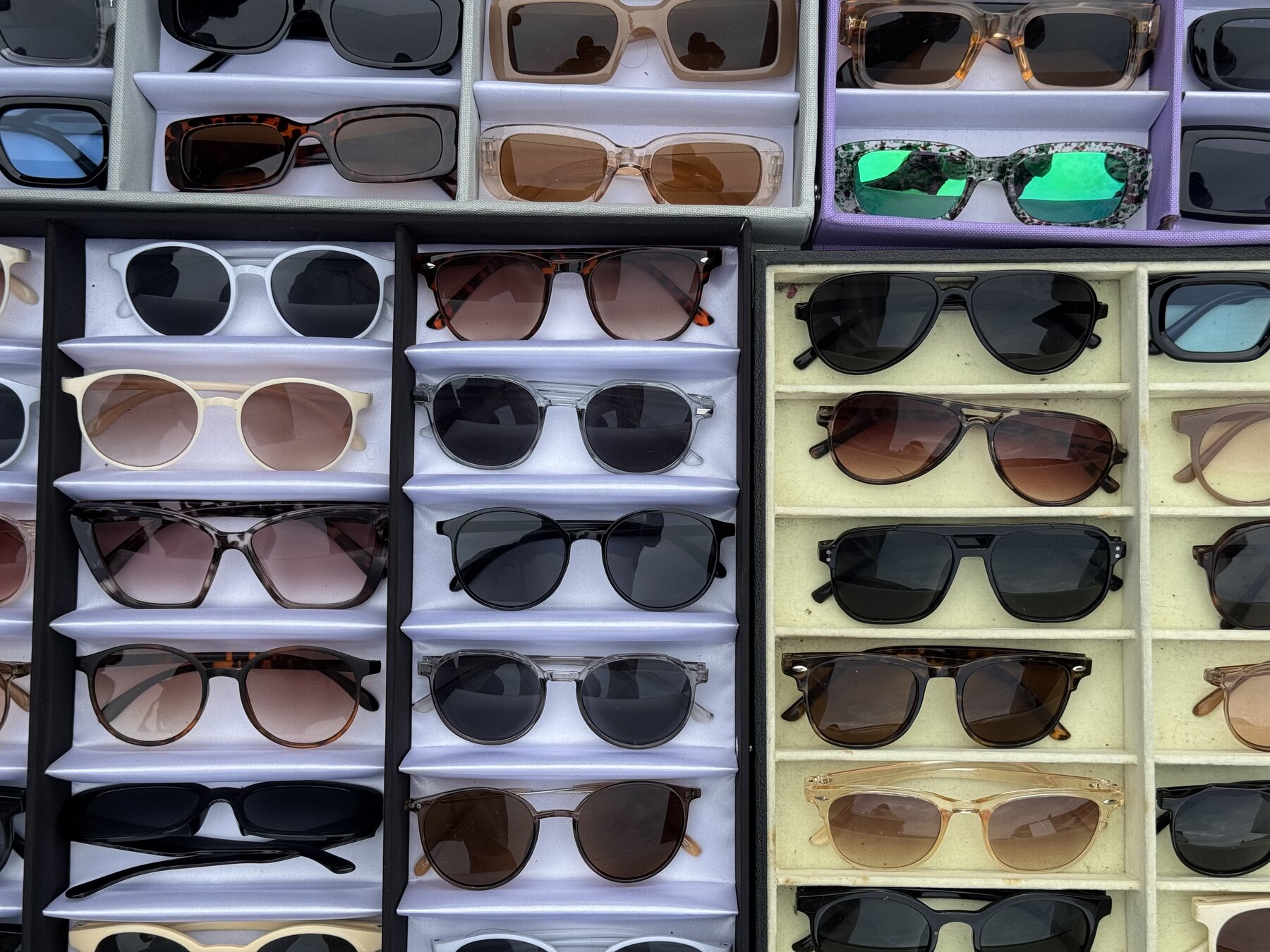
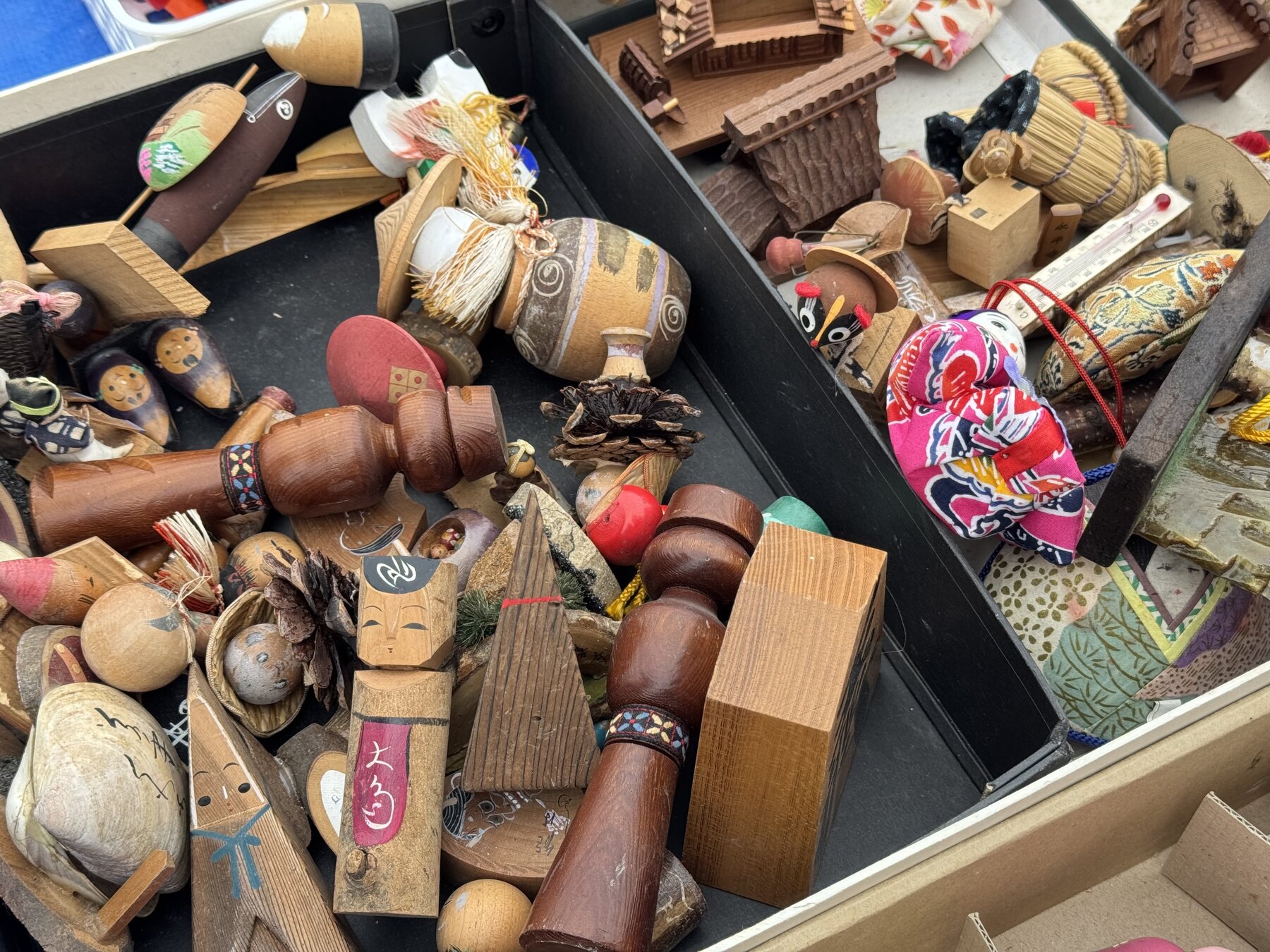
You dig. On a given morning the tables carry vintage and second-hand clothing, old cameras and watches, ceramics and lacquer, leather bags, jewellery, vinyl records, kitchenware and boxes of Showa-era curios and folk toys. Quality runs from junk to the genuinely good, and nothing is sorted for you. The ceramics reward a bit of knowledge — it helps to know your Imari from everyday ware, and if filling a basket with pottery is the point of your trip, Arita does it properly. Bring a packable tote, and if you overdo it, there are ways to get bulky things back to your hotel. Sizing is Japanese, and you should assume there are no fitting rooms and no returns, so hold clothing up against yourself and accept the risk.
How to do it right
Two small problems to plan for: bags and coins
Bring cash, small notes
Every stall I have bought from wanted cash, so I bring coins and ¥1,000 notes rather than counting on a card. A slim coin case saves digging for change. Cash still wins in Japan more often than visitors expect, and because the sellers here are private individuals there is no tax-free paperwork the way there is at a department store counter. Draw more than you think you need before you set off, and do not count on finding a usable ATM on site.
Come at 9:00, not before
The gates open to shoppers at 9:00. Earlier times you may read about are vendor slots — sellers load in from around 8:10 and are not allowed to wait inside before that. Selling stops at 14:30 and stalls must be cleared by 15:00, so by 14:00 you are picking over the tail end, and that is when sellers are most willing to come down rather than carry stock home.
Haggle, gently
A small, polite discount request is acceptable, especially if you are buying several things together. “もう少し安く?” (“a little cheaper?”) does the job.
Check before you go
It runs most weekends but not all, is called off in heavy rain, and hours are sometimes shortened from early November to mid-January for the racecourse illuminations. The rain call goes up on the organiser’s home page by 7:30 that morning, so an eSIM earns its keep here — you can check from the platform at Hamamatsuchō before you commit to the ride.
Other flea markets in Tokyo
If your weekend doesn’t line up with Ōi, the same organiser runs a handful of other markets, though they are smaller, and the organiser lists no non-Ōi dates at all after 21 November. Be careful with what you read elsewhere: several well-known Tokyo park markets are run by a different association with a confusingly similar name, so a schedule you find for one will not tell you anything about the other. The list below separates them.
| Market | Where | Note |
|---|---|---|
| Ōi Racecourse | Shinagawa | The flagship. About 700 stalls, most weekends |
| Nakano Central Park | Nakano | Same organiser, and their busiest venue after Ōi |
| IKE-SUN PARK | Ikebukuro | Same organiser, park-side, occasional |
| Funabashi Racecourse | Chiba | Same organiser, but only about twice a year |
| Tokyo International Forum | Yūrakuchō | Different organiser. Monthly, up to about 200 stalls, 10:00–16:00. A useful central fallback when the date lines up, though it is outdoors and also cancelled for rain |
Getting there
If it falls on your departure morning
Ōi Racecourse has its own station. Take the Tokyo Monorail from Hamamatsuchō, which the racecourse puts at about 8 minutes, to Ōikeibajō-mae, then it is a 2 minute walk. Keikyū Tachiaigawa is the backup at about 12 minutes on foot. You can tap through with Suica or PASMO. The same monorail carries on to Haneda, which makes this an unusually easy stop on a departure morning. A market this size and a suitcase are a bad combination, though, so leave the bag at your hotel.
Staying in Tokyo
The market pairs with a bay-side or Shinagawa base, which is handy for Haneda too.
Good to know
When is the Ōi Racecourse flea market held?
Most Saturdays and Sundays, 9:00–14:30, in the racecourse’s first parking lot — but not every weekend, and it can be cancelled for heavy rain. Hours shift from November to mid-January for the track’s winter illuminations. Always check the organiser’s schedule for your date.
How much does it cost to get in?
Entry is free. Bring cash (coins and small notes) for the stalls, as most don’t take cards.
What’s sold there?
Mostly second-hand and vintage goods from ordinary people: clothing, cameras and watches, ceramics, leather bags, jewellery, records, kitchenware and Showa-era curios. Quality is mixed — that’s the fun of the hunt.
Can I haggle?
Yes, politely. A friendly request for a small discount is normal, especially when buying several items. Sellers often drop prices near closing time rather than take things home.
How do I get to Ōi Racecourse?
Take the Tokyo Monorail from Hamamatsuchō to Ōikeibajō-mae Station — the market is a few minutes’ walk from there. The monorail also runs to Haneda Airport.
Are there other flea markets in Tokyo?
Yes, but fewer by the same organiser than you might read elsewhere. They also run Nakano Central Park, IKE-SUN PARK in Ikebukuro and, roughly twice a year, Funabashi Racecourse in Chiba. The well-known park markets at Yoyogi and Hikarigaoka belong to a different association with a similar name, so their calendar tells you nothing about Ōi’s. When the dates do not line up, the monthly market at Tokyo International Forum in Yūrakuchō is central and easy to reach, running 10:00–16:00 with up to about 200 stalls. It is outdoors too, so rain cancels it as well.
Can I get in before 9:00 for first pick?
No. The times you may see quoted for early entry are vendor slots: sellers load in from about 8:10 and are not permitted to wait inside the venue before that. Shoppers get in at 9:00.
Plan a Tokyo Trip
A flea-market morning slots into any Tokyo weekend.
BEAMS Japan
The flagship of Japanese design and souvenirs in Shinjuku.
Harmonica Yokocho
A warren of tiny bars and stalls in Kichijōji.
Starbucks Reserve Roastery
The riverside coffee theatre in Nakameguro.
Onigiri Bongo
Ōtsuka’s legendary rice-ball counter.
Hard Off & Off House Hachioji Owada
A giant secondhand reuse complex in west Tokyo – old kimono, Showa-era retro, ceramics and 600+ guitars under one roof.
Join travelers discovering Japan's hidden side
Weekly dispatches from off-the-beaten-path Japan — spots and stories you won't find in guidebooks.
No spam. Unsubscribe anytime.
Welcome aboard!
You're in. See you in your inbox soon.