Tokyo · Shōwa Diner · Set Meals
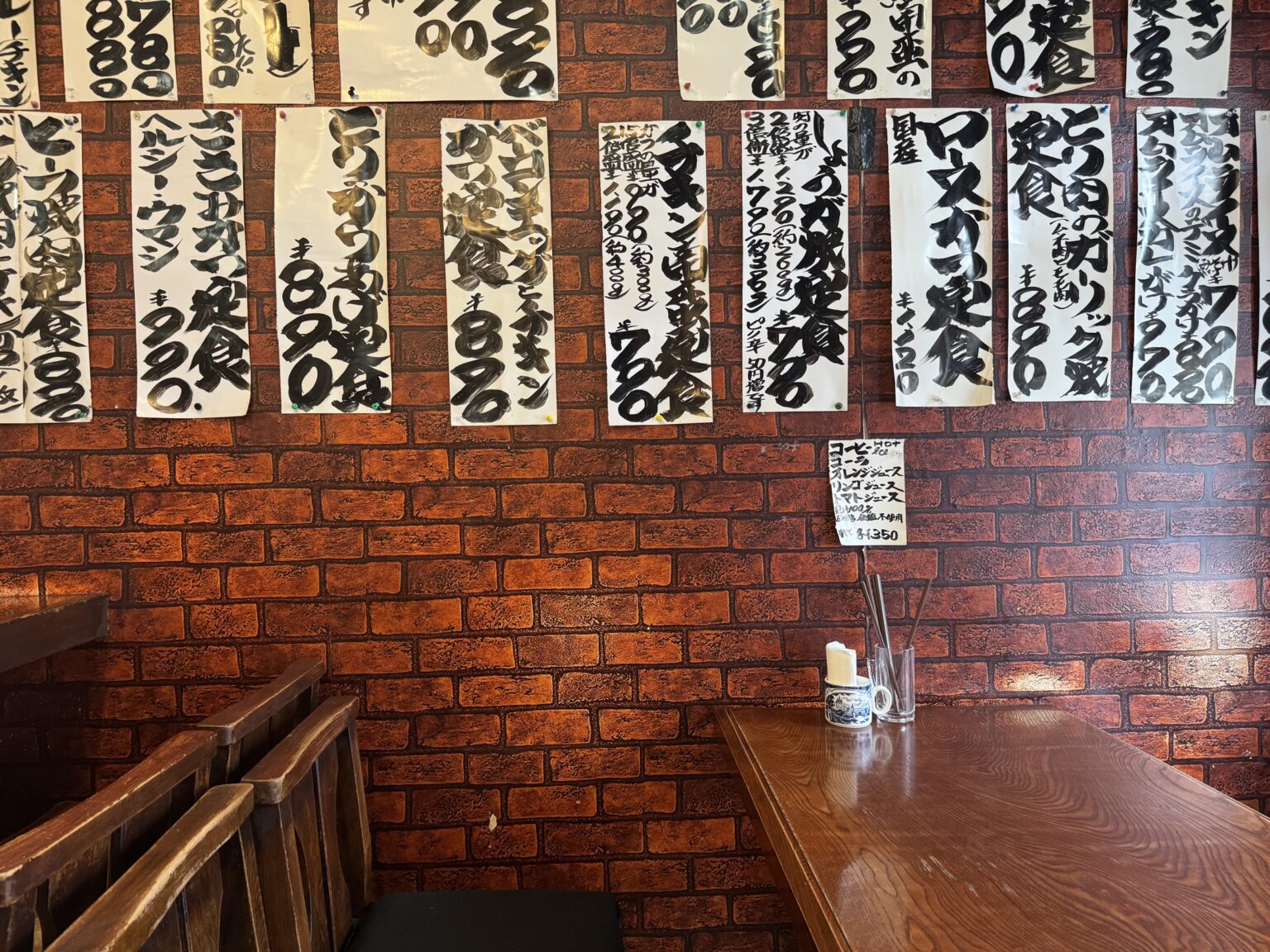
Imahana is a tiny, roughly 22-seat set-meal diner in Kita-Karasuyama, on the far western edge of Tokyo’s Setagaya Ward, where the walls are papered with hand-brushed menu cards and a chicken-cutlet teishoku runs about ¥890 — cash only. It’s a Shōwa-era shokudō, the kind of everyday diner that’s quietly disappearing from Tokyo, and it sits right on the border with Mitaka’s Kitano district, a long walk from the nearest small station.
What a “shokudō” is — and why this one matters
A shokudō is a plain set-meal diner: not a specialist ramen or sushi shop, but the all-rounder that serves grilled fish, fried cutlets, curry, omurice and stir-fries, almost always as a teishoku — a main dish with rice, miso soup and a little pickle or salad on one tray. Diners like this once felt common across Tokyo, and many have since closed, squeezed by chains and convenience stores, which is exactly why a survivor like Imahana is worth the walk.
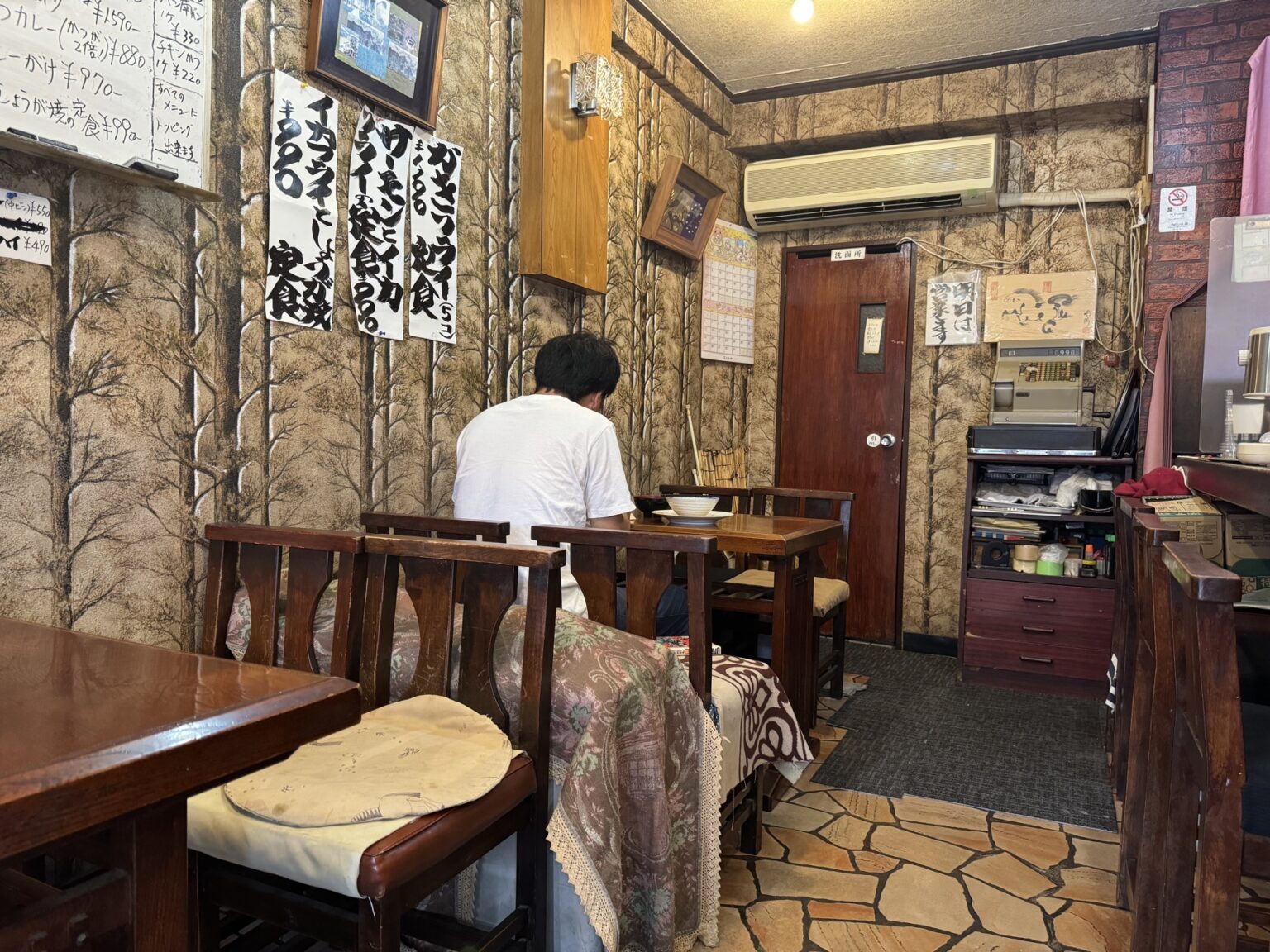
You feel the era the moment you step in. The walls are papered floor-to-ceiling with hand-brushed menu cards, the chairs wear lace covers, the floor is laid with irregular stone tiles, and a single wall-mounted air-conditioner keeps the small room going. Nothing here has been redesigned for the camera; it simply never changed.
The menu is broad — grilled ginger pork, chicken cutlet, hamburg steak, chicken nanban, omurice — and the portions are generous. I went for a combination set and the omurice.
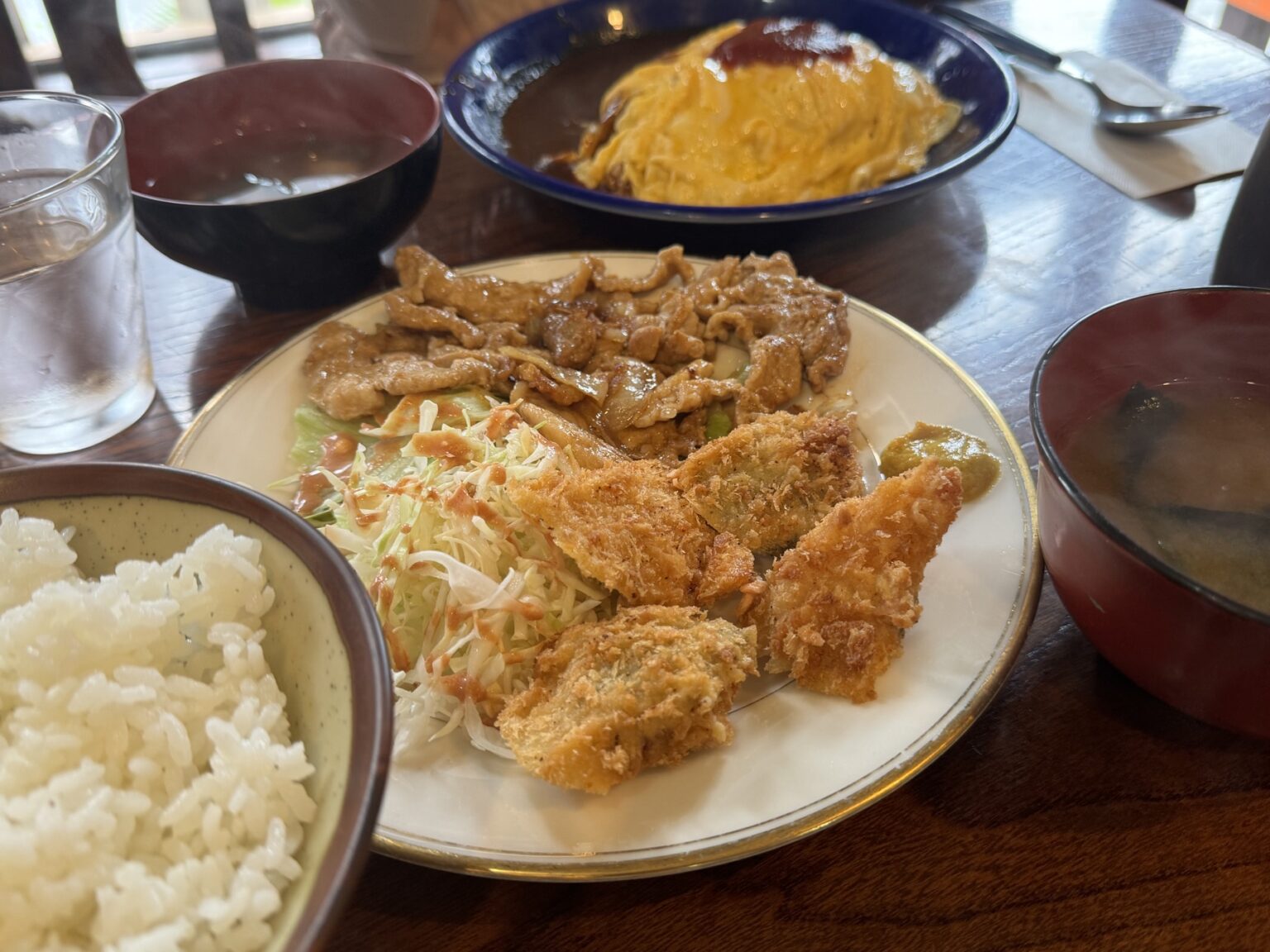
The ginger pork and chicken-cutlet set stacks two of the diner’s staples on one plate — thin strips of pork in a sweet-savoury ginger sauce, and crisp pieces of fried chicken cutlet — over a bed of shredded cabbage, with a big bowl of rice and miso soup. It’s home cooking at diner scale, and it’s filling.
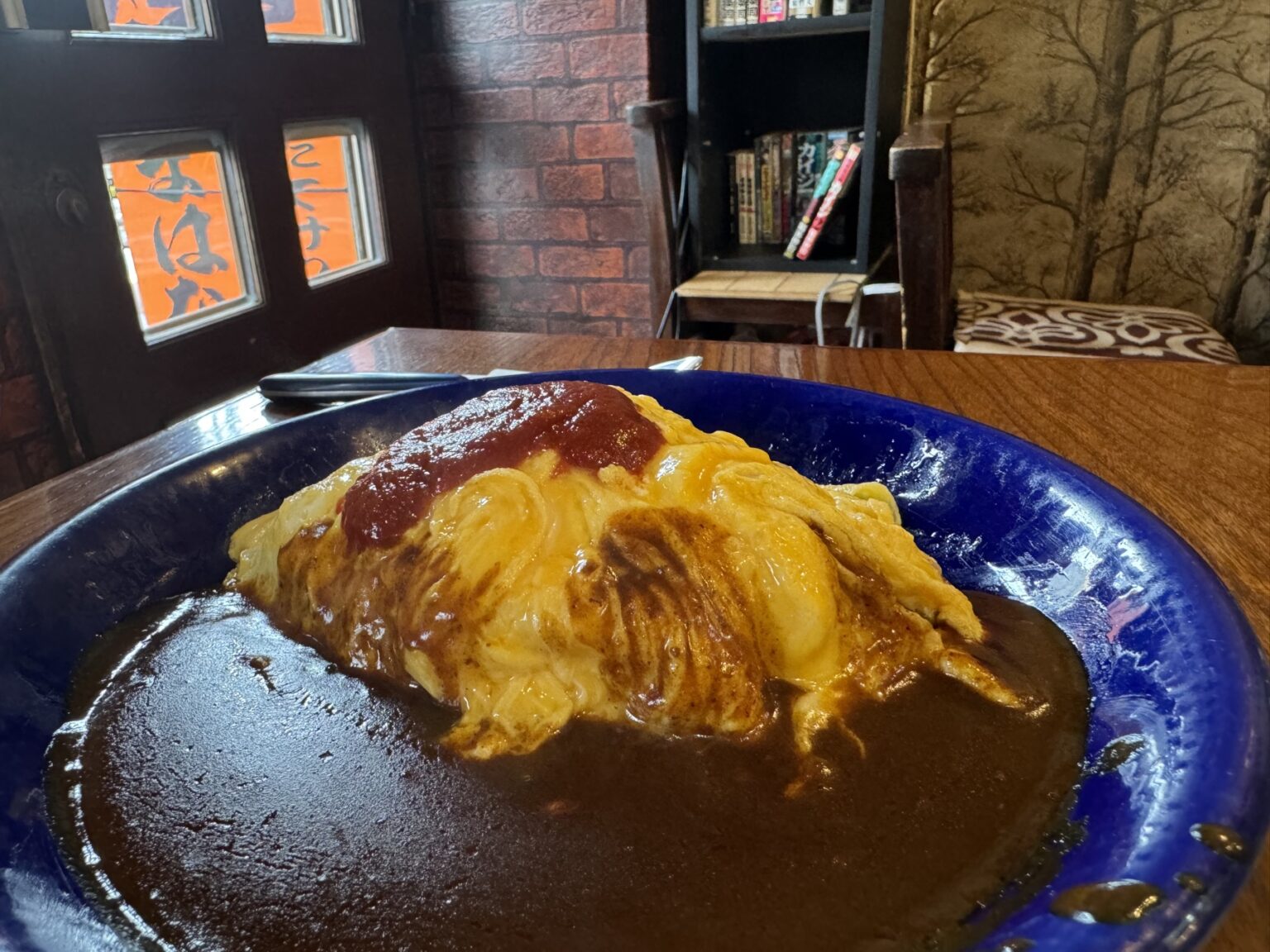
The omurice arrives on a deep blue plate, the omelette folded over ketchup rice and set in a pool of dark, glossy sauce. It’s the comforting, slightly old-fashioned yōshoku (Japanese-Western) version — the kind a Shōwa diner does better than any trendy café.
Menu and prices
The whole menu is hand-written in Japanese, and only some prices are publicly listed. These are the ones I could verify; treat them as a guide.
| Dish | Japanese | Price |
|---|---|---|
| Chicken-cutlet set | チキンカツ定食 | about ¥890 |
| Ginger pork + chicken katsu + croquette combo | 3種盛り定食 | about ¥1,080 |
| Ginger pork set | 生姜焼き定食 | set-meal range |
| Omurice | オムライス | single-plate range |
Listings put a typical visit at roughly ¥1,000–2,000 per person. It’s cash only, so bring yen.
Before you go
Cash only
No cards, no IC pay. Carry enough yen for the meal.
Japanese-only menu
Everything is hand-brushed on the wall in Japanese. Save the dish names here, or point — the staff are used to it.
Hours aren’t posted
I didn’t find reliable posted hours on the listings I checked, and closures seem irregular. Aim for standard lunch hours and don’t build a whole day around it.
It’s small
Around 22 seats (per listings) in one room. At peak lunchtime you may wait, and a big group won’t fit easily.
Southeast Asia traveler tip: this is a detour, not a destination — pair it with somewhere nearby rather than crossing the city for it. The reward is a real Shōwa diner with no English, no queue of tourists, and a genuinely big plate of home-style food for under ¥2,000.
Getting there
Imahana sits in a residential pocket of Kita-Karasuyama, right where Setagaya Ward meets Mitaka’s Kitano district. The nearest stations are on the Keiō Inokashira Line:
From Mitakadai Station (三鷹台): about a 17-minute walk (~1.3 km). From Kugayama Station (久我山): about 21 minutes from the south exit. From Shibuya, the Inokashira Line runs direct to Mitakadai in roughly 20 minutes. There’s no parking on site, only paid lots nearby.
Where to stay: Kichijōji, a few minutes up the Inokashira Line, is the most pleasant base on this side of Tokyo — green, walkable and well connected. Search hotels in Kichijōji →
We may earn a small commission from bookings, at no extra cost to you.
Pair it with
Nankintei, Kunitachi
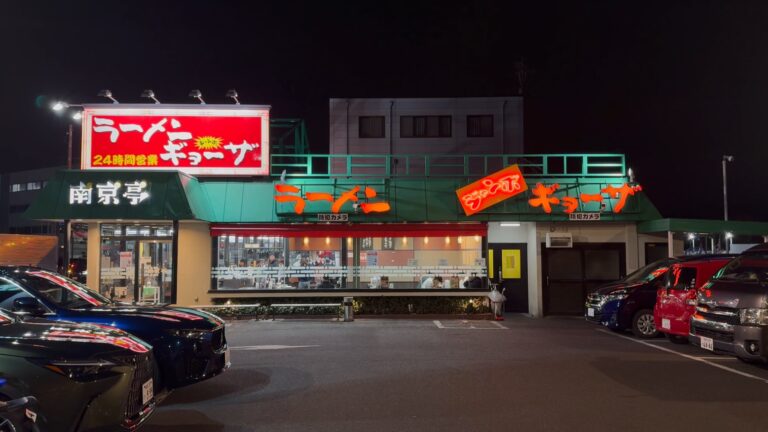
The west-Tokyo machi-chūka companion to this diner — 24-hour Chinese food and jumbo gyoza.
Jindaiji soba, Chōfu
A short hop away — handmade soba beside one of Tokyo’s oldest temples.
Ume-no-Yu, Chōfu
Round off the day at a wood-fired neighbourhood bathhouse nearby.
Shimokitazawa vintage streets
The other side of Setagaya — a 23-minute photo walk through Shimokitazawa’s vintage streets.
FAQ
Is there an English menu at Imahana?
No. The menu is entirely hand-brushed in Japanese on the wall. Use the dish names in this guide, or point — staff at small diners like this are used to it.
What does a teishoku include?
A set meal: a main dish (say, ginger pork or a fried cutlet) served with a bowl of rice, miso soup and usually a little cabbage or pickles, all on one tray.
Is it cash only?
Yes. Bring enough yen — cards and IC payment aren’t reliable here.
What are the opening hours?
They aren’t published on any listing, and closures are irregular. Go at standard lunch hours and check on arrival rather than building a trip around it.
How do I get there?
It’s on the Keiō Inokashira Line — about a 17-minute walk from Mitakadai Station, or 21 minutes from Kugayama. There’s no on-site parking.
Is it good for vegetarians?
Not really — it’s a meat-and-egg set-meal diner. Omurice or a plain dish might work, but the kitchen isn’t built for strict vegetarian or vegan meals.
Sources: Tabelog, Retty and Yahoo Map listings for いまはな (Kita-Karasuyama, Setagaya). Address and access verified June 2026; hours are not published anywhere, so confirm on arrival. Prices can change.
Onigiri Bongo, Ōtsuka
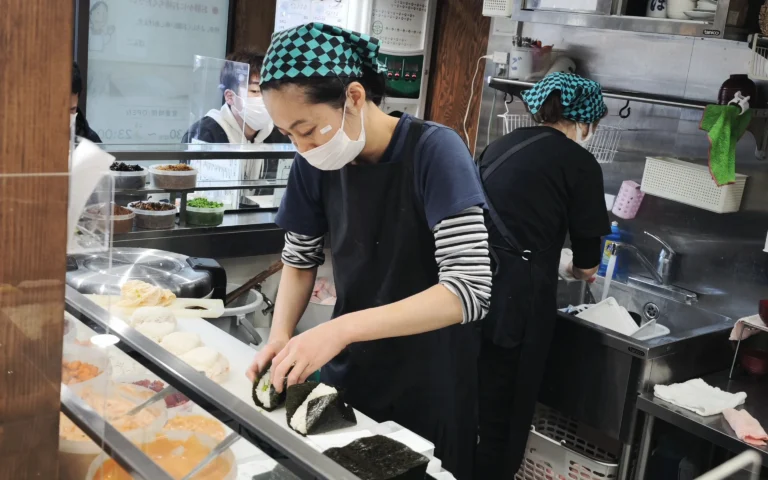
A legendary rice-ball counter — handmade onigiri worth the queue.
Harmonica Yokocho, Kichijōji
A maze of tiny bars and eateries, best after dark.
This is residential west Tokyo; Shinjuku and Shibuya, an easy ride on the Inokashira and Keiō lines, are the most practical bases. Browse options on Agoda:
Or search all Tokyo hotels on Agoda →
We may earn a commission from Agoda bookings, at no extra cost to you.
Join travelers discovering Japan's hidden side
Weekly dispatches from off-the-beaten-path Japan — spots and stories you won't find in guidebooks.
No spam. Unsubscribe anytime.
Welcome aboard!
You're in. See you in your inbox soon.