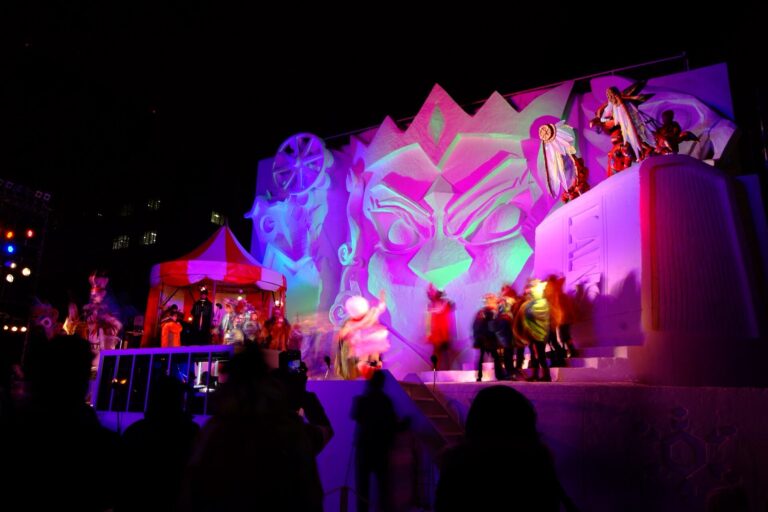
Fujiyoshida · September Festival
Fujiyoshida’s Yabusame Festival takes place at Omuro Sengen Shrine in Shimoyoshida on September 18–19, 2026, and the divination runs begin at 1 p.m. on the 19th: two horses gallop a roughly 180-metre course in front of the shrine, and between the runs a hereditary diviner examines the hoofprints, reading omens for the local districts through next spring. The rite is said to go back more than 800 years, to the late Heian period.
Why the hoofprints matter
Yabusame usually means what you see at Tsurugaoka Hachimangu in Kamakura: riders in hunting dress, full gallop, targets splintering. My town’s version, at the shrine locals call Shimo-sengen (“the lower Sengen”), keeps the riding and the targets, but here the hoofprint divination is central. The horses are kept and trained in stables on the shrine grounds, and the riders are local people. Between the runs, a diviner — the role is hereditary — examines the hoofprints left on the course and reads from them what kind of months the neighbourhood is about to have.
The reading runs as far ahead as next spring, and the span is not arbitrary. Shimo-sengen is the satomiya, the village shrine, paired with a yamamiya at Mount Fuji’s second station. The shrine registry records a rice-field deity who descends to the village for the growing season and returns to the mountain after the autumn harvest; the prefectural cultural-property record separately describes Sannō-san, a mountain deity, whose departure is represented in the festival’s closing Sannō run, when a horse gallops clean past the end of the course as the god’s mount. The shrine’s enshrined deity is Konohanasakuya-hime; the sources keep these figures distinct, and so will I.
In practical terms, the reading is a forecast for the neighbourhoods below, covering the months of the deity’s wintering on the mountain in local tradition.
The results are shared with each district afterwards at neighbourhood rites called o-himachi, with concrete warnings — a local account gives “take care against fire from late October to mid-December” as the shape they take. Yamanashi’s cultural-property record identifies this festival as the prefecture’s only surviving yabusame preserving this mountain-deity tradition.
September 18: the procession I followed last year
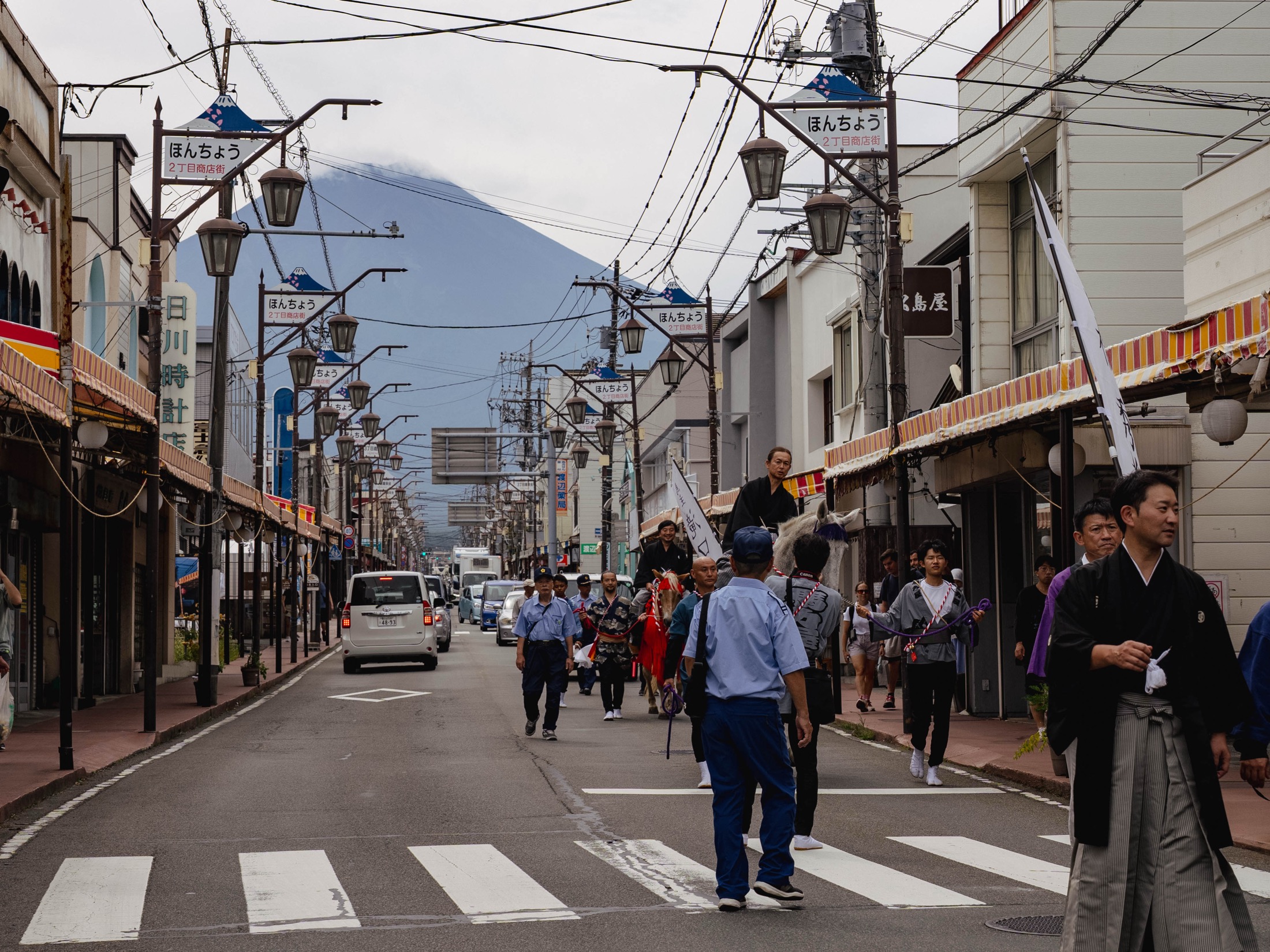
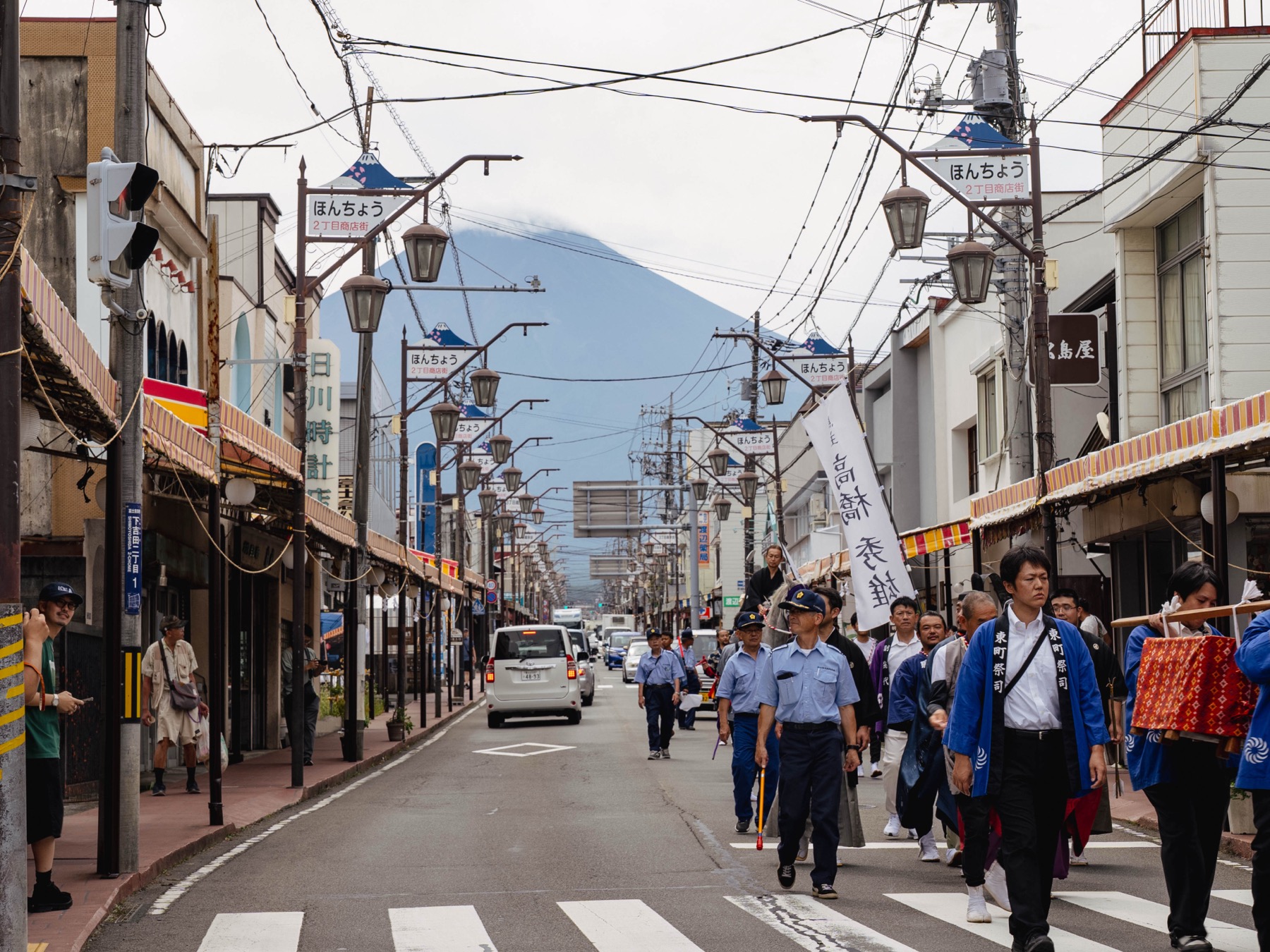
The festival’s first day is built around an offering procession — formally, the envoy’s visit to the Sanno shrine at Tenjinsha. In 2025 I followed it on foot, and my photographs keep that year’s timeline: stalls going up on the approach at a quarter to ten, the white horse still inside the precinct at half past ten, the party at Tenjinsha at a quarter past eleven, and the walk back down Honcho-dori — the retro shopping street that points straight at Mount Fuji — with a white horse in purple regalia leading the way past the crosswalks. If you have seen photographs of that street, this is the procession that puts a shrine horse in the middle of it — I photographed it there in 2025; the exact street route for 2026 has not been published.
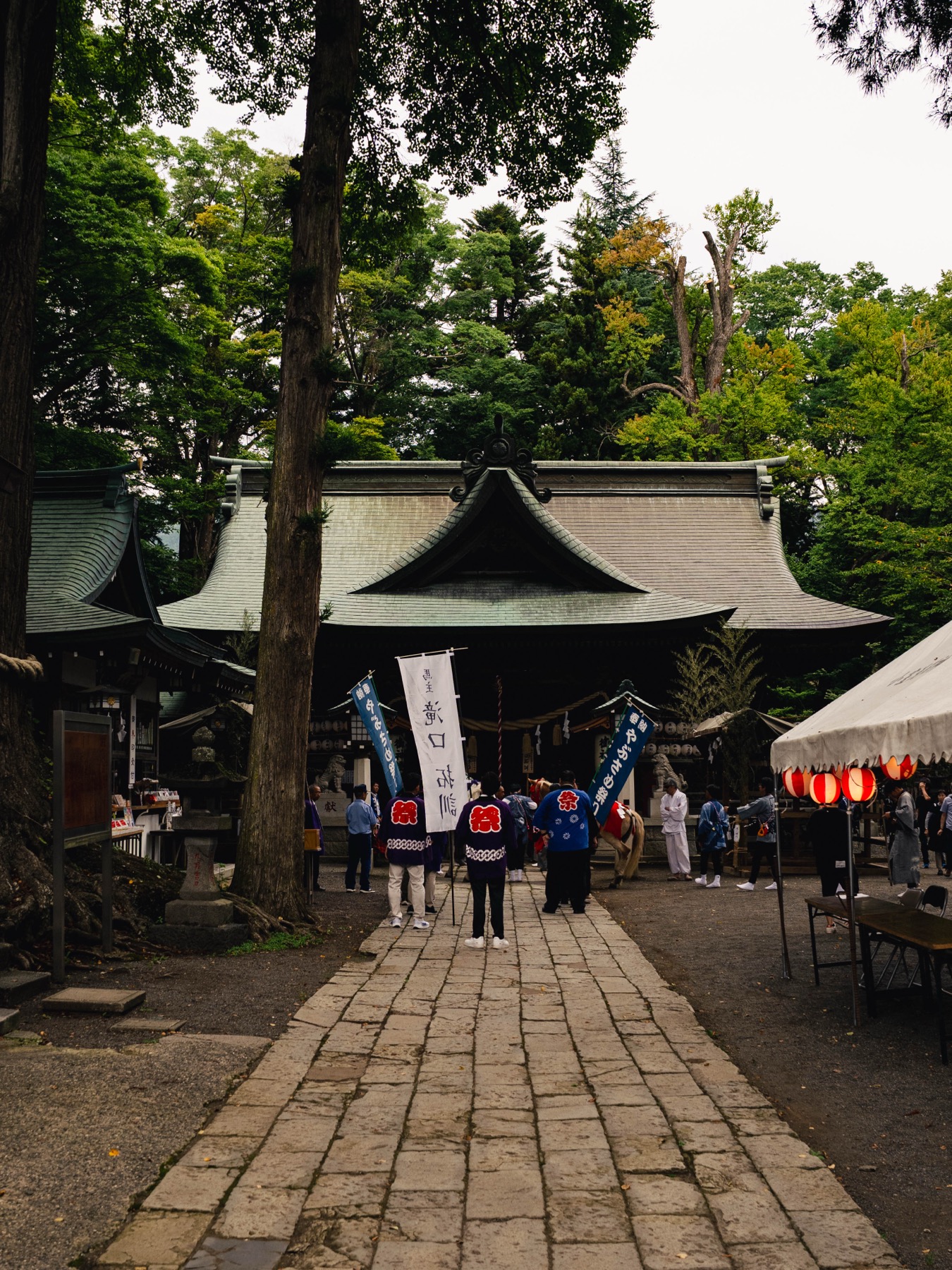
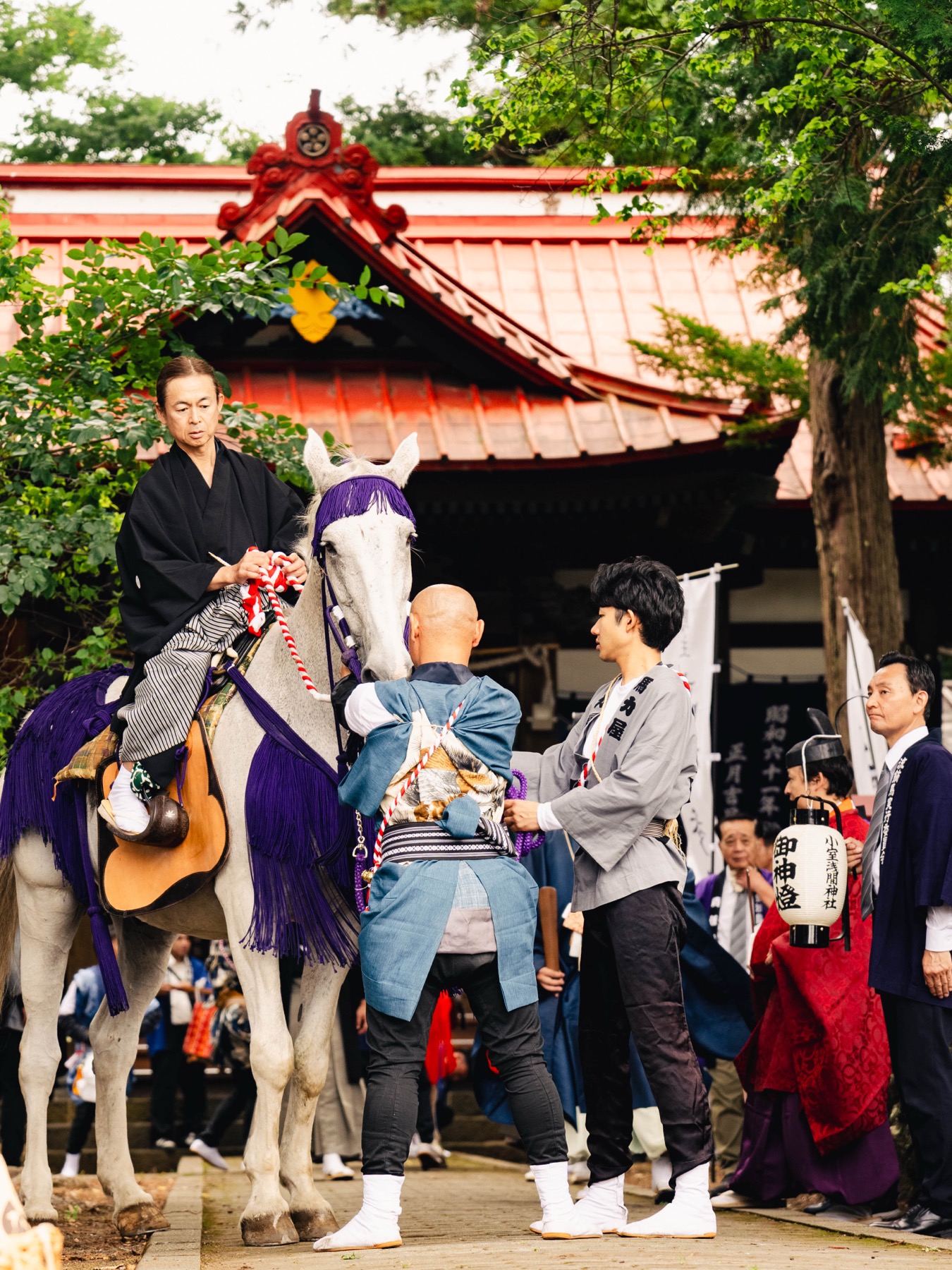
The city has published the 2026 timings for this day:
| Sep 18 (2026, per city notice) | What happens |
|---|---|
| 10:00 | Procession leaves Omuro Sengen Shrine |
| 10:30 | Arrives at Tenjinsha; rite at the Sanno shrine |
| 11:10 → 11:40 | Leaves Tenjinsha, returns to Omuro Sengen |
| 14:30 | Mikoshi departure rite |
| 15:00–17:30 | Mikoshi procession through Shimoyoshida |
Separately from the city’s table: a local account describes an evening yoimiya (eve-festival) with food stalls on the approach and the fire brigade’s lion dance making house rounds. I found no published 2026 time for it, so check locally.
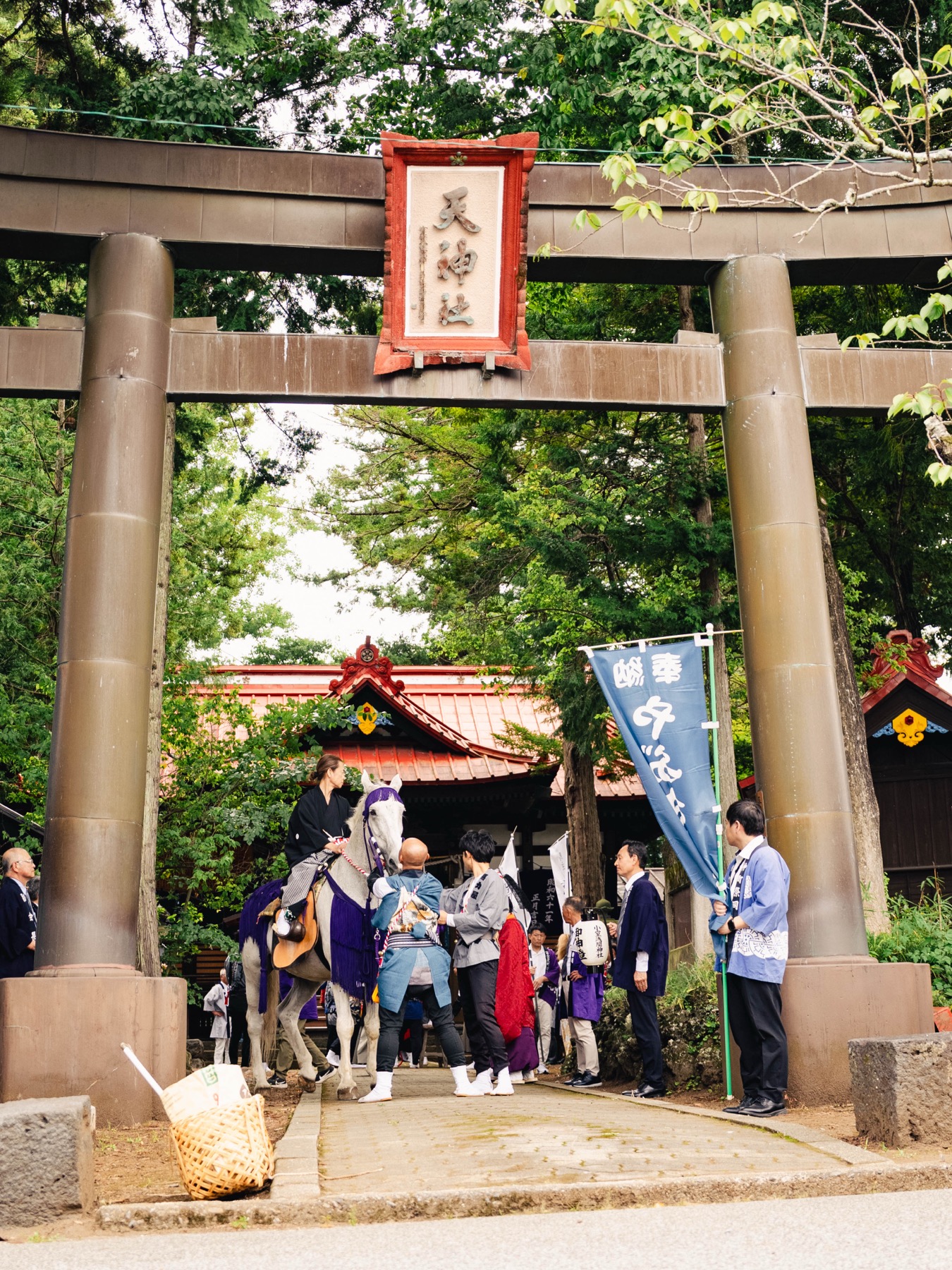
The city publishes the stops and times, not the exact streets. The Honcho-dori leg is what I photographed in 2025, and a 2018 Fujisan World Heritage Center survey records the same street in the route; the shrine end and the Tenjinsha end stay fixed either way.
September 19: the run and the reading
The main day opens with the annual grand rite at 10 a.m. The horses run at 1 p.m. In 2026 the city lists two horses — traditionally designated the “morning horse” and the “evening horse”, names rather than time slots — with four runs each — eight ritual runs in total — on the roughly 180-metre course in front of the shrine. A 2018 survey records the sequence: the shrine rite, the riders’ formal departure, the purifying of the course, a few warm-up passes, then the runs that leave the prints that matter. The prefectural record lists the closing Sannō run — the mountain god’s symbolic ride home — as the final stage after the paired runs.
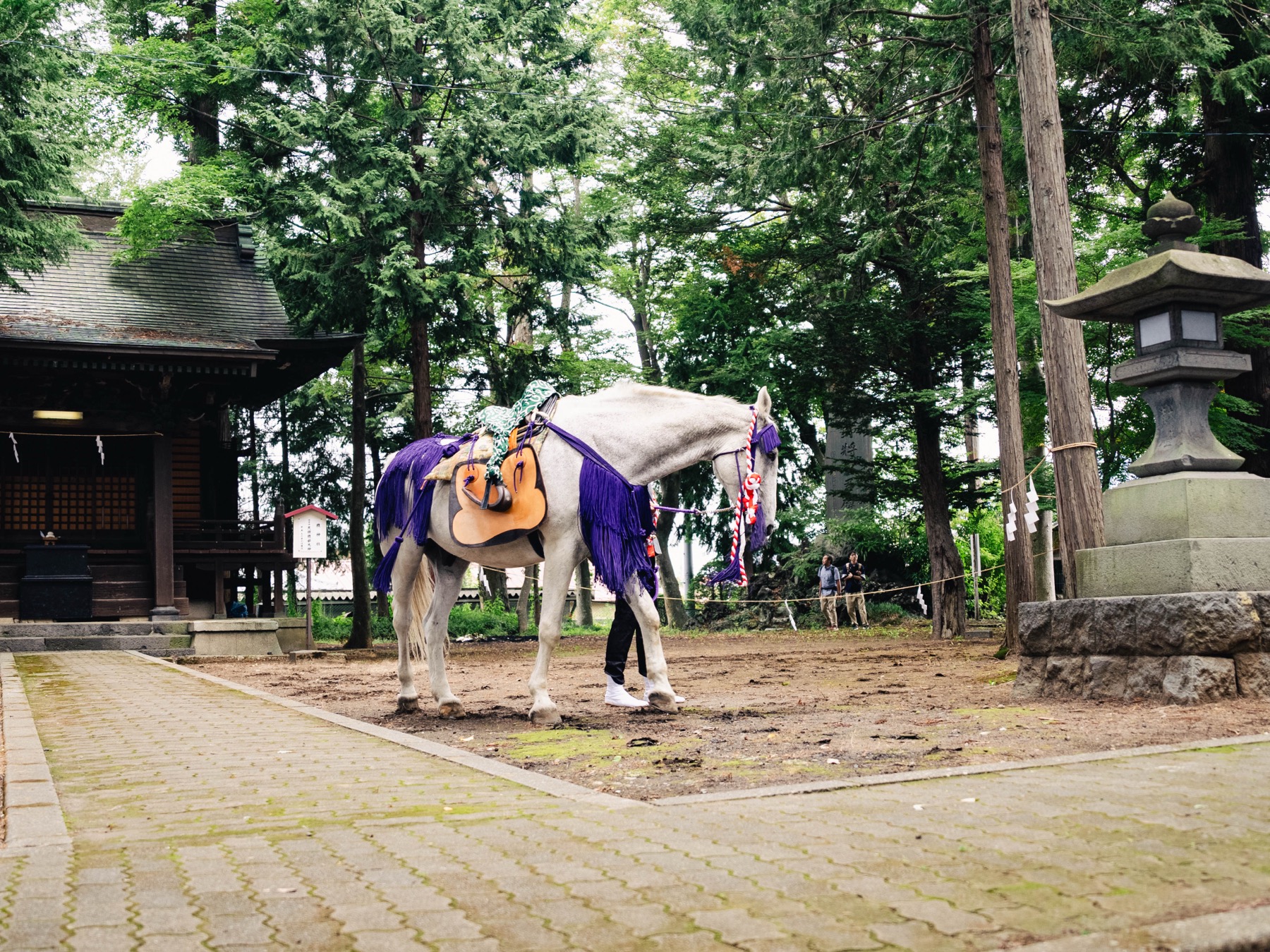
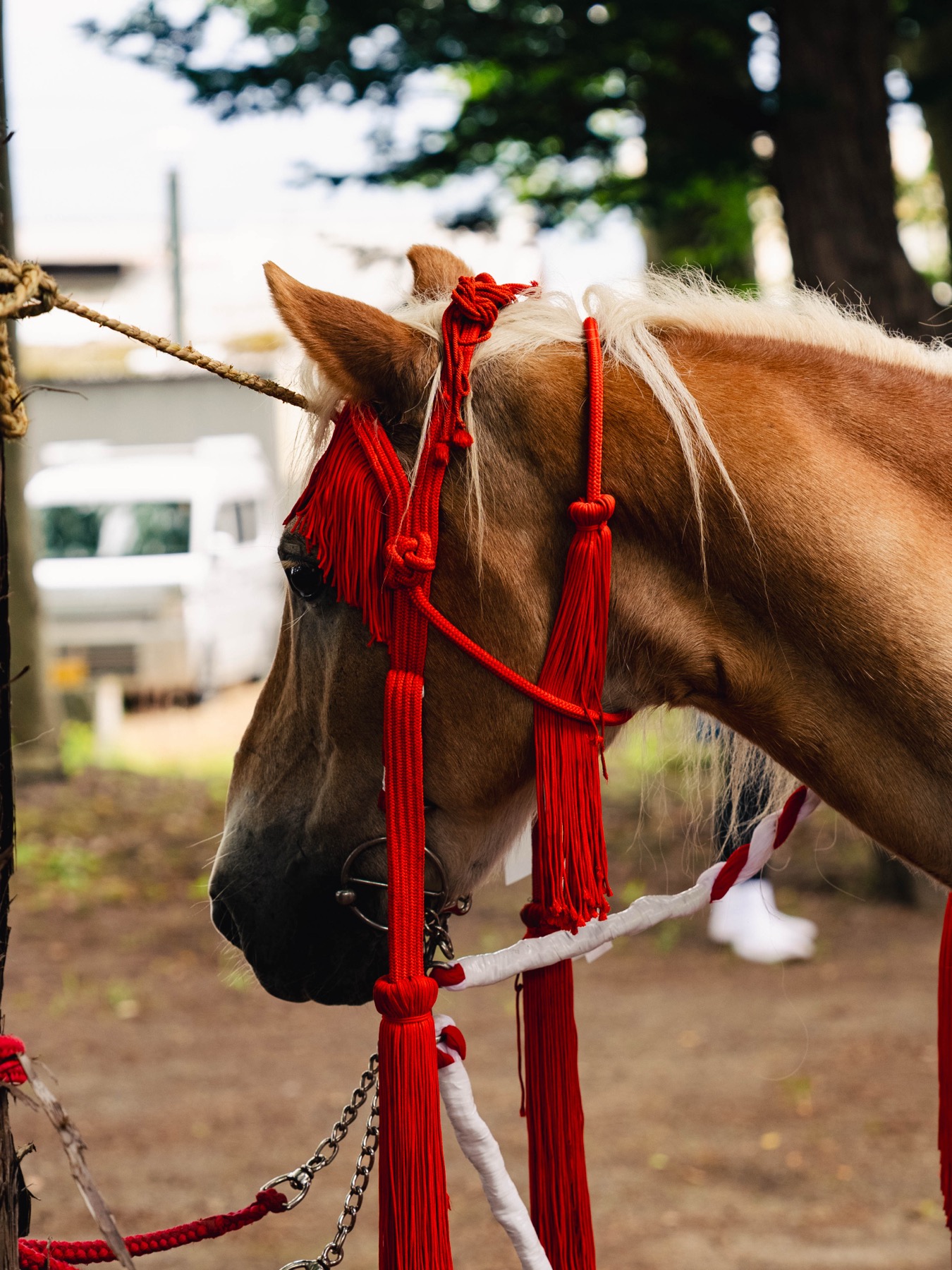
Two details worth knowing before you go. First, arrows that miss their targets are collected and can be taken home as good-luck charms — ask rather than grab. Second, this is a neighbourhood course, not a stadium: you watch from the roadside, and I would arrive well before one o’clock and follow the marshals’ directions on where to stand. A local account describes the tradition as carried by local riders on farm horses, with practice beginning in September — and notes younger locals now working with the horses through the year. The prefectural record adds that the horses are kept and trained in stables on the shrine grounds. I live here, and I am planning to be at the course on the nineteenth myself.
STAYING FOR THE FESTIVAL?
Options cluster around Fujisan Station and Lake Kawaguchiko — the example train below covers Kawaguchiko Station to Shimoyoshida in 14 minutes. September 19 is a Saturday in 2026, so book the night before if you want the 10 a.m. rite without a dawn start from Tokyo.
Find hotels near Kawaguchiko Compare on AgodaComing from Tokyo just for the day? Klook lists Mt Fuji-area day tours and activities, and Rakuten Travel covers the area’s smaller Japanese inns.
Which “Omuro Sengen”? (Read this before you navigate)
Getting there
| From | How |
|---|---|
| Kawaguchiko | Fujikyu line toward Otsuki, 14 min to Shimoyoshida (e.g. 9:00 → 9:14), no transfer |
| Fujisan Station (Fujiyoshida) | Same line, 6 min (e.g. 9:08 → 9:14) |
| Tokyo | JR Chuo line limited express to Otsuki, then Fujikyu line; or direct highway bus to Fujisan Station area |
| By car (2026) | Festival parking at Shimoyoshida Daiichi Elementary School ground, per the city notice. Follow posted traffic restrictions and staff directions near the shrine. |
From the station, the shrine is about four minutes on foot. No published rain policy appears in the sources I checked, so look at the city’s festival page for updates before travelling.
Around the festival
Chureito Pagoda
The five-storied pagoda over Fuji is reached on foot from the same Shimoyoshida Station, with a stair climb to the viewpoint. My access guide has the stairs count and timing.
Honcho-dori
Retro shopfronts, lantern-style lamps, Fuji dead ahead: this is the street in my 2025 procession photos. Check the 2026 route locally before staking out a spot.
Nishiura’s Showa alleys
While you are in Shimoyoshida, the old bar quarter of Nishiura is the town’s other time capsule, a short walk into the backstreets.
Lunch like a local
Fujiyoshida is udon country, and its old diners are their own attraction — Tiger Shokudo serves Japanese set meals a short ride away.
If you are building a longer stay, my Kawaguchiko vs Fujiyoshida stay guide compares the two bases and which trip each suits, and the Mt Fuji hub collects everything else. Three weeks before this festival, the same town runs the far larger Yoshida Fire Festival — the two make a neat pair: fire to close the climbing season, horses to see the god home.
Festival FAQ
When exactly do the horses run in 2026?
September 19, from 1 p.m., on the course in front of Omuro Sengen Shrine — two horses, four runs each, per the city’s published schedule. The grand rite is at 10 a.m. the same day. September 18 has the morning procession and afternoon mikoshi events listed by the city; a local account also describes an evening yoimiya, whose 2026 timing is unpublished.
Is there an entrance fee or ticketed seating?
The city’s 2026 announcement does not mention admission charges or ticketed seating; it is a neighbourhood shrine festival watched from the roadside. I found no official statement either way, so contact the shrine if you need certainty.
What is batei-uranai?
Between and after the ritual runs, a diviner (the role passes down within a family) examines the hoofprints on the course and reads from them signs of misfortune for the districts of Shimoyoshida, covering the months until next spring — a span tied, in local tradition, to a deity’s seasonal return to Mount Fuji. Results are conveyed to each district afterwards at a rite called o-himachi.
Can I see Mount Fuji during the festival?
If the sky cooperates. My 2025 photos on Honcho-dori show the realistic September version: a bare, cloud-wrapped summit above the power lines, still enormous. Snow cover and visibility vary — the postcard snowcap usually comes later in the year.
How is this different from the Katsuyama yabusame in April?
Katsuyama, held in April at Fuji Omuro Sengen Shrine by Lake Kawaguchiko, features Takeda-school mounted archery as a shrine ritual. Shimoyoshida’s September festival is best known for its hoofprint divination. They are separate events at separate shrines, and both reward a visit.
Where should I stand for the runs?
The course runs along the road in front of the shrine, but the city notice does not map public viewing zones, and I have not yet watched the runs myself. Arrive well before 1 p.m., stay behind any barriers, and use the areas the marshals indicate — the street is narrow and the horses are genuinely fast.
Sources & verification
- Fujiyoshida City — September 2026 mayoral press announcement (2026 dates, times, two horses × four runs, parking)
- Fujiyoshida Tourism — Yabusame Festival (800+ years, hoofprint divination, lucky arrows, course location)
- Yamanashi Shrine Agency — Omuro Sengen Shrine (deity, traditional 807 founding, mountain-shrine relationship)
- Yamanashi Prefecture cultural-property record (rite sequence, Sanno horse, stables at the shrine)
- Yamanashi Tourism feature by a Shimoyoshida local (course length, hereditary diviner, o-himachi, divination span)
- Fujisan World Heritage Center survey (2018) (procession name and route records)
- Fujikyu Railway official timetable (March 14, 2026 revision) (train times)
- My own photographs of the September 18, 2025 procession and shrine rites, taken 9:48–11:33 that morning.
Join travelers discovering Japan's hidden side
Weekly dispatches from off-the-beaten-path Japan — spots and stories you won't find in guidebooks.
No spam. Unsubscribe anytime.
Welcome aboard!
You're in. See you in your inbox soon.