
Field report · April 29, 2026
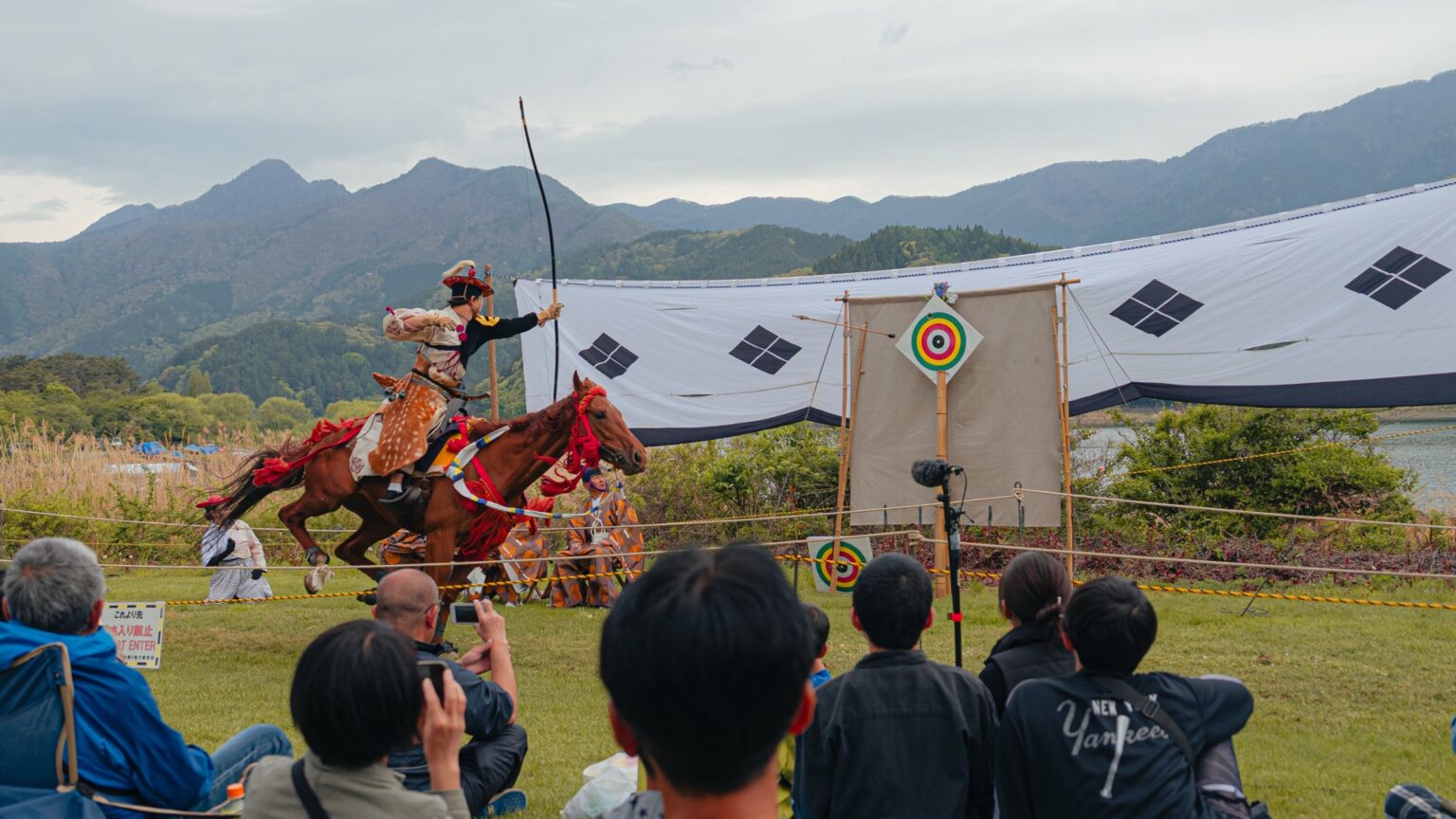
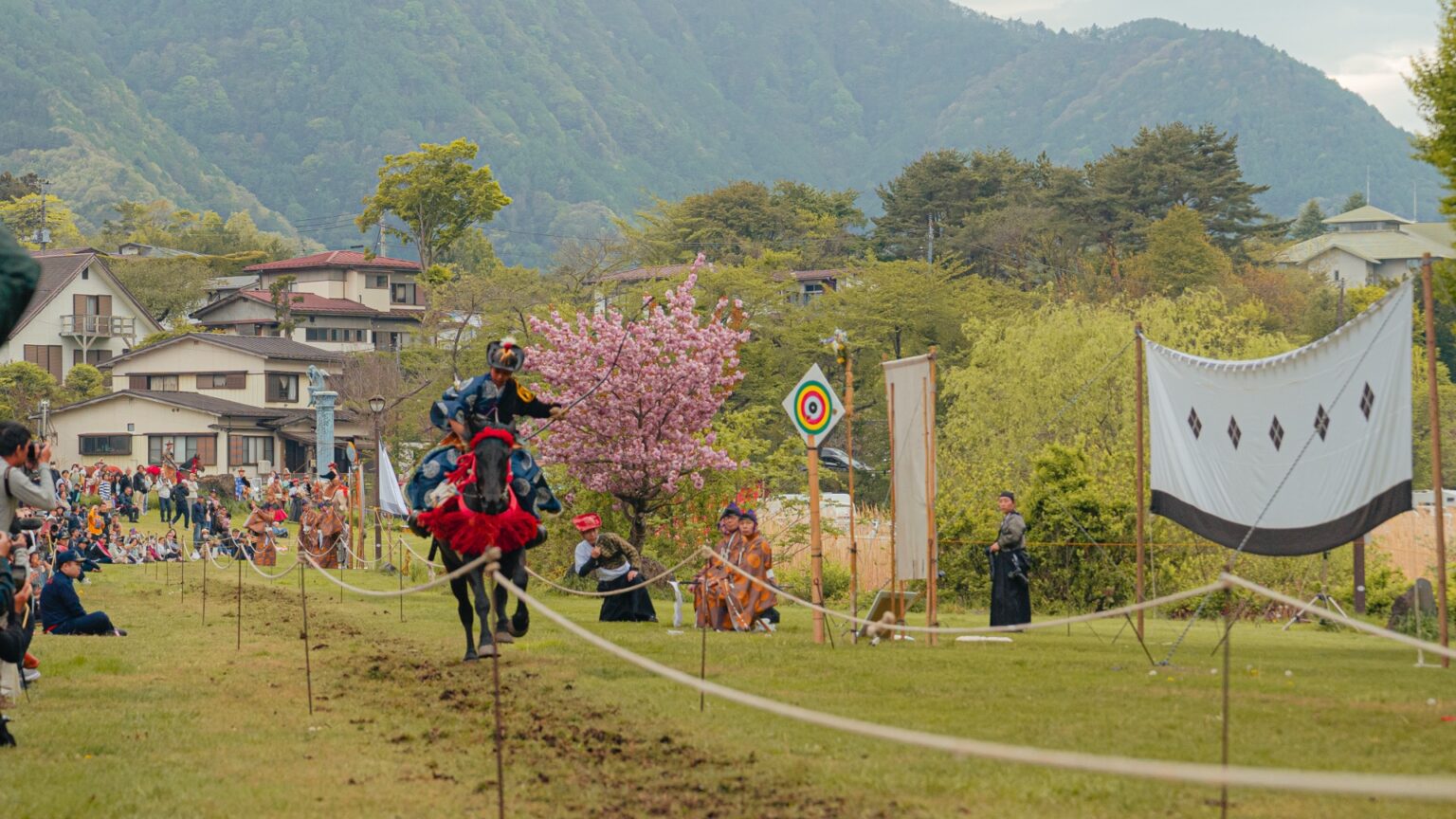
It happened so fast. The horse came past, the body twisted, the bow drew, the arrow released, and a wooden plaque cracked across the field. By the third round, when the small clay targets shattered into fragments that drifted in the air like paper confetti, I had stopped looking at my camera. The Kai no Katsuyama yabusame at Fuji Omuro Sengen Shrine is one of the few festivals in Japan where time travel feels literal — and I wrote down everything I saw today so that anyone going next year can stand in the right spot. (Don’t confuse the shrine with the similarly named Omuro Sengen in Shimoyoshida — that one holds a separate yabusame each September, famous for its hoofprint divination.)
For someone planning 2027
Annual ritual on April 29 (Showa Day) at Shikkogo Park beside Fuji Omuro Sengen Shrine in Katsuyama, Fujikawaguchiko, Yamanashi. Free admission. Each archer makes three full passes — the first two against the large round shiki no mato, the third against the small clay kawarake mato that splinters into the air when hit. The archer with the most hits across the day wins. Next: Thursday, April 29, 2027. Skip to the “where to stand” section if you’re already convinced you’ll go.
Quick Facts
| Venue | Shikkogo Park (シッコゴ公園) and Fuji Omuro Sengen Shrine (冨士御室浅間神社) |
|---|---|
| Address | 3951 Katsuyama, Fujikawaguchiko, Minamitsuru District, Yamanashi 401-0310 |
| Date | April 29 every year (Showa Day). 2026 happened today; 2027 is Thursday, April 29. |
| Hours | Site opens around 9:00; ceremony from 10:00 at the shrine; the actual mounted runs roughly 13:00–14:00 at Shikkogo Park. |
| Format | Three full passes per archer. Rounds 1–2 use the shiki no mato (round wooden target). Round 3 uses the kawarake mato (small clay disc, splinters when hit). |
| Admission | Free. |
| Lineage | Takeda-ryu (武田流), preserved by members of the Dai Nippon Kyuba-kai (大日本弓馬会). |
| Closest station | Kawaguchiko Station (Fujikyu Line). About 12 minutes by taxi or 25 minutes on the local bus toward Saiko/Motosuko. |
| Contact | Fujikawaguchiko Tourism Division, 0555-72-3168 |
What it actually felt like to be there today
By the time the first archer reached the second target, I’d forgotten I was holding a camera. The whole field had gone quiet except for the hooves and a single drum on the judges’ platform.
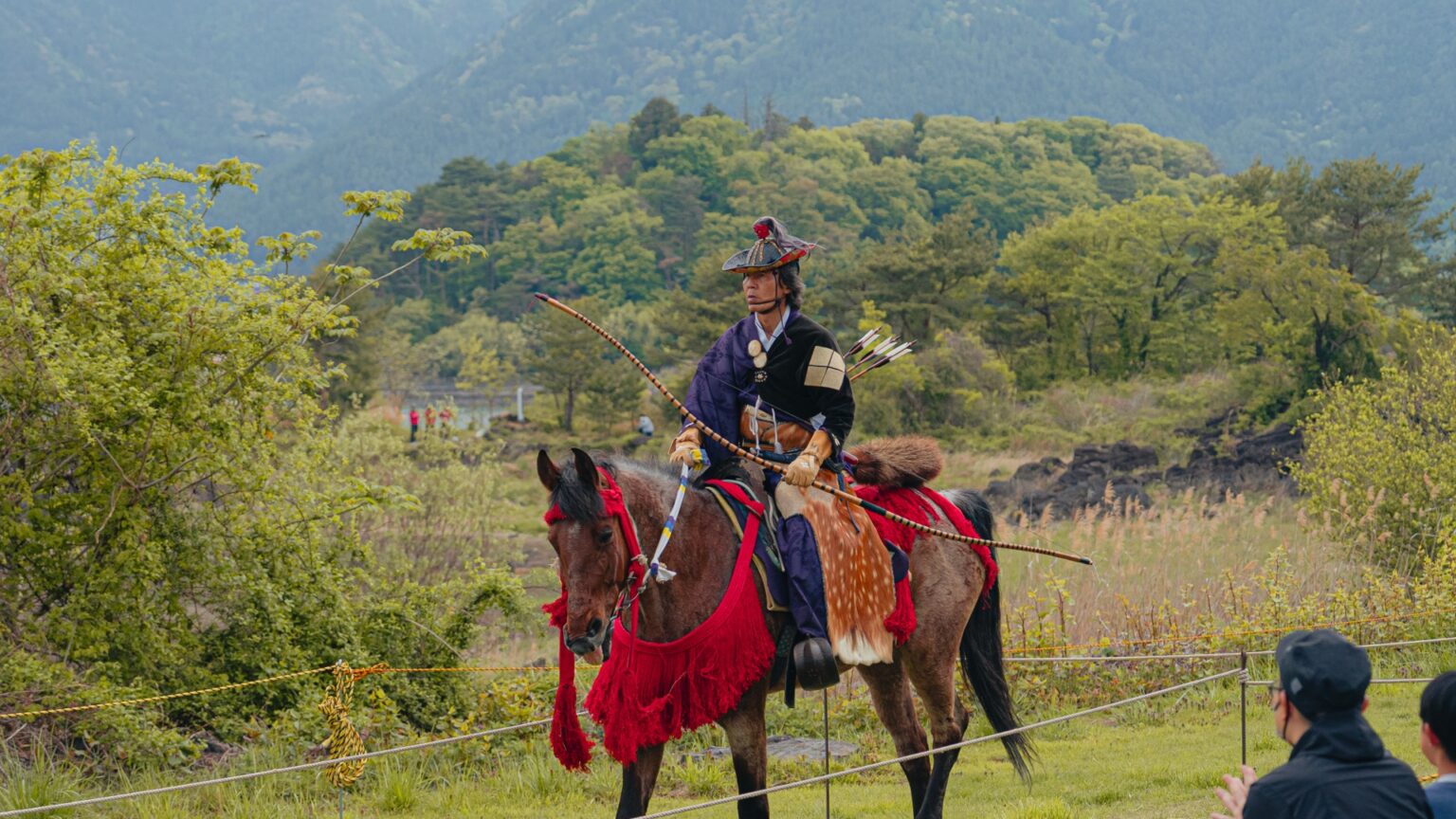
I’d read about Takeda-ryu yabusame for years and the thing nobody had told me is how silent the audience becomes once a horse starts moving. The chatter, the children, the tour-group photographers comparing settings — all of it stops the moment the announcer calls the start. Then it’s just the canter, the bow, the arrow. If a target gets hit, the wooden plaque cracks audibly. If it misses, the arrow disappears into the curtain behind. Either way, the noise comes back the second the horse passes the third target. People exhale. The drummer sounds the score.
That’s the part you can’t get from the festival page. The other part you can’t get from the festival page is how close you can stand. The rope barriers are inches from the run. A horse at thirty kilometres an hour goes by within arm’s reach. I held my breath every single time.
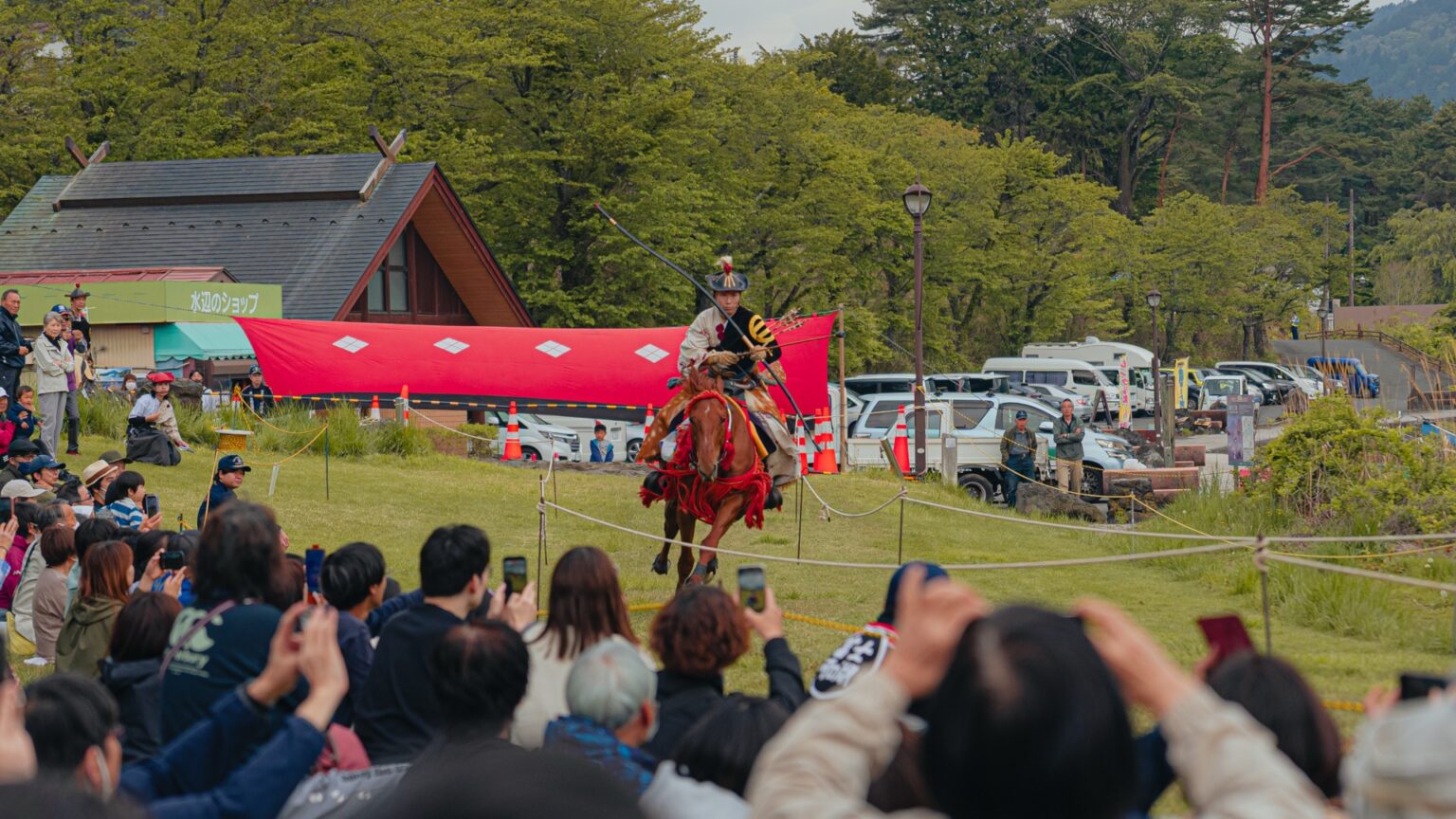
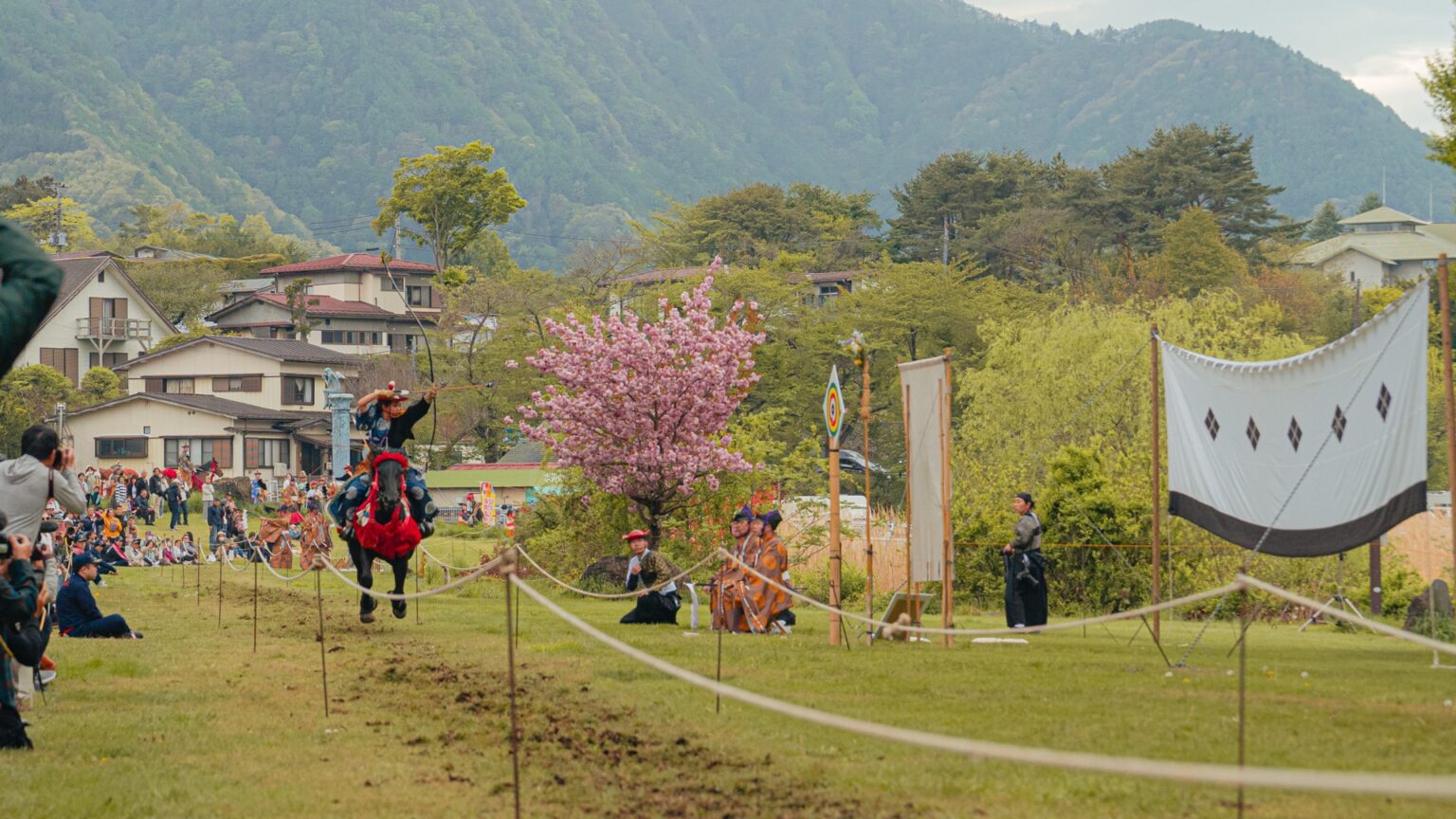
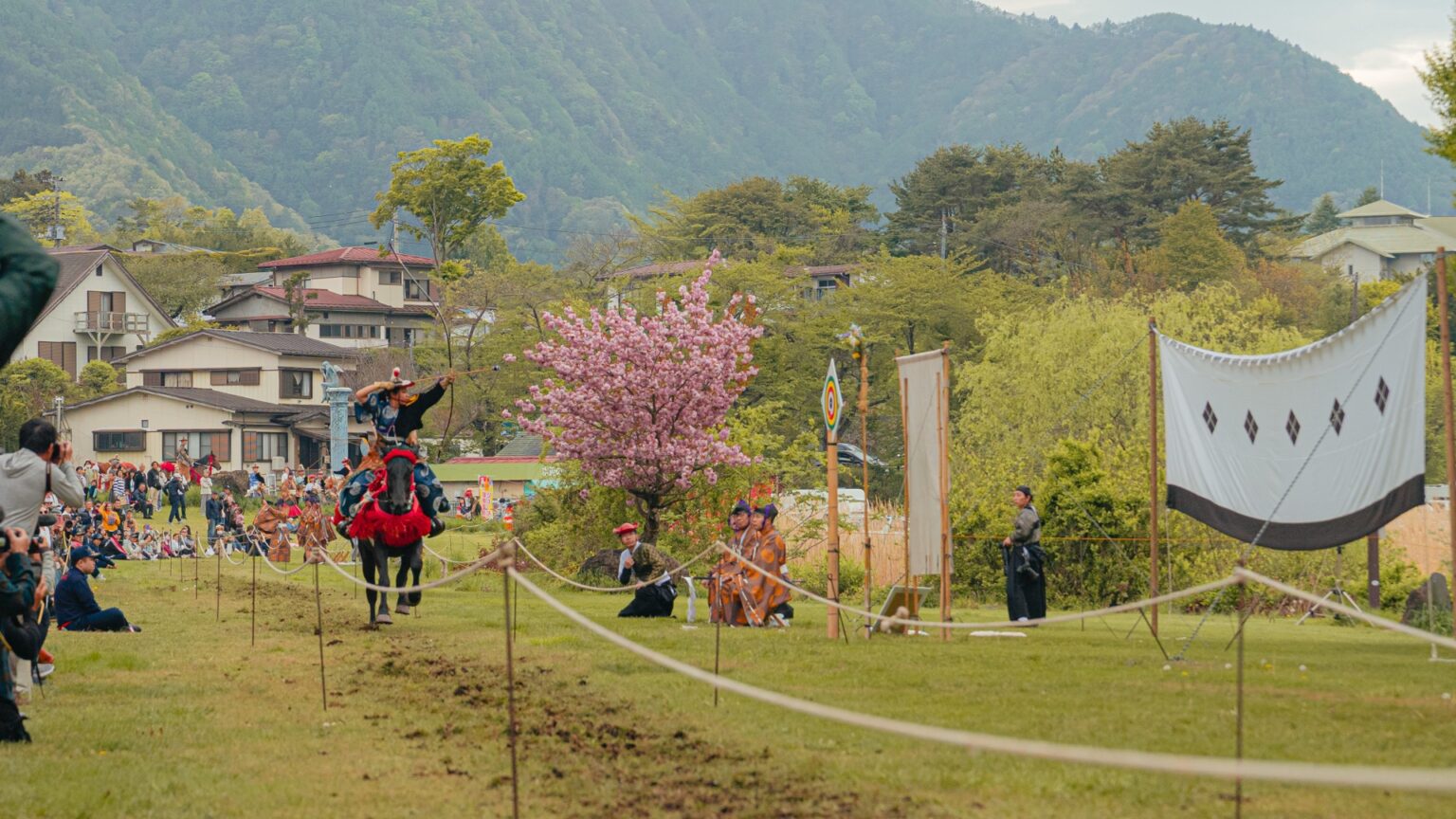
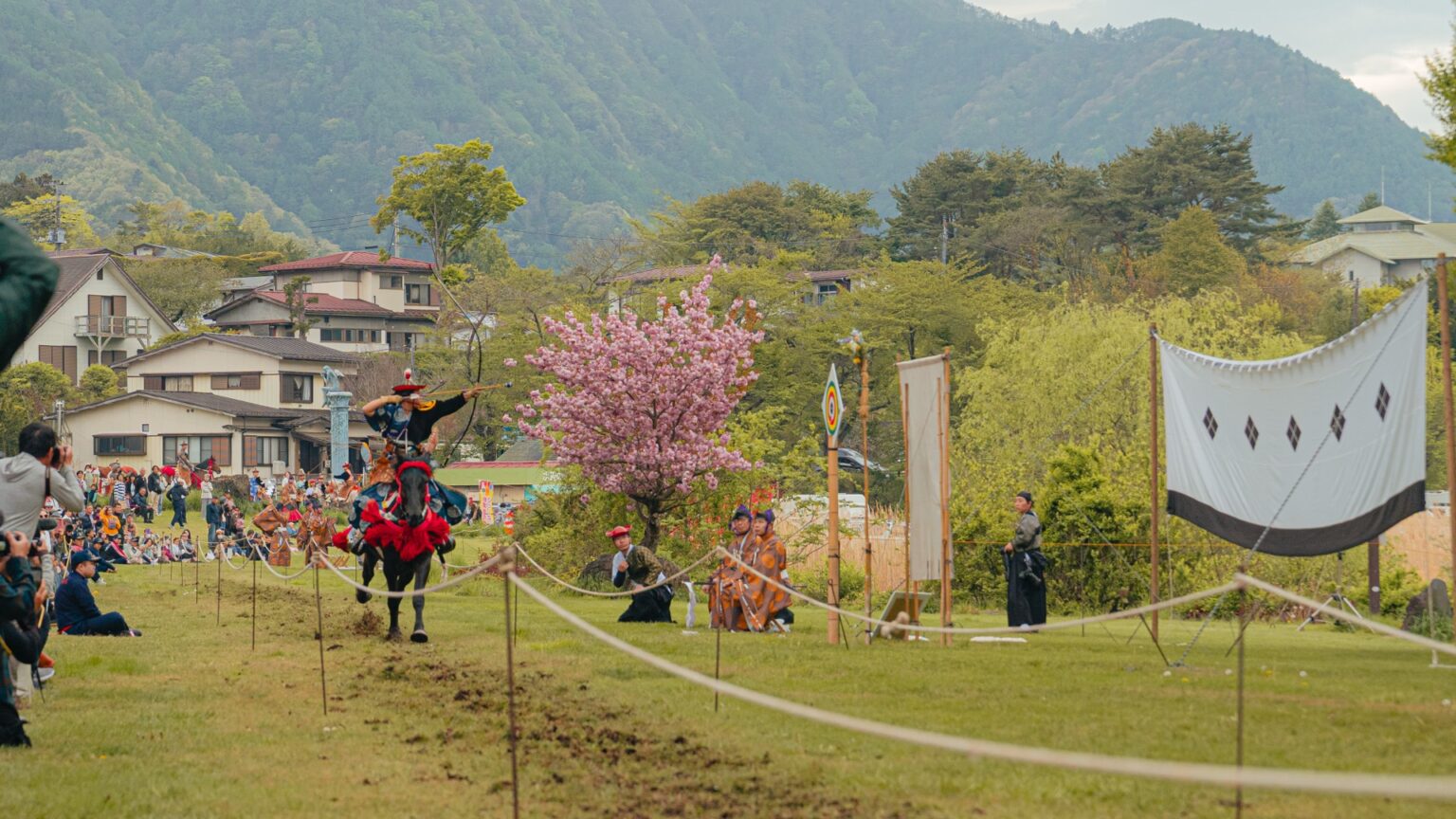
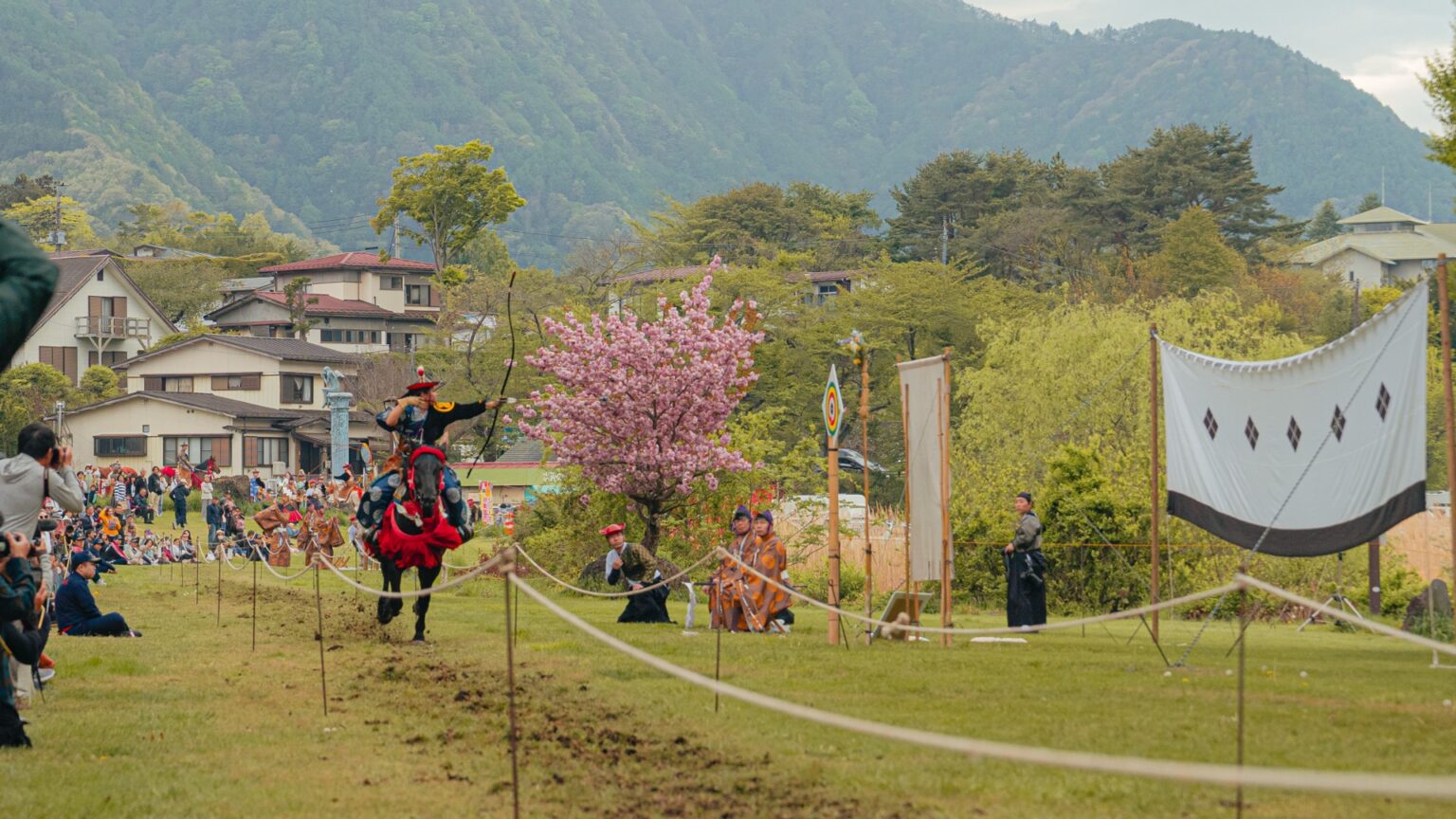
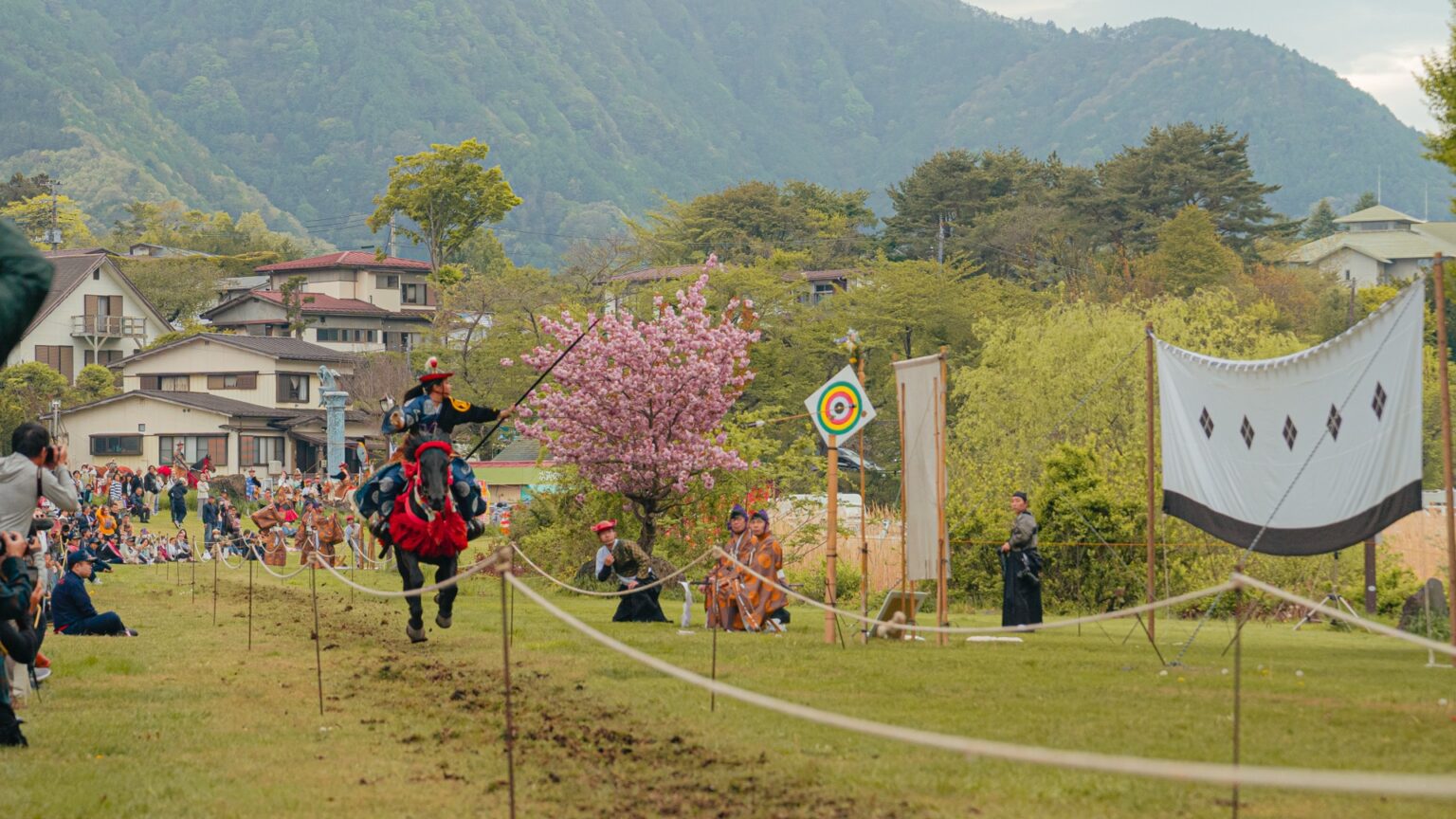
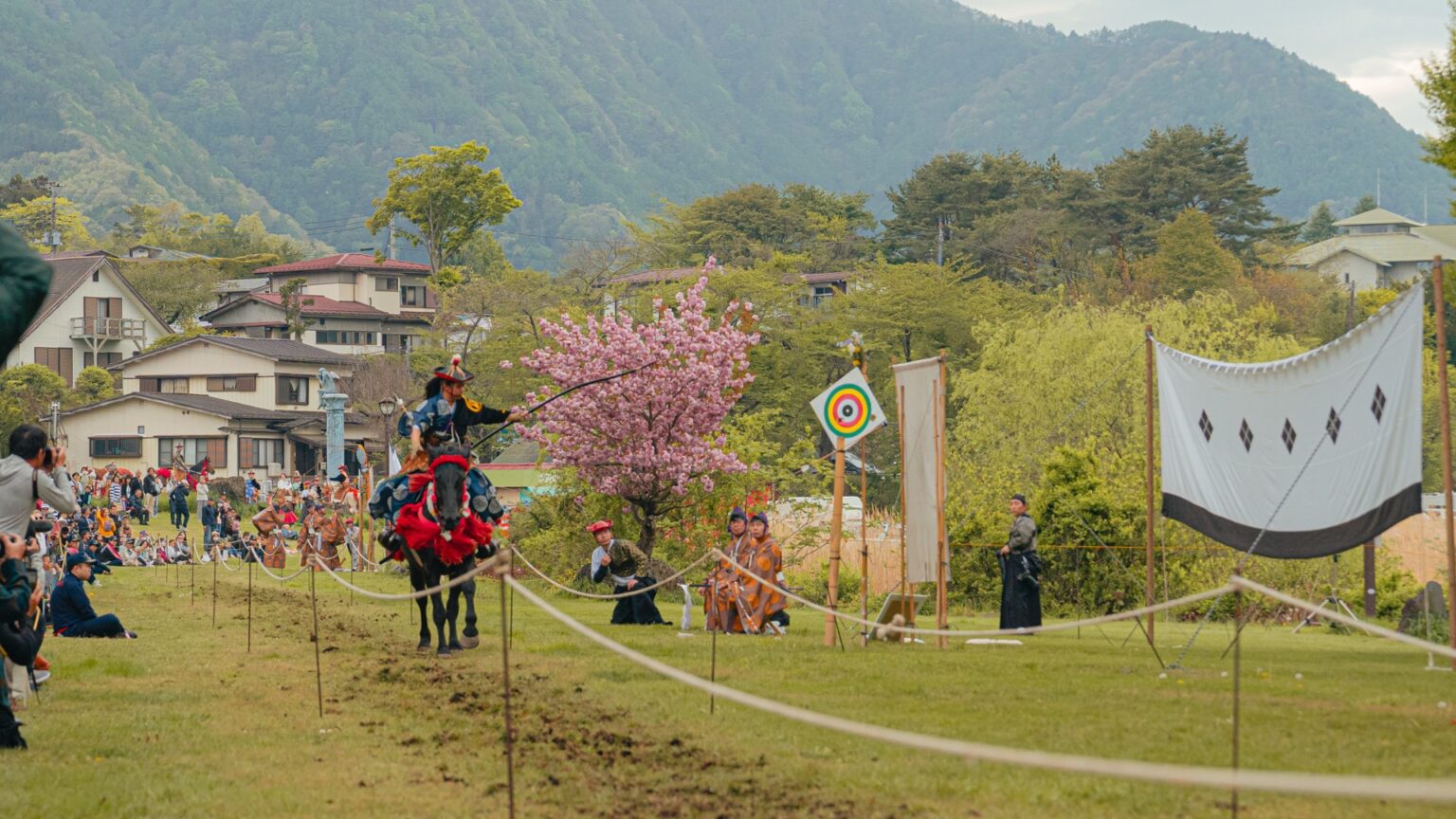
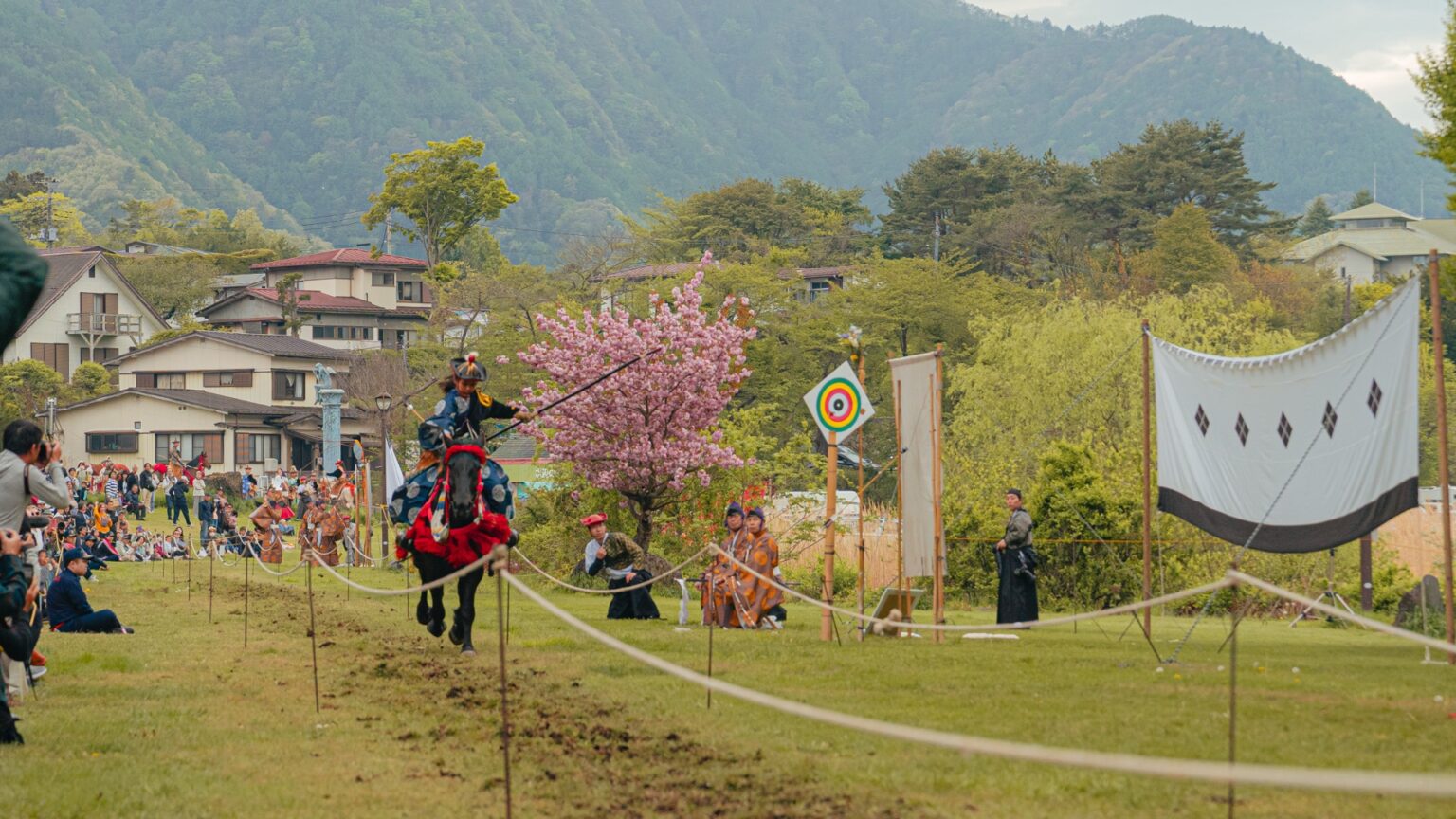
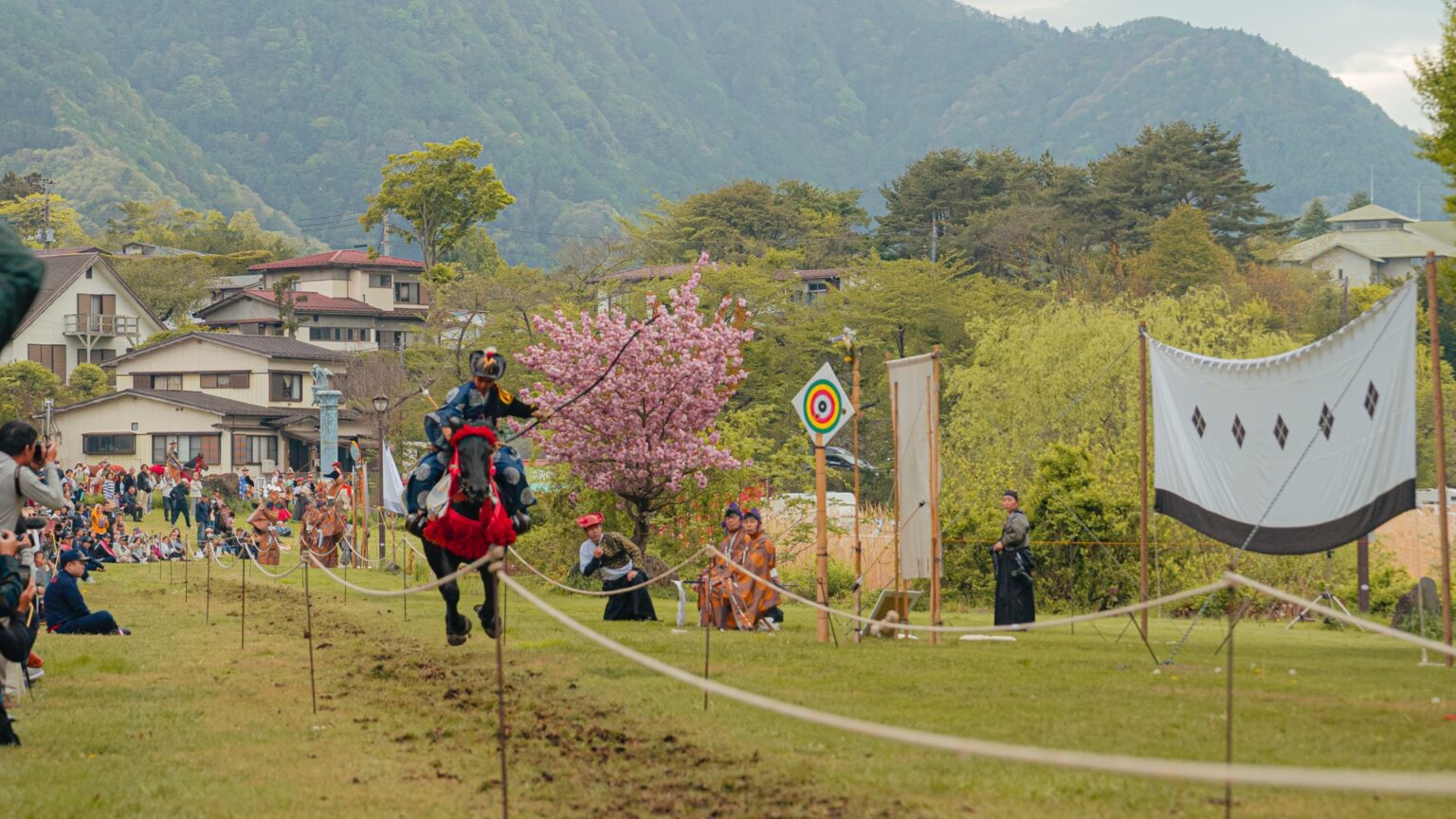
One full pass, in twelve frames
Captured in burst across roughly five seconds. The slideshow shows a single archer’s complete pass past the round shiki no mato target — approach, bow lifting, the draw, the moment of release, the recovery. Swipe left, or tap a dot to jump to a specific frame.
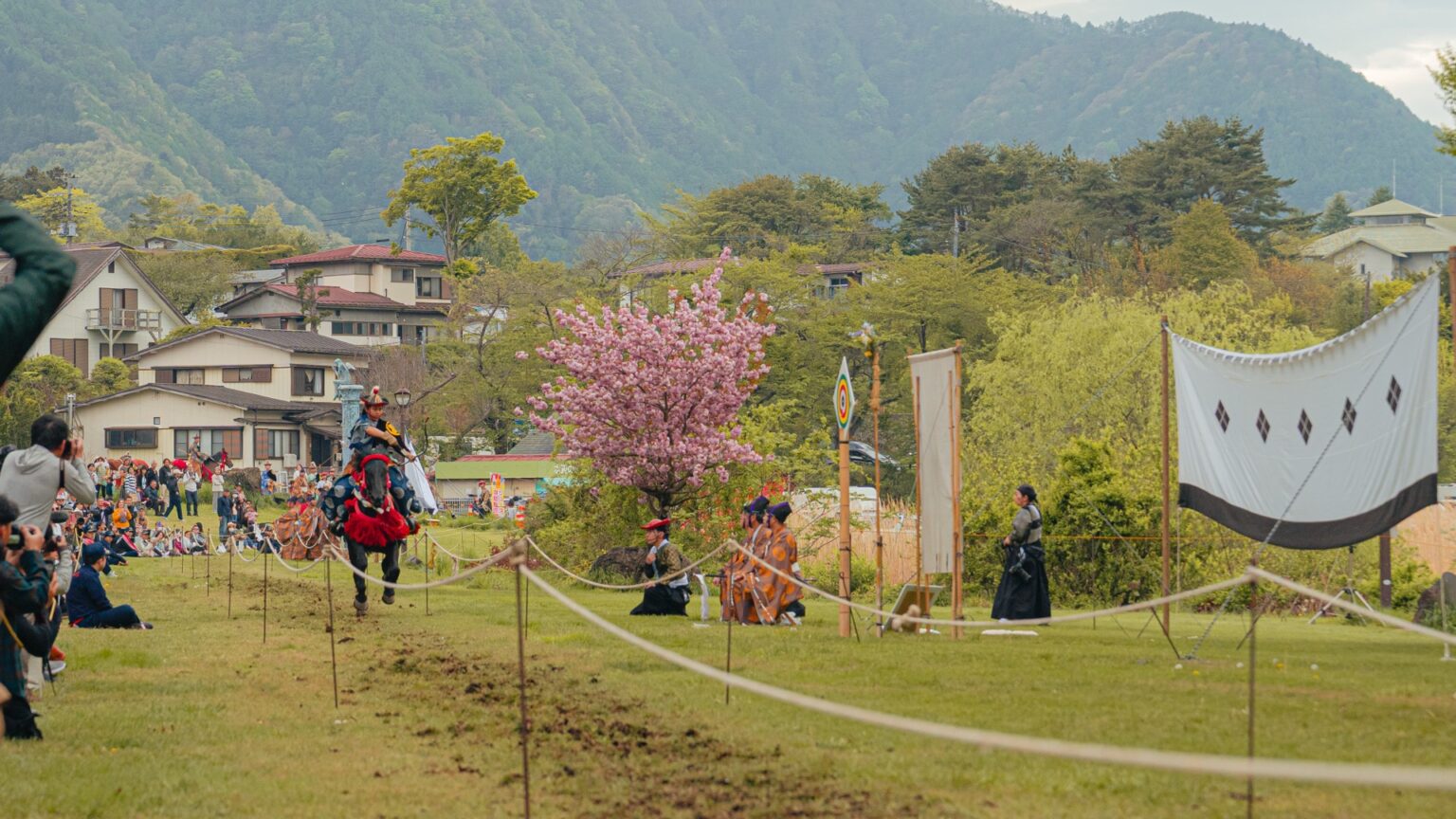
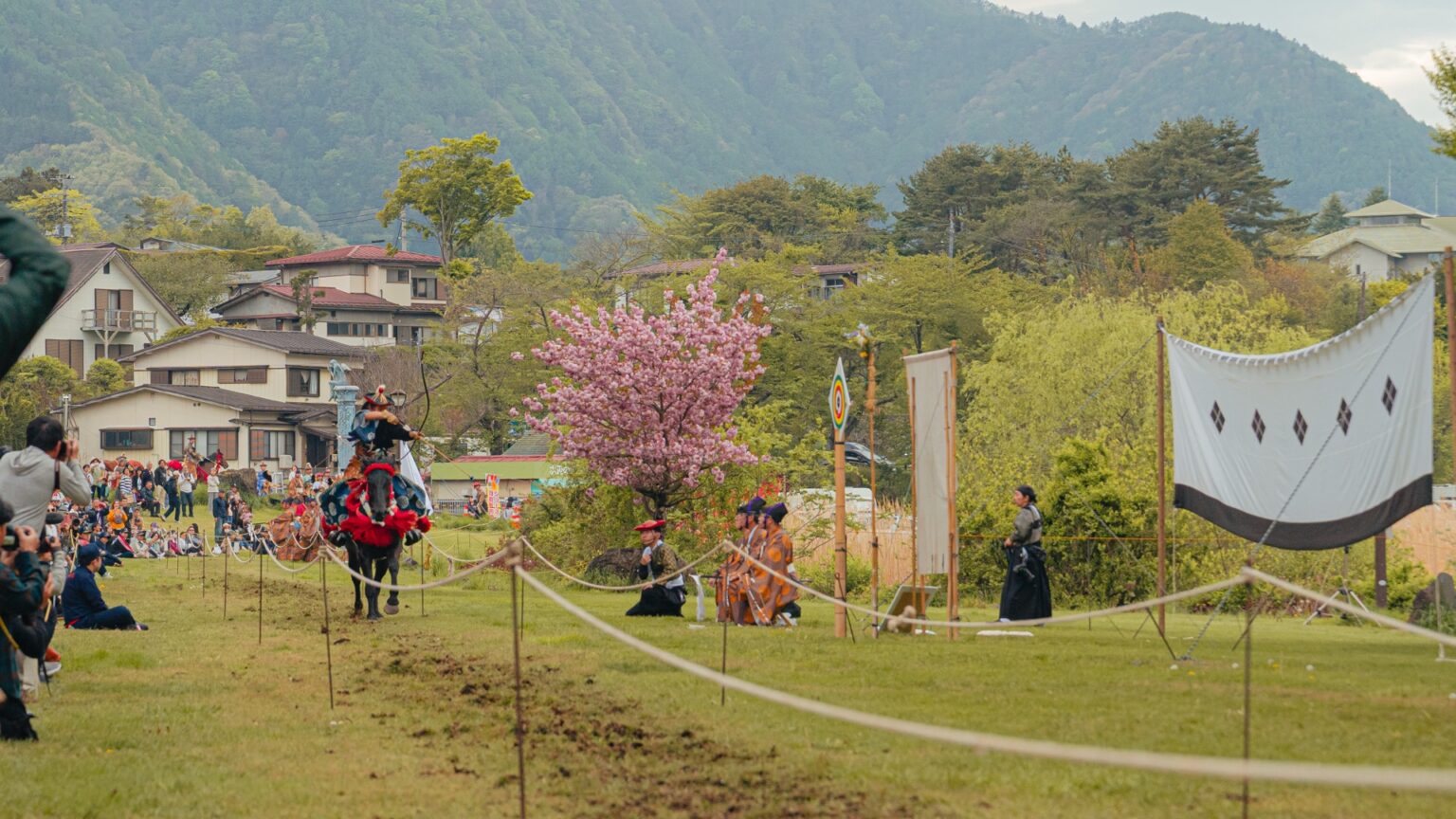
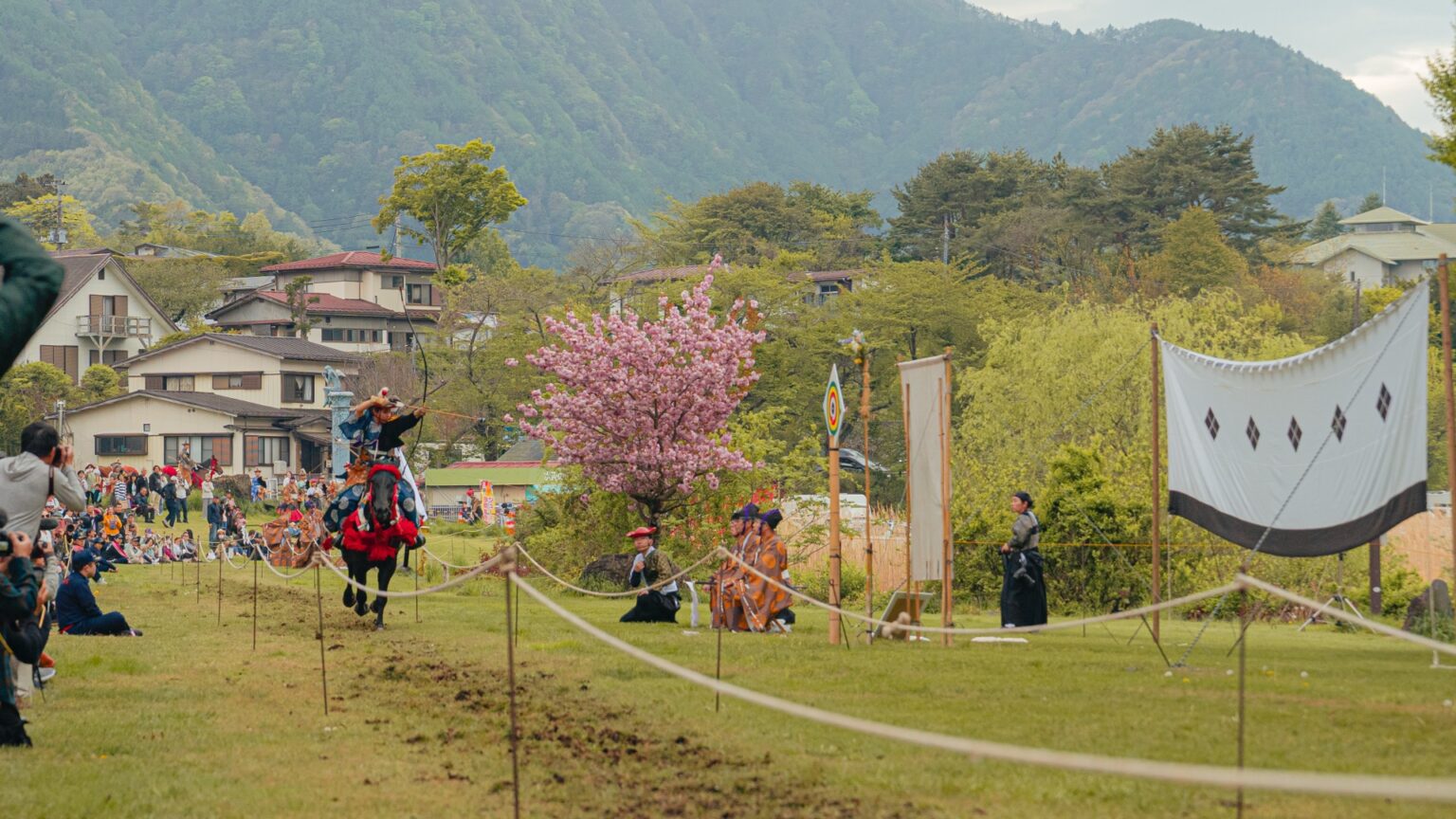
The three rounds, two target types — and the moment a kawarake target shatters
This is the part that surprised me on the day. The format is not “one run, three targets” the way most introductory descriptions imply. Each archer makes three separate full passes — rounds — and the targets change between them. The first two rounds use the round wooden shiki no mato. The third and final round switches to the much smaller kawarake mato, a clay disc that splinters into the air when struck. The archer with the most cumulative hits across the day takes the win.
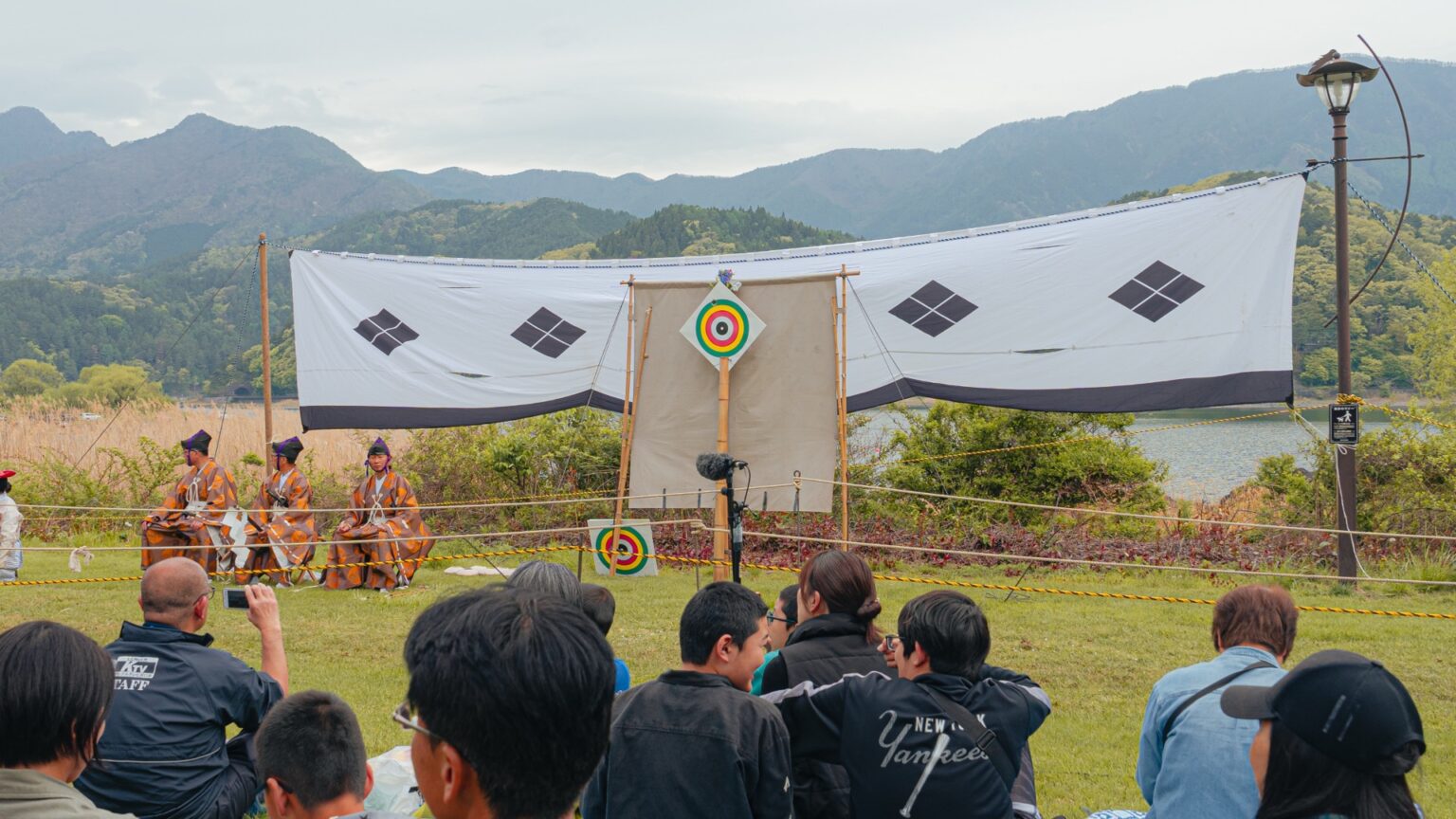
Shiki no mato
式の的 — the formal target
A round wooden plaque painted with concentric circles in red, yellow and dark green. Mounted on a bamboo tripod about waist height; the white curtain hung behind catches arrows that miss. Larger and easier to hit than the kawarake. Used for the first two rounds — the "establishing" passes.
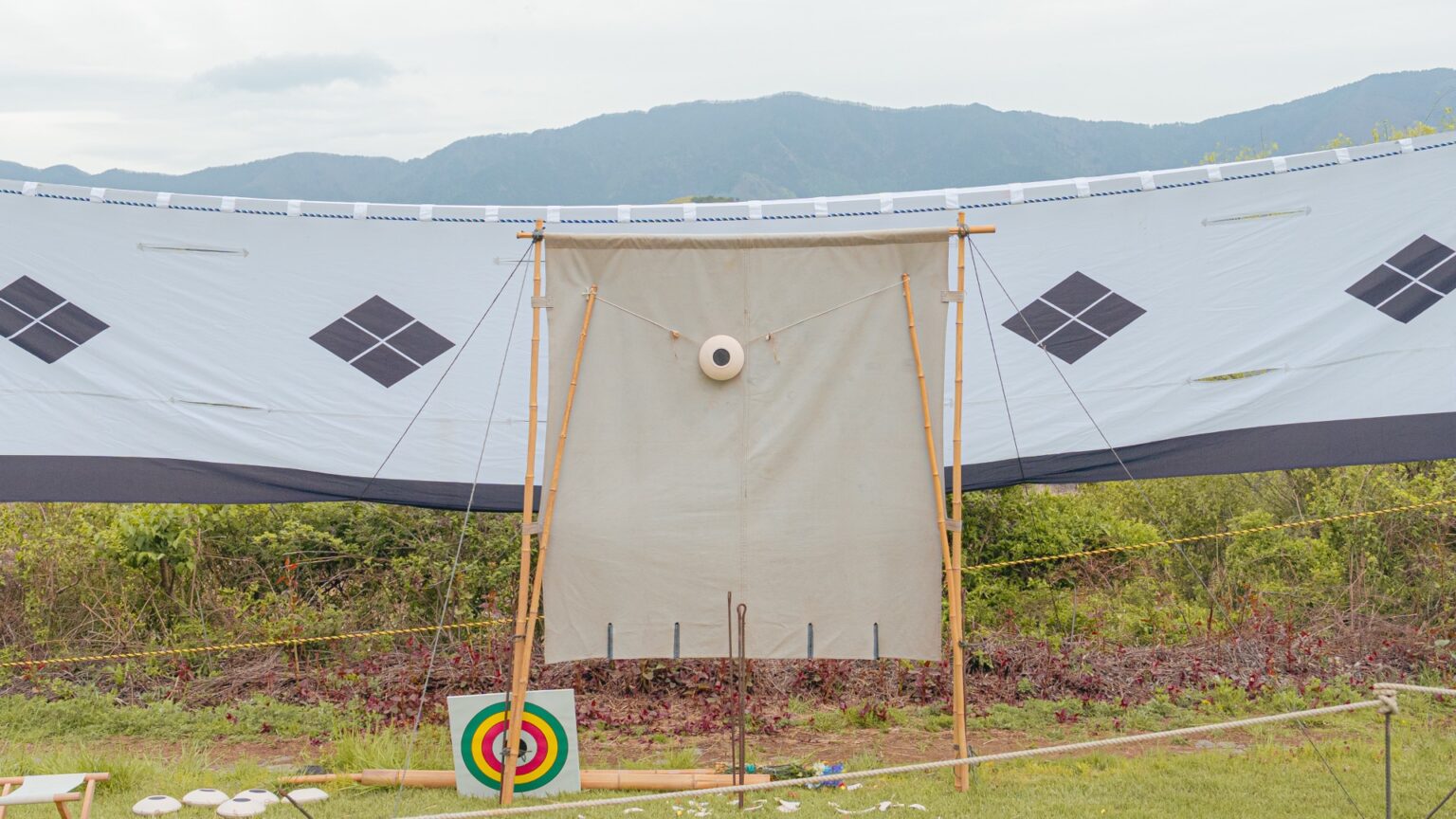
Kawarake mato
土器的 — the clay-disc target
A small unglazed clay disc suspended on the bamboo tripod between the curtains. Much smaller than the shiki no mato — harder to strike, but the reward is the moment of impact. When an arrow finds it, the kawarake shatters into fragments that drift in the air like paper confetti. The crowd reacts every time.
Round 1
Shiki no mato
式の的 ‧ Round wooden target
The first establishing pass. Each archer rides the full course past the three target stations. Hits announced by drum.
Round 2
Shiki no mato
式の的 ‧ Same target type
The second pass, also against the round target. Form tightens; archers who miscalibrated in round one tend to find the target now.
Round 3
Kawarake mato
土器的 ‧ Clay disc, splinters
The final pass. Smaller target, higher difficulty. A successful hit shatters the clay into the air. The archer with the highest cumulative hit count is declared winner.
What the ritual is, in one paragraph
Yabusame is mounted archery. The Katsuyama event preserves the Takeda-ryu lineage — one of two main schools still practised today — and the local origin story dates the ritual to 1083, when Minamoto no Yoshimitsu (better known by his court name Shinra Saburo Yoshimitsu, an ancestor of the Kai Genji and ultimately the Takeda) offered the ceremony at this shrine to celebrate victory in the Later Three Years’ War. The ritual ran for centuries, paused for an 84-year gap that ended in 1980, and has been held every April 29 since the post-war revival. The horses are smaller, sturdier mountain-style mounts, closer in build to what would have actually been ridden in the late Heian period — not modern thoroughbreds.
How the day flowed
April 29, 2026 schedule (broadly the same every year)
Setup, target curtains, sound check
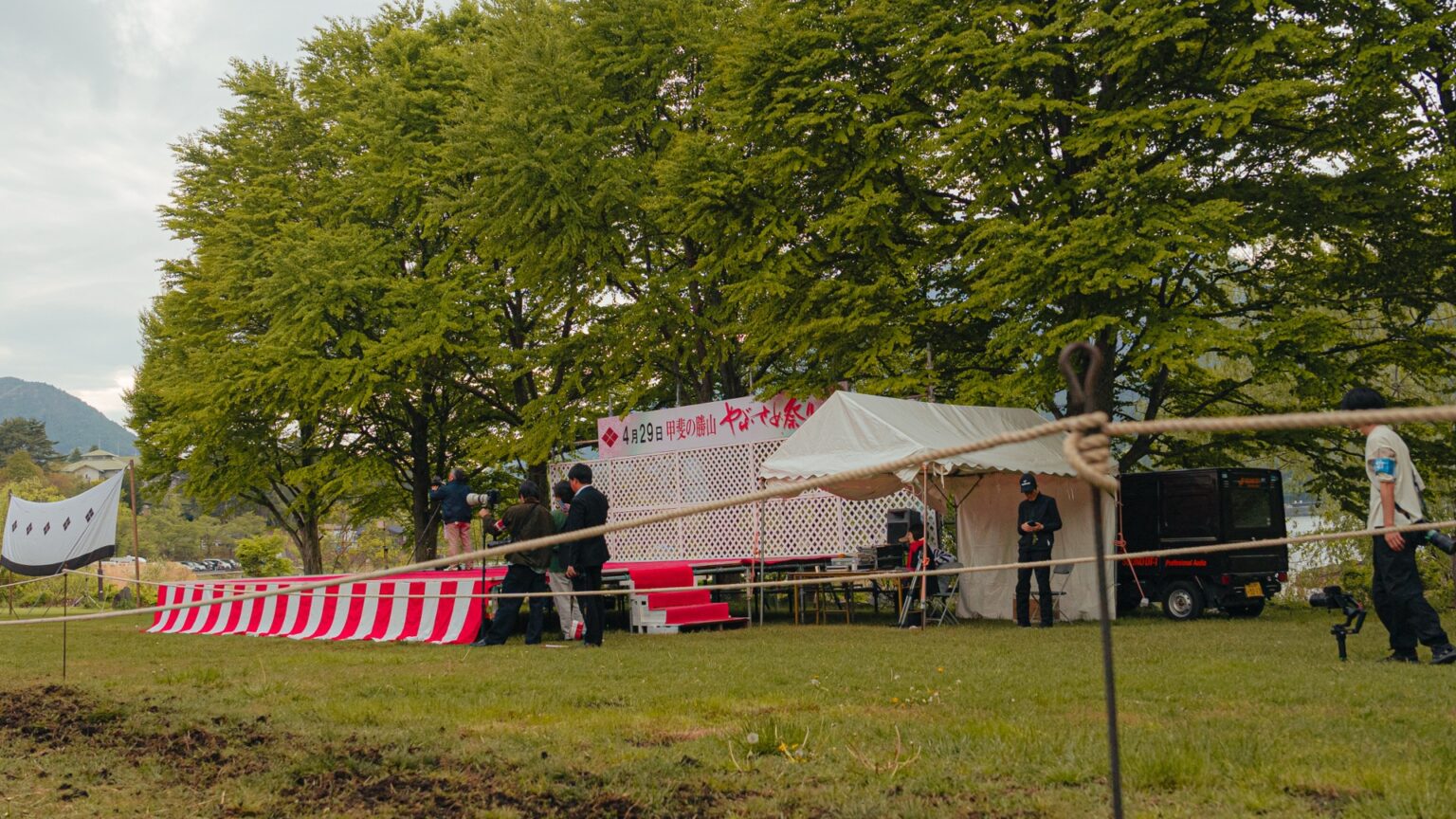
Volunteers in dark-blue happi finish staking the rope barriers, hanging the target curtains, and laying out the press and audience zones. Photographers start staking front-rope positions. Yatai food stalls open shortly after.
Opening ceremony at Fuji Omuro Sengen Shrine
The morning blessing happens at the shrine itself, a few minutes’ walk from Shikkogo Park. Officials and archers are received and the bows and arrows are formally consecrated.
Procession from shrine down to the field
Mounted archers and walking attendants process from the shrine to Shikkogo Park. Locals line the route. The horses move at a slow walk — the calmest moment to photograph the costumes in detail.
The three rounds (this is the show)
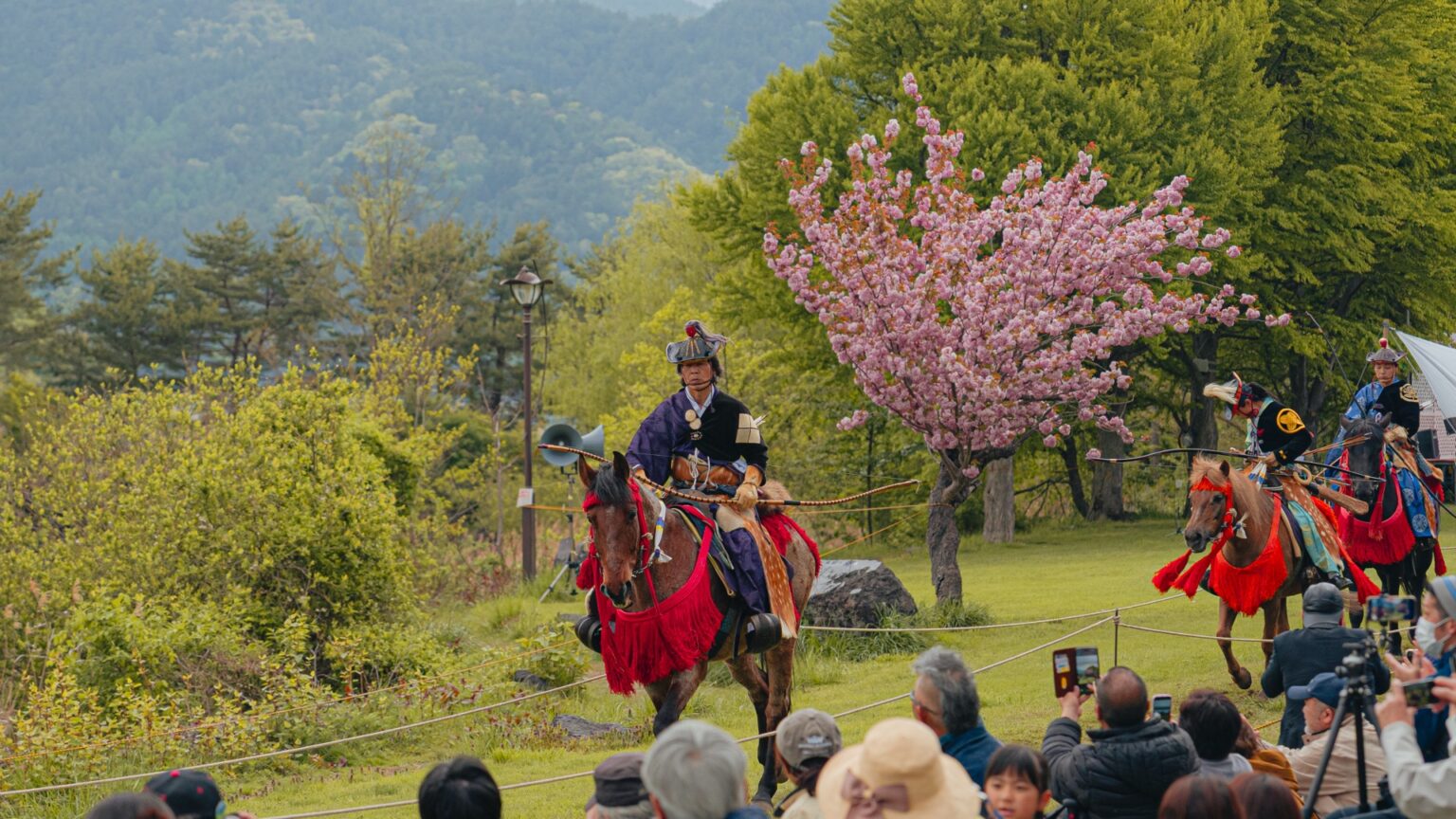
Rounds 1 and 2 against the shiki no mato; round 3 against the kawarake. Six to eight archers each take a full pass per round. Hits are announced by a drum on the judges’ platform; the cumulative score is read at the end. The kawarake hits are the loudest cheer of the day.
Wind-down and winner announcement
The archer with the most hits across all three rounds is announced. Photographs with the public, horses walked back. The crowd thins fast — most people are heading back to Kawaguchiko Station for the afternoon train.
The archers themselves — what to look for
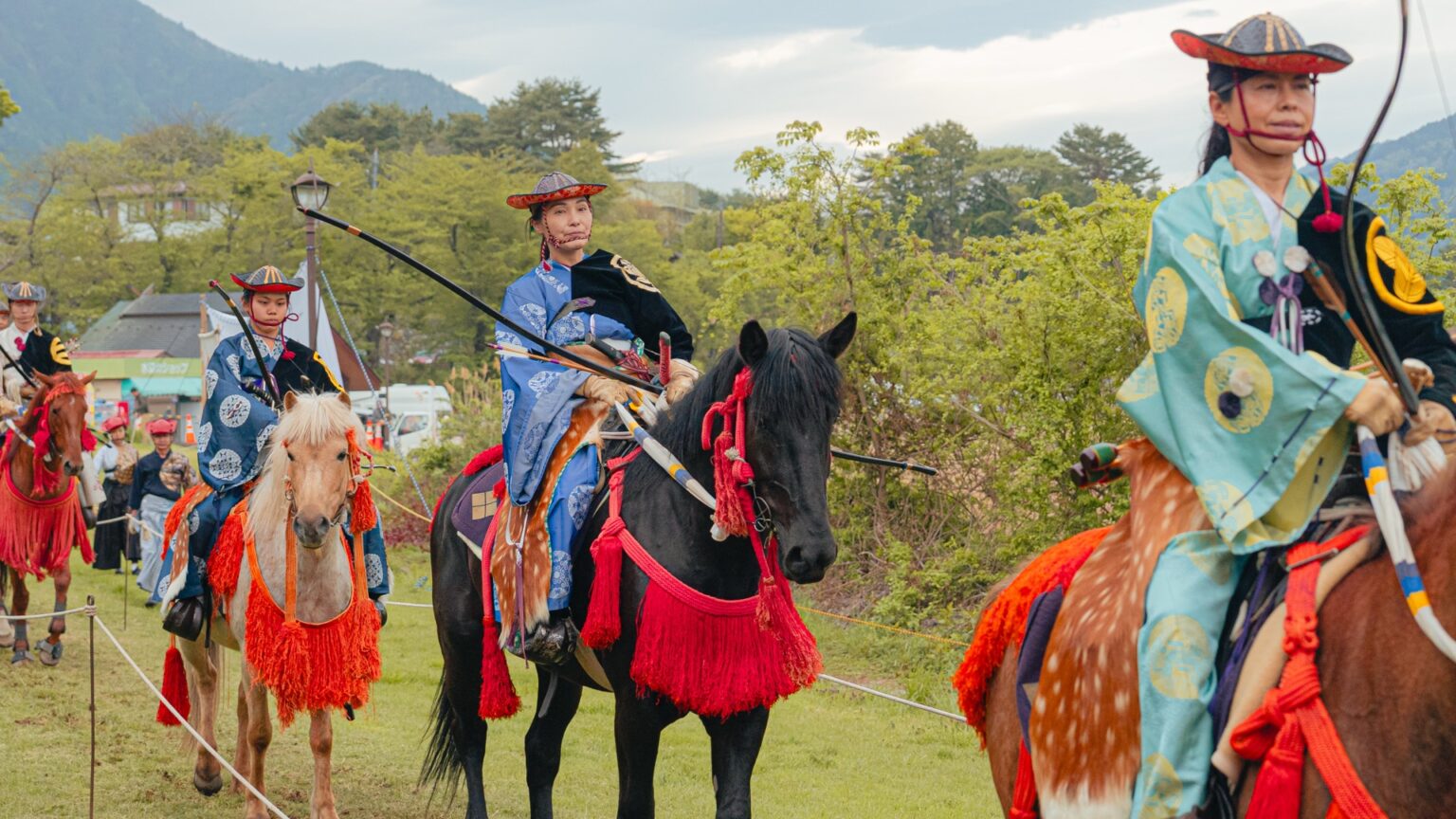
Each archer’s outfit is a different colour combination, and the variations correlate with seniority and family lineage within the Dai Nippon Kyuba-kai. The lead archers wore deep indigo and pale teal today; one rider wore a darker hitatare with a circular family crest at the chest. Listen for the announcer at the start of each pass — the archer’s name, their school, and their lineage are read out before the horse moves. The lineup below shows three of the eight riders, in three different colour traditions.
Where to stand next year
This is the part nobody tells you in the official festival page, and it’s the part I wanted in advance more than anything else. Three positions, ranked by what I learned today — what each one gets you, what each one costs you, and which one to pick if you only have one shot at it.
Best overall — the one to pick
Front rope, between target two and target three, lake side
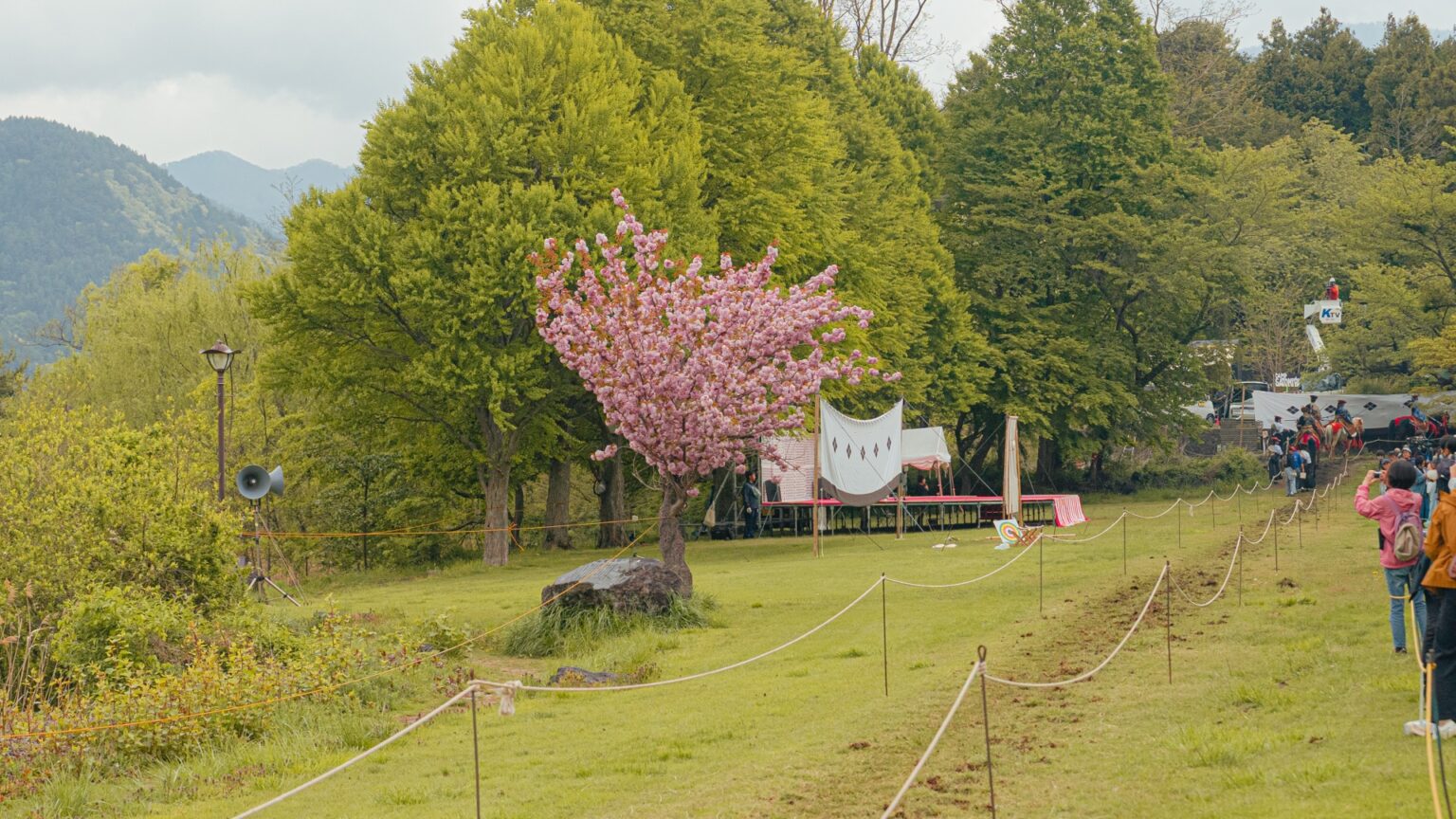
The horse passes you head-on then turns past the curtain, with the cherry tree behind on most runs and Lake Kawaguchiko visible in the wider compositions. From here you can hear hooves and the wood crack. This is the side where the kawarake fragments drift visibly when the third round lands cleanly.
Arrival: by 9:30 at the latest. By 12:00 it is two-deep along the rope.
+ Closest to the action+ Cherry tree backdrop+ Best view of kawarake hits− Crowded− Other photographers in frameBest for cleaner compositions
Behind the audience seating, slight elevation
If you came with a 200mm or longer lens, you do not need the front rope. The slight rise behind the audience benches gives you the same composition with no other photographers’ arms in your frame. Less elbow-fighting; fewer keepers per minute, but the keepers are cleaner.
Arrival: 10:30 is fine. The slight elevation never fills.
+ Cleaner foregrounds+ Less crowded+ Slight elevation− Needs a long lens− Fewer frames per archerBest for full-kit costume photography
The procession route between shrine and park (around 12:00)
Most photographers ignore this entirely — they stake the field at 9:30 and do not move. The procession from Fuji Omuro Sengen Shrine down to Shikkogo Park happens around noon, with the horses moving at walking pace through a residential street. You get unhurried portraits of every archer in their full kit, in the most photographable light of the day, with traditional homes and cherry blossom in the background. Locals along the route are extraordinarily generous about letting you stand on their stone walls.
Arrival: walk up the village road from Shikkogo Park around 11:45 and find a spot. Trade-off: you may miss the start of the runs if the procession runs late, so this is for second-time visitors who already have the action shots.
+ Costume detail+ Calm light+ Traditional home backdrop− May miss start of runs− Less "action"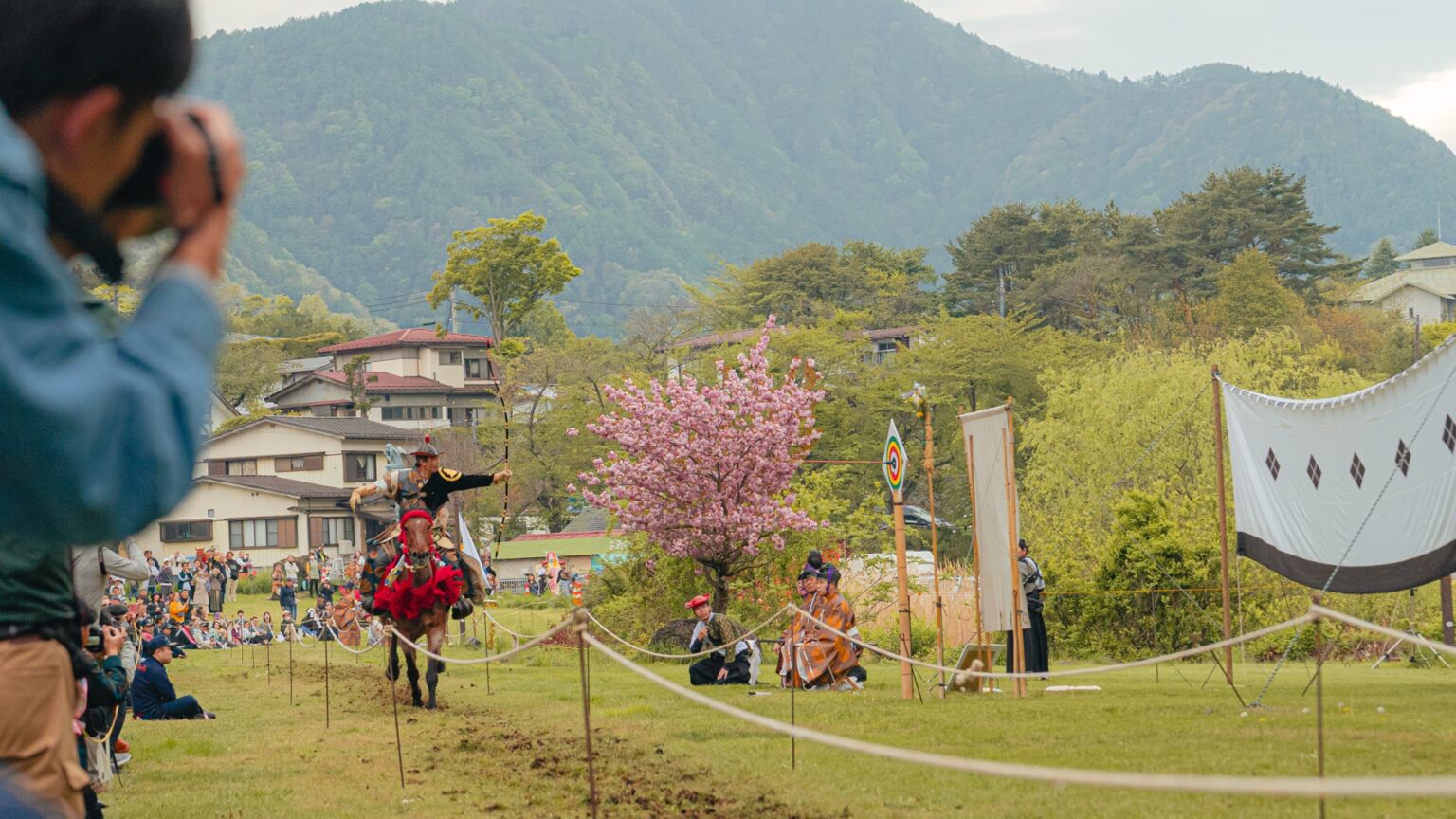
Practical: food, restrooms, what to bring
- Food: A few yatai festival stalls set up along the park entrance: yakisoba, taiyaki, beer. Cash only. The closest convenience store is a Lawson about 800m back toward the lake on Route 21. Pack a snack if you are staying for the full day.
- Restrooms: Public toilets at Shikkogo Park (around the entrance) and at Fuji Omuro Sengen Shrine. Both basic but clean.
- Weather: Late April at 833m above sea level is cool. Tokyo today was around 19°C; up here it was 12–15°C with wind. Bring a light jacket and waterproof layer — afternoon showers are not uncommon.
- Cash: ¥3,000–5,000 in ¥100 and ¥500 coins covers stalls, the shrine offering box, and any small gift from the village shops.
- Camera kit: 70–200mm minimum, 300mm ideal, fast continuous AF. The horses are at thirty kilometres an hour. 1/2000s shutter or faster freezes the gallop. If you only have a phone, the procession route (Position 3) is the better option.
Make a weekend of it
Sponsored placement
Stay overnight in Kawaguchiko or Fujiyoshida
A night in Kawaguchiko lets you make the morning shrine ceremony, the afternoon runs, and a relaxed Mt Fuji breakfast the day after. April 29 is the start of Golden Week so book early — rooms in Kawaguchiko proper are usually gone by mid-March. If Kawaguchiko is full, Fujiyoshida (one stop on the Fujikyu line) offers retro Showa-era diners and the Chureito Pagoda within walking distance.
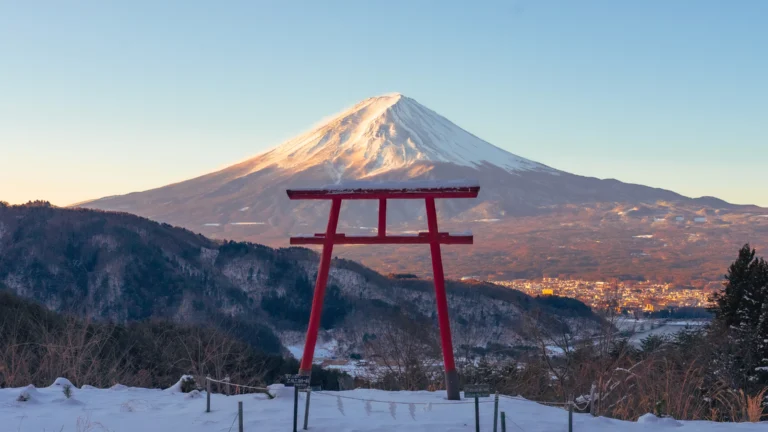
If you are up here on yabusame day and have time before or after, the closest pairing is the Tenku no Torii at Kawaguchi Asama Shrine (15 minutes by car), the Kawaguchiko walking trail’s hidden shidare cherry row, or a short drive to the thatched-roof village at Saiko Iyashi no Sato Nenba. April 29 in Kawaguchiko also lands on the same window as the wisteria peak in Ashikaga and other prefectures, if you are combining trips.
Next edition
Thursday, April 29, 2027
Showa Day next falls on a Thursday in 2027 — mid-week, with Golden Week starting the day after. Expect slightly smaller crowds than weekend years. Block the date now, book Kawaguchiko accommodation by January, and be at Position 1 by 9:30.
FAQ
Is photography allowed at the front rope?
Yes. The festival has been a magnet for photographers for decades and the official position is welcoming. The only restriction is you do not cross the rope barriers into the running zone or impede the procession route. Flash during the runs is discouraged but not formally prohibited.
How long does the actual archery last?
Roughly an hour. Each archer takes about thirty seconds per pass; with three rounds and six to eight archers each, plus rotations and announcer breaks, the full performance section is around sixty minutes. Add the morning shrine ceremony and the procession, and total commitment is four to five hours on-site.
What does it mean when the kawarake target shatters?
It means a clean hit on the third-round target. The kawarake mato is unglazed clay; an arrow striking it cleanly shatters the disc into fragments that fall slowly through the air, briefly visible against the field. Functionally a hit; aesthetically the most photographed moment of the day. The crowd cheer is the most reliable cue that one has just landed.
Who wins, and what does the winner get?
The archer with the most cumulative hits across all three rounds. The award is ceremonial — recognition by the Dai Nippon Kyuba-kai and the shrine. Winning here is a meaningful credit within the Takeda-ryu community; the archer’s school and lineage are publicly attached to the result. There is no public prize money.
Can children attend? Is it loud?
Safe and family-friendly. The horses are calm, rope barriers are well-staffed, and the wooden arrows are blunt. Children get a clear view of mounted samurai-era armor that they probably will not see anywhere else in Japan. The drum announcements when targets hit are the loudest moment — small children may want ear protection.
Is the event ever cancelled or postponed?
Heavy rain has historically forced postponement once or twice in the modern era. The official position is that light rain proceeds as scheduled. For poor forecasts in the days leading up to April 29, check with the Fujikawaguchiko Tourism Division (0555-72-3168) the day before.
What is the connection between Fuji Omuro Sengen Shrine and the Takeda clan?
Fuji Omuro Sengen Shrine is one of the older shrines associated with Mt Fuji worship, predating the larger Sengen Shrines further south. The Kai Genji clan — ancestors of the Takeda — held this shrine in particular regard, which is why the yabusame ritual was historically performed here rather than at the bigger Sengen sites. The current ritual is the surviving thread of that medieval relationship.
What other festivals are nearby on the same weekend?
April 29 falls at the start of Golden Week. Major events on the same week include Hakata Dontaku in Fukuoka, Hamamatsu Matsuri in Shizuoka, and the Tonami Tulip Fair. For the broader picture see our Japan in May 2026 calendar — April 29 effectively kicks off the Golden Week run.
Join travelers discovering Japan's hidden side
Weekly dispatches from off-the-beaten-path Japan — spots and stories you won't find in guidebooks.
No spam. Unsubscribe anytime.
Welcome aboard!
You're in. See you in your inbox soon.