
Japanese Food Culture
Natto is fermented soybeans — sticky, stringy, and the most argued-about breakfast in Japan. We eat roughly 40 packs per person a year here, a market that hit a record ¥301.8 billion in 2025, and in June 2026 a peer-reviewed study of 616 older adults in Kagoshima found that people who ate natto at least two to three times a week had lower odds of mild cognitive impairment and depressive symptoms. It costs about ¥110–150 for three servings at most supermarkets. The only real question is whether you can get past the first spoonful — and after feeding it to dozens of visiting friends, I can tell you the failure is almost never the taste. It’s the way people try it.
What is natto, actually?
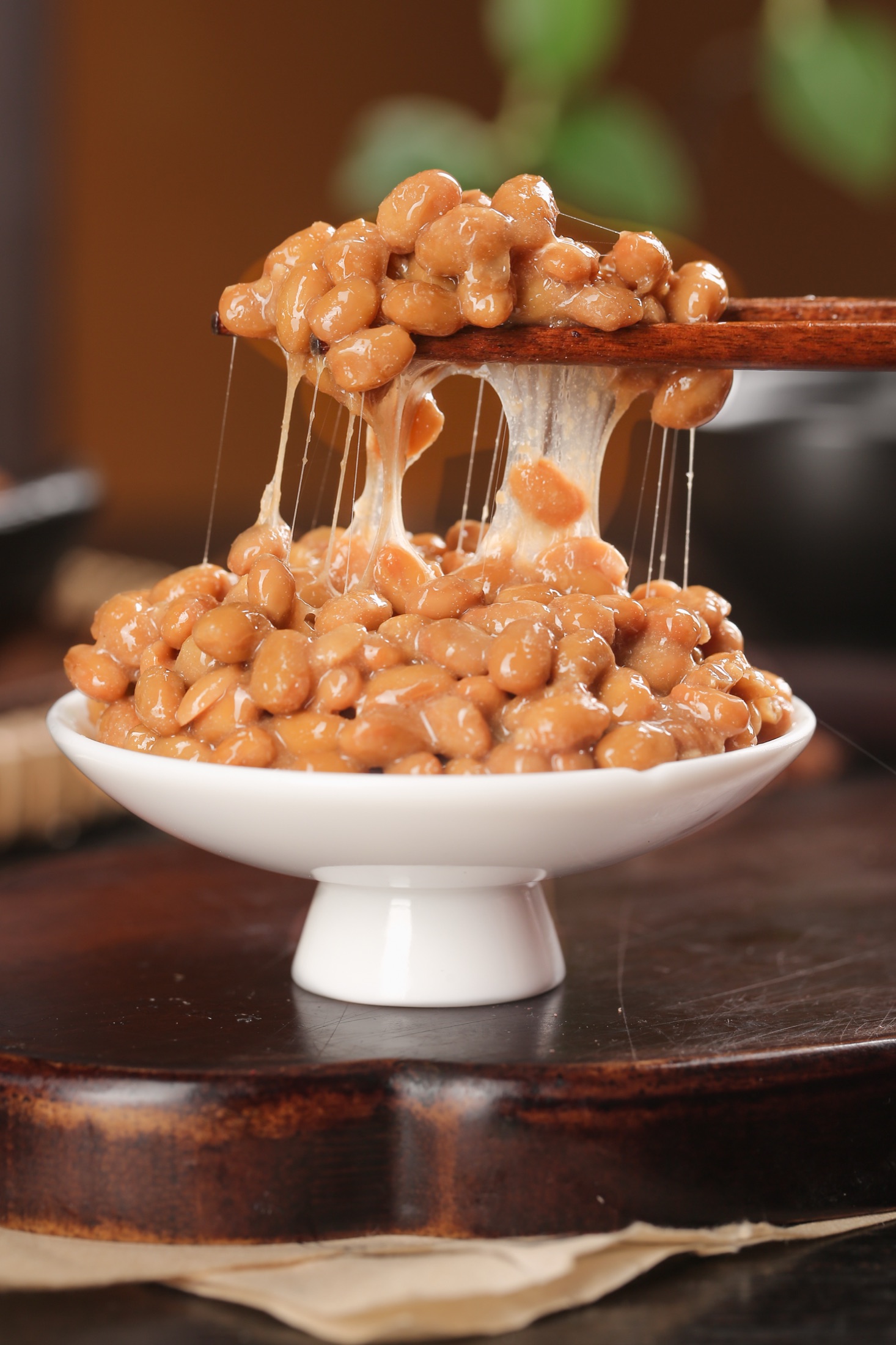
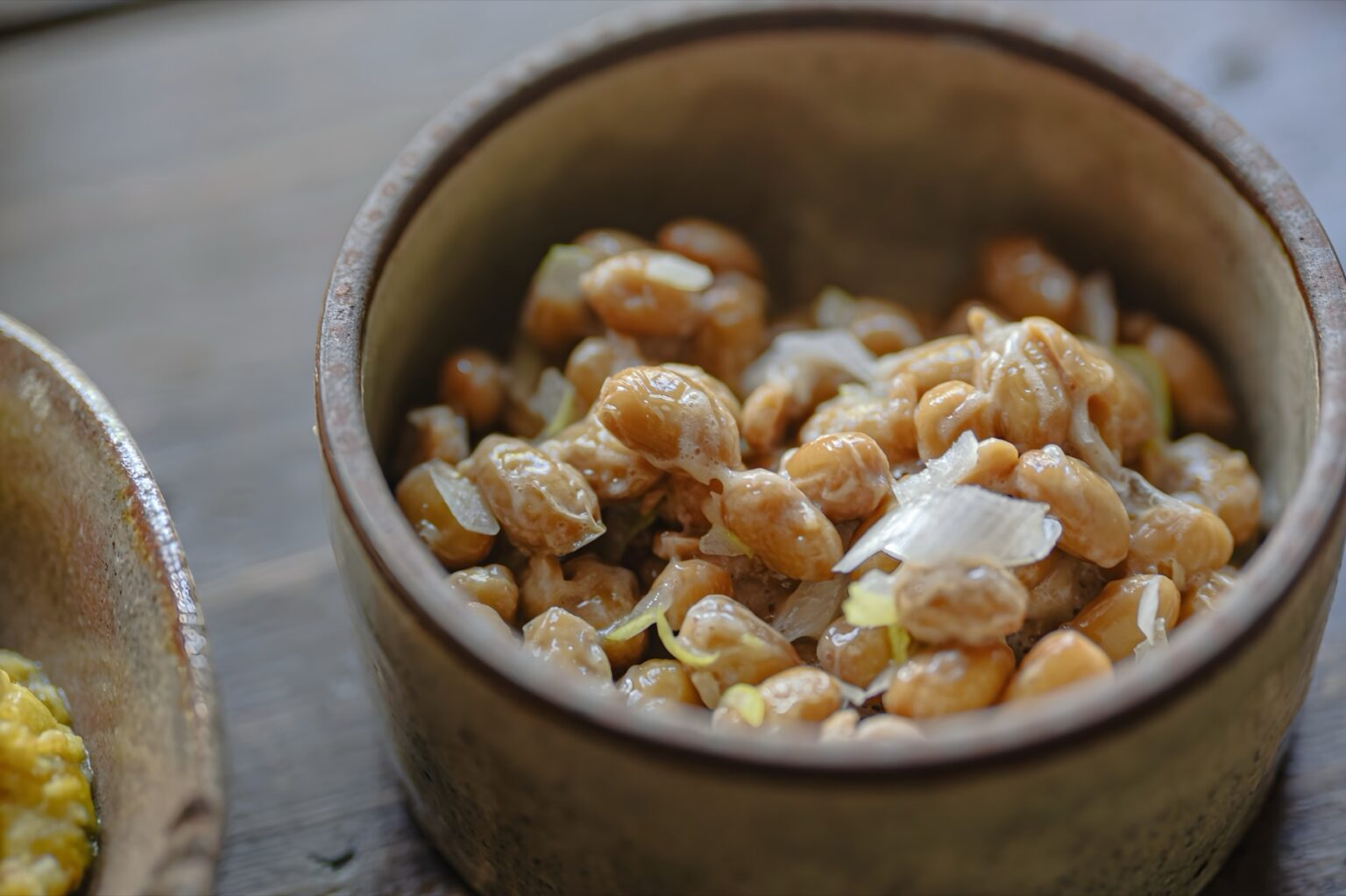
Natto is whole soybeans that have been steamed, inoculated with a single bacterium — Bacillus subtilis var. natto — and left to ferment for about a day. The bacteria digest the beans’ proteins and wrap every bean in the thing natto is famous for: a web of sticky strings that stretch from your chopsticks like mozzarella made of glue. Japanese calls the texture neba-neba, and you either learn to love it or you write angry reviews about it on the internet.
Nobody knows who invented it. The stories are genuinely good, though: one legend credits Prince Shotoku in the 600s, whose leftover boiled beans supposedly fermented in the straw he’d wrapped them in. Another says the samurai Minamoto no Yoshiie discovered it during a campaign in 1083, when boiled beans packed in straw bags fermented against his horses’ body heat — the city of Mito still claims that one happened in its Watari district. The Japan Natto Cooperative Society Federation is honest about all of this: many theories, no proof, but boiled beans meeting rice straw is the common thread, because wild natto bacteria live on rice straw. The first written record of the word “natto” appears in the Shin Sarugakuki, an eleventh-century text — though that likely referred to a saltier, non-sticky temple version rather than what’s in your supermarket pack.
The taste and the smell, honestly
The smell hits first. Chemists have mapped it precisely: pyrazines (the same family that makes roasted nuts and coffee smell toasty) plus short branched-chain fatty acids like isovaleric acid — which is, I’ll say it before you do, a component of aged cheese and gym socks. Over-fermented or badly stored natto also builds up ammonia, which is when even Japanese people wince. Fresh natto from a just-opened pack is far milder than natto horror stories suggest.
The taste underneath is gentler than the smell: nutty, savoury, faintly bitter, closer to a strong aged cheese crossed with miso than to anything rotten. The stickiness carries the flavour. That’s why texture, not taste, is the real hurdle — and why the preparation method below matters more than courage.
The new science — what the 2026 study actually found
Japan keeps producing research on its favourite fermented food, and the newest entry is worth knowing about precisely because it was done carefully. In a cross-sectional study published in Nutrition Research (June 2026) and announced on 27 August 2026 by Mizkan — one of Japan’s biggest natto makers, which co-ran the research with Kagoshima University — researchers analysed health-check data from 616 adults aged 65 and over in the city of Tarumizu, Kagoshima.
Among them, 21.6% screened positive for mild cognitive impairment and 20.3% for depressive symptoms. People with a natto habit of at least two to three times a week — 57% of the group — had lower odds of both: an adjusted odds ratio of 0.63 for mild cognitive impairment (95% CI 0.42–0.95) and 0.63 for depressive symptoms (95% CI 0.41–0.97), after accounting for age, sex, education, living alone, medications, physical frailty, other soy foods, and dietary variety.
That trail includes nattokinase, an enzyme first identified in natto. Its discovery story is a good one: in 1980, researcher Hiroyuki Sumi — then working on thrombolysis research in Chicago — noticed that natto’s sticky fraction dissolved artificial blood clots in a lab dish. He named the enzyme nattokinase and published it in the international journal Experientia in 1987. Research on it continues; so do the caveats about how much survives digestion. Natto is also one of the richest food sources of vitamin K2 (as MK-7), the form involved in bone and blood-vessel research, and 100 grams — about two packs — carries 16.5 g of protein and 6.7 g of fibre for 184 kcal, per Japan’s official food-composition tables.
How to actually eat it — my method for first-timers
I’ve served natto to a few dozen visiting friends over the years, and the difference between “this is surprisingly good” and a face like a smashed sandcastle comes down to preparation. Every pack comes with a sachet of tare (sweet soy-dashi sauce) and usually one of karashi mustard. Use them. Here’s the sequence:
1 · Stir first, sauce second
Open the pack and stir the bare beans vigorously — 20, 30 times, until they foam and turn paler. Stirring builds the creamy texture. Then add the tare and mustard and stir again. There is no magic number of stirs, and the nutrition doesn’t change — but the texture genuinely does.
2 · Warm rice, not hot
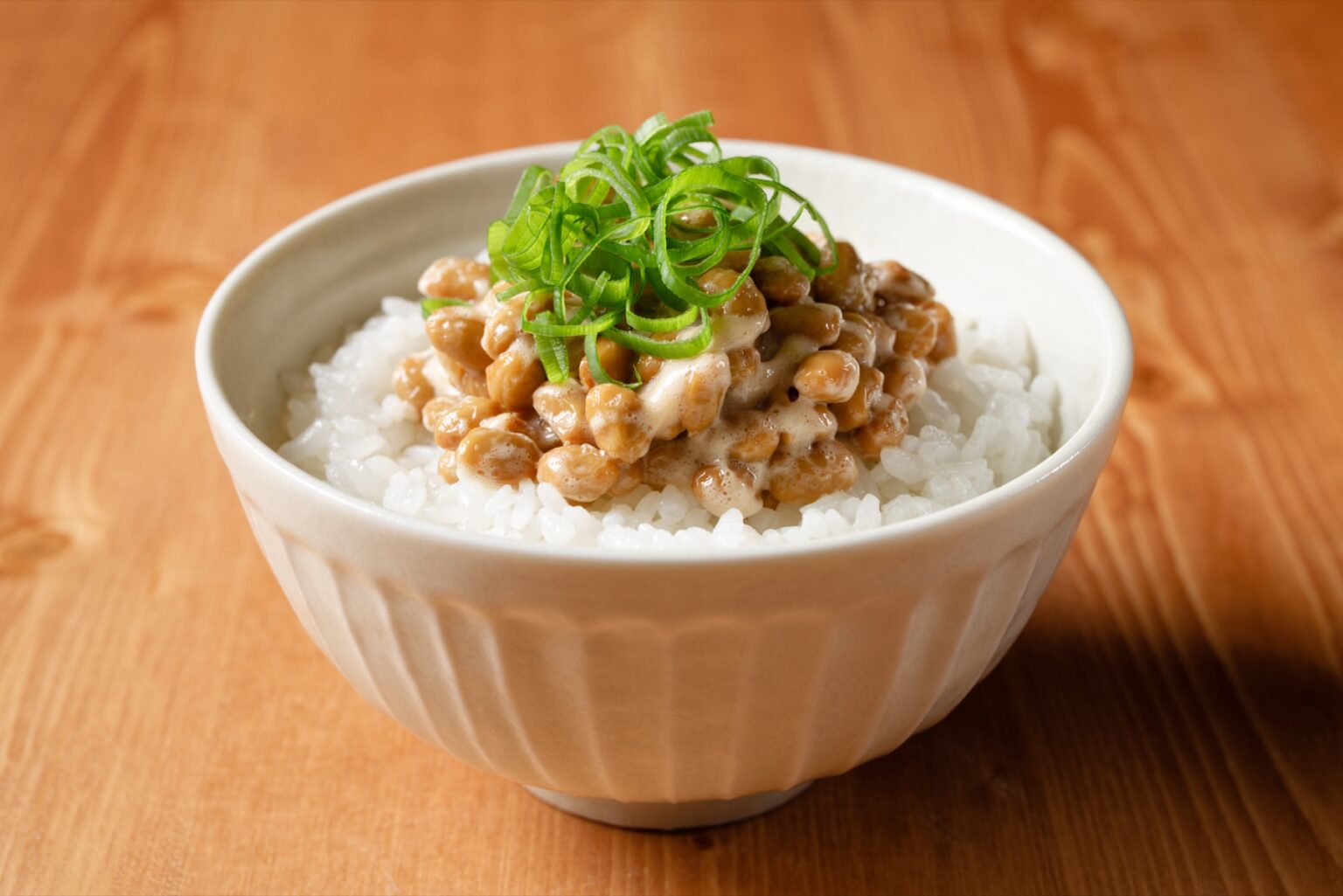
Spoon it over rice that has cooled for a minute or two. Steaming-hot rice amplifies the ammonia notes and kills the tare’s flavour — this is the single most common first-timer mistake.
3 · Build a flavour bridge
Top with sliced green onions, a raw or soft-boiled egg, kimchi, or a few drops of soy sauce and sesame oil. Egg mellows it; kimchi hides it almost completely. There’s no shame in training wheels.
4 · Small-grain first, hikiwari second
Most first-timers find small-grain (kotsubu) easiest — it mixes into rice naturally. Hikiwari, where beans are crushed and hulled before fermentation, is finer-textured and milder-smelling. Large-grain is for when you already like it.
Where to try it in Japan
You don’t need to hunt for natto; it finds you. The gentlest entry points, in rough order of commitment:
| Where | What you get | Cost |
|---|---|---|
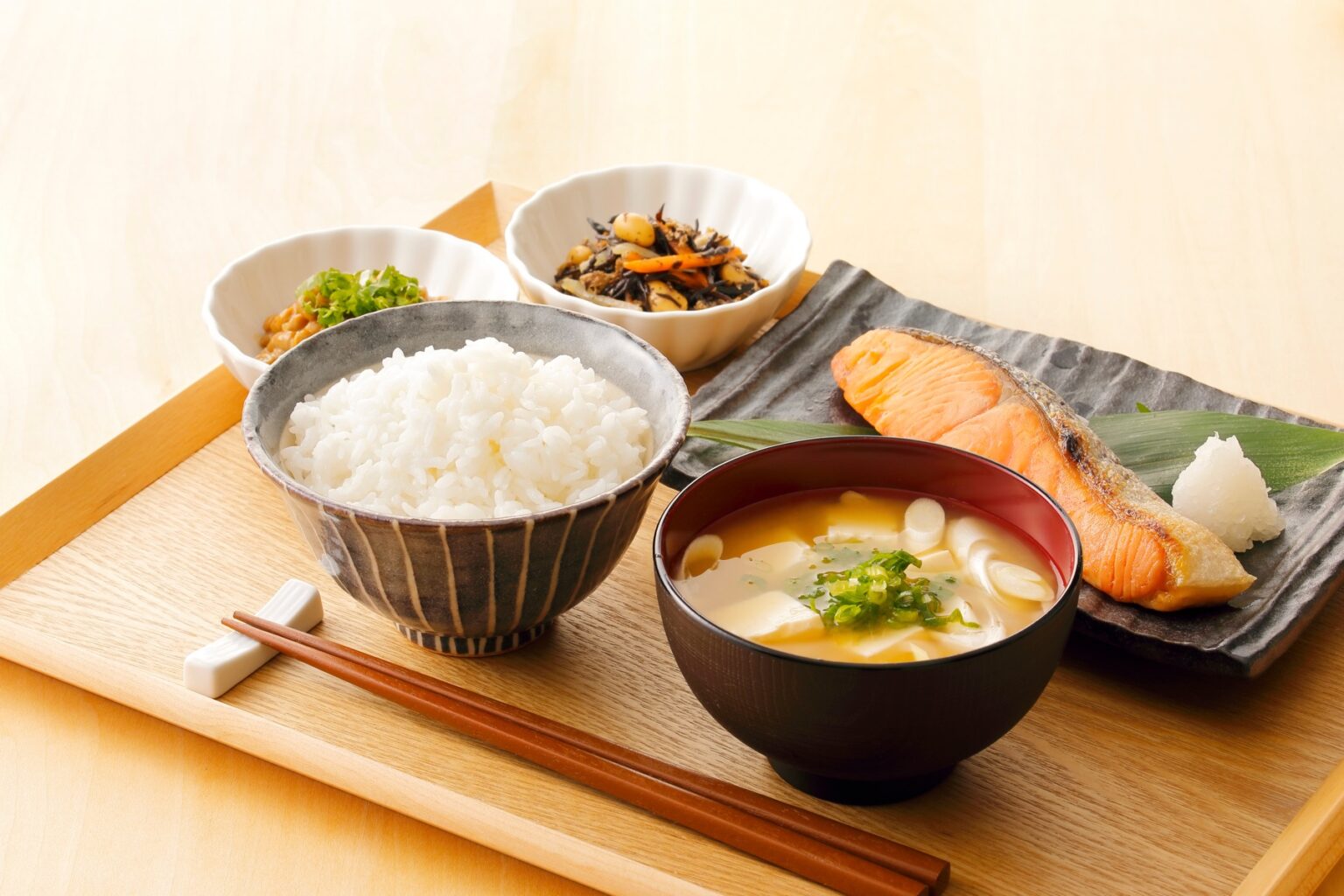
| Hotel breakfast buffet | Single-serve cup next to the rice and miso soup — near-standard at any hotel with a Japanese breakfast spread. Zero pressure: take one, try one spoonful, abandon ship freely. | Included |
| Supermarket / convenience store | A 3-pack of the national brands (Okame, Mizkan’s Kin no Tsubu). Supermarkets average ¥110–150 for three; recent price rises push premium lines toward ¥250+. | ~¥40–90 per serving |
| Yayoiken (chain diner) | A full natto breakfast set — natto, raw egg, nori, tofu, pickles, miso soup, refillable rice — for ¥440. Breakfast is served at selected branches only, so check the store list first. | ¥440 |
| Sendaiya, Tokyo | A natto specialist with an all-you-can-eat natto lunch set at its Ikejiri-Ohashi shop (also in Shimokitazawa). Check their site before a special trip — hours shift. | Lunch set |
| Mito, Ibaraki | The spiritual capital — details below. | Day trip |
If you’re building a first Japan itinerary around food, natto is the cheapest food adventure the country offers — the whole experiment costs less than a vending-machine coffee. I’d file it alongside the other breakfast rites in my ryokan stay guide and the public-bath etiquette in my sento guide: small, cheap, and more Japan than any ticketed attraction. Food-focused travellers can fold it into a market or breakfast tour — Klook and GetYourGuide both run early-morning food walks in Tokyo and Osaka where natto often makes an appearance.
Mito: the natto capital that isn’t No. 1
Mito, the capital of Ibaraki about 80 minutes from Tokyo by limited express, is natto’s spiritual home — and the story of how is pure Meiji-era hustle. When the railway from Oyama reached Mito in 1889, a local named Sasanuma Seizaemon began selling his straw-wrapped small-bean natto to train passengers as a station souvenir. Travellers carried “Mito natto” across Japan, and the brand stuck. His company, Tengu Natto, is still going.
Here’s the twist I enjoy telling visitors: Mito is not actually Japan’s top natto consumer. In the government’s household spending survey (2023–25 average), Mito ranks fourth, behind Fukushima, Morioka and Akita — Fukushima City has taken the crown two years running. Mito has the shrine; the Tohoku cities eat the sacrament. Meanwhile the bottom of that same table is a west-Japan procession — Wakayama households spend about a third of what Fukushima’s do — so the old stereotype that western Japan resists natto has real numbers behind it, even if “Kansai people hate natto” is an exaggeration (a 2021 survey put nationwide dislike at only 13%).
Not all natto is the same: a field guide to Japan’s natto map
One word covers several different foods, and for a traveller the split that matters is two broad fermentation traditions. Everything in this article so far is itohiki natto — the sticky kind, fermented with natto bacteria. But Kyoto’s Daitokuji temple district and the city of Kyotanabe sell tera natto (temple natto): black, salty, firm beans aged with koji mold and salt for months — no strings at all, and often compared with Chinese douchi. Hamamatsu’s hamanatto belongs to the same non-sticky family. Within the sticky family, the differences are shape and processing: whole beans in every size, hikiwari (crushed and hulled before fermentation — the style most closely associated with Akita), and second-stage products like Yonezawa’s yukiwari natto — hikiwari natto blended with rice koji and salt, then matured again.
| What it’s called | What it actually is | Where it lives |
|---|---|---|
| Itohiki natto — the sticky family | The stringy standard: steamed soybeans fermented with natto bacteria | Nationwide; Mito made it famous |
| Hikiwari — a cut, not a family | Sticky-family beans hulled and split before fermentation, for a finer texture | Most closely tied to Akita’s food culture |
| Yukiwari — a second aging | Hikiwari natto blended with rice koji and salt, then matured again | Yonezawa, Yamagata |
| Temple natto & hamanatto — the salt-koji family | Non-sticky: beans aged with koji and salt into dark, miso-salty nuggets | Daitokuji and Ikkyuji in Kyoto; Hamamatsu’s hamanatto is the same broad tradition |
The regional map has its own surprises. Fukushima City — not Mito — has led the government household survey of natto spending (two-or-more-person households, prefectural capitals and designated cities) for two years running. Yokote in Akita has its own “birthplace of natto” monument — put up by a local natto maker for the 900th anniversary of the Later Three-Year War and tied to the same Minamoto no Yoshiie story Mito tells — plus a winter tradition of natto-jiru, natto miso soup. And Kumamoto is western Japan’s outlier: the only western city in the survey’s top 20 (12th on the 2023–25 average), in a region that otherwise fills the bottom of the table. I’m mapping this territory guide by guide: the Mito natto day trip is first, with Kyoto’s temple natto and Yokote’s origin legend to follow. Both are now up: Yokote’s birthplace stone and natto-jiru, and Kyoto’s temple natto at Daitokuji and Ikkyuji.
Taking natto home (mostly: don’t)
Fresh natto is a living fermented food that wants refrigeration, which makes it a poor flight companion and an awkward conversation at customs. Food must be declared on arrival in most countries — the US requires declaring all food with the inspector making the final call, Australia treats undeclared food severely, and the EU’s strictest bans target meat and dairy rather than beans — but rules vary by destination, so check official guidance before you fly; the deciding vote always belongs to the officer in front of you. The practical answers: buy dried natto (hoshi natto) as your souvenir — shelf-stable, legal-friendly, and genuinely good as a beer snack — or check whether your home country has a local producer or Japanese grocer; many do. If you fall properly in love, natto freezes well for a month or more, which is how expat Japanese survive.
Frequently asked questions
What does natto taste like?
Milder than it smells: nutty, savoury and faintly bitter, somewhere between aged cheese and miso, wrapped in a slippery, sticky texture. The smell (pyrazines plus the same fatty acids found in aged cheese) is the challenge; the taste rarely is. Fresh, well-stirred, properly sauced natto is a different food from a plain cold pack eaten on a dare.
Is natto safe to eat?
For most people, yes — the beans are steamed, then fermented, and the fermentation itself suppresses spoilage bacteria; it’s a staple eaten daily by millions. Skip it if you have a soy allergy. The one hard exception is medical: people taking the blood thinner warfarin are told by Japan’s pharmaceutical regulator to avoid natto entirely because its vitamin K works against the drug. If you’re on warfarin, skip it and consult your doctor.
Is natto vegan?
The beans are — just soybeans and bacteria. The tare sauce sachet usually isn’t, since most contain fish-based dashi (bonito). Vegans should discard the sachet and season with soy sauce, mustard and green onions instead. Check labels on flavoured varieties.
Can you eat natto every day?
Plenty of people do, though the national average works out to roughly 40 packs per person a year — heavy-consuming cities like Fukushima and Morioka go far beyond it. For healthy adults there’s no established problem with a daily pack; a pack is about 90 kcal with 7 g of protein. The warfarin exception above is the one absolute rule.
Why do people stir natto so much? Is 50 times the magic number?
Stirring whips air into the sticky coating and turns it foamy and creamy — the texture change is real, the magic numbers aren’t. Mizkan’s own FAQ confirms nutrition doesn’t change however much you stir. The gourmet Rosanjin famously preached thorough stirring before saucing (he never specified a count), and a toy company once built a natto-stirring machine calibrated to 424 turns. Stir until it foams; that’s the whole secret.
Which natto should a beginner buy?
A small-grain (kotsubu) 3-pack from any supermarket — the beans mix into rice most naturally. If smell is your worry, hikiwari (hulled and crushed before fermentation) is finer and milder, and low-odour varieties literally engineered for the smell-averse, like Mizkan’s “Niowanatto”, exist. Large-grain is the connoisseur’s cut; work up to it.
Natto is the cheapest gamble in Japanese food: ¥150, one honest attempt, done properly with the method above. Worst case, you have a story and a photo of the strings. Best case, you join the millions here who quietly eat it several times a week — a habit interesting enough that Japan’s researchers keep going back to it. Either way, try it in Japan, where it’s freshest and the rice is right. If you’re still assembling the trip itself, start with my first-trip guide, use the hotel-booking guide to find a place with a proper Japanese breakfast — most listings on Booking.com and Agoda state whether breakfast is Japanese, Western or buffet — and if your first natto goes well, my onigiri guide covers the next rung on Japan’s rice-based breakfast ladder.
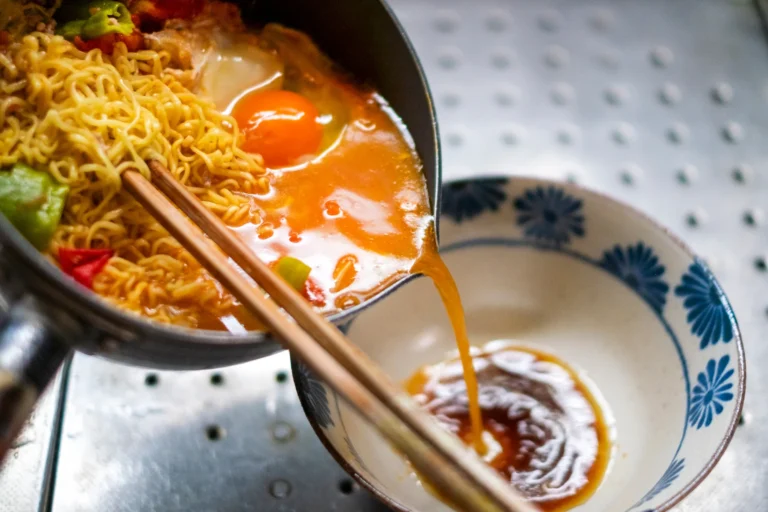
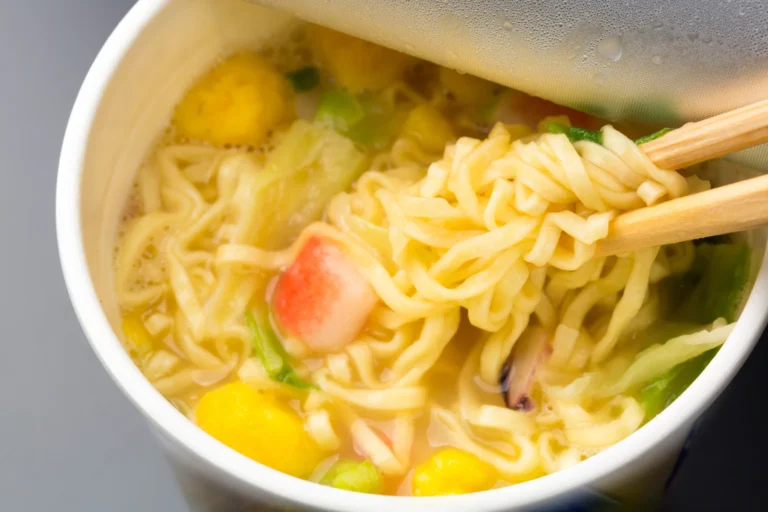
And if you want the other end of Japanese everyday food — the aisle nobody writes about seriously — I ranked Japan’s ten best cup noodles against every maker’s official ingredient list, including which ones contain pork.
Join travelers discovering Japan's hidden side
Weekly dispatches from off-the-beaten-path Japan — spots and stories you won't find in guidebooks.
No spam. Unsubscribe anytime.
Welcome aboard!
You're in. See you in your inbox soon.