Japan · Food & Drink · Supermarket Culture
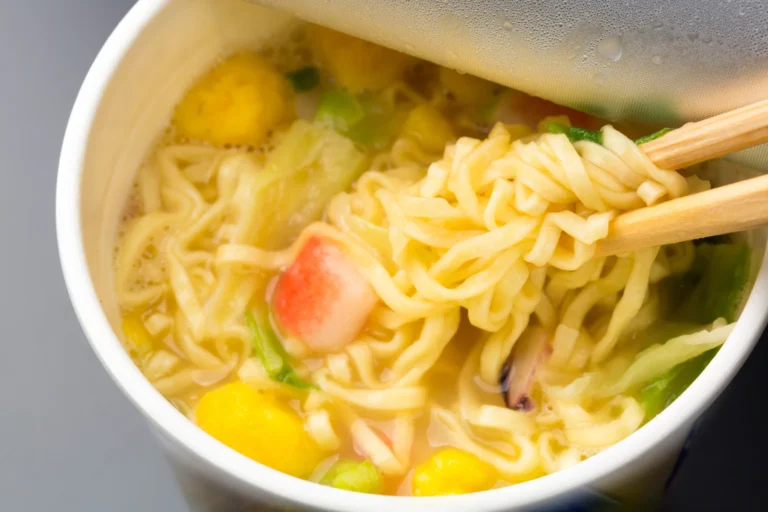
A serving of Japanese bag ramen costs ¥136 to ¥146 at the maker’s suggested price, while a single cup of the same brand costs ¥236 to ¥314 — and the bag usually holds more noodle. The difference is not really the packaging. It is that a cup arrives as a finished meal and a bag arrives as an ingredient.
I wrote about Japan’s best cup noodles a couple of days ago, and the question that came back was the obvious one: what about the bags? They sit on the same supermarket shelf, they cost less, and almost nothing in English explains what you are actually choosing between.
So I did the same work again from the other side. Every figure below comes from a maker’s own product page rather than a listicle, and where the makers contradict a popular belief — including one about bag noodles being the healthier option — I have said so.
What the makers themselves say the difference is
Nissin answers this question directly on its own Raoh brand site, which saves everyone a lot of guessing. Asked 「日清ラ王のカップ麺と袋麺の違いは何ですか?」 — what is the difference between the cup and the bag — the company’s published answer is that the cup type’s appeal is that you just pour hot water for an easy, authentic taste, while the bag type is cooked in a pot, giving a texture closer to fresh noodles and a richer soup. It recommends the cup for convenience and the bag for the purist.
The industry body puts the same thing more usefully. Writing about the 1971 launch of Cup Noodle, the Japan Convenience Foods Industry Association notes that the container is not merely polystyrene: it is the packaging, the cooking vessel and the tableware, all at once.
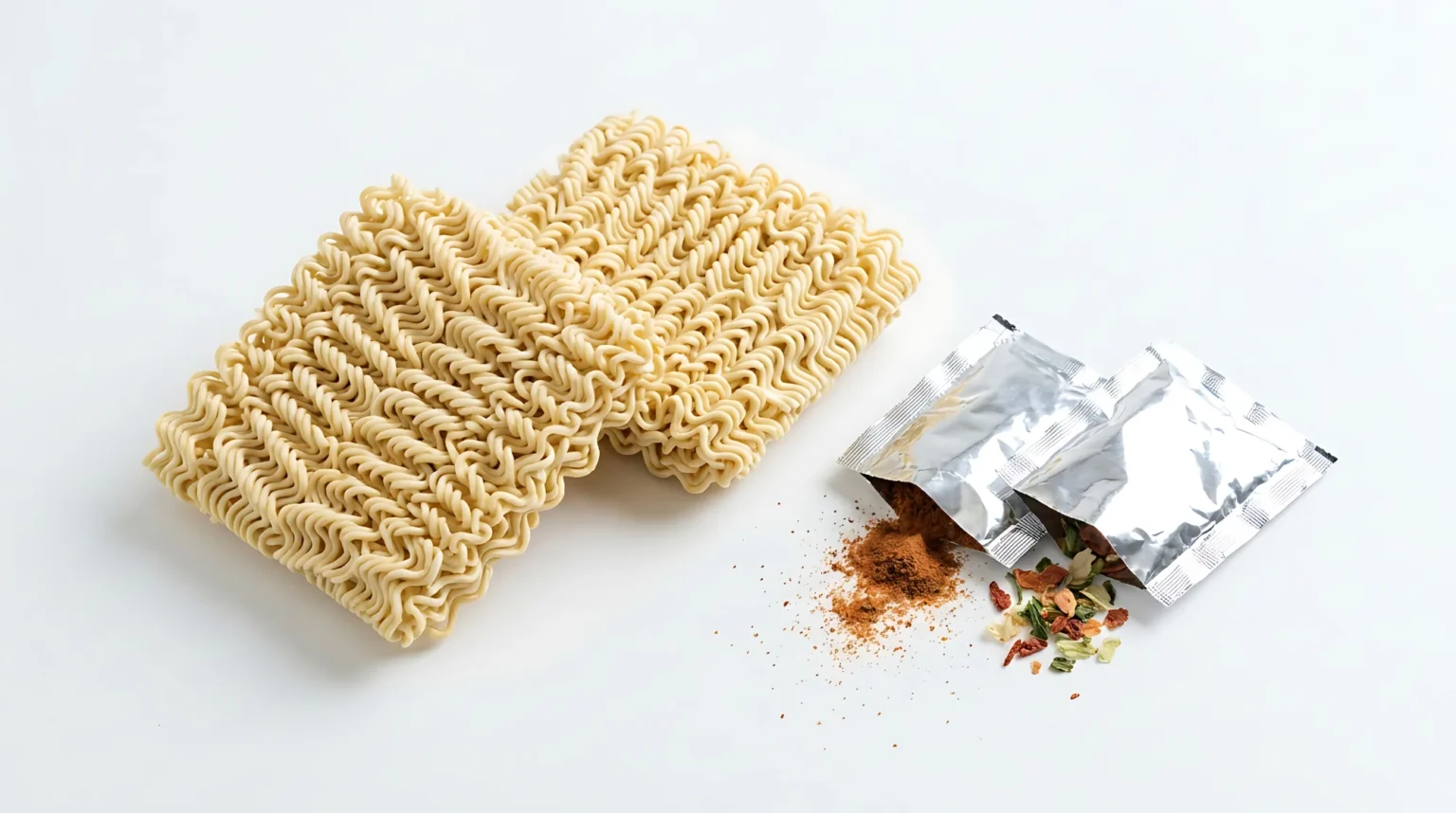
A cup includes its own cooking vessel and its own bowl. That one fact explains every other difference on this page.
This is also a formal classification rather than marketing. The same association sorts all Japanese instant noodles by packaging into exactly two categories, 袋めん and カップめん — bag and cup. There is no third option.
The four differences that actually matter
You need a pot
The single hard constraint. A bag noodle is simmered, not steeped, so a hotel room with only a kettle rules it out — with one exception, Chicken Ramen, covered below.
It costs about half
At suggested retail prices a bag serving is ¥136 to ¥146 against ¥236 to ¥314 for a cup of the same brand. Over a five-pack that gap is real money.
You usually get more noodle
Sapporo Ichiban puts 90–92g of noodle in a bag serving and 63g in its cup. Charumera is 90g against 55g. The gap is not small.
You control the result
Water volume, boiling time, an egg, vegetables, less soup powder if you want less salt. A cup gives you one lever: how long you wait.
What does a serving actually cost?
Below are the makers’ own suggested retail prices, before tax, for four brands that sell the same name in both formats. These are published prices, not shop prices — Japanese supermarkets routinely sell below them.
| Brand | Bag pack | Per serving | Cup | Noodle: bag vs cup |
|---|---|---|---|---|
| Sapporo Ichiban shoyu | ¥680 / 5 servings | ¥136 | ¥236 | 92g vs 63g |
| Maruchan Seimen shoyu | ¥680 / 5 servings | ¥136 | ¥298 | 80g vs 75g |
| Nissin Raoh shoyu | ¥408 / 3 servings | ¥136 | ¥314 | 73g vs 75g |
| Myojo Charumera shoyu | ¥730 / 5 servings | ¥146 | ¥252 | 90g vs 55g |
Three of the four land on exactly ¥136 a serving, which is not a coincidence so much as a price point the industry has settled on. The cup costs between 1.7 and 2.3 times as much.
Raoh breaks the “bags hold more noodle” rule, so I am not going to pretend otherwise. Nissin’s Raoh bag carries 219g of noodle across three servings, while the Raoh cup carries 75g in one — so the cup actually holds slightly more, and more calories and salt with it. The rule holds comfortably for Sapporo Ichiban, Maruchan Seimen and Charumera. It does not hold everywhere.
Is the five-pack cheaper than five singles?
Not at the maker’s price, no. This surprised me enough that I checked it across three companies.
A single bag of Sapporo Ichiban shoyu has a suggested price of ¥136. The five-pack is ¥680. Five times ¥136 is ¥680. Maruchan Seimen is identical: ¥136 single, ¥680 for five. Nissin’s Chicken Ramen is ¥146 single and ¥730 for five. In every case the multipack saves you precisely nothing at the recommended price.
The saving people feel at the till is real, but it comes from the retailer, not the manufacturer. Supermarkets discount five-packs hard because they move volume; a single bag rarely gets the same treatment. It is a small thing, but it changes where you should shop rather than what you should buy.
Are bag noodles healthier than cup noodles?
No — and the thing that decides it is not the packaging at all. It is whether the noodle was fried.
The industry association publishes the mechanism plainly. Fried noodles are passed through oil at 140–160°C for one to two minutes, which drops their moisture from 30–40% to 3–6%. Non-fried noodles go through a hot-air dryer at around 80°C for thirty minutes or more. The consequence, in the association’s own figures: a fried noodle carries around 20g of fat, a non-fried one 4–6g, roughly a quarter.
The cleanest way to see it is to compare two bags rather than a bag against a cup. Maruchan Seimen’s shoyu bag is non-fried and carries 4.6g of fat and 333 kcal a serving. Sapporo Ichiban’s shoyu bag is fried and carries 18.0g and 454 kcal. Same format, same shelf, same five-pack price — and roughly four times the fat, exactly as the association’s figures predict.
Comparing a brand’s bag against its own cup muddies this, because portion size and soup oil move at the same time. Sapporo Ichiban’s fried bag has more fat than its cup largely because the serving is bigger: 100g against 71–75g. And Maruchan Seimen is non-fried in both formats, so the fat gap between its bag and its cup comes from the soup, not the noodle.
How to tell before you buy. Read the first word of the ingredients block, headed 原材料名. If it says 油揚げめん the noodle was fried. If it says just めん, it was not. That is the same two-character test that separates the premium tier of the cup noodle aisle, and it works identically on bags. Salt is a separate question and has to be checked product by product — Raoh’s bag is lower in salt than its cup, and so is Maruchan Seimen’s, so the bigger portion does not automatically mean more.
What Japan actually voted for
Netlab, the research arm of ITmedia, surveyed 1,377 men and women nationwide on 22 July 2026 and published the result on 31 August. Twenty-two brands received votes.
| Rank | Brand | Maker | Share |
|---|---|---|---|
| 1 | Nissin Raoh (日清ラ王) | Nissin | 12.8% |
| 2 | Sapporo Ichiban (サッポロ一番) | Sanyo Foods | 10.9% |
| 3 | Maruchan Seimen (マルちゃん正麺) | Toyo Suisan | 10.7% |
| 4 | Charumera (チャルメラ) | Myojo | 7.4% |
| 5 | Demae Iccho (出前一丁) | Nissin | 5.8% |
| 6 | Chukazanmai (中華三昧) | Myojo | 5.7% |
| 7 | Chicken Ramen (チキンラーメン) | Nissin | 5.5% |
| 8 | Mukashi-nagara no Chuka Soba | Toyo Suisan | 4.1% |
| 9 | Umakacchan (うまかっちゃん) | House Foods | 3.9% |
| 10 | Wantanmen (ワンタンメン) | Acecook | 3.4% |
Do not read this against the cup noodle ranking. The two surveys are not comparable. This one polled 1,377 men and women nationwide with no age restriction stated; the cup noodle survey polled 177 people in their thirties and younger. Raoh topping the bag list and finishing joint second on the cup list tells you the brand is well liked, and nothing more precise than that.
The brands, and what is actually in them
Cup Noodle, case of 20
The cup ranking’s winner if you want the icon rather than the value. Rigid, so pack it in the middle.
Check it on Amazon Japan
Sapporo Ichiban shio, five-packs
Japan’s second-favourite bag noodle and the most generous portion of the mainstream brands, at 91g of noodle a serving.
Check it on Amazon Japan
Chicken Ramen, five-packs
The 1958 original, and the only one on this page you can make with a kettle. The obvious choice if you are staying in hotels.
Check it on Amazon Japan
Nissin Raoh — the one that is not what the internet says
Raoh won this ranking, and its history is routinely reported wrongly, including in the article that prompted this piece. The Raoh cup launched in 1992. A first-generation Raoh bag line did exist from 1997. But the bag noodle you can buy today is a 2012 product: Nissin launched it on 27 August 2012, initially only in Kanto, Koshinetsu and Shizuoka, and took it nationwide on 25 March 2013.
It is non-fried, built from a three-layer straight noodle, and among the big mainstream brands it is the one sold in threes rather than fives — Nissin switched from five-packs to three-packs in March 2024, saying smaller households found them easier to finish. The current line runs to six flavours at ¥408 before tax.
A documented case of shrinkflation, in Nissin’s own words. When Nissin raised suggested prices across its range from April 2026 shipments, Raoh bag noodles were explicitly excluded from the increase. They appear instead on the content-reduction list: the same ¥408 three-pack went from 240g of noodle to 219g, so a serving fell from 80g to 73g. The price held and the portion shrank.
Sapporo Ichiban — the one Japan has eaten longest
Second place, and the oldest line here: shoyu from January 1966, miso from September 1968, shio from September 1971. All three are fried noodles, all three are ¥680 for a five-pack, and each serving carries 90–92g of noodle, which is the most generous of the mainstream bags. The shoyu was reformulated as recently as April 2026.
Maruchan Seimen — the non-fried one
Launched on 7 November 2011 and the reason the whole category changed. Its noodles are dried rather than fried, using a patented process, which is why a serving carries 4.6g of fat against roughly four times that in a fried bag. ¥680 for five servings of 105g each, with 80g of that being noodle.
Chicken Ramen — the one you can make without a pot
Seventh in the ranking, first in history: this was the world’s first instant ramen, launched on 25 August 1958. It is also the exception that matters most to a traveller, because Nissin officially supports making it with hot water alone — the product page states you can pour hot water and wait three minutes, or simmer it for one.
That works because the seasoning is baked into the noodle rather than supplied as a sachet. Its listed contents are 85g, of which 85g is noodle. There is nothing else in the bag.
If you are in a hotel room, this is the only bag noodle that works. No maker publishes a kettle-only method for Maruchan Seimen, Sapporo Ichiban, Raoh or Charumera, and none publishes a microwave method for any bag ramen at all. Chicken Ramen is officially sanctioned for hot water at 400ml per serving. Everything else needs a hob.
Umakacchan — the one you cannot buy in Tokyo
Ninth in a national ranking despite not being sold nationally. House Foods lists its sales area as Kinki, Chugoku-Shikoku, Kyushu and Okinawa — so a tonkotsu bag noodle that nearly four percent of the country named as its favourite is simply absent from Tokyo shelves. It is ¥680 for five servings of 94g each, of which 80g is noodle.
If you are travelling in Kyushu, this is the packet to bring home. It is the bag-noodle equivalent of the regional cup noodle I flagged in the cup noodle ranking, and the same rule applies: buy it where it lives.
Marutai — the one that is not a block
Not in the top ten, but worth seeking out because it does not look like instant ramen at all. Marutai of Fukuoka has made straight stick noodles since 1959 — dried bars rather than a curly brick — and its standard pack holds two servings, not five. The noodles are neither fried nor steamed, which puts fat at 2.6g a serving, the lowest figure on this page.
How to cook one properly
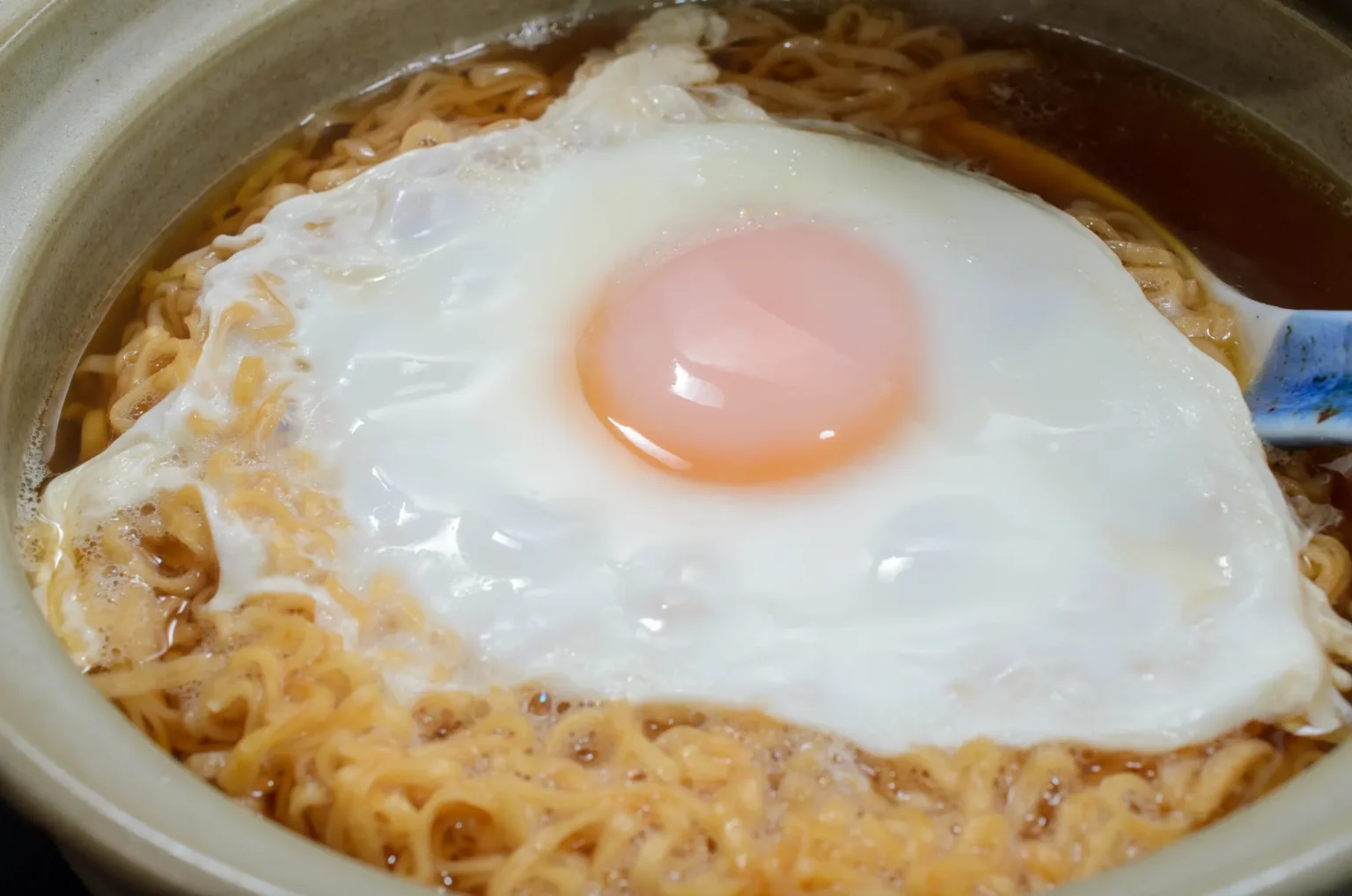
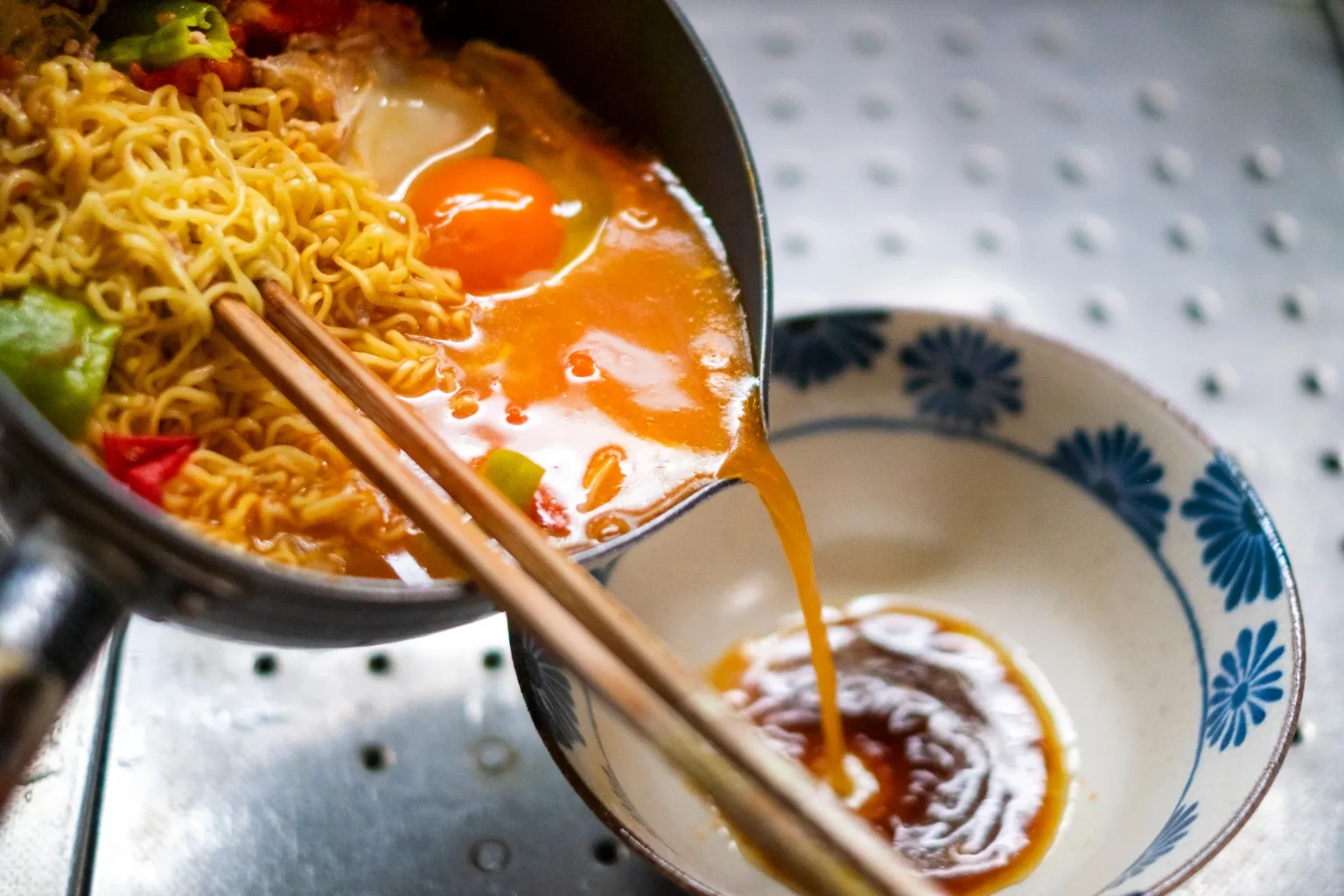
The one rule that catches everyone: you do not drain a Japanese bag ramen. The water you boil the noodles in becomes the soup. Draining it and adding fresh water gives you a thin, disappointing bowl, and it is the single most common mistake I see people make.
Follow the packet
Some makers publish recipes online, but water volume and timing differ by product and change at each renewal. The numbers on the back of the pack are the ones that match what you are holding.
Know where the soup goes
It varies. Toyo Suisan’s own recipe puts Maruchan Seimen’s liquid sachet in the bowl and pours the cooking water over it. Sanyo Foods puts Sapporo Ichiban’s soup powder straight into the pot.
Leave it alone at first
Toyo Suisan’s published tip for Maruchan Seimen is to boil the noodles for the first minute without stirring, then turn them once. It makes a genuine difference to texture.
Add the egg late
Sanyo Foods’ own recipe for Sapporo Ichiban shoyu cracks the eggs in about a minute into a two-and-a-half minute boil. Any earlier and the yolk sets.
One hazard the bag does not have. Toyo Suisan warns on its customer FAQ that MCT oil, perilla oil, flaxseed oil, coconut oil and other medium-chain fatty acid oils should not be added to expanded-polystyrene cups, because they can degrade the inner surface and in some cases cause hot water to leak. A metal pot has no such problem, which is worth knowing if you like customising your ramen with oils.
Where do you actually buy bag noodles?
At a supermarket or a drugstore. A convenience store is not a reliable place to look, which is the part that trips visitors up, because the konbini is the shop they know.
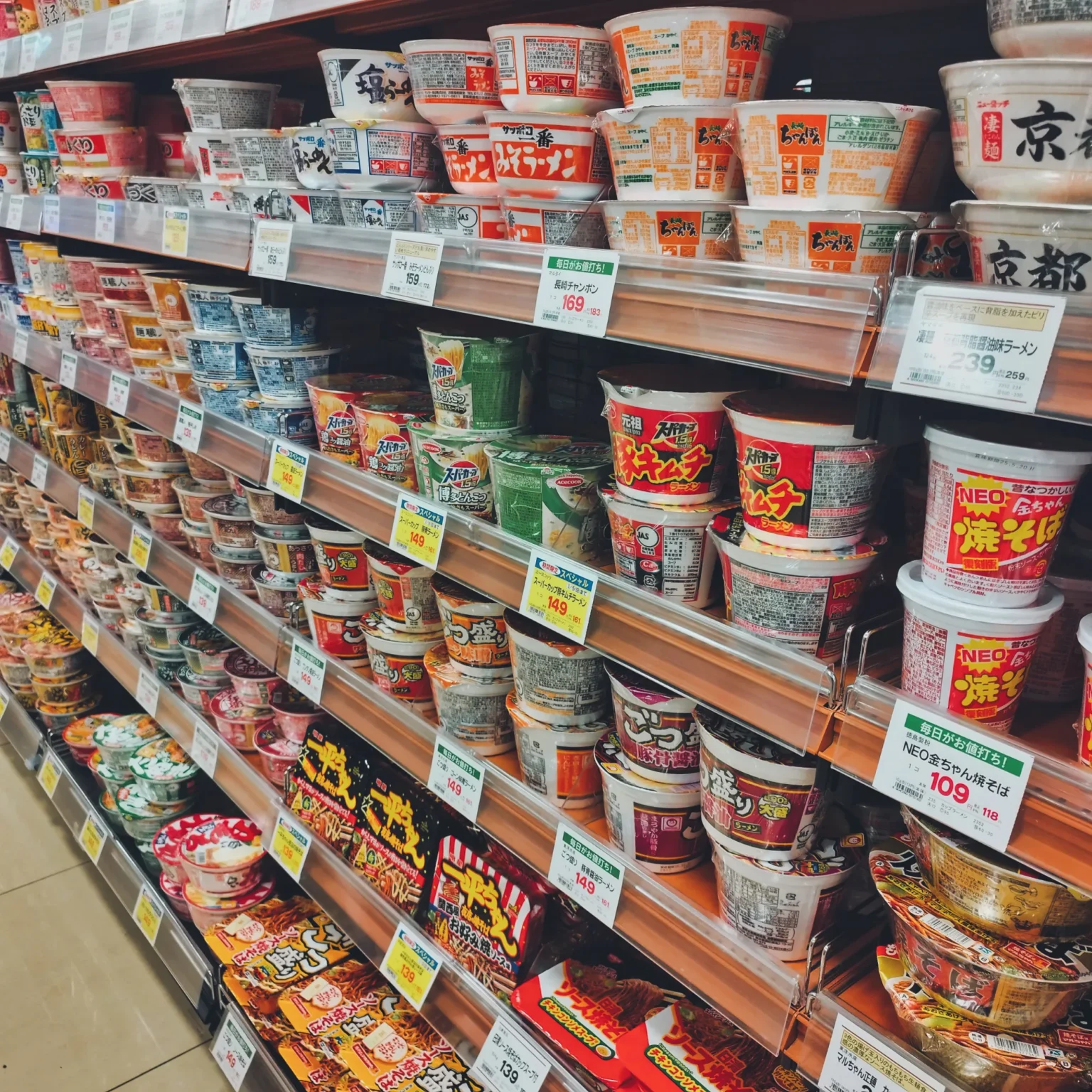
FamilyMart’s own online product database makes the point without my having to assert it. Its packaged-grocery listing carries 166 items in eight sub-categories, including 27 cup noodles. There is no bag-noodle category at all, and no instant bag noodle anywhere in the list. Its dried-noodle section holds four items — soba, somen, udon and spaghetti — and no instant ramen.
The reason is logistics rather than taste. Makers ship multipacks in case lots — commonly six packs to a case, and nine for Raoh’s three-packs — while single bags ship thirty to a case. A convenience store with limited back-room space takes the format that sells one unit at a time; a supermarket takes the one that fills a family cupboard. Individual chains and branches do vary, so this is a rule of thumb rather than a guarantee.
Supermarket
Where bag noodles live. Ito-Yokado, Life, Maruetsu, Summit or any local chain will have a full wall of five-packs, usually below the cups.
Drugstore
Welcia, Sundrug and Matsumoto Kiyoshi stock food at competitive prices and often have the tax-free counter a small supermarket lacks.
Convenience store
Cups, not bags. Useful at 3am, but not the place to buy a five-pack.
100-yen shop
Not reliable for mainstream five-packs. Searching Daiso’s official store for instant noodles returns cookware and one imported Korean single bag.
Which one should you take home?
The bag, on almost every measure — and if you remember one practical thing from this page, make it this one.
A typical single bag noodle is roughly 19 by 14 centimetres and about four centimetres thick — those are published figures from one small Japanese maker, since the big brands do not print dimensions, but the format is standard. It packs flat, survives being knocked about better than a cup, and uses far less suitcase volume. A cup is rigid and hollow, and occupies the same space whether it arrives intact or not. Nissin’s own listings make the comparison exactly: the Chicken Ramen bag is ¥146 for 85g of noodle, while the cup version of the same product is ¥248 for 80g. You pay ¥102 more, get slightly less noodle, and carry home a container that dents.
Will customs let you bring them home?
It depends on your destination and on which animal is in the soup, and bag noodles are treated no differently from cups. Every mainstream Japanese bag noodle on this page contains pork, chicken or both. None is halal certified or vegetarian.
| Destination | What the official rule says |
|---|---|
| Australia | The most workable of the three. Commercially prepared, packaged noodles are permitted if they are for instant use and shelf stable. Noodles containing ingredients derived from cattle, goats, sheep or pigs additionally need a manufacturer’s label confirming the country of manufacture is approved as free of foot-and-mouth disease. Declare all food. |
| United States | Treat pork- or chicken-containing noodles as restricted. Customs and Border Protection states you may not import food products prepared with meat, and names soup mixes among items that are not admissible. Declare them and expect the agriculture specialist at the border to make the call. |
| European Union | The strictest. Travellers from outside the EU may not bring in any meat or dairy products; the exemptions cover infant food, medical foods, pet food, honey and fish, not meat-flavoured noodles. |
Assume the answer is no, and let the border tell you otherwise. Nearly every noodle on this page contains pork, which is the ingredient these rules are hardest on, and a Japanese supermarket packet is unlikely to carry the specific disease-status wording Australia asks for. So plan on declaring, keep everything in its original sealed packaging so an officer can read the ingredients, and check your own border agency’s current page before you buy a case rather than after. Declaring an item that turns out to be prohibited normally costs you the item; not declaring it can cost a great deal more.
If you are buying enough to claim tax back, note that Japan’s system changes on 1 November 2026: the ¥5,000 minimum stays, but you will pay the tax-inclusive price at the register and reclaim it after customs confirms you are exporting the goods. We walk through it in our tax-free shopping guide.
Common questions
What is the actual difference between Japanese bag noodles and cup noodles?
A cup is a complete meal that carries its own cooking vessel and bowl, so it needs only hot water. A bag is an ingredient: you boil it in a pot and serve it into your own bowl, and the cooking water becomes the soup. Nissin’s own FAQ frames it as convenience versus a texture closer to fresh noodles. In price, a bag serving is ¥136 at suggested retail against ¥236 to ¥314 for a cup of the same brand.
Are bag noodles healthier than cup noodles?
Not inherently. What decides the fat content is whether the noodle was fried, not how it was packaged. The industry association puts fried noodles at around 20g of fat and non-fried at 4–6g. In practice Maruchan Seimen’s non-fried bag has less fat than its own cup, while Sapporo Ichiban’s fried bag has more than its cup. Check whether the ingredients begin with 油揚げめん or just めん.
Can I make a bag noodle in a hotel room with just a kettle?
Only Nissin Chicken Ramen, and it is officially sanctioned — the product page says to pour hot water and wait three minutes, using 400ml per serving. That works because the seasoning is baked into the noodle and there is no soup sachet. No maker publishes a kettle-only or microwave method for Maruchan Seimen, Sapporo Ichiban, Raoh or Charumera, so those need a hob.
Do I drain the water after boiling?
No. For standard Japanese bag ramen the cooking water becomes the soup, and draining it is the most common mistake visitors make. The exception is chilled summer products, where makers do instruct you to drain and then chill the noodles in ice water — Nissin says exactly that for its cold Raoh.
Is a five-pack cheaper than five single bags?
Not at the maker’s suggested price. Sapporo Ichiban is ¥136 for one and ¥680 for five; Maruchan Seimen is the same; Chicken Ramen is ¥146 and ¥730. The multipack discount you notice in Japan comes from the supermarket, not the manufacturer, which is an argument for where you shop rather than what you buy.
Why can’t I find bag noodles in convenience stores?
They are not a dependable konbini item. FamilyMart’s own online grocery database lists 27 cup noodles and no bag-noodle category at all, and its dried-noodle section holds only soba, somen, udon and spaghetti. Case size is the likely reason: multipacks ship six or nine packs to a case, which suits a supermarket rather than a konbini back room. Chains and branches vary, but supermarkets and drugstores are where you can count on finding them.
Which Japanese instant noodle makes the best souvenir?
A bag, for physical reasons. A single bag is about 19 by 14 centimetres and four centimetres thick, so it packs flat and cannot be crushed into uselessness; a cup is rigid and takes the same space either way. Nissin’s Chicken Ramen makes the comparison neatly — ¥146 for the bag with 85g of noodle, ¥248 for the cup with 80g. Check your own country’s rules on meat products before you buy a case, though: every mainstream Japanese bag noodle contains pork, chicken or both.
Related reading
The cup noodle ranking
The companion to this piece: Japan’s ten best cup noodles, with verified prices and which contain pork.
Best Japanese cup noodles
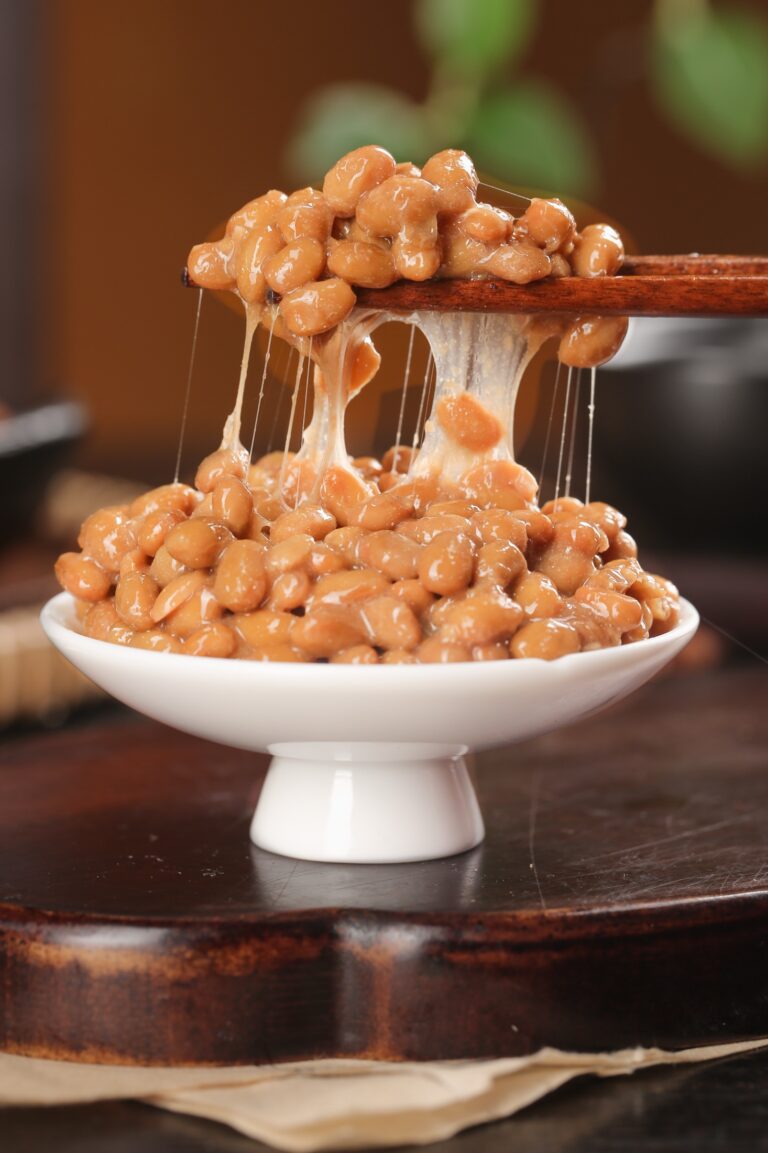
Natto, explained
The other supermarket staple that divides visitors, and what the research actually says.
What is natto?
Ramen made by hand
The opposite end of the noodle spectrum: an Ogikubo shop that still kneads its own.
Temomi Ramen Juhachiban
Tonkotsu at the source
Fukuoka is where Umakacchan comes from, and where the broth it imitates is taken seriously.
Inside Ichiran’s headquarters
Sources checked
Ranking and survey method: Netlab (ITmedia Research), survey conducted 22 July 2026 with Voice Note, 1,377 valid responses from men and women nationwide, published 31 August 2026. Prices, pack sizes, noodle weights, nutrition and ingredients: official product pages at sanyofoods.co.jp, maruchan.co.jp, nissin.com, myojofoods.co.jp, housefoods.jp and marutai.co.jp, all read on 1 September 2026, with suggested retail prices quoted before tax exactly as each maker publishes them. The cup-versus-bag definition and Nissin’s own answer: rao.jp. Category definitions, frying and hot-air-drying methods, fat comparisons and the FY2024 production split: the Japan Convenience Foods Industry Association. Convenience-store stocking: FamilyMart’s own packaged-grocery database. Package dimensions: Sakurai Foods, the only Japanese maker found publishing them. Import rules: US Customs and Border Protection, the Australian Department of Agriculture, Fisheries and Forestry, and the European Commission’s Your Europe portal. Tax-free changes: Japan Tourism Agency and National Tax Agency.
Join travelers discovering Japan's hidden side
Weekly dispatches from off-the-beaten-path Japan — spots and stories you won't find in guidebooks.
No spam. Unsubscribe anytime.
Welcome aboard!
You're in. See you in your inbox soon.