Shizuoka · Gotemba · Wagashi
Tucked into a bamboo grove at the foot of Mt. Fuji in Gotemba, Toraya Kobo is the countryside workshop-café of Toraya — the centuries-old wagashi house that has supplied the Japanese imperial court. You walk in through an old thatched gate, past a stream and a lawn scattered with plum trees, to a low wood-and-glass pavilion where the sweets are made fresh on site and eaten looking out at the woods.
I’m Nobu, and of all the places I send people near Mt. Fuji, this is the one that surprises them most — because it asks you to slow right down. Toraya Kobo opened here in 2007 on the grounds of a former villa, and the whole point is the approach: the thatched gate, the bamboo, the water, and then a building by the architect Hiroshi Naito that curves gently to follow the forest. Then you sit, and eat a single beautiful sweet with a cup of tea. Here’s what it is, what I had on a July visit, and how to make the trip.
The walk in is half the point
Toraya Kobo stands on about 5,600 tsubo of grounds that were once a private villa, next door to the Higashiyama Former Kishi Residence (the house of former prime minister Nobusuke Kishi, designed in 1969 by the architect Isoya Yoshida). When Toraya took the land, they kept the bamboo and the trees, and left the old thatched gate at the entrance as it was. So you don’t arrive at a shop — you arrive at a garden, and walk through it.
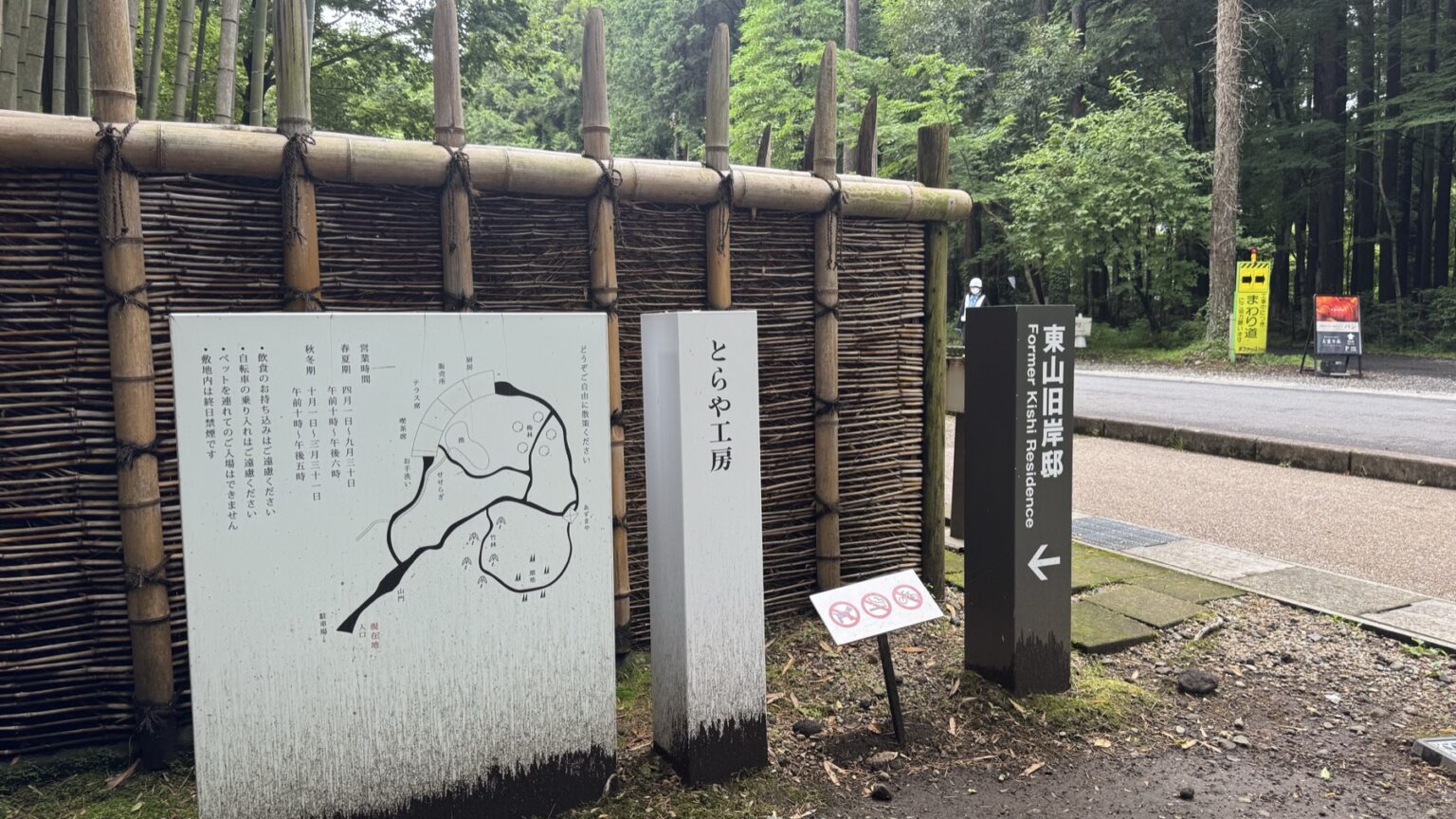
The path takes you past a small stream — there’s a little waterfall fringed with broad green leaves — and out to the lawn, where the café building comes into view. Naito’s design is a single low sweep of roof and glass that follows the curve of the land; from the covered walkway you look straight out into the trees.
The building
A gently curved roof of wood and glass by architect Hiroshi Naito, built to sit quietly inside the forest rather than dominate it.
The stream
Clear running water crosses the grounds, with a small waterfall and mossy stones — it runs right beside the path in.
The walkway
A slatted wooden veranda runs the length of the glass wall, with benches where you can wait and watch the garden.
What I had — the July sweets
The menu changes with the season, and the sweets are made in the workshop you can see through the glass. When I visited at the start of July, four things stood out — and yes, I worked my way through them. Every sweet can be ordered on its own to take away, or as a set with a cup of sencha green tea to eat in.
| Sweet | What it is | Price (single / with sencha) |
|---|---|---|
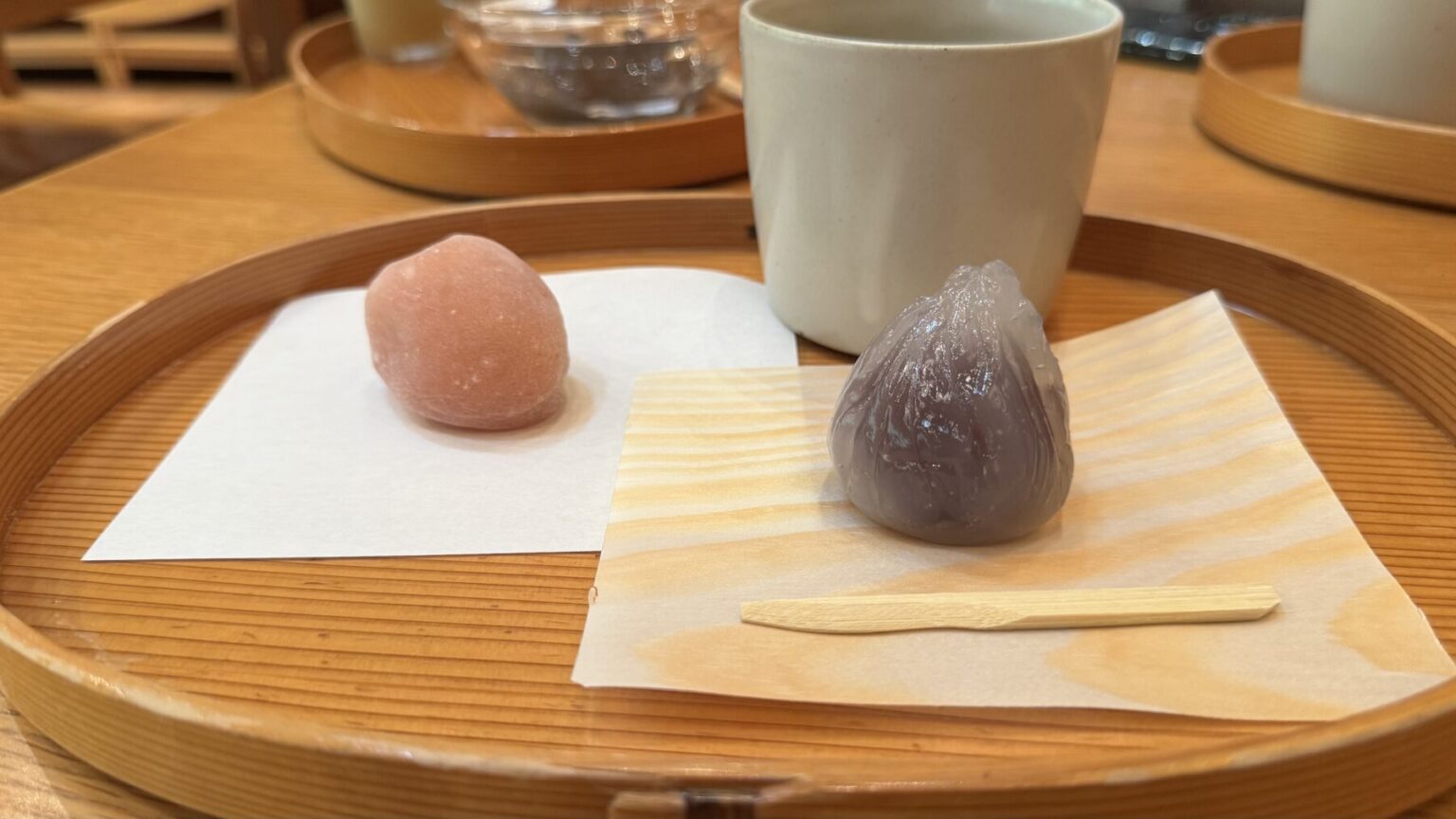
| Ume mochi (梅もち) | A soft gyūhi mochi sweet made with umeboshi pickled by local farmers and carefully sieved, wrapped around white bean paste — sweet and gently sour. | ¥410 / ¥710 |
| Kuzu manju (葛まんじゅう) | Bean paste in a skin of Yoshino kuzu (arrowroot) from Nara — clear, cool and slippery. The kuzu is famously laborious to make: roughly 100 g of powder from a kilo of root. | ¥410 / ¥710 |
| Warabi mochi (わらびもち) — new | Made only from rare domestic warabi (bracken) starch, so it’s dark and strongly elastic, served with no kinako at all — just Toraya Kobo’s own black-sugar syrup, to taste the warabi itself. | ¥1,200 / ¥1,500 |
| Green-plum mizu-yōkan (青梅の水ようかん) | A cool summer jelly of white bean paste blended with simmered green plum, with a whole candied plum set in the middle. | ¥500 / ¥800 |
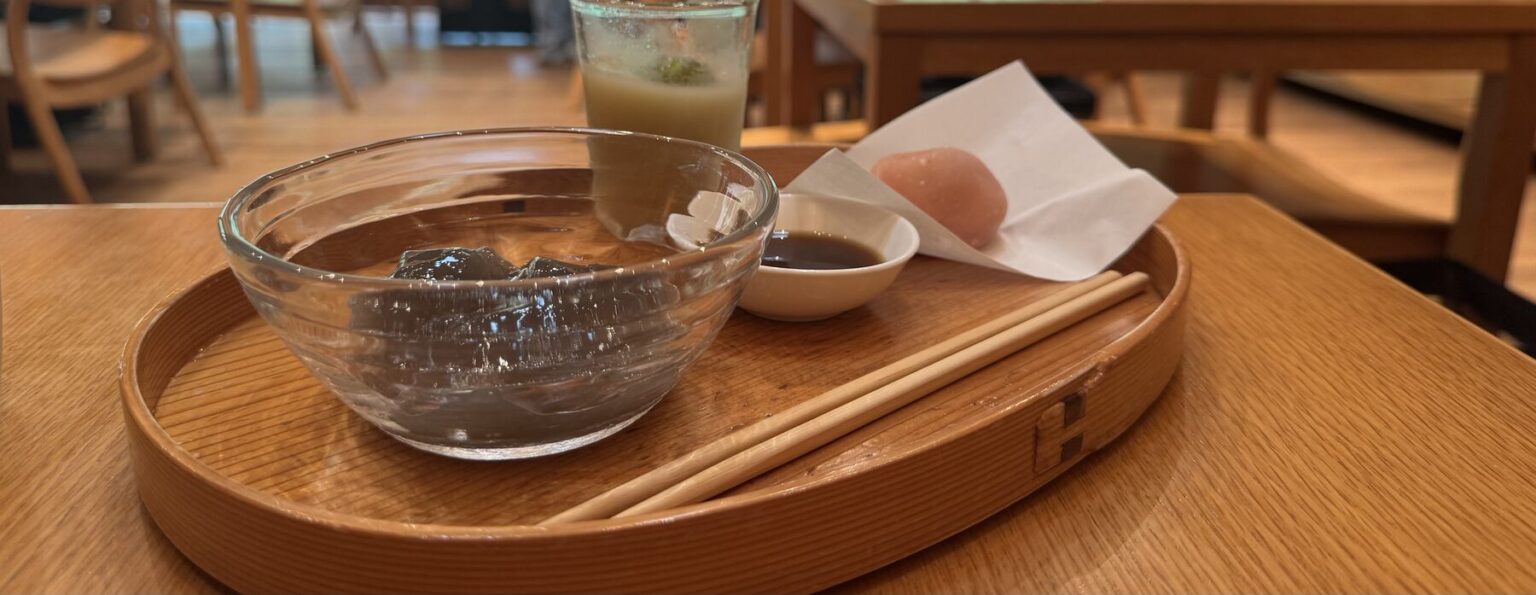
The warabi mochi is the one to plan around: it’s a new item, made only with pure warabi starch (most warabi mochi you’ll eat elsewhere is cut with other starches), so it comes out almost grey-brown and properly chewy. It’s served from around 11:00 and made in limited numbers, though you can order it from opening. The green-plum mizu-yōkan has a real plum inside — mind the stone. The ume mochi and kuzu manju were both ¥410 and, honestly, the easiest introduction if you’re new to wagashi.
Eat in or take away. You order at the counter and can either take a box home or eat in with tea. There are no reservations, and the seasonal sweets sell out — the shop simply closes for the day when they’re gone, so come earlier rather than later if there’s something specific you want.
The café, and the garden through the glass
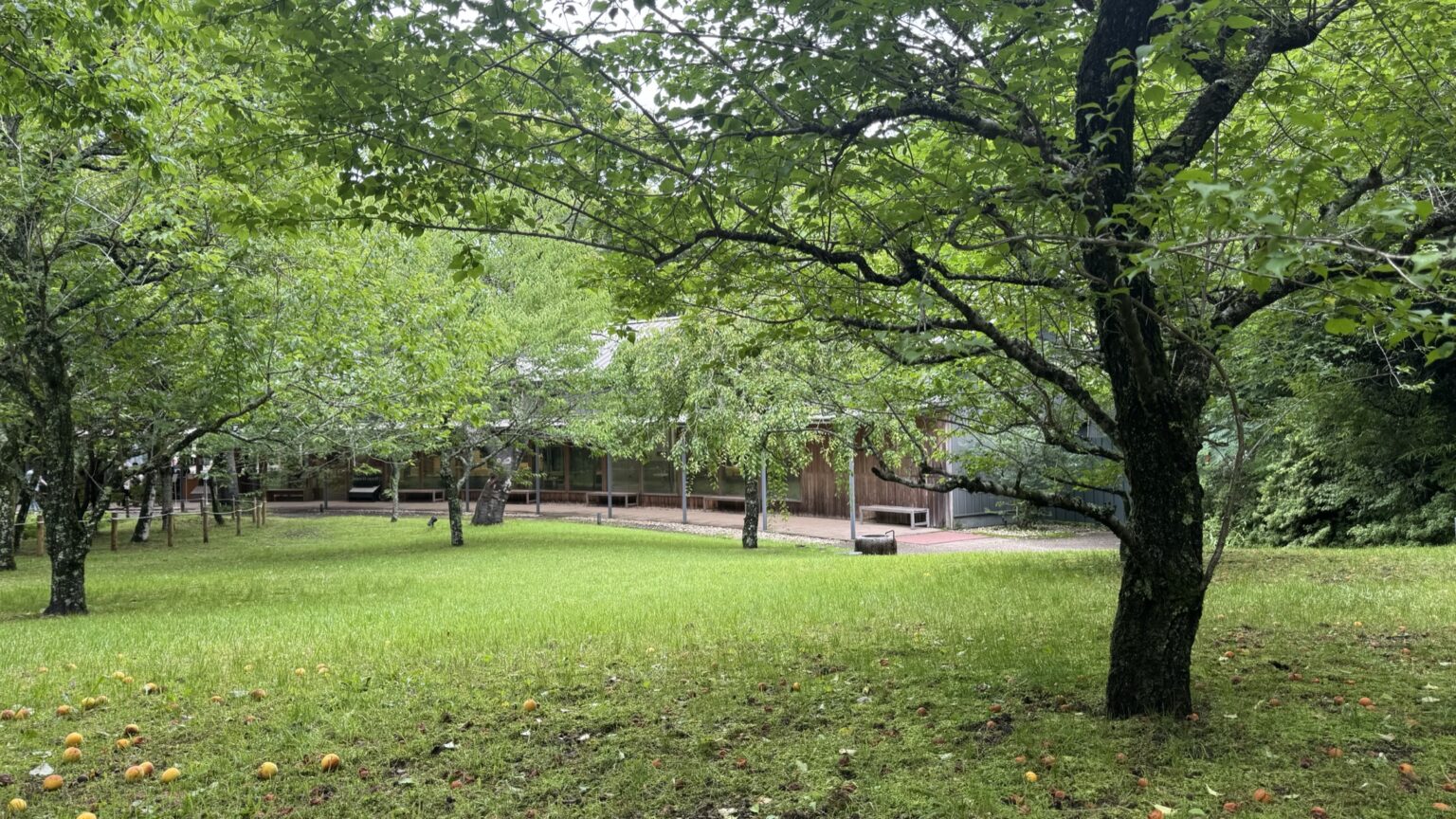
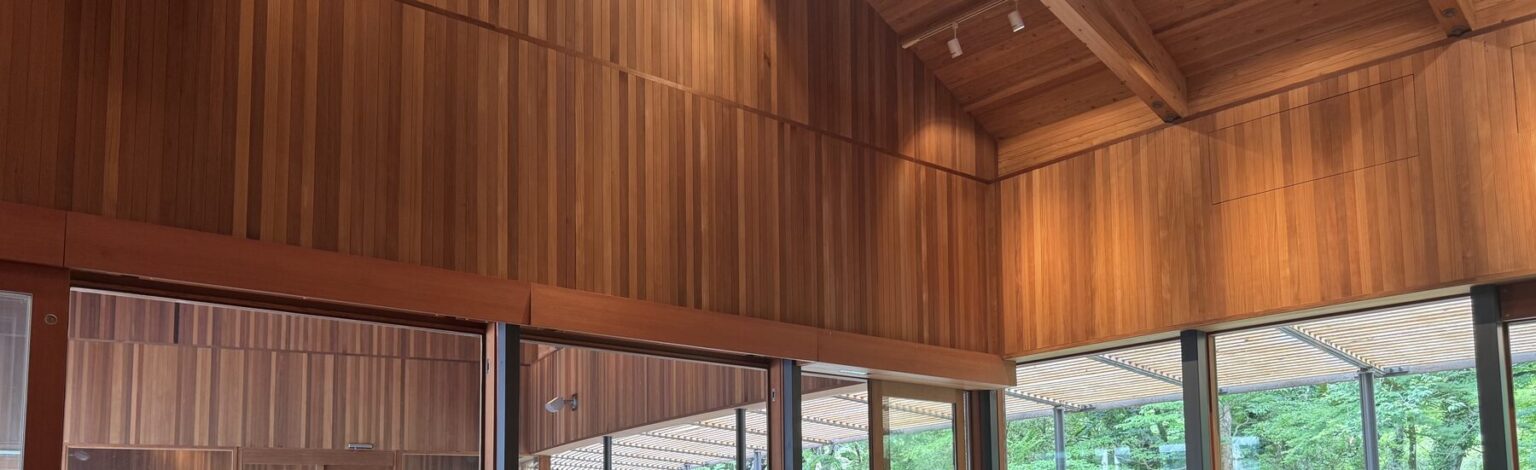
Inside, it’s all warm cedar, low shelves of wagashi books, and glass on the garden side. It’s the kind of room that makes you put your phone down. In summer the plum trees on the lawn drop their fruit into the grass; in June the hydrangeas come out along the paths; and the light through the trees changes the whole room hour by hour.
 Inside
Warm cedar walls rise to a soaring wooden ceiling by architect Hiroshi Naito, with glass on the garden side and low shelves of wagashi books — quiet, and built for lingering over a cup of tea.
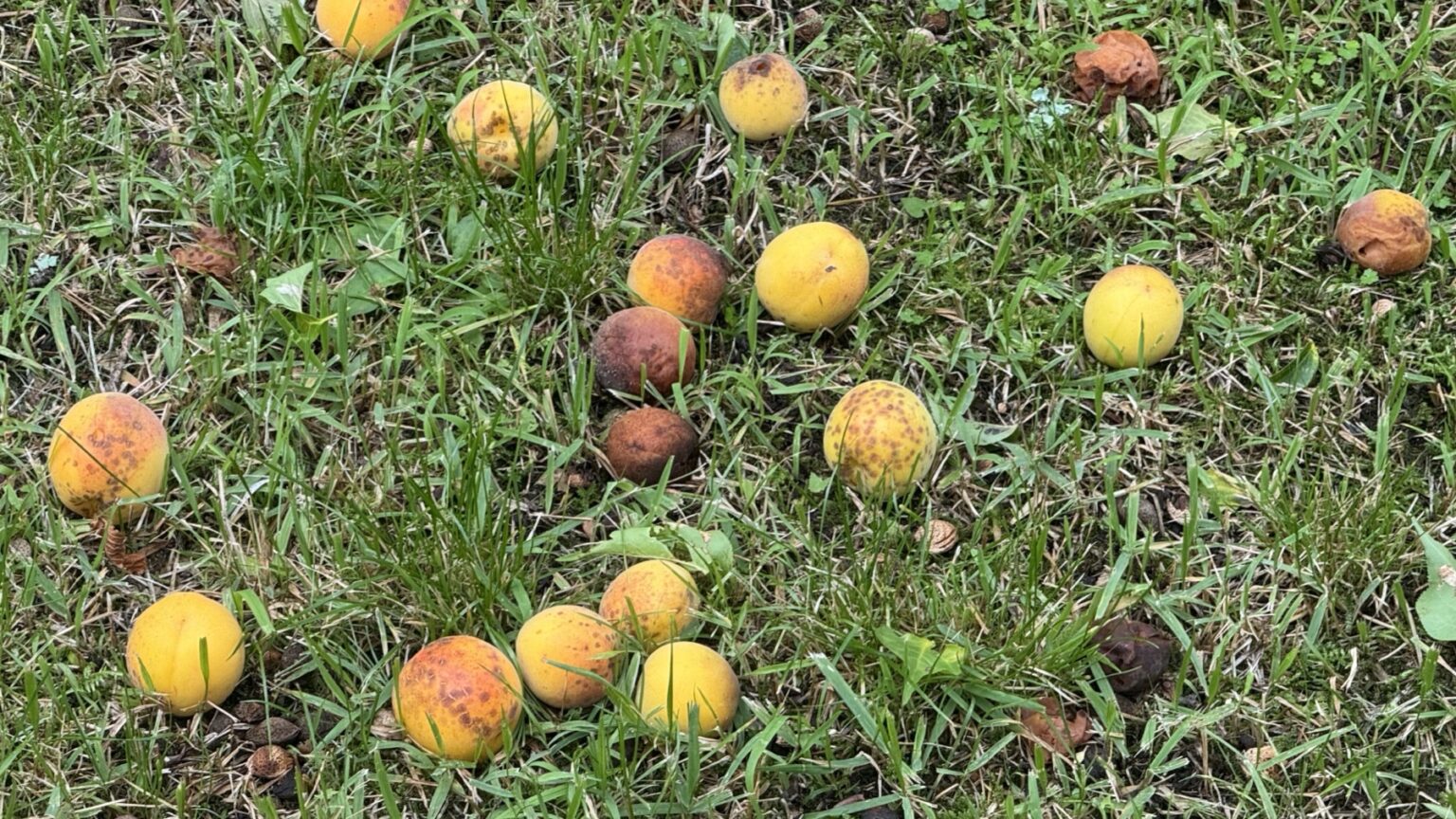 Plum season
Ripe ume dropping onto the lawn in early summer — the same fruit that flavours the season’s sweets.
Southeast Asia traveler tip: This is a calm, outdoor-feeling place that rewards slowing down — treat it as a slow one-hour stop, not a quick photo. It pairs beautifully with a clear-weather Fuji day, since it’s right at the mountain’s base. Bring a light layer: the grounds are shaded and green, and mountain weather can turn to rain, so pack a cover if it’s forecast.
How to get to Toraya Kobo
By train + bus/taxi
Take the JR Gotemba Line to Gotemba Station. From there it’s about a 15-minute taxi, or a local bus (Hakone Tozan / Fujikyu lines) to the Higashiyama Kyu-Kishi-tei stop, right by the entrance. Check the current timetable both ways.
By car
About 15 minutes from the Gotemba IC on the Tomei Expressway. There’s a car park shared with the Higashiyama Former Kishi Residence — follow the signs for Toraya Kobo / Higashiyama Kyu-Kishi-tei.
Make a day of it
Gotemba sits right under Mt. Fuji. Pair it with soba at Kintaro Soba, a stock-up at the JA Farmers Gotemba market, or the roadside station in the michi-no-eki at Fujioyama.
Where to stay near Gotemba
It works well as a day trip from Tokyo, Hakone or the Fuji Five Lakes, and Gotemba can also be a base for the whole east side of Mt. Fuji. To add a bath to your trip, see day-trip onsen around Mount Fuji.
Gotemba & Fuji stays on Booking
Hotels and inns around Gotemba and the mountain’s eastern foot.
Compare on Agoda
A second price check across the Gotemba / Hakone area.
Fuji & Hakone trips via Klook
Day trips and passes if you’re building a wider route around Mt. Fuji.
Some links above are affiliate links — they cost you nothing extra and help keep this site going.
What is Toraya Kobo, and how is it different from Toraya?
It’s the Gotemba countryside workshop-café of Toraya, the long-established wagashi house. It opened in 2007 on former villa grounds and focuses on freshly made, seasonal sweets eaten in a garden setting, rather than the formal boxed sweets of Toraya’s city shops.
What are the opening hours and closed days?
April–September 10:00–18:00, October–March 10:00–17:00, and it closes early once the day’s sweets sell out. It’s closed on Tuesdays (the next day if Tuesday is a public holiday) and over the New Year period. Check the official site before a special trip.
Do I need a reservation?
No — seating is first-come. Larger groups (around 20+) are asked to contact the shop ahead. Because the seasonal sweets are limited, popular items can sell out, so arrive earlier if there’s something you want.
How do I get there without a car?
Take the JR Gotemba Line to Gotemba Station, then a roughly 15-minute taxi, or a Hakone Tozan / Fujikyu bus to the Higashiyama Kyu-Kishi-tei stop by the entrance. Check bus times both ways before you set out.
Can I just walk the garden without eating?
The grounds — the thatched gate, bamboo, stream and lawn — are lovely to take in on the way to the café, and you can visit the neighbouring Higashiyama Former Kishi Residence separately (it has its own admission). But the sweets and tea are the reason to come.
Is there anything for a summer visit specifically?
Yes — when I visited in early July the seasonal line-up included ume mochi, kuzu manju, a green-plum mizu-yōkan and a new warabi mochi made from pure warabi starch. Menus rotate with the season, so summer leans cool and plum-forward.
Join travelers discovering Japan's hidden side
Weekly dispatches from off-the-beaten-path Japan — spots and stories you won't find in guidebooks.
No spam. Unsubscribe anytime.
Welcome aboard!
You're in. See you in your inbox soon.