Shizuoka · Gotemba
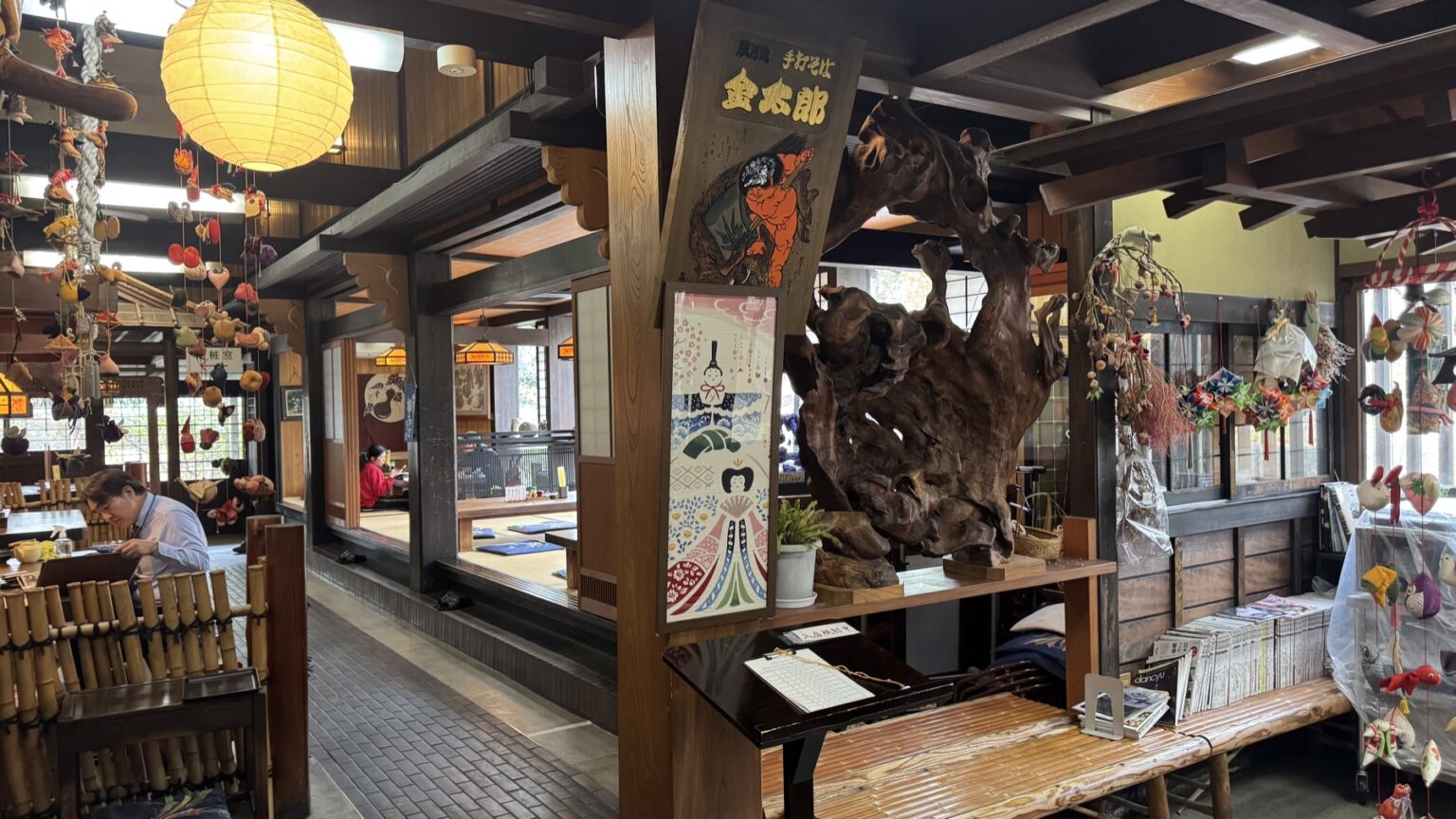
Gotemba sits right at the foot of Mt Fuji on the Shizuoka side, and its local soba has a quirk most visitors never hear about: it’s bound with grated mountain yam instead of water. At Kintaro, an old-farmhouse soba house a few minutes’ drive from the Gotemba interchange, that gives the noodles a smooth, almost slippery pull — the area’s old mikuriya soba, named for the days when this land supplied grain to the Ise Shrine.
Soba bound with mountain yam
Most soba you eat in Japan is nihachi — eight parts buckwheat to two parts wheat flour, the wheat there to hold the noodle together. Gotemba’s old style does it differently. The name of the area, mikuriya, comes from a time when it sent grain to the great shrine at Ise, and the local soba that grew out of that — once a dish you served to guests at celebrations — uses grated mountain yam instead of wheat as the binder. Kintaro calls its method “Suruga-style hand-cut soba” and you can taste it: the noodles are smooth and have a soft, clean slide rather than the firmer chew of wheat-bound soba.
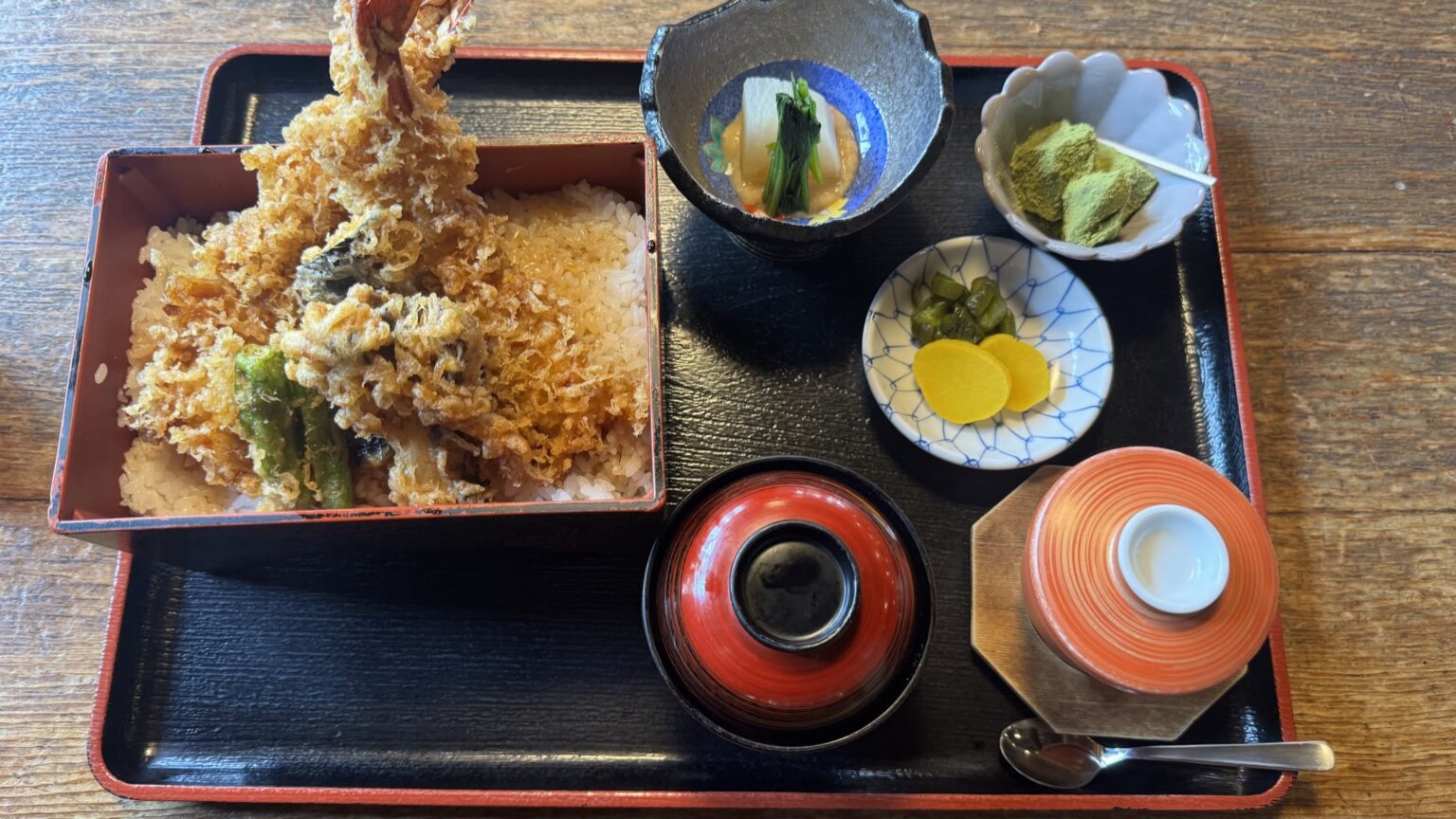
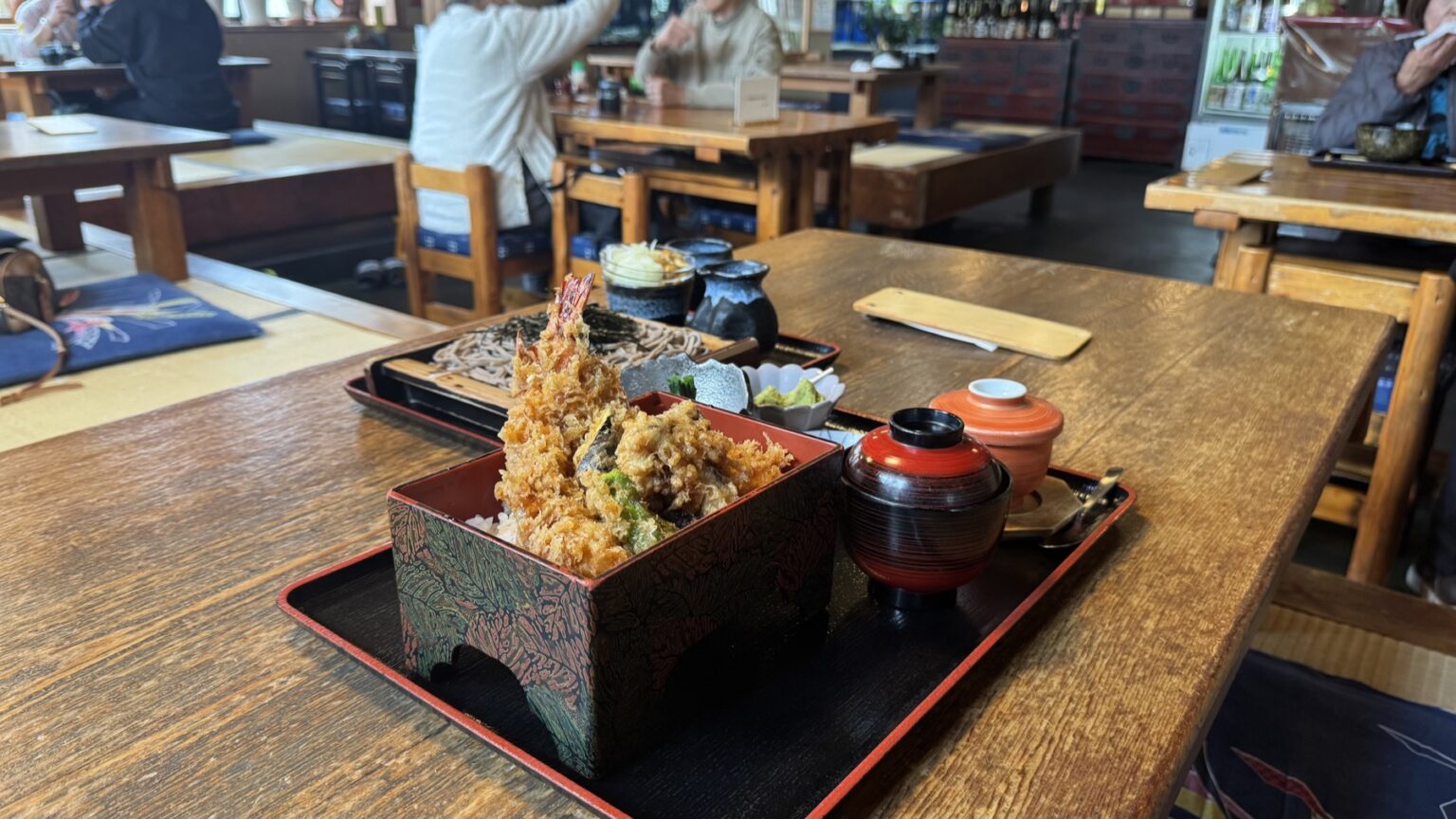
I ordered the Tenju Kintoki, a lacquer box of rice buried under shrimp and vegetable tempura, with a basket of the cold house soba on the side — the best of both, fried and plain, in one tray. I paid about ¥2,400 for it on my visit; I’d treat that as a guide rather than a fixed price, because some listings have the in-shop tempura box closer to ¥2,000 and a takeout version lower again, so check the current menu. The other thing I’d come back for is the nameko-oroshi soba — cold soba with slippery little nameko mushrooms and grated daikon, which runs around ¥1,000 (listings vary, so check the current menu); light, cold and exactly right after a morning on the mountain.
Getting there
This is an easy stop on a Mt Fuji day. It’s about five minutes by car from the Gotemba interchange on the Tomei Expressway, with parking — handy if you’re already driving between the lakes, Hakone and the Gotemba Premium Outlets. From Gotemba Station it’s roughly a 20–25 minute walk toward the Hakone side. The shop runs lunch and dinner services, closes on Tuesdays and the 3rd Monday of most months (excluding public holidays), and like any honest soba house it stops when the day’s noodles run out, so it pays to go earlier rather than later.
On the map
Good to know
What is mikuriya soba?
Mikuriya soba is the regional soba around Gotemba, named for the area’s old role supplying grain to the Ise Shrine. It was traditionally served to guests at celebrations, and is bound with grated mountain yam rather than wheat flour, giving a smooth, soft texture.
Autumn footnote: in neighbouring Susono, a metasequoia avenue frames Mt. Fuji in late November — a quiet photo stop to bolt onto a Gotemba lunch run.
What did you order at Kintaro?
The Tenju Kintoki — a lacquer box of rice topped with shrimp and vegetable tempura, served with cold house soba on the side — and the nameko-oroshi soba (cold soba with nameko mushrooms and grated daikon). I paid roughly ¥2,400 for the Tenju, and the nameko-oroshi soba runs around ¥1,000; treat those as a guide and confirm the current menu.
How do I get to Kintaro?
It’s about five minutes by car from the Gotemba IC on the Tomei Expressway, with parking, or roughly a 20–25 minute walk from Gotemba Station toward Hakone. Easy to fold into a day around the Fuji Five Lakes, Hakone or the Gotemba outlets.
When is it open / closed?
Lunch and dinner services, closed on Tuesdays and the 3rd Monday of most months (excluding public holidays). As with most soba shops, the day’s noodles can sell out, so don’t leave it too late — and confirm hours before a special trip.
Is the soba different from normal soba?
Yes. Where common soba uses wheat flour to bind the dough, this Suruga/mikuriya style uses grated mountain yam, which makes the noodles smoother and softer than the firmer chew you may be used to.
Make a meal of it — stay by Mt Fuji
These spots are worth building a day around. Base yourself near Lake Kawaguchi or Lake Yamanaka and you can eat your way through Fujiyoshida, the lakes and Gotemba without rushing back to Tokyo.
Yabu
A beloved set-meal (teishoku) diner in Fujiyoshida.
Shoya
Hearty pork hoto by Lake Yamanaka.
Tiger Shokudo
A retro Fujiyoshida diner.
Gensuke
Another Fujiyoshida diner worth the stop.
Toraya Kobo
Toraya’s forest wagashi café, a short hop away in Gotemba.
Farmers Gotemba
The JA farm market with a new fresh-fish counter, also in Gotemba.
Mt Fuji travel hub
Everything else around the mountain.
If you’re eating your way around the Shizuoka side of Mt Fuji, another spot where locals fill the tables is Michi-no-Eki Fujioyama, the roadside station with a Mt Fuji lunch view.
Join travelers discovering Japan's hidden side
Weekly dispatches from off-the-beaten-path Japan — spots and stories you won't find in guidebooks.
No spam. Unsubscribe anytime.
Welcome aboard!
You're in. See you in your inbox soon.