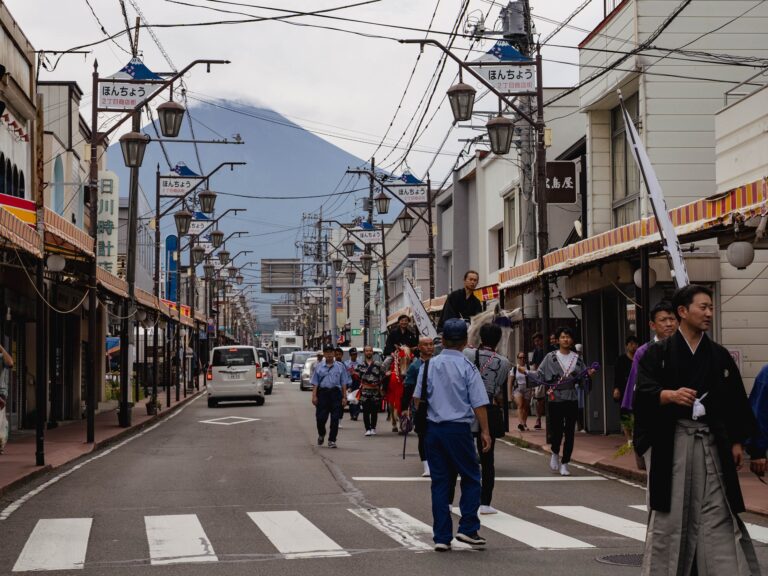
Shizuoka · Atami · Wagashi
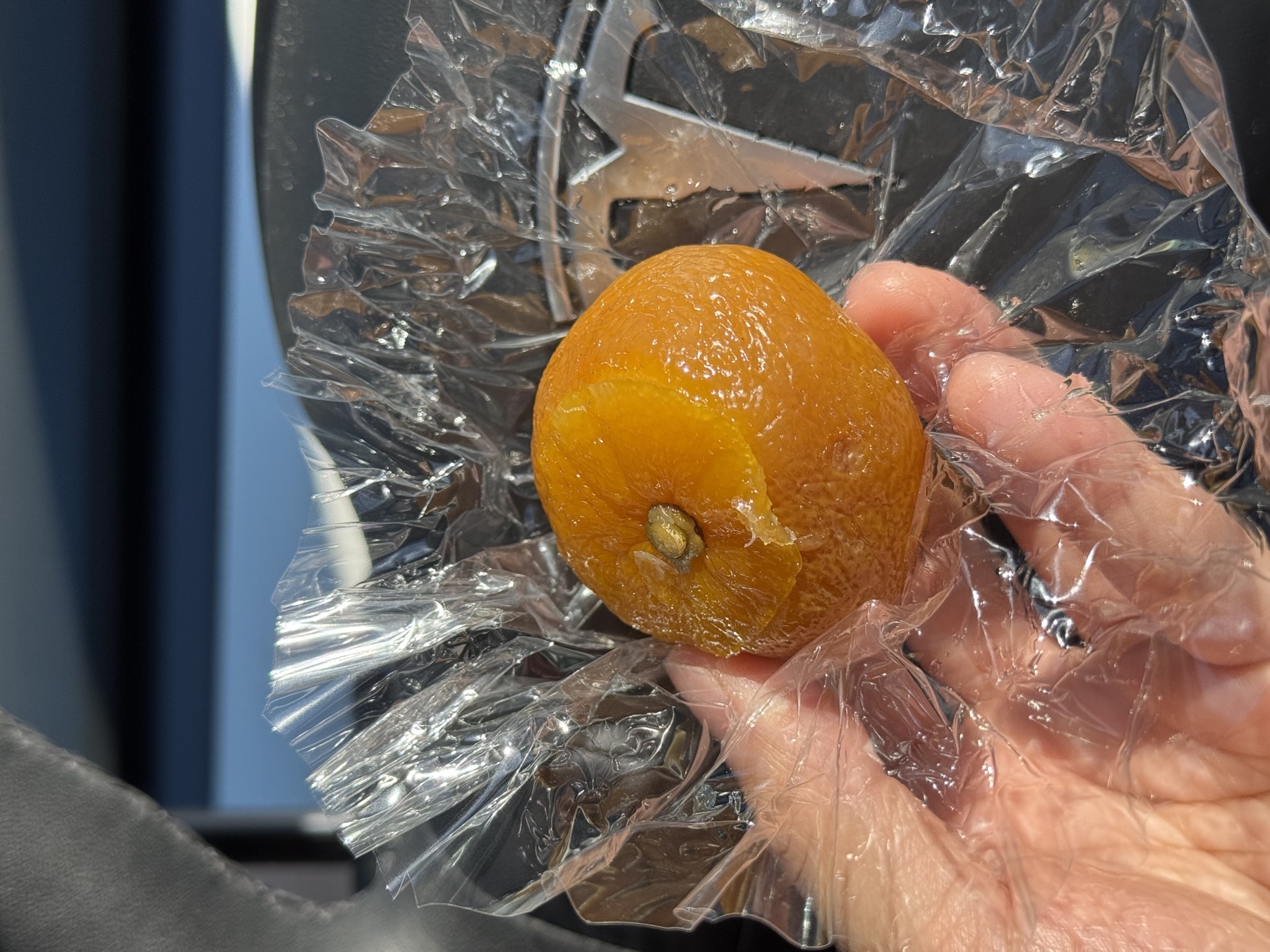
Kashiho Mase is a 150-year-old wagashi maker on the Atami coast of eastern Izu, in business since 1872 and best known for the Izu no Odoriko — a baked sweet of walnut-studded white bean paste in a Western-style sablé crust that once won a Prime Minister’s prize. Its sweets change with the season: I picked up a whole-mandarin daifuku here on a cool-weather visit, though by summer the shelves turn to chilled citrus jelly and cooling sweets. Here’s the shop, its handful of branches, and what to look for when you go.
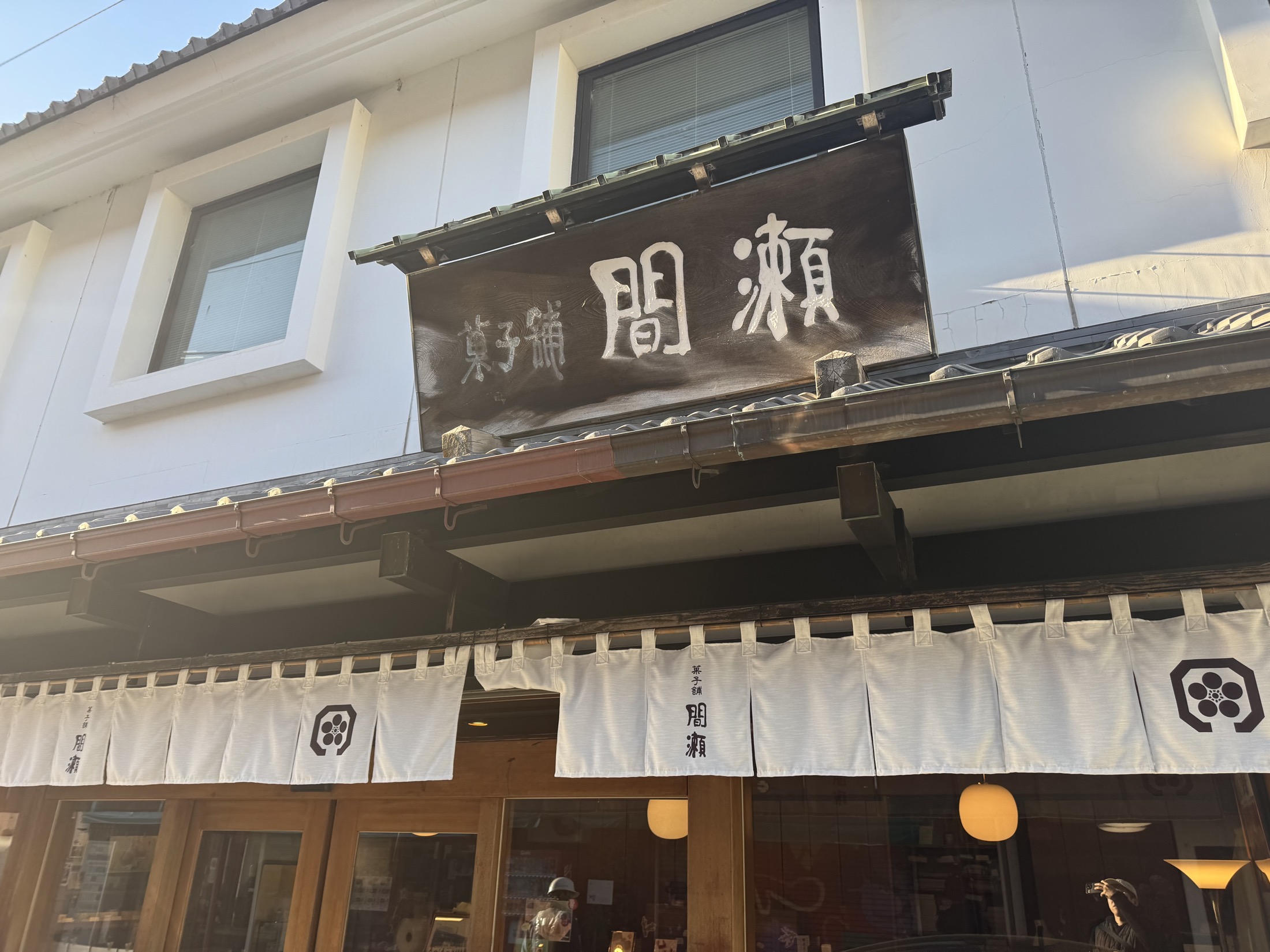
A 150-year Izu sweets shop
Mase has been making sweets on this coast since 1872 — it marked its 150th year in 2022 — and it’s regarded as one of the flagship wagashi houses of Izu. The shop you picture from the brief is the original head store, and despite the “Izu” in everything it sells, it’s not in the central-Izu spa town of Shuzenji: Mase is on the eastern Izu coast around Atami, with its head office at Ajiro. For most travellers the convenient branch is the one near Atami Station, which has a tea room as well as the counter.
The sweet that made its name is the Izu no Odoriko (“The Izu Dancer,” after Kawabata Yasunari’s novel): white bean paste mixed with roasted walnuts, wrapped in a baked Western-style sablé dough rather than the usual mochi or pastry. First sold in 1966, it took the Prime Minister’s Award at Japan’s national confectionery exposition in 1994, and it’s the thing to take home if you want one box that sums the place up. Regulars also single out the melt-in-the-mouth Izu Aizome and the kintsuba.
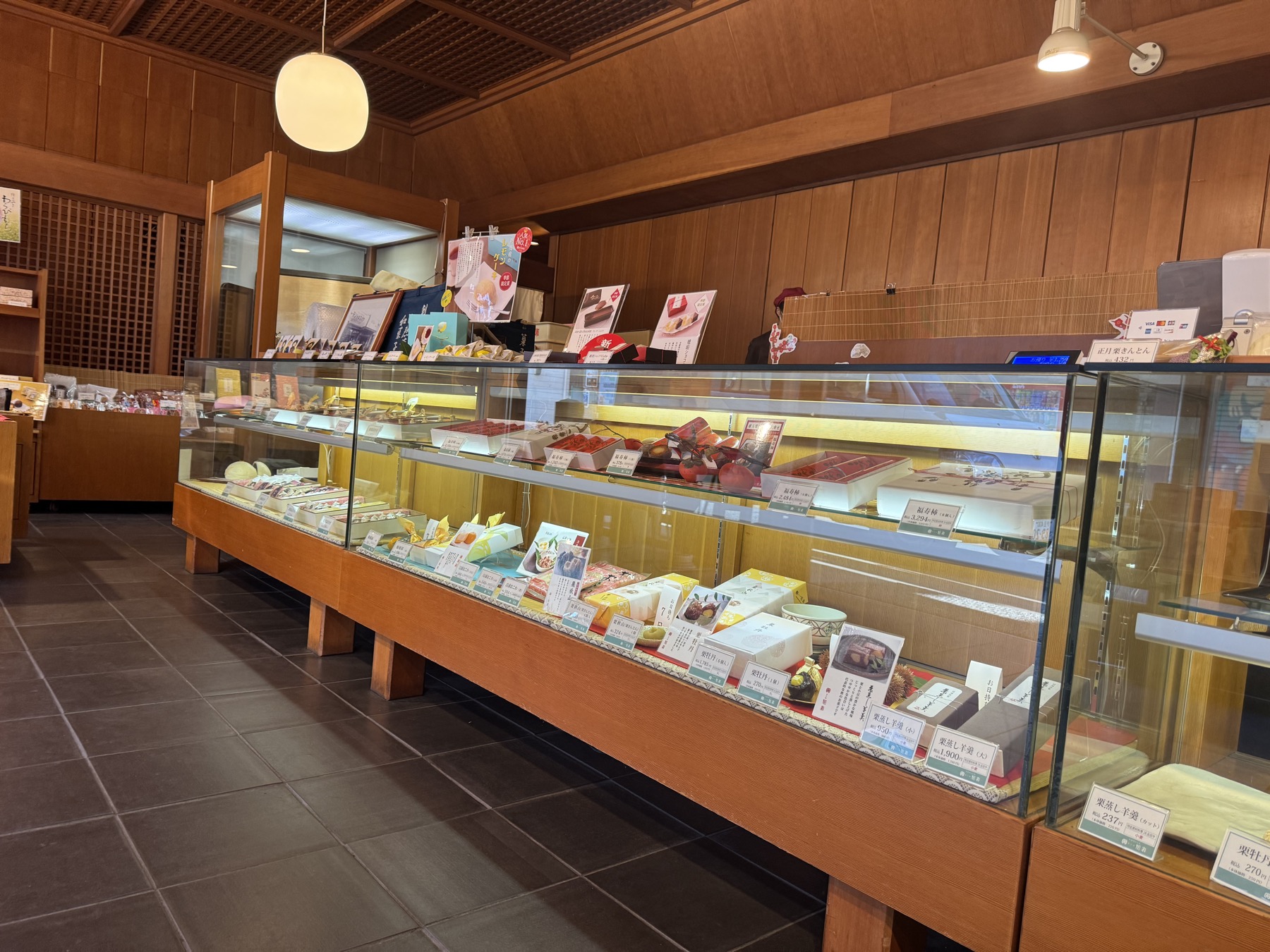
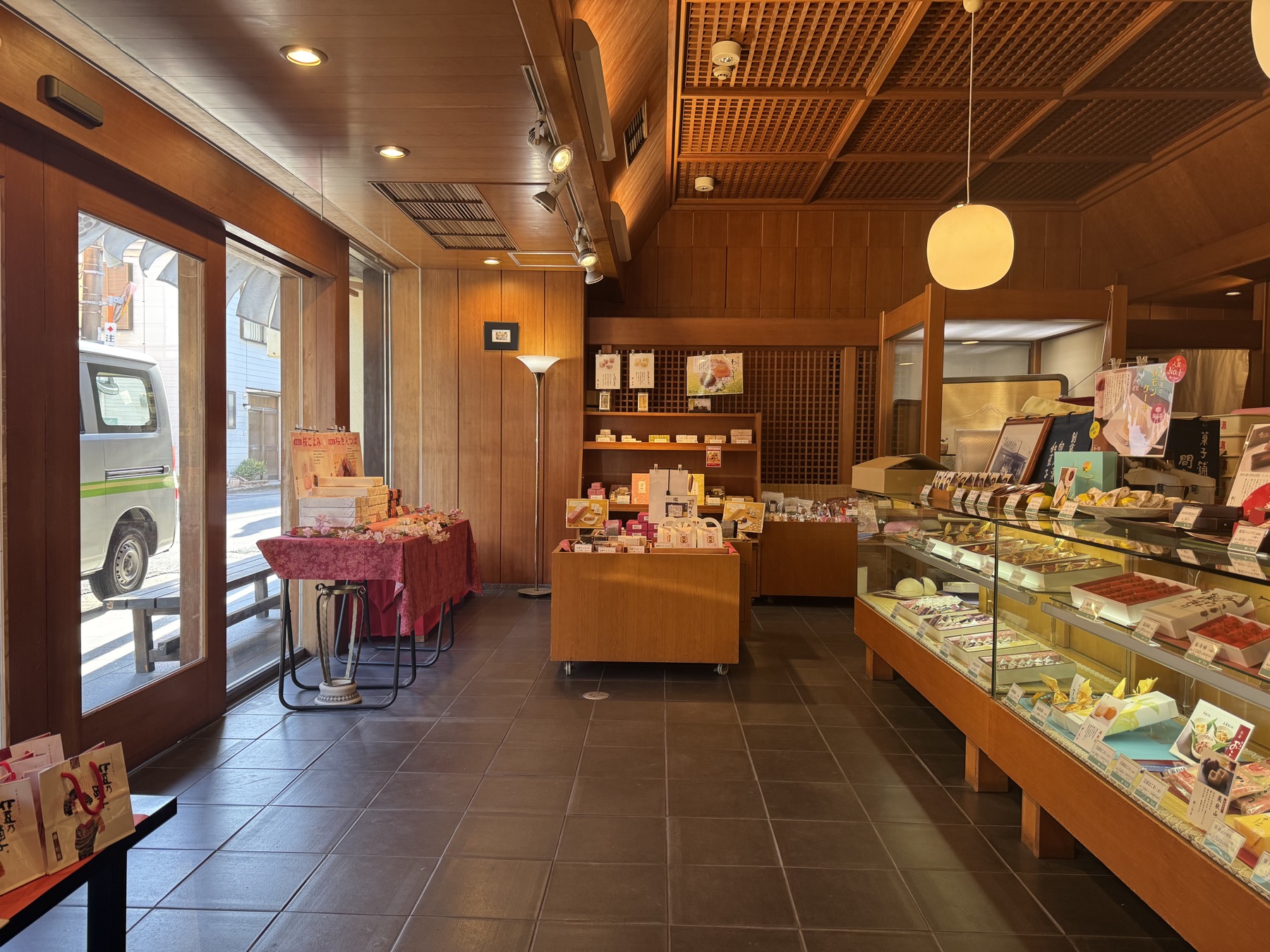
The sweets change with the season — read the case
This is the part to understand before you go: Mase’s headline sweets rotate, and the citrus ones in particular are easy to mix up. What I bought was the mikan daifuku — a whole Shizuoka mandarin wrapped in white bean paste and mochi — but that’s an autumn-and-winter special, made only when the early mandarins are in, sold same-day in store, and not something you’ll find in June. So don’t come in summer expecting it.
What you will find changes through the year:
| When | Look for |
|---|---|
| Year-round | Izu no Odoriko, Izu Aizome, kintsuba & black kintsuba, amanatsu-citrus mochi, walnut mochi, warabi-mochi, dorayaki |
| Summer (incl. June) | Izu Mikan — a chilled citrus jelly (a summer-limited item, not a mochi) — plus cooling sweets like mizu-manjū and kuzukiri |
| Autumn–winter | The whole-mandarin mikan daifuku (in-store, same-day; this is the “mikan mochi”) |
| Spring | Cherry-blossom sweets — sakura kintsuba and seasonal namagashi |
The branches
There are four shops, all around Atami on the JR Itō Line — pick by where you are:
Atami Sakimicho
Near JR Atami Station, with a tea room (sabō) — the easiest stop for most visitors. Closed Thursdays.
Lusca Atami
Inside the Lusca building right at Atami Station; open daily, handy for a train-side gift, no café.
Head office (Ajiro)
The original shop at Ajiro, near Ajiro Station down the coast. Closed Thursdays; no café.
Ajiro Ekimae
By Ajiro Station, with an eat-in space. Closed Thursdays.
Getting there
Mase sits on the eastern Izu coast, on the JR Itō Line. From Tokyo, take the Tōkaidō Shinkansen to Atami (about 40–50 minutes), where the Sakimicho branch and the Lusca shop are both right by the station; for the head office, carry on a few stops to Ajiro. Most branches close on Thursdays (the Lusca shop is the exception), and opening times run roughly morning to early evening — worth a quick check if you’re making a trip of it.
Staying in Atami
Atami is one of Japan’s classic hot-spring towns, an easy shinkansen hop from Tokyo, so it makes a relaxed overnight — sweets, onsen and the sea. Booking has the widest spread; Rakuten Travel is strong for Atami’s onsen ryokan.
Good to know
Where is Kashiho Mase?
On the eastern Izu coast around Atami, Shizuoka — not in Shuzenji or Izu-Nagaoka. The head office is at Ajiro; the most convenient branches for visitors are by JR Atami Station (one with a tea room, one inside the Lusca building).
What should I buy?
The Izu no Odoriko — walnut white-bean paste in a baked sablé crust — is the signature and travels well as a gift. Regulars also love the Izu Aizome and the kintsuba. Then add whatever seasonal sweet is in the case.
Can I get the mikan (mandarin) sweet?
It depends on the season. The whole-mandarin daifuku (“mikan mochi”) is an autumn–winter item, sold same-day in store. In summer there’s instead a chilled Izu Mikan citrus jelly, and a year-round amanatsu-citrus mochi. Check the case — they’re three different sweets.
Can I order online or have it shipped?
Baked, longer-keeping items travel as gifts, but the fresh whole-fruit daifuku is made for same-day eating and sold in store only — no mail order. Check the official site for the current month’s line-up.
What are the hours and closing days?
Roughly morning to early evening; most branches close on Thursdays, while the Lusca Atami shop opens daily. Times vary a little by branch, so confirm before a special trip.
How do I get there from Tokyo?
Take the Tōkaidō Shinkansen to Atami (about 40–50 minutes) for the station-area branches, or continue on the JR Itō Line to Ajiro for the head office.
Kinomiya Shrine, Atami
Also in Atami: the shrine of the 2,000-year-old great camphor.
What to Buy in a Japanese Summer
Sweets, drinks and gear worth picking up — and what to skip.
Summer in Japan
The season at a glance, including where to cool off.
Tsubakiya Café
A Taishō-era coffee parlour, for another slow, sweet stop.
Join travelers discovering Japan's hidden side
Weekly dispatches from off-the-beaten-path Japan — spots and stories you won't find in guidebooks.
No spam. Unsubscribe anytime.
Welcome aboard!
You're in. See you in your inbox soon.