
Kawaguchiko · Museums · Gem hunting
The Fujikawaguchiko Stone Museum (富士河口湖 石の博物館) in Funatsu costs nothing to walk into. Inside are dim halls of minerals and gemstones, a glowing tower made of agate, a ground-floor stone and jewellery shop, and, for a fee, gem hunting in tubs indoors and in a big sand pit outside. I went on a Tuesday afternoon in September with no booking, and there was no queue at the ticket machine.
I’m Nobu. I live in Yamanakako village, by the next lake east. I came to this museum with one particular stone in mind for the shop. It wasn’t there, so I bought nothing, and I didn’t dig either. What I can tell you is what the place looks like on an ordinary weekday, how the ticket machine works, and what the museum’s own pages say about prices and rules, so you can decide whether the paid part is worth it for you.
The free museum
From the car park you can’t miss it: a white building with 石の博物館 and TREASURE STONE MUSEUM across the front, and a jeep painted all over with flowers parked by the entrance on a bed of rocks. My photos were taken between 3:26 and 3:57 p.m. on Tuesday 8 September 2026.
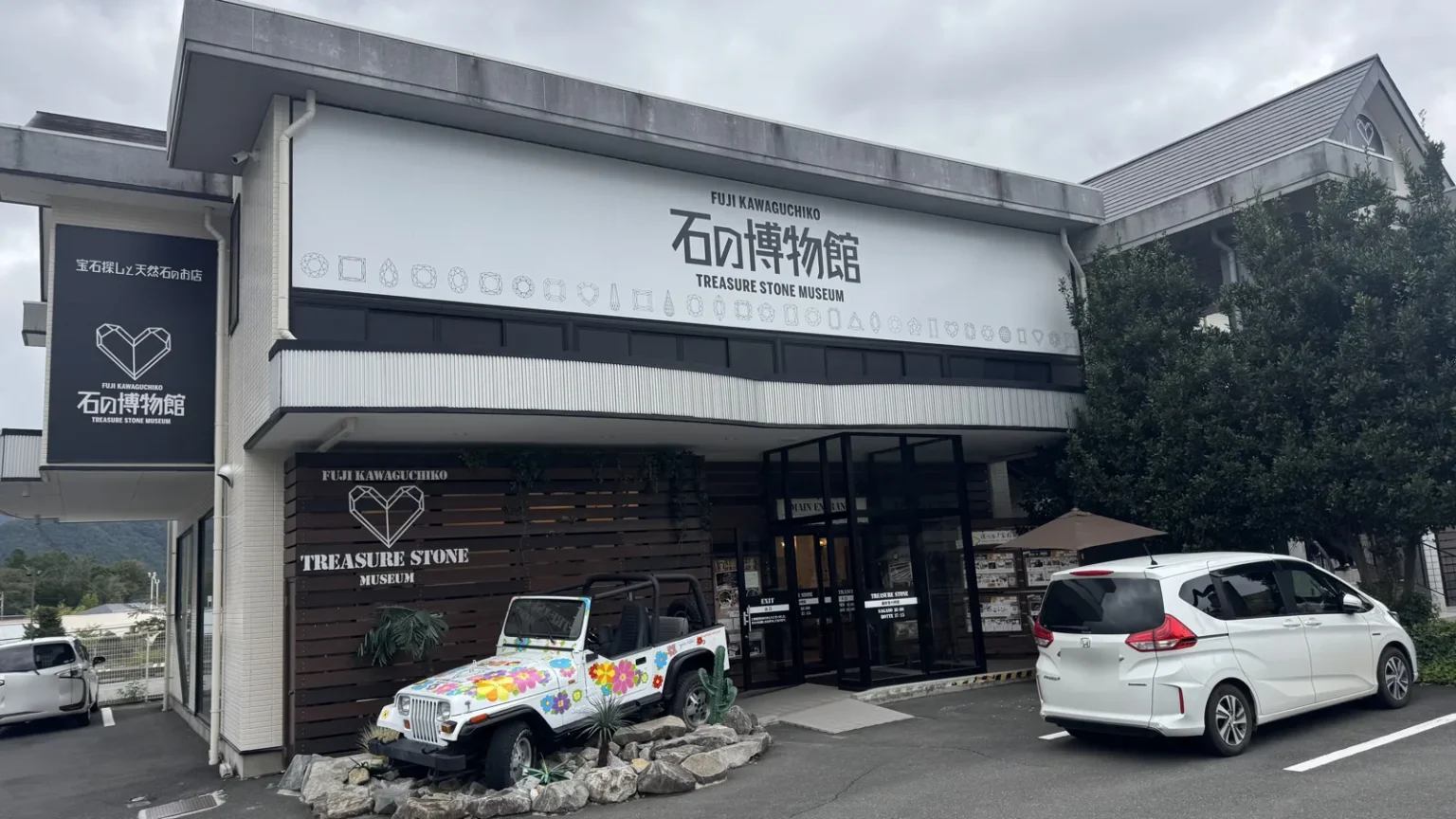
The museum’s official site says entry is free and that the collection brings together gemstones and minerals from around the world. It also gives a bit of local background: gem cutting and polishing grew up in this area after rock crystal (水晶) was found in Yamanashi long ago. That history gives the mineral displays a local context.
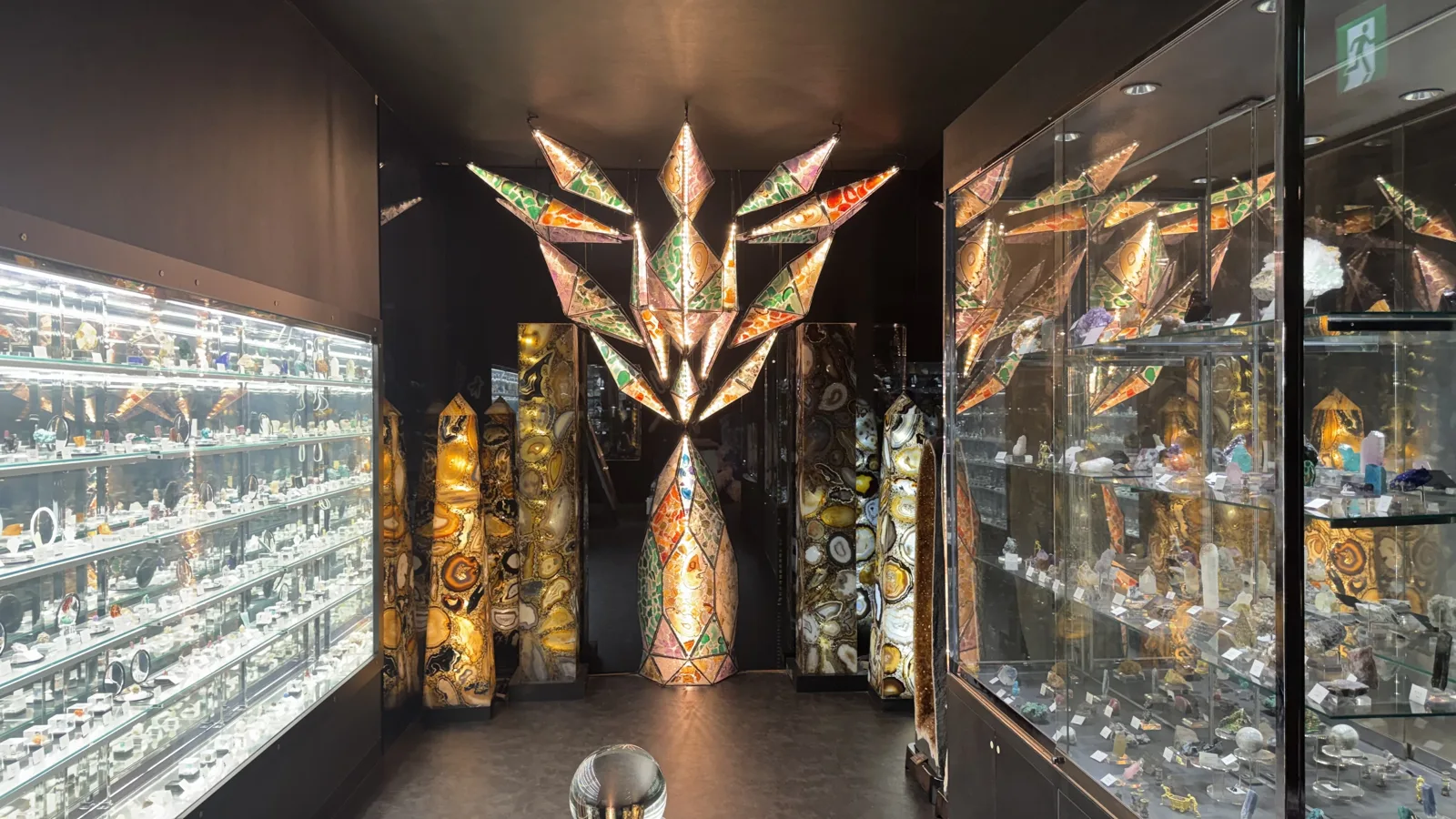
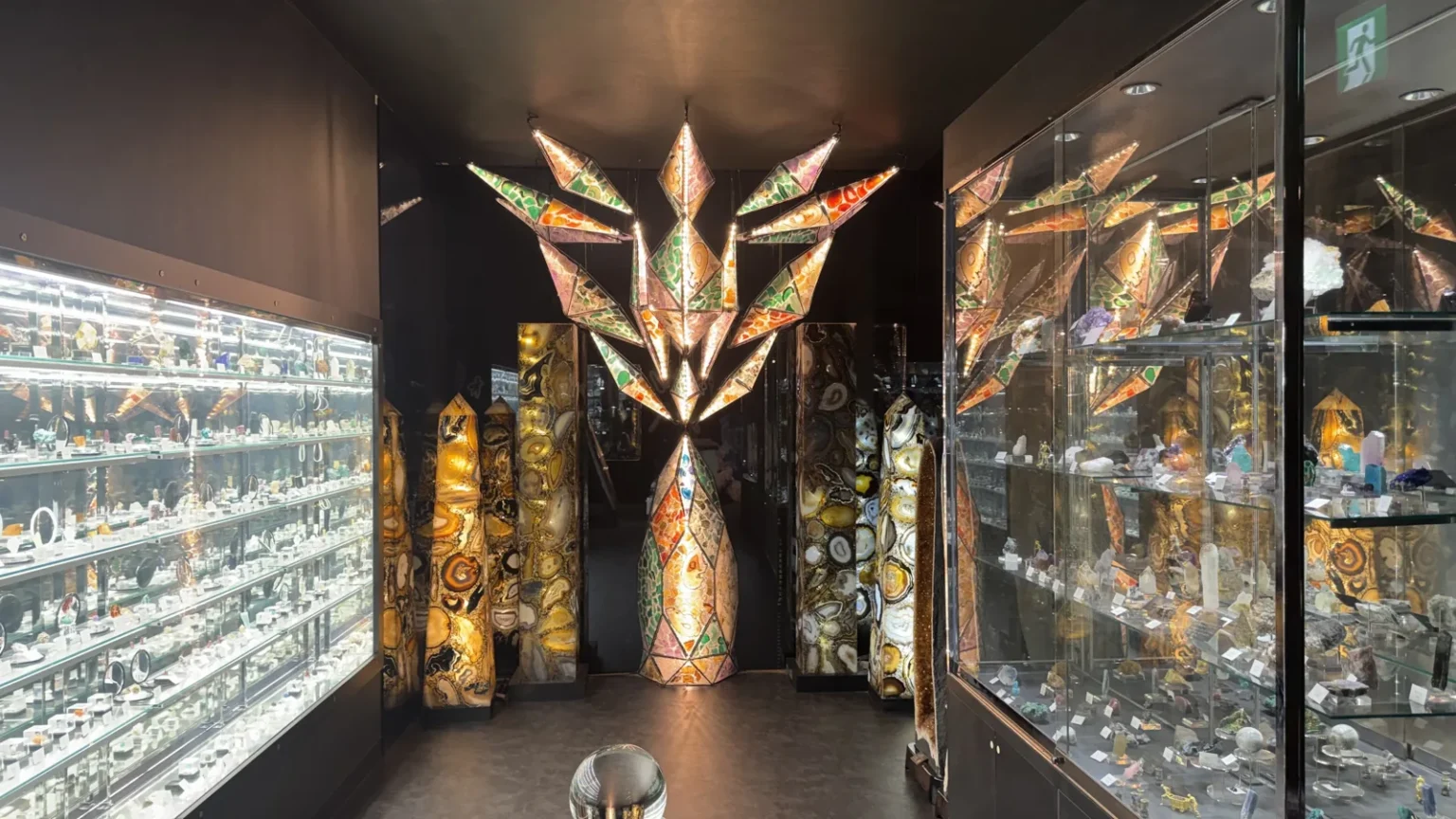
The rooms are kept dark and the cases do the lighting. One wall is floor-to-ceiling glass shelving lined with specimens in many colours. Elsewhere the cases hold bigger chunks of mineral, and my photo of that wall caught another visitor in front of the cases. The centrepiece is the art tower in the photo above, spiky and lit up in the dark. The museum says it is made of agate (瑪瑙).
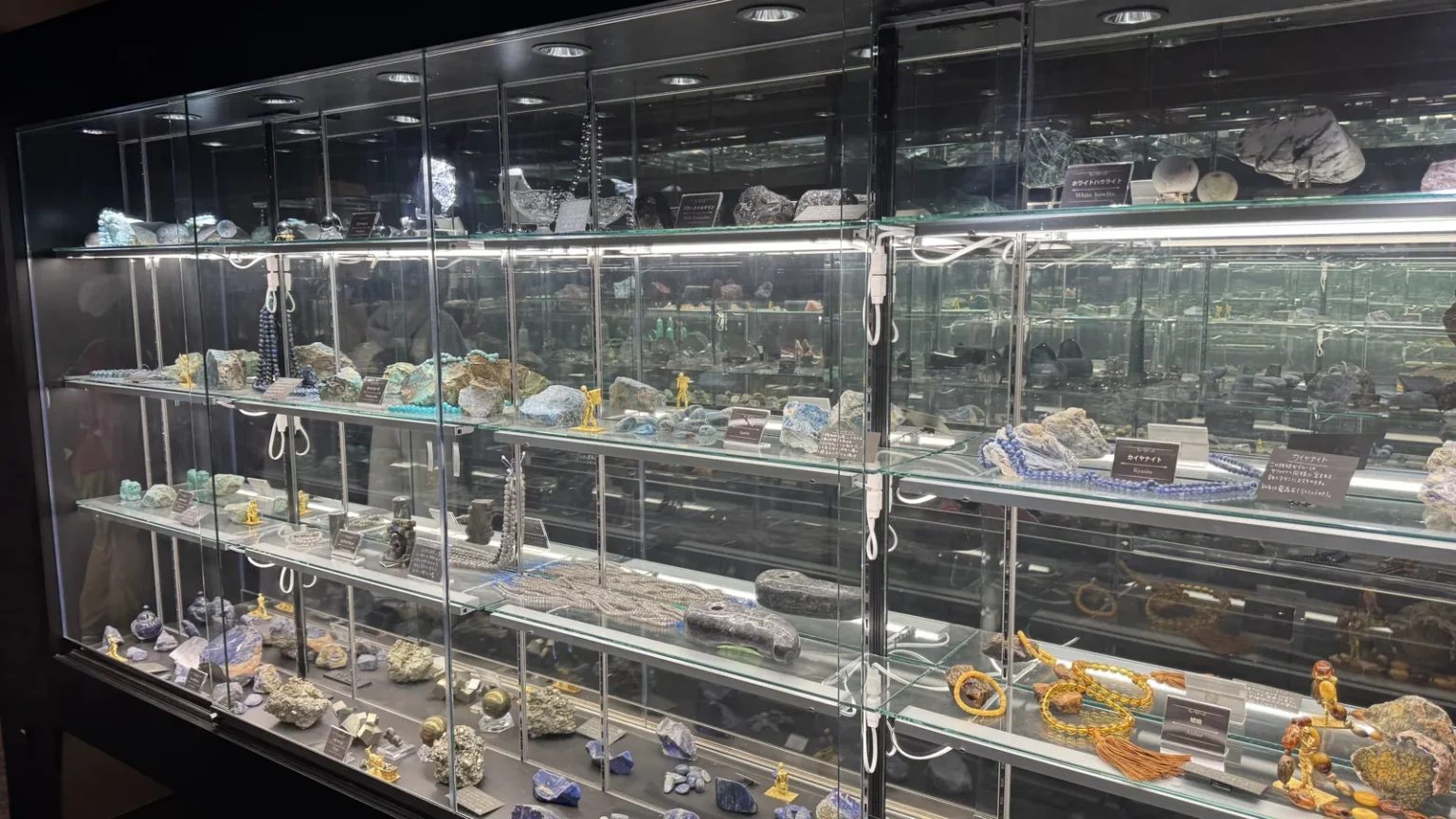
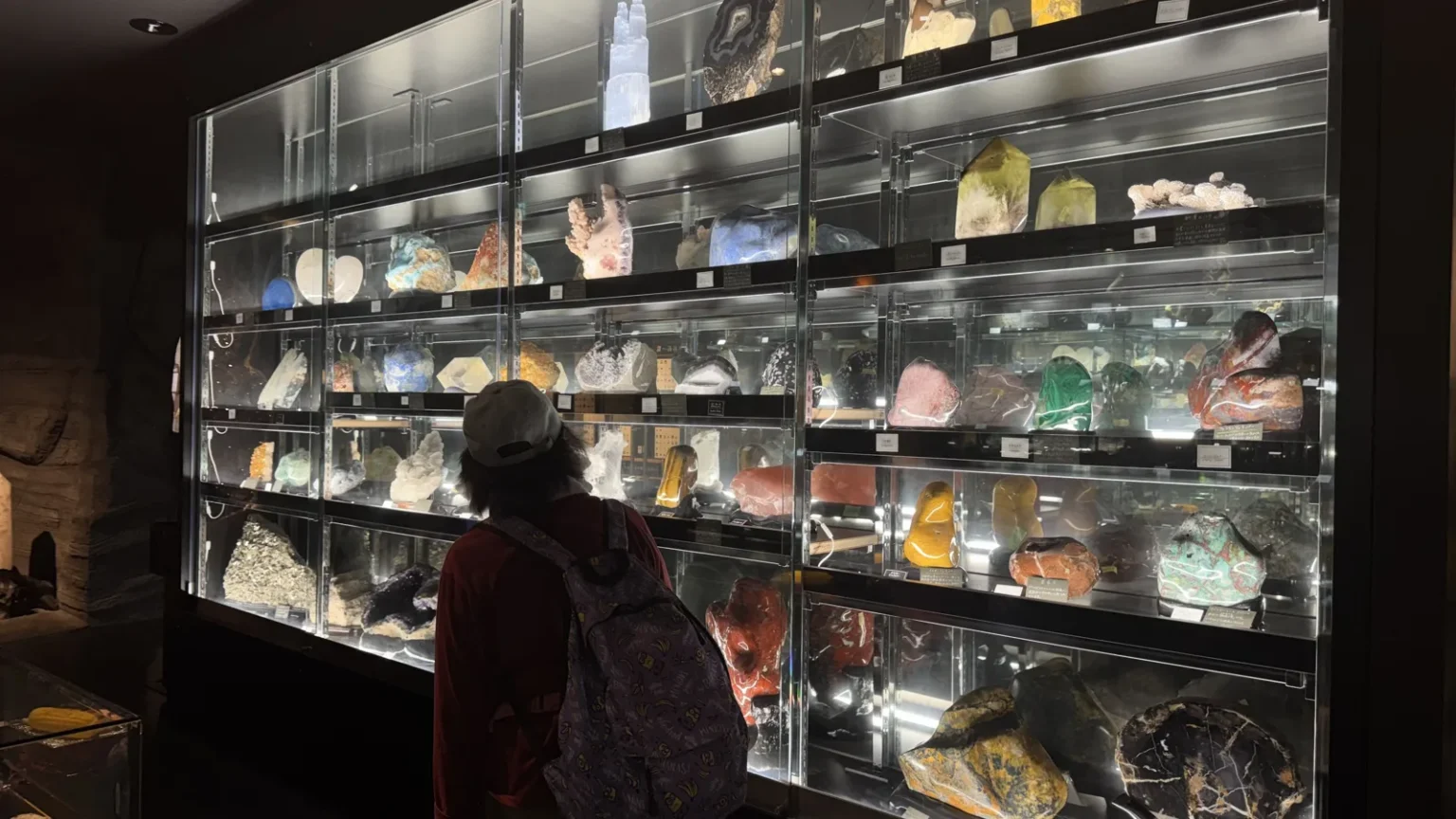
Is it worth going if you have no children with you? For me, yes. I think adults can enjoy it without children. The free halls are enough for a short stop on their own, and you don’t need to spend anything.
Tickets: no booking, just a machine
I walked in without booking. Reception is a touch-screen ticket machine, and there was nobody waiting at it. Weekends, though, seem to get very crowded. The official FAQ says no bookings are taken for any gem hunting or other service, and that everyone buys tickets from the machine on arrival.
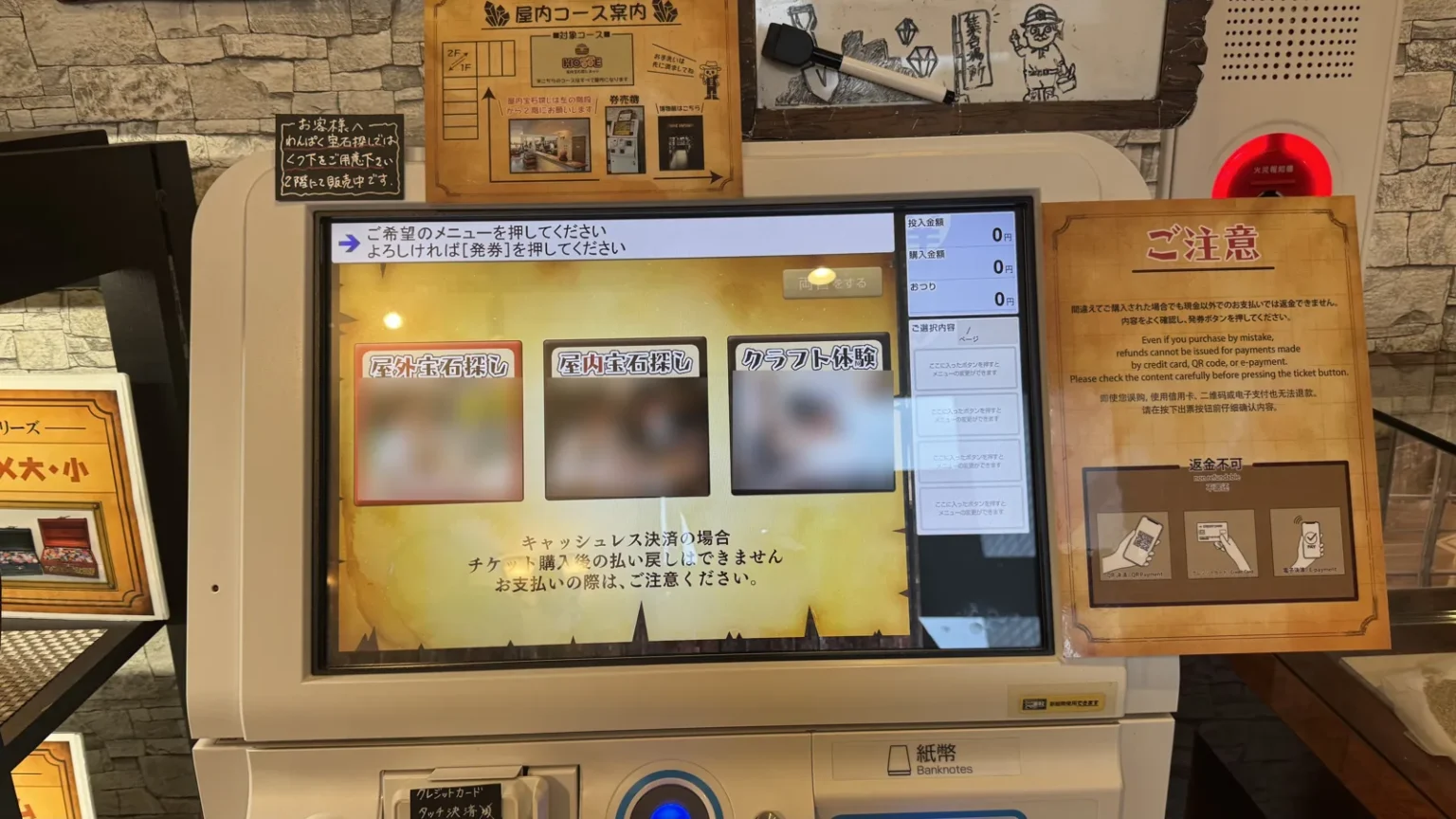
On the day, the screen offered three menus: outdoor gem hunting (屋外宝石探し), indoor gem hunting (屋内宝石探し) and crafts (クラフト体験). The machine takes banknotes, and a label shows credit cards and contactless payment. A poster next to it pointed to the indoor course, HOTTE, on the second floor.
There was also a handwritten note asking for socks for the Wanpaku gem hunt (わんぱく宝石探し), and saying socks are sold on the second floor. The official FAQ lists that hunt for ages 3 to elementary school, and says socks are ¥300 if you forget them.
Gem hunting: what I saw of it
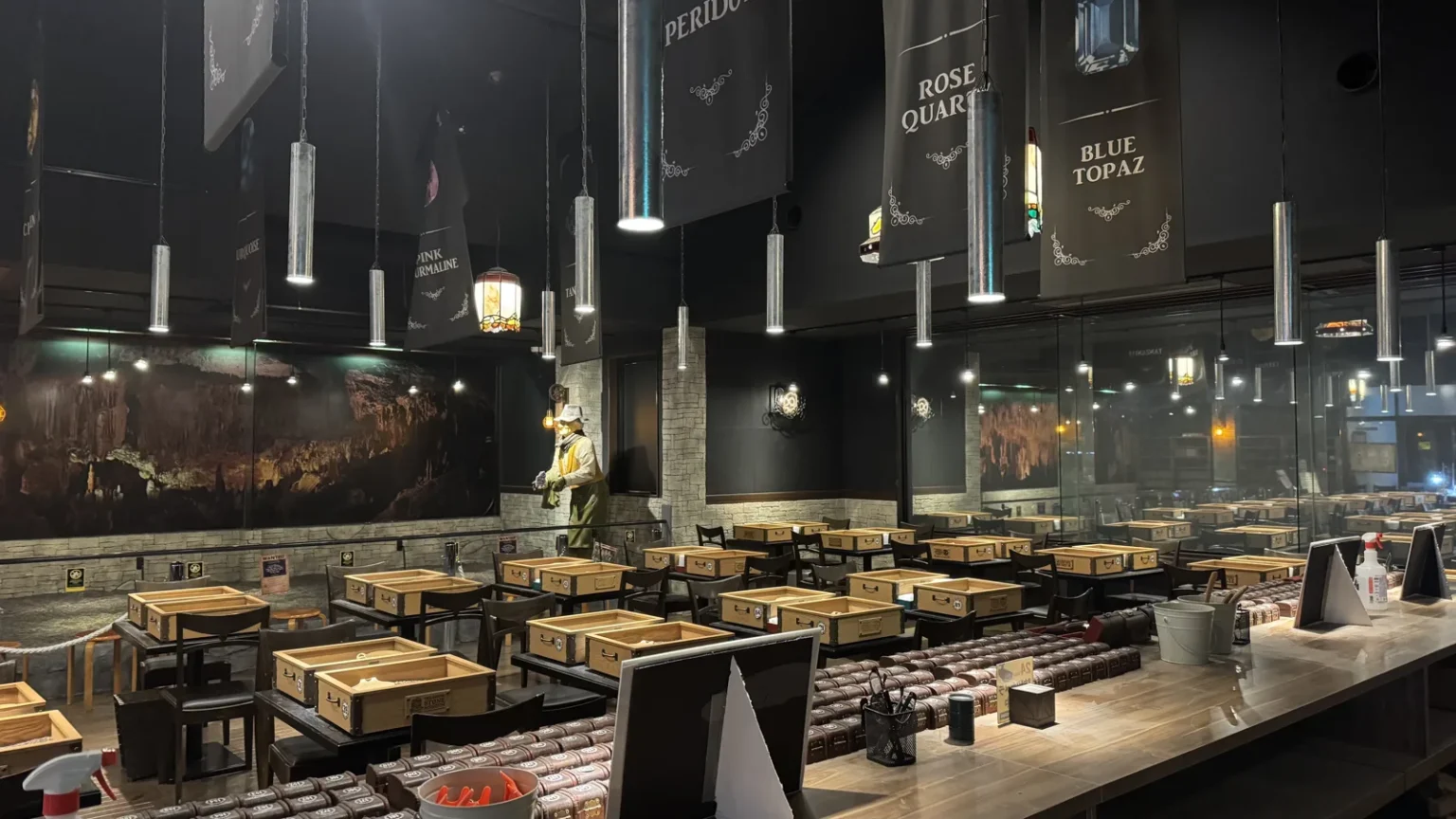
I didn’t dig this time, but I saw both areas. Upstairs, in a dark room hung with pendant lights, rows of wooden tables held trays under long banners naming stones: PERIDOT, ROSE QUARTZ, BLUE TOPAZ. I take this to be the indoor HOTTE course the poster downstairs placed on the second floor.
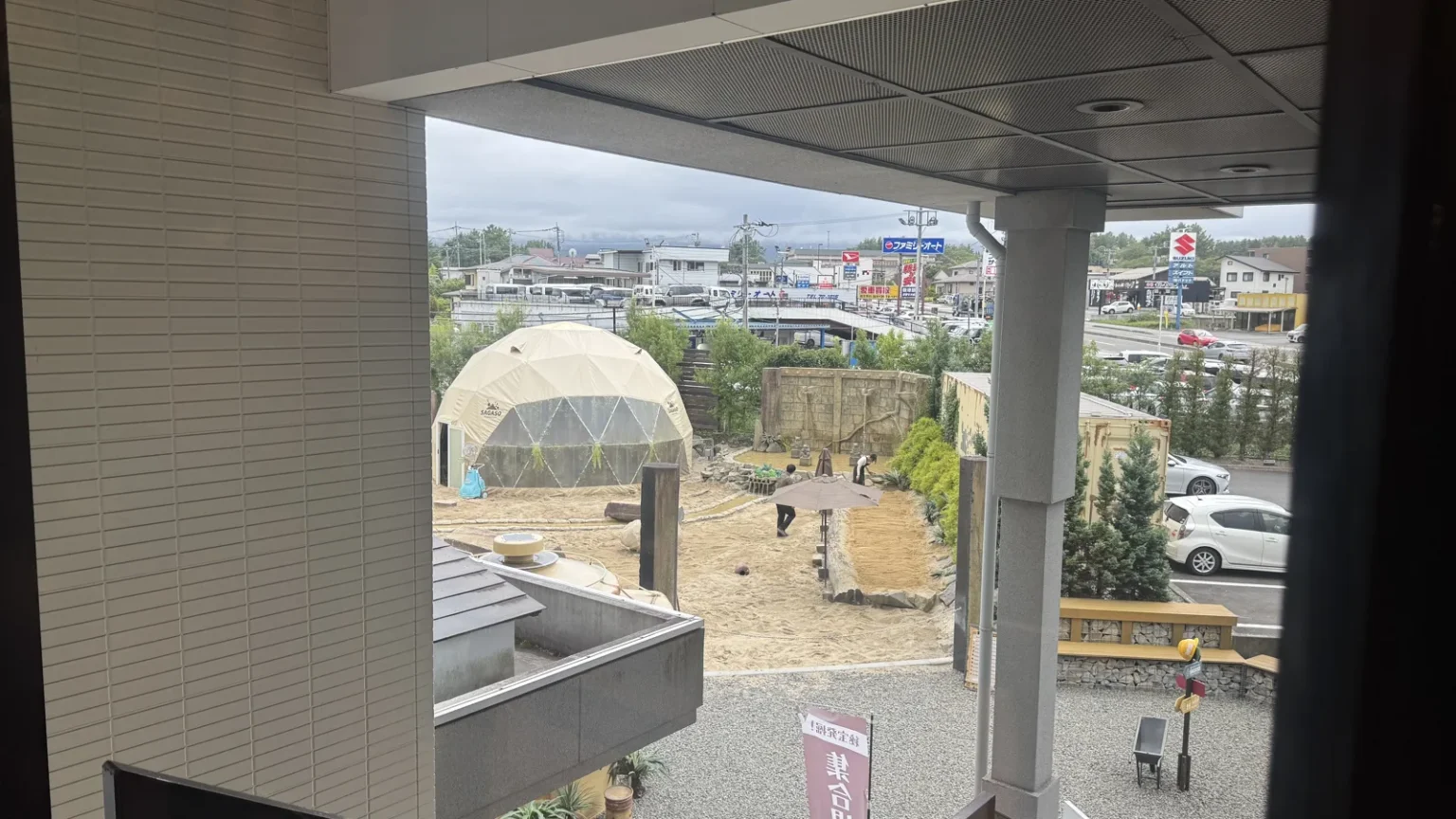
From the same floor I could look straight down on the outdoor dig site: sand, low stone walls, conifers and a big dome, with the car park and the road just beyond. The official site describes this as SAGASO, an area of about 500 tsubo (roughly 1,650 m²) split into desert, river, ruins, dark-dome and jungle-dome zones.
Prices and rules: what the museum lists
I didn’t dig or buy anything in the shop. The activity prices below are from the museum’s official pages, checked on 22 October 2026.
| Item | What the official site says |
|---|---|
| Museum | Free entry |
| SAGASO outdoor gem hunt | ¥3,300 including tax; ¥3,800 in weekend and holiday special periods (“Gold Rush”); free for ages 0–2; all ages |
| SAGASO time | 30 minutes of digging; last entry 16:00 |
| Companions at SAGASO | Cannot go in with diggers; they watch from a viewing area |
| Gold Rush days | Selected weekends, holidays and busy dates (see the Gold Rush calendar); the activity fee is ¥500 more than usual, and the FAQ says higher-value, higher-quality items are more likely to be buried |
| Wanpaku gem hunt | Ages 3 to elementary school; 30 minutes; socks required (¥300 if forgotten); rubber chips, so you don’t get dirty; fill a cup to take home |
| Booking | Not taken for any gem hunt or service; tickets from the machine |
| Doing it again | A second go means buying another ticket |
| Crafts | You can join a craft activity on its own |
The indoor courses are a different thing from SAGASO. The official pages list these, with the Gold Rush price in brackets; the HOTTE gem-hunting courses are listed as 30 minutes:
| Course | What the official site says |
|---|---|
| HOTTE adult, standard | ¥2,200 (¥2,700). Over 500 carats of processed stones in total, always including one cut loose stone; keep what you find in the time |
| HOTTE adult, special | ¥5,500 (¥6,000). A stone you choose is buried in front of you, then you dig it out |
| HOTTE adult, “celeb” | ¥10,000 (¥10,500). Includes stones such as ruby, sapphire and emerald, while stocks last |
| HOTTE pair | ¥10,000 for two (¥10,500) |
| Wanpaku | ¥1,100 (¥1,600). Age 3 to the end of elementary school; over 30 kinds of stone |
| Chibikko | ¥1,100 (¥1,600) for a child under 3 with one adult |
| Geode cracking | ¥1,100; big geode ¥1,800 (in the ground-floor shop) |
| Silver setting craft | From ¥3,300; the stone itself is extra |
The official pages don’t agree on how SAGASO starts. The SAGASO page says you can start any time on weekdays, with sessions on the hour from 10:00 to 16:00 on weekends, holidays and busy days (gather five minutes before); the FAQ says sessions start on the hour as a rule, and if you’re late you join the next one. Arrive early and check on the day. Gold Rush days are marked on the museum’s Gold Rush calendar, which is worth checking before you pick a date.
Why stones in Yamanashi
A gem museum by a lake can look like a random attraction, but Yamanashi has real history here. According to the prefecture, its jewellery industry grew out of crystal found around Mt Kinpu: crystal polishing and precious-metal work came together in the Meiji era, and the polishing trade moved to Kofu in 1887. When local crystal ran out, the industry imported Brazilian crystal and kept going. Koshu crystal and gemstone carving (甲州水晶貴石細工) has been a nationally designated traditional craft since 1976.
The stone shop
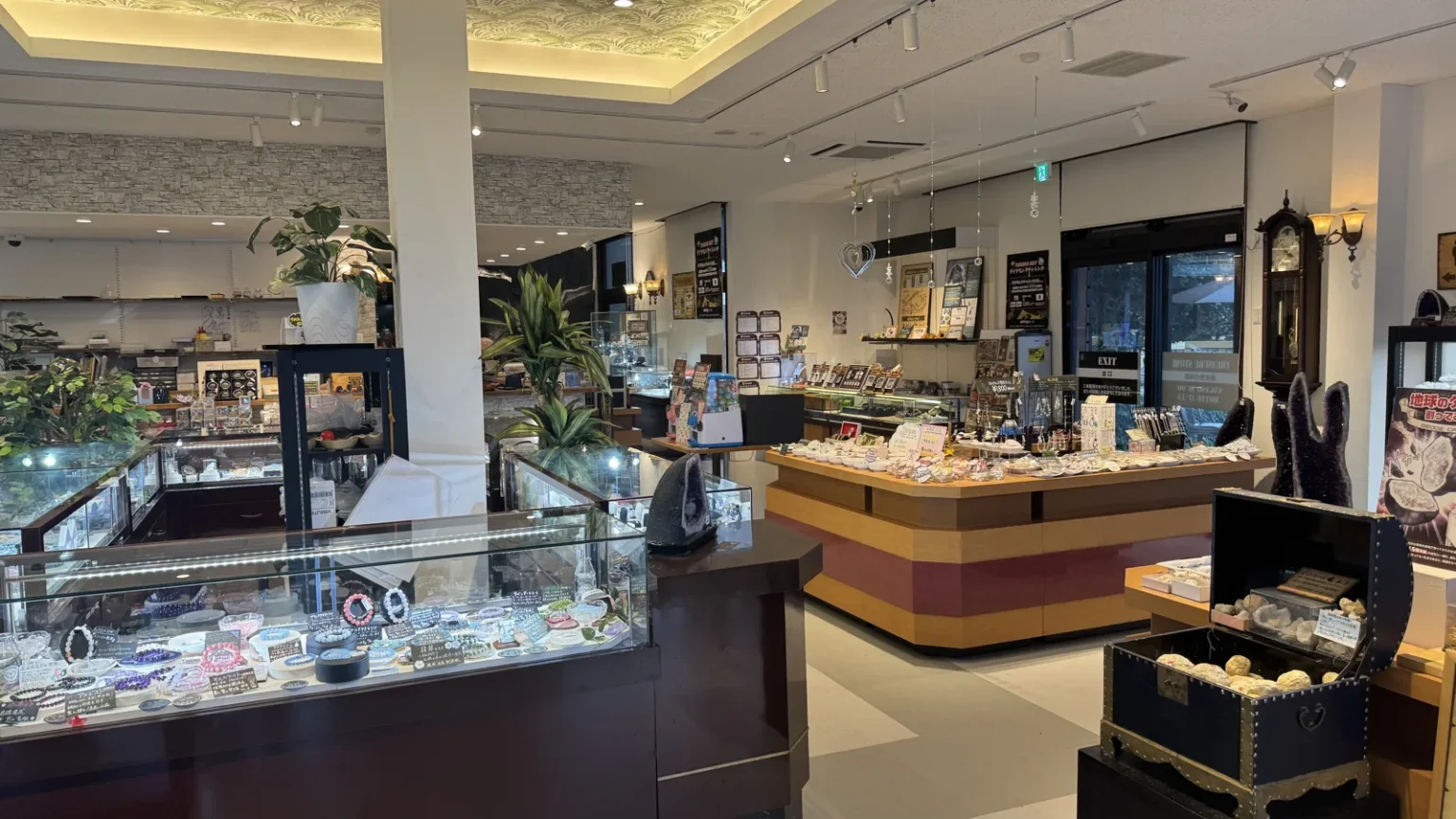
The ground floor is a bright shop, a real change after the dark halls. There are glass counters of loose stones and jewellery, a tall white column with plants around it, and an open treasure chest of polished round stones by one counter. I had come for one stone in particular. It wasn’t there, so I left without buying anything. If you have something specific in mind, as I did, don’t count on finding it here.
Practical points
Parking, lockers, food and access are from the official FAQ. The payment and language notes are from my visit and my photos.
Parking
25 free spaces. At busy times security guards direct cars, and a second car park is used.
Lockers and bags
Free coin lockers in the outdoor area. Bags too big for the lockers can be left at reception.
Food
There is no eating area on site, so eat before or after. If you eat gluten-free or halal, see our guide to food around Mt Fuji.
Pushchairs and wheelchairs
The outdoor dig area is sand and uneven ground, hard going for pushchairs and wheelchairs. Wheelchair access is to the ground-floor museum and shop only. There is an accessible toilet on the ground floor.
Language
Japanese was the main language on my visit; I can’t confirm whether staff can help in English. The ticket machine’s no-refund notice did include English, and the official website links to English, traditional and simplified Chinese, and Korean versions.
Payment
The machine on my visit had a banknote slot and a card and contactless label. Card, QR and e-payment tickets can’t be refunded.
Getting there and what’s nearby
The museum is at 1200-1 Funatsu, Fujikawaguchiko (山梨県南都留郡富士河口湖町船津1200-1, TEL 0555-25-6553). The official FAQ lists 25 free parking spaces in total and says a second parking area is used when busy. Without a car, the Kawaguchiko sightseeing bus (Red Line) takes about 3 minutes from Kawaguchiko Station to the Yakuba-iriguchi (役場入口) stop, and the museum is about 3 minutes’ walk from there, per Fujikyu. On foot from the station, independent listings put it at about 16 to 20 minutes. If you are coming from Tokyo, my Tokyo to Kawaguchiko guide covers the trains and buses.
The museum has 25 free parking spaces, with a second car park at busy times, if you’re driving around the lake.
Compare rental cars around Mt Fuji on Discover CarsSearch Japanese rental car companies on Rakuten TravelIf you’re into stones, two other places nearby are different from this one. The Yamanashi Gem Museum, also in Funatsu, is for looking at gems rather than digging; its site lists adult entry at ¥600 and closure on Wednesdays except in July and August. SAGASO NARUSAWA in Narusawa is an indoor gem hunt run separately, despite the shared name.
For another indoor stop around Lake Kawaguchi, see our guide to Hard Off and Off House.
My photos were taken between 3:26 and 3:57 p.m., and the free halls fit into a day around the lake. For the rest of that day, see the Mt Fuji Panoramic Ropeway guide, the Oishi Park and lake ferry guide and the Kawaguchiko Ohashi bridge. If you’re building a longer trip, the 2-day Fuji Five Lakes itinerary puts the viewpoints in the mornings, which leaves afternoon slots that indoor places like this fill well. Check today’s Mt Fuji view first: if the mountain is hidden, an indoor stop makes more sense than a viewpoint.
Not driving? Guided Mt Fuji day tours are another option; check each tour’s itinerary, as they won’t necessarily stop here.
Browse Mt Fuji tours on KlookIf you’re choosing a base, the Kawaguchiko vs Fujiyoshida guide compares the two. More guides are on the Mt Fuji hub.
For a base by the lake, these are Lake Kawaguchiko hotels.
Compare Lake Kawaguchiko hotels on Booking.comFAQ
Is the Fujikawaguchiko Stone Museum free?
Yes. The official site says museum entry is free; gem hunting, crafts and other activities are paid. I looked round the halls and the shop without paying anything.
How much is gem hunting?
The outdoor SAGASO dig is ¥3,300 including tax for 30 minutes, or ¥3,800 during weekend and holiday special periods, according to the official site. Last entry is 16:00. Ages 0–2 are free.
Do you need to book?
No. The museum doesn’t take bookings for any gem hunt or service; you buy tickets from the machine when you arrive. On Tuesday 8 September 2026 there was no wait, but weekends seem to get very crowded.
Is it fun for adults without children?
Yes, I think so. The free mineral halls and the agate art tower are enough on their own, even if you don’t dig.
Is there English?
When I went it was mostly Japanese. The ticket machine’s no-refund notice was in English too, and the official website has an English version.
Can I bring a pushchair or wheelchair?
The official FAQ says the outdoor dig area is sand and uneven ground, which is hard for pushchairs and wheelchairs. Wheelchair access is to the ground-floor museum and shop only, and there is an accessible toilet on the ground floor.
Sources
- Fujikawaguchiko Stone Museum, museum page (free entry, collection, history, agate tower): stone-museum.jp
- SAGASO outdoor gem hunting (prices, time, last entry, zones): stone-museum.jp
- FAQ (no booking, lockers, parking, Gold Rush days, Wanpaku hunt, food, access): stone-museum.jp
- Visit, ticket machine and photos: my own visit, 8 September 2026. Official pages checked for this guide on 22 October 2026.
- HOTTE adult courses: stone-museum.jp; Wanpaku and Chibikko: stone-museum.jp; Gold Rush: stone-museum.jp; crafts: stone-museum.jp; geode cracking: stone-museum.jp
- Fujikyu bus to Yakuba-iriguchi and walk: fujikyu-travel.co.jp
- Yamanashi Prefecture, history of the jewellery industry: pref.yamanashi.jp
- Yamanashi Gem Museum: gemmuseum.jp; SAGASO NARUSAWA: n-sagaso.jp
- Yamanashi Prefectural Jewelry Art Academy, history (1887 move to Kofu): pref.yamanashi.jp; METI list of traditional crafts (1976 designation): meti.go.jp (PDF)
- Fujikyu sightseeing bus timetable: fujikyubus.co.jp; walking time listings: touristbase.jp
- Walking time listings: Yahoo! Map
Prices and rules are from the official site as read on 22 October 2026. Check it before visiting.
Some links above are affiliate links — they cost you nothing extra and help keep this site going.
Join travelers discovering Japan's hidden side
Weekly dispatches from off-the-beaten-path Japan — spots and stories you won't find in guidebooks.
No spam. Unsubscribe anytime.
Welcome aboard!
You're in. See you in your inbox soon.