
Nara · Nara Park · Shoryakuji · Tanzan Shrine · Hasedera · Murouji · Yoshino
Nara Park’s Japanese maples usually look their best from late November to early December, says Nara Prefecture’s own Nara Park page, which adds that cherry, zelkova and ginkgo in the park turn too. Outside the city, Yoshino’s maples were already starting to turn in some areas on 16 October 2026. The bus company Nara Kotsu gives mid-November to early December for two hill spots outside the city, Shoryakuji and Tanzan Shrine. Before that, the Nara National Museum holds its annual autumn show, the 78th Shosoin Exhibition, from 24 October to 9 November 2026, with date-and-time tickets. Below: 10 places, plus a Yoshino side trip, with the usual peak window where one is published, the 2026 event dates otherwise, and a one-day route.
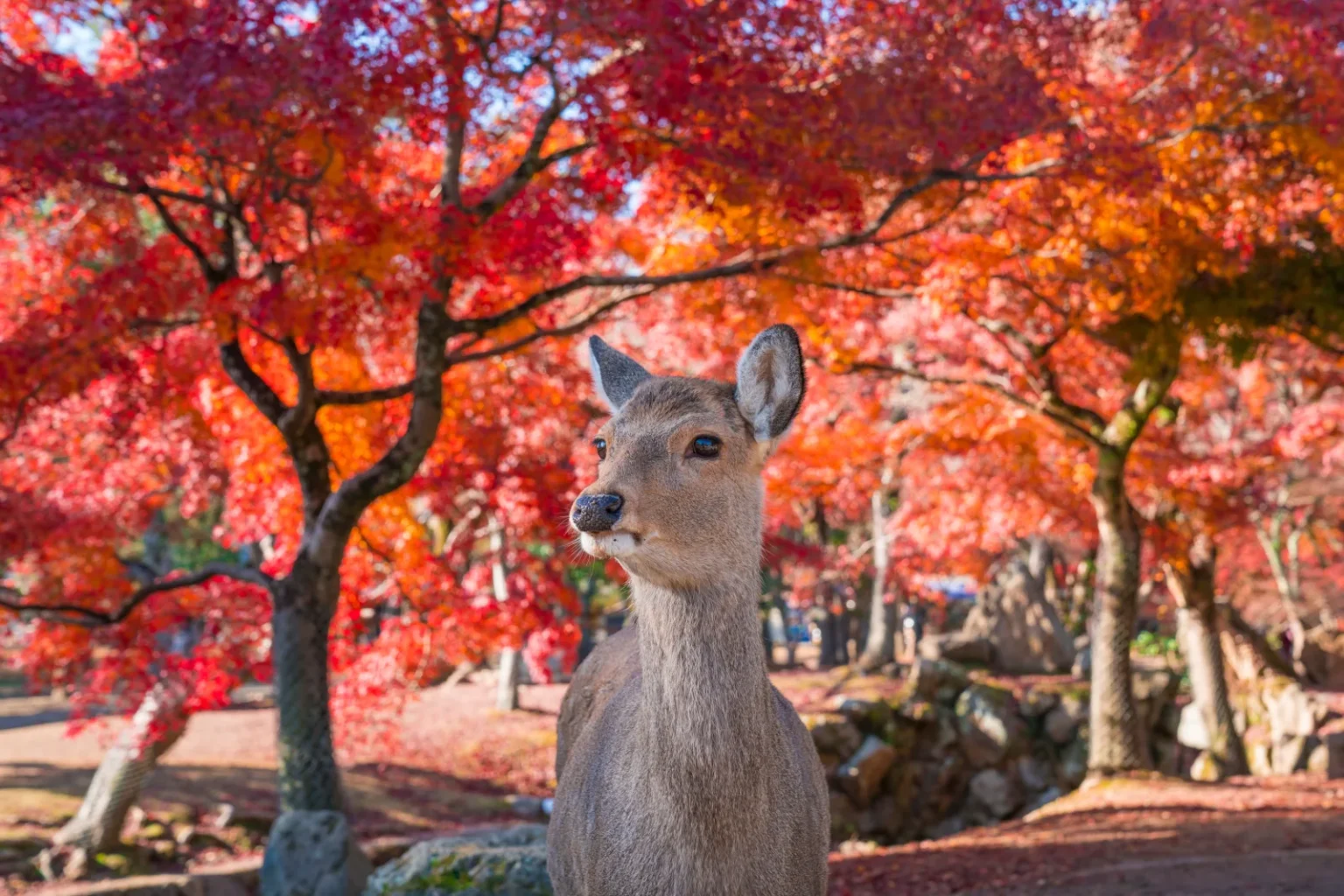
Six of the ten are in Nara Park, on foot or by the loop bus from Kintetsu-Nara: Todaiji, Kasuga Taisha, Ukimido, the Yoshikien and Isuien gardens and Mt Wakakusa. The other four need a separate bus or train trip, and Yoshino is a longer rail trip. For the park maples, I would choose late November. If you come between 24 October and 9 November instead, you can add the Shosoin Exhibition, but that is earlier than the maples’ usual best.
When are the autumn leaves in Nara?
Usual peak windows come from the operator or official page; where a place publishes only 2026 festival or event dates, the table gives those instead and says so. None is a forecast: for the week you go, see our Japan koyo tracker.
| Spot | Usual peak window where published; otherwise 2026 dates |
|---|---|
| Nara Park (Todaiji, Kasuga, Ukimido, gardens) | Japanese maples usually at their best late November to early December (Nara Park FAQ); cherry, zelkova and ginkgo also turn |
| Shoryakuji | Usually mid-November to early December (Nara Kotsu). The temple says its 3,000-plus maples colour one after another through November. Special viewing 3 November to 6 December 2026 |
| Tanzan Shrine | Usually mid-November to early December (Nara Kotsu). The shrine’s autumn-leaf festival runs 1 October to 6 December 2026, with a leaf light-up every evening from 14 November to 6 December |
| Hasedera | The temple pages checked on 16 October 2026 give festival dates, not a usual peak: momiji festival 10 October to 6 December 2026 |
| Murouji | The temple lists its autumn-leaf period as 17 October to 6 December 2026 (a period, not a peak forecast). Five-storey pagoda closed from 17 August 2026 and Kondo from 5 October 2026 for roof work |
| Yoshino | 16 October 2026 report (Yoshino Visitors Bureau): cherry leaves at their best in many places; maples not yet turning or just starting, near their best in places at the Takagiyama lookout. Light-up 23 October to 30 November 2026 |
Late November falls inside the published usual windows for Nara Park, Shoryakuji and Tanzan Shrine. The Hasedera, Murouji and Yoshino rows are 2026 event dates or a dated report, not peak forecasts.
If you want an early start in Nara Park or plan to stay overnight, see Nara stays on Booking.com; the Where to stay section below explains when sleeping in Nara helps.
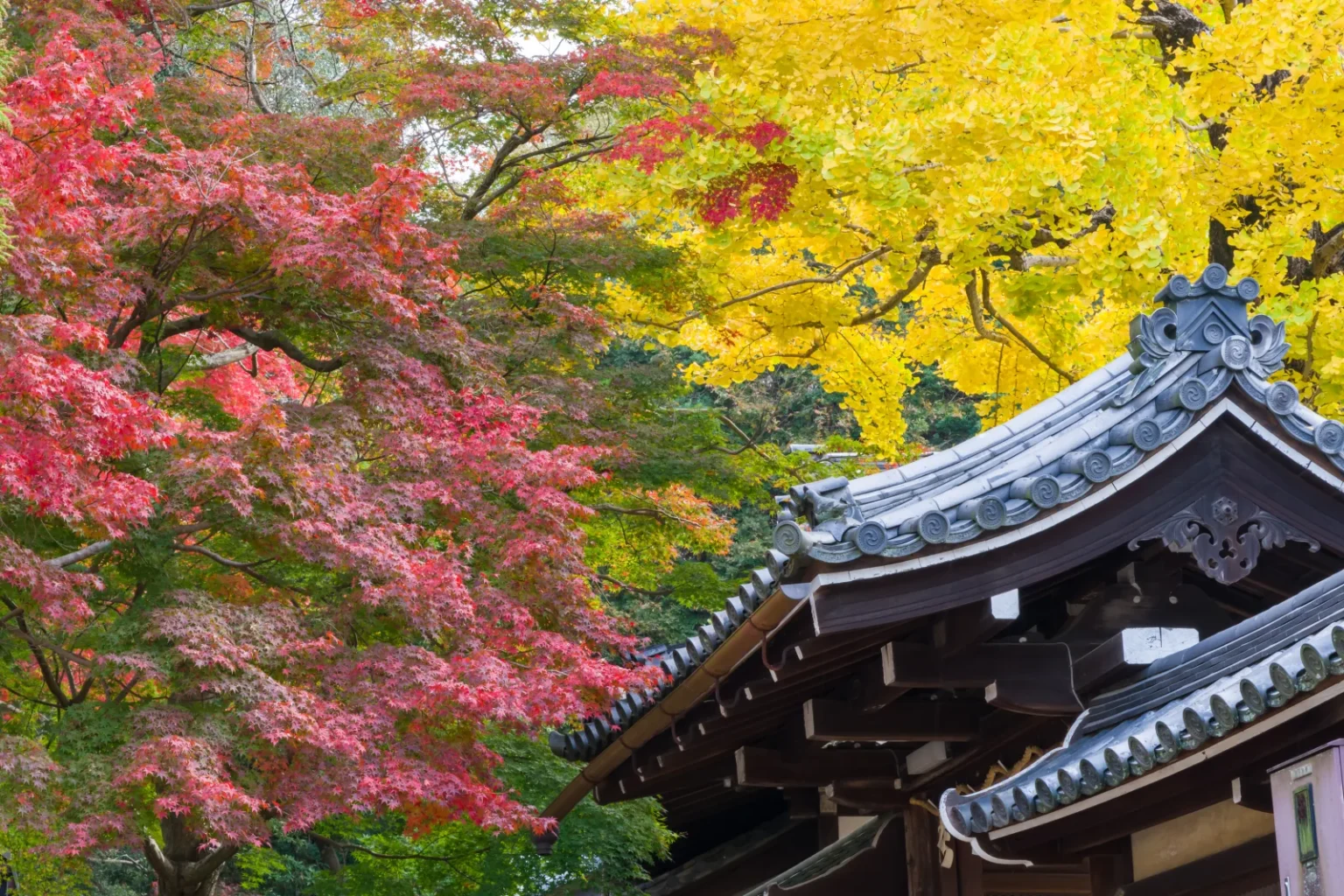
Where to see autumn leaves in Nara Park
Nara Prefecture counts about 10,000 trees of 87 species on the park’s flat ground alone. The central sights and gardens are a 5 to 30 minute walk from Kintetsu-Nara, or a short ride on the Nara Kotsu city loop bus (outer loop). The top of Mt Wakakusa is a separate uphill walk or a bus trip.
Todaiji and Nigatsudo
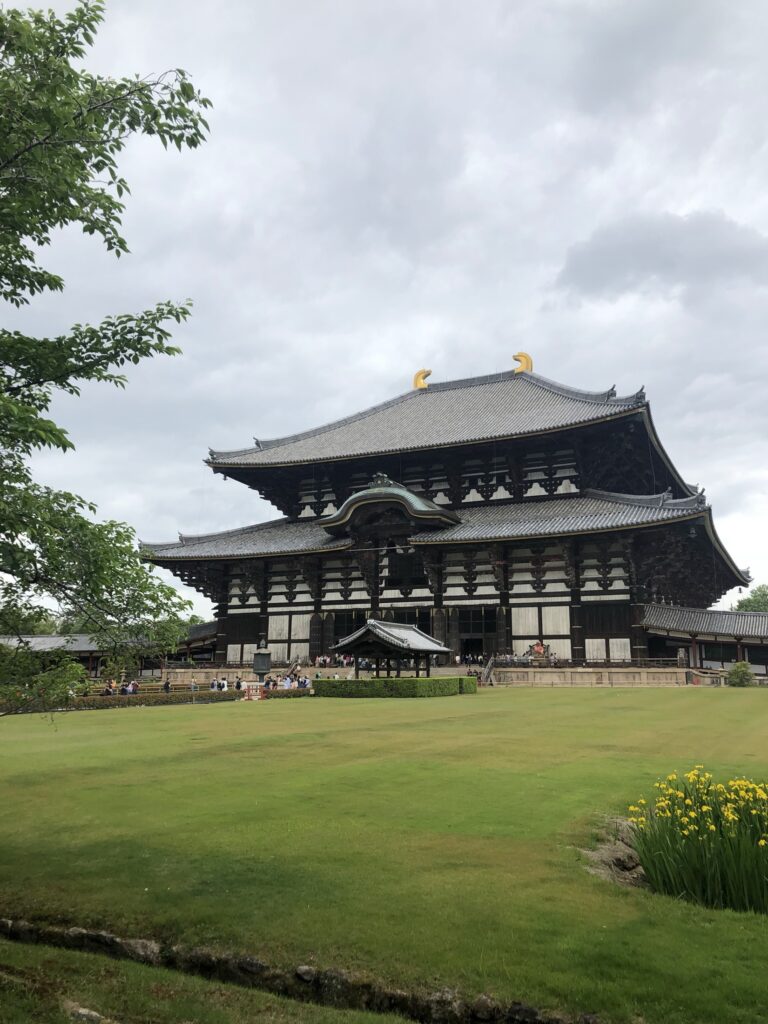
At Todaiji, head outside the Great Buddha Hall for the colour: it is on the lawns and up the slope to Nigatsudo, a National Treasure rebuilt in 1669 after a fire during the 1667 Omizutori rite; the prefecture calls the view from it over the Nara basin a grand one. Nigatsudo is open 24 hours a day, says Todaiji. For the Buddha and the gates, see our Todaiji and Nara deer guide.
Great Buddha Hall: 7:30–17:30 until 31 October, 8:00–17:00 from November to March; adults ¥800, cash only. About 20 minutes on foot from Kintetsu-Nara.
Kasuga Taisha
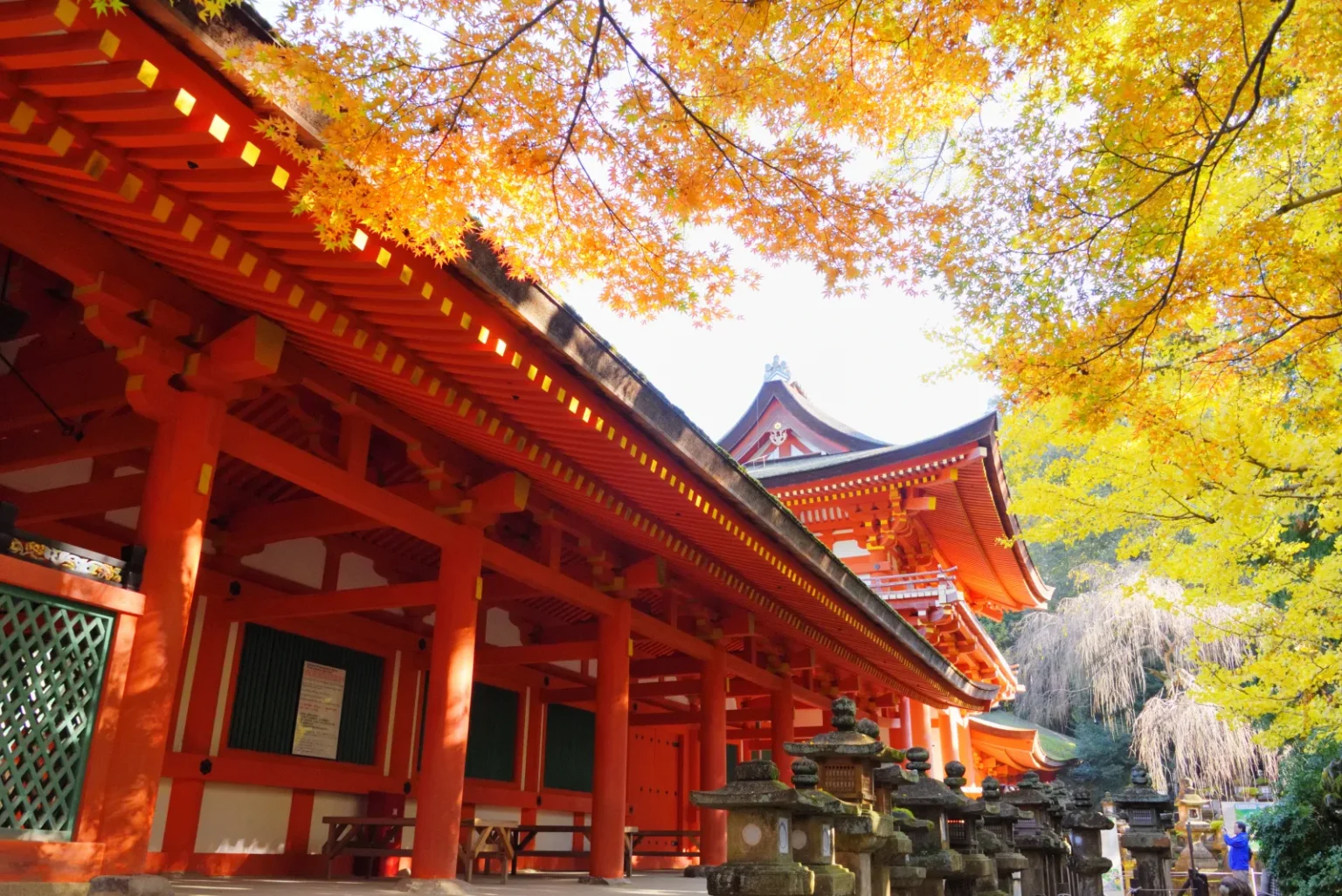
From the first torii the approach runs east through cedar woods, lined with stone lanterns on both sides, to vermilion halls and corridors hung with lanterns. The main worship area is free and open 7:00–17:00 from November to February. The inner precinct visit costs ¥700 (9:00–16:00) and is closed on the mornings of the 1st, 11th and 21st and of 3 and 23 November. The Kasuga Taisha Honden bus from JR or Kintetsu Nara takes about 11–15 minutes; on foot it is about 25 minutes.
Ukimido and Sagiike Pond
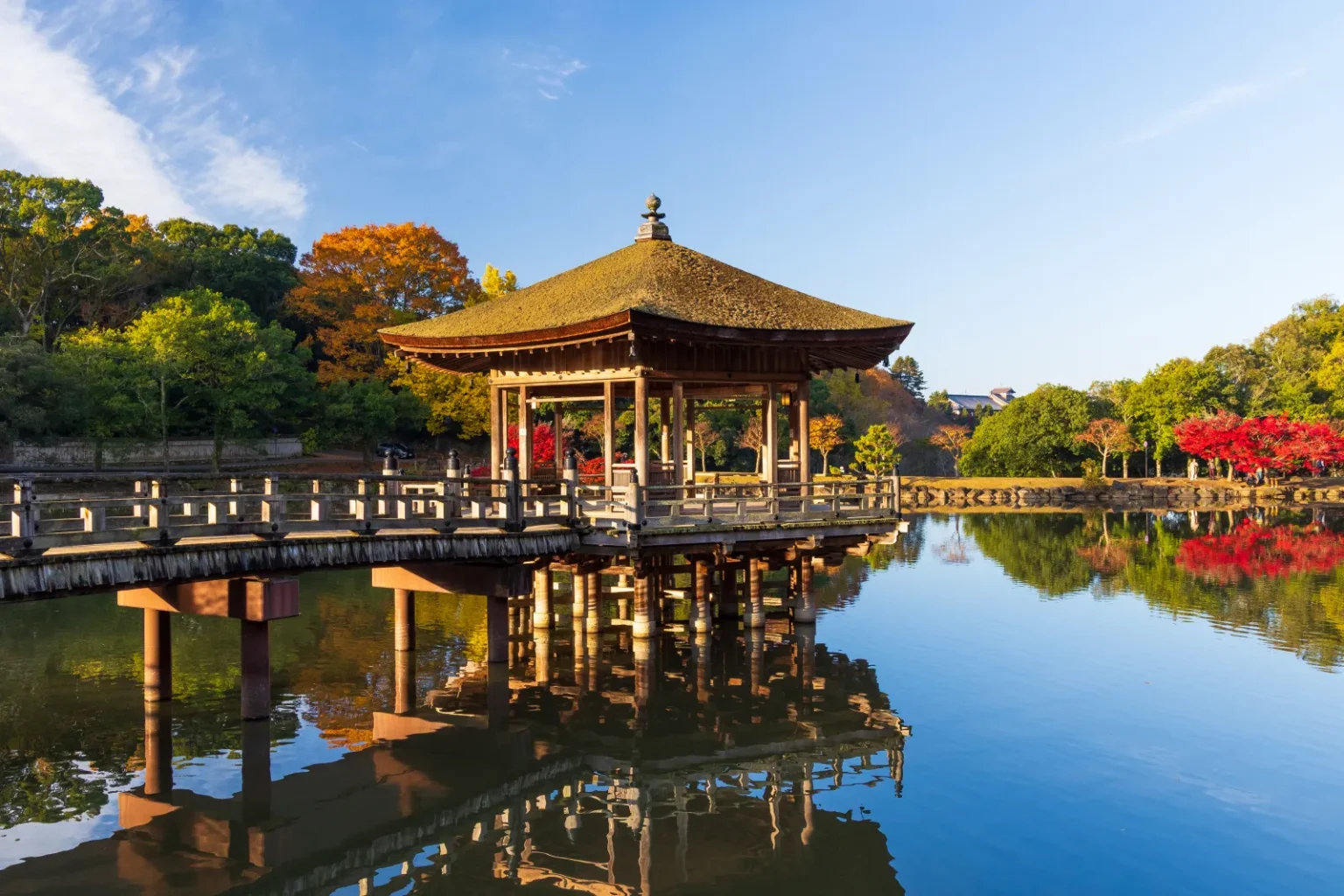
South of the Kasuga approach, the hexagonal hall of Ukimido stands on Sagiike Pond; the prefecture singles out its reflection on the water. Free. Loop bus to Kasuga Taisha Omotesando and a 5-minute walk, or about 20 minutes on foot from Kintetsu-Nara. I would come in the late afternoon, at the end of the route below.
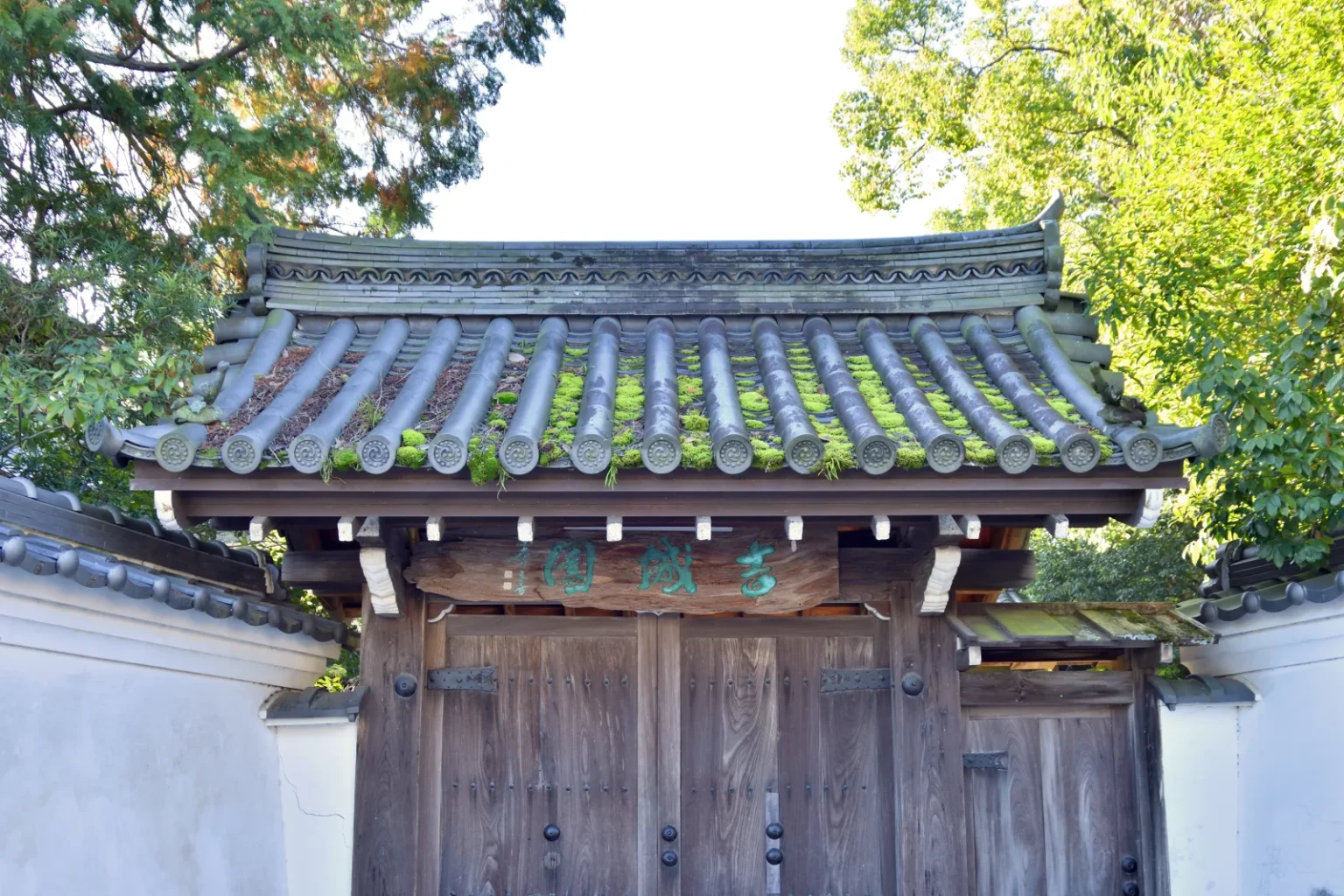
Yoshikien Garden
Built in 1919 on the site of a Kofukuji sub-temple and owned by the prefecture since the late Showa era, Yoshikien has a pond garden, a moss garden with a thatched tea house and a tea-flower garden, with Mt Kasuga and Mt Wakakusa as borrowed scenery. Entry is free for everyone since April 2020, so older guides that mention a fee, or free entry for foreign visitors only, are out of date. Open 9:00–17:00 (last entry 16:30), about 10 minutes from Kintetsu-Nara.
Isuien Garden
Next door, Isuien joins an Edo-period front garden to a Meiji-era rear garden that borrows the Todaiji Nandaimon gate and Mt Wakakusa, Mt Kasuga and Mt Mikasa as its backdrop. It is a national Place of Scenic Beauty, and the ticket includes the Neiraku Museum of East Asian art.
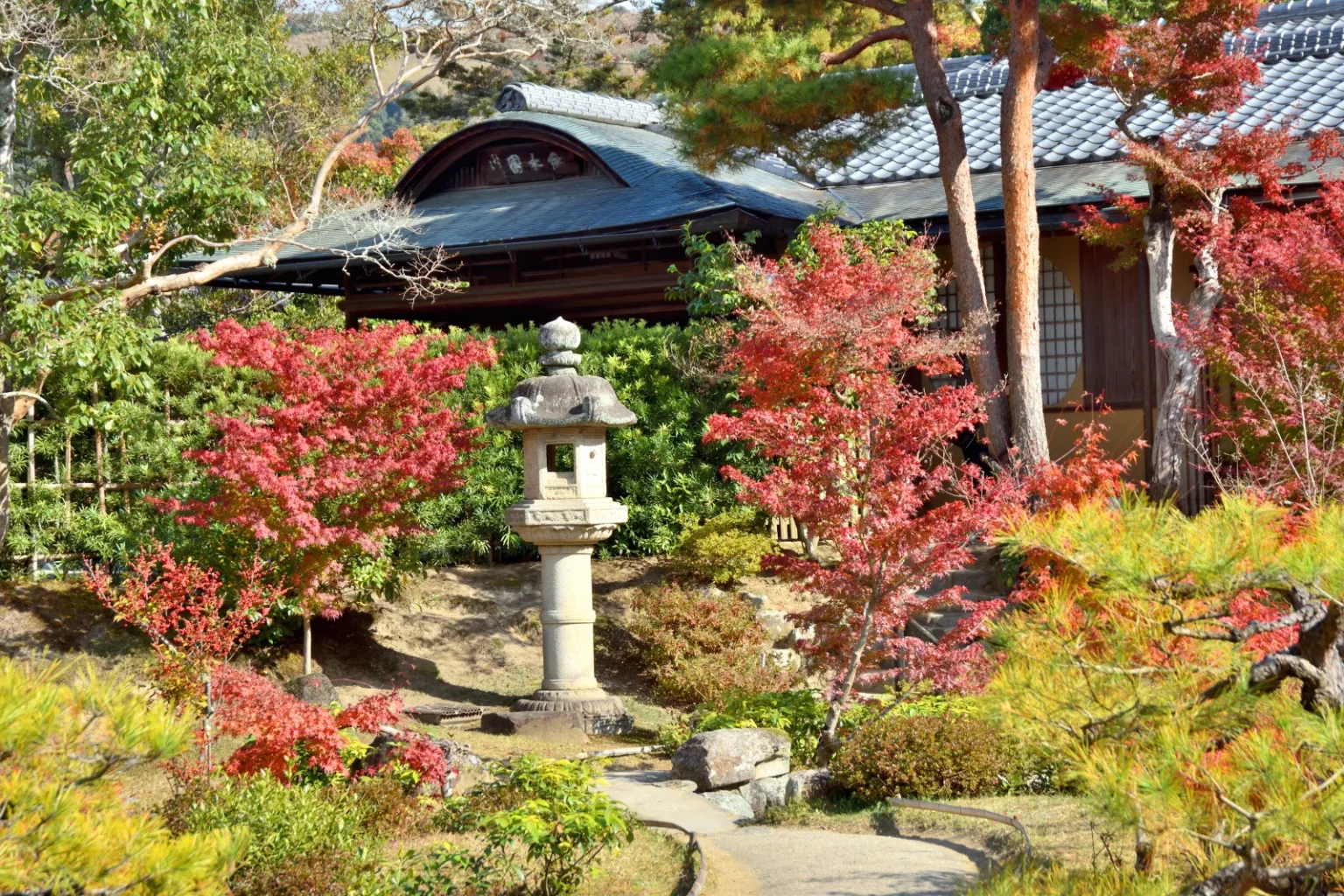
Isuien: 9:30–16:30 (entry by 16:00), adults ¥1,200. Closed Tuesdays (if a Tuesday is a holiday, the next weekday instead). Some stepping stones are uneven, and wheelchairs cannot go round, says the garden. About 15 minutes from Kintetsu-Nara.
Mt Wakakusa
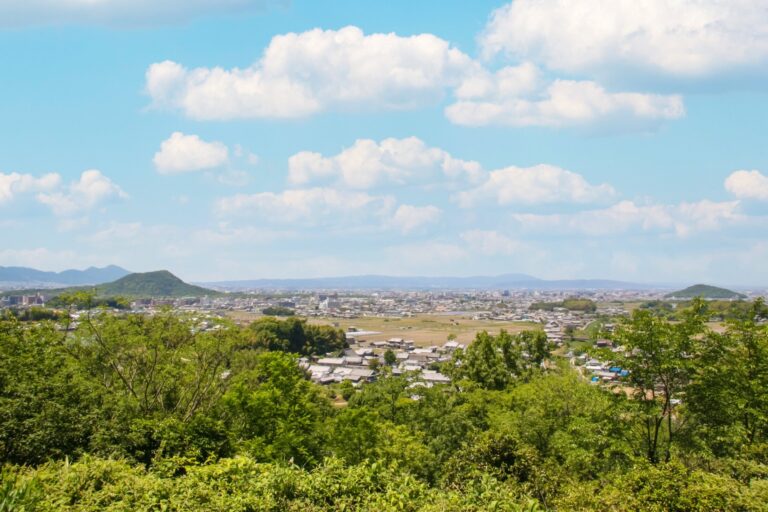
A 342 m grassy hill above the park with a view over the whole Nara basin. The prefecture warns the slope is steeper than it looks on the way down.
| Mt Wakakusa | 2026 |
|---|---|
| Open | Third Saturday of March to second Sunday of December (on that rule, until 13 December 2026), 9:00–17:00 |
| Entry | ¥150 |
| Hilltop Bus (Nara Kotsu) | Daily until 12 December 2026 from JR Nara at 10:05, 12:05, 14:05 and 16:05 (Kintetsu-Nara 5 minutes later); 45 minutes at the top; ¥2,000 return |
| Saturday exception | The 16:05 Hilltop Bus is suspended on Saturdays from 31 October to 28 November 2026. The separate twilight bus on those Saturdays (16:10 JR Nara, 16:15 Kintetsu-Nara) is reservation-only, see the night table below |
Times and booking: Nara Kotsu’s Wakakusa Hilltop Bus page (Japanese, with links to its English booking page). If the regular Hilltop Bus has seats on the day, you can board it without booking, Nara Kotsu says; the separate twilight bus is reservation-only.
Prefectural Office rooftop
Free terrace looking over the autumn park to the Great Buddha Hall and Mt Wakakusa. The Kofukuji five-storey pagoda is under repair (Kofukuji, checked 16 October 2026) inside a temporary cover; its spire is due back in 2031, Kyodo reported in April 2026, so do not go for the pagoda. Open on set days listed on the prefecture’s site. 5 minutes from Kintetsu-Nara.
Todaiji East Pagoda site
Only the base remains of a pagoda said to have stood about 100 m tall. The park page points to its yellow ginkgo in autumn.
Kasugano and the Shirahebi River
The park’s largest open lawn, with Mt Wakakusa to the east and the Great Buddha Hall to the north-west. The Shirahebi River along its north side is pretty in autumn colour, says the park page. Free.
Shosoin Exhibition 2026: dates, tickets and timing
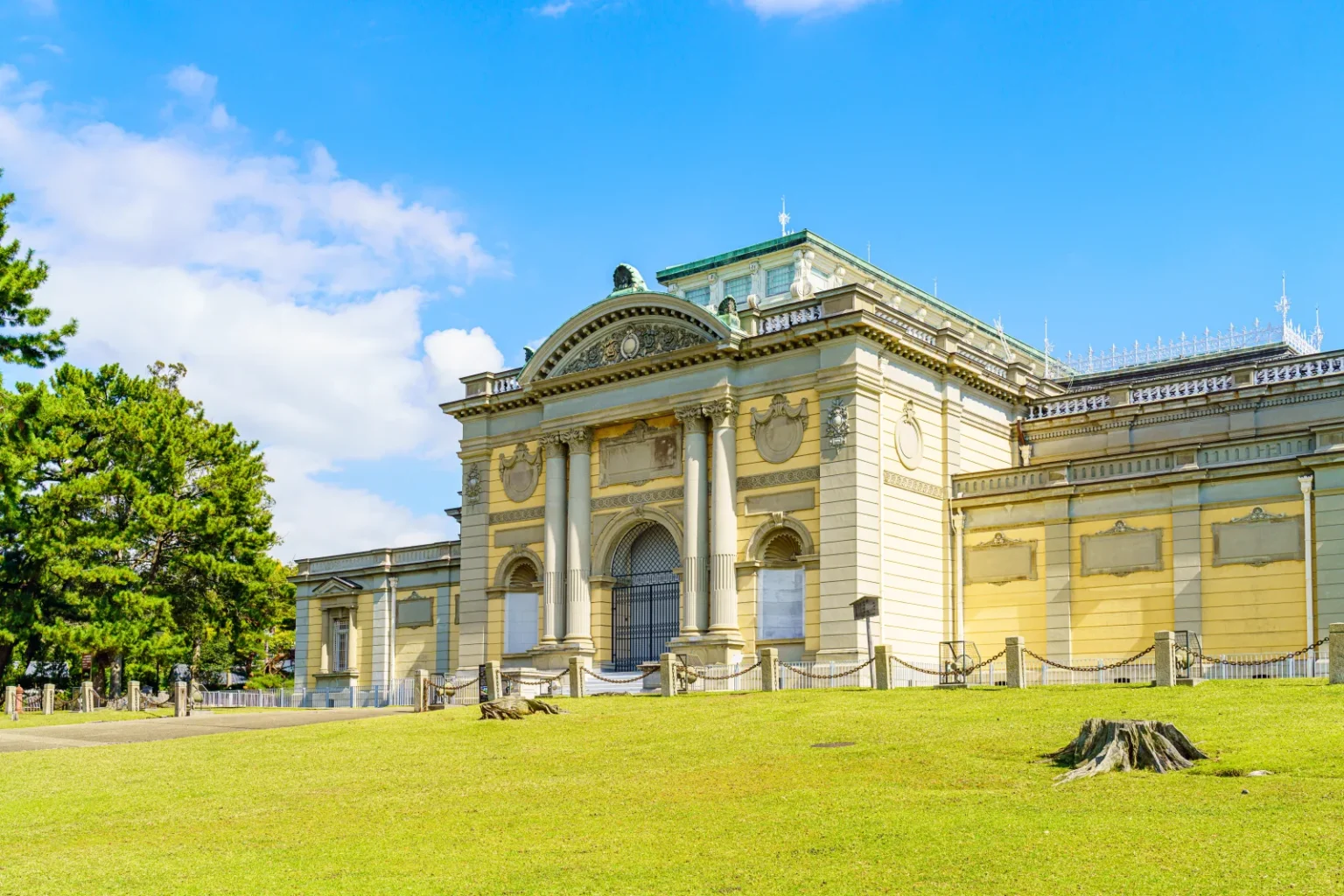
The Shosoin treasures, about 9,000 items centred on the belongings of Emperor Shomu, who ruled in the Nara period, are kept under a system that needs the emperor’s permission to open the store. Each autumn a selection goes on show, normally at the Nara National Museum (three past shows were held in Tokyo); 2026 is the 78th show and 80 years since the first, in 1946. The museum’s highlights include a lacquered ewer of Persian form, the shikkohei, and a white glass bottle.
| 78th Shosoin Exhibition | 2026 details |
|---|---|
| Dates | Saturday 24 October to Monday 9 November 2026, open every day |
| Venue | Nara National Museum, East and West New Wings |
| Hours | 8:00–18:00; to 20:00 on Fridays, Saturdays, Sundays and holidays. Last entry 60 minutes before closing |
| Tickets | Date-and-time tickets, sold in advance: adults ¥2,000, high-school and university students ¥1,500, elementary and junior-high ¥500. Over-70s pay the adult price |
| Late discount | Adults ¥1,500 for entry slots from 16:00 Monday to Thursday, or from 17:00 Friday to Sunday and holidays |
| Where to buy | The exhibition’s online ticket site (English page linked below), Lawson Ticket, or the Bijutsuten Navi app. Up to 8 per purchase, no group tickets |
| On the day | If a slot still has space, the museum’s special counter sells it with a ¥200 fee per ticket; the museum warns slots can sell out |
Book and check: official online tickets (English) · the museum’s exhibition page (Japanese; slot list and notices).
The museum is about 15 minutes on foot east of Kintetsu-Nara along Noborioji Street, or on the loop bus (outer loop) to Himuro Jinja / Kokuritsu Hakubutsukan. It sits between Kofukuji and Todaiji, which is why the route below starts there.
Timed tickets, bus times and temple notices are easier to check on the move with mobile data. Check that your phone supports eSIM and how the plan activates before you buy.
See eSIM optionsAutumn leaves beyond Nara Park
Each of these is a half day at least, by bus or a longer train ride.
Shoryakuji: the “village of brocade”
Founded in 992 by order of Emperor Ichijo in the hills south-east of Nara city, Shoryakuji burned in 1180 and today keeps only a few buildings: the Fukujuin guest hall (1681, an Important Cultural Property), the main hall and a bell tower.
Its more than 3,000 maples colour one after another through November, and the mix of green with yellow and red is why it has long been called Nishiki no Sato, the village of brocade. The temple also calls itself the birthplace of refined sake, and sells sake brewed from the bodaimoto starter it still prepares each January.
Why did a temple brew sake? Nara Prefecture explains that Shoryakuji once depended on state funds, and as that money shrank the temple had to raise its own income. It made refined sake, then a high-value product, and sold it mainly to nobles and warrior families. A Muromachi-period brewing record, Goshu no Nikki (御酒之日記), has an entry called “Bodaisen” that sets out in detail how the sake of Bodaisanji (Shoryakuji) was made, and the diary Tamon-in Nikki also mentions the temple’s brewing. The prefecture says sake-making seems to have flourished there from around the mid-15th century and continued for about 200 years before it stopped.
The prefecture describes how this sake differed from cloudy sake: lactic-acid bacteria were used to sterilise it; the starter was kept distinct from the sake, and the sake was brewed in several additions; and Shoryakuji used polished rice for both the koji and the steamed rice, a method called morohaku. A paper from the National Tax Agency’s college adds that Goshu no Nikki records hi-ire, low-temperature pasteurisation of the sake, though it notes that the specific timing is not clear. In 1998 bodaimoto brewing was revived, after a research group formed in 1996 and working with Nara Prefecture’s industrial technology centre collected the three microorganisms it needs, lactic-acid bacteria, yeast and koji mould, on the mountain at Shoryakuji. The conditions set then require the starter to be made at Shoryakuji, with the temple’s yeast, rice from temple land and clean water.
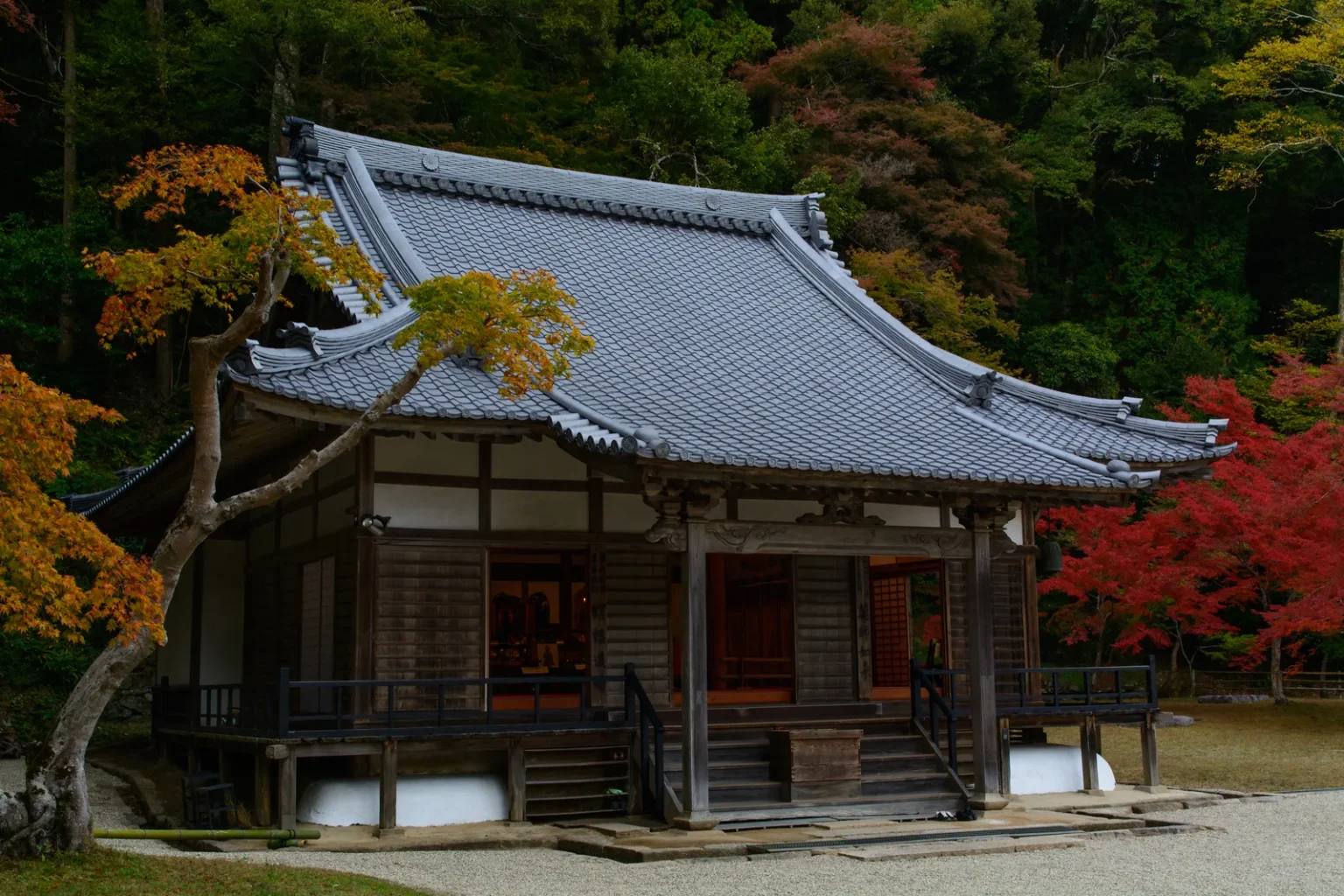
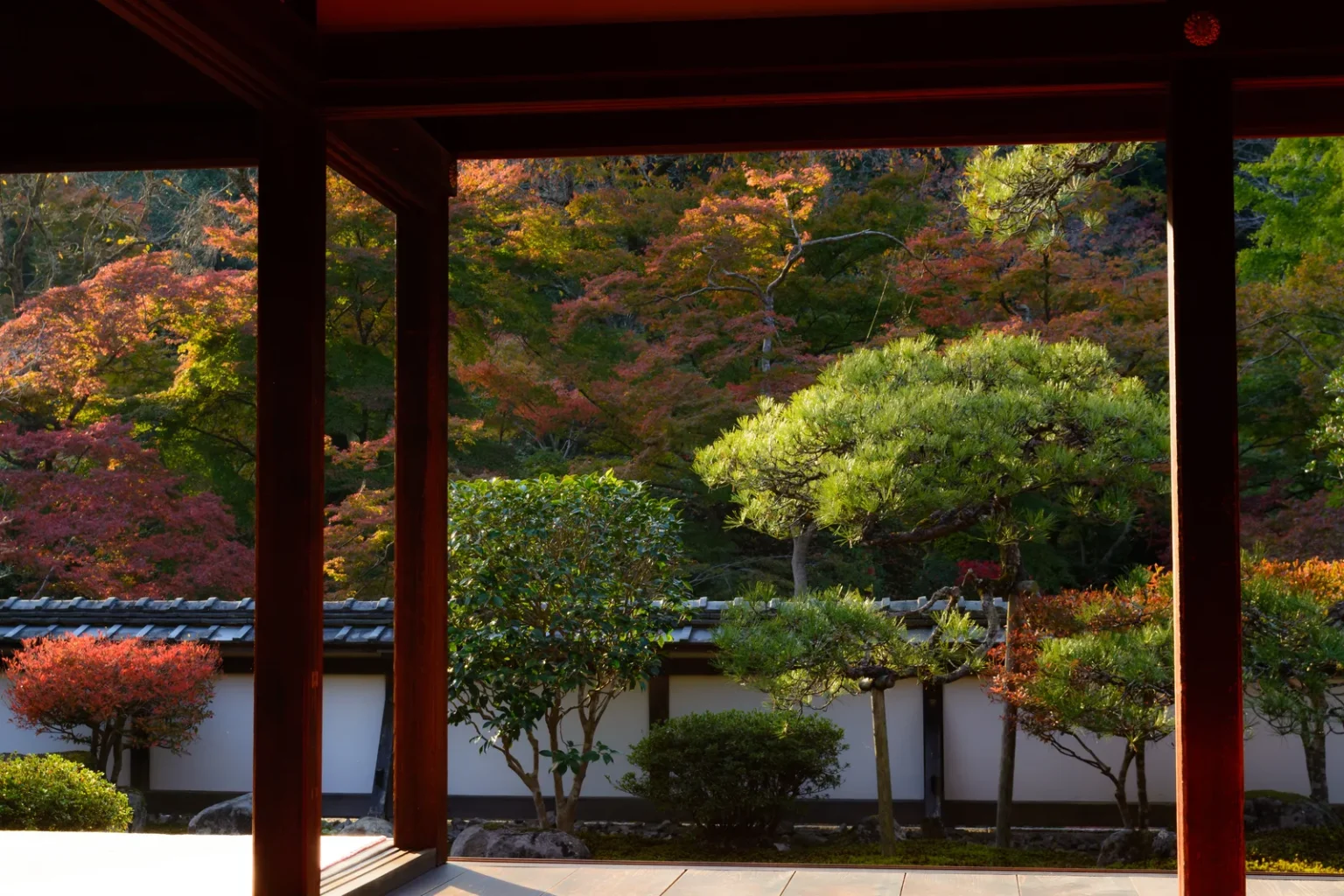
2026: special viewing 3 November to 6 December, with the hidden Yakushi Buddha shown at Fukujuin until 12 November (main hall precinct closed until then) and in the main hall from 13 November. Adults ¥800, closing 17:00 (last entry 16:30). No photography inside the buildings, no tripods outside. The regular bus stopped in 2015; otherwise it is a taxi, about 25 minutes from Nara. From 14 to 29 November 2026, Nara Kotsu runs a direct bus every day:
| Shoryakuji bus, 14–29 Nov 2026 | Times |
|---|---|
| Kintetsu-Nara (stop 3), daily | 9:37, 10:07, 10:37, 11:07, 11:37, 13:07 |
| Kintetsu-Nara, extra on Sat, Sun and holidays | 12:07, 13:57 |
| JR Nara (West Exit, stop 16) | 7 minutes before each Kintetsu-Nara departure |
| Shoryakuji back, daily | 11:45, 12:15, 13:15, 14:30, 15:40 |
| Shoryakuji back, extra on Sat, Sun and holidays | 11:05, 13:45 |
| Ride and fare | About 32 minutes; ¥620 one way for adults; 5-minute walk from the stop. Nara Kotsu says free passes are not valid on this bus |
Timetable: Nara Kotsu’s Shoryakuji autumn bus page (Japanese). The same page lists a separate guided sightseeing bus to Shoryakuji and Kojinji, with entry fees included, on Mondays and Fridays only from 2 November to 11 December 2026.
Tanzan Shrine: a 13-storey pagoda in the maples
Tanzan Shrine, on Tonomine in Sakurai, enshrines Fujiwara no Kamatari. The shrine tells how Kamatari and Prince Naka-no-Oe met in secret on the mountain behind the main hall to plan the overthrow of Soga no Iruka in 645, the talk (dan) that gave it its name. Kamatari’s eldest son, the monk Jo’e, back from Tang China in 678, reburied part of Kamatari’s remains there and built a thirteen-storey pagoda; Nara Kotsu calls the present wooden one the only one in the world.
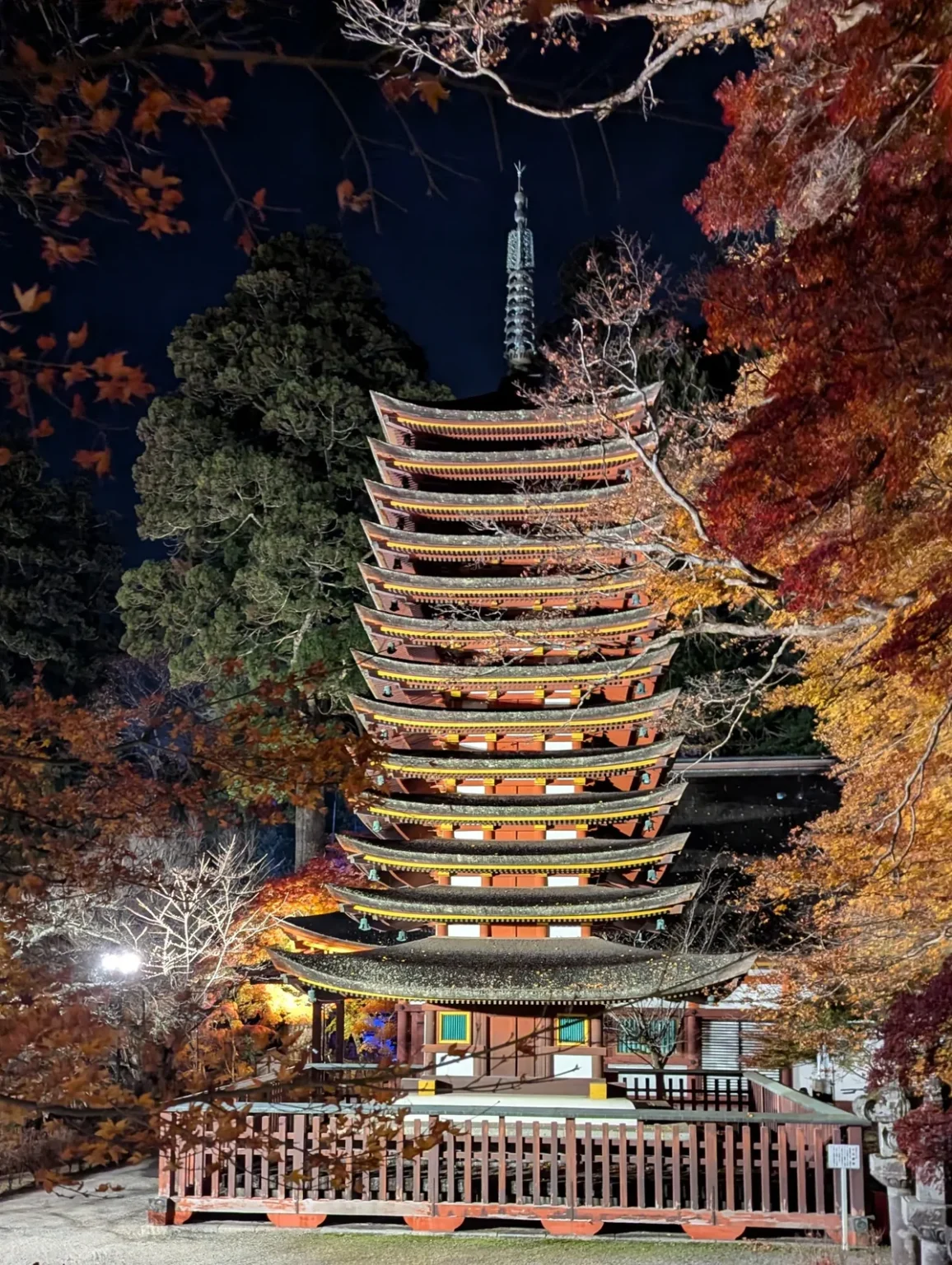
2026: autumn-leaf festival 1 October to 6 December, with a kemari (court football) festival on 3 November at 11:00 and a leaf light-up every evening from 14 November to 6 December, from sunset to 20:30. Adults ¥700 (from 1 April 2026).
The shrine’s visiting page gives daytime entry 8:30–16:00 (last entry 16:00, visits until 16:30); its 2026 festival notice, checked 16 October 2026, lists the light-up hours but no evening entry time or fee, so ask the shrine (0744-49-0001) before planning an evening visit.
The bus starts at Sakurai Station; Nara Kotsu’s autumn page gives the times below but no year or service period, so check it again before you go.
| Tanzan Shrine bus (Nara Kotsu, autumn page, checked 16 Oct 2026) | Times |
|---|---|
| From Sakurai Station (South Exit, stop 1) | 9:45, 10:50, 12:47, 14:00, 15:05, 16:09, 17:25 |
| From Tanzan Shrine | 10:14, 11:19, 13:17, 14:28, 15:32, 16:37, 17:52 |
| Ride and fare | About 25 minutes; ¥570 one way for adults. Traffic can stop buses short of the shrine, at Tonomine, Nara Kotsu warns |
Timetable: Nara Kotsu’s Tanzan Shrine autumn bus page (Japanese). On it (checked 16 October 2026) the last bus leaves the shrine at 17:52. If you plan to leave after that, arrange another way back; the shrine’s access page gives about 15 minutes by taxi between Sakurai Station and the shrine. Confirm the bus’s 2026 operating dates before relying on it.
Hasedera: the covered stairway
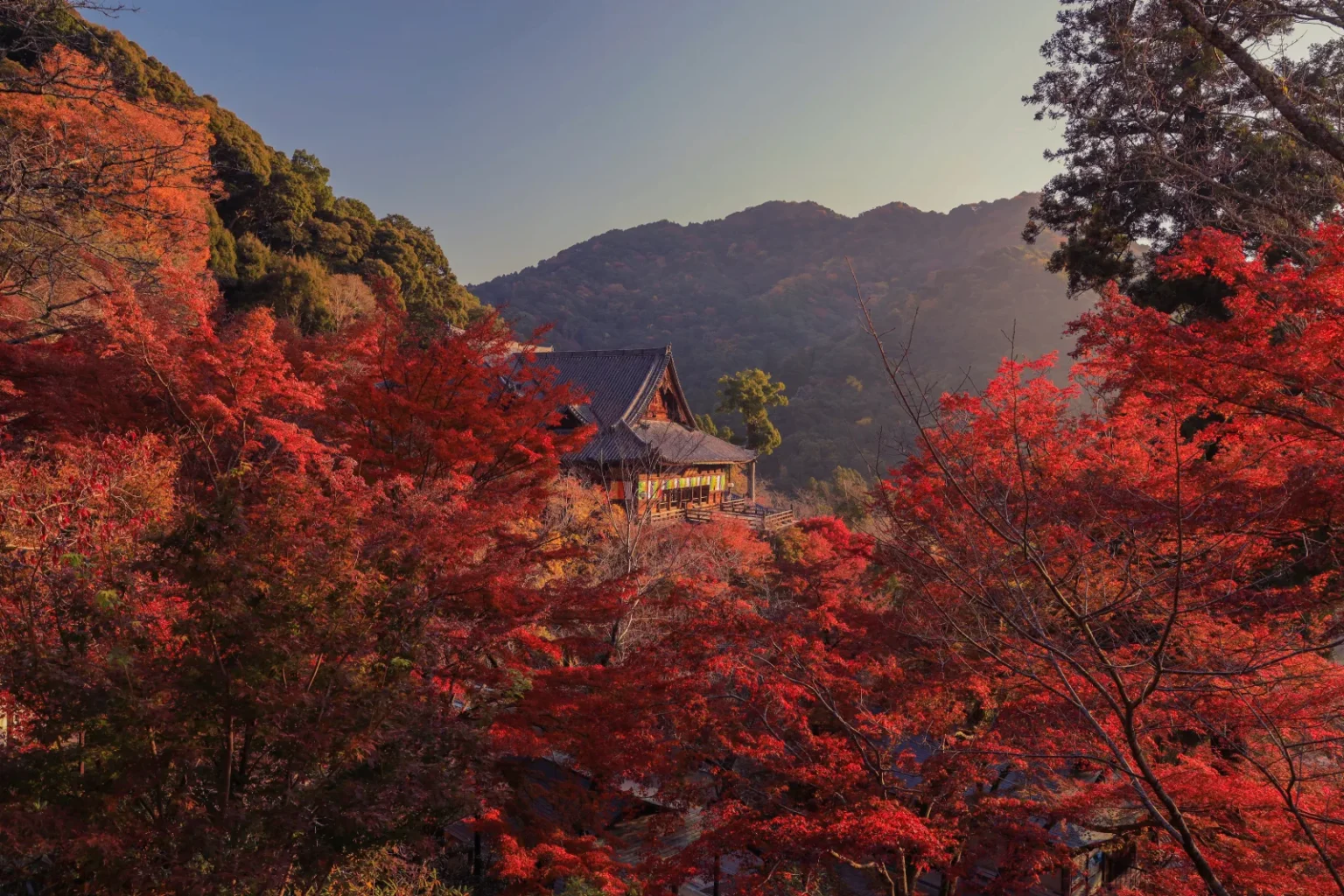
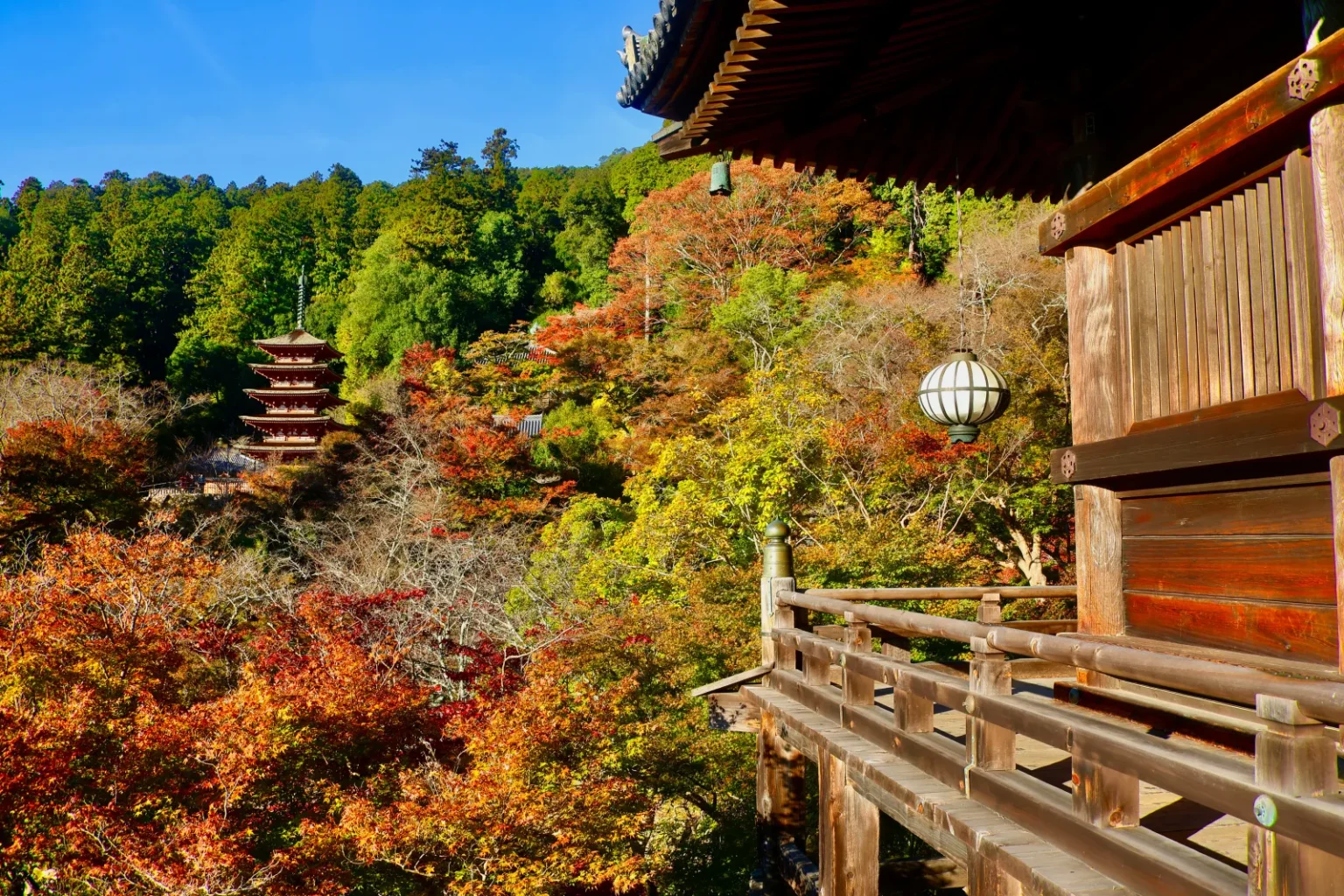
Hasedera, the “temple of flowers” in Sakurai, traces its origins to 686; according to the temple’s account, the monk Tokudo made an Eleven-headed Kannon there in 727 by order of Emperor Shomu. Its covered stairway, the Noboriro, was first built in 1039. The temple calls its Yashio-no-Oka slope a place famous for autumn colour since the Manyoshu era.
2026: momiji festival 10 October to 6 December, with a special viewing in the main hall (9:30–16:00, ¥1,000 extra) where you can touch the feet of the Kannon, and about 300 pots of chrysanthemums on the stone steps. Entry ¥500, 9:00–17:00 in October and November; no tripods. 15 minutes on foot from Hasedera Station (Kintetsu Osaka Line, express trains stop).
Murouji: go for the light-up, not the pagoda
Murouji, the “Women’s Koya” in Uda, lists its autumn-leaf period as 17 October to 6 December 2026. Daytime entry ¥600, 8:30–17:00 until 30 November. The Nara Kotsu bus from Murouguchi-Ono Station (Kintetsu Osaka Line) takes about 14 minutes, ¥500 one way.
| Murouji leaf light-up | 2026 |
|---|---|
| Dates | 7, 8, 14, 15, 21, 22, 23, 28 and 29 November |
| Hours and entry | 17:00–20:00 (last entry 19:30); adults ¥600 |
| How far you can go | Not beyond the five-storey pagoda on light-up nights, the temple says |
| Extra buses to Murouji | From Murouguchi-Ono Station at 17:00 and 18:05 (also 16:10, which runs daily) |
| Buses back to the station | From Murouji at 17:45, 18:30 and 20:00. The light-up closes at 20:00 (last entry 19:30), the same time as the last bus, so I would take the 16:10 or 17:00 bus up and the 18:30 back |
Nara Kotsu’s timetable says the 17:00, 17:45, 18:05, 18:30 and 20:00 buses run only on Saturdays, Sundays and holidays from 7 to 29 November 2026, which are the light-up dates. Check Nara Kotsu’s Murouji autumn bus page (Japanese) before you go. If you miss the last bus you will need a taxi; on a light-up night, arrange one in advance.
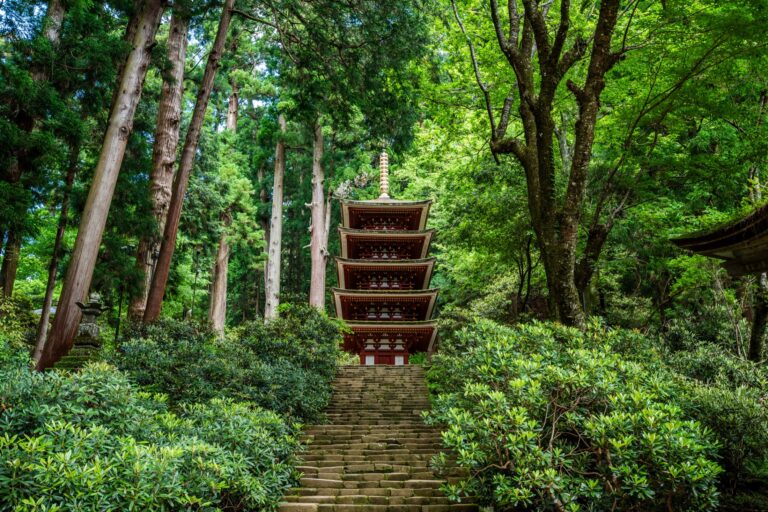
For the other halls and the bus, see our Murouji guide.
Side trip: Yoshino
The cherry mountain south of Nara also has autumn colour, and its visitors bureau posts a leaf report by area on its official autumn-leaf page (Japanese; the latest when checked was dated 16 October 2026). It is a long day from Nara:
| Yoshino from Nara | 2026 |
|---|---|
| Train | Kintetsu from Kintetsu-Nara to Yoshino, changing at Yamato-Saidaiji and Kashiharajingu-mae: about 1 hour 45 minutes, ¥1,030 one way (Kintetsu route search) |
| Ropeway | Senbonguchi (3 min walk from Yoshino Station) to Yoshinoyama, about 3 min, ¥500 one way. Daily 23 Oct–30 Nov, every 15 min from 9:20; last run 17:20 both ways (timetable) |
| Bus on the mountain | Okusenbon route bus, daytime only, daily 23 Oct–30 Nov; last bus down from Okusenbon-guchi 15:08 (timetable) |
| Example day, Saturday 14 November | 9:06 from Kintetsu-Nara, at Yoshino 10:53; ropeway down at 17:05 (the 17:20 is the last); 17:37 from Yoshino, at Kintetsu-Nara 19:28 |
| Leaf light-up | 23 October to 30 November, 16:30–22:00; see below for getting down |
| Also | Kinpusenji Zaodo’s hidden main statues, 24 October to 30 November. One-way traffic on part of the mountain road from 24 October to 30 November |
Takagiyama lookout by bus: uphill buses do not stop there, so get off on the way down. On the operator’s timetable, downhill buses call at the lookout at 10:11, 11:11, 12:11, 14:11 and 15:11, so if you get off before 15:11, the next scheduled bus is one to two hours later. Do not get off the 15:11: no later bus is scheduled to stop there. The 12:11 ends at Chikurin-in-mae, where the next bus down leaves at 13:23.
Staying for the lights: the ropeway operator Yoshino Ohmine Cable’s timetable lists no ropeway runs after 17:20, so to stay on the mountain after that you need another way down or a night there. Ask the Yoshino tourist information office by Yoshino Station (0746-39-9237, 9:00–16:00, closed 12:30–13:30) before you plan it.
Check train times on Kintetsu’s route and fare search for your date.
Nara autumn nights and events 2026
“Autumn Nights in Nara 2026” runs on 31 October and every Saturday in November, but each site opens on its own dates. The five temple and shrine night openings need no reservation; the separate Wakakusa twilight bus does. Of those five openings, only Kofukuji takes place on 31 October. Each site closes briefly at 17:00 first.
Yakushiji at night
The Kondo opens at night on 7 and 21 November 2026, and the first floors of both pagodas are opened so visitors can look into them from outside. See our Yakushiji guide.
Kofukuji Eastern Golden Hall
The Eastern Golden Hall marks 1,300 years in 2026. It opens at night on 31 October and every Saturday in November; times in the table below.
| Temple and shrine night openings (2026, no booking) | Dates, hours, fee |
|---|---|
| Kofukuji Eastern Golden Hall | 31 Oct and 7, 14, 21, 28 Nov (Sat); 17:30–21:00; ¥500 |
| Kasuga Taisha main sanctuary, about 1,000 hanging lanterns lit | 7, 14, 21, 28 Nov (Sat); 17:30–20:00; ¥700 |
| Gangoji Gokurakudo | 7, 14, 21, 28 Nov (Sat); 18:00–20:00; ¥700 |
| Toshodaiji Kondo | 7 and 21 Nov (Sat); 17:30–20:30; ¥500 |
| Yakushiji | 7 and 21 Nov (Sat); 17:30–20:30; ¥1,000 |
| Other autumn dates (2026) | What and where |
|---|---|
| 24 Oct – 9 Nov | 78th Shosoin Exhibition, Nara National Museum; to 20:00 Fri–Sun and holidays; timed tickets |
| 31 Oct, 7, 14, 21, 28 Nov (Sat) | Wakakusa twilight and night-view bus: 16:10 from JR Nara, 16:15 from Kintetsu-Nara; ¥2,000 return; reservation needed, on sale one month ahead |
| 3 Nov (Tue, holiday) | Kemari festival at Tanzan Shrine, 11:00 |
| 7 and 8 Nov (Sat, Sun) | Deer antler cutting at the Kasuga Taisha deer pen, 11:45–15:00, ¥1,000 adults, tickets on the day only. Moved from October to November from 2025 |
| 7–29 Nov, nine evenings | Murouji leaf light-up, 17:00–20:00 (last entry 19:30); only as far as the five-storey pagoda; buses back 17:45, 18:30 and 20:00 |
| 14 Nov – 6 Dec, every evening | Tanzan Shrine leaf light-up, sunset to 20:30; evening entry hours and fee not stated, ask the shrine; last listed bus back 17:52 |
Details and the twilight-bus booking link: Nara City Tourism Association, Autumn Nights in Nara 2026 (Japanese). The association suggests staying over from Saturday to Sunday to fit it all in.
Getting to Kasuga Taisha at night: the regular Kasuga Taisha Honden bus stops running just after 17:00, says the association. On 7, 14, 21 and 28 November a World Heritage loop bus runs instead, no booking, ¥250 a ride, about every 20 minutes from 17:10 at JR Nara (East Exit, stop 4), via Kintetsu-Nara (stop 20) and Kencho-mae to Kasuga Taisha Honden and back.
The deer in autumn: what to know
Nara’s deer are wild animals and a protected Natural Monument. The Nara Deer Preservation Foundation’s survey of 15–16 July 2026 counted 1,687 deer in Nara Park: 411 stags, 990 does and 286 fawns, up 222 on the year before and the highest total in the foundation’s published table, which goes back to 2008.
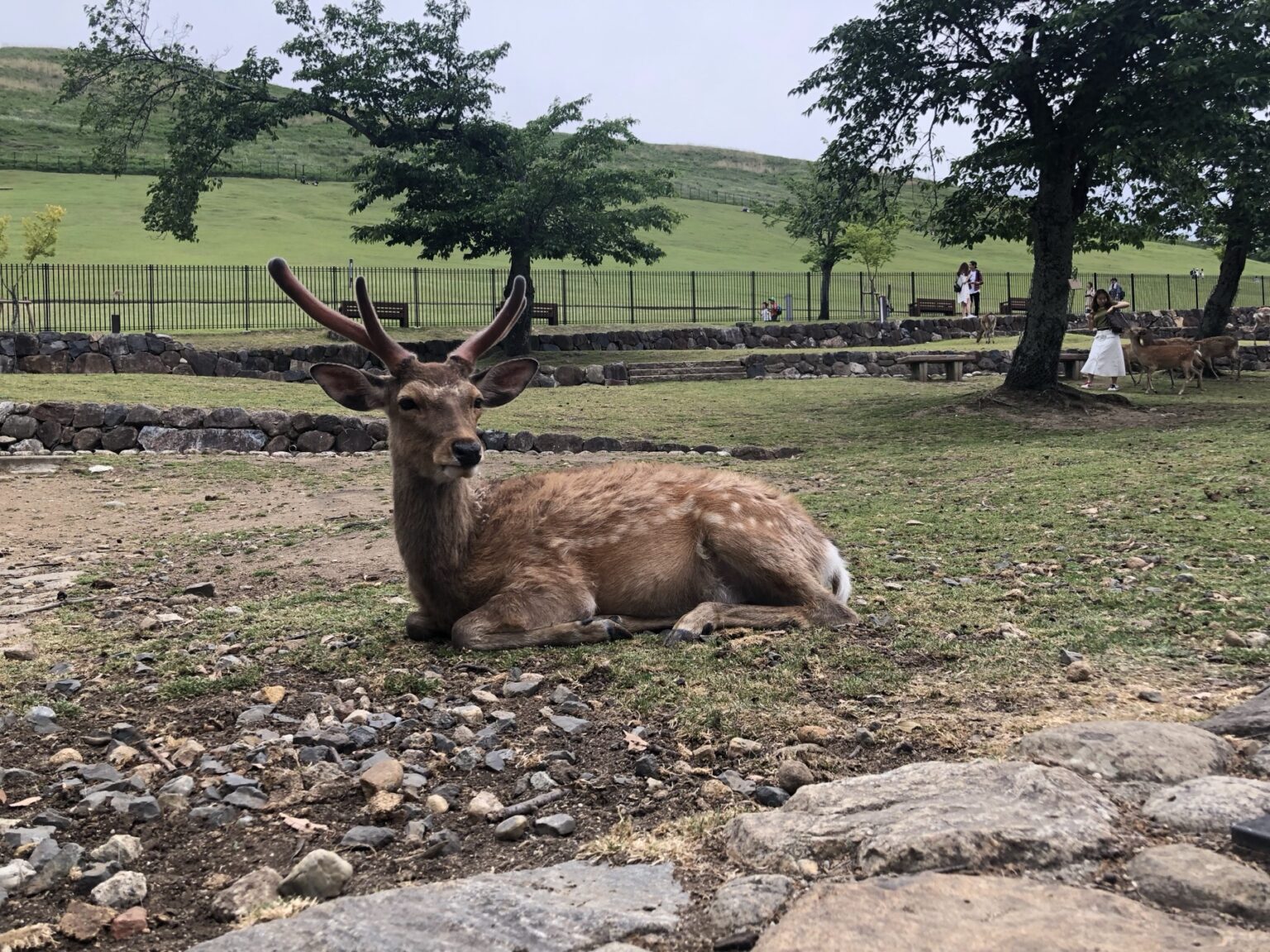
Feed deer only shika-senbei, the deer crackers sold in the park (rice bran and wheat flour, no sugar or salt); feeding them anything else is banned in the park. Give the cracker promptly if a deer bows, because teasing makes them angry. Keep maps and plastic bags out of reach, since deer eat them, and carry your rubbish out: there are no bins in Nara Park. More in our Todaiji and deer guide.
A one-day route through Nara Park in autumn
Isuien is closed on Tuesdays (if a Tuesday is a holiday, the next weekday instead: in 2026 it is open on Tuesday 3 November and closed on Wednesday 4 November); on those days, skip it and the rest of the route still works. The table starts at the Shosoin Exhibition, for dates from 24 October to 9 November; for later dates, use the shorter order below the table.
| Time | Place and how you move |
|---|---|
| 8:00 | Shosoin Exhibition, first entry slot (book ahead). 15 minutes on foot from Kintetsu-Nara |
| 9:45 | Walk to Yoshikien (free, opens 9:00), then Isuien next door (opens 9:30, ¥1,200) |
| 11:30 | Todaiji: Nandaimon gate and the Great Buddha Hall (¥800; to 17:30 until 31 Oct, to 17:00 from 1 Nov) |
| 12:30 | Lunch near the park |
| 13:30 | Walk up to Nigatsudo for the view over the leaves, then south across the park |
| 14:30 | Kasuga Taisha (gates to 17:00; inner visit to 16:00) and the lantern-lined approach |
| 16:00 | Ukimido and Sagiike Pond in the late light; about 20 minutes’ walk back to Kintetsu-Nara |
| 17:30 (31 Oct and Saturdays in Nov) | Night visit: Kofukuji (31 Oct and every Saturday in November) or Kasuga Taisha (Saturdays in November only), see the table above |
From 10 November (no Shosoin): Yoshikien at 9:00, Isuien at 9:30, Todaiji at about 10:45, lunch at 12:00, Nigatsudo at 13:00, Kasuga Taisha at 14:00 (inner visit to 16:00) and Ukimido around 15:30. Todaiji and Kasuga’s gates close at 17:00 in November.
If you run late, drop Isuien: Yoshikien next door is free. The outer-loop bus links the stations, the museum, Todaiji and the Kasuga approach.
A second day: Shoryakuji or Tanzan and Hasedera
From 14 to 29 November 2026: take the 10:07 bus from Kintetsu-Nara to Shoryakuji (about 32 minutes plus a 5-minute walk, so at the temple around 10:45), spend about two hours, and catch the 13:15 back (the 12:15 if you want a shorter visit). That leaves the afternoon for anything you missed in the park.
Tanzan and Hasedera: go to Sakurai by Kintetsu (for example 8:37 from Kintetsu-Nara, changing at Yamato-Saidaiji and Yamato-Yagi, at Sakurai 9:27, ¥590, on Saturday 14 November), take the 9:45 bus to Tanzan Shrine (on Nara Kotsu’s autumn timetable; check it first), come back on the 13:17, and take the Kintetsu Osaka Line on to Hasedera Station for Hasedera, open to 17:00 in November. Murouji is also on this line, from Murouguchi-Ono; remember its pagoda and Kondo are closed for roof work in 2026.
Getting to Nara from Osaka and Kyoto
Travel times from the Nara City Tourism Association:
| From | To Nara |
|---|---|
| Osaka-Namba | Kintetsu direct to Kintetsu-Nara, about 40 minutes |
| Kintetsu Kyoto | Kintetsu limited express to Kintetsu-Nara, about 35 minutes (limited-express charge extra) |
| JR Osaka / Tennoji | JR Yamatoji Rapid to JR Nara, about 50 / 36 minutes |
| JR Kyoto | JR Miyakoji Rapid to JR Nara, about 45 minutes |
The Nara City Tourism Association notes there is no direct bus from Osaka or Kyoto. The digital Kintetsu Rail Pass 1day (adults ¥1,900) covers Kintetsu between Osaka-Namba and Kintetsu-Nara and between Kyoto and Tsutsui, plus Nara Kotsu buses between Nara Park, Nishinokyo and Horyuji; limited expresses cost extra, and Sakurai is not in its zones. If you are comparing it with wider Kansai passes, see Kansai rail passes on Klook and check which lines each covers. Avoid driving if you can: Nara Prefecture recommends public transport, saying roads jam and car parks fill on spring and autumn holidays.
What to wear in Nara in autumn
Japan Meteorological Agency averages for its Nara station, 1991–2020:
| Month | Average high / low; rainfall |
|---|---|
| October | 22.6°C / 13.5°C; 134.7 mm |
| November | 17.1°C / 7.3°C; 71.2 mm |
| December | 11.6°C / 3.0°C; 56.8 mm |
With a November average daily high of 17.1°C and average daily low of 7.3°C, wear layers you can take off indoors and bring a warm jacket for an 8:00 museum slot or a Saturday night visit. Wear shoes with grip for the slope to Nigatsudo, Isuien’s stepping stones and Hasedera’s stairs. More in what to wear in Japan in November.
Where to stay for Nara in autumn
For the Saturday night visits or an 8:00 museum slot, sleep in Nara near Kintetsu-Nara or JR Nara, where the park buses and the Shoryakuji bus start. Osaka and Kyoto are 35 to 50 minutes away.
Staying in Nara for a Saturday night visit or an early museum slot: search hotels near Kintetsu-Nara and JR Nara.
Search Nara on Booking.comBasing in Osaka or Kyoto and coming in for the day: compare hotels in either city.
Osaka on Agoda Kyoto on AgodaIf your autumn trip also includes Kyoto, see our Tofukuji guide.
Who this is for, and when to skip parts of it
Go if you want autumn colour with very little transport: the whole Nara Park section is on foot from one station, and Yoshikien and Nigatsudo cost nothing. Choose late November if you can.
Skip Shoryakuji if your dates fall outside 14–29 November and you will take neither a taxi nor Nara Kotsu’s guided Monday or Friday sightseeing bus; the other way the temple’s access page describes is a 90-minute walk from JR Obitoke.
Skip the Murouji trip if the pagoda is the reason you are going: it is closed for roof work from 17 August 2026, with the work scheduled to finish by autumn 2027 (check the temple’s notice for a reopening date), and the Kondo is closed from 5 October 2026; on light-up nights you cannot go beyond the pagoda. Skip the Shosoin Exhibition if you cannot book a slot and do not want to gamble on the counter on the day.
Questions travellers ask
When are the autumn leaves in Nara?
In Nara Park the Japanese maples are usually at their best from late November to early December, says Nara Prefecture, adding that timing varies a lot by year. Nara Kotsu gives mid-November to early December for Shoryakuji and Tanzan Shrine.
Where can you see autumn leaves in Nara?
In the city: Todaiji and Nigatsudo, Kasuga Taisha, Ukimido, Yoshikien and Isuien gardens, and Mt Wakakusa. Further out: Shoryakuji, Tanzan Shrine, Hasedera and Murouji (its pagoda and Kondo are closed for roof work in 2026). Yoshino is a longer trip, about 1 hour 45 minutes by Kintetsu from Nara. Its light-up runs 16:30–22:00, but the ropeway’s last run is 17:20, so on a day trip that relies on the ropeway you see little of it.
Is Nara Park good in autumn?
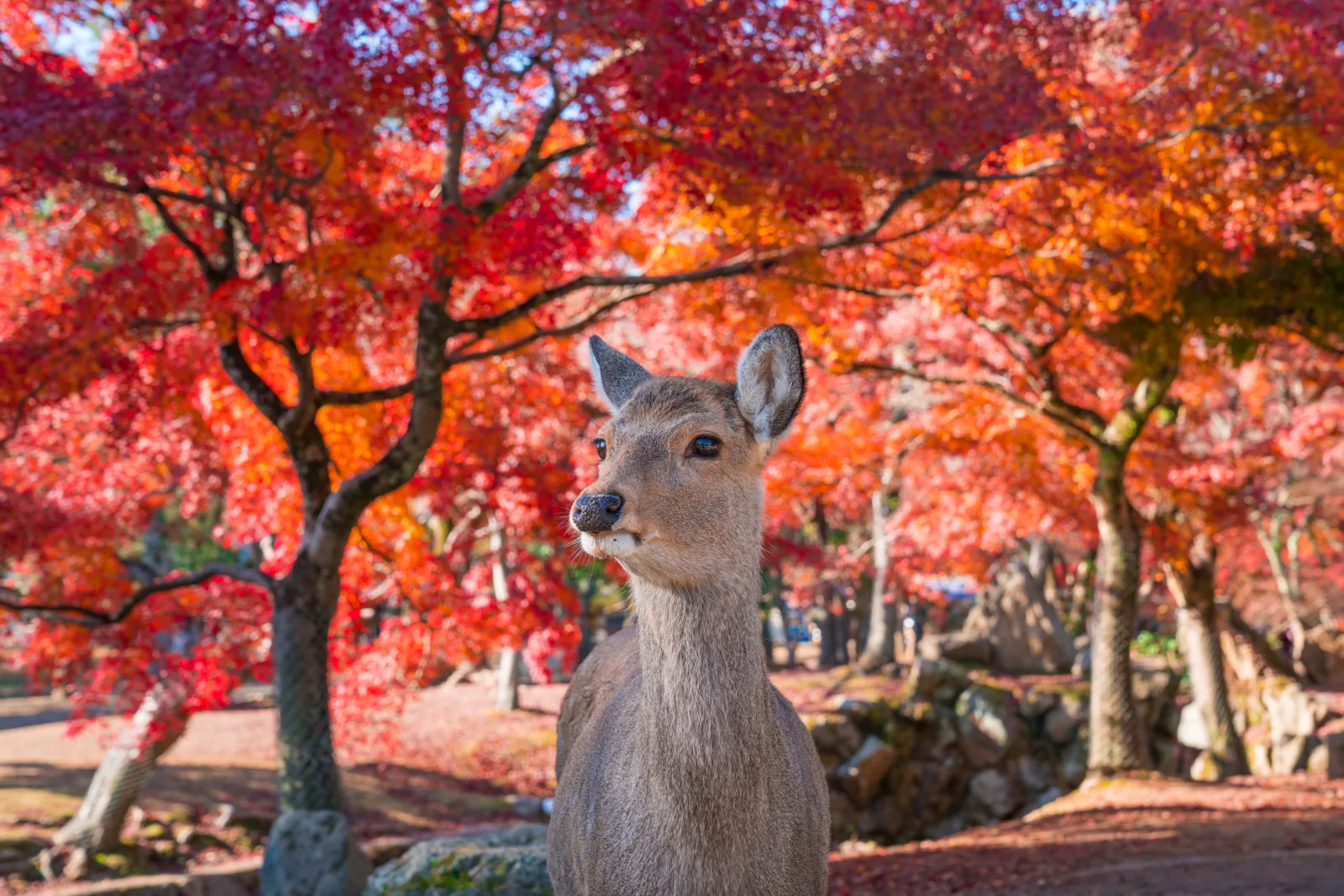
Yes. The colour is spread across lawns, gardens and temple slopes you can walk between, and Yoshikien and Nigatsudo are free. Keep your distance from the stags, which are in the rut.
What is the Shosoin Exhibition, and do I need tickets?
The yearly autumn showing of Shosoin treasures at the Nara National Museum. The 78th runs 24 October to 9 November 2026. You need a date-and-time ticket (adults ¥2,000), best bought online in advance; spare slots are sold on the day with a ¥200 fee.
Can I visit Nara as a day trip from Kyoto or Osaka in autumn?
Yes: about 35 minutes from Kintetsu Kyoto by limited express and 40 from Osaka-Namba, and the park is walkable from Kintetsu-Nara. Stay over for the night visits on 31 October (Kofukuji only) and the Saturdays in November; the temple and shrine openings need no booking.
Are the deer more aggressive in autumn?
Yes. Nara Prefecture and the Nara Deer Preservation Foundation both warn that stags in the autumn rut are rougher than usual and can attack people. Do not touch them, keep children close, and feed only deer crackers.
What should I wear in Nara in November?
Layers and a warm jacket. JMA’s Nara averages for November are a daily high of 17.1°C and a daily low of 7.3°C. Shoes with grip help on slopes and stairs.
Todaiji and the Nara Deer
The Great Buddha, the gates, the deer rules and a half-day plan.
Murouji Temple
The Women’s Koya, its halls and the bus from Murouguchi-Ono. In 2026 the pagoda and Kondo are closed for roof work.
Yakushiji Temple
The twin pagodas of western Nara and how long to allow.
Kyoto in November
Booking rules, 2026 prices and crowd timing for the city most people pair with Nara.
Lesser-Known Kyoto Autumn Temples
Nine calmer places for leaves, with access and crowd notes.
Japan’s 3 Great Autumn Foliage Spots
Kyoto’s Arashiyama and two more, with 2026 peak forecasts and the order to see them in.
Sources
- Checked 16 October 2026 — Nara Prefecture, Nara Park Quick Guide: FAQ (autumn leaves), overview, deer, how to treat the deer, access, Todaiji, Kasuga Taisha, Ukimido, Isuien, Mt Wakakusa, Prefectural Office rooftop, Kasugano, East Pagoda site; Yoshikien
- Checked 16 October 2026 — Nara National Museum: 78th Shosoin Exhibition; access; online tickets (English)
- Checked 16 October 2026 — Todaiji hours and fees, Nigatsudo; Kasuga Taisha basic information; Isuien, its gardens
- Checked 16 October 2026 — Shoryakuji: notices, autumn leaves, history, hours and fees, Fukujuin, birthplace of sake, access
- Checked 16 October 2026 — Tanzan Shrine: visiting, history, access, 2026 autumn-leaf festival
- Checked 16 October 2026 — Hasedera: visiting information, 2026 momiji festival, history, Noboriro, seasons, access
- Checked 16 October 2026 — Murouji: visiting information, 2026 autumn events and light-up, pagoda and Kondo re-roofing
- Checked 16 October 2026 — Kofukuji, precinct guide (five-storey pagoda under repair); Kyodo News via Kumamoto Nichinichi Shimbun, 15 April 2026 report on the pagoda repair
- Checked 16 October 2026 — Nara Kotsu: Shoryakuji autumn bus, Tanzan Shrine bus, Murouji bus, Wakakusa Hilltop Bus
- Checked 16 October 2026 — Nara City Tourism Association: Autumn Nights in Nara 2026, access, Yoshikien; Yoshino Visitors Bureau, autumn leaves, access and offices; Yoshino Ohmine Cable, ropeway timetable and fares, Okusenbon bus timetable, autumn 2026 operation notice; Kintetsu, Kintetsu Rail Pass 1day, route and fare search (Kintetsu-Nara to Yoshino and back, Kintetsu-Nara to Sakurai; searched for Saturday 14 November 2026), Yoshino and Asuka area
- Checked 16 October 2026 — Nara Deer Preservation Foundation: deer count, antler cutting 2026, accident prevention, notices; JMA normals, Nara
- Checked 24 October 2026 — why Shoryakuji is linked to sake: Nara Prefecture, Shoryakuji, birthplace of refined sake (Japanese); National Tax College, paper on the history of sake (Japanese)
Join travelers discovering Japan's hidden side
Weekly dispatches from off-the-beaten-path Japan — spots and stories you won't find in guidebooks.
No spam. Unsubscribe anytime.
Welcome aboard!
You're in. See you in your inbox soon.