Nara · World Heritage · Complete Guide
The Ancient Capitals of Asuka and Fujiwara — inscribed on the World Heritage list on 26 July 2026 — are one property made of 19 archaeological components across Asuka village, Kashihara and Sakurai in Nara Prefecture. Together they record the century (588–710) when a centralised Japanese state took shape: the palaces where it was governed, the first full-scale Buddhist temples, painted tombs of its elite, imperial mausolea, and Japan’s first planned capital city. This is the planning guide: what each component actually offers a visitor, which ones need bookings, how the valley works by train and bicycle, where to sleep, and the honest line between the inscribed sites and the village charm around them.
What this World Heritage property is
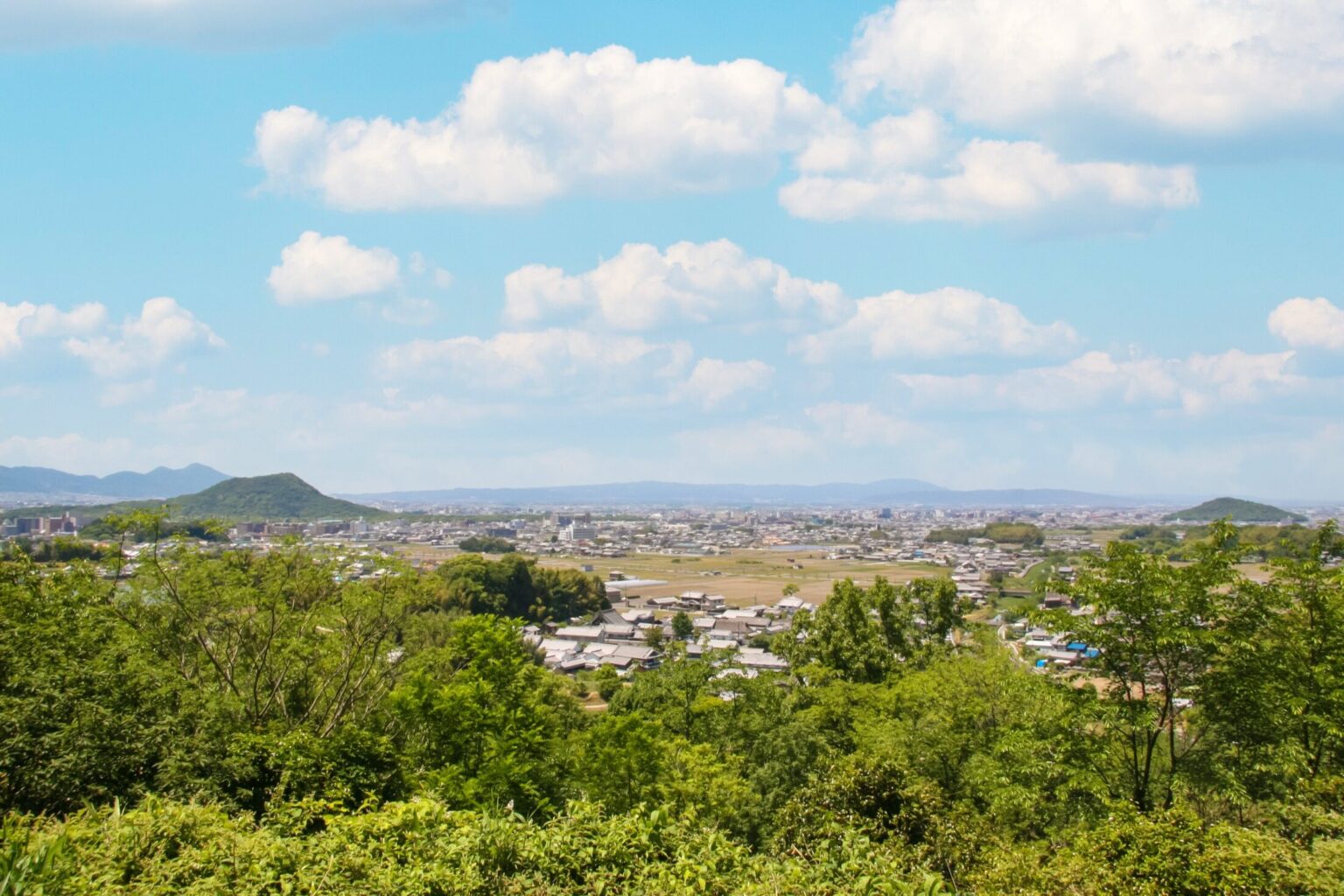
Between 588 and 710, the valley south of today’s Nara city was Japan’s political centre — first the Asuka palaces, then from 694 Fujiwara-kyō, the country’s first planned capital laid out on the Chinese model. In that century the court adopted Buddhism, written law, a bureaucracy and the ritsuryō state system, through constant exchange with China and the Korean kingdoms. The 19 inscribed components are the archaeological evidence of that transformation, listed under UNESCO criteria ii and iii. After the capital moved to Nara in 710, the palaces and temples gradually disappeared beneath later fields and villages — which is why you can stand in a rice field today and be standing in a former capital.
Inscribed sites vs everything around them
One honest distinction most coverage will blur: not everything worth seeing in Asuka is part of the World Heritage property. It matters for expectations — and because the non-inscribed places are often the most photogenic.
| Examples | Status | |
|---|---|---|
| Inscribed components | Ishibutai, Kitora, Takamatsuzuka, Asuka Palace site, Fujiwara Palace site, Asukadera temple site… (all 19 below) | The World Heritage property itself |
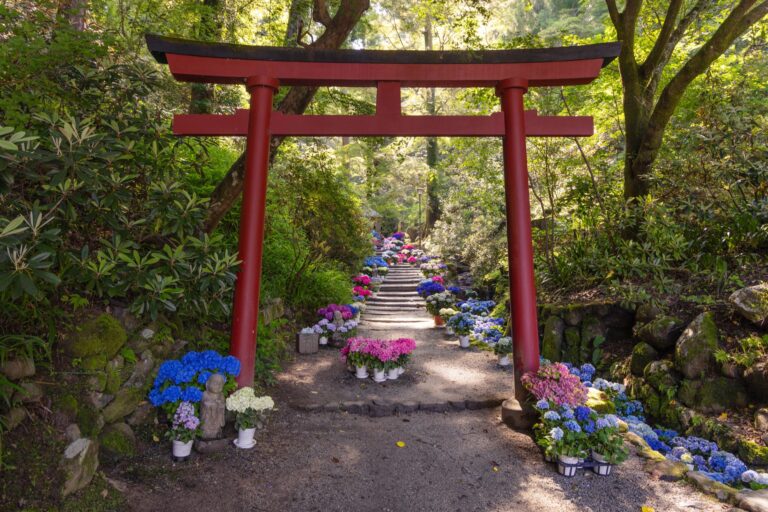
| Beloved neighbours | Amakashi Hill viewpoint, the Oka lanes, Okadera temple, the Kameishi “turtle stone”, Asuka’s working temples | Not inscribed — and still worth your time |
The 19 components, translated into visits
| Component | Where | What a visitor finds | Notes |
|---|---|---|---|
| Asuka Palace site | Asuka | Excavated palace ground in open fields | Free, open ground |
| Asuka-kyō garden pond | Asuka | Excavated 7th-century garden site | — |
| Asuka Mizuochi site | Asuka | Remains of Japan’s first water clock | Marker site |
| Sakafuneishi site | Asuka | Carved ritual stones on a wooded hill | Purpose still debated |
| Asukadera temple site | Asuka | Site of Japan’s first full-scale temple (596) | The present small temple houses the Asuka Great Buddha |
| Tachibanadera site | Asuka | Temple site tied to Prince Shōtoku tradition | Working temple on site |
| Kawaradera site | Asuka | Foundations of one of Asuka’s great temples | Free, open |
| Hinokuma-dera site | Asuka | Temple site of the immigrant Aya clan area | Quiet corner |
| Yamadadera site | Sakurai | Temple site; the excavated remains of its corridor are a landmark find | — |
| Daikandaiji site | Asuka/Kashihara | Site of a major state temple of the period | Spans both municipalities |
| Moto-Yakushiji site | Kashihara | Original Yakushiji temple site | Today’s Yakushiji in Nara city is its successor — don’t confuse them |
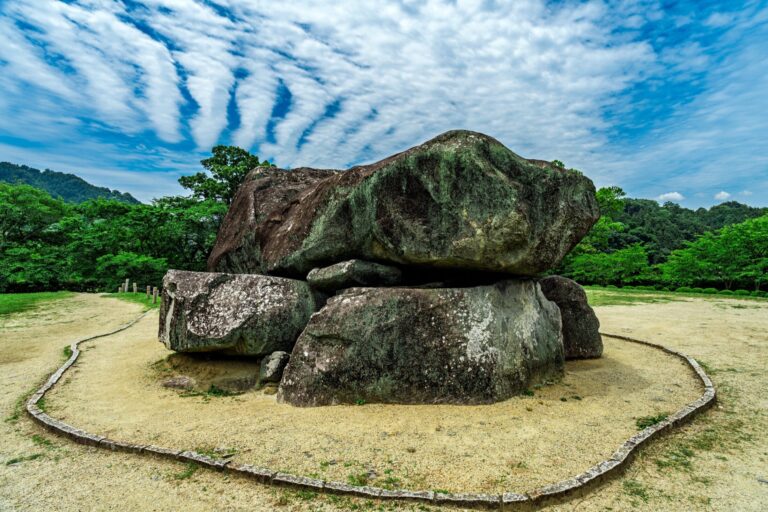
| Ishibutai Kofun | Asuka | The exposed megalithic chamber — walk inside | ¥500 adults and university students / ¥200 school age (from Apr 2026), 9:00–17:00, last entry 16:45 |
| Shōbuike Kofun | Kashihara | Tomb containing two house-shaped stone sarcophagi | — |
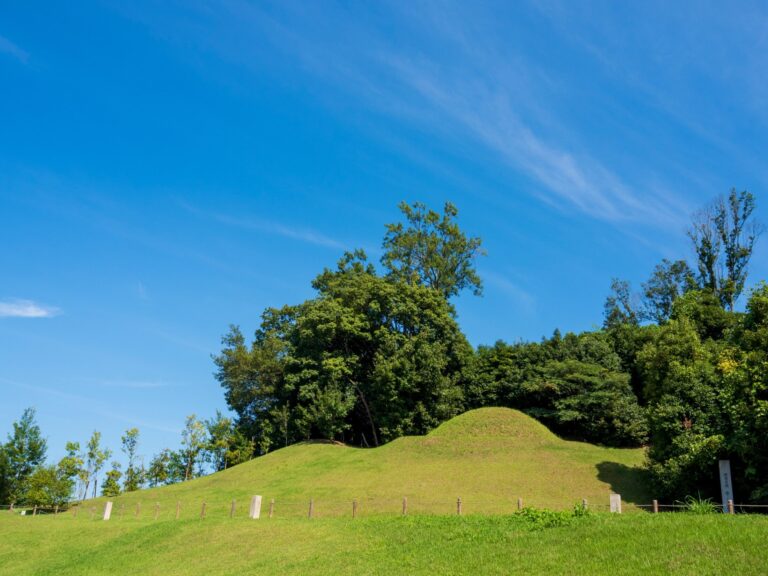
| Kengoshizuka Kofun | Asuka | Restored octagonal tumulus | Open hillside site |
| Mausoleum of Tenmu & Jitō | Asuka | Resting place of the era’s defining emperor and empress | Imperial mausoleum — viewed from outside |
| Nakaoyama Kofun | Asuka | Octagonal tomb, thought to be a cremation burial | Wooded path site |
| Kitora Kofun | Asuka | Restored mound; murals in conservation facility | Viewing guide — the 41st round shows three guardian walls, 19 Sep–18 Oct 2026 |
| Takamatsuzuka Kofun | Asuka | Restored mound; replica hall alongside (adults ¥300) | Original murals viewable only in occasional rounds |
| Fujiwara Palace site | Kashihara | The vast open ground of Japan’s first planned capital | Special Historic Site; seasonal flower fields |
How many days?
One day — Asuka core
Asuka Station → Takamatsuzuka → Ishibutai → Asukadera → palace sites, by bicycle. The classic loop. The Kitora corner’s mound and free basement exhibits need no booking at all — a confirmed slot matters only for the original mural viewing.
Two days — add Fujiwara
Sleep in Kashihara. Day two: Fujiwara Palace site and Moto-Yakushiji, with the Three Mountains of Yamato around you — the half of the property many first-timers miss, which is the argument for going.
Half a day — honest verdict
Enough for Ishibutai plus either the Takamatsuzuka area or Asukadera. It will feel like a trailer, not the film.
August note
This is an open-air property with little shade. Summer visits work as early-morning and late-afternoon halves with a long air-conditioned lunch between.
Getting there and around
Rail: Kintetsu is the network here — Asuka Station for the village, Kashihara-Jingū-mae and Yamato-Yagi for the Fujiwara side and hotels. From Kyoto or Osaka, routes and times vary by train; check the Kintetsu timetable. The one trap: the nationwide JR Pass is not valid on Kintetsu — buy a ticket or a pass that explicitly covers it. Around the valley: the official model course runs from Asuka Station north toward Yamato-Yagi; rental bicycles operate from Asuka Station and are the local default — check hours, and expect real climbs toward Okadera and the Kitora corner. Car: still useful for the Kitora area (its regular bus line is suspended, though a weekend shuttle runs 19 September–18 October — see the mural guide) and for stringing Fujiwara, Sakurai and the tombs together in summer heat — but this is the part of the plan that changed after the inscription, so read the parking note below before you book one.
Parking is now the constraint, not the roads (checked 20 August 2026). The car parks around the headline sites are closing or filling in sequence: the Takamatsuzuka area car park closed on 1 September 2026 and is not expected back until around 2030; the national park’s free Ishibutai-district lot is suspended 19 September to 15 November 2026 and becomes bicycle and motorcycle parking only, with accessible spaces kept open; and the Man’yo Culture Museum car park started charging on 1 August 2026 — ¥500 a day for a car, ¥3,000 for a bus, and buses must reserve ahead. At the separate paid car park beside Ishibutai (a different one from the national park’s free lot above), coaches have been reservation-only since 1 September in half-day slots (¥3,000), and even ordinary cars need a booking on weekends and holidays (¥2,000 a day — weekdays stay first-come at ¥1,000). The park is explicit about the cause: these measures are to ease traffic congestion in Asuka village following the World Heritage inscription. It has also suspended its weekend hands-on programme at the Kitora hall from 1 August to 29 November. The practical read: arrive by Kintetsu and ride a rental bicycle, which was always the better way to see this valley anyway.
Two other things worth knowing before you build a day here. The park’s information hall at Takamatsuzuka (the Asuka Historical National Government Park Hall) has been closed since 1 April 2026 for a rebuild and is not due back until roughly 2030 — many English pages still list it as a stop, and its rest area and toilets are only guaranteed to around the end of November 2026. And if you were hoping to be shown round: the Asuka Tourism Association stopped taking new volunteer-guide bookings for the rest of 2026, citing the volume of applications, in a notice posted on 11 June, five days after the ICOMOS recommendation. A restart date for 2027 has not been set. For a property whose meaning is mostly underfoot rather than visible that is a real loss, so read before you go. Any guided walks you find advertised are run in Japanese, so check language support when you book.
Where to stay
Three realistic bases, pending my full comparison piece: Kashihara is the sensible default with the area’s widest room supply: Kashihara-Jingū-mae has direct Kintetsu trains to Asuka, while Yamato-Yagi has more hotels but usually means a change at Kashihara-Jingū-mae. Either works for a morning mural slot. Asuka village itself offers a small number of inns and guesthouses — atmospheric, limited dinner options, book early. Nara city works if you’re combining with the Nara Park sights, at the cost of extra travel time each way.
Plan the trip
Best time to visit
Spring and autumn are the valley at its kindest; summer works with the early-late rhythm above; winter is quiet and clear-aired. Two seasonal notes worth planning around: the terraced fields around Asuka are famous for red spider lilies in the second half of September (timing shifts with the weather year to year — check locally rather than betting a trip on a date), and the Fujiwara Palace site plants seasonal flower fields that give the vast site its most photographed moments. The inscription news piece covers the listing itself. It changed nothing at the ticket desks; what it changed was the traffic, and the village has been closing car parks in response since September, so the parking note above is the part of this guide most worth re-reading before you travel.
How busy is it now? Busier, on what little has been published. The Sankei Shimbun reported on 2 September 2026 that Ishibutai Kofun drew about 23,800 visitors as of 25 August, which the paper described as 2.4 times the previous August without stating the comparison basis, attributing the count to the Asuka Tourism Association. Neither the association nor the village publishes monthly visitor numbers, so the figure cannot be checked independently, and it describes part of one month rather than a trend. What is firmer is what the operators have done: the park says its parking measures are there to ease traffic congestion in Asuka following the inscription. Set against that, Asuka is a village whose own development plan states the aim of growing tourism without generating overtourism. Come by train, ride a bicycle, and the crowd stays a manageable thing rather than the story of your day.
Practical honesty, before you build the trip
These are archaeological sites
Mostly foundations, mounds and open ground with interpretation — not reconstructed palaces. The imagination does the building. If you need standing architecture, pair the valley with Nara city.
You don’t enter the tombs
Ishibutai’s open chamber is the exception. The painted tombs are sealed; their murals live in conservation facilities with their own viewing rules.
It’s a lived-in landscape
People farm between the monuments. Stay off the paddy ridges, don’t fly a drone without checking the specific site’s rules and permissions, and treat lanes as someone’s front yard — because they are.
About this guide
I walked the Asuka side in early July 2026, three weeks before the inscription; official details were checked on 26 July 2026. Fujiwara-side field notes will follow after my next visit — that half is on my calendar, not yet under my boots.
Questions I’d actually ask
What exactly is inscribed?
One property, “Ancient Capitals of Asuka and Fujiwara,” of 19 archaeological components: four palace/garden sites, seven temple sites, seven tombs and one ritual stone site, spread over Asuka village (15), Kashihara (4) and Sakurai (1), with one temple site spanning two municipalities.
Is one day enough?
For the Asuka core, yes — comfortably, by bicycle. The Fujiwara side deserves its own half-day-plus, and staying a night in Kashihara is what turns this from a checklist into a trip.
What does it cost?
Remarkably little. Most components are open ground. The paid entries you’ll typically meet: Ishibutai (¥500 adults) and the adjacent Takamatsuzuka Mural Hall (¥300 adults) — the Kitora mural viewing itself is free with an application. Working temples and museums nearby charge their own fees.
Is Okadera part of the World Heritage site?
No — and neither are Amakashi Hill or the Oka lanes. They are the living village around the property, and I’d argue the day is incomplete without them; my Oka townscape and Okadera pieces cover both.
Asuka or Nara Park, if I must choose?
Different questions. Nara Park is Japan’s eighth-century climax with standing architecture and deer; Asuka is the quieter century before it, underfoot rather than overhead. First trip to Japan: Nara Park. Second visit, or an interest in where it all started: this valley.
Join travelers discovering Japan's hidden side
Weekly dispatches from off-the-beaten-path Japan — spots and stories you won't find in guidebooks.
No spam. Unsubscribe anytime.
Welcome aboard!
You're in. See you in your inbox soon.