
Nara · Temples & wildlife
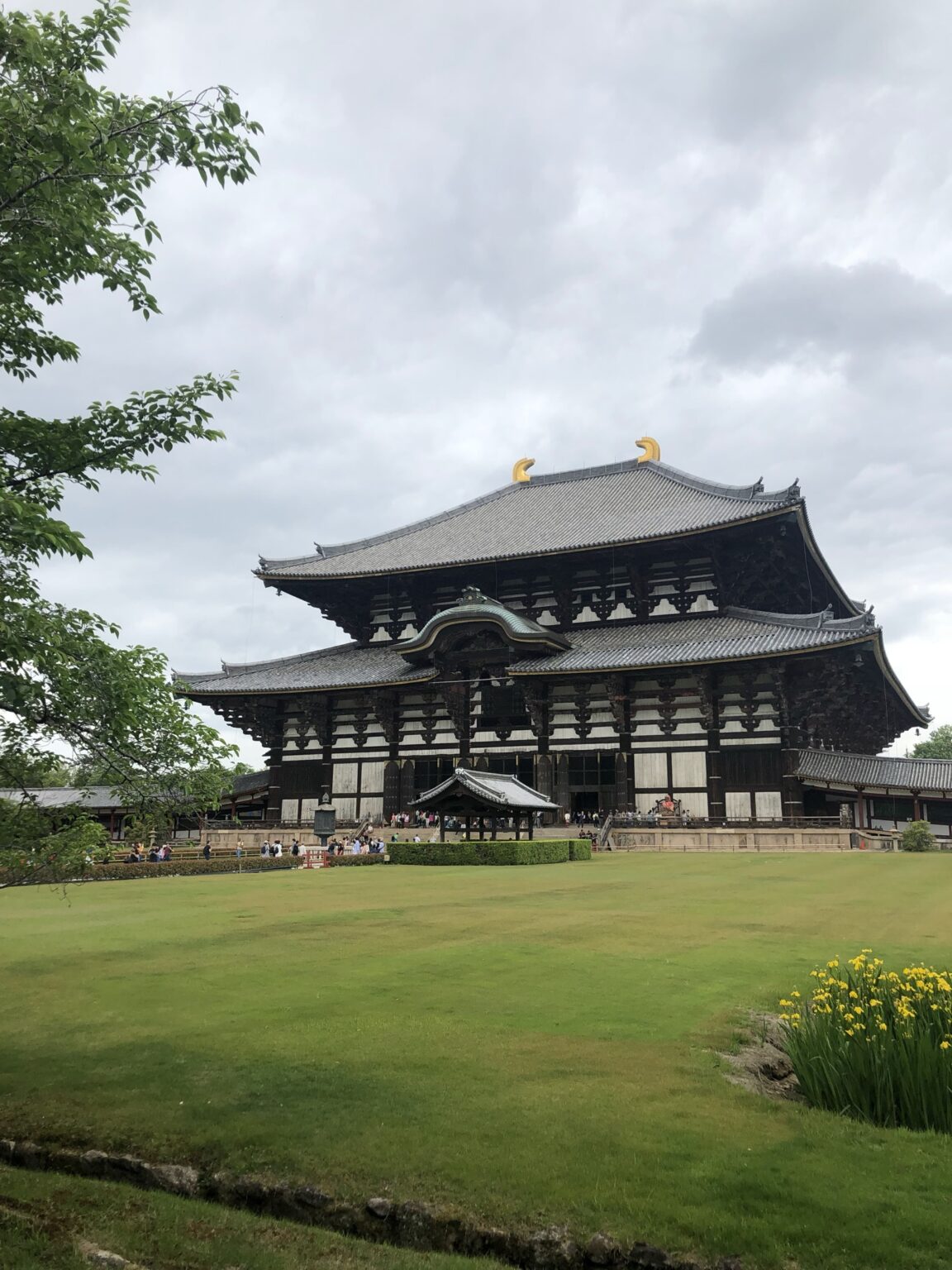
Todai-ji in Nara holds the Great Buddha — a 14.7-metre bronze Vairocana first cast in the 8th century — inside a wooden hall that ranks among the largest in the world, and it sits in a park where more than a thousand wild deer roam free, an easy day trip from Kyoto or Osaka.
Most people come to Nara for two things on the same morning: a Buddha so big you walk in and go quiet, and deer that will follow you across a lawn for a cracker. Todai-ji has been the centre of it since the 8th century, when Emperor Shōmu had the Great Buddha cast as a prayer for a country hit by plague and unrest. The hall has burned and been rebuilt twice; the deer have been here, protected, the whole time. Here’s what to see, what it costs, the deer etiquette nobody tells you, and how to do it as a half-day from Kyoto.
The Great Buddha · The hall & the Nio gate · The deer of Nara Park · How to get there · Hours & admission · Practical tips · Where to stay · A half-day plan · For readers from Southeast Asia · FAQ
The Great Buddha: 1,200 years of being rebuilt
The statue is a seated Vairocana Buddha (Birushana / Rushana), about 14.7 metres tall and cast in bronze. It was an almost impossible project for the 8th century: Emperor Shōmu ordered it in 743, and the eye-opening ceremony — when the eyes are painted in to “wake” the statue — was held in 752 with monks and envoys from across Asia attending.
What you see today is not all from then. The hall and the Buddha have burned twice in war, and the rebuilds are part of the story.
| Detail | Fact |
|---|---|
| Figure | Vairocana (Rushana) Buddha, seated |
| Height | About 14.7 m |
| Material | Cast bronze |
| Commissioned by | Emperor Shōmu (ordered 743) |
| Eye-opening | 752 (Tenpyō-shōhō 4) |
| Burned | 1180 (Taira clan war) and 1567 (Matsunaga war) |
| What survives | Head is Edo-era; body largely Kamakura-era repairs; parts of the pedestal and figure are original 8th-century bronze |
Standing in front of it, the scale does the work. The hand alone is taller than a person. Behind the Buddha, look for the pillar with a hole through its base the size of the Buddha’s nostril — squeeze through it and you’re said to be granted enlightenment. It’s mostly children who manage it now.
The hall and the Nio gate
The Daibutsuden — the Great Buddha Hall — is itself a record-holder, long counted among the largest wooden buildings in the world even though the current 1709 rebuild is smaller than the original. Before you reach it you pass through the Nandaimon, the great south gate, rebuilt in 1199 in a bold Chinese-influenced style.
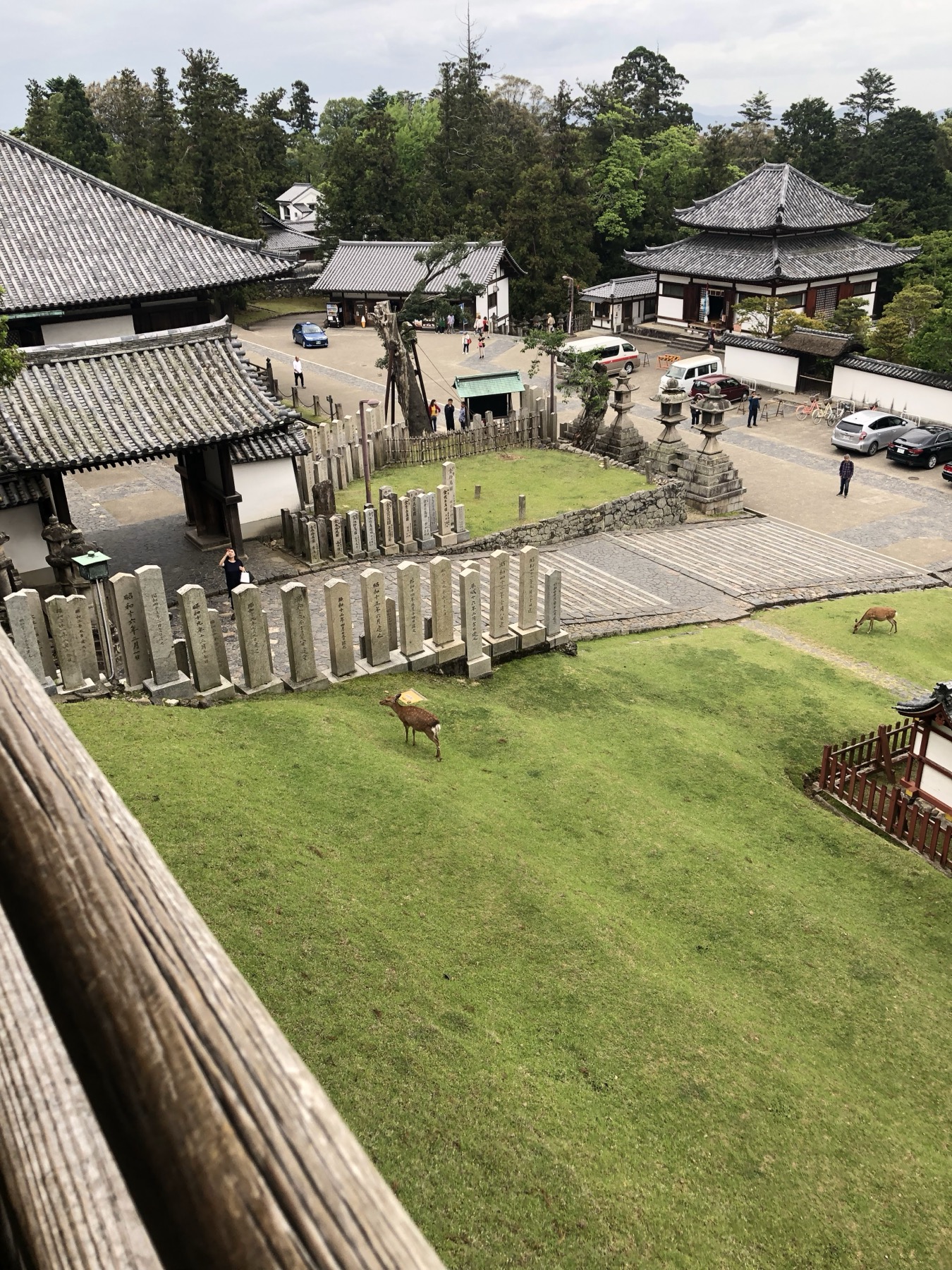
Inside the Nandaimon stand the two Niō — the guardian kings, each about 8.4 metres of carved wood. They were made in 1203, in a frantic 69 days, by a team under the master sculptors Unkei and Kaikei. Don’t rush past them to get to the Buddha; they are among the greatest sculptures in Japan, and they’re free.
Nandaimon & the Niō
The great south gate (1199) and its two 8.4 m guardian kings (1203). Free to see, and worth slowing down for.
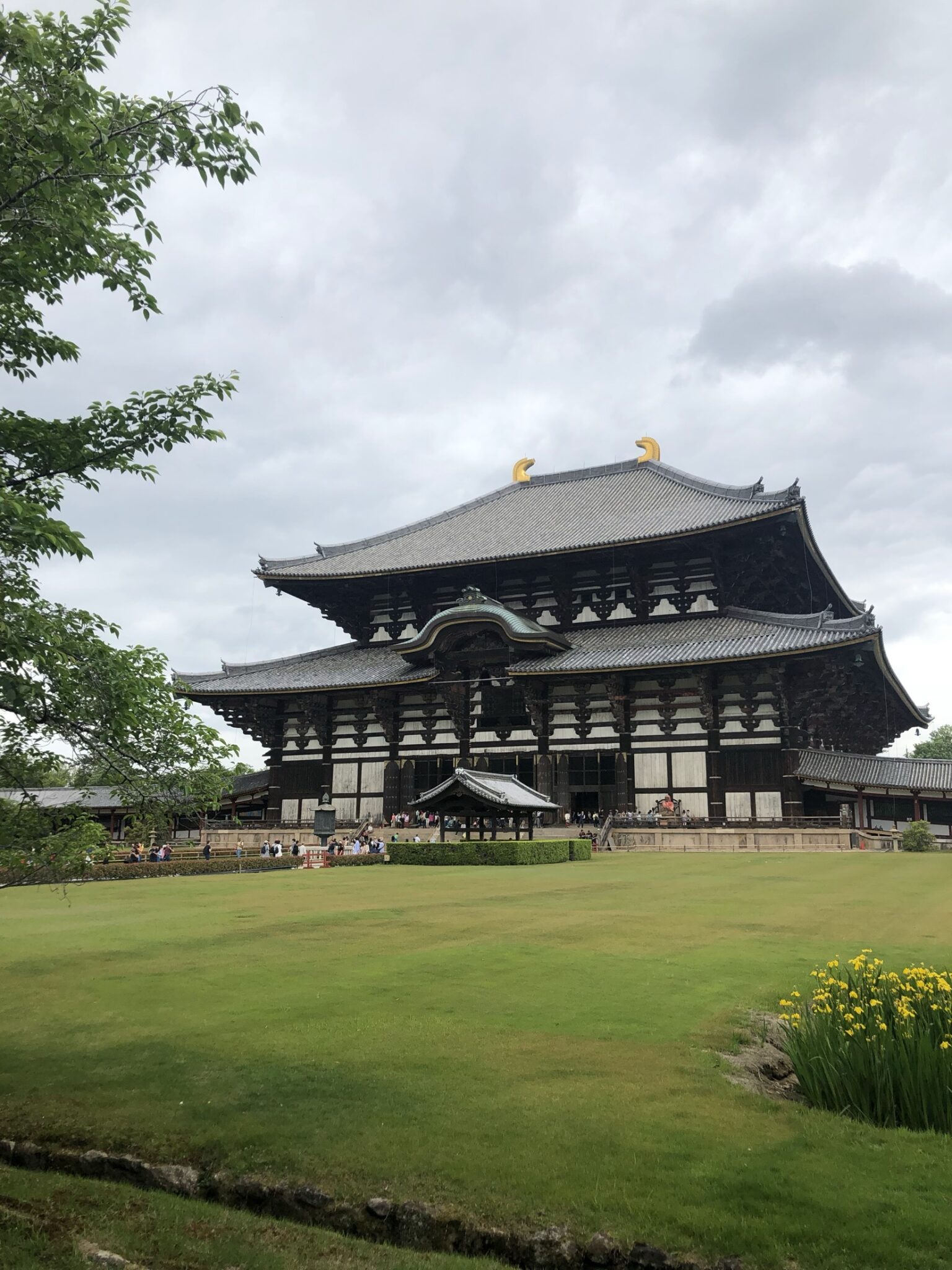
The Daibutsuden
The Great Buddha Hall (1709 rebuild), home to the Vairocana and a couple of attendant statues. This is the ticketed part.
Nigatsu-dō
A hillside hall above the main precinct with a free veranda and a wide view over Nara. Its Omizutori fire-and-water rite runs 1–14 March each year.
The bell & quieter corners
The huge temple bell, Hokke-dō (Sangatsu-dō) and the Kaidan-dō reward anyone who wanders past the main hall, with far fewer people.
The deer of Nara Park: wild, bowing, and not pets
More than a thousand sika deer live free in Nara Park, and they have for centuries — in the old Kasuga faith they were treated as messengers of the gods, and they’re now protected as a natural monument. They are genuinely wild animals that happen to be very comfortable around people, and that’s the thing to keep straight.
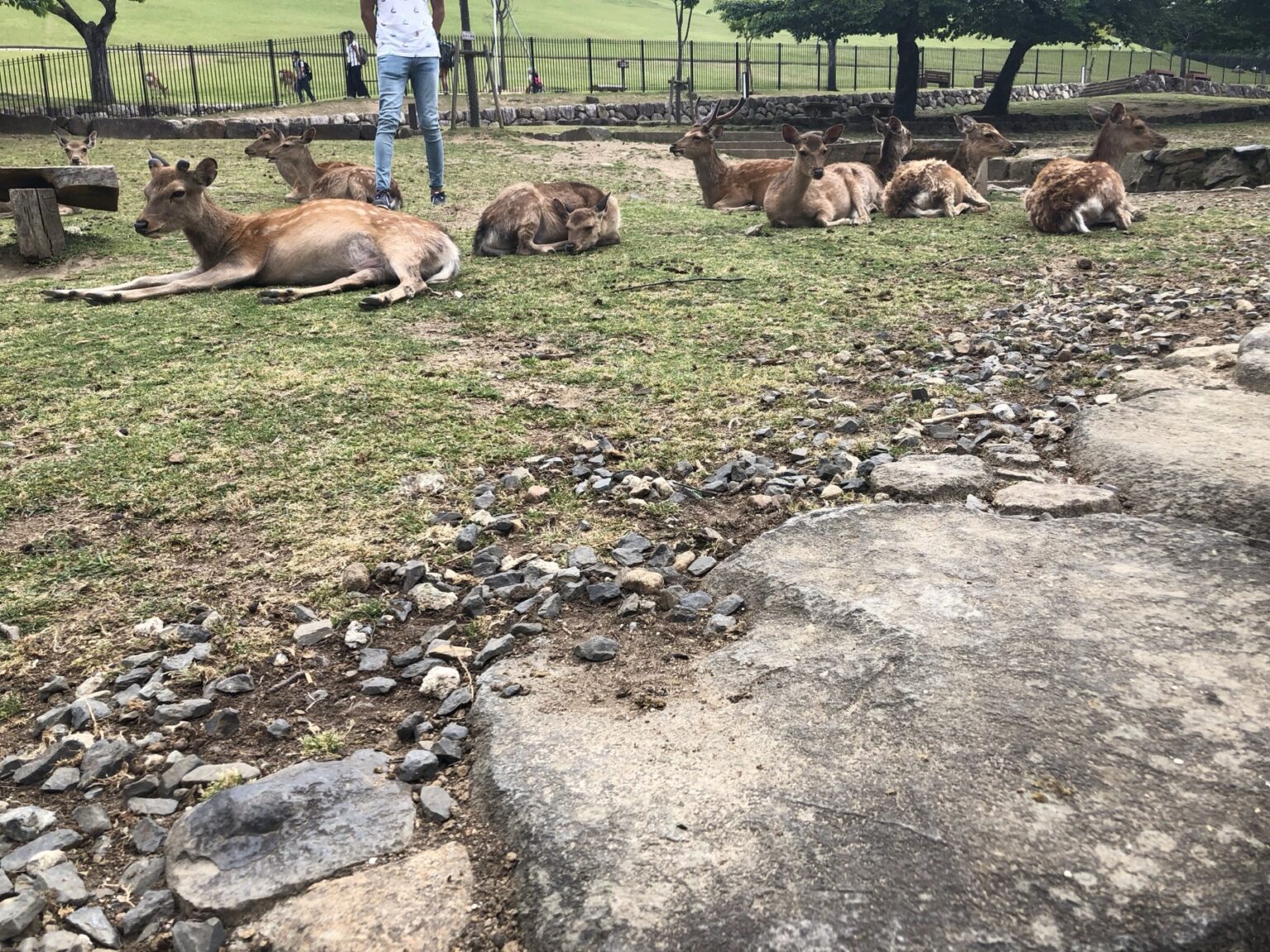
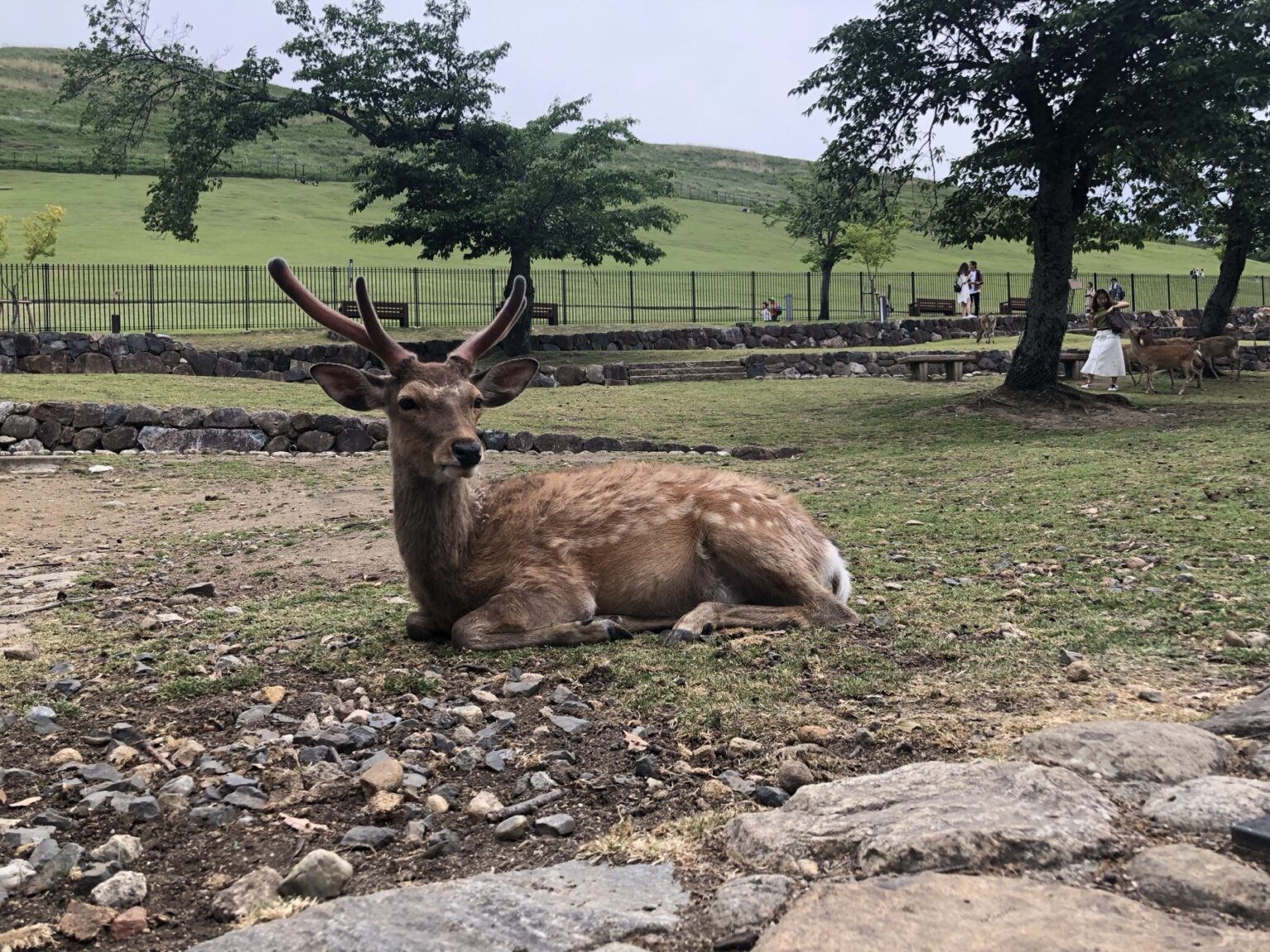
You’ll see vendors selling shika senbei (deer crackers) for about ¥200 a bundle. Some deer will bow for one. Here’s how to feed them without it turning into a mugging.
Only feed them the crackers
Shika senbei are sugar- and additive-free, made for the deer. Don’t give them your snacks, and don’t let them reach plastic bags — they will eat them.
Don’t tease
Holding a cracker high to make them bow over and over just winds them up. Bow back once, then feed quickly. Show empty hands when you’re out.
Mind the stags (autumn)
In the September–November rut, antlered males can be pushy. The park trims antlers each autumn, but give big stags space.
They headbutt and nip
Mostly harmless, but a hungry deer will butt your bag or pocket. Keep food zipped away until you’re ready, especially with children.
Tuck away your maps and tickets
Paper is fair game to a deer. People lose pamphlets, maps — even passports left in a back pocket. Zip the important things up.
They are not pets
No riding, no chasing, no picking up fawns in spring. Watch your footing — they nap on the paths and don’t move for anyone.
How to get there
Nara is an easy train ride from both Kyoto and Osaka, and Todai-ji is a 20-minute walk (or a short bus) from the stations through the deer park.
| From | Line | Time |
|---|---|---|
| Kyoto | Kintetsu Limited Express to Kintetsu-Nara, or JR Nara line | ~35–45 min |
| Osaka (Namba) | Kintetsu Nara line to Kintetsu-Nara | ~40 min |
| Osaka (Tennoji) | JR Yamatoji line to JR Nara | ~35 min |
| Kansai Airport | Via Tennoji or a direct limousine bus | ~1.5 hr |
From Kintetsu-Nara Station it’s about a 20-minute walk east through Nara Park to the Nandaimon — you’ll be among deer the whole way. If you’re routing through Kyoto first, our Kyoto Station access guide covers the transfers.
Hours & admission
The Daibutsuden is ticketed; the park, the Nandaimon and its Niō, and the Nigatsu-dō veranda are free. Bring cash — the temple does not take cards at the gate.
| What | Hours | Adult | Child |
|---|---|---|---|
| Daibutsuden (Great Buddha Hall) | 7:30–17:30 (Apr–Oct) · 8:00–17:00 (Nov–Mar) | ¥800 | ¥400 |
| Todai-ji Museum | Similar to the hall | ¥800 | ¥400 |
| Combined hall + museum | — | ¥1,200 | ¥600 |
| Hokke-dō (Sangatsu-dō) & Kaidan-dō | 8:30–16:00 | ¥800 each | ¥400 |
| Nandaimon, Niō, park, deer | Always open | Free | Free |
An audio guide is available for ¥500. Hours and prices can change, especially for special viewings — confirm on the official site before you go.
Practical tips
Go early
The hall opens at 7:30 in summer. Arrive by 8:00–9:00 and you’ll have the Buddha and calm deer before the tour buses and school trips land.
Bring cash
Tickets, crackers and small shops are cash (and sometimes IC). Don’t rely on a card at the gate.
Wear shoes you can slip off
You don’t enter the Daibutsuden barefoot, but Nigatsu-dō and other halls may ask you to remove shoes. Easy footwear helps.
It’s a lot of walking
Station to gate to hall to Nigatsu-dō is a few kilometres on the day. Comfortable shoes and water matter, especially in summer heat.
Combine, don’t rush
Todai-ji pairs naturally with Kasuga Taisha and Kōfuku-ji in the same park. Half a day does Todai-ji well; a full day adds the rest.
Two Great Buddhas?
If you’ve seen the bronze Buddha at Kamakura, Nara’s is older and indoors — read our Great Buddha of Kamakura guide for how the two compare.
Where to stay
Most people visit Nara as a day trip from Kyoto or Osaka, and that’s the easy play. But a night in Nara means you get the park at dawn and dusk, when the deer and the lantern-lit precinct are at their best and the crowds are gone.
Stay in Nara, Kyoto or Osaka
Booking has the widest choice across all three cities. Rakuten Travel is the stronger option for traditional ryokan in Nara and Kyoto if you’d rather sleep on tatami near the park.
Coming from Kansai Airport, the JR Haruka express runs to Kyoto and Tennoji, both an easy hop on to Nara.
Rather go with a guide? You can compare guided Nara day tours from Kyoto and Osaka on Viator.
A half-day plan from Kyoto
8:00 — Train to Nara
Kintetsu or JR from Kyoto, about 45 minutes. Aim to be walking into the park by 9:00.
9:00 — Through the deer to the gate
Walk east through Nara Park, meet the deer, and pass under the Nandaimon to see the Niō.
9:30 — The Great Buddha
Into the Daibutsuden before the crowds. Don’t miss the model of the original hall and the guardian statues inside.
11:00 — Nigatsu-dō & lunch
Climb to Nigatsu-dō for the view, then lunch around the park — kakinoha-zushi or kamameshi are the Nara classics — before the train back.
For readers from Southeast Asia
Nara is one of the most efficient day trips in Kansai, and it’s friendly for first-time visitors from Singapore, Bangkok, Kuala Lumpur and Jakarta.
Easy from your Kansai base
Direct flights from Changi, Suvarnabhumi, KLIA and Soekarno-Hatta reach Kansai (KIX) in about 6–7 hours. From there it’s roughly 90 minutes to Nara via Tennoji, or pair it with a Kyoto base.
Halal and veg around the park
Nara has a handful of halal-friendly and vegetarian spots near Kintetsu-Nara; the deer-cracker stalls aside, plan lunch ahead as options thin out inside the park.
Cooler than home, but pack for heat
Spring and autumn sit around 15–22°C — pleasant after Singapore’s steady 31°C — but summer in Nara is hot and humid with a lot of walking, so carry water and sun cover.
Frequently asked questions
How big is the Great Buddha at Todai-ji?
The seated bronze Vairocana Buddha is about 14.7 metres tall. It was first cast in the 8th century and its eye-opening ceremony was held in 752; the head dates from the Edo period and much of the body from Kamakura-era repairs after two fires.
How much does Todai-ji cost, and what are the hours?
The Great Buddha Hall is ¥800 for adults (¥400 for children), open 7:30–17:30 from April to October and 8:00–17:00 from November to March. A combined ticket with the Todai-ji Museum is ¥1,200. Payment is cash only.
Is Nara a good day trip from Kyoto or Osaka?
Yes — it’s one of the easiest in Kansai. Nara is about 35–45 minutes by train from Kyoto and around 40 minutes from Osaka, and Todai-ji is a 20-minute walk through the deer park from Kintetsu-Nara Station.
Are the Nara deer dangerous, and can I feed them?
They’re wild but used to people. You can feed them the special shika senbei crackers (about ¥200), and some will bow for one. Don’t tease them, keep other food and paper out of reach, and give antlered stags space in the autumn rut.
Do I need to book Todai-ji in advance?
No. You buy a ticket at the gate (cash). Just arrive early — by 8:00–9:00 — to see the Great Buddha and the deer before the tour groups and school trips fill the precinct.
What else is worth seeing nearby?
The Nandaimon gate and its 8.4 m Niō guardian statues (free), Nigatsu-dō for the view, and — a short walk away in the same park — Kasuga Taisha shrine and Kōfuku-ji temple. A full day covers all of it comfortably.
When is Omizutori at Nigatsu-dō?
The Omizutori (Shuni-e) fire-and-water rite runs 1–14 March every year at Nigatsu-dō, with large flaming torches carried along the veranda in the evenings. It’s a 1,200-year-old ceremony and draws crowds, so plan ahead if you visit in early March.
How long should I spend in Nara?
Half a day is enough for Todai-ji, the deer and Nigatsu-dō. A full day lets you add Kasuga Taisha, Kōfuku-ji and the Nara National Museum at a relaxed pace.
Nara rewards an early start more than almost anywhere in Kansai: the Buddha in a quiet hall, the deer still calm on the grass, the lanterns and old halls before the buses arrive. Get there by nine, slow down at the Nandaimon, and let the scale of the place do the rest.
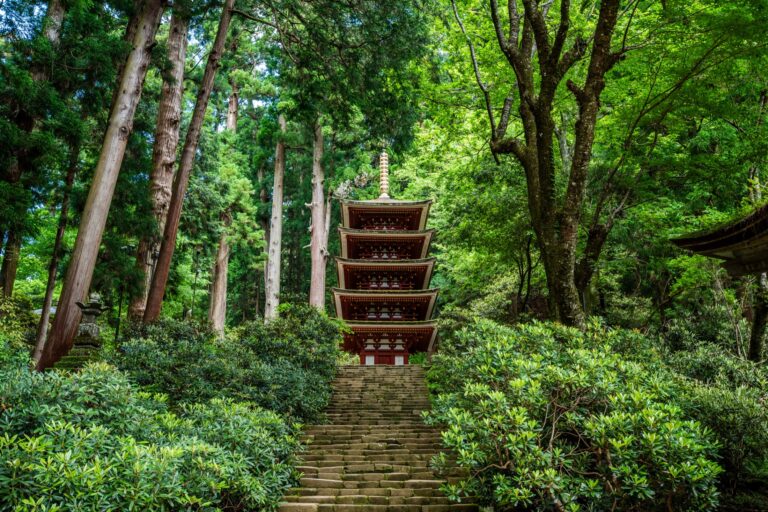
If you have time to go deeper into Nara than the deer park, the mountain temple of Murō-ji, Nara’s “Women’s Kōya” and its 1,200-year-old pagoda make a quiet half-day worth the train ride. The flower-filled yakuyoke temple of Okadera in Asuka is another easy add to a Nara trip. And in western Nara, the World Heritage pagodas of Yakushiji are a short hop away.
Top-rated, well-reviewed places, booked through Agoda:
Onyado Nono Nara Natural Hot Springs
Agoda 9.3/10 · 4★ · 6,170 reviews
Yuzan Guesthouse
Agoda 9.3/10 · 2★ · 442 reviews
IROHA GRAND HOTEL Kintetsu-Nara
Agoda 9.2/10 · 4★ · 4,543 reviews
Or search all Nara hotels on Agoda →
We may earn a commission from Agoda bookings, at no extra cost to you.
Join travelers discovering Japan's hidden side
Weekly dispatches from off-the-beaten-path Japan — spots and stories you won't find in guidebooks.
No spam. Unsubscribe anytime.
Welcome aboard!
You're in. See you in your inbox soon.