Nara · Nishinokyō · World Heritage
Historical footnote, July 2026: Yakushiji began life as Moto-Yakushiji in the Fujiwara capital south of here — and that original site is now part of the newly inscribed Asuka–Fujiwara World Heritage property. Don’t confuse the two: the living temple is here in Nara city; the archaeological site is in Kashihara.
Yakushiji, in Nara’s quiet Nishinokyō district, is one of Japan’s oldest great temples — a World Heritage site begun by an emperor in 680. Its East Pagoda, finished in 730, is the only building still standing from the temple’s earliest days and the lone original structure of Nara-period Yakushiji; everything else around it has been rebuilt, most of it in living memory. The bronze Yakushi Triad inside the Golden Hall is a National Treasure. Admission to the main precinct is ¥1,000.
What Yakushiji is
Yakushiji is the head temple of the Hossō school and one of the seven great temples of old Nara. Emperor Tenmu founded it in 680, praying for his consort’s recovery from illness; she outlived him, finished the temple as Empress Jitō, and when the capital moved to Nara in 710 the whole temple was re-established here in Nishinokyō around 718. It went onto the UNESCO World Heritage list in 1998 as part of the “Historic Monuments of Ancient Nara.”
What makes a visit unusual is how much of it is new. Fires and centuries took the original halls; what you walk through today is largely a 20th-century resurrection, paid for by hand-copied sutras, set around one stubborn survivor.
The two pagodas
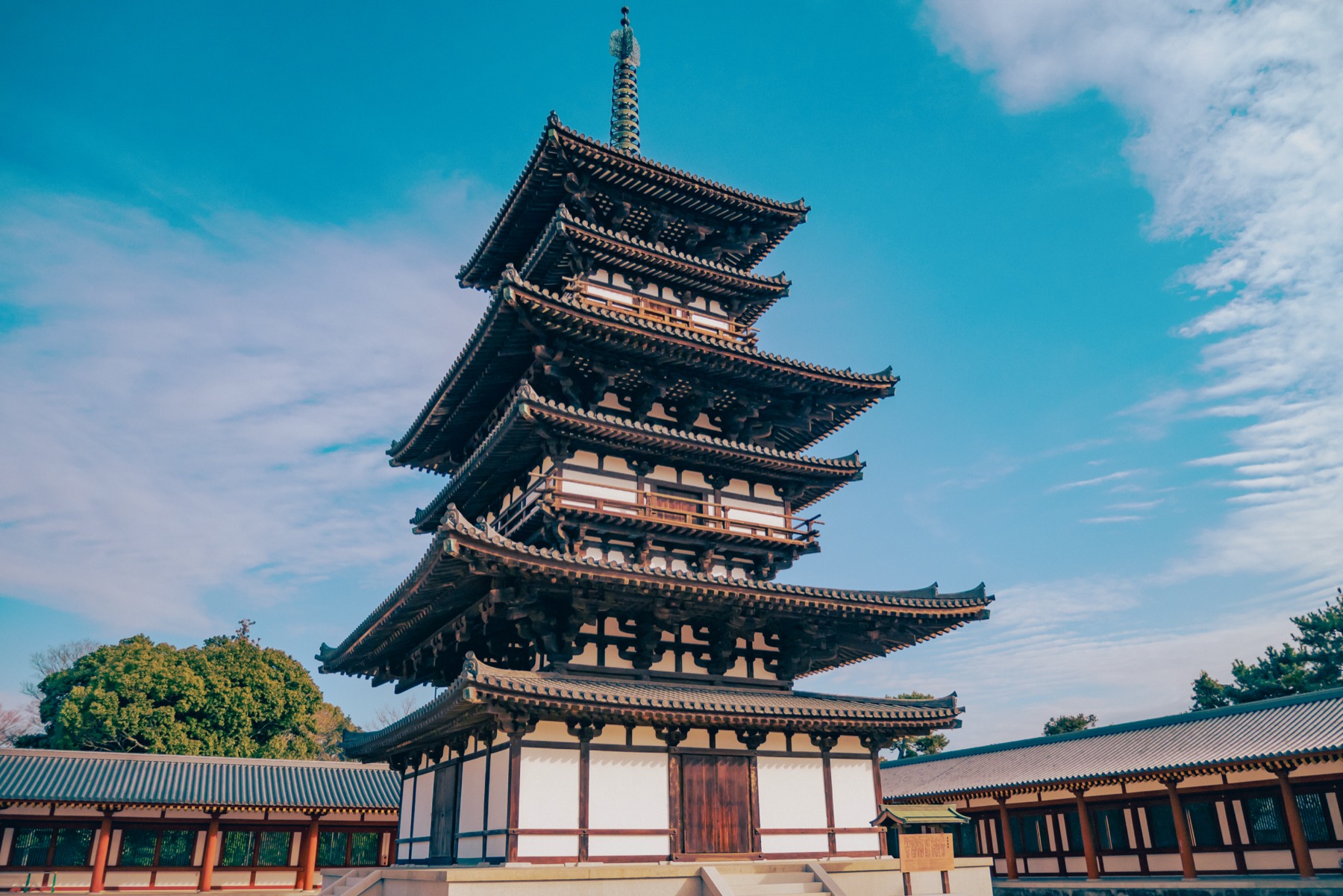
That survivor is the East Pagoda. Finished in 730, it’s the only building left from the temple’s Nara-period beginning, and one of the oldest wooden structures in the country. It looks six-tiered, but it’s a three-story pagoda — the trick is the mokoshi, the smaller “skirt” roofs tucked under each main eave, which give it a rhythm of alternating wide and narrow that architects still travel to study. From 2009 it was taken apart and painstakingly restored over about eleven years, finishing in early 2021.
Its twin, the West Pagoda, is the opposite story: it burned in the 1500s and stood gone for four hundred years until it was rebuilt in 1981, in fresh vermilion. Seeing the weathered original and its bright modern twin face each other across the courtyard is the whole history of the place in one glance.
The Golden Hall and its bronzes
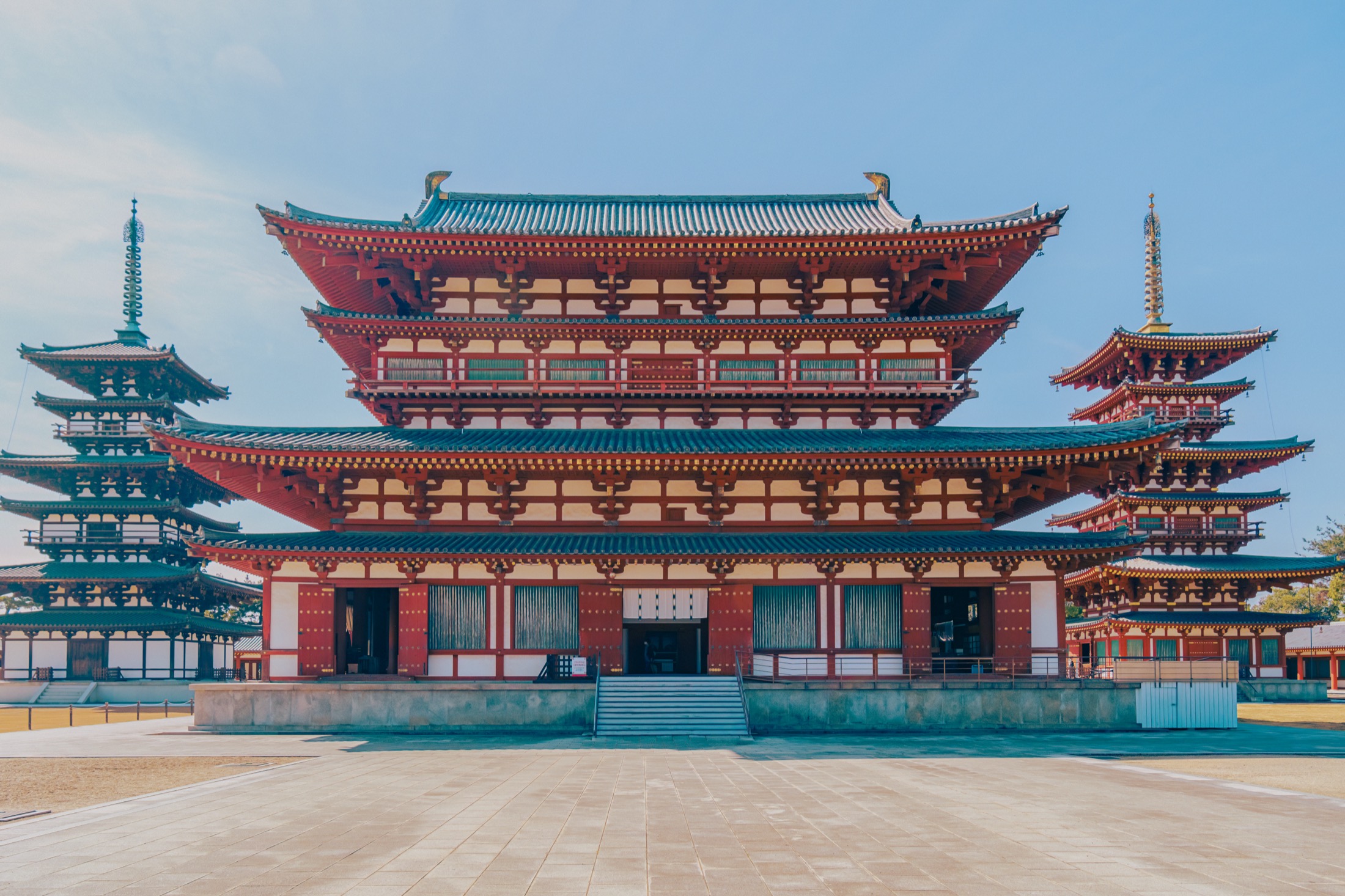
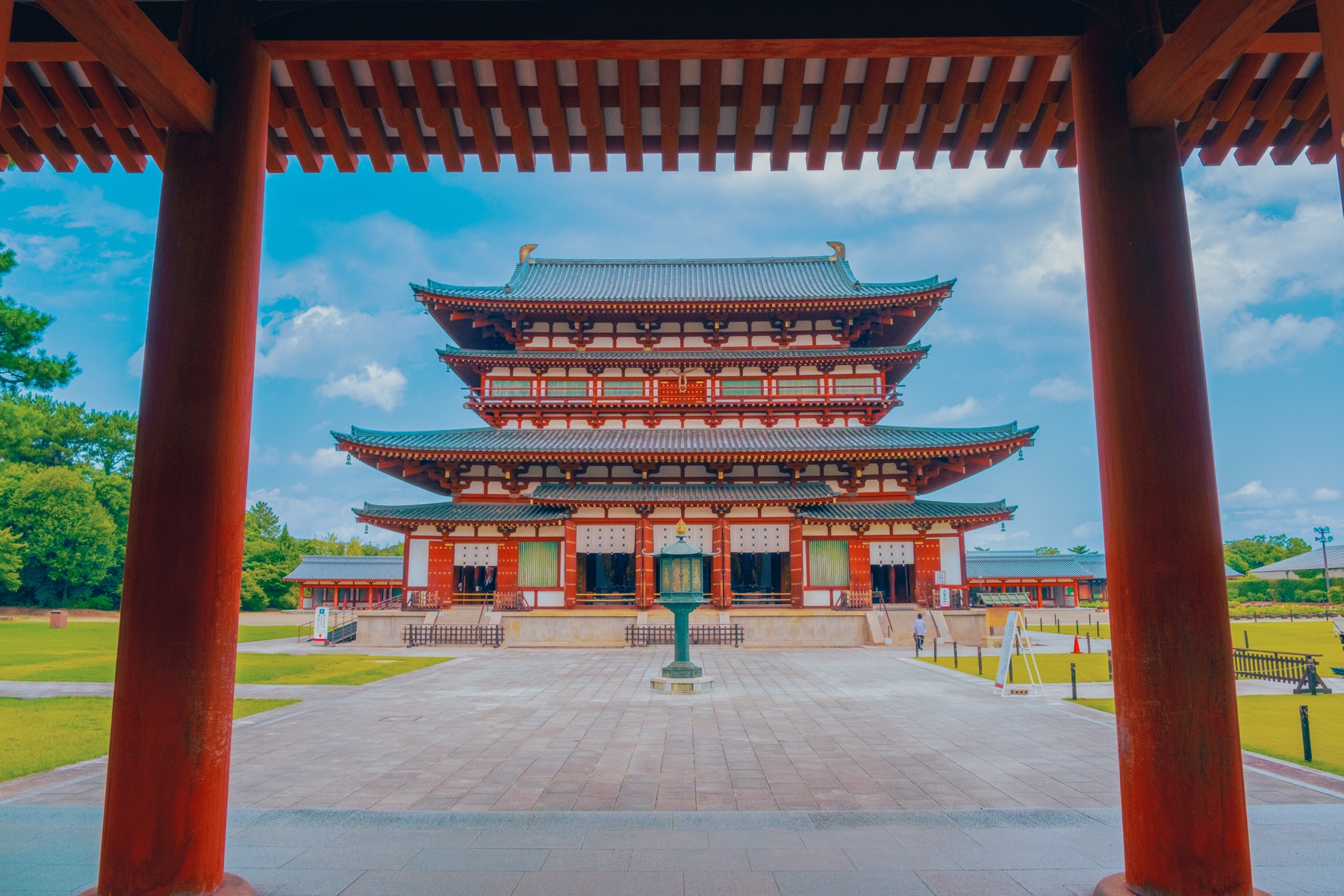
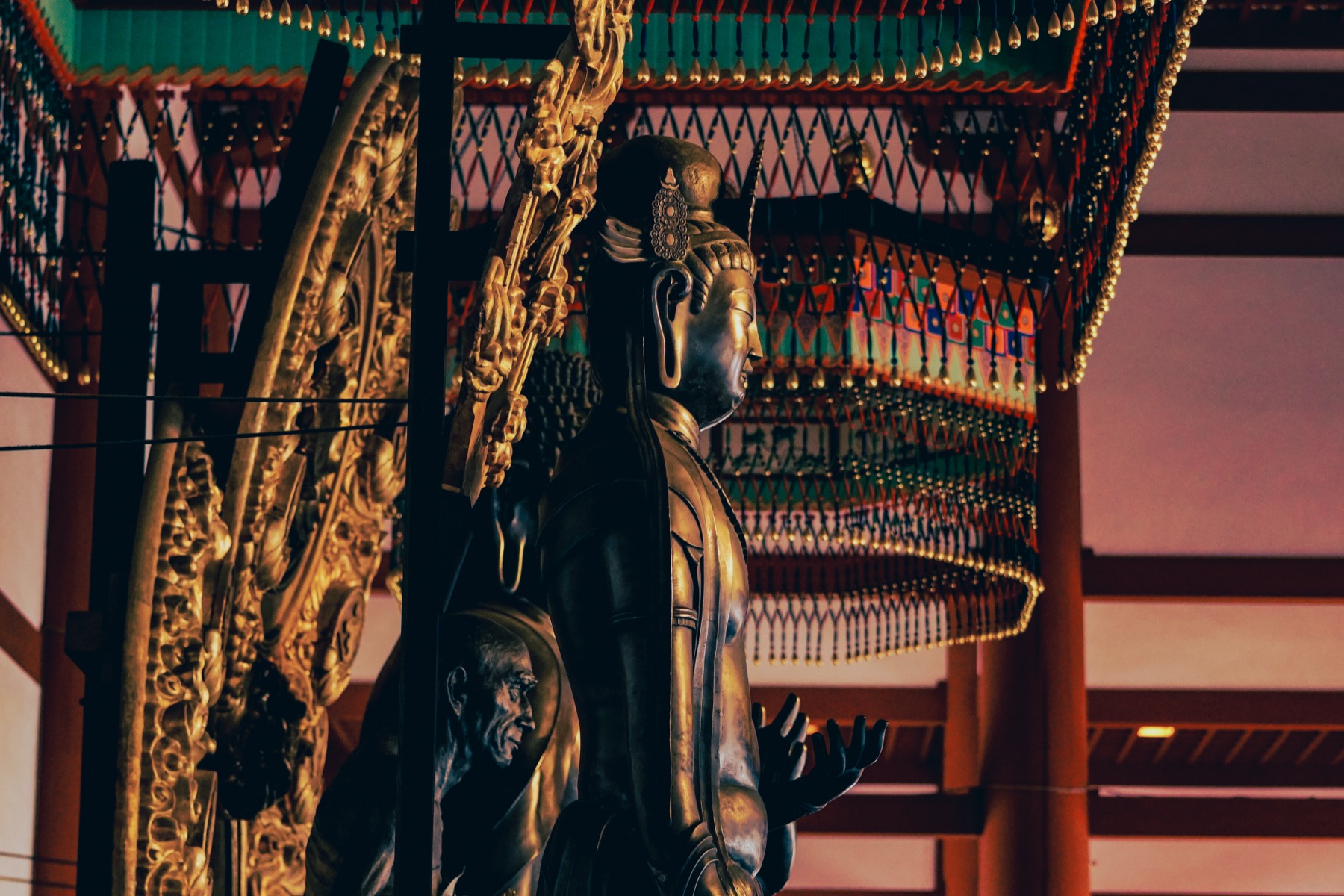
The Golden Hall between the pagodas was rebuilt in 1976, but what it holds is original: the Yakushi Triad, a bronze set of the Medicine Buddha flanked by the Sunlight and Moonlight bodhisattvas, cast in the 7th–8th centuries and counted among Japan’s finest ancient sculptures. The dark, fluid bronze has survived every fire that took the buildings around it — a National Treasure that has sat in roughly this spot for thirteen hundred years.
Don’t skip the Tōin-dō hall to the east, rebuilt in 1285 and a National Treasure in its own right; the standing Shō-Kannon bronze inside, about 1.9 metres tall, is another masterpiece of the same early period.
Genjō-Sanzōin and the Silk Road murals
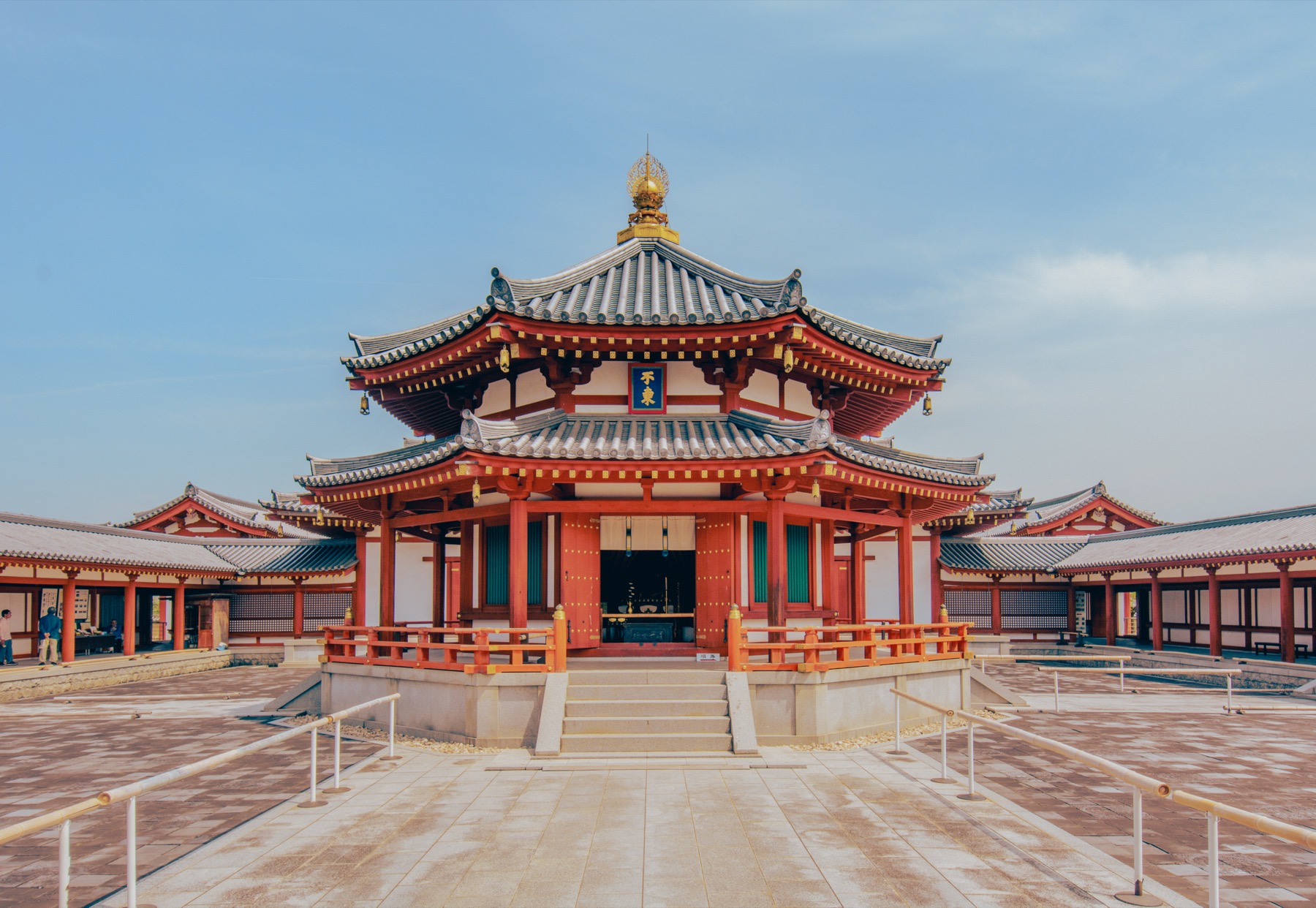
North of the main precinct is a separate complex, the Genjō-Sanzōin, built in 1991 to enshrine relics of the monk Xuanzang — the real traveller behind Journey to the West, who carried Buddhist scriptures back overland from India. Its octagonal hall is paired with a gallery of the painter Hirayama Ikuo’s “Great Tang Western Regions” murals, a roughly 49-metre sequence retracing Xuanzang’s route that took the artist some thirty years. The Genjō-Sanzōin and these murals open only for set periods through the year, with a separate fee, so check what’s on before you build a day around them.
When to go
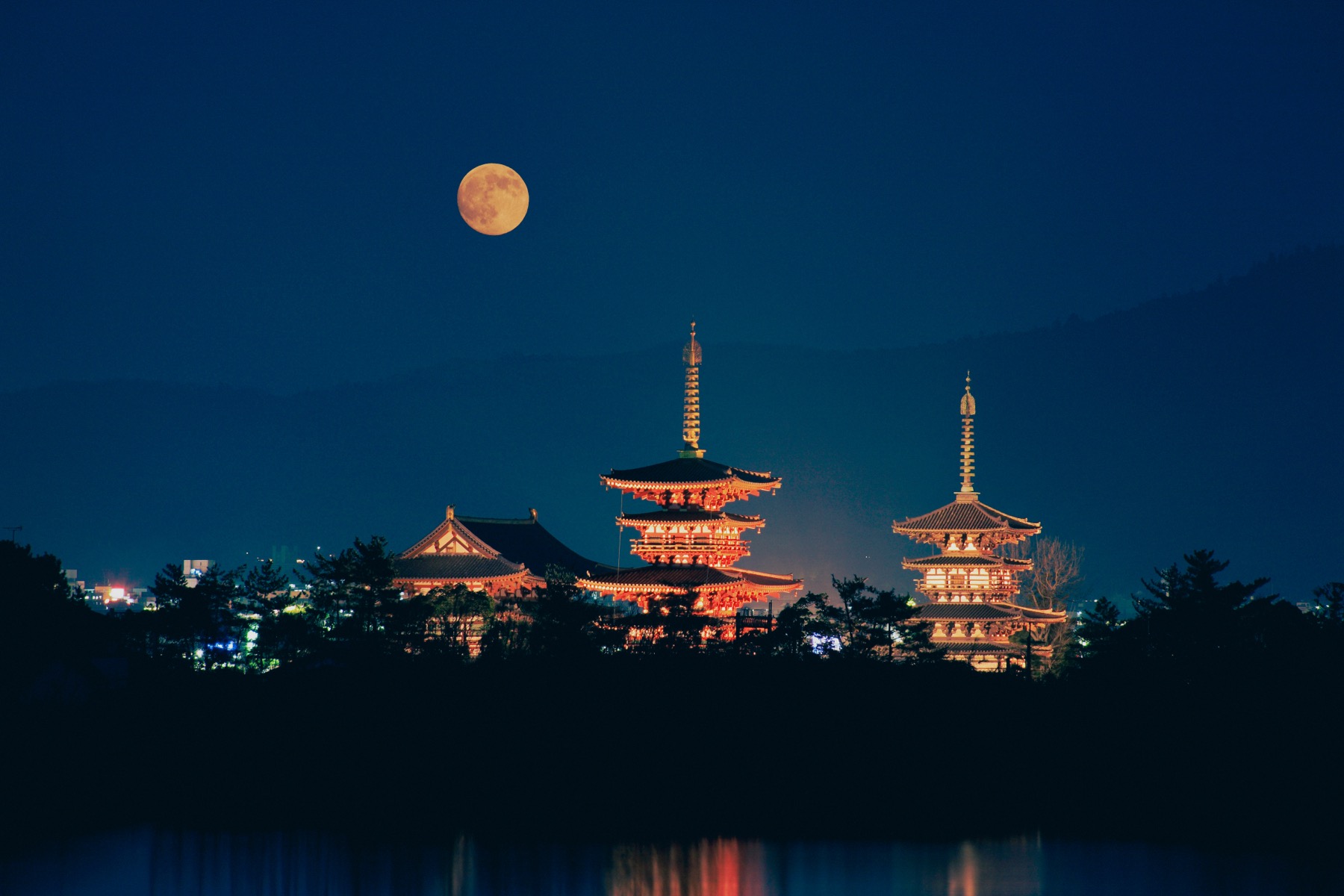
Yakushiji is a year-round visit, but two things are worth timing. The temple’s signature festival, the Hanae-shiki, runs March 25–31, when the inner sanctuary is decorated with paper flowers and the rituals draw crowds. And the special openings of the Genjō-Sanzōin murals move around the calendar — spring and autumn are the usual windows. For the famous distant view, the pond called Ōike, a short way north, gives you both pagodas and the Golden Hall mirrored in the water with the hills behind; it’s the shot most photographers come for, and it’s free.
Getting there & what’s nearby
Yakushiji is one of the easiest big temples in Nara to reach: Kintetsu Nishinokyō Station, on the Kashihara line, sits right beside the south gate, a couple of minutes’ walk away. From Kintetsu Nara it’s a short ride with one change; from Kyoto it’s a straight run down the Kintetsu line. The obvious pairing is Tōshōdaiji, the other World Heritage temple about ten minutes’ walk north, and the Ōike pond view sits between them.
Where to stay
Most people base in central Nara or come in from Kyoto or Osaka for the day — all are an easy train ride. Booking has the widest spread across Nara; Rakuten Travel is stronger for the ryokan and onsen stays.
Good to know
What is Yakushiji known for?
It’s a World Heritage temple in Nara, head of the Hossō school, founded in 680. Its East Pagoda (730) is the only original building left and one of Japan’s oldest wooden structures, and its bronze Yakushi Triad is a National Treasure. The Genjō-Sanzōin holds Silk Road murals by Hirayama Ikuo.
How much is admission and what are the hours?
The main precinct (Golden Hall, Great Lecture Hall and Tōin-dō) is ¥1,000 for adults, ¥600 for junior- and senior-high students, and ¥200 for elementary children. Open 9:00–17:00, last entry 16:30. The Genjō-Sanzōin and special exhibitions cost extra and open only at set times.
Which pagoda is the original one?
The East Pagoda, finished in 730 — the only surviving building from the temple’s Nara-period start. It was dismantled and restored over about eleven years, reopening in 2021. The West Pagoda is a 1981 reconstruction of one lost to fire in the 1500s.
Why does the pagoda look like it has six floors?
It actually has three. The extra “roofs” are mokoshi — smaller skirt roofs added beneath each main eave — which create its distinctive rhythm of wide and narrow tiers.
How do I get to Yakushiji?
Kintetsu Nishinokyō Station, on the Kashihara line, is right beside the temple’s south gate. It’s a short hop from Kintetsu Nara with one change, or a direct run from Kyoto. Tōshōdaiji is a ten-minute walk north and pairs naturally.
When is the Hanae-shiki festival?
March 25–31. The inner hall is decorated with handmade paper flowers and the week’s rituals are the temple’s biggest annual event.
Skip the Crowds in Japan (2026)
A quieter side of Nara than the deer park — and 11 more swaps.
Tōdaiji & the Nara Deer
The Great Buddha and the deer park — the other half of a Nara day.
Murōji Temple
Nara’s mountain “Women’s Kōya” and its 1,200-year-old pagoda.
Okadera in Asuka
Japan’s first yakuyoke temple, and a famous flower temple, south of Nara.
Plan a Nara Trip
Yakushiji is an easy day from Nara, Kyoto or Osaka. Three ways to set it up.
Join travelers discovering Japan's hidden side
Weekly dispatches from off-the-beaten-path Japan — spots and stories you won't find in guidebooks.
No spam. Unsubscribe anytime.
Welcome aboard!
You're in. See you in your inbox soon.