Kyoto · World Heritage · Temple
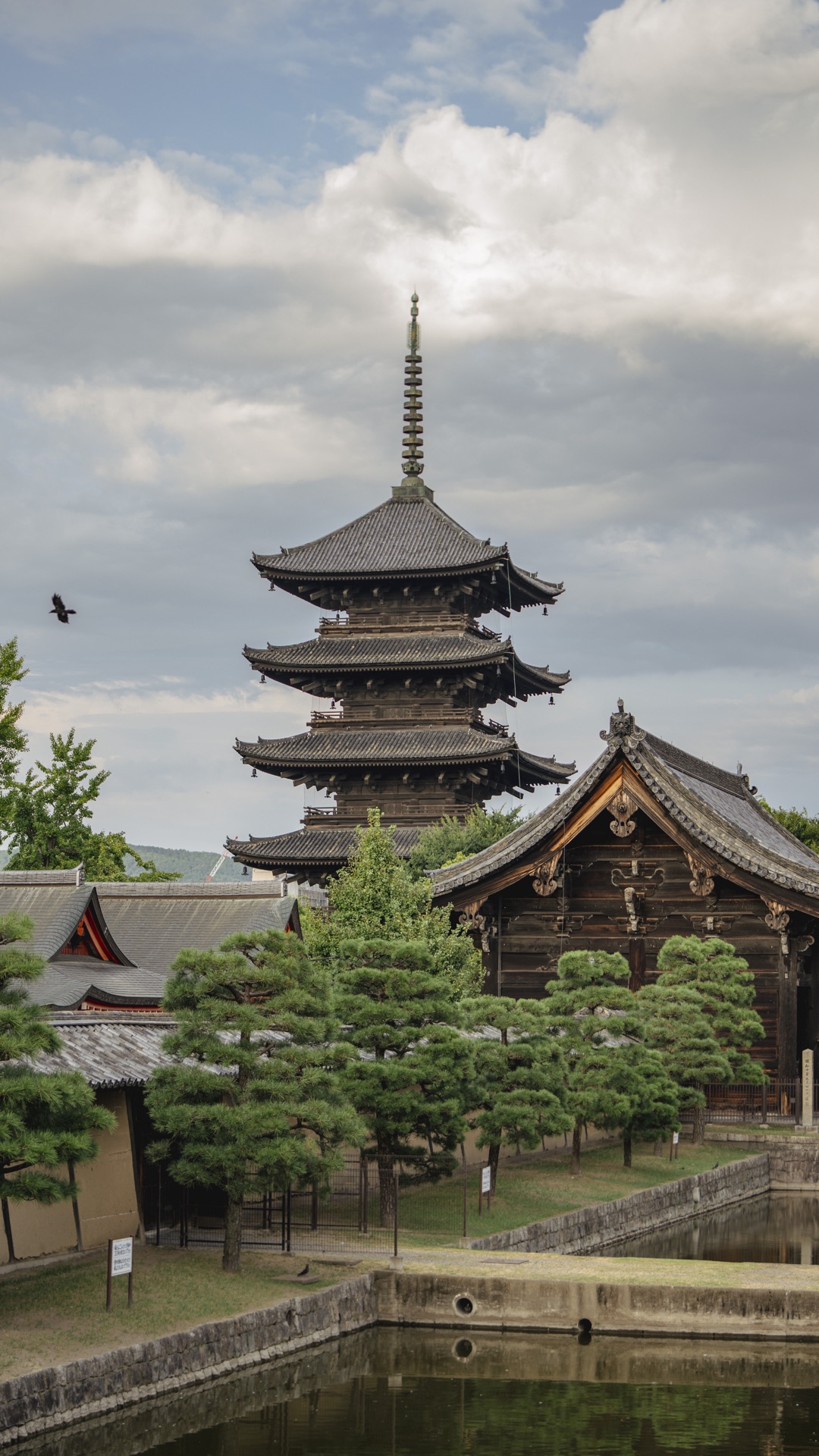
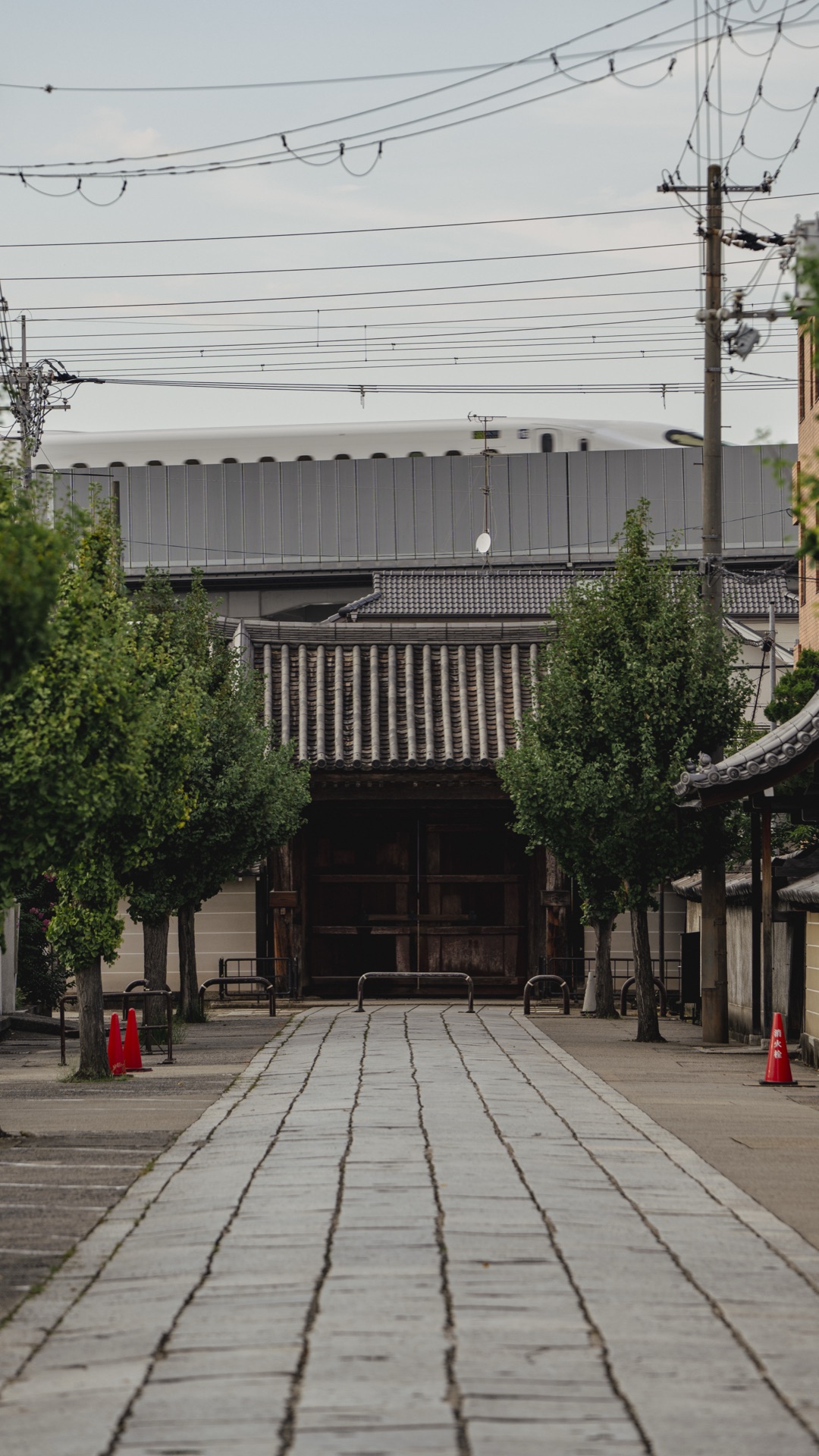
Toji is the temple most travelers see only as a silhouette through the train window. The five-story pagoda is the tallest wooden tower in Japan and the first thing the Shinkansen passes when it pulls into Kyoto Station from the south. Walking distance from the station — about fifteen minutes south — but most itineraries head straight to Kiyomizu, Fushimi Inari, and Arashiyama, and Toji gets skipped. It shouldn’t. The pagoda is genuinely tall in person, the temple complex is a UNESCO World Heritage Site, and the once-a-month Kobo-ichi market on the 21st turns the grounds into one of the largest open-air antique and food markets in western Japan.
Multiple Special Viewings Are Open Right Now
Toji’s 2026 spring schedule is unusually rich. If you’re in Kyoto in May, several limited-time viewings overlap.
Confirm exact dates and any sold-out viewing slots at toji.or.jp before going.
Quick Facts
The Five-Story Pagoda
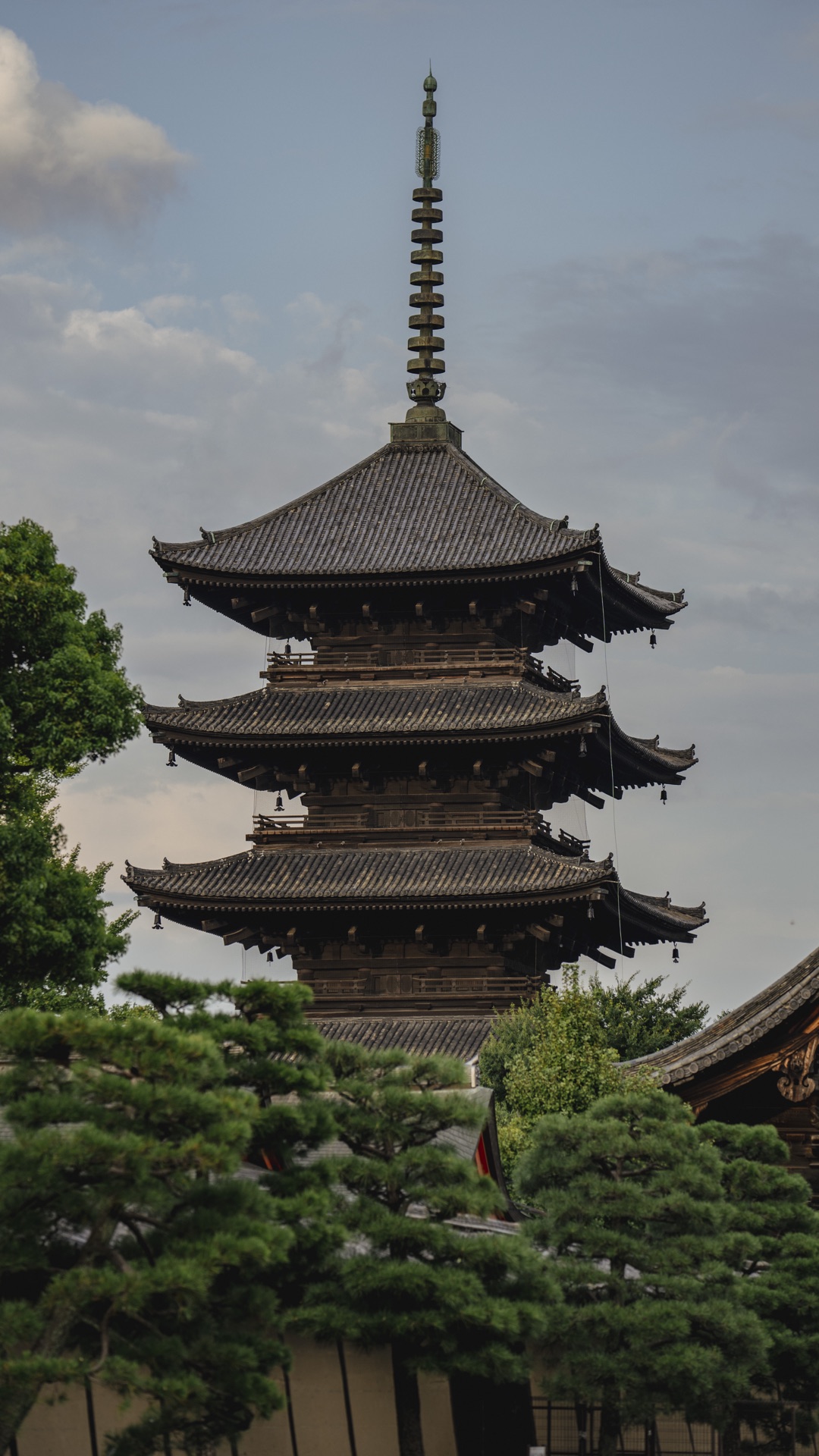
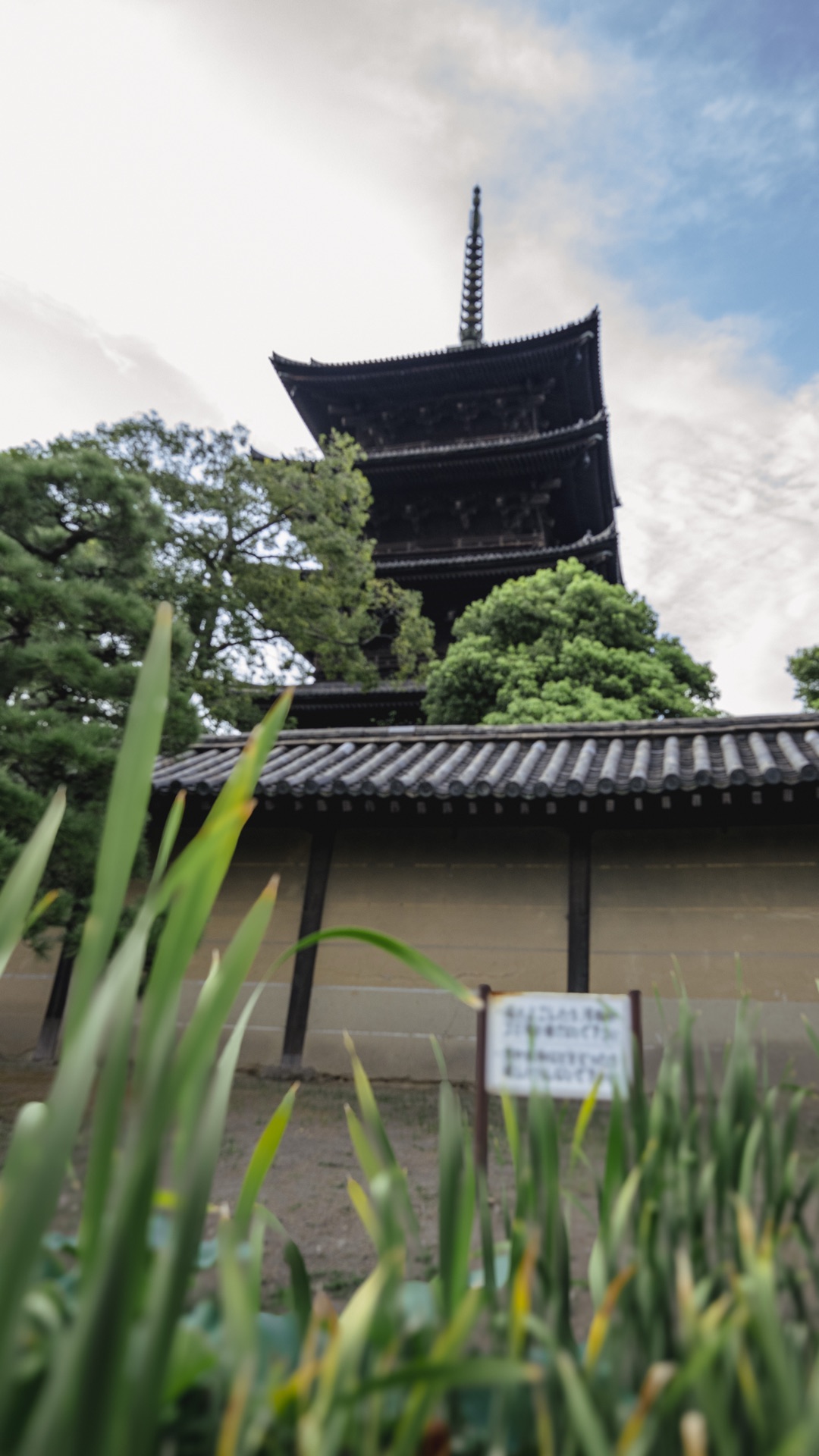
The current pagoda was rebuilt in 1644 by the third Tokugawa shogun, Iemitsu — the fifth time it has been built on the same spot. The original was destroyed by lightning in 1055, the second in 1136 by lightning again, the third by lightning in 1270, and the fourth by fire in 1635. The pagoda has caught fire and burned to the ground four separate times. The fact that the current 1644 version is still standing 380+ years later is part of why it’s a national treasure.
At 54.8 meters, it is the tallest wooden pagoda in Japan. It uses a structural technique called shinbashira — a central pillar that runs the full height of the tower and is suspended from the top, not anchored at the bottom. The pillar acts as a kind of pendulum: when the tower sways in an earthquake, the pillar swings opposite to the tower, dampening the motion. The technique is one of the reasons Japanese wooden pagodas have survived multiple major earthquakes intact.
The same engineering principle was studied by the design team for Tokyo Skytree. A 600-meter modern tower borrowing from a 17th-century temple is the kind of small fact that explains why Toji is worth a real visit.
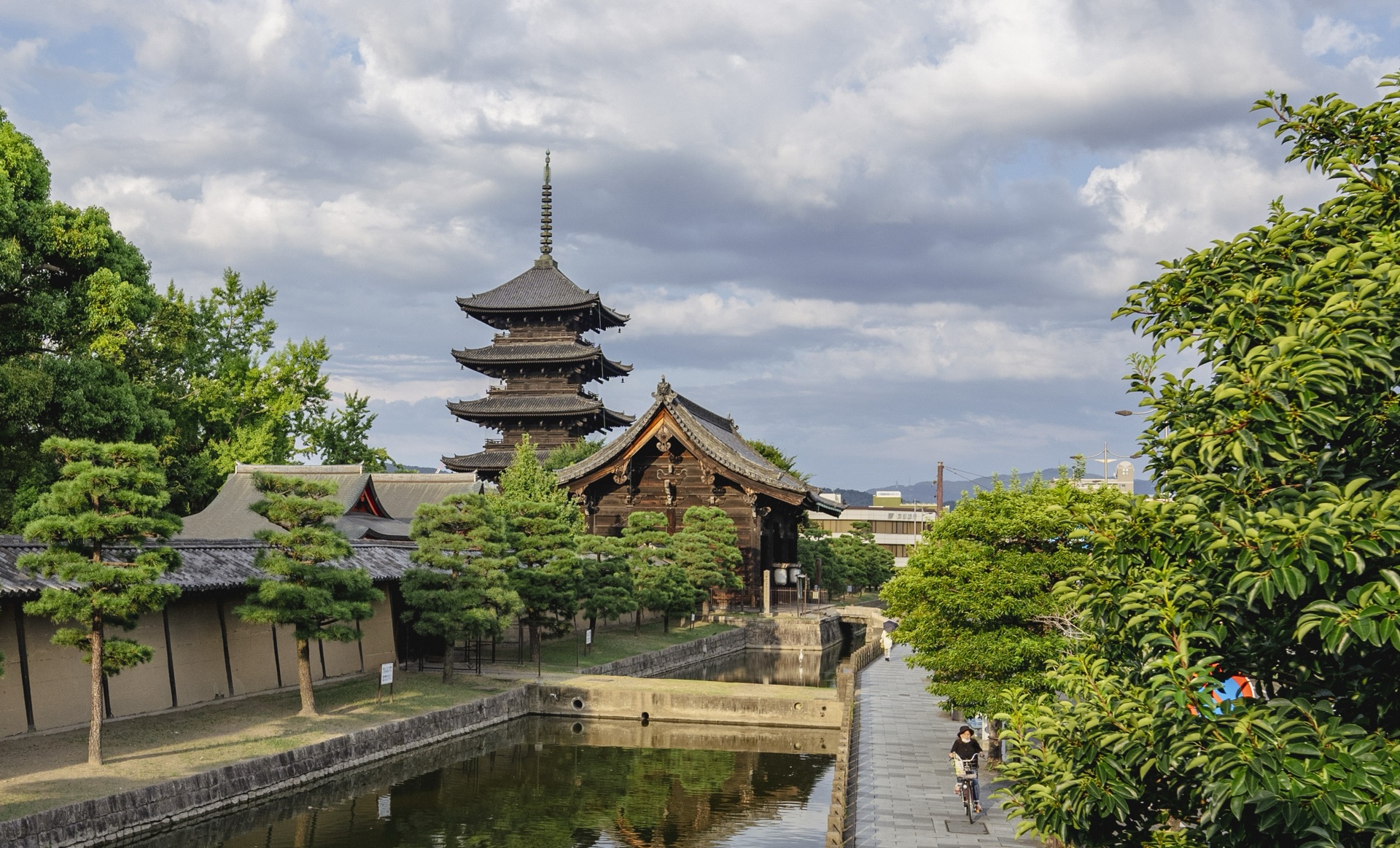
The Halls (Kondo, Kodo, and the Three-Dimensional Mandala)
The two main halls — the Kondo (Golden Hall, the main hall) and the Kodo (Lecture Hall) — are the second reason to come, and the more substantive one.
The Kondo houses a Yakushi Nyorai (Medicine Buddha) and two attendant bodhisattvas. The hall itself is a Momoyama-period rebuild of a Heian original, and the proportions are unusually elegant.
The Kodo contains what is sometimes translated as the three-dimensional mandala (rittai mandara) — twenty-one Buddhist statues arranged on the central altar to physically represent the cosmology of esoteric Buddhism. Sixteen of the twenty-one are designated National Treasures. The arrangement was conceived by Kūkai, the founder of the Shingon school of Buddhism, who was given Toji as his head temple by Emperor Saga in 823 CE.
You stand at the rope line and look across the entire mandala. The lighting is low. There is no English signage explaining what each figure is, which is on the temple to fix, but a phone-translated visit is workable.
Walking the Grounds
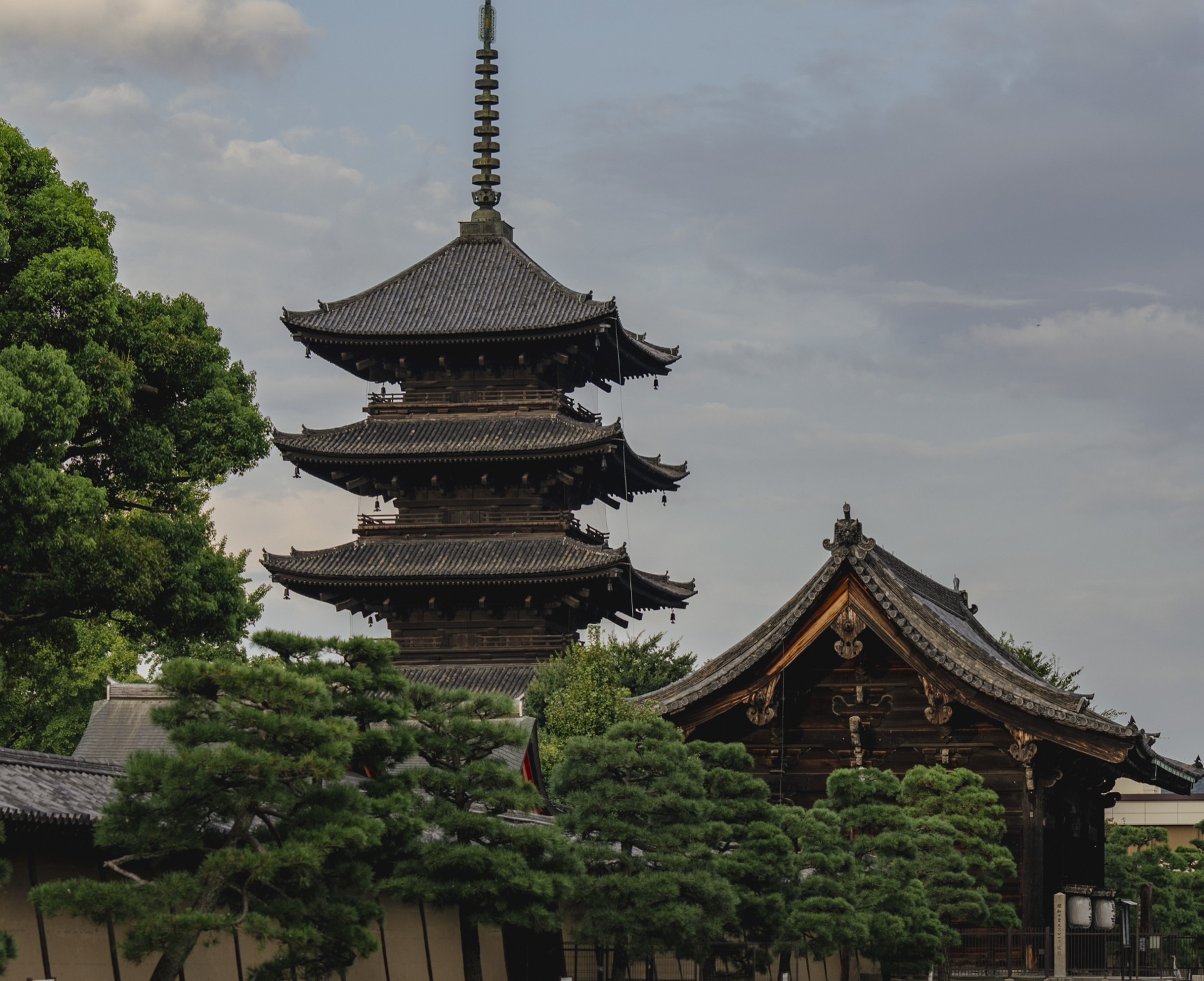
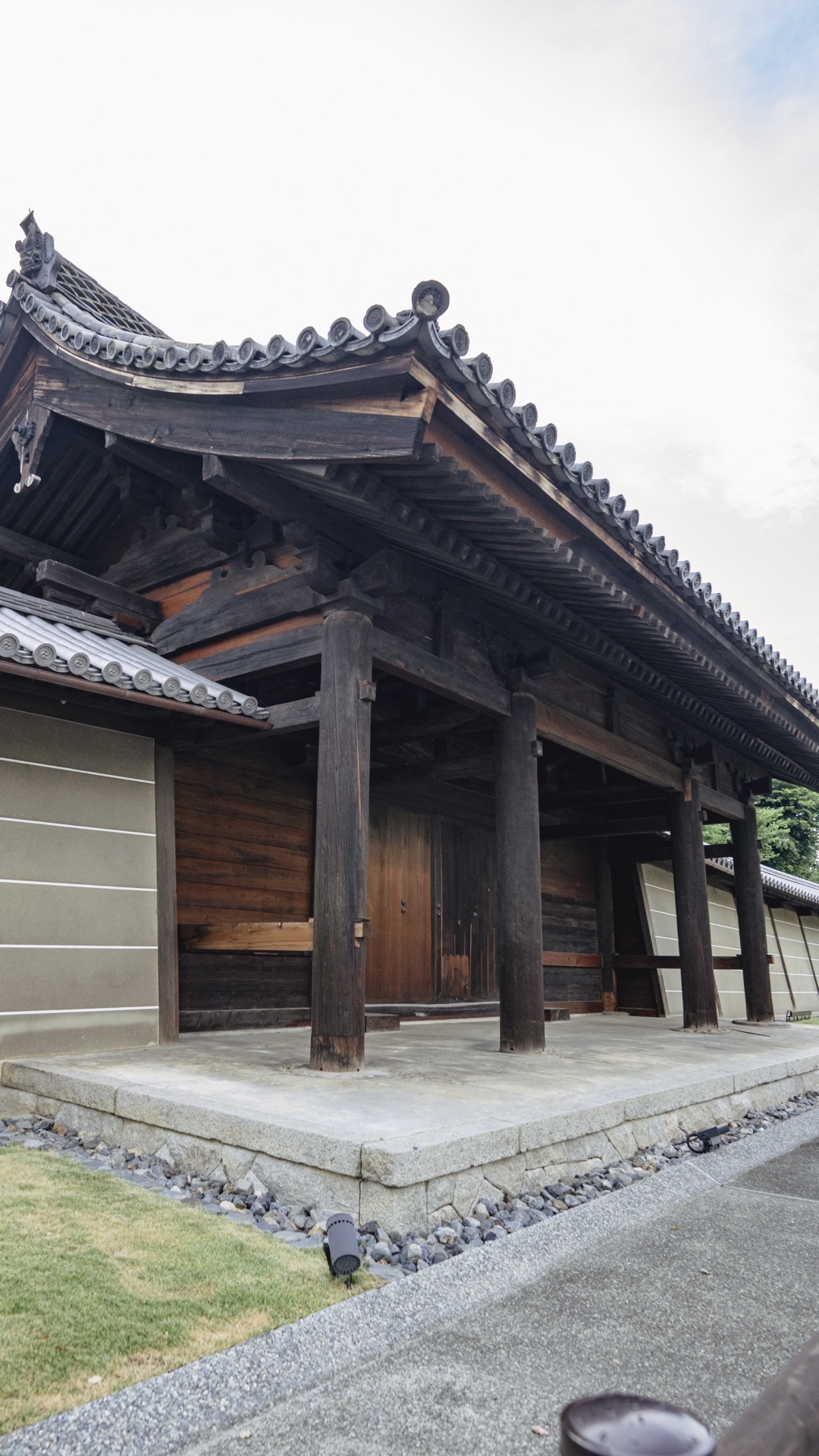
Most of the temple complex is freely accessible. You enter through the south gate, walk past the pond, and the pagoda is on your left. The Kondo and Kodo are straight ahead, paid entry. The Miei-do (御影堂), the residence hall where Kūkai is enshrined, is behind them and free to enter. The Treasure Museum and Kanchi-in (smaller subsidiary) are off to the side.
What makes the walk work is the openness. Unlike Kyoto’s eastern temple complexes, which sit on hillsides and crowd into narrow streets, Toji is on flat ground with wide paths and a long pond on its eastern edge. You can see the pagoda from many angles without the crowd pressure of Kiyomizu or Fushimi.
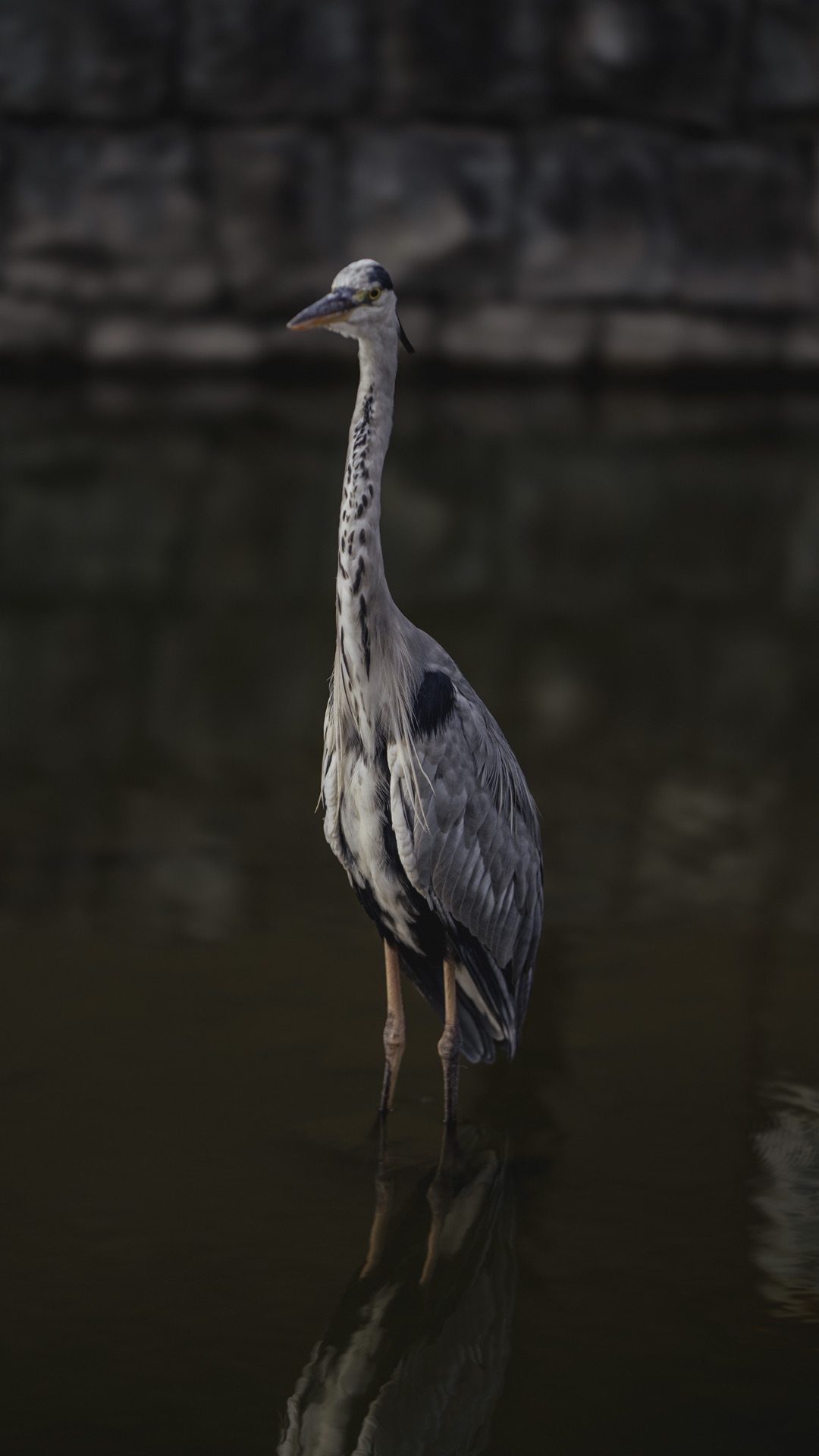
The pond holds resident grey herons and a population of large carp. Early morning is when the herons are active. By late morning the carp have figured out where the children with breadcrumbs gather.
Kobo-ichi: The 21st of Every Month
On the 21st of every month — the death anniversary of Kūkai — the temple grounds host the Kōbō-ichi market. The market has been running on roughly the same schedule since the late Edo period.
What you’ll find:
If you can plan your Kyoto trip to overlap with a 21st, do it. The market is the closest thing in Kyoto to a real working community marketplace, and it sits inside one of the most historically significant temple compounds in the country.
Admission and Hours
2026 Standard Rates
What’s Free, What’s Paid
Combined tickets at the entrance bundle Kondo/Kodo + Treasure Museum + Pagoda 1F at a small discount during overlap periods. Confirm current bundles at the south gate ticket office. Last entry to all paid areas is 16:30.
Getting There
RecommendedFrom Kyoto Station on foot
Walk south from Kyoto Station’s Hachijo (south) exit. The pagoda is visible from the station plaza on a clear day. About 15 minutes, mostly flat, signed in English near the temple.
The walk passes through residential streets — quieter than the main tourist arteries.
SubwayKintetsu Toji Station
One stop south on the Kintetsu Kyoto Line from Kyoto Station. 2 minutes by train, ¥160. From Toji Station, the temple is a 5-minute walk west.
Useful if you have luggage or are visiting on a hot day.
BusVarious Kyoto City Bus routes
Multiple Kyoto City Bus routes stop at “Toji-Higashimon-mae” (東寺東門前) on the east side of the temple. ¥230 flat fare. Slowest option in traffic.
CombinedWith Kyoto Tower
Kyoto Tower sits across from the station. A useful single afternoon: tower up at golden hour, walk back down through the station, walk south to Toji for the evening light-up (when running). Both within 1 km of each other.
Best Time of Day to Visit
After Toji: Where to Eat
The streets directly south and east of Toji have a handful of small restaurants — soba, udon, kissaten — but the better food density is back near Kyoto Station, especially north of the station in the Karasuma direction. Walk back, grab dinner, and you’ve used your afternoon well.
Stay near the station and Toji becomes a 15-minute walk before checkout. Combined with Kyoto Tower across the plaza, the whole “south Kyoto” set fits inside a single afternoon.
Browse Kyoto Station Hotels →Combine With
Frequently Asked Questions
How tall is Toji’s pagoda?
54.8 meters. It is the tallest wooden pagoda in Japan. The current structure was rebuilt in 1644 — the fifth pagoda on the same spot. The previous four were destroyed by lightning or fire over the centuries.
Is Toji free?
The temple grounds are free. You can walk the grounds, photograph the pagoda from outside, and visit the Miei-do hall without a ticket. The Kondo and Kodo (with the three-dimensional mandala) charge ¥800. The Kanchi-in subsidiary temple is ¥600. The pagoda’s first floor opens only during special periods (¥1,200). Treasure Museum and seasonal light-ups are separate fees.
When is the Kobo-ichi market?
On the 21st of every month, regardless of weather. About 800–1,200 stalls. The market is free to enter, runs morning to mid-afternoon, and is one of the largest open-air markets in western Japan. Plan to arrive before 10:00 to walk the lanes before peak crowd.
Can I go inside the pagoda?
Only during special periods. In 2026, the first floor opens to the public from April 25 to May 25 (¥1,200). New Year (Jan 1–8) and autumn special viewings also open the pagoda interior. Outside these windows, the pagoda is exterior-only. Check toji.or.jp for the current year’s schedule.
How long should I plan?
90 minutes for a standard visit including the Kondo, Kodo, and grounds. 2.5 hours if you include the Treasure Museum or Kanchi-in. Half a day if you visit on the 21st (Kobo-ichi market). The pagoda 1F special viewing adds 30 minutes.
Is photography allowed inside the halls?
No — photography of the National Treasure statues inside the Kondo and Kodo is prohibited. Outside, photography of the pagoda, grounds, gardens, and pond is allowed. Tripods are restricted in busy periods.
Is Toji good with kids?
Yes. The grounds are flat, the pond has fish and birds, the pagoda is a real attention-getter, and the entry fees for under-15s are reduced. The Kobo-ichi market is also family-friendly with food stalls and craft demonstrations.
How does Toji compare to Kiyomizudera or Fushimi Inari?
Different roles. Kiyomizudera is the famous mountainside temple with the wooden veranda — high foot traffic, dramatic photos. Fushimi Inari is the torii tunnel — high foot traffic, hike. Toji is flat, near the station, less crowded, and centered on World Heritage architecture and statuary rather than viewpoint or experience. Most travelers benefit from doing one of each.
Toji is the temple that gets sacrificed to schedule. Travelers arrive at Kyoto Station, see it on the way in, and tell themselves they’ll come back at the end of the trip — and then the trip ends. The fix is to do it on day one. Walk south fifteen minutes from the station, pay ¥800, see one of the most important Buddhist sculpture collections in Japan, and you’ve started the trip with the country’s tallest wooden tower at eye level.
The Kobo-ichi 21st market and the spring 2026 pagoda window are bonuses. The temple itself is the foundation of why the city of Kyoto exists in its current shape — the Heian capital was built around it, the Shingon school was based there, and 1,200 years later the wooden tower is still the tallest thing visible from any train approaching the city. Worth the walk.
Join travelers discovering Japan's hidden side
Weekly dispatches from off-the-beaten-path Japan — spots and stories you won't find in guidebooks.
No spam. Unsubscribe anytime.
Welcome aboard!
You're in. See you in your inbox soon.