Kansai · Kyoto Station · Travel Hub
Kyoto Station is the single most useful building in western Japan. Seven rail lines, the Tokaido Shinkansen, the entire city bus network, and the Kintetsu Limited Express all leave from the same block. If you stand on the central concourse for ten minutes, you can watch trains depart for Tokyo, Osaka, Nara, Kobe, Himeji, Hiroshima, and Kansai Airport — every one of them within the next hour.
I have used this station every month for years, and I still discover faster routes. This is the practical map I wish I had been handed the first time: fifteen destinations you can reach from Kyoto Station, what platform to find them on, how long the ride takes, and what to do at the other end.
The Four Networks Inside One Building
Before you look at where to go, understand the four overlapping transit systems that meet here. Each has its own ticket machine wall, its own entry gates, and its own way of getting you out of the building.
JR West
JR Lines & Local Trains
Tokaido (Osaka, Kobe, Himeji), Nara Line (Inari, Uji, Nara), Sagano/San’in Line (Arashiyama, Kameoka), Biwako Line (Otsu, Maibara), Kosei Line (west Lake Biwa). The largest gate complex, on the central concourse.
Tokaido Shinkansen
Bullet Train
Nozomi, Hikari, Kodama services east to Tokyo and west to Hakata. The Shinkansen has a separate gate complex on the south side of the building — follow the blue signs through the JR central concourse.
Kintetsu
Kintetsu Kyoto Line
The fastest path to Nara if you do not have a JR Pass. Limited Express trains reach Kintetsu Nara in 35 minutes. Gates on the southwest end of the station; ticket machines are red.
Karasuma Subway
Kyoto Municipal Subway
North-south spine to Shijo, Karasuma Oike, Imperial Palace, Kitayama. Useful when JR cannot get you there. The entrance is on the north side, below the main concourse.
Bus Terminal
Kyoto City Bus + Raku Bus + Highway Bus
Six lettered stops (A through F) directly outside the north (Karasuma) exit. Tourist Raku buses (100, 101, 102) handle most temples. Highway buses leave from D-stop for the airport and other cities.
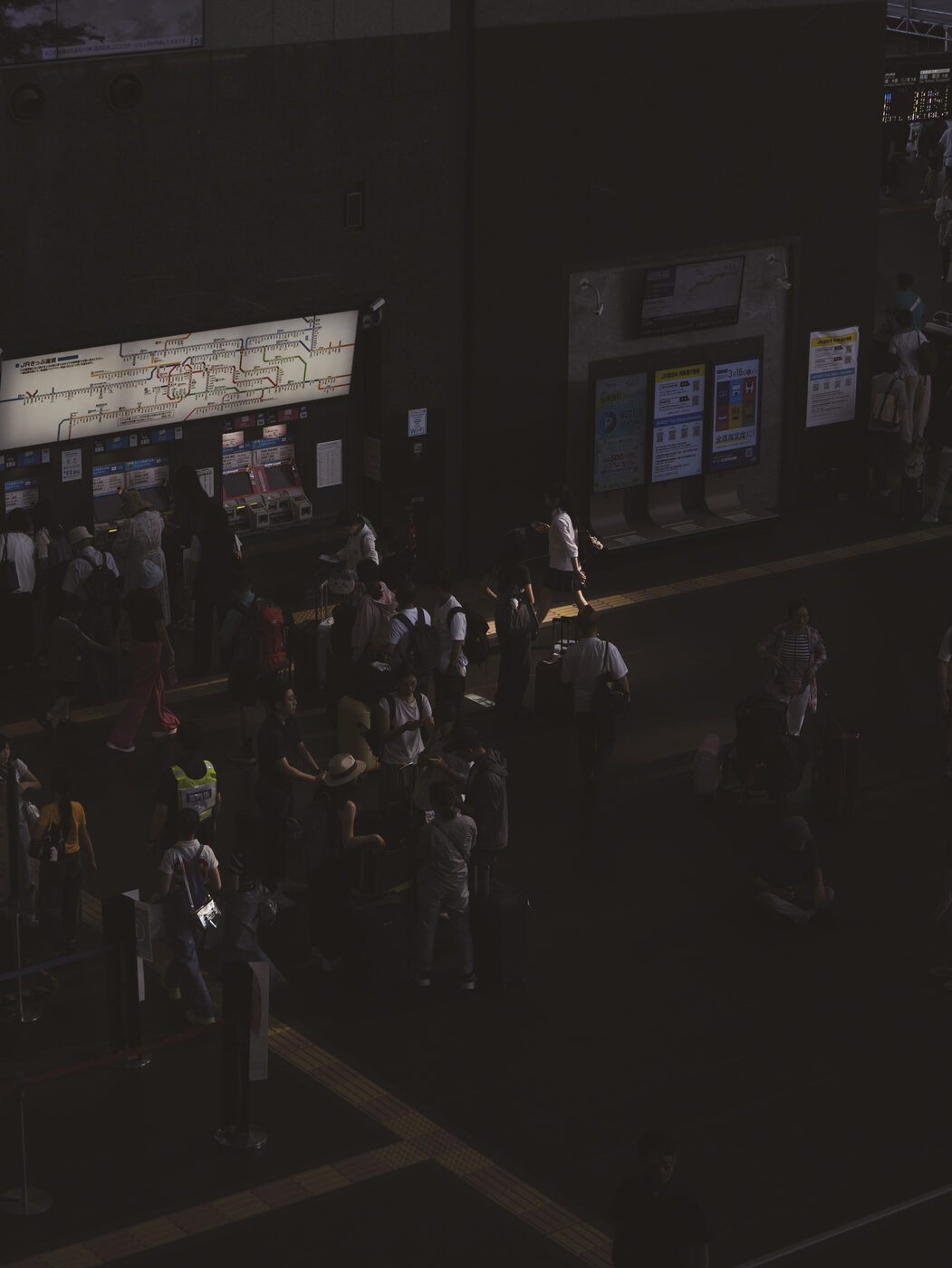
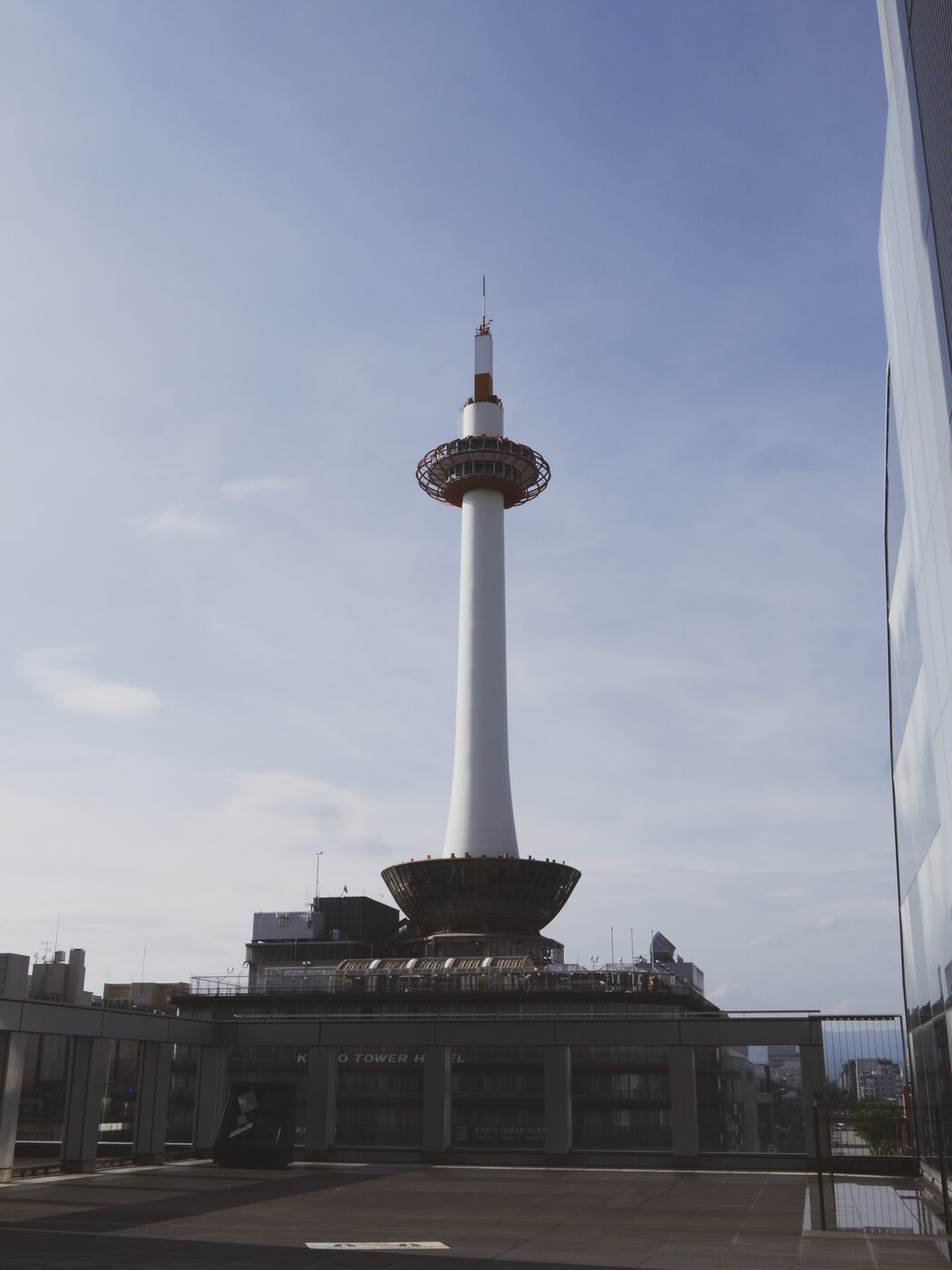
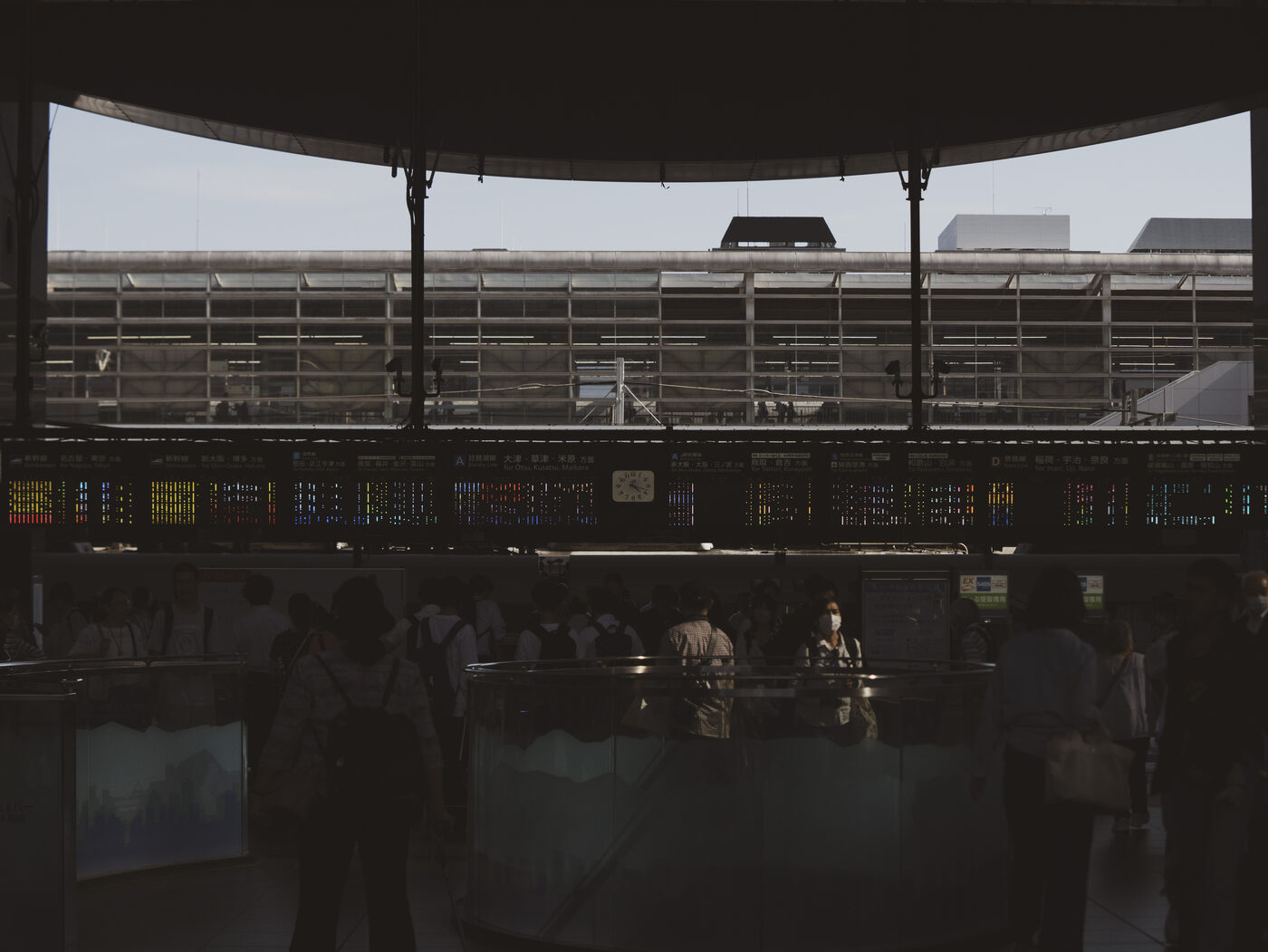
Left: the JR West fare map above the ticket machines — every destination on this page is on it. Right: the Shinkansen departure board on platforms 11–14.
15 Destinations from Kyoto Station — Time, Cost, and Line
The table is ordered roughly by distance. Every figure below is the standard one-way fare and the typical fast service. Where two routes exist, I have listed the one I actually take.
| Destination | Best Line | Time | One-Way Fare | Note |
|---|---|---|---|---|
| Fushimi Inari | JR Nara Line (Local) | 5 min | ¥150 | Get off at Inari Station. Torii gates are 200 m from the platform. |
| Tofuku-ji | JR Nara Line | 3 min | ¥150 | Autumn maple temple. One stop before Inari. |
| Otsu (Lake Biwa east) | JR Biwako Line | 9 min | ¥200 | Quickest escape to the lake. Walk to the shore in 15 min. |
| Arashiyama | JR Sagano Line (Rapid) | 15 min | ¥240 | Get off at Saga-Arashiyama. Bamboo grove is 10 min walk. |
| Uji | JR Nara Line (Rapid) | 17 min | ¥240 | Byodo-in and matcha. The Rapid skips Inari, so do these on different days. |
| Toji Temple | Walk or JR Kintetsu | 15 min walk | Free / ¥160 | Japan’s tallest wooden pagoda is 15 minutes on foot. See our Toji guide. |
| Kameoka (Hozugawa start) | JR Sagano Line | 25 min | ¥420 | For the Hozugawa river boat ride back to Arashiyama. |
| Nara | JR Nara Line (Miyakoji Rapid) | 45 min | ¥720 | Direct, no transfer. Kintetsu Limited Express is faster (35 min, ¥1,160) but costs more. |
| Osaka (Umeda) | JR Kyoto Line (Special Rapid) | 28 min | ¥580 | Cheaper and almost as fast as the Shinkansen for this city pair. |
| Kobe (Sannomiya) | JR Kyoto Line (Special Rapid) | 52 min | ¥1,110 | Direct, no transfer at Osaka. Same Special Rapid runs all the way. |
| Himeji (Castle) | Sanyo Shinkansen (Hikari) | 45 min | ¥3,500 | Special Rapid is cheaper (¥2,310, 90 min) but the Shinkansen halves the time. |
| Mount Hiei (Hieizan) | Karasuma Subway → Keihan | ~50 min | ¥900 | Transfer at Demachiyanagi to Eizan Cable + Cable Car. Plan for at least half a day. |
| Kansai Airport (KIX) | JR HARUKA Limited Express | 80 min | ¥3,640 | JR West’s ¥2,200 HARUKA One-way Ticket for foreign visitors covers only the airport-to-Kyoto direction and is sold before you arrive, not inside Japan, so it does not help on the way to the airport. Book a reserved seat for luggage space. |
| Hiroshima | Sanyo Shinkansen (Nozomi) | 1h 45m | ¥11,290 | Direct. For Miyajima, transfer at Hiroshima to the JR Sanyo Line. |
| Tokyo | Tokaido Shinkansen (Nozomi) | 2h 15m | ¥14,170 | Unreserved car. The Nozomi runs every 10 minutes during the day. |
If you only remember one thing: every JR destination in Kansai (Osaka, Nara, Kobe, Himeji, Uji, Inari, Arashiyama) is on a single fare system. Tap an ICOCA or your phone at the gate, and the fare is calculated automatically.
The Five Routes I Actually Use Most
Numbers in a table do not tell you which trips are worth taking. Here are the five I find myself doing every season, with the practical detail you only learn after the fifth visit.
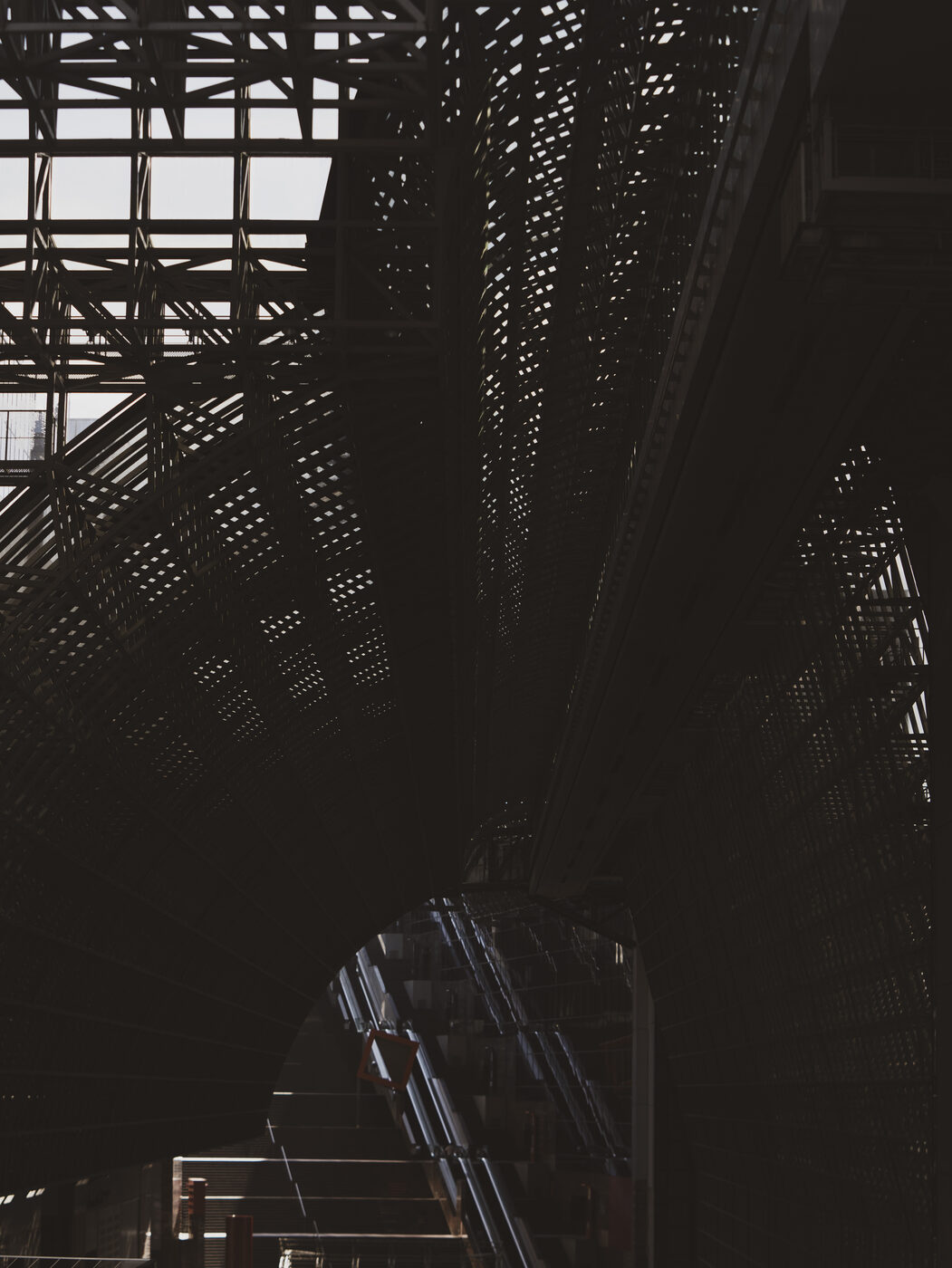
Kyoto Station → Fushimi Inari (5 minutes)
Take the JR Nara Line Local from platforms 8–10. The first stop is Tofuku-ji, the second is Inari. The torii gate path begins less than a hundred meters from the station exit. Trains run every 10–15 minutes, but skip the Rapid services — they do not stop at Inari.
Pair with a full day in Fushimi if you want to add sake breweries and Sakamoto Ryoma history to the morning.
Kyoto Station → Arashiyama (15 minutes)
From platforms 32–33 (the far west end of the station — give yourself eight minutes from the central concourse). The Rapid is much faster than the local; check the platform display, which alternates services. Saga-Arashiyama Station drops you ten minutes from the bamboo grove. Coming back from Arashiyama on a weekend afternoon, board at the first carriage to get a seat.
For temples beyond the tourist core, our guides to Saga-Toriimoto, Adashino Nenbutsuji, and Daikaku-ji all start from this station.
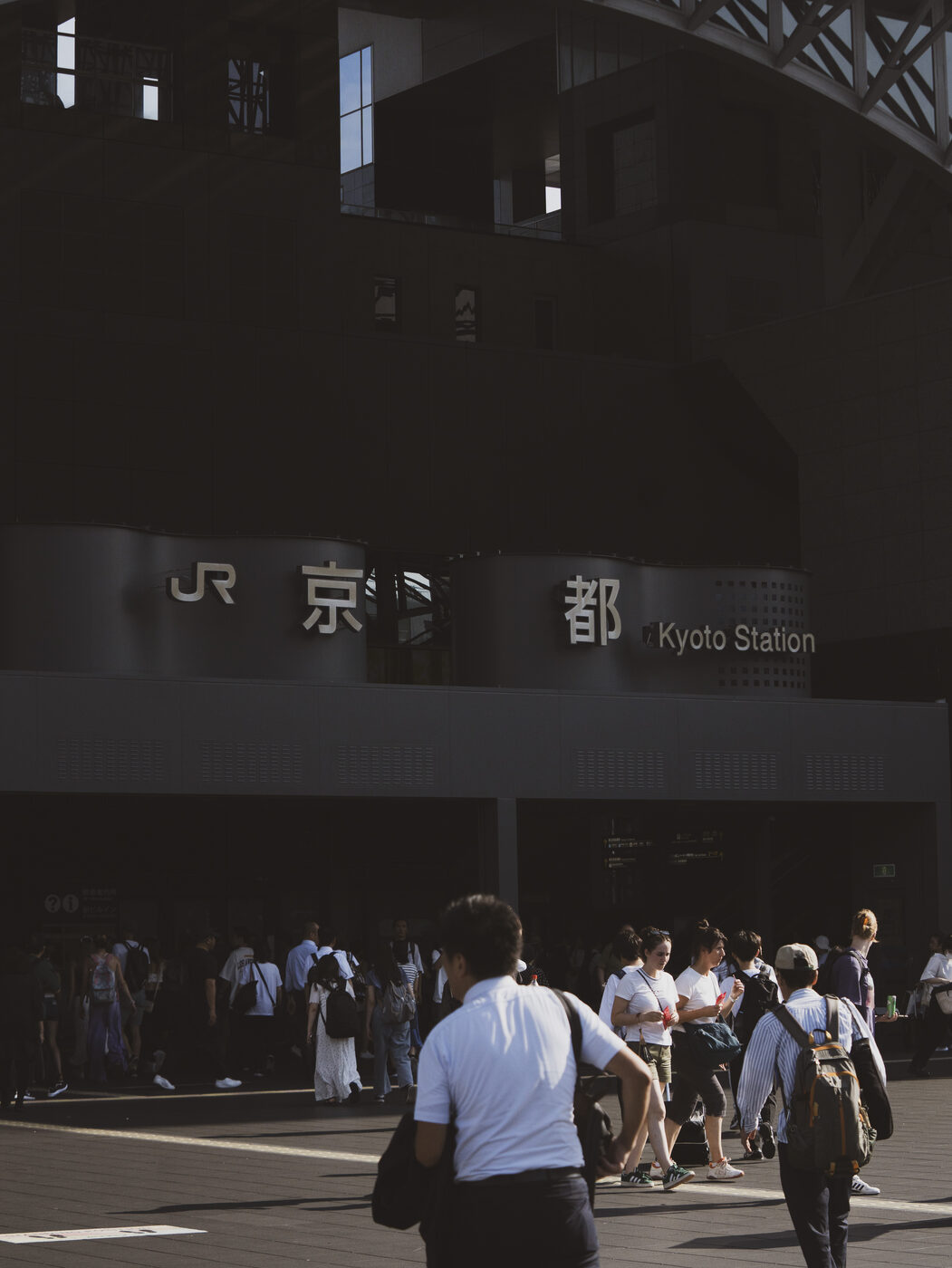
Kyoto Station → Nara (45 minutes)
There is a faster way (Kintetsu Limited Express, 35 minutes, ¥1,160) but the JR Miyakoji Rapid is the better deal. It leaves from platforms 8–10 and runs straight through to JR Nara without changing. The deer park is twenty minutes on foot, or three minutes on a city bus.
Trains run every 30 minutes off-peak. Avoid the slower Local service unless you actively want to stop at Inari, Uji, or Joyo.
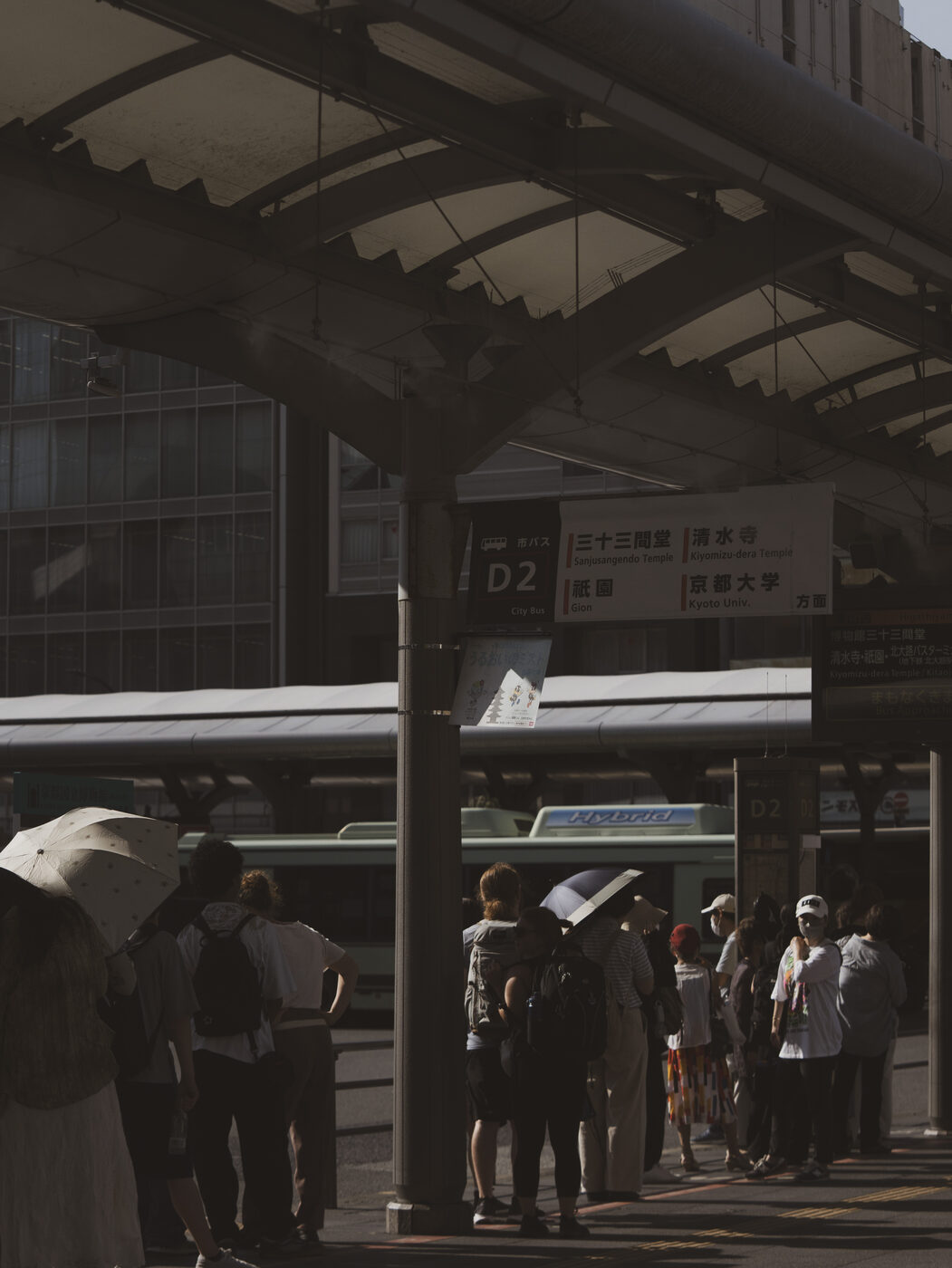
Kyoto Station → Gion / Higashiyama (15–20 minutes by bus)
This is the one trip where buses beat trains. There is no JR or subway station near Gion; the city bus is the locals’ answer. From the north exit, walk to the D-1 or D-2 platform and take Raku Bus 100 or city bus 206. Both pass Sanjusangendo, the Kyoto National Museum, and Kiyomizu-michi before reaching Gion Shijo.
If you have a JR Pass, save the bus fare and take the JR Nara Line to Tofuku-ji instead, then walk 25 minutes north along the river. Our Higashiyama walking route and Yasaka Shrine guide start here.
Kyoto Station → Osaka or Kobe (28 / 52 minutes)
The single most useful train in Kansai. The JR Kyoto Line Special Rapid leaves from platforms 4–7 every 15 minutes during the day. It reaches Osaka (Umeda) in 28 minutes and Sannomiya (Kobe) in 52 minutes — without changing trains. The Shinkansen is barely faster for Osaka (15 min, ¥1,500), so unless you have a Pass, the local Special Rapid wins on value.
Spend a day in Osaka with our Namba walking guide, or extend to Minoo Falls just outside the city.
JR Pass: Where It Actually Saves You Money
The Pass Math from Kyoto Station
The 7-day Japan Rail Pass costs ¥50,000 (ordinary, 2025–26 price). For a Kyoto-based trip, it is only worth buying if you are also going to Tokyo or Hiroshima. One Shinkansen round trip to Tokyo (¥28,340) is not enough on its own to cover it.
- Worth it if you do: Kyoto → Tokyo round trip (¥28,340) plus Hiroshima day trip (¥22,580) = ¥50,920. Pass pays for itself.
- Worth it if you do: Kyoto + Hiroshima/Miyajima + Himeji round trips in the same week. Each adds ~¥7,000 in savings.
- Not worth it if you are only doing Kyoto + Osaka + Nara. Total local fares come to ~¥3,000 for the week. Buy single tickets or use ICOCA.
- Not worth it for Fushimi Inari, Arashiyama, or Uji alone. Each is under ¥250 — pay as you go.
The Kyoto Station JR Ticket Office (yellow signs, on the central concourse) exchanges your Pass voucher 24 hours a day. Take a passport. Lines are longest 8–10 AM.
The City Bus Network You Will Eventually Need
Trains will not take you to Kinkaku-ji, Ryoan-ji, or most of central Higashiyama. For those, the Kyoto City Bus from the north (Karasuma) exit is the only direct option.
The bus terminal has six lettered stops, A through F, arranged in a half-circle outside the station. Each tourist Raku Bus or city bus route departs from one specific stop. The big information board at the entrance tells you which letter you need — read it before walking out.
A single ride is a flat ¥230 within the flat-fare zone, paid with ICOCA or cash on exit. The bus-only 1-Day Pass (¥700) was withdrawn: sales ended on 30 September 2023 and it could not be used after 31 March 2024. The alternative is the Subway & Bus 1-Day Pass (¥1,100 adult), valid for unlimited travel on all municipal subway and city bus routes, and on some Kyoto Bus, Keihan Bus and West JR Bus routes, until the end of service that day (not 24 hours). At ¥230 a bus ride it pays off from the fifth ride that day; with subway trips in the mix it may pay off sooner, depending on the fares. It is sold at the city bus and subway information counters and at subway stations.
The Two Times You Should Avoid Kyoto Station
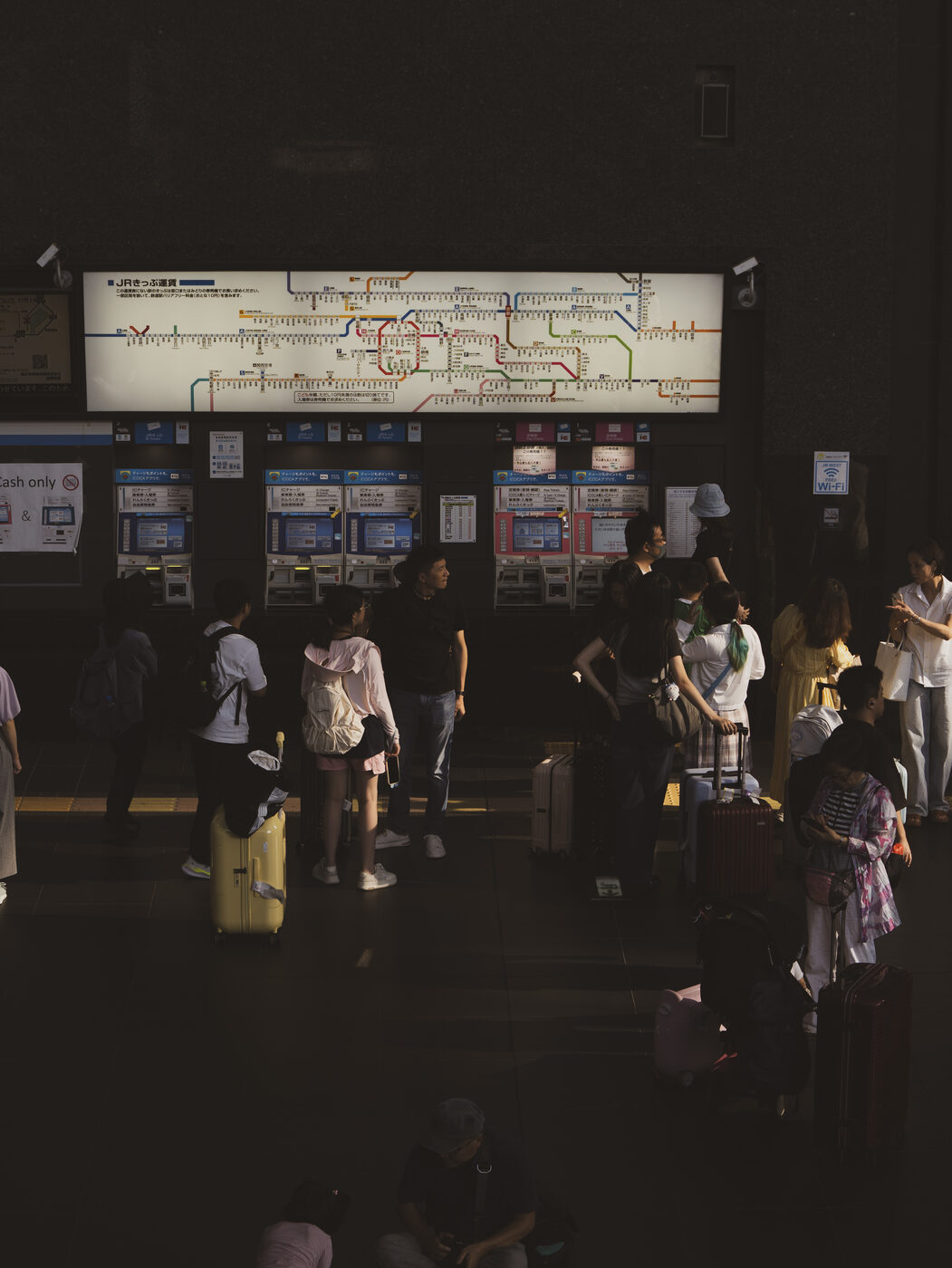
7:30–9:00 AM, Monday to Friday. This is the commute window. The central concourse and the JR ticket office are packed; the Shinkansen platform queues for unreserved cars run halfway down the platform. If you can shift your departure to 9:30 or after, do it.
4:00–6:00 PM, late October and mid-November. Maple-season weekends. Every train to Arashiyama, Tofuku-ji, and Eizan is standing-room. The trick is to head out before 9 AM and come back before 3 PM. Or do it on a Tuesday.
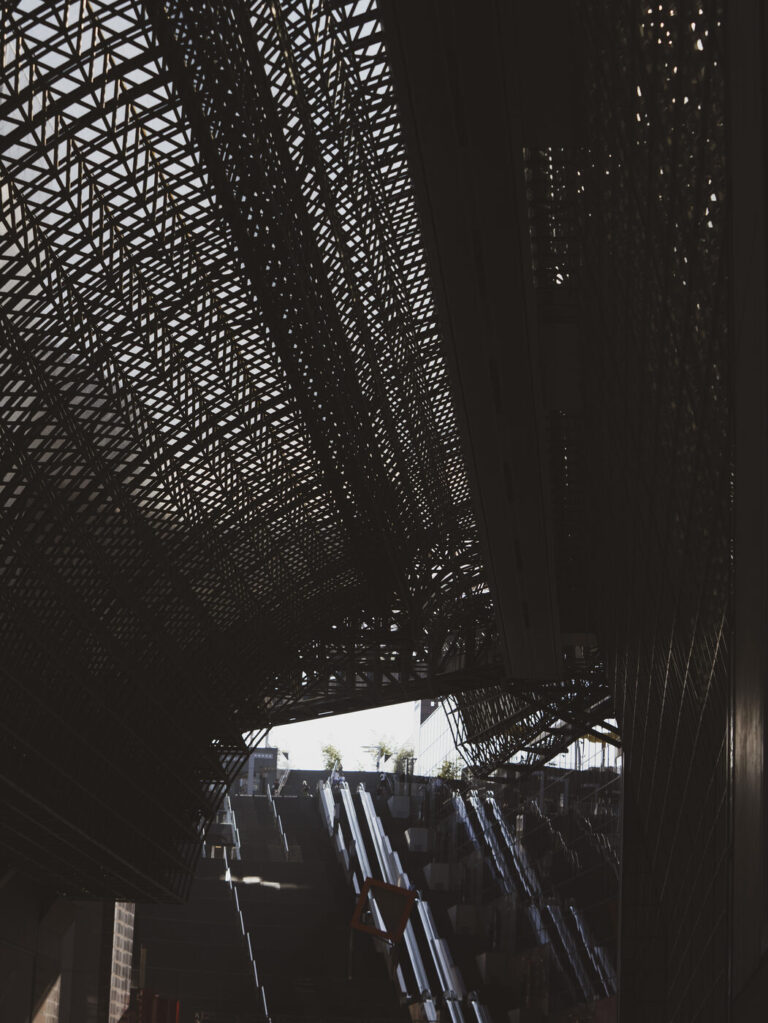
Late evening — after 8 PM — is the best time to actually use the station as a building. The crowds thin, the modern architecture (Hara Hiroshi’s 1997 masterwork, 470 meters of glass and steel) is dramatically lit, and the food floors stay open until 22:00.
Hotels Near Kyoto Station: Worth It?
Yes, for two reasons. First, every trip in the table above starts and ends here, so staying near the station shortens your daily commute by 20–40 minutes. Second, the area south of the station (the Hachijo-guchi exit) is far cheaper than Gion or Karasuma, and the trains run until almost midnight.
I usually recommend either the side streets between Kyoto Station and Higashi-Honganji (for traditional ryokan and machiya stays), or the modern hotels directly above Kyoto Station itself (Hotel Granvia, the Kyoto Tower Hotel) if you have a JR Pass and want to minimize walking with luggage.
Search hotels near Kyoto Station on Booking, or browse traditional ryokan on Rakuten Travel — both filter by walking distance so you can pick south side (Hachijo, cheaper) or north side (Karasuma, closer to bus terminal) based on which exit your trains will use.
Looking Down on Kyoto: The View from Above the Station
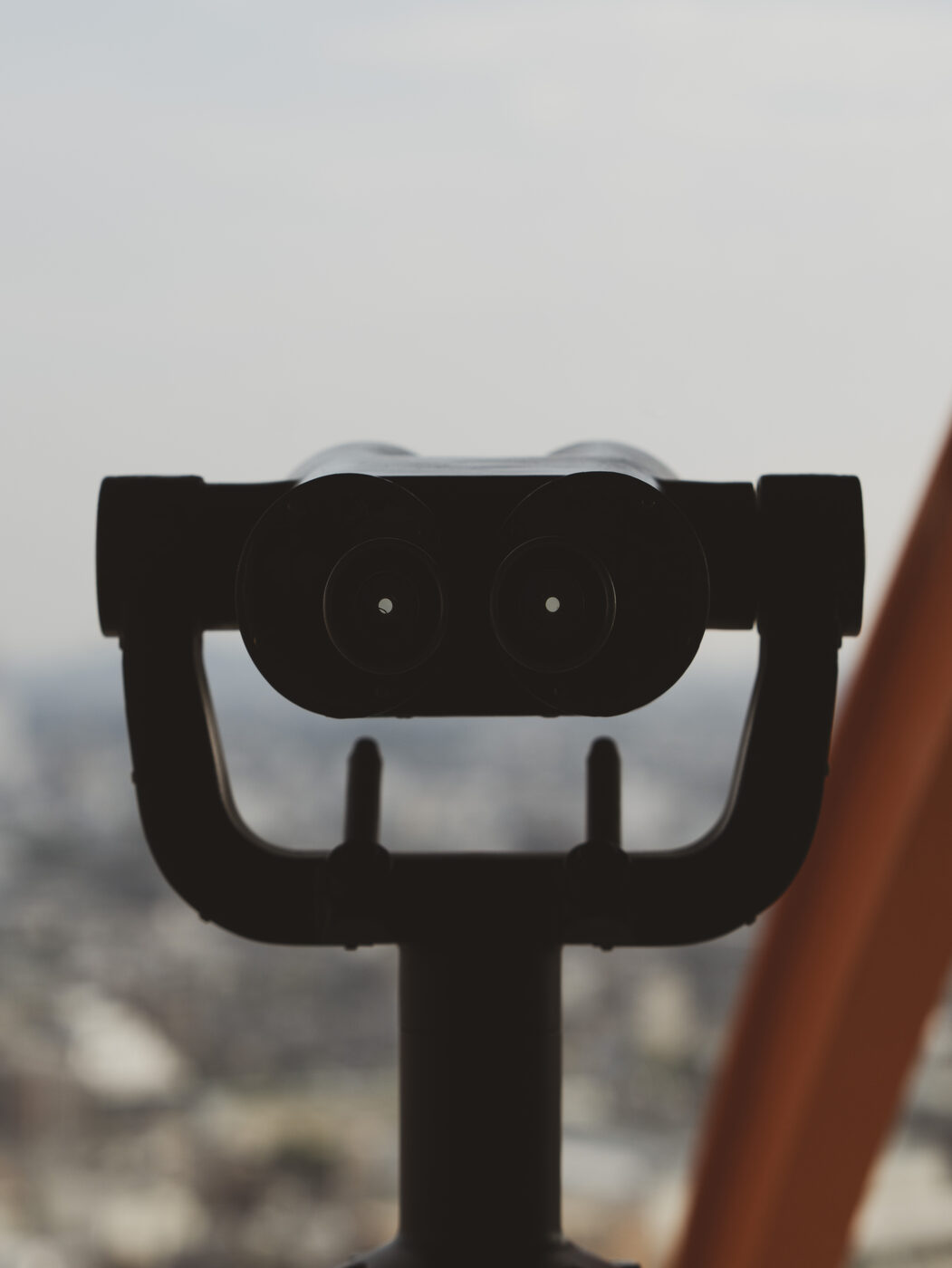
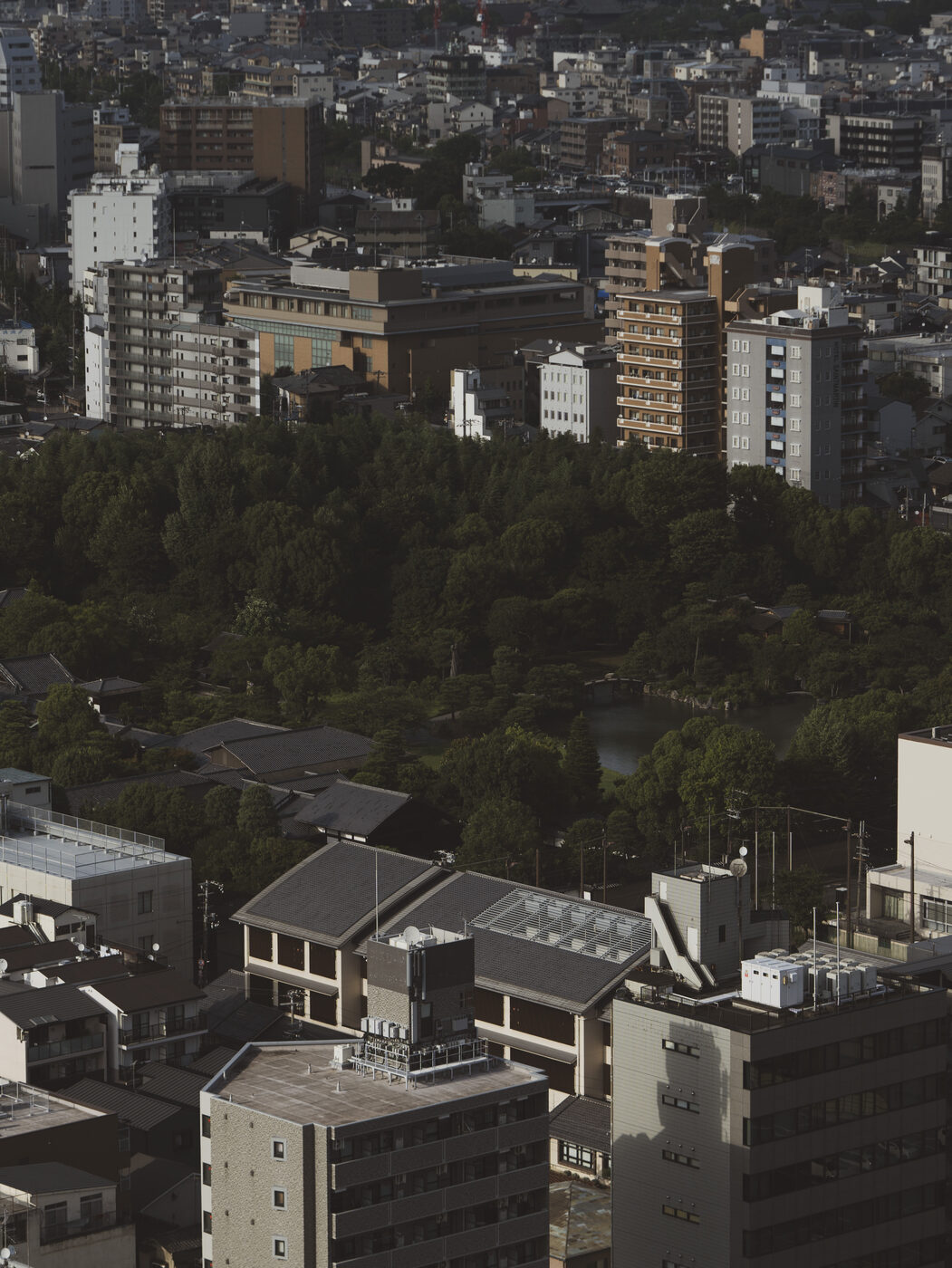
Every aerial photo in this article was taken from Kyoto Tower’s observation deck, 100 meters up, directly across the road from the station’s Karasuma exit. The tower is open until 9 PM and costs ¥900, and it is the only place in Kyoto where you can see every destination in the table above laid out as a city map. If you have 90 minutes between trains, this is what to do with them.
Frequently Asked Questions
Do I need a reserved seat on the Shinkansen?
Not for Tokyo–Kyoto on Nozomi or Hikari. There are three unreserved cars and trains run every 10 minutes during the day. The exception is the New Year, Golden Week, and Obon — reserve in advance for those.
Can I use Suica or Pasmo on JR West around Kyoto?
Yes. Every IC card (Suica, Pasmo, ICOCA, Pitapa, Toica) works on every gate at Kyoto Station, including the Shinkansen for JR West / JR Central section. The Apple Pay version of Suica also works.
Where do I store luggage at Kyoto Station?
Coin lockers are scattered through the station — the largest cluster is on B1 below the central concourse, and another is near the Hachijo exit. ¥400–¥800 per locker per day. If they are full, the Hands-Free Travel desk (north exit) holds luggage for the day.
Is the Kintetsu Limited Express to Nara worth the extra fare?
If you have a JR Pass, no — use the free Miyakoji Rapid on JR. If you do not, and you are doing Nara as a half-day trip, the Kintetsu Limited Express saves you 10 minutes each way and lets you sit in a reserved seat. For a day trip with kids or heavy bags, that is usually worth ¥440 extra.
How early should I arrive for the Shinkansen?
Ten minutes is enough if you have your ticket. Twenty minutes if you are exchanging a JR Pass voucher or buying a ticket at the machine. The Shinkansen gates are a five-minute walk south of the central JR concourse.
The 90-Minute Rule
Almost every place worth seeing in Kansai is reachable from Kyoto Station within 90 minutes. The table above is not exhaustive — it leaves out Wakayama, Koyasan, Amanohashidate, and the Kumano Kodo, which sit just outside the radius. But for the trips that fit, the station is unusually well-designed: one walk-in, one map, fifteen possible afternoons.
The most common mistake travelers make is treating Kyoto as a single destination instead of a base. From this one platform, you can spend a morning in Nara among deer, an afternoon at Himeji Castle, and an evening in Kobe at a teppanyaki counter — and still be back in your Kyoto hotel by 10 PM. The station is the secret. Use it.
Book a Kyoto Station hotel
Stay within 10 minutes of the platforms. Booking has free cancellation on most properties.
Day trips & tours
Nara guided tours, Fushimi Inari night walks, Kansai-wide activities — book before you arrive.
JR Pass voucher
Exchange it at Kyoto Station on arrival. Buy the voucher before you leave home.
Before you dash off to one of those destinations, look up: the building itself is worth a wander, and I break it down in Hara Hiroshi’s glass-cathedral Kyoto Station.
Where to stay in Kyoto: compare hotels and prices on Booking.com or Trip.com — booking early pays off in peak season.
Join travelers discovering Japan's hidden side
Weekly dispatches from off-the-beaten-path Japan — spots and stories you won't find in guidebooks.
No spam. Unsubscribe anytime.
Welcome aboard!
You're in. See you in your inbox soon.