
Kyoto · Gardens & nature
The Kyoto Prefectural Botanical Garden is Japan’s oldest public botanical garden, opened in 1924, with about 12,000 plant species across 24 hectares and one of the country’s largest conservatories — and at ¥500 for an adult, it is the calmest, cheapest big day out in a city famous for crowded temples.
I come here when Kyoto gets too much. While the queues build at Kiyomizu and Fushimi Inari, this 24-hectare garden up by the Kamo River stays quiet, even in peak season. It opened in 1924 as the first public botanical garden in Japan and turned 100 in 2024. You get a proper greenhouse, a preserved patch of ancient forest, a famous cherry grove, rose beds, and — the part I came back for in October — fields of cosmos. Here’s how to plan a visit in any season, what it costs, and how to fold it into a Kyoto day without a car.
Why a botanical garden in temple-city Kyoto · What’s blooming, season by season · The conservatory · How to get there · Practical tips · Where to stay nearby · A calm half-day plan · For readers from Southeast Asia · FAQ
Why a botanical garden in temple-city Kyoto
Because it is the antidote to everything that makes Kyoto exhausting. The temples are extraordinary, but in spring and autumn they are also shoulder-to-shoulder. This garden gives you the same seasonal beauty — cherry blossom, autumn colour, the works — across open lawns where you can actually breathe, for the price of a coffee.
It is also a genuinely serious garden, not a city park with flowers. Opened on 1 January 1924, it was the first public botanical garden in Japan, and it now holds around 12,000 species and 120,000 plants over 24 hectares. There’s a cherry grove, a rose garden, a sunken European garden, a bamboo collection, a bonsai display, and a stand of old natural forest called Nakaragi-no-mori that preserves what the Yamashiro basin looked like before the city grew over it. You could spend twenty minutes or half a day; both work.
What’s blooming, season by season
There is no wrong time to come — the conservatory carries the cold months, and something is always in flower outside. Here’s the rough calendar I plan around.
| Season | Highlights | Roughly when |
|---|---|---|
| Early spring | Plum, early bulbs, camellia (continuing from winter) | Feb–Mar |
| Spring | The cherry grove, tulips, the first roses | late Mar–Apr |
| Early summer | Irises, hydrangea, the camphor avenue in fresh leaf | mid-May–Jun |
| Summer | Lotus and water plants, sunflowers, the cool conservatory | Jul–Aug |
| Autumn | Cosmos, autumn roses, then maples turning | Oct–Nov |
| Winter | Camellia, winter blooms, and the warm greenhouse | Dec–early Apr |
Autumn: the cosmos fields (mid-October to mid-November)
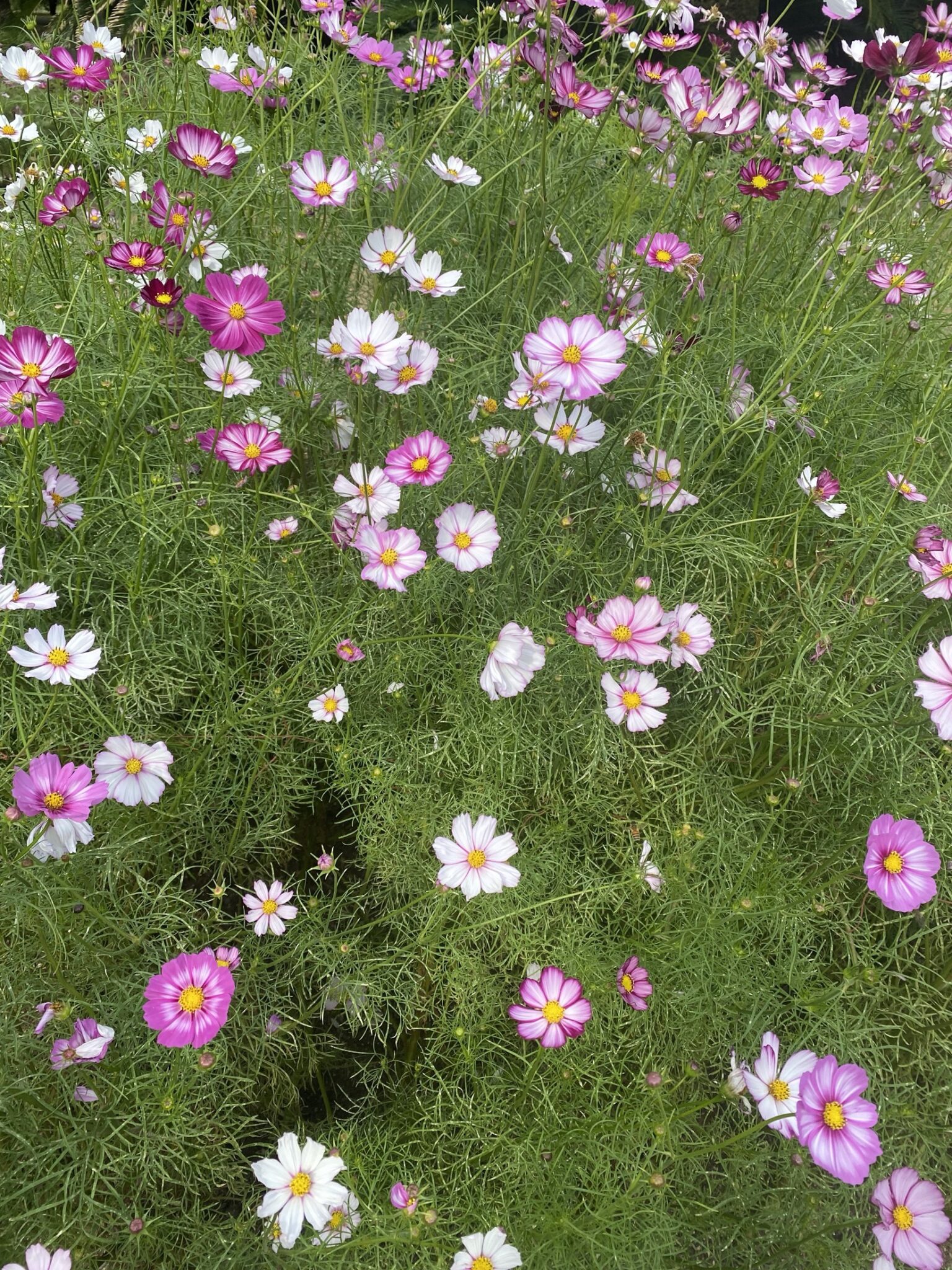
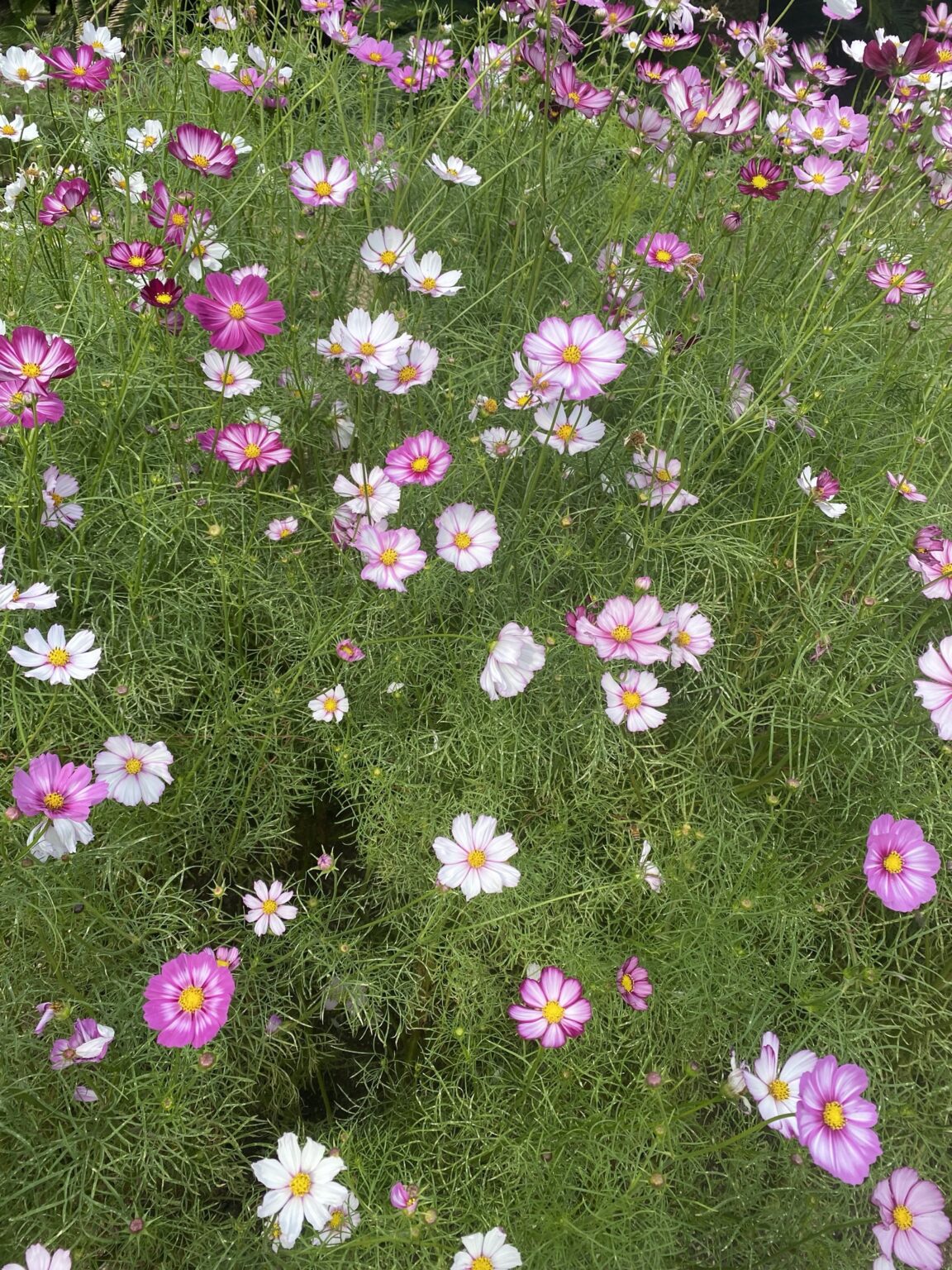
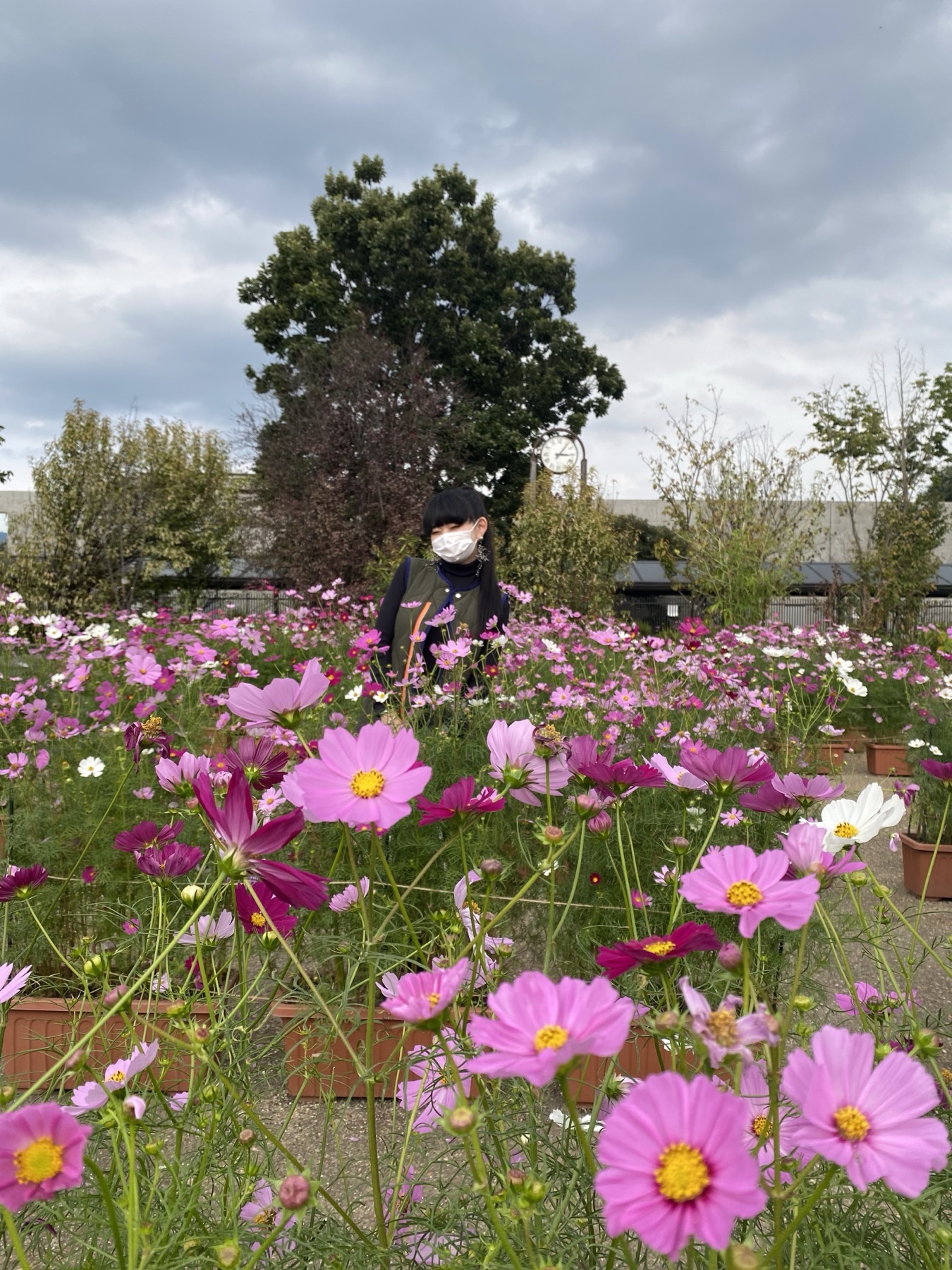
This is when I’d send a first-timer. From mid-October to mid-November the garden plants roughly 15 varieties and four to five thousand cosmos around the garden hall, the Kitayama lawn and the European garden, and the beds run wild with pink, white and magenta. It is the quietest spectacular season in Kyoto, and it overlaps with the start of the autumn leaves — so you get flowers and colour in one ticket.
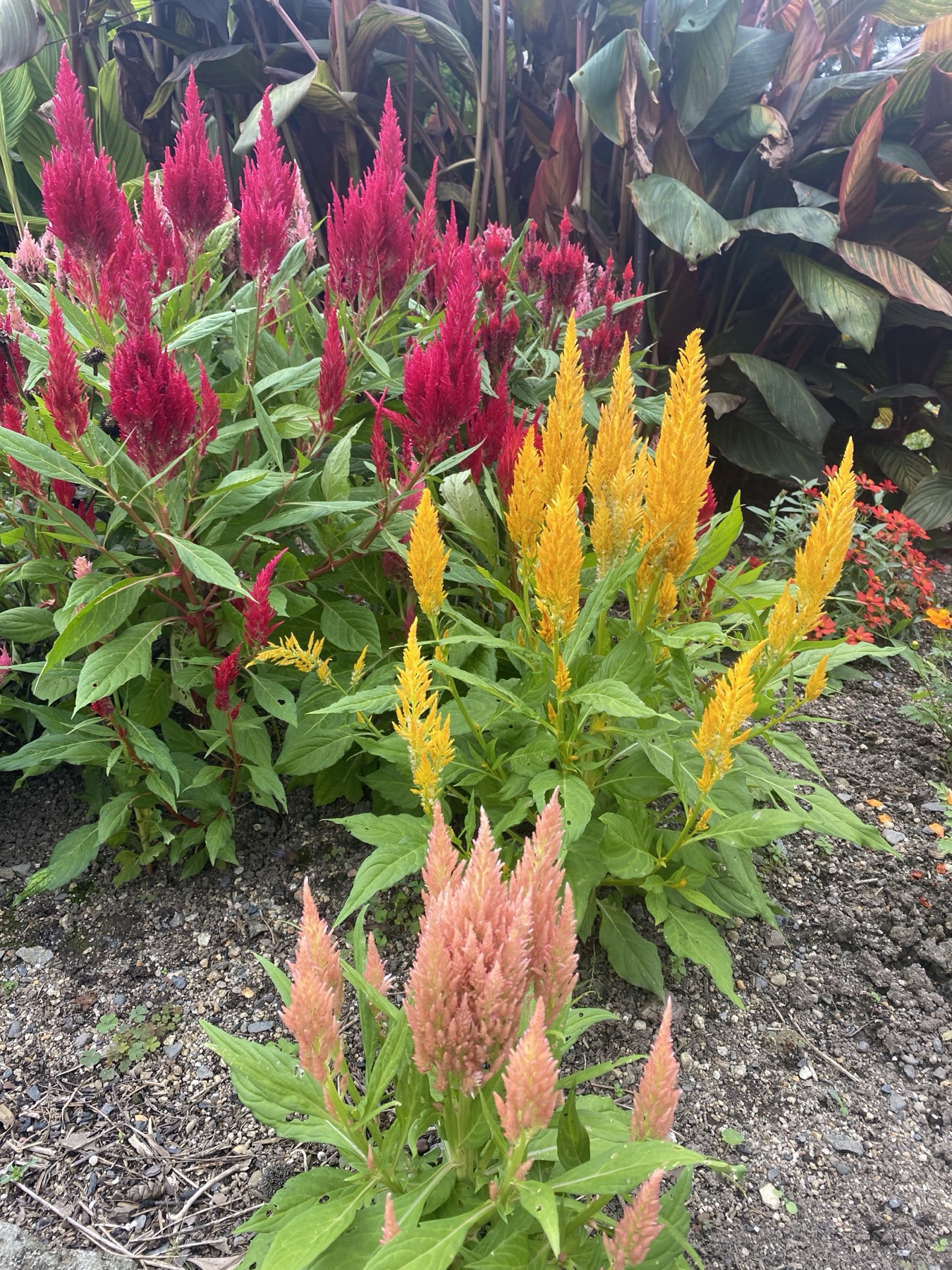
The autumn flower beds elsewhere are louder than you’d expect for a botanical garden — plumed celosia in red and gold, variegated canna still throwing orange flowers into November. It is not subtle, and that’s the fun of it.
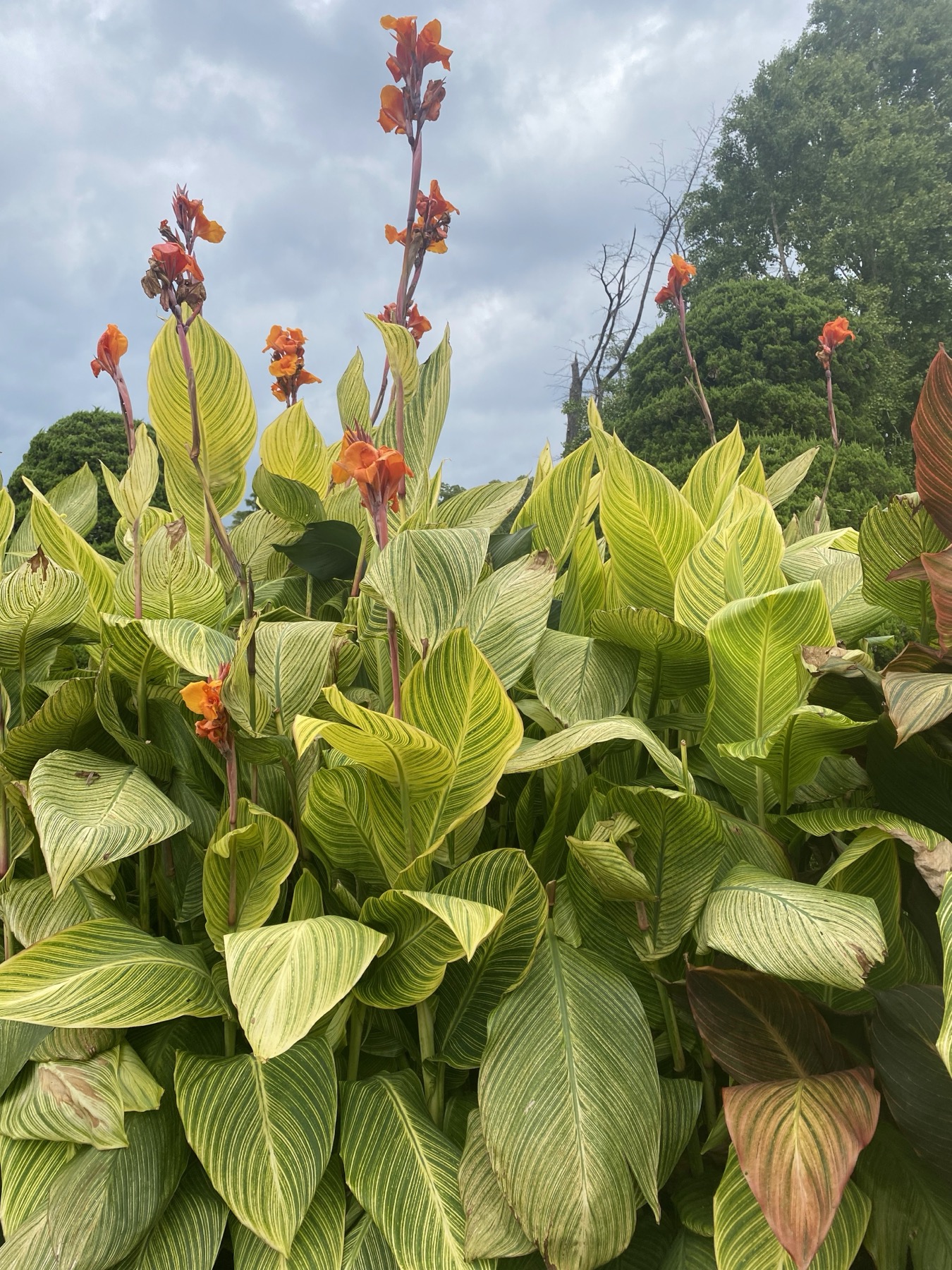
Spring: the cherry grove without the scrum
Kyoto’s headline cherry spots are a contact sport in early April. The botanical garden has its own cherry grove — including weeping cherries that light up at night during the spring evening opening — and it never feels like Maruyama Park on a Saturday. Tulips and the first roses come at the same time, so the whole north end is colour.
The conservatory: a warm world on a grey day
The big glasshouse — the kanrann onshitsu — is one of the largest in Japan, with about 4,500 varieties and 25,000 tropical plants under glass. It is included in your ¥500 ticket (this changed in 2025 — see the admission note below), and it’s the reason the garden works even in January. You walk from a jungle room thick with ferns and palms, through orchids and tropical fruit, into a desert house of cacti and succulents.
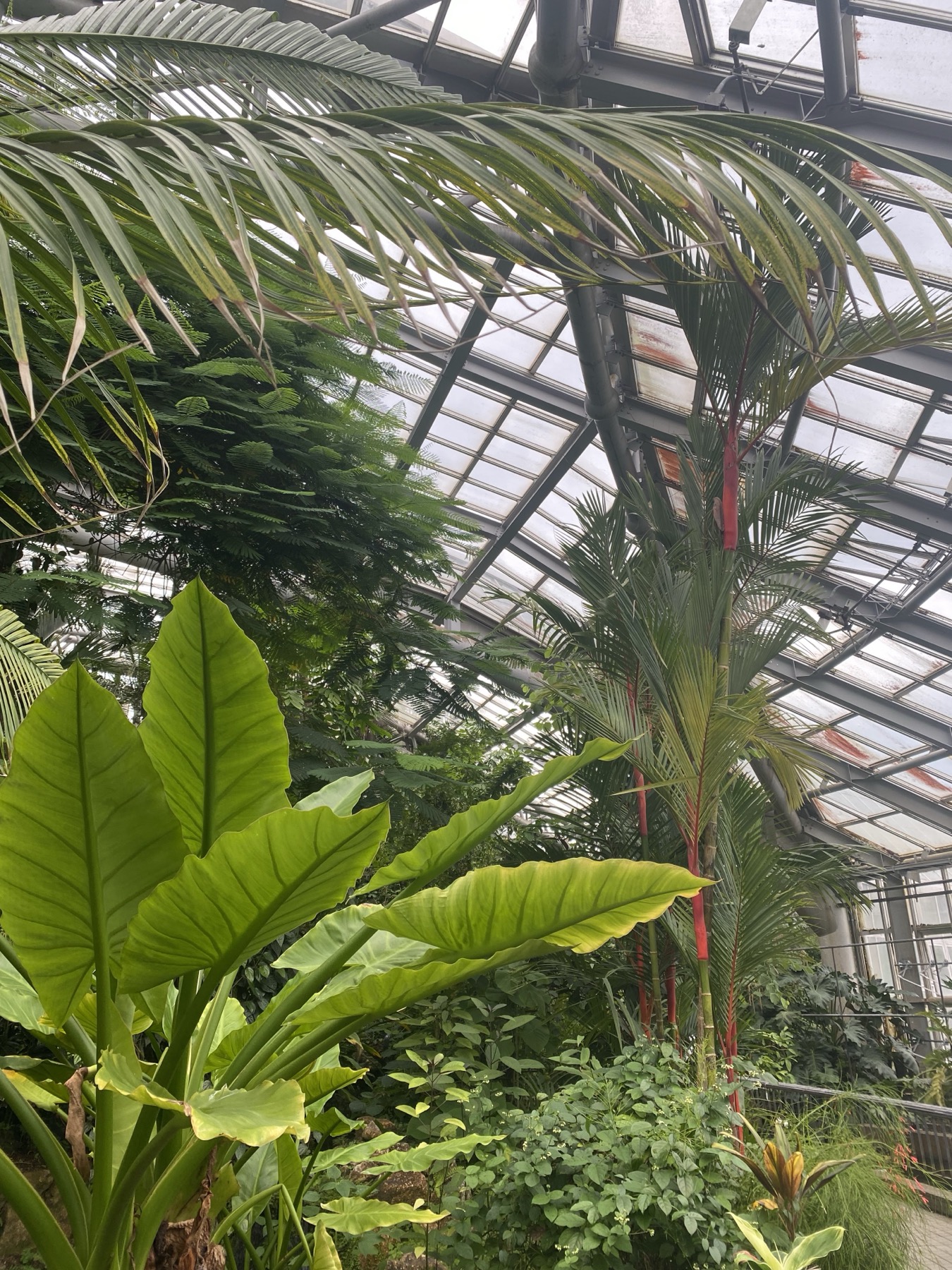
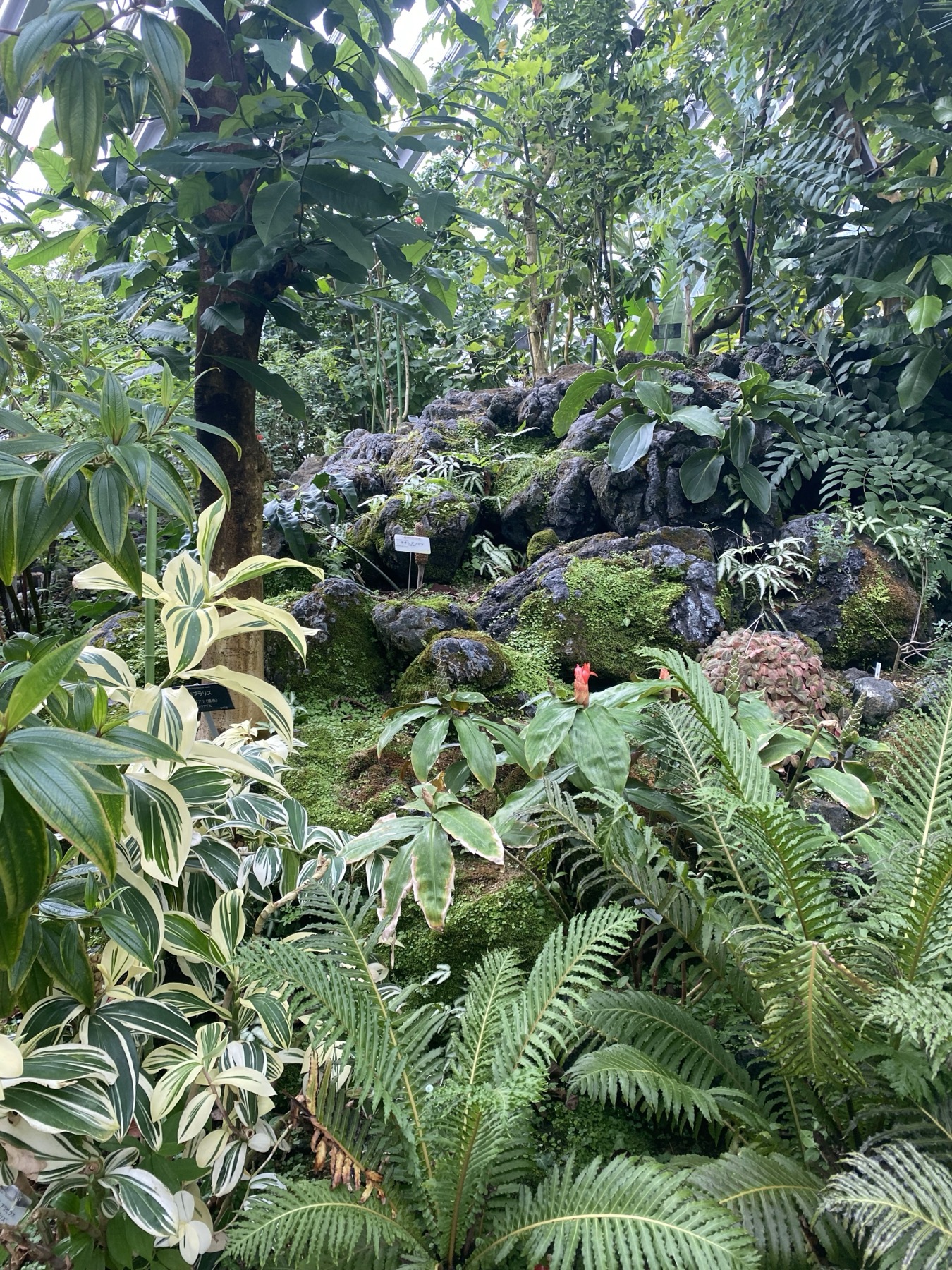
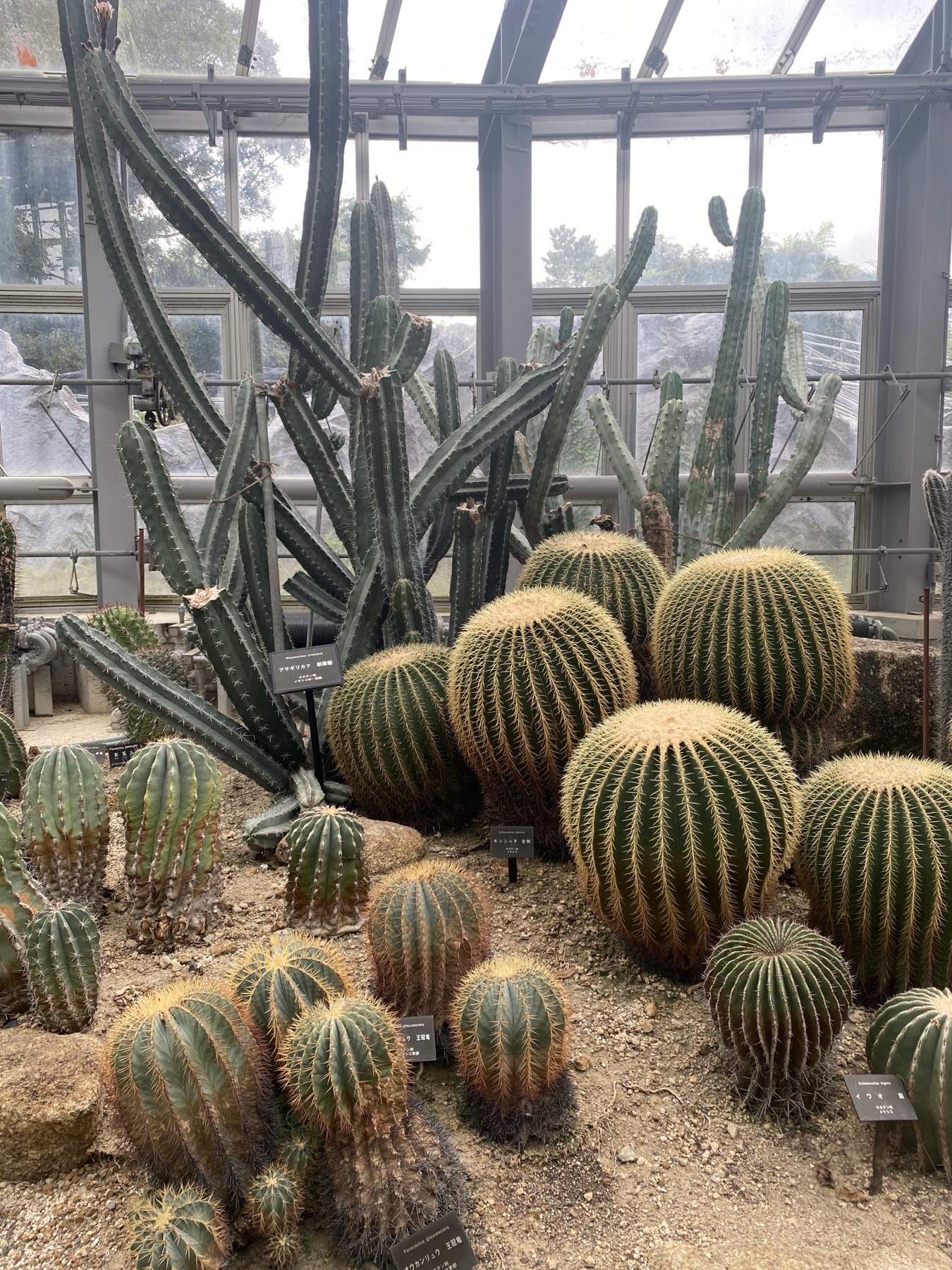
My own favourite is the desert room. After all the green, you turn a corner into pale gravel and rows of barrel cacti, with little spiny succulents tucked into the rockwork. It’s a strange, calm space, and almost nobody lingers there — which is exactly why I do.
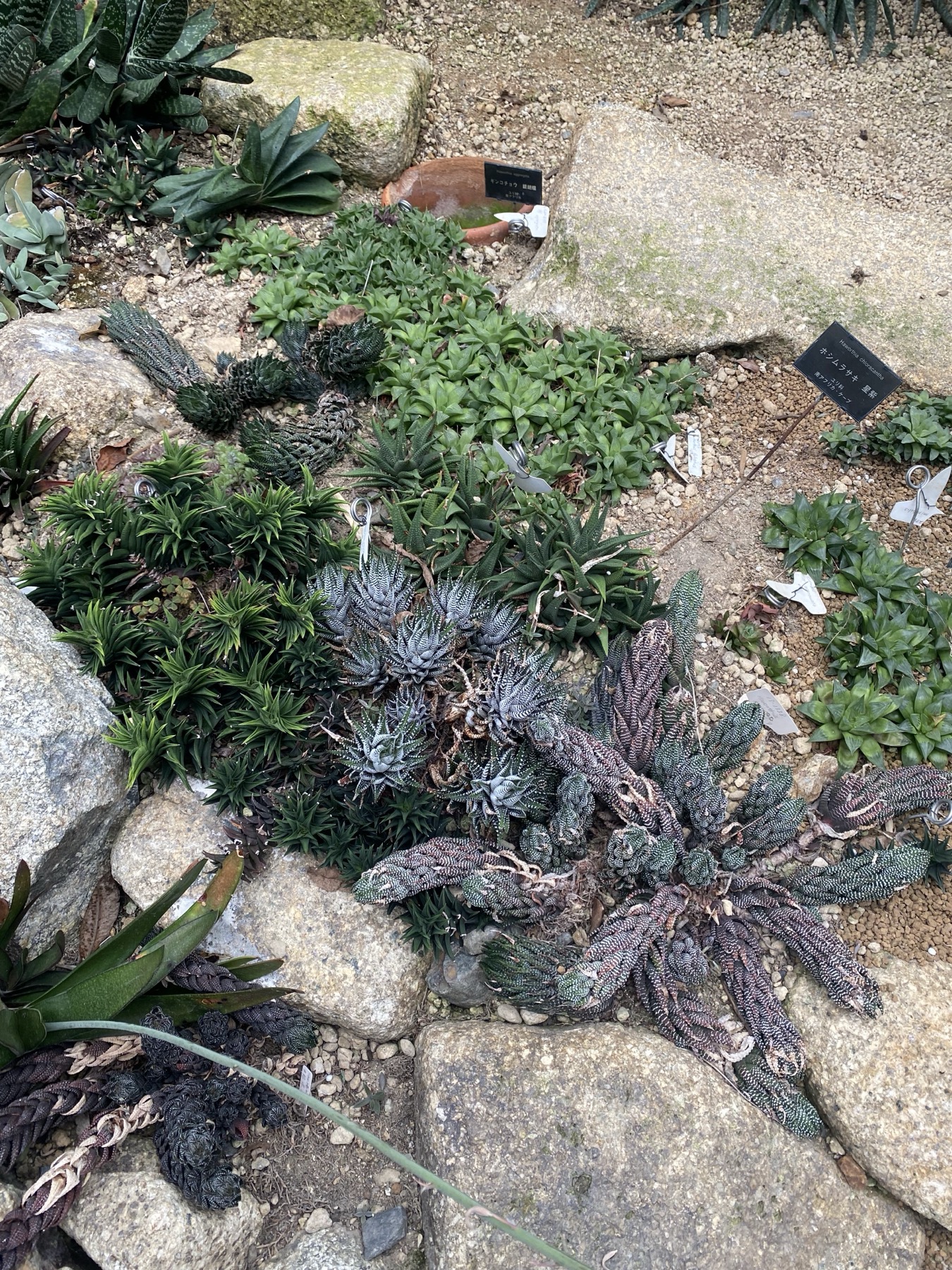
How to get there
It could not be easier: take the Karasuma subway line to Kitayama Station (北山), and exit 3 comes up right at the garden’s north gate. From Kyoto Station it’s about 20 minutes and one straight subway ride — read our Kyoto Station access guide if you’re arriving by shinkansen and finding your way onto the subway.
- From Kyoto Station: Karasuma subway line (K11) north to Kitayama (K04), ~20 min, then exit 3.
- From Kitaoji Station (北大路): the garden’s south end is about a 1 km walk along the river.
- By bus: several city buses stop at “Shokubutsuen-mae” if you prefer to stay above ground.
Practical tips
Come on a weekday morning
It opens at 9:00. Even in cosmos and cherry season, an early weekday is calm. Crowds, where they exist, are gentle compared with the temples — and for more on timing Kyoto, see our guide to the best times of day in Kyoto.
The conservatory closes earlier
The grounds run 9:00–17:00 (last entry 16:00), but the conservatory is 10:00–16:00 (last entry 15:30). Do the greenhouse first if you arrive late.
Cash and IC both work
Tickets are cheap and the gate takes coins and IC cards. There’s a café and the garden hall for a break, and clean toilets throughout.
It’s flat and buggy-friendly
Wide, level paths make it easy with a stroller, a wheelchair, or tired legs at the end of a temple-heavy trip.
Summer is hot — plan for it
There’s shade under the camphor avenue, but July–August is humid. I bring water, a hat and sunscreen, and on the worst days a small fan.
Great for flower photos
The beds are made for close-ups. If you shoot seriously, a light travel tripod helps in the conservatory’s low light — the rest of my kit is in our camera guide.
Where to stay nearby
Staying in north Kyoto — around Kitayama, Kitaoji or Demachiyanagi — puts you near the garden, the Kamo River and Shimogamo Shrine, and a short subway ride from the centre without the Gion price tag.
Find a base in north Kyoto
Booking has the widest range of hotels around the Karasuma subway line and the city centre. Rakuten Travel is stronger for traditional ryokan and small machiya stays, which north Kyoto does well.
Arriving from Kansai Airport? The JR Haruka express runs straight to Kyoto Station, where the subway takes you the rest of the way.
A calm half-day plan
This is how I’d pair it for a low-stress morning away from the crowds:
9:00 — The garden
Start at the north gate (Kitayama exit 3). Walk the seasonal beds first, then the cherry grove or cosmos fields depending on the month.
10:00 — The conservatory
Once it opens, do the greenhouse loop, ending in the desert room. Coffee at the garden hall.
11:30 — The river & Shimogamo
Leave by the south end, walk the Kamo River, and cross into the ancient forest of Shimogamo Shrine — a UNESCO-listed shrine a short stroll away.
13:00 — Demachiyanagi lunch
Finish around Demachiyanagi for lunch — famed mochi, old cafés — then ride into the centre or up to Kurama and Kibune.
For readers from Southeast Asia
If you’re flying in from Singapore, Bangkok, Kuala Lumpur or Jakarta, this is an easy, cheap addition to a Kyoto day — and a cool one in the literal sense.
October is kind weather
The cosmos season lands in mid-October to mid-November, when Kyoto sits around a comfortable 15–22°C — a relief after Singapore’s steady 31°C, and far less crowded than cherry season.
Getting here from the airport
From Kansai (KIX), the Haruka express reaches Kyoto in about 80 minutes; the subway to Kitayama is one more straight line. Direct flights run from Changi, Suvarnabhumi, KLIA and Soekarno-Hatta to Kansai in roughly 6–7 hours.
A genuinely budget day
At ¥500, this is one of the best-value half-days in Kyoto — pair it with the free riverside walk to Shimogamo for an afternoon that costs almost nothing.
Frequently asked questions
How much does the Kyoto Botanical Garden cost?
Adult admission is ¥500, and since April 2025 that single ticket includes the conservatory. It’s ¥250 for over-65s and high-school students, and free for junior-high age and younger. Tickets are paid at the gate by cash or IC card.
What are the opening hours?
The grounds are open 9:00–17:00, with last entry at 16:00. The conservatory (greenhouse) keeps shorter hours: 10:00–16:00, last entry 15:30. If you arrive in the afternoon, do the conservatory first.
When is the best time to visit?
Any season works, but two stand out: spring (late March–April) for the cherry grove, tulips and roses, and autumn (mid-October–mid-November) for the cosmos fields and the first maples. The conservatory makes winter visits worthwhile too.
When are the cosmos in bloom?
Roughly mid-October to mid-November. The garden plants about 15 varieties and four to five thousand plants around the garden hall, the Kitayama lawn and the European garden. It overlaps with the start of the autumn leaves.
How do I get there from Kyoto Station?
Take the Karasuma subway line north to Kitayama Station (about 20 minutes), and use exit 3 — it comes up right at the garden’s north gate. You can also walk about 1 km from Kitaoji Station.
How long should I plan for a visit?
Most people spend 1.5 to 3 hours. Ninety minutes covers the seasonal beds and the conservatory at a relaxed pace; longer if you want the cherry grove, rose garden and the Nakaragi natural forest too.
Is it worth visiting in winter?
Yes — the conservatory is one of Japan’s largest, with around 4,500 varieties under glass, so there’s a warm, green world to explore even in January, plus camellias and winter blooms outside.
Is the garden good for families and wheelchairs?
Very. The paths are wide and flat, it’s easy with a stroller or wheelchair, and the open lawns suit children far better than a packed temple. There are cafés, toilets and shade throughout.
For the price of a vending-machine coffee, this is the calmest big thing you can do in Kyoto — and the one place in the city where the seasons arrive without the crowds. Go on a weekday morning, save the conservatory for last, and walk out along the river when you’re done.
Join travelers discovering Japan's hidden side
Weekly dispatches from off-the-beaten-path Japan — spots and stories you won't find in guidebooks.
No spam. Unsubscribe anytime.
Welcome aboard!
You're in. See you in your inbox soon.
![A Night at Hoshinoya Kyoto: Boat Ride, Kaiseki & River Views [Stay Review]](https://hiddenjapan-gems.com/wp-content/uploads/2026/04/IMG_4741-768x432.webp)