
2026–27 winter planner · Climate, events and closures
Winter in Japan is December, January and February. Conditions differ a lot by region: on 30-year averages, Tokyo has 1.4 days with snow on the ground in January and Sapporo 31.0, while Naha in Okinawa averages daytime highs of about 20°C (68°F). This guide compares 14 selected weather stations, lists selected 2026–27 winter events with dates checked against official sources (organisers, operators, government and official tourism bodies), plus the ones still awaited, and separates what closes for the season from what is disrupted by weather, so you can choose the region that fits your trip.
When is winter in Japan?
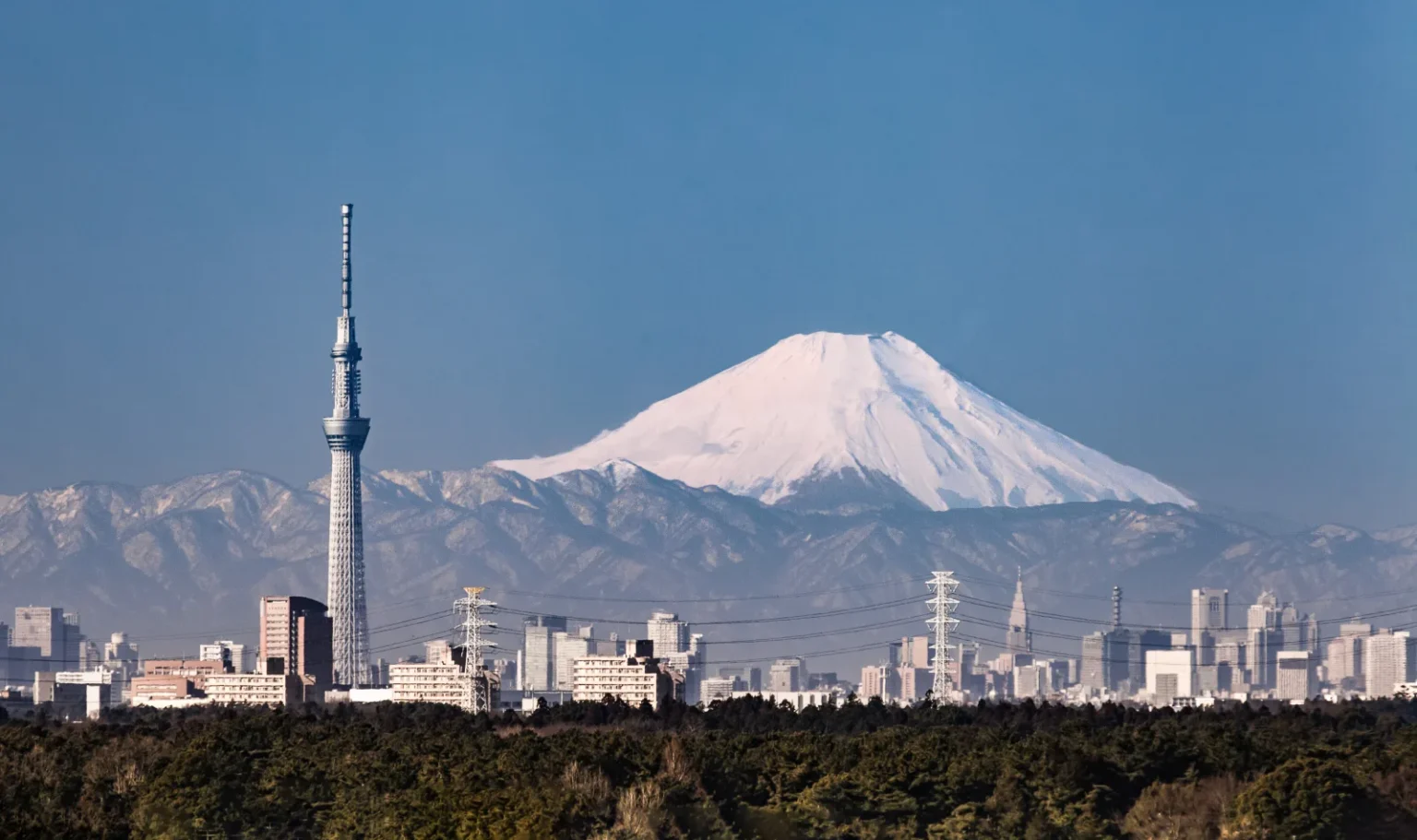
The Japan Meteorological Agency (JMA) counts winter as December, January and February, and that is the season this guide covers: December 2026 to February 2027. The JMA also explains why the season feels so different across the country. In winter, cold northwesterly winds bring snow to the Sea of Japan side of Honshu and to Hokkaido, while the Pacific side, including Tokyo, is generally sunnier and drier. Okinawa and the southern islands have much milder winters.
The astronomical turning point is the winter solstice at 05:50 on 22 December 2026, when Tokyo’s sunrise is 06:47 and sunset 16:32. In the north and on high ground, snow can arrive before December and stay well into March.
Plan by month
December
Early winter and illuminations (Marunouchi from 12 November), the first evenings of the Zao snow-monster light-up from 26 December, and changed hours at many places from 29 December. Month guide: Japan in December 2026; choosing where to go: the December destination guide.
January
The month with the lowest average temperature at all 14 stations here. New Year timetables at the start; the Atami Plum Festival from 9 January; Shirakawa-go’s light-ups on four evenings; Nara’s Wakakusa Yamayaki on 23 January; Nago’s cherry festival on 30–31 January. Month guide: Japan in January 2027.
February
The big northern snow events (Sapporo, Otaru, Asahikawa, Yokote), the Nagasaki Lantern Festival, and the Kawazu cherry festival on the Izu Peninsula from 6 February.
How cold is Japan in winter, and where does snow matter?
A national average would hide the differences, so the table uses 14 selected JMA stations, one per region (two for Kansai: Kyoto and Osaka). Each row shows the January average daily high and low, with December and February below; the average number of January days with at least 1 cm of snow lying on the ground (the JMA’s days with maximum snow depth of 1 cm or more), with December and February in brackets; and January sunshine hours. I use snow on the ground rather than days when snow fell, because falling flakes that do not settle rarely change a sightseeing plan.
| Region (station) | January high / low (Dec, Feb below) | January days with snow on the ground (Dec, Feb) and January sunshine |
|---|---|---|
| Hokkaido Sapporo | 31°F / 20°F (−0.4 / −6.4°C) Dec 36/25°F · Feb 33/21°F | 31.0 days (Dec 26.7 · Feb 28.3); January sunshine 90.4 h |
| Northern Tohoku Aomori | 35°F / 26°F (1.8 / −3.5°C) Dec 40/29°F · Feb 37/26°F | 30.7 days (Dec 23.6 · Feb 27.8); January sunshine 48.5 h |
| Tohoku Pacific side Sendai | 42°F / 30°F (5.6 / −1.3°C) Dec 47/34°F · Feb 44/30°F | 8.8 days (Dec 4.2 · Feb 6.7); January sunshine 149.0 h |
| Kanto Tokyo | 50°F / 34°F (9.8 / 1.2°C) Dec 54/39°F · Feb 52/36°F | 1.4 days (Dec 0.1 · Feb 1.1); January sunshine 192.6 h |
| Fuji Five Lakes Kawaguchiko | 42°F / 22°F (5.5 / −5.7°C) Dec 47/27°F · Feb 44/23°F | 13.0 days (Dec 2.6 · Feb 11.9); January sunshine 212.3 h |
| Nagano Nagano | 39°F / 25°F (3.8 / −3.9°C) Dec 44/29°F · Feb 42/25°F | 21.2 days (Dec 8.9 · Feb 17.7); January sunshine 128.4 h |
| Hokuriku Kanazawa | 45°F / 34°F (7.1 / 1.2°C) Dec 50/38°F · Feb 46/34°F | 15.1 days (Dec 5.9 · Feb 13.1); January sunshine 62.3 h |
| Hida (Gifu) Takayama | 38°F / 23°F (3.2 / −4.8°C) Dec 43/29°F · Feb 40/23°F | 24.9 days (Dec 11.4 · Feb 23.8); January sunshine 92.9 h |
| Kansai Kyoto | 48°F / 35°F (9.1 / 1.5°C) Dec 53/38°F · Feb 50/35°F | 1.3 days (Dec 0.7 · Feb 2.0); January sunshine 123.5 h |
| Kansai Osaka | 49°F / 37°F (9.7 / 3.0°C) Dec 54/42°F · Feb 51/38°F | 0.0 days (Dec 0.1 · Feb 0.6); January sunshine 146.5 h |
| Chugoku Hiroshima | 50°F / 36°F (9.9 / 2.0°C) Dec 54/39°F · Feb 52/36°F | 1.1 days (Dec 0.7 · Feb 1.1); January sunshine 138.6 h |
| Shikoku Takamatsu | 49°F / 36°F (9.7 / 2.1°C) Dec 54/40°F · Feb 51/36°F | 0.2 days (Dec 0.1 · Feb 0.5); January sunshine 141.4 h |
| Kyushu Fukuoka | 50°F / 39°F (10.2 / 3.9°C) Dec 55/42°F · Feb 53/40°F | 0.6 days (Dec 0.1 · Feb 0.5); January sunshine 104.1 h |
| Okinawa Naha | 68°F / 59°F (19.8 / 14.9°C) Dec 71/62°F · Feb 68/59°F | 0.0 days (Dec 0.0 · Feb 0.0); January sunshine 93.1 h |
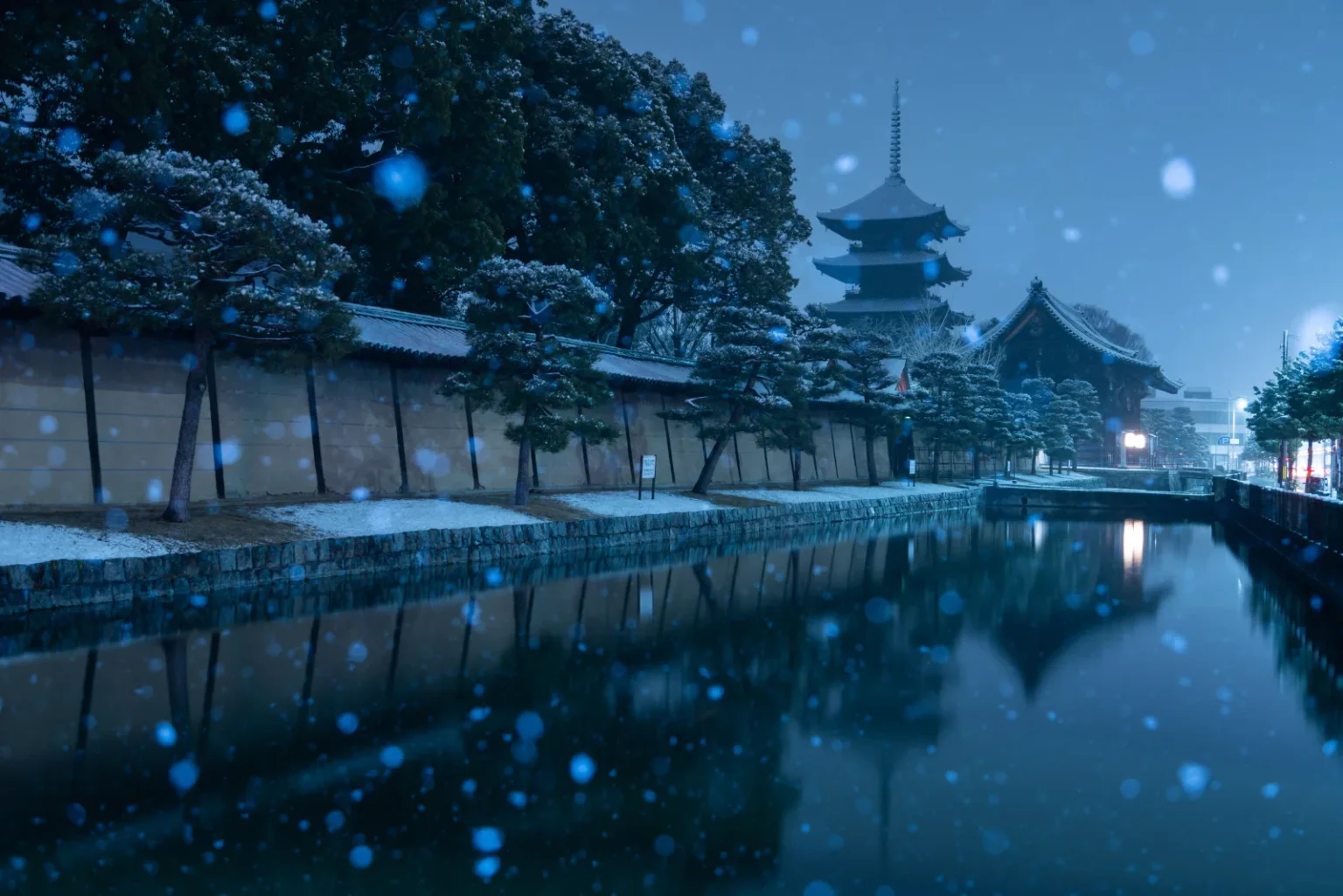
Temperature alone hides the difference between Tokyo and the Sea of Japan coast: Kanazawa’s January daytime average (7.1°C, 45°F) is only a few degrees below Tokyo’s, but in January it averages 23.4 days with at least 1 mm of rain or snow against Tokyo’s 4.5, and about a third of Tokyo’s sunshine. Snow that settles is rare in these cities: Tokyo, Osaka, Fukuoka and Hiroshima all average less than two days with snow on the ground in January, and Kyoto 1.3. Snow-covered temples in Kyoto happen, but you cannot plan on them.
Daylight is short everywhere. On the solstice, the sun sets at 16:03 in Sapporo, 16:32 in Tokyo, 16:42 in Kanazawa, 17:15 in Fukuoka and 17:43 in Naha. In Hokkaido, plan outdoor sightseeing for the morning and early afternoon.
Which winter region fits your trip?
Each region below says who it suits, what winter is like there, the main catch and where to read more. The “choose it if” lines are my planning judgement from the figures and sources on this page.
Hokkaido
Choose it if you want a city trip in deep snow and the February festivals.
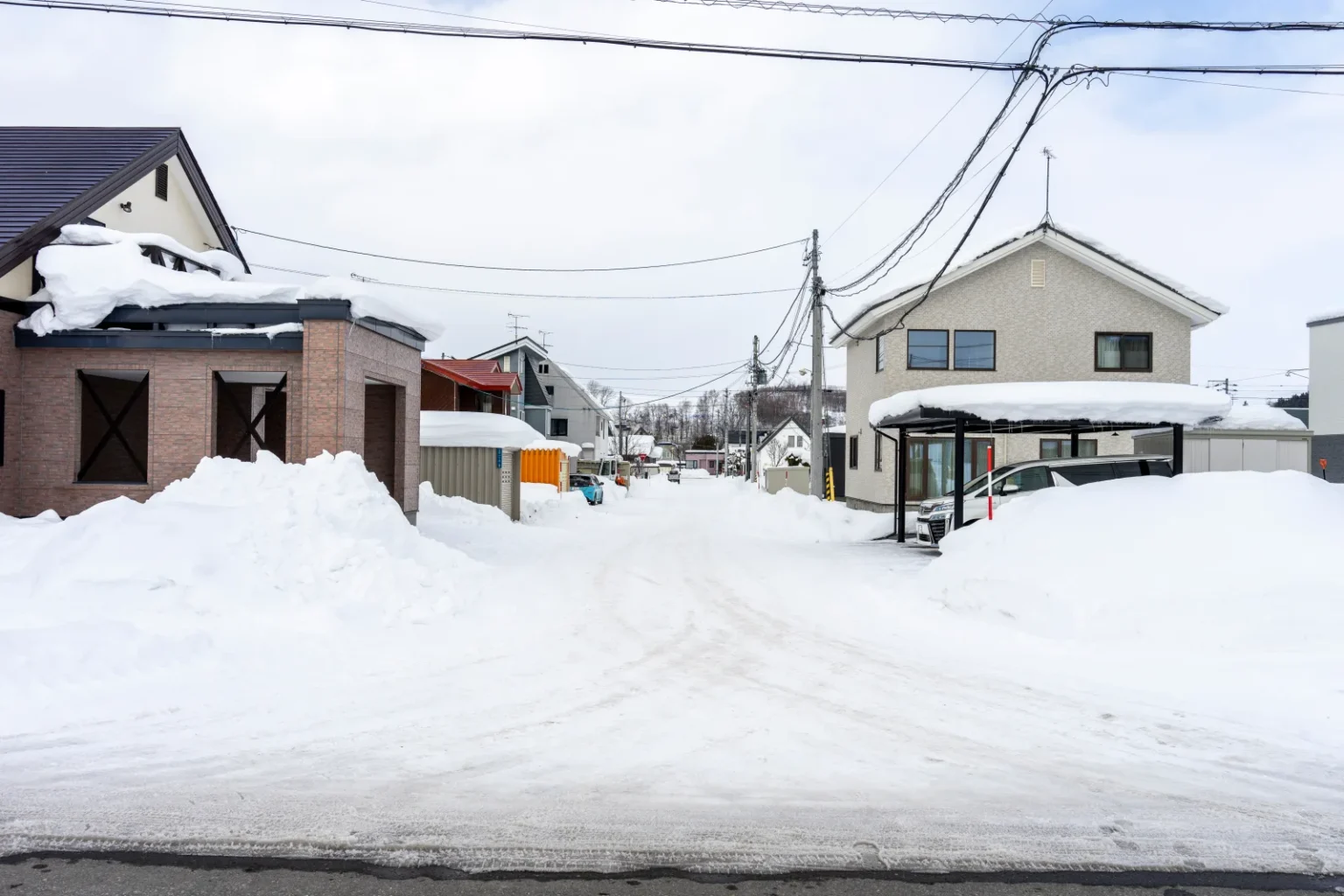
Winter there: Sapporo averages snow on the ground every day in January, highs just below freezing.
Catch: sunset around 16:00 in December, and storms can delay flights and trains, so leave a buffer day before your flight home.
Read next: a 5-day Hokkaido winter itinerary and Sapporo Snow Festival 2027.
Tohoku
Choose it if snow scenery and onsen towns are the point.
Winter there: Aomori averages 30.7 days with snow on the ground in January; Sendai, on the Pacific side, 8.8.
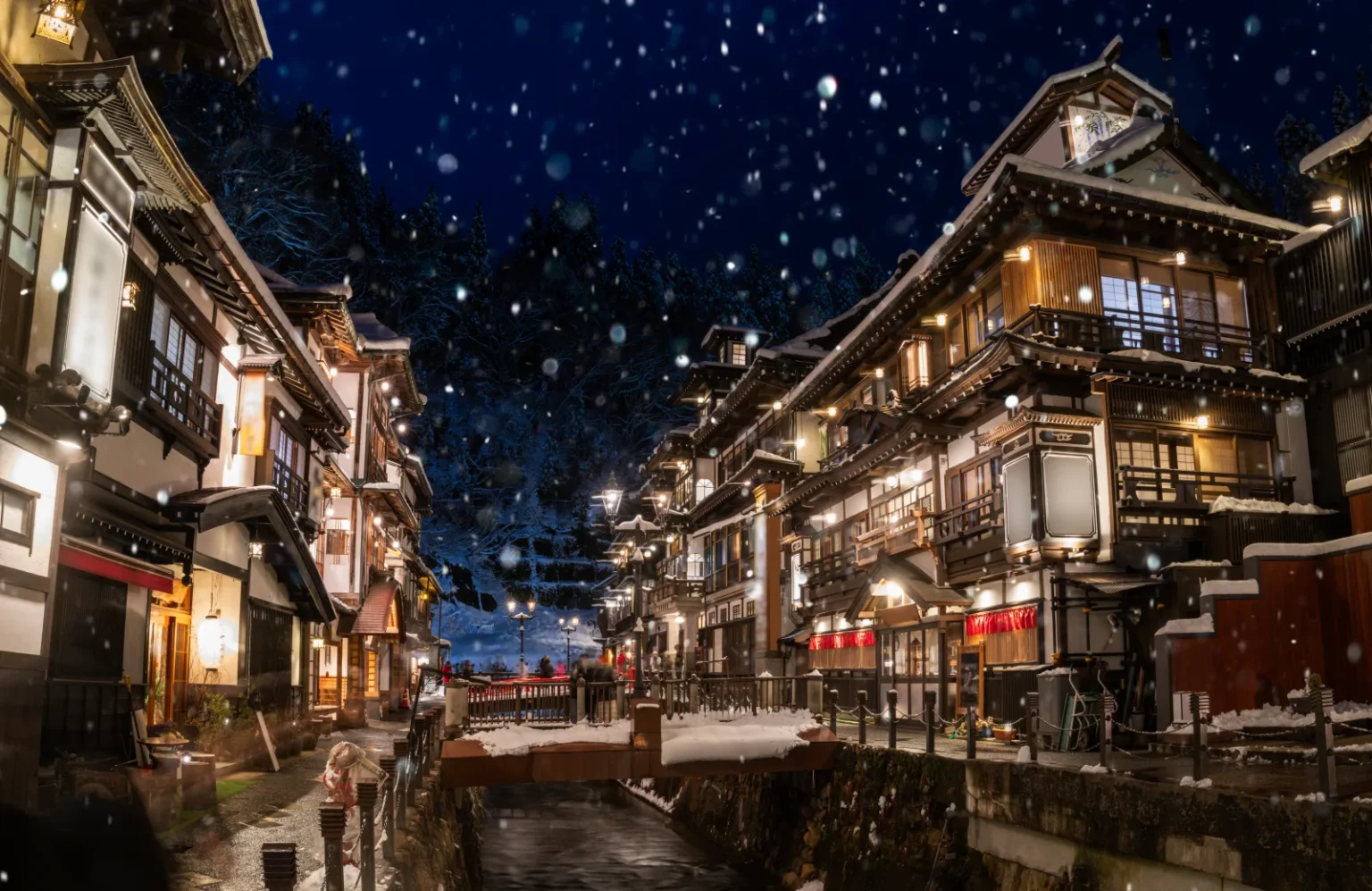
Catch: the famous sights depend on conditions and on access rules (reserve Ginzan Onsen’s day-visitor shuttle ahead; advance sales close at 17:00 the day before).
Read next: Ginzan Onsen in winter, Zao snow monsters.
Tokyo and the Pacific coast
Choose it if you want cold, mostly dry city days.
Winter there: January highs around 10°C (50°F), 192.6 hours of sunshine, snow on the ground 1.4 days.
Catch: settled snow is uncommon, and New Year closures affect some museums and restaurants.
Read next: Tokyo winter illuminations.
Fuji Five Lakes
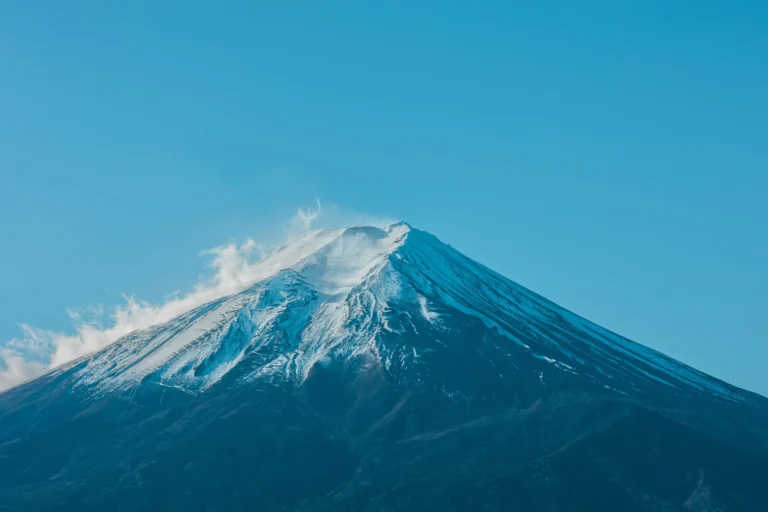
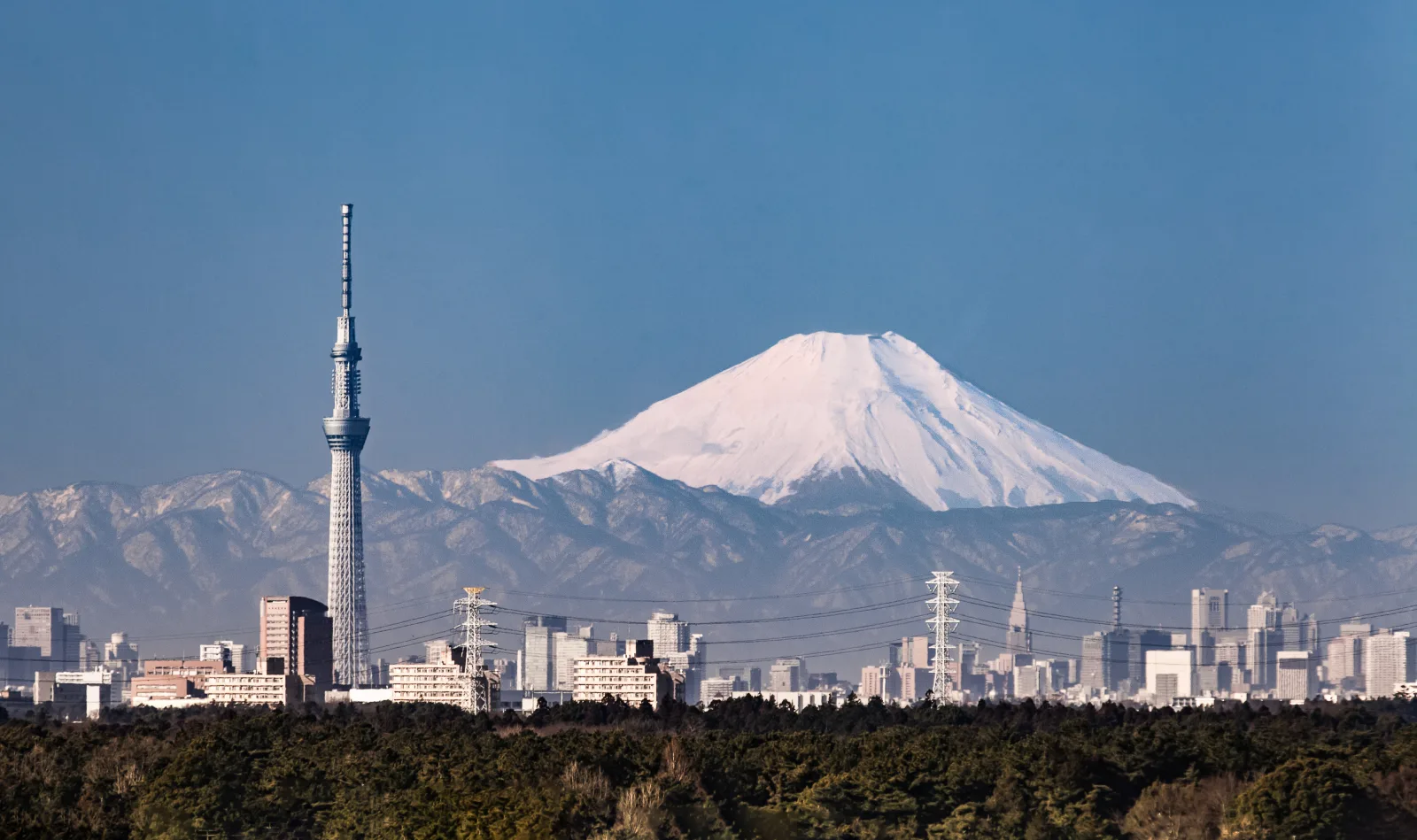
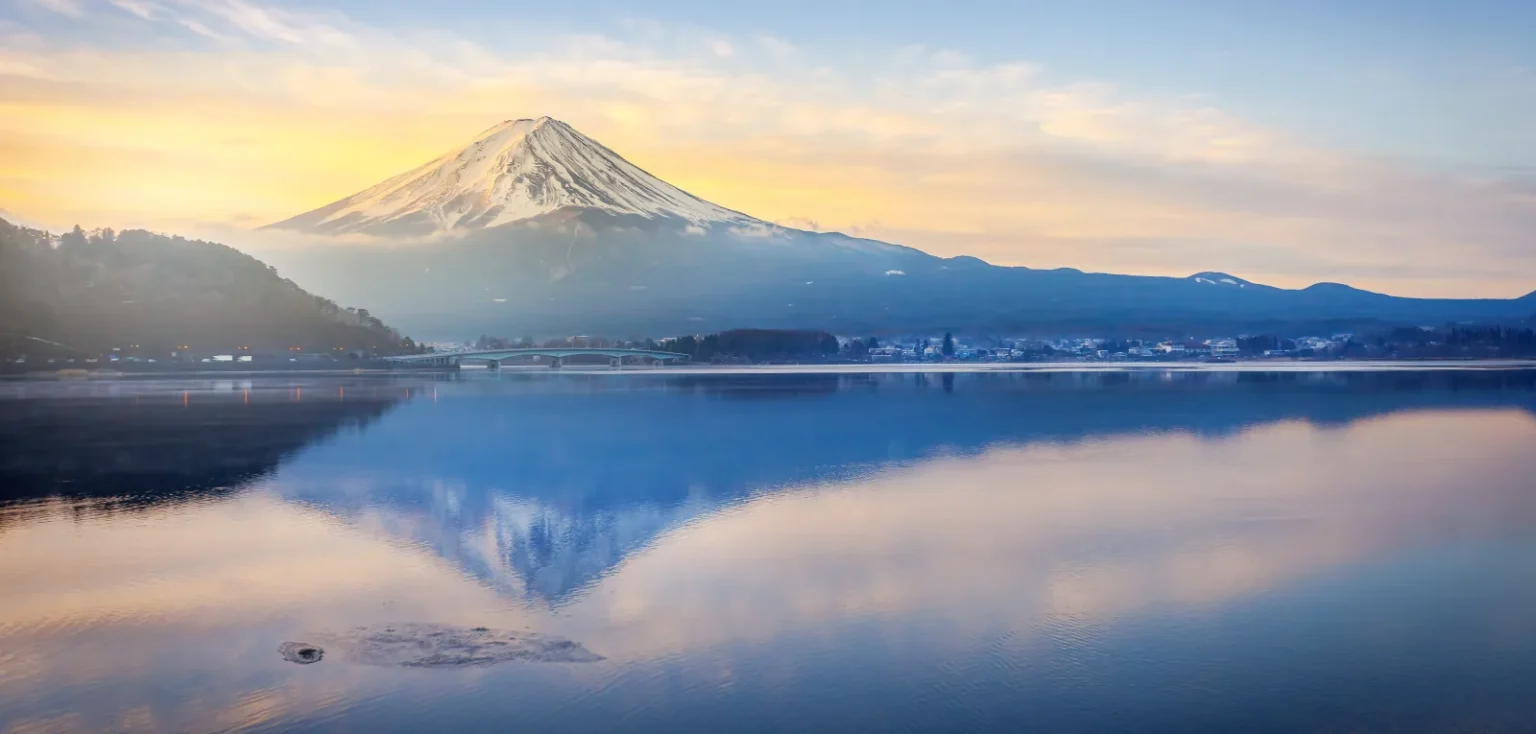
Choose it if a clear view of Mount Fuji matters.
Winter there: Kawaguchiko has the most January sunshine in this table (212.3 hours) but average January lows of −5.7°C (22°F), and 13 days with snow on the ground.
Catch: no view is guaranteed, and the road to Fuji’s fifth station opens or closes with snow and ice.
Read next: Mt Fuji snow and what to wear.
Nagano and the Alps
Choose it if you want the snow monkeys, onsen and mountain towns.
Winter there: Nagano city highs around 4°C (39°F), 21 days with snow on the ground in January.
Catch: the normal winter approach to Jigokudani is a walk of about 30 minutes from the Kanbayashi trail entrance; the separate road from Shibu Onsen to the paid Jigokudani car park closes in winter.
Read next: Jigokudani Snow Monkey Park, a 4-day Nagano winter itinerary.
Hokuriku and Hida
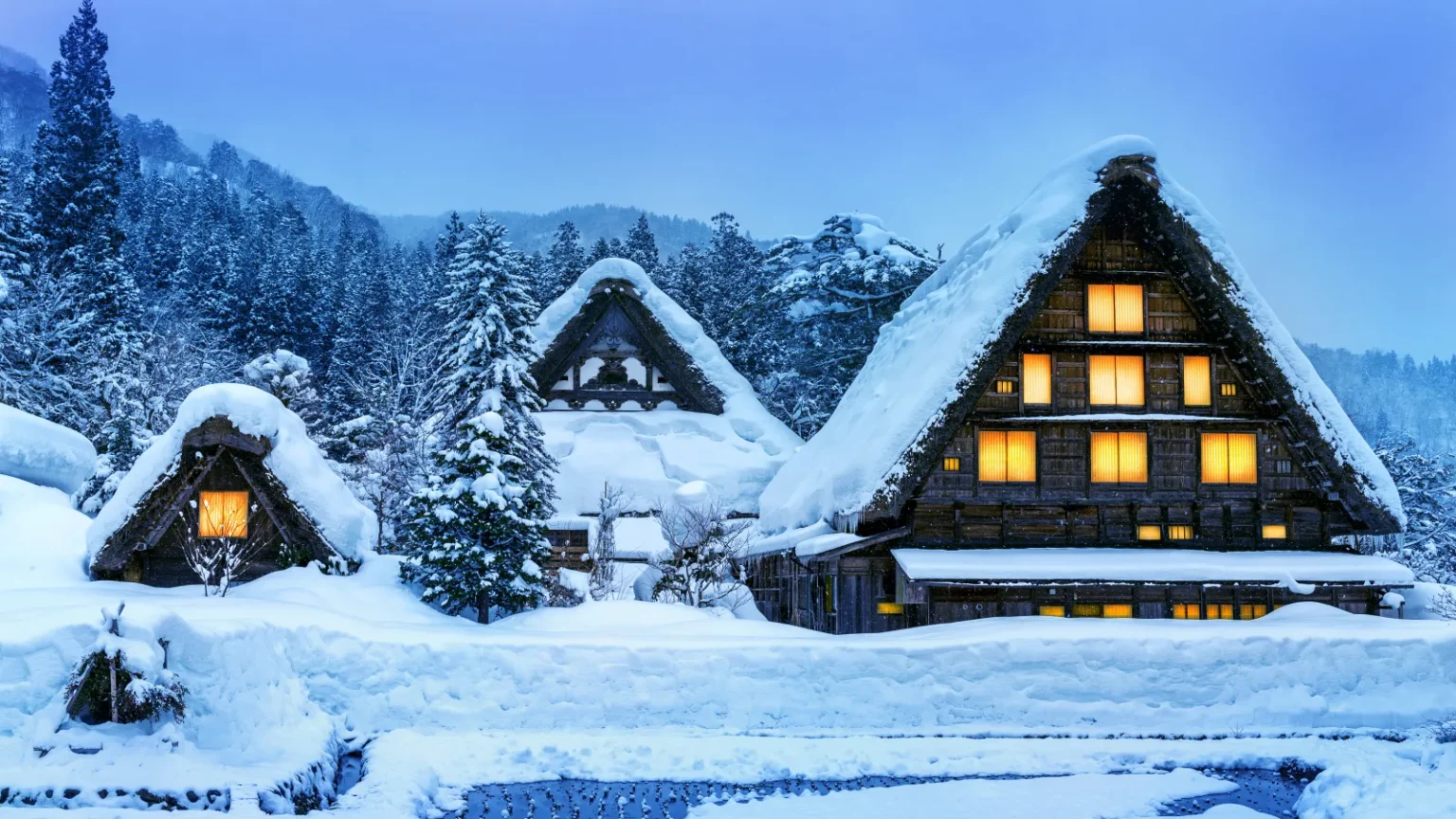
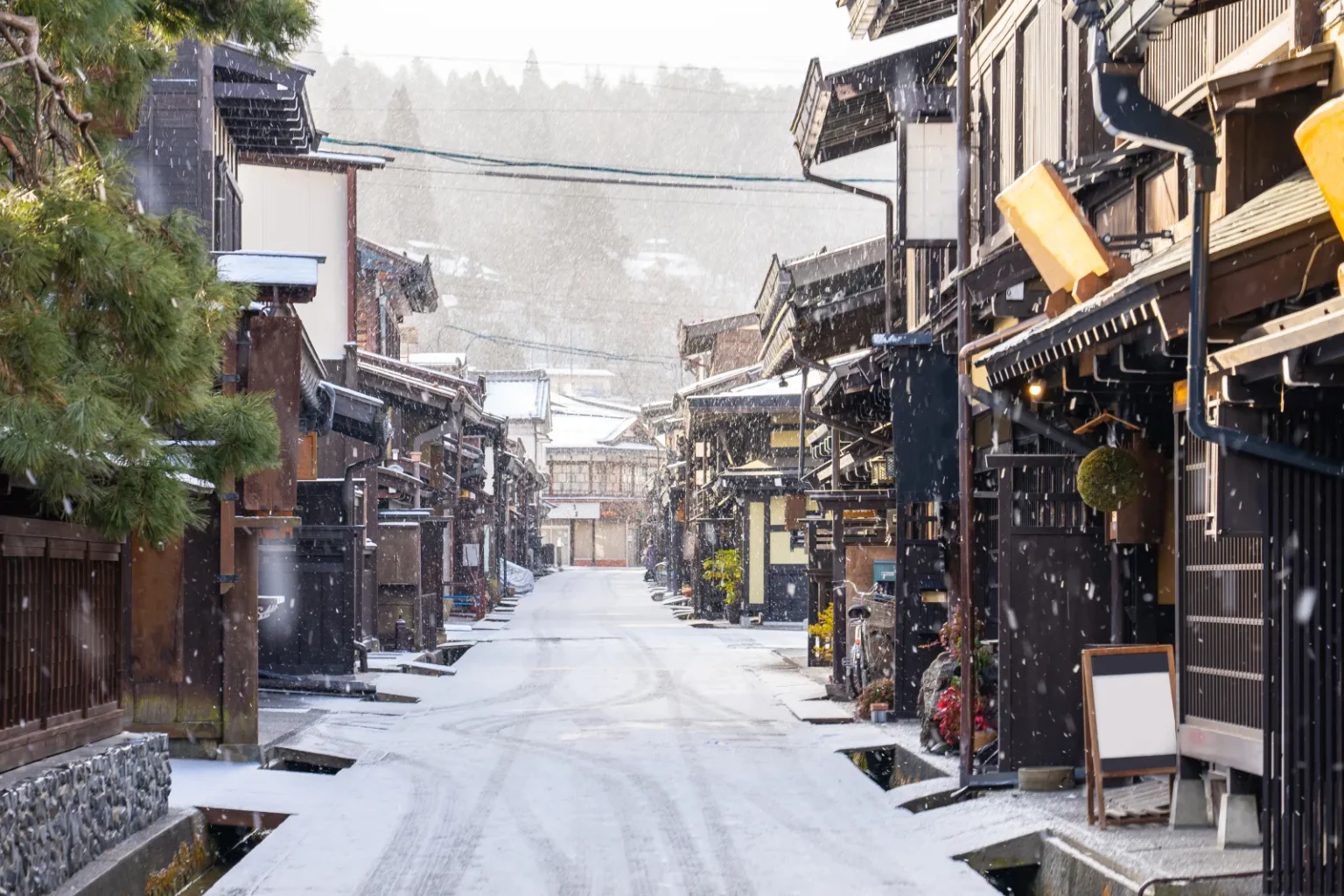
Choose it if you want heritage towns in snow: Kanazawa, Takayama, Shirakawa-go.
Winter there: Takayama averages 24.9 days with snow on the ground in January; Kanazawa is wet, with 256 mm of precipitation in January.
Catch: Shirakawa-go’s winter light-up is reservation-only, and some mountain roads in the area close for winter.
Read next: Shirakawa-go guide.
Kansai, Chugoku and Shikoku
Choose it if temples, castles and food matter more than snow.
Winter there: Kyoto, Osaka, Hiroshima and Takamatsu have January highs of 9–10°C (48–50°F) and rarely keep snow on the ground.
Catch: settled snow is uncommon (Kyoto averages 1.3 days in January), and individual sites close at year end (the Kyoto Imperial Palace closes 28 December–4 January).
Read next: Hiroshima and Miyajima in one day.
Kyushu and Okinawa
Choose it if you want the mildest winter.
Winter there: Fukuoka has January highs around 10°C (50°F); Naha around 20°C (68°F) with lows of 15°C (59°F).
Catch: Naha’s January highs are about 20°C, well below summer, and its January sunshine (93.1 hours) is less than half of Tokyo’s. JNTO gives January to March as Okinawa’s whale-watching season.
Read next: the Fukuoka food guide.
For a winter sports trip, see the separate guide to skiing in Japan.
Japan winter events in 2026–27
The table lists selected events whose 2026–27 dates were checked against official sources (organisers, operators, government and official tourism bodies) on 4 November 2026, in order of start date. Events still waiting for dates are in the short list below it; last season’s dates are not a promise. Sources for every row are in the list at the end.
| Event and place | 2026–27 dates | What it means for planning |
|---|---|---|
| Yomiuriland Jewellumination, Tokyo | 29 Oct 2026–4 Apr 2027 | Check the park’s operating days and hours for your date |
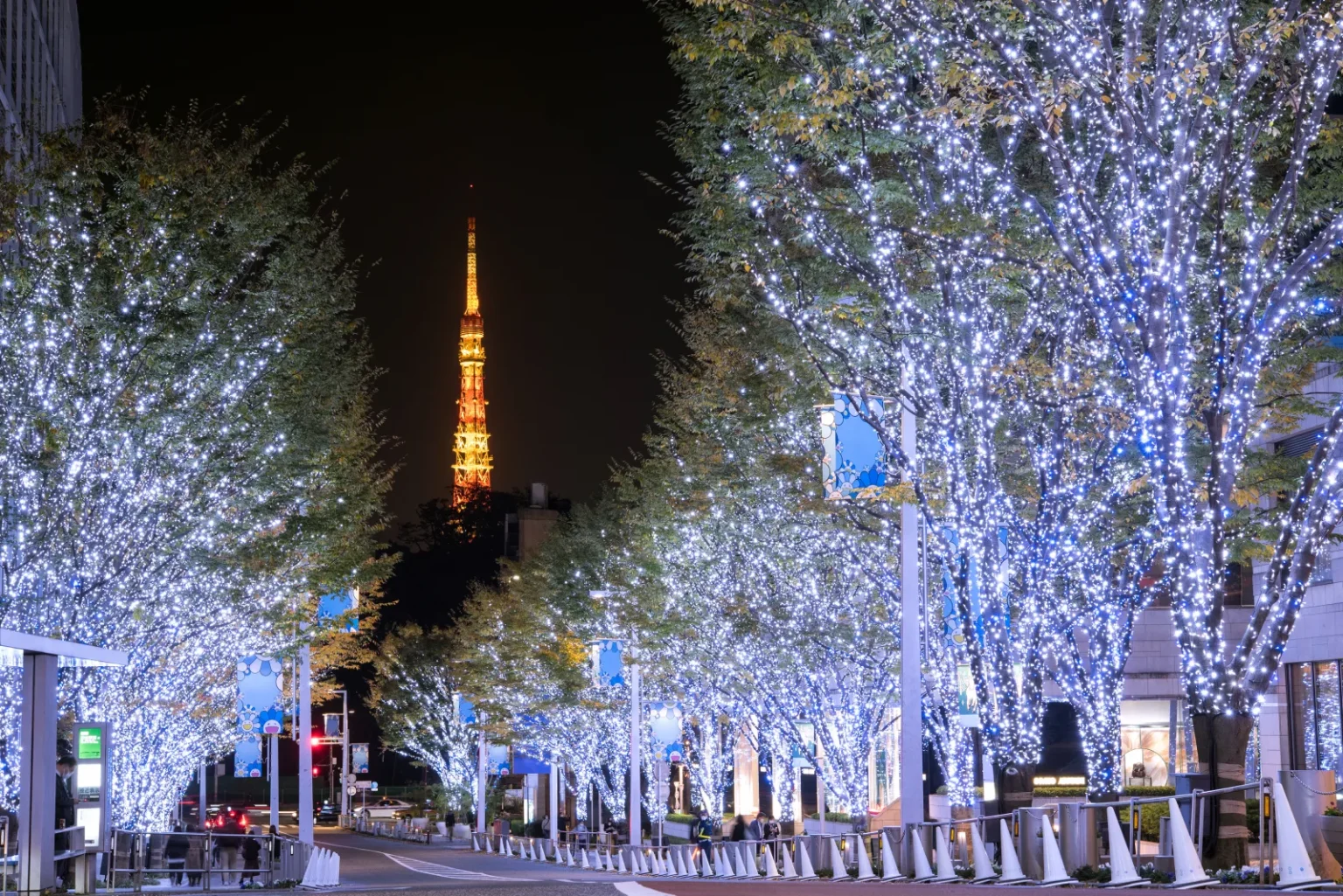
| Roppongi Hills Keyakizaka, Tokyo | 5 Nov–25 Dec 2026 | Ends on Christmas Day |
| Marunouchi Illumination, Tokyo | 12 Nov 2026–14 Feb 2027 | Lit 16:00–23:00, to midnight in December; the opening night starts later |
| Zao snow-monster light-up, Yamagata | 31 selected evenings, 26 Dec 2026–23 Feb 2027 | Not every night: check the list of evenings before you book a room |
| Atami Plum Festival, Shizuoka | 9 Jan–7 Mar 2027 | Festival dates, not a bloom guarantee |
| Shirakawa-go winter light-up, Gifu | 11, 17, 24 and 31 Jan 2027, 17:30–19:30 | Reservation-only; arrange it before transport |
| Abashiri drift-ice ship Aurora, Hokkaido | Winter sailings from 20 Jan 2027 | Phone bookings opened 15 Oct; the closing date is shown without a year. A sailing does not guarantee ice |
| Nara Wakakusa Yamayaki | 23 Jan 2027 | The hillside burning, an evening event |
| Nago Cherry Blossom Festival, Okinawa | 30–31 Jan 2027 | An early cherry festival; bloom varies by year |
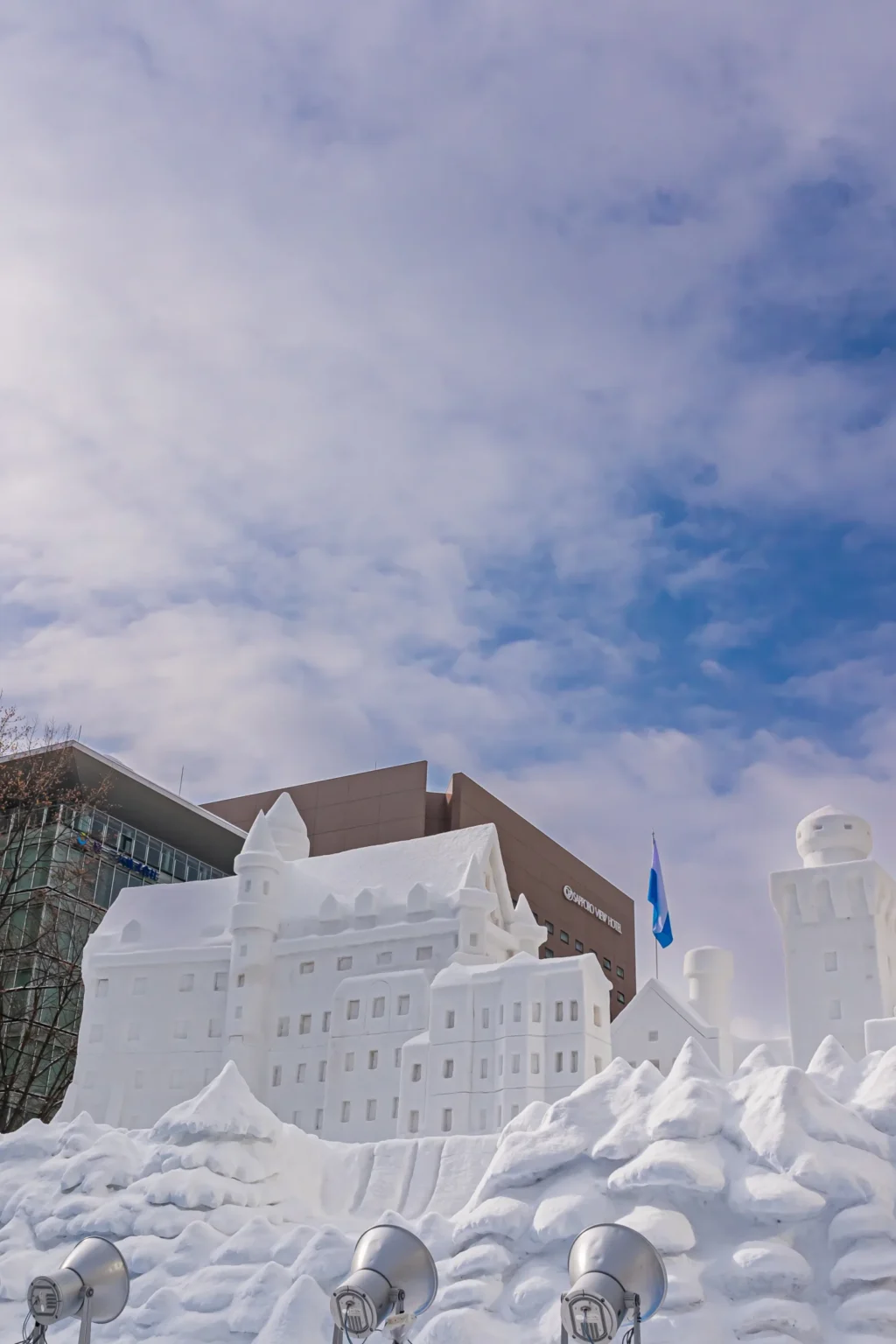
| Sapporo Snow Festival, Hokkaido | 4–11 Feb 2027 | Book rooms early; see the festival guide |
| Nagasaki Lantern Festival | 5–21 Feb 2027 | Published by the city as the scheduled dates |
| Otaru Snow Light Path, Hokkaido | 6–13 Feb 2027 | Overlaps the Sapporo festival |
| Asahikawa Winter Festival, Hokkaido | 6–11 Feb 2027 | Also overlaps Sapporo |
| Kawazu Cherry Blossom Festival, Shizuoka | 6 Feb–7 Mar 2027 | Festival dates, not a bloom guarantee |
| Yokote Kamakura, Akita | 12–13 Feb 2027 | Two evenings only (not the old 15–16 Feb dates) |
Still waiting for 2026–27 dates
- Kyoto winter special openings: the organiser’s site still showed the previous programme on 4 November.
- Kawaguchiko Winter Fireworks: only the usual weekend pattern is published.
Where to stay for four winter trips
One hotel for each of four common winter bases, chosen for a specific practical reason, with what the hotel itself says. A hotel booking does not include event admission or the Shirakawa-go light-up.
JR Tower Hotel Nikko Sapporo
For a Sapporo base with the airport train at the door. The hotel says it has direct access to JR Sapporo Station; it gives about 13 minutes on foot to Odori Park, the festival’s main site.
Fuji View Hotel, Kawaguchiko
For a chance of Fuji from the room. The hotel’s room list marks several room types as facing Mount Fuji (others face the garden, so choose a Fuji-side type). The hotel also runs a free shuttle for guests from Kawaguchiko Station; the ride takes about 10 minutes. No room can promise a clear day.
Tokyu Stay Hida-Takayama Musubi no Yu
The hotel says it is a two-minute walk from JR Takayama Station and a short distance from the Nohi Bus Center. From there, Nohi Bus runs to Shirakawa-go in about 50 minutes.
Hyatt House Kanazawa
The hotel says it is right next to Kanazawa Station, a useful base on wet winter days.
What normally stays open in winter?
This is a planning summary, not a guarantee: the middle column is the usual position, and the right-hand column is what to check for your dates with each operator.
| Category | Normally | Check for your dates |
|---|---|---|
| City trains and subways | Run | Holiday timetables over New Year |
| Shinkansen and intercity trains | Run | Live status on heavy-snow days |
| Shrines and temples | Many open | Hours, and New Year crowd controls |
| Museums, gardens, castles | Mixed | Year-end closure days and earlier last entry |
| Onsen and ryokan | Many open all year | Day-use hours and maintenance days |
| Shops and restaurants | Open in big cities | Branch-specific New Year hours |
| Rural buses, ropeways, ferries | Often reduced or seasonal | The operator’s winter timetable |
What closes or changes in winter?
- Kamikochi closes for the winter after 15 November 2026; ordinary buses and facilities stop until mid-April. The 2027 reopening date had not been announced.
- Tateyama Kurobe Alpine Route closes for the season after 30 November 2026 and does not run through December–February. The operator gives mid-April 2027 as the planned reopening, without an exact date.
- Mount Fuji’s climbing trails are closed outside the summer climbing season. The Fuji Subaru Line toll road to the fifth station opens or closes sections with snow and ice, and the operator says it can usually judge only a day or two ahead.
- Mountain roads in and around Shirakawa-go (Route 360 over Amou Pass, prefectural road 451 and the Hakusan Shirakawa-go White Road) close for winter. The village itself is still reached by the main roads and buses.
- Kyoto Imperial Palace closes 28 December–4 January; from October to February it is open 09:00–16:00, last entry 15:20.
- Ginzan Onsen is scheduled to run a winter shuttle for day visitors from 19 December 2026 to 7 March 2027, transferring at Taisho Roman-kan; advance tickets close at 17:00 the day before, and same-day tickets are sold only if seats remain. The full 2026–27 evening rules had not been published.
How winter weather changes transport plans
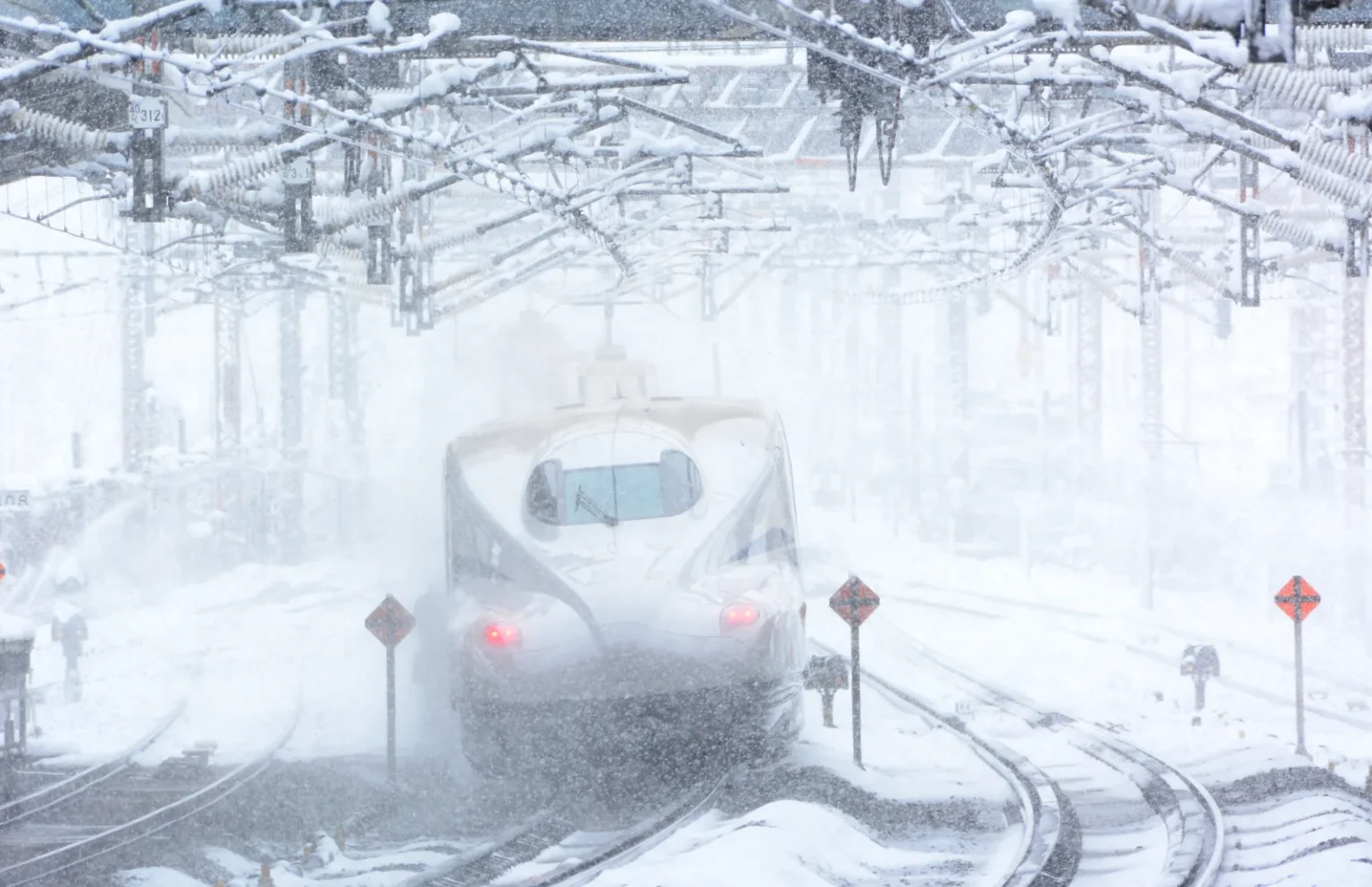
A scheduled winter closure, like Kamikochi, is known months ahead. For weather-related suspensions, check each operator’s live information the day before your journey and again before you set out. Heavy snow can cancel or delay trains and buses and close roads. For example, a JR East notice on 23 January 2026 cancelled Iiyama Line trains on 24–25 January for snow clearance. That is the reason to check live information, not a forecast for this winter.
- Check the JR company, bus operator or airline the day before and the morning of travel; JR East has an English train status page.
- Leave a buffer before rural connections and before your flight home, especially from Hokkaido and the Sea of Japan side.
- Check the last return bus or train for your date before you set out.
If snow is forecast for your travel day, my guide to travelling in heavy snow covers what to do before it lands.
Winter in Japan: FAQ
When is winter in Japan?
The Japan Meteorological Agency defines winter as December, January and February. In Hokkaido, the north and the mountains, snow can come earlier and last longer, into March and beyond.
How cold does Japan get in winter?
It depends on where you are. On JMA 1991–2020 normals, January averages a high of 9.8°C (50°F) and a low of 1.2°C (34°F) in Tokyo, −0.4°C (31°F) and −6.4°C (20°F) in Sapporo, and 19.8°C (68°F) and 14.9°C (59°F) in Naha.
Does it snow in Tokyo?
Sometimes, but snow rarely stays on the ground. Tokyo averages 1.4 days in January and 1.1 days in February with at least 1 cm of snow lying, against an average of 31.0 days in Sapporo in January.
Is Japan worth visiting in winter?
For many trips, yes: the Pacific side is often sunny and dry (Tokyo averages 192.6 hours of January sunshine), and February brings the snow festivals in the north. The trade-offs are short days, cold in the north and on the Sea of Japan side, and New Year closures, so match the region to what you want to see.
Is everything closed over New Year?
No. National government offices close 29 December–3 January, and many businesses close for some of those days, but each place sets its own calendar; the Tokyo National Museum, for example, reopens on 1 January 2027. Check each place on your plan.
What is the cheapest month to visit Japan in winter?
There is no single cheapest winter month, because flights and rooms vary by route, holidays and event dates; my Japan budget guide covers current costs.
Official sources behind the figures above (JMA, NAOJ, organisers, operators and official tourism bodies), checked on 4 November 2026
- Japan Meteorological Agency: climate of Japan and the winter definition; 1991–2020 normals (temperature, precipitation, sunshine; snow-depth days on each station’s snow table): Sapporo, Aomori, Sendai, Tokyo, Kawaguchiko, Nagano, Kanazawa, Takayama, Kyoto, Osaka, Hiroshima, Takamatsu, Fukuoka, Naha
- National Astronomical Observatory of Japan: 2026 solstice; sunrise and sunset, December 2026: Sapporo, Tokyo, Kanazawa, Fukuoka, Naha
- Events: Marunouchi Illumination; Roppongi Hills; Yomiuriland; Zao light-up (Kaminoyama Tourism Association); Shirakawa-go light-up; Wakakusa Yamayaki; Nago Cherry Blossom Festival; Sapporo Snow Festival; Nagasaki Lantern Festival; Otaru Snow Light Path; Asahikawa Winter Festival; Yokote Kamakura; Atami Plum Festival; Kawazu Cherry Blossom Festival; Kyoto winter special openings; Aurora drift-ice ship (2027 start); Aurora timetable; Kawaguchiko Winter Fireworks
- Closures and access: Act on Holidays of Administrative Organs; JNTO December guide; Tokyo National Museum; Kyoto Imperial Palace; Kamikochi closing; Tateyama Kurobe Alpine Route; its closing timetable; Jigokudani parking; Tateyama Town; Fuji Subaru Line; Mt Fuji climbing season; Shirakawa village roads; Ginzan Onsen winter shuttle; Jigokudani access
- Transport and whales: JR East train status; JNTO whale watching in Okinawa
- Hotels: JR Tower Hotel Nikko Sapporo access; its sightseeing page; Fuji View Hotel access; its shuttle; Tokyu Stay Hida-Takayama; Hyatt House Kanazawa
Join travelers discovering Japan's hidden side
Weekly dispatches from off-the-beaten-path Japan — spots and stories you won't find in guidebooks.
No spam. Unsubscribe anytime.
Welcome aboard!
You're in. See you in your inbox soon.